What a drip!

The old basement is the heart of the plumbing in this house. It’s where all the pumps and tanks are, plus we have a couple of sets of taps; one for the laundry sink, and one for where the washing machined to be, and pipes with shut off valves leading to the taps outside.

Until the plumber added a shut off valve to the hot water tank, those were pretty much the only shut off valves in the system. Otherwise, there is a main shut off valve at the well pump that shuts water off to the entire house.

One of the things my brother did was install a pool filter to the septic pump system. It has a filter basket that catches larger bits before they get into the pump and sent on to the outflow. It has to be cleaned out every now and then, so he got an extra basket, so one can be quickly switched out for the other, and the pump can be back in action right away, rather than having to stay off while the filter basket gets cleaned. Which is a big deal, since it basically turns black and needs time to soak in a detergent solution after the grit and odd bits of straw that fell into the tank while it was being emptied are cleaned out.

Handily, the laundry sink is right there, and that’s where I wash out the filter basket.

It is also where we shock our hot water tank with hydrogen peroxide every now and then, when the water develops a rotten egg smell. This is done using siphon action by attaching a short hose to the tap. After shutting water off to the hot water tank, then allowing it to drain until the vacuum created prevents more water from draining out, we can put the hose end into a container of hydrogen peroxide, turn on the hot water tap, and the peroxide gets sucked into the hot water tank. Unfortunately, the threads on the hot water tap are damaged, so instead of being able to screw on a short length of hose directly to the tap, we’ve had to use Gorilla tape and a length of aquarium hose. It doesn’t seal as well, but it works.

Those are pretty much the only times that sink gets used.

When I’d switched out the filter baskets at the septic pump, I noticed that the hot water tap had developed a drip. I have no idea how long it’s been dripping, but as I used the hot water to do a rough clean on the filter basket, then set it in a container to soak, it started to drop more. Last night, I switched out the soaking water, and the slow drip because a fast drip.

We already needed to replace both the hot and cold water taps, but until now, that wasn’t much of a priority.

Here, you can see the hot water tap, with the tape holding the bit of aquarium hose. The cold water tap has a length of hose screwed on – without the hose, the water sprays all over. The piece of hose across both taps is what I’d tried to screw onto the hot water tap, only to discover the threads were damaged.

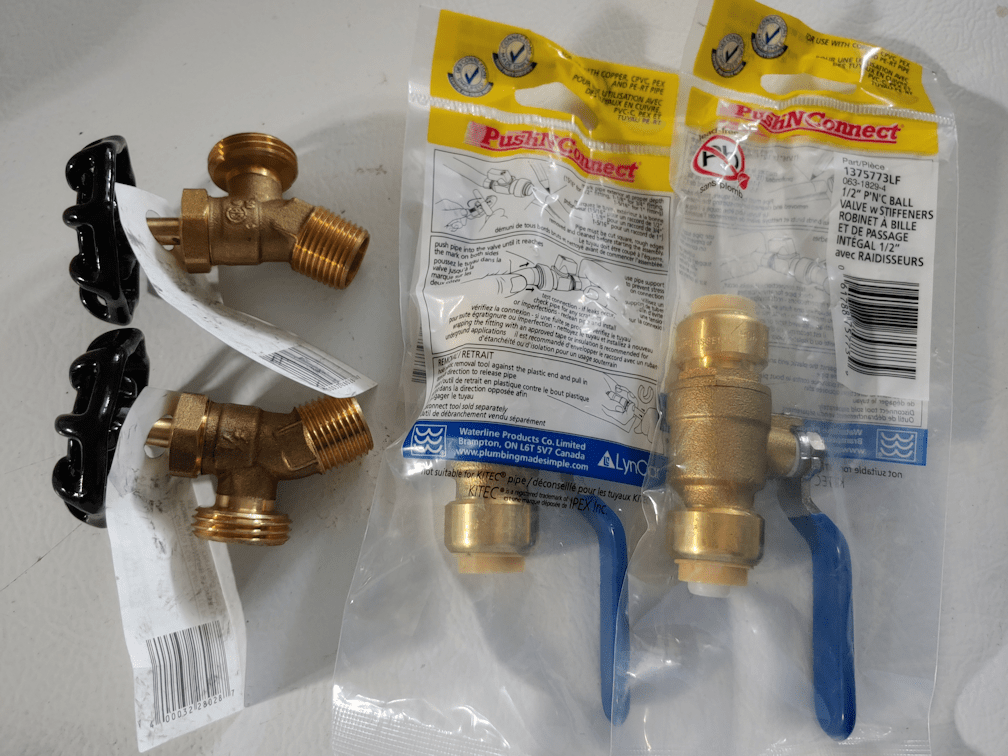
This morning, I headed into town to hit the hardware store, just as it opened. After showing the photo to one of the staff, he found the right size replacement taps for me (I plan to take advantage of the situation and replace both taps). Unfortunately, these taps are soldered on. Which means, to change them out, I need to heat them with a torch, remove the taps, clean the pipes, then solder on the replacement taps.

We don’t have the tools to do that. Even if I wanted to cut the old tap off and put a new one on the remaining length of pipe, I’d still need a soldering gun – and I don’t want to shorten the distance of the taps over the sink, anyhow.

Of course, there are no shut off valves between these taps and the pumps. To work on it means, at the very least, shutting off the water to the hot water tank. To work on the cold water tap means shutting off water to the entire house.

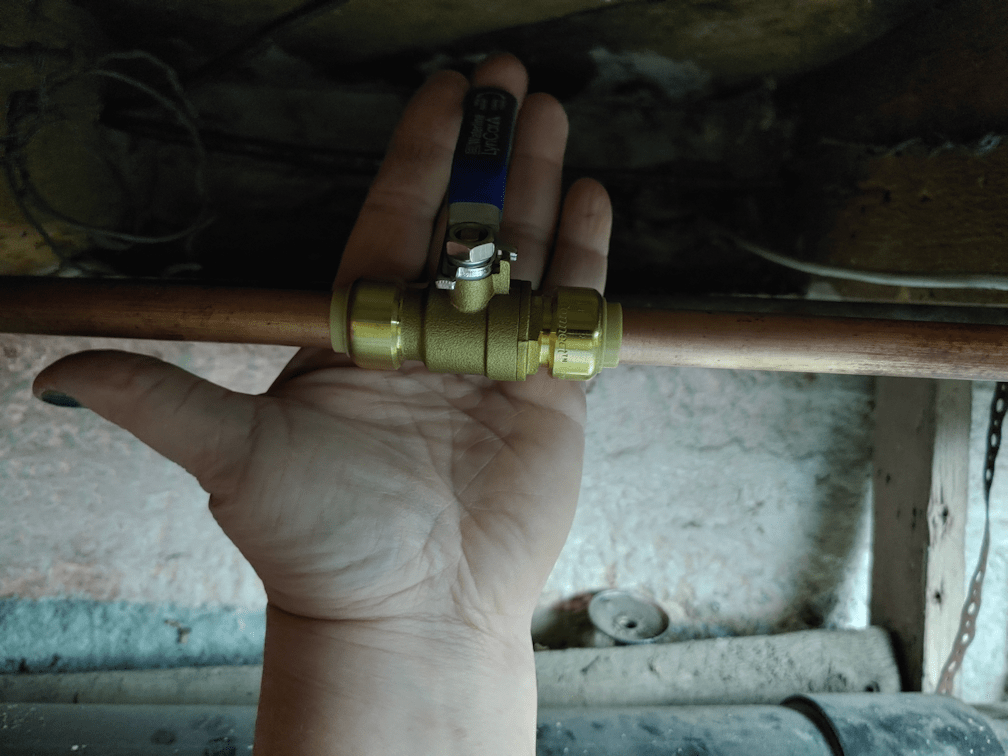
So I picked up a couple of Shark Bite shut off valves.

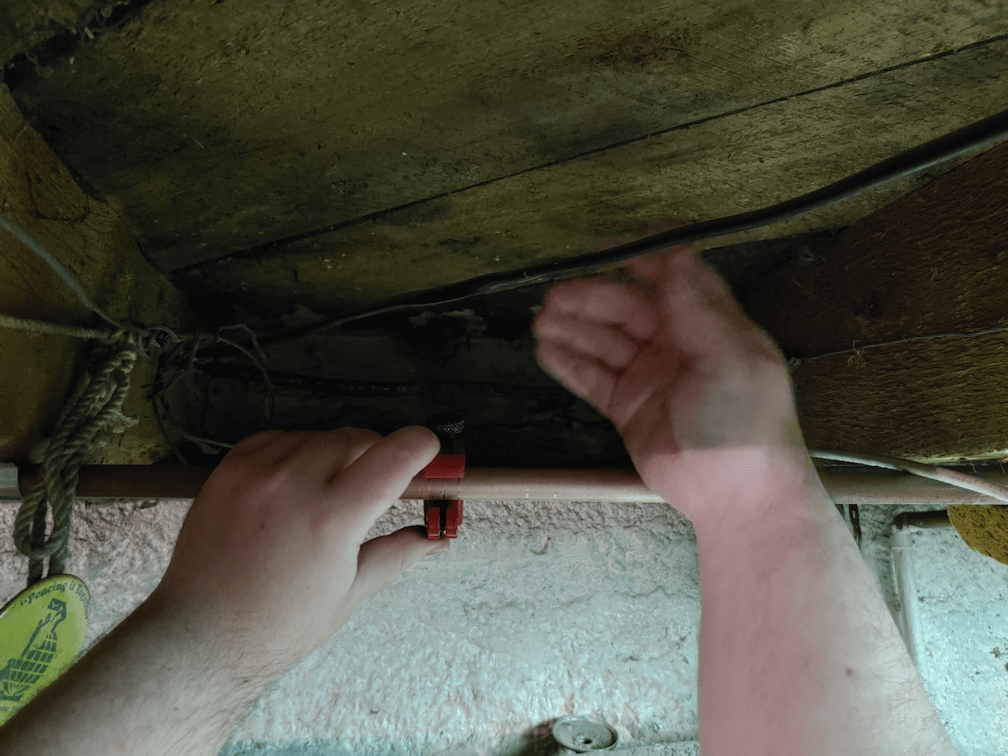
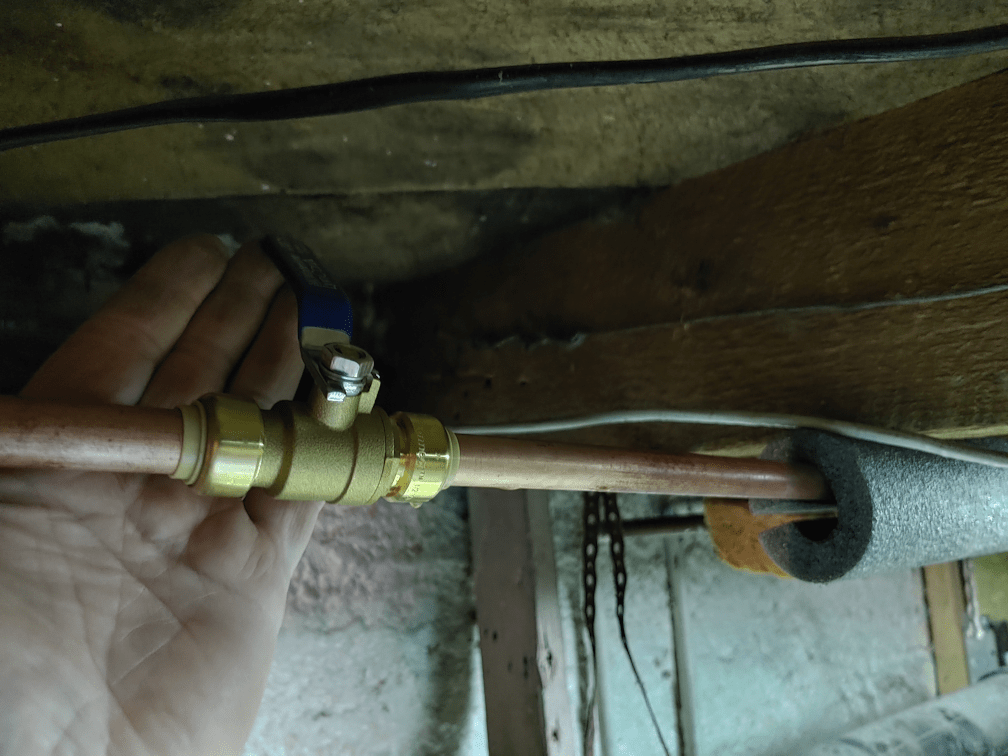
We have what we need to cut pipe, so we can install the shut off valves ourselves. That will allow us to shut water off to the taps and stop the drip, until we can replace the taps themselves.

I’ve already been able to talk to my brother about this, as he has the tools needed to replace the taps. As for the shut off valves, he had it in his mind to install them in the vertical pipes leading to the taps, but I am thinking of installing them in the horizontal pipes running along the ceiling, so that they will shut off water to the other set of taps as well. Those have never been used since the washing machine was moved upstairs, but considering how old they are, I can see needing to replace them in the future, too.

My daughters are still on “night shift”, though, so I don’t want to start any of this until after they’ve gotten up and had their showers. For now, I just want to install the shut off valve on the hot water pipe, but – as unlikely as it is – if something goes wrong during the install, we wouldn’t be able to turn the hot water back on until it’s fixed, and who knows how long that would be. It’s really a simple job, but I know how easily simple jobs can become major problems, in this place!! Hope for the best, plan for the worst!

One of the considerations for installing the shut off valves; unless we cut out about 3 inches of pipe, they will add to the length of the pipe. That would mean the taps would need to be shifted over by the same distance. Which I wouldn’t have a problem doing, except that parts of the copper pipe have been painted over.

Including the clamps and screws holding the pipes in place. Which is going to make loosening the screws a pain in the butt!

*sigh*

Still, it needs to be done, regardless. We’ve had issues with a loud noise that would start after the well pump kicks in to refill the pressure tank. It is very loud, and I can actually feel the floor vibrating under my feet when I am at my computer. It rather freaked me out because, at first, I thought the noise was coming from the well pump, and we’re already on borrowed time with that thing. Eventually, I was able to trace the noise to the pipes. The pipes run under the exposed floor joists, and have a mishmash of supports attached to the joists, holding them in place. In a couple of spots, there is a pipe that has a 90 degree turn and runs under the pipe it had been parallel to. One of those spots is the hot water pipe that runs from the hot water tank to the laundry sink. What seems to have happened is that, as the house has shifted, those pipes no longer have any sort of gap between them. When the pump starts running, it causes vibrations in the pipes, and with these two pipes now hard against each other, that results in the noise and vibrations I can actually feel in my feet. Right now, the vertical pipes are clamped so tight against the wall – with painted over screws – that there is no give at all. So while we are working on the taps and valves, I want to see if I can adjust the hot water pipe downwards a bit, so that they are no longer touching. Hopefully, I’m right that this is the cause of the noise, and it will stop.

If it doesn’t, and we still get the noise in this location, I’m at a loss as to what else the cause might be!

So we’ve got our work cut out for us this afternoon, just to be able to stop the drip until we can replace the tap itself. Once that’s done, there is no longer any sort of urgency.

The Re-Farmer

Late bloomers

Yesterday afternoon, I headed out to gather a few vegetables from the garden. There were sunburst squash to pick, as well as some beans. We’re still getting enough purple beans to harvest to make for decent sized meal portions for the four of us. There were a few green beans, too, and about five yellow beans left. :-D

While heading back to the house, I just had to pause by the new tree stump bench and get a picture of these late bloomers. Normally, they would have bloomed about a month ago, and there are far fewer of them. With average heat and rainfall, this area gets filled with these flowers, and when they bloom, it’s just a mass of yellow. The bench will be mostly surrounded by them, once they recover. It’s going to be such a lovely place to sit in the shade. :-)

The Re-Farmer

I was hoping to avoid that

After giving my hips a chance to recover, it was time for more manual labour today!

Today, I decided to do a bit more cleanup around the junk pile, so I could access some dead trees that need to be taken down.

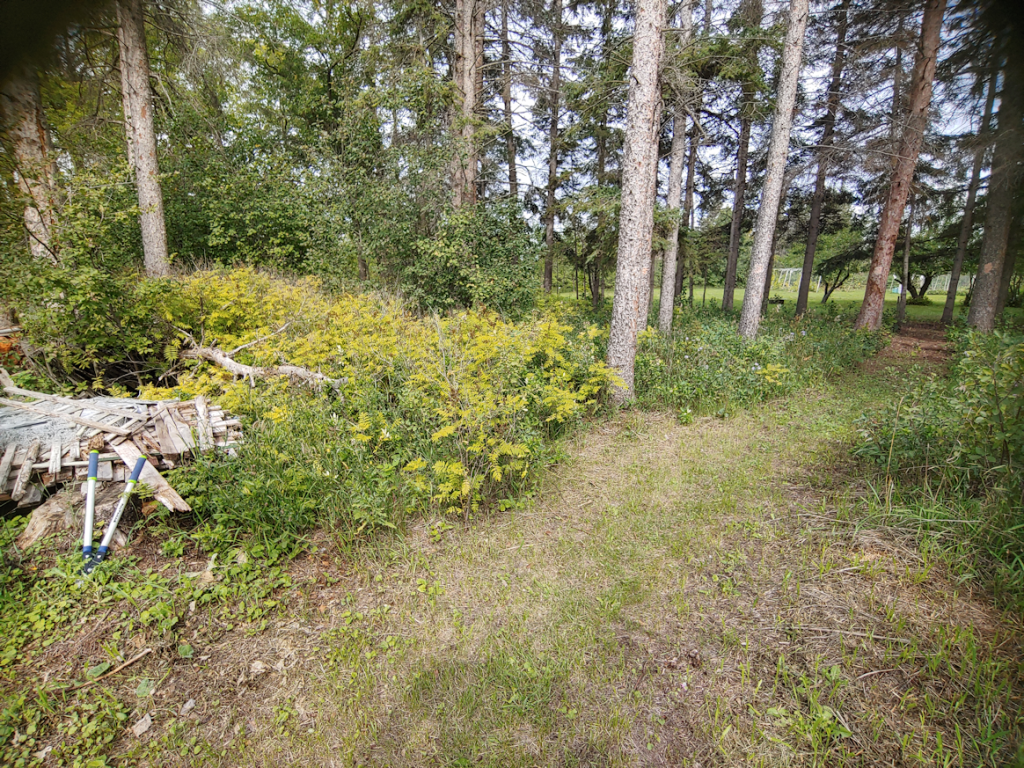
Here is how it looked before I started.

We have our ongoing battle with the spirea that’s choking everything out, so I wanted to pull them up by the roots as much as possible.

Some of them had roots so long, they started going under things. I pushed them aside after a certain point, so I could focus on clearing around three specific dead trees.

The thistles were much more of a problem. The thorns go right through my work gloves!

I did leave on thing behind, besides some wildflowers.

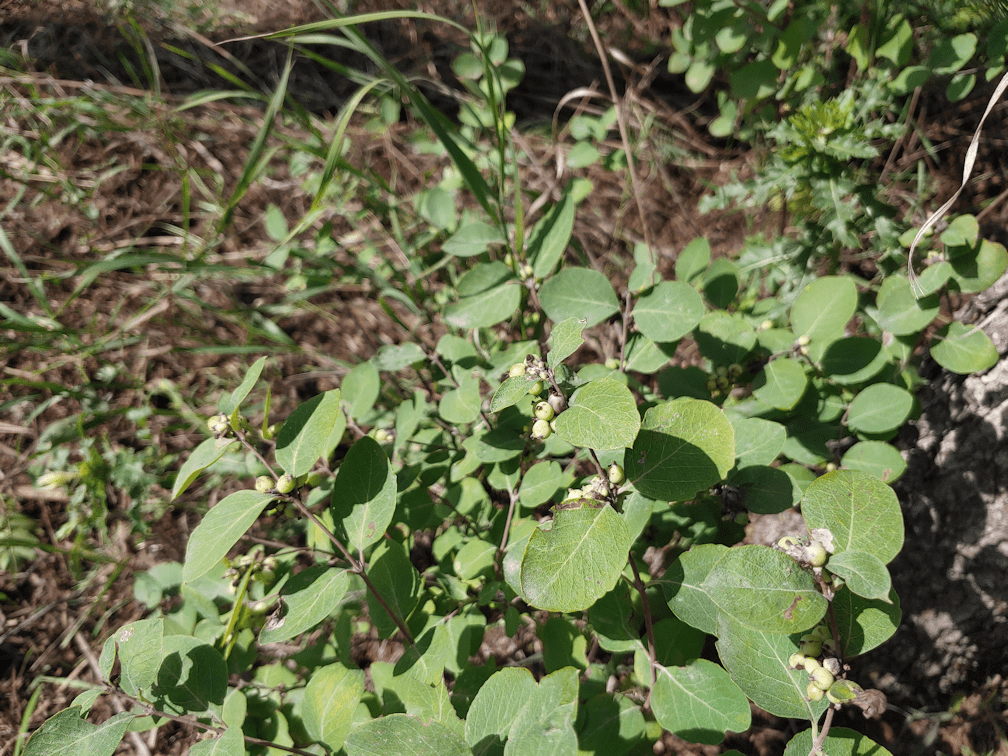
There was a little Saskatoon bush, at the base of one of the trees, and it’s actually trying to produce berries! Weather willing, the berries you see will turn a deep, dark purple, and look a bit like blueberries.

Once the area was cleared of tripping hazards, I started taking down the first tree, using a bucksaw. Because of where these trees are, I tried to do it in such a way that it would fall in a space between some other spruces. I didn’t want it falling towards the open yard, because then it might land on the beet bed or compost pile, or some Saskatoon bushes and an elm tree we want to keep.

It almost worked.

It fell too far to the south, and got hung up on another dead tree, that’s right nest to a still live one.

I was able to wrap some rope around the trunk and get it off the stump, but it would not come loose from the dead tree it was entangled in.

So I moved on to the next tree. This time, it actually fell into the gap I wanted it to fall into.

It still got hung up! I had hoped these trees would be heavy enough that the dead branches would break and let them fall to the ground, but apparently, they are still quite strong.

On the plus side, I was very pleased with what I saw after cutting them down.

The wood is nice and solid, with no sign of rot or ant damage. This is very encouraging, because I want to use the logs. These nice, solid stumps will later be used to make seats and tables.

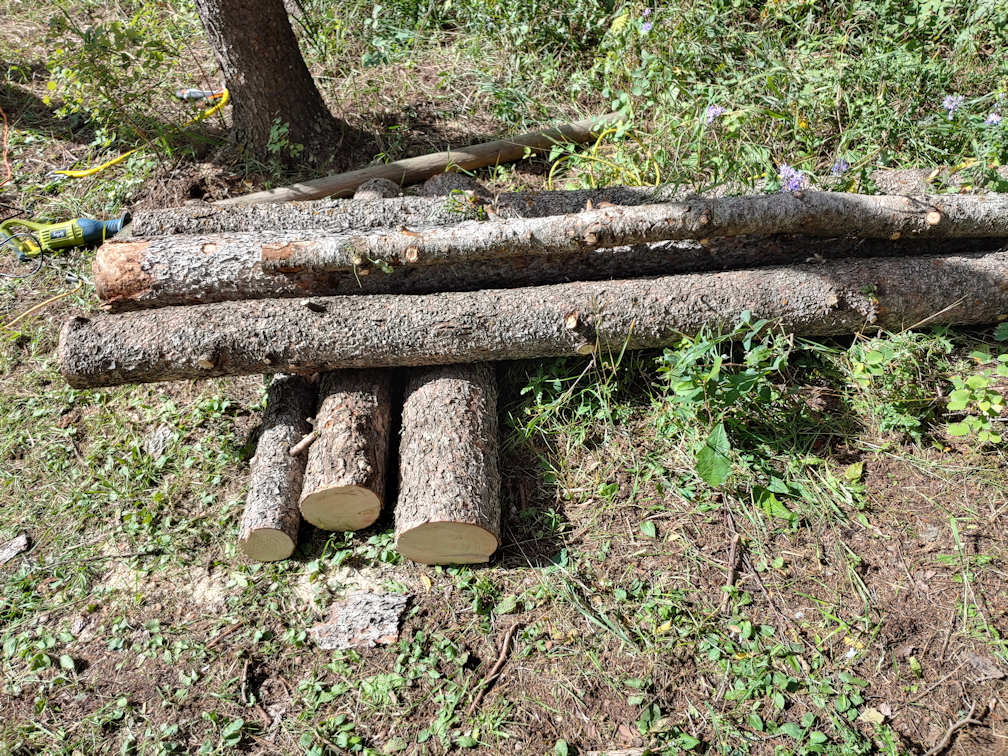
Here is how it looked when I stopped for the day. I did try to use the rope and our van to try and get that first tree loose from the dead tree it’s hooked up on, but the rope kept breaking. We don’t have any stronger rope. If we’re going to need to use the van anyhow, I will pick up some sturdy rope and hook it up to near the base of the trunks, and pull the entire trees out into the yard, where we will break them down.

Since the wood is in such good shape, these will be used to make the high raised beds we will be building in the main garden area, where we currently have the low raised beds we’d planted spinach, onions and carrots in. I’m thinking of cutting the logs into 10 ft and 4 ft lengths, and I figure it will take about 4 logs to get the accessible height we are after, though of course, that will depend on how big the individual trees are. We don’t have a lot of time left, if we want to get these ready for next year. I’m hoping to get at least a couple built for next year. By using whole logs like this, we won’t have any concerns about the sides bowing out under the weight of the layers of wood, compostable materials and soil they will be filled with.

Once these dead trees closer to the edge of the spruce grove are down, we’ll be able to feel the other ones towards the yard, and there will be no other trees for them to get hung up on!

Once all the dead trees in this corner are down, and the area is cleaned up, we will be able to convert the trunks into seating and surfaces. Then we can start planting food trees that need a protected microclimate. I will be testing the soil, and if the acidity from all those decades of spruce needles is high enough, I hope to be able to plant blueberries. We do still want to grow a mulberry tree, since the one we got this spring got killed off by that one cold night in May, and it was in here that we originally intended to plant it. I think, this time, we will try and get a Canadian variety we found out about, that is increasingly endangered. We will still need the microclimate for it, but if we can help keep a variety at risk going, that’s what we prefer to do, if we can.

There are a lot more dead trees further to the east and around to the south, inside the spruce grove. Some will also have their trunks converted to seating, but as we go further into the grove, I want to start transplanting more spruces into the spruce grove! :-)

While we are getting rid of the spirea, we will be leaving the wild roses and red bark dogwood as underbrush. I will probably take out most of the chokecherries I’m finding in here, as there are so many, to make room for the Saskatoons to spread. We will also be transplanting new spruces in here, though more strategically. Lots to do, but I am really looking forward to when we have a lovely little sanctuary in here, where we can sit and enjoy the outdoors, somewhat protected from the elements by the trees. :-)

For now, however, I’m going to get some tweezers, and get that thistle thorn that got through my gloves!

The Re-Farmer
Well, that didn’t happen as planned!

Oy. What a day!

My main goal for the day, having used the weed trimmer all over the inner yard for the past two days, was to get the mowing done. So I checked over the riding mower, topped up the oil (it burns through oil rather quickly) and the gas, and got it going. I didn’t even have to recharge the battery this time. ;-)

I barely got 30 feet of actual mowing when it simply stopped.

Not the motor. That was still running. It just stopped moving.

The chain has fallen off again.

*sigh*

I didn’t want to deal with it then. Putting the chain back and tightening it is not an issue. The problem is finding a safe way to access it, with the materials we have.

No worries. I broke out the push mower. It would mean a LOT of walking, but I don’t mind that.

My husbands prescription refills were due to be delivered, so I had the gate open for the driver. I decided this was a good time to mow outside the gate.

Which is where I found these.

Little puffball mushrooms!

I’d run over a couple with the mower, but once I realized they were there, I worked around them. They are edible at this stage, but I am leaving them be. I’d rather they reach the spore stage and spread. :-) They are so small, I’d rather get an area infused with the Giant Puffball spores we have, and hopefully be able to have steak sized mushroom slices. :-D

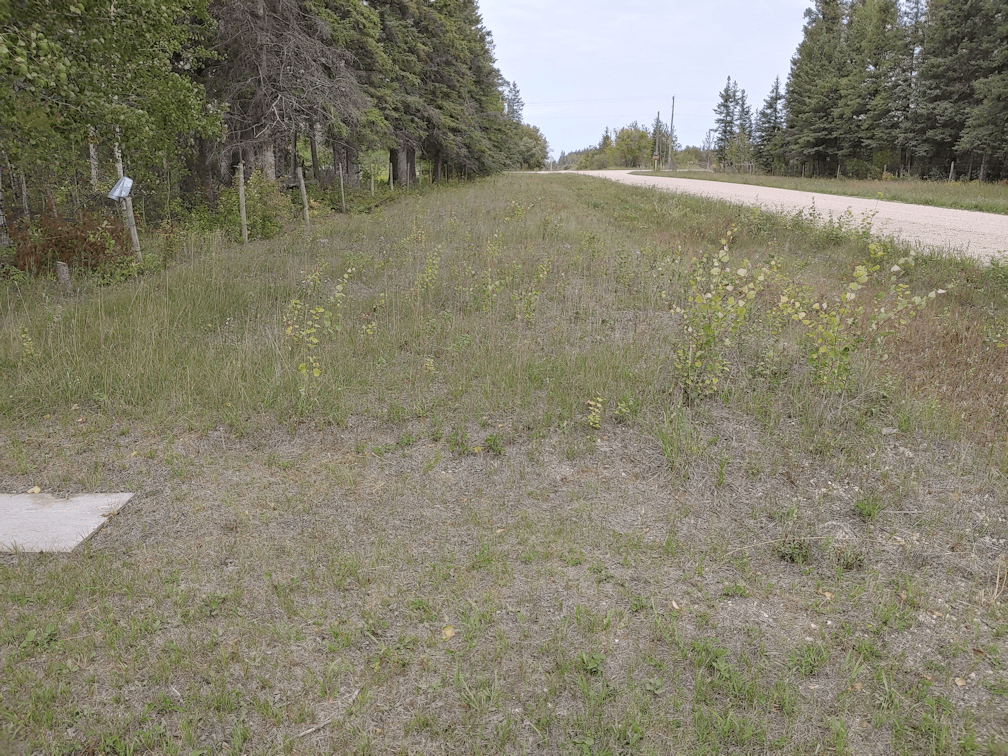
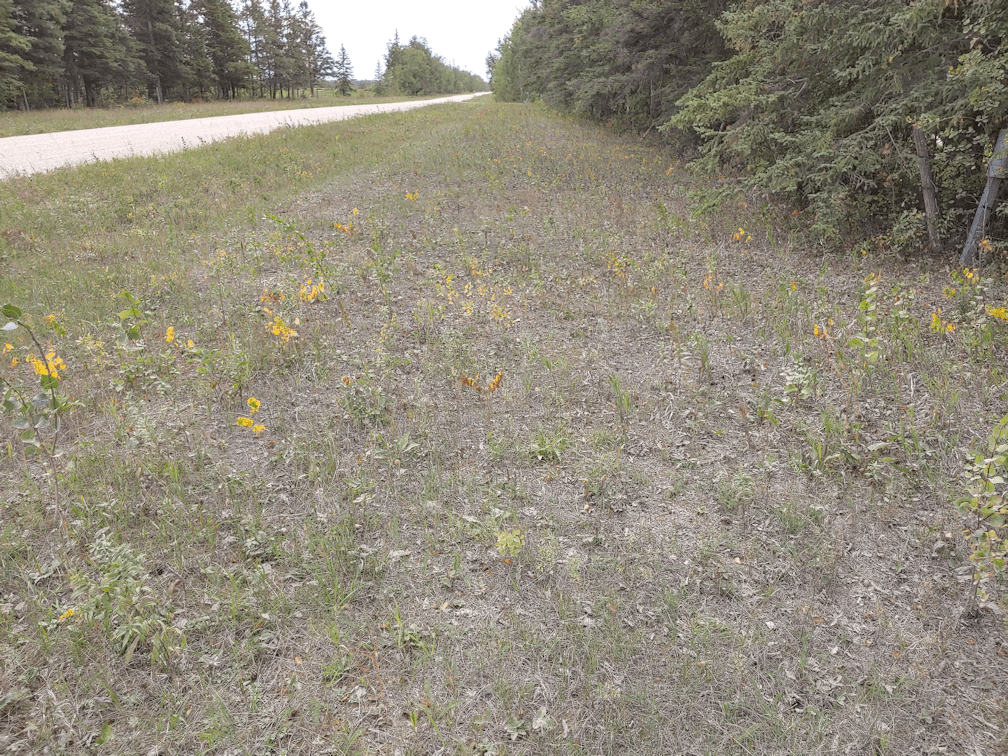
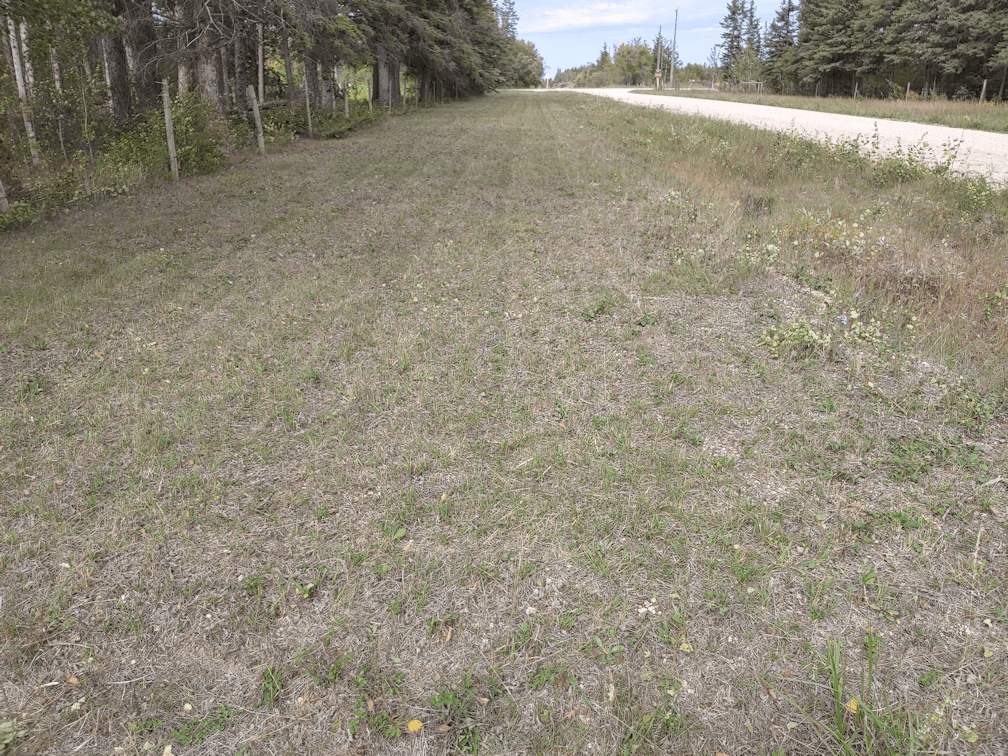
After mowing the area on either side of the driveway outside the gate, I started working on the level area between the fence and the ditch. The far end of this is where we want to spread the pollinator wildflower mix of seeds we have, so I wanted to start preparing the area by mowing it, and cutting away the saplings that are starting to spread into there. I really don’t want that area to get filled with trees. That was allowed to happen on the other side of the driveway, and it really affects visibility.

I started cutting along the the barbed wire fence first. Where it was open enough, I would even go under the wire a bit.

I didn’t even get halfway down the length of the fence, when I somehow managed to get the barbed wire stuck in the mower. It slid over the top of the plastic cover the air filter fits into, then somehow managed to slide in between the plastic cover and the motor, getting stuck.

So I shut the mower off and fought with the wire, trying to get it out. A barb was basically right in the middle, and kept catching, but every time I tried to move the mower so the barb would be at a wider gap, it would roll right back again as soon as I tried to use both hands to get the wire out.

Eventually, I got it out, but in the gap, I could see a couple of wire pieces had come loose.

Of course, it wouldn’t start after that.

After fussing with it for a bit, I took the mower back to the garage so I could take the cover off. After fighting with it for a while, I realized I would have to take off the plastic cover with the air filter, but I couldn’t for the life of me see how it detached. Also, while I could see where the end of one wire piece was supposed to be attached, I couldn’t see where the other one was supposed to be attached. The user manual had nothing about the engine. I went online to try and find a diagram, but while I found some with one of the pieces – which I finally found a name for; a governor control arm – none had both. For my specific brand of mower, all I could find was a pdf version of the owners manual I already had. I knew the general location the piece was supposed to be attached, but I could not see what and where it was supposed to hook up.

This was the point that I decided I needed some guidance. I was able to contact my brother and his wife and arrange to go over. The timing worked out perfectly. I was just starting to load the lawn mower into the van when the driver arrived with the prescriptions.

I’m glad I did.

My brother has the lovely set up that allowed us to work on the mower at a comfortable height. They also had company, so I had two people available to figure it out! :-)

After taking the cover off the air filter and checking out what was loose, we had to take the whole piece off. It turns out there was a reason I couldn’t see how it was removed. The screws were hidden under the air filter.

I have to admit, I actually felt rather encouraged when neither of them could figure it out at first, either! :-D

Here was the problem.

Once it was open, my brother was able to get the end of what turned out to be the control arm for the choke, back where it belonged. The green arrow is where it had come loose, and it was a pain in the butt to get back into place!

The governor control arm is the piece below. The end with the purple arrow had been in the hole on the governor where the other purple arrow is pointing. That end had still been attached.

The other end had been attached somewhere around where the blue arrow is pointing. Somewhere around there, there should have been a hole for the end of the control arm to slide into.

After much searching and moving things as much as could be done without having to unhook the fuel line, we came to a conclusion.

The reason we couldn’t find where it was supposed to be attached, was because something had to have broken off. We couldn’t actually see what looked like the rough edge of broken plastic, but there could be no other possibility.

My brother was determined to get it going for me, with at least a temporary fix. After searching around among his supplies, he found a length of ceiling tile wire. He used it to create a small loop for the control arm, then wrapped it around that plastic part the blue arrow is pointing to, under another control arm with a spring on it (not visible in the photo). I can’t remember the name of that one, anymore.

Once the wire loop was attached, it was still difficult to get the end of the governor control arm in place. That thing has no flexibility! Eventually he got it, though. Then everything was put back together, and the mower got tested out.

It started like a dream. Even better than when I’d started it earlier!

There is still the possibility that the wire might vibrate out of position or something, but that gives me time to try and find the part. Which is going to be a bit of a challenge, since none of us have any idea what it’s called.

By the time that was done, I got invited to stay for supper, which was very sweet of them. :-) Especially since supper included smoked ribs! :-D I didn’t want to stay too long, though, as I knew it would be dark before I got home, and this time of year, there are a lot of deer crossing the highways.

Once home, it was full dark, and I didn’t even bother unloading the mower. I’ll leave that for tomorrow.

I think, however, I will finish mowing the inner and outer yards first, before moving back to the strip along the road!

The Re-Farmer

Golden

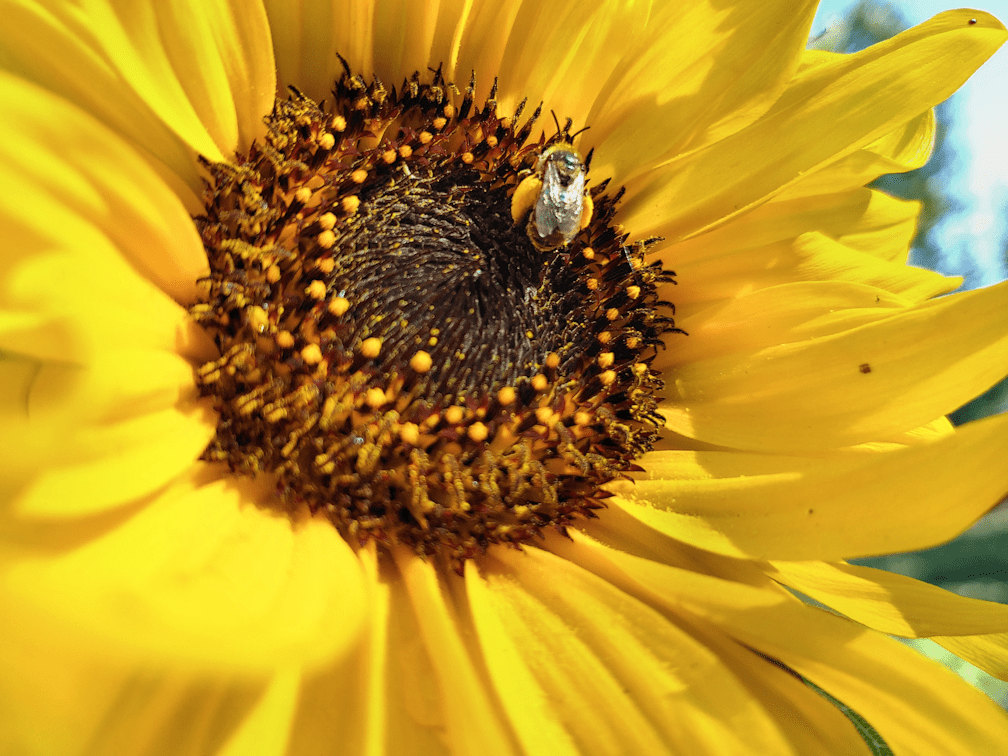
A lovely little bee, laden with golden pollen, on a Hopi Black Dye sunflower!

I was very happy to see it this morning. Strangely, I have not been seeing very many pollinators since we finally got rain. We still have flowering summer and winter squash, beans and peas, along with the sunflowers. With the sunburst squash, which is the most prolific of them all, I can see quite a few losses due to lack of pollination. The Magda squash as well, and we only have the one plant. We have plenty of yarrow blooming, among other wildflowers, so there is plenty to attract them. It’s one of the reasons I haven’t tried to get rid of the wasps nest in the crack in the foundation under the old kitchen. They are almost the only pollinators I’ve been seeing lately!

The Re-Farmer

A little gift

I’ve had a bit of a dilemma lately.

What do you get a 90 year old for her birthday?

I mean, by the time someone reaches 90, they pretty much have everything they want and need by then.

Ah, but there is an added twist.

The 90 year old in question is my mother.

My mother is… difficult. And often obliviously cruel.

Still, the family is planning a birthday party for her, and I will be driving her to it.

Yesterday, I finally settled on getting her a necklace. I already know she will complain about it but she might actually wear it anyway.

I also decided to make it a double gift, and stayed up late last night to make this little bag, rather than wrapping the necklace in a jewelry box.

It’s about 3 inches square, and the necklace is already in it in the photos. I figure she can use the bag to hold her rosary or something, afterwards.

This was done using a tulip stitch, which I’ve never done before. Here is the video tutorial that I used. It’s really quite simple.

The main difference is that I worked the bag in the round, rather than a flat panel, so I just needed to have a total number of stitches divisible by three, without the +1 needed in the starting chain when having to turn rows. The single crochet rounds in the bag are 48 stitches.

The yarn is from a package of cotton mini skeins in 8 colours, similar to Lion Brand’s Bonbons. It was gifted to me, and I’ve hung on to it for years before finding a project I wanted to use it for! :-) The bag used four colours, and I used a 2.25mm hook. After the bag was completed, I did a round of single crochet to finish the edges and create a button loop, then crocheted bobble stitch flower petals around the button loop. The button itself was from a bag of mixed, vintage buttons.

I’m happy with how it turned out. My mother will probably hate it. At least out loud and in public. Privately, she might actually like it. It’s really hard to know, with her! :-D

The Re-Farmer

Green gold

Today, one of my daughters and I headed out to do more of our monthly stock up that I wasn’t able to do when I did our Costco run. It was a good opportunity to also order and pick up my husband’s birthday pizza. :-) It’s not his birthday today, but we tend to spread out our celebrations over several days.

Before we got to indulge, though, we had some green gold to gather.

Today we hit 23C/73F with the humidex at 25C/77F, and full sun. That gave the grass clippings from yesterday’s mowing in the outer yard a chance to dry. My other daughter helped me rake it up and haul it over.

We now have a nice little haystack next to the compost pile, ready to be used in the low raised beds. This is from the two areas of the outer yard pictures, plus one more wheelbarrow full from the overgrown lane between them.

It would have been nice to have clippings like this throughout the summer; they would have been a huge help in keeping the garden beds mulched when it was needed most! Ah, well. Now that we have it, it will help us prepare our garden beds for next year! :-)

I never thought I would get all excited about having and collecting grass clippings. :-D

The Re-Farmer

Got it done!

We’re having some pretty hot and humid days of late. Not heat like we’ve been having all summer, thankfully, but more “average for August” hot. Though it didn’t rain last night, when I came out to do my morning rounds, the dew was so heavy, I would have though we’d had some, had everything else not been completely dry.

The squash and gourds are certainly enjoying the moist heat!

The Ozark Nest Egg gourd plants are busily climbing the fence and blooming – and completely dwarfing the Thai Bottle gourd plants (on the left).

One of the flowers even made its way through the chicken wire critter barrier! :-D

So far, they all appear to be male flowers. No gourds forming, though it’s possible there are some hidden under the leaves. I won’t mess with the chicken wire to look.

Thanks to all the wonderful rain we’ve had, the grass is actually green and growing again, and in need of a mow. It took hours for the grass to dry enough for that to be an option, which meant mowing during the hottest part of the day.

Or it would have been, had the battery on the riding mower not been dead! It’s only been used once this year, and I had to charge it then, too.

With the time it took to charge the battery, it was actually starting to cool down, so I guess that was a good thing! I took advantage of it and was able to do both the inner and outer yards, including areas I did not more the one other time this year we mowed. I kept doing as long as the light held, and managed to get it done just before it was full dark, though the yard light had turned on well before I finished. I was even able to mow in front of the storage shed. Which means that, weather willing, in the next day or two, we’ll have lots of grass clippings to rake up and set aside for the garden.

By the time I finally came inside, it was 9pm, but it was worth it! :-)

The Re-Farmer

Checking things out

After all the wonderful rain we’ve been having, I just had to go and check out some areas beyond the outer yard.

Of course, that included the old gravel pit! Here’s a slideshow, covering just over 3 weeks, from being newly dug out to today.

The first photo was taken the day the pit was dug, on the 7th, though it was deepened slightly a couple of days later. The next photo of the first puddle of water was taken on the 10th. By the 14th, it was noticeably lower, and by the 20th, looking almost gone. The next photo was taken on the 21st, and the last was taken today, the 23rd.

There’s a nice little pond started in there, thanks to the wonderful rains we have been having. Had the renter not had this dug deeper, there would have been little more than a muddy puddle, only slightly larger than the pond not far away. I checked that out, too, and for all the additional rain we’ve had, there really isn’t much more water visible there than the last time I checked it out.

Since I was in the area, anyhow, I decided to check out another low, almost marshy, area close to the road that is partly in where the renter has his corn. Driving past, the feed corn looked pretty good, but this was the first time I got a real look at how it was doing.

What a mix! In some areas, the corn was taller – though still only about 4 feet high – with swaths of shorter corner, here and there.

This spot was the most extreme in corn shortness! Not far past this, it started getting tall again. Especially right in the corner, near where the low area I wanted to check out was. While walking along the fence line, I could see where deer had chomped off the tops of some of the developing corn cobs.

Our views while driving by on the road was deceptive. While most of it seems to be doing okay, if shorter than normal, there is a lot where the feed corn isn’t much better than our own sweet corn! Though even the smallest of the feed corn is sturdier than ours. That would be the difference in soil nutrients. The renter has been good about amending the soil with manure, composting in old hay and straw – even the stalks from last year’s crop – and keeping up the nitrogen.

Last year had been such a bad year for crops, and this one has been even worse. Depending on the next few weeks, though, it does look like the renter will have something to harvest, at least.

As for the low area I had gone to check out, there was no sign of water there at all. Not even where it merged with the ditch along the road. It was, at least, looking a big greener than the surrounding areas, but that was pretty much it.

The Re-Farmer

Morning Mystery

Well, it looks like we’re down another bird feeder.

This is all I could find this morning. The top cap and the base.

There is no sign of the seed canister and the frame.

The canister is somewhat understandable. It’s just clear plastic, so it would be harder to see if it ended up under the lilacs or something. The frame, however, is red. It should be easily visible.

There is no sign of either.

I’m sure we’ll find them eventually, but I am curious what happened to them. With the winds we’ve been having, I’m almost willing to accept that the feeder was blown apart in the wind. On the one hand, that doesn’t make too much sense, since at least the top would still be on the hanger, and the pieces would be nearby. On the other hand, it seems very unlikely that critters did the damage, because of the weather conditions we had last night. Critters would have been taking shelter, not climbing posts for bird seed. Especially since there are still piles of sunflower seeds on the ground from when the big feeder fell down and broke apart.

Curious, indeed!

The Re-Farmer