Our 2024 garden: T&T Seeds order in

I had an order started with T&T Seeds about a month ago. I wasn’t quite decided on things, so I hadn’t completed it when my computer died.

Today, I logged into my account. No surprise that it had been dumped by now! Unfortunately, I couldn’t quite remember everything I had in there. It wasn’t much, and I remembered in a general sense, so I tried my best.

This is what I just finished ordering. All images belong to T&T Seeds.

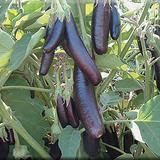
The first is a tomato. After experimenting with so many last year, my daughter suggested we do just the paste tomatoes I want, plus a cherry tomato. We did get free tomato seeds with our Heritage Harvest order, and I want to try at least a few of those, but I still wanted to order a variety of cherry tomatoes for fresh eating.

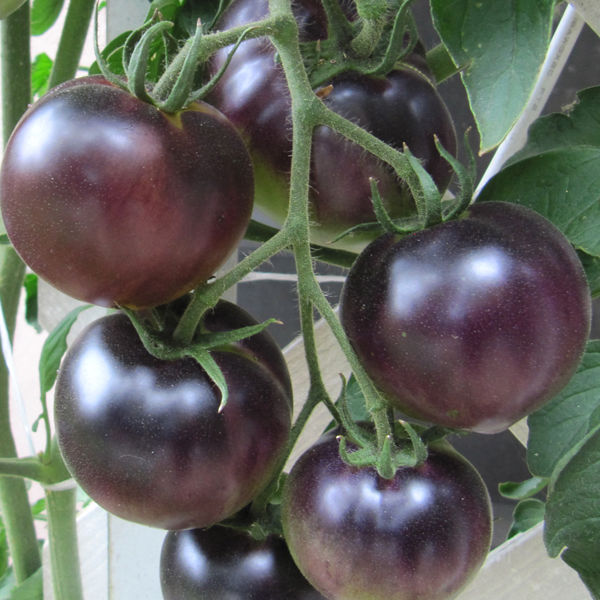
I was torn between two varieties, until I saw that one of them was more expensive – and for only 10 seeds! So I got these Black Cherry tomatoes, instead! It comes in a packet of 25 seeds. This is an indeterminate variety that will need staking.

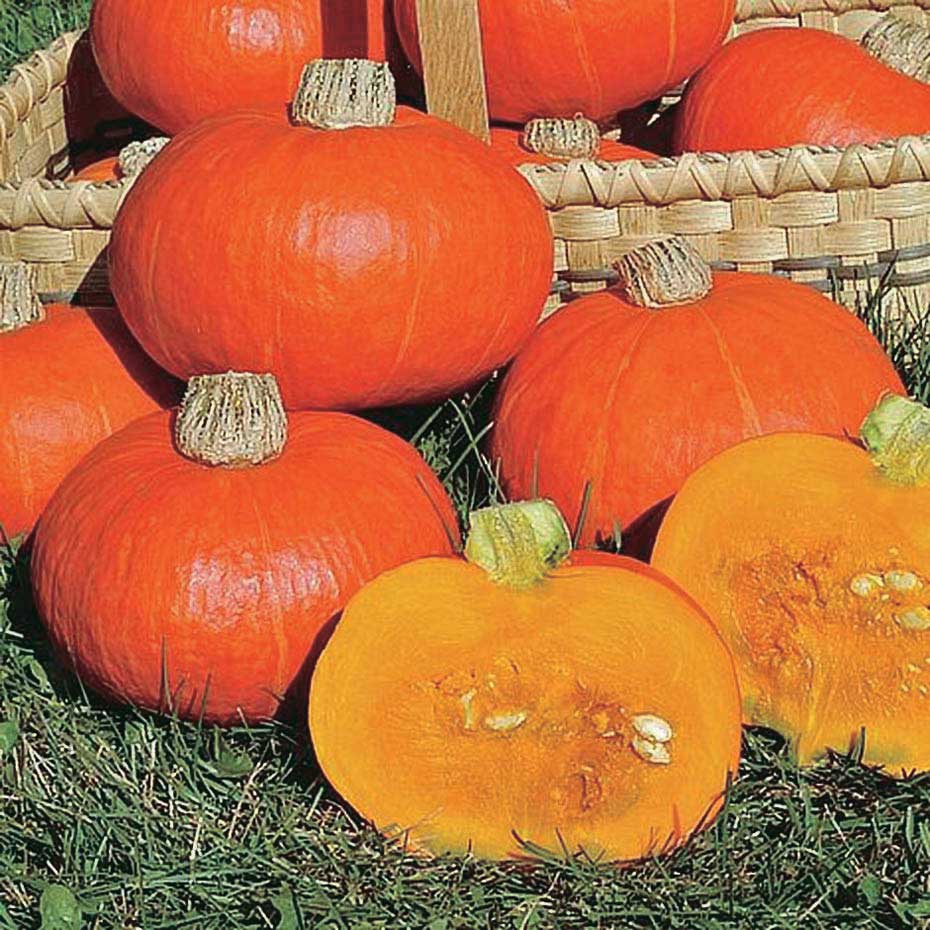
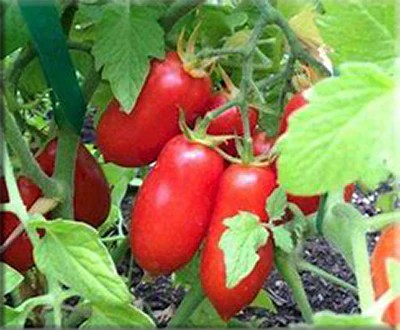
Yes, we ordered yet another squash variety! My older daughter requested this. In the catalog, it’s called Winter Sunshine Hybrid, which I couldn’t find in the website. I was able to search the product code, though, and on the website, it’s just called Sunshine Hybrid. What caught my daughter’s attention is that it’s supposed to make the “best” soup. At only 80 days to maturity, this is something that we could technically direct sow but, with our slug issues, I think we’ll start them indoors!

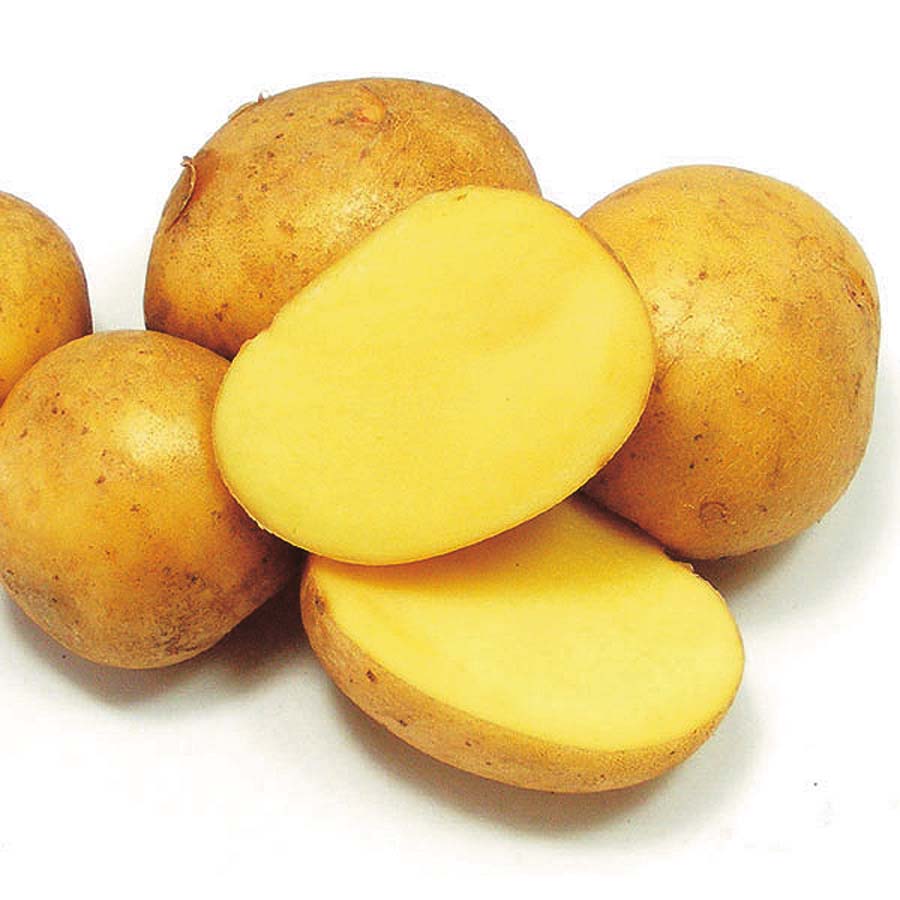
We’re going to try two new varieties of potatoes this year. The first is a yellow potato.

This is the German Butterball potato. It is supposed to be a good winter storage variety, and a good all-purpose potato, so I ordered two 1kg bags.

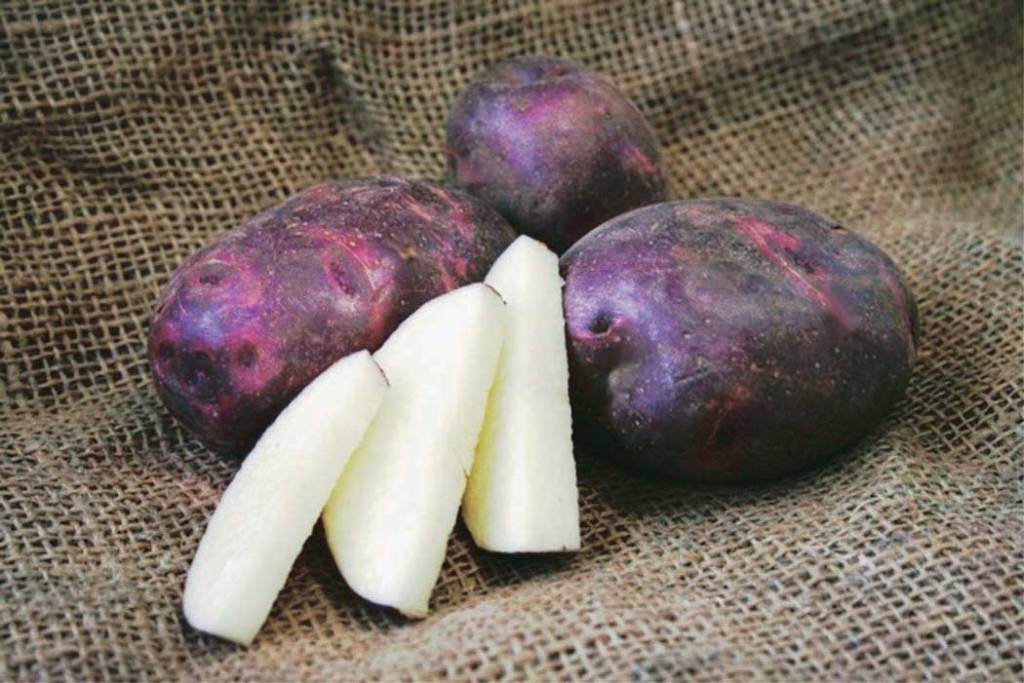
I was torn between trying another all purple potato, or a purple skin white potato. In the end, I settled on this Purple Caribe. It’s supposed to be a good mashing potato that isn’t fussy about where it grows – which matters, with our soil conditions! I ordered only one 1kg bag of these.

This year, I’m considering growing the potatoes where we had the big squash patch for the past two years. I’m hoping a couple of years of heavy mulching will have made the soil easier to dig into, to plant potatoes. The alternative would likely be to use grow bags again, but I don’t think I’ll do that this year. We shall see. The potatoes won’t get shipped until planting time, so we’ll have the opportunity to prepare a place in advance.

The entire order cost under $40, but with tax and shipping, it came out to over $60! To have it shipped by mail was basically $20. I’m not impressed with that. Alternatively, we could have picked it up at the store, which 1) would still have had a shipping and handling charge of a little over $5 and 2) is nowhere near us, so not an option, anyhow! 

Hopefully, the product will be good. We’ve ordered short season sweet potato slips from them before, during what turned out to be a really difficult growing year, so they didn’t have a chance to grow well. I looked into trying them again, but the price increase was way too much. Frustrating.

Anyhow. 

This will probably be our last seed order for the year, though I hope to order at least one fruit, berry or nut tree this year. We still need to decide on what we want to start this year. Aside from that, I would like to pick up more strawberries, but we will probably buy transplants in the spring, rather than order online.

My main focus for this spring is going to be increasing the number of beds we can plant in. The tunnel beds are high on the list, but if at all possible, I’d like to do something with the low raised beds we currently have. They were always intended to be temporary set ups, but with the troubles we had last years, from tree roots at the far ends, to whatever infected those red onions and Roma tomatoes, they need to be reworked. Right now, they are bordered with short lengths of logs from the trees we had trimmed away from the house and power lines, and I want to replace those with longer logs (if we can harvest enough dead trees!), make them lightly higher, and consistent in width and length.  Right now, some of them are a bit wider and, with low raised beds, that makes it harder for us short people to reach. In the future, I need to remember that a low raised bed, accessible from both sides, should be no more than 3 feet wide. By making these even just one log higher, we can keep them at 4 feet wide. We might not be able to do that until after the growing season is done, though. We shall see!

Can you tell the warm weather has me itching to get working outside? 😂😄😂

The Re-Farmer

Staying home today!

I’m going to enjoy not going anywhere today. 😁

A good day for gardening videos, like this one.

We still have not been able to start seeds indoors. I need access to the aquarium greenhouse, but we’ve got too much shoved in front of it that we don’t know where else to put. Like an armchair that needs repair. It will probably have to get moved to the storage house, but there’s too much snow in the way to carry something like that.

We really need to get those onions started soon, though!

The Re-Farmer

Our 2024 garden: Heritage Harvest order is in

Today was a day of running around, starting in the afternoon. We had a dump run to do, and I had to wait until they opened. From there, it was a stop at the post office, then off to my mother’s to drop some Christmas stuff off, before I headed to the pharmacy to get more mineral oil. The girls cleaned the cats’ ears while I was out, using the last of our mineral oil to do it, and we have another 4 or 5 days of daily cleaning. Hopefully, that will take care of the ear mites!

I made sure to let my mother know I could pick stuff up for her since I was there anyhow, so she had a short list for me. I took care of that after I went to the pharmacy. Before leaving town, I messaged the family to see if we needed anything and ended up going back to the grocery store. By then, I was pretty famished, and there’s this excellent Chinese restaurant, right next door! So we had Chinese take out as a treat for supper.

The down side of all this running around is that it was already dark by the time I headed home. I hate driving at night. Yes, I have the deer screamers on the truck, but with the lights from oncoming traffic, it’s impossible to see if there are any deer on or near the road.

Once home. I was happy to go through the mail, as our Heritage Harvest seed order was in. It included a lovely surprise

I didn’t expect to get free seeds for such a small order! Of course, I had to look them up. This image is from the Heritage Harvest website.

Forme de Coeur Tomato

From the website description.

This wonderful heirloom originates from Quebec. Forme de Coeur really impressed me this summer and it is now one of my new favorites! The red heart shape fruit are medium size and produced in abundance. The fruit have great taste and are quite meaty. A great all purpose tomato that is early as well. Determinate, regular leaf foliage. (65 days from transplant)

25 seeds per packet.

We were planning to plant only 2 varieties of tomatoes next year, but we might just have to try these! Especially since they have such a short growing season.

The main thing, though, is that the Red Wethersfield onion seeds are in. We now have all our onion and shallot seeds, which will be started indoors next month. 😊

I can’t wait to get growing!

The Re-Farmer

Our 2024 garden: Heritage Harvest seed order is in

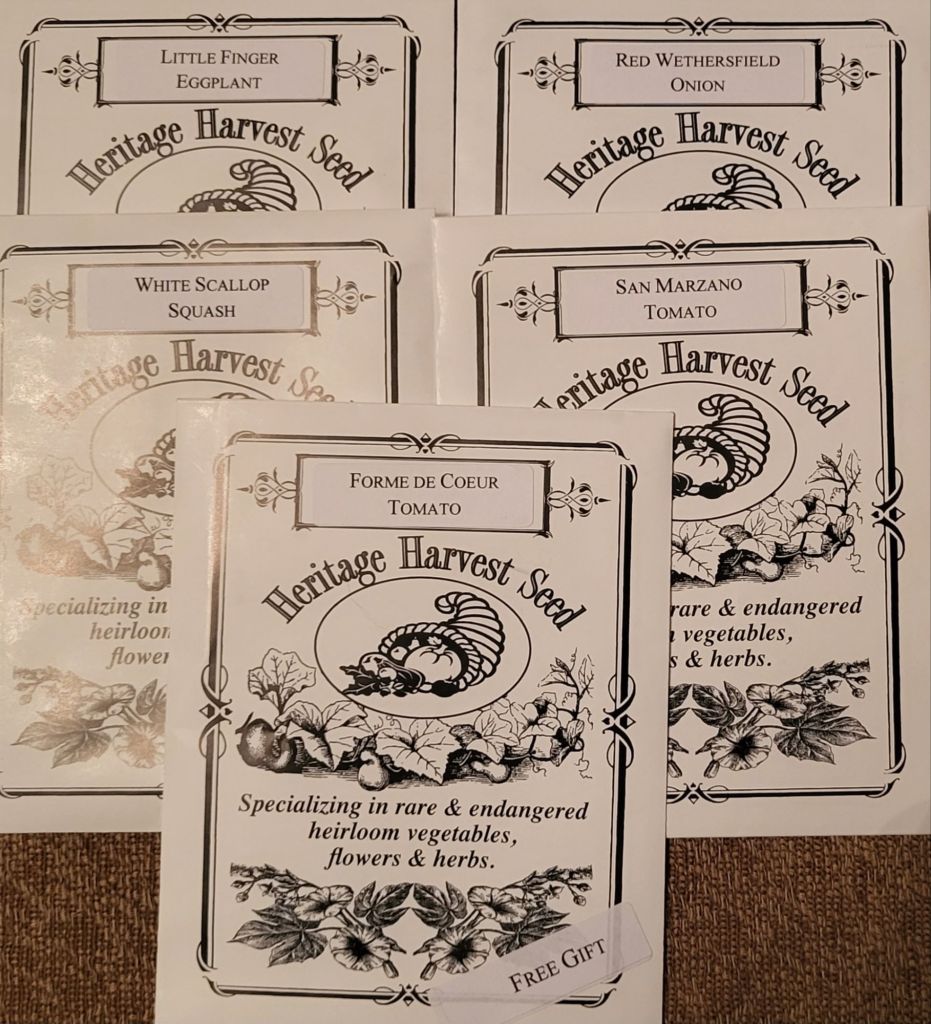
Today, we placed our second seed order for next year’s garden. This time, from Heritage Harvest Seed. (All images belong to Heritage Harvest) They specialize in rare and endangered seeds and, more importantly for us, grow their own seeds and are in a zone 3 location that’s even further North than we are, so we can be quite confident that anything we get from them can grow in our short season.

Unless something else causes problems!

Which is why we are re-ordering two items that failed last year.

Little Finger Eggplant

We grew these a couple of years ago and they were among the few things in that terrible growing year that did rather well, though they never had a chance to reach their full potential. Last year, we tried growing them in the block planters by the chain line fence, and the transplants just didn’t grow. Next year, we will have to be more selective on where we transplant them. We also had issues with starting them indoors that we did not have the year before, so we need to take that into consideration as well.

Red Wethersfield Onion

We tried these last year and, while the seeds germinated very well and we had plenty to transplant around our Roma VF tomatoes, they just… disappeared. The tomatoes also got blight, so I believe it was a soil problem in that bed. I really like the shape of these onions, and that they are supposed to be a good storage onion, so I want to try them again. As with the eggplant, we will need to give more consideration as to where to transplant them. 

These next two are new varieties for us to try.

San Marzano tomatoes

We are still looking for a preferred paste tomato. I keep reading how the San Marzano is supposed to be the best for sauces and canning. Honestly, all the excessive praise I have been seeing about them is one of the biggest reasons I hesitated to get them. However, I am willing to give them a try, and see if they live up to the hype.

White Scallop summer squash

When it comes to summer squash, we seem to have the best results with patty pans (aka: scallop squash). This is “An ancient summer squash that was a traditional food crop of the northeastern tribes for centuries.” I’ve actually been eyeballing this variety for a few years, and have decided to pick up some seeds for this coming year.

Not a large order at all, but we don’t need a lot of seeds this time around.

Must… resist… getting… more! 😂

There is one more Canadian company we will be ordering seeds from – and seed potatoes. I was just talking with one of my daughters, and there were several winter squash varieties in their catalog that caught her attention. 

I have my suspicions as to why so few of the different winter squash, pumpkin and melon seeds we started indoors for 2023 germinated. I hope to be able to fix that this time around. Which means that for 2024, we’ll be once again shooting for a few plants of many varieties (I’ll be skipping the pumpkins this time, though) to see what works and which ones we like the best. 

The main thing, though, was to get the last of our onion seeds ordered, since they need to be started indoors so much earlier than anything else! That goal is now accomplished.

The Re-Farmer

Our 2024 garden goals: review and reset

Okay, now that we’ve gone though and analysed how our garden did in 2023, it’s time to use that information to review and reset our plans for our 2024 garden.

For the past few years, we’ve done a lot of experimenting. We will continue to experiment, but some things will be set aside for now, to try again later.

Photo by Binyamin Mellish on Pexels.com

So let’s go through the different categories again.


Fall garlic, perennials and food forest items

Our fall garlic is already planted. This year, we’re just doing one variety, so we got 3 pounds of garlic and they’re planted in locations, in the old kitchen garden. Hopefully, they will survive the winter in their raised beds, and we’ll have a good harvest out of them. Garlic will be a staple crop. We might still try other varieties to find which one we like best but, at this point, it’s more about figuring out how much to plant to meet our needs.

We’ve also got the unexpected purchase of saffron crocuses planted already. I’m quite excited to see how they do. They’re zone 4 and got extra protection for the winter, but our winter has been so mild so far, they should do just fine.

Berries, fruit trees and expanding the food forest

What we do next here will depend on our budget. With fruit and nut trees, they really should be planted as early as we can get them, since they can take so long before producing. We still need to get more sea buckthorn, since we lost 3 out of a bundle of 5. We got two tiny Trader mulberry along with our Liberty apple tree. They didn’t have stock of the usual sizes they ship, so instead of one 2 yr seedling, we got two 1 yr seedlings. Those were so small, we ended up keeping them indoors. They’ve grown quite a bit and, as I write this, they have gone dormant for the winter. Hopefully, they will start budding in the spring, as we harden them off before transplanting outdoors.

We might get another, hardier variety of apple tree, but we also need to keep in mind that almost all the crab apples we have now are dying of a fungal disease, and once that gets in the soil, there’s no getting rid of it. We’re looking at hardy plum and pear trees, but I’m also keen on getting things like hazelnuts, butternuts or black walnut trees. The hazelnuts bushes, at least, will start producing in 3-5 years, unlike the much longer time needed for the bigger trees.

We have black currants that need to be transplanted out of the shady area they are in now, and the haskap probably need to be transplanted, too. They have yet to produce.

Saskatoons are on our list, as are gooseberries.

More raspberries are definitely on the list. The goal is to have different varieties that mature at different times, so extended harvesting.

I would like to get more strawberry transplants and use them as a ground cover under food forest transplants. Those are something that should to be replanted elsewhere every few years, so that would work out.

We intended to get green asparagus and more purple asparagus, in alternating years, but we are having trouble figuring out where to plant something that we can expect to produce for 20 years, so that will wait.

No change on the sunchokes. They’ll take care of themselves at this point.

We also need to figure out where to plant annuals that we can treat as perennials that we didn’t plant in 2023, like strawberry spinach, dill and other varieties of bread seed poppies.

We also need to get native wildflowers to attract pollinators growing. Those will be scattered about, and bordering other areas.


Root vegetables

Potatoes will, of course, be grown again. I just don’t know where, yet! While I like the fingerling varieties, I don’t like fussing with smaller potatoes as much, so I think this year I will focus on just two basic varieties, one a white or yellow potato, and one a red potato. Scab resistance and storability will be the main factors to consider when choosing varieties.

I think we’ll need to skip beets and turnips for a few years. I’d still like to grow a couple of radishes for their pods but, so far, none have had a long enough growing season to reach that stage, so it might be skipped. We might still grow a few radishes for their roots, for those family members that enjoy them.

Carrots, however, have done well, so we’ll keep growing those for sure. I can’t remember if I still have Uzbek Golden carrot seed left, but do want to grow those again. The only down side is that I haven’t seen a Canadian supplier, and the cost of ordering from the US is getting too high. I’ve got lots of seed for other varieties, though.


Onions and Shallots

These will continue to be staples, even as we try different varieties to see what works. I’ve just got seeds for yellow globe onions and pink shallots in, plus I need to get seeds for a red variety. It’s yellow onions we use the most, so finding something that grows well here, and stores well, is the priority over other types.


Tomatoes

We had so many tomato starts in 2023, and not enough space to transplant them!

While we liked the black varieties we experimented with, my daughters have suggested that for 2024, we stick with just one fresh eating variety, and requested it be a grape or cherry tomato type. Besides that, we will try a different paste tomato variety. Something more resistant to blight!

When cleaning up the old kitchen garden, the Spoon tomatoes still had some ripe tomatoes on them, so I just stuck those into the ground after pulling up the plants. Who knows. We might have some self seeded Spoon tomatoes next year!


Corn, peas and beans

I want to grow peas again, but would like to try them somewhere else. We have yet to have really healthy pea plants, even though we’ve managed to have some to harvest. Deer eating them is only part of the problem!

With beans, I still want to try the varieties we didn’t manage to plant in 2023, with both bush and pole bean varieties, plus dry bean varieties. If we have the space, I’d like to try the seeds I’d harvested from the self seeded varieties that grew in our compost pile. I still haven’t been able to figure out what they are, or where they came from!

As for corn, I think we’ll save experimenting with popcorn again for another year. Likewise with the purple corn. I want to focus on growing sweet corn. We have a couple of short season varieties that didn’t get planted in 2023, so I want to grow at least one of those, and a decent amount of them!


Peppers, herbs and greens

For the sweet bell peppers, my daughters have suggested we just do one variety, and they don’t particularly care what kind. They find they all seemed to taste the same. I do have a request to grow hot peppers, too. We still have plenty of seeds to choose from.

For herbs, it should be interesting to see what makes it through the winter. Did the chamomile self seed? Will the thyme make it? I normally would expect the spearmint to survive, but they’re in a pot, not in the ground, so they will likely not survive the winter. We will likely find other varieties of herbs to grow, as we convert our old kitchen garden into mostly herbs, but we haven’t decided what to try next, yet.

As for greens, we probably will skip the lettuces again, but I won’t be unhappy if the Jabousek lettuce managed to self seed. I also want to try growing the Hedou Tiny Bok Choy seeds I harvested our of the tiny little plants that survived being choked out by Chinese elm seeds.

At some point, I want to grow cabbage, but I don’t think it’ll be this coming summer.


Melons

We love melons, so we will definitely be growing them again. I just got a summer melon mix of seeds to try, plus we still have seeds left from the varieties we tried in 2023. I would love to get the Cream of Saskatchewan Watermelon growing. It’s a short season variety that I might actually try direct sowing, since starting them indoors was a complete failure!

Summer squash

These are a staple crop, and we still have plenty of seed for the green and gold zucchini, the yellow pattypan squash, and the Magda squash. I might need to get more G-Star seeds, as those seem to do so well here, but I’d also like to try a new variety of patty pans, too. If we can get control of our slug problem, these can be direct sown instead of started indoors.

Winter Squash

I want to try all the varieties we tried in 2023 again! We won’t have the space, though. We have the new Wild Bunch winter squash mix of seeds that just arrived, and those will probably take up most of the space we have available. If we have the room, I’d like to do the pink banana and candy roaster again, as they did so well. There are also others that didn’t do well that I want to try again, with better growing conditions. The main reason I am willing to dedicate so much garden space to these is for their winter storage that will provide food for us for many months.

Gourds

Gourds are something I’ve been wanting to grow mostly for crafting purposes. Especially the larger varieties, such as the canteen gourd and the African drum gourd. Luffa, of course, I want to grow for their sponges. Unfortunately, we’ve had issues with getting most of them to survive at all, never mind bloom and produce early enough to fully mature on the vine, even for varieties that I know should be able to do so, in our short growing season. I need to rethink where to grow these, and focus on improving the soil. I think that’s the source of most of our problems. These are heavy feeders, and our depleted soil needs more work. Whether or not we grow gourds again in 2024 will depend on having that sort of prepared space. They are not as high on the priority list for the upcoming year.


Eggplant

I definitely want to grow both the Little Finger and Classic eggplant again! We had the one Classic eggplant do surprisingly well. I now know not to plant any in those chimney block planters, but the wattle weave bed seems to be a much better space for them.


Salsify

My daughters had requested these, as the roots supposedly taste like seafood, and that appeals to them. With their deep roots that, from what we’ve read, are fragile, they were going to be grown in repurposed garbage cans turned into planters. It just didn’t happen. I’d like to give it a go in 2024 and see if we can successfully grow these at least once!

Sunflowers

We still have the seeds for Mongolian Giant and Hopi Black Dye sunflowers. They need to be grown while they are still viable. When we grew them before, we tried starting them both indoors and outdoors. The main problem was, the deer!

So I do want to grow these again, if we can figure out where, and how to protect them. With the Mongolian Giant, I want them to double as a privacy screen, too. Ideally, I would interplant them in the food forest area, but that’s where the deer traffic is heaviest!

Cucumbers

We still have Lemon Cucumber seeds that I wouldn’t mind trying again. We’ll see if we have the space. I don’t think we’ll bother with pickling cucumbers. The year we grew those, my sister dumped loads of cucumbers from her garden on us. We pickled as many as we could before we ended up having to toss the rest on the compost, because they went moldy before we could finish them.

We haven’t been eating the pickles.

My husband normally loves pickles. We only opened one jar, and that’s it. No one’s wanted to eat any of them, since.

I have no idea if our own pickling cucumbers would have done better, as we never had enough of a crop to pickle, though we did have some for fresh eating (they were a dual purpose variety).

Perhaps some day, we’ll try pickling cucumbers again. For now, though, if we try any, it’ll be for fresh eating, and I think the Lemon cucumber is an interesting variety I’d like to try – if we can get them to germinate and survive long enough to transplant!


So that’s my thoughts on what we want to plant. These are the other related projects we need to work on.

Raised beds

A priority needs to be put onto getting the trellis beds built. Then add the trellises and, if we have the time, join pairs of them to make the trellis tunnels we have in mind. We will also need to have portable trellises for climbers that will be planted in other beds that will not have permanent trellises built in.

The current low raised beds in the main garden area need to be rebuilt into more permanent fixtures, but the priority is to build more beds in general, first. Especially since we won’t be growing squash in the old squash patch again, and still plan to grow a lot of squash. That space will also eventually have raised beds in them.

The soil in the low raised beds, however, needs further amending, particularly to prevent soil compaction. I suspect soil compaction is the cause of a lot of our problems, even though we use mulches to help prevent that.

Rebuilding the garden tap

When I was a kid, helping my mother with her garden here, that tap came in so very handy. I hope to put a priority on getting that set up again, in a way that will last at least another 50 years! Along with the tap, which will be set up strong enough to support a garden hose attached to it, there will be a vegetable washing station and work station.

Garden shed

I want to at least get started on the base of this. We need to replace the old and rotting garden shed. I also want to do a small cordwood construction practise building. The original plan of building a 10’x10′ outdoor bathroom with composting toilet, to replace the outhouse, will be postponed. We’ve chosen a location for it, but when it comes time to fell the rest of the dead spruces, we need to be able to fell some of the trees in that direction, then drag logs through there.

So what I want to build first as a practise building is a smaller garden shed. Because cordwood walls are so much heavier, we need to prepare a base that will support that weight and not sink. That will mean bringing in gravel (now that we have the truck, we can actually drive to the gravel pit to collect some!) to cover the ground and raise the area a bit higher and level it. We plan to visit a ReStore in the city, or a salvage yard, to find concrete blocks or pavers to use as a floor, and a base for the cordwood walls.

The shed itself is planned out to be 6’x8′ on the inside, not counting the thickness of the walls. The cordwood walls will probably be 8 inches thick (for a larger building, like a house, they might be 12 or 16 inches thick, or even more), and have a shed roof, which will probably be a metal roof. The south facing wall will have a window – we have many salvaged windows, complete with frames, in the barn to choose from – and bottle bricks in the wall around it for light inside. We have doors in the barn and sheds, too, and should be able to find something we can salvage.

I want to take advantage of the cordwood construction to include longer logs in the walls, extending outside the northern wall closer to that garden tap, that can be used to build a bench and maybe a counter. Other longer pieces can be extended into the interior, closer to the roof, to build shelves on.

There are other things that are a priority that will take a lot of time and resources, but I do hope to at least get a start on the base. We really do need a good garden shed, and I’d like to build one that will last many, many years.

Well, that’s all I can think of right now. I’m sure I’m forgetting something!

We’ll definitely have our work cut out for us.

I’m rather looking forward to it!

The Re-Farmer
Our 2024 garden: Veseys seed order is in!

Today, our first seed order arrived in the mail!

It’s just a small order, but I wanted to make sure I had the yellow onion and shallots seeds in, since those need to be started indoors so early. I still have to place an order for the Red Wethersfield onions I want to try again, since they utterly disappeared after being transplanted, this past year!

With all the seeds we have left from last summer’s garden, I don’t expect to be ordering many seeds for next year at all. I do hope to be able to order more trees for the food forest this year, though.

I’m quite looking forward to what shows up with the melon and winter squash mixes!

The Re-Farmer

Our 2024 garden: first seed order in! Veseys

Yes, I just place our first order of seeds for next year’s garden. We might not need to order many seeds this year, considering how many we have left, but one thing we were out of completely was onions. Onions seeds only last one year, anyhow. Plus, today is the last day I can use the promo code from Maritime Gardening to get free shipping. 😁

This is what I ordered today.

I’m trying a new variety of yellow onion this year. Frontier. From the Veseys website:

Incredibly strong necks and consistent size! Frontier is a standout variety with our trial staff. Bulbs are golden, large and uniform with small necks that cure quickly. Ideal for fresh and storage markets, Frontier is long day hybrid onion with superb disease resistance. Matures in 100 days from transplant. Approx. 200 seeds/pkg.

(image belongs to Veseys)

I’m also trying a new type of shallot this year. Creme Brulee. From the website:

First Shallot AAS winner! An elongated shallot, Creme Brule has a citrusy flavour when eaten raw but when cooked, sugars are enhanced and do not leave an overpowering aftertaste. Bulbs are 4-5″ with a coppery pink skin. An attractive, easy to peel echalion, perfect for the home gardener or market grower! Matures in 95-100 days from transplant. Approx. 150 seeds/pkg.

(image belongs to Veseys)

I do still plan to try the Red Whethersfield onions again, and will probably get Red of Florence again, but those are from a different source.

Of course, I didn’t get just onions! I also got:

Yes, we will be trying to grow melons again (I’ll have a garden analysis post about this year’s melons coming up soon). We still have seeds, but I decided to get the Summer of Melons Blend. From the website:

Veseys exclusive! Best for the home gardener. This blend is the ideal solution to stretch out these beautiful summer flavours. It begins with sweet, early maturing hybrid varieties then keeps going through summer and into early fall. Maturity ranges from 75-85 days from transplant. Approx. 20 seeds/pkg.

(image belongs to Veseys)

I like having a variety, and having melons that mature at different rates – while still within our short growing season! – is bonus. It’ll also be a surprise, since the varieties included aren’t mentioned!

Finally, I got one more mix of seeds.

Yeah, me and my winter squash obsession! This is the Wild Bunch Mix Winter Squash. From the website:

Veseys exclusive! Great range of colours and sizes. This exclusive Veseys blend contains a riot of shapes, sizes and colours that will bring your fall display to the next level. Some of the weirdest and wildest looking squash that we have seen in our trials. Ideal for both home and market gardeners looking for a great display without having to buy separate varieties. All are edible, and are strong vining types so they grow well together. Approx. 20-25 seeds/pkg.

(image belongs to Veseys)

I’ll have a garden analysis about our winter and summer squash, too, which was a real hit and miss situation. We do still have lots seeds from what we grew (or tried to grow) this past year. I have zero interest in having a “fall display” (who would we be displaying it for, anyhow? 😄). I like to try new varieties, but am hesitant to buy an entire package of seeds for something I’m not sure of. This way, we get just a few seeds of different varieties to try and – if they make it! – see if we like them enough to order more in the future. At some point, we’ll settle on one or two favourites and save our own seeds. Until we get to that point, we would be dealing with cross pollination, so any seeds we save as we’re experimenting would give us different results that may not be as good.

Just a small order for now. Soon, I’ll place another order for the red onions, so that we’ll have all the seeds ready to start them in January. Because, where we live, gardening starts in winter!

Oh, wait.

It’s not even officially winter, yet!

The Re-Farmer

Our 2024 garden: winter mulching

It’s supposed to start snowing later, so it’s a bit of a now or never day to get those beds mulched before the ground freezes! I’m so glad my mother decided to have me come over to her place tomorrow instead of today.

If you scroll through the Instagram slide show above, you’ll first see the carrots that we are overwintering in the soil, harvesting them as we need to, rather than harvesting them all at once and having to process them for the winter. Quite a few people swear by this, and say the carrots taste so much better when stored this way. There was the remains of a pile of grass clippings next to that bed, so it was the fastest to get done. I used up pretty much the entire pile – I didn’t bother digging too far into the snow around the edges – and piled it right on top of the snow layer. The snow will also act as an insulator, as well as add needed moisture, come spring time. I put the cover back on, partly as a way to store it, but also to keep the grass clippings from being blown away. This is the only bed where that would be an issue.

Next is the old kitchen garden. All the garlic now has a thick layer of mulch, plus the chamomile, thyme and strawberries grown from seed are covered.

I also finally picked that last big luffa gourd. I’d forgotten about it! It’s now sitting in the living room to dry out.

I also remembered to put a deeper mulch on top of the saffron crocuses, plus a nice, thick “donut” of mulch around the Liberty apple tree. Both are zone 4 plants, so they need extra protection in our zone 3 temperatures. Some time ago, I added the tree protector. It’s wrapped around the stem and the bamboo stake together until it reached the bottom branches, and then got wrapped around the bamboo stake. As the sapling gets taller, the wrap can be adjusted accordingly. This area also has the fencing wire around it, so it should be safe from deer, but this will also protect from rabbits and other critters. Mind you, the yard cats do a great job of keeping the small critters under control, so we don’t have any rabbit or mouse problems, but there are other creatures that might try to eat a nice, juicy young sapling!

All of this pretty much finished off the huge pile of grass clippings that was next to the high raised bed! There’s just the dregs along the edges, buried under snow. Those are really full of crab grass rhizomes, anyhow. I was pulling quite a few of those out of even the deepest parts of the grass pile!

Last of all, we covered the asparagus and strawberry bed, and the sunchokes. We ended up not harvesting any. I decided to leave them to propagate, and we’ll have more plants to harvest from, next year. In theory. Instead, I decided to use the loppers to cut the stems and lay them down while my daughter raided the straw pile for more mulch.

The surprise was discovering half the sunchoke plants had lost their tops! Some time between when I did my morning rounds, and when we came over to tend to the bed, a deer had come around and eaten them!

The straw we used is what had been moved off the area the trellis beds are going on. It had been used for our Ruth Stout method of growing potatoes and melons that instead got flooded out, in our 2022 garden. So it’s had some time to break down, and the pile was quite damp! We used most of it to make a nice, deep mulch over the asparagus/strawberry, and sunchoke beds.

In the spring, these mulches will be removed (the carrot bed should be empty before then) to allow for the plants underneath to get sunlight and warmth and start growing. In the wattle weave bed, the chamomile should have reseeded itself by now. The thyme in there might actually survive the winter. It’s hard to say, as they are close to the wall of the bed, which means they’ll get cold from the side. Even with the mulch, they might freeze too much. This is why I made sure to plant the garlic well away from the walls of the raised beds they are in.

If all goes well, we’ll have a nice head start to our 2024 garden!

Oh!!! I just found out our lysine order is in already!

Time to go get the mail!

The Re-Farmer

Our 2024 garden: planting garlic Plus updates

Yes!!! The garlic is in!

On my way home from running errands yesterday, I was able to stop at the post office and found our garlic order had come in earlier than the tracking information has said, the last time I looked. Since I then ended up going to my mother’s to get her to a dentist, that meant the garlic went into the ground today.

Before I get into that, though…

I followed up with my mother and, sure enough, she isn’t going to fill her new prescriptions. She already takes sooooo many pills, you see.

She also feels great. My mother has an amazing constitution!

The pharmacy had called her about the prescriptions, she told them how she was feeling and what she was doing (at least she’s following the instructions about things like swishing with salt water), and he said he would hang on to her antibiotic prescription for her, just in case she needed it.

I brought up about getting her dentures done after things are healed up, to fill the empty spots, but she’s already hedging on that. When I mentioned she might have problems eating (she already was, with the top tooth breaking off), and she told me she’ll just eat soft food. *sigh*

We’ll see how that goes.

On another note, I also found a message from the financing company when I came in from planting the garlic. They’ve found a deal that fits our budget, and have already told our mechanic to look for a vehicle that fits the amount. Which is pretty much what I’d told our mechanic we could afford payments on, almost two years or so ago, when I first asked him about getting a vehicle. Whatever we get will be $10,000, maximum, after taxes. The only thing was the banking records I’d sent in to show proof of income. Since I logged in to my bank account, it only had my name on the statements, even though it was for a joint account. It looked like the income was in my name, instead of my husband’s. So we were able to get around that, and the final confirmations can now be made. After that, it’ll just be waiting for our mechanic to find a vehicle for us that’s within the price limits.

I’m really trying not to get my hopes up, but wouldn’t it be amazing if he found something in time for us to be doing our big monthly shops in the city?

So… that’s done as far as can be for now.

Meanwhile, I got some gardening for next year done!

We ordered only one type of garlic this year; three pounds of Purple Passion hard neck garlic.

Since the bed I’d intended to plant them in still has the Jebousek lettuce that I’m allowing to go to seed in it, we had to change our plans. I decided the old kitchen garden, where we’d planted the red thumb potatoes, would do.

I wasn’t sure how many cloves we’d have, so I decided to prep both the long, thin bed, and the end of the wattle weave bed. The old mulch was removed and the soil loosened. I’ve got one bag of sheep manure left. Though I kept the bag covered with a mat, it was still quite wet from the last time it got rained on, so I spread it out by the hand full. I used about half the bag on the two beds, then worked it into the soil. Once that was done, I gave the beds a deep, thorough soaking.

I then left the water to be absorbed and went inside for a while. When I came back out, I soaked it again, then moved over to the tiny raised bed. The shallots in there could have been harvested a while ago, but I was letting the self seeded poppy pods dry out, first. There were still a few tiny green pods, but I left those. Once the pods were trimmed, I could remove the cover and pull out the poppy plants, the self seeded dill, and some of the weeds, then gather the shallots. They’ve been there long enough, they’re already cured.

In the photo with the gathered shallots, you can see some seedlings above them. Those are Chinese elm. They have remarkably long and persistent tap roots. Once the shallots were gathered and removed, I made sure to carefully loosen the soil first, so I could get those out without breaking them.

This bed was redone last fall and, my goodness, the soil was so nice and loose! Almost no compaction at all. It was great! Once it was all cleaned up of weeds and roots, I worked in a few hand-fulls of manure, too.

While I was working on that, my daughter was able to come out and help. She started by separating all the cloves from the bulbs while I finished with the tiny raised bed. I figured it could be a back up bed, in case there were more bulbs than could fit in the other two beds.

By the time the tiny raised bed got a good soaking, my daughter had finished separating the cloves from one bag, though she did find one bulb had started to rot. Only one clove out of that one was salvageable.

In the past, we planted two types of garlic in a pair of low raised beds. By spring, one bed was almost a complete loss, while the other had maybe half of them survive. Since the ones that survived all seemed to be closer to the middle of the bed, it seemed that they had frozen, even under the mulch. We can mulch the top, but not the sides. So for these ones, I wanted to make sure they were planted away from the sides. I used a stick that had been used as a garden marker to make holes to put the cloves in. With the long, thin bed, I made three staggered rows. It took about 1 1/2 bags to fill them. In the wattle weave bed, it is wider at the end, then narrows a bit as it goes towards the corner, so I was able to get a couple of rows with 4 cloves, then the rest with 3.

I fit the rest of the second bag in there, with room for only 4 cloves from the next bag. My daughter finished planting those, then counted the rest, while I started making planting holes in the tiny raised bed. That bed could only hold another 17 cloves, in three staggered rows, and my daughter counted about 32 or 36 – they moved around in the bag, so she wasn’t sure.

There was only one place that made sense to plant the remaining cloves, and that was the bed with the volunteer tomatoes transplanted into it.

So while she planted in the tiny raised bed, I pushed aside the mulch in the bed with the tomatoes, made more planting holes at the end by the rose bush, then down the middle, working around the soaker hose, making sure I had more than enough, then watered each individual planting hole with the jet setting on the hose. In the end, the remaining cloves fit all down the middle, between the rows of tomatoes, and we didn’t need to plant closer to the wall at the end of the bed.

If we hadn’t been down that one bulb that had gone soft, we would have had to try and find yet another spot to plant a few last cloves! As it is, we just managed to fit them all.

After all the cloves were covered, they got watered again to settle the soil around the cloves, then lightly covered with mulch. The mulch itself got a light watering, just to dampen it. When things start to get colder overnight, they’ll get a thicker mulch but, for now, it’s more to protect the soil.

I am quite happy to have so much garlic planted! The only thing is that, if we get the mild fall being predicted, they might actually grow too much before winter hits. That’s where a good, thick mulch will come in handy.

It feels so good to be already started on next year’s garden!

The Re-Farmer