My daughters were sweethearts and took care of feeding the cats outside for me, as I’m still feeling pretty unstable, so the cats weren’t out and about by the time I headed outside. I did get to briefly pet a kitten, though! :-D
While checking out the garden, there was some new progress – and a bit of deer damage – to find.

The Carminat beans are reaching the top of the trellis, and you can see their flower buds. At my fingers, however, you can see the stem of a missing leaf! There was a vertical row of missing leaves, a few feet along the trellis. Right about deer height! Time to find more noise makers and flashy things to set up.

On this side of the trellis are the Seychelles beans, which are starting to get pretty tall, too. None of them show deer damage, which is good, since less of them germinated. In the foreground are the self seeded (or should I say, bird-seeded) sunflowers that I left to grow. The beans can climb them, too! With the flooding this spring, we did not plant any of the Hopi black dye or Mongolian Giant sunflower seeds we’d collected from last year, so I don’t mind letting these one grow. These would be the black oil seed that we put out for the birds in the summer. We’re finding them all over the place, thanks to being spread by birds!
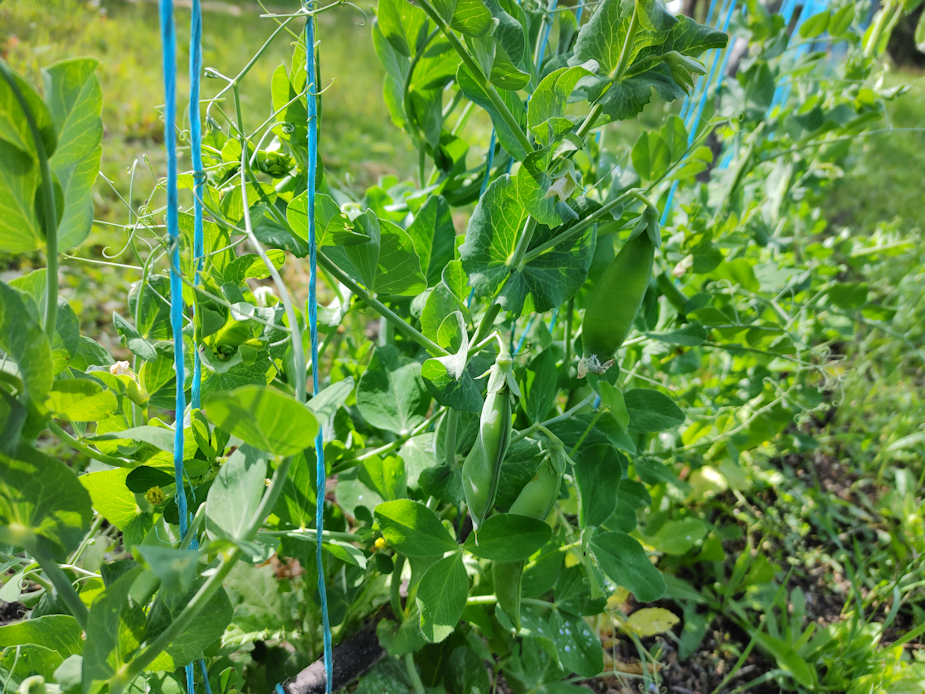
The first sowing of shelling peas may be about half the size they should be, but they are loaded with pods. At least on the north end of the pea trellis. Towards the south end, the sugar snap peas are barely surviving, and the shelling peas on the other side of the trellis are much weaker, too. The entire trellis gets an equal amount of sunlight, so this would be a reflection of soil conditions.
This should be the last year we use this spot for growing vegetables. Next year, they’ll be moved closer to the house, and this area will be made available for planting fruit or nut trees. We haven’t decided what to get next, yet.

The cucumber row is a mixed bag of plants that are growing nice and big, and filled with little cucumbers, and others that are barely bigger than when they were first transplanted!
I had an adorable find at the big trellis.
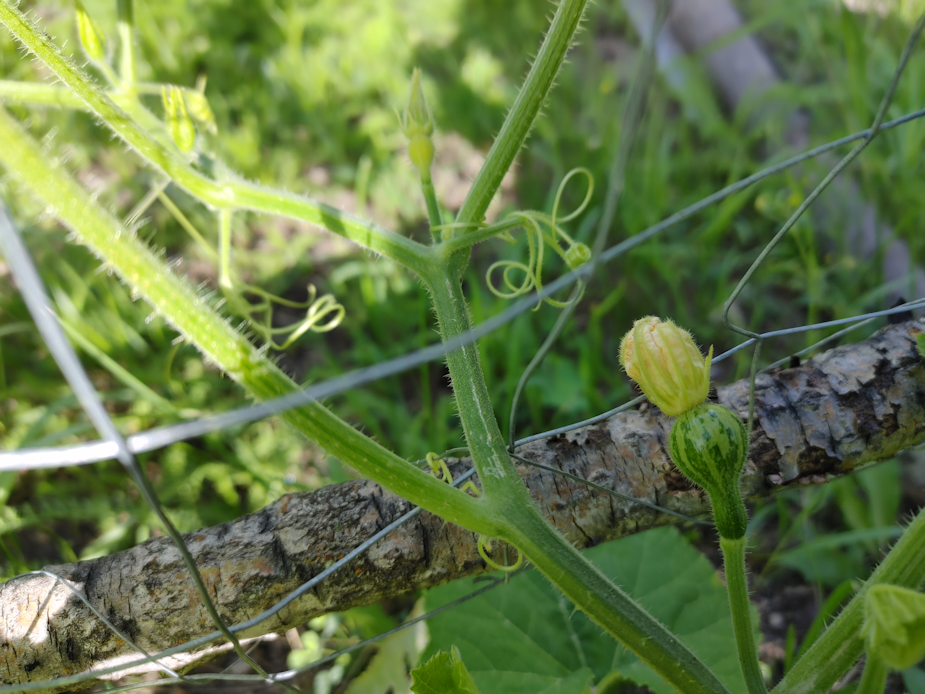
We have a first Tennessee Dancing gourd developing! It is so cute!
The beans on the same side as the dancing gourds are the red noodle beans. The plants are pretty large, but they are still not at the point of climbing. The shelling beans on the other side, however…
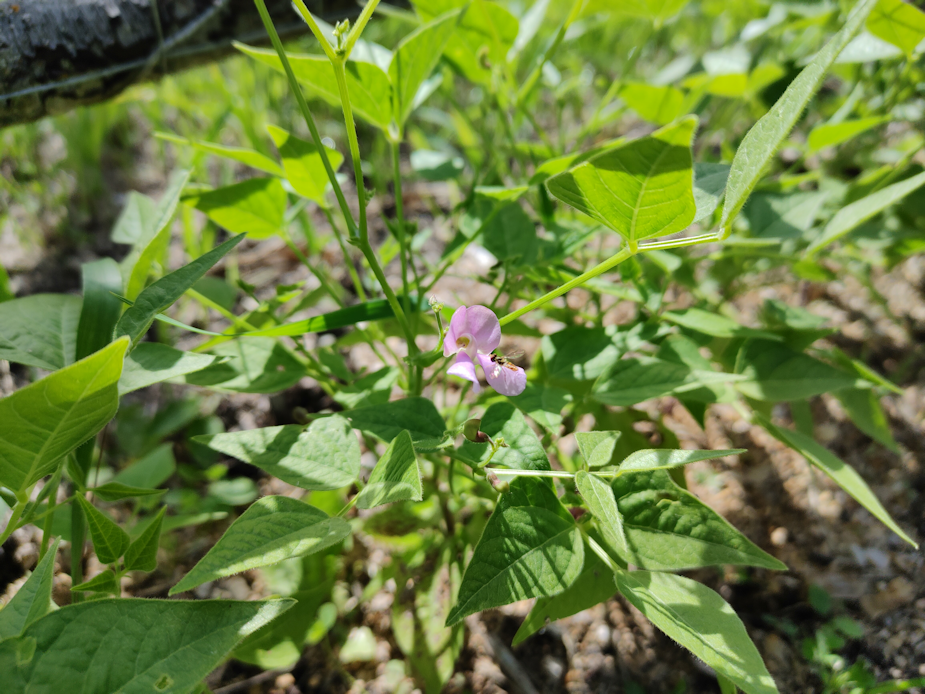
The are much smaller, but have tendrils climbing the trellis, and have even started to bloom!
The most adorable little pollinator showed up just as I was taking the picture.

I startled a bee when checking out this HUGE pumpkin flower.
Yes, it’s on a giant pumpkin plant. 😁
I’d seen some female flowers previously, but now I can’t find them, so there are no pumpkins starting to form, yet. While we are not shooting for super big pumpkins, and won’t be pruning them down to just one pumpkin per plant, it feels like it’s too late in the season for any giant pumpkins to mature. We’re near the end of July already, and none have formed, yet!

In the south yard, we finally have Chocolate cherry tomatoes! Just this one plant, yet. Of the 4 varieties we planted this year, the Chocolate cherry have been the most behind – and they are planted where tomatoes had done so well, last year. The plants themselves are getting nice and tall, and we’ve been adding supports and pruning them as needed, but there are much fewer flowers blooming, and only today do we finally have tomatoes forming. Thankfully, the other varieties are much further along.
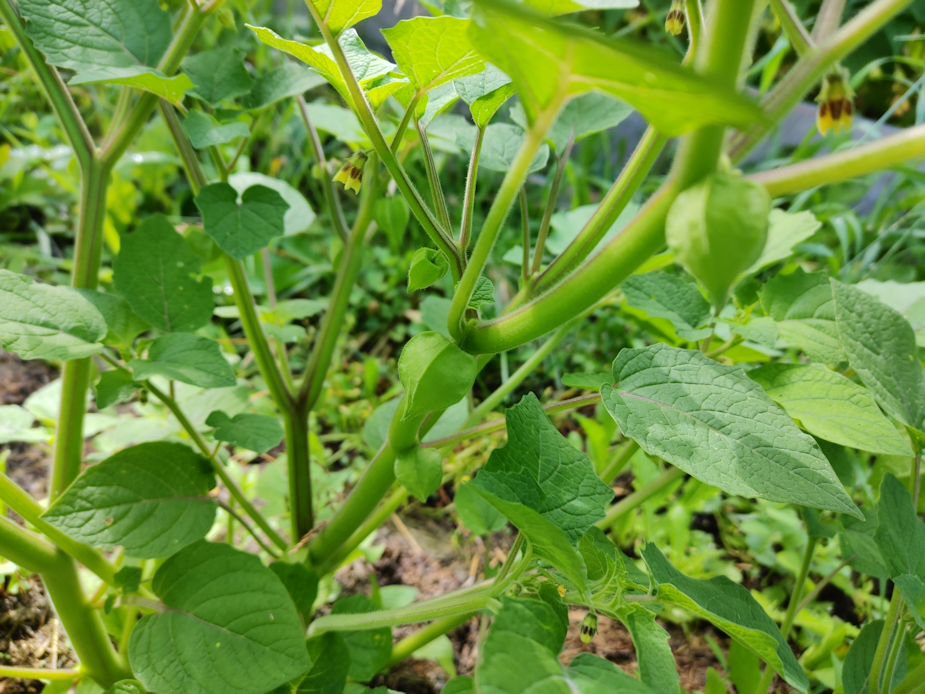
I also spotted some ground cherry fruit forming! These plants are doing remarkably well, given how much water they had to deal with this spring. It took a while, but not they are quite robust plants, and I’m happy to see them setting fruit!
Hopefully, it won’t be too much longer before we start getting actual food from the garden. Everything is so, so behind, I am extra happy to see progress like this.
The Re-Farmer


 The Re-Farmer