Our 2023 garden: starting gourds, peppers and herbs

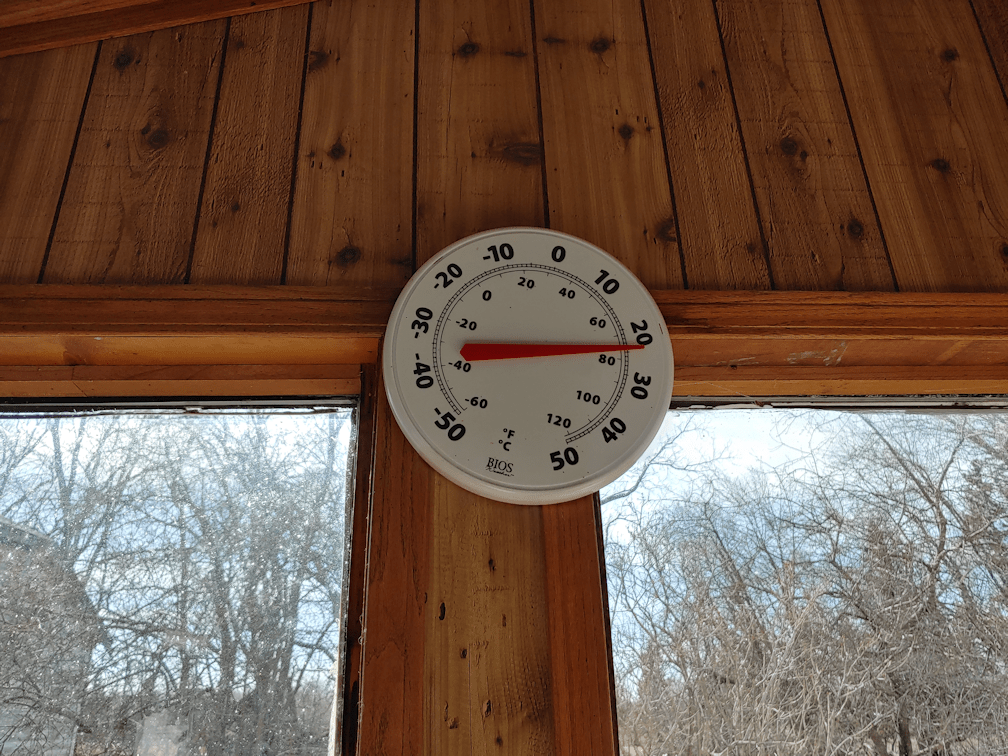
What a beautiful day it is today! As I write this, we are at -1C/30F, and have yet to reach our predicted high of 0C/32F.

It’s a good thing it’s getting nice and warm. Yesterday evening, I went to set up the one of the new ceramic heat bulbs in the sun room. Before I did, I screwed it into the fixture and plugged it in, in the old kitchen, to test it.

It didn’t work.

So I took the heat bulb and removed one of the bathroom light bulbs to test it there.

It works.

Looks like the old light fixture is toast. This was something my brother had attached to a board so that he could use the heat of a light bulb to keep pipes from freezing in the kitchen, when this place was empty. We might have some other portable light somewhere that I could safely set up in the sun room, but if we do, it would be in one of the sheds or the barn, where we won’t have access until spring.

The sun room is above freezing, however, so the kitties will be fine. This morning, I counted 25!

Today I went through the packets of seeds to start indoors and selected these as needing to be started very early.

I was finding contradictory information about the Sweet Chocolate bell peppers. The package says to start the seeds indoors 8-12 weeks before last frost – but the days to maturity I found maxed out at 86 days! We could potentially start though by direct seeding by that, if the soil were warm enough right after our last frost date. I am considering planting more of them, when I do the other peppers, but we have so many varieties to try, I don’t want to take up the space, if we don’t have to.

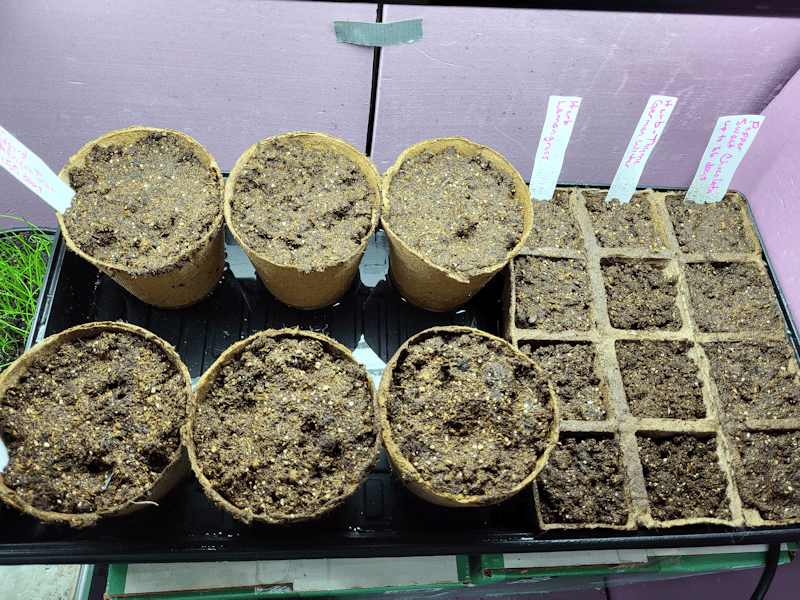
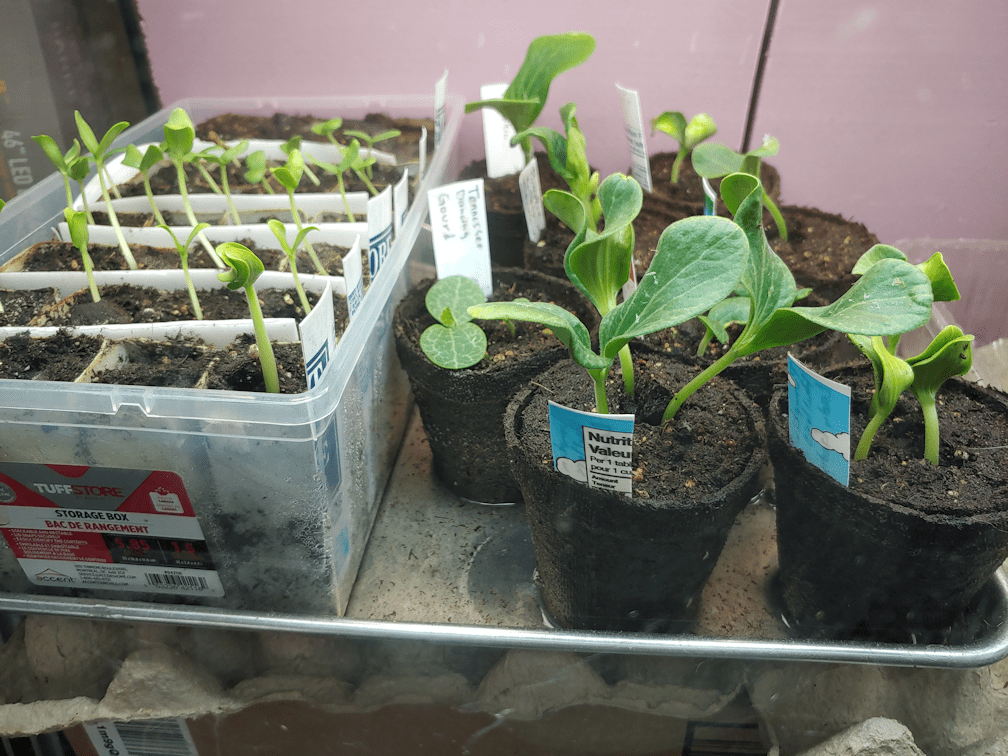
The lemongrass will eventually end up in a large pot, while the thyme will be going into a raised bed in the old kitchen garden. They, and the peppers, will eventually need to be potted up at least once before going outside, so I decided to put them in the degradable square pots, so that can be done without disturbing the roots.

Because of the size the Zucca melon and drum gourds will get before transplanting, those went straight into the largest degradable pots I have for now.

But first, I needed to make space in the aquarium greenhouses.

I could fit only two trays of the onions in the small aquarium. The problem is, there’s nothing we have that fits in there that can be used as a drain tray for bottom watering.

We have a large jade tree that we had to cage with hardware cloth because the cats wouldn’t stop digging in it. I had to remove the top of it because the jade tree was starting to grow through the openings, so I used that to rig a cover for the tank. Last year, we used salvaged screen windows, but they were larger than the top of the tank and, even with weights, the cats kept knocking it about. I’m hoping this works. On the one hand, the openings are large enough that the cats could reach through and dig at the trays – the first year we used this tank as a greenhouse, the cats destroyed our onion starts by reaching through the filter opening in the tank’s lid. They were incredibly determined to get at those trays! However, the larger size mesh also means it’ll be harder for the cats to walk on it, so maybe they’ll just stay off?

We’ll see!

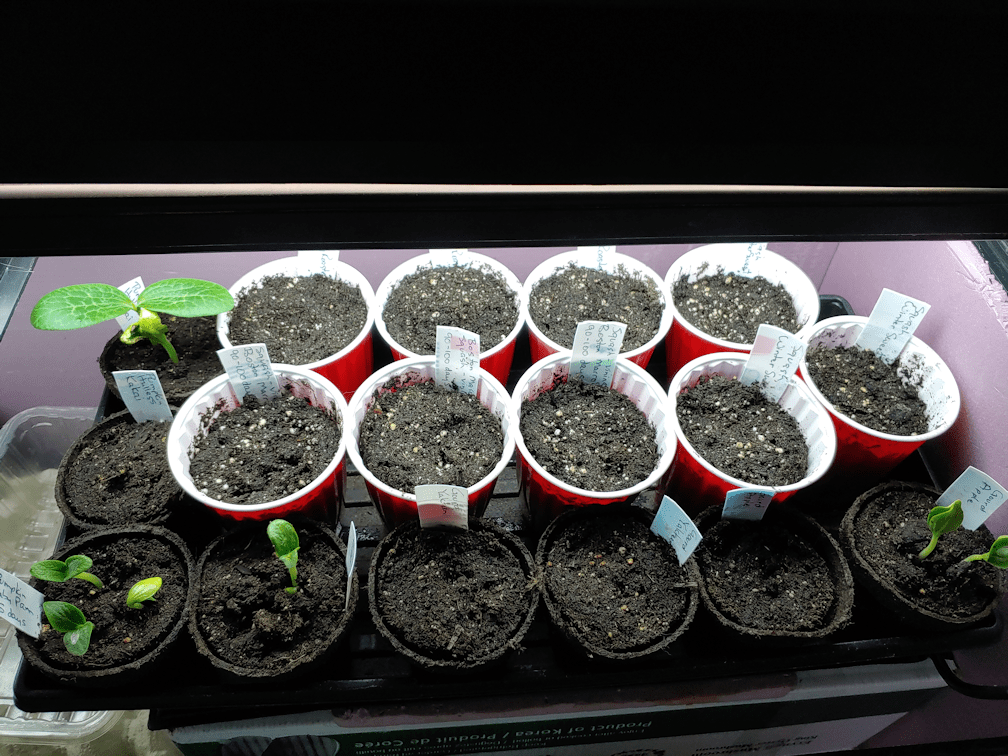
The luffa seedlings have joined the remaining tow trays of onions. I wanted to keep them in this aquarium greenhouse, since it’s warmer than the little one, thanks to the two lights above. One of the seedlings seems to have stalled and isn’t getting any bigger. The second seed in the pot hasn’t germinated at all, and probably won’t by now. I thinned out the extra seedlings that were in two of the pots. So we are probably down to three luffa. Hopefully, they will survive long enough for transplanting!

We now have four cells each of lemongrass, thyme and Sweet Chocolate peppers – those thyme seeds are so incredibly tiny! While I was sowing the seeds for those, I had six each of scarified zucca and drum gourd seeds soaking in water, and now each round pot has two seeds. The seed starting mix was premoistened and the surface got spritzed with water after the seeds were planted, but I also made sure to add a lot of water to the tray, once it was on the warming mat. I want those pots to absorb water from the tray, not the soil.

It should be interesting to see how these do, with being started this early! We won’t need to start more seeds until probably March, though I’ll have to double check on some of them. I think things like the Crespo squash and Boston Marrow could use an earlier start. We’ll have time to move things around in the living room to make space for trays as they get rotated out of the aquarium greenhouses while need seed trays go in.

Since the fixture used for the heat bulb in the sun room is broken, I won’t need the frame of the mini greenhouse to support it anymore. The mini greenhouse can be brought in and gotten ready, too. Plus, we should be able to use some of the plant hooks in the ceiling to hang the shop lights we’re using for grow lights, and generally have a much better set up than last year.

Which means we’ll have to make building a cat barrier a priority over the next few weeks!

The Re-Farmer
Our 2022 garden: last seed starts? Winter squash and cucumber

Today is 4 weeks from our average last frost date. We started some more seeds indoors, but I’m not sure if these will be our last ones or not.

But first, some re-arranging had to be done.

I moved more pots out of the mini-greenhouse and into the sun room. The mini-greenhouse is now about half empty.

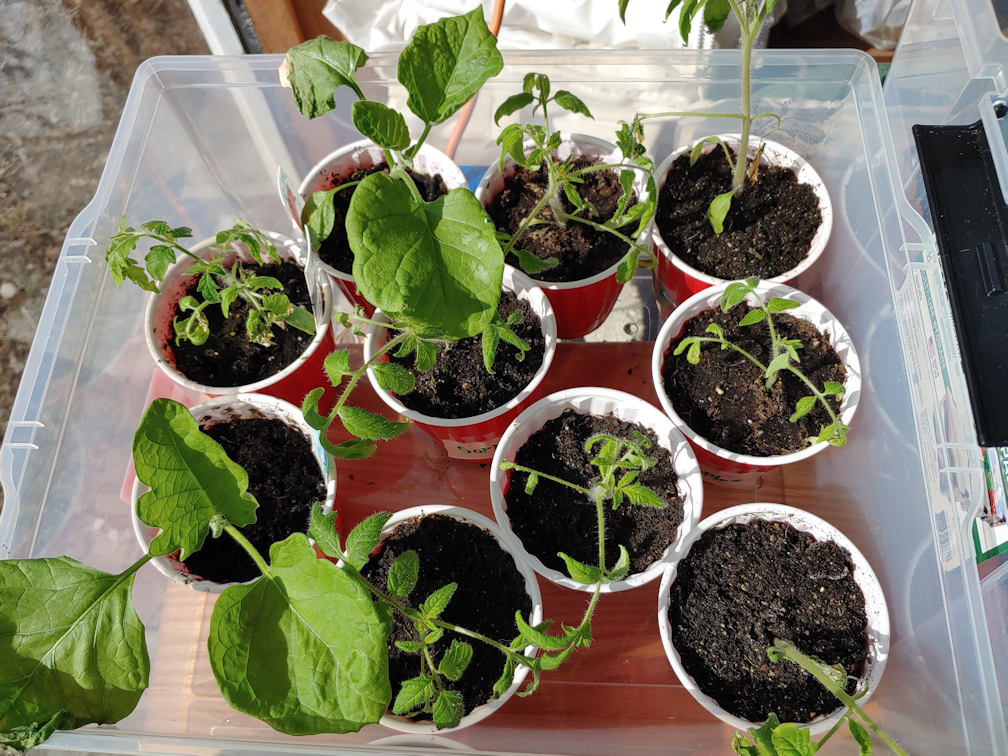
The last of the tomatoes were moved out; these are almost all the Sophie’s Choice tomatoes and, I think, one last Cup of Moldova paste tomato. There was room in the bin, so I added the peppers I’d brought over yesterday. The larger bin with the larger tomatoes and the Canteen gourds got moved so this one could be closer to the window and not get overshadowed by the larger bin.

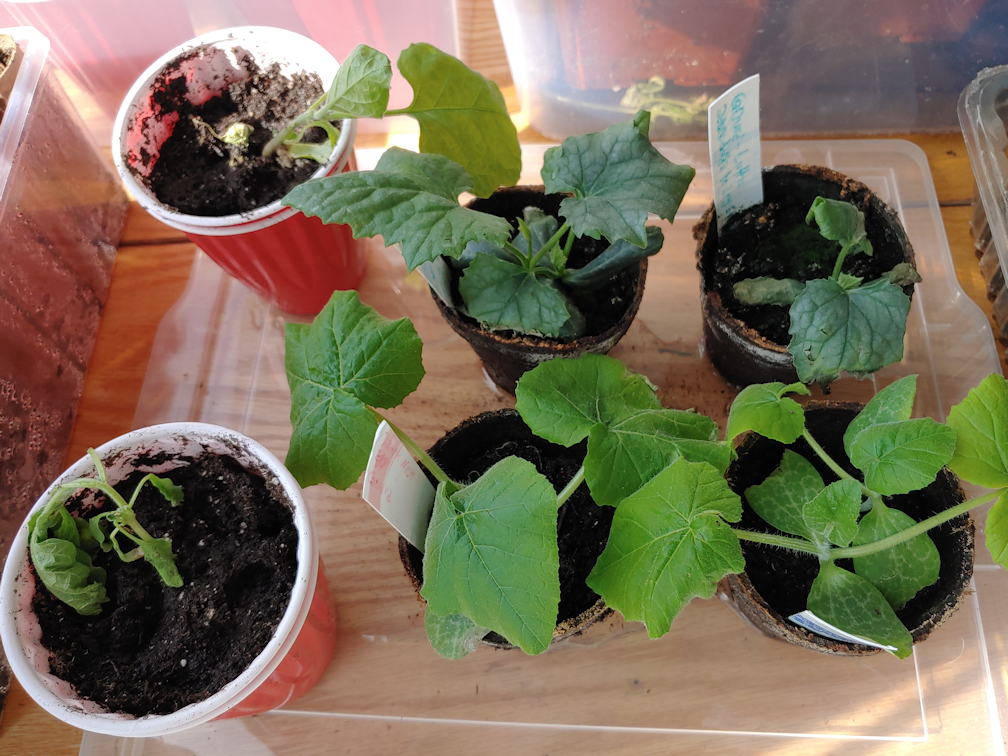
The re-started luffa, and ozark nest egg gourds, were brought over, too. The plants in the cups are the ones I thinned out from the larger, stronger pepper plants, yesterday. It doesn’t look like they’ll make it, but you never know.

The Red Baron bunching onions got moved out of the big aquarium greenhouse – and got a hair cut.

Then it was time to start planting.

We had only three seeds to start; two types of shorter season winter squash that we grew last year, and cucumber. For these, I used planting trays the same size that come with the Jiffy Pellets, but with 4 sets of 8 square Jiffy pots in them.

With the Little Gem (Red Kuri) seeds, we picked 8 seeds that looked the best, for 1 seed per square. We still have seeds left over, plus I also still have the seeds we saved from last year. The Teddy squash had only 10 seeds left, so we planted all of them, with a couple of squares having 2 seeds. The seeds got scarified and briefly soaked while the squares were filled with potting mix. With the cumber, we just planted 1 seed per pot, in half the tray, so we have plenty of those left over.

For all the re-arranging, we still couldn’t put the tray in the big aquarium greenhouse on the warming mat, because we still needed to use it for other things. With how warm the sun room is, though, the new tray went straight there!

I didn’t want them drying out too quickly, plus the overnight temperatures are still a bit of a concern. The tray didn’t come with a dome, so I improvised.

Two small bin lids cover the ends, while a small big is deep enough to fit over the labels. :-D

That done, the girls and I headed outside to check things out, and we were absolutely thrilled to find so many crocuses blooming!

Many of them are blooming in clusters like this. Each one of those clusters was a single flower, last year. I just love how they are already spreading!

There are more grape hyacinth coming up, though they are very hard to see. We also spotted wild strawberry leaves in the patch under a dead tree that we’ve framed with branches to make sure they don’t get accidentally mowed.

My younger daughter wanted to check her raspberries that had such a rough start last year. One of them has tiny new leaves coming up at the base! Hopefully, both will have survived the winter.

Once back inside, I fussed a bit more with the big aquarium greenhouse.

I’d already rotated the bin with the melons in it; the Zucca melon is now in the foreground and the watermelon in the back. The Chocolate Cherry and Yellow Pear tomatoes were moved to the mini-greenhouse, while the larger pumpkins got moved to take their place. Some of them were getting too close to the light fixture, and this tray gives them more head room.

A few remained on the warming tray, but moving so many post out freed up just enough room…

… to move the other winter squash out of the small aquarium greenhouse and put them on the warming mat. Hopefully, that will help them germinate sooner.

I have refills of those square pots that fit in the trays like the one on the warming mat. I find myself waffling back and forth over starting the summer squash in them. We have 5 types. These have a short enough season that I could get away with direct sowing. I could leave them be, but I’ve never NOT started summer squash indoors, so I find myself really wanted to start some of them!

If I do start them, it would have to be very soon, and they’ll be going straight into the sun room, too.

What do you think? Should I try go for it, or leave them?

The Re-Farmer

Our 2022 garden: potting up

Today, I went through the mini-greenhouse to see what might need to be potted up.

It turned out that there wasn’t anything that wasn’t already potted up. However, almost all the Cup of Moldova tomatoes are getting too big for the shelves! They are certainly doing well, after the thinning and addition of more soil along their stems. Over the next day or two, these need to be moved into the sun room, just for the space.

At the furthest end of the large aquarium greenhouse, you can see the two, out of three, Crespo squash that got potted up. The third smaller one in between the bigger ones had actually been thinned out of another pot, and is going quite well. In the foreground are a pair of Canteen gourds that had shared a small pot. For some reason, when I moved these out of the mini-greenhouse, because a tendril had started to wrap itself around the shelf above, I thought they were luffa. The writing on the labels had started to fade, so I fixed that.

It took some juggling to get the bigger pots to fit into the space. They definitely need to go into the sun room soon, too!

Meanwhile, on the heat mat…

The Red Baron bunching onions are coming up nicely. I’m looking forward to these. Still nothing among the ground cherry, though.

As I write this, we are at -2C/28F, which is warmer than forecast. Warm enough that any expose ground or concrete is thawing out and melting the snow around it in the sun. We’re still supposed to reach a low of -13C/9F overnight tonight, and tomorrow we’re supposed to warm up to -2C/28F, but get more snow. Depending on what app I look at, we’re either going to get isolated flurries, or snow all day for a total of 2-4cm, or about 1/2 – 1 1/2 inches. Either way, it won’t be enough to cause problems with driving my mother to my brother’s, to meet her new great grandson. :-)

After that, we’re supposed to had daytime highs hovering a few degrees above freezing for the next while. One of my apps has a 28 day long range forecast and, according to that, we won’t start hitting 10C/50F until May. Our last frost date is June 2, so that fits. Last year, May was an incredibly warm month. May long weekend is when a lot of people put their gardens in, only for many of them to lose almost everything to one cold night, just days later. Hopefully, we will not have anything like that again!

I am really looking forward to getting to work on the garden!

The Re-Farmer
Making seed pots from toilet paper tubes, two ways

While I have purchased pots that can be planted directly into the soil when it’s time to transplant seedlings, the sheer number of such pots we will need makes buying enough for all of them bad for the budget. In particular, I want to start the kulli corn in biodegradable pots, for as little root disturbance as possible.

After last year’s attempt to use toilet paper tubes failed dramatically, largely due to using peat as a growing medium (it simply would not absorb moisture all the way through!), we’re going to try things a bit different this time.

There are a lot of web pages and videos on how to make pots from toilet paper tubes. This one is the best one I’ve seen so far. There’s the added bonus of it showing the pots made into squares, which was what I was thinking of doing already.

It’s pretty basic, really.

We knew we’d need a lot of tubes, so we’ve been saving them for many months. Last year, I had a fairly large box that we would drop the tubes in, and when we ran out of room I’d transfer them to a storage bin, to make more space.

Which was really silly, now that I think about it. It only matters if you want to keep the tubes round, and there is no need for that at all.

This little box has two layers of tubes in it. After flattening a tube, I’d drag it across the edge of the bathroom counter, to crease the fold even more.

It’s amazing how many tubes can be fit into such a small box this way!

Today, I snagged some of them to make pots for the tree seeds. I don’t know if there are any roots starting to show in the little baggies of soil. I am thinking it would be much less disruptive on the roots to “transplant” them now – when there may not even be any roots yet – into little pots, compared to trying to move them out of the baggies when the roots are actually visible.

So I grabbed a dozen tubes for the paw paw seeds, first. The different brands all have different tubes. The ones I grabbed were the tallest, with the thickest carboard.

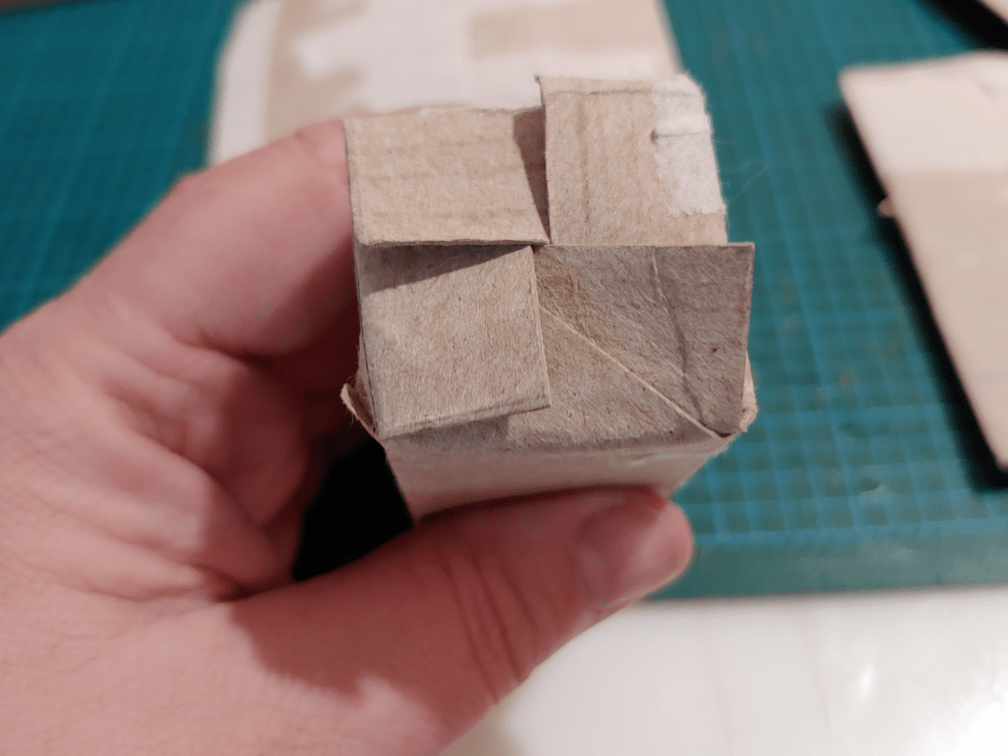
This first batch was done like in the video.

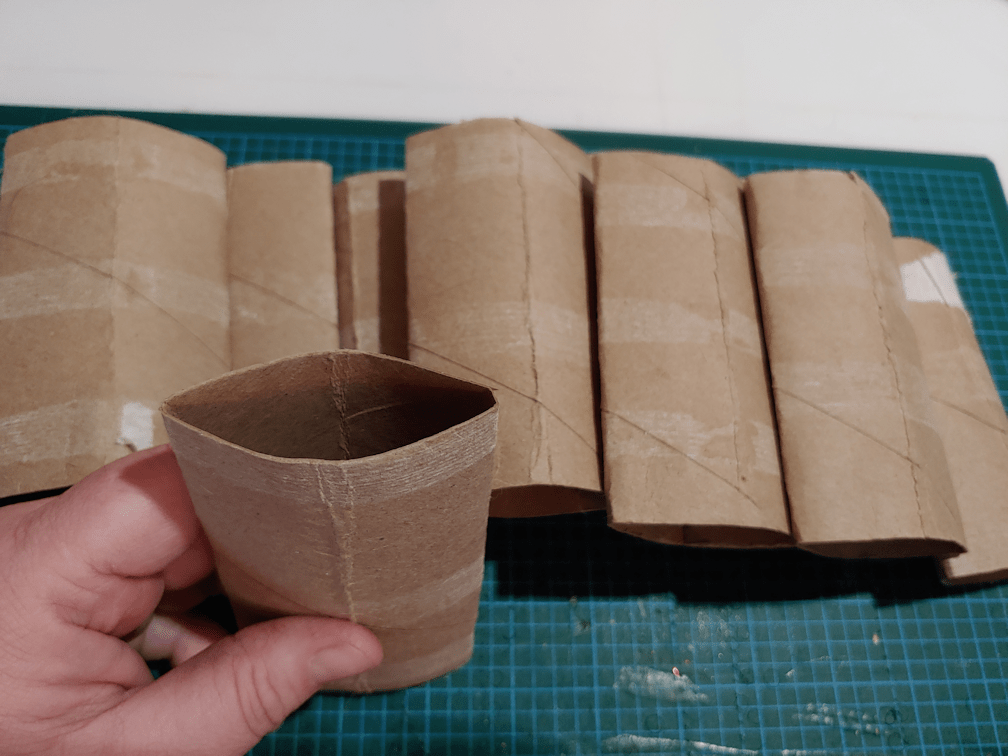
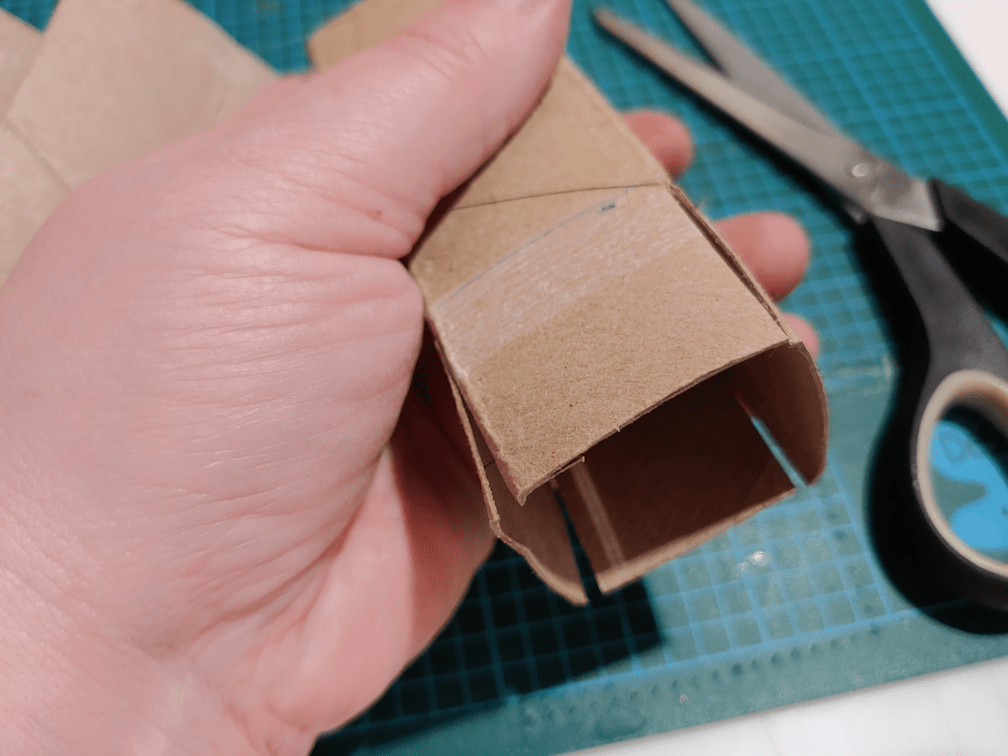
The first thing that needed to be done was give them all a second crease for the square, keeping the sides even by lining up the first creases with each other. The carboard was way too thick to fold them like he does in the video.

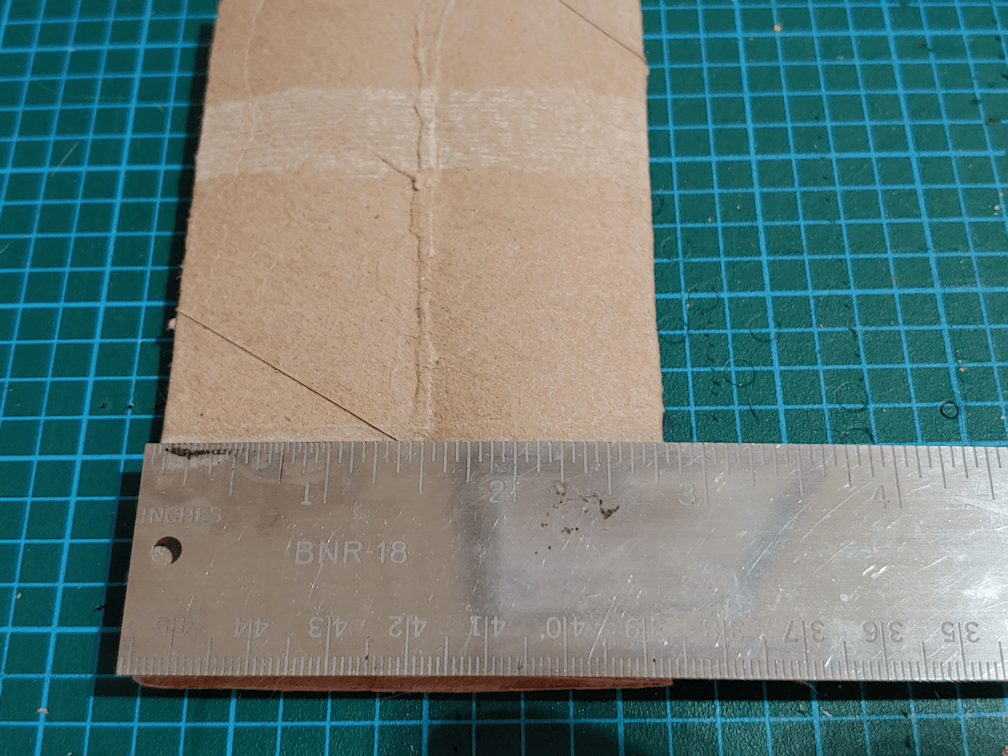
Then, just because I prefer sharp creases, I ran the tubes over the edge of the desk I was working on. You can tell the difference it made in the photo above. The tube I am holding is not being squeezed in any way. For the other one, I’d laid the tube flat on the desk and pulled my metal ruler over it to sharpen the crease. Which it did, but not as much as using the edge of the desk.

The creases were about 1 1/2 inches apart, so that is the distance than needed to be marked from the edge.

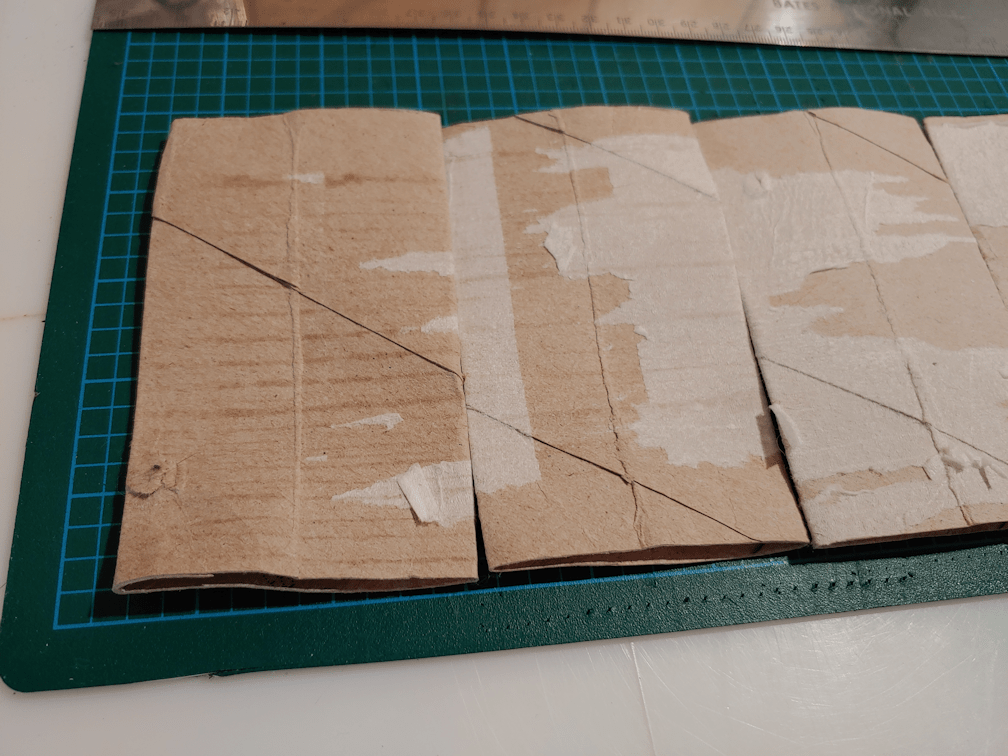
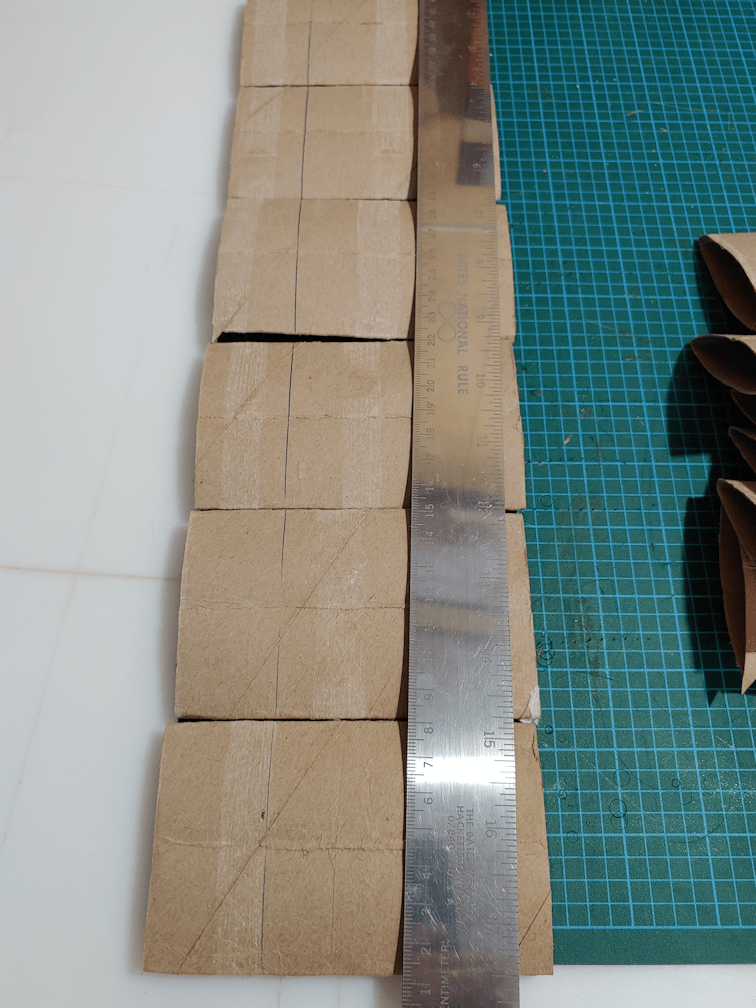
Since I had the cutting mat and a metal ruler, I only needed to mark one tube out of six. After lining them up along the bottom edge of the cutting mat, I could line the end of the ruler up to the side edge and the long edge with the mark on the first tube, across all the tubes.

Using the ruler to hold the tubes in place, I could mark them all at once, then repeat for the next batch. This way, it only took two lines to mark all 12 tubes.

The next step was to cut slits at the creases, up to the marked line, to create flaps.

Then the flaps were all folded inwards to create a bottom.

Once they were all folded under, I set up the storage container I got for them, and some water.

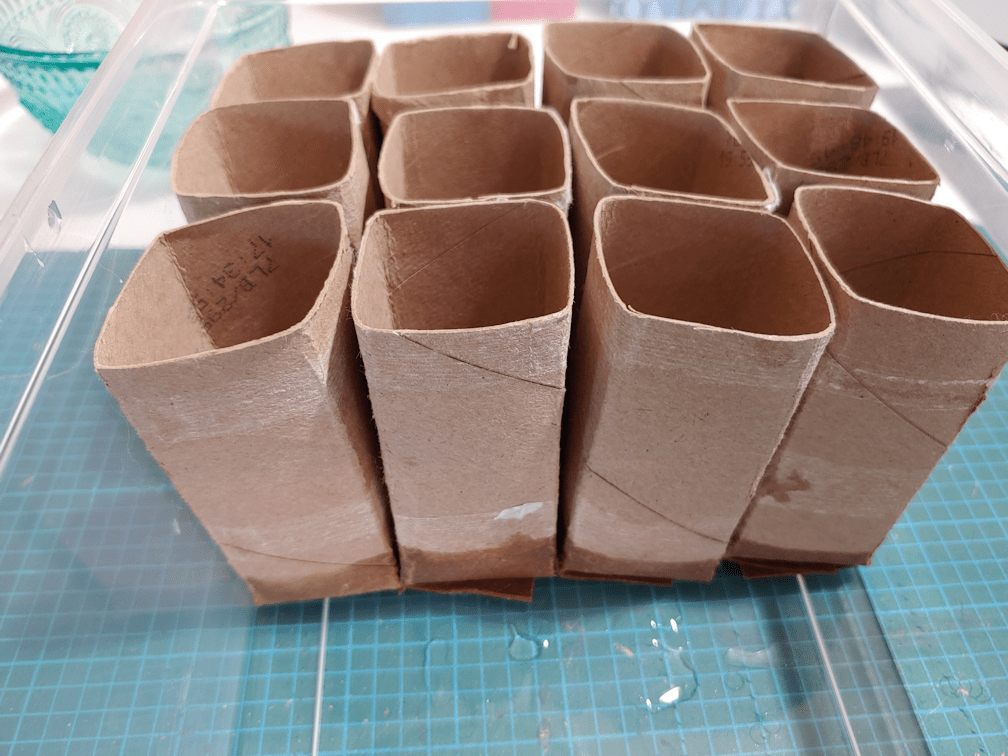
All the bottoms got dipped in water, then tucked into the storage box.

With these tubes, four of them fit snugly across a short side, so they’re not going to flop around. This was an important consideration when I went looking for bins to use for this. When we used the toilet paper tubes last year, the tubes came apart completely once they got wet, even as the peat in the middles remained bone dry. I wanted straight sided bins that were fairly small, to hold them all tightly. If the tubes were still round, they would have taken up more space, but there would be gaps between them, and I didn’t want those gaps, either.

These now will be left to dry, and we’ll fill them tomorrow.

For the next batch, more tubes were needed. We have 26 tulip tree seeds to transfer.

After grabbing a bunch of tubes, I found a couple of shorter ones. There is a surprising amount of variance between brands! I switched out the shorter ones for taller ones.

Height is why I wanted to change how the bottoms were done for this batch. With how the first ones were done, each flap completely covers the bottom, making a 4 layer thick base. There’s no need for that.

So for these ones, instead of cutting flaps that were half the width of each side, I went for a quarter of the width.

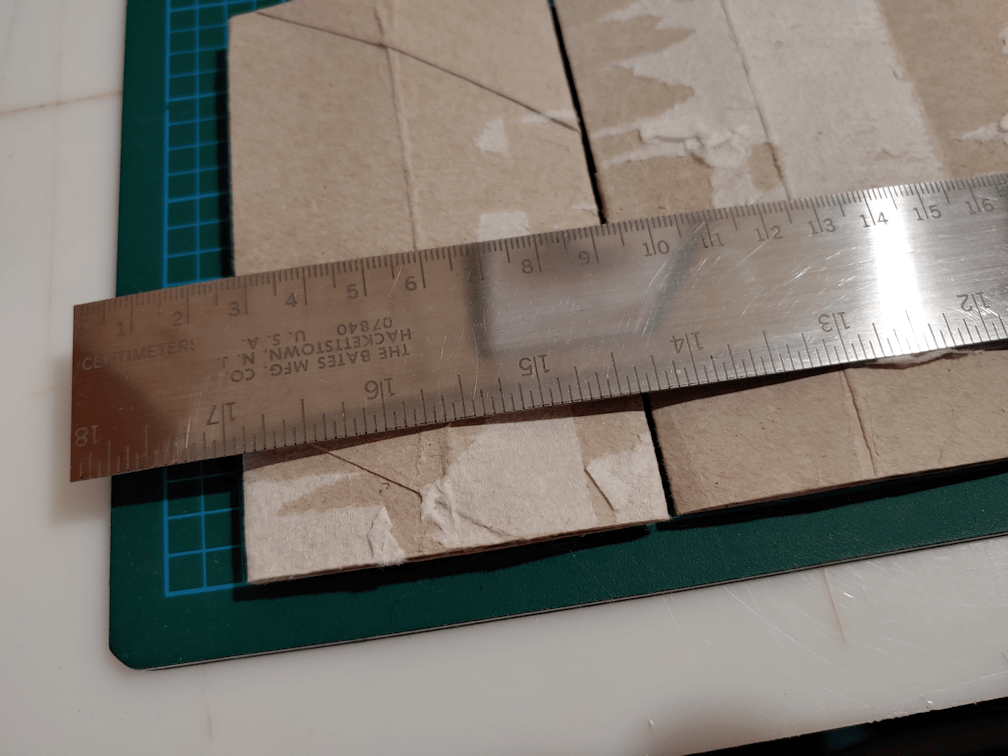
That worked out to be 3/4s of an inch. Each square in the grid on the cutting mat is 1/4 inch, so the tubes were all lined up to the base line of the grid…

…then the ruler was lined up with the 3/4 inch line, on each side of the row of tubes.

Which was a bit of a pain, when it came to using the ruler to hold the tubes in place while marking the line, since there was a space under the ruler.

It was much easier to do it from the middle instead of the ends. :-D

Then the tubes all got slits cut along the creases, up to the line.

When folded in, this allowed for them to overlap and be locked into position.

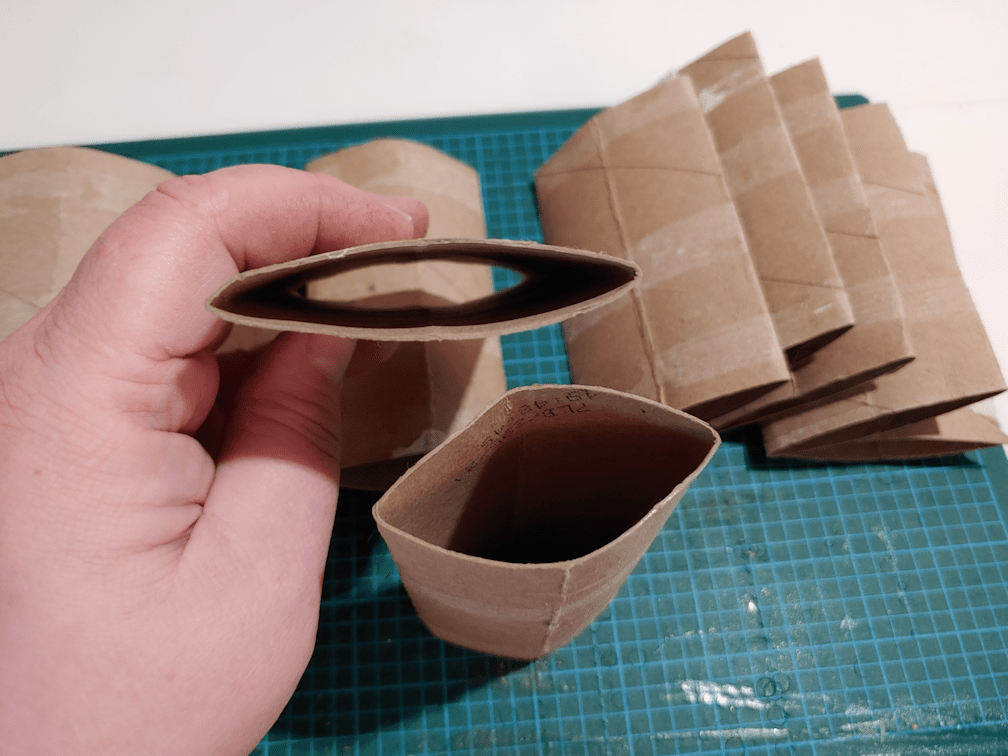
These tubes were slightly shorter than the ones used in the previous batch, but by doing it this way, the pots ended up taller, as you can see in the comparison above.

Since the flaps could hold themselves in place, I could have skipped the water part if I wanted to, but I chose not to. They got dipped.

This brand’s tubes were not only a different length, but also a slightly different width. Just enough that they did not fit snugly across the short side. However, 8 tubes did fit snugly along the long side.

Tomorrow, these two sets of pots will be filled and planted with tree seeds. The tree seedlings will remain in pots for 2 years before being transplanted to their permanent locations outdoors. Starting them in these will allow us to “pot up” the seedlings into large pots as they get bigger, without disturbing the long tap roots they are expected to develop.

After these are done, we’ll start prepping tubes for the kulli corn. As with the tree seeds, it will be one seed per tube, so we will need 100 of these. I was able to find slightly larger versions of these bins, and one should be able to fit all 100 of these pots. The bins also have lids of the same transparency as the bins, which will allow us to use them as cat-proof greenhouses, if necessary.

I think I might have to pick up more of them. They’ll make moving seedlings outside to harden off much easier, too! They also happen to be pretty inexpensive, too. After much searching when doing shopping trips in the city, I found them at a local Red Apple store, which was just an added bonus. I’d actually found some at the local dollar store I was going to settle for, but the sides weren’t quite as straight, and the lids were opaque. I’m glad I decided at the last minute, to try another store.

The dollar store bins will instead be used to hold the little odd balls of yarn and small crochet projects on the go by my desktop, that the cats keep managing to steal away, so matter how diligently I bag them up!

The Re-Farmer