Sourdough “Batter” Bread, with recipe

Today my daughters did the baking, starting with a sourdough “batter” bread.

There’s a reason the word batter is in quotations…

The girls have been finding recipes they like and, after trying them out, adding them to a notebook with any modifications or adjustments they’ve come up with.

Like this…

Continue reading

Bread Baking Day – all done!

Sometimes, I think we really need to do bread baking more often.

Then I remember how much clean up is involved. :-D

No matter! We now have two kinds of freshly baked bread done.

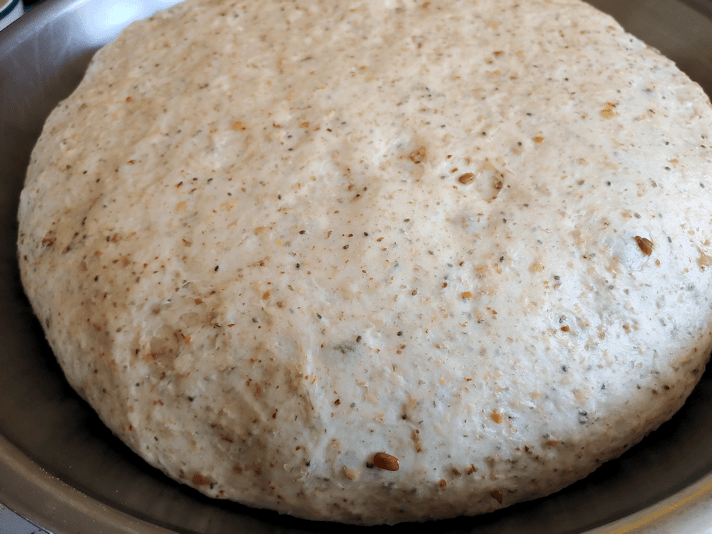
Here’s how the seedy bread turned out.

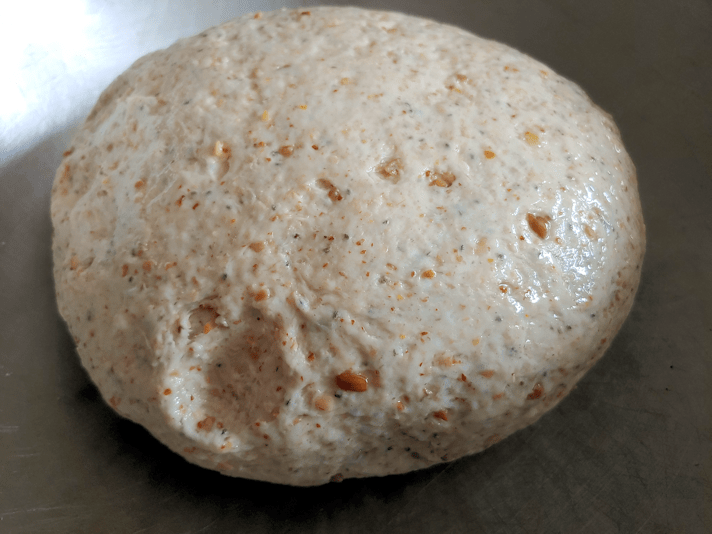
This is how it looked after only 1 hour of rising time. The bowl it’s in is pretty huge – too big to fit in our kitchen sink (which makes washing it a bit of a challenge! :-D ) – with plenty of room for this 4 loaf recipe.

The timing of things works out really well. I use half the dough to make buns first, leaving them to rise while I shape a couple of loaves. Once those are done, I star to preheat the oven. By the time it’s heated up, the buns have risen enough to go straight in. Once they’re out, the loaves have had enough time for their second rising. When those are done, the overnight sourdough loaves are ready to go into the oven. No wasted time in between, making for more efficient use of a hot oven.

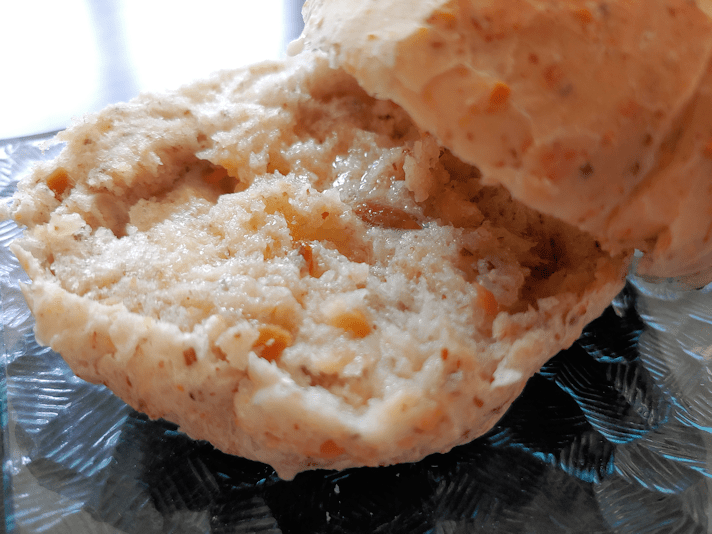
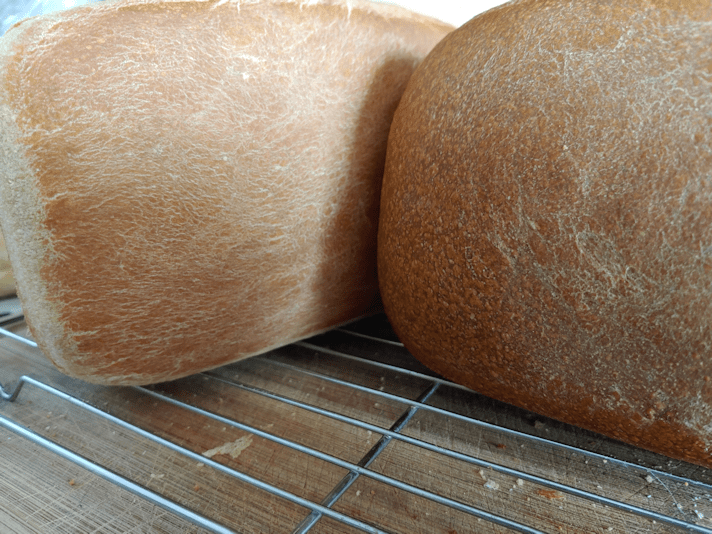
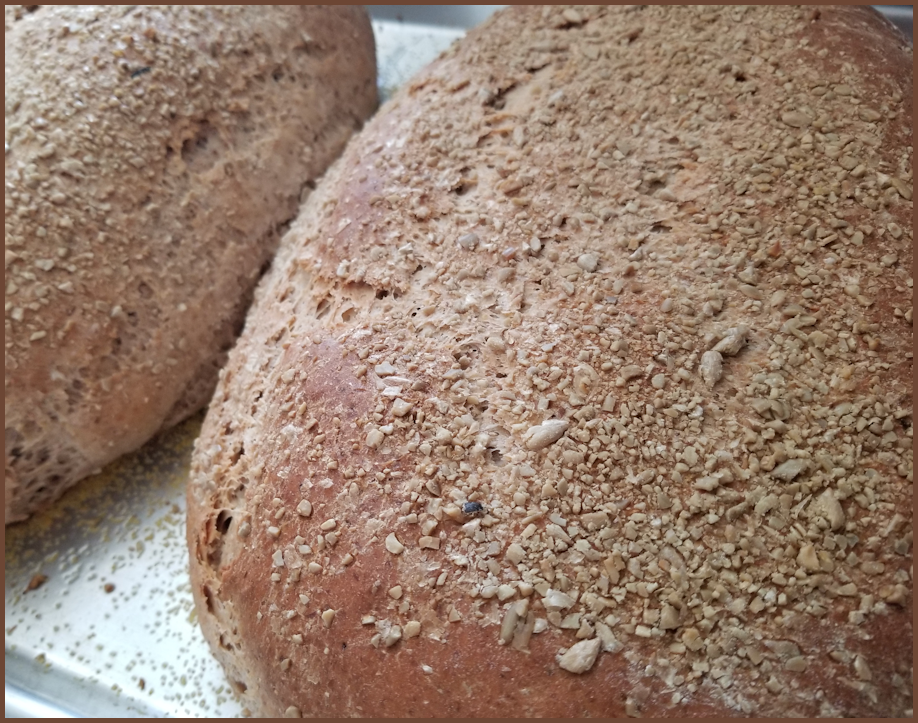
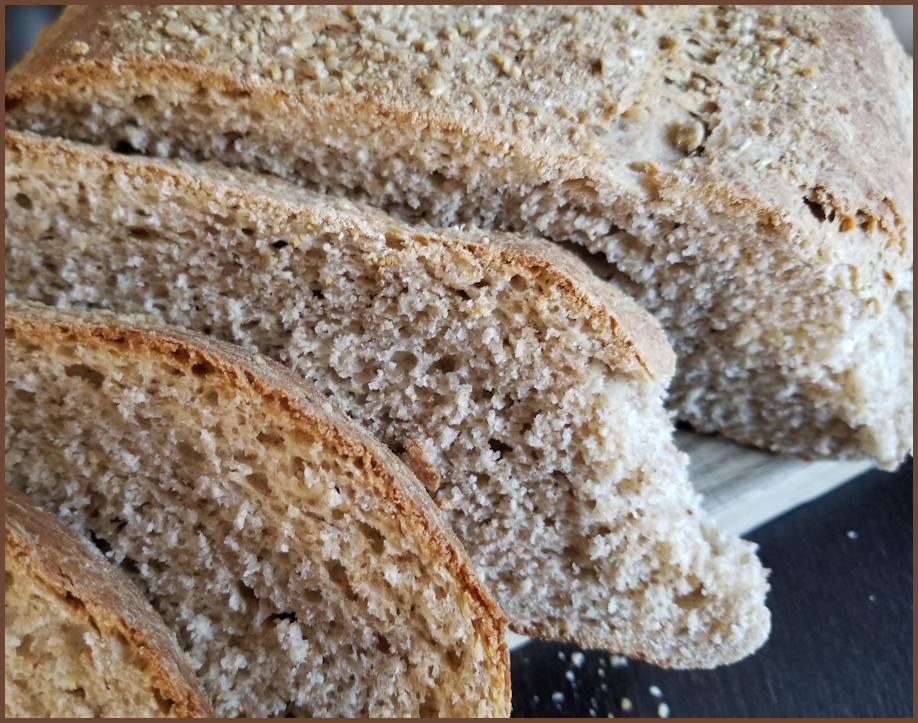
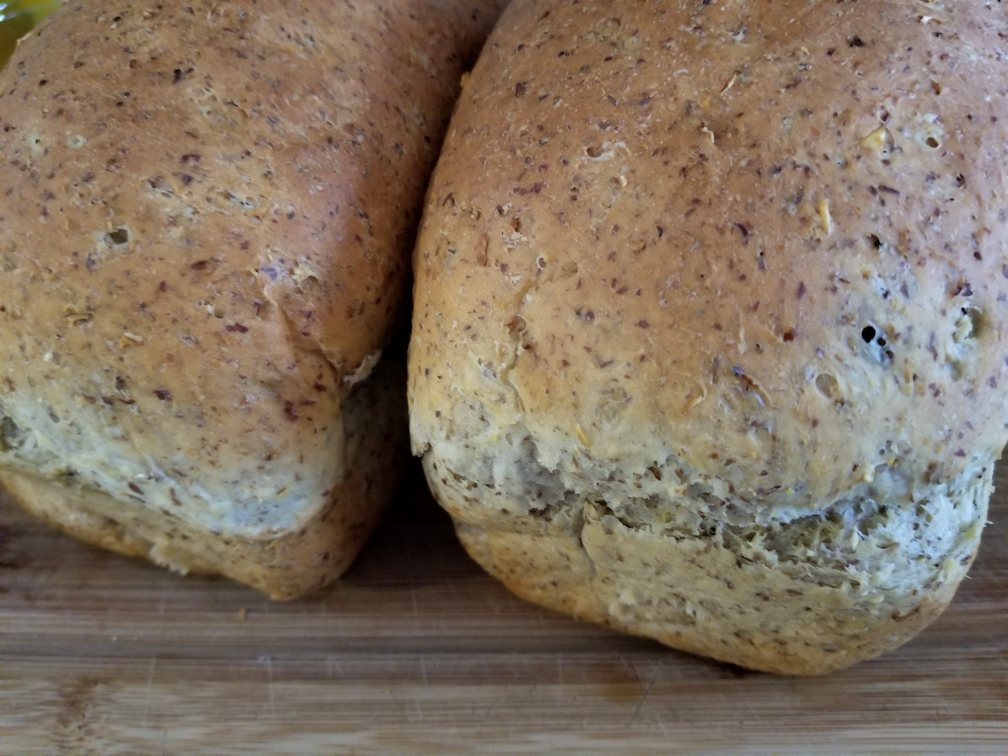
They came out quite beautifully, too! Such a tasty bread, with a really nice texture. I love the bit of crunch the seeds add to it.

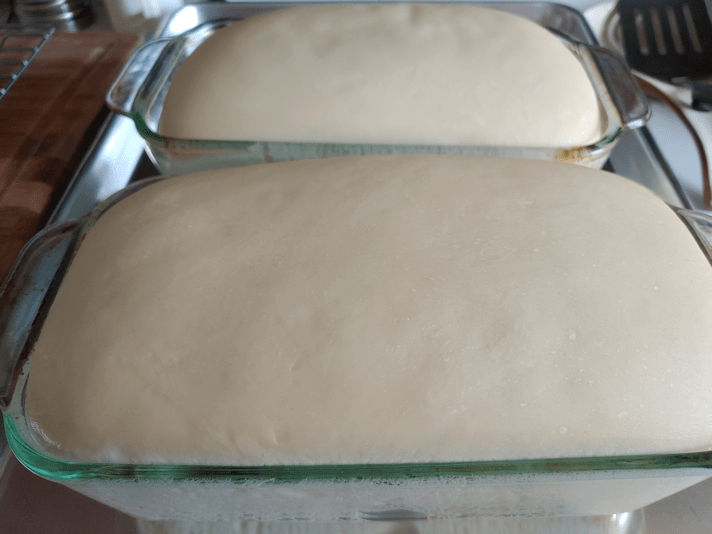
The second rising for the sourdough loaves was probably about 4 – 4 1/2 hours. The first rising was probably about 11 or 12 hours.

This is how they looked, just before I put them in the oven. They definitely rose more than the first time I tried this recipe, so the modifications made quite a difference, but still not rising as high as variations that use added yeast.

Is it worth it?

I think so.

The actual working time to make this bread is low. It’s mixed at night, then kneaded for 10 minutes the next day. It really doesn’t need a lot of attention.

The loaves came out so smooth and gorgeous. None of the cracking you can get when using an added yeast bread, since there’s no sudden rise in height in the oven.

The bread itself has a slightly thicker, sturdier crust, while the crumb is incredibly soft, tender and fine in texture.

Reducing the amount of sugar was definitely a good move. The sourdough flavour was more dominant this time, whereas the last time I tried this recipe, the sweetness was more dominant. I think adding that little bit of baking soda helped with the rising, too.

I’d still prefer a more “sour” sourdough flavour, but that has more to do with our starter than with the recipe. We’ll be making more of this one, that’s for sure. I think I’m satisfied with it enough that, next time I bake it, I’ll post with the tweaked recipe.

Tomorrow is going to be another baking day, though this time for my daughters. I look forward to seeing what they’re planning to make. :-)

The Re-Farmer

Bread Baking Day

Yesterday was actually intended to be my bread baking day, but we just didn’t have the energy for it. It was a pretty bad fatigue and pain day for all of us. :-(

I did start a batch of overnight sourdough before bed, though. The last time we tried this recipe, it didn’t really rise at all by morning, so I tweaked the ingredients this time. I reduced the sugar to something adequate to feed the sourdough yeast, and not make the bread itself a sweeter bread. I also added just a touch of baking soda along with the flour. Last time, I left the dough to rise in a bowl on our dining room table, but the house it just too cold, so this time it went into a warm oven with the light left on to keep it warmer throughout the night.

I checked the dough before I headed out to do my rounds, and was quite pleased by what I saw.

It rose quite nicely! I’m very pleased.

After finishing my rounds, I kneaded the dough for 10 minutes, then set it up in loaf pans for a second rising.

With no yeast other than the sourdough in the recipe, it will still take a long time to rise. So I waited an hour before starting some non-sourdough bread.

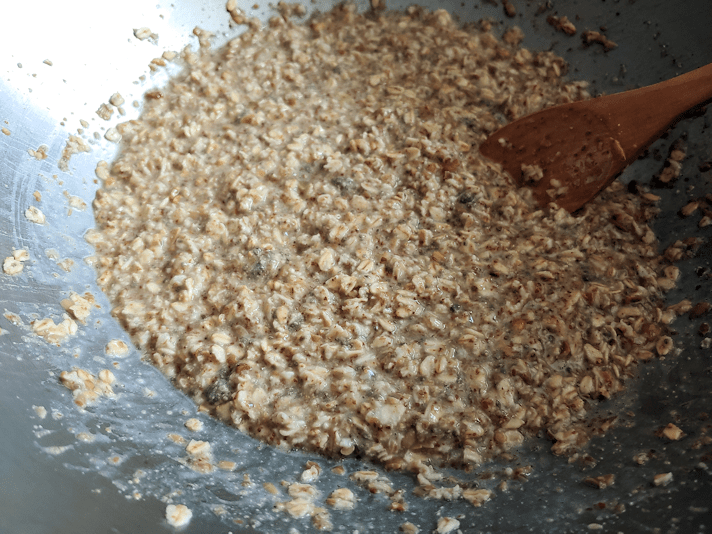
My favourite additives to my basic bread recipe is thick cut oats, chia seeds, ground flax, sunflower seeds and pumpkin seeds. The sunflower and pumpkin seeds are roasted and salted, and this time I took more time to grind them in a mortar and pestle to break them up. The whole seeds and bigger pieces tend to fall out while the dough it being kneaded. I let it all soften in boiling water first, which makes a much nicer texture in the bread. I doubled the basic 2 loaf recipe again, too.

By the time I got this batch set aside to rise, it was about an hour and a half since setting the sourdough loaves to rise. A quick check showed very little change, so I expect to have the second batch baked before the sourdough is ready to put in the oven! :-D

Oh, and my timer has just gone off. Time to get back to it! :-)

The Re-Farmer

Overnight Sourdough Rye Bread

overnight.sourdough.rye.fresh.baked

Fresh out of the oven!

This is a bread that needs a LOT of time!  The finished result, with its tangy sourdough flavour, is well worth it.

Begin by preparing the starter the evening before.  We used our rye starter, The Rye of SourOn, but a regular starter can be used as well.

Overnight Sourdough Rye Bread

Overnight starter:
1 cup sourdough starter
2 cups warm water
2 1/2 cups rye flour

  1. Mix the ingredients in a large bowl.  Cover and let stand overnight in a warm place, such as the oven with the light on.overnight.sourdough.rye.sliced

Ingredients:

Overnight starter
1 cup milk
3 Tbsp butter
3 Tbsp sugar
2 tsp salt
1 Tbsp active dry yeast
1/4 cup warm water
3 cups rye flour, or 2 1/2 cups rye flour, 1/2 cup flax meal
3 – 5 cups all purpose flour
1/8 cup crushed sunflower seeds, to coat top of loaves (optional)
(place roasted, salted sunflower seeds into a slide lock freezer bag and crush with a rolling pin)

The night before: prepare overnight starter

The next morning:

  1. Pour the milk into a saucepan and scald.  Add the butter to melt, then stir in salt and sugar. Set aside to cool for about 10 minutes.
  2. Sprinkle yeast over warm water and let stand for about 5 minutes.
  3. Stir yeast and cooled milk mixture into the overnight starter.  Stir well.
  4. Mix in optional flax meal and rye flour.  Beat thoroughly until batter is smooth.
  5. Cover lightly and set in a warm, draft free place to rise until almost doubled in size; about 30-40 minutes.

    overnight.sourdough.rye.risen.loaves

    Shaped loaves after rising.

  6. Stir down dough.  Add all purpose flour, a little at a time, until a medium stiff dough begins to form.  Turn onto a floured surface and knead in more flour, as needed.  Continue kneading for another 8-10 minutes, or until soft and elastic.
  7. Divide dough in half, cover lightly and let rest for 10 minutes.
  8. Prepare baking sheet or loaf pans.
  9. Shape the dough into loaves.  Place crushed sunflower seeds onto kneading surface and press tops of the loaves into the seeds before placing on the baking sheet/into loaf pans.
  10. Cover lightly and let rise for about 1 hour in a warm, draft free place.
  11. Preheat oven to 375F.  Bake for about 45 minutes.  Note: if the bread is a golden brown at 30 minutes, tend with foil to prevent further browning.
  12. Place baked loaves on cooling racks.

overnight.sourdough.rye.sliced.title


Basic Sourdough Rye Bread

The following is the Rogers Basic Rye Bread recipe, modified into a sourdough version.

We have never used lemon juice in bread baking before, but the packaging for our rye flour recommends it as a conditioner for no-additive flour.  In fact, the packaging is very enthusiastic about the use of lemon juice in bread baking! :-D

We did not use the optional caraway seeds.

This time around, I decided to use our pizza stone.  It’s been ages since I used it, and I wanted to see how it worked for bread baking.  The stone cannot be oiled, so the surface is dusted with only corn meal to prevent sticking.

Basic Sourdough Rye Breadsourdough.rye.prep

1/2 cup warm water
1 tsp molasses
1 Tbsp Yeast

  1. Dissolve yeast and honey in warm water and let stand for 10 minutes.

2 Tbsp molasses
1/4 cup vegetable oil
1 Tbsp salt
1 cup water
1 cup rye sourdough starter
1 Tbsp lemon juice
3 cups rye flour
2 1/2 – 3 1/2 cups all purpose flour

Optional: 1 Tbsp caraway seeds
Optional: egg wash (1 egg beaten in about 1 Tbsp water)

Note: honey can be used in place of molasses

  1. In a large bowl, mix molasses, oil, salt, optional seeds, warm water, lemon juice and starter.  Add the yeast mixture and mix well.
  2. Add the rye flour and beat with an electric mixer on low for 2 minutes, or by hand for about 200 strokes.
  3. Add all purpose flour by the half cup full until a stiff dough is formed.
  4. Turn the dough onto a floured surface and knead thoroughly, adding more flour as needed.  Knead for about 5 minutes, or until dough is smooth and elastic.
  5. Form the dough into a ball and place into a greased bowl, turning the dough to coat all sides with oil.  Cover and place in a warm spot to rise until doubled; about 1 – 2 hours.
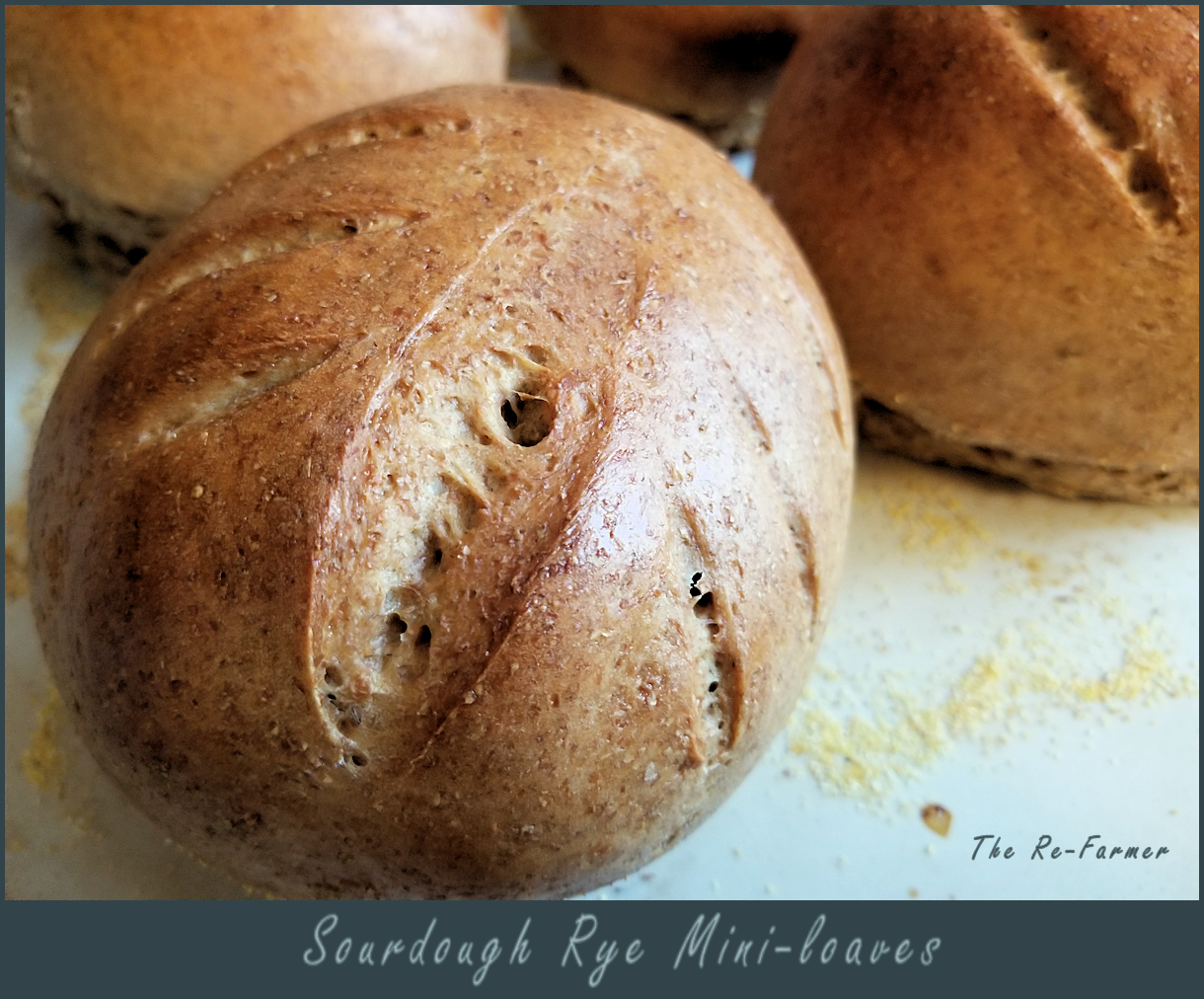
  6. Punch down the dough and divide into two pieces for regular sized loves, or four pieces for mini loaves.
  7. Lightly knead and shape the pieces into loaves and place onto prepared baking pans.  Cover and let rise for about 20 minutes.  Score the loaves with a sharp knife.  Add optional egg wash.
  8. Place in centre rack of oven preheated to 350F.  Bake for about 40 – 45 minutes for regular sized loaves or about 25-30 minutes for mini-loaves.
  9. Allow finished loaves to cool on rack.

sourdough.rye.baked

Braided Egg Bread

Today, we made our bread for our traditional Polish Easter basket.  Though paska is usually associated with Easter, this lovely bread is also traditional.

One of the things that’s important for this bread is for the eggs to be at room temperature.

dried blood orange zest

Zest of 2 blood oranges.

This year, we added a new ingredient; dried orange zest.  I like to dry my own zest, and this time I had some from blood oranges.  I deliberately chose the reddest ones to get a much darker coloured zest.

If you have a zester, it makes it really easy to quickly zest your fruit over a paper towel.  Spread the zest thinly and leave to dry.  When dry, store in an air tight container.

Easter Bread

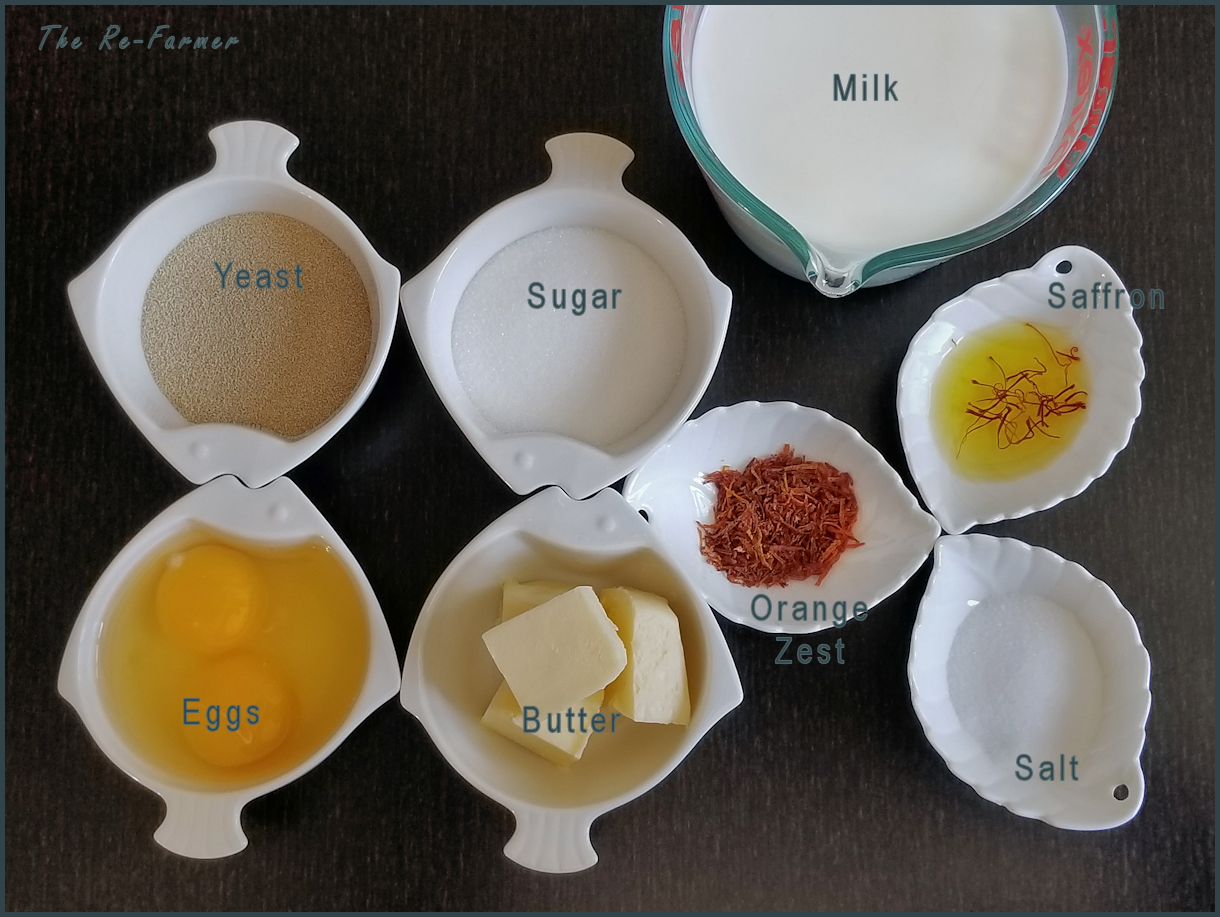
Easter bread ingredients

Not pictured: flour

2 cups milk
1/4 cup butter
2 tsp salt
2-3 Tbsp sugar
3 Tbsp yeast
saffron; a few threads
optional: orange zest
2 eggs
5-6 cups all purpose flour


  1. Proof the yeast in warm water (about 1/2 – 2/3 cups) in a large bowl for about 10 minutes.
  2. Soften the saffron threads in a small amount of very warm water.
  3. Scald the milk, then add in the butter, sugar and salt.  Stir until butter is melted.
  4. Allow the milk mixture to cool before adding it to the yeast mixture.  While it’s cooling, stir in the saffron and optional orange zest, then add the milk mixture to the proofed yeast.
  5. Stir thoroughly, then mix in the eggs (if the mixture seems too warm still, the eggs can be added after the first cup or two of flour).
  6. Add 3 cups of flour and beat thoroughly with an electric mixer for 2 minutes, or by hand for about 200 strokes.
  7. Add more flour by the half cup-full until a stiff dough begins to form.  Turn dough onto a floured surface and knead thoroughly, adding more flour as needed.  If kneading by hand, knead for at least 5 minutes.
  8. Clean and oil the large bowl.  Add the kneaded dough to the bowl, turning it to coat all sides with oil.
  9. Cover loosely and place in a warm place to rise until doubled in size.
  10. Once the dough is doubled in size, turn it onto onto a lightly floured surface and knead gently a few times.  Divide the dough in half, and return one half to the bowl.

    Braided egg bread

    Braided loaves, ready for the oven!

    Braided loaves, after rising and ready for the oven!

  11. To form a braid, divide the remaining half into 3 equal pieces.  Knead each piece a few times, then form into a rope about 12-18 inches.  Join the three lengths together at one end, then braid the dough.  Tuck under the ends to hide them, then transfer the braided loaf onto a well oiled baking sheet.
  12. Repeat with the second half of the dough, or use it to create other shapes.
  13. Cover and allow to rise again for about half an hour.  Preheat oven to 350F.
  14. Optional: glaze the loaves with an egg wash (2 egg beaten with about a tablespoon of water) to get a nicely browned surface.
  15. After the loaves have risen, place into the centre of the preheated oven and bake for about 30 minutes.
  16. When done, allow the bread to cool slightly before carefully removing from the pan to a cooling rack.

Egg.Bread.baked


Oatmeal Flax Bread

It was bread baking time today.  My younger daughter usually does most of it, but she wasn’t feeling well, so I got to do it this time.

I ended up doing three different 2 loaf recipes. A white sourdough, in loaves, sourdough rye, as 4 smaller rounds, and a new one; two loaves of oatmeal flax bread.

I think it’s the first non-sourdough bread we’ve made since the move!  The only real reason it wasn’t also a sourdough was because the large plastic bowl I have was being used for the plain sourdough to rise, and the only other bowl I had that was large enough was stainless steel.  Not something to use with sourdough!

The recipe I used was modified from Two-Way Oatmeal Bread in Whole Foods for the Whole Family, from La Leche League International.

I am quite pleased with how it turned out!

Here is my modified recipe.

20180309outmeal.flax.bread2 cups boiling water
2 cups rolled oats (thick or steel cut, not quick oats)
1 cup ground flaxseed (sold as Flaxseed Meal)
1/4 cup brown sugar
1/2 cup oil
2 tsp salt
2 Tbsp yeast
5-7 cups flour


  • Pour boiled water over oats, flaxseed, brown sugar, oil and salt in a large bowl.  Mix and allow to cool to lukewarm.
  • Dissolve yeast in warm water.  Add to cooled oat mixture.
  • Beat in flour to make a soft dough.  Knead 5-15 minutes, adding more flour if necessary.  (I added only 5 cups of flour total; amount will change based on humidity and temperature.)
  • Let rise until doubles; at least 1 hour.
  • Punch down dough and divide into 2 loaves.  Shape and place in greased loaf pans and let rise until slightly over the edge of the pans.  (Or let rise in the refrigerator overnight.)
  • Bake at 350-375C for about 45 minutes (with my glass loaf pans, I used 350C), or until golden brown.
  • Cool in racks.
  • Recipe can be halved or doubled, but do not double amount of yeast.

As an aside, ground or crushed flax seed soaked in warm water can be used as an egg substitute in some recipes.

I just really like it in bread.

The Re-Farmer


Sourdough Rye Bread

Recently, I was finally able to find a bag of rye flour.  Of all the things I knew would be harder to come by after moving here, rye flour was not one of them!

In anticipation of baking day, I got a rye sourdough starter going last night, using 2 cups rye flour, 2 cups warm water, and about 1/3 cup of our usual starter.

Allow me to introduce you to…

Overnight Rye Sourdough Starter

…The Rye of Sour-on.

My kids are hilarious.

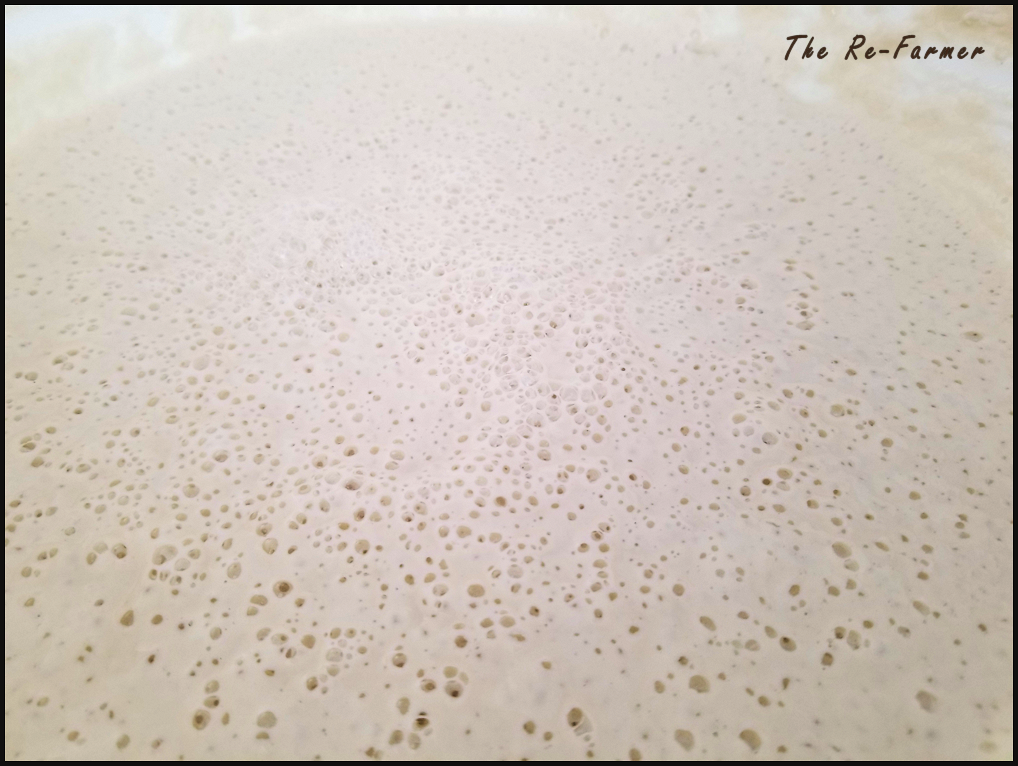
Sourdough starter

Sir Sour Alot is looking good!

Because our original starter has aged so well, it can be shared or used as a base for “overnight starters”, which some recipes call for.

The girls didn’t bother looking up any rye bread recipes.  They just modified their usual Quick and Easy Sourdough recipe (minus the optional garlic and Parmesan with herbs).  With their usual double recipe, they used 2 cups of rye starter, substituted the sugar with molasses, and added 3 cups of rye flour before switching back to all purpose.

Rye sourdoug bread loaves

Rye sourdough bread

The result was a denser bread that didn’t rise as much during backing.  Which is good, because it means they slices will fit completely in the toaster, unlike our usual loaves, which sometimes need to be flipped. :-D

Slices of rye sourdough bread

Still warm from the oven!

Hearty and delicious!

I like the idea of using multiple kinds of flour when baking bread, but that requires having multiple kinds of flour on hand.  Which we really don’t have the space for, anyhow.  So we usually just use all purpose flour, since it gets used for so many other things as well.  I think I’ll make an exception for rye flour – which was only available in a small bag, anyhow.

It looks like we’ll be maintaining two sourdough starters now; Sir Sour Alot and the Rye of Sour-on.

The Re-Farmer

Quick and Easy Sourdough Bread, with garlic and parmasan

While I was driving my husband to a medical appointment and then the pharmacy, my daughters eagerly went at my new copy of Alaska Sourdough and baked bread.

This was not our first attempt at doing a sourdough yeast bread in loaves.  However, when we tried it before, we did not have any commercial yeast left.  Normally, this is not a problem; it just takes longer for the dough to rise.

Except it didn’t really rise.  Even using the oven with the light on to keep it warm and draft free, and giving it 4 hours, it still didn’t double in size.  Nor did things improve after shaping the loaves and setting it aside for a second rising of a couple of hours.

We baked it anyways and got a very dense loaf that was delicious, but it was half-way between unleavened bread and regular bread in texture.

Our home is simply too cool for doing sourdough bread without using commercial yeast, though if we had shaped them into buns instead of loaves, it might have worked better.

We have yeast now.

The girls went through the cookbook and settled on the Quick and Easy Sourdough Bread recipe because… well… it was quick and easy.

Of course, it was also modified a bit.  Because we do that.  They added Herb and Spices Parmesan (found at Bulk Barn) and garlic powder.  You can’t see it in the bread, but you can taste it!

They also doubled the recipe, because two loaves with 4 people is gone in a day.

So here is the modified, two loaf, recipe.
1 cup Sourdough starter
1 Tbsp yeast (1 pkg)
1 1/2 cups warm water
2 Tbsp sugar
1/2 tsp salt
1/2 tsp baking soda
6 cups flour
optional: about 1/4 cup each, garlic powder and Herb and Spice Parmesan, or to taste.

Add yeast to warm water.  Mix in sourdough starter, sugar, salt and 4 cups of flour.  Beat well.

Put in oiled bowl and set aside in a warm spot to rise until doubled.

Mix soda win 1 cup flour.  Add to risen dough.  Knead in garlic, Herb and Spice Parmesan, plus more flour as needed, until satiny and springy to the touch.

Cut dough in half and shape into loaves.

Bake in 400F oven for 45 minutes.

Note: if using glass loaf pans, reduce heat by 25F.

The recipe did not call for a second rising, so with the doubled recipe, the first two loaves went straight into the preheated oven, while the second two loaves got a second rising while waiting.

I would go with doing a second rising.

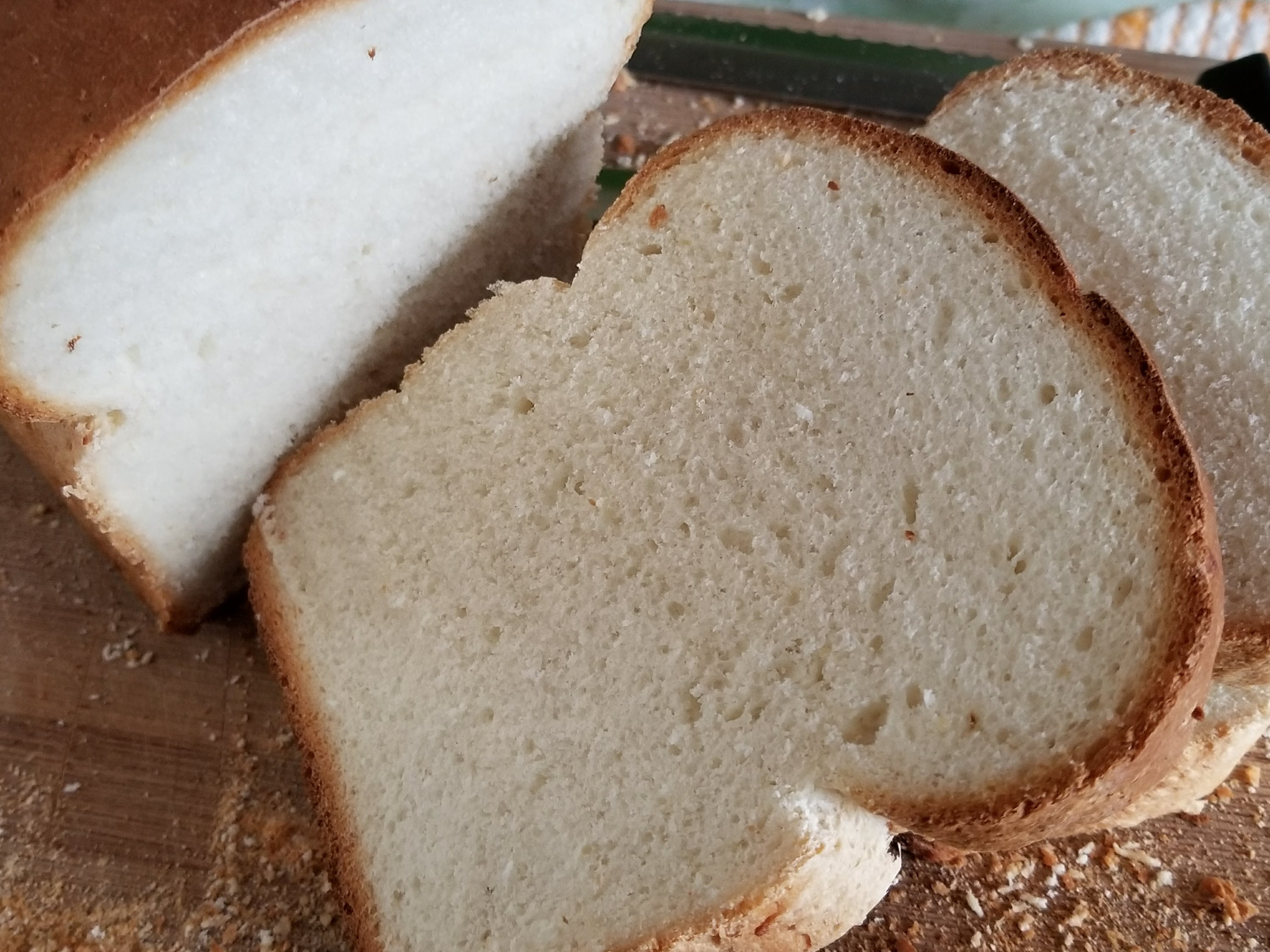
The resulting bread has a lovely, spongy texture that is dense enough to handle being spread with rather cold butter (when we buy bread, sometimes I have to warm up the butter in the microwave for 8-10 seconds, just to be able to spread it.  Otherwise the slices just disintegrate!).

We polished off the first two loaves with some beef stew.  A marvelous combination.


Sourdough Dinner Rolls

Today was our first yeast bread using Sir Sour Alot.  The recipe is very basic.

Typically, with yeast breads, I like to do things like use oatmeal, seeds or grains, or knead in herbs or shredded cheese.

For this one, I didn’t play around.  When my pantry is better stocked, I will get more creative. I didn’t even double the recipe, like I usually do.  So these buns were much tinier than what I typically make! :-D

It was quite a success.

The sourdough flavour is still quite mild with this baby starter, but it is identifiable.  A bit of butter melting on the still warm buns is heavenly!

20180107_1509582064642697.jpgSourdough Dinner Rolls
(adapted from The Sourdough Cookbook)

1 Tbsp active dry yeast
1/2 cup warm water
1 egg
1 cup sourdough starter
2 Tbsp sugar
1 tsp salt
3 Tbsp oil
3 – 4 cups all-purpose flour

Sprinkle the yeast over the warm water and set aside for 5 minutes, or until bubbly.

In a large bowl, beat egg.  Stir in sourdough, sugar, salt and oil, then stir in the softened yeast mixture.

Add 2 cups of flour and beat until smooth. *

Continue beating in small amounts of flour to make a soft dough. **

Turn dough out onto floured surface, then wash and grease the bowl and set aside.

Knead dough, adding flour as needed, until smooth and elastic. **

Place into prepared bowl, turning to oil all sides.  Cover loosely and set aside in a warm place to rise for about 2 hours, or until dough is doubled.

Oil large baking sheets and set aside.

Punch down the dough, then divide into 24 pieces.  Shape the pieces into rolls and arrange on prepared baking sheets.  Cover with a towel and set aside to rise for about 45 minutes or until doubled in size.

Preheat oven to 400F.

Bake for 20 minutes or until golden brown. ***

* How much flour needed can change based on things like humidity.  When I made these today, the first 2 cups was almost all that was needed.  I mixed in maybe half a cup more with this batch.  Likewise, rising times can change dramatically.  I placed the bowl in the oven with the light on for warmth, and it took only about an hour to double in size.

** Sourdough breads will have a slightly stickier dough than those made without sourdough starter.  This is normal.

*** Ovens can be quite variable.  Check after 10 minutes.  Of our two pans of buns, the first one was ready in 10 minutes.  The other in about 15.