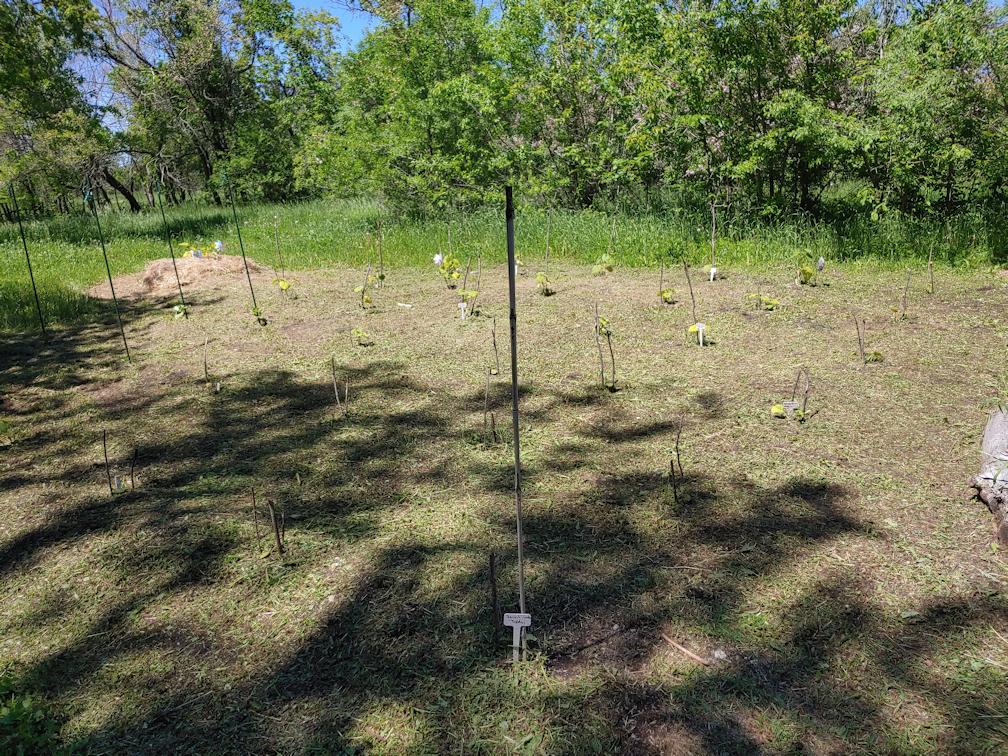
2022 garden: morning in the garden

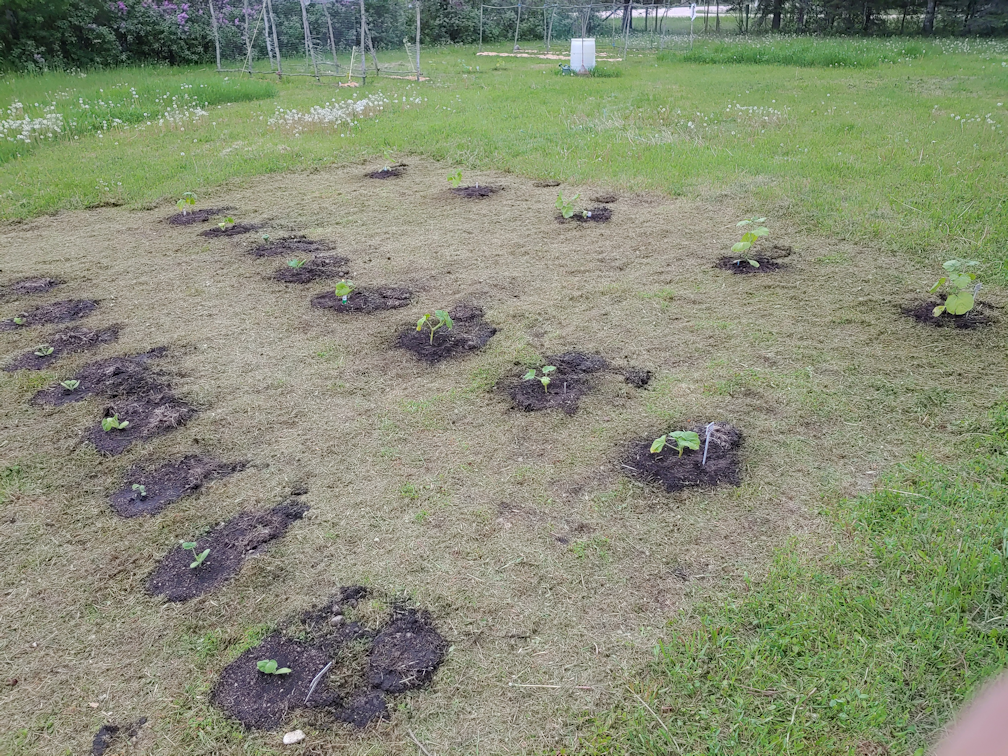
Just a little big of progress in the garden.
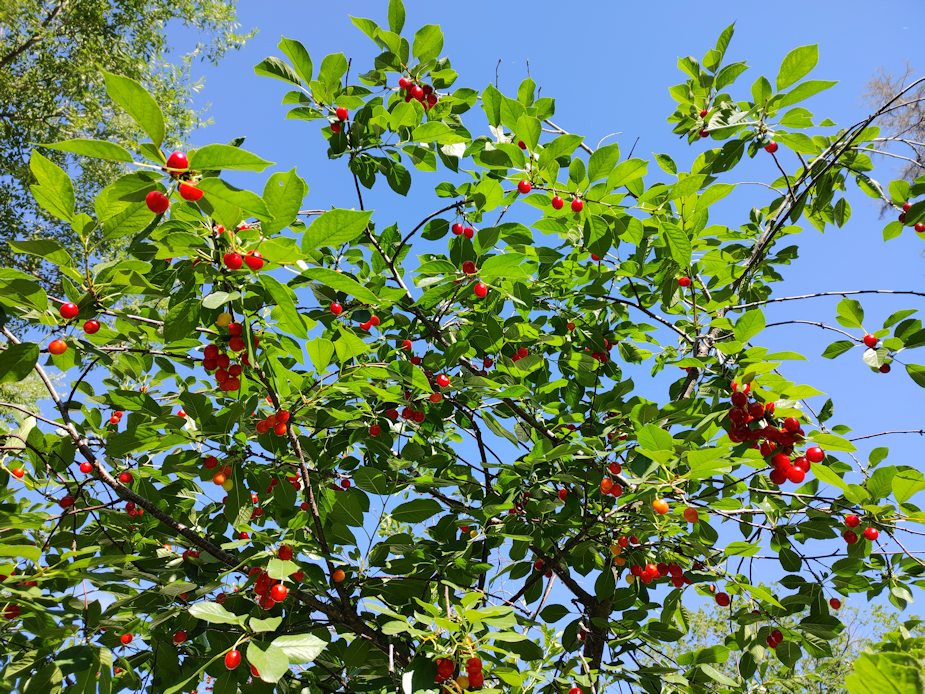
The sour cherry tree by the house has lots of ripe berries, ready to be picked. I’ll have to get the girls to do it, though. A ladder will be needed to reach the ripest ones at the top. This is the most cherries we’ve had since moving here.

We got a pretty decent amount of yellow bush beans this morning. Not enough to make it worth blanching and freezing, never mind canning, but enough for a couple of meals this time.

The purple pole beans are getting more pods, though they are still very thin. I saw the first of the green pole bean pods this morning – tiny wisps of pods! Still no sign of pods, or even flowers, on the red pole beans, while the shelling beans still have lots of flowers, but no pods that I can see.

We should be able to harvest the garlic from this bed pretty soon.
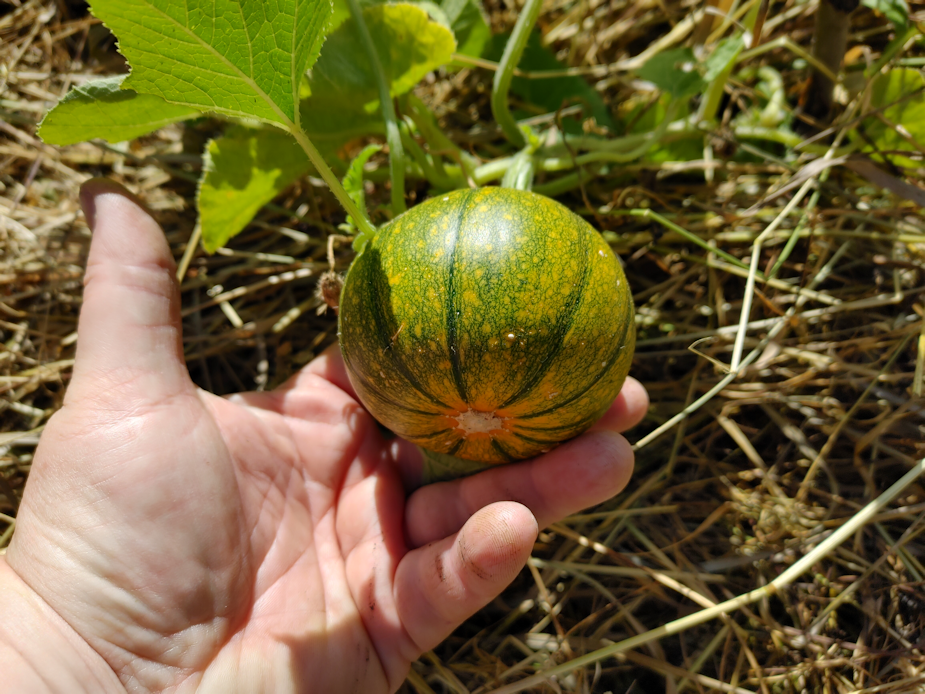
One of the Baby Pam pumpkins is starting to turn colour. This variety doesn’t get much bigger than this. From the looks of it, these are going to be the only winter squash we get out of this patch, other than maybe one kakai hulless seed pumpkin. Even the Teddy squash, which are a very small variety with only 55 days needed to maturity, will likely not get a chance to produce anything. The green zucchini still isn’t producing; they did have female flowers, but no male flowers bloomed at the same time to pollinate them. We do have some golden zucchini developing, though, and some Magda squash I should be able to pick in a few days. Maybe even a yellow pattypan squash or two.

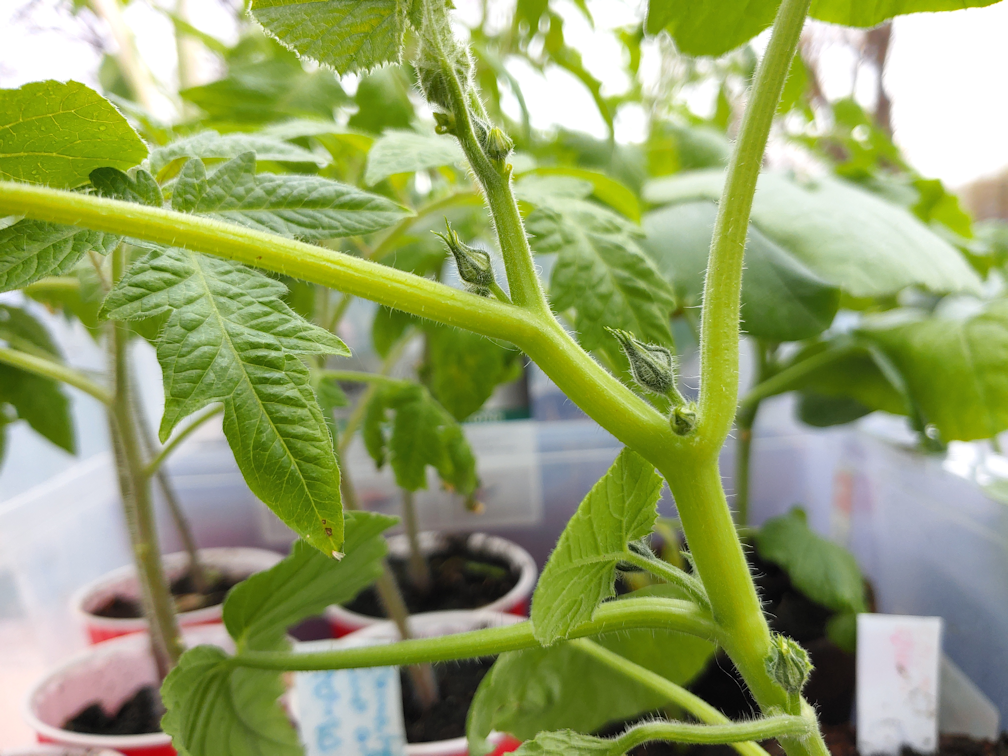
The paste tomatoes, at least, are coming along nicely, with more of them starting to blush.

I was able to harvest more green onions from the high raised bed. Most of these will be dehydrated, and there are lots more I can harvest.

The handful of pea pods are almost all from the second planting. The first planting is, amazingly, still blooming!

Most of the onions seem to be growing well. Some of the red onions have very different shapes, and they are starting to be noticeable. I’m thinking of picking one or two for fresh eating, just to see how they taste.

The one surviving type of turnips are finally starting to have visible “shoulders”. We might actually be able to pick some, soon.

I don’t know what to make of the potatoes. They’re done blooming and we should be able to harvest young potatoes now, but I want to leave them as long as I can. The plants themselves are nowhere near as large as potato plants normally get. There was so much water in that area, I’m sure it stunted the growth of the ones that survived. I still might dig one plant up, of each variety, just to see what there is to see. Will the lack of foliage translate into a lack of potatoes, too? I was really hoping to have a good amount of potatoes to store for the winter. It certainly wouldn’t be enough to last the entire winter for the 4 of us, but it will help us decide if these are varieties we will get again or not.

Every time I’m in the garden, I’m thinking of next year’s garden. One thing is for sure. It is nowhere near big enough to meet our goal of providing sufficient amounts of food to last us until there is fresh produce again. We planted so much, with the expectation of losses, but this year the losses are just too great. Which has really surprised me. I did not expect to get less productivity this year, compared to last year’s drought. Mind you, during the drought, we were watering the garden beds every day, twice a day. This year… well, adding water is easy. Keeping water out is not. Still, even if everything had gone well, we would still probably need double the garden size to meet our long term goal. Short term is to have enough to supply our needs for at least 3 months – the hardest winter months, when we might find ourselves snowed in or the vehicles frozen.

Every year we garden, we figure things out a bit more, from what weather extremes we need to work around, to how much of anything we need to grow, to what we like enough to grow year after year. More me, half the enjoyment of gardening is analysing the results and using that information to make decisions for the next year!

That’s one good thing about having hard gardening years. You do learn more from it, than from years were everything goes smoothly.

The Re-Farmer

Scything and mulching progress

There had been predictions for more rain this afternoon, but when things stayed dry, I headed out with the scythe.

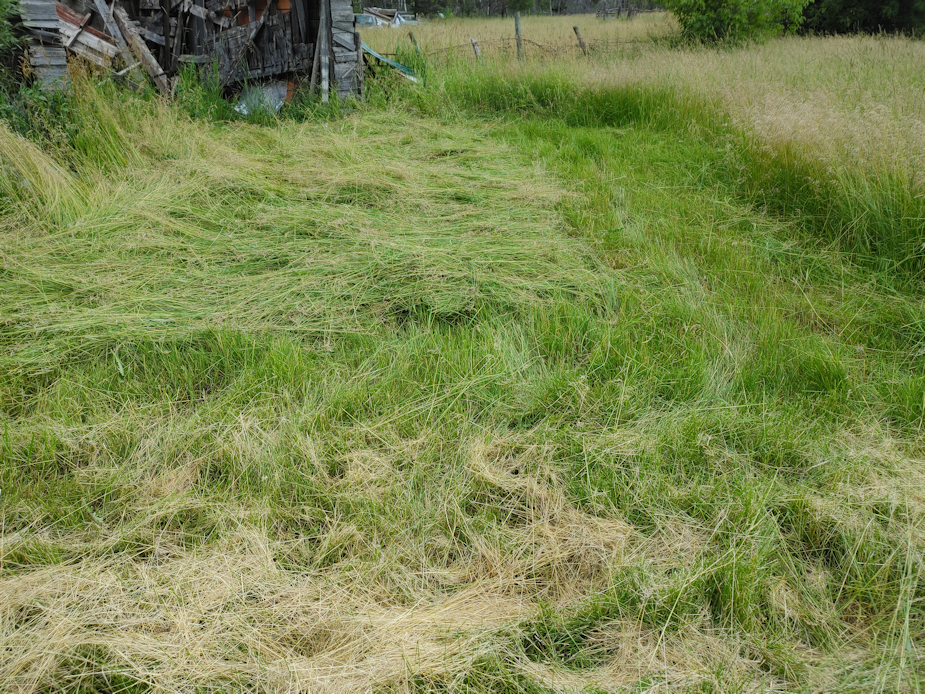
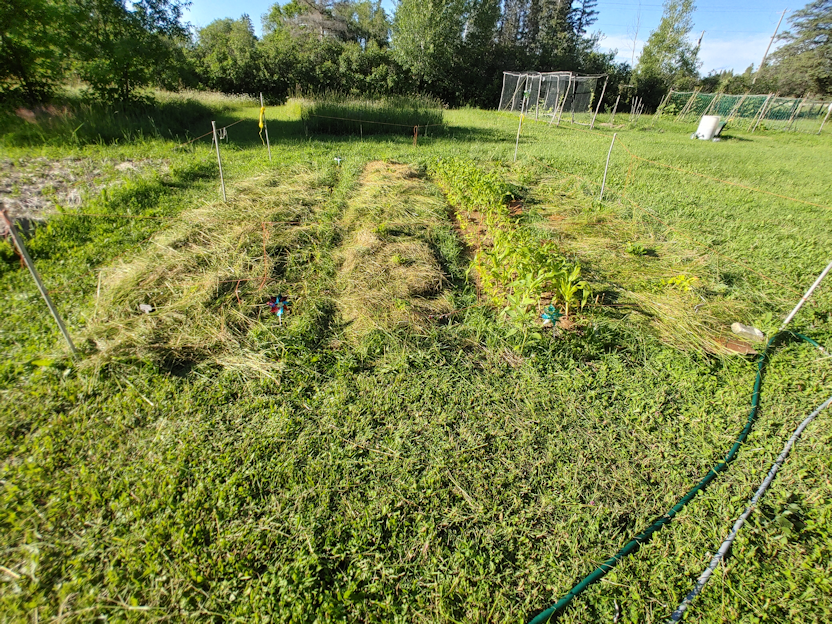
I worked on the area where the hay is still upright, and not flattened to the ground by wind. I took this picture when I thought I was done with scything for the day, but ended up cutting one more swath.

This means we can now access the shed we want to dismantle, now that the roof collapsed over the winter. We still need more space to stack things. I suspect much of it will go into a burn pile, but I know there is some good lumber that can still be salvaged in there, and I want to make sure there’s someplace to put them that’s off the ground. Once the remains of the roof is cleared away, I’m thinking of dragging out the old metal garage door that’s leaning against one wall and laying it on the ground, and using that to stack lumber on top of. If all goes well, we’ll have the materials to build a chicken coop that can handle our winters. I’d really like to build one on wheels, so we can set it up in different places, as needed. I hope to use the chickens as part of our gardening plans, as well as for eggs and meat.

We shall see how that works out.

Meanwhile.

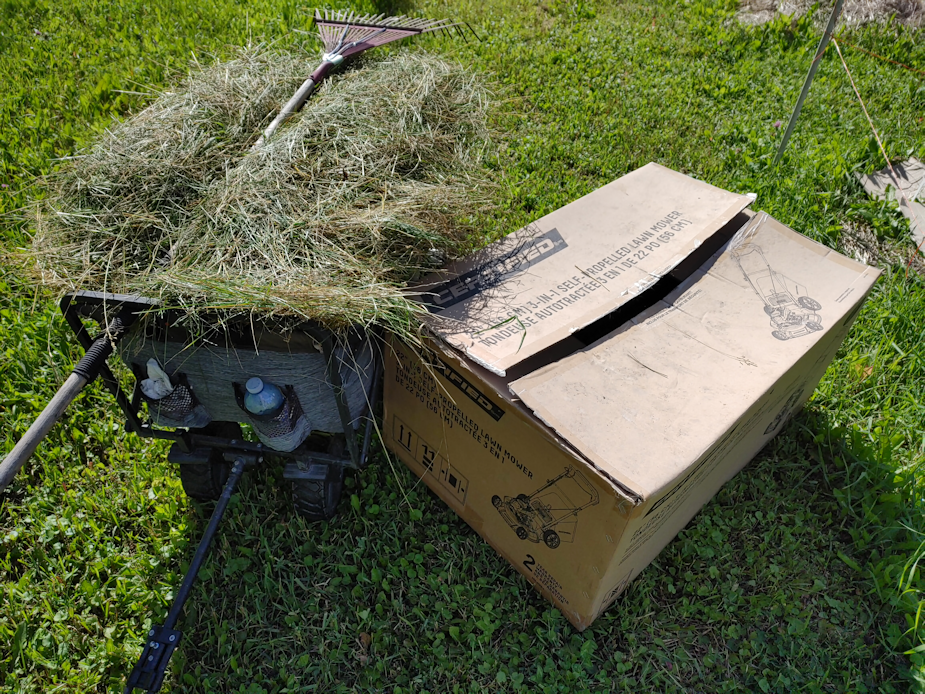
In the foreground of the photo, you can see some of the dried hay from when I tried using the weed trimmer to cut this. I gathered all the previously cut hay into the wagon and hauled it to the garden.

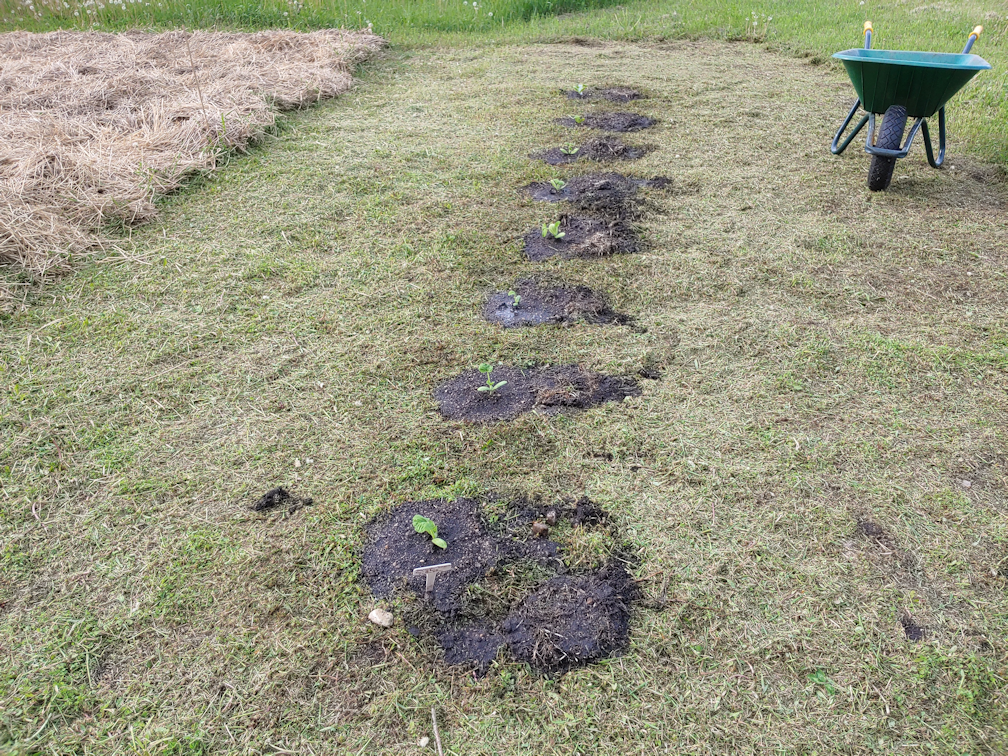
The Boston Marrow really, really needed some help with all the grass and weeds that had grown through the straw mulch. I have not been able to get more cardboard, however…

I did have the box from when we bought the new lawn mower last year in the garage. It’s a really, really heavy cardboard, and there were so many strong metal staples in two of the corners, it was easier to just cut out that part of the cardboard, after removing all the tape I could.

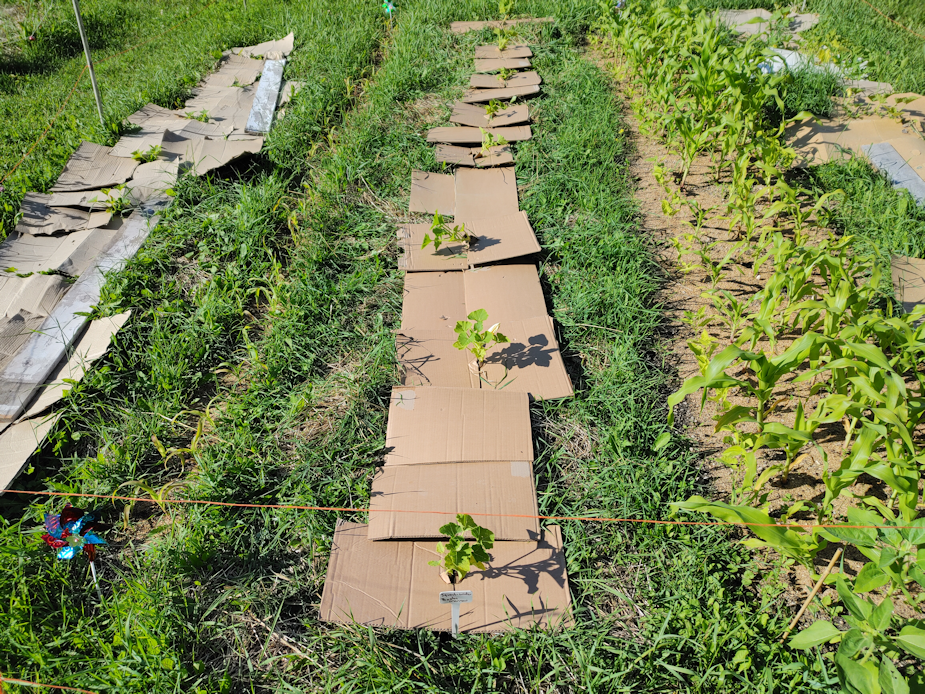
Because the cardboard is so heavy, and I had just one box, I cut it up into many smaller pieces. Then, for each Boston Marrow, I cut a piece with an opening in the middle, to fit around the plants. Once each plant was done, I filled in the spaces in between with the remaining pieces.

I was short one piece to finish!

Ah, well. Close enough.

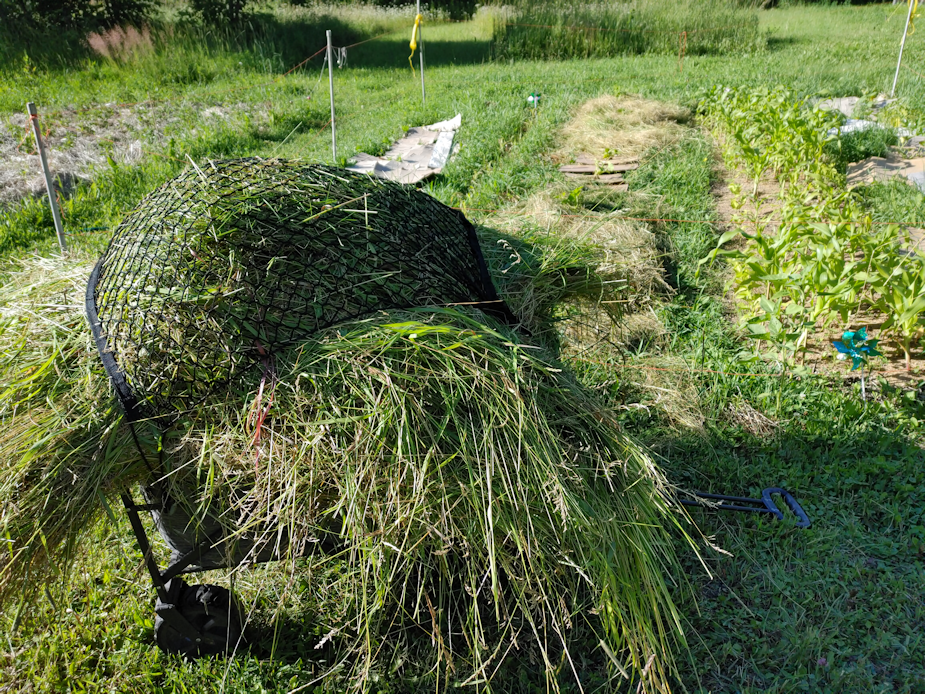
The dried hay in the wagon, however, was not enough to mulch all the squash, however. So I went back and got the freshly cut hay.

Thanks to the net that came with the wagon, I was able to jam all of it into the wagon.

It was enough to almost completely finish mulching the area.

Because there was no mulch on top of the cardboard I’d already laid down around the green patty pan squash and the hulless pumpkins, not only did the cardboard dry quickly in the sun, but pieces kept getting blown around. In this bed, it was bad enough that I weighed them down with some boards, as best I could.

Thankfully, there was enough hay to mulch all the individual squash plants, but not enough to finish filling in the spaces between the hulless pumpkins, nor to fill in up to the corn. It will be sufficient for now, though. Once the hay was down, I wet it enough that the cardboard below would be damp, too.

The green patty pan squash plants are so tiny, they’re completely hidden by the hay! I did make sure they were not covered. Honest. 😄 As small as they are, after all this time, there is still the possibility of a crop out of them. They have only 55 days to maturity. I’m hoping that, now that they’re mulched and not fighting for nutrients – and they’re no longer drowned out! – they’ll perk up, and we might have something to harvest by the end of August.

The cardboard being blown around is a problem in the big squash patch, too, but there was no more hay. I decided to use some of the remaining straw bale.

I only got one load done. Just enough to mulch two Baby Pam pumpkin plants.

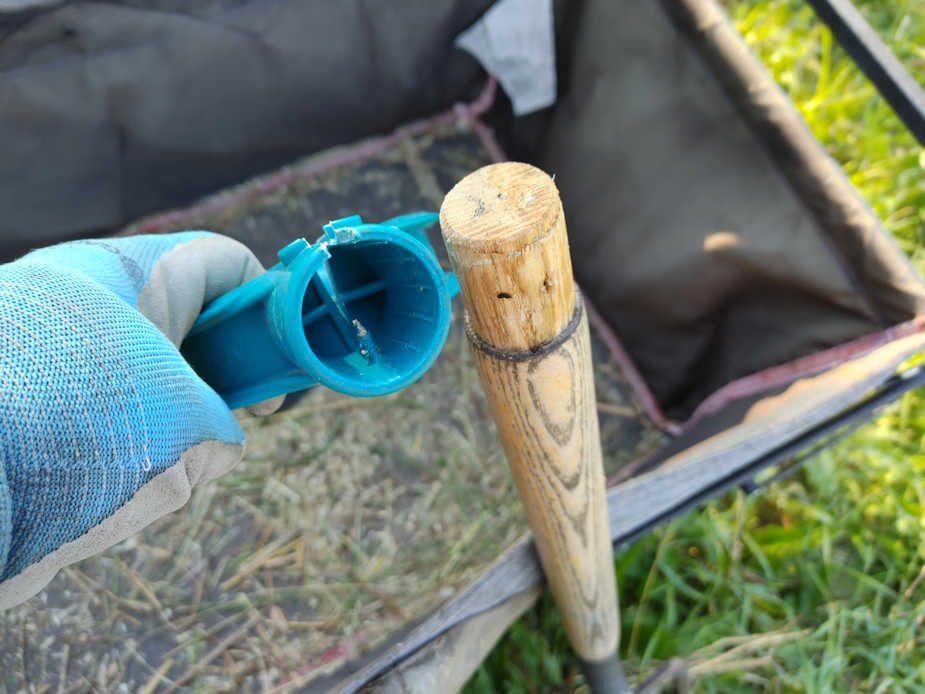
This is one reason why. The handle on our new garden fork broke off!

The other reason is, while pulling the straw off the bale, there were clouds of what look to be mold spores being kicked up. I really didn’t want to be breathing that stuff!

Well, there’s a whole area just north of the garden that’s too overgrown to mow. I’ll start scything that to use on the nearby squash patch, so that I’m not having to use the wagon to bring it over.

But not today. Probably not tomorrow, either, as I will be out and about for much of the day. Saturday is supposed to hit 28C/82F, but if I get started scything early enough, I should be able to escape the heat. The hottest part of the day is typically around 5pm, so there should be plenty of time.

Little by little, it’s getting done.

The Re-Farmer

A rare sighting

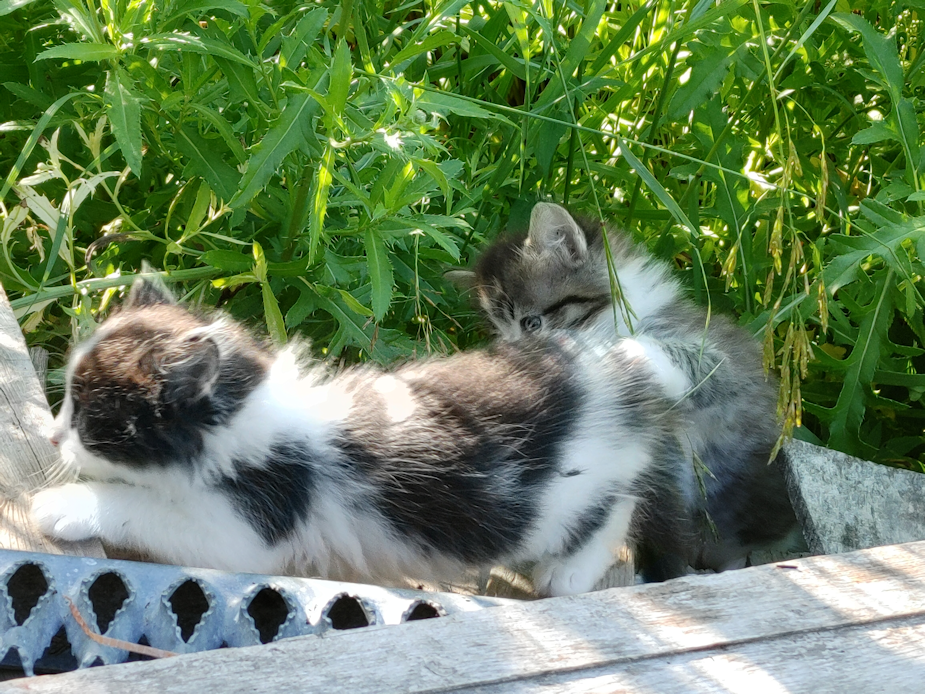
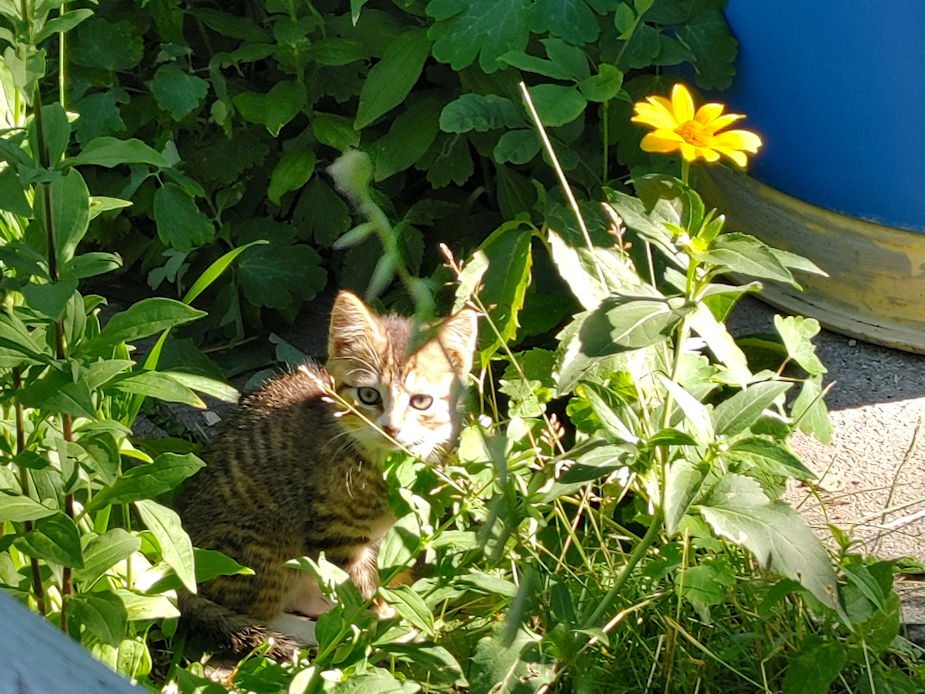
While putting the kibble and water out this morning, I found the bitty kitties playing on top of the board pile. I managed to catch a picture of a kitten that usually runs off before I can get a good look at it.

There were six kittens from this litter in the branch pile, but since they’ve been moved to the board pile, I’ve only been seeing 5 at a time, and that includes the calico that is from an older litter.

I can usually count on seeing this one around the kibble house or laundry platform, often by itself. While I saw its calico sibling with the bitty kitties, I saw one of its other siblings later on. Mama had gone onto the laundry platform, and the darkest kitten of this litter appeared out of nowhere and practically pounced on her, going for the nip, barely giving her a chance to lie down! 😁

Oddly, I didn’t see a lot of adult cats while doing my rounds this morning, but I did see the black and white kitten near the pump shack when I brought kibble that way, then later saw a tabby eating the kibble I leave on the table by the door.

I suspect something other than kitties has been around during the night. When I came outside this morning, I found the diverter for the downspout above the rain barrel on the ground – along with the screen cover for the rain barrel, and the board and bricks that support the diverter and hold the screen over in place. My guess is, something heavier jumped onto the board and knocked it all down. The shelf on the other side of the door has two shelves for the cats to shelter in, while the top shelf is full of various stuff. Something had gone into there and knocked things about, too. Even one of the bricks that are part of the counterweight for the cats’ house was knocked out and onto the ground. My guess is racoons, since none of the cats are heavy enough to knock some of this stuff about, and skunks can’t climb up to some of the other stuff. Even some of the board at the top of the board pile that I’d straightened out, after the groundhogs knocked things askew while pulling down the old tarp that had been covering it, were pulled aside. At least the wood and water trays were still on the pile and not on the ground.

One of the things I got done this morning was use the slow-release granulated fertilizer on the garden. It’s an organic fertilizer made from chicken manure, designed for tomatoes and vegetables. There wasn’t enough to do everything, so I focused on the heavy feeders, and the things that seem to be struggling the most. I ran out before I could do all the squash in the squash patch, but I was able to get everything in the corn and squash patch, the tomatoes and the bell peppers. The fertilizer releases nutrients when it gets wet, but we’re not expected to get rain again for a few days. With how damp the ground it, it’s unlikely anything will need to be watered before then. Ah, well. It might take a while, but it should be interesting to see how the plants that got some of the granules will do, compared to the ones that didn’t.

The Re-Farmer

Our 2022 garden: having a whacky time!

After a few hours of waiting, things dried up enough that I could do some much needed weed whacking in the garden.

Most of the yard still squelches when we walk through the grass – grass that is getting so tall, it’s actually hard to walk through! Not only are all the dandelions gone to seed, but the grass is going to seed, too!

The first place to work on was the large squash patch.

I’m not happy with how much shade some of them are getting. They get full sun early in the morning, though, so with the total hours of sunlight, it should be okay. It’s a shame my parents planted more trees on the south side of the garden. I’ve since learned my brother got them those trees to add to the shelter belt in the outer yard, but my parents didn’t want to go out that far. Now, the shadows are covering more than half of the old garden area on this side. :-(

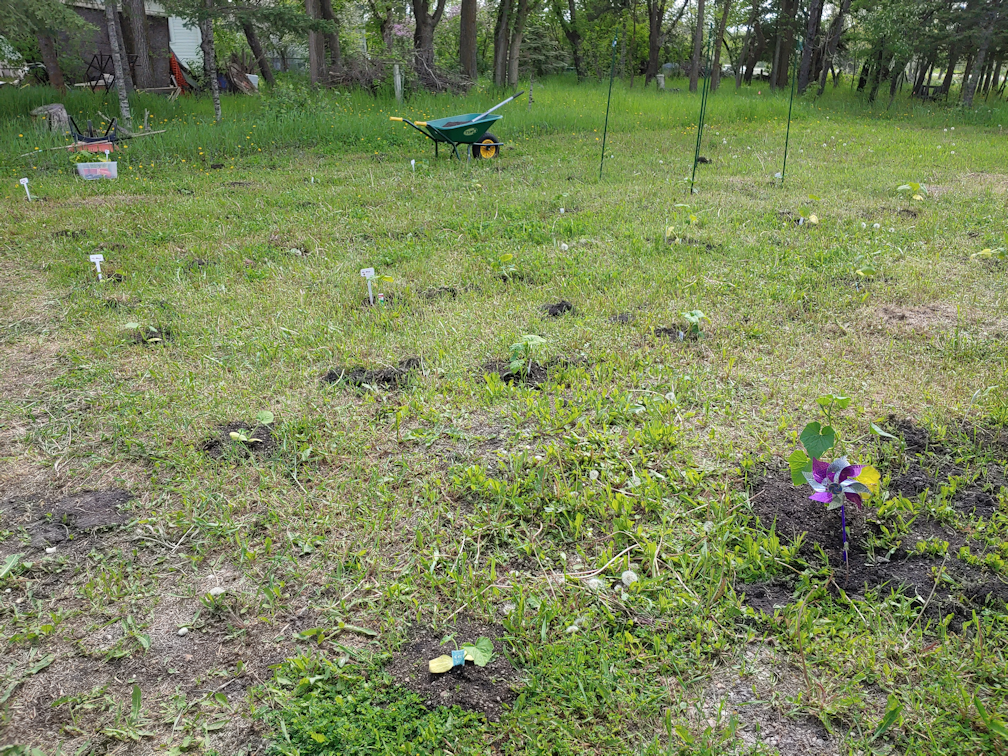
Some of the squash seedlings are still so small, they could not be easily seen through the overgrown grass and weeds. I used taller sticks and stakes to mark the corners, then smaller sticks to mark the smaller squash. Then I went ahead and added sticks to all of them, with pairs of sticks to support the larger squash so they’d be out of the grass. In the end, I added a pair of sticks to all but the gourds with the tall metal support stakes, as much to protect them from accidental weed whacking as to mark where they were. I trimmed right down to the ground as much as I could. I am glad to get this done before adding the straw mulch. I really didn’t want to add it on top of the overgrown crab grass and weeds.

Then, since I was there with the weed trimmer anyhow, I kept working around all the beds and the straw mulch where the potatoes and melons are planted. I didn’t need to trim around where the other squash, corn and beans are planted, since that area got done in preparation for planting.

I had grabbed the second 100 ft extension cord from the garage, so with about 250 ft of extension cord, and judicious placement of a spade to make sure the cord didn’t drag across the squash and corn patch, I was able to reach the bean tunnel.

The bean tunnel got a thorough trimming before I moved on to the hulless pumpkins. For these, I decided to give them three support poles each. These poles were used to support summer squash last year, and some still had the twist tie wire that was used to fix the stems to the poles. Those were used to go around the three poles and hold the vines off the ground and protect them from the weed trimmer. I also had some left over sifted garden soil in the wheelbarrow, so I added that around the bases of the support poles to help hold them in place, being careful not to go too close to the stems. I didn’t want to bury the stems, as that could cause the stems to rot.

These pumpkins are now ready for a mulch, too.

I stopped at this point, as I wanted to get to the post office before it closed, then go on into town. I want to use the weed trimmer around the trellises and, if I can reach, around the sea buckthorn and silver buffalo berry. That will be a job for after the squash patches are mulched.

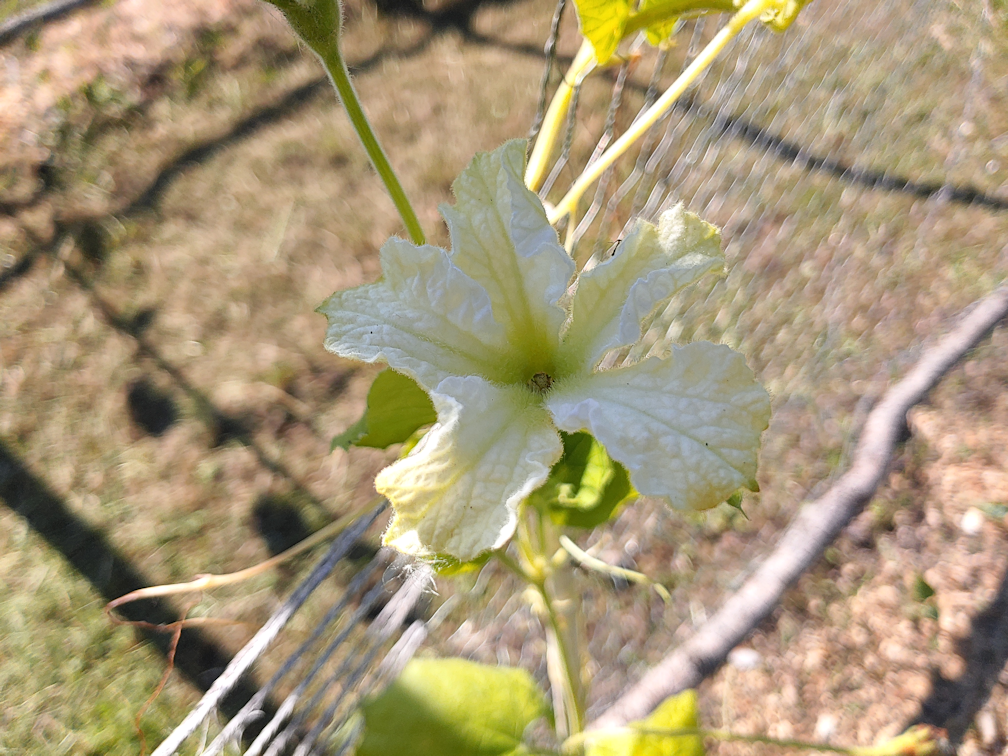
The canteen gourds are blooming! I probably should have pinched off the flower buds when I transplanted them, as they haven’t really gotten any bigger, but I forgot. We shall see how they do. Their flowers are very pretty!

We are starting to get weather advisories and heat warnings for the weekend. Tomorrow, we’re supposed to approach 30C/86F, and the day after – Father’s Day – we’re supposed to reach the mid-30’s (35C is 85F). While I was working on the bean tunnel, the thermometer there was already reading 30C in the sun. Which means the best time to get the mulch down will be early tomorrow morning, while it is still cooler.

Going to bed early tonight would be a good idea! Hopefully, the cats will even let me sleep… :-/

The Re-Farmer

Our 2022 garden: filled in the squash bed

The squash bed prepared by my daughter has been filled!

Some things went in some odd configurations. It’s going to take some doing to remember everything, even with the labels.

In my previous post, I’d stopped for a break after getting the Kakai hulless pumpkins, and the Crespo squash, started in the squash bed. As expected, the rest went much faster.

I’m so tired right now, I’m not sure I’m going to remember everything I planted in here at all! :-D

At this corner, the four Endeavor green zucchini got transplanted, running parallel to the low raised bed. This way, they will be easily accessible for harvesting throughout the summer.

There was a bit of space at the end of the row the green zucchini was planted in, so a couple of Teddy winter squash were planted there, and the remaining 6 were planted in a block in the next couple of rows. The Teddy squash has a growing habit similar to zucchini, so I wanted to make sure they were near the path, so we shouldn’t have too much trouble getting by while tending the low raised bed, or the green zucchini.

Next to the Kakai hulless pumpkin, I planted the Baby Pam pumpkins. There was six of them, planted in a 3 x 2 block. These are a smaller pumpkin that are supposed to be excellent for pies.

The poles are with the Apple gourds. I can’t remember if they’re climbers or not, but they are the only gourds in this bed, so I wanted to make them easy to spot.

I know we had some Ozark Nest Egg gourd seedlings, but as I planted them, I got a closer look and it does seem the are all Apple gourds. I don’t remember the Ozark seedlings dying off; if I had noticed, I would have tried planting more! I have no idea what happened to them.

Fit into the remaining spaces are the Georgia Candy Roaster and Winter Sweet.

Of the 7 x 7 grid my daughter dug, I did not plant anything in the south row, as it was too far into the shade. So this squash bed has been planted in a 7 x 6 grid.

The next step will be to mulch this area with straw. There had been thunderstorms forecasted, but now they’re just saying showers – those storm predictions keep going away! Still, we want to make sure the mulch is down as soon as possible.

If I can, though, I’ll see if I can get in with the weed trimmer first. It’ll be more difficult, now that the seedlings are planted, but it will make a big difference later in the season.

There were still seedlings to be transplanted, however. Which means a whole new section needed to be claimed. We were hitting 25C/77F, though, so I went back inside to take a hydration break, though I ended up making a dash to the store to pick up more bug spray. I’d just bought some, and we were already running out. They didn’t have a lot of options – normally we get something that will repel ticks, too, but there was none available. Still, with how fast we’ve been going through them, I got two.

For the rest of the transplants, I decided to start transplanting here.

In this area next to the potatoes, the grass I’d cut was growing back faster that the squash bed I’d just finished planting in, so I couldn’t make do without using the weed trimmer.

I worked in sections, starting out with an area large enough to include walking paths.

I had a couple of bins of transplants already at the garden, so I started on those, first.

These are the G-Star, green patty pan squash. The plants will be more compact compared to the winter squash, and they will be more easily accessed from the path between them and the potato and melon bed. I started by digging the row of holes then, using the jet setting on the hose, drilled into the soil and into the divots to blast as much soil back into the holes as I could, while leaving the roots and rocks behind. Then each hole got a spade full of sifted garden soil, and finally the squash were transplanted.

That process was then repeated for the next row, for the Boston Marrow. There were three pots, but so many of them germinated, I was able to plant eight. Which is probably quite crowded, even though I spaced them out more, as I think these will sprawl quite a bit as they grow.

Once those were in, I went to get more transplants – and found the only squash left were both hulless pumpkins!

Oops. I’d intended to plant them further apart. I would have put the Boston Marrow in between them, if I’d thought ahead. Ah, well.

I chose to plant the Lady Godiva variety here, because there was 5 seedlings, to the other variety’s four.

The last four, the Styrian hulless pumpkins, went next to the bean tunnel. I wasn’t able to use the weed trimmer here, though. I had to add another length of extension cord, but for some reason, it just wouldn’t run. I think there’s an issue with one of the extension cord plugs.

Oh, I almost forgot!

While watering the beds out here earlier, I noticed that we now have peas sprouting! The ones my daughter planted at the finished trellis. There are 2 varieties, and both have broken ground. :-)

So here we have it! That last of the squash, gourds and pumpkins are now transplanted! As with the others, these will also need a straw mulch.

We might end up finishing off the bale, soon!

As of tonight, the only things left to transplant are the ground cherries and the Yakteen gourds. The Yakteen gourds will be filling in some gaps in other places. After talking about it with my daughter, she suggested a place for the ground cherries that I hadn’t thought of. Next to the compost ring, there’s a spot where we’ve got grass clippings sitting on top of a sheet of metal. That metal has been there for about a year now, so it should be just fine to plant into. We’ll just have to find ways to use up the grass clippings that are there! :-)

I am so glad to finally have the transplanting done! Where we’re planting them is far from ideal, but they should be fine, I think.

We still have corn to direct seed. We’ll check the days to maturity and see if we still can, or if the seeds will just have to wait until next year. There are other seeds I’d hoped to plant this year, but they will have to wait until next year. They should have been sown back when everything was flooding. There is no longer enough of a growing season left for them.

While I was working on all this, my younger daughter took care of some other jobs, including doing a burn. We haven’t been able to get the burn barrel going for a while, and it was over full of the cat litter sawdust. That meant she had to stay and tend the fire for several hours.

She had just reached the point where she could put the cover on and finally let it smolder away on its own, when I came by to the pile of garden soil for one last wheel barrow load. Previously, I’d been sifting soil from the remains of the pile near the squash bed, but what’s left of that is so full of roots, it’s not worth the effort anymore. Later in the season, we’ll break up what’s left of it and use it to level off that area which, like so many other spots around the old garden area, is really rough, making it difficult to mow.

While sifting soil into the wheel barrow from the other pile – which went so much faster, as I was able to work from an area that hadn’t been taken over by weeds, yet – my daughter and I both heard a strange sound.

Coming from the branch pile.

A teeny, tiny mewing sound!

There are still kittens in there! Well. At least one. I’ve seen the mamas taking their kittens out of there, so this may be different litter? I have no idea. It’s going to still be a while before we start seeing the moms bringing their babies to the kibble house.

We’ll have to keep our eyes out for them. :-)

So, there we are. The squash transplants are finally done!

Looking at the 14 day forecast, we’re looking at highs hovering around 20C/68F during the day, and the lows hovering around 15C/59F, which fairly regular showers throughout. Which should be just excellent for the garden! It would be so good to finally have a good growing year.

As for me, I am wiped out. A daughter has been kind enough to take care of my laundry for me, I’ve taken my pain killers, and am more than ready to go to bed!

And it’s not even midnight yet. ;-)

The Re-Farmer

Our 2022 garden: eggplants, peppers, Wonderberry, and what a long day

It’s shortly before 8pm as I start this, and it’s all I can do not to just go to bed right now!

My day started a bit earlier, as I wanted to get my morning rounds taken care of before making some calls, then heading to the city. My husband and I now have medical appointments for the end of the week. We are both way overdue. Especially my husband.

Once that was done, I headed to the city, stopping to get gas at the town my mother lives in, first. Too early for their fried chicken to be available, so breakfast was a bag of beef jerky. :-D Usually, I just get $20 or $30 in gas, but decided to fill. At 197.9/L $20 wasn’t going to get me much. It cost almost $55 for about a quarter tank.

Then I got to the city and the first gas stations I saw were at 207.9/L

That’s USD$6.24/US gallon.

As I got further into the city, I saw stations that were still at 196.9/L but it likely is just a matter of time before all the stations jump up in price.

It’s insane.

I’m sure glad I filled my tank earlier!

Today was our day to do the rest of our monthly stocking up, and I went to The Wholesale Club again for this trip. Ended up spending just over $400 there, and the only things that could be considered splurges were super long metal tongs, and a super long wooden spoon, for cooking over the firepit. Oh, and more 500ml, wide mouth canning jars for the stash. :-D

There were a couple of things they didn’t have in types and sizes that I wanted, so I went to a nearby Walmart. My splurges there were a heavy duty garden hose, and a fan for my window, to replace the box fan that broke last year. The garden hose was actually a bit cheaper than the medium duty garden hose I was looking at. Normally I’d say, you get what you pay for, but the last time I paid a more premium price for a heavy duty hose, it suddenly burst apart at the tap, the first summer we used it. We’ll see how well this one lasts.

Between the drive and the shopping, the whole thing took about 4-5 hours, but I got pretty much everything on my list – including the highest SPF sunscreen I could find, an more bug spray! After this, we’ll only need to pick up fresh stuff locally, as needed.

I’m glad I remembered to stop at the post office on the way home. Several packages were in, including a birthday gift for my younger daughter. We also finally got the credit from our previous internet provider, which we should have gotten back in February. Since I was there, I also picked up another bag of wood shavings to use as mulch.

Once at home and the girls unloaded the van and put everything away, I headed back outside. We hit more than 20C/68F today, and I wanted to make sure all the transplants – both the ones still in pots, and the ones in the gardens – got a good misting. Happily, there is no sign of transplant shock in anything we transplanted. In fact, one tomato plant that got all droopy right after being planted, has already perked up.

My younger daughter was able to get the Wonderberry transplanted.

We decided to put them around the stone cross. I’ve read that these are good at self seeding, so they can be treated as perennials, and we thought this might be a nice place for them. They are so full of flowers and berries! I would certainly prefer these spreading around the area, instead of those green leafed plants that are taking over everything. They do have pretty flowers but, wow, do they ever invade! Almost every area we’ve managed to clean up among the trees is now covered with these!

Unfortunately, my daughter didn’t get much more done outdoors after this. She was driven inside by the clouds of mosquitoes. I had bug spray on, and it barely kept them at bay. I ended up mowing the main garden area, instead of working on more transplanting or bed prep as I’d intended, because the tall, damp grass is just a haven for mosquitoes. Huge clouds of them would rise up as we walked through! They’re just nasty.

Before I started mowing, my daughter helped me move the row covers we made last year. From the droppings left behind, the deer walked all over them during the winter. They are completely falling apart. When we can, we’ll take them apart and salvage what we can to reuse in other ways in the garden.

I didn’t get all of what needed to be mowed – some areas are still too wet – but the main garden area, and the spaces between beds and trellises we used last year, are now mowed. I also set up the old, patched up rain barrel and filled it with water (which I could now reach without having to steal a length of hose from the front tap, thanks to the new hose I got today) while I mowed, so we can use it to water the silver buffalo berry and sea buckthorn with ambient temperature water. Plus I could reach to use the hose to water the peas.

Once a bare minimum of mowing was done, I went ahead and did some more transplanting.

We had 5 surviving Little Finger eggplants, and they just fit into the middle of the half-bed that had space. They are encircled by spinach and onions. Now that the eggplants are in, we can finish setting up the hoops – they just need cross pieces joining them in the middles – so we can cover them with net. I don’t know of the critters would eat eggplant, but I’d rather not give them the opportunity to find out!

There were 7 surviving Purple Beauty bell peppers. Most were from the second seed start. Only two survived the Great Cat Crush. :-D Once they were in, there was still some space in the middle of this bed. Just enough for the last two Cup of Moldova that didn’t fit in the bed that has just tomatoes in it.

This bed is encircled with onions on the outside, while the inside has turnips on one side, spinach on the other. The turnips – all three varieties – germinated a couple days ago, and today I could just see little spinach coming up, too.

With the peppers now planted, we’ll add twine to the supports, and then will be able to put net around the bed.

Tomorrow, we’re going to need to put a priority on transplanting the melons. They are starting to suffer in their too-small toilet tube pots. So they will go into the deep mulch space left over, after the potatoes were planted. I was going to plant the summer squash in there, though to be honest, between the two beds, we might have room for both. Well. Not all the summer squash. We do have a lot of patty pans!

We’re expected to get as warm tomorrow as we did today, so I think an early bed and early rise will be in order again. I want to get more work done in the garden, while it is still cool.

After I pain killer up and slather my dried up hands with lotion! I am in such pain right now. It’s fine if I’m sitting down, except for the joints in my fingers making it hard to type, but every time I get up, I find my joints have completely stiffened up and I can barely walk.

*sigh*

I’m too young to be feeling this old!

:-D

The Re-Farmer
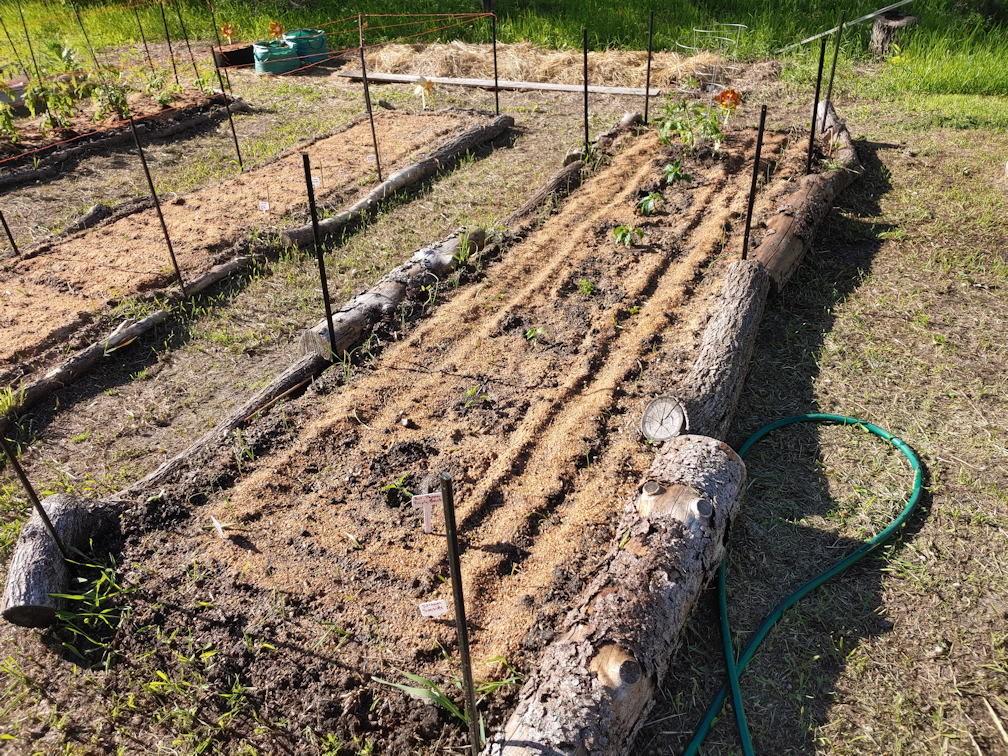
Recommended: MIgardener

Welcome to my second “Recommended” series. Here, you’ll find various sites and channels that I’ve been enjoying and wanted to share with you. With so many people currently looking to find ways to be more self sufficient or prepared for emergencies, that will be the focus for most of these, but I’ll also be adding a few that are just plain fun. Please feel free to leave a comment or make your own recommendation. I hope you enjoy these!

I sort of hesitated to include this one in my Recommended series, because it seems like everyone knows MIgardener! Still, I’ve been learning a lot from their YouTube channel, and have already included some of their videos in previous posts, so here it is! Be sure to check out their About page for links to various social media, and check out their website here.

While it’s their YouTube channel I spend most of my time on, the website is a dangerous place for me to be, because they sell seeds! This year, I tried to focus on Canadian seed sources for most things. Especially if it’s a supplier that grows their own seeds in our climate zone. But I’m a sucker for seeds, and MIgardener has things I haven’t seen anywhere else, which is another of my weaknesses. If a variety is uncommon or rare, I want to grow it, so I can save seeds and help keep it from being lost!

That, and I just plain like trying new things. It’s not like these are varieties we’ll find in the grocery stores, or even the farmer’s markets, so the only way to find out if we like them is to grow them!

Quite a few people on the gardening groups I’m on have bought seeds from MIgardener, and have had nothing but positive things to say about them. I like that the website has characteristics you can select, or in/out of stock seeds.

As I write this, when it’s on “all seeds”, there are 669 products to choose from. When I selected “cold hardy” only, that number drops to 58!

They also have a curated Homesteaders Collection of seeds that looks really good. I appreciate that they’ve been chosen for things like canning and storage, as well as fresh eating.

Their videos cover every aspect of gardening.

Do you want to start seeds indoors? Should you start seeds indoors? Is starting early better? He covers it all.

Looking to build some raised beds to transplanted those seeds you started indoors into? He’s got you covered.

Need to figure out where to put those raised beds? He’ll help you figure that out, too.

It’s not all about growing outside, though. Are you a coffee drinker?

Yeah. They sell coffee seeds, too. There are videos on how to grow a variety of fruit trees and berries, too, as well as a number of specific herbs and vegetables.

They don’t just talk about their successes, though.

They’re open about their failures, too.

Right now, there is a huge interest in saving seeds, and they’ve got a playlist on how to save seeds from a wide variety of plants.

Yes, they sell seeds, and are also teaching you how to save seeds, so you don’t have to buy more of them!

Of course there are videos on harvesting your crops, as well as videos on how to cook, can and preserve them. They’ve been putting up videos for 11 years, as of this writing, so there is LOT of information available!

Whether you’re a beginning gardener, or an experienced gardener what wants to look up specific information, I definitely recommend checking out MIgardener. It will be time well spent!

The Re-Farmer

Our 2022 garden: first spinach sown, and onions transplanted

It was a bit cooler and overcast this morning, but still pleasant enough to get the plants outside for a couple of hours.

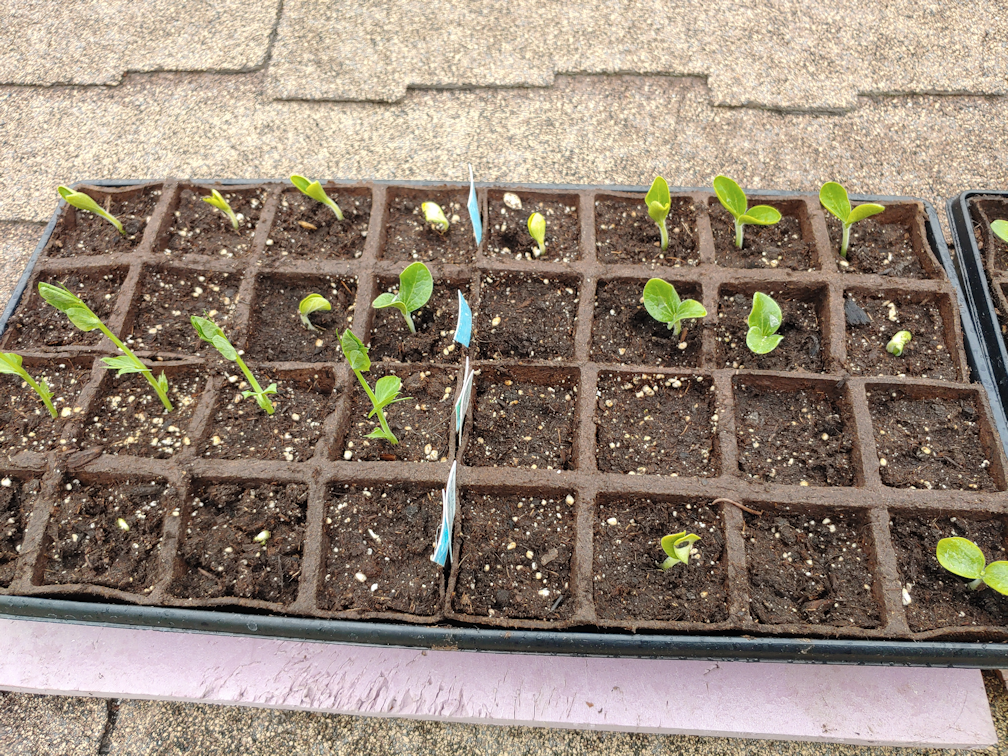
I am really happy with the newest seedlings. This tray has the cucumbers in the left half, with the Teddy and Red Kuri winter squash on the right. It took so long for the winter squash to germinate, I wasn’t sure they’d make it, but we have 100% gemination!

The purple peas in this tray are getting nice and big. The summer squash in the other cells took a long time to germinate, too, but they seemed to get a boost after I put the warming mat under them. It’s hard to see, but even the green zucchini is finally germinating, next to the peas. I thought the Magda squash had started to germinate, but not quite yet. We had less success with those the last 2 years we planted them, too. Our first year, we had only 2 surviving plants. Last year, there was just the one. Magda squash just seems to have a harder time of it.

So far, only 2 of the yellow zucchini have germinated. Last year, we had some germinate, but when they started producing fruit, they were green, and we no yellow zucchini at all. I’m hoping that won’t happen again, this year!

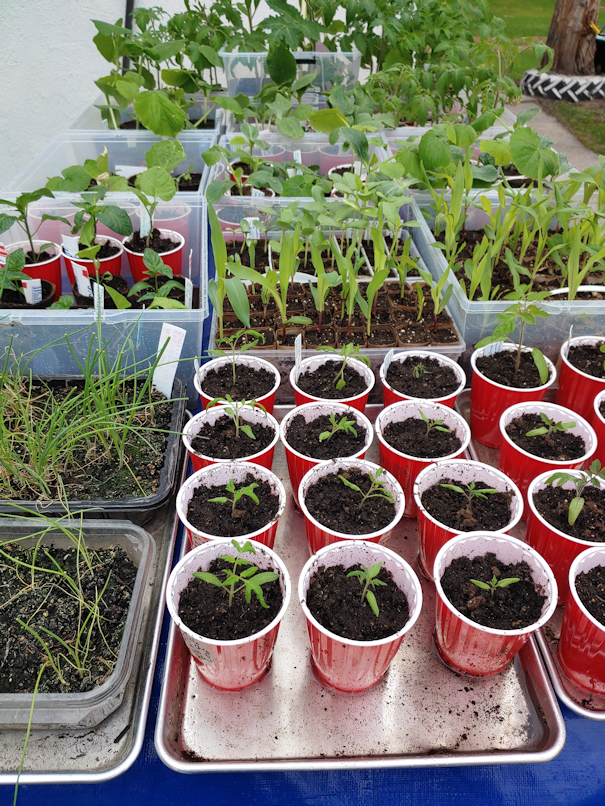
The transplants seem to be quite liking their time outdoors, and even the newest little tomatoes in the foreground are looking generally robust.

We have 3 Crespo squash – and they are budding! Would you look at that!

I considered pinching them off, but these first flowers would be all male flowers. The next batch of buds should be both male and female. So I’m thinking to just leave them? I don’t know. There is very little information out there on how to grow Crespo squash. They do seem to be very enthusiastic growers!

While moving the blooming Wonderberry in and out of the sun room, we have been brushing the 3 plants against each other, in hopes to pollinate them, just in case. I don’t know how if they are self pollinating or not. Nowhere I’ve looked about them even mentions pollinating.

The transplants were left out for 2 hours today, which gave me time to work on our very first direct sowing – and transplanting – in the high raised bed.

The first thing to do was dig trenches through the wood chip mulch, so that things could be seeded/planted into the soil beneath. We have three varieties of spinach seeds from last year, and for this bed, I chose Lakeside, which is the fastest maturing variety of the three. The tray of onions I grabbed are the red onions, Tropeana Lunga, which should look like this when they mature…

This image belongs to Heritage Harvest Seed. You can see what else we ordered with these, here.

By planting the onions around the spinach, they should help with keeping away harmful insects, and maybe even keep hungry critters away. The high raised bed is buffet height for deer, though, so we will be covering them later.

There is space to do a second planting of spinach in two weeks, which will also finish off the seeds we’ve got left of this variety.

The largest Tropeana Lunga seedlings filled the two outside rows, but there were still a few tiny seedlings left. The size that would be considered not worth planting. I hate to just toss seedlings, though, so I ended up sticking them in the soil at the base of the raised bed on the north end. When this was a low raised bed, it was quite a bit longer, so the soil is softer on that end. If they take, great. If not, that’s okay, too. We don’t have a lot of this variety, so I’m hoping to be able to overwinter a couple of bulbs to go to seed next year.

I was left with nice, soft potting soil in the tray the onions seedlings were growing in, so I used that to gently top the spinach seeds, and put just a little around each onion plant, more to keep the wood chips from falling onto them than anything else.

I have to say, I LOVE the high raised bed to plant in! It was completely pain free, with no strain on my joints. Well. I suppose that doesn’t include my arthritic fingers, but I didn’t even notice pain in my hands, either. It took me less than half an hour to plant into this bed

I didn’t bother watering these, since it was already starting to rain by the time I was finishing up. It’s been raining off an on, ever since. My daughter and I got a bit damp when we headed out later on, to figure out exactly where to plant our tree order when it comes in. With 30 silver bison berry to plant, those were the ones we need to figure out the most. They should be planted 3-4 ft apart. Since we are doing these as a privacy hedge, we will planting them 3 feet apart, with most of them along the east end of the garden area, leaving a lane just wide enough to drive through, if necessary, between them and the fence line. Taking into account where the phone line is buried, we’ll be able to plant two staggered rows of 10, though as we get closer to the spruce grove, we many need to jump the rows closer to the fence itself, to keep that driving lane open. There is a branch pile that will be in the way of any lane we leave open, but we’ll still be able to plant around it.

We’ve got 5 sea buckthorn that will be planted nearer the north fence line, to close a gap in the lilac hedge. Any remaining bison berry can also be planted along the lilac hedge, and still keep the lane over the telephone wire clear. This will leave a gap in the privacy hedge, once they’ve grown to full size, that will need fencing or a gate to close it off from deer.

The Korean pine are a whole other issue. Originally, I wanted to plant them in the space between the north side of the spruce grove, and the crab apple trees. These, however, have an 18 foot spread. At their mature size, they would completely fill that space, and we need at least some of it to be kept open to drive through. The alternative was along the north side, which would make an excellent wind break, but with that 18 foot spread and the lilac hedge, we’d be planting them on top of the phone line. Not going to happen.

Which means we’ll have to plant them in the outer yard.

Just past the fence on west side, which has a gate that leads into the garden, there is a space where we can plant 2 of them. Then there is the gate to the secondary driveway – our “emergency exit”, if you will. It was through here that one of our truck loads of garden soil was delivered.

The remaining 7 seedlings will need to be planted on the other side of that back gate, along where there is already a couple of rows of spruces, with some willows at the south end. If we plant them 18 feet apart (we might go with 16 feet), we will have a row of seedlings matching the length of the existing shelter belt trees.

The only problem with this is that the south end is currently under water.

Still, knowing that this is a low spot will help. We can make sure to basically build things up a bit, so that the seedlings will stay above water during spring melt.

Then we’ll have to make sure to put something over them to protect them from being eaten. I don’t know that deer would eat Korean pine, but they could certainly damage them, just by walking over them.

We have not yet received a shipping notice for the trees, but with so many holes to dig, the earlier we get started, the better. Hopefully, by the time they do arrive, we’ll be ready and can plant them right away.

Oh, I just double checked my order! We’re not getting 9 Korean pine. We’re getting 6.

Which means we won’t be digging holes in water, after all. :-D

It’s going to feel weird getting our little 2 yr old plugs and planting them so far apart. Especially since they will grow very slowly for the next 3 years. Which is exactly how my mother ended up planting so many trees way too close together! :-D

Oh, my goodness. I just checked the short range weather forecast, and it’s changed yet again. We’re supposed to get more rain over the next couple of days, then for the two days after that, we’re supposed to get a mix of rain and snow!

What I planted in the high raised bed should be cold hardy enough to handle that, but we might cover it anywhere, just in case, at least for the night.

Last year, May was a very warm month. On this exact day last year, we had a new record high of 30C/86F. The record low for today, -4C/24F, was set in 2002.

After a long, cold winter, it seems we’re getting a wet cold spring.

Still, there are things we can plant. I just hope things warm up decently in June, so we can get the warm weather transplants in!

The Re-Farmer

Our 2022 garden: thinning and potting up

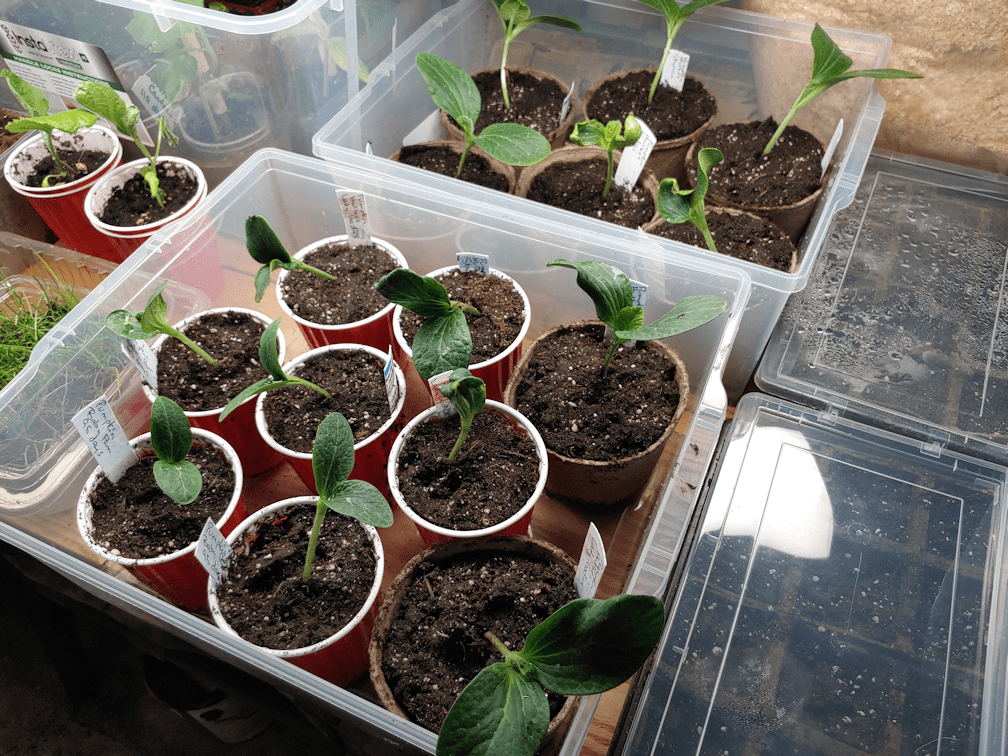
A lot of the squash in the big aquarium greenhouse were getting too big for their britches, so it was time to thin them out and pot them up!

The Giant Pumpkins were easy enough to do; there’s just one plant per biodegradable pot, so they just got put into bigger biodegradable pots with little issue.

With the others, we thinned by division. We had only a few of the larger biodegradable pots left, so the biggest ones were transplanted into those. After that, they went into the red Solo cups. Then they all went into the sun room.

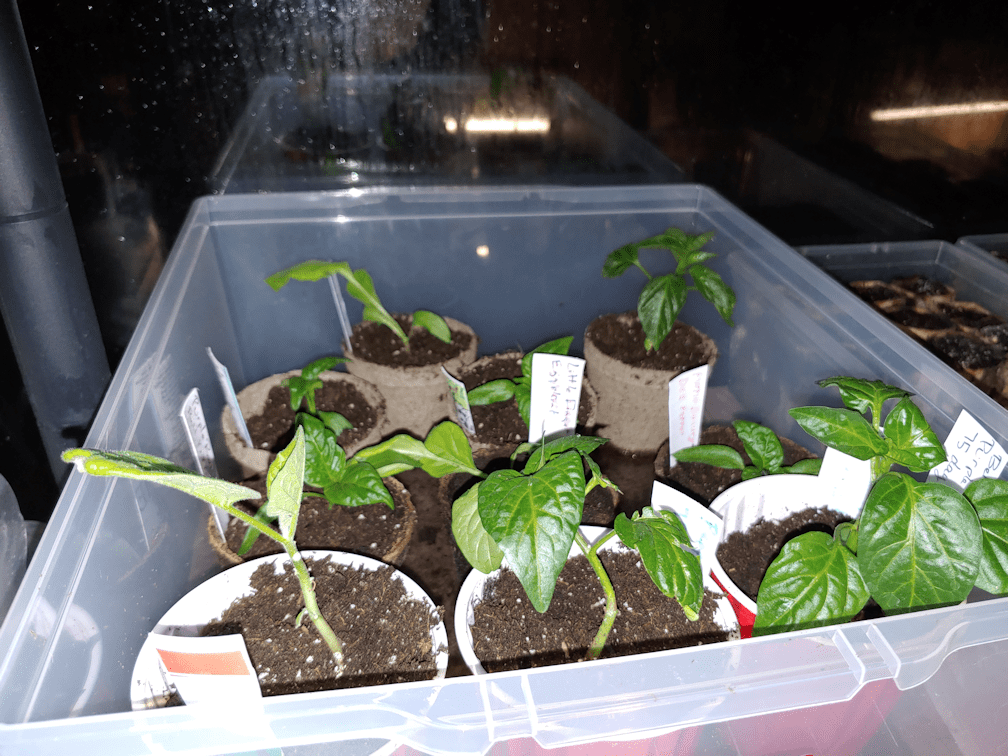
Once those were done, we went through the mini-greenhouse and moved the remaining eggplants and peppers to the sun room as well. A couple of them got thinned by division, too.

These two bins are all winter squash, the giant pumpkins and hulless pumpkins, under the bright shop light.

The gourds that were already in the sun room joined more squash and Apple gourds in a bin.

The peppers that survived the Great Cat Crush, as well as replacement starts of peppers and eggplants, got moved into the window shelf.

Back in the big aquarium greenhouse, there is now more room to space things out. The melons were looking leggy, so I put something under the bin they’re in to raise them closer to the light. There’s still just one Zucca melon sprouted (the big one in the foreground).

There are still some smaller squash and gourds on the heat mat. The Yakteen gourds have not germinated yet. I tried to get a photo, but the camera decided to focus on the aquarium frame instead of the plants. LOL

In the mini-greenhouse, there are still the Chocolate Cherry and Yellow Pear tomatoes, and the ground cherries. With more space available, they’re now all spread out to get maximum light and air flow.

It’s always a risk to pot up things like squash. Once the new bins were in the sun room, water was added to the bottoms to let them absorb more moisture from below; particularly the biodegradable pots, so the pots themselves wouldn’t wick moisture out of the soil and away from the roots. I left the shop light on all night, to hopefully give them the energy they needed to handle the changes.

As of this morning, everything looked pretty much as I left them. Nothing was drooping or otherwise showing signs of stress from being divided and potted up. So far so good!

In about a week or two, we will start hardening off the transplants. By then, everything that’s in the aquarium greenhouse and the mini-greenhouse should be moved to the sun room, with the tomatoes divided and potted up.

If all goes well, we should have most, if not all, or cold tolerant seeds direct sown outside by the end of the month, too.

It feels so good to finally be able to move ahead with the gardening!

The Re-Farmer
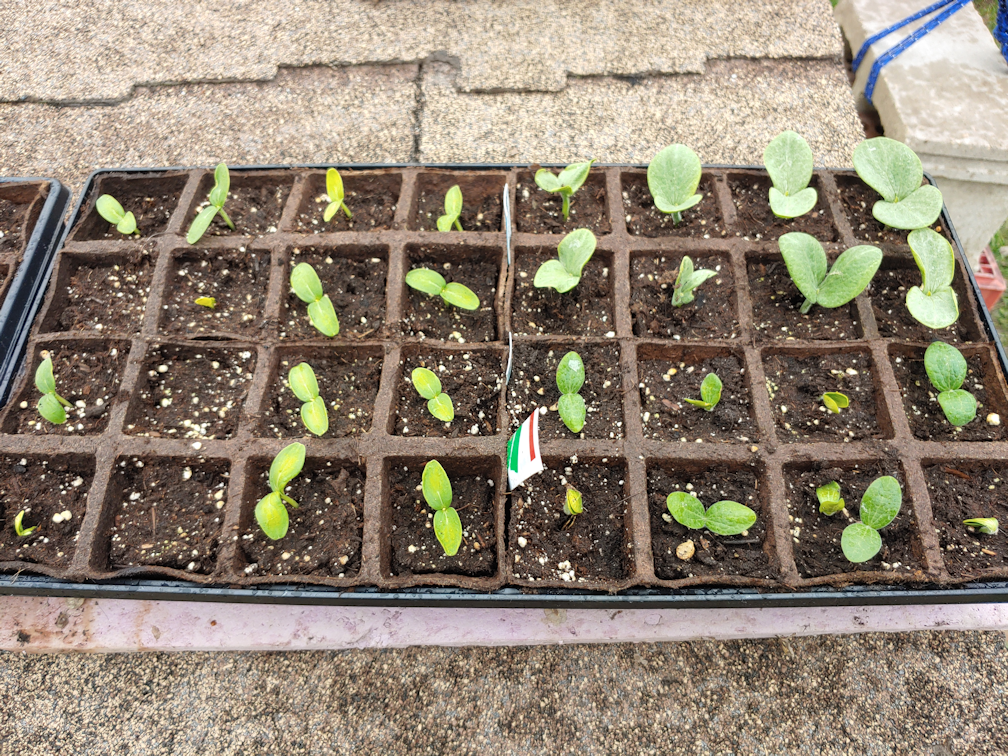
Our 2022 garden: last seeds starts – for real this time!

Okay, I went ahead and did it. I got one more tray of seeds started.

Most of them are summer squash.

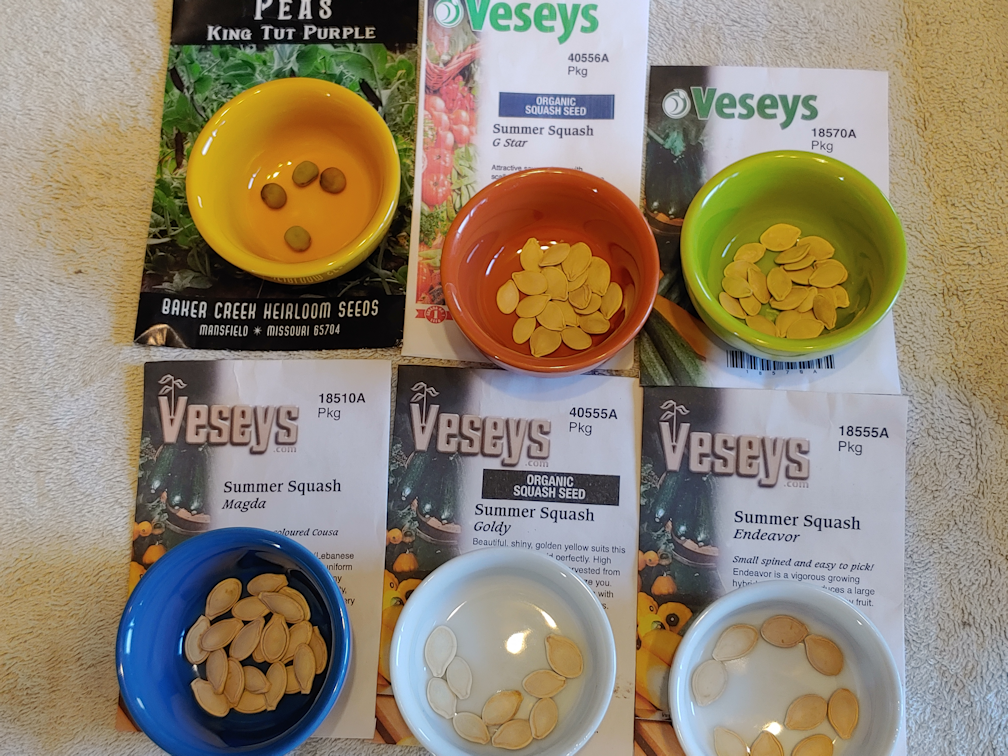
I also decided to start the only 4 King Tut Purple Peas I was able to save last year. They did not do well at all in the drought, but they bravely tried!

The seed tray holds 32 square pots, and I wanted to plant just one seed per pot. I decided to start only 4 each of the Magda (a mottled light and dark green squash), yellow zucchini (Goldy)…

… and green zucchini (Endeavor). With these summer squash, I want to also try direct sowing more, and see if that makes any difference.

That left room to plant 8 each of the patty pans; Sunburst and G Star.

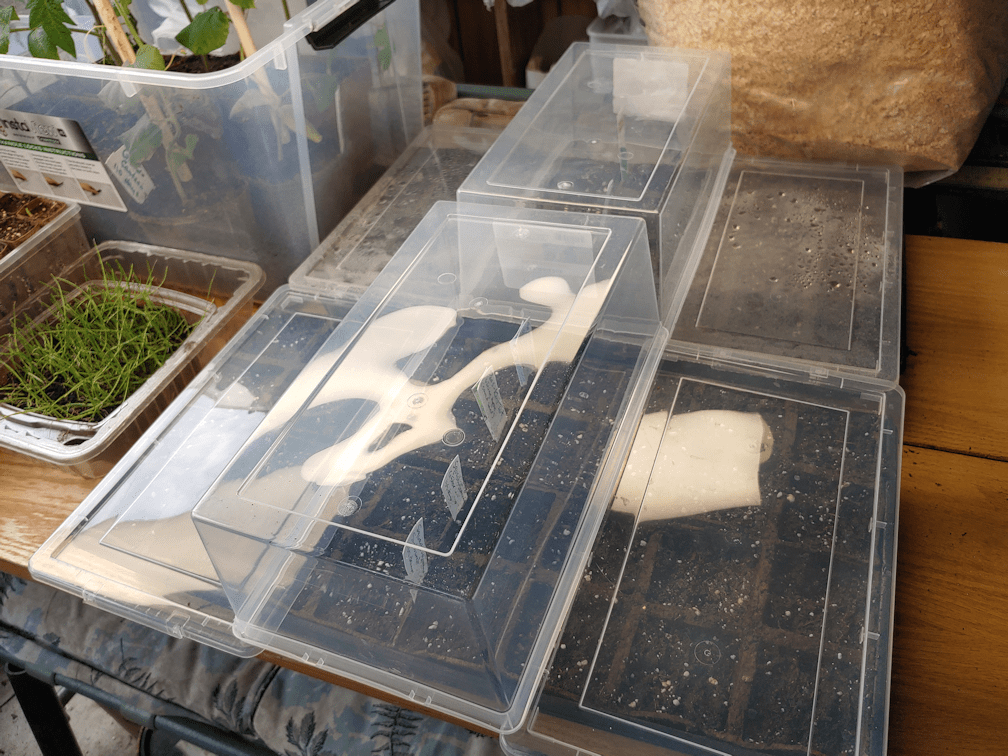
It occurred to me after I uploaded the pictures that I should have just planted each flat of 4 x 2 pots with one type, instead of two long rows of the patty pans. :-D Ah, well, The flats will come apart easily when it’s time to transplant.

The tray then went straight into the sunroom, covered to keep them moist until they germinate. As you can see by the one that got pushed to the back, it’s working rather well.

There we are. Done. No more seeds will be started indoors.

Honest.

;-)

The Re-Farmer