Our 2022 garden: having a whacky time!

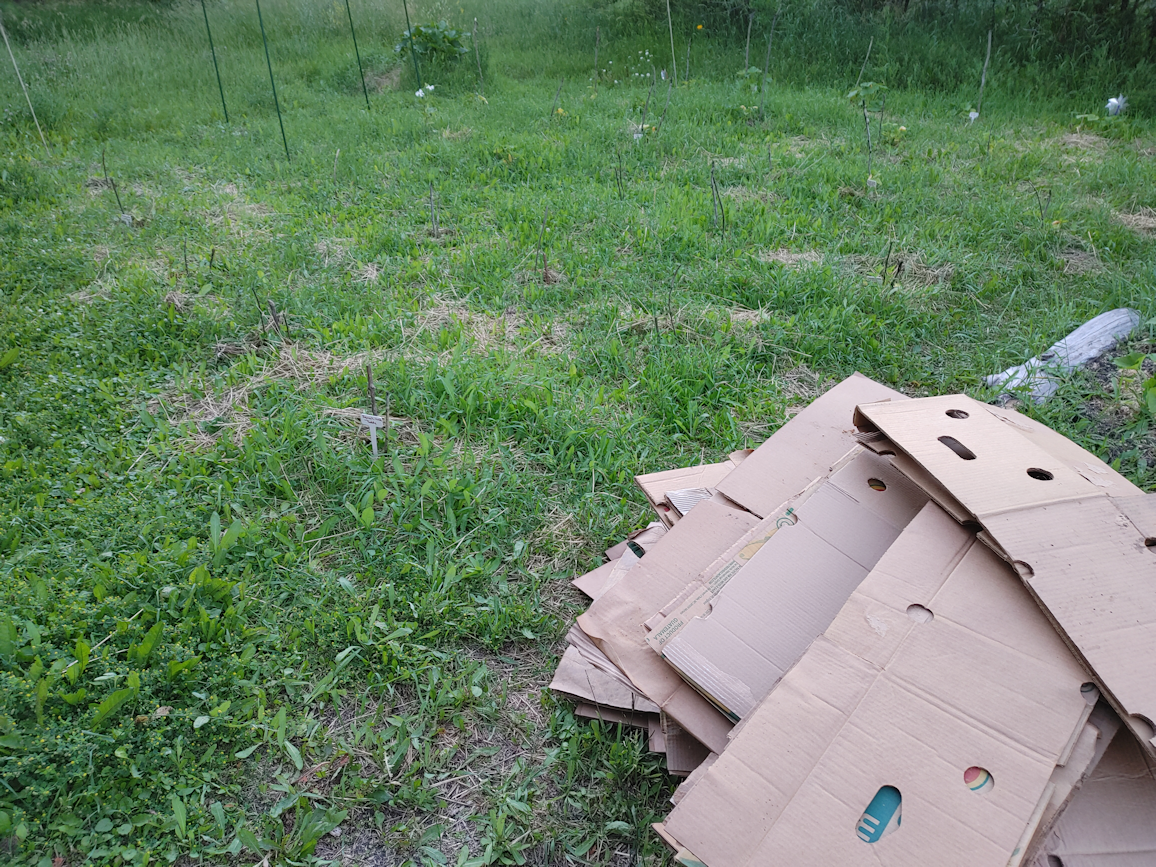
After a few hours of waiting, things dried up enough that I could do some much needed weed whacking in the garden.

Most of the yard still squelches when we walk through the grass – grass that is getting so tall, it’s actually hard to walk through! Not only are all the dandelions gone to seed, but the grass is going to seed, too!

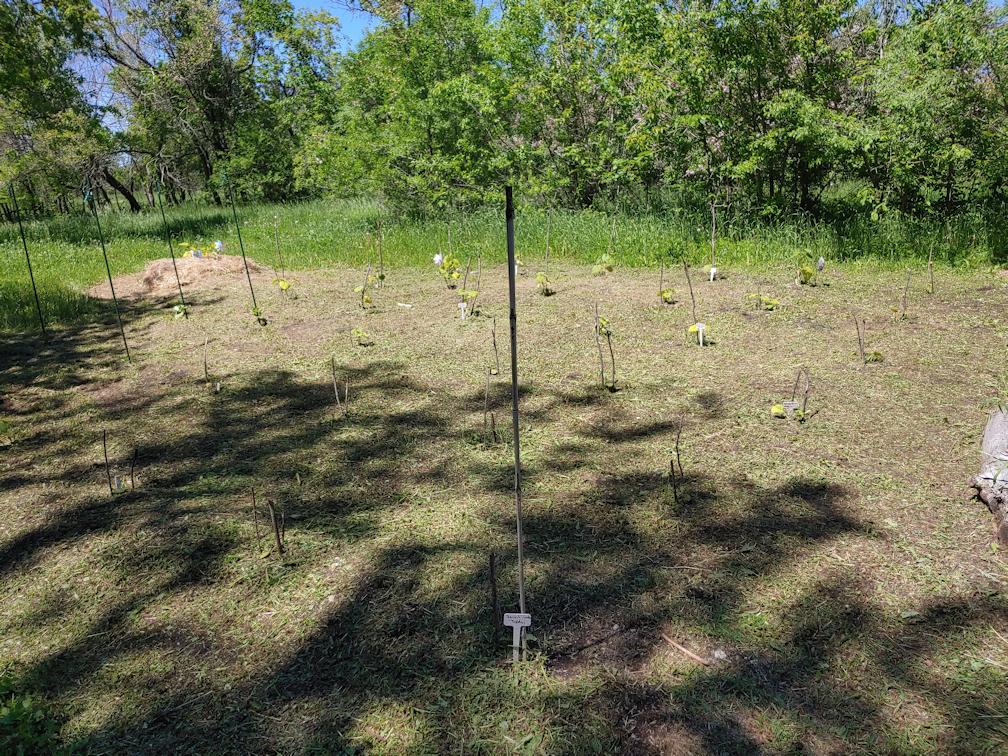
The first place to work on was the large squash patch.

I’m not happy with how much shade some of them are getting. They get full sun early in the morning, though, so with the total hours of sunlight, it should be okay. It’s a shame my parents planted more trees on the south side of the garden. I’ve since learned my brother got them those trees to add to the shelter belt in the outer yard, but my parents didn’t want to go out that far. Now, the shadows are covering more than half of the old garden area on this side. :-(

Some of the squash seedlings are still so small, they could not be easily seen through the overgrown grass and weeds. I used taller sticks and stakes to mark the corners, then smaller sticks to mark the smaller squash. Then I went ahead and added sticks to all of them, with pairs of sticks to support the larger squash so they’d be out of the grass. In the end, I added a pair of sticks to all but the gourds with the tall metal support stakes, as much to protect them from accidental weed whacking as to mark where they were. I trimmed right down to the ground as much as I could. I am glad to get this done before adding the straw mulch. I really didn’t want to add it on top of the overgrown crab grass and weeds.

Then, since I was there with the weed trimmer anyhow, I kept working around all the beds and the straw mulch where the potatoes and melons are planted. I didn’t need to trim around where the other squash, corn and beans are planted, since that area got done in preparation for planting.

I had grabbed the second 100 ft extension cord from the garage, so with about 250 ft of extension cord, and judicious placement of a spade to make sure the cord didn’t drag across the squash and corn patch, I was able to reach the bean tunnel.

The bean tunnel got a thorough trimming before I moved on to the hulless pumpkins. For these, I decided to give them three support poles each. These poles were used to support summer squash last year, and some still had the twist tie wire that was used to fix the stems to the poles. Those were used to go around the three poles and hold the vines off the ground and protect them from the weed trimmer. I also had some left over sifted garden soil in the wheelbarrow, so I added that around the bases of the support poles to help hold them in place, being careful not to go too close to the stems. I didn’t want to bury the stems, as that could cause the stems to rot.

These pumpkins are now ready for a mulch, too.

I stopped at this point, as I wanted to get to the post office before it closed, then go on into town. I want to use the weed trimmer around the trellises and, if I can reach, around the sea buckthorn and silver buffalo berry. That will be a job for after the squash patches are mulched.

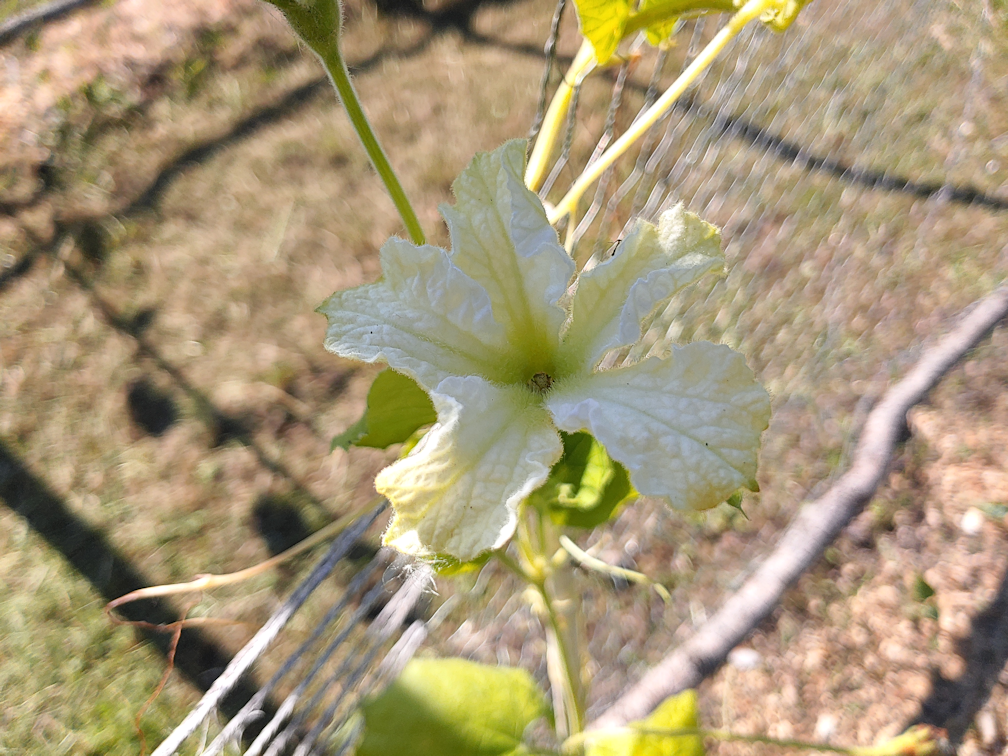
The canteen gourds are blooming! I probably should have pinched off the flower buds when I transplanted them, as they haven’t really gotten any bigger, but I forgot. We shall see how they do. Their flowers are very pretty!

We are starting to get weather advisories and heat warnings for the weekend. Tomorrow, we’re supposed to approach 30C/86F, and the day after – Father’s Day – we’re supposed to reach the mid-30’s (35C is 85F). While I was working on the bean tunnel, the thermometer there was already reading 30C in the sun. Which means the best time to get the mulch down will be early tomorrow morning, while it is still cooler.

Going to bed early tonight would be a good idea! Hopefully, the cats will even let me sleep… :-/

The Re-Farmer

Our 2022 garden: bed prep, cucumbers, peas, beans, summer squash, gourds

Oh, my goodness, what a gardening day!

Did we bite off more than we can chew?

Maybe we did.

It was a hot and sunny day, and so many trees and bushes are blooming right now.

The regular and double lilacs are just starting to open. The sour cherries are in full bloom. The Saskatoons and chokecherries are pretty much finished blooming, but the different crab apple trees are in various stages of exploding into flowers. There are also three other types of lilacs that are starting to bud, each blooming at a different time. It’s awesome!

My first priority of the day was to prep the beds at the trellises and get them ready for planting.

What a big job that turned out to be.

It didn’t take long before I found myself pulling this bugger out. Normally, I wouldn’t have tried to take out something so big, but it was close enough to the surface that it would inhibit root growth. I’m sure I hit others bigger than this, judging by my inability to work the garden fork around them, but they were deep enough that I just left them. We may get one more year out of these trellises, but most likely, next year, we’ll be building trellises closer to the house.

This trellis was so full of roots – including tree roots! – that this one bed took me about 4 hours to do.

Thankfully, the other one didn’t take anywhere near as long!

After we’ve planted into them, each upright post is going to get it’s own pair of A frame netting supports for things to climb.

At this trellis, on the right hand side, my daughter planted all the cucumbers. On the left hand side, in the foreground, is at least two, possibly four, luffa gourds. I was using labels made out of sour cream containers, and Sharpie’s fade from those! So much for “permanent” markers!

The gourds took up only a quarter of the row. We ended up planting the last of our Lincoln Homesteader pod peas in the rest of that side.

This trellis got the remaining two varieties of pole beans. On the right are Carminat, a purple type of bean. On the left are Seychelles, a type of green bean that Veseys doesn’t seem to carry anymore.

There was some space left at the bean tunnel that got filled with 4 Tennessee Dancing Gourd and 2 luffa.

The girls, meanwhile, got the last low raised bed weeded and ready for planting.

This bed is now all summer squash. The front half has 8 Sunburst patty pan squash. The back half is split between Madga squash and Golden zucchini.

While one daughter transplanted all of those, my other daughter was digging.

We were going to make more beds, but we just don’t have the materials, so we’re winging it. My daughter dug a grid of 7×7 holes roughly 3 feet apart. Before I headed in, I used the jet setting on the hose to drill water into each hole, to help soften the soil. We’ll be transplanting winter squash, gourds and pumpkins into here, with added garden soil and straw mulch. We need to go over it with the weed trimmer to cut the grass and weeds back as much as possible, before the mulch is added.

Hopefully, we’ll be able to get this done tomorrow, but I won’t be much help with that until evening. My husband and I have our doctor’s appointments in the afternoon.

For summer squash, we do still have the green zucchini, plus the G-star patty pan squash.

I have no idea where we will be transplanting those. I also don’t know where we’ll be transplanting the ground cherries. There’s the corn to direct sow, too, if we’re not already too late for those. We have the space. What we don’t have is any sort of prepared beds left.

I’d really hoped to get everything in today, but everything just took so much time.

What a long, long day it’s been.

The Re-Farmer

Our 2020 garden: the bean tunnel

This year, we decided to use the squash tunnel for vining beans.

But first, it needed some work.

We were able to weed and prep this side of the tunnel in the fall. Can you tell?

What a huge difference in the soil. When we first set up the squash tunnel, using a post hole digger to make holes for the support posts, it was incredibly hard. For the rows to plant in, we layered straw, then fresh garden soil – we’d long run out of carboard, and even shredded paper, if I remember correctly. Then the top was mulched with straw after the squash, gourds and melons were transplanted.

As you can see in the photo, the garden fork can now did deep into the soil, and I could push my hands into it to pull out the weed roots.

And tree roots. A remarkable amount of fine, thin tree roots.

The only things causing problems while using the garden fork was hitting rocks or larger tree roots!

So. Many. Rocks! Deep enough that I didn’t try to dig them out, though. I just pulled out the small rocks nearer the surface.

In the picture, you can see some orange twine. I found 3 places where the screws had snapped, and the cross pieces were basically being held in place by the wire mesh. I just lashed them back to the support poles. We might get one more year out of this tunnel before we build a permanent one, closer to the house, so I’m not too worried about it.

It was very hot work. Though my weather app said it was 19C/66F, with a RealFeel of 21C/70F, this is what the tunnel thermometer read.

Yeah, that’s reading about 33C/91F out there.

I’m sure the heat loving melons, eggplants and peppers were just loving it.

Me? Not so much!

Along with beans, the two Canteen gourds were transplanted. These were growing so fast, they had been potted up three times, and we needed to add support poles because they were trying to climb anything they could reach, including the tomato plants they were sharing a bin with! They were outgrowing their pots again, and really needed something sturdy to climb!

In the row on the left of the photo, I planted Blue Grey Speckled Tepary beans. These are a vining bean for drying, not fresh eating. They are also drought and heat tolerant, so perfect for this spot! The space was just enough for the amount of beans in the package, too. I supposed it’s possible there were more, but the cats tried to eat the package, scattering beans all over the floor. I think we found all of them, but some may have been missed.

On the right in the photo, I planted Red Noodle beans. These beans can grow up to 20 inches long! The packet was supposed to have 25 seeds, but I counted 33, which didn’t fill the row. We still have 2 other varieties of pole beans, but there are too many in the bags to fit in the remaining space, and I didn’t want to plant just a few. One of them has something like 200 seeds in it, so we aren’t going to be planting all of them!

I think, instead, we’ll plant some climbing gourds in the remaining space. We have some Tennessee Dancing gourds that would fit. Or some luffa. I think we have some that survived. We’ll decide after we get the remaining two trellises ready.

I’m glad we got at least two types of vining/pole beans in. It’s quite late in the season to be direct sowing beans here, but they are short season varieties, so it should be fine.

Little by little, it’ll get done!

The Re-Farmer
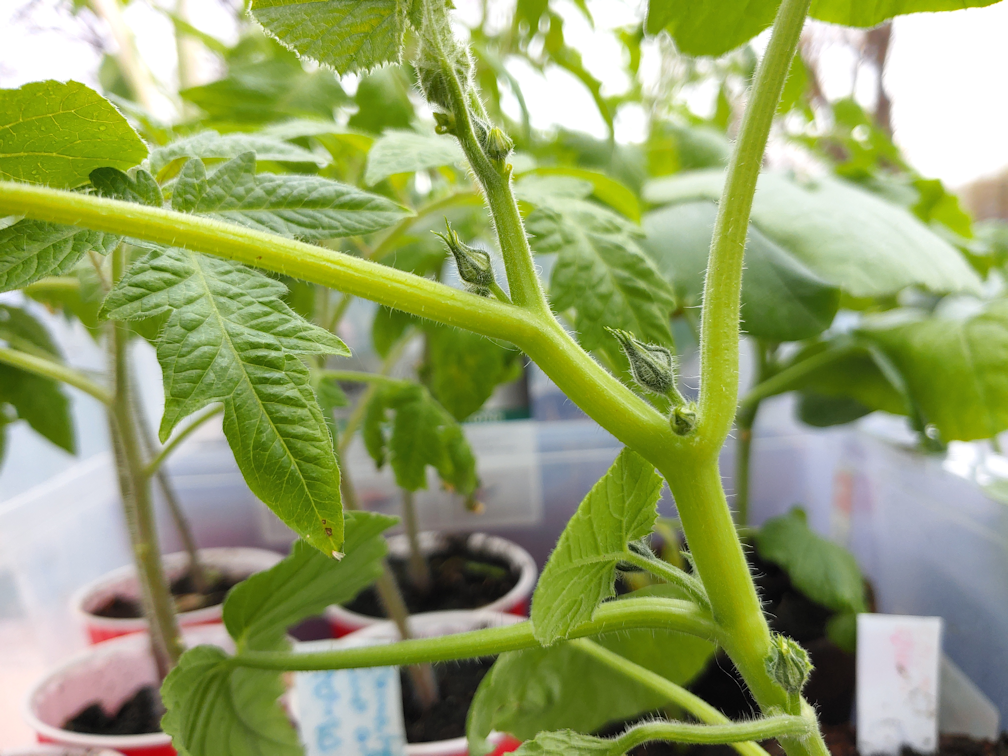
Our 2022 garden: first Yakteen gourd!

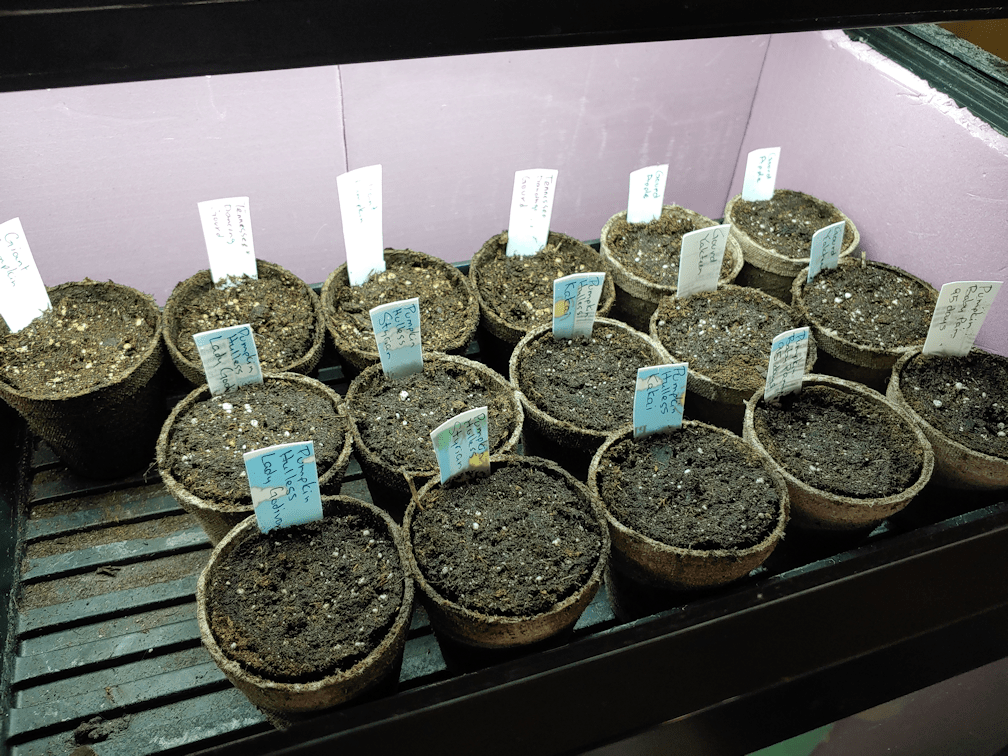
We had started some Yakteen gourd seeds indoors a while back, but none germinated. There was also one pot with hulless pumpkin in it that didn’t germinate, so I took the last 6 seeds we had left and replanted them in the three pots.

One has finally germinated!

Since I took this photo this morning, the seedling has fully emerged from the soil.

So far, there’s just the one, but I moved all of them to the sun room. Hopefully, more will germinate. This is one of those rare varieties that I want to save seeds from, to keep it going. This is really late for starting indoors, but maybe we’ll have another long and mild fall – to make up for how long it took for winter to let go, only to have a cold, wet “spring”.

We got a lot of garden related stuff done today, and I took lots of pictures, so I’ll be making several shorter posts rather than one huge one!

The Re-Farmer

Our 2022 garden: first spinach sown, and onions transplanted

It was a bit cooler and overcast this morning, but still pleasant enough to get the plants outside for a couple of hours.

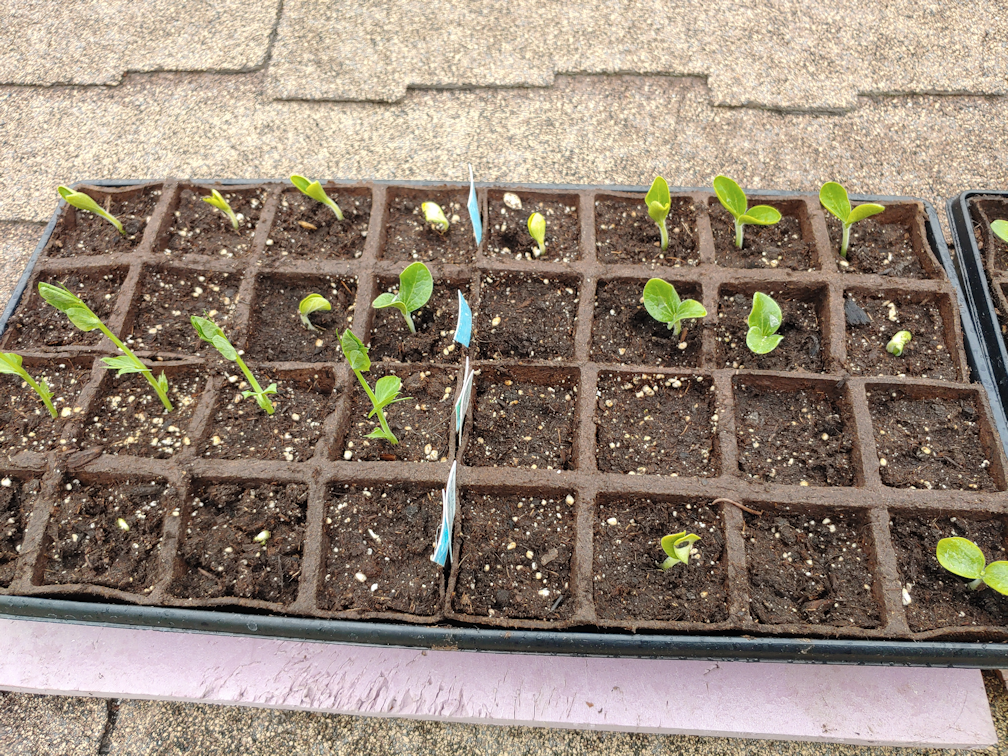
I am really happy with the newest seedlings. This tray has the cucumbers in the left half, with the Teddy and Red Kuri winter squash on the right. It took so long for the winter squash to germinate, I wasn’t sure they’d make it, but we have 100% gemination!

The purple peas in this tray are getting nice and big. The summer squash in the other cells took a long time to germinate, too, but they seemed to get a boost after I put the warming mat under them. It’s hard to see, but even the green zucchini is finally germinating, next to the peas. I thought the Magda squash had started to germinate, but not quite yet. We had less success with those the last 2 years we planted them, too. Our first year, we had only 2 surviving plants. Last year, there was just the one. Magda squash just seems to have a harder time of it.

So far, only 2 of the yellow zucchini have germinated. Last year, we had some germinate, but when they started producing fruit, they were green, and we no yellow zucchini at all. I’m hoping that won’t happen again, this year!

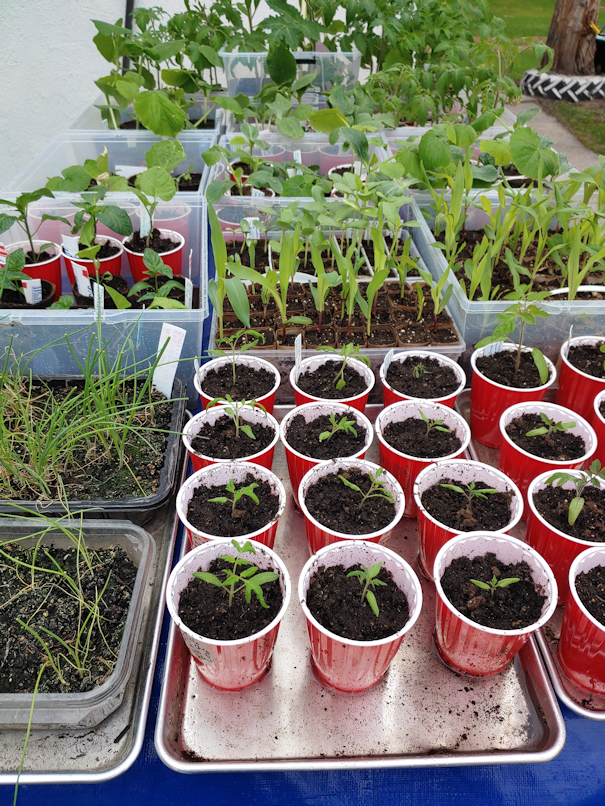
The transplants seem to be quite liking their time outdoors, and even the newest little tomatoes in the foreground are looking generally robust.

We have 3 Crespo squash – and they are budding! Would you look at that!

I considered pinching them off, but these first flowers would be all male flowers. The next batch of buds should be both male and female. So I’m thinking to just leave them? I don’t know. There is very little information out there on how to grow Crespo squash. They do seem to be very enthusiastic growers!

While moving the blooming Wonderberry in and out of the sun room, we have been brushing the 3 plants against each other, in hopes to pollinate them, just in case. I don’t know how if they are self pollinating or not. Nowhere I’ve looked about them even mentions pollinating.

The transplants were left out for 2 hours today, which gave me time to work on our very first direct sowing – and transplanting – in the high raised bed.

The first thing to do was dig trenches through the wood chip mulch, so that things could be seeded/planted into the soil beneath. We have three varieties of spinach seeds from last year, and for this bed, I chose Lakeside, which is the fastest maturing variety of the three. The tray of onions I grabbed are the red onions, Tropeana Lunga, which should look like this when they mature…

This image belongs to Heritage Harvest Seed. You can see what else we ordered with these, here.

By planting the onions around the spinach, they should help with keeping away harmful insects, and maybe even keep hungry critters away. The high raised bed is buffet height for deer, though, so we will be covering them later.

There is space to do a second planting of spinach in two weeks, which will also finish off the seeds we’ve got left of this variety.

The largest Tropeana Lunga seedlings filled the two outside rows, but there were still a few tiny seedlings left. The size that would be considered not worth planting. I hate to just toss seedlings, though, so I ended up sticking them in the soil at the base of the raised bed on the north end. When this was a low raised bed, it was quite a bit longer, so the soil is softer on that end. If they take, great. If not, that’s okay, too. We don’t have a lot of this variety, so I’m hoping to be able to overwinter a couple of bulbs to go to seed next year.

I was left with nice, soft potting soil in the tray the onions seedlings were growing in, so I used that to gently top the spinach seeds, and put just a little around each onion plant, more to keep the wood chips from falling onto them than anything else.

I have to say, I LOVE the high raised bed to plant in! It was completely pain free, with no strain on my joints. Well. I suppose that doesn’t include my arthritic fingers, but I didn’t even notice pain in my hands, either. It took me less than half an hour to plant into this bed

I didn’t bother watering these, since it was already starting to rain by the time I was finishing up. It’s been raining off an on, ever since. My daughter and I got a bit damp when we headed out later on, to figure out exactly where to plant our tree order when it comes in. With 30 silver bison berry to plant, those were the ones we need to figure out the most. They should be planted 3-4 ft apart. Since we are doing these as a privacy hedge, we will planting them 3 feet apart, with most of them along the east end of the garden area, leaving a lane just wide enough to drive through, if necessary, between them and the fence line. Taking into account where the phone line is buried, we’ll be able to plant two staggered rows of 10, though as we get closer to the spruce grove, we many need to jump the rows closer to the fence itself, to keep that driving lane open. There is a branch pile that will be in the way of any lane we leave open, but we’ll still be able to plant around it.

We’ve got 5 sea buckthorn that will be planted nearer the north fence line, to close a gap in the lilac hedge. Any remaining bison berry can also be planted along the lilac hedge, and still keep the lane over the telephone wire clear. This will leave a gap in the privacy hedge, once they’ve grown to full size, that will need fencing or a gate to close it off from deer.

The Korean pine are a whole other issue. Originally, I wanted to plant them in the space between the north side of the spruce grove, and the crab apple trees. These, however, have an 18 foot spread. At their mature size, they would completely fill that space, and we need at least some of it to be kept open to drive through. The alternative was along the north side, which would make an excellent wind break, but with that 18 foot spread and the lilac hedge, we’d be planting them on top of the phone line. Not going to happen.

Which means we’ll have to plant them in the outer yard.

Just past the fence on west side, which has a gate that leads into the garden, there is a space where we can plant 2 of them. Then there is the gate to the secondary driveway – our “emergency exit”, if you will. It was through here that one of our truck loads of garden soil was delivered.

The remaining 7 seedlings will need to be planted on the other side of that back gate, along where there is already a couple of rows of spruces, with some willows at the south end. If we plant them 18 feet apart (we might go with 16 feet), we will have a row of seedlings matching the length of the existing shelter belt trees.

The only problem with this is that the south end is currently under water.

Still, knowing that this is a low spot will help. We can make sure to basically build things up a bit, so that the seedlings will stay above water during spring melt.

Then we’ll have to make sure to put something over them to protect them from being eaten. I don’t know that deer would eat Korean pine, but they could certainly damage them, just by walking over them.

We have not yet received a shipping notice for the trees, but with so many holes to dig, the earlier we get started, the better. Hopefully, by the time they do arrive, we’ll be ready and can plant them right away.

Oh, I just double checked my order! We’re not getting 9 Korean pine. We’re getting 6.

Which means we won’t be digging holes in water, after all. :-D

It’s going to feel weird getting our little 2 yr old plugs and planting them so far apart. Especially since they will grow very slowly for the next 3 years. Which is exactly how my mother ended up planting so many trees way too close together! :-D

Oh, my goodness. I just checked the short range weather forecast, and it’s changed yet again. We’re supposed to get more rain over the next couple of days, then for the two days after that, we’re supposed to get a mix of rain and snow!

What I planted in the high raised bed should be cold hardy enough to handle that, but we might cover it anywhere, just in case, at least for the night.

Last year, May was a very warm month. On this exact day last year, we had a new record high of 30C/86F. The record low for today, -4C/24F, was set in 2002.

After a long, cold winter, it seems we’re getting a wet cold spring.

Still, there are things we can plant. I just hope things warm up decently in June, so we can get the warm weather transplants in!

The Re-Farmer

Our 2022 garden: thinning and potting up

A lot of the squash in the big aquarium greenhouse were getting too big for their britches, so it was time to thin them out and pot them up!

The Giant Pumpkins were easy enough to do; there’s just one plant per biodegradable pot, so they just got put into bigger biodegradable pots with little issue.

With the others, we thinned by division. We had only a few of the larger biodegradable pots left, so the biggest ones were transplanted into those. After that, they went into the red Solo cups. Then they all went into the sun room.

Once those were done, we went through the mini-greenhouse and moved the remaining eggplants and peppers to the sun room as well. A couple of them got thinned by division, too.

These two bins are all winter squash, the giant pumpkins and hulless pumpkins, under the bright shop light.

The gourds that were already in the sun room joined more squash and Apple gourds in a bin.

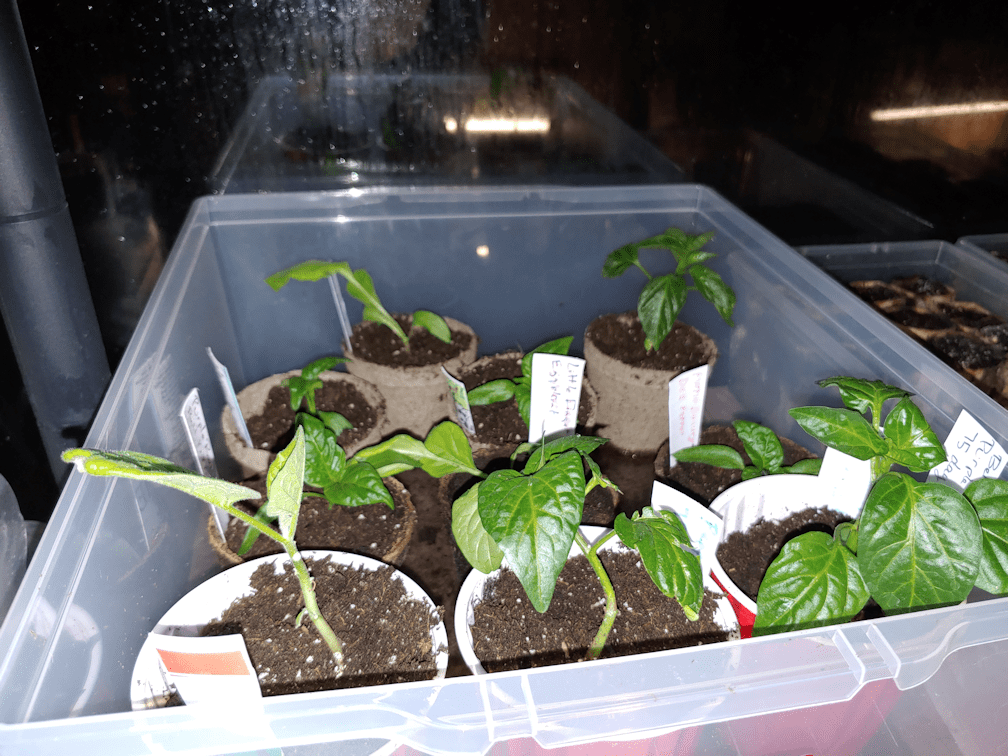
The peppers that survived the Great Cat Crush, as well as replacement starts of peppers and eggplants, got moved into the window shelf.

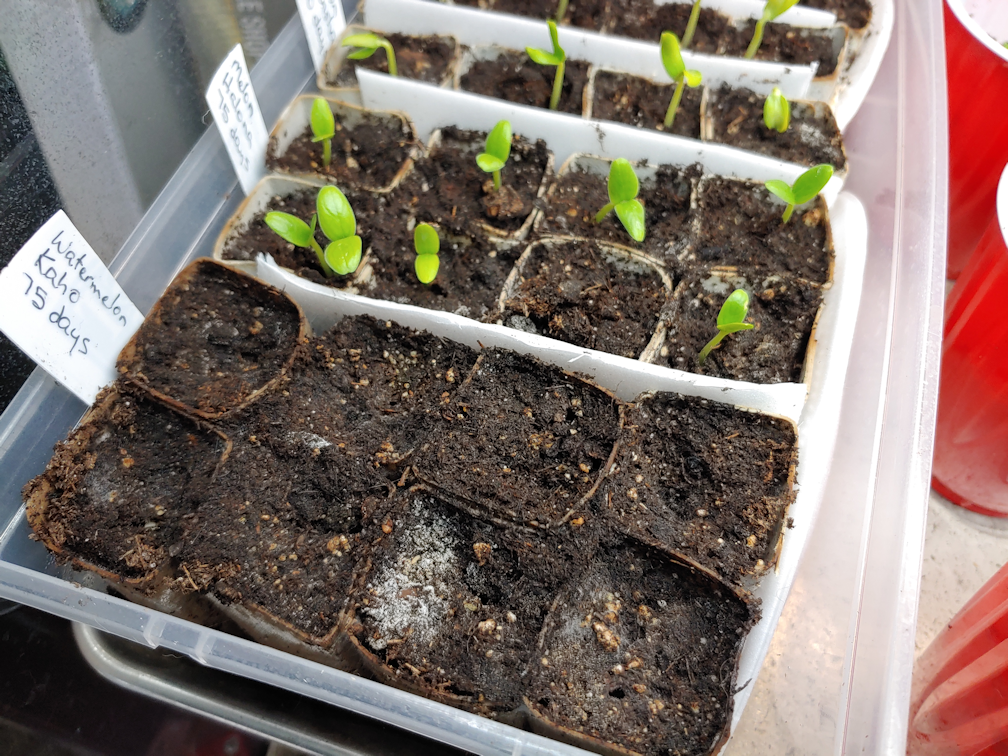
Back in the big aquarium greenhouse, there is now more room to space things out. The melons were looking leggy, so I put something under the bin they’re in to raise them closer to the light. There’s still just one Zucca melon sprouted (the big one in the foreground).

There are still some smaller squash and gourds on the heat mat. The Yakteen gourds have not germinated yet. I tried to get a photo, but the camera decided to focus on the aquarium frame instead of the plants. LOL

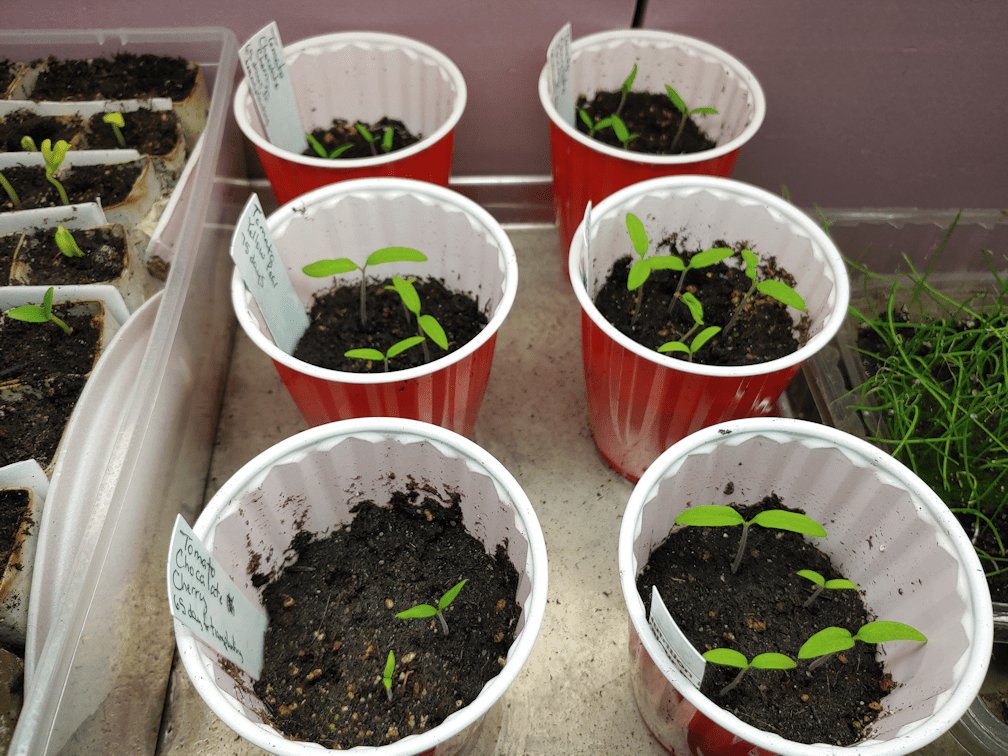
In the mini-greenhouse, there are still the Chocolate Cherry and Yellow Pear tomatoes, and the ground cherries. With more space available, they’re now all spread out to get maximum light and air flow.

It’s always a risk to pot up things like squash. Once the new bins were in the sun room, water was added to the bottoms to let them absorb more moisture from below; particularly the biodegradable pots, so the pots themselves wouldn’t wick moisture out of the soil and away from the roots. I left the shop light on all night, to hopefully give them the energy they needed to handle the changes.

As of this morning, everything looked pretty much as I left them. Nothing was drooping or otherwise showing signs of stress from being divided and potted up. So far so good!

In about a week or two, we will start hardening off the transplants. By then, everything that’s in the aquarium greenhouse and the mini-greenhouse should be moved to the sun room, with the tomatoes divided and potted up.

If all goes well, we should have most, if not all, or cold tolerant seeds direct sown outside by the end of the month, too.

It feels so good to finally be able to move ahead with the gardening!

The Re-Farmer

Our 2022 garden: an explosion of seedlings!

We are just so incredibly excited right now! We’ve got an absolute explosion of seeds germinating!

There still aren’t any watermelons yet, but if you look at the back of the second picture, you can see our first Zucca melon has germinated!

Since taking these pictures this morning, the seedlings have gotten notably bigger, and are starting to lean inwards. We’re going to have to rotate the bin.

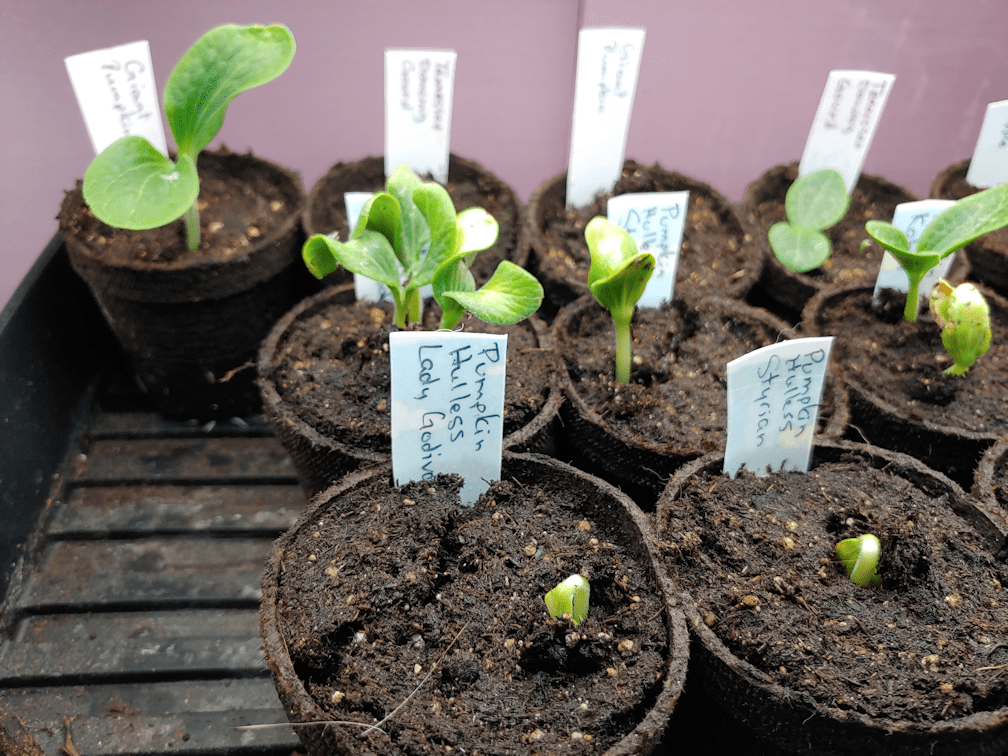
I’m just thrilled with how fast the hulless pumpkins are coming up. Since taking this photo, the ones in front are fully emerged.

It’s out of focus in the back, but you can see that there are roots coming through the pot with the Giant Pumpkin. I have larger biodegradable pots, still, so that will get potted up soon, with no root disruption.

I’m not sure what’s going on with these two dancing gourds. The leaves look almost as if they’ve been chewed on. They haven’t. That’s just how they emerged.

That’s okay. We have more. The seedling you can see just starting to break ground next to the dancing gourd already up is now fully emerged from the soil – as is the Giant Pumpkin next to it!

In the pots with the Baby Pam pumpkins, you can see the soil starting to lift and split. Since taking the photo this morning, seedlings have fully emerged, not only there, but in the Kakai pumpkin pot next to them! Even in the back corner, it looks like the Apple gourds are starting to germinate. Only the Yakteen gourds haven’t shown signs of germinating, but the way things are going, I wouldn’t be surprised if I checked them this evening, and found something there. :-D

The tomatoes and bunching onions haven’t changed a lot, though. Which is not a problem. They just suddenly seem like they’re growing slowly, compared to everything else exploding around them! :-D

I don’t know why I’m so much more excited about these, than anything else we’ve started so far. I’m not even sure where we’ll be planting these, exactly. More of a vague notion of where we want them, since we’ll be taking advantage of the large leaves of many of our squash to shade out weeds and reclaim parts of the old garden area.

Speaking of the old garden area, here’s how it looked this morning.

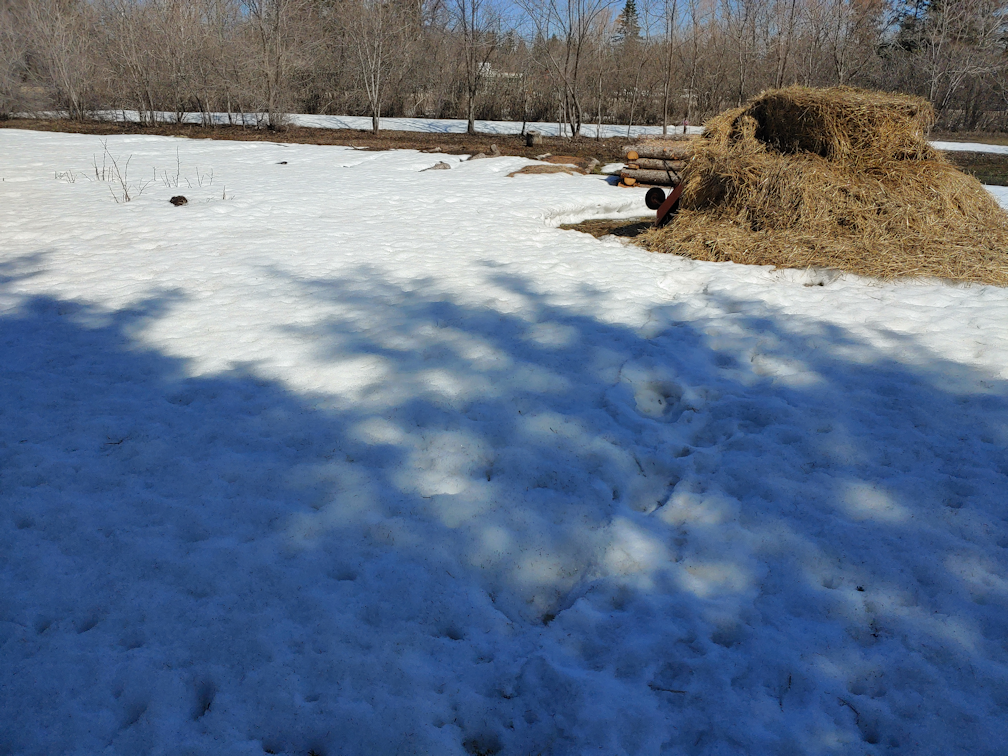
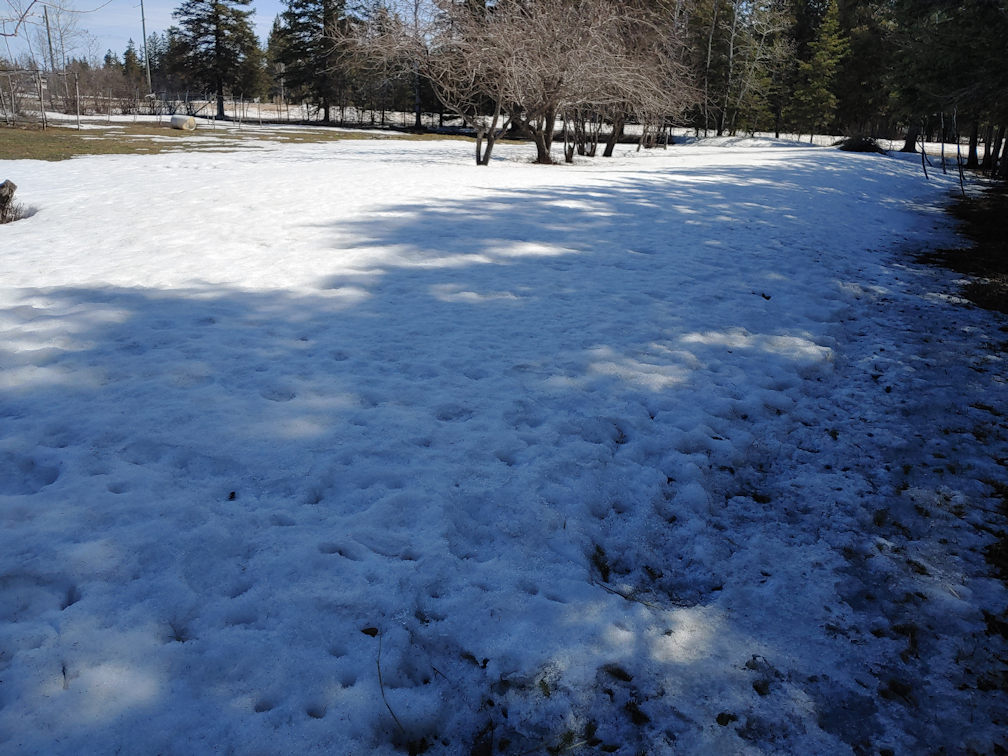
This is the view from the fence line. I’m still not even trying to get to the sign cam through the garden. Quite a lot of the snow has melted away, and the area by the squash tunnel (which will be used for pole beans this year) is pretty clear.

I can’t say the same for the areas closer to the house. There’s still deep snow stretching from end to end. The low raised beds are starting to emerge from the snow, but we just can’t get at them yet, any more than I get get to the sign cam.

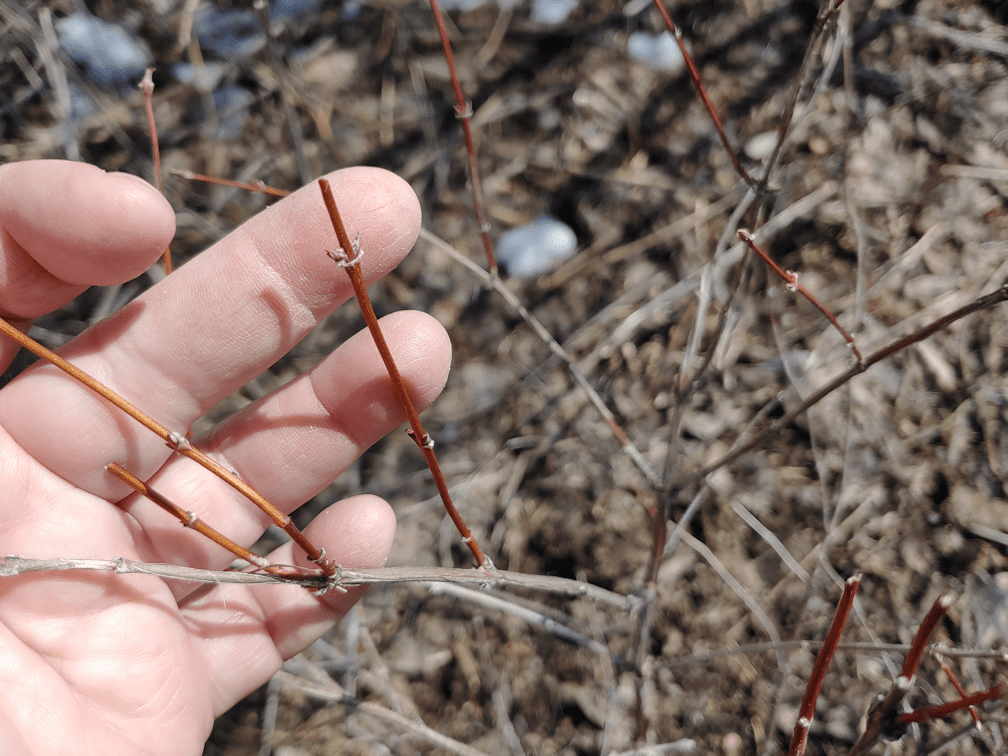
I checked on a few other things this morning, like the haskap bushes.

The male haskap, which is the largest of them, has been deer damaged, but you can see that leaf buds are emerging.

The female haskap that was planted at the same time as the male has been struggling. It never leafed out or bloomed at the same time as the male. I do see tiny leaf buds, though, so hopefully, it will do better this year – in spite of the deer damage it also has!

The new female haskap we planted is a lot smaller, and seems to have escaped the notice of the deer!

After I got back from town today, and my daughter helped me unload the van – I was finally able to drive right up to the house! – we went around to check on her flowers. There are more irises and daffodils emerging along the old kitchen garden, and more tulips coming up among the nearby trees. We were able to spot more grape hyacinth coming up, too. I had mentioned the snow crocus flower buds I saw yesterday, so we checked those out, too.

Some of them have actually opened, since this morning! There were a few more I couldn’t get good pictures of, completely in water, but still managing.

After things being such a disaster with the tulips, irises and daffodils last year – the first growing season for all the corms and bulbs – we all thought for sure they were a loss. It just didn’t seem they would have managed to store enough energy in their bulbs to survive the winter, never mind spread. Yet that’s exactly what it looks like they’re doing.

My younger daughter is just beyond thrilled. These were her babies! :-D

Spring has been slow in coming this year, but there are finally things growing – and blooming!

Soon, there should be more. The beds in the old kitchen garden are thawed out enough that we can start planting some cool weather crops right now! We’ll have to go through the seeds for direct sowing, and see what we should start first. Some say to plant “as soon as the ground can be worked” while others say things like “plant a week before last frost date”.

But first, we need to prep the sun room some more, so we have space to lay out the plants that are too tall to fit in the growing shelves.

The Re-Farmer

Our 2022 garden; new sprouts, indoors and out

While doing my morning rounds today, I made a point of visiting the old kitchen garden. The girls had gone out to see the sprouting crocuses and tulips yesterday, and checked out the side of the old kitchen garden, where they had planted irises and daffodils. We have some of both coming up!

They took some scrap boards and lay them on the ground outside where the seedlings are, to make sure no one accidentally walks too close to the new sprigs. These had done so poorly last year, only partly due to the drought, so we’re really amazing to find they survived.

Also in the old kitchen garden, I checked the rhubarb. One patch is next to where the irises and daffodils are planted.

It looks like something has been eating them! Rhubarb leaves are toxic, but is that true of emerging leaf buds? I don’t know, but these have been chewed on.

The other patch is on the opposite side of the garden.

I moved some snow to uncover the emerging rhubarb on the right. Some of the ones on the left were chewed on, too.

Very strange.

More snow had melted away in the area we planted grape hyacinth, so I checked there, too.

Yes! There are some grape hyacinths sprouting! I’m so excited about these. I just love grape hyacinths. :-)

More of the area the crocuses were planted is snow free, too, so I checked that out.

Some snow crocuses are actually showing flower buds! They’re barely out of the ground, yet, and already trying to bloom! Awesome!

Things are sprouting like crazy in the big aquarium greenhouse, too.

Just look at all those melons sprouting! Only the Halona melons are from purchased seed. The rest are seeds saved from grocery store melons.

The toilet paper tube pots were supposed to get one seed each, but I see an extra Halona melon seed snuck in. :-D

Only the watermelon and the Zucca melon, which is a type of birdhouse gourd, have not had any seeds germinating yet.

Meanwhile…

We now have a second Tennessee Dancing Gourd sprouting, and two types of hulless pumpkins. Last night, there was one Kakai in the back) and one Lady Godiva (in the foreground), but this morning, another Lady Godiva sprout exploded out of the soil.

I am so looking forward to seeing how these turn out!

We have just a few more things to start indoors, and that should be done soon.

If all goes well, we’ll be direct sowing into the garden in a few weeks, with cold hardy seeds that can be sown before last frost.

I can hardly wait. :-D

The Re-Farmer

Our 2022 garden: gourds and pumpkins

Another batch of seeds were started today: the last of the gourds and pumpkins we will be planting this year.

We are trying three varieties of hulless pumpkins. I really love pumpkin seeds, but they are quite expensive, so hopefully we will get lots of seeds to eat from these. We’ve got Lady Godiva, Kakai and Styrian. We’ll see which variety grows and tastes best to save seeds from. Or we might just save seeds from all of them. The Styrian pumpkin seeds are a good oil seed, and getting an oil press is on our wish list. The Kakai are supposed to be really excellent, roasted, while the Lady Godiva are supposed to be really excellent eaten fresh out of the pumpkin, as well as roasted. Three varieties with three different ideal ways to use them.

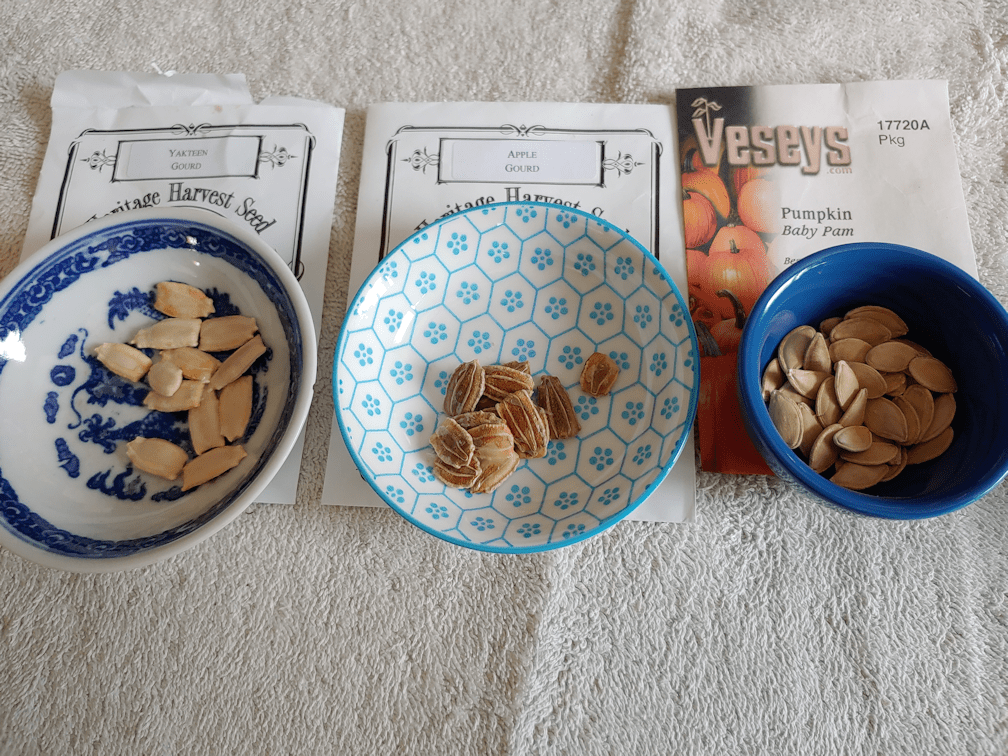
The remaining gourds we will be planting this year are Apple and Yakteen. Both are edible when young, and apparently Apple gourds are very healthy. I’m growing the Apple gourds for crafting purposes. We’ll try them both. Then we’ll decide whether the Yakteen gourd will be used as an edible, as well as for crafting. The Yakteen gourd is listed as very rare, so we’ll be saving seeds for those, regardless. If we succeed in growing them! We do have two other varieties of gourd seeds from last year, but we’re skipping them this year.

The Baby Pam pumpkins are a small, short(ish) season variety that is supposed to be an excellent eating pumpkin, especially good for pies. Veseys doesn’t seem to carry them anymore, though, so I’m glad to still have these seeds from last year. We had none germinate last year, but I think that has more to do with the troubles we had with our starting medium, rather than the seeds themselves. This year, we’ve bought soilless seed starting mixes, and I think that’s working out much better.

I decided to just plant two pots with three seeds for each of these. The gourds and Baby Pam pumpkin seeds got scarified and soaked for a while before planting. Depending on how well they germinate and how strong they are, we might thin by dividing to get more to transplant in June. My daughter did the planting while I cut up and wrote out more labels.

The ground cherry seedlings got moved to the mini-greenhouse, and now the warming mat is under all pumpkins and gourds right now.

Yes, I added water to the tray after the photo was taken. LOL

Here’s what’s in the mini-greenhouse right now.

I’d rotated all the trays before taking photos. Here are the ground cherries, just added to the tray with second planting eggplants, peppers, luffa and Crespo squash, along with one Canteen gourd that was thinned out from one of the pots now in the sun room.

There is one empty shelf below, ready for when we need to move more things out of the big aquarium greenhouse to make room for more starts.

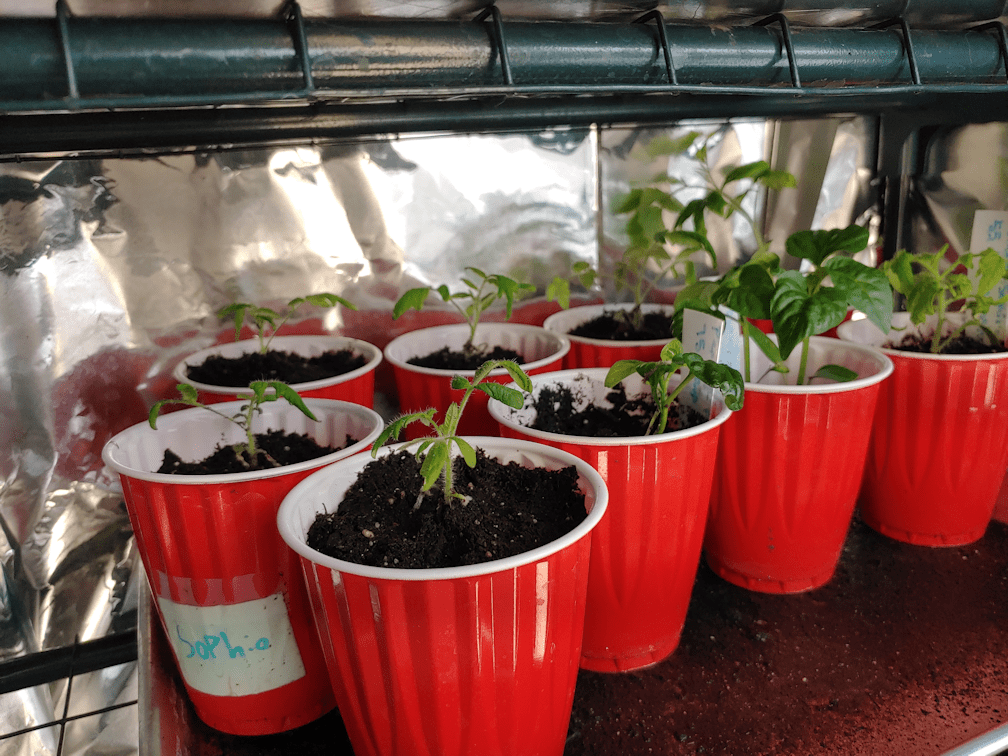
Here we have the second planting Sophie’s Choice tomatoes, plus the first planting eggplant and peppers that survived the Great Cat Crush.

Here we have the Cup of Moldova tomatoes that were smaller and didn’t need to get moved to the sun room yet. They’re getting quite tall, so we’ll likely have to move them to the sun room fairly soon.

For the next batch of starts, in a couple of days, we’ll be moving on to the winter squash. Particularly the larger varieties that need a longer growing season.

I’m really looking forward to those, and will be looking to start more of each, if we can find the space. These were selected to be a major part of our winter food storage, so I’m aiming to plant quite a lot of each variety, if possible.

We are starting so many seeds indoors this year, but I’d much rather be planting more. Partly because we just don’t know how many will actually make it. Even if they all germinate, the cats don’t manage to destroy any more of them, and we transplant them all, they could still die of transplant shock, a late frost, critters, insects… Gardening is really a touch and go endeavour. As the poem says, one for the rook, one for the crow, one to rot and one to grow. I’m also reminded of a “prepper” saying I’ve recently come across. Two is one, and one is none. Redundancy is a good thing, whether it’s how many bags of rice to store, how many can openers to have handy, or how many seeds to plant!

If we had the space, I would be planting double what we’re doing for our indoor starts.

The Re-Farmer
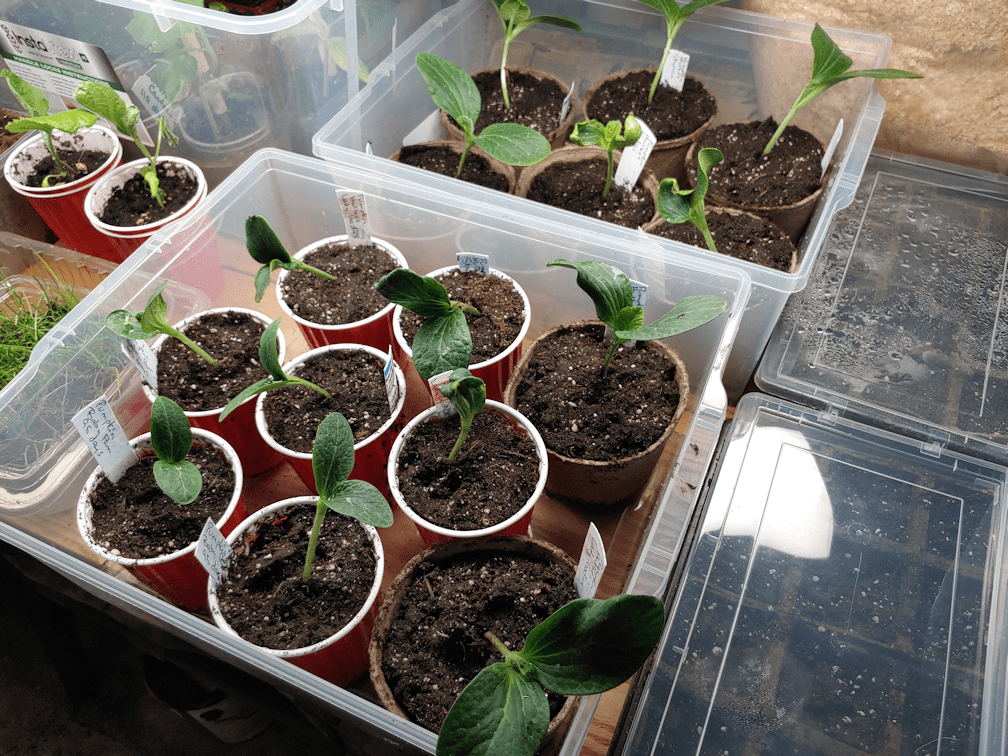
Our 2022 garden: sun room follow up

This morning, as I headed out to do my rounds, the sun room thermometer was at about 10C/50F. During the night, I saw it dip as low as about 5C/41F.

I moved away the reflect to get some photos of the new bins with the kulli corn. The picture of the smaller bin didn’t turn out, though.

Here is the larger bin with 80 toilet tube pots in it. That white plastic is marking off the pots that are empty. When one daughter finished the smaller bin, she started helping her sister from the other side, so the empty pots ended up in a really weird place. :-D

They planted all the seeds, including the little, bitty extras. I don’t expect those to germinate, but who knows? Even without the extras, I don’t expect 100% germination. It should be interesting to see what we get.

The three trays of bulb onions are doing better in the sun room than they were in the mini-greenhouse, but that tray of shallots is really struggling. :-(

The Cup of Moldova tomatoes have recovered from their first night in the sun room rather well. You can see leaves with cold damage on them, but the remaining leaves are looking quite strong. Even the Crespo squash and Canteen gourds seem to be doing just fine.

Likewise with the Wonderberry.

There are some seedlings in the mini-greenhouse that are starting to look like they can be moved to the sun room, as does the tray of bunching onions. We’ll have to do a bit of re-arranging, since the sun room ended up being a feline recovery room again, to make space for everything.

It will be good when we finally have a small greenhouse or polytunnel. Hopefully, we’ll have something in time for next year.

The Re-Farmer