Our 2021 garden: more firsts!

Okay, this is getting ridiculous!

I don’t think the needle on that thermometer can go any further. What do you think that’s at? 65C/149F? Closer to 70C/158F? I don’t think I’ve ever seen that thermometer get that high.

Of course, the weather apps didn’t show temperatures that high. One of them allows me to look at historical weather. Our average temperature for June is 22C/72F, and our record high for the month was 37C/99F, set in 1995. I’m pretty sure we did beat that, today. The average low for June is 12C/54F, with a record low of 0C/32F, set in 2009.

This is the thermometer in the sun room.
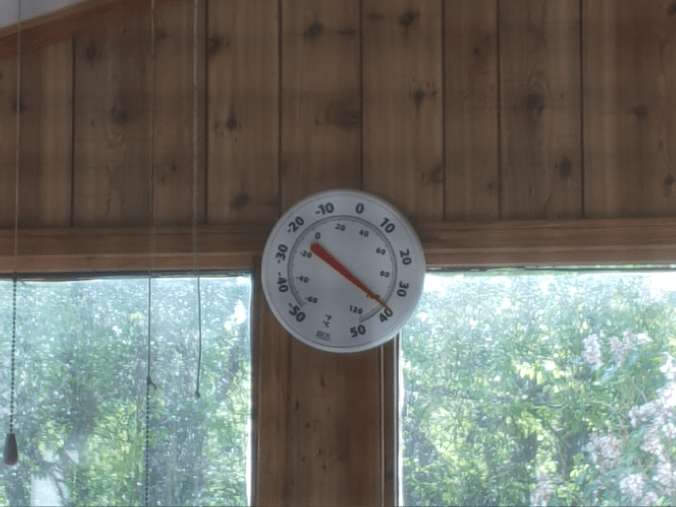
This is with the inner door open, the screen window in the outer door open as wide as it can, and the ceiling fan going at its highest setting, and it still got to about 37-38C/99-100F. There are still a few trays of seedlings (and cups of dirt I’m pretending to expect things to germinate, still) in the sun room while I take the rest out to harden off. The trays outside got misted several times during the day, but a bunch of the squash and melons were really droopy by the end of the day. For all the misting they got, they still dried out quite a bit, so everything got a thorough watering before they came in for the night. Except the corn. They get put back into their bin, without the outer cups, so I put water in the bin for them to absorb from below.

When the girls went out as things started to cool down, they checked on the netting over the lettuces and beets. They ended up flipping one side up over the other, because there were so many insects caught inside. Including several of these guys.
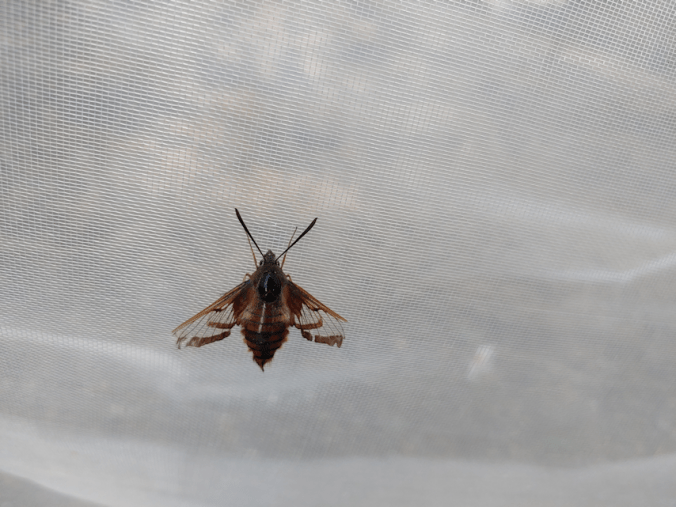
This snowberry clearwing moth decided to just sit there and chill instead of flying away!

We also had a visitor, as things cooled down.
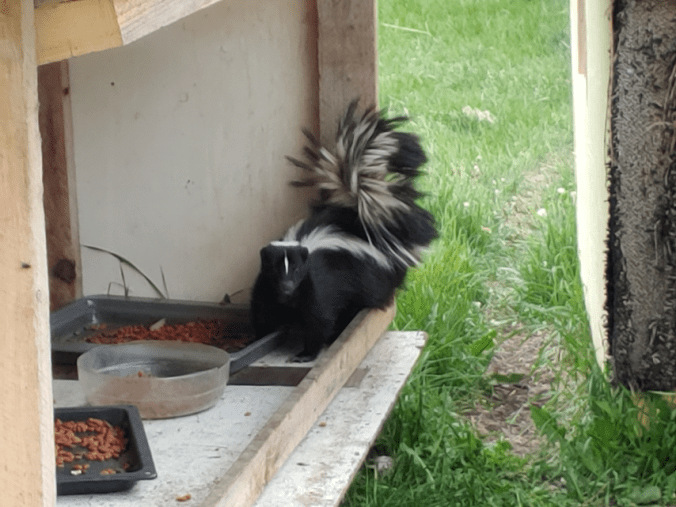
Madam Stinky came over for a snack! Later on, we saw a second one in the kibble house with this first one. I am loath to chase any critter away from food when it’s not doing any harm, but it’s really not good for them, and there is potential for harm. I think they are both hungry mamas. It’s certainly the time of year for them to have babies. When I used the hose to spray them away, the second one, which is quite a bit bigger than this one, did NOT want to leave! It kept grunting at me and trying to go back to the kibble house, until the water finally drove it away.

They’ll be back tonight, I’m sure! :-D

Before it had cooled down enough to start the evening watering, I checked on the garden beds to see how they were handling the heat. Especially the new transplants. I’m happy to say that the tomatoes and sunflowers were doing just fine. Only the bunching onions were starting to get a little bit wimpy.

While checking other beds around the transplanted sunflowers, I spotted little bits of green and pink.
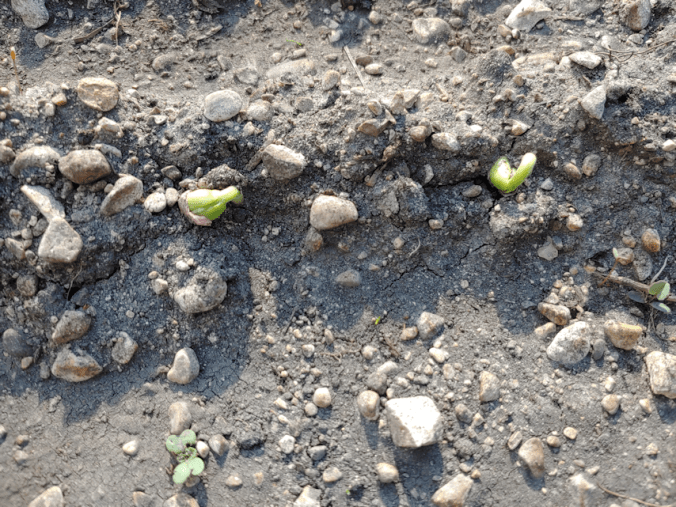
We have beans!!!

These were not there when I checked them this morning, but both the yellow and green bean beds had sprouts, some still carrying their brightly coloured inoculated seed covering. The Royal Burgundy didn’t have any sprouts, but when I came back later to water them, even that bed had sprouts just starting to break through the soil. I’m so excited!!!

While watering the sunflower transplants, though, I got an even bigger, more exciting surprise.

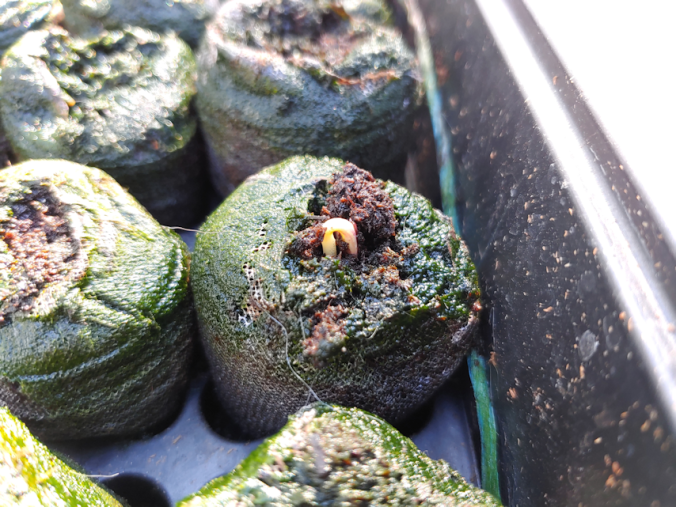
This is a Hopi Black Dye sunflower seedling! I had to check and double check to be sure. I marked the spacing to plant them with flags, which are still there, so I could use them to confirm that yes, these are in the right places and everything. Considering how long it took for just one Hopi Black Dye seedling to sprout in the tray, I am totally stunned that they are already sprouting after being direct sown, just 5 days ago! All I can think is that the seeds we tried to start indoors were just too cold to sprout, even in the warmth of the sun room. Now that I’ve started to take the tray outside, to harden off the cucamelons sharing the tray, we might get even more of them.

The heat may be hard on humans and animals, but some of our plants are just loving it!

Hopefully, the extra watering they all got will help the ones that maybe don’t like the heat quite as much. :-D

After the watering was done, and things had cooled down a bit more, I did decide to do one transplanting job done today, but that will get its own post. :-)

The Re-Farmer

Our 2021 garden: firsts!

We had a solid rainfall last night. With the sunflowers, tomatoes and bunching onions just transplanted yesterday, I was concerned over how they held up. I was happy to see that the tomatoes were looking very sturdy, and even the little bitty onions were looking stronger. It was the sunflowers that I was most concerned about, but they were also looking strong. Even the couple that were looking wimpy as they were being transplanted are standing strong, though the twine supports we added certainly helped that.

While moving seedlings out of the sun room this morning, I included the tray with the cucamelons. Not many of them germinated, but they are so prolific, we should still have lots. This same tray is where I’d planted the Hopi Black Dye sunflowers.

I had a surprise waiting for me.

The very first Hopi Black Dye seedling has emerged!! At this point, I thought for sure they were gonners. If I’d had any idea that they could take this long to germinate, I would have started them back in February!

I have no idea if more were germinate, or even if any will reach a point where it’s worth transplanting them. It’s so late in the season, but then, we do that the others that were direct sown, and who knows when those will germinate!

Meanwhile, we have another first this morning.

Our first harvest of spinach! Yes, we’ve been sneaking the odd leaf every now and then for a while, but they’ve reached a point where they need to be thinned out, so this morning I grabbed some from each bed. I could have had a lot more, but I could only reach so far under the two beds with chicken wire over top. Later on, when I have a second person to help out, we’ll move the covers off and thin them out properly.

After I finished cleaning the spinach, it was all I could do, not to just sit there and eat them all! Instead, I’m not eating some in an egg dish my daughters made for me for lunch. :-)

Things got hot really fast this morning, and it’s only going to get hotter. We’re supposed to hit 29C/84F this afternoon, 34C/93F tomorrow, which risk of thunderstorms, and 35C/95F with chance of thundershowers the day after. If we do get storms, we have enough things to use as cloche to protect the tomatoes, but I don’t know how we’d be able to protect entire rows of the sunflowers.

This type of weather is the sort of thing the squash would actually like – if they were already well established outside! We’ll continue making beds and transplanting, but will have to take steps to be able to protect them from storms as well.

For now, I’m just excited about our new sprout, and fresh spinach!!!

The Re-Farmer

Our 2021 garden: planting day, indoors – and that didn’t work!

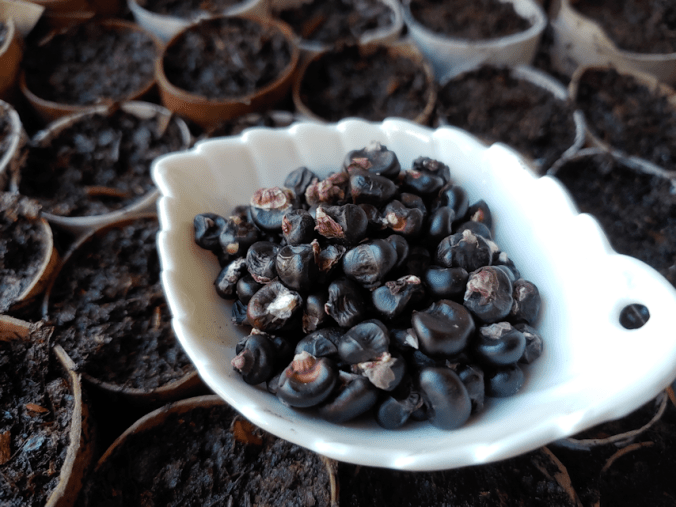
Today’s priority was to start the last of the seeds indoors. I’d been preparing a bin with toilet paper tubes, as something that would allow the least root disruption when transplanting (at least, so I’ve read). After a couple of days, it was time to start planting the Montana Morado corn!!

Aren’t they gorgeous?

The seed packet said “at least 75 seeds”. That’s a lot more than 75!

I started puttering with the peat filled tubes in preparation of planting in them, but something felt wrong. Ever after a couple of days, some of the tubes were still floating on a layer of water, and as I made holes in the medium, it seemed really dry below the very top.

I didn’t want to take a chance, and decided to crack open one of the tubes.

I am very glad I did.

It was completely dry inside!

Well, so much for that idea. If the peat didn’t absorb the water after all this time, it wasn’t going to happen.

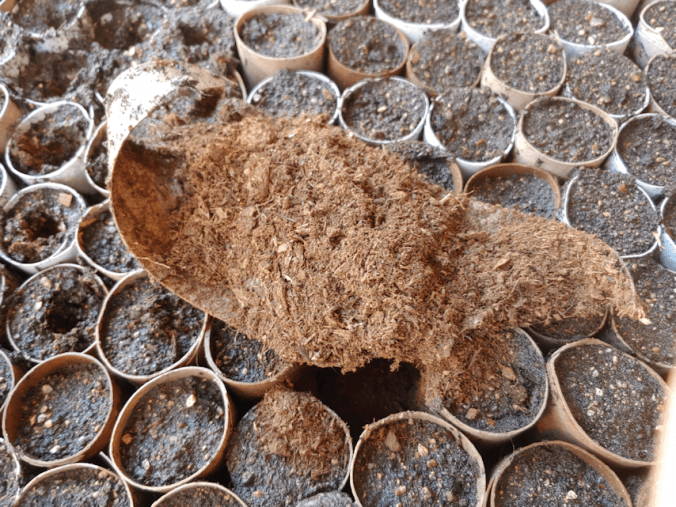
For the next while, I opened every one of those tubes to empty them.

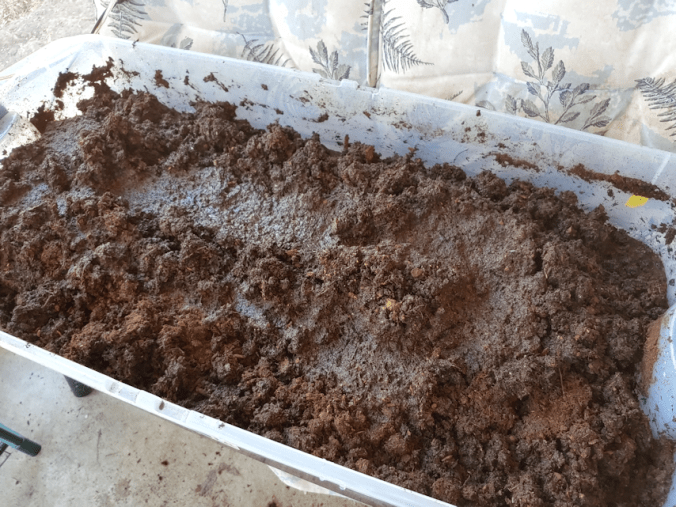
Once that was done, I kneaded it like bread dough, to work in the water. Then added more water and kept working the mixture until it was completely wet.

I should have done that right from the start!

I did work in the last of the sifted garden soil, too. The soil absorbs the moisture faster than the peat, so I thought that might help. The amount was quite small, compared to the quantity of peat!

As for the toilet rolls, they will not go to waste. These were dumped into the old kitchen garden, where they be composted directly into the garden, as we add soil.

The bin is still being used, though.

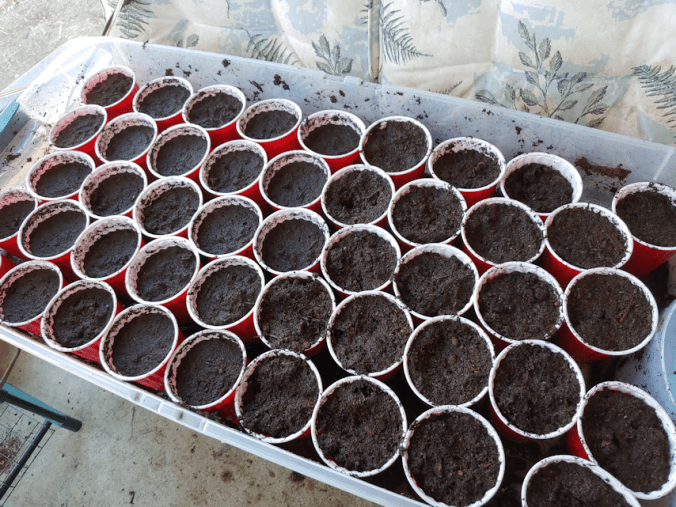
After punching holes into the bottoms of more cups and filling them, I ended up quite quite a bit of unused peat mix.

I made sure to water them from the top again, just to be sure, and left them to drain for a while.

For small seeds, I like to use a bamboo skewer to handle the seeds, but for larger seeds like this, I find a straw works great. It’s just the right size to push holes into the medium, and is perfect for pushing the seeds down to the right depth.

I knew I wouldn’t use up all the cups, so I didn’t cover up the seeds until they were all done, so I could easily see which cups were planted, and which were not.

Then I used some twine to wrap around and between the cups, to mark between the planted and unplanted cups.

I ended up with 33 cups with corn in them; 31 with 4 seeds each, and 2 with 3 seeds each.

I have some concerns about doing it this way, but starting corn indoors has been an active topic of discussion on several cold climate gardening groups I’m on. Most of the experienced Zone 3 gardeners say all corn should be started indoors (my mother never did; I would say the varieties make a difference!). Some insist that corn is too tender for transplanting, but the few who say that usually have many others commenting, saying they start their corn indoors all the time, and have never had issues with transplant shock.

So I’m hoping this works out. I really want to successfully grow this variety here!!

The remaining cups were planted with Mongolian Giant sunflowers. There isn’t a lot in the package, but the remaining 13 cups all got 2 or 3 seeds in them. I think there was a total of 33 seeds in the packet.

They all gone one last watering when all the planting was done.

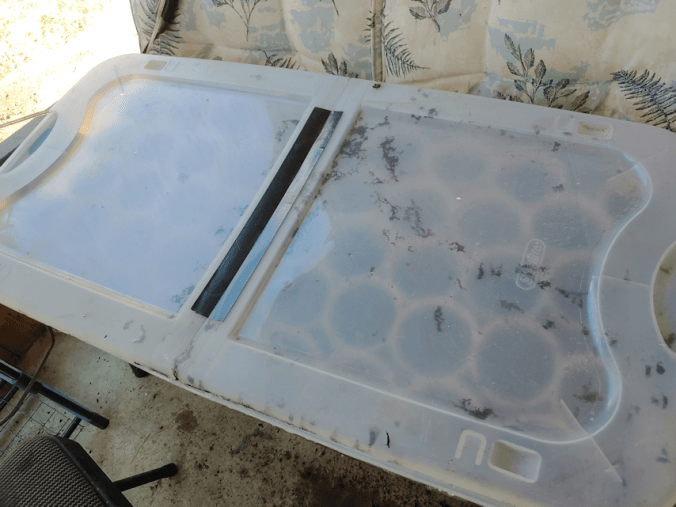
The cover can be placed over the bin to help keep the moisture and warmth, if necessary. I think it should be fine, without, but we’ll see.

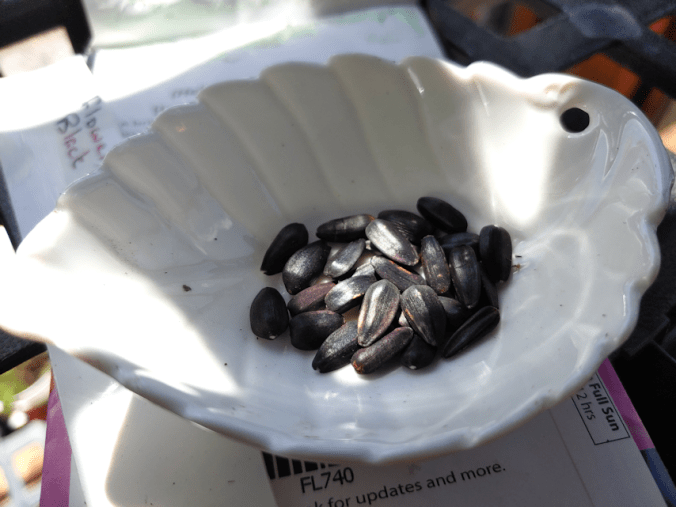
That done, it was time to plant the Hopi Black Dye sunflower seeds, and the cucamelons.

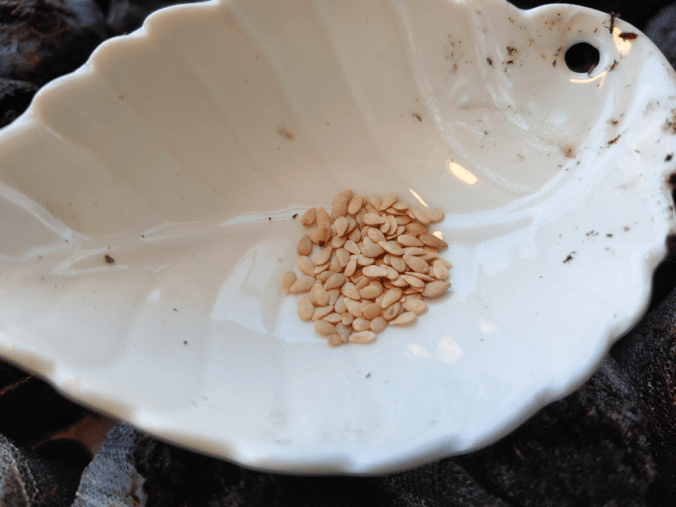
Again, there weren’t a lot of sunflower seeds in the packet. I’d forgotten how small the cucamelon seeds are! :-D

Since these were going into Jiffy pellets, the sunflower seeds each got their own pellet. It still filled less than half of the tray. There were 28 seeds in the pack, and I used the twine to mark between the two seeds. The cucamelons each got several seeds per pellet. I didn’t keep track of those. We still have the tubers from last year’s cucamelons, so it should be interesting to see which do better after they are planted out in June.

After these were done, we did the onions outside, which freed up shelves in the sun room. All the remaining seeds in the aquarium greenhouses are now in the sun room. I’m starting to be a bit concerned. Not a single squash or gourd has sprouted since the one Crespo squash germinated. That one is doing well (as are the dancing grouds), at least. I know gourds take a long time to germinate, but I would have at least expected more Crespo squash to germinate by now. I’m hoping the warmth of the sun room will be what they finally need to get them going. We shall see!

Starting the seeds indoors – and having to change plans on how to do some of them – took a lot longer than expected.

So did planting outdoors. Because, of course, things got changed up there, too!

You can read about that in my next post! :-)

The Re-Farmer