First low raised bed, part two: done!

Today, I was able to get back to working on our first low raised bed. The first thing I had to do was scrounge through a shed and the barn, looking for something I could use to support the long sides and prevent them from bowing outwards once the bed is full of soil.
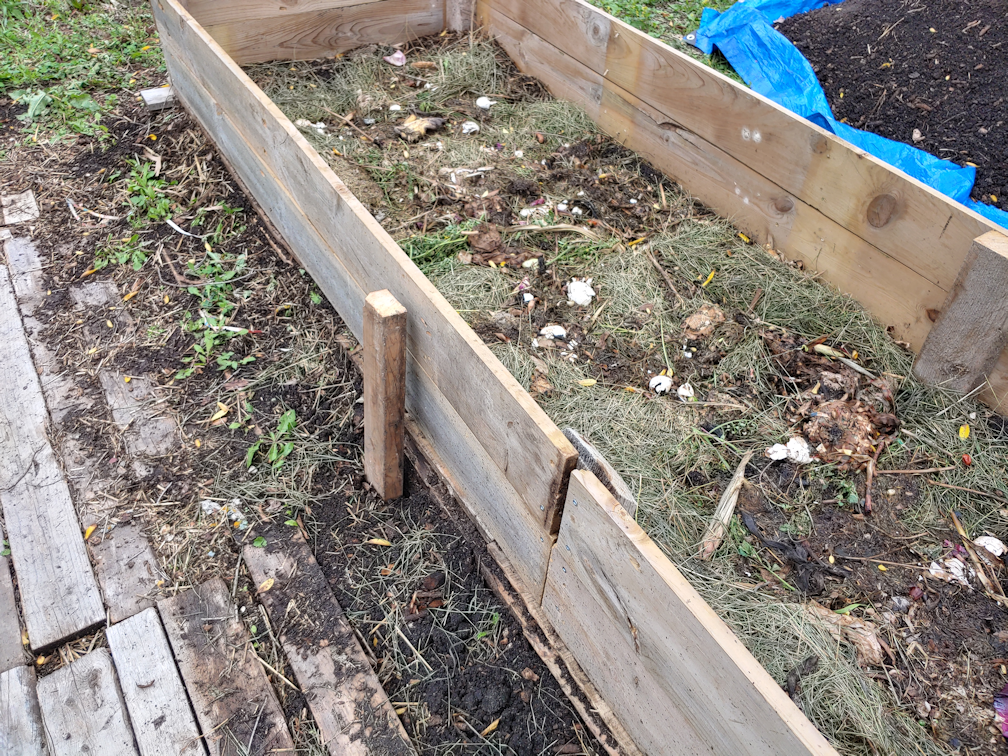
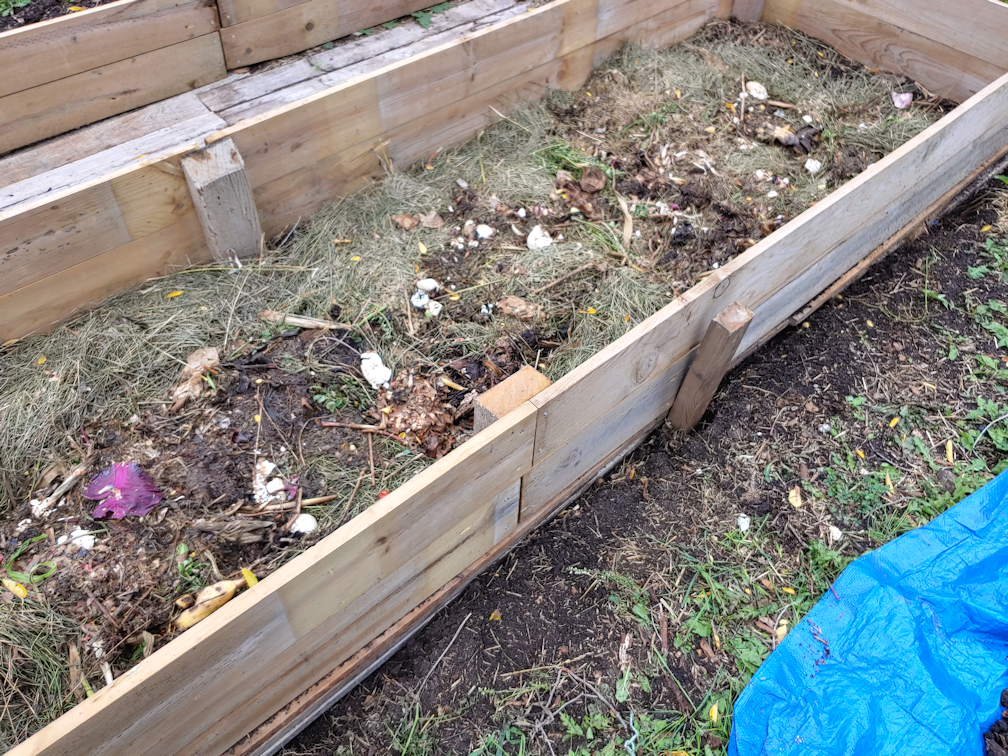
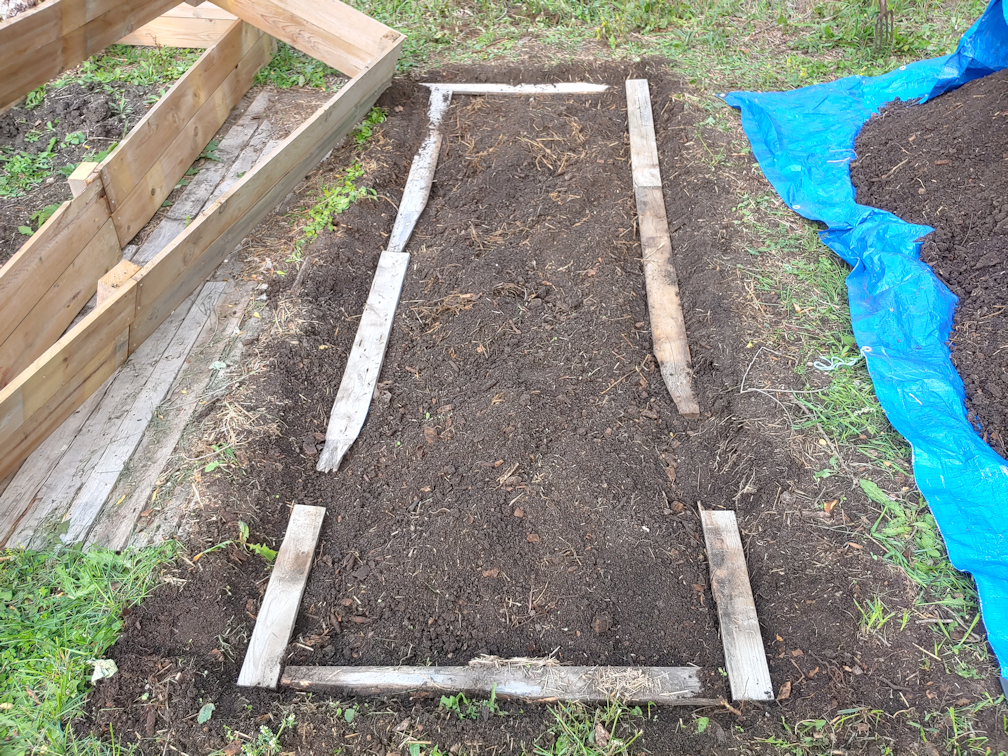
I found a piece that was strong enough, and long enough that I could cut it in half, first, then cut the two pieces in half at an angle, so they could be driven into the ground. Two were used for this bed, and the other two will be for the next one. The soil here is soft enough that I was able to use the pretty sledge hammer I found in the pump shack to hammer them in. I wasn’t too worried about them being perfectly straight. If this were a high raised bed, I’d be sinking posts to support them.
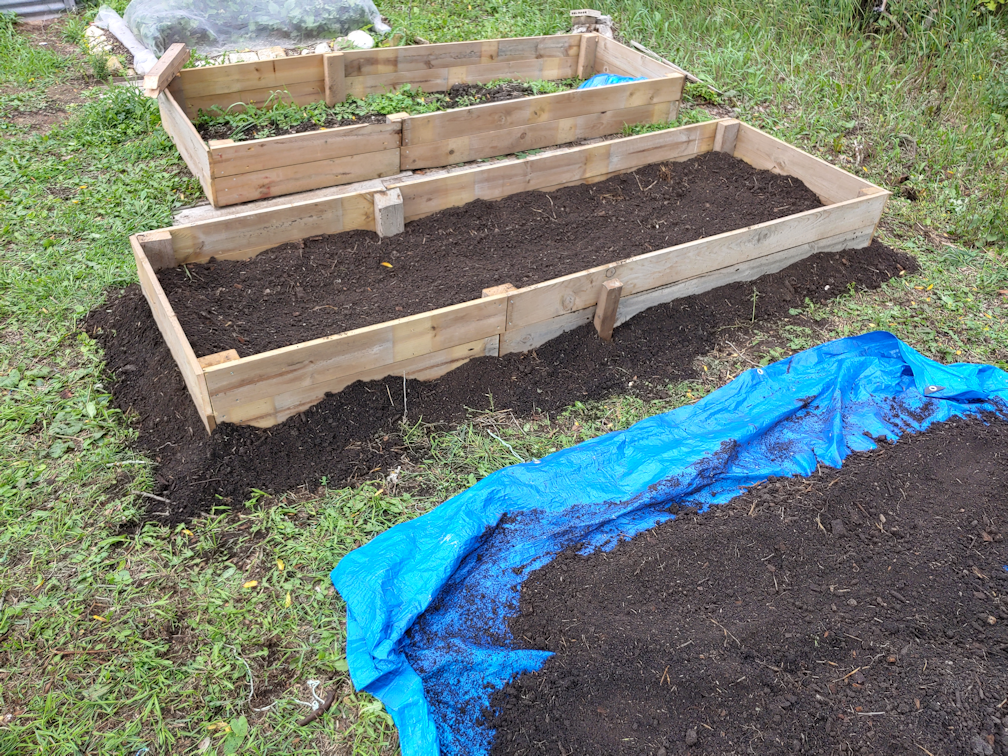
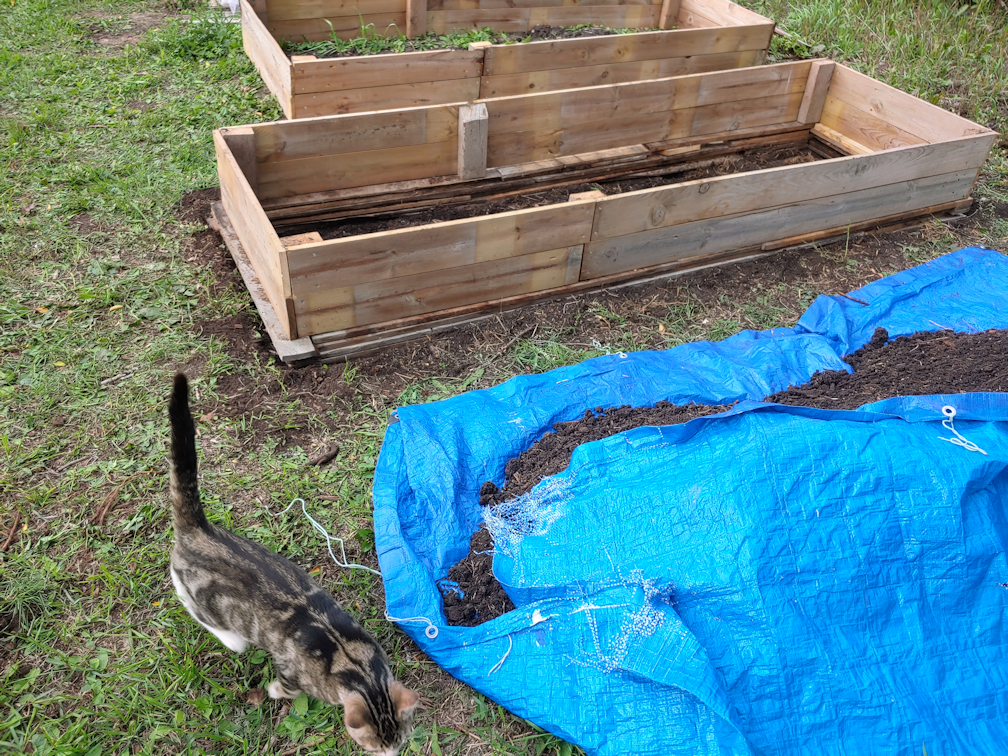
Next, I shoveled about half of the soil into the box, raking it out against the sides a bit, then added soil all around the box to bury the wood foundation. In total, that took up about 2/3 of the soil on the tarp. The wood foundation will break down over time, and I expect the whole box will slowly sink with it, but I don’t expect this to last more than a few years. Hopefully, by the time these need to be replaced, we’ll have access to more permanent materials and can replace them with high raised beds.

Now it was time to amend the remaining soil.

First I added about half a bag of wood pellets (roughly 20 pounds), maybe less, then got a load of the garden soil we bought in the spring.
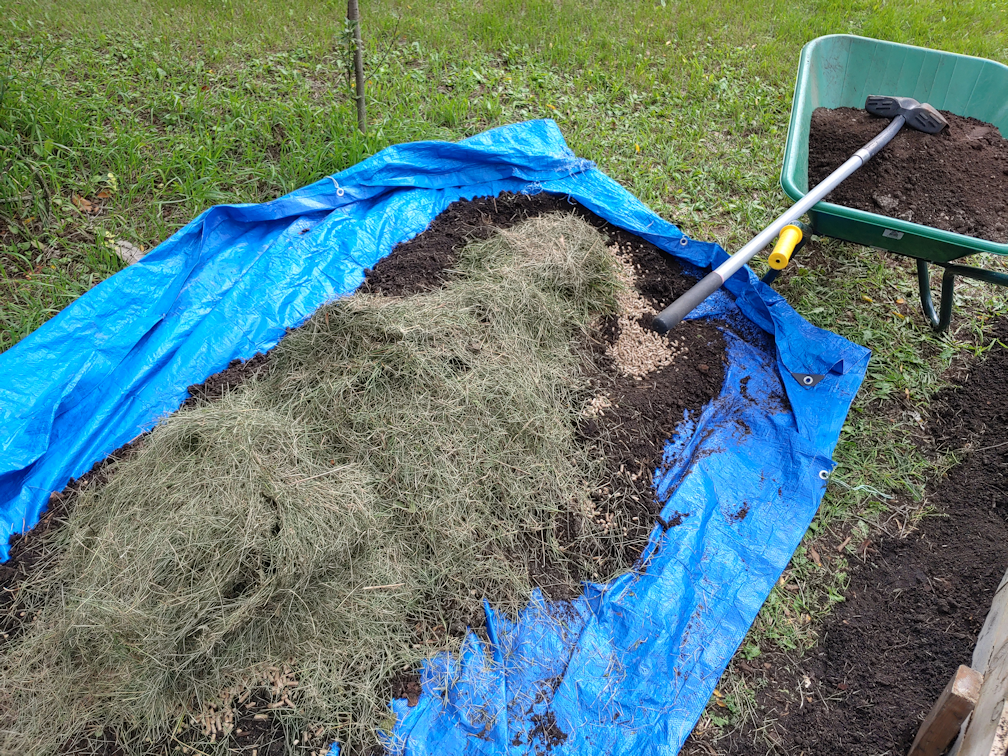
An arm full of grass clippings was added on top of the load of soil, then a second load of soil was added.
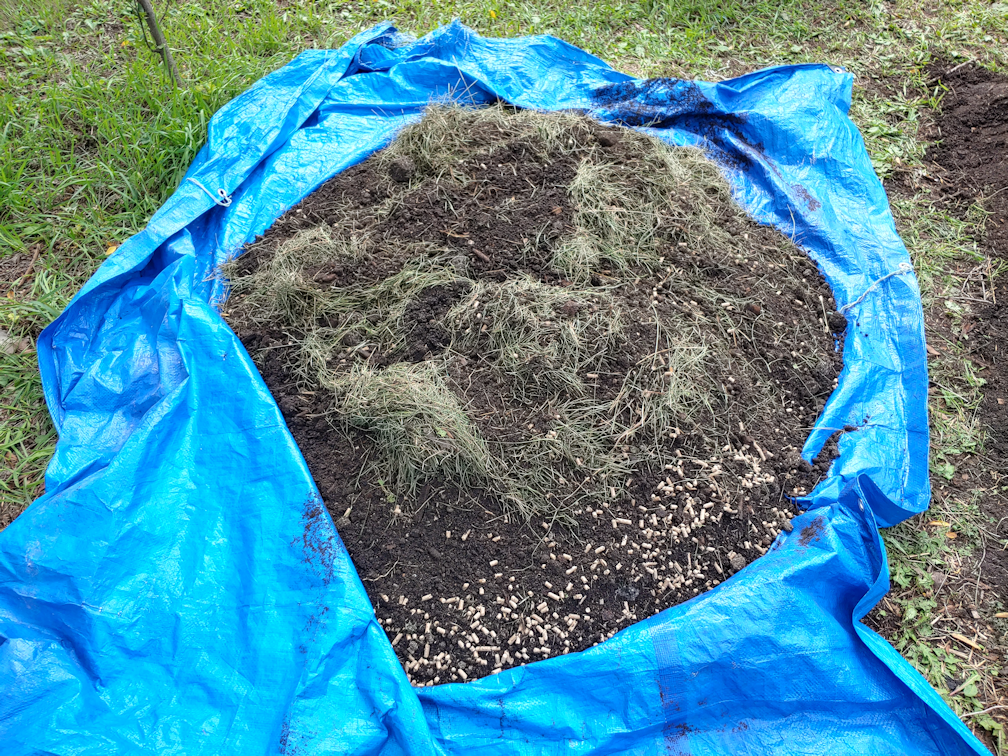
The whole thing was mixed together using a garden fork and the tarp itself. After a while, I shoveled about a third of it into the box, then used the tarp to mix it some more, shoveled more into the box, mixed the remains with the tarp again, and by then I was able to use the tarp to heave the whole thing into the box and dump the mixture out.
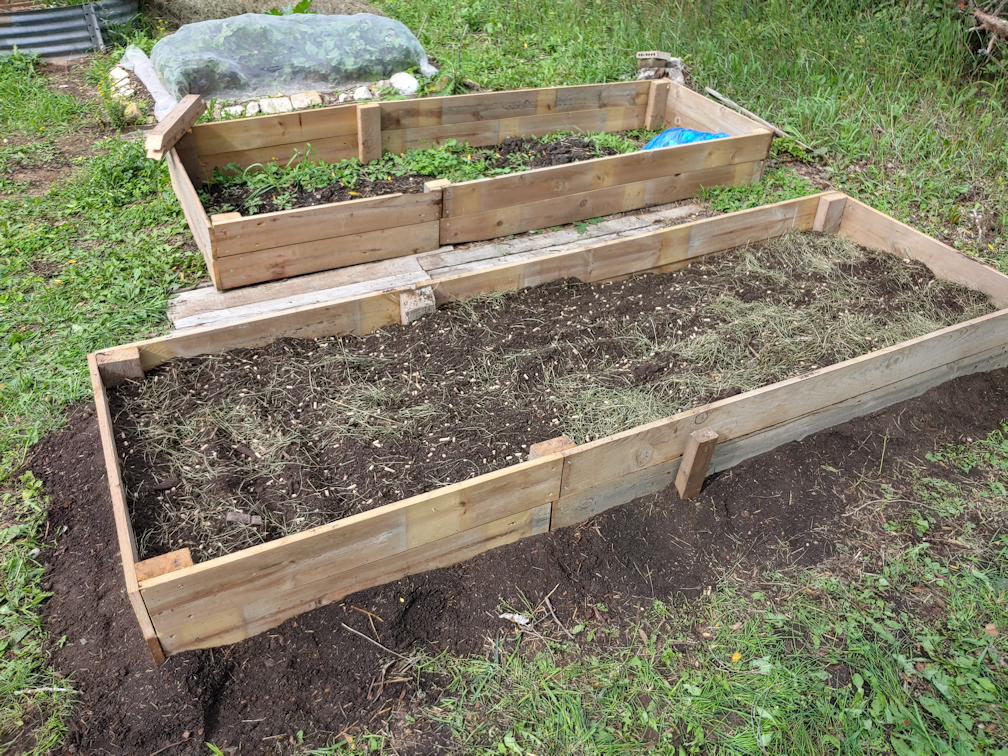
Then it was time to level it all out.

I also used the back of a hoe to tamp down the soil around the outside of the box a bit. If I can figure out how to transport it, after all the beds are done, I want to bring gravel from the pit over, to put around the boxes and in the paths.
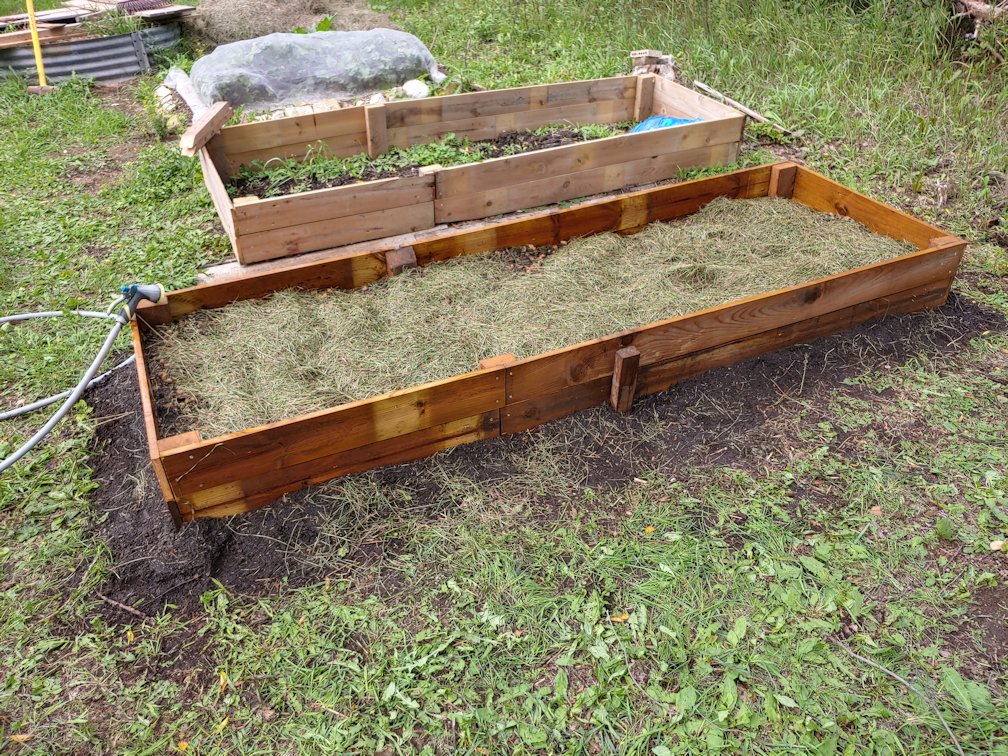
The final step was to cover it all with a grass clipping mulch and give it all a soak. It was a good chance to power wash the box itself a bit, in the process.
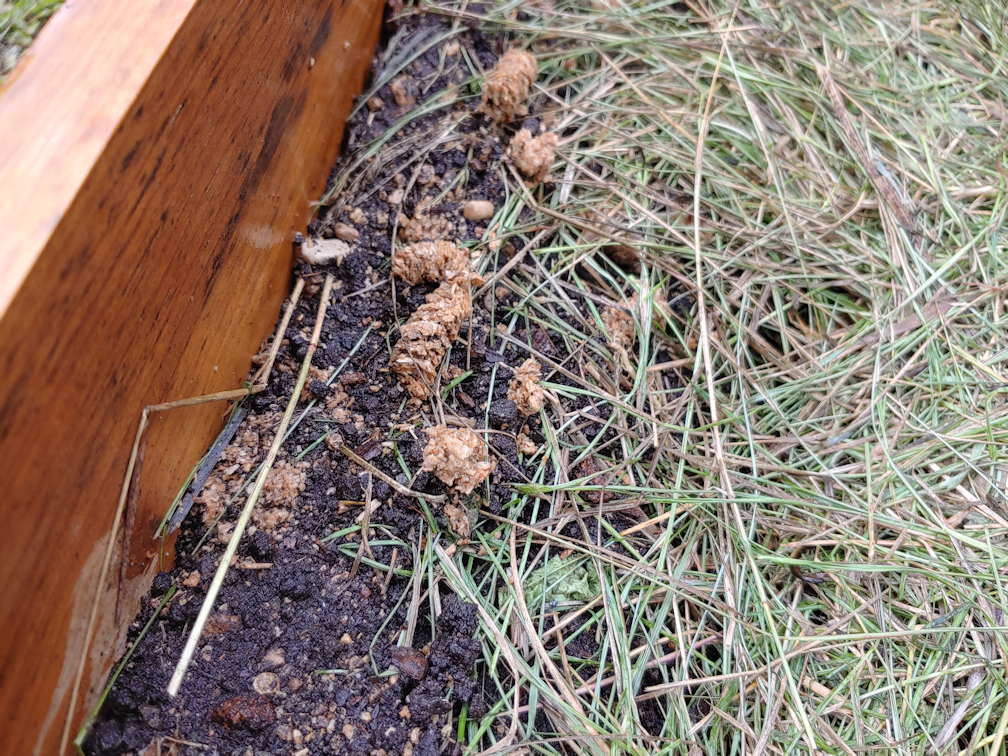
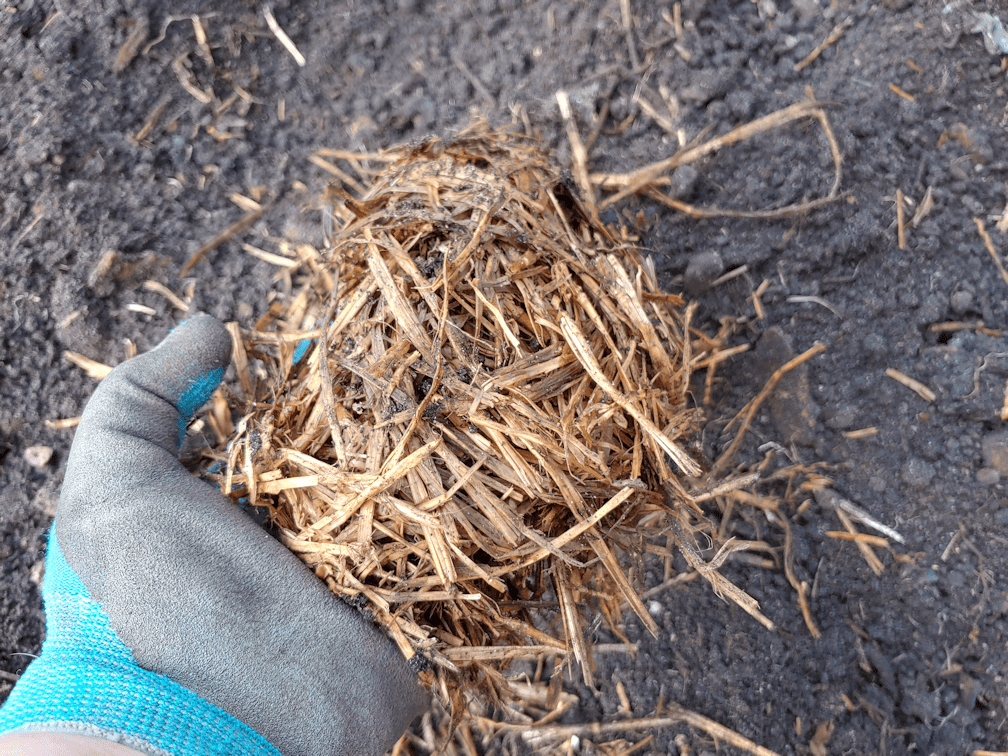
Here, you can see some of the wood pellets. This is why I decided to use these. Once the water hits the pellets, the sawdust begins to absorb it and expands pretty much immediately. Which means that all the pellets that are buried in the soil will push the soil away, breaking it up and preventing compaction. Depending on the conditions for the next while, these should decompose completely by the time we’re ready to plant into here, together with the grass clippings, adding organic matter that will keep the soil light and increase moisture retention.

As you could see from the previous photo, the box is not full to the top. It is, however, at a stage that it could be left as is, and be ready for planting in the spring. I might have a lead on getting a truck load of manure. If that pans out, and we can get some this fall, I would use some and, together with the garden soil and probably other organic material, top up the boxes. We shall see. Either way, this should all settle further over the winter, so I expect to need to add more material in the spring, before planting.

For now, the bed is done. The next two will be done the same way, though I still have to build the box for the bed that has beets growing in it. That will wait until after the second box is set up, since there’s nothing to do with that bed until the beets are harvested.

The Re-Farmer

First low raised bed: part one. It’s good to be flexible!

This evening, I finally got around to working on the first of the low raised beds in what had been our garlic beds this year.

The boxes are ready and waiting, and the beds had been left for any weeds to get larger, so they would be easier to pull.

The plan: dig out all the soil and buried layers of compostable material beneath, set up the box frame, then add the layers back, Hugelkultur style, with wood at the very bottom layer.

The first order of business was to loosen the soil a bit further than the new length the bed will be, and clear out all the weeds by the roots.

The first problem was in adding length. I was originally going to make it longer just at one end, only to find myself hitting large roots and rocks. So I did a bit at one end, then extended the other end, only to have the same problem!

Once the soil was as clear of weeds and roots as I could, it was time to remove the topsoil onto the waiting tarp.

The original plan had been to remove the soil up to the buried straw and compost pile contents into one pile, then remove the straw and other matter onto another. With the extended length, there was already the problem of not being able to dig far because of the roots and rocks I was hitting.

As expected, the straw was barely decomposed. It takes a long time for straw to rot away. That made it harder to dig down further.

I decided to leave it and modify my plans. If it wasn’t practical to dig down further, I would just have to build up higher!

Using a garden hoe, I flattened and somewhat leveled the perimeter, pushing the soil into the middle.

The box was then laid over the bed and stomped on, to create guidelines.

Then, it was time to raid the junk pile of old boards and create a foundation.

A first layer was placed on the guide lines, leveling the soil out more in the process. Then it was just a matter of digging out more boards and adding more layers. The boards are in varying states of condition and length, and a few were cut to size to fill in gaps.

I stopped at 5 layers of boards, which put the foundation at about level with the ground.

Then the box was lined up on top of the foundation.

That was definitely a two person job. :-D

The next step was to use the hoe to move the soil from the middle to the sides, burying the foundation on the inside.

Now it was time to do our use-watcha-got, Hugelkultur layering.

I raided one of our branch piles and brought small branches and twigs to cover the bottom. If we were doing a high raised bed, I would have used larger branches and logs, but these will do for a small bed. The idea with the wood is that, as it decomposes, it acts like a sponge, absorbing moisture that later becomes available to the roots of the plants above, and reducing the need to water.

The next layer was shredded paper. We’ve been saving and shredding our compost safe fliers and other paper, just for this purpose.

Then a layer of grass clippings from our new little “haystack” got added.

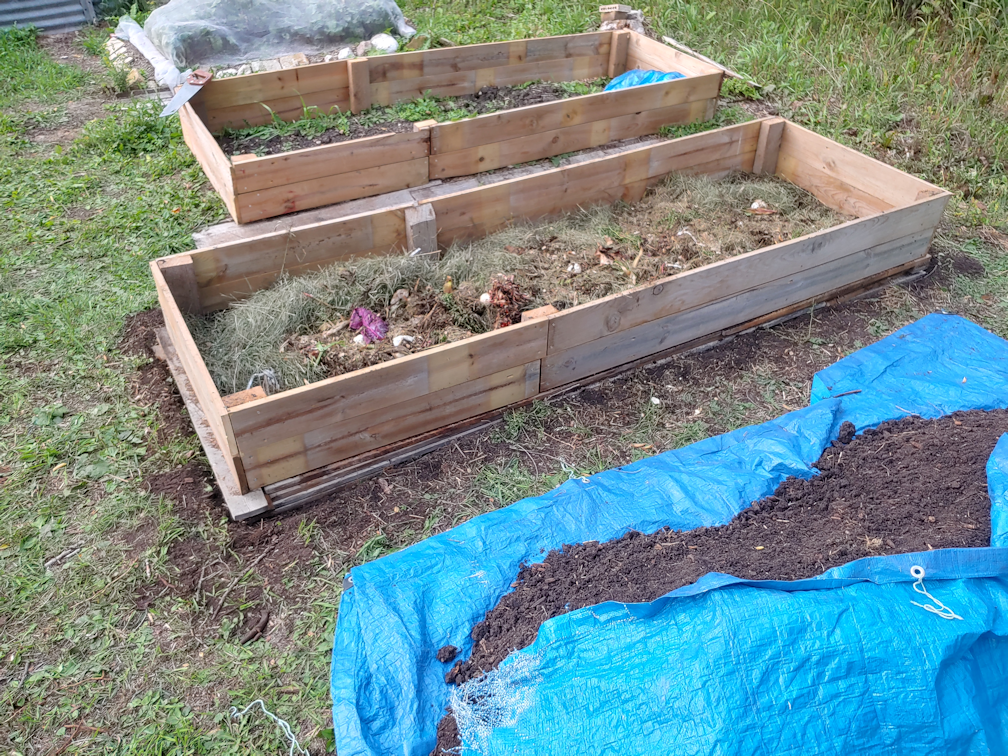
Then, the contents of our compost pile was added. Plenty of egg shells, coffee grounds, banana peels – all sorts of things that “garden hack” lists include. :-D

The last step for today was to hose the whole thing down, partly to keep things from blowing away. We have thunderstorms predicted for tonight. If we do get rain, it will help soak down the layers and get a kickstart in decomposition. If we don’t get rain, it will get saturated with the hose before the soil is returned.

Before the soil is added, however, I’ll have to find something I can pound into the ground on the outside of the long sides of the box, to prevent the boards from bowing out.

As lovely as the soil here is, it did test low in nitrogen, so before returning the soil to the bed, I will be mixing in some of the new garden soil, as well as more grass clippings, plus some of the pellets we’re using for cat litter now. It’s just compressed sawdust. As they get wet, they expand and break apart. This will add organic matter to the soil to keep it from compacting, plus the sawdust will absorb moisture and act as a sponge. The clipping and pellets will have the fall and winter to break down, and help increase the nitrogen levels.

If we had wood chips, they would have been included in the layers, and would be added as a layer of mulch at the very end. Alas, that will have to wait until we either get a wood chipper, or hire the tree guys to come out with their massive chipper for a few hours, and break down some branch piles for us. :-)

Which, weather willing, I should be able to work on tomorrow. :-) Unless something else comes up. Which happens often! :-D

The Re-Farmer