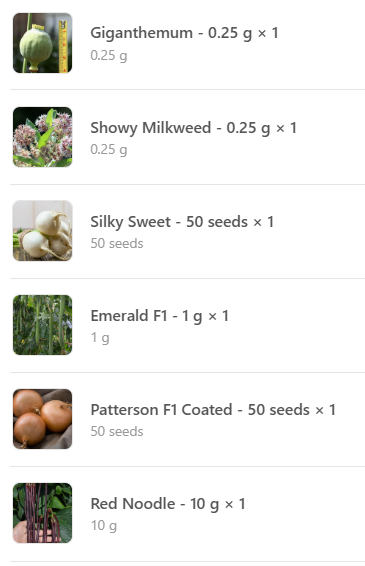
Our 2026 Garden: which ones, when?

Nothing like the bone chilling temperatures of a polar vortex to get one thinking of warmer days in the garden!

Yesterday, I watched a couple of inspiring videos. This first one is from MI Gardener.

A bit of irony on this one, talking about how starting seeds too early can actually sabotage the effort. With our short growing season, a lot of things actually do need to be started indoors super early – at least for a growing zone like where he is – and we’ve already sowed our onions, trying out the seed snail method.

None have germinated yet. I’m a bit concerned that our living room might be too cold for germination, and we aren’t able to set up a heat mat in there. Onions handle cooler temperatures well, but they still need a certain level of warmth for germination. Hopefully, I didn’t just waste a whole lot of seeds!

One of the things he brings up is the need to pot up frequently if starting too early. There’s a couple of things I would try to do, to get around that. One is to pre-germinate certain types of seeds (not really worth it for the tinier seeds). That way, they can be planted in the second thing I’d want to try, and that is to put the pre-germinated seeds into pots or tray cells that are quite a bit larger, so that they either won’t need to be potted up at all, or need potting up less frequently.

This next video is from Gardening in Canada.

This is more relevant to us, since she is in the same zone as we are, and I’m pretty sure her growing season is shorter than ours.

Here, she talks about planning out how many seeds to plant, if the goal is to save money on groceries for a family of four.

It’s a place to start when adjusting for individual needs. For example, my family likes to eat fresh tomatoes, but I can’t, so I’d be planting enough for three people, not for. However, I can eat processed tomatoes, so if I want to grow tomatoes for cooking, making sauces, freezing, canning or dehydrating, I would actually want to grow considerably more of, say, paste tomatoes.

Since we started gardening after moving here, a lot of what we chose to grow was to determine what we actually like to eat, and which varieties, as well as what will actually grow well here. We are still doing that, to a point, but have started to narrow things down.

With that in mind, I went through my seed bin for things to start indoors, to see which ones need to be started the earliest – as in, by the end of January, or early February. This is what we’ve got.


There is one thing that should be started before the end of this month.

Luffa. Yes, I still want to try and grow luffa! So that’s something I will set up to pre-germinate probably after this coming weekend.

Other things that I would start, probably in the beginning of February are:

Peppers – we have Sweet Chocolate, which the girls said was universally liked. I also got a new variety, California Wonder Bell, specifically because it was described as having thick walls, that I want to try. We also still have Sweetie Snack Mix that I’d like to try again. This past year, we had such healthy looking plants, but they barely managed to produce anything. I think they might work better in the sunnier location I’m planning to grow peppers in, this year. I’m thinking a total of 9 plants would be enough for our needs.

Caspar Eggplant – a new variety that I plan to grow in a 4′ square bed, where I should be able to protect them from the elements. I think 4 – 6 plants would do, which would also leave space for interplanting with something like onions, or maybe some herbs.

Golden Boy Celery – I’ve never grown celery before, so this one is a total experiment. I think I would shoot for enough to fill one of my large celled trays, which means 21 plants.

Thyme – I may or may not try starting these indoors. We have two varieties of them that are heavily mulched that I hope will survive the winter. Just a couple of plants is enough, though, so I might start more and interplant them with some of the vegetables.


The next batch are things to start in March or early April.

Herbs – tarragon, summer savory, oregano and spearmint are possibilities. I think I would rather buy oregano transplants, though. We do have some in our little herb bed, along with the thyme, that might survive the winter. Spearmint is something I would be growing in a pot to prevent spreading, if we grow them this year. Tarragon and summer savory, though, are definitely things I’d want to start. Once again, only a few plants would be needed, to I’d probably be shooting for two of each.

Flowers – according to the packets, this would be the time to start Cosmos and the black hollyhock we have. Last year, I direct sowed Cosmos and they did eventually bloom, though very late. I might try starting a few indoors, then direct sowing in spring, to see how well they do.

Tomatoes – we will be growing three varieties, for sure, possibly four, all of them new. One is the Orange Currant tomato, which will be my alternative to the Spoon tomatoes we grew last year. Spoon tomatoes have been the only tomatoes I can eat fresh without gagging, and I’m curious if the tiny Orange Currant tomatoes can be added to the list. We will also be trying the Blue Berry and Chocolate Stripes varieties. These three all look to be rather prolific varieties, so we’d probably only grow three or four of each variety. I’m still debating whether I want to also do the Manitoba tomato, which is the variety my mother used to grow here, when I was a kid. If I do, I’d probably grow more than the others, for both fresh eating and making sauces.


The next batch would be started in late April, early May.

Bi-colour pear gourd – a new one, and the only other gourd of the many varieties of seeds I have, that I plan to grow this year. They should be prolific, and I’m thinking three or four plants of these should be enough. They would be among my “for fun” things to grow.

Herbs – in this time frame, we could start the chicory, Florence Fennel and chamomile. I would actually want to grow quite a few of each, based on their uses. I could get away with starting a lot of them and not have to worry about potting up too often, since they would be started so much closer to our last frost date.


Then there are the last ones we would start indoors, in early to mid May, based on a last frost date of June 2, though the adjusted averages now say our last frost date is in the last week of May.

Melons – Sweet Siberian Watermelon, Tigger melon, Hale’s Best Jump cantaloupe, and both orange and green flesh Honeydew melons among the varieties I want to try (all but the green honeydew are new to us). We had really poor results with melons last year, with only three varieties. I’m hoping this coming year will be better. I need to decide: do I want to have two or three each of five varieties, or pick just a couple of varieties, but more plants each? Either way, I think I would be shooting for about 15 plants in total as my goal.

Herbs – caraway. I honestly don’t know how many plants I’d need to grow for our needs. We’d be growing them for their seed, and I have no idea how many they tend to produce. Will have to research that.

Cucumbers – we have three varieties to choose from; Eureka, which is dual purpose pickling or slicing variety, Lemon and Bushy. The Bushy variety is good for pickling and has such a short season, they could easily be direct sown. Where I intend to grow them doesn’t have room for a lot of plants, though they will be trellised, which will allow for slightly denser spacing. I’m thinking of doing the Lemon cucumber for sure, then maybe the Eureka. We’ve grown those in the past and they did surprisingly well under that year’s growing conditions and their location.


This last category is of things that, in theory, I can direct sow, but I would rather start indoors, given our past garden history. These would be started in mid May.

Pumpkin – maybe. I’m still on the fence about trying the “Cinderella” pumpkin seeds I got. If so, I’d be shooting for 2-4 plants.

Herbs – borage. I might just direct sow these. Or I could try both starting indoors and direct sowing. I’ve been warned that they can self seed and spread easily, so I would want to treat them like a perennial and find a place where I can allow them to self seed.

Winter squash – along with wanting to try the rare Arikara variety again, because I want to save seeds, we have the new varieties I want to try. Golden Hubbard, Black Futsu, Butterneck and Gill’s Golden Pippin. If I start 3 or 4 of each, that makes for 15-20 plants in total. Will I even have enough space for so many, and still leave room for the direct sown crops I’m planning on? The goal with these is to have plenty for winter storage, so I would want to have quite a lot. With starting these so much closer to our last frost date, and pre-germinating them, I shouldn’t have to do any potting up at all, if I use my deep cell trays or Red Solo cups right from the start.

Summer squash – I’ll be selecting from all new varieties this year, which includes Yellow Scallop, Green Scallop Bennings, Early Prolific Straightneck and Lemon. Last year, we tried direct sowing our summer squash and got next to nothing, so I want to go back to starting them indoors. We love our summer squash, so I’d probably shoot for 8 -12 plants in total. If I want to try all four varieties, that’s only 2 or 3 plants each. Which would be enough – unless something kills them, or they just don’t thrive. The last few years, summer squash has not done well for us, so I’d rather have more, in hopes to get at least something! By the time we would be starting these, I should have a better idea of what space will have and can decide then.

So, there we have it. A plan of action, more or less, for what we’ll be starting indoors, and when.

Now, I just have to set up our basement to fit this all, with enough warmth and light. I’d hope to get the aquarium greenhouses down there, and might still bring down the small one, but we just can’t figure out how to get the big one, with its stand, around the bottom of the stairs safely. We might be able to get the stand through, but the tank itself is a completely different story.

Ah, well. We’ll figure it out!

The Re-Farmer

An unexpected (good) sabotage?

Today, I was able to get to my mother’s apartment, then to visit her in the hospital.

I wasn’t sure how that was going to work out, after learning how things went with my brother, last night.

My brother, SIL and their grandson went to visit my mother after my brother had put in a long day at work, driving out in what turned out to be a snow storm. We got a fair bit of snow here, but the closer you get to the lake, the more humidity and the heavier the snow. When they got there, they tried the regular doors to get into the hospital, but they were locked. I don’t even try the regular doors and go through the emergency room doors, but my brother forgets to do that. In the end, they decided he and their grandson would go in, while my SIL stayed with the car. That way, when they were ready to leave, she would drive around to the emergency room doors to pick them up, so they wouldn’t have to walk around the hospital in the storm.

Well, my mother was in “fine” form when they got there. At first, she didn’t really recognize them – I’m sure they were pretty bundled up in winter wear, plus, she wasn’t expecting them. For some reason, she was expecting me, but my brother told her I was coming tomorrow (meaning, today).

Then she started complaining about how late it was (it was still early evening).

When they told her about the poor driving conditions, and that my SIL was waiting in the car, my mother took it as a personal insult, and that my SIL didn’t want to “see her face”. Which is weird, because my mother hates my SIL (while saying she loves her) and has been trying to break up their marriage for years.

Anyhow, when my brother commented on how she went straight to the negative, she doubled down and got worse, so they left.

It was white knuckled driving, all the way home.

Needless to say, I wasn’t really looking forward to my visit today.

Road conditions were… passable, but not very good. It wasn’t snowing anymore, but there was plenty of packed snow on the roads, and blowing snow was starting to create drifts. Still, I’ve driven in far worse.

I got to my mother’s apartment, where I found her mail pushed under her door – a neighbour has been bringing her mail to her door for years. My brother will be getting that redirected to his place, once we know what’s going on with my mother after she leaves the hospital. I made sure to leave the Lifeline pendant with the base, checked her answering machine, etc. There were a few items she asked me to bring, one of which I couldn’t find. Which I was actually okay with, since it was something she meant to use to “educate” the hospital staff about the “history of Canada” that she’d written down. She would be wildly inappropriate about it.

I also grabbed her one live plant to take home, as she asked me to do, then headed over to the hospital. Blowing snow was even worse on that part of the drive.

Once at the hospital, I was able to park at my usual parking lot not far from the emergency room entrance. A few spots down, I noticed and SUV that looked kinda like our vandal’s, but didn’t think too much of it. It’s not an uncommon vehicle or colour.

Once inside, I made a quick dash to use the washroom near the emergency room waiting area (the emergency room was closed) before going to my mother’s. As I was leaving, I saw someone in one of the waiting room chairs, looking away from me, slowly getting up and starting to walk down the hall towards the nursing station.

It was our vandal. He wife was a few feet ahead of him, down the hall.

Our vandal didn’t see me as I passed him, and it’s possible he would not have recognized me from behind, while bundled up in winter wear, but his wife turned and saw me as I passed her. She looked really angry, before she even saw me. I said hello, but she just asked if I was going to see my mother. I said yes, and kept on going. I heard her start talking to our vandal, but didn’t pay too much attention. I knew they wouldn’t go to see my mother while I was there.

My mother seemed surprised to see me, even though my brother had told her I would be coming today. I brought out the things she asked me to bring, then brought out the gift I’d made for her.

She had mentioned using the sleep hat I made for her, using Blanket Yarn, to warm her hands, so I got more Blanket Yarn to make her a double thick muff for her hands in solid grey, then used leftover yarn from her hat to do the edging.

When she saw it, she immediately start making snarky comments about how we keep bringing things for her. I told her, this was so she could keep her hands and her head warm at the same time. She did not approve, though she did make a comment about how, in her younger days, these were very popular, and she had one that was all furry.

She then commented on how this was the same yarn I used to make a “scarf”. I’ve never used this yarn to make a scarf, but it turned out she meant the wheelchair shawl I’d crocheted for her late sister. I told her that no, I used Bamboo Silk to make that shawl, but my mother insisted it was the same yarn.

Then she started happily talking about how, after her sister passed away and my cousin gave the shawl to my mother, my mother had washed it, then “drrrrrrrr drrrrrrr drrrrrrr”, she said, as she mimed undoing the crochet. She said she had such fun doing that! Then she told me she balled the yarn up and gave it to me, then told me again that she made sure to wash it, first, so it was clean. Like somehow that was the most important thing? Or, she thought her sister was really dirty while wearing it?

My tongue was practically bleeding from my trying not to say anything. My mother still can’t understand the problem with her destroying something I’d made as a gift for her sister. No more than she can understand how much she hurt my daughter when we discovered she’d done the same thing with a shawl my then-early-teenaged daughter had made for her, after carefully selecting the yarn and colour, paid for out of her own allowance, and lovingly spending weeks crocheting it.

She mentioned my brother had come to visit, and I said I knew about it. Oh, you talked to him? Yes. Yes I did. She brought up how my SIL stayed in the car rather than come in to see her. I told her, they drove out in a storm, after my brother finished work, and reminded her of why my SIL stayed in the car, and how is it that she couldn’t appreciate that they were able to visit at all? She never even mentioned her great grandson. He may as well not have been there. She brought up how it “wasn’t the first time” my SIL stayed in the car rather than visit my mother. I was biting my tongue on that one, too. When I defended my brother and SIL, she just started crossing herself and changed the subject.

I did mentioned to her about seeing our vandal and his wife on the way over, and that they were unlikely to come visit while I was there, but might come later. I also added that I wasn’t going to stay long, because the roads were bad, plus I had her plant in the truck. She scoffed and said “of course” when I said I couldn’t stay long because of road conditions. Then started talking about how “every time” we say we can’t stay long, she forgets all the things she meant to talk about while we were there. One of the things she asked me to bring was her notebook and writing implements, so I told her that she can now write these things down as she thinks of them, so she won’t forget next time.

We talked a bit about what to do with her things in her apartment. When I told her I couldn’t find her notes and didn’t want to dig through her papers (she has bins and boxes of papers everywhere, most of it junk) to look for it, she was perplexed. Apparently, it should have been in the open and easy to find. That got her to saying how my sister is to take all her papers and pictures, and her clothes. I suggested she could give my sister her key, so she could do that when she’s able, and we don’t have to try coordinating with each other’s schedules. Not until we know officially know what’s going to happen with my mother next, though. She did make a big deal – again – about how we shouldn’t throw anything away, and not to leave things in the common room because the staff throws it out. She is really fixated on that, even though we’ve told her, many times now, that we won’t be leaving anything of hers in the common room for her neighbours.

Then there was a knock at the door and a nurse came in to take her lunch tray. It was the male nurse again. My mother did thank him for taking her tray, but you could tell, she was not happy to see him. After he left, she snarked about “red pants”. My reaction was along the lines of “so??” “On a man!” was her response. Yes, Mom. Men are allowed to wear colours.

She started crossing herself again.

*sigh*

So the entire visit was… okay, but not really a good visit. We quickly ran out of things to talk about – it hasn’t been that long since I’ve visited her last. Then, for someone who complained because I said I couldn’t stay long, she basically said, okay, we’re done. You can leave now.

🙄

Which was fine by me.

My mother is very good at driving people away from her, and making them not want to be around her. She is also oblivious to the fact that her actions are having this effect. The irony of this is, as negative as she gets with my brother and I, if our vandal have visited, I know she would be fawning over him. It’s like, the more abusive she is, the more she tries to cater to him, while being absolutely horrible to my brother, the person who has been helping her the most and has never been anything but kind to her for decades.

*sigh*

As I was leaving, there was no signs of our vandal and his wife, and the vehicle I’m now sure was his was gone, so it looks like they headed home after seeing that I was going to visit my mother. If this was something they were meaning to do after a chemo session, then that makes sense.

So it looks like I sabotaged a visit from them.

Which, under the circumstances, is a good thing.

Before I left, I did remind my mother that, if they came in together, our vandal would probably behave while his wife is around, but if he came in alone, I told her that she can use the help button to call someone, so that she’s not alone with him. We just can’t know, from one day to the next, what he will do.

Unfortunately, I trust my mother about as much as I trust our vandal. Especially after she manipulated my sister and they both lied about it, in regards to our vandal.

*sigh*

Anyhow.

After visiting my mother, I swung by the grocery store to get some hot dog fixings to do a cookout. There were some really good sales on, though, so I ended up getting more. I even got some beef stew meat – something that we can rarely afford to buy, these days. That done, I picked up a bit of gas and headed home. Between the groceries and the plant from my mother’s place, I drove up to the house to unload.

Once I was parked in the garage, I had something to eat, changed, then headed back outside to break out Spewie to clear the driveway. We got just enough snow to make it harder to drive around the yard, and I almost got stuck at the end of the driveway by the road.

In the end, I was physically able to only clear the area in front of the garage and a bit towards the people gate in the chain link fence. Not quite all the way, as I was using only one 100′ extension cord and didn’t want to add another. It was getting too painful after a while, so I had to call it a day before I was done. Tomorrow, I’ll have to head back out and start adding extension cords and doing the rest of the driveway to the road.

Before I went into the house, though, I did shovel the sidewalk and the cat paths, at least, before feeding the outside cats for the evening. The current forecast is now saying highs of -2C/28F over the next two days, then a high of +2C/36F on Tuesday. I want to clear as much as I can over the next couple of days, so that the paths and driveway have a chance to melt at least somewhat clear.

Somewhere in there, we should be able to get the fire pit going again and have ourselves a wiener roast! I’m quite looking forward to that.

As for today, I think the one thing that I would consider my top accomplishment was the inadvertent sabotaging of our vandal visiting my other. It still irritates me that she got him involved again, when we’ve been trying so hard to protect her from him. In her case, there’s a lot of self sabotage. She is often her own worst enemy, and I just don’t know what we can do about it.

*sigh*

The Re-Farmer

A hospital visit, and progress outside

But first, the cuteness!

I got this picture of Colby as I was going back inside for the day. I so want to snuggle this fluffball! We’ve had no progress in socialization. *sigh*

Today, I needed to go into town to pick up a prescription so, of course, I did as many other things as I could think of while I was there.

The first thing to do was visit my mother in the hospital.

It was a short visit. She started to go off on things again, and I called her out on it. Her response, as usual, it to verbally attack me for being such a terrible person, projecting invented motivations for while I don’t agree with her. She did change tactics when I simply got up and started to leave, though, and I did stay a bit longer.

It was a very productive visit, though. I remembered to grab the pendant for her Lifeline. I explained to her that her account is on hold right now, which means she’s being charged at a 60% discount. She was already upset that she was paying anything for the service in the first place, when she “wasn’t using it” (she was, but that’s another issue), so of course, she didn’t like that. I told her that once the account is closed, they will have to come over to get their machine and the pendant – and she had the pendant with her!

Not anymore. I’ll take it to her place as soon as I have a chance to check on her apartment again.

That got us to talking about what she wanted us to do with her stuff, should she be placed… somewhere. I suspect, not a nursing home, but more likely assisted living or supportive living. She wants my sister to take some things, which I think they’ve already talked about. My mother was a bit upset that my sister wanted to keep a print of Mona Lisa that my mother was thinking of donating to a local museum.

I don’t think a museum would want it. It has zero historical value. My mother just really likes it. I got a different story about how we got it, though. Previously, I was told it, and another framed print, were found in the attic of this house when my parents bought it, back in 1964 or so. Recently, though, my mother told me she’d bought the print herself and had someone local frame it. If the first story were true, then the print and frame would very well be almost 100 years old. If the second story is true, it’s about 50-60 years old.

The reason she isn’t sure she wants my sister to take it is, she has no children, and what’s going to happen to it when she gets to be my mother’s age and needs to pass it on?

Yup. My mother wants to control what happens to it for multiple generations.

I asked her, why is she so worried about material things like that? If my sister wants it, let her have it! These are her treasures, she told me. I reminded her that the Bible says our treasures are in heaven. She choked on that a bit, then told me how glad she was that I know the Bible so well, but there’s just one problem. I need to go to church!

*sigh*

The thing is, even when we were going to church regularly, before moving out here, it wasn’t good enough, anyhow. It wasn’t the “right kind” of church. In the end, it isn’t about going to church at all, but about control, and I’m not the marshmallow I used to be. She doesn’t like that.

Still, we did manage to have an okay visit, before I headed to the pharmacy. After that, I decided to go to the dollar store (we have just the one) to look for blanket yarn. My mother is happy with the sleep hat I made for her, then mentioned she sometimes uses it to keep her hands warm, so I will make her a muff for her hands. I couldn’t find the same variegated yarn I used for her hat, but I did find a solid grey that is the same as one of the greys in her hat. I have just a bit of the variegated yarn left that I should be able to use as an accent.

From there, I made a quick stop at the grocery store for something my husband requested. They didn’t have it, so I found a substitute, then got a couple more things, just to add to our supple. We’re still planning to do a cookout soon, and the only thing we’re running low on that I want to use for that is potatoes.

After that, there was one last stop for gas. *sigh* The prices just jumped from $1.109/L to $1.229/L

Once at home, I updated my brother on how things went with my mother, had some lunch, then headed back outside.

The first thing I wanted to work on was the fire pit. I had a cover on it, piled with snow, but more snow managed to get under it, too. I made sure to clean up the paths to the food pile and the branch pile, first, then did as much as I could with the fire pit. We’ve been putting small branches, pieces of bark and such, into it during the summer, expecting to be able to burn them in a cookout, but we never got to use it all summer. Even after the fire bans ended, it was usually too windy to even consider it.

After getting a pork roast out of the freezer, I was thinking of cooking in the fire pit tomorrow, but after talking about it with my daughters, we decided to wait another day. Which turned out to be a good thing. After clearing the snow and bits of wood out of the fire pit, I found it too frozen to clear ashes away from the fire bricks I have on one side. They are there to put the Dutch oven on, so the legs don’t sink into the ground or ashes below. So I cleared as much as I could, then left it uncovered. Tomorrow is supposed to be another mild day, and the dark snow/ashes will melt faster in the sun that way. I should be able to clear the fire bricks by late afternoon.

I did swing the grill back over the fire pit after taking the picture, though. The stacks in the background of the picture are what I cleared out of the pit.

That done, it was late enough to pause and feed the outside cats, but early enough to do more shoveling. You can see the final result in the next two pictures of the above slide snow.

Yes, I was able to clear a path all the way to the sign cam! I really thought it would have to be split between a couple of days, but the snow turned out to be less packed than I expected.

I really do enjoy shoveling snow! I’ll probably pay for it tomorrow, but gosh, it felt good.

Getting the path cleared meant I could finally switch out the trail cam memory card. It should be interesting to see how many files are on the card. The solar panel on the camera was covered in snow when I got to it, but the batteries were at 91%. I do expect there to be gaps over the days when we got that deep freeze, as the batteries would have gotten too cold to power anything. Still, it’s been over a month. I’m almost dreading to see how many files there are! It’s going to take a while to go through them.

Meanwhile, my awesome daughter has been diligently working on hemming the overalls she got for me, and finished soon after I was back inside. Of course, I had to try them on right away, and they are exactly the length I wanted – a touch on the long side, since they’ll be worn over boots. They’re so comfortable, I kept them on. The fabric is pretty stiff, so the more they are worn, the faster it will soften. They will be prefect for when I head back outside tomorrow to finish clearing the fire pit.

Oh, I do wish I had a way to record things easily while I was shoveling. The yard cats are really loving the warmer weather and running around like kittens. They were also loving the paths I was clearing, and the new one I dug out, running and jumping, following me around, chasing each other, and just having a grand old time! We’re still expected to have mild weather for the next week to 10 days, if not the above freezing high they were predicting for this coming Monday. That has been pushed back another week, and then the high of the day is supposed to drop by over 20° and stay frigid for about a week! Considering how much the predictions have been fluctuating, though, who knows what will actually happen. For now, though, the cats are greatly appreciating the warmer temperatures – and so am I!

What I need to figure out, though, is what I will be doing for starting seeds this year. I should be starting bulb onions right now. We still need to move the aquarium greenhouses to be basement, but have no idea how we can get the big one down the stairs and around the corner at the bottom, without breaking anything. Getting the aquariums and the shelf the big one rests on is becoming more important, since we will likely be bringing my mother’s couch in. Actually, we still have the couch. She took the matching love seat to her apartment when she moved off the farm. It’s small enough that it should fit right where the big aquarium is set up right now.

Starting the onion seeds, though, probably shouldn’t wait until we figure all that out. This year, I’m thinking to try doing them in a “snail” roll, to make it easier to separate them when it’s time to transplant in the spring. That should be small enough that they can be set up in the living room to germinate.

We’ll figure it out!

All in good time.

The Re-Farmer

Fluffy babies, new acquisition, and a loooong day

First, the cuteness!

The grey fluff ball in the first picture seems to be in the catio shelter a lot. Like it’s claimed the space, though the more feral adult cats also use it. Those ones run off when I come close. This one makes sure to be out of reach, but has figured out that it doesn’t need to leave the catio. I just reach in through the door to fill the food and water bowls.

The second picture is of Colby. This morning, I was actually able to give him pets and scritches that he happily accepted without trying to run away. It was while he was going for the food trays, but he stopped for the pets. When I did the evening feeding, he wouldn’t come close enough for me to touch him, but being able to give him such thorough pets this morning is a huge leap.

While refilling the water bowls, I suddenly started to smell something strange. Like … smoke? Not the wood smoke I sometimes smell, wafting in from neighbours that heat with wood. More acrid.

Of course, I was looking all over for a possible source, but could find nothing.

After I was done and ready to head inside, I paused to pet cats that were under one of the heat lamps. Havarti was one of them and, as I started to pet him, he arched his back into my hand, tail straight up and stiff…

Right up into the heat lamp’s shield.

Suddenly, there was smoke billowing out. I pushed his tail out and saw the singed fur. Just the fur. He never felt a thing. Some of that fur must have stuck to the ceramic heat bulb, because that kept smoking for a while!

Worse, he kept coming back for more pets, going right under the heat lamp with his tail up high like a flag.

So I’m guessing that’s what I was smelling. One of the cats must have stretched or something while under the heat lamp, and a tail brushed the bulb. This lamp doesn’t have a guard, like the bigger one does, but even the guard can’t stop something as skinny as a tail!

Today was my day to go to my mother’s, but I first made a stop at the post office. I’m happy to say that I did get my new credit card. The one they sent me in the middle of September – three months ago – to replace my expiring one still has not shown up, thanks to the postal strike. The strike is over but, at this point, I doubt it ever will come in. I’m glad I went with the option to have the original cancelled as “lost”, so they could expedite a new one.

I also picked up my new, 4th edition, of Back to Basics.

The second picture is of the table of contents. Sorry about the flash reflection, but it was the only way to get rid of the shadow of my arms holding my phone.

Tonight, I plan to get my old edition out to check out the differences between them.

After getting the mail, it was off to my mother’s. I timed it so I could pick up some fried chicken at the gas station. My mother’s building has group meals every now and then, that everyone contributes a few dollars towards, every month. The most recent one had meals brought in from one of the restaurants that specializes in fried chicken, but it’s very different from the franchise in this gas station. My mother was not impressed and commented on how much better the gas station’s chicken is. They also have potato wedges with the same coating as the chicken that she really likes. So I got some chicken and wedges for myself, then a second box of chicken and wedges for my mother. She had her Meals on Wheels today, so I figured she could have it for supper, or for lunch tomorrow, as a treat.

I got to my mother’s shortly after 11am. Her Meals on Wheels gets delivered at noon, so I used the time to get a few things done or at least started, including the one load of laundry she had left. One of the machines is broken, so my sister was able to do only one load while she was out, a few days ago, making sure to wash the things my mother needed right away. I even had time to change her bedding before her lunch arrived.

One request she had for me that was rather different.

She wanted me to mail her Christmas cards – but not in her town. She wanted me to take them to our post office, because she doesn’t trust the one in her town.

*sigh*

One of them was a card for our vandal. Which, she told me, had money in it. *sigh* She couldn’t remember his box number, but it’s at our post office, so the postmaster knows what it is. She wanted them to just stamp it with a postmark and stick it in his mail box. Another of the cards was to a relative that live in the town nearest us, and she wanted it to not go to the city first, but to go straight to that town.

My mother has no understanding of how the postal system works.

My mother’s Meals on Wheels is delivered by a volunteer from the senior’s centre, who also does all sorts of activities in her building, so my mother has gotten to know her pretty well. This woman also knows our vandal. When she delivered the meal, she paused to let my mother know that she’d run into him recently, and he’s looking really bad right now. She almost didn’t recognize him. She said they spoke, and he asked her to pass on his Christmas well wishes to my mother.

*sigh*

This did remind my mother to ask about the letter from our vandal that she’d delivered. She’s brought it along with the Meals on Wheels tray. This was almost 2 weeks ago, and she could not remember. It must have been left on my mother’s walker. He’d given her letters to give to my mother before, and she would have remembered that, but he hasn’t done that in a very long time.

We ended up telling her briefly some of the things he’s been doing. My mother said that, the last time he came to see her, he behaved so badly, she told him not to come back. I had pictures of the letter, with a date, so I was able to confirm exactly what day she had brought it, and she simply could not remember. I told her, very briefly, about what was in the letter, and how our vandal has been behaving towards us, including blaming me and my brother for causing his cancer. When I mentioned, I really don’t want to get another restraining order, she actually said, I might have to do that. She gets along with him, but is quite aware that there’s something wrong with him.

Her meal delivered, my mother and I had lunch together. We’d already worked on her shopping list and got that ready, so once we were done and I saw that it would be a while before her laundry could be switched to the dryer, I headed out to do her errands. After going to the pharmacy and grocery store – for someone who yelled at me a couple of days ago that she didn’t need groceries, today was actually a larger grocery list than usual! – it was back to my mother’s to finish things up. The big job was saved for last – mopping her floors. Which is when I discovered she doesn’t have any cleaners. She uses laundry detergent for her floors! When I asked her about it and she told me she used laundry detergent, she asked what I used. I told her, floor cleaner! Well. All purpose cleaner, but they make cleaners special for floors. Which I find weird because, growing up, I know full well she used other kinds of cleaners, but she acted as if she’d never heard of floor cleaner before!

Finishing the mopping was perfect timing. I went to check the laundry, just in time to hear the dryer give its finishing buzz. That was the last thing left to do. I got her laundry folded and was putting it all away, as well as putting away other things that were done with and generally just finishing up.

My mother took that as me getting ready to leave, because she started accusing me, “You said you had all day for me today. You said you’d give me all day.”

Which had me looking at the clock and saying, It’s almost 2:30. I’ve been here a long time. Oh, but you said all day…

After several hours of constant activity, I was certainly ready to sit down for a bit, but I did remind her that she wanted me to mail things are our post office, so I had to leave before they closed. She at least acknowledged that!

Once I sat down, though, she suddenly starting getting in on what a bad parent I am because I “hide the girls” and “do everything for them.” You see, earlier, she wanted me to take home a magazine the social workers give her. A magazine we don’t read. She was basically wanting to give us her garbage. I told her, we don’t read that kind of magazine. She suggested the girls might like it. I just laughed and said no, they don’t read that kind of magazine, either (it was one of those check out display women’s magazines). She started telling me not to speak for them, to which I asked, are they here? No? I know them. I know what they like.

Anyhow, because she doesn’t see them (she doesn’t understand that she has driven them away by her own actions, and they dread being around her), she just makes up reasons for it, and all those reasons involve me being a terrible person. Oh, and if I got the girls to do more of the cooking and cleaning at home (which is what they do the most of, already), that would give me more time to be with her.

I told her, they do most of the inside stuff, I do most of the outside stuff.

You don’t have cows. What do you have to do? Shovel snow?

On it went.

I had barely sat down when she started on this. I’d hoped to get a bit of a rest before leaving, but that was it. I got up and started getting my coat on.

She did change her tune, sort of, and we did part on a more positive note, at least, but it blew me away how quickly she went from being okay, to attack mode. She really does seem to hate me. Or at least hold me in contempt. Until she needs me for something, of course. *sigh* Ah, well. Nothing we can do about that.

On another note, my mother is not doing well. It took some questioning (and it turned out she was telling the home care coordinator different things than she was telling me, which I found out when checking my email while doing her shopping), but eventually my mother said that she felt like she did before she went to the hospital. Which was for pulmonary edema. Given her shortness of breath and swollen legs, that makes sense.

Now, since we’ve moved out here, my mother has gotten us (including my brother) to take her to the ER for all sorts of things, several times, for far less problems, She would end up in the ER, with one of us with her, for over 10 hours, each time, would get sent home and then be angry that they didn’t find anything wrong with her. The one time she actually ended up in the hospital, it was after one of her church neighbours had taken her to the local clinic to see a Nurse Practitioner – an actual appointment – and they ended up sending her to the ER in the town closest to us by ambulance. Now that it looks like she actually should go to the hospital, and we’re encouraging her to use her Life Line, so they can get an ambulance for her (the most efficient and safest way to transport her), she suddenly doesn’t want to. She did acknowledge that she probably should go to the hospital, but she says she doesn’t want to leave her home.

This from the person who’s been fighting to get into a nursing home for about 2 years now.

We can’t force her to do it, though. She has to make that decision herself. Part of the problem is, she thinks if she’s gone for any length of time, people will steal her stuff. The other part of the problem is, my mother doesn’t like to make decisions for herself. She wants other people to make decisions for her, so she can then blame them if things don’t go the way she wants. This is a life long pattern.

So that was the state of things when I left. As promised, on the way home, I stopped at our post office to mail her cards.

When I got there, I saw someone at the post office, picking up packages. This is someone I grew up with, like one of my own brothers. Actually, at one point, I decided I was going to marry him. I think I was about 8 years old at the time. 😄 He’s one of the few people still managing to be friends with our vandal, and the last time I saw him in person was at the de-consecration service for our hamlet’s church that someone tried to burn down and cannot be salvaged. When he drove in and parked, just behind our vandal and his wife, I’d gone over to talk to him. I’d recently sent him a message about something our vandal had said/done, but hadn’t gotten a response. When I got to him, he actually started yelling at me, and was really angry about what I’d said about our vandal, and that I should “just stop”. Stop what, I had no idea. During the service, our vandal can actually been okay around me and we even spoke briefly. I had some hope, until he sent another really vile voice mail message to my brother, that same evening. I ended up sending a copy of that message, plus another one, to this friend, with a message that included saying I had no idea what I was doing that he thought I should stop; I hadn’t had contact with our vandal in ages. After getting that message, I got a brief response. He was clearly shocked by the messages, and said he needed to do some thinking.

That’s the last time I had any real contact with him, other than waving at each other as we pass each other on the gravel roads.

Seeing him at the post office, collecting his packages, I went to hold the door open for him. When he came around and saw me, I joked that I figured he would have his hands full!

He absolutely lit up when he saw me. As he came over, still holding his packages, he managed to give me a great big, warm hug. We exchanged Christmas and New Year’s wishes before he left. It felt so good! With our vandal seeming to have turned so many of our neighbours against us, this really just made my day. We will probably never be able to repair the relationship I had with our vandal again, but at least this dear friend is still a dear friend!

From there, I went to take care of my mother’s mail. I explained about the one for our vandal, and that my mother didn’t remember his box number. It was a new postal employee, though, and she said she didn’t know any of that stuff yet, but she promised to set the cards aside for the postmaster (who grew up here and knows pretty much everyone) to take care of. That one card might actually go straight to the postal box there, but the other two will have to go through the usual routine!

Then, since I was there anyhow, I picked up a few things. While waiting my turn for the post office, I was standing next to one of the booze displays (that corner is the “liquor store” part of this old fashioned general store). I spotted a chocolate whiskey that looked very interesting – and it was a very reasonable price – so I picked up a bottle. My daughters and I will have to taste test it, later!

By the time I got home, it was time to do my evening routine, including tending the outside cats, before it got dark. Then I made sure to update my family in our group chat about my mother, then update and respond to the home care coordinator’s email. That no show on my mother’s bed time meds on Friday, after I’d given the okay for the male home care worker to do the med assist, even though he couldn’t to any personal assist, got a strange answer. According to her, there was no med assist scheduled for that night, with a note that this was confirmed with me by phone. Which is the opposite of what happened!

Something went very wrong, there!

Thankfully, my daughters had a supper ready and waiting for me when I got home (which, according to my mother, they never do!), so I could take care of all this stuff right away.

Tomorrow, I’m going to be out most of the day again. The current forecast says we’re going to get a high of 2C/36F, so it’s going to be laundry day (since we’re still running the washer’s drainage hose out the window in our new front door). While that is being take care of, I’ll be doing a dump run, possibly with one of my daughters, then going to town for errands of our own. While I was gone today, we got a call from the pharmacy confirming we have stuff ready for pick up – that would be my request to have 3 months worth or refills done, instead of just 1 month, for myself and my daughter. My husband had something scheduled to be delivered, but since I’ll be in town anyhow, I’ll be able to pick it up – and I can give the pharmacy my new credit card number for their files, to use to pay for any future prescription deliveries.

Warm as tomorrow is supposed to be, the winds are supposed to pick up even more – and keep picking up more over the next few days.

Thankfully, the gas prices went down again and I was able to fill my tank before leaving my mother’s town, at $1.109/L.

Just a bit more running around between now and Christmas. I really try to avoid shopping this time of year, but there will be one more city trip between now and then.

Hard to believe Christmas is just 10 days away!

The Re-Farmer

Our 2025 Garden analysis: final thoughts and plans for next year

All righty. Time to get my thoughts organized about how things went this year, and what I want to do next year.

When this post gets published, I’ll actually be at my mother’s place, doing some housekeeping for her and getting her apartment the way she wants it for Christmas. We’re already getting weather warnings for this weekend. Today’s high (Thursday) was -11C/12F. Wind chills at around -22C/-8F. Tomorrow (Friday, when this will be published) and Saturday, our highs are supposed to be -21C/-6F, but we are getting warning of wind chills dropping things to -40C/-40F. !!!!!

Then it’s supposed to start warming up again, up to a high of -5C/23F on Tuesday, before dropping again. There are no longer any predicted highs above freezing around Christmas, but we’re still expecting major swings in temperature.

I’m so glad the winter sown beds got that extra layer or straw.

Speaking of which, here are my final thoughts on how our 2025 garden did.


Winter Sowing

This was the big experiment this year. If it didn’t work, we would have had a very different gardening year, that’s for sure! The other part of the experiment was broadcasting mixes of seeds, some of them years old, which gave me the chance to restock with fresh seed, later on.

Two of the mixes were complete failures, but for very different reasons. The summer squash just never came up. If anything did sprout, they got rolled over by cats. Which is what killed off the “tall and climbing things” bed, and the winter sown flowers. I did see things start to sprout, but they didn’t survive long.

The root vegetables mix in two beds did really well, though one almost got chocked out by the insanely productive Jabousek lettuce seeds that were added. I’m even happier with the greens mix, having finally been able to grow kohlrabi, and those Swiss Chard were an excellent cut and come again crop.

In the end, if it weren’t for the winter sown beds that survived, we would have had a much less productive year! This is a major game changer for me, and I expect to keep doing this from now on. Not only did we get much earlier growth, but it saved me a lot of work in the spring.

The biggest problems

Cats.

I thought it would be the elm seeds, and they were definitely a problem in the expected places, too, but the yard cats were particularly destructive this year.

What I won’t do again, and what I’m doing instead

Definitely not broadcasting mixes. That did give me a good idea of what could be successfully winter sown in our climate zone, though. Particularly with the drought, heat and smoke we got this year. This time, the winter sowing was much more planned out. The beds also got more thoroughly mulched before the hard frosts hit.

With that in mind, we’ve planted carrots, peas, spinach, chard, kohl rabi, cabbage, beets, and Hedou Tiny bok choi. Plus, of course, garlic. There were also lots of little onions found while cleaning up the old kitchen garden that got transplanted. Those might bulb, or go to seed. Either one works for me.

I will also have to make sure to put cat proof protective covers on pretty much everything.

I was also happy with having radish pods instead of radish bulbs. There is a variety grown specifically for their pods that I might pick up at some point but, for now, we quite enjoyed the proliferation of pods to snack on and do quick pickles with. You get a LOT more food from a single radish by eating the pods, too. Definitely for winter sowing, though, as I’ve read they taste a lot stronger when they are direct sown in the spring.


Transplants

This was a really hard year for all our transplants. The heat, drought and smoke likely played a big part in that, but in some beds, it looks like tree roots invading the beds also played a part. We got very little out of our transplants. The ones we started indoors that did best were the Chocolate Cherry and Spoon tomatoes, even as stunted as they were. The worst were probably the melons. The pepper and eggplant plants did rather well, but to so much for blooming and productivity. The purchased herb transplants, on the other hand, did great in their tiny raised bed!

The biggest problems

The transplants were something we could protect from cats rather well. In the end, it was probably a combination of drought conditions and those tree roots. Not a lot that was in our zone of control that we could have done anything about.

What I won’t do again, and what I’m doing instead.

I won’t winter sow onions again. Instead, I will be starting them indoors for transplanting. I had hoped they would at least grow enough to use the greens and deter deer, but most of them simply got choked out.

We will, of course, still be starting seeds indoors to transplant in the spring, but we need to set up a seed starting area and the aquarium greenhouses in the basement. If for no other reason than we need to clear space in the cat free zone, AKA the living room. Now that cats aren’t allowed in the new basement anymore, I can open up the “window” between the basements, near the furnaces. That should help more warm air from the old basement to flow into the new basement and equalize things. There is the “doorway” (a vaguely door shaped hole cut into the wall when the new basement was built) but no real air flow between the two basements.

As for what we can do instead, for better success with our transplants… I honestly don’t know. There isn’t much I can do about heat waves. There are limits to watering during a drought, and not just due to the lower water table. Our well pump still needs to be replaced, if we dare risk the foot valve, so the more the hose is used, the more wear and tear on the pump. In the end, it comes down to the weather, really.

As for the tree roots, we need to cut that row of self-seeded trees down completely, and ensure no suckers start coming up at the stumps. My mother was adamant about not cutting those trees down, even though I see signs that someone tried to at some point. Probably my late brother tried to get rid of them. I recall my mother laughing about how angry he would get because she would stick trees all over the place, making it hard for him to take care of things.

Now my oldest brother owns the property, though, and he is very much in agreement with getting rid of them. He had issues with where and how my parents chose to plant trees, too, and we’re both now dealing with the consequences.

Other than clearing those trees out, the only other thing we can really do is more raised beds. The higher, the better but, for now, even low raised beds help. Once the trees are cut down, I’m even thinking of putting a long, higher raised bed over where they are, to make sure they get good and dead. That would also reclaim the garden space lost to my mother allowing those trees to grow after she transplanted out the raspberries that were there.

As for the purchased herb transplants, those did quite well. I certainly won’t turn my nose up at buying transplants to supplement anything we start indoors.

Yes, I will still be trying luffa again! 😄


Spring Direct Sowing

These where the most affected by this year’s climate conditions of all. It was pretty brutal.

We direct sowed pole beans, bush beans, corn, carrots, peas and more summer squash. I’ll add potatoes to this list as well. I think the potatoes did the best, even though they never reached the blooming stage. The summer squash and two types of beans were the worst.

The biggest problems.

There’s only so much I can blame on the drought. We haven’t had much luck direct sowing summer squash in the past, either. Granted, last year it was slugs that were the big problem, and this year, we had lots of frogs taking care of those for us!

In the end, though, I think most of our issues were the same as with the transplants. Too much heat, drought conditions (even with watering twice a day) and so much smoke. Plus, tree roots.

What I won’t do again, and what I’m doing instead

I will have to find space for them, but summer squash will be started indoors again, for transplanting instead of direct sowing.

Beans and corn; there really isn’t anything I can do differently with those.

The peas did surprisingly well, but we need to ramp up our deer protection.

The carrots need less tree roots competing for space. Those have been winter sown in the trellis bed. If I plant more in the spring, I need to be strategic on where, to avoid those roots.

The chard I direct sowed were a complete fail. I have more varieties to direct sow in the spring, and those will go in earlier. I suspect it was partly too hot when they were planted, and the soil too compacted by watering.

Soil compaction is an issue. We need to add more organic matter to our soil. Preferably something like peat moss (Canadian peat moss is ethically harvested) that will also increase the acidity.

That might be another issue for everything. Our soil is so alkaline, and most things do better in slightly acidic soil. I’ve been amending with Sulphur, but it’s really hard to increase soil acidity. Especially with dark grey zone soil like ours, that leaches everything so quickly.

More high raised beds will allow us to control for that more, but this is the sort of thing that takes years to amend, even the slightest.


Food forest and perennials

Happily, we got quite a boost with our food forest this spring, adding a plum, another variety of eating apple more suited to our climate zone, new cross pollinating varieties of haskap and gooseberry. I remember we had gooseberry here when I was a kid and so loved eating them when they were really really sour! I look forward to eating them again.

The biggest problems

Deer. Drought. The insane number of rocks I find when digging holes to plant in.

What I won’t do again, and what I’ll do instead.

I won’t underestimate how determined deer can be, nor assume they won’t like something! I got spoiled by them ignoring the silver buffalo berry and sea buckthorn, though they did go after that one highbush cranberry, over and over again, last year.

In the spring, I’ll be making more wire mesh cages for the fruit and nut trees. The berry bushes seem to be okay.

I really need to find a place to transplant those grapes to.

Now that I’ve got the new strawberry and asparagus bed, I’m thinking of slowly turning that section over to perennials. Not next year, though. I have other plans for there, first.


Final thoughts

There were a lot of things out of our control this year, and some things I am just not sure what went wrong. Like with the red noodle beans.

With so many changes to our garden this past year, and not being able to reclaim spaces we’d planted in, in previous years, it really isn’t a typical year at all. We did have some surprise successes (peas, crocus) and big disappointments (no melons and almost no squash at all!).

At least I can call it a learning experience.

Here is the last garden tour video I did, where you can see the beds that are already winter sown.


Planning ahead to our 2026 Garden

Obviously, some of that is already in and done, with the winter sowing. We’ve got quite a head start to next year’s garden already.

Doing that meant I got a lot of seeds in advance. I took advantage of some big sales and replenished my stock from MI Gardener.

Here is what I got.

No, we aren’t planting all of that!

But we will be planting both old and new seeds.

My daughters and I went though my seed inventory to make some decisions on what we’ll be planting next year, outside of what I’ve already winter sown.

I just went into the basement, where my seed bins are stored, to get my lists and diagrams. Since I was there anyhow, I went ahead and uncovered the window between the two basements. I’d covered it with a piece of rigid insulation and had poked holes in it to allow for some air flow, but it clearly wasn’t enough. Once that was down, there was a literal wind of warmer air coming in from the old basement! Wow!

So that will make a difference. I’ll have to keep an eye on the thermometer I’ve got over my seed bin. The new basement tends to stay between 10-13C/50-55F, all year. I don’t have a thermometer in the old basement, but it’s often warmer than the main floor!

I didn’t write a list the varieties we intend to plant yet, but have the seed packets set aside. We intend to grow fewer plants of more varieties in some things. The varieties will be listed in future posts, but this is what we’ve decided to grow this year.

To start indoors

Winter squash and gourds. The gourds are my “fun” thing to grow.
Summer Squash.
Melons.
Cucumbers
Onions – bulb and bunching
Eggplant – hopefully, a variety my daughter is not allergic to!
Tomatoes
Peppers
Celery
Herbs
Flowers

So… yeah, I’m going to need to make space!

That doesn’t leave much for us to direct sow in the spring!

Spring Direct Sowing

Corn – short season and not to short season
Beans – pole and bush. If I have room, beans for drying
Potatoes
Flowers

Succession sowing

Peas
Chard
Spinach
Carrots

One thing I will have for 2026 is more room to plant in. There is one bed in the old kitchen garden that took forever to re-work, but it is now ready for planting, and included supports to hold hoops or whatever I end up using to hold covers and protect the bed from critters.

The bed that was winter sown with tall and climbing things was a major issue and a complete fail. I did have mesh netting to protect from the seeds, but it couldn’t protect from playful kittens. I’ve been gathering the materials and will rework that bed, yet again. It will be taller, narrower by a few inches, and like the reworked bed in the old kitchen garden, it will have supports I can attached hoops or wire or whatever I need to cover and protect the bed from elm seeds and critters.


The plan so far.

Which, I’m sure, will change a few times before the garden is completely in!

Let’s start with the old kitchen garden, which is mostly winter sown. There is the short side of the L shaped wattle weave bed that is open. I intend to plant herbs there, including fennel, though we want that more as a vegetable than an herb.

The newly finished rectangular bed could have root vegetables planted in it, so I was thinking of more carrots. However, it might be a better place to plant summer squash in.


The open retaining wall blocks are now all filled with transplanted alpine or whatever they are strawberries. Those will be for perennials, since nothing else seems to want to grow in them.


I did the same with the retaining wall blocks by the chain link fence. Hopefully, they will survive the winter. It’s hard to say, being planted in concrete blocks, but all the chimney block planters did get mulched for winter insulation.

Once the longer bed at the other section of chain link fence is redone, I am thinking winter squash and/or gourds would be good to put there. They can be covered until they’re too big for cats to get into, can climb the fence, and are too spikey for deer to eat.


In the East yard, two out of three rectangular beds are winter sown. In the third one, I’m thinking a couple of varieties of tomatoes can go in there.

There is a 4′ square bed in this section, which will get white eggplants transplanted into it.


In the main garden area, one of the beds is sown with Daikon radish on one side, turnips on the other. Down the middle, I plan to direct sow pole beans.

The high raised bed will get bush beans.

In the trellis bed, the winter sown peas didn’t fill the entire row, so we will transplant cucumbers in the last couple of feet.

Of the three remaining 18′ beds in the main garden area, one will have peppers, celery and tomatoes. The other will get squash and/or melons. The third bed will get potatoes.

The area near where the new asparagus and strawberry bed is, is still covered with black plastic, which has mostly killed off the grass and weeds that took over what used to be a squash patch before. I plan to pull that back and use that area to plant two varieties of corn that mature at very different rates, so there should be no issue with cross pollination.

Further out is the area where the Albion Everbearing strawberries were. I plan to sow bread seed poppies in that location, as part of the plan to slowly convert that whole section to perennials, or self seeding annuals that can be treated as perennials.

What you’re not seeing in there is flowers or onions.

The onions will get interplanted all over the place. The bulb onions are saved seed, but the bunching onions are new, so those I’ll try to keep in one spot. Perhaps interplanted with the herbs in the old kitchen garden or something.

The space at the end of the high raised bed will have flowers again – hopefully including those self seeded asters – but I also intend to have both transplanted and direct sown flowers scattered all over, interplanted wherever I find the space.

Somewhere in there, I want to direct sow some of the saved Hopi Black Dye seeds.

If all goes well, I’ll have at least one additional trellis bed done, and we can finish our first trellis tunnel, though maybe not in time for spring planting. If my brother is able to get one of his tractors going and we start dragging dead spruces out of the spruce grove – maybe even cut more of the dead ones down – I will have the logs needed to continue building pairs of trellis beds and, if all works out, pairs of beds that will become polytunnels. Once the second bed for the first trellis tunnel is done, though, framing the existing low raised beds are priority. Those will be only one log high for now, while the trellis beds will be started at two logs high. I’ve got only so many dead spruces to work with, so building the beds up higher will be left after we’ve got all the beds framed out that need it. Over time, I’d like for at least half of the raised beds to be increased to match the high raised bed – 4 logs high. I’m finding that the perfect height for reach, and for my back. I do want to leave some beds lower for things that grow tall, like corn or pole beans. The trellis tunnel beds may eventually be increased to 3 logs high, but we’ll see.

Then there are the perennials and trees.

I’ve placed an order for some Manchurian Walnut, which is one of the few nut trees out there that are hardy enough to grow here – it’s actually hardy to zone 2b, which is what we are in Canadian. I could only afford to get one, rather than any of their bundles. It will be planted in the outer year. In the same order, I was able to get a bundle of five Bleu Basket Willow. Those will be planted beyond the outer yard, where they will eventually be coppiced and used to grow stems for everything from, yes, weaving baskets, to wattle weaving and even willow furniture, if we want. Over time, I plan to get two other varieties of basket willows that are different colours.

We might have to buy replacement Korean Pine, too. We shall see.

We’re also looking at other types of hardy fruit trees to get as the budget allows, such as pears, or varieties of cherry that actually grow and produce in our climate zone.

All in good time.


All done!

Well, there we have it.

In the end, 2025 was a really rough year for gardening. Yes, we were able to harvest and the winter sown beds made a huge difference, but nothing really reached its full potential, including the winter sown beds, as well as the surviving ones did. So many people in our region struggled with their gardens.

I know a lot of people have been going on about “survival gardens” or sharing those idiotic memes about how, if we all grew gardens instead of lawns, no one would starve. Hogwash. Obviously, I’m all for growing as much of your own food as possible, however you can manage is, and to be as self sufficient as possible. I absolutely encourage people to do that, every chance I get. Especially in these unstable times. But the hype and expectations I’m seeing out there are not helping. Years like this show exactly how little control we actually have when it comes to growing our own food. There are bad growing seasons like this, but even if you have an excellent growing season and your garden is doing great, one storm could wipe it all out. Or it could be destroyed by animals, insects or disease.

As the old saying goes, hope for the best, plan for the worst. There will always be things happening we have no control over, other than how we respond to it.

The Re-Farmer

Our 2025 Garden analysis: food forest and perennials (plus medical stuff)

I’m actually starting this post on Wednesday night, and scheduling it to publish in the morning, so when I say “today” at any point, it will actually be “yesterday” when it gets published.

I have just spent most of today outside.

After doing the morning routine, I started to shovel, while the snow was still light and fluffy. I got the paths around the house and to the feeding stations, around the fire pit, to the wood piles and even to the compost pile before I finally stopped and headed inside. My daughters, sweethearts that they are, had a hot breakfast waiting for me when I came in, though it was closer to lunch time than breakfast by then!

I completely forgot that I needed to go into town today. One of my husband’s meds is a “controlled substance” so he can only get refills when they are almost out. He called it in on Monday, and the pharmacy had to order in the refill, which was ready for pick up today. He did not have any left for tomorrow, so this wasn’t something to get delivered. They *really* cut it tight with that stuff.

I wanted to talk to the pharmacy anyhow.

It was shortly past noon when I headed into town. Props to the poor pharmacist assistant that was helping me out! It took some doing to figure out if they could even do what I was asking.

For my daughter and I, who share a doctor, requests have been sent to update our refills, so that we can fill 3 months worth (slightly less for one of my daughters’ meds, as we’re coming up on the cut off date for her pharmacare coverage). I’ll get a call when they have a response. Some of the items have to be special ordered in.

On looking at my husband’s file, though, we just won’t be able to do it. He’s got the injections, for starters. Yes, he has a medication fridge, but they would be past their “best before” date before he finished them. Bubble packs are only done 4 weeks at a time. No more. Some of his meds are also controlled substances and they are not allowed to dispense more than a month’s worth at a time. Potentially, we could talk to his doctor about changing that, but since he can’t get 3 months worth for most of his meds, there’s really no point.

Hopefully, we will won’t have a winter that will leave us snowed in or whatever. Yes, my brother has his snow blowers out here, but there are “tricks” to starting them, and I don’t know what they are. He’s got snow clearing equipment that are much larger and get pulled by a tractor, but his tractors need work.

Thankfully, this truck can handle deeper snow than our previous van could, but we’ve had so many weird and unexpected issues crop up, I really don’t want to take too many chances in winter. Of course, meds can be delivered, but if the roads are such that we can’t get out with the truck, the delivery driver sure as heck isn’t going to make it with his car! Nor would we want him to even try.

After getting as much of that straightened out as possible, I let them know that my credit card on file to pay for anything not covered is now listed as “lost”, so it won’t work anymore. She took the information out of our files completely and, once my replacement card comes in, in 3-4 business days, I will give them a call with the new information. Then I got my husband’s single refill that he needed before picking up some gas (prices went up to $1.199) and headed home.

It was still light out, but I knew that wouldn’t last, so as soon as I got everything settled, I was back outside. This time to break out little Spewie.

We put that little electric snow blower (I think it’s actually considered an electric snow shovel) through so much more than it was made for!

I used it to clear out a large enough space in front of our garage for the truck to be able to back up, turn around, and go into the inner yard. I didn’t go down the driveway to the road, though. At one point, I was hearing something odd over the sound of Spewie. It turned out to be our vandal’s tractor going by. I couldn’t see if he was driving it, or his wife. I was going back and forth and basically ignoring it, but saw that he’d actually parked the tractor in a spot where I could just see it through the trees, so something was going on, within view of our driveway. So once the area in front of the garage was done, I switched to working in the inner yard. At one point, I heard the tractor again and, when I later came out to switch out the memory cards on the trail cams, it was gone. I’ve checked the files and he (or his wife) never got close enough to trigger the motion sensor, so that’s just fine. I only care what happens at our own driveway.

So there is still about half the driveway, through the gate to the road, that needs to be done, plus a couple of paths in the outer yard. By then, I was getting really cold, even with my (old and ratty, but still really warm) down filled coat. I did quickly take care of feeding and watering the outside cats, since I was still dressed for outside, and did my evening rounds before calling it a day.

Definitely a pain killer day. I might even be taking extra anti-inflammatories before going to bed. I can already feel my joints stiffening up and getting painful. I don’t feel any of that while I’m working outside, but once I’m inside, in the warm and settling down, my entire body starts to stiffen up and hurt. Hopefully, I didn’t over do it and I’ll be able to walk normally tomorrow.

I seriously considered skipping working on this post, but it really shouldn’t take long. I’m not going to spent too much time looking for old photos, etc. for this one. I’m just too tired.

So, without further ado, let’s start analyzing our perennial and food forest items.


The New Stuff – asparagus, strawberries, walnut, plum, apple, gooseberry and haskap.

Asparagus and Strawberries.

I’d picked up some new varieties of asparagus, since our first bed turned out to be in a very bad location. I also wanted to try some new strawberry varieties. I’ve tried the white strawberries before, but they never grew.

Those ended up going into a new bed I made for them but, unfortunately, it took so long to get to planting them, I really didn’t know if any would make it. If I’d known it would take so long, I would have stored the bare roots differently to keep them going, but I really did expect to get them in the ground sooner. I made sure to pre-soak the bare roots before planting and hydrated the soil before and after planting.

In the end, none of the strawberries made it. Much to my shock, four out of five Jersey Giant asparagus showed up. Even when one got rolled on by a cat, in spite of the protective garden stake it was growing against, it sent up a new shoot! No sign of the Purple Passion, though.

Opal Plum, Haskap, Apple and Gooseberry

I was very excited to find a self pollinating variety of eating plum through Vesey’s that is hardy to zone 2! I also picked up a cross pollinating pair of haskaps, since the first ones we planted just aren’t thriving. Then, at a homesteader’s event, I was able to pick up an eating apple sapling (I’ve already forgotten the variety and don’t have the energy to look it up), a gooseberry bush and black walnut – a 1 yr sapling, plus seeds.

All but the walnut got planted in the same area.

In the above picture, the Opal Plum is on the right, the apple on the left, and the gooseberry in the middle. We had to say goodbye to our elderly cat, Freya, this year, and we buried her where the Opal plum is now planted.

It did really well!

Until the deer got past the protective frame and ate the leaves.

They got to the peas that day, as well.

The plum got more protective fencing around it, along with pinwheel distractions, but that wasn’t enough, either. We ended up having to add chicken wire around it, too. The deer really wanted those plum leaves!

Happily, they started growing back quickly.

The new leaves stayed until well past several frosts, too.

With the drought and heat, I did make sure to water everything regularly during the summer. The old rain barrel we had set up there now leaks near the bottom, so I took advantage of that. I set it up between the apple and gooseberry. While the barrel was being filled with a hose, I used a watering can on everything else. By the time everything else got watered, the barrel would be pretty much full, so I just left it to leak. That basically gave the apple and gooseberry a slow, deep watering of about 40 gallons.

The area we’re planting the food forest in gets full sun all day in the summer, and absolutely baked. Something we have to compensate for, until things get large enough to provide their own shade on the ground below.

By the end of the year, everything seems to have survived. Now we’ll just have to see if they survive their first winter!

The black walnut, however, went much further afield.

The above image is what I got at the homesteader’s event; the year old walnut is the one in the pot. The wrapped ones are the gooseberry and apple. Then there’s the bag of walnut seeds, already cold stratified.

The sapling got planted first. The walnut went into the outer yard, well away from other things, due to the juglone from their roots. It took me way too long to get to the seeds, though – long enough that some of them pre-germinated!

So those got planted and mulched first.

I marked off spots for all of the seeds, but aside from the ones that pre-germinated, only one more got planted, on the grave of little Kale, a kitten that didn’t make it this year.

The year old sapling leafed out rather nicely.

It was some time before the pre-germinated seeds broke ground.

Then, of course, the deer happened.

*sigh*

They only got the year old sapling, though, eating some of it. It did recover and start growing back. One of the saplings from the pre-germinated seeds also got disappeared by something. Not just eaten leaves, but the entire sapling, gone. I even dug around and there was nothing in the soil. Whatever got it, pulled it out by the roots. I’m not sure that’s something a deer would do!

The one planted over little Kale never showed up, and there are several other seeds that we just never had a chance to plant. Maybe they’ll survive another year? I don’t know.

In the spring, the current black walnut saplings will get chicken wire around them. I hope to get the last of the seeds planted, too. If they won’t make it, at least it’ll be easier to plant something else in their locations, later on.

If I remember correctly, it’ll be about 10 years before we get walnuts, if they survive that long. Normally, walnuts would not have enough season for the nuts to fully ripen out here, but these are from a nursery in the same growing zone as we are, so these might be better acclimated. Even if they don’t get a chance to fully ripen, they can still be used as a dye and, if they survive another 20 or 30 years, the trees could be potentially harvested for their wood. The last I looked, a fully mature black walnut tree could potentially be worth about $250K in lumber.

I probably won’t be around, by then! 😄

That’s it for the new stuff this year, and I was very happy that we were able to get so many new things for the food forest. It basically put us a few years ahead of what I had expected to be able to do. Assuming they survive!


The Old Stuff: Korean pine, rhubarb, walking onions, grapes, haskap, sunchokes, asparagus, strawberries, wild Saskatoons, strawberries, mulberry, silver buffaloberry, sea buckthorn and crab apples. Plus, surprise raspberry and saffron crocus!

Let’s start with the Korean pine.

Okay, we’re done.

Yeah. Nothing.

These were planted a few years ago. They were 2 yr old saplings, and from what I’ve read, they grow slowly in their first 5 years, then shoot up and grow quickly. Which should have started last year.

We have three of the original 6 left, and they did not grow at all.

It’s entirely possible I’ve been watering dead saplings.

Rhubarb.

We have two areas in the old kitchen garden with rhubarb that predate our living here. Usually, the one in the south corner does well, while the one in the north corner does poorly. This year, however, I pruned back the ornamental crab apple tree in that corner, allowing more light to reach the peppers bed. That meant more light for the rhubarb in that corner, too, and they did really well this year!

We had plenty to harvest for baking, and even enough to freeze.

I do think it’s time to transplant these, though. Maybe not next year, but now that we have the new asparagus and strawberry bed in the main garden area, I’m thinking we can plant more perennials in that section, slowly over the seasons.

Next is the walking onions.

When we first moved here, there was a single walking onion that kept coming up, only to get knocked down or broken by something, fairly early on. One year, I managed to protect it long enough to form bulbils. I planted those along the tiny raised bed, and they’ve been going great there, ever since. This spring, they were already growing as soon as the snow was gone!

As for the original, it never came up again.

We use the walking onions for their greens. I didn’t want them to start “walking” too far, though, so we harvested bulbils for eating, too. The remaining bulbils, I made sure they ended up in the area I want them to grow in, against that little raised bed, rather than spreading into the yard and in areas we have other things planted. These guys are very strong and did very well this year. The poor growing conditions we had this year didn’t phase them at all!

Grapes

We still haven’t transplanted these! I have not decided on a good new location for them.

This year, they did rather well, in spite of the fact that I kept forgetting to water them!

These caterpillars showed up again this year, though not for long.

We got a lot of grapes and they were probably the biggest we’ve seen since we unburied them from the spirea that had grown over them. Still smaller than they probably should be (we don’t know the variety, but they are probably Valiant). We ended up not harvesting much, though.

Here you can see some of the grapes we included with a harvest of Spoon, Sub Arctic and Chocolate Cherry tomatoes, herbs, Custard beans and a single Royal Burgundy bean, walking union bulbils and nasturtium seeds.

Mostly, though, we just snacked on the grapes whenever we were puttering around the yard.

Then, they were all gone.

Given the lack of damage, I’d say the birds got them. Which I didn’t mind too much, this year. When we do finally figure out where to transplant them, protecting them from birds and raccoons is going to be a priority!

Haskap

*sigh*

The original haskap we planted – two “Mrs. Honeyberry” and one “Mr. Honeyberry” are in a bed near the chain link fence. This year, as in previous years, the “Mr. Honeyberry”, which is much larger, leafed out and bloomed ealier.

One “Mrs. Honeyberry” that was planted the same year did show a few flowers and even had a berry or two. This spring, it looked so dead, I wouldn’t have been surprised if it never got any leaves at all. The second “Mrs. Honeyberry” was planted the next year and, while it gets leaves, it hasn’t been getting any bigger, and didn’t bloom at all this year.

The “Mr. Honeyberry” is self pollinating, and we did actually get almost a handful of berries this year. Probably the most, since we planted them, though not by much. By the end of the season, odd brown patches starting showing up on the leaves. I hope they didn’t end up with some sort of fungal disease!

They just don’t seem to be doing well in this location. We should have bushes covered in berries every year by this point, and it’s just not happening.

Which is why I bought two completely different cross-pollinating varieties. Varieties that should both bloom at the same time!

Sunchokes

These have never grown to the point of blooming, but we still get tubers out of them. They are not supposed to be affected by things like heat and drought that much, but they were much smaller this year than in previous years. I think the smoke, plus the elm tree near them needs to be pruned back again, contributed to that.

In the end, I only harvested part of the bed, leaving the others to keep growing as long as possible. They didn’t seem any smaller, even though the plants were! The unharvested tubers should mean a lot more plants for next year.

Then the deer got them.

*sigh*

At least it didn’t happen until almost the end of the growing season. They’ll be fine over the winter.

Asparagus

Next to the sunchokes is the old asparagus bed. Though we didn’t have the flooding in the area we have had in previous years, I really didn’t expect anything to come up. These were planted long enough ago that we should have been able to harvest plenty of spears, every spring for the past two or three years, but it’s just not happening. We did have a few surprise spears show up, though, which I just left alone.

One of them, however, was a massive, thick asparagus spear that quickly grew into a huge fern, and went to seed.

I now have asparagus seed collected, and am looking to try planting them next year. The new purple asparagus we got this spring didn’t survive their delayed planting, so that would be a good spot to try planting seeds next year.

Albion Everbearing Strawberries

We planted these last year, and they did surprisingly well in their distant bed, though the deer got at them, too. This year, that bed was thoroughly neglected. It did have chicken wire over it, though, and some of the runners survived. After it became clear the new varieties I got did not survive their delayed planting, I dug up all the Albion Everbearing strawberries I could find – which was a surprising number of them, considering the conditions – and transplanted them were the failed strawberries had been. One of them even bloomed and produced a couple of berries! If they survive to next year, though, I expect to see more strawberries. I’ll be in a better position to maintain them in the new location, too.

Saskatoons

Some of you might know these as serviceberries.

These grow wild in several areas in our spruce grove. Most of them quickly get some sort of fungal damage? Insect damage? I’m not sure, but it renders whatever berries develop, inedible.

Near the house, however, we have some that produce good berries.

Once again, we didn’t really harvest them, but did snack on them, while we could. I also tried to prune away things that were growing back and crowding them out, and I cut away all the chokecherries that were crowding them. We don’t need that many chokecherry trees, that’s for sure. With the drought, the Saskatoon berries weren’t as big and juicy as they could have been, but they were still quite good.

Then they all disappeared.

Birds.

At some point, I’d like to buy specific varieties of Saskatoons for the food forest area, but for now, we are just fine with the wild ones.

Mulberry

These had a mixed up start. When we got them, it was two 1 year saplings instead of the one 2 yr sapling we ordered. They had run out of the 2 yr ones, so they were sending out pairs of 1 yr old saplings instead.

They were so small, we ended up potting them up and keeping them in the house that year, then planted them outside the following spring.

I’m happy to say, they survived their first winter, but seemed to struggle by the end of this season. I’m really hoping they survived their first drought! We’ll know for sure, in the spring.

Sea Buckthorn.

We have two survivors of the original five planted. This year, they seemed to do quite well, in spite of the conditions. They’re supposed to be quite hardy to the prairie weather, and they seemed to demonstrate that this year.

I still don’t know if we have two females, two males or one of each. It might be another year or two before we can figure it out. We’ll know when they finally start blooming. Which was not this year.

However…

Silver Buffaloberry

We saw our first silver buffaloberry berries this year!

Which means we got to taste them.

I don’t think a drought year is a good time for tasting these. They were quite bitter and unpleasant.

These are being grown as a privacy screen, and if we don’t like the berries, they should be enjoyed by the birds, so no loss there.

Highbush Cranberry.

Now, onto the highbush cranberry.

Aaaannnd… we’re done.

Yup. Another one that didn’t seem to do anything this year. They got leaves, but did not get any bigger at all, even though they were among the things that got regular watering. Not sure why they’re not growing, though several possibilities come to mind.

Crab Apples.

With our weird spring, one of the crab apple trees never really bloomed and had almost no apples on it. That tree doesn’t have edible apples on it, anyhow, and gets left for the birds and the deer.

Of the ones that did produce, this one matures first.

They are small but, once ripe, they have really delicious sweet apples. Once again, we didn’t deliberately harvest much of them. I made sure to gather an ice cream bucket full for my mother. As the season got colder, I started to shake some of the branches so the apples would fall to the ground for the deer to eat. That way, they would have no reason to break any branches, trying to reach the apples.

Unlike on this tree.

This tree produced larger crab apples that mature about a month later than the first ones. My mother go a bucket full of these, too. She was quite happy with both types!

Then, one morning, I found a branch and been broken. It didn’t have enough apples on it for it to have been the weight of fruit to break it, so it was most likely a deer trying to pull off an apple. The broken branch didn’t die, though, and the apples remaining on it continued to ripen! I’ll prune that away in the early spring, when I can get a ladder to it.

Liberty Apple

This zone 4 variety, planted in a sheltered area, has so far survived our zone 3 winters. It’s still too young to produce fruit, though. It’ll be probably another 3 years before we get to that point. We just need to keep it alive!

Now, we have a couple of surprises.

Royalty Raspberry.

We’d ordered a 3 pack of these a couple of years ago, and planted them in the food forest area. They actually stared to produce berries their first year, which should have happened in their second year. The next year, only one survived. Barely. This year, I thought for sure they were all dead.

Then one showed up.

It never got bigger than a few inches, though once I found it, I made sure to water it regularly. We’ll see if it survives to next year.

We did have plenty of regular raspberries from before we moved out here, most of which have taken over the old compost pile near the main garden area. Those were often part of my breakfast, while doing my rounds!

Then there was an even bigger surprise.

Saffron crocus

I got some saffron crocus corms that are from a Canadian source, but they are still zone 4. We’re zone 3. I figured if we buried them deep enough and mulched them well enough, they might make it. The instructions specifically stated not to water them (I cheated this year), and we were to expect them to bloom in August. They are also supposed to spread quite a lot from season to season.

We planted them two falls ago. Their first year, we saw their greens pop up, but couldn’t keep them free of the weeds in the area, and soon couldn’t even find their leaves anymore. I figured they were a lost cause.

Then, this spring, they showed up again! I did try to keep the area weeded, but eventually, the greens just disappeared again. Considering these were an experiment I didn’t really expect to succeed, I figured we could just cut our losses.

Then we had our septic tank cleaned out in November, which is quite late for us. While that was being done, I was on kitten duty, making sure none came to close to the open tank. A couple of them were hanging out in the fenced off area where we have the Liberty Apple, tulips and the saffron crocus planted.

Much to my surprise, I spotted new crocus leaves. From quite a few areas. They had clearly been expanding.

Then I saw the flower.

This is about two months late! There was one flower that had fully bloomed before getting hit by frost. Nearby was a second flower bud that never opened.

We actually had a single saffron crocus to harvest a whole three saffron threads from.

Since then, this bed has been heavily mulched for the winter.

We might actually get saffron crocuses again, next year! Hopefully, not so late as November. 😄


Final analysis

Most of this stuff is long term planting and it’s still too early to know how they are doing. It may be years before we see anything from them.

Others, like the rhubarb, walking onion, Saskatoons, we just need to leave them be, though I do want to eventually transplant the rhubarb to a better location.

It’s been unexpectedly difficult to get things going in the food forest. Which is a big deal, when it can take 10 years before something starts to produce food!

Also, we really need to get on top of putting protection around our new food forest stuff. The dollar store tomato support kits we got seem to have been enough for most of the new things, but even the larger version was not enough to protect from the deer.

It’s a good thing I still have quite a bit of chicken wire left.

Over the next while, we intend to continue to plant more fruit trees hardy to our zone, more berry varieties and so on. I’m also looking to try planting things near or around stuff in the food forest area to help them out. I’ve been reading that planting garlic around fruit trees, for example, can deter deer. There are also “guilds” of things that can be planted around them. Even things like winter squash can potentially be planted around them, to help shade the soil and keep critters away. Things to consider as we expand these areas.

We are slowly working on building trellis tunnels attached to pairs of raised beds. I am thinking that, as we keep expanding the garden beds, we can start building pairs of raised beds closer to the food forest area, with poly tunnels over them, instead of trellis tunnels. This would allow us to expand what we can add to the food forest. For example, one of the tree sources I use has paw paw seedlings available. They are zone 5 and would normally not survive our winter. The area I’m thinking of adding polytunnels to gets a lot of sunlight, so even in winter, they would be considerably warmer, giving things like paw paws a chance to survive. We might not be able to grow, say, citrus, but having such structures would really open up what we could potentially grow.

It might take a few more years before we get to that point, though. Unless I’m able to harvest a lot more of those dead spruces to build raised beds with faster, with the help of my brother and a tractor to pull the trunks out of the spruce grove. We shall see.


So, that’s our perennial and food forest for this year. I’m really hoping the new things we got will succeed. It was a rough year for the food forest, too, it seems. We even lost a couple more silver buffaloberry, though that started out as a pack of 30, so there are still lots to form our privacy hedge.

It’s slow going with this stuff, but it will be worth it in the long term.

The Re-Farmer

Our 2025 Garden analysis: direct sowing

Okay, so we’ve gone over the winter sowing, then the very disappointing transplanting. How, we get into the direct sowing.

For direct sowing, we did summer squash, pumpkin, pole beans, bush beans, carrots, peas, corn, sunflowers and, to fill in space after losses, Fordhook Giant Swiss Chard. We also planted potatoes and, for a second try, flowers (which I covered a bit in my last post).


Sunflowers, Pumpkin, Corn, Beans and Chard

The pole beans we planted were the Red Noodle beans, in the same bed as the Hopi Black Dye sunflowers. This bed also had seed onions from last year, plus the oodles of tiny self seeded onions I found and transplanted in between the seed onions while preparing the bed.

The Red Noodle Beans germinated and started growing really quickly. I’d planted them along the trellis side of what will eventually be a trellis tunnel. They came up so fast, I rushed to put trellis netting up, even though the structure had only the vertical supports up.

I could have saved the effort. That initial growth spurt was it. They never got any bigger that what you can see in the above slide show. I had a few spare bean seeds left and ended up planting them in gaps between some sugar snap peas. Those stagnated just as much, in a completely different bed.

*sigh*

The Hopi Black Dye sunflowers, however, were a pleasant surprise. It took a long time, but they did finally germinate. They, too, stagnated and took a long time before they started blooming. Some had a single head, while other developed seed heads at almost every leaf junction.

Much to my surprise, they even survived some frosts and a few heads developed what I hope to be viable seeds, that I have saved.

In the same bed as the Red Noodle Beans and sunflowers, I planted the free pumpkin seeds that are given away at the grocery store in my mother’s town. This year, their packets (they limit one per person) had five seeds in it. Last year, they packets had three seeds.

There was no variety name given, but the town encourages people to grow the seeds and enter their pumpkins in their pumpkin fest, from which they later save seeds to give out for free the next year.

I planted them in protective collars, in between the self seeded onions and tomatoes I found in the bed.

The pumpkins where the last thing I direct sowed this year. All of them germinated, and the plants were all some of the healthiest squash we got. They actually came up faster than the sunflowers. When one of them started to develop a pumpkin, I trained that vine up the trellis netting – by then, it was obvious no beans would be climbing it.

They got some really huge flowers, too.

We only got one pumpkin, though. Other female flowers did start to develop little pumpkins, but they all died off.

These vines were very resilient. Even after they seemed to be completely killed off by frost, but we still had warmer days after, they started to grew new leaves and even started to try and bud!

At least we got one pumpkin out of it, with five plants. Last year, we had three plants, and got five pumpkins.

We left it on the counter for a while, where it continued to ripen, and the pattern left by the hammock supporting its weight disappeared.

For bush beans, I planted Royal Burgundy. The first year we grew these, they were fantastic, and we’ve been trying to grow them again since.

These went in along with the Spoon tomatoes.

We got three. One of them got eaten by a deer. It recovered, though.

Despite this, those three little plants actually did start producing! We got a remarkable amount of beans from then, considering how spindly they were!

That did leave me with a lot of open space, and I was out of bean seeds, so I tried planting Swiss Chard.

All I can say about those is, they germinated. Quite a few of them, actually. None of which grew beyond their seed leaves.

*sigh*

I hadn’t planned on it, but I also planted some yellow Custard beans. These were from old seeds that I had, and they went in between rows of corn and between tomatoes.

The bush beans were included in these beds partly for their nitrogen fixing qualities. Corn is a heavy nitrogen feeder.

I planted Orchard Baby corn, which is a short season variety. I got three rows of corn with two rows of beans in between them. The tomatoes got a few beans planted down the middle of the bed, plus one went into a gap between tomato varieties.

I had extra corn seeds, so those got planted around the Arikara squash, nearby.

The corn took a very long time to germinate. For a while, I thought they were going to make it.

In the main bed with the beans, that is.

Most of the beans didn’t germinate at all. Only two or three made it. I wasn’t surprised by that, as these seeds were a few years old, so I replanted them. Eventually, pretty much all of the beans did germinate, as did the corn in that bed.

The corn with the Arikara squash, however, did much better! They germinated faster, grew faster and produced cobs faster.

Not very big cobs, but there was something!

The main corn bed, however, took even longer for the tassels and cobs to form. Then, when we did…

We got corn smut on several plants!

As for the yellow Custard beans, they did eventually start to bloom and we even had beans to harvest, but the plants never grew even close to their full size or production. The ones planted among the tomatoes had a 100% germination rate, though one got dug up by a cat later on. They, too, struggled to grow, bloom and produce. We did, however, get yellow beans to harvest, later in the season.


Summer Squash and Potatoes

With the winter sown summer squash bed a complete fail, plus the small section of winter sown root vegetable mix by the garlic rolled on by cats, we had some open space to work with.

The winter sown summer squash bed became our potato bed.

While cleaned up the bed and digging a trench for the potatoes, I did find a couple of squash seeds but, overall, they seemed to have completely disappeared.

The potatoes we’d bought earlier and started chitting in the basement all failed. They started to grow shoots while in the basement, but I think it was too cold in there for them to do well. Once inside the portable greenhouse, however, they didn’t go any better – and then they got knocked over when the wind almost blew away the greenhouse, knocked over by cats and basically cooked in the heat of the greenhouse.

I got more seed potatoes. Those were chitted in the greenhouse, and did not get cooked.

With the cats seeing all freshly turned soil as an invitation, we made sure to put netting over the potatoes, right from the start. Over time, they got mulched, then mulched again.

On the one hand, they did seem to do well. They grew and got bushy and…

Then they started to die back.

Without ever blooming.

I don’t think I even found a flower bud on them.

I finally dug a few up to see, and yes, there were potatoes. In fact, we were able to slowly harvest potatoes as needed, for quite some time.

With this bed, it seems that drought, heat and smoke were not the only problems.

The bed was also filled with roots from the nearby elm trees.

My nemesi.

Still, we did end up with a decent number of potatoes to enjoy.

The summer squash – Black Zucchini and White Scallop, went in near the garlic.

They, too, got a protective covering right away.

Summer squash usually don’t take long to germinate, but these took so long, I was actually surprised when some seedlings showed up.

I had planted several seeds in each spot and, when they got bigger, I thinned by transplanting.

The summer squash, however, also stagnated for so very long. They did eventually get bigger and we actually got a few zucchini.

I had to hand pollinate them, as the male and female flowers bloomed out of sink.

Only one white scallop squash survived, and that was set back even more than the zucchini. In the end, we got only one scallop squash to harvest.

It was very disappointing, but at least we got something, before the frosts killed them.


Peas and Carrots

The peas were among the first things we planted, and we had two varieties. Sugar Snap peas and Super Sugar Snap peas. We also had two varieties of carrots. The Uzbek Golden carrots were also in our winter sown mixes, plus we tried Atomic Red carrots this year.

The peas were already germinating when the carrots were planted. I’d already set boards out, which protected the carrots until they germinated, and then were used to keep the soil from eroding while watering, as this bed has no walls.

The peas were probably the best we’ve ever grown, even though they did not reach their full potential with the heat, drought and smoke.

There weren’t a lot of pods to harvest, but I could at least snack on them while doing my morning rounds – until the deer got at them.

*sigh*

The carrots were both successful and not successful. There was good germination, and we eventually did a fair bit of thinning by harvesting. Few got very big, though. At the end of the season, when it was time to harvest everything and prep the bed for next year, there were quite a lot of carrots.

Little carrots.

But will, we had something! In fact, once we concluded that we like the Super Sugar Snap peas more than the Sugar Snap peas, I was able to leave pods on select plants specifically for seed saving.


Flowers

I already covered this quite a bit in my last post, but we did direct sow flowers this year. The winter sown bed got destroyed, so we started over.

In the second photo of the above photo, you can see that cats were not the only problem we had, trying to protect the winter sown flowers. The wind completely destroyed the cover we put over them.

I found more Dwarf Jewel nasturtiums to try again. I also found some mixed Cosmos seeds, and decided to plant the memorial Crego Mixed Colors aster seeds I had.

My mother used to grow Cosmos, so I knew they could grew here. We also have wild asters growing, but not domestic ones, so I wasn’t sure on those. Nasturtiums are completely new.

The bed got protective netting as soon as it was planted.

They took so very long to germinate. The asters, longest of all.

The nasturtiums bloomed and we were able to collect seeds, but they were much smaller than they should have been. The Cosmos eventually got big and bushy, but by the time the started to bloom, it was late in the season and they were killed off by frost long before they could go to seed.

The asters were what I wanted to go to see the most, as they are in memory of an old friend. Thankfully, the Cosmos protected them from frost, and I did manage to collect seed.


Final thoughts.

This was a very rough year in the garden. It made me so very glad we had the winter sown beds! Much of what we planted, however, is stuff we will continue to plant. One really bad year is not going to stop that. Locations and varieties may change, but the staples will always be there.

Beans: as disappointing as this year was, beans are a staple crop and we will be growing them again; both pole and bush beans, to extend the season. By the time bush beans are no longer producing as much, the pole beans are ready for harvesting.

At least, that’s how it normally works.

I really want to grow red noodle beans again. They are supposed to do well in our climate zone. There’s only so much I can blame on the drought and heat, or even the smoke. Maybe not next year, though. I also want to grow beans for drying, but that will depend on space.

Corn: These were also disappointing this year, but I do plan to grow more next year. I’ve got way too many varieties of corn seeds, but I have more Yukon Chief, which is a super short season variety we’ve grown before, that I will be planting next year. I’m also going to be growing a sweet corn that matures later, so they can actually be planted close together and cross pollination should not be an issue. Corn is a heavy feeder and you don’t get a lot for the space they take up, but I just really like corn!

Sunflowers: I’ve got the saved seed from this year, and I’ll be trying those, next year. Each year we do that, the variety will get more acclimated to our area. At some point, we might even have enough to use the Hopi Black Dye sunflowers as a dye! At some point, I want to try the giant varieties again (like the Mongolian Giant we winter sowed, but everything in that bed failed), but probably not next year.

Chard: I’ve already got a new variety of those winter sown with our garlic. I might try others, both old and new varieties, with direct sowing early in the spring, but I’m quite blown away by how the ones I did direct sow never got past the seed leaf stage. Not sure what to make of that.

Pumpkin: we have a new variety of pumpkin seeds to try next year, which I will probably start indoors first. It’s the seeds we get locally that do amazing when direct sown, so I’ll likely get more of those next spring, too.

Summer Squash: Once again, we have new varieties to try. I might start them indoors again, too. Direct sowing just doesn’t seem to work well. I know my mother used to direct sow zucchini when she gardened here, but that was a long time ago, and the soil and growing conditions have changed quite a bit.

Peas: we already have some dwarf peas winter sown in the kitchen garden. I’ve got another new variety waiting to be planted in the spring, plus we have our saved Super Sugar Snap peas to plant next year. I’ve just got to figure out how to protect them from the deer!

Carrots: I’ve already got a rainbow mix of carrots, winter sown. Hopefully, they will do better, size wise, than this year’s did. I still have other varieties of carrot seeds, including saved Uzbek Golden carrot, which we quite like. I’ll probably direct sow some in the spring. It will, once again, depend on space available.

Potatoes: I’m still surprised by the potatoes that never bloomed. Of course, potatoes are a staple crop, so we’ll be planting them again. In digging them up to harvest them, and to clean up the bed in the fall, I found a LOT of tree roots had grown into the bed, which may have contributed to the problem.

We’ve got to do something about those trees!

For now, the amount of potatoes we grow is nowhere near enough to last us through a winter, but we’re still looking to find varieties that both grow well here, and that we like. In the future, as we reclaim lost garden spaces and continue to expand, the goal is to plant many more potatoes to store in the root cellar.

Flowers: Of course, I’ll be planting the saved memorial aster seeds, plus some dropped seed might come up on their own. We have new Cosmos varieties, Bachelor’s button, saved nasturtiums, and other flower seeds to plant. It’s more about deciding where to plant them, as some were specifically chosen so that they can self seed and be treated as perennials. Over time, we plan on having areas filled with wild flowers all over, to both attract pollinators and deter deer.


Well, if you’ve managed to slog your way through all that, congratulations! And thank you for taking the time! If you have any thoughts or feedback, please feel free to leave a comment.

While I tried to include quite a few images with this, since I’m posting images almost exclusively on Instagram (I’ve used up almost all the storage space that comes with my WP plan), it’s a bit messed up. So, if you want to get a better look at things, here are the garden tour videos I did in June and July.

I sounded so hopeful in June.

Not so much by the end of July!

Ah, well. It is what it is!

In my next post, I’ll be analyzing our perennial and food forest stuff, and then one last post in the series with an overall analysis, and what we’re planning on for next year.

We’ve got a lot of work ahead of us, that’s for sure!

The Re-Farmer

Our 2025 Garden analysis: transplants

In my last post, I talked about the winter sowing we did. A definite head start, with a short growing season like ours. Still, things needed to be started indoors, too.

We “lost” a lot of beds that would have been available for transplanting to winter sowing, which limited how much we could start indoors. We also had some re-arrangements in the house that meant I could no longer use the living room, and the aquarium greenhouses, to start seeds indoors.

I had to use our basement.

Not the old basement, which is actually pretty warm. The “new” basement, which has more space, but is pretty darn chilly!

Here are a series of videos I made of our seed starting sessions, beginning with the things that needed the most time.

For winter squash, we went with four types. Baked Potato, Mashed Potato, Sunshine and Arikara – all new varieties for us. The Arikara squash are a rare variety, so I particularly wanted to grow them for seed.

Next on the list where peppers.

This year, we went with a Sweetie Snack Mix with orange, red and yellow mini bell peppers for my family to snack on. We’re still in the “let’s find a variety we really like” stage, and trying new things.

Pre-germinating seeds has been another game changer for us. We’ve had years were we’ve planted and replanted things several times before getting germination. This way, only seeds that have already germinated get planted, for a much higher success rate.

This year, we also got a portable greenhouse, so we could start taking the transplants outdoors earlier – mostly because of space issues – and to make it easier to harden them off when the time came.

In the following video, it first shows the kitchen garden winter sown bed getting its own little greenhouse cover, and then the assembled portable greenhouse.

By the end of it, you could already see we were having issues, as the cover started to tear, even as we were putting it on!

The next seeds to pre-germinate were tomatoes.

This year, after going over our seeds with my daughters, we went with four varieties. The Black Beauty and Chocolate Cherry, we’ve grown successfully before, and the family enjoys them. New was the Sub Arctic Plenty. These are a super short season variety that we could technically start outdoors, since they are supposed to mature in less than two months, but they got started indoors, too. Last of all were the Spoon tomatoes. Those were mostly for me, as they’re the only tomato I can eat fresh without gagging (I’ve since learned this is a reaction to one of the chemicals in tomatoes, much like with people who find cilantro tastes likes soap). The seeds have gotten very expensive, so I want to grow these specifically for seed saving, too.

Something I somehow did not get pictures of were the melons I started. I started pre-germinating those at the same time I potted up the pre-germinated tomato seeds.

I used up some older seeds and started Kaho and Cream of Saskatchewan melon. I also started older Sarah’s Choice melon and new Green Flesh Honeydew seeds. Last of all, I started some older Zucca melon seeds as well.

The Zucca melon and the Kaho watermelons didn’t make it. None germinated. The others did, though, and I was able to pot them up.

Starting seeds indoors in the cold and dark basement was a real challenge. A challenge made more difficult, as one of my aquarium lights, which are grow lights, since they were for aquarium plants, too, needed replacement bulbs. They need a size that I simply could not find locally, so I had to order them online. I was able to get them from Veseys, which also had them at a very reasonable price.

Still, with heat mats, lights and even a heater, we were able to manage it.

It took a while for some of them, but the pre-germinated winter squash seeds all made it. In fact, most of the seeds did really well. It took quite a long time for the eggplant and peppers to germinate – those were direct sown rather than pre-germinated. The colder temperatures did seem to set them back a fair bit.

I was more than happy to be able to get them out of the basement and into the portable greenhouse as soon as possible!

We were still having cold nights, though. I had a thermometer in there for a while and, in the morning, it was just as cold in the greenhouse as outside. To try and combat this, I dug out an old, black garbage can – one of many we’ve been finding around the property! – and set it up to be a heat sink – covered to make sure no critters fell in! The idea being that water inside the black container would absorb heat during the day, then slowly release it during the night.

I can’t really say it worked that well. Partly because it turned out to have a leak and, after several days, it would need to be refilled.

During the day, it got insanely hot in the greenhouse and, other than tying the door flap open, there’s no way to release the heat.

Yeah, the heat was off the scale on the thermometer in there! It got so hot that, on many days, I had to move the trays and bins of transplants outside and into the shade, so they wouldn’t cook.

Like the chitted potatoes, but that will be covered in another analysis post.

In the picture with the transplants, you can see that I did buy some this year. I decided not to start any herbs indoors – I just didn’t have the space for them, and my results have been hit and miss over the years. In the picture, I got on each of lemon thyme, English thyme, oregano, Greek oregano, lemon balm and basil. Later on, I also picked up two transplants of sage.

Then there was the wind.

Even with the structure being secured at each corner, we had one wind storm that was bad enough to knock it half over!

The old garden hose was draped over the top of the greenhouse to reduce flapping in the wind, which was an issue well before this particular wind storm knocked it over. I later set the bags of manure strategically on shelves to add more weight and keep it from being blown over again.

Thankfully, most of the transplants survived.

Eventually, they were being taken outside of the greenhouse to harden off, not just to keep them from being cooked. They recovered very well.

The one thing that wasn’t doing well was the luffa. Of the four seeds, three pre-germinated but only two survived to be transplanted into pots to live in the greenhouse for the summer.

As you can see in the slide show above, one of those surviving luffa was super tiny.

The stove pellets are something I like to add as a gentle mulch. When wet, the pellets expand into sawdust and are less likely to squish or smother young seedlings. They also hold moisture quite well. I find they’re also good to mulch in hard to reach areas. I can reach under leaves or between plants and drop a handful of pellets where it would be more difficult to use grass clippings, leaves or straw.

In the end, I found myself with what were probably the best transplants yet. It was looking to be a great start for transplants this year! Aside from the sad luffa, they were all strong and healthy plants, by the time they were ready to go into the garden.

Once the ground was warm enough.

Which took a long time, this year.


Winter Squash

This first slideshow is of three types of winter squash that were planted in one bed. I set protective collars around them to help with the still-coldish nights, but also to protect them from rolling cats, slugs and other critters.

I later set up a soaker hose but, in the end, I found it easier to use the protective collars to water them. Protective collars went around all the transplants except the peppers and eggplant.

With the drought conditions we had this year, I found that the collars really helped. I could water into a collar until it was full, then move on to the next one. By the time I finished watering from one end of the bed to the other, the first collars were drained of their water, and I would do it again. Most of the summer, I would water a bed in this way three times, twice a day. By the third pass, the water would finally be draining slightly slower. It was more efficient to water this way, than to water empty, mulch covered soil around the plants.

The Arikara squash had three survivors, and they went into their own little bed in the East yard.

Last year, in this bed, I had finally successfully grown Crespo squash. The vines got so huge, they even spread into the cherry tree suckers nearby and started climbing them! The bed got amended as much as I could, and I had confident expectations that another variety of squash would do well here again.

The three squash were transplanted with a cover of mosquito netting to keep the cats out. The netting was a bit too small, though, and didn’t cover it very well. Still, it was enough to protect the bed until things were big enough. I didn’t want it covered for too long, so the squash could be pollinated by insects. Later on, I would direct sow corn among them.


Melons and Spoon Tomatoes

Last year, we had brought the logs to frame a low raised bed, but didn’t get a chance to finish it. I was able to do that this spring, and that’s the bed that got the melons and Spoon tomatoes.

First, the melons.

I found some metal posts at the dollar store and first used those to create a trellis for the melons. In past years, they turned out to be far to heavy for the plastic netting I’d used, so I figured something stronger was in order!

In planting the Spoon tomatoes, I put a pair of bamboo stakes in each protective collar. Later, I added cross pieces to make a trellis to secure the Spoon tomatoes to, as I knew they could get quite tall and leggy.

I also direct sowed beans beside the tomatoes, and will talk about those in another post.


More Tomatoes

The other three varieties of tomatoes all went into one of the East yard garden beds.

In the first picture, you can see just how much growth there was with the winter sown bed in the background. That greenery is almost all lettuce!

You can also see that the Chinese elm seeds have started to drop.

The attempt at solarizing didn’t work. It did warm up the soil, though, and the weeds were much easier to pull at that size.

In the end, I had 9 Sub Acrtic Plenty, 5 chocolate cherry and 4 Black Beauty tomatoes to transplant.

I added a large, plastic coated metal plant stake into each protective collar, then wove in bamboo stakes to great a strong trellis. I knew the chocolate cherry could get quite tall. When we grew Black Beauty before, they didn’t get as tall, but were so heavy with tomatoes, I had to add more structural support to their trellis, because they were pulling it over! I wanted to make sure these had a good, strong frame to hold their weight.


Sweetie Snack Mix peppers and Turkish Orange eggplant

Next, the peppers and eggplant went into the wattle weave bed in the old kitchen garden.

The Sweetie Snack Mix peppers all fit into the short side of the L shaped bed. The Turkish Orange eggplant were planted around the tiny fruited strawberry plants that were already starting to bloom!

In cleaning one of the beds, I found some sort of flower. I decided to transplant it in this bed, too. Later, I added a second, different, flower of some type I found. Once they bloom, maybe next year, we’ll know what they are!

The peppers and eggplant all got wire tomato cages for support. Those came in handy, later, for other reasons!


The Herb Bed

Finally, there were the herbs.

This tiny bed had been prepped in the fall, but was pretty over grown already. You can see the walking onions outside the bed are doing really well already, too!

The cats also like to sit on top of the mesh, so before anything else, I added supports to it, then added a bamboo stake that was given to us, weaving it through the top. It was meant to keep the top from sagging under the weight of cats, but has turned out to be a fantastic handle.

This little bed is the perfect size for a few herbs. It even had room for a couple more.

Spur of the moment, I got some discounted sage and tucked them in as well.

So, everything went in and was looking good, though things were getting pretty late by the end of it. We had plenty of hot days in May, but the nights were too cold for the transplants, and the soil didn’t get much chance to warm up. I recall we even got a frost well past our old average last frost date. The last of our garden didn’t get in until the end of June.

It did not bode well for how the summer would go.


How things grew

Drought.

Heat waves.

Smoke.

A triple whammy that affected everything. I’m amazed we got anything at all.

Winter Squash

The winter squash was hit particularly hard, and not just by weather and smoke.

Those strong, healthy winter squash in the main garden area started blooming very quickly, even while still small. Just male flowers, but that’s not unusual.

This, however, was a first.

All the winter squash in that bed were hit with these tiny insects. Thrips, I was told they are. They were really bad. In the end, they were dealt with using a spray bottle with dish detergent in it, after washing most of them off with a hose.

None of the winter squash did well. After the first flowers appeared, they just stagnated. It was ages before they started blooming again. Plants that should have gotten big enough to completely fill and cover their beds barely covered their protective collars.

It took even more time before any female flowers showed up, and I made sure to hand pollinate as many as I could find. Usually, I had to open up a spent male flower to be able to do it, though sometimes, not even that was to be had.

By then, it was so late in the season, we started having to worry about cold nights. Not quite frost, yet, but cold enough to set them back. I really wanted to give what few squash had finally started to develop, the best chance they could. Thankfully, we did have a long and mild fall, but not mild enough for the squash.

I found a way to cover the bed.

We added jugs full of water to act as heat since, too.

It seemed to work.

It wasn’t much, but what we had were surviving.

We got times when the days would be cold enough that I didn’t uncover them at all during the day.

After a pretty severe frost, I finally decided to open it up and see what survived.

None of the Sunshine squash made it, but we did have some Baked Potato and Mashed Potato squash to harvest, including one decently large Baked Potato squash. That one was pretty close to the size they are supposed to be. We had something to harvest to try out, at least.

Then there was the Arikara squash.

They, too, stalled and stagnated. The corn that was planted with them, however, did better than the corn in the larger bed, so we could rule out soil issues. The above photo was taken after I’d salvaged the trellis from the melons to make a fence to keep critters from eating the corn before we could.

As with the other winter squash, the Arikara squash seemed to do well, then stalled, then started to grow again, then stalled.

When it got late enough to harvest the corn and pull the stalks, they had started to grow again, so I left the fencing.

In the above picture, you can see frost damage on the leaves – and flowers! There were even female flowers developing!

It was too late by then, but they continued to surprise me by starting to show new leaves and buds even after the entire plants looked like they had been killed off by frost.


Melons and Spoon tomatoes

Then there were the melons and Spoon tomatoes.

I took these pictures of progress on covering the paths with wood chips, but you can see the melon and Spoon tomato bed in both images.

The melons just… didn’t. Some tried to bloom, but the vines seemed to die back a bit, possibly from transplant shock, and then that was it. They never got better, even if a few did try to bloom.

The melons were a total loss.

The Spoon tomatoes, however, were a surprise.

The first surprise is that they stayed short and bushy. Every time I’ve grown them in the past, they got quite tall for such a small plant, and needed support. That’s why I made the bamboo stake trellis for them that I did. The absolutely stagnated, like everything else.

And yet, they were incredibly productive! I couldn’t believe how many tiny tomatoes we got off of these! Granted, they are so small that it takes about 50 or more to equal one small slicer tomato, but it was enough.

Yes, I did collect some just for seeds.

We also lost a lot of tiny tomatoes into the bed while picking them. When the frosts were coming, my daughters pulled them all, then all three of us sat together, picking off only the reddest tomatoes to keep, and the rest went onto the compost heap. Of the next couple of weeks, even with the frosts, I saw all those tiny green tomatoes turning red!

Not only will we probably have self seeded Spoon tomatoes in that bed, but in the compost pile, too!


More tomatoes

Then there were the other tomatoes.

*sigh*

One of the things I had to do was put netting around the bed.

The cats kept going in and trying to use is as a litter box.

I also interplanted them with beans as nitrogen fixers and a living mulch. Plus, some self seeded carrots showed up.

As with so much else in the garden, they did not do well. Everything stagnated, and nothing grew to their full potential.

The Black Beauty tomatoes were already something that takes a long time to ripen, but when we grew them before, they got large and bushy and were loaded with tomatoes. This time, we had hardly any show up.

The Chocolate Cherry did better, but still nothing close to when we grew them before.

The Sub Arctic Plenty barely grew at all. They did produce a few tomatoes, though.

Very few. These are a bush type, but they should have gotten much bigger and bushier, and produce more.

Having said that, we did eventually get Chocolate Cherry and Sub Arctic Plenty tomatoes to harvest. Just a bit, here and there.

In the end, we had to harvest the last of everything before a frost hit, bringing them in to ripen indoors.

In the above first picture, there’s the last of the ripe Spoon tomatoes, along with the unripe tomatoes, that we brought in for our last real harvest. This included dry radish seed pods and Super Sugar Snap peas for seed saving.


Sweetie Snack Mix peppers and Turkish Orange eggplant

Then there were the peppers.

The plants actually did pretty well, though they didn’t get as large and bushy as they should have. One thing I did that I believe helped was prune the ornamental crab apple tree of branches overhanging that bed – discovering a whole bunch of hidden dead branches in the process. It took a very long time, but they did start producing, and we even harvested a couple of mostly ripe peppers off the plants.

When the cold nights and frosts threatened, the wire tomato cages allowed us to cover them with old bed sheets we repurposed for the garden.

The pepper plants handled the cold surprisingly well, though. As with the tomatoes, most of these got harvested while still green, and brought in to ripen indoors before the hard frosts hit.

The Turkish Orange eggplant also stagnated and took a long time to start producing fruit, so it was very late in the season before we started seeing orange among the green.

Some did fully ripen on the plants, though!

It was so late in the season, I was collecting carrot seeds, too!

As with the peppers, the last of them were harvested green and brought in to ripen indoors. The plants themselves were not at all cold hardy. Yet, they surprised me. Even after I cut their stems at soil level to more easily harvest the unripe eggplant, I later found that they were sending up new growth!

Over time, as they ripened, we were able to use the peppers and even had enough to dehydrate a small bag’s worth.

As for the eggplant, we tried them out and they were okay tasting. Not particularly tasty, compared to other varieties, but that could have been because of the difficult growing year. One of my daughters, however, found that after eating them, with the skins on, her lips went numb. She’s never had this reaction to eggplant before. There’s something in this variety that she’s allergic to!


The Herbs

This was absolutely a success!

In the first picture, you can see the herb bed in the background, still green and producing, after several frosts, while the other beds are being winter sown. Everything except the basil, which got killed off with the first light frost. It was fantastic being able to pop into the garden and harvest a few herbs, any time we needed.

We were still harvesting as needed until it finally was time to mulch the bed for the winter. Even then, I mulched around the plants first, and we kept using them, before fully mulching them before the snow hit. The thyme, oregano, lemon balm and sage are all herbs that, in milder climates, are perennials. With proper mulching, these might actually survive the winter.

For a time, it did seem that they were stagnating, too, but there was a different solution for that. They weren’t getting enough light. We’d pruned the ornamental crab apple tree at that corner before, but much of it was grown back. After cutting way a major branch, the herbs, and even the winter sown kitchen greens bed, suddenly were getting so much more light!

I’m glad I bought the transplants, though, rather than trying to start them myself indoors. I don’t think I would have had as much success, otherwise.

Now we have one last transplant to talk about.


The luffa.

*sigh*

As with everything else, they stagnated. One grew a fair bit more – enough to actually climb up the greenhouse structure, and even bloom.

The other one also, eventually, started to grow, but these were both failures. They’ve grown better for us, out in the open garden beds, than in the greenhouse!


Final Thoughts

Starting seeds in the basement: we have no choice on this one. In fact, we are currently working on making space and figuring out how to bring the aquarium greenhouses into the basement, so we have have better control over temperature and light. The problem is, the big tank and the shelf it’s on are quite large, and we aren’t sure how we can get it around the bottom of the stairs without breaking anything! Also, one of my heat mats died, so we’ll need to get another.

Pre-germination: no change there. We will continue to pre-germinate as many seeds as possible

The portable greenhouse: I really loved having this, but we have a major issue. By the end of the season, the winds basically tore it apart. Plus, we’ve had a couple of cats jump up onto the roof, adding more holes. The cover is completely toast. The frame it still good, though, so we will probably look into getting better quality greenhouse cover material and basically make a new cover for it. Currently, it’s covered with a large heavy duty tarp and being used as another winter shelter for the cats. With no door flap, because that is gone.

Winter Squash: we will always be growing winter squash of some kind. This year’s failure had to do with things out of our control. I’d like to try this year’s varieties again, but another time. We’ve got other varieties to try in 2026 already. I’m still looking to grow the rare Arikara squash for their seeds, too.

Melons: same as with the squash. Growing conditions just killed them off this year. We have new melon seeds and new varieties, so we will be growing melons again.

Tomatoes: My daughters have suggested not to grow Spoon tomatoes again. Too many tiny tomatoes to pick. 😁 We have new varieties to try, including another tiny variety 😄, so next year we will likely have another three or four varieties again. Just not a lot of each.

Peppers: my daughters suggested that we just grow the Sweet Chocolate peppers we grew a couple of years ago, as they were enjoyed. I did pick up a different variety noted for having thick walls, so we might be doing two varieties of pepper next year.

Eggplant: with a daughter that has a reaction when eating the Turkish Orange eggplant, we won’t be growing those again. I did, however, get a white variety to try next year.

Herbs: total win, here. We plant to have many more herbs in the old kitchen garden, and we do have seeds to start indoors, but buying transplants is always a good option, too. Plus, with this particular little bed, we might even have our first perennial herbs – if the heavy mulch helps them survive the winter!

Luffa: Yes, I will be trying luffa again! I am determined to grow sponges. We’ve come so close in the past!

What we could really use is a polytunnel or a more permanent greenhouse.

All in good time!

As for this year’s transplants, they started out strong once they got out of the basement. It just was such a difficult year. We had modest successes, at least, but nothing that would feed us for any length of time! As my SIL once said, of their own garden: if we relied on our garden to feed us, we’d starve! One of our goals, however, is to grow and store enough produce for 4 adults from harvest to harvest. We can’t afford years like this too many times!

We were not the only ones that has such a bad gardening year, of course. Lots of people on my gardening groups really struggled.

Hopefully, next year will be better.

We will, however, be learning a lot from this year, to help make that happen!

The Re-Farmer

Our 2025 Garden analysis: winter sown beds

Our 2025 garden started in 2024, and not just by planting garlic in the fall. Inspired by a video from Gardening in Canada, I decided to give winter sowing a try. Now winter sowing in milk jugs, etc, but actually direct sowing into garden beds in the fall.

You can see where I did these in my October 2024 garden tour video.

This was a pretty risky experiment. After going through my seeds, I decided to make mixes of seeds and broadcast them. This gave me a chance to use up old seed, but it also cleaned out all the seeds I had in some categories, both old and new.

The garlic I planted was from saved cloves. Besides that, these are the seed mixes I made and direct sowed before the ground froze.

Seed combo 1
Root vegetables
Seed combo 2
Summer squash
Seed combo 3
Kitchen garden
Seed combo 4
Tall and climbing
Flower combos
Carrots: Uzbek Golden and Napoli
Beets: Bresko, Merlin, Cylindra and Albino
Turnip: Purple Prince
Radishes: French Breakfast, Champion, Cherry Belle and Zlata
Onions: saved seed (mix of red and yellow bulb unions)
Note: left over seeds from this mix were planted in a final bed with saved Jebousek lettuce seeds added in
Sunburst pattypan
White Scallop pattypan
Magda
Green zucchini: Endeavor
Yellow zucchini: Goldy


Swiss Chard: Bright Lights and Fordhook Giant
Spinach: Space, Lakeside, Bloomsdale and Hybrid Olympia
Kohlrabi: Early White Vienna and Early Purple Vienna
Bok Choi: Hedou Tiny (saved seed)
Shallots: saved seed
Onions: saved seed


Sunflowers: Mongolian Giant and Hopi Black Dye
Peas: Dalvay shelling peas (not saved seed) and King Tut purple peas (saved seed)
Bush beans: Royal Burgundy
Corn: Montana Morado (saved seed)
Onions: saved seed


Main garden area:
Nasturtium: Dwarf Jewel Mix
Butterfly flower: Orange Shades (milkweed)
Forget Me Not

Maple grove:
Western Wildflower Mix


In making these mixes, I had some Uzebek Golden carrot seeds left, 1 out of 2 packs of Hopi Black Dye sunflower, onion and Dalvay pea seeds left. All the rest, I used all the seeds I had. I really cleaned out my inventory in the process!

This is the video I made featuring the winter sown beds this past spring.

Let’s start with the complete failures, first. 😂


Summer Squash mix.

I was really looking forward to these. Unfortunately, not a single one germinated.

No, I can’t blame the old seeds.

I blame the cats. Mostly.

After the mulch was removed, the cats decided that this bed was a great place to roll around in. If anything survived the winter, I never had a chance to see them before they were crushed. In the end, my daughter and I completely redid the bed, digging a trench and planting potatoes. Which did much better, sort of, but I’ll cover those in my direct sowing post.

In the garlic bed, I was left with some space at one end of the bed, so I broadcast a bit of the root vegetable mix there. That, also, got completely rolled on by the cats – and I even saw things starting to sprout there! I did direct sow summer squash in that space later on, which I will also cover in the direct sowing post.

The winter sown summer squash, though, were a complete loss.


Tall and Climbing (mostly) mix

This mix went into a newly redone bed in the south yard, at the chain link fence. The fence would have provided a trellis for some things. The bush beans were there as nitrogen fixers.

I planned ahead on this. Knowing that this bed could be completely suffocated by seeds from the nearby Chinese Elm, I got mesh tunnel kits to protect this bed. These were dollar store purchases, and it took four of them to cover the entire bed from end to end.

As far as protecting from the seeds, they worked great.

They couldn’t handle kittens, though. Kittens that decided the mesh was great to play on, bending the wires under their weight, and to get under. They would use the bed as a litter box, but also just run around back and forth, playing. Or in a panic when they couldn’t find a way out again. The few things that started to germinate were completely crushed. Even the seed onions I found and transplanted along the edges were pretty much destroyed.

It was incredibly frustrating, and the bed was a total loss.

Self seeded lettuce; the only thing that survived in this bed!

The netting survived, but many of the wire supports were so badly bent out of shape, it wasn’t worth trying to straighten them out again.


The Flower combos.

There were two areas I winter sowed flower seeds. One was a purchased mix of wildflowers native to Western Canada. These are the sort of thing I would like to have growing among the trees, so it went into an area on the edge of the maple grove.

Unfortunately, yes, the cats caused damage there, too. The prepared soil was softer there, so they’d use it as a litter. The area was large enough, though, that if anything survived, there was still a chance.

I honestly don’t know if any survived. Nothing came up, but part of the issue in that area was the drought conditions and the fact that I simply didn’t water it regularly in the spring. It’s entirely possible that there are still surviving seeds in there that might germinate later on. I’d sown mixes of seeds in two other areas in the maple grove that also didn’t take, but since then, things have come up that I haven’t seen there before, so it’s entirely possible this will happen again.

For 2025, though, nothing seemed to have come up at all.

The other flower seeds went into a small bed at the end of the high raised bed, where I’d grown pumpkins last year. This one, I was able to water more regularly.

Yup. You guessed it.

Cats destroyed it. By the time I was able to cover it, it was too late. Nothing survived.


Starting over with flowers: much better!

I did replant that bed with more nasturtiums, Cosmos and some memorial asters, keeping them covered until they were too big to fit under the cover, and large enough that I didn’t think the cats would go into them anymore.

The nasturtiums did pretty well, though they were much smaller than they should have been. They bloomed and we were able to collect seeds from them. They did pretty good, but did not thrive to their full potential.

The Cosmos got really tall and looked great, but they were among the things that stagnated. It took so long before they bloomed that, even with a mild fall, they never finished blooming, and there were no seeds to collect.

The memorial asters were also much smaller than they should have been, and took a very long time to bloom. They were, however, also protected by the Cosmos, when the temperatures started to drop and frost hit. The Cosmos protected them enough that they were able to go to seed.

Some of the seed, I allowed to drop to self seed for next year, but I collected others to direct sow in other areas next year.

Now let’s look at what did work – and these really made up for the losses!


Kitchen Garden mix

This mix went into one bed in the old kitchen garden. As things started to warm up, I dragged over a cover to put over it. This allowed me to first cover it with plastic, to create a mini greenhouse, which was later replaced with mosquito netting. This cover is strong enough to withstand the weight of cats!

The first things to show up in this bed was the spinach.

Lots of spinach.

More than we could keep up with, spinach!

Some varieties bolted rather quickly, though.

What got me really excited, though, was the kohlrabi. I’ve been trying to grow it for years and, with the old seeds I had, I honestly wasn’t expecting much. For the first time, we actually had kohlrabi to harvest! That was what really won me over to winter sowing. The only other time I came close to succeeding with kohlrabi, they suddenly got completely destroyed by flea beetles.

Another reason for the mosquito netting!

Different things showed up as the season progressed and space opened up. The kohlrabi did overshadow other things, like the Swiss Chard, though we were still able to harvest some from under the kohlrabi leaves, too.

What I didn’t see until they bolted was the Hedou Tiny bok choi (which I kept misspelling as hinou instead of hedou). They were already from saved seed, and only a couple of plants seemed to survive the shade of the kohlrabi, so I left them to go to seed.

The most resilient in this bed were the chard. We harvested those as cut and come again plants, and they just kept going and going! Even when I finally had to clean the bed up and prepare it for new winter sowing, we still had harvestable leaves.

The “fail” of the bed were the onion seeds. Actually, the bulb onions and shallots seeds, both from our own saved seed, were a fail in all the beds. Those really need to be started indoors in January or February. Heck, I could be starting them now, and it’s still the first week of December as I write this. We just don’t have a long enough season for them to be direct down. I had hoped, however, that they would start to grow enough that we could harvest the greens. The kitchen garden bed was the only one that actually had onions start to grow. In fact, when it was time to redo the bed, I found so many tiny onions and possibly shallots that I kept the larger ones and replanted them with the winter sowing!

I also found a surprise. Two full head of garlic somehow got missed when the bed was being reworked. They were sprouting, so I ended up breaking the cloves apart and transplanting them into the wattle weave bed in the kitchen garden, as part of my winter sowing for next year.

I was really impressed with how this bed did, and the experiment helped me make decisions for next year.


Root Vegetable mix

This mix ended up being spread out over three areas. The high raised bed in the main garden area, and a small space at the end of the garlic bed, got the same mix. When it came time to use the last of the mix, in one of the low raised beds in the west yard, I added Jebousek lettuce seeds I’d saved from last year.

The three areas turned out quite different.

The tiny area with the garlic, as mentioned earlier, was destroyed by cats rolling in the soil.

The high raised bed had mostly beets, radishes and carrots show up, plus some turnip. Including one giant turnip I allowed to go to seed, except a deer ate it. So that got harvested.

I allowed most of the radishes to go to seed as well, as I was growing them mostly for their pods. Eventually, the deer started going for those, too!

They really liked the beet greens.

*sigh*

Still, we were able to harvest beets and carrots – including the orange Napoli carrots from old pelleted seeds! – as needed. What we really got a lot of, though, was radish pods. We tried those out in a quick pickle.

Which we all enjoyed. I don’t like radishes in general, but found myself snacking on fresh pods pretty regularly. It turns out that winter sown radish pods are milder than spring sown ones.

The third bed also did really well.

I did end up putting plastic over this bed as well. Mostly, though, I found I had to try and keep cats from getting under it.

The only “problem” we had with this bed is the Jebousek lettuce. Which we quite enjoy eating. There was just so MUCH of it! I couldn’t believe it! They actually got to be a weed. We simply couldn’t keep up with eating it all and I ended up pulling a lot of it and leaving it as a mulch. Only to discover they would re-root themselves and start growing again!

The radish pods did really well, though. Even after the deer got at them, they recovered and started blooming again.

In the end, the few beets that germinated got choked out. No onions germinated, that I could see. I didn’t think the carrots were showing up, other than the odd one, but when I started cleaning up the bed at the end of the season, I kept finding carrot fronds, so I left them to grow until it was time to clean up and prepare the bed for the next winter sowing.

This is what I ended up finding.

That was way more than I expected!

So that’s how the winter sown seeds went. There’s still one more bed to cover.


Garlic

As always, our garlic was planted in the fall. When I took the mulch off in the spring, they were already up and growing. I was really happy with how they did!

Unfortunately, yard cats were still an issue, and I ended up having to cover the bed (and the potato bed next to it) with netting until the garlic started to get too tall. By then, they were not at risk from the cats anymore.

I’m really happy with how the garlic did – and with being able to harvest scapes again.

We ended up dehydrating some of the scapes, then grinding them to a powder. It turned out to be a fantastic way to be able to include garlic in our cooking, and I definitely want to keep doing that.

This was less garlic than we tend to plant, but we still got a good harvest of what are probably the biggest garlic bulbs we’ve ever grown.

The biggest ones were saved and set aside to be planted this fall.


Conclusion

In the end, winter sowing like this has turned out to be a real game changer for us, and I fully intend to keep doing this from now on.

We did mixes this time, which I will not repeat. Instead, I’ve chosen seeds, from my new inventory, to plant in a more orderly fashion. Which is already done.

So, for next year, along with the garlic and seed onions, I have already planted spinach, chard, kohlrabi, purple savoy cabbage (first time trying to grow cabbage), beets, Hedou tiny bok choi, peas, carrots and dwarf peas. You can see where those went in our October garden tour video.

The other thing we seriously need to address is how to keep things out of the garden beds. Elm seeds, cats, deer, flea beetles, snails (we didn’t have a snail problem this year, thankfully – probably because we had so many frogs this year!!), etc.

With that in mind, I’ll be completely reworking the bed along the chain link fence, making it slightly taller and with supports to hold any sort of cover we want to add. Early on, I’d like to be able to put plastic over it to create a mini greenhouse environment. Later, I want to put netting over it to keep the seeds and cats out. Maybe frost covers later in the season. So the supports need to be something I can easily change things up on, too.

I’m just really excited about how well the winter sowing worked. Obviously, not everything can be winter sown, but as we reclaim more garden space and build more beds, I expect that winter sowing will make up a significant portion of our garden, year after year.

The Re-Farmer

A musical break while planning posts

I’ve started on my 2025 garden analysis posts, which means I’ve got way too many tabs open as I review things to plan and organize my analysis.

Which is a good time for some Christmas music as a distraction! I’ve never heard this old cover of Good Kind Wenceslas before.

Bing sure had a smooth and unique voice.

Enjoy!

The Re-Farmer