Our 2022 garden: progress, and one last cardboard mulch

There wasn’t much of anything to harvest this morning. I picked a few shelling peas and just ate them right away. There was no point in bringing so few inside! At least with the first planting of peas. The second planting is looking like it will have a decent amount to pick fairly soon.
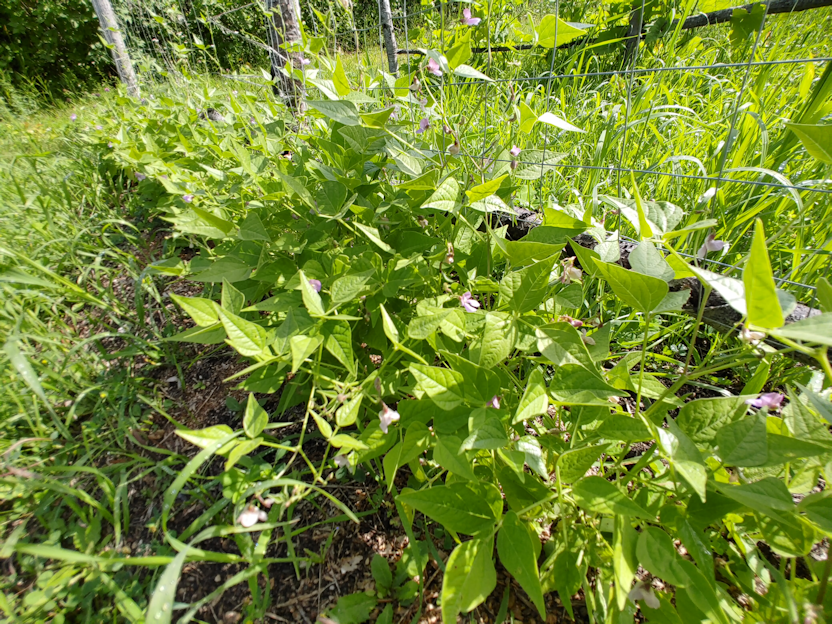
I really don’t know what to make of the beans at the tunnel. These are the Blue Grey Speckled Tepary shelling beans. They are so small and delicate looking. They are just barely tall enough to reach, but are managing to climb the mesh. I have no idea how big these would normally get, but for a shelling bean, I would have expected them to be at least as big as…

… the red noodle beans on the other side of the tunnel. These are much bigger plants, but there is still no sign of any vining happening. I’m not seeing any flowers, either. Given that it’s the start of August and our average first frost date is Sept. 10, I’m starting to wonder if we’ll get any of these at all. Even if we do get a super long, mild spring, like we did last year, I wonder if we’ll have any of these at all. At least the purple beans on the A frame trellis are blooming and producing tiny little pods, with vines extending well past the top of the trellis frame, while the green beans on the other side are climbing and blooming.

I have never grown pole beans before, but I really expected them to do better than this. This area did not get flooded out the way the bed with the green bush beans did.

Well, next year we’ll be moving the trellises closer to the house, and this area will be getting perennials planted in it. Parts of the area will need to be kept clear because of the phone line running under it, but not all of it. Hopefully, a new location for our legumes next year will be better.
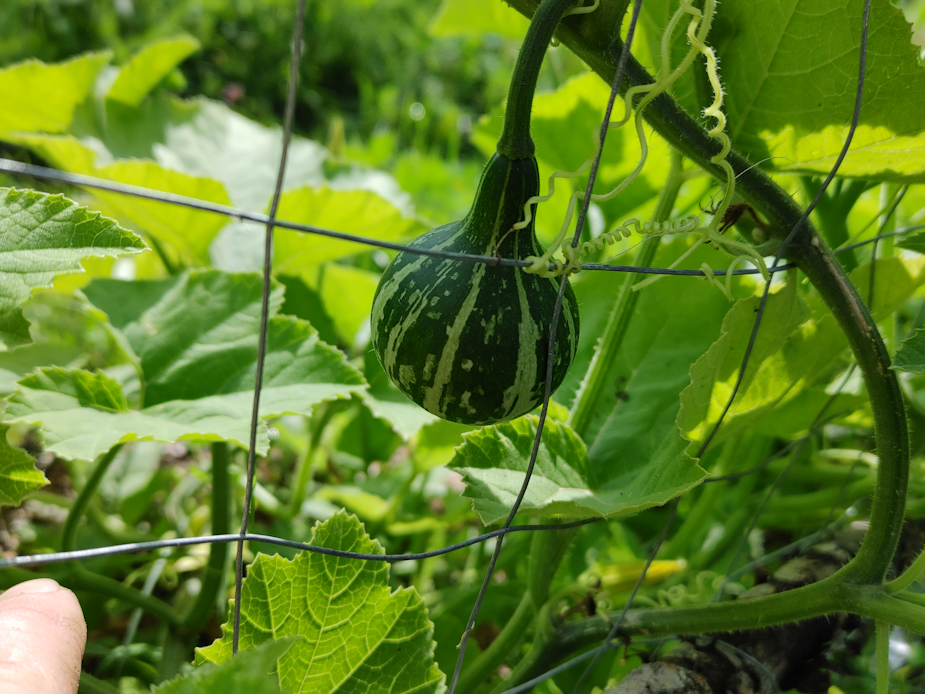
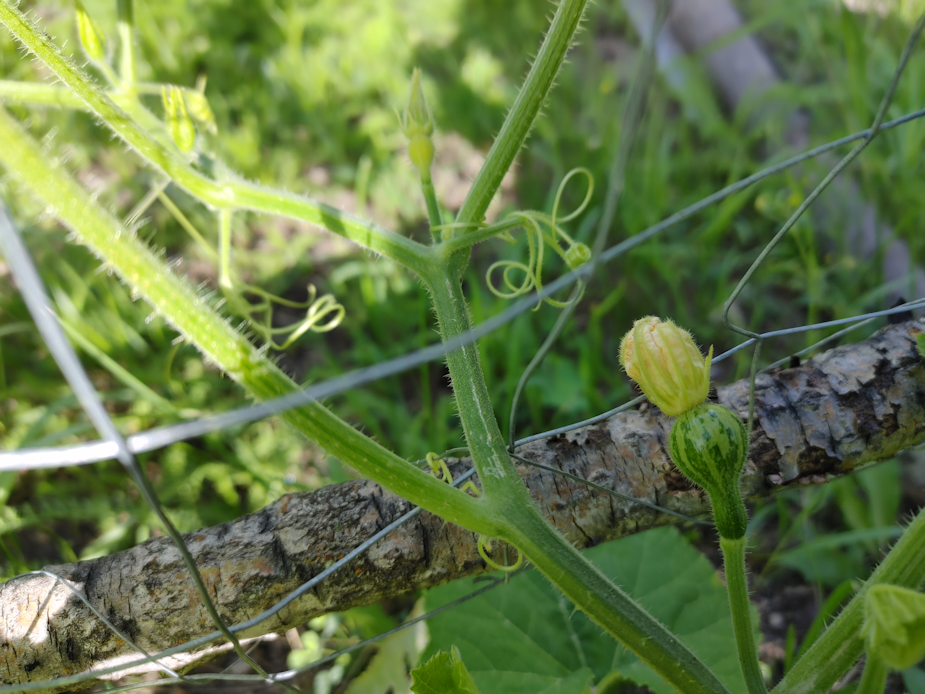
The dancing gourds are doing rather well, at least! The plants are much stronger and more vigorous this year than they were during last year’s drought. So far, there is just this one early gourd growing, though I am seeing quite a few female flowers developing. This one gourd is already bigger than the biggest we had last year. For perspective, the squares in the wire mesh are 2 inches.

In between the tunnel and the A frame trellises are some hulless pumpkins. They are the last patch without the cardboard mulch. I still had the cardboard sides from the wood chipper in the garage, so I decided to use it.

This is how it was looking. There’s an awful lot of creeping charlie making it’s way through the straw mulch around the pumpkins in the foreground. There are actually less weeds than it appears, though, just because of how they spread out.

The cardboard from the wood chipper box was very heavy duty, and had even more staples holding it together than the lawn mower box I used on the Boston Marrow. Cutting it so I could put it around the plants took some doing! Sliding the cardboard in place required quite a bit of care, too. The vines were gripping the straw and weeds quite strongly.

I placed some of the protective poles back, around the patch, and will be adding scythed hay mulch on top as I am able, but I find myself wondering if I should make a support frame for the vines to climb. I don’t know if that would actually help these or not. At the very least, I’ll be adding cord around it, to discourage deer from walking through.

There were quite a few female flowers on the vines, but I found only one male flower, so I used it to hand pollinate as many of the female flowers as were ready. While moving the vines onto the cardboard, one of them had already fallen off, because it had not been pollinated. Hopefully, the hand pollinating will help.

All three varieties of hulless pumpkin have at least some developing pumpkins. Some of summer squash is also finally picking up; the sunburst patty pans are starting to show female flowers again. The Madga squash seems to be doing the best, and we finally have yellow zucchini starting to develop. Not so much of the green zucchini, though.

At least we will have lots of the determinate tomatoes. Even the Cup of Moldova tomatoes are starting to show more of a blush in them.

If the weather holds and the frost stays away, we might still have something to harvest this fall.

The Re-Farmer

Our 2022 garden: things are trying to grow

My daughters were sweethearts and took care of feeding the cats outside for me, as I’m still feeling pretty unstable, so the cats weren’t out and about by the time I headed outside. I did get to briefly pet a kitten, though! :-D

While checking out the garden, there was some new progress – and a bit of deer damage – to find.

The Carminat beans are reaching the top of the trellis, and you can see their flower buds. At my fingers, however, you can see the stem of a missing leaf! There was a vertical row of missing leaves, a few feet along the trellis. Right about deer height! Time to find more noise makers and flashy things to set up.

On this side of the trellis are the Seychelles beans, which are starting to get pretty tall, too. None of them show deer damage, which is good, since less of them germinated. In the foreground are the self seeded (or should I say, bird-seeded) sunflowers that I left to grow. The beans can climb them, too! With the flooding this spring, we did not plant any of the Hopi black dye or Mongolian Giant sunflower seeds we’d collected from last year, so I don’t mind letting these one grow. These would be the black oil seed that we put out for the birds in the summer. We’re finding them all over the place, thanks to being spread by birds!

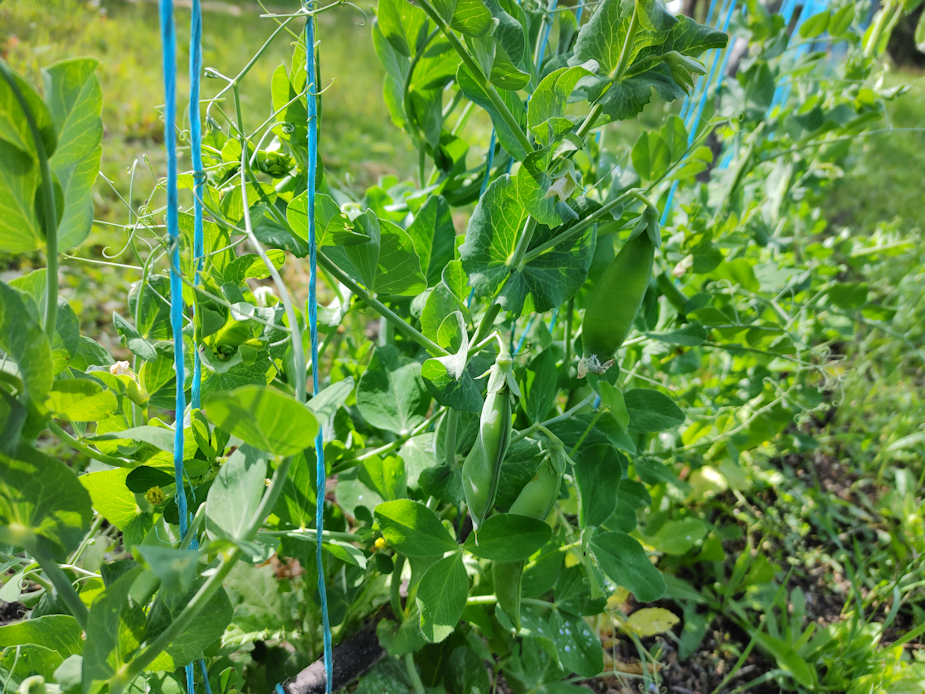
The first sowing of shelling peas may be about half the size they should be, but they are loaded with pods. At least on the north end of the pea trellis. Towards the south end, the sugar snap peas are barely surviving, and the shelling peas on the other side of the trellis are much weaker, too. The entire trellis gets an equal amount of sunlight, so this would be a reflection of soil conditions.

This should be the last year we use this spot for growing vegetables. Next year, they’ll be moved closer to the house, and this area will be made available for planting fruit or nut trees. We haven’t decided what to get next, yet.

The cucumber row is a mixed bag of plants that are growing nice and big, and filled with little cucumbers, and others that are barely bigger than when they were first transplanted!

I had an adorable find at the big trellis.

We have a first Tennessee Dancing gourd developing! It is so cute!

The beans on the same side as the dancing gourds are the red noodle beans. The plants are pretty large, but they are still not at the point of climbing. The shelling beans on the other side, however…

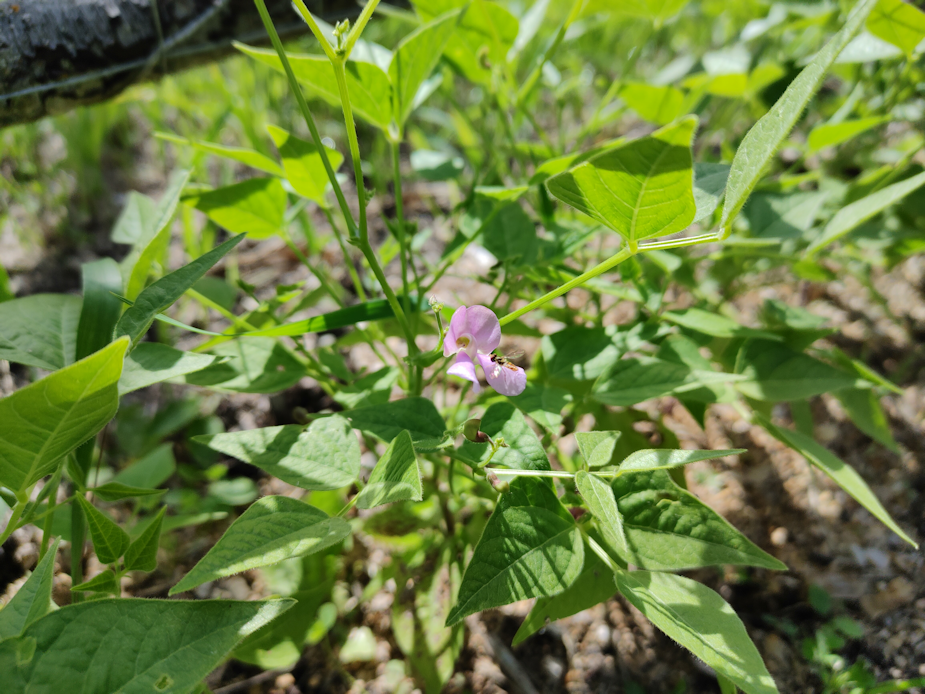
The are much smaller, but have tendrils climbing the trellis, and have even started to bloom!

The most adorable little pollinator showed up just as I was taking the picture.

I startled a bee when checking out this HUGE pumpkin flower.

Yes, it’s on a giant pumpkin plant. 😁

I’d seen some female flowers previously, but now I can’t find them, so there are no pumpkins starting to form, yet. While we are not shooting for super big pumpkins, and won’t be pruning them down to just one pumpkin per plant, it feels like it’s too late in the season for any giant pumpkins to mature. We’re near the end of July already, and none have formed, yet!

In the south yard, we finally have Chocolate cherry tomatoes! Just this one plant, yet. Of the 4 varieties we planted this year, the Chocolate cherry have been the most behind – and they are planted where tomatoes had done so well, last year. The plants themselves are getting nice and tall, and we’ve been adding supports and pruning them as needed, but there are much fewer flowers blooming, and only today do we finally have tomatoes forming. Thankfully, the other varieties are much further along.

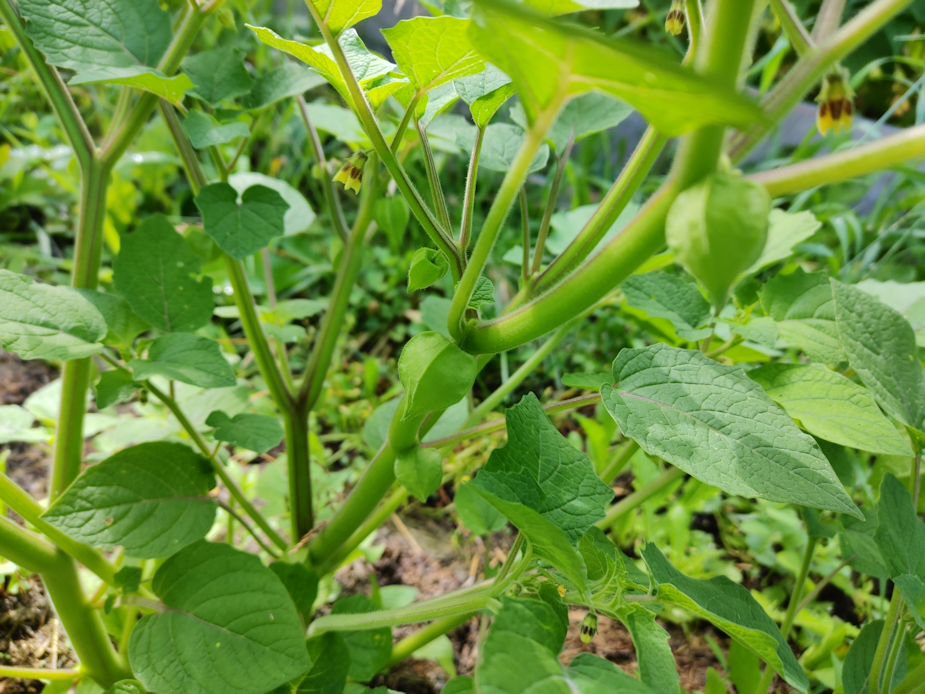
I also spotted some ground cherry fruit forming! These plants are doing remarkably well, given how much water they had to deal with this spring. It took a while, but not they are quite robust plants, and I’m happy to see them setting fruit!

Hopefully, it won’t be too much longer before we start getting actual food from the garden. Everything is so, so behind, I am extra happy to see progress like this.

The Re-Farmer

Our 2020 garden: the bean tunnel

This year, we decided to use the squash tunnel for vining beans.

But first, it needed some work.

We were able to weed and prep this side of the tunnel in the fall. Can you tell?

What a huge difference in the soil. When we first set up the squash tunnel, using a post hole digger to make holes for the support posts, it was incredibly hard. For the rows to plant in, we layered straw, then fresh garden soil – we’d long run out of carboard, and even shredded paper, if I remember correctly. Then the top was mulched with straw after the squash, gourds and melons were transplanted.

As you can see in the photo, the garden fork can now did deep into the soil, and I could push my hands into it to pull out the weed roots.

And tree roots. A remarkable amount of fine, thin tree roots.

The only things causing problems while using the garden fork was hitting rocks or larger tree roots!

So. Many. Rocks! Deep enough that I didn’t try to dig them out, though. I just pulled out the small rocks nearer the surface.

In the picture, you can see some orange twine. I found 3 places where the screws had snapped, and the cross pieces were basically being held in place by the wire mesh. I just lashed them back to the support poles. We might get one more year out of this tunnel before we build a permanent one, closer to the house, so I’m not too worried about it.

It was very hot work. Though my weather app said it was 19C/66F, with a RealFeel of 21C/70F, this is what the tunnel thermometer read.

Yeah, that’s reading about 33C/91F out there.

I’m sure the heat loving melons, eggplants and peppers were just loving it.

Me? Not so much!

Along with beans, the two Canteen gourds were transplanted. These were growing so fast, they had been potted up three times, and we needed to add support poles because they were trying to climb anything they could reach, including the tomato plants they were sharing a bin with! They were outgrowing their pots again, and really needed something sturdy to climb!

In the row on the left of the photo, I planted Blue Grey Speckled Tepary beans. These are a vining bean for drying, not fresh eating. They are also drought and heat tolerant, so perfect for this spot! The space was just enough for the amount of beans in the package, too. I supposed it’s possible there were more, but the cats tried to eat the package, scattering beans all over the floor. I think we found all of them, but some may have been missed.

On the right in the photo, I planted Red Noodle beans. These beans can grow up to 20 inches long! The packet was supposed to have 25 seeds, but I counted 33, which didn’t fill the row. We still have 2 other varieties of pole beans, but there are too many in the bags to fit in the remaining space, and I didn’t want to plant just a few. One of them has something like 200 seeds in it, so we aren’t going to be planting all of them!

I think, instead, we’ll plant some climbing gourds in the remaining space. We have some Tennessee Dancing gourds that would fit. Or some luffa. I think we have some that survived. We’ll decide after we get the remaining two trellises ready.

I’m glad we got at least two types of vining/pole beans in. It’s quite late in the season to be direct sowing beans here, but they are short season varieties, so it should be fine.

Little by little, it’ll get done!

The Re-Farmer