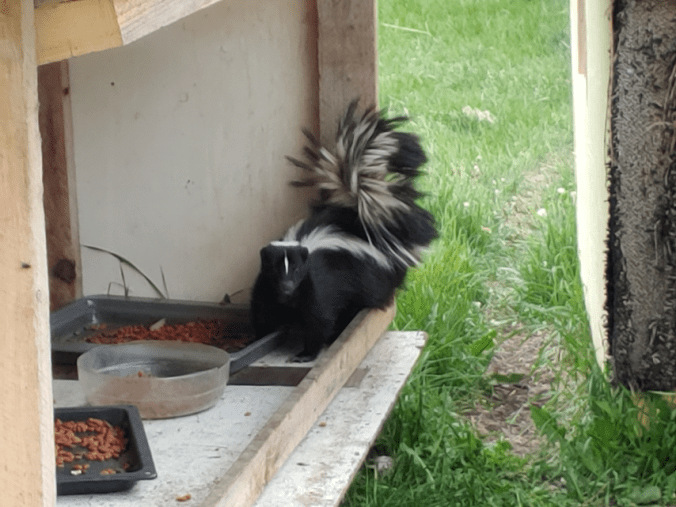
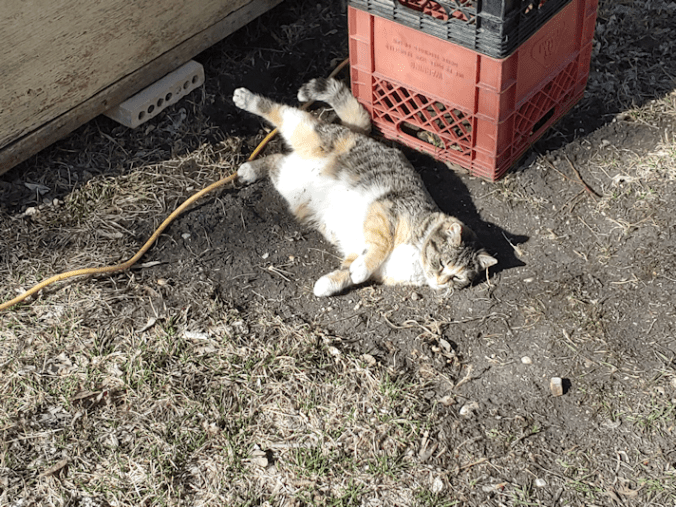
It was a gorgeous day to do our morning rounds, and the yard cats were taking full advantage of it. :-D
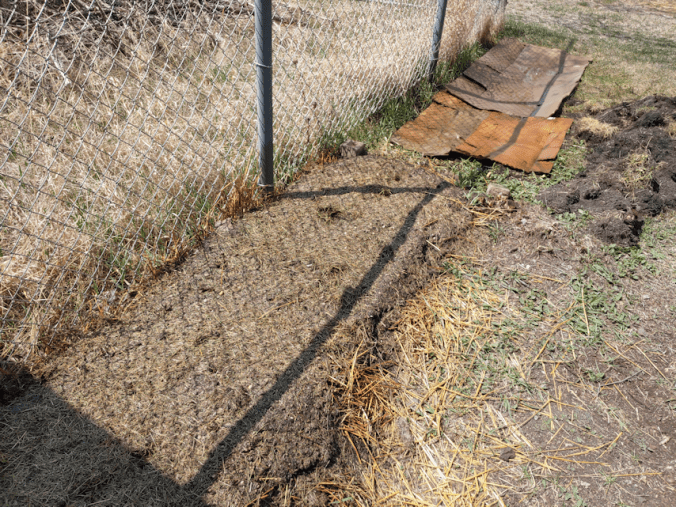
It’s a good thing we’re not trying to keep the grass alive around the cat’s shelter. :-D This spot is where a smaller old dog house was, when we first moved here, and the cats roll around in the spot so much, no grass or weeds are growing into it. :-D
As you can see, the based of this linden tree is another favorite spot they like to roll in!
They get so, so filthy! Enough to turn and orange cat black! :-D
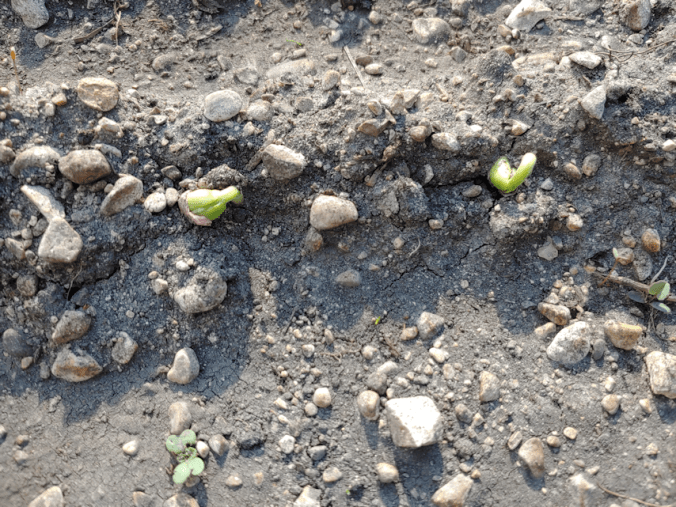
In other things, I found a nice little surprise this morning.
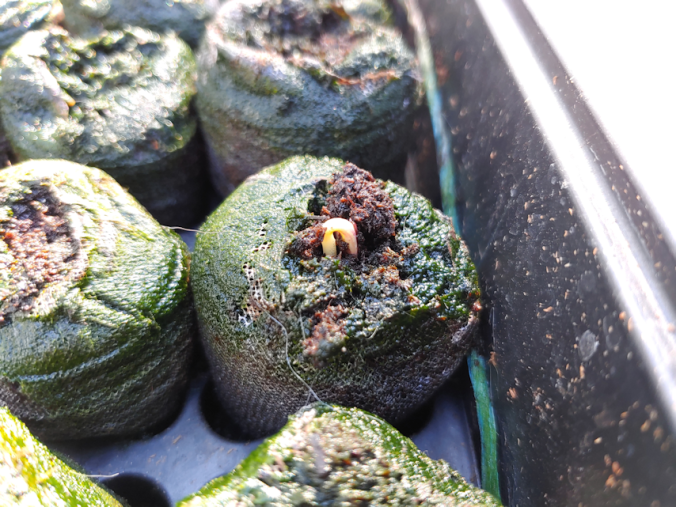
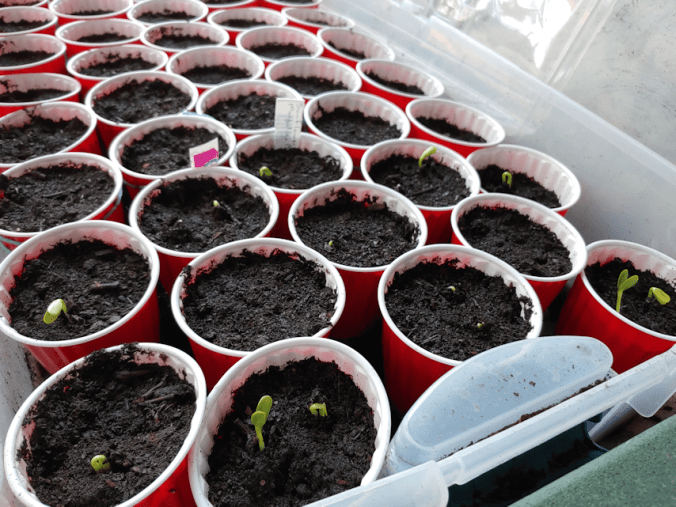
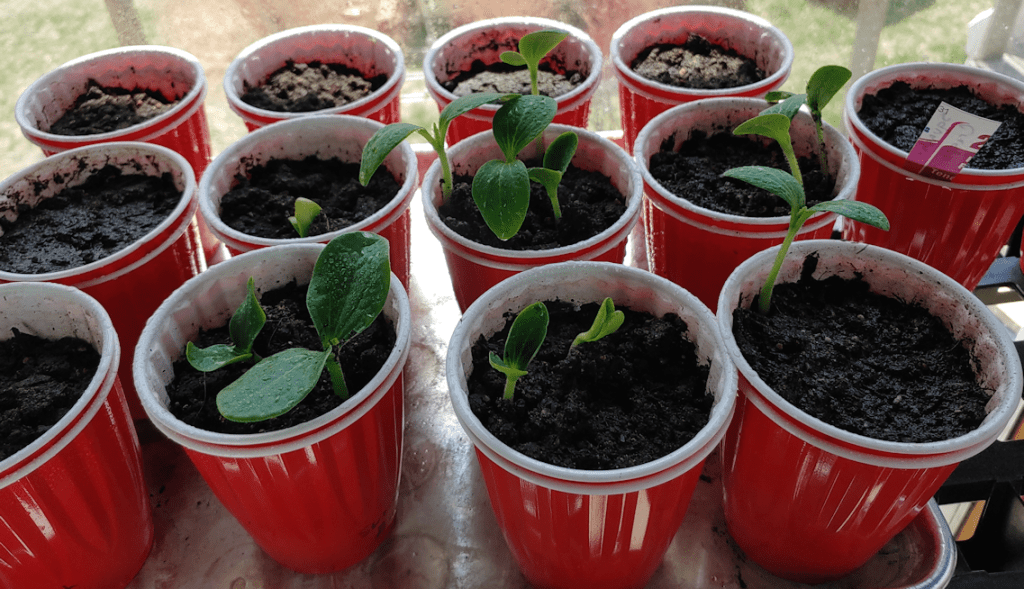
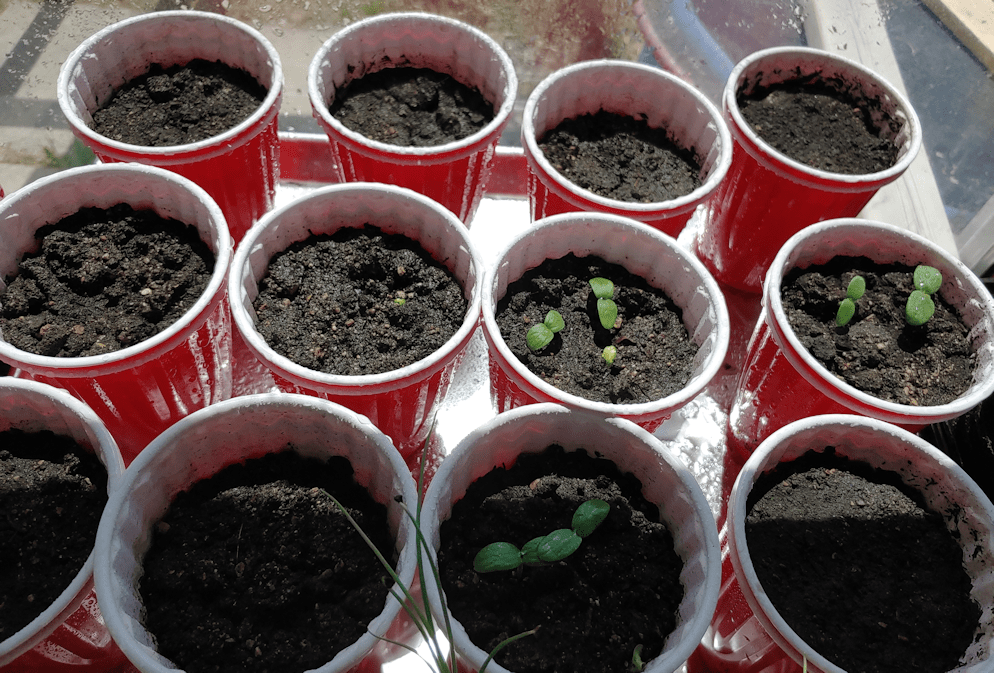
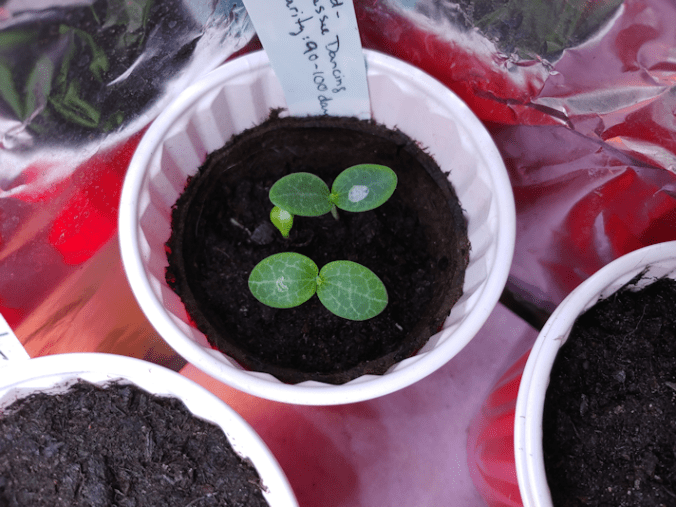
The third dancing gourd seed has sprouted!
I honestly forgot how many seeds I planted in there.
The main reason we used peat pots to start the gourds is so that we can just bury the pot into the garden and reduce transplant shock. Which means thinning out the seedlings. The problem is, most of the seedlings we’ve got so far are looking really strong and healthy! Among the luffa, there’s really just one sprout that is smaller and would be thinned out, but the rest are doing so very well! I want to plant them all! :-D
We’ve got over a month before we can transplant any gourds at all, so we’ll see how they are and make decisions then.
After seeing how much the K-cups were drying out, I had to find a way to move them out so they can be watered thoroughly, without over watering the Jiffy Pellets.
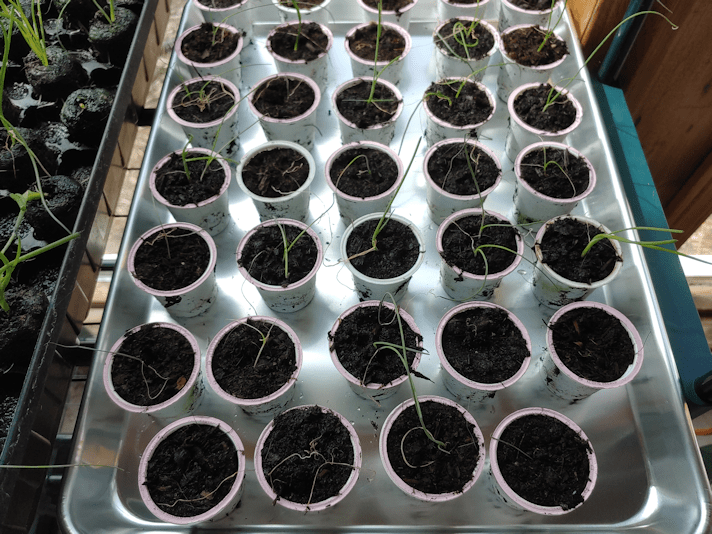
At our last city shopping trip, I picked up a couple of cheap little baking sheets, to make it easier to move the red solo cup transplants later on. I wasn’t sure if it would fit on the shelf with the other tray, but I figured I’d give it a shot.
It fit. :-)
Because I have a heat source below, both trays need to be on the same shelf, so I’m glad it worked out.
I discovered an unexpected potential problem after taking out the K-cups.
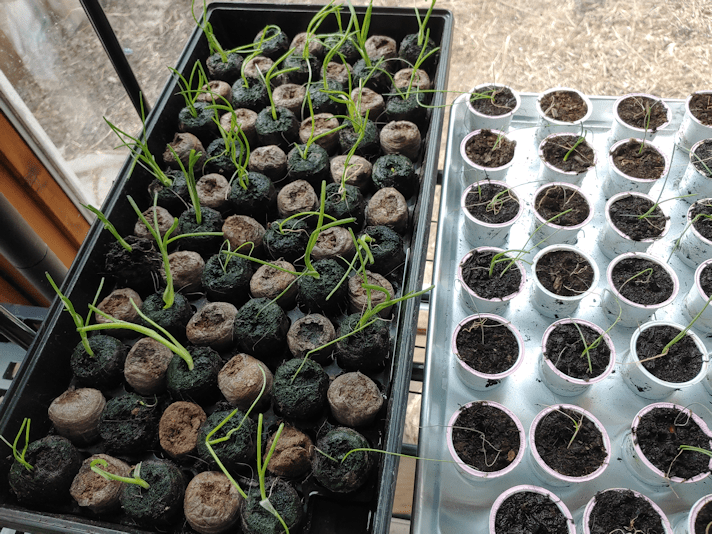
As you can see, trying to keep the K-cups hydrated left the Jiffy pellets really damp. The algae growing on them should not be a problem, though. The potential problem is that, protected by the larger K-cups, the seedlings have roots growing through the mesh of the Jiffy pellets – and you can see where one seed grew out the side!
With the K-cups moved away, those roots are now exposed and will dry up.
What to do? I didn’t want to move them and cause more damage to their roots.
Well, it’s a good thing I don’t like to throw away anything that might be useful. Even old Jiffy pellets.
When I started squash and gourds last year, with their large seeds, I planted one seed per Jiffy pellet. I ended up with a lot that did not germinate, and they’ve been sitting, all dried out, in an old ice cream pail, ever since.
Except for the ones the cat dig out. They really, really like to bat them around and tear them apart. Which is disconcerting, in the wee hours of the morning and I don’t have my glasses on, but I can see enough to tell there’s a pile of brown on the floor. :-D
Well, it turns out I had juuuuusssttt enough left to fill in the spaces.
Two spaces were bits and pieces of Jiffy pellets, rescued from the cats. :-D
I added more water to the reservoir below for them to absorb and expand a bit, and the roots can grow into them.
I did transplant the one growing out the side of a Jiffy pellet into another one that didn’t have anything in it.
I didn’t expect growing onions from seed to be this troublesome, but I guess that’s to be expected when resources and options are limited! The water also has half-strength vegetable fertilizer dissolved into it, so I hope that helps.
Thanks to some feedback from Kensho Homestead, I decided to go ahead and trim our bulb onion seedlings this morning.
Though our temperatures dipped below freezing lat night, the sun room remained nice and warm. I didn’t even bother putting the plastic cover over the mini greenhouse to keep more of the heat from the ceramic heater bulb in.
Now that they’re trimmed, you can really see the difference between those in the Jiffy pellets, and hose in the K-cups. They’re both peat, so the growing medium is not the reason.
This tray was designed for the pellets, and to water from below. The bottom of the tray has channels for the water, with a felted mat on top, then a molded tray that holds the pellets, while also keeping the bottoms in contact with the mat below. The K-cups have drainage holes, but they don’t seem to have enough contact at the bottom for watering from below to work well, and they dry out much faster. At first, the ones in the K-cups were doing better, but now it’s the ones in the Jiffy pellets that are noticeably stronger and healthier.
I did water them after this photo was taken, making sure to get the K-cups thoroughly wet. I’m trying to think if I have something I can transfer the K-cups to that will let me water them from blow. I think it’ll be the only way to keep them well watered, without over watering the rest.
Lesson learned: don’t mix two very different starter “pots” in the same tray. I used the K-cups because I only had enough Jiffy pellets to fill half the tray. I should have just used half the tray with the Jiffy pellets, and found something else to put the K-cups in. The K-cups do work well – as long as they can be adequately watered.
Meanwhile…
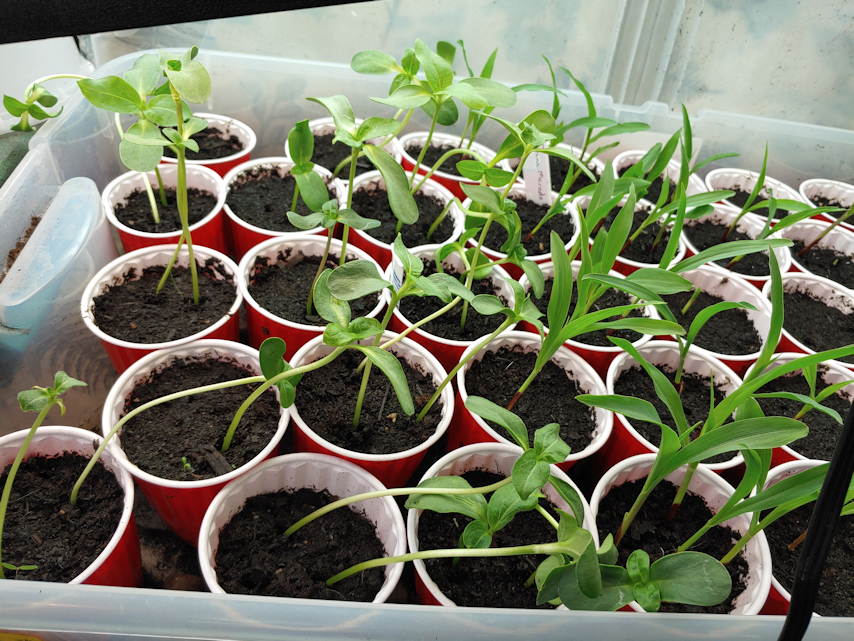
The luffa are coming in strong and healthy, and doing very well!
Perhaps too well!
I used these pots, so they can be buried directly into the ground when it’s time to transplant them, with no root disruption. Which means we’re going to have to reduce each pot to just one, strongest plant. It seems like such a waste to discard strong seedlings, but if we separate them out to plant more of them, that will create the root disruption we’re trying to avoid!
Three plants should be more than enough for our needs. Especially since we don’t even know if they’ll get the time they need to reach full maturity before first frost in September.
I bet they’d do great if we could find a way to grow them in pots in the sun room! LOL Pretty sure they’d overgrow that corner rather quickly, though. ;-)
I remembered to get a photo of our onions in their new location in the sun room.
I ended up removing the plastic on the mini-greenhouse frame, so it wouldn’t get too warm, and so there would be air circulation from the ceiling fan.
This is early enough in the morning that the room is still “dark”, but once the sun comes around, it gets many hours of sunlight. The ceramic heater is just enough to keep the seedlings from getting chilled overnight. We’re supposed to get snow starting tomorrow night, at with point I might put the plastic cover back on.
There should have been trays for three types of onions in here by now, but the shallots died off and I had no seeds left to try again, and the reseeded bunching onions are still in the aquarium greenhouses inside, for a while longer. By the time those are ready to be moved over, we’ll be bringing the tomatoes and gourds into here, too.
I have a question for those who grow onions from seed.
Should I trim these?
I’d read that onion seedlings should be trimmed when they reach about 6 inches, to about 3 inches, while they await transplanting. I would have done it by now, however, I’ve since heard from people who say to NOT trim them, because then you get smaller bulbs. They were pretty adamant about it, while others were just as adamant about the opposite.
I’m inclined to trim them, but I wanted to hear from anyone with more experience than me with growing onions from seed. I am more than eager to listen to the advice of others!
Little bitty sprooooots actually showed up a couple of days ago, but they were so tiny, I didn’t bother trying to take a picture through the glass of the tank.
So far, only the Spoon tomatoes have started to show, not the Mosaic mix, though some of the bunching onions emerged even earlier.
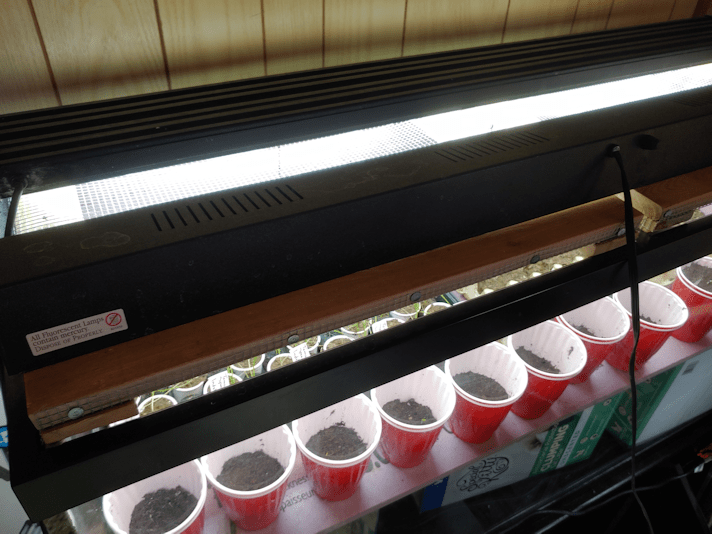
I unpacked the second light for the tank – this was the one that originally came with the tank kit – and set it over the red solo cups. It’s sitting partly on the wood of the mesh frames, to better light up the inside of the cups. That wood is way too wide, really, but it’s what I had available.
Sometimes, I will also put another light fixture on the tank covers, too. While it does have a full spectrum bulb in it, it’s more because it’s an incandescent bulb, which provides a bit of heat. The onions don’t need it as much, but from everything I’ve been reading, tomato seedlings need more warmth.
I look forward to when things warm up and we can start moving seedlings to the sun room (after Ginger has completed his convalescence in there!). By then, the tomatoes and, later, squash seedlings will get all the heat they need in there!
Last night, while checking on the onion seedlings, I decided it was time to lower the shallot and bulb union seedlings in the big tank. The seedling tips were looking a little dried out, likely because they were getting too close to the warmth of the light fixture.
Doing that required removing the trays and the “floor” they were resting on, then shifting the boxes holding them all from standing on end, their tallest position, to standing on their narrow sides, which is their second tallest position. Later on, if it seems necessary, we can turn the boxes onto their broad sides to lower the plants even more.
So that worked out rather well. For the trays, anyhow. Unfortunately, being the suck that I am, I tried to do it without removing a kitten that was staying warm on the light fixture. Saffron is a tiny thing that gets cold easily, and she’s taken to using the light fixture to stay warm. So I just slid the whole thing to the back of the tank. It wasn’t enough to get the “floor” out, so I pushed one end a bit further. And a bit further…
The next thing I knew, the whole thing fell behind the tank as a Saffron launched herself across the living room in a panic.
And the lights went out.
At first, I feared I had broken a bulb, but no. The light in the small tank had gone out, too. As the fixture fell, it swiped the power bar’s plug into the wall.
This house does not have many power outlets. In the living room, there is an outlet behind the big tank, though only one plug in it works. We can access the outlet through the cabinet tank’s cabinet, as it is completely open in the back.
Which requires getting down on my knees and crawling half into the cabinet to reach.
My knees did not appreciate this at all.
After straightening out the prong on the plug that got bent when the fixture landed on it, I managed to get it back in and everything was working fine. Nothing broken.
Phew!
Then I put everything back in place.
Almost.
I had been keeping a small plant pot in the tank with the trays. We’ve had to put various types of barriers on, over or around all our house plants that can’t be hung from the ceiling, to keep cats from digging in the dirt. One small succulent was completely covered with a clear plastic dome, like a mini greenhouse, but the cats kept managing to knock the cover off. The last time that happened, I found the poor little succulent on the carpet, along with a pile of soil that had been dug out of the pot. I replanted it and stuck the pot in the aquarium, so it could get the light and the protection the seedlings were getting and, hopefully, recover.
When I lowered the trays, I forgot to put the plant pot back.
This morning, I discovered my error.
I also discovered a half empty pot, and a pile of soil on the shelf and scattered all over the carpet.
What I didn’t find was the plant. There is no sign of it. It’s likely under another shelf, but it could just as easily have been dragged down to the basement.
I had to do my outside rounds, though, so I rescued as much of the soil as I could – it’s a soil mix specifically for succulents – then moved the pot to the dining table. The table is covered in stuff. Partly because all flat surfaces just seem to invite things to be piled onto them, partly on purpose, to keep the cats off when we’re not around. I tucked the pot against some other stuff, then dashed outside to do my rounds.
I came back to another pile of soil on the dining table, and on the floor.
*sigh*
So, that’s another plant lost to the cats. I am pretty sure the culprit is Cabbages, as she’ has been caught many times, trying to get into other plants, but others have been caught, too, so I can’t say for sure.
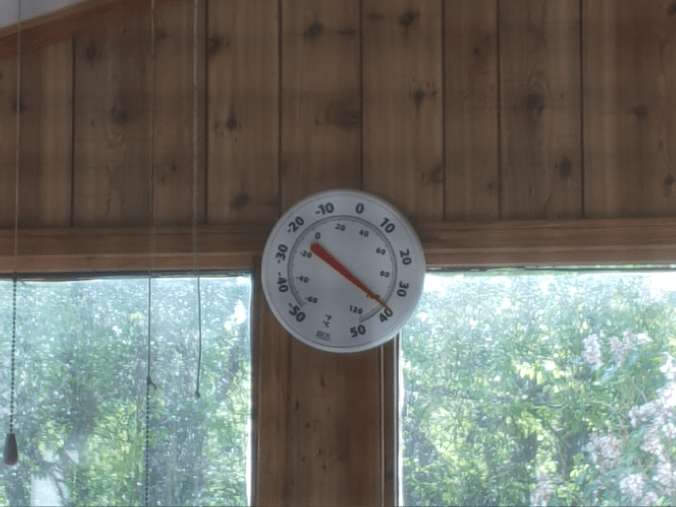
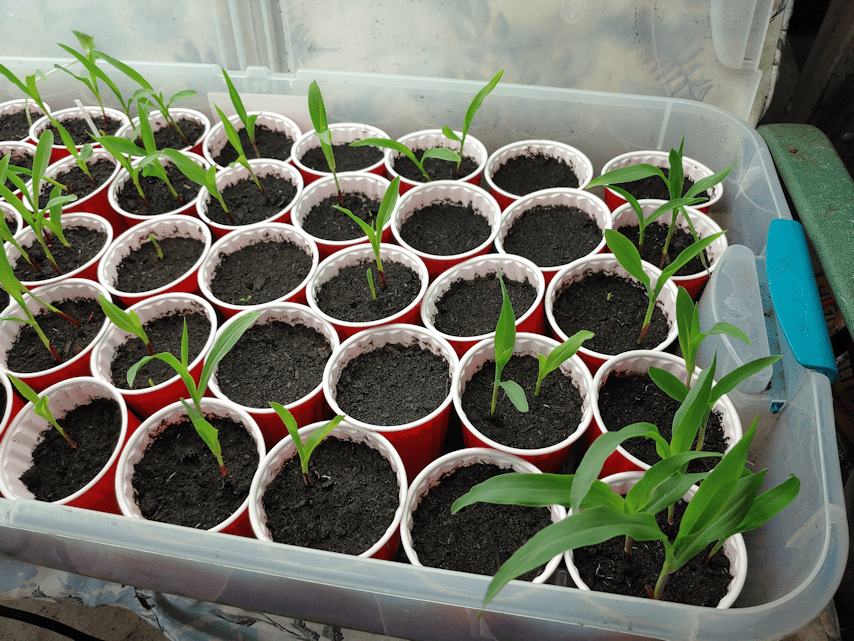
I really hope the temperatures warm up overnight and stay warm, soon. When we start having to get larger numbers of seeds started, they’re not all going to fit in the two tanks. We’re going to have to use the sun room as a green house. Right now, I’ve seen it reaching as warm as 20C/68F during the day, but it does go below freezing overnight. We’ll be able to fit some things in the big tank with the onion trays (like the tomatoes we will be starting very soon), but when it comes time to start the corn and squash seeds, those onion trays are going to need to be moved to the sun room. This won’t happen for probably another month, at the earliest, so we should hopefully be okay by then.