The store in our little hamlet has a very small display of seeds every year, and at first I thought I was out of luck. They had two varieties of pod peas, and that was it.
Then I noticed one of the displays of flower seeds had several types of seeds mixed together. So I took another look at the peas.
Hiding in the back of one of the shelling peas display was a single package of snap peas!
I could feel there weren’t a lot of seeds in the packet. I’d have bought two, if there were two to be had! There turned out to be 24 seeds in the packet. Just enough for one row down the middle of the bed they will be planted in. The snap peas we bought before had more seeds in the packet, but the packet also cost more.
Then I got some nasturtiums. I suspect the ones included with the seeds I scattered along the side of the driveway aren’t going to make it, since the area ended up filling with water soon after. There’s still some standing water around there, which could be a good thing, or a bad thing, for the scattered seeds. I really can’t guess right now! Maybe something from the different varieties I scattered will grow, but just in case, I figured I’d get these. These will be direct sown, after our last frost date, probably in the main garden area somewhere, to attract pollinators and act as a trap crop. Plus, if they actually grow, the flowers are edible, and the flower buds can be used to make “poor man’s capers”.
With the current conditions, and the melted snow quickly disappearing, I decided to do some wild sowing.
I’m also going to do a test, since I’m almost out of storage space for files on my WP account. It now allows images to be uploaded from Google Photos, so that’s where these are from. Please let me know if you can also see them!
A friend sent me a whole bunch of old seeds. These are all the flower seeds from the stack. Not all the packages had years on them that I could find, but one of them was dated 2020.
I dumped all the seeds into an old spice shaker with very large holes in the lid. The old prescription bottles with Icelandic Poppy seeds from 2018 form the majority of these.
This is where they went.
This low area on the North side of our driveway still has a bit of standing water and the soil is still saturated in places. It gets full sun and. It’s an area that’s too rough to mow, so it’s as good a place as any to sow some random seeds! I simply broadcast the seeds as widely as I could over the area.
The chances that such old seeds would germinate at all is low to begin with. They will also have to contend with birds finding and eating them. How many will even have enough contact with the soil to take root is another factor.
Still, who knows? We might have ourselves quite a mix of flowers growing here this year.
Now, since this way of posting photos seems to be working (at least as far as I can tell on my own computer!), here’s a bonus.
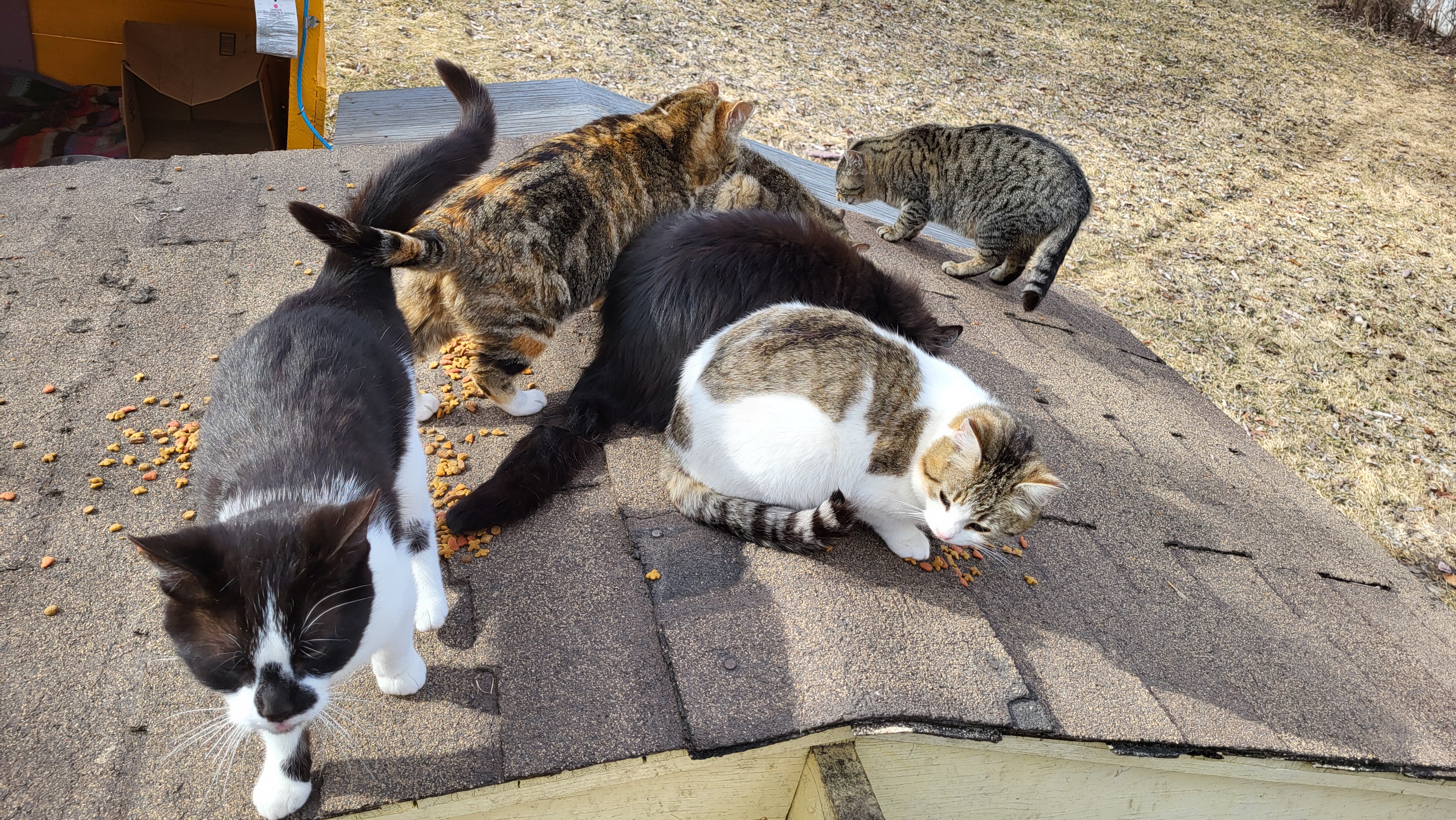
I eventually counted 29 cats this morning, though not all together at the kibble bowls.
Hypotenose really, really wanted attention this morning!
When my old computer died, I had an order ready in the shopping cart of another seed company. By the time I got my new computer and was able to log in again, the cart had been dumped, of course. I placed an order with what I could remember of it. There turned out to be some squash varieties my daughter had asked for that I had forgotten about.
Veseys has a “wish list” function, which comes in very handy! They also had the same varieties. So, I took advantage of the Maritime Gardening promo code and placed an order with the forgotten seed varieties. Photos belong to Veseys.
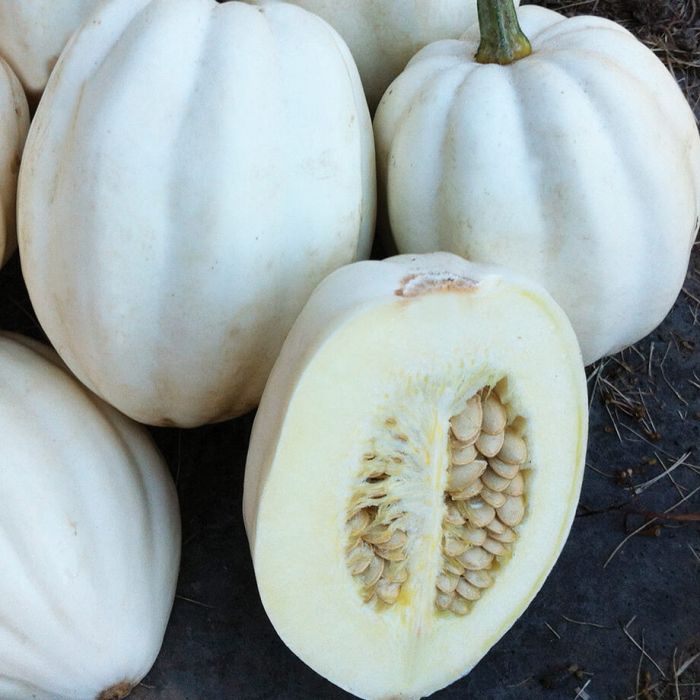
A new take on a traditional favourite. Switch up your next holiday meal to include Mashed Potatoes acorn squash! The white exterior and interior closely resembles traditional mashed potatoes when baked and mashed. This compact plant produces 3-4 fruit approximately 1.5 lb maturing in 90-95 days. Approx. 15 seeds/pkg.
We have a 99-100 day growing season. We could direct sow these!
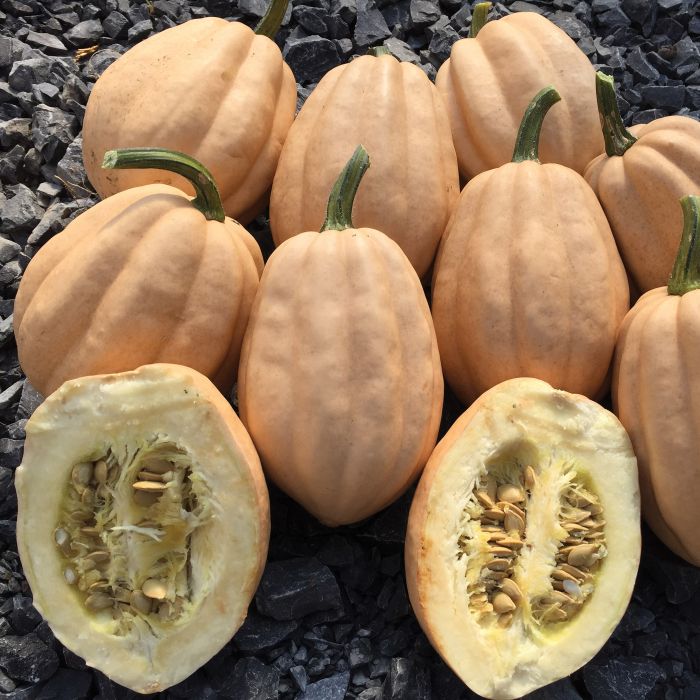
Warm up the oven! Baked Potatoes is an Acorn type squash that has high yields of 6-8 fruit on a compact bush plant. They mature into beige coloured 1-1.5 lb fruit with creamy white flesh in 100-110 days. Approx. 15 seeds/pkg.
At up to 110 days to maturity, these ones would have to be started indoors.
We might not actually start either of them, this year. We have so many winter squash seeds. Having said that, the only package we have that we want to plant all the seeds is the variety pack. We don’t know what seeds are actually in there, and we got it as a way to try some of the more interesting varieties we don’t want to buy entire packages of seeds for.
Having said that, we have things like the Pink Banana and the Georgia Candy Roaster, which we really enjoyed, that we would want to grow again. Plus, there are other varieties that we tried to grow that didn’t succeed, because they got baked in the sun. So we will probably try to start other varieties, but we can’t do too many. We just won’t have the space this year, unless we manage to build a LOT of new beds early enough!
Ordering these seeds with the promo code got me free shipping for the entire order, and my last item was these.
Fragaria. Sweet homegrown berries all summer long. Albion is a day-neutral type that produces berries all summer and into the fall. In autumns with late frost we have picked berries well into October. These plants will produce large, sweet strawberries. Great for growing in hanging planters and pots. Produces fruit in first year. Strawberries are planted 12-18” apart, in rows 4 feet apart and are hardy to zone 2 if covered. No. 1 sized root.
This is a package of 8 roots, which will be shipped while still dormant, in time for immediate planting, based on our hardiness zone. We have some strawberries now, but haven’t been getting a lot of fruit. The transplants we’ve had for a couple of years are still in recovery mode, first from being flooded out, then from being eaten by deer! The ones we grew from seed last year did start to bloom and form tiny fruit near the end of the season. The growing kit they came in did not give the name of the variety, so I don’t know of the tiny fruit was because they were not really mature plants yet, or if that’s the size the variety will always have.
Either way, we want a lot more strawberries, so these everbearing ones will be a good start. I do plan to get other varieties over the next few growing seasons, but we will also be saving new plants from the runners to increase our numbers. There are a few areas I want to plant strawberries in to create a sort of groundcover, but I’m not going to get very far with that, with only 8 plants! Depending on how things go later in the season, we might buy some transplants, too. We shall see.
On a completely different note, I contacted the Cat Lady about Wolfman, asking if she knew what it might cost, if Wolman’s damaged eye needs to be removed. She had messaged me letting me know she has some cat food to donate to us, and brought up getting Ginger. When I told her about Wolfman’s status, she ended up phoning me. She suggested that they might take Wolfman instead of Ginger, and get him to a vet, since Wolfman is also on the adoption list. She’s had cats that had to have an eye removed before, and it had cost $1800. !!!! I can’t believe the cost for that at a city vet would be higher than getting an amputation done at a small town vet! She will be seeing her regular vet tomorrow with another cat, and said she would talk to him about it. She asked for some photos that she could show him. As a rescue, she can sometimes get better pricing, plus they might be willing to do a payment plan, though she is already making payments on other bills at that clinic. She tells me that all the rescues are really struggling to cover vet care right now. The donations just aren’t coming in, when so many people are now struggling to pay their own bills and still have money to buy groceries. Which means she’s offering to cover Wolfman’s care out of pocket!
She will let me know what the vet tells her when she gets home tomorrow evening. Hopefully, it won’t be too bad. Either way, when my return comes in, I want to make a “donation” to help cover at least part of the bill! We should find out more by the end of tomorrow. Meanwhile, I’ve already received an email from Canada Revenue confirming my tax return was processed and the amount I’ll be getting automatically deposited, so hopefully, that won’t be long now.
Then I got my daughters to help me get a picture of Wolfman’s eye. It took some doing, but I managed it.
It’s the first time I’ve been able to get a good look at it, and wow. Yeah. I understand now, what the girls were trying to describe to me. It looks really bad! It may be possible to save it, but I think that’s highly unlikely. The Cat Lady, however, has dealt with this a few times, and she’s had cats that she was sure would lose a damaged eye, only to have it heal completely, while others she thought were not as bad, ended up losing it. Until a vet sees him, we won’t know, but the sooner he gets to a vet, the better.
On another note, she’s frustrated with trying to adopt out Ginger. There was the one person who was all ready to take on a three legged cat, filled out the application, etc. – then suddenly decided to get a kitten.
At least she was able to adopt out a couple other challenging cats, though, so that opens up a couple more spaces, too.
We shall see how things go with Wolfman. He’s such a handsome, fluffy boy, I can see him being adopted out rather quickly, even if he end up loosing that eye.
This time of year, the McKenzie Seed displays are everywhere, including the grocery store I do my mother’s shopping at. Today, she just gave me her list and stayed home, so I took the time to take a quick look at the display.
I should have known better! 😄😂
I ended up getting these.
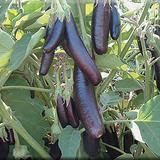
What caught my eye were the Royal Burgundy bush beans. I grabbed their last package. We grew these back in 2021, and of the three types of bush beans we grew that year, they did the best. In fact, everything we grew that was purple seems to do really well. We’d ordered them from Veseys, but they don’t carry them anymore. Last year, I ordered a different purple variety, but those were sold out and not replaced, so we got the Red Swan beans as a substitute. We still have lots of those. What we really wanted, though, was more of those Red Burgundies! So I snagged them.
I didn’t want to be buying just one packet of seeds and nothing else, though, so I looked for some edible pod peas. We have plenty of the Dalvay peas, but no edible pod varieties. We had tried growing edible pod peas before, but they didn’t do well. We aren’t growing vegetables in that area anymore, so I expect them to do better planted somewhere else.
Just not at the chain link fence again. The deer ate everything that grew through to the outside of the fence! The next time we plant climbers at the fence, we’ll have to make sure there is protection on the outside of the fence, as well as the inside!
This morning, I headed out to drive my mother to her doctor’s appointment. It really sucks to not be able to use her car right now, because it’s a real struggle for her to get into the truck, even with the foot stool. She finds it easier to get out, and refuses the foot stool completely, preferring to use her walker for support.
I’m certainly glad my shoulder is all healed up, because I had to help boost her up into the truck! Something I could not have managed, just a few days ago.
Once in the truck, though, she was happy as a clam! She commented on how nice it looks inside, and how smooth the ride is, compared to her car. I think she finds the seat more comfortable too.
At the doctor, she got the referral she was there for. The doctor was supposed to give her a physical exam, but my mother couldn’t even get up the step to go onto the examination table, so that was skipped. My mother will get either a call or letter about an appointment in the city to see a specialist, and the wait should not be long.
After that, she was up to stopping for lunch before heading home. I didn’t stay long after dropping her off; mass on TV was about to start, and she watches every day. Plus, I wanted to stop at the grocery to pick up an ingredient we were missing for my daughter, who wants to use the last of our winter squash to make a pie, and my husband sent me a message saying we had parcels to pick up at the post office.
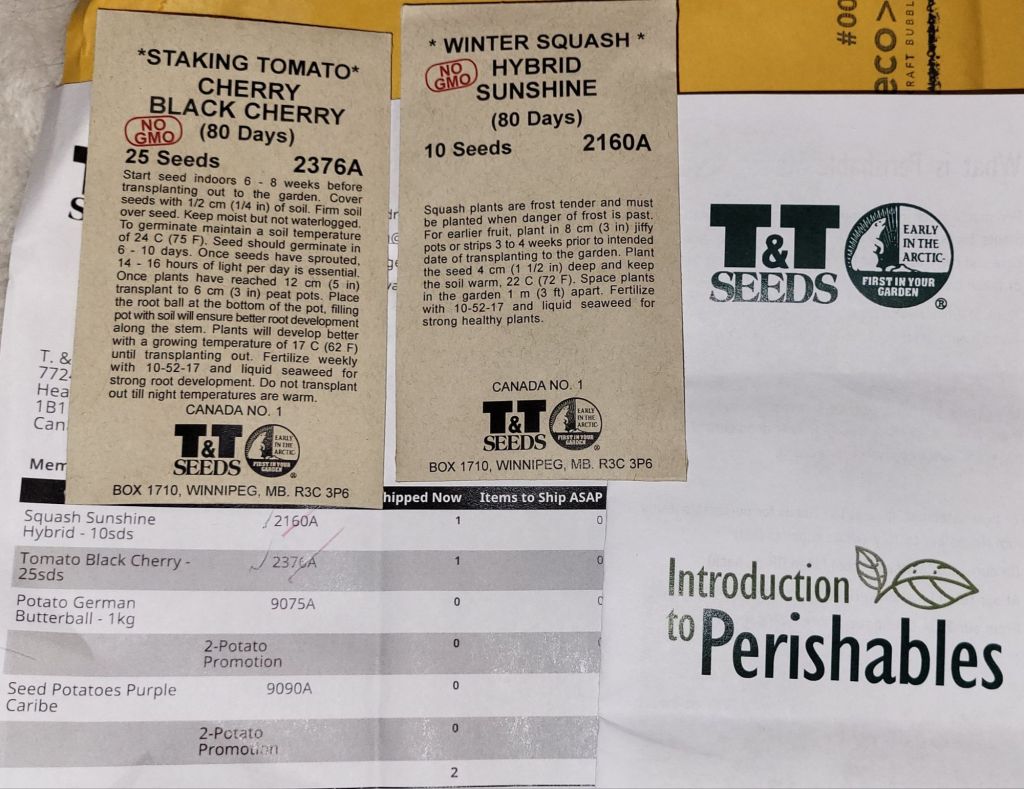
Along with the parcels, my seed order from T&T Seeds was in.
It took several tries to get a photo without a cat photo bombing me!! 😄
The potatoes will be shipped in the spring, but they included a pamphlet on how to handle their various types of perishables with the seeds.
Based on what the package says, with our June 2 average last frost date, the tomatoes can be started indoors in the first half of April, and the winter squash can be started indoors at the beginning of May. Both say 80 days, though, and our growing season from last frost in the spring, to first frost in September, is 100 days. Technically, we could direct sow both of them! I don’t think I’d want to take that chance, though.
I must say, it’s very hard not to buy more seeds right now! The McKenzie Seed displays are out, and they are everywhere. Even some gas stations have them! As soon as I walk in somewhere – like the grocery store, today – and see the displays, I just zoom right in and start looking. We have so many different seeds, and for many we also have several varieties, so there’s really not been anything in the displays that I would get, that we don’t already have. About the only thing I really find myself looking for is sugar snap peas. We have lots of seeds for shelling peas. The first year we grew peas, we grew both types, but that was the drought/heat wave year, and the snap peas barely survived.
With everything melting outside right now, and the rest of the winter expected to be mild in our area, who knows. We might be able to get things started earlier than usual! At the very least, we should be able to get to work on the building more trellis tunnel beds and reworking others. early. There are seeds that can be planted as soon as the ground can be worked, even if there are frosts later on, so I’d quite like to have some of those started, nice and early! Things like the peas, which I want to plant in the bed the popcorn was planted in, last year, to get some nitrogen back into that soil, spinach and onions.
I so looking forward to getting outside and back to work again!
Well, my computer is pretty much useless right now. I have been able to get to booted, but so many things just won’t work. Even my mouse suddenly stopped working. Then, when I was able to manually open the start menu and select shut down, it wouldn’t.
*sigh*
So much for making a little gardening video. I’m supposed to be able to use the software on my phone, but that would drive me insane.
So here are some photos, instead.
There were not a lot of seeds in the onion packets, but still decent. The Red Wethersfield had the fewest seeds. Those are this year’s red onions. The yellow onions are Frontier and the shallots are Creme Brulee. There wasn’t space to fit the three containers into the large aquarium greenhouse, so one went into the little one.
I used one of the new large-cell trays for the next seeds. The hot Cheyenne peppers were the last seeds from last year. There were only 9 seeds left, for the 7 cells in the row.
The Classic Eggplant were also the last of the seeds from last year. There were 14 left, which worked out well.
Hopefully, we will have at least a few germinate. If we had just two or three plants of these, that would be enough.
The last row is the Little Finger eggplant. I got a new packet of those, but last year’s packet still had 12 seeds. I put two in each of six cells, then added three new seeds in the last one, plus one more in each of the other cells. So, at the very least, we should have a decent number of Little Finger eggplant this year.
This tray is now on the heat mat; something the onions don’t particularly need.
When I did the onions, I had a smaller bag of Jiffy brand seed starting mix. I moistened the entire bag in a huge bowl, first, then filled the repurposed fruit and vegetable trays.
When filling the tray with the larger cells, I finished off that bag. I had a larger bag of Miracle-Gro seed starting mix and moistened about half of it to finish filling the tray. I am curious to see if there is any difference.
As for the aquarium set up, I’m going to have to look for new bulbs. The big aquarium has two sets of lights. The original set that came with the tank lay flat on the glass lids. The lids were constantly getting algea growing on them, under the warmth of the lights. When the hinges on the lids broke, we just took them off completely, but too much moisture was getting on the light cover. So we found a fixture with ends that hold it higher above the tank.
Now that we use the tanks for seed starting, we use both light fixtures. The higher one, however, now has a burnt out bulb. I need to confirm the size of bulb needed, then see what I can replace it with. I’m sure I can find some full spectrum bulbs that will be better for the plants. If they are affordable, I hope to get extras.
The light fixture on the small tank has two LED bulbs. It still works, but is slowly getting dimmer, so it will be time to replace those soon, too.
So there we have it! Our first seeds started for this year’s garden.
Today, we placed our second seed order for next year’s garden. This time, from Heritage Harvest Seed. (All images belong to Heritage Harvest) They specialize in rare and endangered seeds and, more importantly for us, grow their own seeds and are in a zone 3 location that’s even further North than we are, so we can be quite confident that anything we get from them can grow in our short season.
Unless something else causes problems!
Which is why we are re-ordering two items that failed last year.
We grew these a couple of years ago and they were among the few things in that terrible growing year that did rather well, though they never had a chance to reach their full potential. Last year, we tried growing them in the block planters by the chain line fence, and the transplants just didn’t grow. Next year, we will have to be more selective on where we transplant them. We also had issues with starting them indoors that we did not have the year before, so we need to take that into consideration as well.
We tried these last year and, while the seeds germinated very well and we had plenty to transplant around our Roma VF tomatoes, they just… disappeared. The tomatoes also got blight, so I believe it was a soil problem in that bed. I really like the shape of these onions, and that they are supposed to be a good storage onion, so I want to try them again. As with the eggplant, we will need to give more consideration as to where to transplant them.
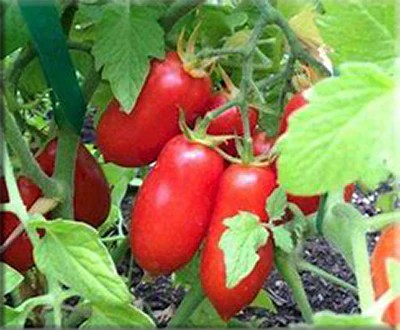
We are still looking for a preferred paste tomato. I keep reading how the San Marzano is supposed to be the best for sauces and canning. Honestly, all the excessive praise I have been seeing about them is one of the biggest reasons I hesitated to get them. However, I am willing to give them a try, and see if they live up to the hype.
When it comes to summer squash, we seem to have the best results with patty pans (aka: scallop squash). This is “An ancient summer squash that was a traditional food crop of the northeastern tribes for centuries.” I’ve actually been eyeballing this variety for a few years, and have decided to pick up some seeds for this coming year.
Not a large order at all, but we don’t need a lot of seeds this time around.
Must… resist… getting… more! 😂
There is one more Canadian company we will be ordering seeds from – and seed potatoes. I was just talking with one of my daughters, and there were several winter squash varieties in their catalog that caught her attention.
I have my suspicions as to why so few of the different winter squash, pumpkin and melon seeds we started indoors for 2023 germinated. I hope to be able to fix that this time around. Which means that for 2024, we’ll be once again shooting for a few plants of many varieties (I’ll be skipping the pumpkins this time, though) to see what works and which ones we like the best.
The main thing, though, was to get the last of our onion seeds ordered, since they need to be started indoors so much earlier than anything else! That goal is now accomplished.
It’s just a small order, but I wanted to make sure I had the yellow onion and shallots seeds in, since those need to be started indoors so early. I still have to place an order for the Red Wethersfield onions I want to try again, since they utterly disappeared after being transplanted, this past year!
With all the seeds we have left from last summer’s garden, I don’t expect to be ordering many seeds for next year at all. I do hope to be able to order more trees for the food forest this year, though.
I’m quite looking forward to what shows up with the melon and winter squash mixes!
Yes, I just place our first order of seeds for next year’s garden. We might not need to order many seeds this year, considering how many we have left, but one thing we were out of completely was onions. Onions seeds only last one year, anyhow. Plus, today is the last day I can use the promo code from Maritime Gardening to get free shipping. 😁
This is what I ordered today.
I’m trying a new variety of yellow onion this year. Frontier. From the Veseys website:
Incredibly strong necks and consistent size! Frontier is a standout variety with our trial staff. Bulbs are golden, large and uniform with small necks that cure quickly. Ideal for fresh and storage markets, Frontier is long day hybrid onion with superb disease resistance. Matures in 100 days from transplant. Approx. 200 seeds/pkg.
I’m also trying a new type of shallot this year. Creme Brulee. From the website:
First Shallot AAS winner! An elongated shallot, Creme Brule has a citrusy flavour when eaten raw but when cooked, sugars are enhanced and do not leave an overpowering aftertaste. Bulbs are 4-5″ with a coppery pink skin. An attractive, easy to peel echalion, perfect for the home gardener or market grower! Matures in 95-100 days from transplant. Approx. 150 seeds/pkg.
I do still plan to try the Red Whethersfield onions again, and will probably get Red of Florence again, but those are from a different source.
Of course, I didn’t get just onions! I also got:
Yes, we will be trying to grow melons again (I’ll have a garden analysis post about this year’s melons coming up soon). We still have seeds, but I decided to get the Summer of Melons Blend. From the website:
Veseys exclusive! Best for the home gardener. This blend is the ideal solution to stretch out these beautiful summer flavours. It begins with sweet, early maturing hybrid varieties then keeps going through summer and into early fall. Maturity ranges from 75-85 days from transplant. Approx. 20 seeds/pkg.
I like having a variety, and having melons that mature at different rates – while still within our short growing season! – is bonus. It’ll also be a surprise, since the varieties included aren’t mentioned!
Veseys exclusive! Great range of colours and sizes. This exclusive Veseys blend contains a riot of shapes, sizes and colours that will bring your fall display to the next level. Some of the weirdest and wildest looking squash that we have seen in our trials. Ideal for both home and market gardeners looking for a great display without having to buy separate varieties. All are edible, and are strong vining types so they grow well together. Approx. 20-25 seeds/pkg.
I’ll have a garden analysis about our winter and summer squash, too, which was a real hit and miss situation. We do still have lots seeds from what we grew (or tried to grow) this past year. I have zero interest in having a “fall display” (who would we be displaying it for, anyhow? 😄). I like to try new varieties, but am hesitant to buy an entire package of seeds for something I’m not sure of. This way, we get just a few seeds of different varieties to try and – if they make it! – see if we like them enough to order more in the future. At some point, we’ll settle on one or two favourites and save our own seeds. Until we get to that point, we would be dealing with cross pollination, so any seeds we save as we’re experimenting would give us different results that may not be as good.
Just a small order for now. Soon, I’ll place another order for the red onions, so that we’ll have all the seeds ready to start them in January. Because, where we live, gardening starts in winter!
The Tom Thumb popcorn could probably be harvested now, but I’m going to leave the stalks for as long as I can before we do that. Just to make sure the kernels get all the time possible to fully mature and dry out on the stalks. So far, the critters seem completely uninterested in both corn beds!
Today was not as hot as yesterday, but still quite warm, hitting 21C/68F while I was working outside. Which is good for the remaining beds that will not be harvested for some time, like the Red of Florence onions next to the popcorn, which still have a lot of growing to do.
A real surprise this morning was seeing a bright yellow flower in the squash patch! The yellow patty pan squash plant is still alive, in spite of all the frost damage, and one of the female flowers actually bloomed this morning. There are several more female flower buds, too, but there are no male flowers to pollinate, so nothing will come of it. The green patty pans have squash that were big enough to survive the frost, and they are getting bigger, too. Even on the green zucchini, we found one little zucchini that had gotten bigger and could be harvested!
Later in the day, I finally cleared the tiny raised bed in the old kitchen garden, which required snipping off the dried poppy pods that had grown through the wire cover. These self seeded poppies have openings in their tops, so when I put them upside down in the container, the seeds just poured out. It really shows how these self seed so readily. The Hungarian Blue poppy pods do not have these openings, so are less likely to self seed.
Another surprise is seeing flowers on one of the volunteer tomatoes that got transplanted! They’re still so tiny, but they seem to really like where they were transplanted to.
I was going to plant garlic in the bed by the chain link fence, after it was reworked, but the garlic came in yesterday. The Jebousek lettuce is blooming now and I want to save the seeds, so the garlic had to go somewhere else.
Which is what my next post will be about!
I’m just loving that we’re past the middle of September, and there’s still gardening happening!











 The Re-Farmer