Our 2025 Garden analysis: final thoughts and plans for next year

All righty. Time to get my thoughts organized about how things went this year, and what I want to do next year.

When this post gets published, I’ll actually be at my mother’s place, doing some housekeeping for her and getting her apartment the way she wants it for Christmas. We’re already getting weather warnings for this weekend. Today’s high (Thursday) was -11C/12F. Wind chills at around -22C/-8F. Tomorrow (Friday, when this will be published) and Saturday, our highs are supposed to be -21C/-6F, but we are getting warning of wind chills dropping things to -40C/-40F. !!!!!

Then it’s supposed to start warming up again, up to a high of -5C/23F on Tuesday, before dropping again. There are no longer any predicted highs above freezing around Christmas, but we’re still expecting major swings in temperature.

I’m so glad the winter sown beds got that extra layer or straw.

Speaking of which, here are my final thoughts on how our 2025 garden did.


Winter Sowing

This was the big experiment this year. If it didn’t work, we would have had a very different gardening year, that’s for sure! The other part of the experiment was broadcasting mixes of seeds, some of them years old, which gave me the chance to restock with fresh seed, later on.

Two of the mixes were complete failures, but for very different reasons. The summer squash just never came up. If anything did sprout, they got rolled over by cats. Which is what killed off the “tall and climbing things” bed, and the winter sown flowers. I did see things start to sprout, but they didn’t survive long.

The root vegetables mix in two beds did really well, though one almost got chocked out by the insanely productive Jabousek lettuce seeds that were added. I’m even happier with the greens mix, having finally been able to grow kohlrabi, and those Swiss Chard were an excellent cut and come again crop.

In the end, if it weren’t for the winter sown beds that survived, we would have had a much less productive year! This is a major game changer for me, and I expect to keep doing this from now on. Not only did we get much earlier growth, but it saved me a lot of work in the spring.

The biggest problems

Cats.

I thought it would be the elm seeds, and they were definitely a problem in the expected places, too, but the yard cats were particularly destructive this year.

What I won’t do again, and what I’m doing instead

Definitely not broadcasting mixes. That did give me a good idea of what could be successfully winter sown in our climate zone, though. Particularly with the drought, heat and smoke we got this year. This time, the winter sowing was much more planned out. The beds also got more thoroughly mulched before the hard frosts hit.

With that in mind, we’ve planted carrots, peas, spinach, chard, kohl rabi, cabbage, beets, and Hedou Tiny bok choi. Plus, of course, garlic. There were also lots of little onions found while cleaning up the old kitchen garden that got transplanted. Those might bulb, or go to seed. Either one works for me.

I will also have to make sure to put cat proof protective covers on pretty much everything.

I was also happy with having radish pods instead of radish bulbs. There is a variety grown specifically for their pods that I might pick up at some point but, for now, we quite enjoyed the proliferation of pods to snack on and do quick pickles with. You get a LOT more food from a single radish by eating the pods, too. Definitely for winter sowing, though, as I’ve read they taste a lot stronger when they are direct sown in the spring.


Transplants

This was a really hard year for all our transplants. The heat, drought and smoke likely played a big part in that, but in some beds, it looks like tree roots invading the beds also played a part. We got very little out of our transplants. The ones we started indoors that did best were the Chocolate Cherry and Spoon tomatoes, even as stunted as they were. The worst were probably the melons. The pepper and eggplant plants did rather well, but to so much for blooming and productivity. The purchased herb transplants, on the other hand, did great in their tiny raised bed!

The biggest problems

The transplants were something we could protect from cats rather well. In the end, it was probably a combination of drought conditions and those tree roots. Not a lot that was in our zone of control that we could have done anything about.

What I won’t do again, and what I’m doing instead.

I won’t winter sow onions again. Instead, I will be starting them indoors for transplanting. I had hoped they would at least grow enough to use the greens and deter deer, but most of them simply got choked out.

We will, of course, still be starting seeds indoors to transplant in the spring, but we need to set up a seed starting area and the aquarium greenhouses in the basement. If for no other reason than we need to clear space in the cat free zone, AKA the living room. Now that cats aren’t allowed in the new basement anymore, I can open up the “window” between the basements, near the furnaces. That should help more warm air from the old basement to flow into the new basement and equalize things. There is the “doorway” (a vaguely door shaped hole cut into the wall when the new basement was built) but no real air flow between the two basements.

As for what we can do instead, for better success with our transplants… I honestly don’t know. There isn’t much I can do about heat waves. There are limits to watering during a drought, and not just due to the lower water table. Our well pump still needs to be replaced, if we dare risk the foot valve, so the more the hose is used, the more wear and tear on the pump. In the end, it comes down to the weather, really.

As for the tree roots, we need to cut that row of self-seeded trees down completely, and ensure no suckers start coming up at the stumps. My mother was adamant about not cutting those trees down, even though I see signs that someone tried to at some point. Probably my late brother tried to get rid of them. I recall my mother laughing about how angry he would get because she would stick trees all over the place, making it hard for him to take care of things.

Now my oldest brother owns the property, though, and he is very much in agreement with getting rid of them. He had issues with where and how my parents chose to plant trees, too, and we’re both now dealing with the consequences.

Other than clearing those trees out, the only other thing we can really do is more raised beds. The higher, the better but, for now, even low raised beds help. Once the trees are cut down, I’m even thinking of putting a long, higher raised bed over where they are, to make sure they get good and dead. That would also reclaim the garden space lost to my mother allowing those trees to grow after she transplanted out the raspberries that were there.

As for the purchased herb transplants, those did quite well. I certainly won’t turn my nose up at buying transplants to supplement anything we start indoors.

Yes, I will still be trying luffa again! 😄


Spring Direct Sowing

These where the most affected by this year’s climate conditions of all. It was pretty brutal.

We direct sowed pole beans, bush beans, corn, carrots, peas and more summer squash. I’ll add potatoes to this list as well. I think the potatoes did the best, even though they never reached the blooming stage. The summer squash and two types of beans were the worst.

The biggest problems.

There’s only so much I can blame on the drought. We haven’t had much luck direct sowing summer squash in the past, either. Granted, last year it was slugs that were the big problem, and this year, we had lots of frogs taking care of those for us!

In the end, though, I think most of our issues were the same as with the transplants. Too much heat, drought conditions (even with watering twice a day) and so much smoke. Plus, tree roots.

What I won’t do again, and what I’m doing instead

I will have to find space for them, but summer squash will be started indoors again, for transplanting instead of direct sowing.

Beans and corn; there really isn’t anything I can do differently with those.

The peas did surprisingly well, but we need to ramp up our deer protection.

The carrots need less tree roots competing for space. Those have been winter sown in the trellis bed. If I plant more in the spring, I need to be strategic on where, to avoid those roots.

The chard I direct sowed were a complete fail. I have more varieties to direct sow in the spring, and those will go in earlier. I suspect it was partly too hot when they were planted, and the soil too compacted by watering.

Soil compaction is an issue. We need to add more organic matter to our soil. Preferably something like peat moss (Canadian peat moss is ethically harvested) that will also increase the acidity.

That might be another issue for everything. Our soil is so alkaline, and most things do better in slightly acidic soil. I’ve been amending with Sulphur, but it’s really hard to increase soil acidity. Especially with dark grey zone soil like ours, that leaches everything so quickly.

More high raised beds will allow us to control for that more, but this is the sort of thing that takes years to amend, even the slightest.


Food forest and perennials

Happily, we got quite a boost with our food forest this spring, adding a plum, another variety of eating apple more suited to our climate zone, new cross pollinating varieties of haskap and gooseberry. I remember we had gooseberry here when I was a kid and so loved eating them when they were really really sour! I look forward to eating them again.

The biggest problems

Deer. Drought. The insane number of rocks I find when digging holes to plant in.

What I won’t do again, and what I’ll do instead.

I won’t underestimate how determined deer can be, nor assume they won’t like something! I got spoiled by them ignoring the silver buffalo berry and sea buckthorn, though they did go after that one highbush cranberry, over and over again, last year.

In the spring, I’ll be making more wire mesh cages for the fruit and nut trees. The berry bushes seem to be okay.

I really need to find a place to transplant those grapes to.

Now that I’ve got the new strawberry and asparagus bed, I’m thinking of slowly turning that section over to perennials. Not next year, though. I have other plans for there, first.


Final thoughts

There were a lot of things out of our control this year, and some things I am just not sure what went wrong. Like with the red noodle beans.

With so many changes to our garden this past year, and not being able to reclaim spaces we’d planted in, in previous years, it really isn’t a typical year at all. We did have some surprise successes (peas, crocus) and big disappointments (no melons and almost no squash at all!).

At least I can call it a learning experience.

Here is the last garden tour video I did, where you can see the beds that are already winter sown.


Planning ahead to our 2026 Garden

Obviously, some of that is already in and done, with the winter sowing. We’ve got quite a head start to next year’s garden already.

Doing that meant I got a lot of seeds in advance. I took advantage of some big sales and replenished my stock from MI Gardener.

Here is what I got.

No, we aren’t planting all of that!

But we will be planting both old and new seeds.

My daughters and I went though my seed inventory to make some decisions on what we’ll be planting next year, outside of what I’ve already winter sown.

I just went into the basement, where my seed bins are stored, to get my lists and diagrams. Since I was there anyhow, I went ahead and uncovered the window between the two basements. I’d covered it with a piece of rigid insulation and had poked holes in it to allow for some air flow, but it clearly wasn’t enough. Once that was down, there was a literal wind of warmer air coming in from the old basement! Wow!

So that will make a difference. I’ll have to keep an eye on the thermometer I’ve got over my seed bin. The new basement tends to stay between 10-13C/50-55F, all year. I don’t have a thermometer in the old basement, but it’s often warmer than the main floor!

I didn’t write a list the varieties we intend to plant yet, but have the seed packets set aside. We intend to grow fewer plants of more varieties in some things. The varieties will be listed in future posts, but this is what we’ve decided to grow this year.

To start indoors

Winter squash and gourds. The gourds are my “fun” thing to grow.
Summer Squash.
Melons.
Cucumbers
Onions – bulb and bunching
Eggplant – hopefully, a variety my daughter is not allergic to!
Tomatoes
Peppers
Celery
Herbs
Flowers

So… yeah, I’m going to need to make space!

That doesn’t leave much for us to direct sow in the spring!

Spring Direct Sowing

Corn – short season and not to short season
Beans – pole and bush. If I have room, beans for drying
Potatoes
Flowers

Succession sowing

Peas
Chard
Spinach
Carrots

One thing I will have for 2026 is more room to plant in. There is one bed in the old kitchen garden that took forever to re-work, but it is now ready for planting, and included supports to hold hoops or whatever I end up using to hold covers and protect the bed from critters.

The bed that was winter sown with tall and climbing things was a major issue and a complete fail. I did have mesh netting to protect from the seeds, but it couldn’t protect from playful kittens. I’ve been gathering the materials and will rework that bed, yet again. It will be taller, narrower by a few inches, and like the reworked bed in the old kitchen garden, it will have supports I can attached hoops or wire or whatever I need to cover and protect the bed from elm seeds and critters.


The plan so far.

Which, I’m sure, will change a few times before the garden is completely in!

Let’s start with the old kitchen garden, which is mostly winter sown. There is the short side of the L shaped wattle weave bed that is open. I intend to plant herbs there, including fennel, though we want that more as a vegetable than an herb.

The newly finished rectangular bed could have root vegetables planted in it, so I was thinking of more carrots. However, it might be a better place to plant summer squash in.


The open retaining wall blocks are now all filled with transplanted alpine or whatever they are strawberries. Those will be for perennials, since nothing else seems to want to grow in them.


I did the same with the retaining wall blocks by the chain link fence. Hopefully, they will survive the winter. It’s hard to say, being planted in concrete blocks, but all the chimney block planters did get mulched for winter insulation.

Once the longer bed at the other section of chain link fence is redone, I am thinking winter squash and/or gourds would be good to put there. They can be covered until they’re too big for cats to get into, can climb the fence, and are too spikey for deer to eat.


In the East yard, two out of three rectangular beds are winter sown. In the third one, I’m thinking a couple of varieties of tomatoes can go in there.

There is a 4′ square bed in this section, which will get white eggplants transplanted into it.


In the main garden area, one of the beds is sown with Daikon radish on one side, turnips on the other. Down the middle, I plan to direct sow pole beans.

The high raised bed will get bush beans.

In the trellis bed, the winter sown peas didn’t fill the entire row, so we will transplant cucumbers in the last couple of feet.

Of the three remaining 18′ beds in the main garden area, one will have peppers, celery and tomatoes. The other will get squash and/or melons. The third bed will get potatoes.

The area near where the new asparagus and strawberry bed is, is still covered with black plastic, which has mostly killed off the grass and weeds that took over what used to be a squash patch before. I plan to pull that back and use that area to plant two varieties of corn that mature at very different rates, so there should be no issue with cross pollination.

Further out is the area where the Albion Everbearing strawberries were. I plan to sow bread seed poppies in that location, as part of the plan to slowly convert that whole section to perennials, or self seeding annuals that can be treated as perennials.

What you’re not seeing in there is flowers or onions.

The onions will get interplanted all over the place. The bulb onions are saved seed, but the bunching onions are new, so those I’ll try to keep in one spot. Perhaps interplanted with the herbs in the old kitchen garden or something.

The space at the end of the high raised bed will have flowers again – hopefully including those self seeded asters – but I also intend to have both transplanted and direct sown flowers scattered all over, interplanted wherever I find the space.

Somewhere in there, I want to direct sow some of the saved Hopi Black Dye seeds.

If all goes well, I’ll have at least one additional trellis bed done, and we can finish our first trellis tunnel, though maybe not in time for spring planting. If my brother is able to get one of his tractors going and we start dragging dead spruces out of the spruce grove – maybe even cut more of the dead ones down – I will have the logs needed to continue building pairs of trellis beds and, if all works out, pairs of beds that will become polytunnels. Once the second bed for the first trellis tunnel is done, though, framing the existing low raised beds are priority. Those will be only one log high for now, while the trellis beds will be started at two logs high. I’ve got only so many dead spruces to work with, so building the beds up higher will be left after we’ve got all the beds framed out that need it. Over time, I’d like for at least half of the raised beds to be increased to match the high raised bed – 4 logs high. I’m finding that the perfect height for reach, and for my back. I do want to leave some beds lower for things that grow tall, like corn or pole beans. The trellis tunnel beds may eventually be increased to 3 logs high, but we’ll see.

Then there are the perennials and trees.

I’ve placed an order for some Manchurian Walnut, which is one of the few nut trees out there that are hardy enough to grow here – it’s actually hardy to zone 2b, which is what we are in Canadian. I could only afford to get one, rather than any of their bundles. It will be planted in the outer year. In the same order, I was able to get a bundle of five Bleu Basket Willow. Those will be planted beyond the outer yard, where they will eventually be coppiced and used to grow stems for everything from, yes, weaving baskets, to wattle weaving and even willow furniture, if we want. Over time, I plan to get two other varieties of basket willows that are different colours.

We might have to buy replacement Korean Pine, too. We shall see.

We’re also looking at other types of hardy fruit trees to get as the budget allows, such as pears, or varieties of cherry that actually grow and produce in our climate zone.

All in good time.


All done!

Well, there we have it.

In the end, 2025 was a really rough year for gardening. Yes, we were able to harvest and the winter sown beds made a huge difference, but nothing really reached its full potential, including the winter sown beds, as well as the surviving ones did. So many people in our region struggled with their gardens.

I know a lot of people have been going on about “survival gardens” or sharing those idiotic memes about how, if we all grew gardens instead of lawns, no one would starve. Hogwash. Obviously, I’m all for growing as much of your own food as possible, however you can manage is, and to be as self sufficient as possible. I absolutely encourage people to do that, every chance I get. Especially in these unstable times. But the hype and expectations I’m seeing out there are not helping. Years like this show exactly how little control we actually have when it comes to growing our own food. There are bad growing seasons like this, but even if you have an excellent growing season and your garden is doing great, one storm could wipe it all out. Or it could be destroyed by animals, insects or disease.

As the old saying goes, hope for the best, plan for the worst. There will always be things happening we have no control over, other than how we respond to it.

The Re-Farmer

Our 2025 Garden: getting bigger, some firsts in the harvest, and peeking!

First, the cuteness. I got this picture last night.

The littles are happily discovering the perks of being close to the house. They’ve been sleeping on various cat beds all over the place, enjoying reliable access to food and water, and the creche mothers are taking good care of them. Some are still super shy, but even they are getting brave enough to go into the sun room.

I was on the late side getting out this morning. I had a rough night. What little lawn mowing a managed with the push more did more than remind me I hadn’t fully recovered from suddenly getting sick.

It reinjured me.

My left arm, that I injured in a fall more than a month ago, had been feeling fine for awhile. Well enough that I wondered just what we’d be talking about when I see my doctor at the end of the month, to go over the X-rays.

Last night, all the joints were hurting enough that I got my older daughter to come over and rub them down with Voltaren. Only after that could I finally get some sleep. By then it was around 3am.

My left hip has also increasingly an issue. Not so much with pain, but stability. The lack of it! It’s gotten so that I have to sit down to put on my pants, because I can’t stand on my left leg. When taking the two steps from the original part of the house to the addition, I can only step up on my right leg. If I try to step up using my left leg, my hip just gives out.

Something else to talk about when I see my doctor!

With that in mind, I got one of my daughters to help me in the garden at the end of my morning rounds.

When I first got into the old kitchen to start preparing the wet and dry cat food mixture I feed them in the mornings, I spotted one of the white and grey littles, right at the window! This window used to be an exterior window, before the sun room was added on, so the sill on the outside is angled down for any moisture to drain away from the window. It makes it a challenge, but the smaller cats and kittens are still able to get onto it and not slide right off. To see the littles up there – I think the one I saw traded off with a second one while I was filling the kibble bowl – is good progress. They have figured out where the food comes from, and are comfortable with that.

Now if only the garage kittens would come out! They are SO hungry by the time I arrive to feed them, because they don’t come to the house where there is more food, after their bowl is empty. I’m seriously considering moving the isolation shelter closer to the garage, and use it to slowly get them closer to the house. The problem with that it, the littles and the outside yard kittens are already using it regularly.

Maybe the catio would work, instead.

After the cats were fed, I continued my rounds and checking on the garden.

I’m quite happy with what’s happening in the trellis bed. The noodle beans are still stunted, but the sunflowers and pumpkins are looking great!

One pumpkin plant – the one with the pumpkin in a sling – is the biggest of the five, and opened up a couple of massive flowers this morning. There’s just male flowers, though. I’ve been seeing tiny female flowers start to form but, so far, they’ve all shriveled up and fallen off, long before they opened up. So it looks like we’ll get a single pumpkin this year.

In the second image of the slideshow above, you can see the tallest of the Hopi Black Dye sunflowers. it has almost reached the height of the top horizontal support for the temporary trellis netting, which is at least 6 1/2 feet from the ground, so about 6 feet from the inside of the bed.

I’m surprised by all those little tomatoes I found when doing a major weeding, some time ago, and transplanted. I’ve since found three more that got missed, but I won’t bother moving those. Some of the transplants are getting surprisingly bed. The largest one is hidden under the leaves of the biggest pumpkin plant! One even has blossoms on it. I suspect that some of them, at least, might be Spoon tomatoes.

Speaking of Spoon tomatoes…

My younger daughter came out to help me pick them. With the instability of my hip, I can only pick from one side, where I can lean against the log wall. My daughter can actually get right into the bed, standing on the mulch in between the melons (which are not really growing, even if some are blooming) and pick the tomatoes on that side of the plants.

This is our morning’s harvest.

Yes, those are grapes! My daughter found the ripest looking clusters. There are lots more, but they are still more on the green side. If my guess is correct, these are Valiant grapes and they should get much bigger, not be the same size as the Spoon tomatoes. Once we figure out a place to transplant them, hopefully they will do better. The vines themselves are doing great where they are, but the fruit is not what it should be.

This is the first time in a couple of years we’ve been able to harvest some grapes before the raccoons ate them all.

Under the colander is a selection of fresh herbs; two types of oregano, two types of thyme, sage, basil, lemon balm and even some dill weed from the self seeded dill that came up among the herbs. I also gathers some walking onion bulbils; we don’t want them to spread beyond where they are now, so the bulbils are for eating, not growing! There’s a small amount of bush beans, some Sub Arctic Plenty tomatoes and some Chocolate Cherry tomatoes.

At the bottom are some nasturtium seeds. My daughter was admiring the flower bed (the Cosmos are getting so tall!) and asked about the nasturtiums, which are winding down right now. While checking them out, we noticed some of the seeds had started to dry up and fall off the plants. Rather than leave them there to likely rot, we gathered them up. They are now in the cat free zone (the living room) where we are keeping gathered seeds and seed pods to stay cool and dry before they get stored away.

As for the rest of today, I’m not sure what I’ll manage to get done outside. I’ll give myself a chance to rest, but I most likely will just pain killer up and head out later and do as much as I can. We shall see.

The Re-Farmer

Our 2025 Garden: a nice harvest, and breakfast!

This morning I collected our largest harvest yet, for this year!

I had some help, too.

When I prepared to transplant the melons, I set up a trellis for them using Dollarama steel fence posts and welded wire mesh salvaged from the old squash tunnel from years ago. When the Spoon tomatoes were planted in the other half of the bed, I use bamboo stakes to make them their own trellis.

Well, with the melons barely growing at all, they’re not going to need the trellis. So, with my daughter’s help, we pulled the posts, with the wire still on them, and moved them over to the corn and Arikara squash bed. It’s loosely set up for now, but the 4′ square bed will get a wire fence around it – the mesh is just long enough! – to hopefully keep the raccoons from getting into the corn, when the cobs are ready. I’ll probably have to put some sort of cover over it, too, or they’ll just climb up and over.

The corn bed has plastic netting around it. Hopefully, they will be dissuaded from the corn rather than tearing their way through.

After moving the melon trellis away, the Spoon tomatoes can now be reached from both sides, so my daughter helped me pick tomatoes on one side, while I did the other.

There were lots of Spoon tomatoes to pick!

I’m glad I remembered to bring a separate container for the Spoon tomatoes!

There was also a whole two Royal Burgundy beans to pick, from the three surviving plants. I did pick a small handful of yellow bush beans last night, though, so there was enough to actually use. While checking last night, I noticed some ripening Sub Arctic Plenty tomatoes and this morning, one was ready to grab.

After that, I dug up some potatoes, then winter sown carrots from the high raised bed.

In the next image in the slide show above, you can see a very wonky potato!

That was from roots.

These potatoes were picked from about the middle of the bed, so at least twenty feet away from the trees. My garden fork was digging up more roots than potatoes.

Those trees have got to go.

Then I remembered we have herbs and stuff, so I went to the old kitchen garden, where I gathers some lemon thyme, lemon balm and oregano. In the winter sown bed, I grabbed a few Swiss Chard leaves. I even grabbed some bulbils from the walking onions, since we don’t want them to spread any further.

Once inside, the longest time was spent getting all those little green bits of stem off all those Spoon tomatoes! I also set aside some of the ripest looking ones to collect seeds from, later. Their seeds are so tiny, I’ll have to consider how best to do that!

In the last photo – which looked much better and in focus on my phone, I swear! – it what I made with it. There’s still potatoes and Spoon tomatoes left, plus the one Sub Arctic Plenty tomato, but I used up all the carrots, julienned, a handful of bush beans cut small, the onion bulbils and a whole head of garlic. We still have fresh garlic left of the ones that were too far along for curing and winter storage. Then there was the chard and herbs.

When I went into town to get kibble yesterday, I also picked up some chicken legs and thighs that were on sale, which my older daughter prepared last night, so breakfast (brunch?) was the vegetables gathered this morning, plus oven roasted chicken legs.

It was very good!

The Re-Farmer

Future gardens: did I over do it? 😄

Okay, so I took advantage of MI Gardener having a 40% sale on seeds. Which means I got a lot of things I wouldn’t normally have been able to get and still stayed in budget. Most of these will be for future gardens, as we continue to build more beds and extend further afield.

Here is what I ordered today. Click on the images to see them better. I’ll include links as I list them below, this time in alphabetical order.

Oh, the crazy thing about going back and looking up the links. When I placed the order, I selected “in stock” items only. Going back, I just went through all the seeds, not just categories and not just “in stock”. I found that quite a few things I ordered are now listed as out of stock – but there are things that I see listed as in stock, but weren’t there when I was placing the order from the in stock only list!

Must. Not. Place. Another order!!

Ah, well. Here is what I chose today. All links should open in new tabs.

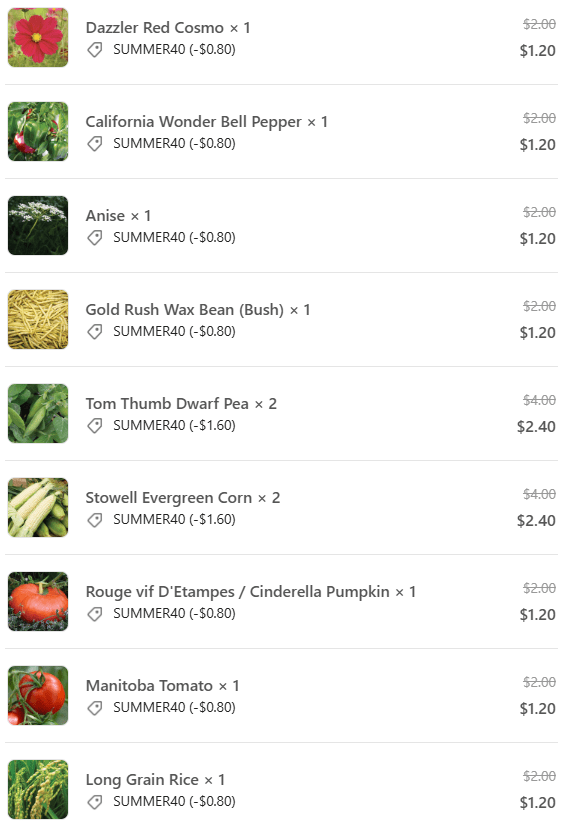
Anise One for our developing herb garden. I had no idea anise could grow here, but it’s only 75 days to maturity, so we should have no problem.

Bachelor’s Button – blue
Bachelor’s Button – pink Years ago, I lived in a city where Bachelor’s Button practically grew wild and always loved them, but I had no idea they were also edible! These are deer resistant, so they will be planted strategically.

Butterneck Squash This one is a Canadian heirloom variety that is apparently almost extinct! So of course we’ll have to grow some to save seed. 90-100 days to maturity.

California Wonder Bell Pepper these are to restock our pepper seed inventory. It’s a thick walled pepper, which caught my attention. Some varieties we’ve tried had surprisingly thin walls. 75 days to maturity.

Canary Yellow Melon I’m as much a sucker for melons as I am for winter squash! 80 days to maturity

Caraway Another one for our future herb garden. 70 days to maturity.

Chocolate Stripes Tomato A pretty slicing tomato for the family to try. 75-80 days to maturity.

Coffee Seeds (coffea arabica) I always like to have at least one “for fun” thing and one “challenge” thing. This will be a “challenge” thing – and to be grown as a house plant, as this is a zone 11-13 item. 2-4 years to maturity, and yes, this is a real coffee plant that we could potentially harvest beans from to make our own coffee. This one is more for the girls, since they are the coffee drinkers in this household.

Dazzler Red Cosmo I got this because the red is a less common colour for them, and they are great for attracting pollinators. 75-90 days to maturity.

Gold Rush Wax Bean (Bush) I did already get a tri-colour mix of bush beans, but I’ve almost used up the yellow bush bean seeds I had in my current collection, so this is a replenisher. 55 days to maturity.

Golden Boy Celery I’ve never grown celery before. The one time I tried, it was a pink variety and I started them way too late. These ones, however, are 80-90 days to maturity, so I shouldn’t have that problem.

Golden Hubbard Squash Yeah, I’m a sucker for the winter squash! These are a smaller and more prolific variety of Hubbard that grows to “only” 5-15 pounds. 95-110 days to maturity

Hales Best Jumbo Cantaloupe Melon Yup. Another melon! These are described as being more drought tolerant and thrives in hot weather – kinda like we’ve got right now. 85 days to maturity.

Long Grain Rice I looked these up out of curiosity and was shocked. We can actually grow this variety of rice here! Gotta try it! 90-100 days to maturity.

Manitoba Tomato This is an all purpose tomato, and the variety my mother used to grow here, so I know these should work. With only 65 days to maturity, we could direct sow these, instead of starting them indoors.

Meadow wildflower mix One of these days we’ll get a wildflower mix that will take! 90 days to maturity.

Oaxacan green dent corn (x2) There aren’t a lot of seeds per packet, so I got two of these. As a dent corn, we would be growing these to make corn flour. Only 80 days to maturity, too!

Orange flesh honeydew melon Oh, look! Another melon! We have the green flesh honeydew (none of the melons we have this year are going to produce, and I still don’t know what happened), and now orange flesh. 75-110 days to maturity.

Red Long of Tropea onion We’ve grown this variety before, and they did really well. We have our own onion seeds, but none of this variety. 90-110 days to maturity.

Red Wethersfield onion While I think we these are the red onions we have in the mix of our own seeds collected, they were from onions that had died off after transplanting – we thought! – but came up the next year. We’ve never actually successfully grown edible bulbs of these, so I figure it might be worth trying again. 100 days to maturity.

Rouge vif D’Etampes / Cinderella Pumpkin This variety caught my attention partly because it’s listed as being able to last in storage longer. 110 days to maturity.

Russian Tarragon Another one for the future herb garden, and it apparently overwinters well with little protection. Not sure if that applies to our zone 3 winters, but no zone is listed at all for it. 60 days to maturity.

Stowell Evergreen Corn (x2) Another corn, and another addition to our collection of white things! This variety is listed as drought tolerant, which is important for where we are. There aren’t a lot of seeds in the packet for something that needs to be wind pollinated, so I got two. 80-100 days to maturity.

Tom Thumb Dwarf Pea (x2) This variety grows to only 13-18 inches high. No trellis needed. Which would make it much, much easier to protect from deer! Not a lot of seeds per packet, so I got two. 45 days to maturity.

Triticale (x2) Okay, this one is for well into the future! At some point, we do want to grow our own grain to make flour. I’ve already got some heirloom wheat that is particularly noted for making good bread flour though, even with two packets, the amount of seeds I have for those would be grown only to collect more seeds for the first couple of years! The triticale comes in 500 seed count packets, but I still got two. Even so, the first crop would be mostly to get more seed for larger, future plantings. Thinking well ahead on this one! 85 days to maturity.

There we have it! My second order with MI Gardener, in as many days, and third order this summer. 😄

While there are still some things we will get from other sources, these orders will set us up for several years, as we build and expand on our garden beds and growing areas, plus more flower seeds for the pollinators. The additions for the herb garden has brought that goal closer to reality by quite a bit. There are many other herbs I’d love to get, but most of them need a much longer growing season than we’ve got. At least until we get a permanent greenhouse.

I seem to have become addicted to getting seeds like I used to be with getting yarn. Seeds are cheaper, though! Especially with sales like this one. This order totaled US$36, with a savings of US$24. No shipping costs, either. Plus, they have a points program and I now have enough points to get $5 off my next order.

Which is not going to happen for a while. I’ve got lots of seeds now!

Honest!!

At least until their new inventory comes in, after this blow out sale clears space for them.

😂🤣😄

The Re-Farmer

Our 2025 Garden: filling in the failures

While our garden is officially in, things will still be planted! We’ll be doing some succession sowing later in the month, but today, it was damage control.

The first bed I worked on was the corn and beans bed. There are now a whole three beans that have germinated, in between the corn, out of all the seeds planted in two rows! The ones planted on the same day, in between the tomatoes in the next bed over, are stating to get bigger, but not in the bed with the corn. I want beans in with the corn as much for their nitrogen fixing properties as for the beans themselves, so I decided to replant.

I still had seeds for the yellow Custard bush beans that were planted here, so that’s what got planted again.

I didn’t have to remove the protective netting, thankfully, and could just make use of the box frame to hold it for me while I first weeded the bed as best I could. There are just so many of those elms seeds sprouting! Many were still too small to try and pull, though.

If you click through to the next photo in the slideshow above, you’ll see my little froggy friend!

It’s hard to tell in the first couple of photos of the garden bed, but if you can make out some pink dots in the photo, those are the inoculated beans. I just spaced them out in the rows the first beans were planted, then went around and simply pushed them into the ground just enough to bury them. Hopefully, these ones will take! I didn’t pre-water the rows, as the soil was still wet from last night’s rain, nor did I water after, since I could hear the incoming thunderstorm.

Once those were planted and the protective netting back in place, it was off to the main garden area.

I had planted Royal Burgundy bush beans near the Spoon tomatoes. An entire packet’s worth. Only three germinated, and one of them got chomped. It seems to be growing back, though.

The one that got chomped is visible sort of between the first two tomato collars.

I could not find more bush bean seeds of any kind while out and about yesterday, so I went with something else, which you can see in the next image above. Fordhook Giant Swiss Chard. Their seeds are of a decent size, so after loosening the soil in around the few bean plants that made it, I was able to space them out fairly well while planting them. Swissh Chard is related to the beet family, and the Fordhook Giant apparently also produces an edible root. We’ve grown it before, a few years ago, but they never got to that stage. We’ll see how it goes this year. We did include Swiss Chard in one of the seed mixes that were sown in the fall. Some have come up, but they were basically too crowded out with other things to get very big. Only now, as we’ve thinned things out over time, are they starting to catch up in size.

By the time I finished sowing the Swiss Chard, it was raining, so I made my way indoors. I had picked up some yellow zucchini seeds, too, so when I head out again later, I’m hoping to get a few of those planted, too.

Maybe.

We are currently under a severe thunderstorm watch, but then my weather app says we’re raining right now, and it’s bright and sunny out there. We’re also at 27C/81F right now, but the humidex has us at 31C/88F. I’ve heard forecasts saying to expect the humidex to make it feel like 38C/100F in places. We’re supposed to keep getting hotter until about 6pm, and then it will very slowly start to cool down after 7pm. Tomorrow is expected to be slightly cooler, so it’s no big deal if things get postponed until then!

I am very thankful for what rain we do manage to get!

The Re-Farmer

Our 2025 Garden: sprouts!!

I just got back from giving the garden beds a watering for the evening. Tomorrow is not supposed to be as hot as today, but we haven’t gotten any of the rain that hit other parts of the province, some of which got serious thunderstorm warnings!

When I got to the trellis bed, I was rather blown away by how much bigger the noodle bean sprouts were, even compared to this morning.

They were not the only ones.

In the first image, you can see four of the five collars around pumpkin seeds – and they are all sprouting! Nothing in the fifth one, yet, but these were the very last seeds I planted, and they’re already up! I remember last year, being amazed by how fast these free pumpkin seeds grew, too.

I have also confirmed, and you can see in the next photo: we have sunflowers! Not a lot, but the Hopi Black Dye sunflowers are starting to sprout. I wasn’t sure if these seeds were still viable or not, so anything we get of those is bonus!

While watering the new asparagus and strawberry bed, I got another pleasant surprise. I am pretty sure I planted the bare roots and crowns too late; I had not expected it to take so long, or I would have stored them properly. And yet, I found a single Jersey Giant asparagus, sprouting along the stake I place to mark where the crowns were planted. It’s so adorable!

I spent a fair bit of time working on the snap pea bed, carefully using the hose to pull weeds without also pulling the peas and tiny carrots out. As I worked my way from one end to the other, I was startled to find a bean sprout. Several of them. I had completely forgotten that I’d planted the last few bean seeds in the gaps between pea plants in one row! Gosh, the red noodle beans germinated fast!

Meanwhile, the Royal Burgundy bush beans I’d plant much earlier, beside the spoon tomatoes, have finally shown signs of life. All of two beans have sprouted. Hopefully, this means more will show up.

I didn’t bother trying to get a photo, but I also saw more corn seedlings showing up in the corn and yellow bush bean bed. Still very few, while the leftover seeds that got planted with the Arikara squash have more sprouting, and the earlier ones are getting quite big!

The Black zucchini has been doing really well. I planted three seeds in three spots, and 8 out of 9 seeds are now sprouted! With so many sprouting, I will probably have several to thin by transplanting, later. Even where the White Scallop square are planted, one seedling has appeared. Last year, those ones took three tries and a much longer time before any germinated, so that makes me very happy.

So far so good! I have to keep reminding myself that I finished planting everything such a short time ago. It just feels so late in the season. Probably because we had that heat wave in May.

On a completely unrelated note…

We seem to be missing three kittens.

Caramel’s tabby, Li’l Rig, and her tortie, Wormy, are nowhere to be seen. Yesterday, I spotted Caramel “luring” Li’l Rig into the maple grove on the north side of the inner yard. I strongly suspect she has taken them across the road. I was really hoping that, after I brought Li’l Rig back to the sun room yesterday evening, she wouldn’t try again. Caramel has been hanging around the house, which seems very strange for her to do, if she took her babies onto the property across the road.

Their brother, Havarti, is the biggest of the litter, is still very much around. He is so active and independent, I doubt he’d follow his mother anywhere right now. The other two are much smaller and were both recovering from oogey eyes. I can’t find them to check if their eyes still need washing.

The third missing kitten is Zipper. He was the sickest and the last on the road to recovery. He did seem much improved but, to be honest, in looking for him, I was looking for a body. No sign of him, anywhere. I do hope he’s okay. I can’t imagine he would have followed Caramel across the road.

I’m probably going to go outside one more time and do a walkabout. Maybe I’ll find him then.

The Re-Farmer

Our 2025 Garden: beans, sunflowers and unexpected transplants

I managed to get it done, just as the rain started to hit!

I think I can now officially say, our garden is in! Sure there are some things, such as fall spinach, that can be planted, but for all our expected spring planting, it is done.

Yay!

I waffled between planting along the chain link fence in the south hard, or in the trellis bed in the main garden area. In the end, I decided to go for where I knew there would be the most sunlight.

The first image above is how the bed looked, after the mulch was pulled off. Last year, we grew melons along one side, onions for seed on the other. The onions were replanted in the fall, with just one half of the bed being prepped, then covered with leaves for mulch. The other half had melons mulched with cardboard, bark and grass clippings and, in the fall, I just pulled the melon plants and left the rest in place to protect the soil.

That made cleaning the bed up much easier!

This bed does have an issue, though. You can see that – sort of – in the next two images.

To make these beds, we’re using logs as straight and even as we can find. Which is surprising difficult. Especially when looking to use 18′ logs. With this bed, on the trellis side, one of the logs was quite bent. We put that one on the bottom, with the bend going into the bed, while the top log is straight. That’s what the remaining three vertical trellis support posts are going to be secured to.

What that means, though, is that there is an entire log, just inside the top frame of the bed, in the middle. The bend is extreme enough that there’s an actual gap formed between the two logs. Over time, it won’t matter as much, as we are aiming to eventually make the beds all 4 logs high. Until then, though, the gap is getting stuffed with skinny pieces of wood, bits of bark and even grass clippings and dried leaves.

Once the mulch was removed, I went over the bed with the garden fork first, to loosen the soil and make it easier to pull the weeds. As I went along, I started to find other things besides weeds, though – and I was not at all surprised. The onions that had gone to see had dropped some of their seed before they could be harvested.

Once I got to where the onions had seeded themselves, I worked a lot more carefully, and gathered every one that I could find.

Along the way, I also found a couple of plants I recognized as the flower I allowed to grow at one end of the bed, last year. I removed those as well.

It wasn’t part of the plan, but since I had them, every since baby onion I found got transplanted. The flowers got transplanted at the opposite end of where we grew them last year.

While preparing to transplant the onions, I also carefully pulled some of the onions that were growing against each other, broke them apart, then replanted them separately.

One half of the bed had fewer onions survive than the other, so that was the first area I started transplanting onions the tiny onions. I still had enough left over that I made a second row for the rest. They filled a little over half the bed’s length before I ran out, so there’s still room to plant something else, if I wanted to.

After that, I planted the two flowers (possibly a wild salsify) I’d found, then marked off two more rows in the soil in the other side of the bed. Those were for the Hopi Black Dye sunflowers and the Red Noodle beans.

There were not enough sunflower seeds to fill the row. I spaced them about 6 inches apart, which is close for sunflowers. I don’t expect a 100% germination rate, though. In fact, I wouldn’t be surprised if none germinated. These are older seeds.

The red noodle beans, on the other hand, are fresh seed. These got planted nearer the edge of the bed, where they will be able to climb the trellis that will be built on that side of the bed. After filling the row from end to end, I had only 6 bean seeds left. So I stuck them into some of the gaps among the sugar snap peas, since they have a trellis already prepared. The planted rows then got marked off at the ends with plant stakes, so that if I decide to plant something else there, I know where the open spaces are.

Oh! I completely forgot! I was going to plant the pumpkins in this bed!

I can still do that. For those, I plan to set up plastic collars to mark where the seeds are.

In fact, I see the rain has passed and the sun is out. I’ll go do that right now!

The Re-Farmer

Our 2025 Garden: corn, bush beans, and another outing, after all

I had a late start in the garden today.

I woke at my usual time, which is basically when it starts getting light out (about 5-5:30am, these days), but was in massive pain. I did manage to get outside to feed the yard cats, but wasn’t able to do the rest of my morning rounds. Instead, I took some painkillers and headed back to bed.

I didn’t wake up again until about noon!

I did feel a lot better by then, though, which is good, because – as always – the job I needed to do took more than expected!

The bed I need to work on is where I had eggplant and hot peppers growing, last year. These had been mulched first with cardboard, then grass clippings on top of the cardboard. In the fall, I just did a chop and drop, leaving it pretty much as it was for the winter.

What you see in the first photo is what was able to grow through the openings in the cardboard where the peppers and eggplant were growing through, and areas around the edges where rhizomes in particular were able to work their way up the side walls of the bed.

The box frame was secured to hold plastic I’d set around the eggplant and peppers to form a sort of open top greenhouse. The twine wrapped around was there to reduce billowing in the wind. If the wind were not an issue, it would have worked out quite well, but it was a pretty constant battle. Even the cover with the wire that is stored on top of the box frame would get blown off, and it was there to weigh down the tops of the plastic, and didn’t have anything else over it! Which is why it got lashed down with paracord, later on.

Removing the mulch and remaining bits of cardboard did clear a lot of the elm seeds off, but there were so many seeds, the mulch can’t be used again, nor would I want to put it on the compost pile. Instead, I put it around the base of the box on the outside, to hopefully smother any weeds that would come up through the gaps.

Then it was time to fluffify the soil and pull the weeds, including the roots.

Which was absolutely brutal. It was like concrete.

I normally would have gone over it with a garden fork, first, but with the box frame in place, that wasn’t an option. So I was just using my little hand cultivator.

That has got to be my favourite garden tool right now. It really does the job! It was still pretty difficult. In the end, I spent more than an hour, just breaking up that soil. There weren’t a lot of weeds to pull, thanks to that mulch, but getting the roots out was almost impossible. Even after breaking up the soil first, if there were any clumps at all, the roots and rhizomes would just break apart.

I keep water with me while I work but, once the soil was prepped, I had to head inside for a sit down and hydration break. Thank God for cooler temperatures! Unfortunately, I’m out of any amendments that would help reduce this sort of compaction.

For this bed, I wanted to plant the Orchard Baby corn, which has only 65 days to maturity, with some beans. I had some yellow Custard bean seeds left. Which is a bit funny because, a few years back, we grew a different variety of corn in this bed, with beans from this same packet, in between!

Given that the beans are a few years old, I don’t expect a high germination rate, but bean seeds last a lot longer than other things.

Using the end of one of the larger plastic coated plant stakes, I marked off 5 fairly deep lines in the soil – three for corn, two for beans – then filled the resulting little trenches with water. Then I ran the stake over the lines again, and this time used the hose on the jet setting, to drive the water deeper in the planting areas.

In the slide show above, right after the photo of the seeds, the seeds are laid out in the rows. Even the bright pink inoculated bean seeds are hard to see, but they’re there!

The beans were planted pretty far apart; there were enough that I knew there would be plenty left behind. They’re more of a “bonus” crop.

The corn was supposed to be about 50 seeds per packet, and I did hope to get them all in, but there just wasn’t the space, even setting them pretty close together. They will be thinned later, if the germination rate is high.

To actually plant the seeds, I cheated, and used the end of the plant stake I used to make the rows to push the seeds into the soil, which you can see in the next picture. For each one, I’d give the stake a spin to make sure no seeds stuck to the end, before moving to the next one! Then I gently dragged the stake over the rows to cover the seeds before finishing off with a gentle watering, which further ensured the seeds were well covered.

I still had those leftover corn seeds, though. I didn’t want to hang on to such a small amount, but what to do with them?

Well, there was this little bed nearby, with the Arikara squash in it.

Corn and squash are supposed to do well together!

So I opened up the mulch, where there seemed to be the most room, including right in the very middle, and planted the leftover seeds there. These beds are close enough that wind pollination between them should work out fine. For now, though, the mosquito netting cover got put back on until the squash is large enough I won’t have to worry about something getting at them.

Then I went to the tomato bed and, using the plant stake to make holes in the soil, planted more beans down the middle of the bed, plus the gap between the Black Beauty and Chocolate Cherry tomatoes. Bonus beans, plus they will act as a living mulch later on.

That done, I brought out the stove pellets for the corn and beans bed. I scattered them all over the bed, then misted them with water. After the pellets had a chance to expand and start breaking up into sawdust, I sprinkled some more pellets on and misted it again.

As there is nothing in this bed with protective collars or anything like that, it was going to need something to keep the cats out. A few years back, my daughter bought us a large roll of netting. I’ve been reusing pieces of it in other areas but, for the amount I needed, I brought the remaining roll out. You can see it in the second last photo of the corn and beans slideshow. The netting on that roll is actually folded in half. I left it as it was, though. Using ground staples to fasten the netting to the wire above the box cover, I unrolled it all the way around, with a decent amount of overlap, before cutting it. Roughly 25 feet, in total. There is still lots on the roll.

About this time, I got a notification on my phone for a voicemail message. Turns out my Wi-Fi calling had shut itself off. Why I was still able to listen to the voicemail message, but not get the call itself, I have no idea.

It was home care, letting me know that there would be no one available for my mother’s bed time med assist.

It was almost 6pm when I got the message, which means she would have just had her suppertime med assist.

I had time to finish setting up the netting. The top was secured with ground staples to the wire cover at several points. This netting catches on everything, so I was able to make use of that and got it “stuck” at each corner. Then, just to be on the safe side, I used more ground staples to secure the netting between the box frame and the walls of the bed. The box frame is tied down tight enough that it was hard to make the space to slide the ground staples through. Those aren’t going anywhere! The netting would rip, first.

Once that was finished and everything cleaned up and put away, I got a daughter to take over and do the watering of the rest of the garden, while I washed up and changed, before going to my mother’s.

It’s been almost a week since I did my mother’s grocery shopping, and I have an appointment in town tomorrow, so I left early enough to hit the grocery store, first. I knew she’d be running out of milk, at the very least – she is always running out of milk, but refuses to buy more than one 2L carton at a time – so I got that, plus a few other things I thought she might be running out of by now. Since I was there anyhow, I spotted some excellent sales and picked up some stuff for ourselves, too.

When I got to my mother’s she was so very happy when she saw I’d brought her more milk! She had told me, she even considered asking me if I could pick some up on the way, but had decided against it.

I was early for her evening pills but, once everything was put away, I opened up the lock box and got them ready for her. Which gave her time to tell me why the cover was missing on the tiny tagine shaped bowl I gave her to put her pills into, so they could be double checked and counted before she took them.

It turns out that, a couple of times now, someone would open the bowl to put in her dose for the time, only to find one of her half pills from the previous med assist, still sitting in the bowl. It had been counted out, but she missed it when she took them – and clearly, the home care aid didn’t double check to make sure my mother had actually taken all the pills!

So it was decided that she would tuck the lid away so that, if a pill got accidentally left behind again, it could actually be seen and she could take it right away.

Good thinking, but really, part of the home care aid’s job is to make sure my mother takes her pills properly. That’s why they’re there, and the pills are in a lock box, after all!

I did get a bit of a visit in before I headed home, much appreciating the longer daylight hours! I’ve made these trips in the winter, when it was dark by the time my mother was supposed to get her suppertime visit, but this time of year, I was driving home in full light. Much easier to watch for deer!

Tomorrow, I’ve got an appointment in town, but my afternoon is free. I’m waffling between working on the bed at the chain link fence, or the bed that will have a permanent trellis built into it.

I’ll see what I feel up to, after I get home!

For now, it’s time to take some pain killers and get to bed. Maybe even before midnight!

Ha!

The Re-Farmer

Our 2025 Garden: transplanting tomatoes, peppers and eggplant, and creating supports

I am very happy to say that, as of today, ALL the transplants are in! There is just the final direct sowing to do, now.

The first transplants to get in where the tomatoes, and they all fit into one garden bed.

This bed had already been prepped, then covered with plastic, except for one end, where there had been onions gone to seed. They did not survive another winter, though.

The plastic didn’t solarize the weeds to death, but at least it kept most of the elm seeds off! The challenge was to get the plastic off again, without dumping them all onto the soil.

For a bed that had already been weeded before the plastic was laid down, there were a LOT of weeds to clear out. As I worked around the bed, I suddenly realized that I was pulling out baby carrots! Last year, we had a couple of Uzbek Golden Carrots bolt and go to seed, so I left them to it, so I could collect the seeds in the fall. When I went to gather them, though, the seed heads were shriveled and messed up looking, and there were no seeds to collect.

Looks like one of them did have seeds, after all!

There was no way they could be transplanted or anything like that, so away they went.

Once the bed was clear of weeds and roots, I finished off our last bag of manure into it, and worked that into the soil.

Then it was time to figure out where the tomatoes would go.

I used the collars (I found an extra “stash” of the water bottles I make the collars from in the basement, so I had plenty for the tomatoes) to figure out the spacing. There were four Black Beauty, four Chocolate Cherry and nine Sub Arctic Plenty.

We’ve grown the Black Beauty and Chocolate Cherry before, so I know what to expect with those. They both get quite tall, while the Black Beauty became really heavy. They had trellis supports, and I ended up having to add supports to the supports, to keep the whole thing from tipping over in the wind!

With that in mind, I made sure that these were on the north side of the bed, so they wouldn’t shade out other plants. So I set out eight collars on that side, with a space in the middle.

If I remember correctly, the Sub Arctic Plenty are a bush type tomato, so I don’t expect them to get tall. I’m thinking they will be more like the Forme de Couer tomatoes we grew last year. Each tomato plant had a pair of bamboo stakes to support it, and I’d used twine around the plants to secure them. The plants got so heavy with tomatoes, the supports started falling over, and some of the bamboo stakes even broke from the weight.

With that in mind, I planted the Sub Arctic Plenty tomatoes along the south side of the bed, where they would get the most sunlight.

As with everything else, this bed was dry, dry, dry, so it got repeated waterings at every stage. I’d taken the cover off the other bed and every time I watered the tomato bed, I gave the other bed a gentle watering, too.

Once the tomatoes were in, it was time to give them support. For the verticals, I used 6′ plastic coated metal stakes. I’m glad I got more of these! Every collar got one of these tucked against one side. I used up all the stakes from last year, and used a couple of the new ones, to make one for every tomato plant.

Once those were in place, I used bamboo stakes to weave through the verticals. I did three horizontal rows on each side, and more can be added later, if need be. I then added some sticks to connect the two sides. There’s just a couple at the ends of one level, and a couple more further in, at another level. We may not need any more than that. We’ll see how things progress over time.

I did not have any clean grass clippings left for mulch, so I made use of the stove pellets we use for cat litter. I scattered them around, and even inside, the collars before giving the whole thing one final watering, to get the pellets to break up into sawdust.

I think it worked out rather well, and should be able to hold the weight of the tomatoes we can expect from these varieties,

Once this was done and cleaned up, and I took a break for lunch, it was time to work in the old kitchen garden. I decided it was time to remove the cover and netting from the greens bed, so the first thing to do was roll up the two sheets of netting, then take the cover off.

The kittens are going to miss their little mosquito netting hammocks!

The greens bed was really dry, so I spent time time watering it from the rain barrel – the rain we had was almost enough to refill it – and weeding. The spinach is bolting and we’ve decided to let them go to seed. I also found a second tiny bok choi that is staring to bloom.

That done, the herb bed got a watering, too, and then I did the pruning and clearing I mentioned in my earlier post, before I could even start on the wattle weave bed.

I decided that the Sweetie Snack Mix mini bell peppers would go in the short part of the L shaped bed, and the eggplant in the long section, among the strawberries.

The short side of the bed didn’t need a lot of weeding, and I was careful to work around the garlic that got missed and started growing this year. The old mulch got pushed up against the wattle weave sides, and the hard packed soil was broken up and fluffified. It was surprisingly hard packed. So I added some of the remaining rehydrated coconut coir over the area and worked that into the soil.

I laid the transplants out, in their cups, to figure out the bed way to space them. After that, it was the usual routine of wetting everything down, then again and again, in between every stage of transplanting. When the peppers were finally planted, I made sure to press down around each one, to create a shallow “bowl” to collect water and drain it towards the plant. Then each pepper plant got its own wire tomato cage to grow up into.

That done, it was time to work on the other side. It was a bit more challenging, working around the strawberries and onion survivors that are there. There was no sign of any of the chamomile self seeding, and the thyme that almost survived the winter was long dead, so that gave a bit of extra space. The mulch was moved aside, the compacted soil broken up, and the last of the coconut coir worked into the soil.

The transplants in their cups were laid out to figure out the spacing, along with the mystery flower. I decided to plant that at the very end of the bed, where it could stay permanently. If it survives! The flower did get a plastic collar, more to keep the cats from rolling on it.

Once the eggplant were in, each with their shallow “bowl” around them, they got their wire tomato cages set in place, and they were done!

Almost.

The mulch I’d moved aside was mostly old wood chips. I didn’t want to push that back. I did, however, have some leaf mulch that had been pulled off and set along the inside of the L shape, by the double lilac. It was old and dry, so I was able to crush handfuls of it, and shake it out over the transplants, to give the soil a light protection. More mulch can be added as the plants get bigger.

I forgot to take an “after” picture when I was done, so I went back out later, and got a picture of the entire finished bed, which is the last image in the above slide show.

That done, I went on to water the new trees in the fruit forest area, and the walnuts in the outer year. Still no sign of anything emerging where the seeds are planted, but the year old sapling is starting to get some bigger leaves on it.

I headed outside shortly after 7am to go my morning rounds and start on the garden. By the time I was done and heading back inside, it was past 8am. Taking into account stopping for breakfast and lunch, I got about 10 hours in the garden today!

Which is great, because all the transplants are IN!!!

Tomorrow, my main goal of the day is to get the third low raised bed near the compost rind cleaned up and planted with short season corn and yellow beans. After that, I want to work on the permanent trellis bed where I want to plant red noodle beans. That will make sure the trellis gets finished off, because they’re going to need something to climb!

Last of all, I will be clearing the bed at the chain like fence, salvage what I can find, replant with what I can manage, then cover it up again. Somehow. I like the netting that’s over it, but it really need something better than the wire to support it. I’m not even sure I can salvage the ones that cats have bent up!

I’ll figure it out.

Just another day or two, and the garden will be officially in!

Almost there!

On a completely different note, while I was working outside, my daughter let me know that the shop I took our push mower to had called and left a message. As expected they can’t find the part that’s needed. It’s simply not available, anywhere.

I was expecting this and had been thinking about it. I’d told them not to worry if they couldn’t find it; I’d just come pick it up. However, it would just end up as more junk here. So when I called them back and talked about it, I suggested they could keep the mower and use it for parts. If I ever buy a push mower again, it won’t be that brand, so it would be of no use to me. They, however, might be able to scavenge it if some other poor soul has the same brand of mower and needs a part that’s hard to find. They happily accepted the offer. Win, win!

Thankfully, my brother has provided us with mowers we can use! I was going to take my mother’s old mower in, but my brother thinks he can fix it himself, so we don’t even need to bring that in.

Oh, my goodness. It’s past midnight as I finish this! I need to get my butt into bed!

Have a good night!

The Re-Farmer

Our 2025 Garden: Spoon tomatoes, bush beans and summer squash

I’m rather happy with how things went this morning!

The first order of business was to get the Spoon tomatoes, which are starting to bloom, into the ground, and plant some bush beans in the same bed.

I had nine transplants, so that worked out with using the trellis posts as spacing guides.

Since I was going to plant bush beans along the edge of the bed, I did things a bit differently from the other half. With the melons, I set out the collars, added a handful of manure into each one and worked that in, in situ, then made narrow trenches around each collar. For this half, I started out by making a shallow, flat trench along the length of the bed I’d be planting into, pushing soil up against the log wall, and towards the trellis line. I added manure into the trench and worked that into the soil before giving it a thorough watering. Then I added the collars, closer to the centre/trellis line, than the melons are. Then I watered it again, filling each collar with water, as well as the trench.

To transplant the tomatoes, I scooped out a hole in each collar, deep enough for the entire root balls, then added it back in after the tomatoes we in place. Even with filling each collar and letting it absorb water before hand, I was still pulling up dry soil! Once the tomatoes were in, I filled the collars with water again.

Each tomato got a pair of bamboo stakes set on either side, placed right against their collars. Later one, once I have the time and the ties, I will be adding cross pieces to make them sturdier, and also secure them to the wire trellis. Growing these before, I’ve been able to just wind their stems around a single bamboo stake but, after a while, it starts to get tippy, so I’ll better secure them this time.

Once done with the tomatoes, I made another long, narrow trench to plant the beans into. That got watered using the jet setting to drill the water deeper into the trench, which also helped level it out and even break up some of the clumps I missed. I didn’t have a full packet of the Royal Burgundy purple beans, but I had just enough to evenly space the seeds from end to end. I don’t expect a 100% germination rate, so we might end up with a few gaps, but these are new seeds, so it shouldn’t be too bad.

Once I spaced the beans out evenly, I pushed them into the soil in their little trench and covered them, then went over the trench with a more gentle flat spray of water to fill it and level out the soil again.

That done, I used the last of the grass clippings left in the wagon to mulch around the tomato collars, and the edge of the bed along the bean’s little trench. I ran out of grass clippings with just one corner left to cover, but I still had some leaves and grass clippings mulch set aside from the winter sown beds I could use.

Then it all got watered again, making sure to soak through the mulch.

With how dry that bed was, it’s really not possible to over water it.

Since this bed had been covered in plastic while we had our recent rainfall, I fully expected it to be so very dry. After working on the next bed, however, it turns out that it really didn’t make much of a difference. It still would have been that dry!

The next bed I worked on was the end of the garlic bed, where I’d winter sown some of the same seed mix of root vegetables that is in the high raised bed. Nothing survived in this bed, though.

I didn’t have time to break out the weed trimmer to clear around the bed, so I used a rake to knock the weeds and dandelion seed heads down and way from the bed. This little section still has netting over it, though the cats have still been lying on top of it! So before I started, I had to pull the netting away, starting at the garlic end, leaving it still tacked down at the other end. The bed then got a weeding, and finally some manure was worked into the soil.

Next, I used some of the small plant support stakes I was no longer needing at another bed, to add more supports for the very loose twine, including adding one in the very middle of the bed, where the twin crossed.

Once the soil was ready and watered, I made three round, shallow “bowls”, which got watered again. Each “bowl” got three squash seeds planted in them. On one side, I planted the White Scallop squash. On the other, Black Zucchini.

Then the “bowls” got watered again.

This garden bed was fully exposed to the rain we got, and yet it was every bit as dry as the bed I’d just worked on, that had been covered in plastic while it was raining! You’d never know we had any rain at all.

This bed had been mulched for the winter with a mixture of leaves and grass clippings, that had been pulled to one side of the bed in the spring. I was able to use that to mulch around the “bowls” the seeds were planted in, with a light scattering of mulch in the bowls, too. Once that was in place, the netting was put back in place. Then it got watered again.

Hopefully, the new supports will help keep the cats off!

By the time the squash is large enough that the netting will need to be removed, they won’t need the extra protection anymore. We shall see how many of the seeds actually germinate. If I end up with extras, I will thin by transplanting. Hopefully, this year, we will actually have a decent amount of summer squash!

So that is now done. In the main garden area, the only bed left is the trellis bed. I won’t work on that again until everything is planted, though.

From the looks of the weather forecast, I should be able to get lots done tomorrow.

Gosh, I’m so enjoying all the progress in the garden! I might be in a lot of pain when I’m done, but it feels so good otherwise, it’s totally worth it.

The Re-Farmer