Our 2022 garden: potting up, moving things – and good news!

First, I’ll start with the good news.

While I was working on the transplants, we got a call from the pharmacy delivery driver. I headed out to meet him at the washed out road, opening the gate before starting the van and heading out.

I was backing out of the garage, when a car pulled into our driveway!

He not only got through, he had no issues at all. The washed out road has been repaired! That means we can now reach the highway and go wherever we need.

I was very happy to hear this. Tomorrow, I’m going to go get the mail! LOL

Oh, the things that are exciting when you’re old and boring. ;-)

My main goal for today was to pot up the newest tomatoes, and move things to the sun room.

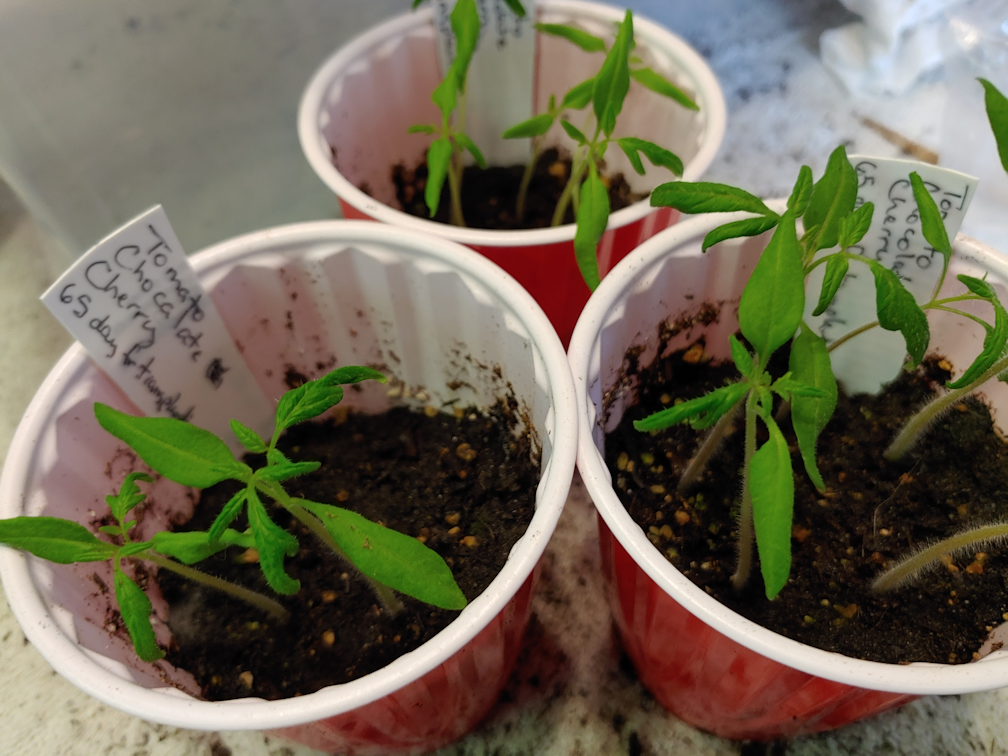
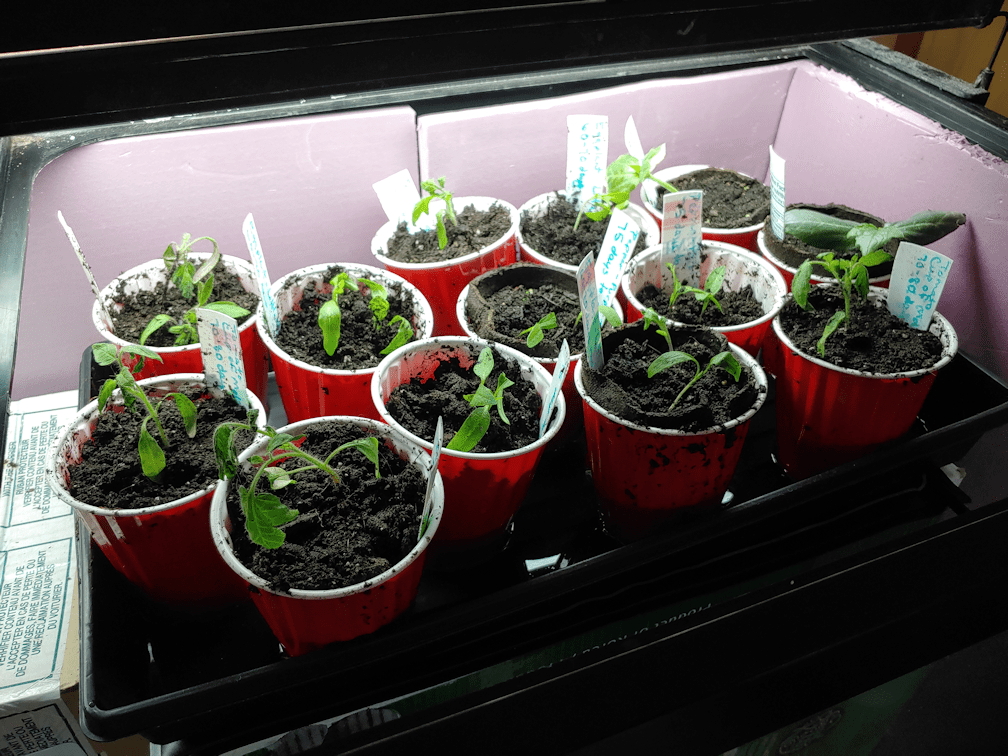
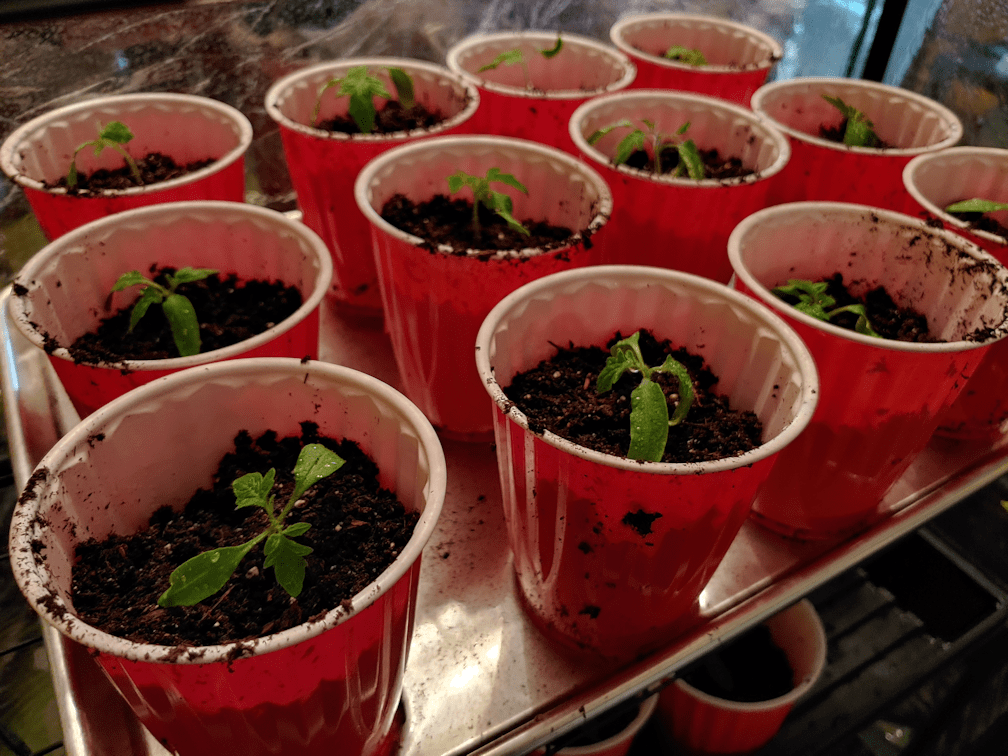
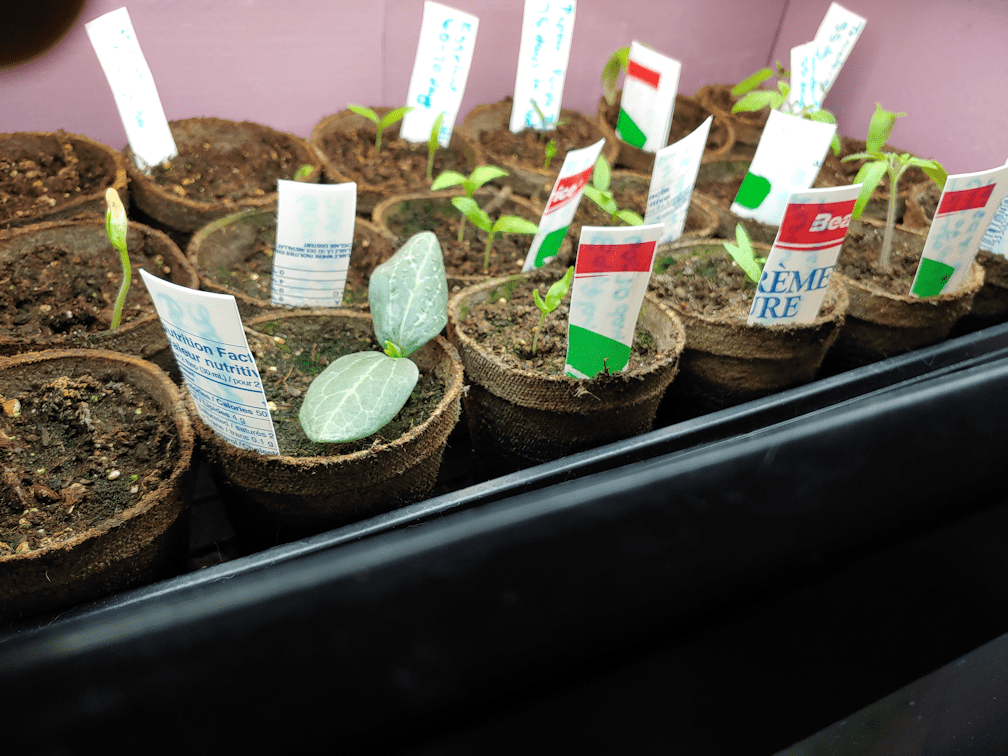
I started with the Yellow Pear tomatoes, which are in the image on the left. Of those, there was one seedling that I pulled out, as it was not suitable for transplanting. The Chocolate Cherry (on the right) got all seedlings potted up.

By the time it was done, we had 13 Yellow Pear tomatoes, and 12 Chocolate Cherry, ready to go to the sun room.

Before that could be done, though, the rest of the pots in the mini-greenhouse had to be taken out, and the mini-greenhouse prepped to be moved. The vinyl cover finally got removed, as did the aluminum foil lining it on three sides, to reflect as much light as possible. The foil has been saved for some other future use.

One of the sawhorses supporting the platform holding plants had to be carefully shifted over to make room for the mini-greenhouse frame.

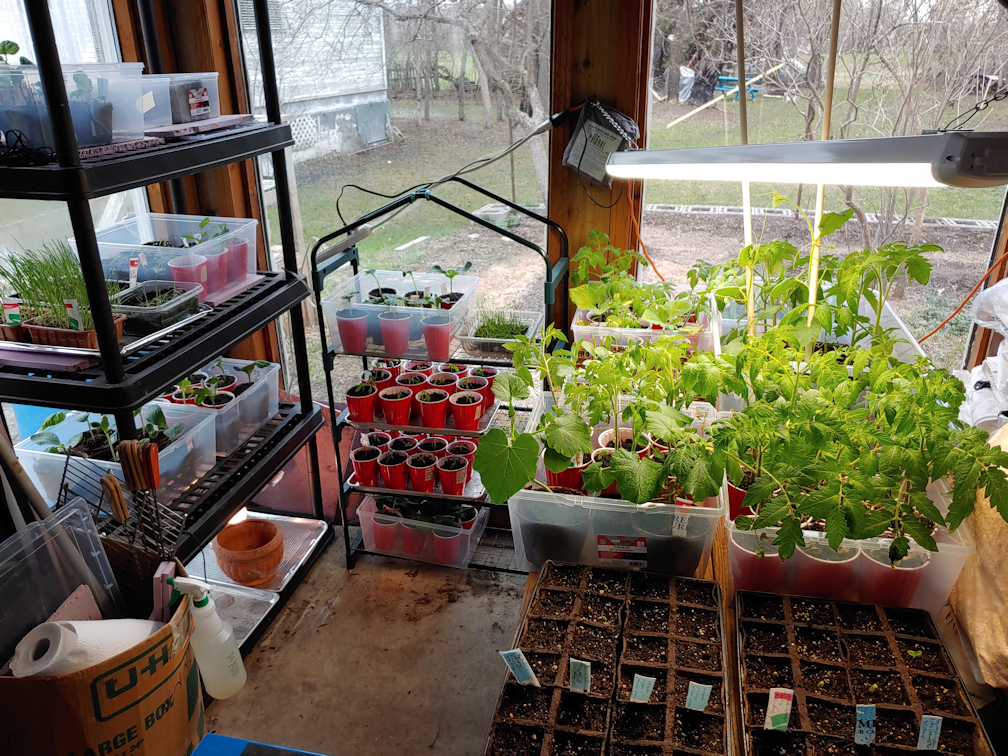
Things got shifted around in the sun room, too. The older tomatoes were getting too tall for the plant shelf, so they got moved to the platform, as did the large bin with the kulli corn. The tomatoes were so tall, I had to adjust the shop light higher, to fit.

Once the newly transplanted tomatoes and seedlings that were in the mini-greenhouse in the living room got oved over, I filled another bin with the seedlings from the large aquarium greenhouse and brought those over, too. Everything fit, with room to spare!

I did change a couple of things after this photo was taken. That terracotta pot was put by the lamp on the bottom shelf, just to get it out of the way. It got moved out, as did the lamp, and the bin at the bottom of the mini-greenhouse was moved to where the lamp had been, so it could get more light.

The seed trays on the bottom right of the above picture are starting to explode. More cucumbers are coming up, and all four of the King Tut Purple Pea seeds that we managed to save are germinating. There is even a Red Kuri/Little Gem squash making an appearance.

These are now the only things left in the big aquarium greenhouse.

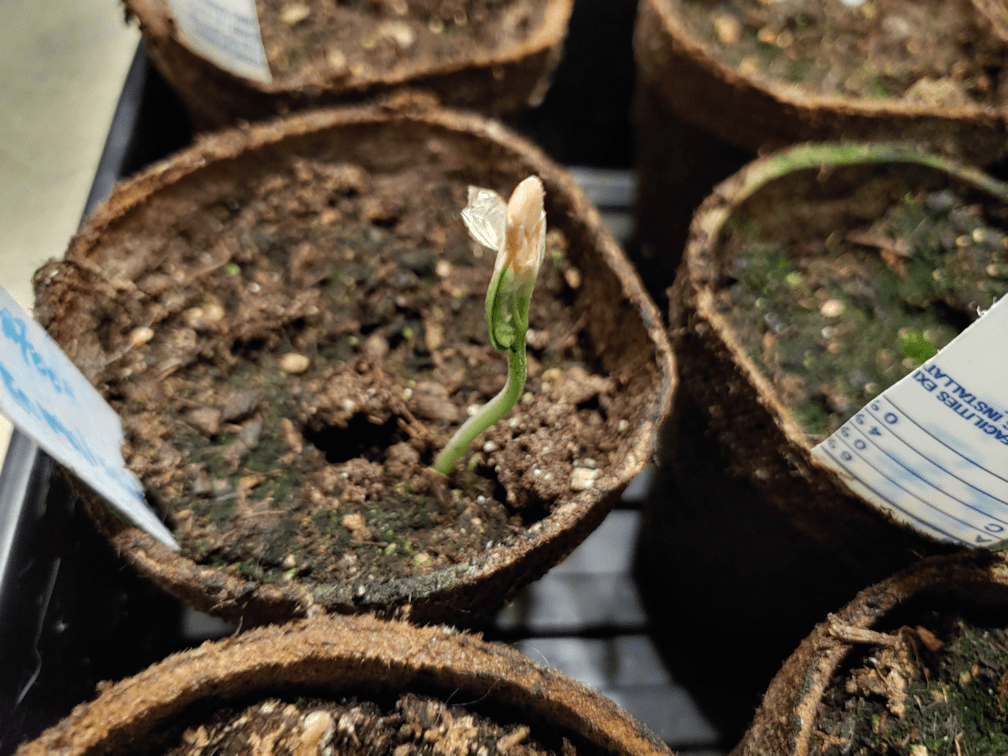
There’s still no sign of any Yakteen gourds. As for the Kakai pumpkin that looks like there is a seedling popping up, that’s actually a stem. I was watching it for a few days before I finally took a closer look. It seems it started to germinate – but then the leaves broke off the stem. The stem end is what you’re seeing in that pot! There were more planted in the pot, so I’m hoping that a bit more time on the warming mat will result in germination.

The LED shop light that was used at the mini-greenhouse is now available to be moved to the sun room, but I haven’t figure out how I want it set up yet.

Funny. The living room suddenly feels much bigger, without the mini-greenhouse tied to a chair in front of the couch, anymore. :-D

The Re-Farmer

Our 2022 garden: morning disaster. Will they survive?

Not a good way to start the day.

One of the first things I do when I get up in the mornings is turn on the lights for the aquarium greenhouses.

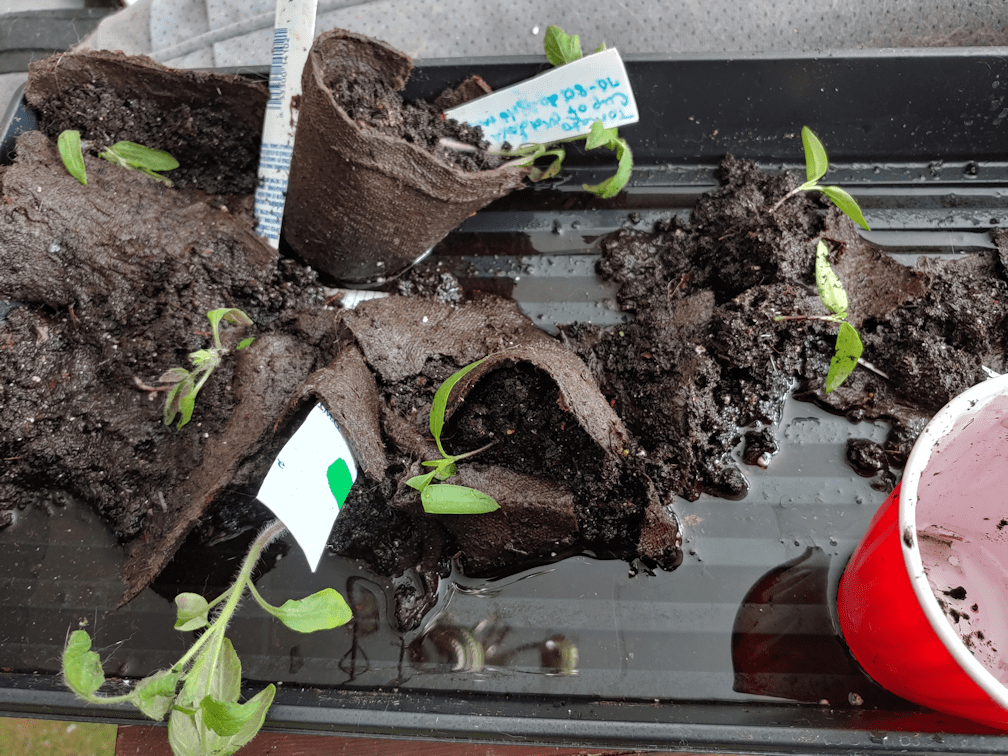
This morning, I was greeted by this.

This is the tray we had just recently transferred out of the big aquarium greenhouse. A cat had managed to get through the box blocking the gap at the back of the chair, and into the tray.

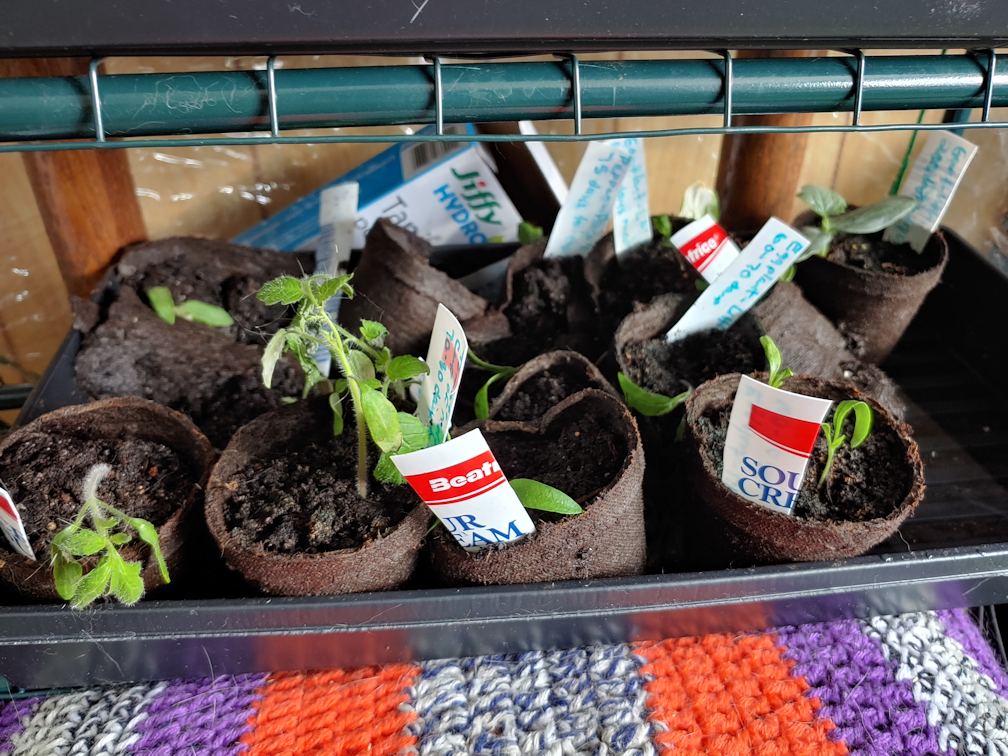
The damage in some of them was really, really bad. The pots just disintegrated. Granted, they are designed to do that, but not until they’ve been put into the ground!

Some weren’t too bad. The gourds, in particular, were mostly just jostled a bit. I was able to transfer them into the Solo cups without too much trouble. These cups already had drainage holes in their bottoms.

Note the leaves on the Canteen gourd, with the almost white tips. That’s from the seed casing that I ended up breaking free of the leaves.

The remainder required much more care.

We still had some pre-moistened seed starting soil left, and I used it to help re-pot the remaining squished seedlings.

I think a couple of labels got mixed up, but I’m not going to worry about that right now. As long as the two varieties of tomatoes are labelled, it’s fine.

Once the seedings were cleared and in cups, I moistened some more seed starting soil. While mixing the water in, the remains of the Jiffy pots got mashed into the soil as well. By the time the soil was thoroughly moistened, there was no sign of the pots!

For some with still intact pots, like the gourds, I gently removed them again, added soil to the bottom of the cups, then put them back in. For the tomatoes, I basically just potted them up, adding the fresh soil around the stems. Those should recover fine.

It’s the eggplants and peppers that might have difficulties. I tried to add soil around them while raising them higher in the cups as best I could. Some were quite squished, but none looked broken or damaged.

With the tomatoes, I’m not too concerned, since we do have two more trays of them in the mini-greenhouse, but these are the only eggplant and peppers we’ve got. Even with the gourds, there are other pots that haven’t germinated yet.

Speaking of which…

To give them the best chance as survival, the repotted seedlings went back into the large aquarium greenhouse, where they will be on the heat mat and under the two light fixtures.

Which, unfortunately, meant the other tray had to go into the mini-greenhouse.

Before they did, though, my daughter flattened a cereal box and put it in first, folded so that half the box covers the gap in the back, and the other half is under the tray.

Pure chance that we had the box. We almost never buy cereal, but when we were last the Superstore, we purchased enough to get their freebie of the week. That week, it was a variety pack of cereals and breakfast bars. This was the largest cereal box in the pack, and just the right size to completely cover the gap created by the back of the chair the mini-greenhouse is tied down to.

Unfortunately, this means the items in the tray aren’t getting the light and warmth they were, in the aquarium greenhouse. The best we could do was set up a light on one side, shining into the bottom of the mini-greenhouse from the TV stand next to it. For those in pots, they need the warmth of that incandescent bulb more than the light, since they haven’t germinated yet. You can see the shallots coming up in the tray next to the pots. They will need more light, but not the heat.

*sigh*

Well, there’s only so much we can do, until things warm up enough to start using the sun room. Hopefully, before then, we’ll be able to switch the trays again, and have the newly repotted seedlings back in the mini-greenhouse, and the tray with seeds that still need to germinate, back on the warming mat. The mini-greenhouse itself should be closer to the living room window, but the closer you get to the window, the colder the room is, so that won’t work for probably another few weeks.

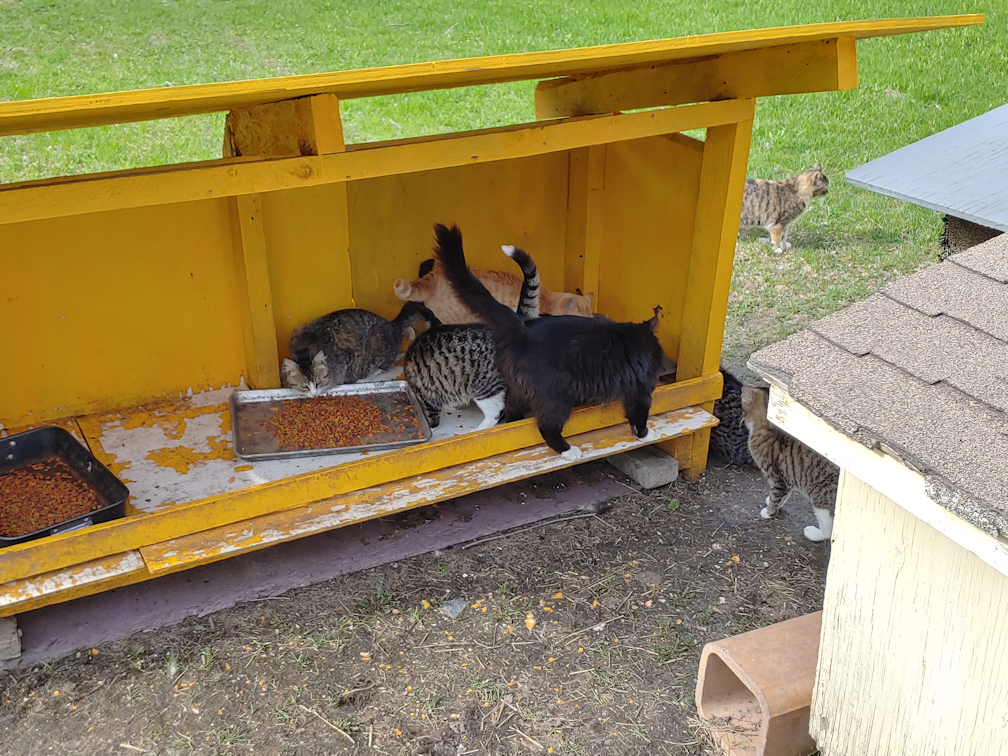
We don’t know for sure which cat did this damage but, really, there’s just the one that keeps trying to get into the mini-greenhouse, still. The others are content to sit in the sun spot on the chair seat in front of it.

I love the cats. I really do. But I am getting so tired of cat damage.

The Re-Farmer

Our 2022 garden: starting shallots and transplanting tomatoes

Okay, for better or for worse, we now have stuff in the mini-greenhouse! Let’s see if we’ve succeeded in making it cat proof. :-D

The first thing today was to get the shallots started.

There are a lot less seeds than I remember from last year. I’ll have to look back at last year’s photos and double check.

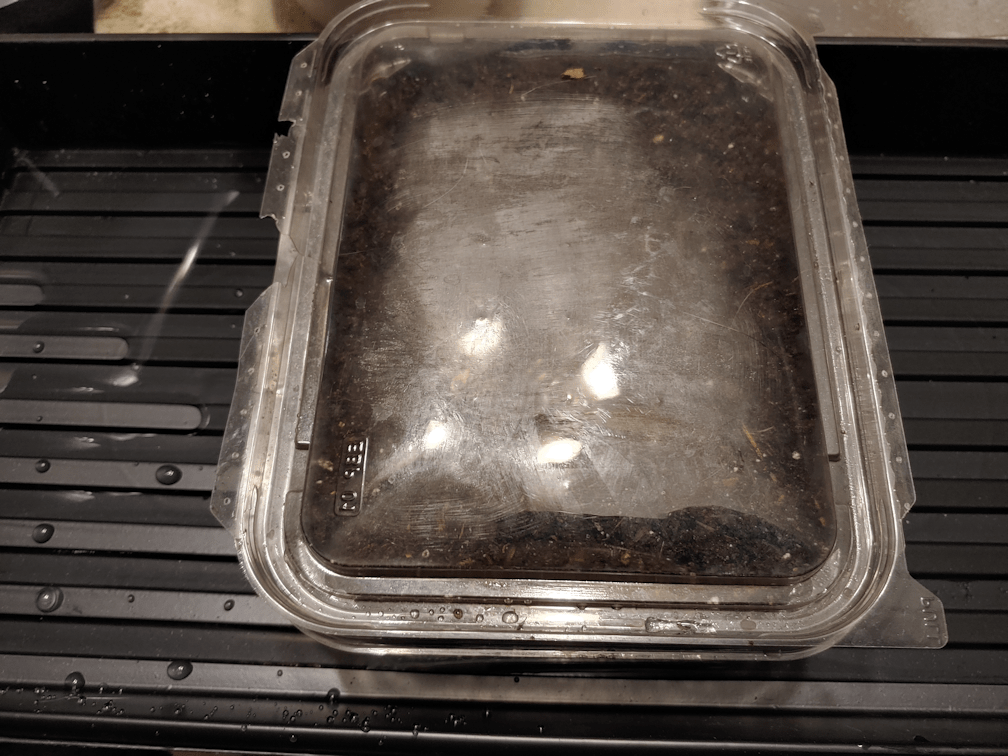
The container is a mixed greens salad container from the grocery story. It has drainage holes in the bottom, and the seed starting mix is pre-moistened.

With such easy to see seeds, after scattering them I used a chopstick to separate any that were right up against each other, and spread them out more evenly. Then they got a spritz with water, a light layer of more soil mix, then spritzed again.

The container’s lid is recessed, and I didn’t want it too close to the soil surface, so I just plopped it on upside down. I then left it in a tray with water under it, to be absorbed from below. While it was sitting, it was time to work on the aquarium greenhouses.

The red and yellow onions are doing quite well. I rotated the trays after adding more water below them. The reflective light from the aluminum foil at the back, which is closest to the trays themselves, is clearly making a difference. All the sprouts were leaning towards the back of the tank! :-D

We have our first Wonderberry sprout! These were taken out and got more water added to the outer cups, as well as a spritz, then set aside for later, so they wouldn’t get knocked over while the seedling tray was being moved around.

You can just see that a new luffa gourd is starting to sprout! It’s right against the wall of the pot at the top of the photo.

I very carefully removed the seed covering from the leaves of the canteen gourd. Normally I would avoid doing that, but I’m glad I did this time. It was really solid, and had to be broken apart to get it off.

Here are the tomatoes, on either side of the eggplants and peppers.

The tray usually gets water on the bottom well before the pots dry out this much, but when the pots are damp, they are difficult to move. They feel like they’re about to fall apart. Which will be good when they get transplanted into the garden, but not so good when I need to move them around!

With the eggplants and peppers, they were thinned to 2 plants per pot. As they get larger, we will probably thin them to one plant per pot. We don’t need a lot of either of these. Three plants each should be fine to meet our needs.

The plan was to transplant all the strongest tomatoes to thin them – but there were a lot of them! Especially the Cup of Moldova. They’re doing really well in here. In the end, there was just one seedling that didn’t get transplanted because it was so tiny.

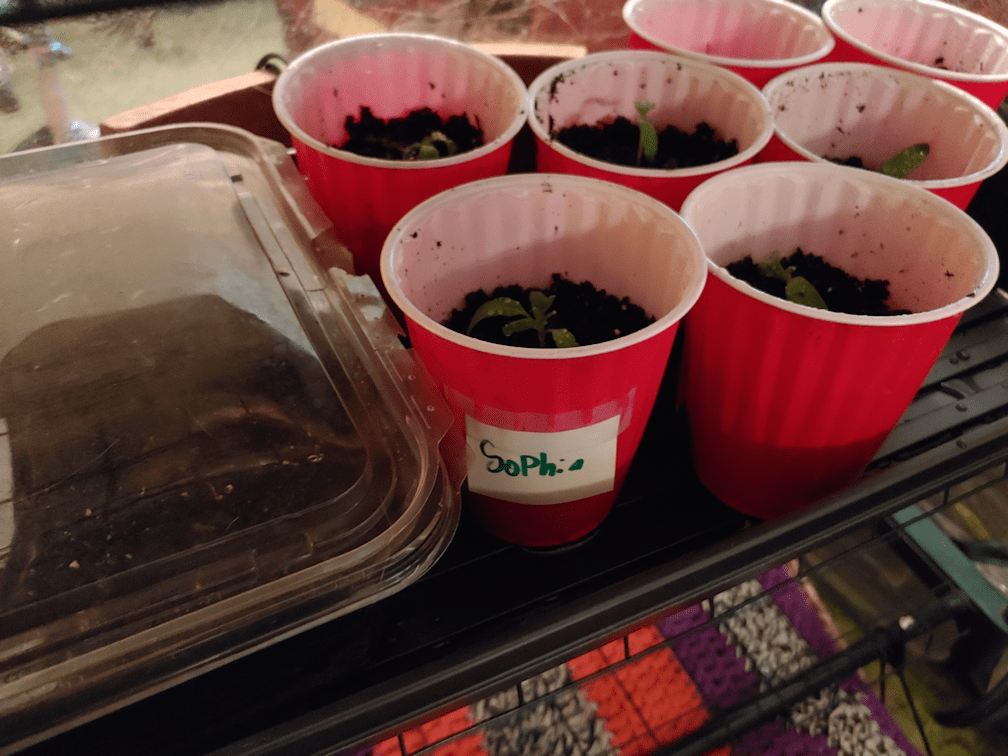
We half-filled red Solo cups with soil and used a chopstick to make holes for the transplants. Then I ended up using a steel poultry trussing needle (which never gets used to truss poultry; I’m not even sure why I originally bought them!) to loosen and tease out the transplants as carefully as I could. After they got tucked into their new pots, more soil was carefully spooned around them to about half way up their stems and gently pressed in, just enough to make sure there were no air spaces, before they all got a spritz of water.

Each of the original pots was left with one tomato plant. With the Cup of Moldova, we ended up with a dozen transplants, making 15 altogether. These cups were used last year, too, and already had drainage holes in the bottom. If we needed to, we could double cup them, but for now, they fit into the baking tray, in one of the higher shelves of the mini-greenhouse, above the back of the chair it is tied to. I’d rather it was lower down, but with the wider baking tray, that’s where it fits.

With the Sophie’s Choice, there were only 7 strong enough to transplant, and they fit in the tray with the shallots container.

When it’s daylight, we’ll assess whether or not we need to set up a light from the other side. There may be an issue of the high tray shading out the lower one.

Then the original tray went back into the big aquarium greenhouse, on the heat mat, and the tray got a generous amount of water added, to moisten the pots from below.

In doing the transplants, the tomatoes also got moved to one end of the tray, while the eggplants and peppers are now next to the gourds. That was just because it was easier to reach the tomatoes while transplanting them.

Hopefully, these will survive their transplanting well. It should be interesting to see the difference between how the tomatoes in the mini-greenhouse do, compared to the ones in the aquarium greenhouse. There is going to be a substantial difference in light and warmth.

But first, we’ll see just how tempting the trays in the mini-greenhouse are for the cats, or if they will be left alone!

There are still two more shelves open in there. The next time we need to start seeds, which should be in two or three weeks, we should be able to move things out of the aquarium greenhouses, into the mini-greenhouse, and have the new seed starts put into the aquariums. If the weather co-operates, by the time we’re ready to start more seeds in April, we should be able to transfer the biggest seedlings into the sun room. I’m sure these tomatoes will need to be potted up by then, too.

This is the first time we’ve had so many seeds to start indoors. It’s going to be a juggling act!

The Re-Farmer

Our 2021 garden: first pea pods!

We managed to get a few things taken care of in the garden, once things started cooling down.

But first, kittens!

I wasn’t able to get pictures of all four of them, but these two seem to be a bit braver. :-) I also saw Rosencrantz and her two babies. It looks like they are actually living in that junk pile now.

I also saw the woodchuck again, this time diving under the garden shed. I don’t know if it was just trying to hide from me, or if that’s where it’s new den is.

One of the things that finally got done today was transplanting of the Hopi Black Dye sunflower seedlings that we’d tried starting indoors so long ago. There was a total of 8 to transplant. I also transplanted the few pink celery seedlings. I don’t expect them to grow, but I figured I’d give them a chance.

While I was refilling the watering can for the transplants, something caught my eye among the green peas.

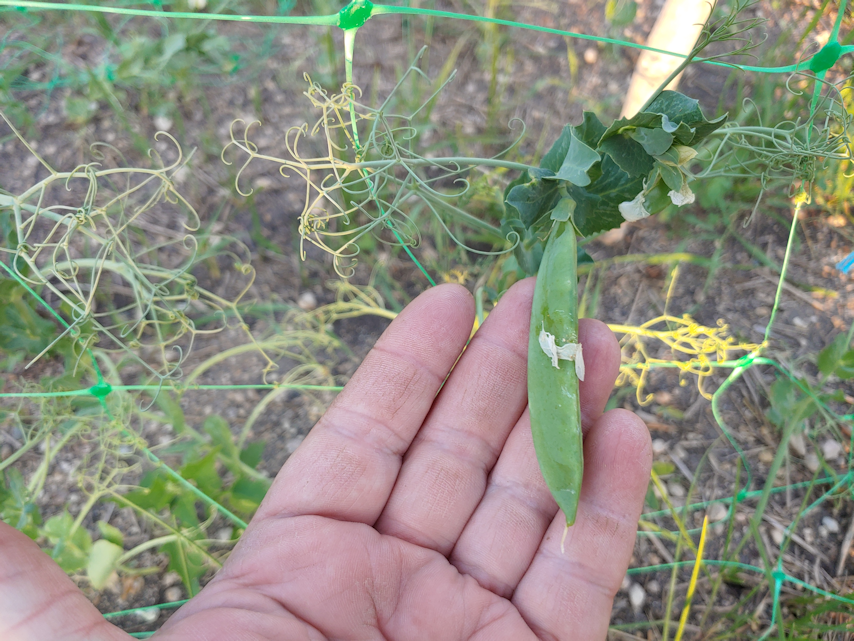
Our first pea pods are developing!

The green pea pods are surprisingly large, for the size of the plants. There turned out to be quite a few of them we found as we watered. I didn’t see them this morning, but I may have missed them.

There was no missing these ones, though!

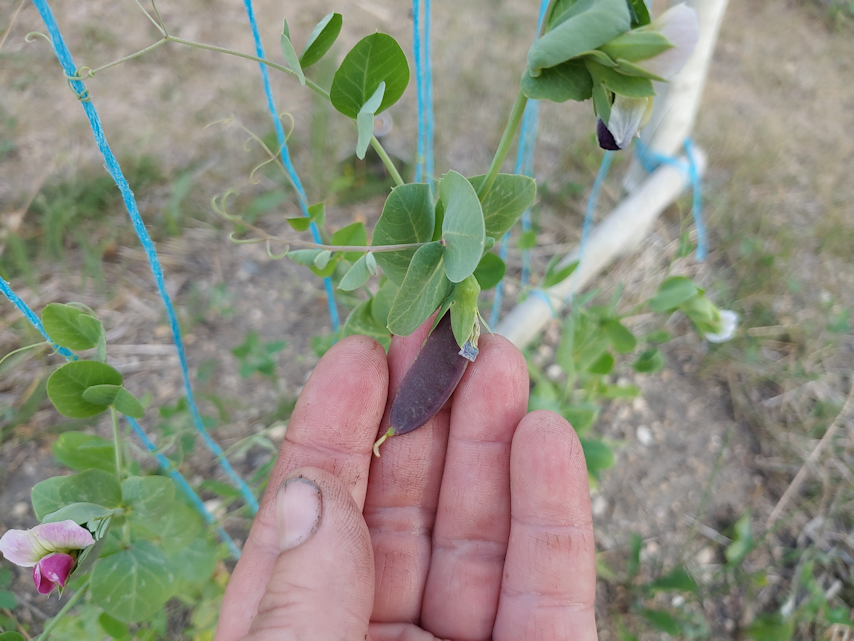
These pods are SO purple! I love them! :-D Among the purple peas, we only found two pods, so far.

Oh, I am so excited. :-D

Before I transplanted the sunflowers, which you can see in the row in the foreground, I hoed around the remaining Dorinny corn. Of the 7 rows we planted in this block, there are 4 rows left, and all of them have gaps. I did transplant about 5 corn plants from the other three rows into the larger gaps. They seem to have handled the disturbance well. Even the corn plants that got munched on seem to be recovering!

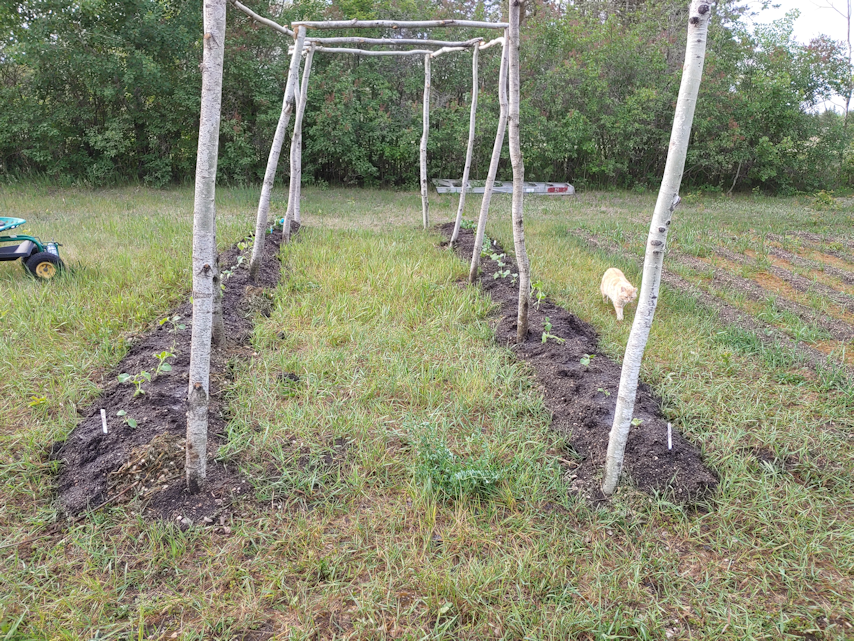
It’s hard to see, but after the watering was done, the girls put up the wire mesh on the last section of the squash tunnel. My younger daughter has been diligent in getting the winter squash, gourds, melons and peas trained to climb their various structures.

While they were putting up the wire mesh, I got another corn block hoed.

Even though we had already watered everything, I was finding the soil so dry, I watered all the sweet corn and sunflower beds, over again. Little by little, I’ll be hoeing all the blocks. Since these rows were just new garden soil placed directly on the ground, with no cardboard layer, nor any sort of organic matter underneath, what few plants that were growing here are working their way through. As this corner gets so baked in the sun, what little had been growing here can handle drought conditions. Their roots are incredibly tough and hard to pull. Now that the area is being watered for the first time, these plants are growing like I’ve never seen them before. I don’t want them choking out our corn and sunflowers, but my goodness, they are hard to dig up!

With these beds being so far from the house, we’re doing a lot of dragging of hoses around. Today, a pair of hoses gave out. The joined connectors both started to break, spraying water with remarkable pressure. So tomorrow, I’ll have to head into town to find both male and female connectors to replace the broken ones. Both of these hoses were purchased last year, but considering what we’re putting them through, I am not at all surprised that they would break where they did.

Oh, my daughter tells me that the potatoes are blooming now, too. When I watered them this morning, they still just had buds.

So much growth is happening right now!! :-)

On a completely different note, my husband got a notification email. Our StarLink kit is on its way. Our area should get coverage by mid to late this year – and we’re already midway through the year. I’m really hoping this new service works out, even though we would still be in Beta. Our satellite internet bill keeps going up, while the quality of our connection keeps going down. That is annoying enough in general, but I’m finding the WordPress editor seems to need higher connectivity than pretty much anything else. The editor simply won’t finish loading in any browser but Chrome and Tor. While everything loads much faster in Tor than on any other browser, the block editor does not work well if I have to go back and edit or adjust things, because blocks end up overlapping each other. Today, Chrome stopped working, too. Nothing will load except the tool bar across the top, and the question more icon in the bottom corner. The rest is blank. And sometimes, I don’t even get that much. Instead, WordPress just keeps timing out and I get error messages, instead.

So I’m using Tor right now, and am hoping that I can eventually load WordPress in one of my other browsers enough to open the draft and fix any weird formatting that might happen.

Hopefully, once we’re on StarLink, we’ll have a more stable connection. We’ll also have unlimited data, so we won’t need to have two accounts anymore. Switching could save us a couple hundred dollars a month, possibly more. Well worth the initial expense of setting up, which is pretty high, but doesn’t get billed all at once. For now, we’ll just be charged for the kit that’s being mailed out to us, which includes the dish, router, tripod and all the cables, parts and pieces needed to install it. My brother knows quite a few people already on the service, and they are really, really happy with it.

For now, though, I have to keep juggling browsers, just to be able to keep posting on this blog. I suppose I could use my phone, but I really need the big monitor and full size, ergonomic keyboard! That and the editing software I use to resize any photos I include, so they take up less storage space in WordPress.

So we’re getting a little bit of technical progress to go with our garden progress. :-)

The Re-Farmer

Our 2021 garden: one last bed, and transplants

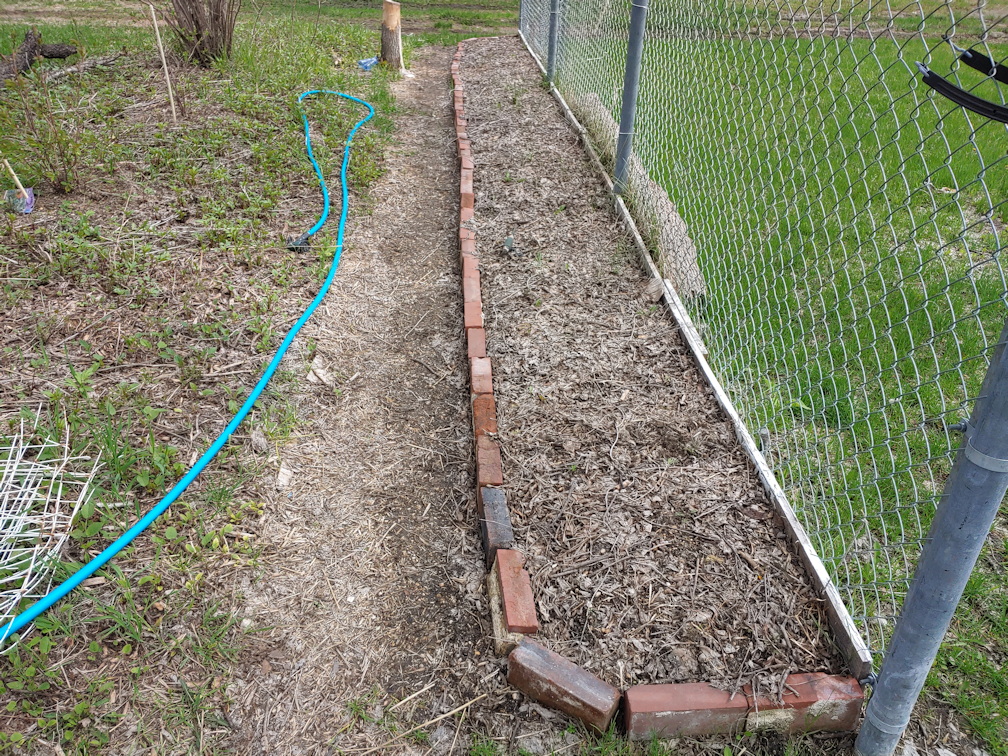
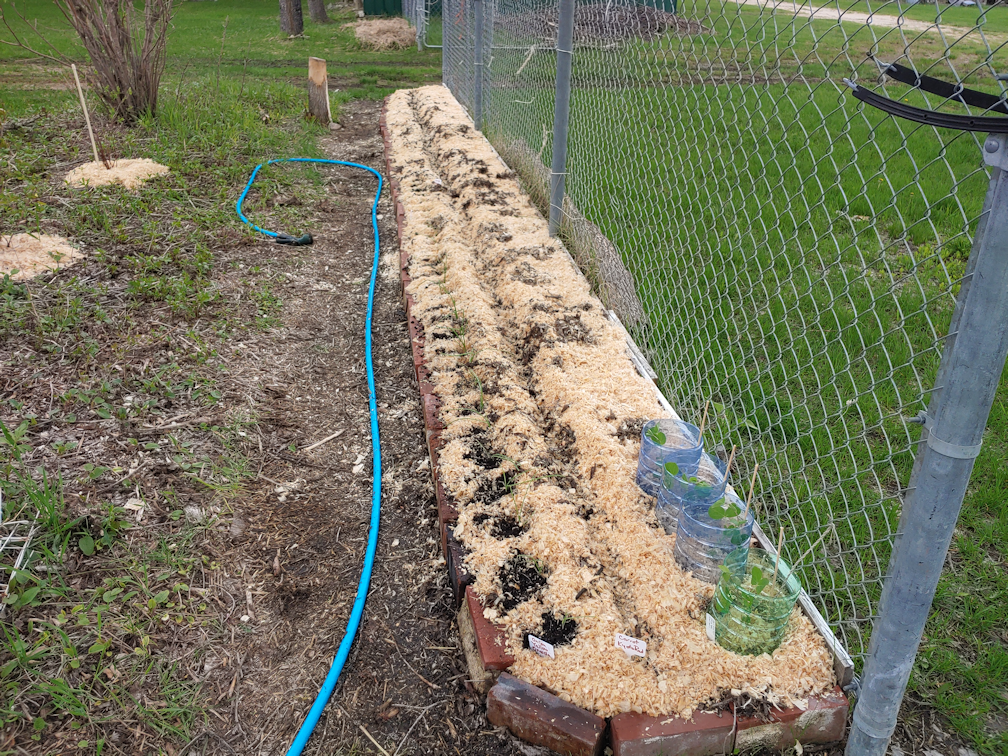
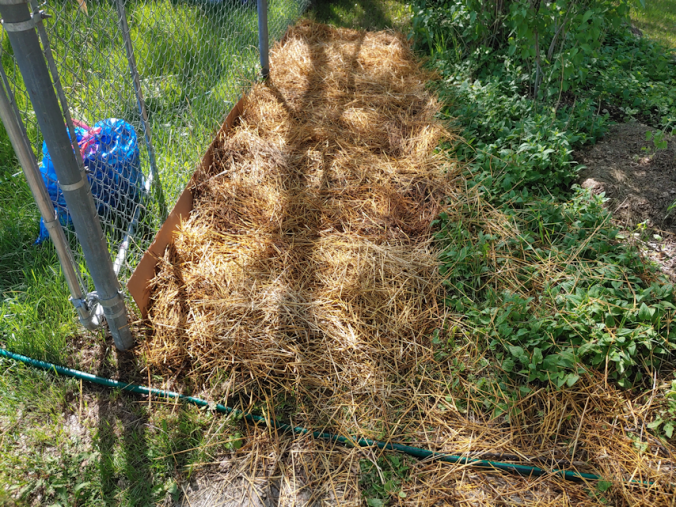
Today, I built what should be the last garden bed for the year. This one is for the climbers.

Here is what the space looked like when I started.

New garden bed location.

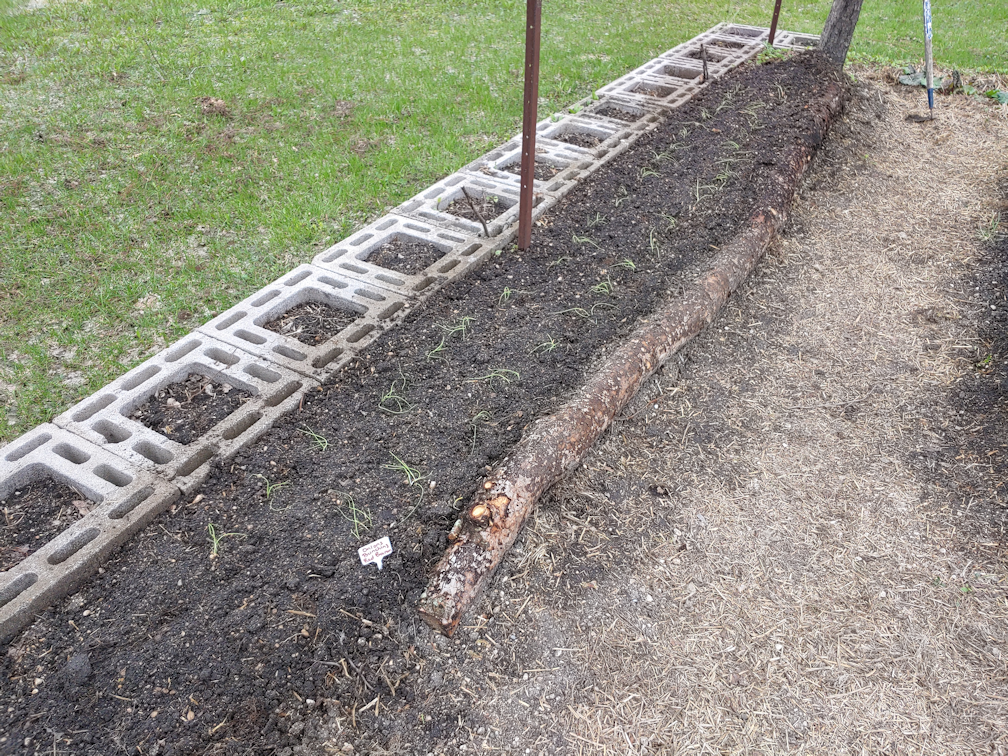
The original plan was to use the remaining chimney blocks, like the one in the photo, as planters along the chain link fence, but they remain in the basement until we can figure some thing out, and it is not a priority.

cardboard layer

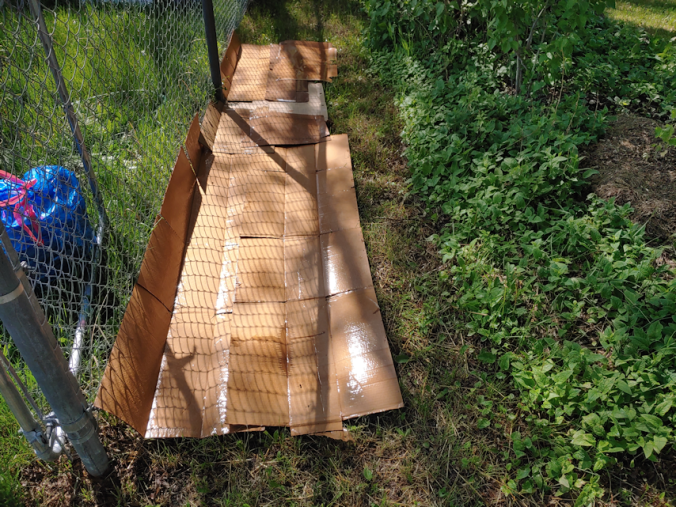
We’ve been saving up our cardboard, and had just enough to create a barrier layer, which got a thorough soaking.

straw layer

The next layer was the straw, which is also the mulch to cover the path between the new bed and the flower bed beside it. I was able to get some of the straw at the bottom of the bale that has had time to start breaking down, too, which was great! This layer, like all the layers, got a thorough soaking – after I beat it flat with the back of a fan rake.

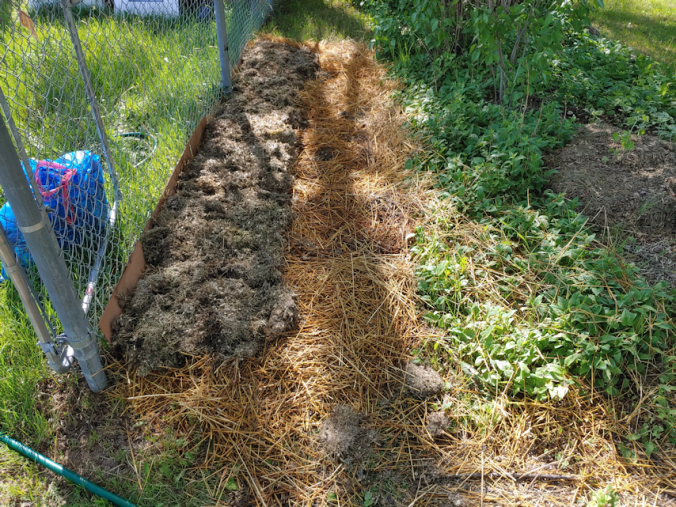
kitchen compost layer

Then, because we had some, I emptied our kitchen compost along the fence line, which got tromped on before a soak.

There wasn’t much. We don’t get a chance to accumulate much for the compost pile. It tends to get used right away!

grass clippings layer

We still have grass clippings, so a thick layer of it got laid down.

shredded paper layer

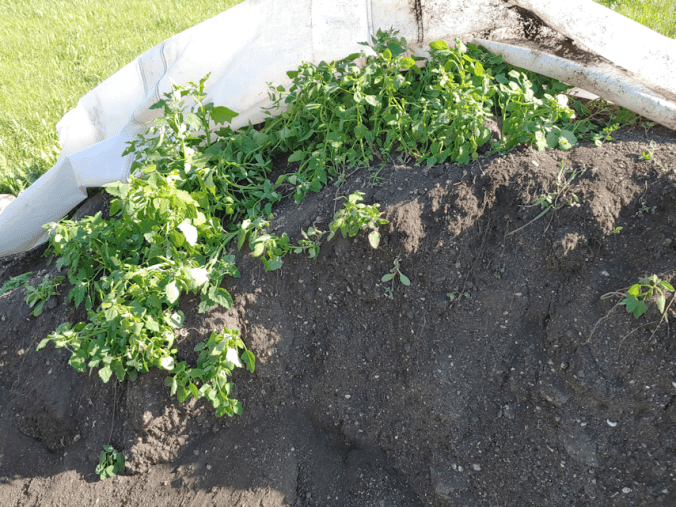
We’ve been keeping our compost-safe paper for shredding, and I had a bag full to add for another layer. After giving it a soaking, my daughter tromped it down for me, while I went to get a load of soil. This was from the nearby tarp covered pile in the outer yard. When I pulled back the tarp, I just had to call the girls over to take a look!

finding weeds

The white tarp allowed enough light through for the weeds to start growing, and grow they did!! They were huge!

These are mostly lambsquarter, which are supposed to be edible and very healthy. Better than spinach!!! At least that’s what the breathless Pinterest images that have started to show up in my feed are all exclaiming. Maybe some day we’ll try them, but for now, they are growing in places we want other things to be growing (or, in the case of our soil pile, nothing to be growing!), so we’re pulling them. Still, it was something else to see how big they got under that tarp! It actually is encouraging, since we plan to build polytunnels and high raised beds in the outer yard, eventually.

soil layer

Finally, a thick layer of garden soil was added to the new bed, with a trench down the middle to hold water. My daughter did catch me before I made the new bed too wide. With the one we made for the tomatoes, we’re finding it a bit hard to reach, even though we ended up narrowing it down when we added more soil for the transplants. We’ve noticed the same issue with the beds of spinach, carrots and onions. They’re only about 3-4′ wide, but they are low beds right now, and we’re short. It’s hard to reach the middle while bending down so far; our balance goes off kilter. Especially for my daughters who, unlike me, have not had their generous proportions surgically reduced. That really affects center of balance! It would not be an issue with the tall raised beds we plan to build, but we need to remember that, for low beds, they need to be narrower. Especially if we can reach from only one side, like these along the fence.

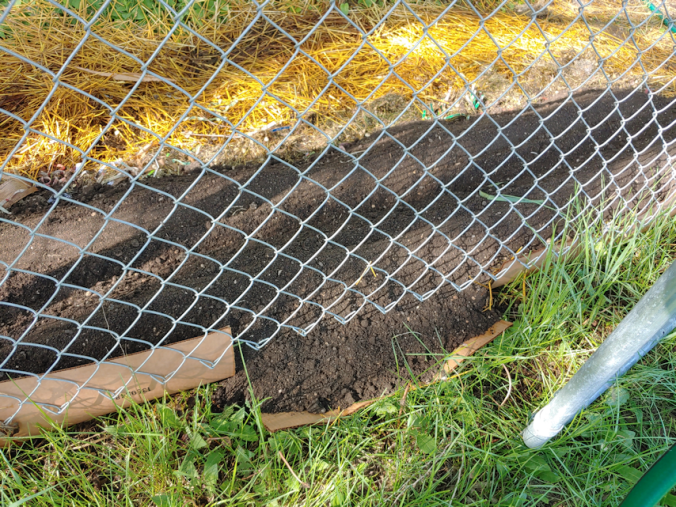
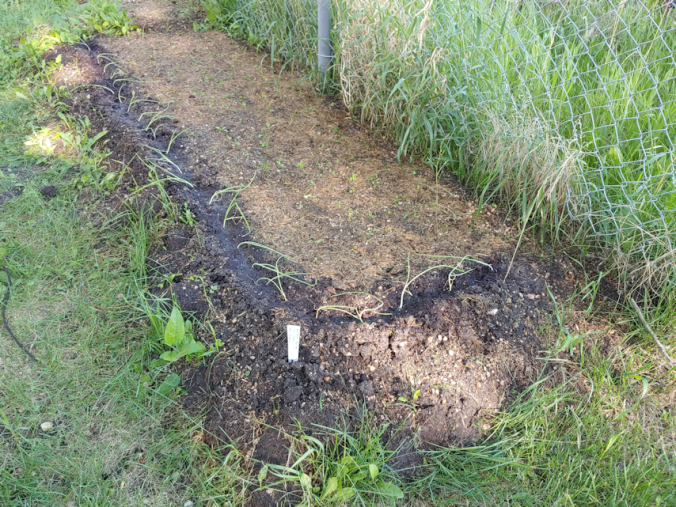
One thing that was an unexpected issue is that the chain link fence on this side is higher above the ground at the bottom than on the other side of the gate.

soil spill

Which means that the damp cardboard flaps against the fence couldn’t quite hold the soil in some places! Which is fine. We’ll work around it.

transplants

After filling the trench in the soil with water to soak it, I brought over the cucamelons that have sprouted (most did not, but that’s okay; we planted way more than needed!), as well as the gourds. The bucket and plant pot have the cucamelon tubers in peat that I dug up from last year, to see if they would grow this year. Time to dump them out and find out if they survived!

peat in a wheelbarrow

They did not.

Aside from a few wispy root clumps and what may have been the dried outer skin of a tuber, I found nothing. They had completely decomposed.

Well, that just left me with some peat I could make use of.

peat trench

So I widened the trench I’d made before, added some peat to it, and watered it again.

Then it was time to do the transplanting.

transplanted cucamelons and gourds

The cucamelons were all in their own Jiffy pellets, so they were easy to space out. I planted even the tiny ones. If they make it, great. If not, at least they had a fighting chance! Our cucamelons from last year were quite prolific, even in less than ideal conditions. This location gets much more light, so I expect them to do even better, here. If all grows well, this fence will be completely covered with climbing vines!

Of the gourds, the pot that had 2 Ozark Nest Egg seedlings had sprouted a third! I’d forgotten I’d planted 3 seeds in the cups. The pot that first sprouted still had only one, plus there is the one Thai Edible Bottle gourd. These are in Jiffy pots, so the ones with just one seedling in them got planted whole. The one that had three in them, I gently broke it open along one side and sort of unrolled the contents to separate the seedlings. One of them just sprouted today, so it’s unlikely to survive, but who knows? It might do even better than the others. :-) I believe in you, little sproot!

That done, I had some more transplanting to do. I’d put the last of our Norstar onion seeds into a Solo cup, and they not only sprouted, but are starting to form bulbs!

The girls and I had talked about where to put them, and the border of the asparagus bed seemed the best place.

bulb onion transplants

The onions are shallow growers, and there’s plenty of space between them and where the asparagus are, so this should be fine. At this stage, I doubt they will reach full maturity, but they will help deter critters and insects. There were more seedlings than would fit here, so I added the last of them in front of the Mosaic Mix tomatoes. There had been some bunching onions transplanted there before, but they were the tiniest, wimpiest ones that we probably shouldn’t have bothered with, and only 3 were still alive. Which is fine. There are more bunching onions in front of the Spoon tomatoes. We’ll see how these ones do!

That’s pretty much it for the transplanting. We should probably plant the one Hopi Black Dye sunflower that finally sprouted. Since there’s just the one, I’m thinking of planting it somewhere else, like in the old kitchen garden. The pink celery will go into a pot that we can move in and out of the sun room, as needed, but they are way too tiny to do anything with, yet.

Which means that tomorrow, it’s back to the other garden beds. The pea trellises need to be finished, the squash tunnel needs to be worked on, and the summer squash needs a garden soil top up, before getting mulched with straw. Somewhere in there, I need to actually mow around the main garden beds. It’s getting pretty out of control around there! For the old garden area, I’m seriously considering using the weed trimmer, instead. It’ll take longer, but I won’t have to worry about hitting rocks or lumps of soil with the lawnmower. Also, of course, weeding. Especially in the corn and sunflower blocks. All the stuff that barely grew there before have had the most moisture and inadvertent tending since… ever, and they’re really liking it! :-D

The main thing is that, aside from the pink celery and that one sunflower, we’re done the transplanting! Anything else that didn’t germinate by now, isn’t going to. We won’t be tending those pots anymore.

Aaaannnndd….

It was getting late, so I paused and took the pink celery seedlings indoors, then went ahead and transplanted the one Hopi Black Dye sunflower in the old kitchen garden, in the bed we planted the poppies in. So that’s done now, too!

Today was a good day of progress! :-)

The Re-Farmer

Our 2021 garden: corn, gourds, squash and melon transplants DONE!!

Yes!!!!! We managed to finish transplanting tonight!

I thought we might have to move beyond the squash tunnel, but since these will be trained to climb, we were able to plant them closer together than we normally would, and they all fit. Also, I was sure we had the little pumpkins to transplant. I was wrong. None of them germinated. We didn’t plant many to begin with, but I’d hoped to have at least one!

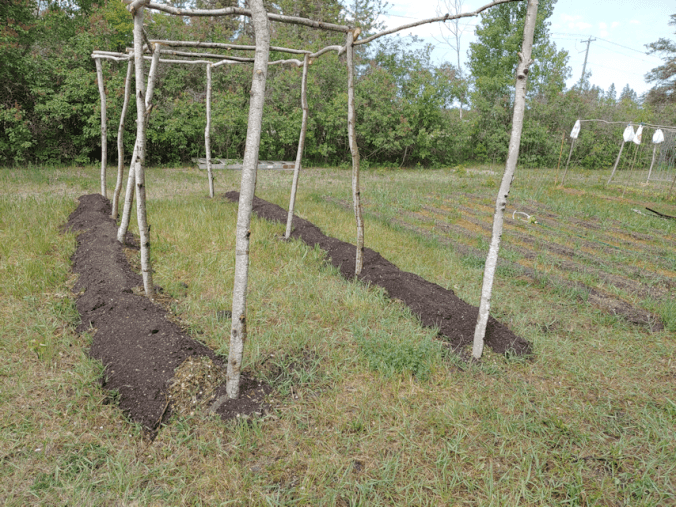
At the far end of the squash tunnel, we have 4 luffa vines on one side, and 3 dancing gourd on the other. Next to them are the two varieties of winter squash, and the two varieties of melon.

There are a lot more melons than anything else (I REALLY love melon!), and that’s even with several cups that never germinated. There are some cups with summer squash in them that never germinated, either, which is why we have only 15 transplants. We all really love summer squash, so we would have enjoyed more, but it’s still a bit more than we had last year.

Now that the squash tunnel’s transplants are in, they, and the summer squash, will be getting a mulch of straw as soon as we are able to get back to it. Then I’ve got to get those bottom cross pieces in, so we can attach the mesh for them to climb.

That done, it was time to finish the new corn block. I’d put a fairly deep layer of grass clippings down, first, so I wanted to put a fairly deep layer of soil. Plus, the garden soil tested high in nitrogen, which corn uses a lot of, so I wanted to make sure it had at least that for the transplants to start in.

After the soil was in place, I made a trench in each row to plant into, then thoroughly watered the trench with water from the rain barrel.

Doing the actual transplanting was rather cringe worthy. I keep hearing from others that corn doesn’t handle being transplanted well, their roots don’t like to be disturbed, and so on. At the same time, I have heard from zone 3 gardeners that only start corn from transplants and never had an issue. Still, I really would have loved for the toilet paper tube plan to have worked. I don’t know of anyone who has tried to grow Montana Morado in Canada, never mind in our province, nor can I find anything online about it, so this is all completely experimental.

The biggest, healthiest looking corn plants tended to be the ones were all 4 seeds in the cups germinated. Except for when they were taken outside to be hardened off, the cups with their drainage holes were all in a bin that had water on the bottom, so they could take up water from below. Which means that there were strong roots at the bottom of the cups, and with anything more than 2 plants in a cup, that meant having to tear the roots apart to separate them.

I am really, really hoping they survived this.

They are, however, all in! I even managed to get some in the little half row I wasn’t sure if I’d be using. I went ahead and planted the little ones, too. Considering they tended to be a single plant per cup, they might actually end up doing better!

Also, the flash makes it look darker than it actually was. I did still have enough light to see what I was doing.

After they were transplanted, I gave them a gentle watering with the hose. It was amusing to see a flashlight coming through the increasing darkness. My daughters hadn’t realized I’d stayed out to finish transplanting the corn, and one of them came out to check on me. :-D Which was handy, because that meant I had help putting things away. The washing of the cups and trays, however, will wait until tomorrow!

The only thing left to do with the corn is put a mulch in the paths between the rows. More to keep the new soil in place while watering than anything else.

Now that this is done, the girls and I can head into the city tomorrow, and I won’t be angsting over getting the transplants in the whole time we’re out! :-D

I’m tired and in a world of hurt – and really, really appreciating having my husband’s bath chair to use in the shower! – but I am very happy. :-)

The Re-Farmer

Our 2021 garden: transplanting progress

We’re taking a break from our push to get the squash and corn transplanted today. Lots has been done, with lots more to do, but we just had to stop for a while.

My daughters didn’t take any photos of what they were doing, so I just have “after” pictures to show.

This is the summer squash. We have only 15 transplants; quite a few did not germinate, but we do have some of all 4 varieties. There’s an extra hill. Later on, straw will be added around the hills for mulch, and I will be adding stakes near the transplants, to train them to grow vertically. This is supposed to help prevent fungal infections or rot from touching the soil, increase air circulation, make it easier for pollinators to get to the flowers, increase yield and make it easier to harvest. The bottom leaves are supposed to be pruned away, and it will also be easier to water them at the roots.

At least, that’s how it’s supposed to work. We shall see!

Next, they started building the beds at the squash tunnel. Priority for planting here are the luffa and dancing gourds and the winter squash. Oh, and the little pumpkins. We have quite a lot of melons to transplant, too, but if there is no room here, there is a lot more space where the sunflowers were planted last year.

What they were working on those, I worked on the new corn block.

I had turned about 2/3rds of it last night, so I didn’t expect it to take too long to finish.

Then I hit something, right near the end. Of course, I was hitting rocks the whole time, but usually I could just move the fork a few inches and keep going. Not this time!

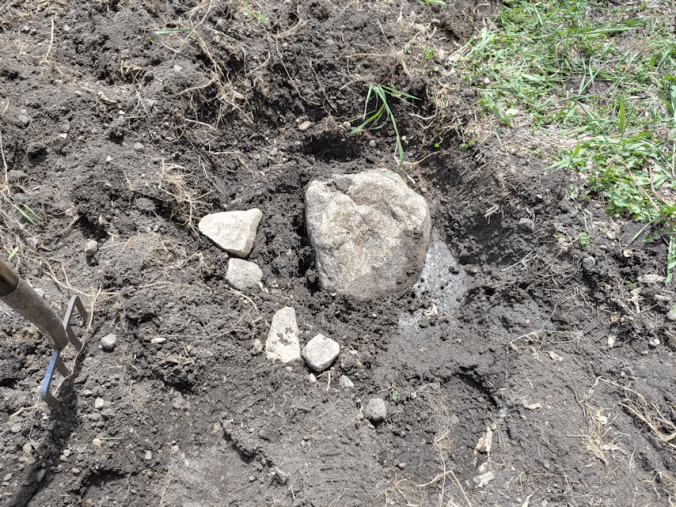
I ended up using a space to dig around the rock. I dug up a few other rocks, but part of it seems to continue below where the soil is still undisturbed.

I used water pressure to clear the stone and try and see how much further it went, but that wasn’t much. My younger daughter decided to give it a try, and ended up bending the fork, trying to move the rock!

So… it will stay. :-D

The next step was to take out as many roots, rocks and start leveling things off.

That stick coming out of the ground in the background is a tree root. I have to grab something to cut it with!

For this part, I had a garden claw with a long handle we found in the basement when we were cleaning it out. What a back saver! You can see, all around in the grass, where the roots, crab grass and weeds were tossed. Rocks got tossed under trees, so they wouldn’t be “found” with the lawn mower. Of course, it’s not possible to get all the roots out, but I got most of them.

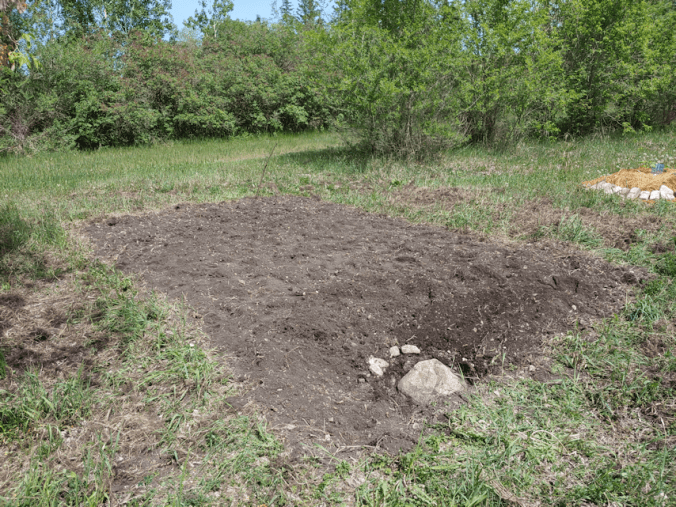
Finally, I could go over it with the thatching rake, which picked up a few more roots that I missed, as well as some rocks, and leveled it off a bit. I chose not to bury the big rock again, as it was so close to the surface. I’d rather see it and know it’s there, than forget about it and plant something on top by mistake.

One thing about this area; it has the deepest top soil of any part of the old garden, yet! I didn’t reach gravel until I started digging deeper to try and get around the big rock, and while I found other chunks of rock, I just barely reached the gravel layer. This is the soil my mother is talking about, when she talks about how great the soil used to be. Except for the rocks. She didn’t remember the rocks! :-D

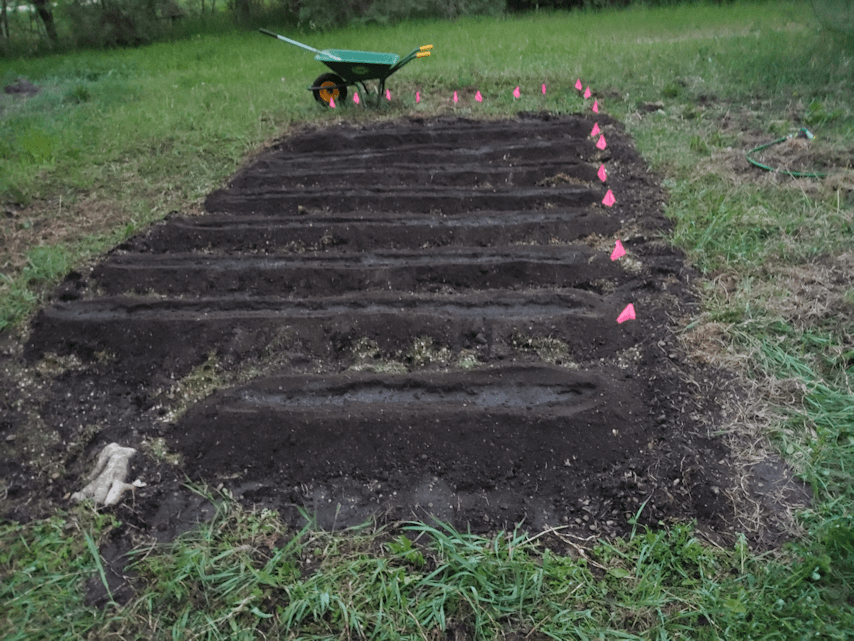
The next step was to mark out for planting. I counted the corn plants this morning, and there are 65, plus a couple of bitty ones that probably shouldn’t be transplanted, but I likely will, anyways. I wasn’t sure if I’d have enough space, but with rows 2 feet apart, and the transplants 1 foot apart in each row, I will have enough space.

While the soil may appear good, all the soil tests I did showed a lack of nutrients, so it will still be amended. I used the flags to lay down grass clippings. I lay them out in rows, but I don’t mind them spilling over into the paths in between, to help keep the weeds down.

After this photo was taken, I used a watering can and rainwater to wet down the grass clippings, since the hose and sprinkler were needed at the other end of the garden.

Then we headed inside. We reached 30C/86F while we were out there! So we will take a few hours indoors and let things start to cool down before we continue.

We have predictions for rain tonight, and possible severe thunderstorms by tomorrow afternoon. They might even hit us. :-/ If it does look like we will get a severe storm, we have things we can use to cover the squash to protect them, though the corn would be on its own. It is, however, in a more sheltered area of the old garden. We shall see.

We might still hit our goal to get all the transplants done here by this evening! After that, we have transplants for the south yards, but they are not as urgent and can wait a bit longer.

As for me, I’m seriously thinking of joining all the cats on my bed for a short nap. I’m so tired, I have been falling asleep while writing this!

I’m going to be hurting so much by the time all this done, but it’ll be worth it!

The Re-Farmer

Our 2021 garden: unexpected things

Yesterday, one of my goals was to start on the lawn. We have yet to mow the lawn this year, but with how little rain we’ve had, it’s not really that overgrown. Other than some straw we still have left, we’re out of organic material to layer and mulch with, so it would be good to have grass clippings again. At the very least, I wanted to get out the weed trimmer and do the edges.

Then I got a phone call.

My mother was letting me know my sister was on her way to visit her, and they were planning to go to the cemetery, which is just a few miles away from us. They were planning to come here, after.

*sigh*

We had talked about this possibility just the day before, so I can’t say it was too unexpected, but I had advised against doing a cemetery trip when we were supposed to get so very hot again. She also knew that I like to have a lot more notice before visits, so we can be prepared. My mother actually sounded apologetic when she was telling me they were coming over, and added that she was good with not going into the house if we didn’t want her to. Which isn’t the problem, but whatever.

So the girls did a quick rush to try and prepare things, like making sure everything was clear from the sun room doors, though the old kitchen, to the bathroom (so my mother wouldn’t have to use the main doors, with all the little sets of stairs), while I quickly used the weed trimmer around the yard, between the main garden beds, and a few other places that I thought my mother might want to get at with her walker. I had thought to move the picnic table to a shady spot in the south yard, but my daughter reminded me that, when we moved it to where it is now, after it was painted, it was pretty rickety, so it probably couldn’t handle being moved so far, again. So she set up some camp chairs in the shade, and we used an overturned bin for a table. :-D My mother and sister had even brought some fried chicken, so we had ourselves a picnic lunch in the shade, before touring the yard and garden beds.

When they arrived, my sister passed me something my mother had for me. At her apartment building, they have garden plots available. My mother doesn’t do much gardening herself anymore, but she does tend the perennials that had been planted by some of her friends and neighbours who have passed on. The caretakers, unfortunately, have a habit of digging everything up at the end of the year, including a bush my mother described as having beautiful yellow flowers, followed by black fruit. She had no idea what it was; it was planted by someone who passed away some years ago. No one ate the berries, but it was lovely, and the caretakers dug it up and got rid of it. This spring, while tending some plants, she noticed that part of the bush had survived. Not wanting the caretakers to kill it off, she dug it up and put it in a pitcher with some soil. She wanted to give it to me to plant somewhere near the house. We have a grocery shopping trip arranged next week, and I was going to get it then, but with my sister coming over, they were able to bring it over early.

I’m pretty sure it’s a currant, though my mother says it’s different than what we have here. My sister, who is the one that gave my mother the currants that are here, thought it might be a gooseberry. Whatever it is, I made sure to transplant it as soon as things started cooling down a bit. I picked a spot right near where we’d had our picnic lunch. There is a flower bed with white lilacs taking up about half of it. After it was cleaned up, a couple of years ago, we were left with an empty spot that I decided to take advantage of.

I scraped away the wood chip mulch we’d put in, first – it was about 3 inches deep – and started digging. I had to shift the hole a few times, after hitting tree roots, but after clearing out a few bigger rocks, I finally had a space I could transplant into. It was bone dry. We don’t water this bed regularly, but I have been trying to water the lilacs and a low growing plant with variegated leaves I like. From how dry the soil was, you’d never know it had been watered recently! So I filled the hole with water, then got a wheelbarrow load of new garden soil.

After transplanting it into the hole with fresh garden soil, I put back some of the mulch and gave it another thorough watering.

So we now have a new, unplanned, fruit bearing bush in the yard. :-) Hopefully, it will survive.

Backtracking a bit; my mother and I had talked about her coming out to see the gardens later in the season, when things were more grown in, but she got a bit of a tour yesterday. I did appreciate her very visible efforts to not say anything negative, which is usually the only thing she’ll say. I think it’s a generational thing, or maybe a cultural thing, but my mother seems to believe in NOT saying positive things. Like it’s somehow bad to compliment people or something. I suspect it has to do with believing it would lead to pride or something along those lines, though I doubt that’s in any way on a conscious level. She did, however, manage a backhanded compliment on how healthy the garlic looked! So that’s progress. :-D

She was not up to taking the walker to the furthest beds, of course, but my sister did, with her ever-present camera, and she got lots of pictures. It was a long day for my mother, so they left almost immediately after touring the yard. Going to the cemetery, then coming here, was probably too much for her. :-(

After I’d taken care of the transplant my mother gave us, I started hearing thunder. We’ve been having thunderstorm warnings for a while, but they kept getting pushed back. We were hoping to at least get some rain! I could see the storm clouds, and the wind was picking up, so I brought our hardening off transplants back into the sun room early, and we even shut down our computers, just in case.

We got nothing. Not even a spit of rain.

By 9:30pm, I finally went back outside to water the garden beds. The rain did finally come, but not until about 5am this morning.

When I headed out to do my morning rounds, it was still raining! A lovely, steady rain. I got completely soaked. :-D So no pictures this morning. ;-)

While checking the garden beds, I had some more unexpected surprises. The sweet corn is coming up already!! New shoots, in all three corn blocks. I also found more Hopi Black Dye sunflower sprouts, but also some Mongolian Giant sunflowers have already sprouted! Clearly, they are loving our heat wave. The bush beans, meanwhile, are coming up like crazy. The purple ones are still a bit slower in coming up than the yellow and green beans, but once they do come up, the sprouts seem to be leafing out faster than the others.

I’m finding it awesome that so many things we direct sowed is sprouting already. We haven’t even finished putting out our transplants, yet! :-D

Of course, while checking the garden beds this morning, I was looking for deer damage. When I’d watered last night, I tied some plastic grocery bags onto a couple of the stakes supporting the Mongolian Giant transplants, as a noisy deterrent. Happily, there was no new damage.

Then I checked the trail cam.

There was one file triggered during the night. Off in the shadows, a single deer could be seen, walking through! It looked like it was going down the path between the corn/sunflower blocks, and the pea/bean beds. It didn’t stop or pause, but kept walking towards the spruce grove.

Today, I’m moving the camera again. I think I know where the deer came in, but there are a couple of places they like to jump the fence, and I want to cover both possibilities, if I can, and see if there are any other areas they might be coming through.

We shall see what the weather does today. Today’s expected high is “only” 25C/77F, with scattered showers. Which means we will probably not be able to use a power drill, with its 300 ft or so of extension cords, to finish assembling the squash tunnel. Hopefully, we’ll be able to get the summer squash in, though we might have to prioritize the Montana Morado corn. At least the place they will be planted is right next to what’s left of the pile of garden soil. We might end up having to use soil from the pile in the outer yard to finish transplanting. The good thing is, we actually have that second pile!

Little by little, it’ll get done!

The Re-Farmer

Our 2021 garden: transplanting Crespo squash

Pretty much all of the squash, both winter and summer, that we chose are small varieties that mature quickly. The one exception was the Crespo squash. Of the 6 seeds we planted, one came up and got quite large. After we moved our seedlings from the aquarium greenhouses to the sun room, a second seedling sprouted.

That’s good enough for me!

As these are supposed to grow quite large, we decided they will get their own space. Near where we will be transplanting the Montana Morado corn is a very rough area; one of the worst areas from the shoddy plow job that was done before we moved out here. The plow had been turned in this tighter area, creating a particularly large lump of soil in the process.

I figured, we may as well take advantage of it, and turn it into a squash hill!

Yeah. That’s basically a dirt and crab grass hill my garden fork is stuck on. I’d already started to loosen the soil at the top of it. The grass is so tall, you can hardly tell there’s a hill there!

I used the hose and water pressure to soak and break up the soil, which made it easier to pull out vegetation and roots. And rocks, of course. There are always rocks!

It was also the first level of watering, and boy did the soil need it!

The next step was to layer on some straw, which got thoroughly watered while a daughter brought over our kitchen compost bucket. When that got added in, it got another watering. If we had other organic matter I could have layered on there, I would have, but this will have to do.

Hhmm. I neglected to take a picture of the next stage, which was to bring over a wheelbarrow full of garden soil to top up the hill. After creating a bit of a hole in the middle, that got another level of watering, then a bit more garden soil was added, to level it off. That got another watering in the middle. After the straw was added all around it, everything got another watering. The straw will help keep the soil from washing away, as well as keep down the weeds and help keep the soil moist.

Finally, the squash got transplanted. Since there was one plant per cup, they got dropped right in, with almost no root disruption.

I still had a little bit of the peat and soil mixture we used for the tomatoes left in the kiddie pool we used to mix it in. That got turned back into dirt soup, and was added around the seedlings.

To help with watering them at root level, I cut the bottom off of one of the distilled water bottles we get for my husband’s CPAP, and buried it top down in the middle of the squash hill. Another spade full of soil was added around the container, because it kept trying to float out of the hole it was buried in! :-D

The final step was to pull some of the damp straw up around the seedlings.

While the plants are small, we will make sure to water the straw to keep it, and the squash hill, moist but once they get bigger, we’ll be able to deep water them at the roots, through the container in the middle, and avoid getting their leaves and stems wet.

The entire hill got another watering, and it was done!

I really hope this does well. I honestly have no idea how these will grow in our zone. In doing searches for it, I am just finding the Baker Creek seed listing, and my own blog posts!

Well, I guess we’ll find out! :-D

One more transplant done!

The Re-Farmer

Our 2021 garden: transplanting tomatoes and onions

After we got the sunflowers transplanted, the girls and I decided we would transplant the tomatoes today, too.
This is the area we prepared for the tomatoes, back in April, so that we can use the chain link fence to support them. You can read what we did to prepare it here. Though we have been wetting it down fairly regularly, there just hasn’t been enough moisture for the straw and cardboard to do much breaking down, and the soil layer was relatively thin.

Since the new garden soil is alkaline, and tomatoes like slightly acidic soil, we decided to make use of the last of our bale of peat. Before heading in for lunch and out of the heat, we took the time to mix the peat with garden soil and soak it down.

Basically, we made peat soup. :-D

The seedlings were brought over to wait in the shade, then we headed inside to let the soil and peat mixture absorb more water.

Do you see that cup with the itty bitty tomato plants in it? That is a cup with Mosaic Mix seeds in it. It took forever for one seed to germinate, so when the plants got moved to the sun room, we decided to keep it. Then, just about a week ago, the other seeds planted in the cup germinated! They’re really too tiny to transplant, but the girls wanted to, anyway. We’ll see how they do!

When we got back to it, the transplants were separated and laid out, after getting their bottom leaves and branches trimmed off. We did dig small holes for each one, but there wasn’t a lot of depth before we hit straw. Each transplant got some of the peat mixture built up around it, up to the lowest remaining leaves, so that the buried stems will grow roots and the plants will be stronger.

Then we added more garden soil in between each plant, to build up the soil depth in the bed, and to make sure the peat mixture won’t wash away when we water them.

The first things we started from seed were onions, but we lost all of our Red Baron bunching onions, due to cats. When we started using the Solo cups as pots, I decided to broadcast sow the last of the seeds we had in a couple of cups and see what happened. With one of them, nothing happened, but with another, they did actually sprout. They’ve been hardening off along with everything else, and onions are supposed to be good companion plants for tomatoes, repelling insects, so we decided to go ahead and transplant the onions, too.

Some of them are REALLY tiny, but the girls went ahead and planted them anyhow. They’ll either make it or not.

The onions got planted in where we added more soil, but you’ll notice a gap in the middle. The tomatoes in the foreground are the tiny Spoon tomatoes, while the ones at the far end are the Mosaic Mix tomatoes. In the middle are the super tiny, sprouted really late, Mosaic Mix tomato plants. They’re so small, no extra soil was added around them; they would have been buried completely! We’ll see if they survive or not.

As always, we thoroughly watered the soil before putting in the transplants, so when we did our evening watering, they only got a misting, to help settle the soil.

We did hit 29C/84F today. As I write this, it’s just past midnight, and we’re still at 20C/68F. Our expected overnight low is 17C/63F. Instead of having to watch out for a last frost hitting our transplants, we have to watch out for excessive heat! We’ll be doing a lot of careful watering over the next while.

One thing the girls and I did finally remember to do; we put our poor, bedraggled umbrella tree outside. It took three of us. One to carry the pot, one to open and close the doors, and one to keep the cats away! :-D

Tissue was watching me through the door!

Yes, the plant is on the stairs in front of a door. In this spot, it will get full sunlight in the morning, while it’s still relatively cool, but be shaded during the hottest parts of the day. We don’t use this door, so it can stay there. Right now, during the day, we open the inner door and set up a little step ladder, so that cats can sit on it and look out the window. The window is open just enough to allow a breeze through the house to help keep it cool. The outer door has a tendency to unlatch on its own, so to make sure the cats don’t accidentally end up outside, we have it secured with some cord. It has become a favorite place for the cats to see and watch all the birds outside! :-)

So the tomatoes are now transplanted. Between them and the sunflowers, I had a lot fewer plants to bring back into the sun room for the night! :-) The rest cannot be transplanted until we finish the squash tunnel for the climbers, and build beds for them, but they are all hardened off and ready for transplanting. So we need to get those done as quick as we can! Friday and Saturday as supposed to be scorchers, too. Ah, well. Better the heat for transplanting, than frost!

Little by little, it’ll get done.

The Re-Farmer