Our 2025 Garden: updates, radish pods, temporary trellis, and volunteers!

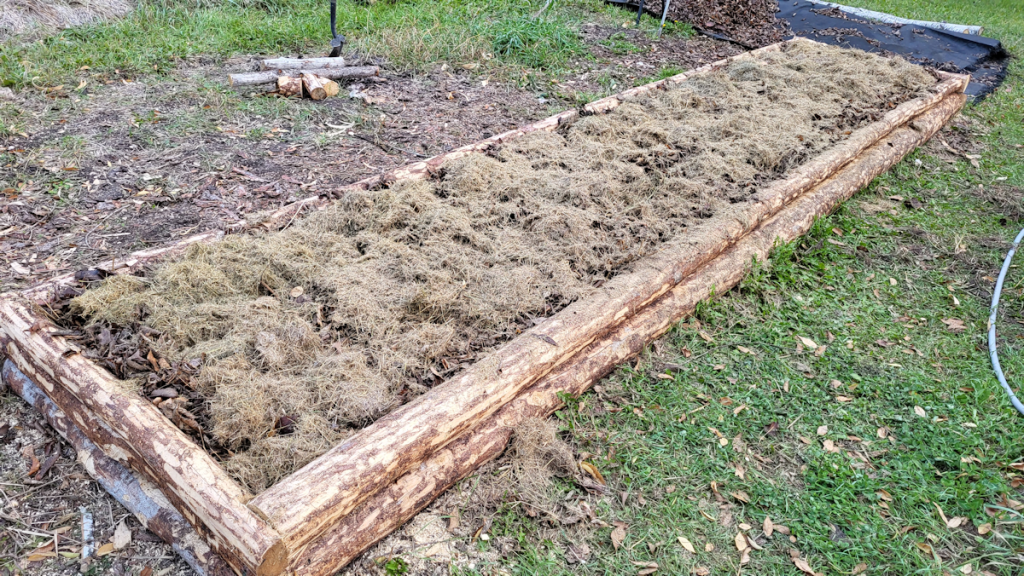
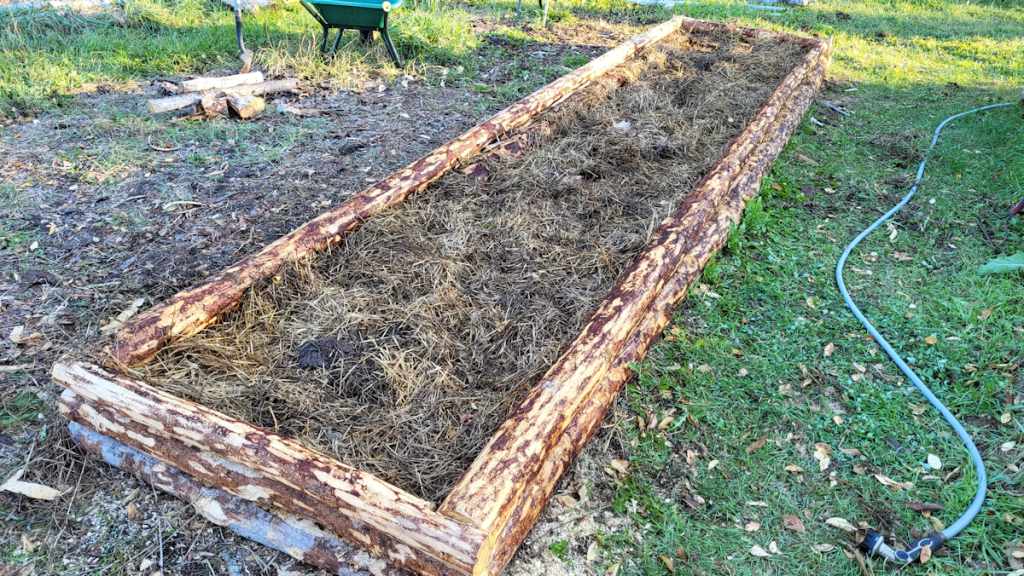
I figured I should get some pictures of the East yard garden beds, now that they’ve got some fresh stove pellet sawdust mulch on them.

The beans with the tomatoes are doing really well. At first, it seems that one of the seeds had not germinated, but it did eventually show up. That makes for a 100% germination rate of these old seeds.

Too bad a cat dug one of them up. *sigh*

In the foreground of the first photo, you can even see some of the self-seeded carrots coming up!

In the next image, you can see the second planting of beans coming up in between the corn. Of the first planting, there ended up being a total of three, maybe four, that came up, and only one of them came up strong and healthy. Considering these are the same seeds in the same bed, it’s hard to know why the first sowing failed so badly.

The last image is of the Arikara squash bed – and the corn in there is so much bigger than the ones in the other bed!

I really like using the stove pellets to mulch around seedlings. The pellets land around the small plants, rather than on top of them. Then, after being watered, the pellets expand and fall apart, with the sawdust creating a nice, fairly thing, but really light, mulch. So far, it seems to be working out with anything I’ve used them around. It helps that the 40 pound bags are so cheap, and a little goes a surprisingly long way!

Once my rounds were done, my older daughter came out to help me remove the netting around the trellis bed. We had an unfortunate surprise while pulling it out, though. I’ve seen frogs – even large ones – squeeze through the rather fine mesh but, unfortunately, a garter snake didn’t make it. My daughter found it stuck around and under the corner of the bed. It hadn’t been dead for long, but long enough that a big beetle was chewing on its head. We had to cut a section of the netting off, because we couldn’t get it loose from the netting.

As my daughter said, it’ll be good when we no longer need to use netting! At least not this netting. It’s always a concern that a kitten or a bird will get caught in it. I never thought a garter snake would get caught!

We were being eaten alive by mosquitoes while we got the net down, stretched it out, folded it in half length wise, then started rolling it up on a bamboo stake for storage. They were after my daughter a lot more than me for some reason, so once the netting was rolled up enough, I sent her inside while I finished. It’s now tied off and in the garden shed. I made sure it was resting higher up in the shed so, hopefully, no critters will get into it.

That done, I brought out some of the trellis netting we’ve used in previous years. This netting has 4′ square spaces, making it easy to reach through to weed or harvest.

I started off by weaving a bamboo stake through one edge of the netting, where there is a pair of lines about a half inch apart, instead of 4 inches. I tied one end to the vertical post at the corner, then stretched out the netting flat before tying it to the next post. Then I added the next bamboo stake, weaving it into the netting and joining it to the first stake, before tying it off to the next couple of vertical supports, then did it again.

The netting ended on the third stake, so I added another piece of it to a fourth stake before joining the stakes and matching the netting up. That left a lot of excess netting at the end, but I just bunched that up and secured it while trying off the stake to the vertical.

I had woven in a plastic coated metal stake at each end of the bed to keep the netting straight. After the horizontal stakes were in place, I pushed the netting down so any excess was at ground level. I then took the garden stakes there were already in place to hold the protective netting that was there before, and used them in the trellis netting. Each one got woven vertically through the netting, then I used them to tighten things up a bit before pushing them into the ground. Where the two nets overlapped happened to be where there was already a longer bamboo stake, so I used that to join the sections together at the same time. Once all the stakes were woven through and pushed in the ground, I used ground staples to secure the netting to the soil, catching in the excess, to make it all fairly stretched out and tight.

I recall from using the netting before that the weight of plants climbing it can cause issues, so I added another level of horizontal bamboo stakes along the middle. These got tied to the vertical garden stakes, rather than the posts for the permanent trellis. This way, the netting is at a slight angle for the beans to climb.

Then it was time to weed.

This bed hasn’t been weeding since the protective netting was placed all around it. A lot of the self seeded onions I transplanted into rows were no longer visible.

I started weeding along the trellis side. I probably should have done it before the trellis net was added, but the mesh is open enough to reach through easily. The problem was more my hat constantly getting tangled in it!

As I was working my way along the beans, I spotted a little volunteer tomato plant! I remember finding volunteer tomatoes in this bed last year, too. I’m not sure where the seeds came from!

When I found one, I left it, thinking it would be fine were it was. Then I found another.

And another.

So I thought I would come back later and transplant them once I weeded and could see a space for them.

Then I found another.

And another.

And several others!

As I was working my way down the onion side of the bed and kept finding more even tiny tomato plants, I started pulling them up with the weeds, then transplanting them wherever I had enough space between the onions or the pumpkins. Then, when I finished weeding the bed, I went around the beans side to dig up the ones I’d left there and transplanted them.

By the time I was done, I counted 14 volunteer tomatoes.

Or 15.

I actually counted 13, first, after all the weeding and transplanting was done. Then noticed one I’d missed, so I counted again and got 15. Then I counted again, as I was scattering stove pellets around the bed and counted 14. I counted again and kept getting 14, so I either keep missing one, or I double counted one before.

Of course, it’s also possible I missed some volunteers when I went back to find and transplant them. If so, they’ll be easier to see, soon enough!

The last photo was taken after I’d scattered the stove pellets, but I forgot to take one after it was watered and the pellets were all expanded and breaking up.

This bed now has Red Noodle beans and Hopi Black Dye sunflowers along one side. On the other is onions from last year, going to seed, plus a whole bunch of tiny self seeded onions that I transplanted after clearing and preparing this bed for the beans and sunflowers. Then there is the pumpkins, and now the volunteer tomatoes.

This bed is going to look really interesting, once everything has reached maturity!

Today, I remembered to take some pictures of the radish seed pods that I’ve been snacking on.

The first three pictures are all from the same plant. What a difference! Some pods have just one pea-sized seed “bubble”. Others are longer, looking like they have a couple of seeds developing in them. Then there was a branch that has seed pods of all shapes and sizes!

The last pictures is of a different variety of radish in the winter sown East yard garden bed, with distinctive red lines on them. The seed mix had four different varieties of radishes in it, and I don’t know which is which, though I’m guessing the yellow variety is the one plant I’m seeing with yellow flowers.

I’m really happy with how the winter sowing experiment worked. The last time I tried it, I did the mild jug version, and it failed completely. Now I know that sowing directly into the beds, then heavily mulching, is the way to go for a lot of things. There are a few things I will now plan ahead to winter sow, but not as a mix. Beets, carrots, turnips, kohlrabi, spinach, and radishes for their pods. Also, that one variety of lettuce I planted was insanely prolific, and good at self seeding! I’ll have to be careful when collecting seeds this fall! Oh, the tiny bok choy worked, as did the chard – when they’re not being overwhelmed by other plants! There are also tiny onions all over, but they’re so far behind, I don’t expect we’ll be getting any bulb unions this year. Which is okay. We have the ones that are going to seed, so we can start onions indoors, using our own seeds, in January or February. The turnips also worked out much better than any other time we’ve tried them, so I think we will run through the varieties again to see which ones we like best.

I get the feeling we’ll be doing a lot of direct sowing in the fall from now on! Just in a more organized way. Peas are something else that are supposed to be good for winter sowing – we just have to make sure the bed they’re planted in doesn’t get destroyed by cats, to find out!

Obviously, tomato seeds survive the winter just fine. What variety they are, I have no idea, but if we’re going to winter sow tomatoes deliberately, they’ll have to be a very short season variety, if we’re going to get anything from them. If the Sub Arctic Plenty tomatoes turn out to be a variety the family likes, they would be an ideal candidate. Their growing season is so short, we could actually direst sow in the fall, then again in the late spring, to extend the harvest, if we wanted to.

We just need to be sure we actually enjoy eating them, first.

It’s taking us years to get things worked out, with a couple of major set backs along the way, but those set backs have actually helped us in our decision making for the future. Like now knowing that parts of our garden area are prone to flooding during wet years! Having beds raised even just a few inches has saved come of our plantings already.

I do look forward to when we can make the low raised bed higher, though. Working on the bed this morning, while much improved from working at ground level, was still pretty painful! Plus, the lower the bed, the shorter the reach. Even though these beds are 4′ wide on the outside, it was still hard for me to reach the middle of the bed. With the high raised bed, I can reach clear across, if I wanted to, without difficulty.

All in all, I’m pretty happy with the morning’s work.

My next garden project will be finally working on the old kitchen garden bed that will get wattle woven walls, but I’m going to have to put another job higher on the priority list. When going through the trail cam files this morning, the gate cam had over 100 files – and this camera is set to just take single still shots. Most of those were from the poplars coming up on the other side of the fence, blowing in the wind. Which is not really a step back, since some of them, at least, are of a size that could probably be used in the wattle weaving!

Lots to do, and the weather is finally cool enough to get to it. I’m loving every minute of it!

The Re-Farmer

Our 2025 Garden: pumpkins planted

Last year, I picked up the free pumpkinfest seeds early enough to start them indoors. I picked them up just a few days ago, so there’s no time for that, this year!

While we have been getting a few rainfalls, off and on, and don’t expect more rain until tomorrow morning, our province is actually getting special weather alerts for possible funnel clouds. I got messages from my brother, saying they had rain pretty much all day, with occasional massive downpours. It’s been knocking his internet out often enough that he ended up linking to his phone to access the internet, so he could work.

From home.

On a Sunday.

Because my brother just never seems to stop working. Ever.

He’s always been like this, even as a kid. How he hasn’t burnt out, long ago, I have no idea!

While I had completely forgotten about the pumpkin seeds when I was working on the bed earlier, it was probably a good thing, in the end, given that I started to get rained on before I finished what I did remember to plant!

So here is how the bed looks now.

The row with the transplanted onions had enough empty space for four seeds, and the last one was planted in the remaining space of the sunflower row. I used the plastic collars to mark where the seeds would go, then planted one in each collar. They may not all germinate. Last year they have out 3 seeds per packet. I pre-germinated them, and they all sprouted within a day, so I do know they give out very healthy seeds.

I had some stove pellets left in the bag I’ve been using in other garden beds, and I finished it off here, including adding a few into the collars as well. Then everything got watered, even though it just rained. The collars got partially filled with water a couple of times, to make sure the pumpkin seeds got thoroughly soaked. The watering was also to get the stove pellets to absorb moisture and start breaking up into sawdust. They will do as a light mulch for now. Later in the season, after things are fairly big, more mulch will be added.

I don’t expect to use the mulch that I pulled off this morning. In the photo, you can see it raked onto the taller grass. That is where this bed’s twin is going to be built. Once things are dry enough to drag out the weed trimmer, I’ll clean out that area, trimming it as close to the soil as possible, then lay cardboard down on it, in preparation for building the next bed. The mulch I’ve set aside will eventually get buried in the new bed.

So I think I can NOW say the garden is officially in! 😄😂 There’s still lots of work to do, of course, but what needed to be planted is now in the ground.

🍾🥂🎉

The Re-Farmer

Trellis build progress

I wasn’t sure how much we could get done on the trellis build today, and it turns out to be just two vertical supports. Which is actually pretty good, all things considering!

Here’s the start.

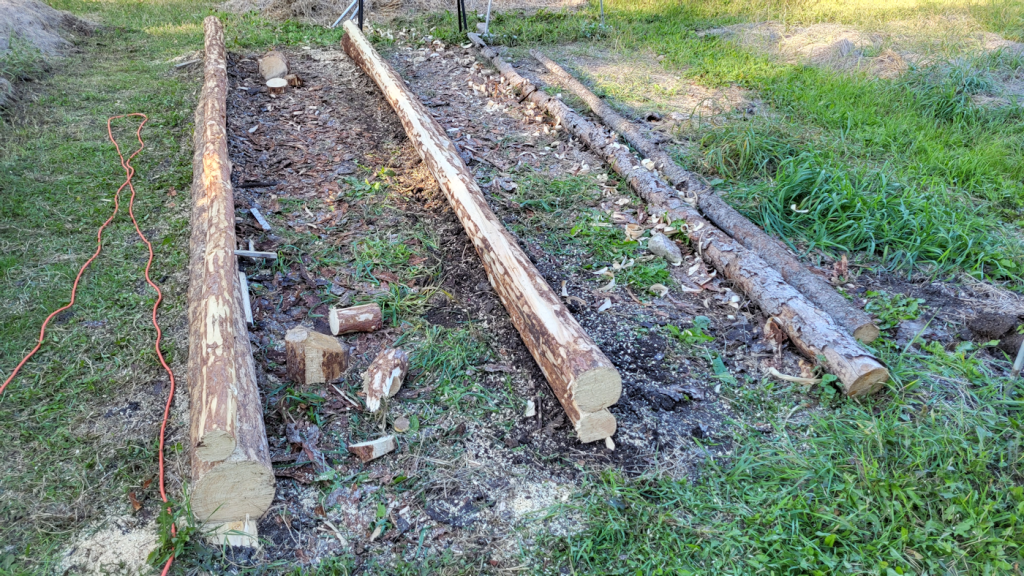
I selected and de-barked logs for the verticals something like a year ago, and that was about as far as things got for quite some time. Having been sitting out over the bed like that all winter, I went over them and took one out completely, as it cracked too badly to be used. After going through the others, I debated whether I wanted to do four or five verticals, and decided to go ahead and with five. The two largest would go on each corner.

We had debated various ways of setting these up, including digging holes and sinking them, but decided to just attach them directly to the frame of the raised bed. The one last minute decision we made was to set them on scrap bricks, so that the bases wouldn’t be in contact with the soil. We went through the pile of bricks from the old chimney that was removed when the new roof was done and found several chunks that seemed suitable.

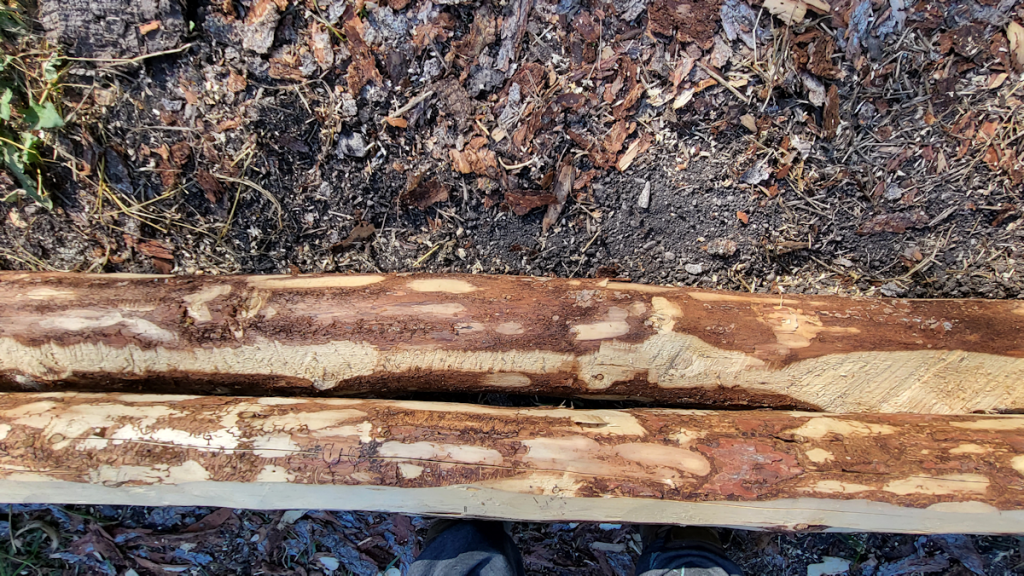
The first thing to do was to trim all the bottoms so that they’d be straight. Then, we needed to create flattish, straight-ish surfaces on the sides where they would come in contact with the frame.

With the first corner, the bottom log of the end cap got trimmed a fair bit. With the brick in place, we worked out where we needed to trim the vertical. We still ended up needing to cut extra out near the bottom to fit over that bottom end cap log. Once it was snug enough, we used 3 inch screws to secure it. For now, there’s just two of them. We’ll secure it more, later in the build.

The opposite corner needed a lot more work. We had to cut away more from the frame itself, to create more of a surface to attach to. Then there was cutting away the excess on the vertical. In the end, though, the vertical log was still too thick for our 3″ screws, and we didn’t have anything longer, so we used metal strapping to hold it in place. After using shorter screws to secure the strapping in place, we used a few 3″ screws to tighten it up even more at the gaps.

We weren’t after perfection, by any means. Which is good, because cutting away the excess wood was quite a pain. We mostly used the mini-chainsaw (a Stihl pruning saw) until we drained both batteries, as well as using whatever other tools we had on hand, including a hatchet, a chisel and even the draw knife.

We had “help” while we were working!

Syndol was especially eager to “help” any time I bent over, wanting to jump onto my back! Then, while using the drill or driver, he kept trying to get in on things. My daughter and I had our hands full either of tools or holding the vertical post, and he took full advantage of the fact that we couldn’t really stop him from getting in the way!

In the end, it took us about 2 hours to get just those two verticals up. This is how it looks now.

We reached our high of 16C/61F today, and we were working in full sun, so it got really hot out there.

After this, we’ll measure out where to put the remaining three verticals, with each on top of a piece of brick. They are not as thick, so it shouldn’t take as long. They can only be attached to the top log, though, as the bottom one bows inward quite a bit.

Once those are in place, we will measure and mark the tops and trim them to all the same height. One those are leveled, horizontals will be put across the top. I’m still not decided on whether I want to put the horizontals directly on top, or on what will be the inside of the trellis tunnel, when the matching bed is built. Probably directly on top. Once that’s in place, support pieces at 45° angles will be added.

With the end posts, I am thinking to add angled posts reaching from the opposite corners of the raised bed to the top of the verticals to secure them more.

Eventually, more horizontals will be added – much thinner horizontals – from vertical to vertical, near the bottom. For now, we will probably use plastic trellis netting, but these will eventually be used to create squash tunnels. They will eventually need to hold quite a bit of weight, so more durable material will be used over time. At this point, I just want something up and useable! It will probably be used to support pole beans or peas this year.

We still have a pile of posts meant for verticals as we build more of these beds and, eventually, join them in pairs to create trellis tunnels. Many are completely hidden in the tall grass! We’ll have to dig them out and see how many are still usable. There was more cracking and splitting in these ones than I expected.

I’d gone walking out to the gravel pit and pond beyond the outer yard the other day and one thing I noticed was that there are a lot of nice, straight poplars that we can potentially harvest for projects like this. It’s the “straight” part that’s harder to find. It was good to see that, if some of the logs I’d already cut for posts are too weather damaged, I can replace them fairly easily.

For now, I’m happy with what we got done today. I’m not sure when we’ll be able to work on it next. Tomorrow there is a homesteader’s show near the city that my daughter and I want to go to, and we might be able to do our first stock up shopping trip at the same time. CPP disability is due to come in on a Monday this month, which means it might show up in our account tomorrow, instead, so if I can save a trip by doing both tomorrow, I will! I doubt either my daughter and I would be physically up to working on the trellis for 2 days in a row, anyhow. I’ve already started to stiffen up quite painfully, and I’m sure she is, too. I don’t plan to work on it on Sunday, since I try to keep that my regular day of rest, but Monday is supposed to be much colder and very windy, so Sunday might be my only chance for quite a while.

Working around our physical limitations, plus the weather, can get complicated at times!

I’m going to go take some pain killers now, while I can still move.

The Re-Farmer

Put to bed: garden progress. Also, Butterscotch is “home”!

We have reached a lovely 16C/61F today, with wonderful sunshine. You know what that means!

Time to get work done outside!

Today, I focused on using the last of the soil in the kiddie pool the melons were grown in and soil from the grow bags, to top up our first trellis bed. The potato bags were already emptied and the soil all in a pile, so that was nice and quick to transfer over. Between that and the soil from the kiddie pool, more than half the trellis bed was covered.

Then I started on the grow bags the bell peppers were in.

I think I discovered why the peppers never thrived in those.

I had two shallow “raised beds” from the dollar store, plus two deeper, higher quality bags. As soon as I started trying to break up the soil with the spade, I found it to be remarkably solid and hard to cut through. That bag in the photo was the last of these fabric grow bags. It flipped inside out as I tried to empty the soil, and was still stuck.

Those are tree roots.

It turns out those horrible elms from the self seeded row of trees my mother allowed to grow not only release millions of seeds every spring, their roots will actually grow up into the grow bags and smother whatever else is growing there! The only bags where this was not a problem were the potatoes. Those had a thick layer of straw on their bottoms. I did see a few roots here and there, but nothing in the soil layer like this. These fabric grow bags had some grass clippings added to their bottoms. Those were completely decomposed. I didn’t do the feed bags the hot peppers were in until later. Those had straw on their bottoms, too, but not as deep a layer as the potatoes.

So most of my time ended up being spent trying to break up the soil enough that I could finally shake it from the roots, before it could be dumped into the trellis bed. The four bags the bell peppers were in were just enough to finish topping up the trellis bed.

That left five feed bags; four that had the hot peppers and onions in them, and one that had just onions. I left those and shifted to the high raised bed. The grass clipping mulch was moved and the bed was weeded – leaving two little onions to keep growing.

It’s really amazing, how deep dandelion tap roots can grow!

I found what looked like a couple of mouse tunnels in two of the corners. Grass clippings were used to fill in gaps in the corners, and all along the edges, as well as to chink some gaps on the logs that I found. I also debarked it a fair bit. That’s to keep insects and moisture from the logs, so they’ll last longer.

Once that was all cleaned up, I leveled the soil, pushing some of it up against the grass clippings around the edges. Once that was done, I went back to the remaining grow bags and de-rooted them. All five ended up in the high raised bed.

Last of all, the soil was topped with a light sprinkling of grass clippings before both beds got a thorough soaking. I want the water to soak through all the layers, but don’t want to compact the soil layer, and the grass clippings will help with that at least a little bit.

The beds have now been put to bed for the winter!

When adding soil to the trellis bed, I could see it bouncing! I did stomp on them, but the layers of grass clippings, leaves, kitchen compostables, straw, wood chips and bark, all still have quite a bit of space in them. By spring, I expect the whole thing to have sunk and settled at least 4 inches. The main thing, though, is that it is ready for planting in the spring, even if it takes longer to build the trellis part of the trellis beds!

Now for my happy Butterscotch news!

She’s back indoors!

I’d gone out to feed the cats a bit early, yesterday evening. Butterscotch came around and I got to pet her and cuddle her. She still wouldn’t go near the other cats, and if they came close, she would leave, even from the food I’d put near the storage house for her. Shop Towel in particular was interested in that.

After trying – and failing – to bring her to the kibble house to eat, I tried a different tactic. I’d seen a kitten running around around the front of the house, so I left a pile of kibble on the concrete steps for it. Butterscotch let me pick her up again, and I walked around the back of the house, avoiding all the cats, to bring her to the lone pile of kibble.

I almost got there, too.

It just happened that the girls decided to come outside, and as soon as the doors started rattling, Butterscotch got spooked, and I couldn’t hang onto her anymore. Once the girls realized what happened, they worked with me to encourage Butterscotch to come to them at the steps, and got her eating.

My younger daughter stayed with her while her sister and I played interference with the other cats. Several of them suddenly decided they needed to check out what she was doing at the steps!

Including Shop Towel.

Shop Towel has become an enigma. He’s been hanging around and eating with the other cats, and they are mostly okay with that. Driver and Judgement have not been targeted by him, nor have any of the other males. Mind you, he’s clearly the father of most of the adult males, but I don’t know how much of a difference that would make.

The problem starts when he seed Butterscotch and Nosencrantz.

He hasn’t really targeted Nozencrantz, but he has in the past, and she’s clearly nervous around him. When he goes for the food, she leaves. At least she’s not running up a tree anymore, but it means she doesn’t eat. This morning, I left kibble on the red bench for her, just so she could have something!

Butterscotch, however, has his attention, and he wants to chase her.

Between him, and her not wanting to go near any of the other cats, this was a problem. If only we could get her inside, but she wouldn’t let us take her close to the house!

Well, we found a way.

It started with my younger daughter going over to Shop Towel as he was milling around the storage house. She squatted down (oh, to have functional knees like hers!), held her hand out – and he came right over! She was able to pet him as he purred and rubbed against her legs! We were all pretty stunned by this.

That gave us an opportunity.

The cat carrier was in the sun room, in hopes we’d be able to catch one of the adult females for spaying and adoption. While my younger daughter kept Shop Towel distracted, I got the carrier and her sister and I managed to get Butterscotch in.

She was not happy about that.

The carrier also allowed me to get her past all the indoor cats and bring her into my room.

She was not happy with the kittens. She snarls at them, and spent the night hiding under my printer table. She still came out for pets and cuddled, though, and she was very happy to have wet cat food!

The kittens are curious, but we let the big ones in and out, so she’s not overwhelmed by them. The three tiny ones are still too small to let out.

After I finished up in the garden, had a shower and came into my room, I was able to persuade her to come out for pets, and even go up onto my bed for cuddles. The kittens still in the room were all asleep, so there was no snarling involved.

As I write this, she is still on my bed, curled up and having a nap!

I feel much better having her inside. She probably would have been fine outside, but that whole thing with her not being able to get food because she wouldn’t come closer to the house or other cats was a concern. Plus, she’s one of the originals that my late father cared for. Grandma deserves a warm and comfortable retirement!

I really hope this works out for her.

Once we get some of those kittens to the clinic for spays then adoption next month, I’m hoping we can convince Nosencrantz to come back in, too. I miss her nightly cuddles!

The Re-Farmer

Trellis bed progress, and the last potatoes are in

Okay, so I did finally make it outside yesterday to do some work. I may have been mentally drained with all the BS going on with our vandal, but not going out was actually making me feel worse. It was later than I normally would have gone out, but the weather was still good, and there was still enough light.

For a while, anyhow.

My first task was to fill the wheelbarrow with material to add to the bed. The compostable bag of kitchen scraps went in, along with the Spoon tomato and pepper plants from the old kitchen garden, and all the squash and pepper plants from the main garden bed. I also pulled up the potato plants from the grow bags, which meant the Purple Peruvian fingerling potatoes would need to be harvested.

All that material went on top of the straw layer, followed by a layer of leaves and finally a sprinkling of grass clippings.

The grass clippings were more to keep the leaves down for when I tromped all over it, after this picture was taken. Then the whole thing got a thorough soaking. After that, I emptied my last half bag of manure over the grass clippings.

My plan had been to empty the soil out of the kiddie pool the melons were growing in, then use it to collect the soil from the potato bags while harvesting those. I got one load in the wheelbarrow, but the soil in there was very damp, sticky and heavy, and I was starting to lose the light. So I just emptied the one load into the bed, then shifted gears.

One thing about spreading even that small amount of soil onto one end of the bed: those layers REALLY start to sink under the weight! The bed looks over full in the photo, but those layers will probably settle to only half the bed, by the time the soil is added.

The feed bags used to grow the potatoes in are good for only one year’s use. They were all starting to tear apart as I tipped them over and dumped them out. The straw from the top and bottom of each bag could be easily set aside, leaving just the soil to sift through and pile up before moving on to the next bag. I got a decent amount of potatoes out of it. More than either of the other two varieties, and they were decently large for a fingerling potato, too. It was so dark by then, it was getting hard to find the dark purple potatoes in black soil in fading light! I will not be at all surprised if I find ones that got missed, when the soil is transferred over to the new bed. I did try to get a picture of the harvest, but it was a sucky flash picture, so I won’t inflict that on you. 😄

Today has turned out to be a less pleasant day, weather wise, so I’m extra glad I got as much done yesterday as I did. This morning, as I was finishing my rounds, I harvested some Uzbek Golden carrots to go with a roast I was wanting to do today. A nice big hunk of beef roasted with all three types of potatoes that we have, a whole bunch of our smaller yellow onions, and the golden carrots. Those were so big and juicy that, as I was cutting off the tops and tails, several of them would suddenly make a popping noise, and split from end to end!

I checked on the roast before I started this, and it was done – and the house smells delicious!

The Re-Farmer

We have hot water again!

Yay!!!

I was so excited when the phone rang, and I saw the plumber’s name on the call display.

Then confused, when there was nothing but dead air.

It took several calls like this, until I finally made sure my cell phone was on Wi-Fi calling (it keeps turning that off of me!) and got through to him that way. He’d tried calling another number in our area, with the same prefix, and had trouble there, so it seems like it’s a regional problem.

The important thing is, he was able to come over shortly after calling, and get the new tank installed.

Here, you can see his handy little pump draining the tank. We had turned off the breaker but never drained it or shut the water off, so that if we happened to turn on the hot water tap out of habit, it would still work. We just wouldn’t have hot water.

Looking inside, he thought that maybe the bottom element had burned out and said it could possibly be fixed, but I saw no point in that. This tank has already lasted two years longer than expected!

The weird thing was this.

This is where the electrical wires are tucked in, after the tank is hooked up. The plumber could not understand how water got in here!

After switching the tanks and starting to fill the new one, we talked about our well pump. It turned on while the tank was being filled, of course, but was having a hard time filling the pressure tank fast enough, so it started to make that grinding noise that worries me so much. I told him, we have a new pump ready and waiting, but with the possibility of the foot valve breaking, no plumber has been willing to change switching it out, because we’d end up with no water. He agreed with that assessment! I asked if he happened to know of any companies that serviced hand pumps, but he couldn’t say for sure. It’s entirely possible, we can change out the well pump and not have any problem at all, but when I said I didn’t want to risk it until we got the hand pump checked out and working again (if all it needs it new leathers), he thought that was a good idea. If we find ourselves with a worse case scenario, we at least can haul water to the house! Part of the problem is that the pipes in our well are a size that isn’t used anymore, so if the foot valve goes, we’d have to either find the old size somewhere or, if there are none to be had, get a new well drilled.

While the tank was filling, he was careful about using the valve to slow down the flow of water, giving the well pump a chance to catch up.

It takes quite a while to fill a 40 gallon tank!

Once it was full, he got me to turn on a hot water tap – which we have right in the basement, where the laundry used to be – to get the air out of the pipes and the water flowing. Once that was done, we could turn the breaker back on.

It takes a while for 40 gallons of water to heat up!

But heat up it did, and we now have hot water again! He recommended to check it a few times to make sure nothing is leaking, which I’ve done. Hopefully, this tank will last longer but, just in case, I’m hoping that we can pick up a “spare” tank, because we won’t be able to replace a warranty tank with a warranty tank again!

The whole thing ended up costing just under $235, after taxes. Thankfully, my daughter had already provided funds for most of that. Otherwise, I would have had to go into funds set aside for a down payment towards a new vehicle! We’re good, though, and I am very grateful!

It turned out to be a gorgeous day today – we reached 12C/54F this afternoon, which was several degrees warmer than forecast. I took advantage of it – and of having the cardboard from the box the new hot water tank was in – and started filling the trellis bed.

The cardboard almost completely covered the bottom of the bed, leaving gaps small enough that I’m not too concerned about it. After laying out, stamping down and hosing down the cardboard, I added the bark shavings from the poplar poles that will make up the trellis supports, followed by a wheel barrow load of wood chips. That got tromped down and soaked before the next layer was added – tomato, bean and melon plans pulled up from the garden. Finally, I added straw that had been laid out on this area when it was a Ruth Stout style garden bed. Another tromping and a soak, and I stopped for a while. These layers are just enough to cover the bottom logs, but they will settle down once the soil is added. I started adding scraps of wood into gaps as chinking, from the inside, so the straw could be used to hold it in place. There are more gaps that need to be chinked before more layers are added. It will get kitchen compost added, as well as leaves and grass clippings, before soil is finally added to the top. I’ll be using the soil from the melon bed and the grow bags, but those still need to be cleared.

With that in mind, I harvested the last of the onions in this area. There were just a few yellow onions left in the high raised bed, plus the Red of Florence onions sharing grow bags with the peppers. Last night’s frost was too much for the peppers, but some of the larger unripe ones were salvageable. I harvested the last of the peppers in the wattle weave bed, too, along with the two little eggplant that could be picked. We’re at 8C/46F right now, and supposed to drop to 6C/43F overnight, but there’s really nothing left to cover and try to protect anymore.

I’m happy with the progress on the trellis bed. Hopefully, I’ll be able to get that bed filled and set for the winter, and still be able to harvest more logs for the second bed. I’ll worry about the trellis supports later. That part can wait until next year, if need be.

It’s been a good and productive day today!

The Re-Farmer

Trellis bed progress: first end cap done

Finally! I was able to bring over my tools and equipment, which I just keep in the utility wagon now, over to the garden and get a bit more done on the first trellis bed.

The first step was to cut the two logs set aside into 4′ long pieces. I know for sure I’ll need two per end, but these logs are thinner than the ones in the side walls, so I cut extra just in case.

Before putting one of the end pieces down, I loosened up the soil where it would be lying and tried to level it off a bit, since there was a dip near the middle of the space. Because I want these beds to be 4′ wide on the outside, after laying down the first end piece and matching it to the outer edge on one side, I shifted the other side a bit to line up with the other end.

Steel toes boots are create for kicking logs and not breaking my toes!

I started with the thickest 4′ log for the base log on this end. Using the side wall logs to mark where I needed to cut, I removed wood from the ends to fit over the side wall logs.

What a pain.

For this job, I used the mini-chain saw, a hatchet and hammer to remove the bulk of the excess wood, and even the electric chain saw to remove the excess wood.

A pain, to be sure, but much faster and easier than when I started building the high raised bed and had only hand tools!

Once I was satisfied with how the end piece fit, it was time to secure it. A couple of years ago, I’d bought some plastic coated metal rods to use as supports in the garden. The rods were hollow, and they quickly bent and broke in our rocky soil. I’ve been using the broken pieces to secure things like hoops for garden beds, but I also used some to secure the corners of the tiny raised bed in the old kitchen garden.

I decided to use them to secure the end pieces on the trellis bed, much like I already used rebar to secure the side walls. I drilled matching holes through the end pieces into the side walls, then hammered the metal rods in place.

Then I went through the other 4′ lengths to find one that fit the best on top of the first log and repeated the process. This time, though, I was having to fit them over two very different sizes of log, so that required some extra angled cuts, as well as flattening the length of both logs a bit, so they’d fit against each other better. There’s still quite a gap in between them in one place, but that can be chinked later. Last of all, they were secured with more metal rods, though the top log was thin enough that I could break one of the rods in half and use the shorter pieces.

And here it is! The first finished end cap, viewed from inside the bed.

This all took quite a while to do, so once it was done, I stopped for the day. I’ve got too many other things that need to be worked on.

I’m quite happy with how it’s working out so far.

Since the vertical posts will be added to the outsides of the bed, not down the middle as I’d planned to do originally, I will fill the bed once the other end cap is done. That way the layers of material will have at least a bit more time to break down under the top layer of soil it will get. I may even decide to get more logs to build the next bed, first. We need beds to plant in next year, more than we need the trellis part of it. The trellis posts can even be added after planting, if necessary. The priority is to have more planting space. This year’s garden is so much smaller than I had planned on, simply because I ran out of prepared spaces to plant in. I don’t want to have that situation again, next year!

So, once this bed is built and filled, it’ll be time to cut logs to size from the two downs trees we have ready right now and drag them over. These trunks are so thick, the bottom 10′ will be set aside to be used as supports for the outdoor kitchen we will be building. Using such thick logs in the trellis beds would be a real waste of material.

The first day of fall is tomorrow, and time to get work done before things get too cold is running short!

The Re-Farmer

Trellis bed progress: stripping

The plan for today had been to get the ends onto the trellis bed. Just before I headed outside, however, the power went out.

All I’ve got is an electric chainsaw, so cutting logs to size was out.

Which was fine. I needed to strip the logs of bark, first. I can see into the house from where I’m working, so I could keep an eye out for any lights back on again, letting me know the power was back.

Three hours later…

I started with the 2 dead spruces intended for the end pieces, one of which you can see on the saw horse. Then I started stripping the poplar that will be the vertical supports.

The poplar was much easier to work with, for the most part. The spruces have been dead for quite a while, so much of the barks is dried stuck to the wood. The poplar is still quite green. The draw knife could slide between the bark and the wood quite nicely, and just glide through.

Except for the branch nubs and damaged bits!

I ended up stripping them completely, as I could see critters were already getting under the bark and causing damage. The shorter lengths made them easier to handle, too, though I ended up putting the larger of the spruce logs back on the saw horse, just to stabilize it. With the lighter logs, there wasn’t enough weight to counter using the draw knife, and the darn thing kept rocking back and forth, and threatening to tip over.

Once stripped of bark, I lay them across the log walls to stay dry. Some of the logs I picked up were so damp from the grass, the undersides were covered with slugs!

After I got 9 of them done, my back was telling me it was time to do something else. So I grabbed a rope and dragged over the last 3 posts, then went back for the odd pieces. Those were light enough that I could drag 2 or 3 at a time, so that was done faster. These odd ones may or may not be usable as part of the trellis. If not, they will go into the bases of the trellis beds and buried, to break down over time.

I had just finished dragging over the last pair of odd sized logs when I saw a light on in the house. By then, I was done with this job for the day. I’ll continue tomorrow.

As for the power outage, it was likely due to high winds. Not long after ours was back on, my house sitting daughter let us know the power went out at my brother’s place, too. He’s got multiple back up generators, though, so she is just fine!

The power loss was just for 3 hours this time, but it’s a reminder on how we need to get our back ups done. Like the outdoor kitchen. With the high winds we had today, we could not have done any outdoor cooking, if it came to that. The outdoor kitchen we have planned will allow us to cook outdoors in pretty much any weather conditions.

The other thing is to get that old well checked. If all we need is new leathers for the hand pump, we’re set for water, too. Plus the outhouse will do until we build the more comfortable outdoor bathroom with a composting toilet we have planned.

Little by little, it’ll get done!

The Re-Farmer

Trellis bed shift

I’ve been analyzing that side wall of the trellis bed with the bowed log on the bottom, and decided we needed to make a change.

The plan had been to cut joins into the horizontal logs and the vertical posts, then secure them in place. There will be four of posts, about 6′ apart but, the more I looked at it, the more I realized that in order for the posts to be in line with each other, I’d have to cut away far too much wood. It would weaken them too much.

There was one solution, though, that could be done before the end pieces were attached. The pairs of logs are attached to each other, but not to the ground.

So I snagged my daughter and some rope, and we reversed the wall.

I neglected to take photos at the start. To carry the logs, we wrapped some rope around the ends and used them as handles to lift and carry the logs around to face the other way. It was awkward, but it worked.

The rebar that joins the logs goes all the way through. At the end in the foreground, barely an inch goes through. At the far end, there’s almost 3 inches of rebar that could be jammed into the ground as we lined up and set the logs in place again. Since I cut the ends of the walls in line with each other, we had to make sure they still matched, so that the walls at the ends will be straight once they’re added.

This shows better, why I decided to switch it around. You can see where I used the chainsaw to flatten the top of the base log, for the other log to rest on! 😄 That worked out on the ends, at least! This is where the bow sticks out the furthest, pretty much in the middle. The vertical posts would have been on either side of this section. The top log is pretty straight, so I’ll probably just flatten the logs where they will come in contact, rather than actually cut joins.

But that will be done after the end pieces are added. Technically, once those are in place, we could still move the entire bed if we had to, but that would not be a very good idea!

The Re-Farmer

Trellis bed progress

I headed out to check the garden as the day warmed up, to get a better idea of how much frost damage there was. As things warm up, the damaged/dead parts turns a lot darker, which showed me that the tomato plants in the main garden area did get killed off. Not the ones in the old kitchen garden, though! The melon plants might make it. Lots of dead leaves, but not the entire plants.

Tonight, we’re looking at a low of 5 – 6C/41 – 43F which, if things go the way they have been, lately, may actually end up being 3 – 4C/37 – 39F.

The high for today ended up being 18C/64F. I took advantage of it and got some work done on the trellis bed. It was actually feeling too hot while I worked! This is where I stopped for the evening.

The first thing I needed to do was finish off the wall on the left. I rolled the top log off, then used a chain saw to try and smooth and flatten things a bit, mostly to get rid of odd lumps and bumps, then putting the top log back. I still ended up with some gaps, but those will be filled with pieces of wood from the inside

The next thing was to use an auger to match the size of the pieces of rebar I have. Thanks to my husband, I have a nice set of long auger bits for my drill. They’re a touch shorter than the rebar, so after drilling holes through both logs, I removed the top log again, then drilled further through the bottom log. Once that was done, the rebar got hammered through the holes in the top log until it came out the other end, which I could then use to position the top log back again before hammering the rebar flush with the top.

The base log for the other wall was already debarked, but needed some clean up to remove bits of branches and other lumps and bumps. Then I got out the garden fork and loosened the soil between the markers where the log would be positioned. I found a large rock in the process that would not move. Since it’s under a wall, I left it. Once the soil was loosened, and the worst of the weed roots removed, I spun the log around so that the wide end was facing the other way. The ground is a bit lower on that side. I should have laid the base log in the other wall that way, but didn’t think of it until I’d already positioned it.

This base log itself has a long bend in it. I made sure it was positioned to bow outwards. That will be taken advantage of later in the build. Once in place, I used the chain saw again to remove any parts that looked too uneven and lumpy, and trimmed a few branch stubs a bit more.

The top log then needed to be debarked and prepped. This wood actually took the knife a lot better, so I went ahead and shaved a flat strip, so it would lay flatter on the base long.

That didn’t quite work out!

While the top log is a lot straighter than the bottom one, when I put it in position, the narrow end of the top log, which is set above the wider end of the base log, was floating at least 8 inches above! After rotating the log until it finally set the most evenly, the shaved part was now on the top!

There were still some lumps and bumps in the way, though, mostly on the base log. The wood on that tree did not take to the draw knife well, so I used the chain saw to level it off some more, then made another matching flat area on the top log.

With the bend in the base log, though, the top log is lined up on each end, but almost completely off the bottom log at the bend! It wasn’t going anywhere, though, so I repeated the process for inserting the rebar, more or less matching where the ones in the other wall are set.

With the rebar holding the logs together, I used a board to line up and mark the ends for cutting, then removed the jagged ends of the logs. I had to be careful with the bottom logs, so as not to be cutting into the ground!

The two logs you can see set aside in the photo will at least partly be used to close up the ends of the beds. These beds are meant to be 18′ long and 4′ wide on the outside. With the ends trimmed, they are no longer 18′ long, but the end pieces will be used to make up the gap. It doesn’t have to be exact, but I’d rather they be a bit longer than shorter. With how the logs taper, I might have to find thicker pieces of logs to finish the ends and get that 18′.

Once the end pieces are in place and secure, I’ll start working on attaching the 4 vertical supports for the trellis, which will then get horizontal supports across their tops. They’ll be added after the verticals are in place. The ground is uneven, but I want the horizontals to be level. Since I’m not going to be digging post holes as originally intended, and just attaching them to the outside of a wall, I’m no longer going to be losing about a foot of height on these 7′ posts, so I will likely mount the horizontals at 6 1/2′ rather than 6′, then trimming off the excess height. When the second bed is built at the other markers, it will have matching trellis supports and, eventually, they will be joined at the top to create a tunnel.

If all goes well, we’ll make at least one more trellis tunnel set up in line with this one. My priority, however, is going to be making more high raised beds, once this is done. Mobility, reach and pain reduction while tending the beds are becoming more of an issue for me.

Not before this bed is finished, though, and that will include filling it and preparing it to plant in, next year. That means layers of carboard on the bottom, maybe some small branches, wood chips, fresh green material such as the frost bitten bush beans I pulled earlier today, grass clippings and topping it with some of that purchased garden soil we still have left. Last of all with be a grass clipping mulch to protect the soil over the winter.

The bed the Roma tomatoes were in needs to be prepared for the winter, and if I could at least make that into a high raised bed, that would make life easier for next year!

The Re-Farmer