Analyzing our 2022 garden: corn

Okay, it’s that time! I’ll be working on a serious of posts, going over how our 2022 garden went, what worked, what didn’t, and what didn’t even happen at all. This is help give us an idea of what we want to do in the future, what we don’t want to do in the future, and what changes need to be made.

We planted three varieties of corn in 2022.

I think it’s safe to say, all three were a fail, though we did actually have a few cobs to eat from one of them.

Two varieties were direct seeded in a new garden bed.

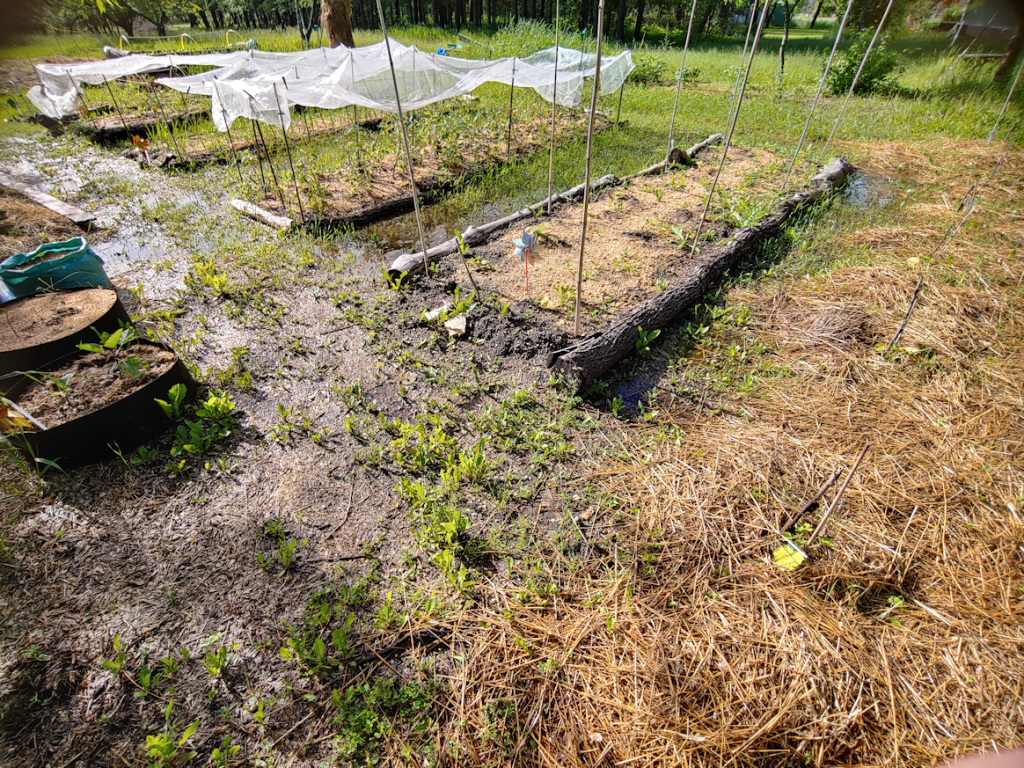
Sod had been removed and new garden soil brought in. In the above photo, you can see the squash that had been transplanted. There’s a triple row of sweet corn in the open area between rows of squash in the back, and a thin double row of popcorn between rows of squash in the foreground.

Eventually, this entire area did get well covered with cardboard and mulch, which helped a lot, but there was just nothing that could be done once the flooding started.

The Results:

The sweet corn started to recover quite nicely, though the green bush beans planted with them did not survive and another type was planted later.

Then the winds got them.

I was able to add twine supports to hold them all up and, amazingly, they survived.

It wasn’t much, but we even had a few mature cobs to pick.

No such luck with the popcorn. This was a variety that only grew to about 2 feet tall, but they never reached that height. Cobs started to form, but never had a chance to mature.

It was very sad.

Then there was the kulli corn.

These were planted in a low raised bed in the east yard, with yellow bush beans in between for nitrogen fixing. Unlike the other corn, these were started indoors and transplanted.

It took a while for them to get over transplant shock, but once they did, they got HUGE and seemed to thrive in this bed.

Eventually, tassels started to form at the top, but no cobs. Not a single cob formed, anywhere.

Kulli corn is a deep, dark Peruvian corn that I would like to acclimate to our area. Unfortunately, there isn’t a lot of information about them. They seemed to do so very well, and yet… not even a hint of cobs forming on any of them.

Conclusion:

This was such a terrible year for our corn!! Even the year before, with the drought we had, and the tiny, tiny plants growing in nitrogen depleted soil, we managed to have more edible cobs that were so sweet, I could eat them raw. I guess corn can handle drought better than flooding!

After this year, my daughters and I discussed skipping corn for a year or two, until we can provide better growing conditions for them. I did, however, end up buying one variety of sweet corn for 2023, plus I got the same variety of popcorn again. I intend to plant them in the two beds next to where the kulli corn was planted. Considering how well the kulli corn grew, even without forming cobs, I think the other corn should do very well in these beds, and I really love corn!

As for the kulli corn, I really, really want to grow them, but I think it will have to wait until we can create better growing conditions. We’re wanting to have a polytunnel, or something along those lines. That might be enough to make the difference. It may be a few years before we have a polytunnel, though.

The Re-Farmer

Analysing our 2022 garden: onions, shallots and garlic

Okay, it’s that time! I’ll be working on a serious of posts, going over how our 2022 garden went, what worked, what didn’t, and what didn’t even happen at all. This is help give us an idea of what we want to do in the future, what we don’t want to do in the future, and what changes need to be made.

What a mixed bag it was for onions and garlic we had!

I’ll start with the shallots.

The Results:

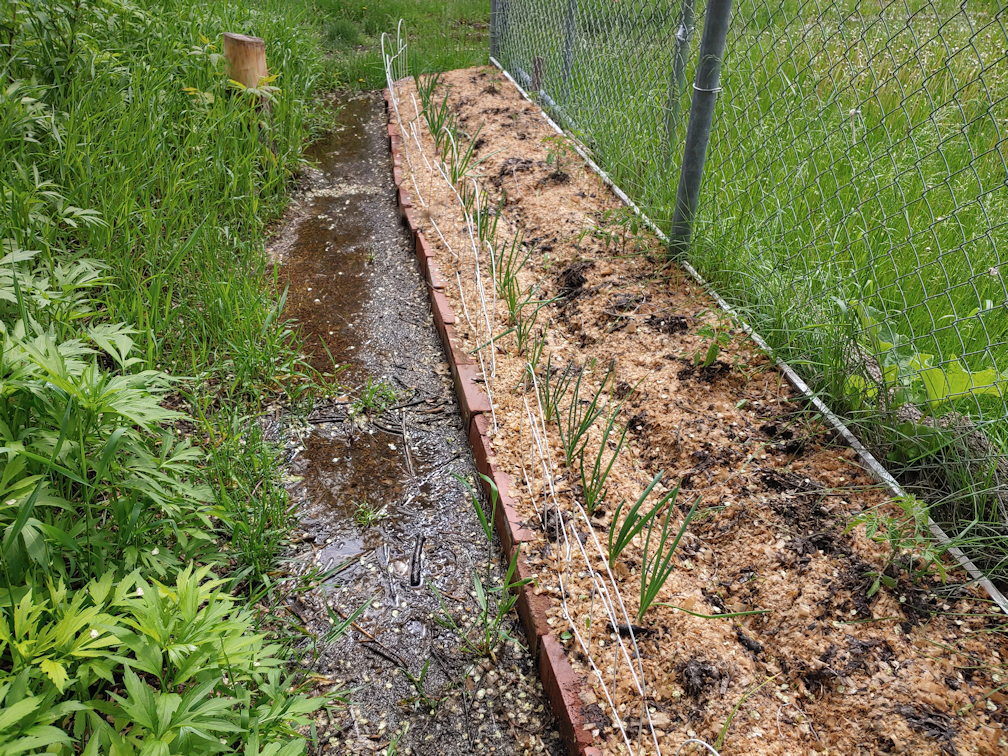
This picture was taken in June. We were still dealing with flooding. The shallots you see here were from sets. Of the shallots we grew from seed, few survived to be transplanted. You can just see some at the very bottom of the photo, and those quickly died.

As did almost all the shallots from sets. They just rotted away.

Conclusion:

The previous year, we were able to grow shallots from sets successfully, even during drought, so at least there is that option in the future. It’s growing them from seed that seems to be the biggest challenge. For 2023, we are trying a different variety. Hopefully, we will have better success with those!


Then there were the Red Baron bunching onions. These were planted in a bed along the retaining wall of the old kitchen garden.

The Results:

I won’t even try to dig up a picture of those. We had better success starting them indoors compared to the year before, but once they were transplanted, that was it. They were a total fail. I think a lot of it had to do with the bed being too shaded by the ornamental apple trees at each corner of the old kitchen garden. They did get pruned, and that space get a lot more light now, but it was likely too little, too late.

That and I think the cats were rolling on them, too.

Conclusion:

While I would really like to grow this variety of bunching onions, we’ll move away from them completely for 2023, and save them for another year in the future.


Our fall garlic was both a win and a fail. We bought the same varieties as the year before, planted them in the fall and had them well mulched for the winter.

The Results:

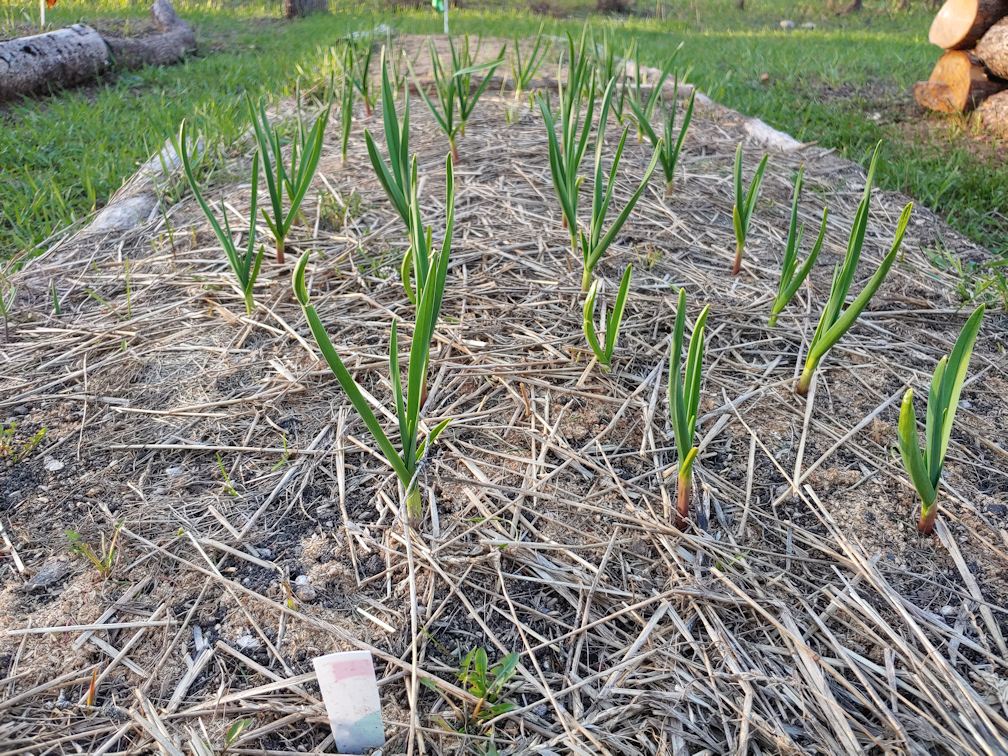
One variety of garlic, Porcelain Music, was planted in the main garden area, taking up half of a low raised bed. This picture was taken in May. These did very well! In fact, we were able to save some of them to plant in the fall, for our 2023 garden!

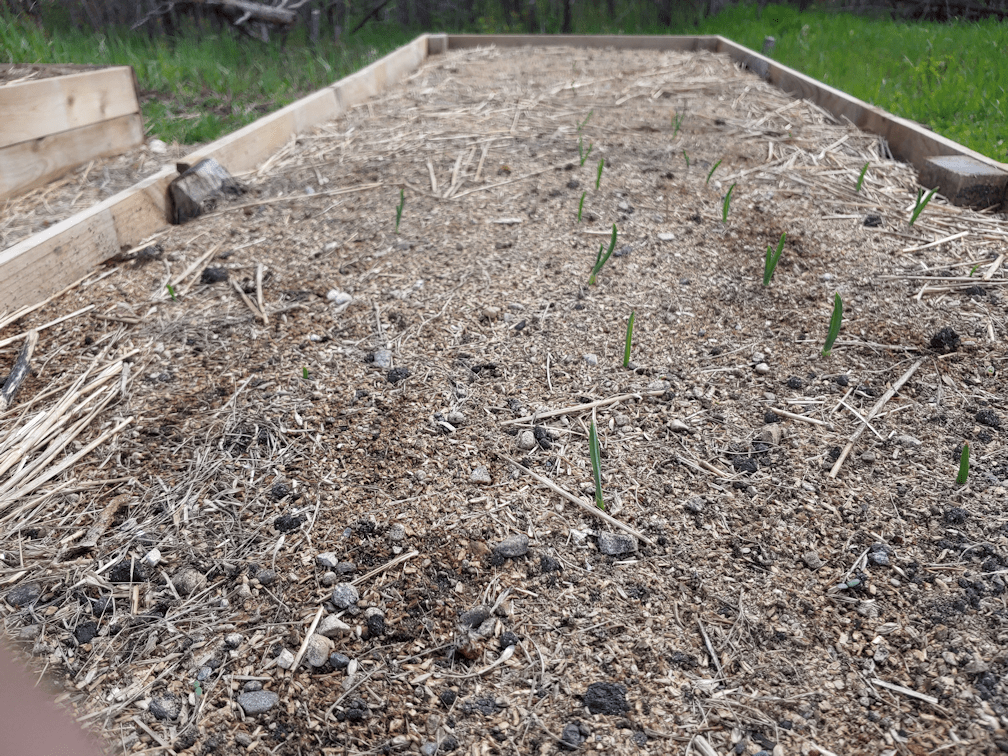
Then there were the varieties we planted in the low raised beds in the east yard. These were Purple Stripe and Rocambole. The above picture was also taken in May.

One bed had so few survive, I ended up transplanting them to the other bed, so I could use that bed to transplant the Yellow Pear tomatoes into. While we did have garlic to harvest, the few bulbs remaining were very small.

Conclusion:

The two varieties that failed were, I believe, the victims of our unusually long, cold end of winter. I think the low raised beds simply got too cold, and stayed cold for too long.

But the ones in the low raised bed in the main garden seemed to be better protected somehow. So when we planted garlic this fall, we used another of these low raised beds. Along with the garlic we saved ourselves, I ended up getting a new variety of hard neck, plus a variety of soft neck, garlic to try. In the future, we will shoot to be able to plant a LOT more garlic than this, but for this fall, that’s all we were able to get done. Hopefully, we will have better growing conditions next year, and all three varieties will succeed!


Now we move on to the bulb onions. We had a mix of onions from seed, and from sets.

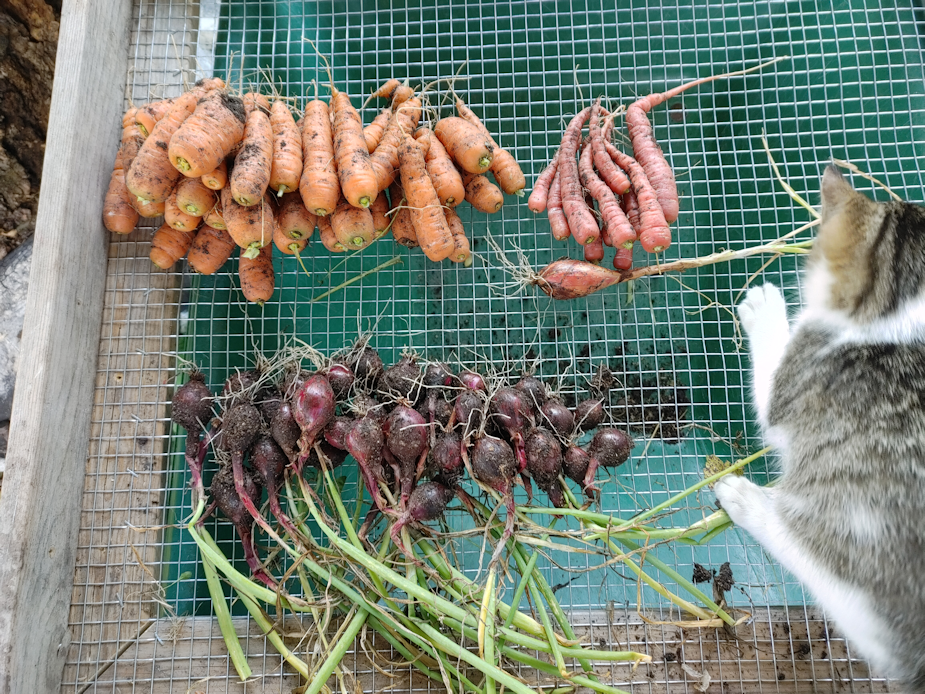
In the above photo, we have Red of Florence red onions, grown from seed. The yellow onions are both from seeds and sets – there’s no real difference in size between them! These were planted around the edges of low raised beds, to help deter critters.

These are the Tropeana Lunga onions, grown from seed and transplanted into the high raised bed.

These tiny red onions were from sets planted around the Yellow Pear tomatoes.

The Results:

The Red of Florence and Tropeana Lunga onions both did very well! The Tropeana Lunga took a lot longer to mature, and even after they were harvested, they kept trying to grow rather than cure! We all liked their longer shape that makes them easier to cut up for cooking. The flavour of both are good, too.

The yellow bulb onions were both smaller than they had the potential to be, but that had a lot to do with our growing conditions conditions overall.

The red onions from sets that were planted with the Yellow Pear tomatoes barely grew at all. I think they were simply overshadowed by the tomatoes, which got massive.

We did plant extras that didn’t fit in their beds in the retaining wall of the old kitchen garden. Those pretty much all failed, partly because the cats kept rolling on them.

Conclusion:

As you can see in the above photo, flooding was a problem in the main garden area, but the low raised beds were just high enough to protect the things we planted in them, including the onions that were planted around the edges of several of them.

We would very happily grow the Red of Florence and Tropeana Lunga again. Unfortunately, I was not able to get seeds for either of them for 2023. We also went with different varieties of seeds for yellow onions and shallots. Whether or not we get more sets in the spring is yet to be decided.

Growing from seed is touch and go; part of the challenge with starting the seeds indoors is keeping the cats away! The main thing about growing from seed is that you get a lot more plants for your money compared to sets. Another bonus is, onions don’t get transplant shock, so large numbers of seeds can be sown close together, then they’re just pulled apart when it’s time to transplant. How successful we are at starting them from seed will help determine what we get for sets in the spring, if any.

Onions are something we find we use a LOT of. Once we started growing them ourselves, we just can’t seem to grow enough! Thankfully, they can be interplanted with quite a few other things, making for effective use of space. We also like having a variety of types. One of the traits we look for when choosing varieties is anything that is good for winter storage.

The Re-Farmer

Our 2023 garden: Veseys seeds, second order arrived

The rest of the seeds we ordered from Veseys arrived today. You can read about what we ordered and why, here.

It was difficult to get a photo of them all, because the cats immediately came over and tried to roll all over my little display on the bed! You can see Leyendecker in this photo, and then Ginger came in and threw himself bodily onto the Dalvay peas!

Speaking of which, I couldn’t shake the feeling that I’d ordered the Dalvay peas before, so I went looking at my old photos. Sure enough, we did order Dalvay peas back in 2020, for our 2021 garden. I knew we’d ordered green shelling peas before; it was the name I wasn’t sure of.

And this is why I take photos of everything, and use this blog as a gardening journal! 😄

The tomato packet felt so … empty… I double checked the site. It says there are approximately 50 seeds per packet in this size (they also have packets with 200, 1000 and 10,000 seeds available). Tomato seeds are so light and thin, I guess that would indeed feel pretty thin!

Now, there are just the seeds we ordered from the US to come in, and from the tracking number, they have not reached Canada, yet.

Next month we will order more, but I don’t know that we’ll be ordering more seeds. We’ll be ordering things like potatoes for sure, and probably berry bushes, all of which won’t get shipped until spring.

We’ll be planting another really huge garden for 2023. Hopefully, we’ll have better weather and growing conditions!

The Re-Farmer

Our 2022 garden: harvesting squash and corn

Well, the last of the stuff that needed to come in before tonight is done – at least as much as possible. The girls and I put bottles with warm water under the eggplants in the grow bag (the only ones fruiting) and, since they were right there, with the sweet potatoes, too. The eggplant and one grow bag with sweet potato got covered, but the sheet wasn’t big enough to cover the other two grow bags. The apple gourd also got bottles of warm water placed beside them, but we could only cover two of the three plants, so we covered the two biggest ones. As I write this, we are down to 9C/48F, and it’s supposed to keep dropping until we reach 1C/34F at about 7am. Between 6 – 8 am tends to consistently be the coldest time of day.

While I was harvesting earlier, I went ahead and grabbed a bunch of the Latte sweet corn, too. I don’t think they are quite at their peak, but I think they’re about as good as we’re going to get. There are still cobs on the stalks that were pretty small, so I left them be.

With the summer squash, I grabbed all the little – but not too little – patty pans, and the last of the zucchini.

In the above photo, the six pumpkins across the top are the Baby Pam pumpkins. The others are all hulless seed pumpkins. On the far left are four Styrian, in the middle are six Lady Godiva, and on the right are two Kakai. Tucked in with the patty pans are two Boston Marrow. There are so many little Boston Marrow squash forming, but they are just too small and have no chance of ripening after being picked. I’m not even sure Boston Marrow does continue to ripen after being picked!

The pumpkins are now all set up in the sun room. We cleared a shelf in the window, and all but one of them fit in there. The last one joined the onions on the screen. I think it should still get enough light there.

The hulless seed pumpkins are grown just for their seed, not their flesh. The flesh is probably edible, but there would be less of it than for an eating pumpkin. I will give them time before we crack any open to see what the seeds are like. At least we do have the one tiny, fully ripe kakai pumpkin harvested earlier that we could try any time we feel like it.

We planted so many different winter squash, and it was such a horrible year, I’m thankful we have as much as we do. Hopefully, next year, we will have better growing conditions. I made the mistake of calling my mother before I started this post, and talking about our garden. I mentioned that our beets did not do well this year. She started lecturing me on how to grow beets, and how they need to have the soil loosened around them, etc. I told her I knew how to grow beets (this is not our first year growing them!); they just didn’t do well this year. We didn’t even get greens worth eating. My mother then launched into how she always had such big beets, and always had such a wonderful garden (this after she’d mentioned to be before, that some years things just didn’t work) and how she only grew the “basics” and everything was just so wonderful – and the reason my beets failed was because I don’t garden like she did, and that I shouldn’t be gardening “from a book”. Whatever that means. I reminded her that I tested the soil and it is depleted. We don’t have good soil here anymore. She got sarcastic about that, and basically made it like my not having a perfect garden like she did was because I’m not doing things her way. As she got increasingly cruel about it, I called her out on it. I told her that just because she can’t understand something like soil science – which she doesn’t need to – that didn’t make it okay for her to be cruel to me over something she knows nothing about. Nor would I put up with being treated like that. I even asked her, why couldn’t she try being kind for a change? Maybe say something like “I’m sorry to hear you’re having problems”, instead of basically saying “I’m better than you.” She went dead silent, so I changed the subject, and the rest of the conversation went okay. Then she cut the call short because she saw the time, and her program on TV was started, so she had to go.

My mother is pretty open on what her priorities are. 😕

Ah, well. It is what it is. I’m just so thankful she is no longer our “landlord”, and that my brother now owns the property. There was a point, before the title was transferred, that we briefly but seriously considered moving out because of her.

Funny how something as ordinary as gardening can bring out the worst in her, though.

The weird thing is, when I spoke to my brother after he’d visited her to talk about the roofing estimates, apparently my mother had lots of positive things to say about how well we’re taking care of things here.

I guess that doesn’t include the garden! 😄

Well, I guess I should go see what I can do about that corn! 😊

The Re-Farmer

Our 2022 garden: harvesting onions – with a helper!

In between helping my daughter when she needed an extra pair of hands while building the cats’ water bowl shelter, I harvested most of our onions.

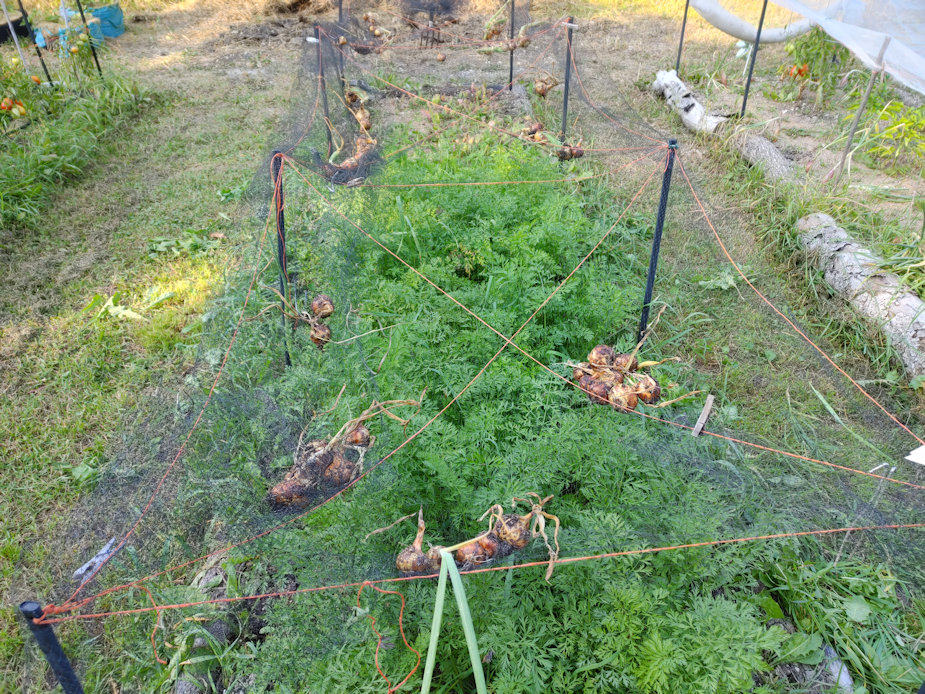
These are the yellow onions from sets – there was no variety name that came with them. The netting was very handy to hold the onions for me!

I also had a helper.

This little beast was traipsing through the Black Nebula carrots, like he was on a jungle safari. Every now and then, when I tossed an onion on the netting, he would leap up from below to try and catch it! Then just hang there until I unhooked his claws and set him aside, only for him to run back into the carrots and hunt down the next onion!

The little bugger even tried it from under the mosquito netting while I dug up the Red of Florence onions. Those were split between two beds, and both are on the netting now.

We aren’t expecting rain for several days, so I’m actually going to leave them on the netting to cure for a while. Quite a few of the yellow onions no longer had their greens, but of those that do, they’ll get braided and hung up to finish curing indoors.

The Red of Florence onions, with their long shape, were a lot easier to harvest.

There are still the Tropena Lunga onions in the high raised bed, but they haven’t started to fall over yet, so I’m leaving them to grow some more.

We don’t have as many onions as I would have liked. The ones planted in the bed by the chain link fence might have one or two worth harvesting, but that’s it, and the red onions from sets planted with the yellow pear tomatoes are really small. I’m not sure if there will be much out of those.

Note for future reference. Plant a LOT more onions. These will only last us a few months, and certainly not the whole winter.

The yellow onions from sets were not any bigger than the ones we started from seed, though we don’t have other yellow onions to compare to, since they didn’t survive after transplanting. Nor did the shallots, both from seeds and from sets, planted in the same bed. At this point, we’re not seeing any advantage between starting from sets or from seed in the final product. Which means that next year, we will likely do both, again. We seriously need a better set up for starting seeds indoors. One that keeps the cats away! We’re actually looking at making a removable hardware cloth door between the living and dining rooms, as well as similar barrier over a shelf that is open on both sides. If we can keep the cats out of the living room, we can dedicate the room to starting seeds and not have to be constantly protect them from the cats. Having to keep the seedlings in the aquarium greenhouses, and under the plastic cover in the mini greenhouse, didn’t allow adequate air circulation, even with fans, and made it more difficult to provide adequate lighting.

We will have the winter to figure that out how to do that, though. 😊

For now, we at least have some onions to harvest!

The Re-Farmer

Our 2022 garden: wind damage repair, and an unexpected harvest

This evening, I headed out to see what I could to about fixing the wind damage in the garden. Particularly with the corn. I ended up stealing some bamboo stakes running across the hoops in a couple of other beds, but that still only gave me four. I did have one more, plus a stick, already in the sweet corn, supporting a couple of stalks that had fallen over previously. They were still standing, while the corn around them was flattened!

I ran twine between the poles from end to end of each row, wrapping the twine once around each stalk in that row to hold it up. Even as I was working, I had the wind pushing the stalks, so I scrounged up another pair of sticks. I set them up on either side of the middle, then ran twine between them, catching the support twine in between. This way, whichever direction the wind blows, there will be some support.

Some of the stalks where still trying to fall over, but I could only find one more stick. It was enough to add extra support to the twine in the rows.

The cobs are actually filling out quite nicely! Some of the silks are even starting to dry up, and they should be ripe soon.

The hard part while doing all this was trying not to step on the poor little bean plants on either side of the corn. Since I was there, I checked them over and found a pretty decent little harvest!

I didn’t have a container with me, but I managed to shove them all in a pocket. 😄

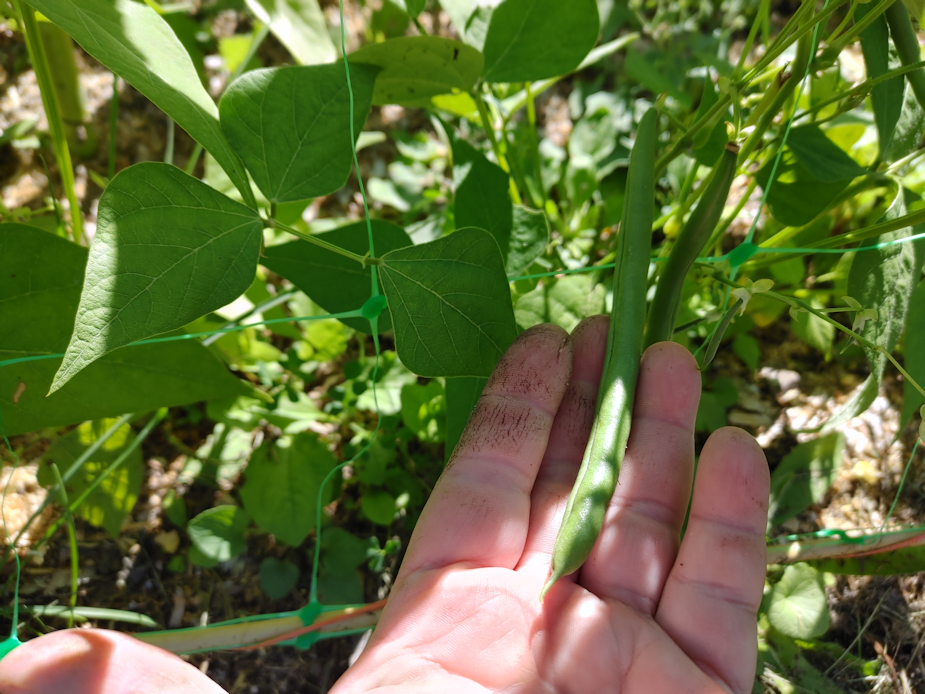
There was have it. Our very first harvest of green bush beans, planted late to replace the ones that drowned out.

When watering this bed, I do try to make sure to water the beans more directly, but as I was harvesting, I could feel that they could really use more water. We’ll have to focus in them a bit more!

The next area I worked on was the group of ground cherries that had been flattened.

I managed to find a couple more sticks – I think my daughters intended them as walking sticks! – and grabbed a couple of short pieces left over from hula hoops we used to make row covers last year. The ground cherry plants are a lot more delicate than other plants, and I felt the twine might damage them more, so I threaded it through the pieces. As careful as I was, I could hear branches cracking as I lifted them. I’m not sure all of it will survive.

They are, however, still covered with many flowers, so we’ll still be getting more berries developing.

Once these were done, I started on the kulli corn. I completely forgot to take pictures, though.

One side was fairly easy to do. I lifted the netting up, then used the existing scavenged T posts to hold the twine, which I wrapped around stalks to hold them up. This was on the north side of the bed, and the gust of wind had come from the north, so it was pretty easy to reach things.

The other side was far more difficult. We did lose the top of one stalk completely, and the others were leaning onto the nearby bed of tomatoes. If the net wasn’t there to hold it, they would have fallen onto the other bed, but instead they created a sort of arch.

The tomatoes themselves were outgrowing their supports and falling over. I had to add more support to those, just so I could keep working on the corn without breaking tomato branches. Some of the stakes were leaning over from the weight of the tomato plants, so I just zig zagged some twine between them to pull them together, which gave me enough room to work on the corn.

With the corn, I ended up doing much the same thing; zig zagging twine bank and forth, wrapping it around the top line of twine that was already there, to support the netting. I was able to wrap twine around a couple of the bigger stalks in the middle of the bed to give them extra support, but there really wasn’t much I could do for them. I can’t even guess how well they will recover from this. 😔

Then I went back to the tomatoes and added higher support from end to end to catch the newer growth. They’re looking much better now. There were even a few ripe tomatoes to harvest!

That done, I checked the late garlic in the next bed and decided it was time to dig them up.

The two by themselves on the left are the only two survivors transplanted from the bed the tomatoes are now in. I didn’t bother keeping them separate when I moved the bundle to the canopy tent. We’ll let them dry a bit, then brush the biggest dirt off and either lay them out or hang them up to cure. I’m kind of impressed by them. They’re pretty big, considering what a rough time they had of things! It’s a shame. The bed where only two survived had 90 cloves planted in it. The other one had over 80 cloves planted in it. This is all that made it.

This fall, the garlic will be planted elsewhere. I kept the biggest bulbs from the one bed that did so well, but would really like to plant more. We shall see how it works out, when the time comes.

The Re-Farmer

August garden tour (video)

Oh, my goodness. This took way more time and effort to make than usual! Starting with going back later in the day to record new video because I made too many goofs, the first time around. I mean, how did I accidentally say “corn” when I meant to say “peas”? Repeatedly!! 😂

It also took all day to upload the file. Yes, it’s more than half an hour long, but it still shouldn’t have taken more than 8 hours to upload.

But, here it is. A tour of our garden, including fruit trees this time. It’s been a very rough year for the garden, with some complete losses, but we do still have something to show for it, at least!

I hope you enjoy it, and please feel free to let me know what you think!

Our 2022 garden: evening harvest – first potatoes

We were out of potatoes and I wanted some for supper, so I decided to see what I could get out of the garden.

*sigh*

I chose to dig under plants that I remember had come up the earliest, and were the farthest from the most flooding.

First, the good: the soil under the mulch and cardboard is SO much softer, instead of the usual rock hard. It was cool in the 27C/81F heat, and moist. There were lots of worms, though there were also lots of crab grass rhizomes. A single season under an “instant garden” made a HUGE difference in the soil.

Now, the not so good:

There were almost no potatoes. I dug up three of each type of potato, and that’s all there was.

I didn’t pull out the plants completely, leaving the remains of the seed potato and the soil around the base, digging them down a bit deeper than they started, returned the mulch and watered them well. Who knows. They might survive and still produce more potatoes. Unlikely, but it’s worth a try.

With the condition of the plants, I didn’t really expect much, but I still thought I’d find more than one or two potatoes per plant!

I then thinned out some of the Uzbek golden carrots, checked out the Black Nebula (there’s one in there, hidden by the yellow carrots), and they’re still really skinny but getting bigger. I also picked some of the smaller onions. Over the next while, if we want fresh onions, we’ll dig up the little ones, leaving the bigger ones to get even bigger for winter storage.

For supper, I used these, plus some of the beans I picked this morning, and the turnips I’d picked before, along with some thinly sliced pork to make a sort of Hodge Podge.

I love being able to cook with food almost entirely out of the garden.

The Re-Farmer
Our 2022 garden: mulching, growing and harvesting

I didn’t get a photo of the finished squash patch last night, so I got one this morning.

All the paths are now mulched, too. There’s no carboard under the paths, so I expect things to start growing through, but at least it will be more sparse.

The plants themselves are seeing new growth and lots of flowers. It’s a race against time and the weather to see if we’ll have anything to pick this year.

I love that you can see the giant pumpkin from so far away!

I swear, this thing is visibly bigger, every day.

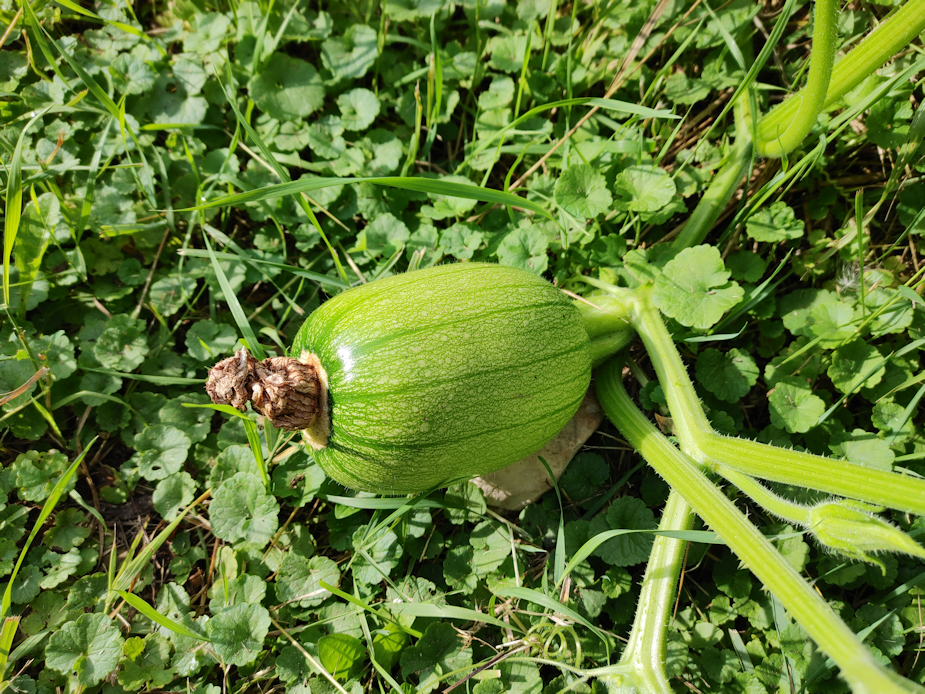
Of the two other pumpkins spotted, this one is making it and growing fast. The other did not get pollinated, and withered away. I see no other female flowers, so we’re probably just have the two.

In checking the Red Kuri squash and Apple gourds, I found both male and female flowers blooing at the same time, so I went ahead and hand pollinated. The Red Kuri is doing well, but with the Apple gourds, all the female flowers so far have withered. This morning, I found a female flower on one plant, and a male on another, si I made sure to hand pollinate

Thankfully, tomatoes are self pollinating.

The are so many of them changing colour right now! I have to check myself, to make sure I don’t pick some of them too early.

The one big Sophie’s Choice tomato I recently picked was enough for the girls to make a tomato salad out of it. I’m glad they’re enjoying the variety.

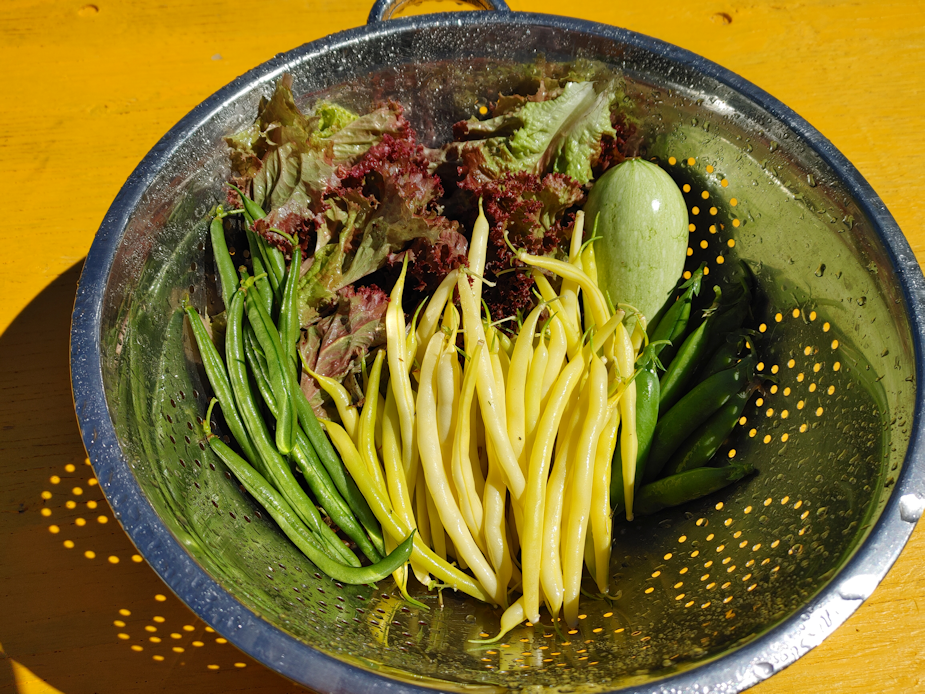
I finally picked the one bigger golden zucchini this morning. There were not a lot of yellow beans to pick, but there were more of the pole beans, with many more little ones on the vines. There will be more peas for a while, too. There may not be a lot of quantity from each of them, but altogether, it’s pretty decent.

The only down side this morning are my pain levels. I over did it yesterday, while pruning the trees. I was so distracted by the heat, I missed my other “time to back off” warning signs. Frustrating.

Ah, well. That’s what pain killers are for. Today is going to be a hotter one, with possible thunderstorms, so it’s not going to be a day for significant manual labour, anyhow.

The Re-Farmer

Our 2022 garden: new growth, surprise growth, fall planting and our biggest harvest yet.

There is some lovely growth happening in the garden right now.

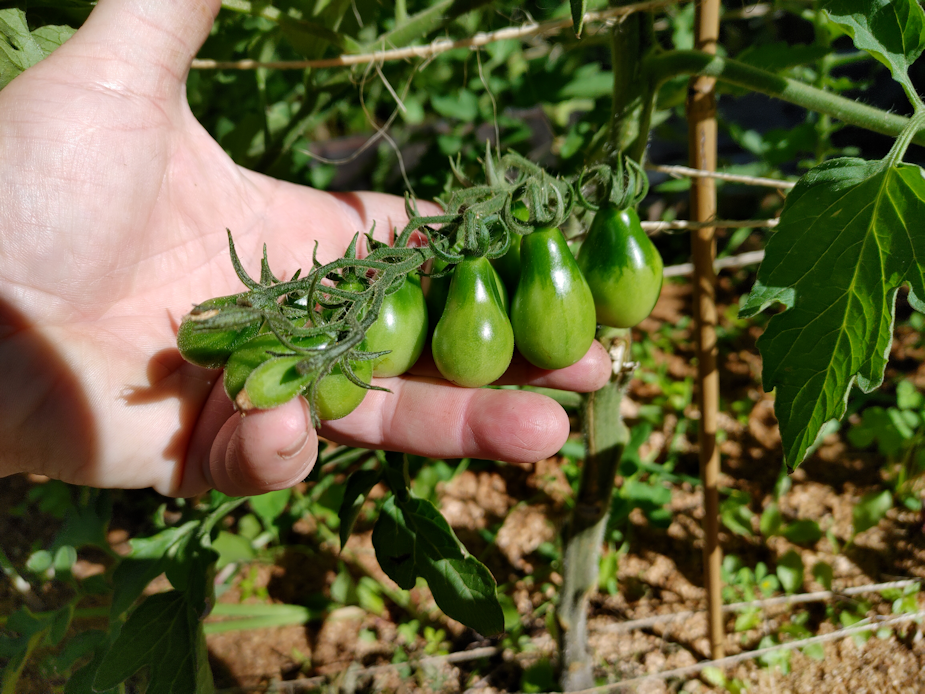
While we have lots of Cup of Moldova and Sophie’s Choice tomatoes ripening on their vines, these Yellow Pear tomatoes are looking to have a good crop, too. They are actually turning out larger than I expected for this variety. It should be interesting when they finally start turning colour!

These Carminat bean pods are getting so very long! I love their gorgeous dark purple.

With the purple pole beans, we can see quite a few pods developing, though the vines are still trying to extend their reach, and blooming all the way. The green pole beans (sheychelles) have wispy little pods forming, too.

Then I started weeding and discovered a hidden surprise.

There are ripe pods hidden among the greens! It turns out these beans start developing right near the ground, unlike the Carminat, which have no flowers or pods at all near the ground.

Awesome!

After finding these, I made a point of looking more closely at the Blue Grey Speckled Tepary beans – the shelling beans – too. They’ve been blooming for a while, but are still such tiny and delicate plants.

Sure enough, I found time tiny pods starting to form. Since these beans are for shelling only, they’ll just get weeding and watering until the pods are all dried.

We actually have yellow zucchini this year! Last year, I was sure we had at least one germinated, but after transplanting, all we got were green zucchini. So I am happy to get some this year. Especially since we still don’t have any green zucchini developing! We did have female flowers, but there were no male flowers blooming at the same time to pollinate them.

We are finally getting more Sunburst patty pan squash, too. There was also one Magda squash ready to harvest.

All the squash are SO far behind. The squash patch, which is mostly winter squash, and the summer squash bed should be enveloped in plants. It’s unlikely we have enough growing season left for most of them, but we should still get something from the smaller varieties.
Here is this morning’s harvest!

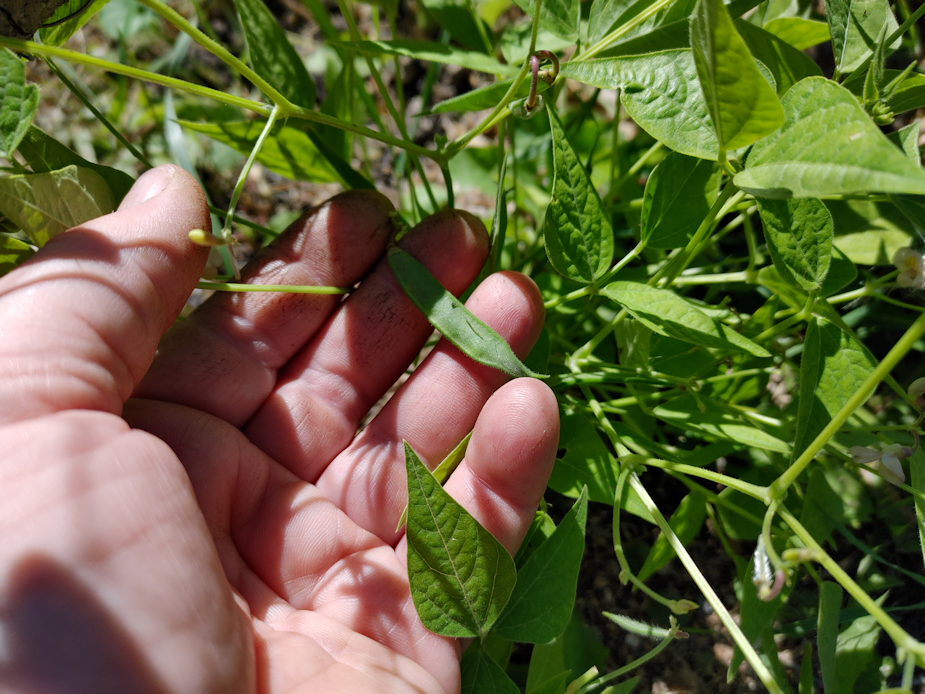
Yes, the peas are still producing! There was only a handful to harvest from the second planting, but it’s the most I’ve been able to pick in one day, this year. We have both the yellow bush beans, and the green pole beans.

With the lettuce, we normally just go in and grab however many leaves we want. This time, I harvested the plants in one area of the L shaped bed in the old kitchen garden, so that the space can be used again.

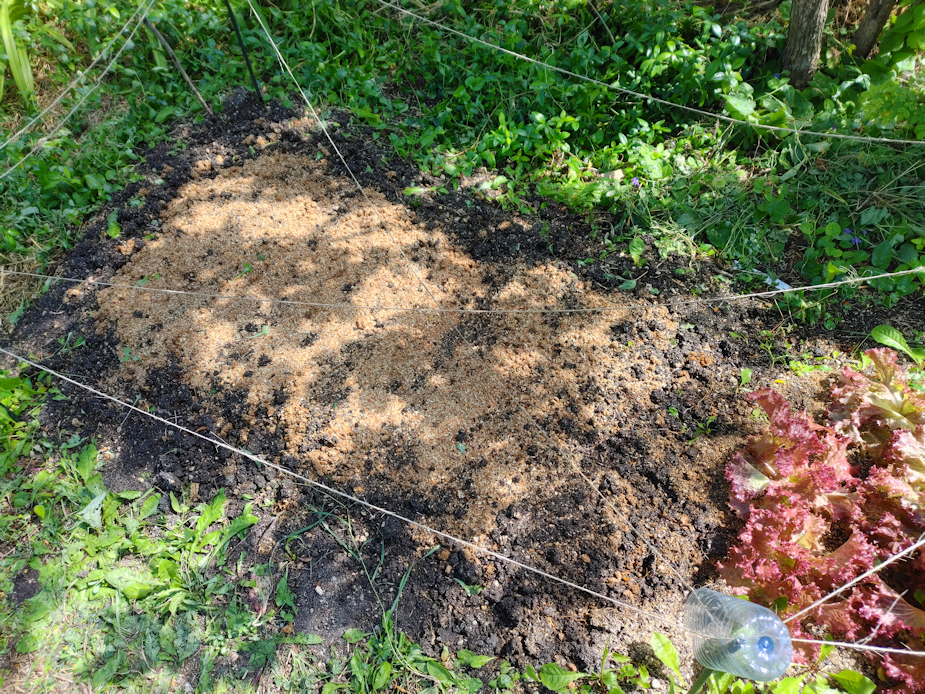
I was planning to plant fall spinach elsewhere in the main garden area, but changed my mind.

It’s just a small area for now. As more of the bed gets cleared, I’ll plant more.

We got another harvest in this morning, too.

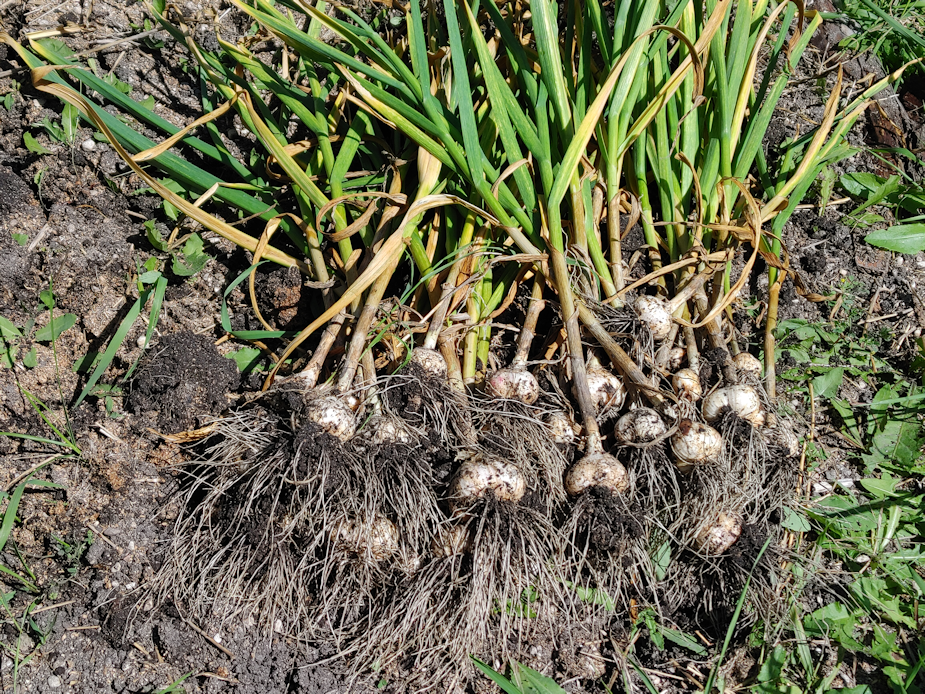
This is the garlic from the bed in the main garden. There isn’t a lot, but they are much larger than last year’s drought garlic!

The other garlic is quite behind, so it might be a while before we can harvest those.

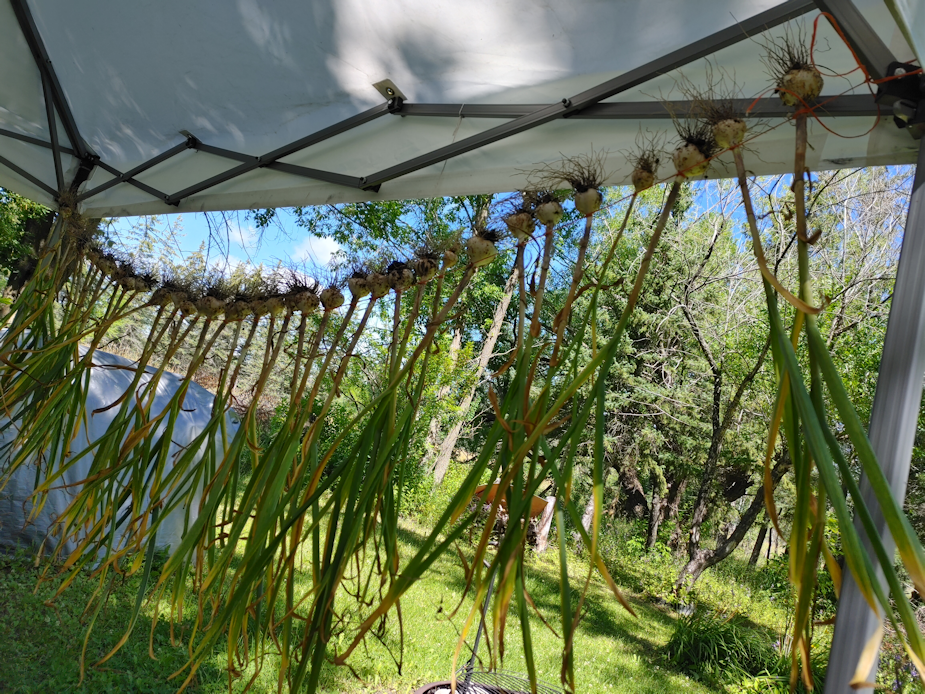
The freshly picked garlic is now strung up under my daughter’s old market tent, where it can get plenty of air circulation as it cures, and we won’t have to worry about it being rained on.

I am quite thrilled by how well these garlic did!

The Re-Farmer