2022 garden preparation: fixing up the tomato bed

Today, I took advantage of the lovely, warmer than forecast weather we are having, to clean up and redo the tomato bed.

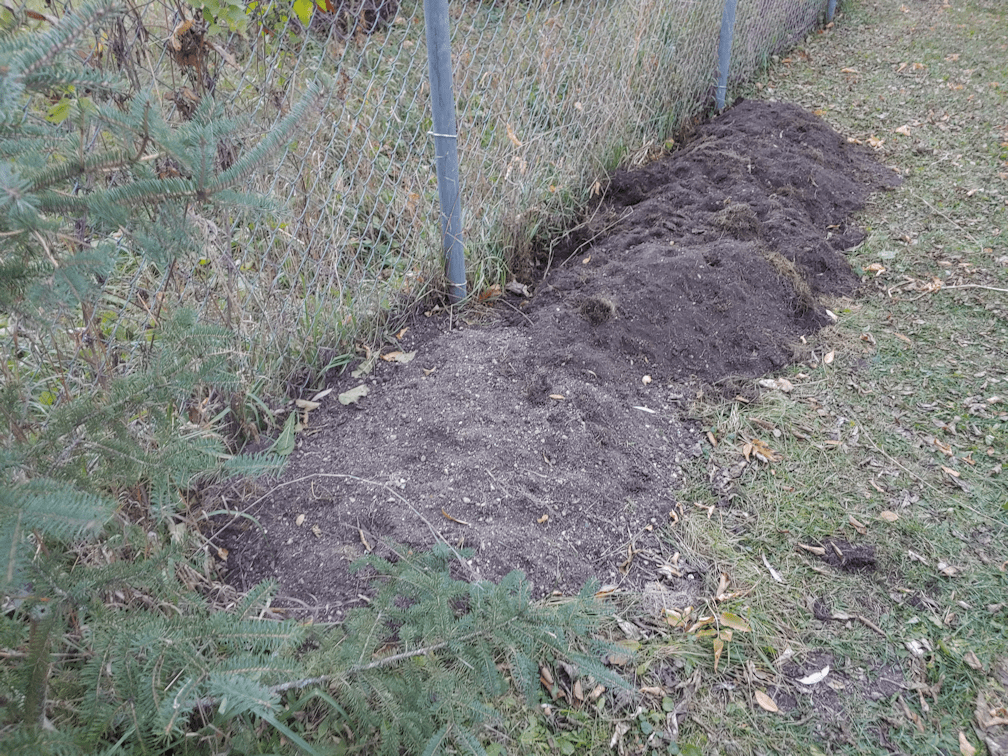
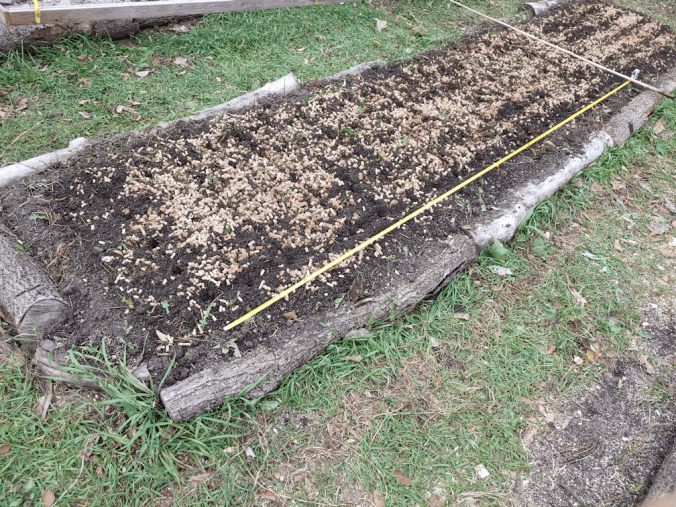
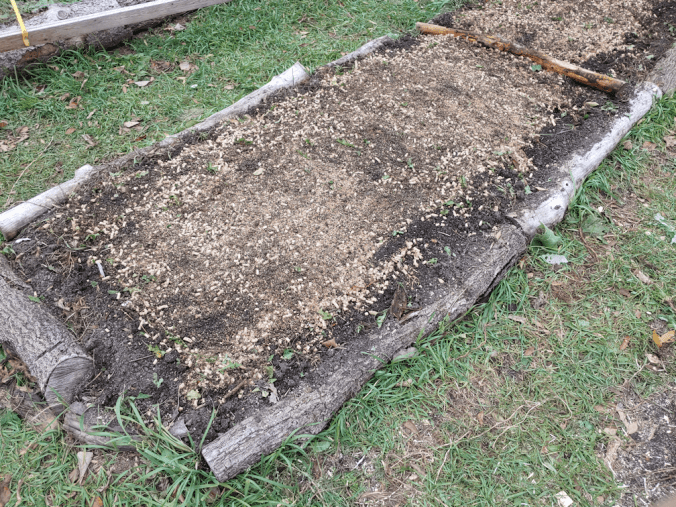
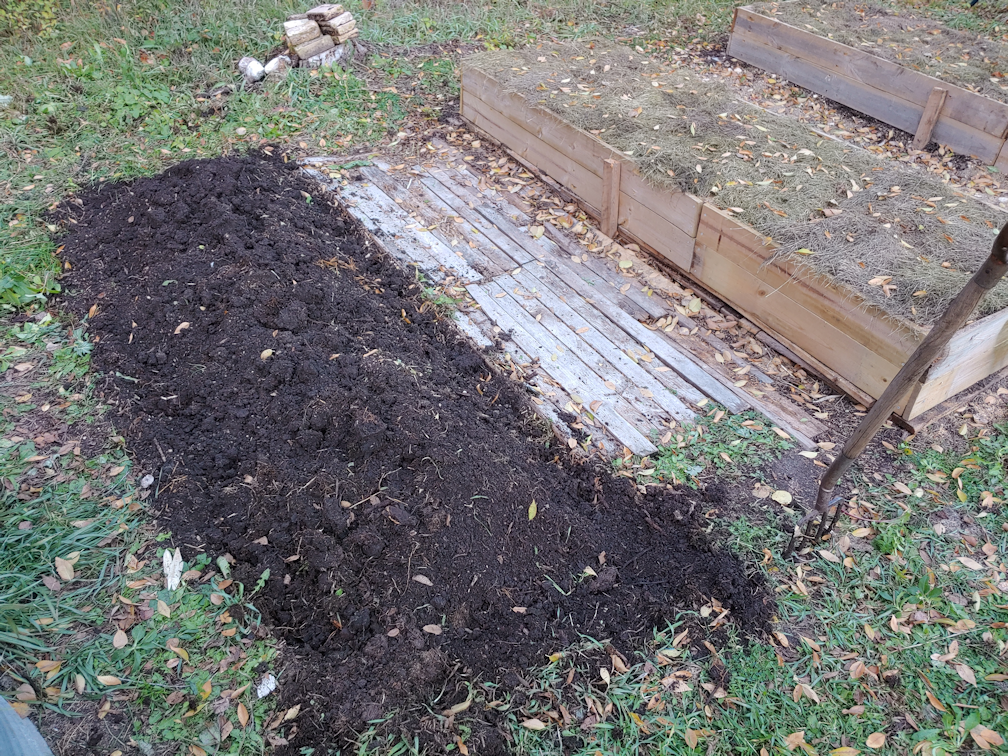
Here is how it looked when I started. This is a new bed, built this spring, and I was very happy to see how deep and strong the roots on the tomato plants where, when I pulled them. I also saw the biggest, fattest worms I’ve seen this year!!

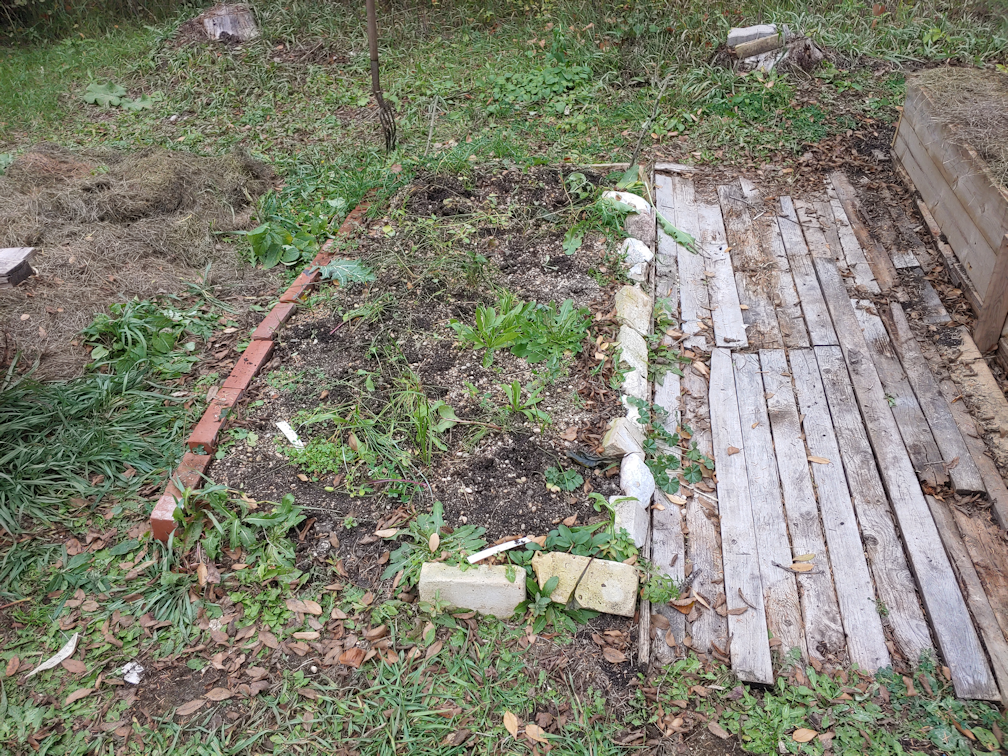
There were two goals to redoing this bed. One was to make sure the soil didn’t go through the chain link fence. When the bed was build, we laid cardboard down on the grass first, with the flaps up against the fence. That cardboard is pretty broken down now. We had to top up the soil part way through the year, and boards I’d scavenged from the barn were used to keep it from going through the fence. The other goal was to use the bricks to create a little retaining wall around the bed. When watering the tomatoes, no matter how gentle we tried to be, soil eroded into the path, exposing roots. Especially at the end by the vehicle gate, which got even more soil added to try and combat the erosion.

The first thing to do was move the soil away from the fence and pull up the boards. Then I went back along the fence with a hoe to make it as even as I could.

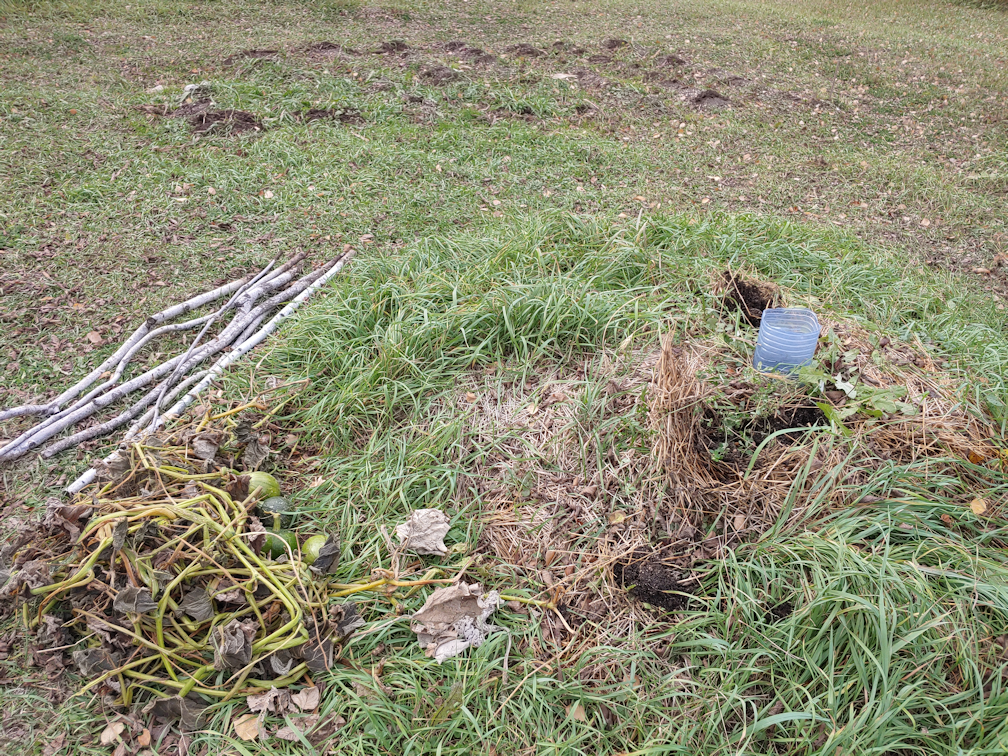
The boards were then put back, this time to fit in between the fence posts. Each section got one full length board, plus another cut to about 3/4 length. I snagged an extra board from the where the cucamelons were planted, on the other side of the people gate, to have enough.

The chain link fence is kind of wobbly, so I used the left over sections of board and placed them at the “seams” between each pair of boards, to support them from the weight of the soil.

Then, in a couple of sections, I also hammered pegs into the ground on the outside of the fence, for extra support.

That done, it was time to start working on the bricks.

First, I had a decision to make.

Should I make the bed two, or three, bricks wide?

I decided on two and a half!

This way, not only would the bed be a comfortable width, but there would be no corner to catch a foot on. Because I just know that I’d be doing that, constantly! :-D

Once that was decided, the soil was moved out of the way and the space where the bricks would go, leveled as well as I could with a hoe. Then the bricks were spread out along the length of the bed.

Would I have enough? It did look like it, but I wasn’t completely sure.

The next job was to use a garden claw to loosen the soil where the bricks would go, so I could push them down a bit. Not too far, though, because I didn’t want to lose any height.

By the time I reached the end, there was a gap of about two inches, so I just moved the bricks at the end to fill it!

Then is was time to level off the soil. This was also the time to pick out any remaining weeds and roots.

Then I went over it with a hose to wash the soil against the bricks and boards a bit more, and clean off any soil that got on top.

The final touch was to mulch the whole thing with leaf litter.

This bed is now ready for next year!

The tomatoes did so well here, we might use it for tomatoes again next year!

The boards and bricks around this bed are temporary. The wood will rot away, and there bricks are just sitting on the ground. At some point, we plan to get to the salvage place and see what sort of bricks and blocks we can find. Maybe even some paving stones. Once we have the materials, the path will be laid with bricks or paving stones, and the bed itself well get framed in a more permanent way. Until we are able to do that, though, this will be enough to keep the soil in this bed from washing away when we water it.

I was pretty much done when the girls finished their stuff inside, and came out to work on the last bed in the main garden area that needed to be cleaned up.

Since we have the straw bale now – and the chipper/shredder – I am thinking of running some straw through the shredder and using that to mulch the top of these beds over the winter.

Aside from that, these beds in the main garden area are now all done and ready for next year.

I’m pretty happy with how these are turning out!

The Re-Farmer

Filling the high raised bed.

Today worked out to be a longer day than planned. I had intended to do a Costco trip to the city tomorrow but decided that 1) I didn’t want to deal with weekend crowds and 2) Halloween is around the corner, and I didn’t want to deal with even bigger crowds because of it! So I headed into the city this morning. After this, we’ll need to go over what’s left that we need to pick up, then make one more trip – after Halloween!

Once that was done and everything was put away, I headed to the finished high raised bed, to start filling it, modified hügelkultur style.

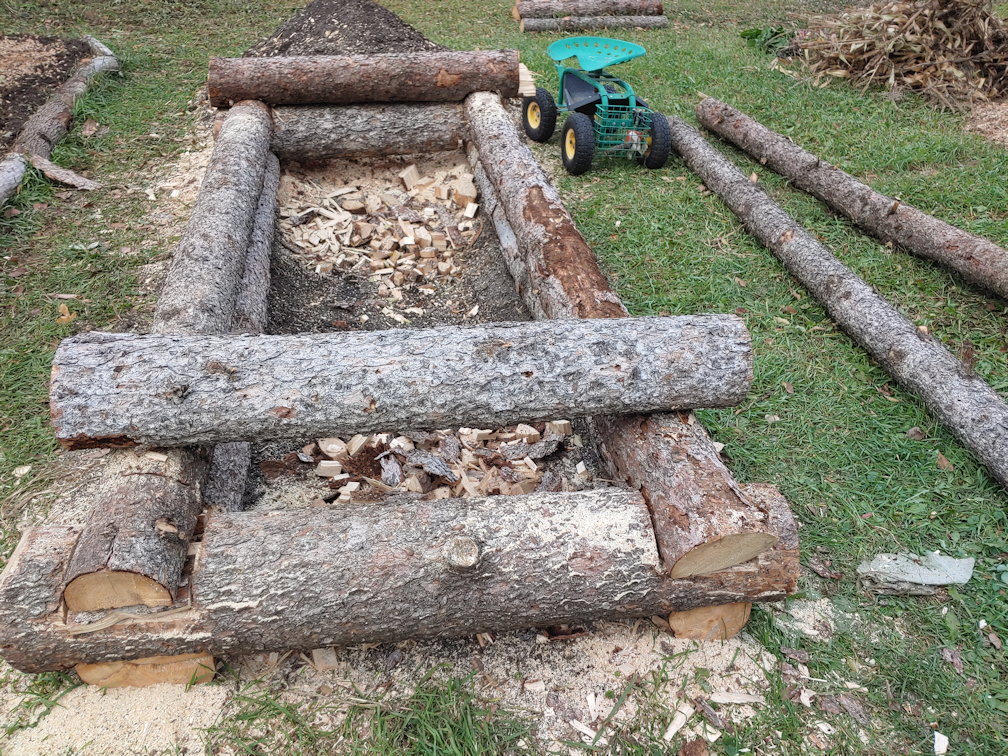
While making the bed, I tried to put all the scrap bits of wood inside, so the first order of business was to spread those out more evenly. Then the short logs that had been used to frame this bed over the summer were added to the bottom. There weren’t a lot of those, but we have plenty of piles of wood to raid. I tried to put the bigger pieces on the bottom, then smaller pieces on top, using them to fill gaps as best I could. Then I started adding bark to fill gaps, too. Ideally, there would be no gaps, but with so many odd shaped pieces of wood, that wasn’t really an option.

Thankfully, we have lots of bark debris. This spot used to have a pile of logs between the two spruces. There is just one long one with a weirdly shaped end left. It needs to be cut up before we can use it.

The nice thing is, along with the partially decomposed bark, I was able to pick up quite a bit of spruce needles. Not enough to increase the acidity of our very alkaline soil, but every little bit helps!

I added a couple of wheelbarrow loads of bark into here, and even went around the bed to pick up little bits of wood and handfuls of sawdust to toss in. I wanted to fill the gaps as much as I possibly could.

Next, a few shovels full of soil was added. This is the soil that had been dug out of this bed before the high raised bed was built. Just a very thin layer was added to fill in the gaps a bit more, and give the breakdown of the wood a bit of a boost of soil microorganisms.

Next came a nice thick layer of corn stalks that we saved, just for this! If we did not have the corn stalks, this layer would have been straw, because straw takes longer to decompose than the other things that will be added.

Yes, we have straw, now!

This got delivered while I was working on the corn stalk layer.

I broke that baby open almost right away!

With the layers, I was alternating between “brown” and “green” layers. The corn stalks were a brown layer, so the next layer (after a bit more soil) was grass clippings, which are considered a “green” element.

I stole the grass clippings from the nearby garlic bed, replacing it with straw. I was concerned the grass clippings might smother the garlic. Later, we will replace the grass clipping mulch on the other two beds with straw as well.

But not today.

With each additional layer of soil, I added a bit more than the previous soil layer. The layers were still pretty thin, comparatively speaking, but I could already notice the weight of it was causing the looser layers below to settle and sink. If I had any, I would have been using compost or manure to layer instead of, or in addition to, the soil.

The next brown layer was leaves.

The final green layer got all the bitter lettuce and frozen chard that had been pulled from the other beds. The kitchen compost buckets got added as well, so there’s also things like egg shells and coffee grounds in there.

Now, it was time to add the rest of the soil. This job actually took the longest, because I frequently stopped to spread it out, pull out the roots and rocks, break up clumps, and make sure any worms that hitched a ride were gently and safely buried.

I stopped adding soil when I was getting too many crab grass rhizomes and rocks to make it worthwhile anymore, and the last of it got raked out evenly, as did the soil in the raised bed.

The very last layer was a mulch of wood chips. Thanks to my mother’s generosity in getting us the wood chipper, we had enough to add a couple of inches to the top.

I expect the contents to settle and sink over the next while. We’ll probably be down a few inches, by spring. Which is okay. We will continue to add more organic matter to build it up.

I must say, I am so thrilled with the height of this. It is SO much easier on the back to work at this height! I don’t even have a back injury. I’m just old. ;-) It might be a bit low for my husband, if he ever wanted to do a bit of gardening, but he would be able to reach while sitting in his walker just fine.

One down, five more to go!

Eventually. :-D

Temperatures are expected to continue to be mild over the next couple of weeks; a few degrees above freezing during the say, and just barely below freezing overnight. We’re expecting some rain tomorrow, then possible rain and snow over the next couple of days. Which means we can still continue preparing garden beds for next year. I might even be able to start cutting down more dead trees before things start getting too cold. It would be good to have the lengths pre-cut to build more beds, even if building them ended up waiting until next fall. Mind you, there’s nothing stopping us from adding more beds to the main garden area, other than possibly running out of material to layer with. My only hesitation is that we intend to expend our garden area into the outer yard, where there is better sun exposure, and those will all be high raised beds. Perhaps by the time we’re ready to build those, we’ll be able to use materials other than salvaged dead spruce trees!

Gosh, I’m having so much fun with all this!

The Re-Farmer
High raised bed – it’s done!

Oh, my goodness, what a difference having that new chainsaw made!

But before I could break it in, I needed to drag down the stuck tree, so I could use the wood in the high raised bed. Thanks to my husband very securely attaching the hooks I got to the rope I got – rope rated to 450 pounds – it was a simple matter to use the van to pull it out.

My goodness, where those top branches ever entangled! When I started pulling it, it didn’t fall, but stayed stuck until I got far enough that the tree was no longer dragging on the ground, but lifting up. At which point, it rolled up and got dragged over the compost ring, then finally it broke free from the branches and dropped.

Right on the cherry trees we are intending to cut away, so there’s no loss there!

After replacing a large divot of sod that got dragged out, I then used the baby chain saw to start cutting away the branches, and cutting away the top of the tree.

Then it got rolled onto the compost ring, so the rest of the branches could be trimmed off.

Finally, it was time to break out the new chainsaw!

Of course, I took the time to read the manual, first, then added chainsaw oil to the reservoir.

Then I measured out and cut a pair of nine foot lengths from the tree trunk.

The bucksaw does a great job, but the chainsaw did in mere seconds what would have taken me probably 5, maybe even 10, minutes, per cut, by hand!

Then, while I dragged the logs over to the high raised bed, I helped a daughter move the rest of the tree trunk aside, so they could set up the wood chipper. They cleaned up all the dead branches from the tree, as well as the little cherry trees we’d cut away to access the last tree we’d cut down.

They spent more time prepping the branches to fit the chipper and shredder, than actually doing the chipping and shredding! Unfortunately, the little spruce branches were so twisted, they ended up clogging the shredder chute to the point that my daughter had to take it off to unclog it. Once that was cleared up, they did a few celebratory shreds before heading inside to start on supper.

Meanwhile…

I started working on the high raised bed by first taking it apart! I cut away the notches in the base logs so that the cross pieces would sit lower, and no longer have that gap that was there before. I also was able to clean up the cuts and make adjustments, as needed.

The new nine foot lengths were thicker than I thought, so after I put the bottom cross pieces back, I used the new logs for the next level.

I ended up not needing to cut notches in them at all. Instead, I was able to just adjust and cut the notches in the next level of cross pieces to fit.

It was SO much faster and easier to cut the notches with the chain saw! Pretty much every notch we’d cut before needed modification.

I used smaller, thinner, logs at the top, which turned out to be a pain. These are from higher in the tree, which meant they were not as straight, and had more little branch stubs all over. I ended up having to trim logs along their lengths to get rid of lumpy bits, so things would sit against each other better.

Then I went and cut two more four foot lengths to do the last cross pieces.

There we have it! The high raised bed is built!

Standing next to a corner, it’s just barely reaches my hip. For mobility and accessibility purposes, we could probably have gone higher than this, but I think this will be fine.

Now, we just need to fill it! We’ve got old logs for the bottom, with corn stalks, leaves, grass clippings and garden waste to layer in. I’ll add thin layers of soil in between each layer of organic matter before topping it off with soil for about the depth of the top logs.

That will be a job for tomorrow!

I may have had to juggle the budget a bit to get that chainsaw, but it was worth every penny. There is no way I could have finished this today, without it. In fact, I have my doubts I would have been able to finish it before winter, at the rate things were going!

About the only other thing we might end up doing with this is maybe get some short pieces of rebar, drill holes through the top couple of logs and set the rebar in them to really make sure the logs stay in place.

It’s really a horrible, messy, slapdash job, but it will still probably last us many years.

Now we just need to cut down more dead trees, so we’ll have the material to build more!

The Re-Farmer

First time canning, and garden clean up progress

Just a bit of catching up on how things went yesterday.

The short version: Long.

It went long. Very long!

For me, it was working on pickling beets using the water bath canner. Until now, we have only done refrigerator canning, and my only experience with water bath canning was helping my mother, as a child. This is the first time I’ve done it myself, from start to finish.

It took WAY longer than I expected!

I have a Ball cookbook of canning recipes. The pickled beets recipe was for a half dozen 500ml jars. They had the basic pickle recipe, but also variations. After looking over our quantities of beets, I figured I could do two batches, with one batch being a “sweet pickle” using cloves and cinnamon sticks instead of the pickling spice mix of the basic recipe.

One batch called for 10 cups of beets. I decided to use up as much of the little beets as I could. Since they would be blanched and trimmed, and their small size would pack tighter than cubed larger beets, I made sure to grab more than 10 cups. I figured, if there was extra, we could just include them with supper or something.

While the first batch was blanching, which filled the blanching pot I found stored in a barely accessible space in the kitchen, I prepped a second batch to blanch. At the same time, I cooked the liquid with the pickling spice bag, and had everything ready to do the sweet spice version.

I was all ready to can the first batch, when I realized I had a problem.

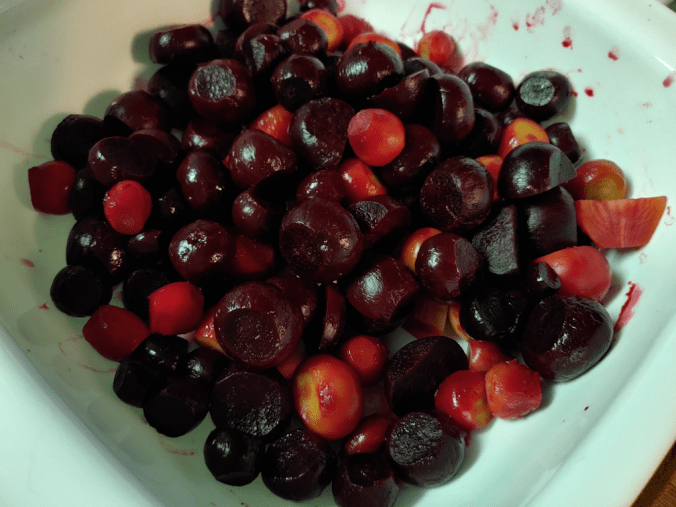
These are the first batch of fully prepared beets.

I doubt I could have filled three jars with that, never mind six!

So I added the second batch.

I still wasn’t sure there would be enough to fill the six jars I had prepped in the canner!

The next step was to put them into the pickling liquid and bring it to a boil, then start filling the jars. After my first jar, I realized I would likely have another problem. Not enough liquid! So I started the spiced version going and continued. I ended up being able to do only four jars with the basic pickling liquid, and the last two got the sweet spice version.

I started working on this before my daughters headed out to work in the garden. They came back four hours later, and I was JUST reaching the point where I actually start putting beets into jar. Most of that time was spent scrubbing beets, blanching beets, removing the outer skins, trimming the tops and tails, and waiting for water to boil.

I know “a watched pot never boils”, but my goodness, it takes a long time for large amounts of water to come to a boil!

But, if finally got done! Our first time canning AND our first time canning our own produce!

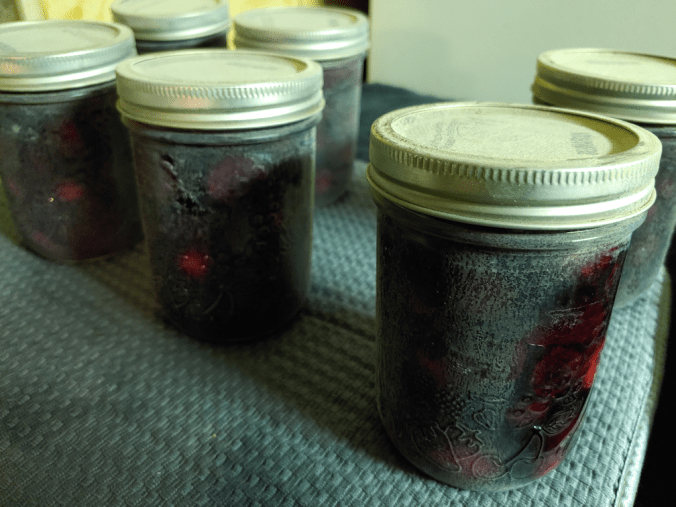
Pulling my first jar out of the water, though, was a bit of a surprise.

I mean, I know our water is hard, but wow! For the jars to come out with a layer of scale like this is crazy! You can see on the jar on the far right, where I wiped some of it with a paper towel. They’re going to need to be washed!

I finally had a chance to remove the rings and check the seals, just a little while ago, and they all came out fine! I made sure to keep track of which ones had the different pickling liquid, for when the scale gets washed off and they can be labelled.

Except the jars we open to taste test! :-D

By the time I was done, it was full dark, so it wasn’t until this morning that I could get a photo of the girls’ hard work outside.

They got three of the four remaining beds in the main garden area done – and most of that time was spent on just one of them! The first two weren’t too bad, but the third one was filled with crab grass, and it took them ages to get as many of the rhizomes out as they could!

I am amused by all the cat footprints in the loose soil! :-D

I’m glad they were able to get these done. Today turned out to be a write-off for outside work, but I will cover that in my next post. :-)

The Re-Farmer
Our 2021 garden cleanup: progress and plans for the day

I worked on some of the garden beds yesterday, until it got too dark to keep it up. Here is what I managed to get done.

The first bed I worked on was the beet bed by the garlic, as this one will be getting a box frame soon. I started by removing the bricks and rocks around the edges, some of which you can see in the background.

I had to come back this morning to get a picture of this area. The beet bed had a row of red bricks along one side, which I moved over by the tomato bed. Then I went around the house and yard to pick up all the red bricks I could find and brought them over. When this bed gets cleaned up, we’ll re-do the boards along the fence, so that they fit better between the fence posts and line the entire length of the fence, to keep soil from washing through the chain link. The rest of the bed will be framed with these bricks, to keep the soil from washing into the path.

Amazingly, even though the vines are quite dead, there are still tomatoes ripening. I did not expect that, with the temperatures we’ve been having!

The beet bed then got weeded, and lengthened to match the garlic beds. I also moved the soil more towards the middle. I will not be digging out the soil to do the layering like I did with the others on this one. We only have wood enough to make a box frame one board high, so even though the boards I found are wider than the ones used in the other beds, it still won’t make a bed as deep as the others. This bed also got layers of material buried in it as it was made this spring, and quite a lot of the new garden soil was added, so it won’t need as much material to fill it. Once the box is built, it’ll pretty much just be laid over the existing bed. About the most I’ll do is make a “foundation” of old boards, like I did with the other two beds. Once that’s in place, I will make a trench in the middle of the soil and bury more organic material from the compost pile, but that’s about it.

The next area I worked on was a quick job. I just had to spread out and level the soil from the potato bags (and even found a few missed potatoes!). Nothing fancy is happening here. There are some lilies that need to be broken up, and they will be transplanted here.

The last spot I worked on before it started getting too dark was where the poppies had been. One of the things my daughters and I observed over the summer is that we needed to make areas to walk through, without stepping on plants. So at one end, by the rhubarb, I used the flat stones I found under the old wine barrel planter along the spruce grove as stepping stones. The rhubarb covered the poppies that had been planted near it, so I’m considering transplanting those somewhere else completely, but that won’t be done until the spring. We have only three interlocking bricks, so I used them as stepping stones at the end nearer the laundry platform.

The poppies that were here would have self seeded, which my loosening of the soil would have disturbed, but that’s okay. I did harvest a few little pods. I will broadcast more seeds some time over the next few days, then do it again in the spring. Once they have established themselves, this should end up being a permanent bed for Giant Rattle Breadseed Poppy. I do plan to get another variety of edible poppies I found from a Canadian source, but those will be planted in a completely different area.

So that’s as far as I got, yesterday evening. Today, I won’t be working on the garden clean up at all. My daughters will be working on that, later today. It’s supposed to warm up a bit more, but I’m really hoping the winds will die down. They made things quite bitter while I did my rounds this morning!

I’ve asked them to take before and after pictures for me. :-D

As for me, I have decided that I will can some of our beets. After going over my recipes, we do have enough to pickle. My daughter has been doing refrigerator pickles with the summer squash, which is great, but they take up a lot of room in the fridge, so I want to do water bath canning, so they will be shelf stable. I should at least get a half dozen 500ml jars.

I’d better get started!

The Re-Farmer

Our 2021 garden: final harvest!

Today, I went out to get together with some friends. When I got back, the girls were in the old kitchen garden, starting our final harvest!

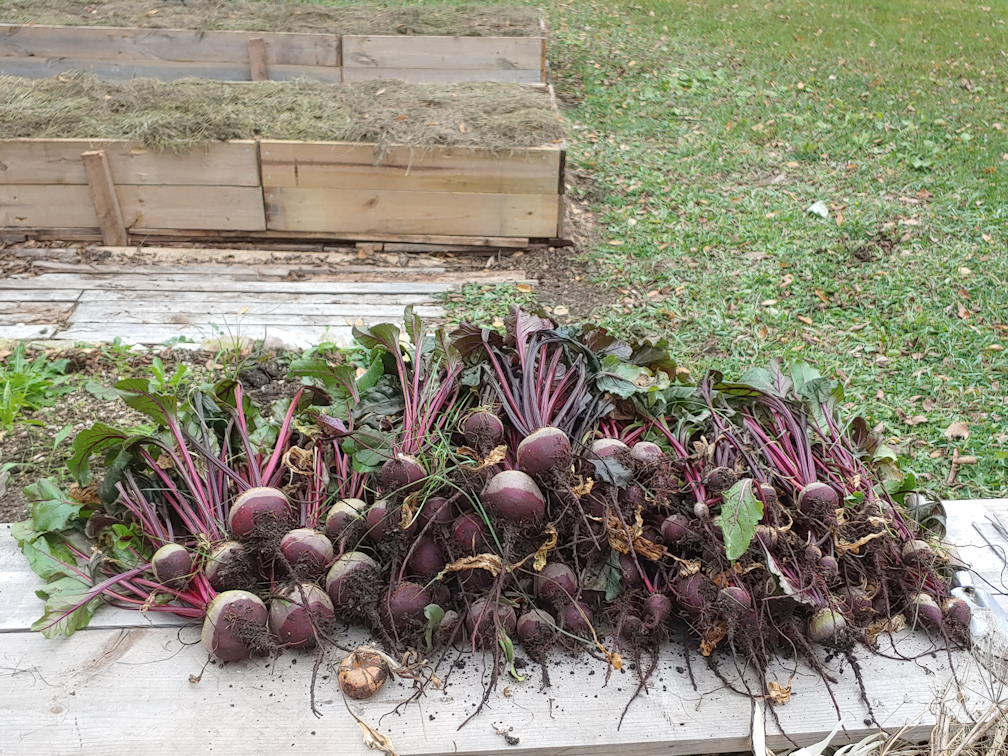
I started off helping with the beets in the L shaped bed, before heading over to quickly do the beet bed next to the garlic.

What a difference!

In the old kitchen garden, all the beets were very small. I was expecting that in the bed along the retaining wall, since they had been eaten by the groundhogs, but I expected more from the L shaped bed.

The girls don’t take pictures like I do, so I just got a shot after they were done. The piles of greens in the beet beds include beets too small to keep. This will all be worked back into the soil. In the carrot bed, you can see the Kyoto Red fronds that had gone to seed, left behind as well. I figure those can be worked back into the soil, too. And if we find little carrots coming up in this bed next year, I’m okay with that! :-D

We got a lot more bigger beets out of the little bed by the garlic! Now that this bed is clear, we can build the last low raised box for it, and the bricks used to frame it will be used elsewhere.

Then my older daughter and I started picking the fingerling potatoes. Being able to dump a bag into the kiddie pool, then go through the soil to pick the potatoes, made the job very easy! We moved the bags away from the fence, so that the picked over soil could be dumped back against the fence before we moved on to the next bag, which also made it easier.

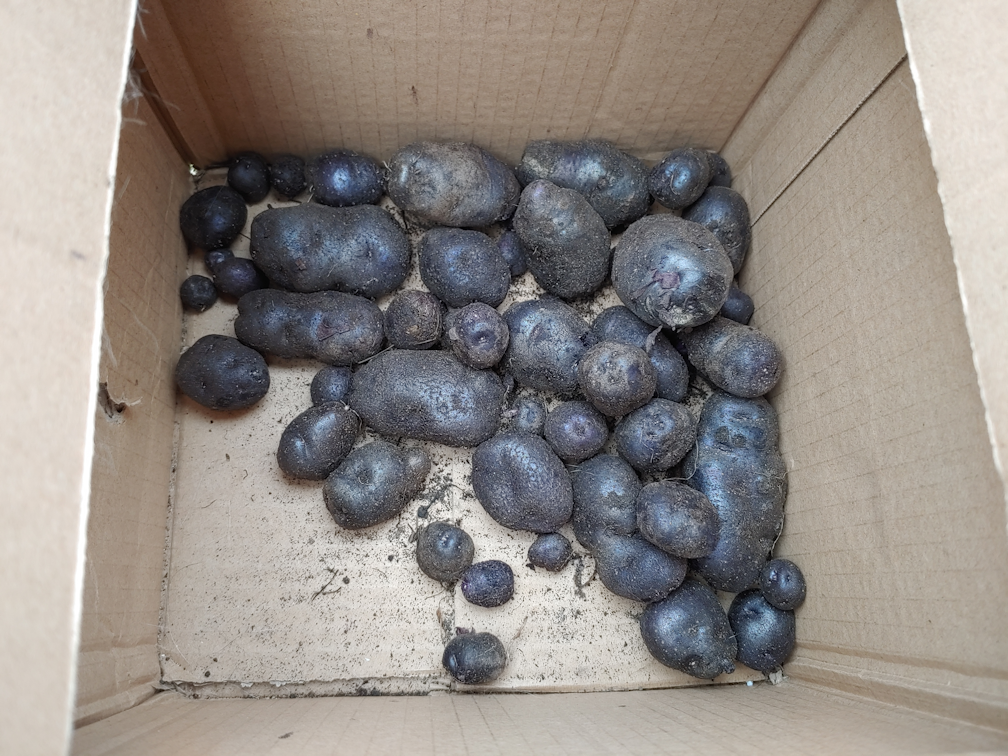
The Purple Peruvians are SO dark, it was hard to find them in the soil! We got a lot more of them than expected, and had to start using another container to hold them.

Of course, some of them got used for our supper! Here, you can see the Purple Chief on the left, and the Purple Peruvian on the right. I cubed them, as well as three types of carrots, added some garlic cloves, tossed them in flavoured olive oil and seasonings, then roasted them. I can hardly wait to try them!

While I worked on supper, the girls finished cleaning the vegetables and set out the beets and carrots in the sun room, with the ceiling fan going, since leaving them outside in the sun is not an option right now. There are three types of carrots here; Deep Purple, from Veseys, Kyoto Red and Lounge Rouge Sang from Baker Creek. It’s hard to tell which ones are the Lounge Rouge Sang, as the colour gradient isn’t very visible. All the beets from the small bed are on here, plus most of the beets from the old kitchen garden as well. We did take some straight inside, and a few of them are in the oven, too. They got peeled and chopped, tossed in olive oil and seasonings, then roasted at the same time as the potatoes.

With the beets, we may actually have enough to make it worthwhile to pickle them. I’m not sure. Mostly, though, we’ll just eat them fairly quickly. As for the carrots, I think we’ll either be eating them quickly, too. I don’t think there is enough to even be worth blanching and freezing.

It’s a very small harvest, considering how much we planted, but I’m still happy with it, since we came so close to not having anything at all.

Now our work is really cut out for us! All the beds can now be cleaned out and prepared for next year.

The Re-Farmer

On growing garlic

This year, I joined a number of gardening groups on social media. Either local groups or cold climate/zone 3 gardening groups. It’s pretty cool to see how many first time gardeners have been joining the groups and asking all sorts of questions.

This is the time of year for planting hard neck garlic, as we did yesterday, and there is a LOT of discussion on these groups right now, and people are sharing some really good links.

One really good video I saw shared was uploaded just yesterday, and it give a lot of good information. I think you’ll enjoy it, too.

He talks about hard neck garlic, soft neck garlic, seed garlic and even using store bought garlic, too.

I didn’t realize Elephant garlic isn’t actually garlic!

He talks about lots more, including harvesting “wet garlic”, which was something I wondered about when checking our own garlic last year.

Among the most discussed things I’ve been seeing in the gardening groups has been how deep to plant the cloves. There is a LOT of differing, even conflicting, advice. The thing is, the conflicting advice isn’t necessarily wrong. There can be quite a bit of variance, based on climate zones. For those in zone three, like myself, this was an excellent link that was shared. I also found this video, specific to planting garlic in zone 3.

I found it interesting that he says to leave the curing garlic out in the rain!

For those who aren’t necessarily in colder climates, here’s a video from MI Gardener (published September, 2018)

A lot of gardeners on my groups get seeds from MI Gardener, too, and are very happy with what they get.

There is a lot of information and advice out there, but if you can’t follow all of it, you know what? You can still get good garlic! We didn’t plant our cloves as deep as recommended for out zone, yet they survived the Polar Vortex just fine. We don’t have compost or manure to add, and we still got decent sized bulbs. That’s one of the beauties of gardening. You can do all sorts of things “wrong”, and chances are, you’ll still get decent results. What works in your own specific garden may also be quite different from what works in other places, too, so it will always be a learning experience.

Which is half the fun of the whole thing!

For those reading, do you have other things you plant in the fall? I’ve read about a number of vegetables that can be seeded in the fall, and plan to try it in the future, as we get our garden more established. If you plant garlic, do you plant hard or soft neck varieties? What works for you?

The Re-Farmer

Our 2021 garden: cleanup up and high raised bed progress

While I was working on the garlic, my daughter did a whole bunch of clean up!

She pulled the Dorinny corn stalks that were next to the squash tunnel, then pulled all the squash, gourds and melon. Aside from the sunflowers, which we will be leaving for the deer to nibble on in the winter, we just need to weed and prep the beds that will be used next year, and put away things like the bin we keep tools and supplies in, empty the rain barrel and put it away for the winter, and take down the last of the critter barriers.

Then she pulled all the purple corn stalks, removed the three layers of barriers we had around the Crespo squash, and pulled those, too. I’m not sure what I’ll be doing with the corn block. There’s some very good soil there. It would be good to plant some sort of legume there, next year, to replace the nitrogen the corn used up. As for the squash hill, that’s something else I’m not sure what do do with. When we plant squash again next year, I want it to all be on the other side of the main beds, where they get more hours of sunlight.

What a sad sight. The Crespo squash had recovered so well from the critter damage! I definitely will be trying these again – with critter barriers, right from the start!

Once I finished with the last garlic bed, I pulled the frozen chard and the remaining radishes we’d hope to grow for pods.

All those radishes we planted, and these are the only ones that survived the grasshoppers!

It’s a shame we don’t have chickens. They would have loved all the greens we pulled today! Not that they will go to waste. They will get buried in the beds as we prepare them for next year. There are still four more beds in the main garden area, including the one with lettuce still in it, to clean up. The lettuce is handling the overnight cold very well, but they have become very bitter tasting, so they will be pulled. Of course, there is still the high raised bed to work on.

I had company while I worked on the garlic. The cats do like the high raised bed. I’m sure the wood is much warmer on their toes than the ground. :-)

My daughter was able to help with the high raised bed this time. She finished making the notches on the next end piece, in the background, while I cut another 9′ side piece from the last tree we cut down. She does not like using the baby chainsaw, and much prefers a hammer and chisel, so I started on the notches on the end piece in the foreground, until the second battery on the baby chainsaw ran out. By then, it was starting to get dark, so my daughter finished up the end piece she was working on and we called it a day. You can’t see the cuts I made on the end piece in the foreground, as I rolled the log onto them. They make it less likely to roll around, should the cats decide to climb all over it again.

The side pieces that are waiting are from higher up in the tree trunk, and quite a bit thinner than the other logs. Almost too thin. Since we will probably make this bed four logs high, I am thinking I should wait until I have thicker logs to use, and save the narrower ones for the top row. The tree that’s still stuck on the branches would give me logs that are just the right size – if we could get it the rest of the way down! :-D It’s either that, or find another dead tree to cut down. The problem with that is, most of the trees that need to be cut down are all really huge. They might be too big!

As glad as I am to have so many dead trees available that are still solid enough for this project, I’m a bit sorry to be using them. These are the trees we intended to use for the walls of the cordwood shed we plan to build as an outdoor bathroom. It’s possible, however, that we will be able to get a load of cast-off electricity poles. These are the remains of poles that broke in storms or had to be replaced for some reason, and we’re on the mailing list with the electric company. They don’t come available often, and not always in our area, but these are cedar poles and would be much better to use for cordwood walls than spruce. So maybe it’s for the better, that the dead spruces are being used to build high raised bed gardens!

The Re-Farmer

Our 2021-22 garden: garlic is in!

When it became clear we would be using our low raised beds to plant the garlic when it came in, I thought about how much space the garlic we planted last fall had taken, and thought we might be able to plant all three varieties in one bed. Maybe one and a half.

Boy, was I wrong. :-D

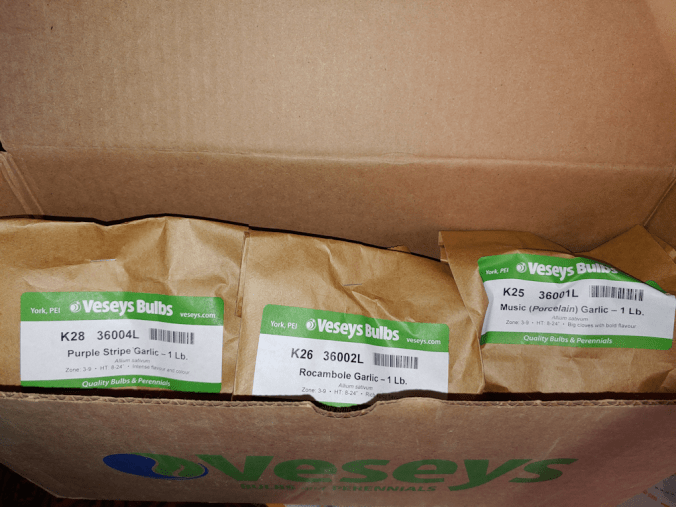
The garlic is sold by weigh so, technically, we got the same amount of seed garlic as we did last year, but when I opened the bags, it just seemed like… more.

It’s a good thing I take pictures and document everything, because I was able to look at last year’s post and compare.

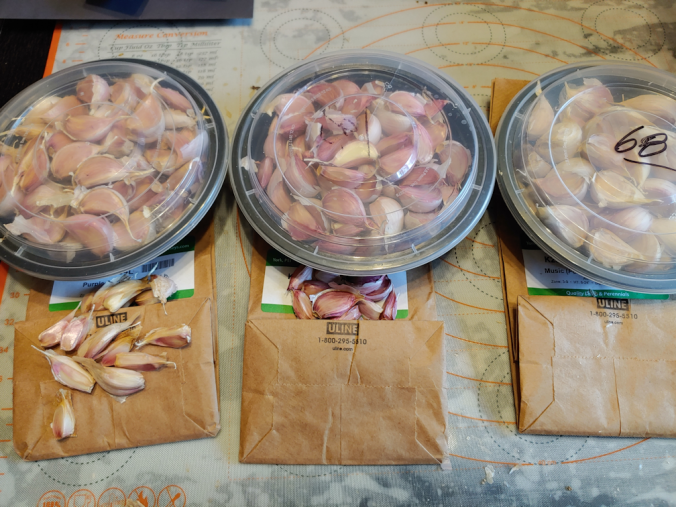
The photo on the left is from last year, the one on the right is the garlic that came in today.

I even just happened to lay them out in the same order! The Purple Stripe is actually less than last year. Seven bulbs instead of eight, but this year’s bulbs were more consistent in size. Last year, we got seven Rocambole, but this year there is nine. The Porcelain Music had eight bulbs last year, and this year there is nine.

Separating hardneck garlic cloves is rather a lot more difficult than the soft neck garlic at the grocery store! :-D

Last year, we planted all the cloves. Even the little ones. The Porcelain Music had fewer cloves per bulb, but they were all large. With the other two, I separated out the little cloves for eating, and kept the larger ones for planting.

Which turns out to have been a good decision!

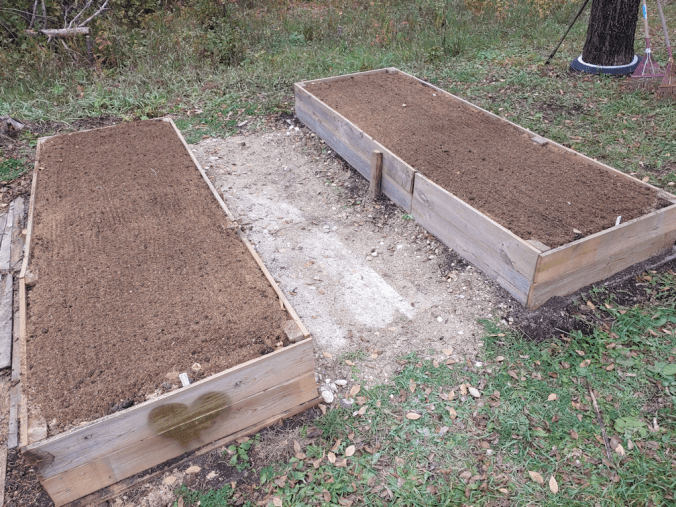
Last year, I planted the cloves at approximately six inches apart, but this time, I actually measured and marked a six in grid. Which was SO much easier now that the bed is raised up higher! Now I’m thinking I must have been closer to four or five inches, when I planted last year. At six inches, I filled one bed almost completely with Purple Stripe. There were maybe three prepared holes that did not get a clove planted in them. Which means this bed has 82 cloves planted.

The second bed got the Rocambole, which actually had more cloves. This bed is just a little bit longer than the first one, which gave me an extra row. I had exactly enough cloves to fit! That gives us 90 Rocambole garlic in that bed.

The third bed here still has beets in it, but thankfully, we finished cleaning up the carrot bed, yesterday.

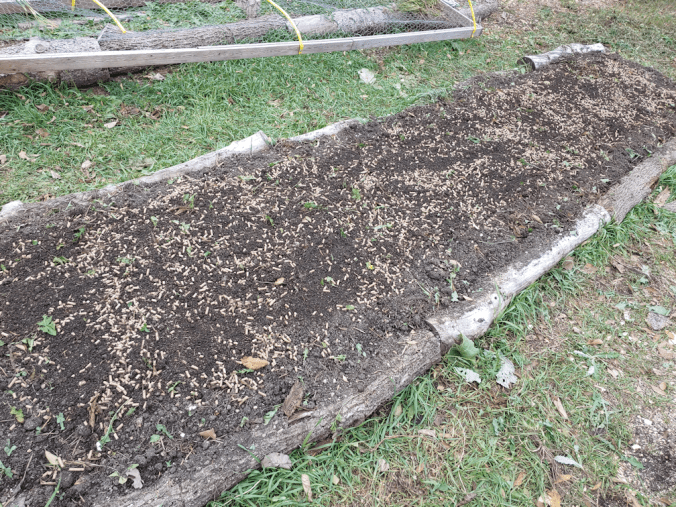
The first thing I did was add half a bag (about 20 pounds) of hardwood pellets and work them into the top couple of inches of soil. Then the bed got watered, so the pellets would start absorbing moisture.

As with the other bed, I marked off a six in grid, though with this bed being so much lower, I did it by dragging a bamboo stake to mark the lines, first, then poking holes in where the intersected. Far less painful doing it that way!

I marked far more than I needed. Having just cleaned this bed out, I know that the edges get invaded by crab grass pretty heavily, so I tried to keep further away from the edges. I marked out 5 rows but, knowing I had fewer cloves with Porcelain Music, I laid the cloves out along four rows, first. I turned out to have exactly enough to fill a 4 x 13 grid, making for 52 cloves.

Which ended up being pretty much exactly half the bed. I placed the piece of wood across to mark how far the garlic is planted, so we know how much space we have when we plant something in the other half in the spring.

While I was working on the third bed, my daughter covered the low raised beds with a grass clipping mulch before moving on to other areas of the garden, then I used grass clippings the last bed. I hope to replace it with straw, when the bale comes in. The mulch has to be removed in the spring, once the overnight temperatures are warm enough. The garlic should be showing through the mulch by then. That is fine with straw, but the grass clippings may be too dense for the garlic to work its way through, so when the straw comes in, I plan to replace the grass clippings with it.

All three beds were finished with a fairly decent watering. Mostly to dampen the mulch than try and soak through it. We are still expected to warm up over the next few days, so this should be enough for now. Later on, as overnight temperatures drop and before the snow comes to say, we’ll cover the beds with plastic.

One thing is for sure. Working with the newly framed low raised beds is SO much better than the ground level beds, even though those ones are technically considered raised beds, too. It was easier to mark out distances, easier to reach the middle, and much MUCH easier on the back. Everything went so much faster because of this, too. I look forward to when all our garden beds are at least this high, or higher!

We had originally intended to double how much garlic we planted this year, but I am glad we decided not to, at the last minute. We would not have had enough beds ready to plant them all, if we had!

It should be interesting to see how these do next year. Not only will be be able to compare with the highly amended low raised beds in the same location as last year, but also the third bed in the main garden area. The low raised beds get full sun (meaning, at least 6 hours), but are shaded longer in the morning by the spruce grow and nearby Chinese elm. The third bed has nothing to shade the morning sun, and is far enough away from the trees by the house that it’s not affected by evening shadows, either.

Our 2022 garden now has its first plantings!

The Re-Farmer
Guess what I’ll be doing today!

I made a trip to the post office today and had a lovely surprise.

Our garlic is in!

According to the Canada Post tracker, it wasn’t supposed to arrive for another four days.
We have our garlic, but we still don’t have a straw bale to mulch the bed, so I messaged our renter about it. When we bought from them before, they usually had a bale over right away, so I was wondering.

Sadly, my suspicions were correct. They are having to buy all their hay and straw bales themselves this year. They haven’t got their shipment yet, and don’t even know what to charge me until they pay for it themselves. Yet they’re still willing to part with one for me!

We ended up chatting a bit, and it’s been a very rough year from them. Almost everything is a write off this year. The corn they harvested from the field by our place was chopped up and will be made into silage, at least. Even their garden was decimated by the grasshoppers, on top of the drought.

So it may be a while before we get a straw bale. Now that I know this, I will cover the garlic beds with plastic and maybe some grass clippings until the straw comes in.

Since the garlic will be going into the low raised beds we built this year, I’m thinking it might be worth dismantling the long covers we made for the main garden beds and use the materials to make covers for the low raised beds. We shall see. That’s something that can wait until spring. Cleaning up and preparing the beds for planting in the spring is the priority right now.

But first, I will go start breaking apart garlic bulbs to get them ready for planting!

The Re-Farmer