Analysing our 2022 garden: squash, gourds and melons

Okay, it’s that time! I’ll be working on a serious of posts, going over how our 2022 garden went, what worked, what didn’t, and what didn’t even happen at all. This is help give us an idea of what we want to do in the future, what we don’t want to do in the future, and what changes need to be made.

*sigh*

I had such high hopes for our squash and gourds for 2022. We planted SO many varieties of squash! We especially worked towards growing winter squash, with a focus on varieties that stored well for the winter. This is part of our working towards being as self sufficient as possible, and to have a good supply of food during the winter months when we can expect to be unable to get out, either due to being snowed in, or vehicles freezing, or whatever, for at least two months. Something we’ve already had to deal with, somewhat.

We also planted a variety of pumpkins, including 3 hulless varieties for their seeds, and summer squash, plus had both new and old varieties of gourds.

Almost everything was a loss, and what wasn’t a loss was still nowhere near fully successful.

We’ll start with our “fun” plants: the gourds.

I am wanting to grow gourds to cure them, then use them for crafting or to make useful objects out of them. Three that we had grown before were:

  • Tennessee Dancing Gourd, which did very well in 2021, even in drought conditions.
  • Ozark Nest Egg, which was set back in growth for quite time time, but when they did start to grow, looked to be incredibly prolific and would have done amazing, if they had not been killed off by frost.
  • Luffa, which had not done well before, but I really want to grow them for their sponges.

These were grown from seeds left over from the previous year. They germinated well, though there were issues with the cats getting into the mini-greenhouse they were in and destroying many seedlings. I used the last of our seeds to try again, and we did manage to have a few survive.

New gourds included the canteen gourd, and apple gourd.

The Results:

I am really, really happy with how the Ozark Nest Egg and Tennessee Dancing Gourds did!

The Ozark Nest Egg gourds are absolutely beautiful! I just love the size and shape of them. The Dancing Gourds managed to produce a decent amount that were larger than those we collected at the end of the previous, drought stricken year.

As I write this, they are both in a bin, curing. The Dancing gourds have mostly turned a tan colour. The Ozark Nest Egg gourds were already almost white, so there’s not a lot of change in their colour.

I look forward to seeing what we can do with them, after they are fully cured!

Then there was the luffa…

They took such a very long time to even start blooming, and when they did, it was all male flowers for quite a long time. When the female flowers started showing up, there were no male flowers to pollinate them! So when we finally got both blooming at the same time, I made sure to hand pollinate them.

By then, however, it was just too late in the season. There was no chance for them to fully mature. When the frost finally hit, that was the end of them.

Conclusion:

I would definitely want to try all three again. Hopefully, I’ll have seeds from the Ozark Nest Egg we harvested, because I didn’t see them when I was ordering other things from the site I got them from originally. I may have just missed them.

As for the luffa, I think those will wait until we have a greenhouse or polytunnel before I try again. I really like them, and when the plants finally do start growing, they grow so incredibly fast!


Next, we have the canteen gourd and the apple gourd.

The canteen gourds ended up needing potting up a couple of times, and even then, by the time I could transplant them, they were getting way too big for their pots. I’d have transplanted them earlier, but had to wait until after our last average frost date (June 2). They were already showing flower buds when they were transplanted – which promptly died.

They never really did well after transplanting, staying long and gangly, and never filling out. They did bloom, but again, it was male flowers only. We did, eventually, get female flowers that I hand pollinated, but it was too late in the season.

The canteen gourds were planted at the tunnel trellis, which had been used the year before, but the apple gourds were grown in a completely new garden area. This squash patch had most of our winter squash and pumpkins. Each transplanted went into its own dug out hole that was filled with fresh garden soil before transplanting. Unfortunately, this area got heavily saturated during the flooding, and it was way too long before everything finally got well mulched.

Out of everything there, though, the apple gourds did the best.

It still took them a long time to get to the point of flowering and producing fruit – I would hand pollinated them, any time I saw new female flowers show up. The three surviving transplants began to produce quite a few gourds, but it was simply too late. Then, even with protection, they were pretty much killed off by our first frosts.

I know these grow in our climate zone. It was just a terrible growing year that set everything back so much.

Conclusion:

I’ve already picked up more canteen and apple gourd seeds. In fact, I’ve also picked up some drum gourds to try, too! Plus some Caveman’s Club. I am just determined to make it work! I want to make stuff with these, and there are other varieties of gourds I will eventually be trying to grow, for different purposes.


Then there was the summer squash.

*sigh*

We accidentally bought three, instead of one, variety pack of summer squash seeds, so we’ll have green zucchini, yellow zucchini, Magda and sunburst patty pan seeds for years to come. Summer squash was one of the first things we grew, in our very first gardening year, and even though we lost half of them to frost because they were transplanted too early, we still had so much summer squash, we were able to harvest them daily for a while.

They didn’t do as well during the drought of 2021, but we were still able to harvest enough summer squash to be able to do refrigerator pickles. Mostly, though, we enjoy eating them fresh and raw!

For 2022, we were accidentally sent a packet of G-Star patty pans, a green variety, as well. When the mistake was pointed out, we were sent the seeds we were supposed to get, and told to keep the ones we were sent by mistake. We were quite happy to try a new variety of patty pans!

The Result:

*sigh*

The Magda, yellow zucchini and sunburst patty pans were planted in a low raised bed together. Because we like them so much, we had twice as many sunburst as anything else. The green zucchini were planted into the new squash bed, right next to the low raised bed.

We planted as many of the G-star as we did the sunburst patty pans, but those got planted in another new bed, on the opposite side of the main garden area, along with corn, winter squash and hulless pumpkins.

All of these had been started indoors with an excellent germination rate.

None of the summer squash did well, though we did get more Magda squash than in previous years, when fewer plants survived. We quite like the Magda squash. Still, there were very few of them overall, and the plants did not thrive.

We got almost nothing from the green zucchini, and not much more from the yellow. Most disappointing of all was how few sunburst squash we got. Even with hand pollinating.

The G-star had a rough start, but once they got well mulched, they really perked up and grew very quickly. We were even able to harvest some, though the biggest, healthiest plant suddenly died, its stem completely cut through by an insect.

Conclusion:

Since we’ve had such success with summer squash in previous years, we know that 2022 was an exception for how bad our summer squash did. The question is, was it because of the flooding? Or where there other factors? I think lack of pollinators were part of the problem, but the plants also just didn’t bloom much at all.

We’ll be growing all these varieties again, and hopefully, 2023 will be a better growing year!


Now we go into what was one of the more disappointing things; our winter squash. I’m including the pumpkins with these, even though they actually did better.

Along with the three types of hulless pumpkins, which were transplanted well away from each other, we had a couple of free giant pumpkin seeds we grew in a hill we used for Crespo squash the year before, and some Baby Pam pumpkins from seeds left from the year before. Those had a zero germination rate the year before, but for 2022, we had a 100% germination rate!

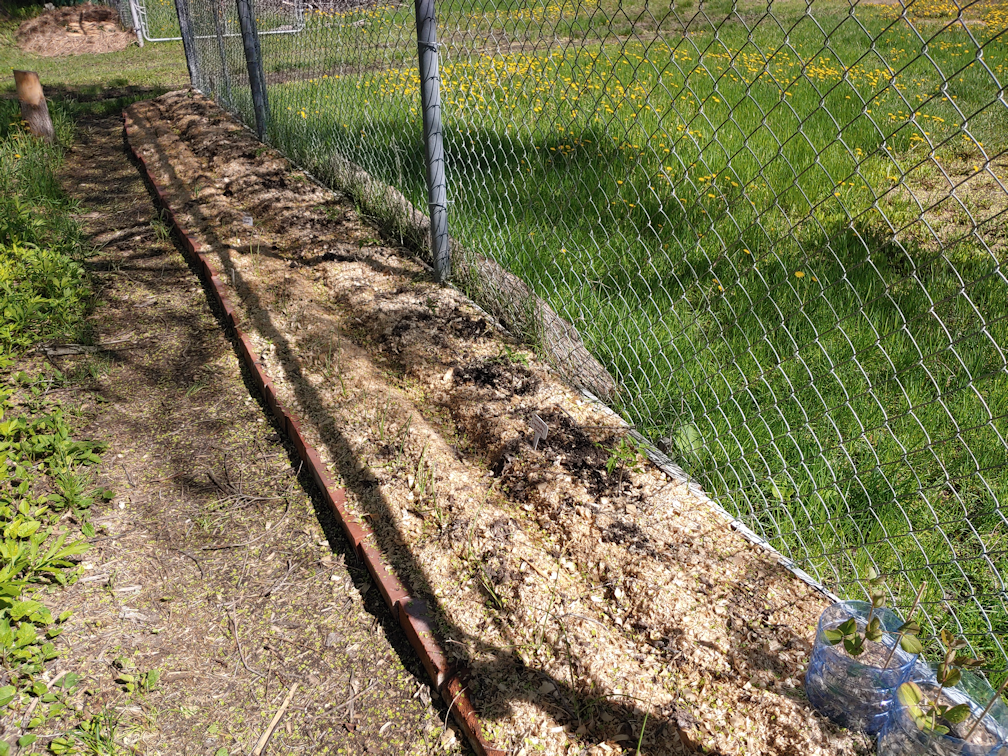
In the new, big squash patch, we also had Teddy Squash, a tiny, short season variety we’d had seeds left over from the year before, Georgia Candy Roaster, and Winter Sweet. In the corn and squash patch, we had Boston Marrow, while Red Kuri was planted in a new bed by the chain link fence.

I feel like I’m forgetting another winter squash. Maybe I’ll remember later. Oh, right! We also tried Crespo Squash again. Those tried to do so well the year before, but kept getting eaten by deer and groundhogs!

The Results:

Again, it was almost a total loss. Especially for the winter squash.

While the big squash patch didn’t have standing water during the flooding, the ground did get quite saturated. We lost some of our transplants completely. The squash and corn patch, on the other hand, so SO much more flooding!

Still, if we’d been able to well mulch the big squash patch better, I think it would have helped. Also, the south side of the patch got more shade than the north side, due to the tall trees between the garden and the house, which certainly didn’t help!

The Georgia Candy Roaster and Winter Sweet just didn’t grow. It’s like they never recovered from transplanting. The Teddy did a bit better, and even started to form tiny squash, but it was way too late for them to mature. The Baby Pam did surprisingly well, and we did get a few little pumkins (they only grow 5-6 inches in diameter). We got a couple of Kakai hulless pumpkins, too. The Crespo squash never even bloomed.

Probably the only really successful thing was the giant pumpkins. We made no attempt to get actual giants, but they still grew really big. We had two plants, and got two pumpkins out of it.

In the corn and squash bed, which got so much more flooding, I’m amazed we got any Boston Marrow at all. They took a long time to recover from flooding, but they did eventually start blooming and producing fruit. We did pick a few, but they were under ripe, and even the ripest one was much smaller than they should have been.

We did get some Lady Godiva and Styrian hulless pumpkins, though nowhere near as many as we should have, nor where they as big as they should have been.

The only real success was the Red Kuri (Little Gem) squash, that grew in the south yard up the chain link fence. They were still smaller than they should have been, but we did get an okay harvest.

Conclusion:

Well, our reasons for growing so much squash haven’t changed, so we’ll definitely be trying to grow them all again. There’s nothing we could have done about the damage the flooding caused. When we try again, we will have to take extra care to make sure they are well mulched, as that made quite the difference, once we were finally able to do it. We’re going to be trying pretty much all the varieties again. My source for Baby Pam pumpkins and Teddy squash no longer carries, them, though. I don’t remember right now if we have any seeds left, but if we do, we will try them again, too.

Among the things we are slowly working on is building high raised beds in the main garden area. When we get to building them where the large squash patch was, the extra height will also help get away from the shade problem on the north side .


Now we reach one more disappointment.

A total and complete loss of our melons.

We had made two new large garden plots, using the Ruth Stout deep mulch method. The north half of both had potatoes planted in them, and the south half got melons.

The previous year, we’d grown two types of melons. In spite of the drought, they did very well, and we got a surprisingly good harvest. We loved having fresh melons, so for 2022, we planted even more. Some were seeds harvested from grocery store melons. We also tried Zucca melon (a giant variety) and a short season watermelon, for six varieties altogether.

The Results:

When some of the transplants died, we filled the gaps with Yakteen gourds (the ones with the red arrows pointing to them).

The watermelons died almost right away. Of the ones that didn’t die outright, they just didn’t grow. It wasn’t until the very end of the season that a couple of Zucca melons started to grow, and even bloom, but it was just way too late by then.

Conclusion:

After the success of the previous year, this was such a huge disappointment. We all really love melons, but they are quite expensive to buy, so growing them would be well worth the effort.

For 2023, we’ve bought more Halona and Pixie melon seeds, which we had successfully grown the year before (we had saved Halona seeds, but not Pixie), plus we are trying a new cantaloupe type variety. We will also be trying the Zucca melon again, plus we still have saved seeds from other varieties.

The flooding we got last year was exceptional, so I don’t think we’ll have that happen again, but we will still need to work on improving the soil and planting them in, at the very least, low raised beds. The Pixie and Halon were planted at the trellis tunnel the first time, and are excellent climbers. We don’t plan to use that tunnel trellis again, but will be building new, permanent trellis tunnels closer to the house, with low raised beds at their bases. That should make a big difference in growing conditions – so long as the weather is cooperative!

The Re-Farmer

Analysing our 2022 garden: cucumbers, bell peppers and eggplants

Okay, it’s that time! I’ll be working on a serious of posts, going over how our 2022 garden went, what worked, what didn’t, and what didn’t even happen at all. This is help give us an idea of what we want to do in the future, what we don’t want to do in the future, and what changes need to be made.

Here, we are looking at growing stuff that was new to us. When I was a kid, my mother did grow cucumbers here, but she never grew peppers or eggplants. Our own experience with growing peppers goes back to before our move, when the co-op we lived in built accessible garden beds, and we signed up for one of them. We tried growing a hot variety of pepper, and we were getting one that was developing really well – then it got stolen. I don’t know if I feel sorry for whomever took it and tried to eat it, thinking it was a bell pepper, not a hot pepper! We ended up potting it up and bringing it inside for the winter, and got many peppers from it, that we dehydrated.

I am not able to eat fresh tomatoes. They make me gag, and I’ve since learned this is a thing similar to how some people find cilantro tastes like soap. There’s something in fresh tomatoes that I react to, but not when they are processed.

Peppers is a bit different. It doesn’t matter if they’re fresh or processed. They make me gag if I can taste them. I’ve eaten things with peppers in them as an ingredient, without reacting to it, so it’s not an allergy, but if there is enough that they can be tasted, I can’t eat it. Oddly, I can eat jalapeno stuffed peppers just fine! As for fresh peppers, I love how they smell, and the crispness as I cut them up, but when I try to eat them, I just want to puke! However, my husband and one of my daughters both love peppers, so we gave it a try.

Eggplant is something that most of us like, but we rarely buy, so we decided to try growing them to see if we liked them enough to make it worthwhile to grow them every year. Peppers and eggplant are both heat loving plants, but as long as their growing season is short enough and they are started indoors, they can be grown in our zone 3. Our summers can get extreme heat as much as our winters get extreme cold!

I’ll start with the cucumbers, though.

We chose a variety that was supposed to be good for both fresh eating and for pickling. They were started indoors, and were transplanted at one of the A frame trellises.

The Result:

In a word, frustrating.

As with so many other things, the cucumbers did not reach their full potential. However, they did grow and bloom and produce. We would even have had enough to do a few jars of pickles, but we mostly ate them fresh.

For the amount of cucumbers we planted, we had enough for our own use.

The frustrating thing?

My sister had a very productive year for cucumbers, and she dumped bags of them with us.

We made up a dozen jars of pickles, but she gave us so many, they started to mold before we could use them all, and ended up composting a lot of them. With so many cucumbers given to us, it made it harder to use up our own cucumbers, too.

As for the pickles we made, we used a garlic pickle recipe. They’re good, but we’ll have to try different recipes, and different varieties of pickling cucumbers, to find what we like best.

The Conclusion:

Yes, we will be growing cucumbers again. Hopefully, we’ll have a better growing year, with bigger, stronger and more productive plants. We’ll be trying different varieties and, as we grow more herbs and continue to grow garlic, we’ll hopefully be making tastier pickles, in the future.

I’m also going to have to tell my sister that, if she has another bumper crop of cucumbers, to please not pass on any to us! We like cucumbers and pickles, but we don’t like them that much!


With the peppers, we got one variety of purple bell peppers (Purple Beauty) that were supposed to be so dark, they were nearly black when ripe. They were started indoors and germinated quite well. They were transplanted into one of the low raised beds, surrounded by spinach on one side, turnips on the other (both of which failed) and onions (which did well). We also had them under netting for most of the growing year, to protect them from critters.

The Result:

These were definitely a fail.

We did get tiny little peppers that ripened to the dark colour they were supposed to become, but the plants never thrived. I think they would have benefited from being mulched properly earlier, but we just didn’t have the material to do it until it was probably too late. How much of a difference the mulch would have made, I can’t actually say, but I would guess it would have at least improved things a bit.

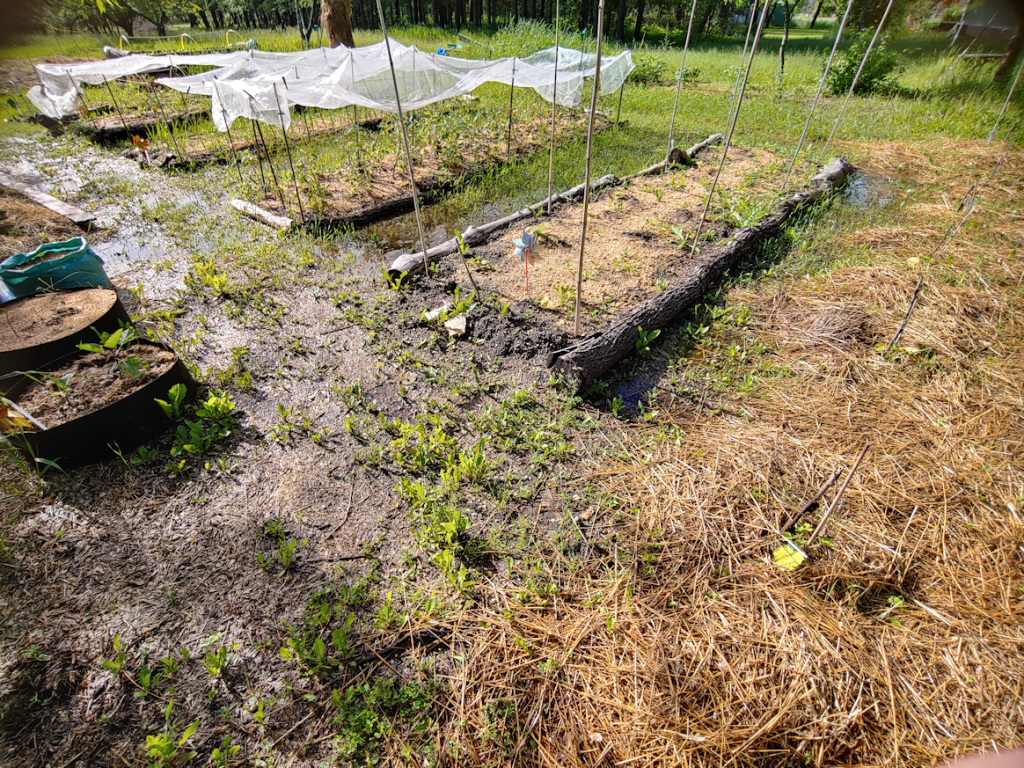
We simply had a really bad growing year, even aside from the flooding. The low raised beds were enough to protect what was in them, for the most part, even when there was standing water in the paths, but it’s likely the flooding was still too much for the roots. The peppers were in the bed under the mosquito netting, on the left of the above photo. It wouldn’t have taken much for the roots to be hitting saturated soil and starting to rot.

What’s amazing about that standing water is, our top soil is only about 6-8 inches deep in this area. Under that is rocks and gravel. Which would normally mean, really good drainage. We had so much water this spring, however, there was nowhere for the water to drain!

Conclusion:

While the peppers may have been a fail, we’re going to try again. Hopefully, we’ll have better conditions in 2023.

My daughter had mentioned she thought we’d be trying more than one variety of pepper in 2022, so for 2023, we’re going to try several different varieties, including one hot variety. We’ll be looking at what we can do to improve soil conditions – perhaps using a higher raised bed, and making plastic domes to cover them, for extra heat. And, of course, mulching them very well, much earlier!

In the process, if we have a good growing year, we’ll figure out what varieties are enjoyed the most, and eventually work our way down to just one or two varieties to grow every year.

Assuming we’re able to grow them at all! We shall see.


Last of all, are the eggplants.

We chose the Little Finger variety, because I liked their shape and, from all I’d been able to find, they were described as quite delicious. I got them from a seed source that is even further north than we are, so we could be quite sure that they would grow here.

Well, not quite.

In the above photo with the flooded paths, the eggplants were transplanted into the middle bed, where the front half is planted with garlic. The eggplants were planted in the middle, with spinach surrounding them (which failed) and onions around the outer edge (which did okay). We had hoops to hold up mosquito netting to protect them but, like many other things, we were not able to mulch them properly until late in the season.

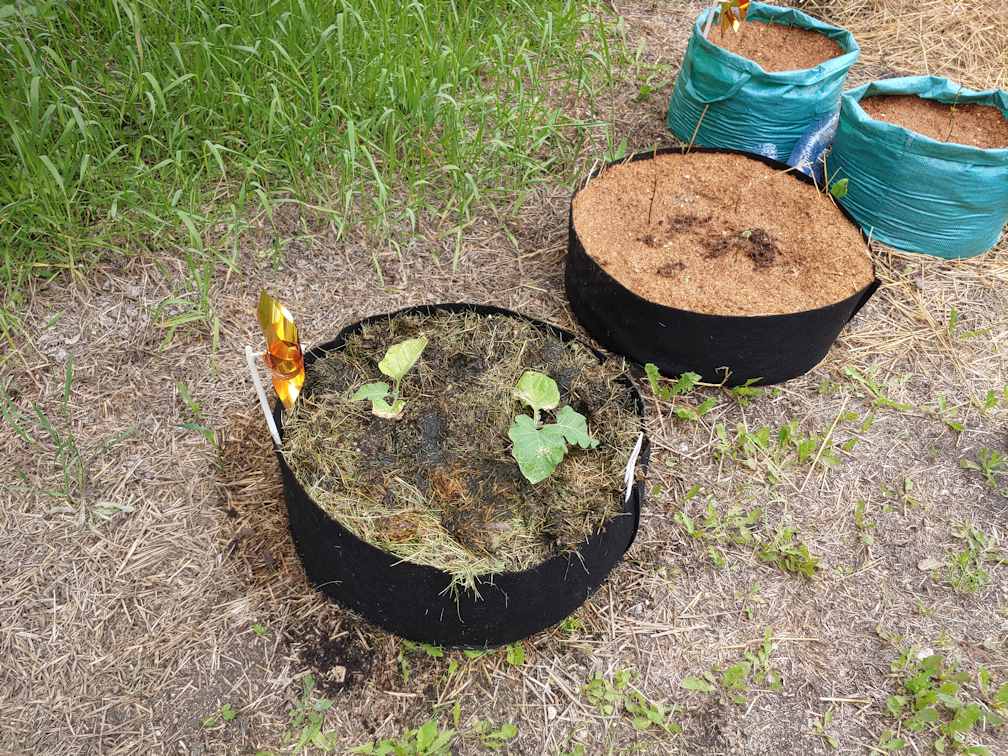
As we were doing the last of the transplants, we found a couple of eggplants that were missed, so those got planted into a dollar store “raised bed garden” that was made of black felt. This was set up quite a ways away from the low raised bed, which turned out to be slightly elevated, and not affected by the flooding.

The Result:

These were mostly a fail.

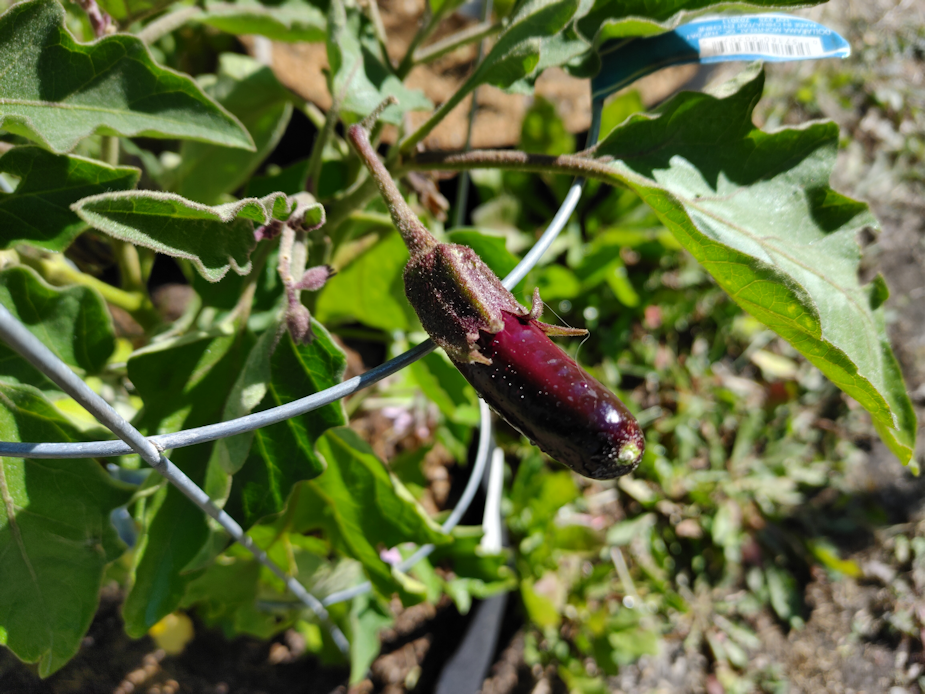
The eggplants in the low raised bed did not thrive at all. It wasn’t until very late in the season that one of them finally started to bloom, and develop a tiny little eggplant. Covering them did not seem to help them at all. The lack of a good mulching for so long probably didn’t help, either.

The ones in the black felt bed did better. I suspect the black fabric warmed up the soil more, and that they preferred that. They still took a long time before starting to bloom and develop fruit, however. One plant did noticeably better than the other.

That handful was our entire harvest.

We left them to grow as long as possible. We didn’t get frost until quite a lot later than average and, when we did, we covered them to protect them and squeeze out as much growing time as we could.

The few eggplants we did get, however, where quite tasty!

Conclusion:

We are definitely going to grow the Little Finger variety again, plus we will be trying some “regular” eggplant – the size and shape we would typically find in any grocery store.

With what we learned in 2022, I think that we will perhaps try growing them in pots or grow bags, or higher beds. If we can do black fabric grow bags, that would be even better. With two varieties to try, we’ll see which ones we like better, and see if we use them enough to keep growing them, year after year.


In the future, we hope to have some sort of greenhouse or polytunnel to help extend our growing season, and provide better growing conditions for heat loving plants, such as peppers and eggplants. Once we have a really good growing season for them, we’ll finally be able to determine if we actually like them enough to be worth growing annually, or if these are things we would continue to buy only once in a while at the grocery store.

The Re-Farmer

Analysing our 2022 garden: peas and beans

Okay, it’s that time! I’ll be working on a serious of posts, going over how our 2022 garden went, what worked, what didn’t, and what didn’t even happen at all. This is help give us an idea of what we want to do in the future, what we don’t want to do in the future, and what changes need to be made.

It was a mixed bag when it came to growing legumes in 2022!

As with so many other areas in the gardens, we did have flooding around the pea and bean trellises, but that area is a bit more elevated, so it wasn’t much of an issue, compared to other garden areas.

The previous year, we’d grown three types of bush beans, and they did very well, in spite of drought conditions and heat waves. We were very happy with them.

For 2022, though, we decided to try growing pole beans, and shelling beans.

The previous year, we had little success with peas. For 2022, we decided to try an edible pod pea, as well as shelling beans. Plus, we had a whole four saved seeds from the King Tut Purple Peas we tried growing the year before.

Let’s start with the peas.

We used the same trellis we’d grown peas at, the year before, amending the soil a bit more. The trellises were all meant to be temporary, but we did get one more year out of them.

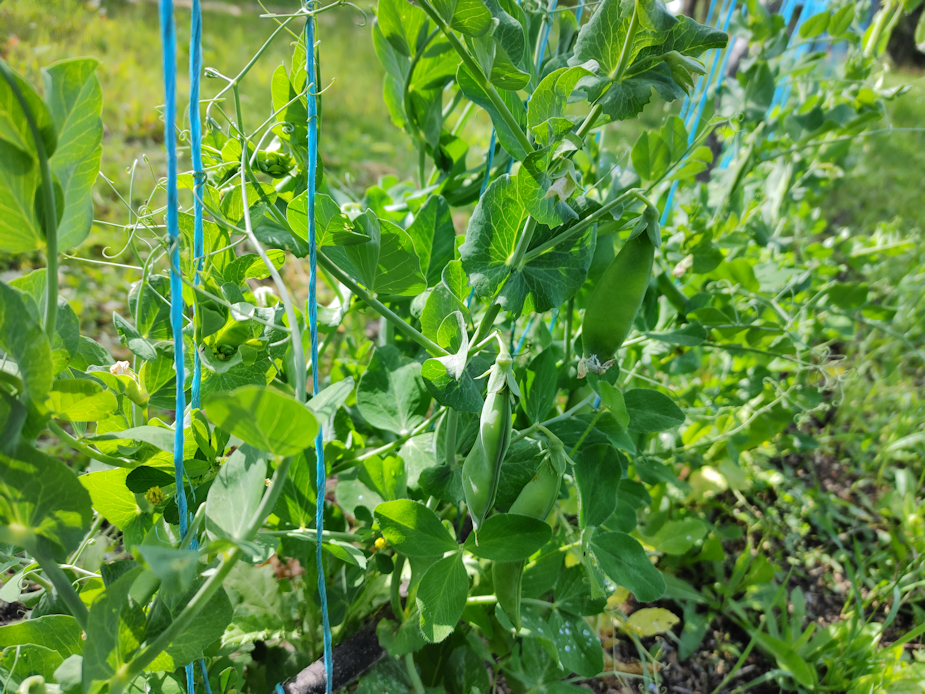
Don’t those peas look nice and healthy?

That was about the best they got.

The Results:

The sugar snap peas germinated, then almost disappeared. I think we got a whole two pea pods out of them. There weren’t a lot of those, however, and were planted in half of one side of the trellis. The shelling peas too up the rest of the trellis, which means some were planted across from the snap peas. Those pea plants also did not do well, which tells me that the soil on that end of the trellis was most likely the problem.

A couple of weeks later, we planted more of the shelling peas at an A frame trellis, shared with gourds and cucumbers. Those plants actually seemed to do better.

In general, though, the peas did not thrive. Even the healthiest, strongest plants only got to about half the size they should have. I did have shelling peas to harvest, but never more than a handful. Usually, it was just a few that I could eat right away.

Then there were the purple peas.

The Results:

As with the other peas the year before, the King Tut Purple Peas did not do well, but they kept trying to grow and bloom for a surprisingly long time. I decided to try starting the four seeds we’d managed to keep indoors. All four germinated and were looking quite healthy. They were transplanted in a south bed with the chain link fence to climb. Shortly after transplanting, I cut the top and bottom off some gallon water jugs and put them around the peas for extra protection from the wind until they could grow big enough to start vining into the fence.

They… grew. Like the other peas, they did not reach their potential at all. They grew tall and thin, without a lot of foliage. There were a few purple blooms and pea pods developed, but they were green instead of purple, except for one. I never tried harvesting them at all, but just left them to go to seed. There wasn’t a lot to collect at the end of the season, and I’m not even sure I want to try growing them again. They weren’t the tastiest of peas, but that could be because they just didn’t grow well.

The Conclusion:

While the peas did not do well, we will still be growing them again. For 2023, I’ve already ordered the variety of shelling peas we’d tried in 2020. The pea and bean trellises have been dismantled, and they will be grown in a completely different area, as we build up our permanent garden beds. Hopefully, that will make the difference. I really love fresh peas, and would love to have enough to freeze. I would love to have edible pod peas, too, but I’m not sure if we will try them again in 2023. I think it will depend on how far we get with the permanent gardening locations.


Then there were the beans.

While we bought pole beans, we also had green and yellow bush beans left over from the year before.

We planted a green and a purple variety at an A frame trellis. The shelling beans and the red noodle beans were planted at what had been a squash tunnel, the year before. The yellow beans were planted with the kulli corn to act as a nitrogen fixer, as well as to help shade out weeds.

The green beans from the year before were planted with our sweet corn as well, but that bed got flooded out. While most of the corn survived, not a single green bean germinated. We bought another variety of green bush bean and planted those, and they did grow.

The Results:

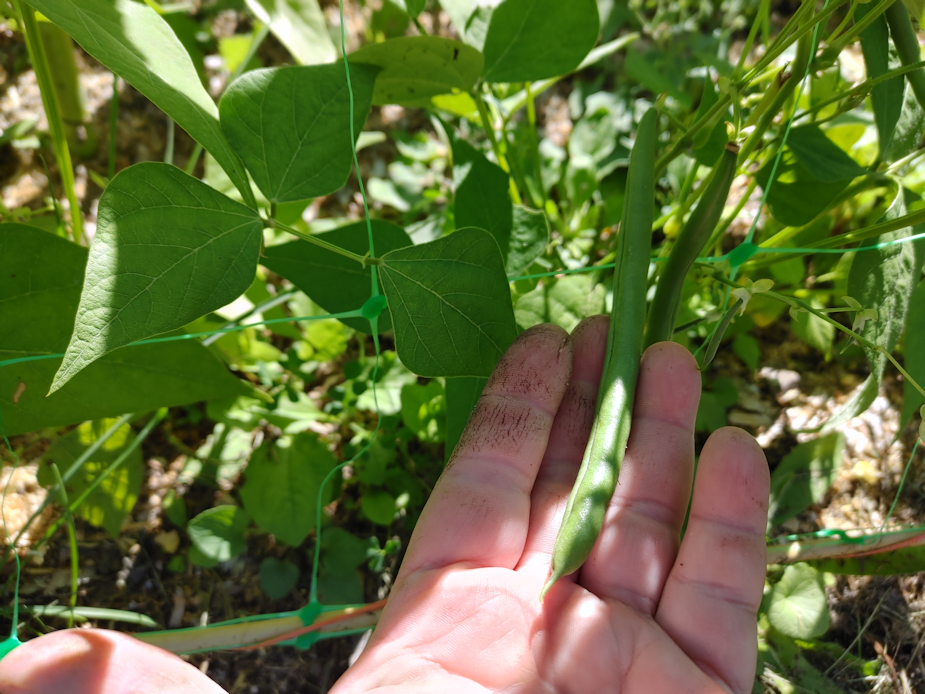
The purple Carminat and the green Seychelles pole beans did great, considering what a horrible growing year it was.! Both varieties were quite productive. I wasn’t picking beans every day, as I was with the bush beans the previous year, but I was at least picking some every couple of days. The purple beans seemed to do the best – even when a deer went by and nibbled on them all along the row!

The yellow bush beans planted with the kulli corn did quite well, too. The only downside was that we had a net around the bed to protect the corn from deer and racoons, which made harvesting the beans very inconvenient.

The green bush beans we planted with the sweet corn didn’t grow as large as they should have; it was a new bed and it had lots of issues, so I’m not surprised by that. Everything did a lot better when we were finally able to finish mulching it all. The bean plants were so small, however, that it was hard to harvest them with the mulch. They were there more for the corn than for us, so I decided to just leave them and hopefully have seeds, but I think they were planted just too late for the season, and none of the pods dried out.

Then there were the shelling beans and Red Noodle beans at the tunnel trellis.

The shelling beans (Blue Grey Speckled Tepary) were very small plants, just barely getting tall enough to start climbing the trellis, yet they produces so many pods! Still, there wasn’t much of a harvest of these very small beans. That photo is the entire harvest! I saved 100 seeds (we’d planted 50) to grow in 2023, and we ate the rest. It was the first time we’d tasted these beans, and they were barely enough for one meal! Still, we found them tasty, and I look forward to trying them again. I hope a better growing year will improve things.

As for the Red Noodle beans…

These are supposed to be a vining type bean, but it wasn’t until near the end of the season that they actually got large enough to start climbing the trellis. It took even longer before I finally saw blooms. We were starting to harvest and pull up the garden for the end of the year, when I found a single, solitary, baby red noodle bean pod, which you can see in the above photo.

I had been looking forward to trying these beans, and would like to try growing them again, just to find out if we like them! Not in 2023, though.

Conclusion:

Beans are such a staple crop, and we enjoy having a variety of types, we are definitely growing beans again in 2023. Along with the seeds we saved for shelling beans, my mother gave me a jar of white beans that are descendants of beans she used to grow here. She gave seeds to my sister to grow in her own garden, which she did for quite a few years. She’s not growing shelling beans anymore, though, so she gave her saved seeds to my mother, who passed them on to me. What a circle!

On top of that, we have ordered seeds for green, yellow, purple and red varieties of beans, including one that is supposed to be good as both a fresh bean and a shelling beans.

While we’ve had our failures this year, beans are one of the few crops that have produced really well for us, even in adverse growing conditions, making them a reliable food to grow.

The Re-Farmer

Analysing our 2022 garden: carrots, turnips and beets

Okay, it’s that time! I’ll be working on a serious of posts, going over how our 2022 garden went, what worked, what didn’t, and what didn’t even happen at all. This is help give us an idea of what we want to do in the future, what we don’t want to do in the future, and what changes need to be made.

This year was quite a mixed bag, when it came to our root vegetables!

Let’s start with the ones we had more success with. Carrots.

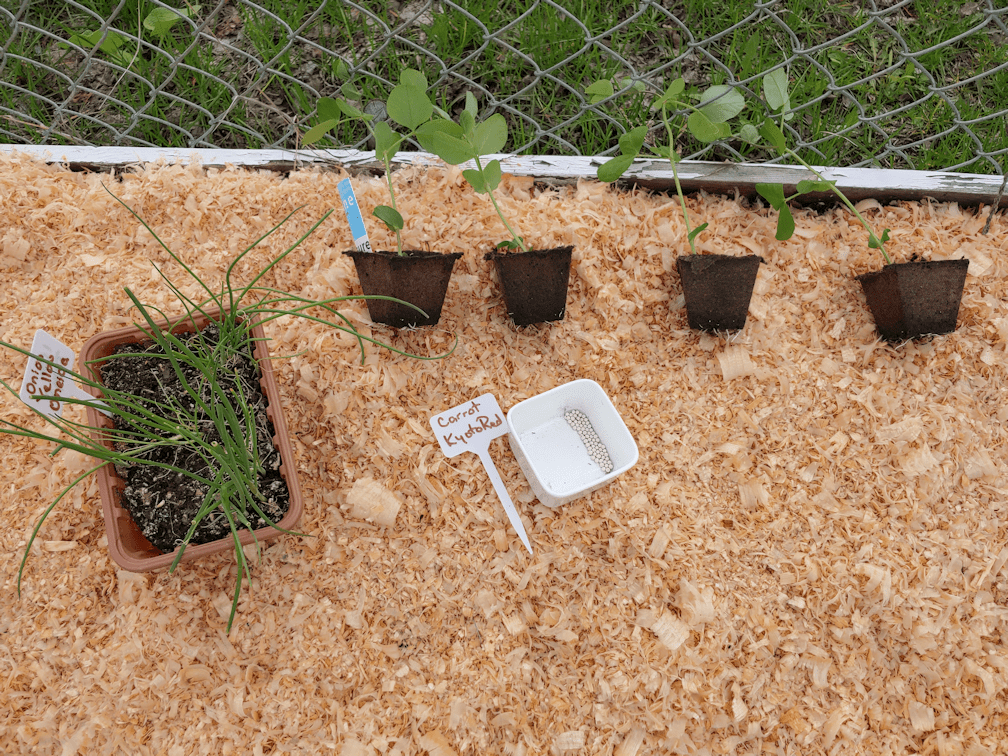
We planted 4 varieties of carrots in 2022. Two varieties were seeds left over from the year before, and one was included in a seed order as our free gift. The older seed got planted between tomatoes and onions/shallots in the low raised bed by the chain link fence. The new seeds were planted in a low raised bed in the main garden area, along with a couple of varieties of turnips.

The Results:

The old seed – Kyoto Red and Napoli – seemed to start out well enough, but like so many other things planted in this bed, they were affected by the flooding. Especially at the end near the vehicle gate, which is the lowest area.

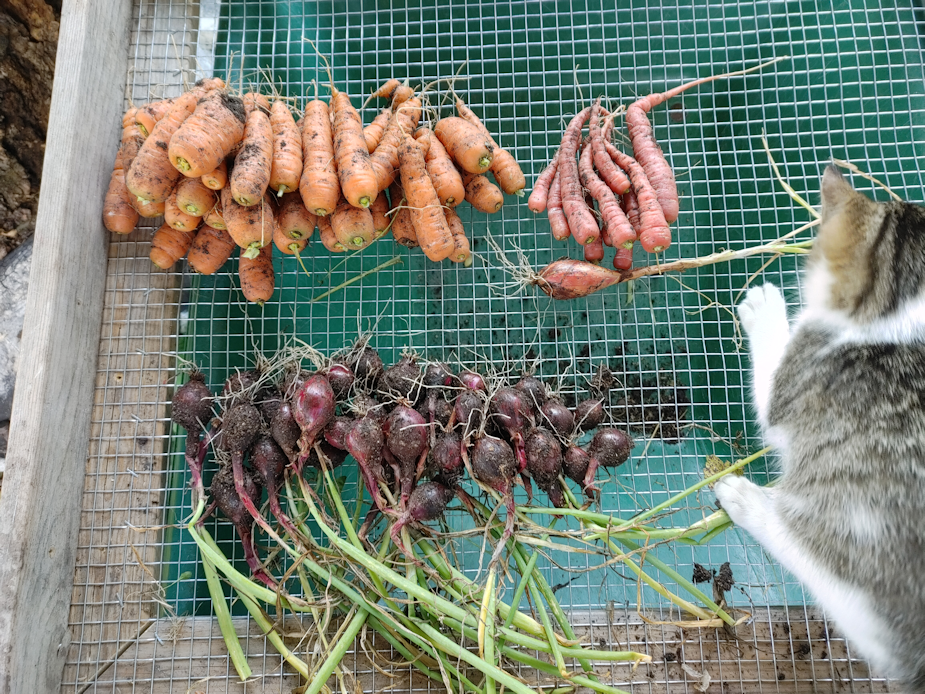
Still, we did manage to get a small harvest of both. A couple of Kyoto Red (the darker carrots on the right) bolted, so I left them to go to seed, but they never finished blooming before it got too cold.

Then there were the Uzbek Golden carrots (the free seeds) and the Black Nebula carrots.

It’s hard to tell in the above photo, but we got a lot of Black Nebula carrots – and a surprising amount of Uzbek Golden carrots! The free seeds didn’t have a lot in the packages, so I was pleasantly surprised by the quantity that we harvested.


As you can also see in the above photo, the turnips didn’t do so well!

We planted three varieties of turnips. Gold Ball, Purple Prince and Tokyo Silky Sweet. One variety we got as free seeds, Gold Ball, were planted near the Uzbek Golden carrots, and then the Purple Prince you see in the photo were planted at the end of the same bed.

More of those, plus the Tokyo Silky Sweet, were planted in other beds, shared with onions, spinach, and peppers.

Those were a total loss!

The Gold Ball turnips germinated quickly – and were just as quickly completely destroyed! Something completely decimated their leaves. The Purple Prince also were badly eaten, but enough survived to get that tiny little crop you see in the picture.

In the other beds, I know I saw some start to germinate but they, too, promptly disappeared! A total and complete fail.


Finally, there were the beets. We had four varieties to plant. They went into a small bed in the old kitchen garden, protected by netting.

They, too, were a complete loss!

The Results:

They had a decent germination rate, but that’s about it. They barely grew at all. Eventually, we took the netting off and pretty much abandoned the bed, other than watering them and occasionally weeding out the mint that kept trying to take the bed over again.

When it was time to clean up the bed for next year, however, we did find a tiny, sad little crop!

That’s all we got.

This is the third year we’ve grown beets and have never had a really good crop, but this was by far the worst year. We can’t even blame it on things like deer and groundhogs eating them! Nor can we blame the flooding we had, because this garden is next to the house, and slightly elevated. There was no flooding in that garden, even with the sump pump’s hose ejecting into one of the paths. Everything drains away from the house. Even one of the bottom corners, which was near where water collected and formed a moat around the storage house, is elevated enough to not be affected by the flooding.


Conclusion:

With the carrots, things went pretty good, all things considered. For 2023, we will be trying a different variety of orange carrot, mostly because of how much the Napoli carrot seeds increased in cost. We enjoyed the flavour of all the carrots we grew, and I’ve ordered more Uzbek Golden carrots as well. I really like their nice, crisp texture.

As for the Black Nebula carrots, they are good, and I’m glad we tried them, but we won’t be growing them again; at least not any time soon. These are a very long carrot, and our soil compacts very quickly, which made thinning by harvesting pretty much impossible to do. When cooked on their own, their colour is very dramatic, but when cooked with something else, like in a soup or stew, their intense colour can make things look very… unappetizing! We still have lots, stored in a bin in a chilled location, and have discovered they very quickly become white, with capillary roots! It makes them look moldy. 😄 This isn’t a bad thing. Those little roots are collecting just enough moisture to keep the carrots firm and crisp, but they have SO MANY of these little roots, it actually makes it hard to clean the carrots in preparation for cooking.

So for 2023, we will still be growing carrots, but just two varieties.

As for the turnips… I don’t know that we’ll bother growing them again in 2023. When we do try them again, we will have to make sure that they are under floating row covers, as soon as the seeds have been sown. Turnip greens are supposed to be good for salads, too, but we never had a chance to find out if we liked them or not. I would have loved to try the Gold Ball variety. The main reason we wanted to grow turnips in the first place is because their bulbs are a good storage crop, making them something we want to include in our goals of self sufficiency. So we will definitely be trying them again. Just maybe not in 2023.

Finally, there are the beets.

I don’t know what went wrong with those. They should have done well, where they were. My daughters like beets, however, so we did order one variety to grow in 2023. I think we’ll have to be more selective on where we plant them.

Root vegetables are definitely going to continue to be a challenge for us, given what the soil it like here. It will take time – and more raised beds! – for us to amend the soil until root vegetables can reach their full potential. Which is something we’ve already been working on, and have long term plans for.

The Re-Farmer

Analysing our 2022 garden: lettuce, spinach and chard

Okay, it’s that time! I’ll be working on a serious of posts, going over how our 2022 garden went, what worked, what didn’t, and what didn’t even happen at all. This is help give us an idea of what we want to do in the future, what we don’t want to do in the future, and what changes need to be made.

Growing greens this year was pretty touch and go.

We had three varieties of spinach seeds left over from the year before. Only one variety was a success.

The Results:

These were planted with the Tropeana Lunga onions in the high raised bed, and they did quite well. They were not as lush as the year before, but still quite good.

The other two varieties were planted in nearby low raised beds, together with other onions, and with peppers in one bed, and eggplants in another. The few that managed to germinate disappeared very quickly, with none growing beyond their seed leaves! I don’t know what went wrong with them this year. Last year, they were grown in the low raised beds and thrived.

After the high raised bed spinach was harvested, the space was replanted with chard.

We also had three varieties of lettuce seeds left over form the year before, and those were planted in the L shaped bed in the old kitchen garden, with netting to protect them from critters – whether those critters be groundhogs or playful kittens! The last of the seeds were scattered, all mixed together, over an open space by a nearby rose bush, since there weren’t many seeds left.

The Result:

The lettuces did pretty well, in general. Even in the area you see in the photo above, which kept getting overtaken by the nearby invasive flowers, managed to do well. I think the Buttercrunch lettuce did the best of the three varieties.

We eventually removed the netting, when it seemed the groundhogs had moved on, because the netting made it very hard to keep up on the weeding. Ultimately, though, we found we just didn’t eat a lot of lettuce, and they started to bolt. I left some plants to go to seed while harvesting the rest, and then the bed was reseeded with the last of our spinach seeds.

The Result:

The second sowing of spinach was a complete fail! The first section that got planted had started to germinate, but the kittens flattened the protective cover and rolled all over them. They never recovered.

We planted more in two other sections, and made the netting supports stronger – strong enough for the kittens to use it as hammocks, and not touch the ground!

It made no difference. The second sowing barely germinated at all, and never got past their seed leaves. They were a total fail, which really surprised us.

Then there was the chard.

*sigh*

The Result:

What you see in the above photo is all the chard we got. As soon as they started to germinate, their leaves became riddled with holes. Some insect was eating them, but we never saw the insects themselves! In the end, we simply left the chard alone. Most died off, but I figured whatever was left could act as a bait crop for whatever insect was eating them.

Conclusion:

There are expectations, and then there is reality!

With growing greens, we were picturing having plenty of salads, or having lettuce in our sandwiches, and basically just enjoying having access to leafy greens, any time we wanted. We figured they would be among those things we would eat more of, simply because they were there.

Well, that was more or less true of the spinach – what we got of it. But not so much with the lettuce. We found we just don’t eat lettuce all that much. Having them barricaded under netting didn’t help. None of us wanted lettuce enough to go through the bother of taking out pegs holding the netting to the ground (so nothing could crawl under it) to harvest leaves.

As for the plants we left to go to seeds, only one variety seemed to reach full maturity. The others were still blooming when I finally cleared the bed out.

With how well the lettuce did, I expected the second sowing of spinach to do well, so it was a real surprise for them to fail completely. Now that the L shaped bed has been built up to a low raised bed with wattle woven walls, anything we plant there should do better. There is new garden soil, as well as layers of organic matter trench compositing below.

As for the chard, we really didn’t know what to do with it, that we actually enjoyed eating.

For 2023, we will have just one variety of spinach. That, at least, is something we enjoy eating, sometimes even just picking leaves to snack on while doing other things.

We will probably not grow lettuce again next year. If we do grow chard again, it’ll be because we still have seeds left, and have space for it.

It turns out we just don’t like leafy greens all that much. It actually makes more sense for us to buy greens at the store every once in a while, rather than grow them ourselves.

I do still want to get chickens next year, if we can build a brooder and coop for them early enough. One of the things we plan to do is grow as much of their feed as possible, and I can see us growing greens more as chicken feed than for ourselves!

The Re-Farmer

Analyzing our 2022 garden: corn

Okay, it’s that time! I’ll be working on a serious of posts, going over how our 2022 garden went, what worked, what didn’t, and what didn’t even happen at all. This is help give us an idea of what we want to do in the future, what we don’t want to do in the future, and what changes need to be made.

We planted three varieties of corn in 2022.

I think it’s safe to say, all three were a fail, though we did actually have a few cobs to eat from one of them.

Two varieties were direct seeded in a new garden bed.

Sod had been removed and new garden soil brought in. In the above photo, you can see the squash that had been transplanted. There’s a triple row of sweet corn in the open area between rows of squash in the back, and a thin double row of popcorn between rows of squash in the foreground.

Eventually, this entire area did get well covered with cardboard and mulch, which helped a lot, but there was just nothing that could be done once the flooding started.

The Results:

The sweet corn started to recover quite nicely, though the green bush beans planted with them did not survive and another type was planted later.

Then the winds got them.

I was able to add twine supports to hold them all up and, amazingly, they survived.

It wasn’t much, but we even had a few mature cobs to pick.

No such luck with the popcorn. This was a variety that only grew to about 2 feet tall, but they never reached that height. Cobs started to form, but never had a chance to mature.

It was very sad.

Then there was the kulli corn.

These were planted in a low raised bed in the east yard, with yellow bush beans in between for nitrogen fixing. Unlike the other corn, these were started indoors and transplanted.

It took a while for them to get over transplant shock, but once they did, they got HUGE and seemed to thrive in this bed.

Eventually, tassels started to form at the top, but no cobs. Not a single cob formed, anywhere.

Kulli corn is a deep, dark Peruvian corn that I would like to acclimate to our area. Unfortunately, there isn’t a lot of information about them. They seemed to do so very well, and yet… not even a hint of cobs forming on any of them.

Conclusion:

This was such a terrible year for our corn!! Even the year before, with the drought we had, and the tiny, tiny plants growing in nitrogen depleted soil, we managed to have more edible cobs that were so sweet, I could eat them raw. I guess corn can handle drought better than flooding!

After this year, my daughters and I discussed skipping corn for a year or two, until we can provide better growing conditions for them. I did, however, end up buying one variety of sweet corn for 2023, plus I got the same variety of popcorn again. I intend to plant them in the two beds next to where the kulli corn was planted. Considering how well the kulli corn grew, even without forming cobs, I think the other corn should do very well in these beds, and I really love corn!

As for the kulli corn, I really, really want to grow them, but I think it will have to wait until we can create better growing conditions. We’re wanting to have a polytunnel, or something along those lines. That might be enough to make the difference. It may be a few years before we have a polytunnel, though.

The Re-Farmer

Analysing our 2022 garden: potatoes, sweet potatoes and sunchokes

Okay, it’s that time! I’ll be working on a serious of posts, going over how our 2022 garden went, what worked, what didn’t, and what didn’t even happen at all. This is help give us an idea of what we want to do in the future, what we don’t want to do in the future, and what changes need to be made.

I can say right now, when it comes to tubers, we had a really poor year in 2022!

We grew three varieties of potatoes, each with a different maturation rate. All were supposed to be good for storage.

They were grown in new beds, using the deep mulch method. The two larger beds had about half planted with potatoes, and the other half planted with melons. A third variety had a small bed all to itself.

The Results:

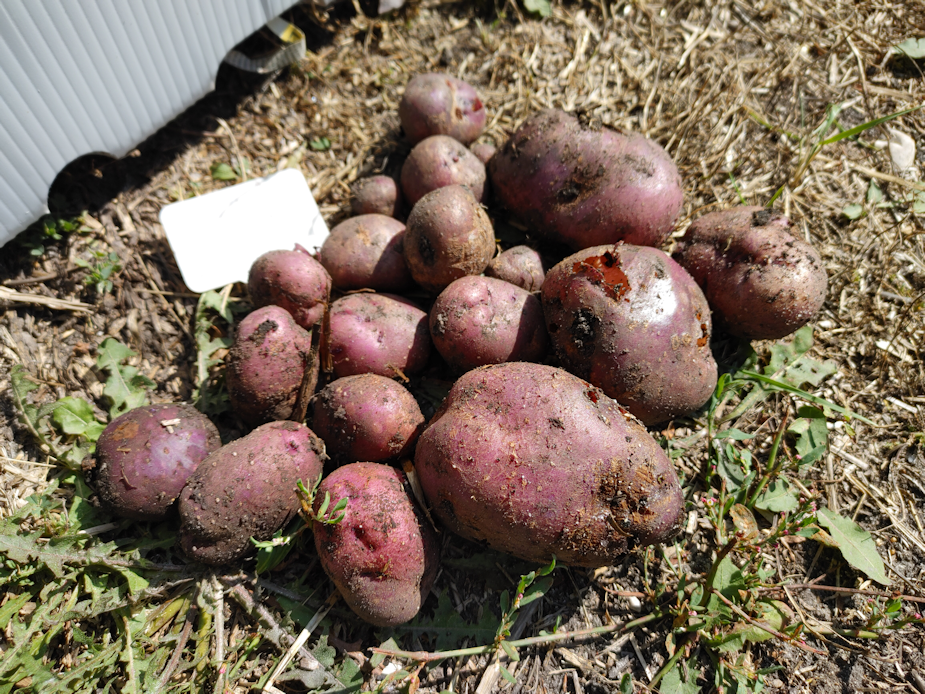
The early variety, Caribe, resulted in fewer potatoes than we planted. As you can see, there was slug damage, too.

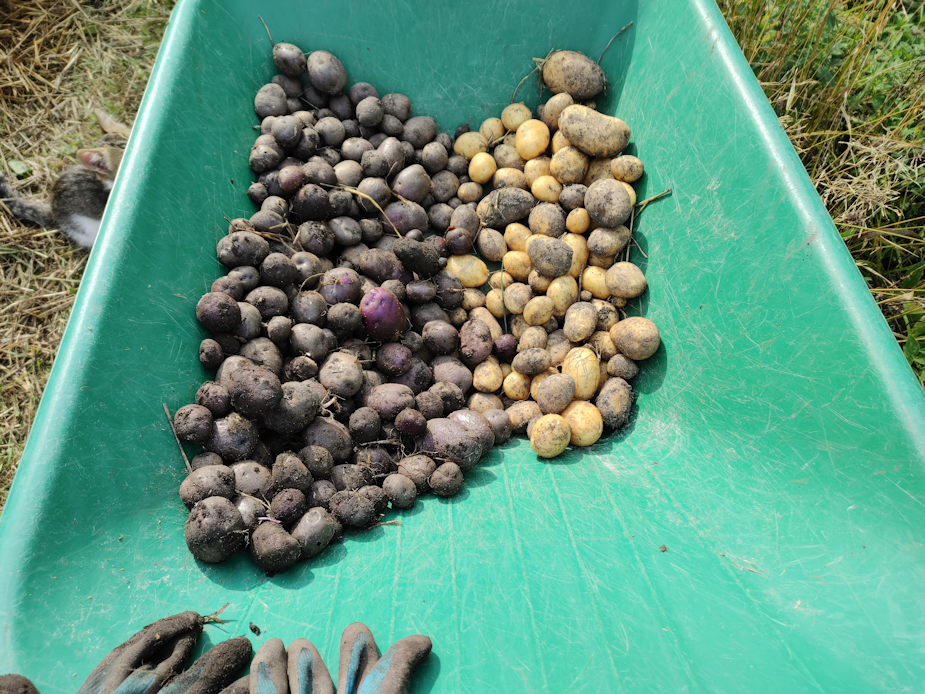
The mid and late varieties got harvested at the same time. A lot of the All Blue potatoes seemed to have scab. The Bridget variety seemed to be clear of scab, but slug damage was a problem with both. Altogether, it was a very disappointing harvest.

Conclusion:

While we may not have gotten much out of them, the potatoes were actually quite delicious. I would be willing to grow all the varieties again.

The main problem is the slugs, and that was an issue the first time we grew potatoes using the deep mulch method.

Slugs were not the only problem, however.

The flooding took its toll. Under all that straw mulch in the above photo is a whole lot of water. Many seed potatoes simply rotted away, and among those that did grow, they never recovered enough to produce any tubers at all. It really is amazing that we got as many potatoes to harvest as we did, to be honest.

I think for 2023, we might look at getting indeterminate varieties that are good for growing in towers and try doing grow bags again. Or, we might get the same varieties, but grow them in raised beds.

The flooding we had in 2022 was more than anything anyone in the area has seen before, and it’s unlikely we’ll have a year like this again in our lifetimes. Now that it’s happened, though, we’ll know where the lower areas are and plan according, as we expand our garden beds.

Potatoes are one of those staple food crops so, in the future – once we’ve got the details worked out – we plan to grow a lot more potatoes for winter storage.


Now we move on to a crop that is more unusual for our area: sweet potatoes!

Most varieties require a much longer growing season than we have, but I did find a short season variety to try. They went into grow bags, and were not affected by the flooding.

Not that that seemed to help much.

The Results:

This picture is our entire sweet potato crop, from three grow bags.

The flooding may not have been an issue for them, but they just never did well. There are people in local gardening groups that successfully grow sweet potatoes, so I know it can be done. The problem is, I’m not entirely sure what, specifically, kept these from growing. I can think of several reasons, and it could even be a combination of them. I just don’t know.

Conclusion:

They may have been small but, when we tried them, they were delicious! I would really like to try them again. There’s only one place that I know of that sells short season sweet potatoes. I think that when we try them again, I’ll grow them in deeper containers that are black, which will help warm the soil, and mulch them earlier. We have not yet decided if we will try them again for 2023, or save it for another year.


Another new tuber we tried is actually in the sunflower family. Canada’s potato: the sunchoke, or Jerusalem Artichoke.

We got a package of 10 Jerusalem Artichokes and planted them in a bed near the garage. Unfortunately, the worst of the flooding in our yard was around the garage. There was basically a moat around it, and almost a pond behind it.

Still, it seemed to only result in the sunchokes growing a bit later. They survived, and seemed to do quite well.

The problem is, they never bloomed. In fact, they didn’t even start budding. At all.

By fall, I decided to harvest half of them, to see what we had.

The Result:

I was pleasantly surprised. The tubers I found looked quite firm and healthy, if small.

There certainly wasn’t a lot there to harvest, and I made sure to plant the largest tuber I found under each plant. So next year, one half of the bed should have just five plants in it, while the other half should have five clusters of plants.

Conclusion:

I’m not entirely sure why the sunchokes never fully matured. It could be because of the flooding and the late start, or it could be because they didn’t get enough sunlight. I did prune some branches from the trees above and to the north of them, so if that was an issue, it should be better next year.

The question is: will the tubers survive the winter? I have no idea. If they don’t, I would want to get more to plant. I taste tested them raw, while the whole family tried them cooked, and we liked them enough that they are worth keeping.

Sunchokes are something that come with warnings about being potentially invasive. I had that in mind when deciding where to plant them. Which means they should survive the winter and grow next year. If they do, as long as we keep harvesting enough of them in the fall, we shouldn’t have problems with them becoming too invasive.

We shall see!

The Re-Farmer

Analysing our 2022 garden: onions, shallots and garlic

Okay, it’s that time! I’ll be working on a serious of posts, going over how our 2022 garden went, what worked, what didn’t, and what didn’t even happen at all. This is help give us an idea of what we want to do in the future, what we don’t want to do in the future, and what changes need to be made.

What a mixed bag it was for onions and garlic we had!

I’ll start with the shallots.

The Results:

This picture was taken in June. We were still dealing with flooding. The shallots you see here were from sets. Of the shallots we grew from seed, few survived to be transplanted. You can just see some at the very bottom of the photo, and those quickly died.

As did almost all the shallots from sets. They just rotted away.

Conclusion:

The previous year, we were able to grow shallots from sets successfully, even during drought, so at least there is that option in the future. It’s growing them from seed that seems to be the biggest challenge. For 2023, we are trying a different variety. Hopefully, we will have better success with those!


Then there were the Red Baron bunching onions. These were planted in a bed along the retaining wall of the old kitchen garden.

The Results:

I won’t even try to dig up a picture of those. We had better success starting them indoors compared to the year before, but once they were transplanted, that was it. They were a total fail. I think a lot of it had to do with the bed being too shaded by the ornamental apple trees at each corner of the old kitchen garden. They did get pruned, and that space get a lot more light now, but it was likely too little, too late.

That and I think the cats were rolling on them, too.

Conclusion:

While I would really like to grow this variety of bunching onions, we’ll move away from them completely for 2023, and save them for another year in the future.


Our fall garlic was both a win and a fail. We bought the same varieties as the year before, planted them in the fall and had them well mulched for the winter.

The Results:

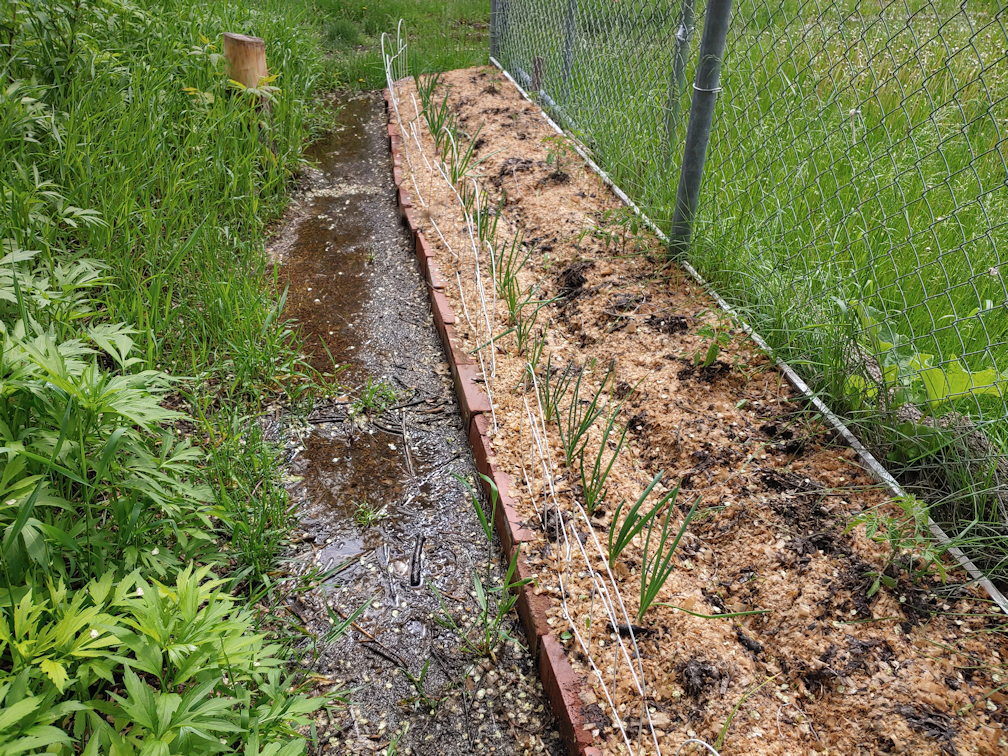
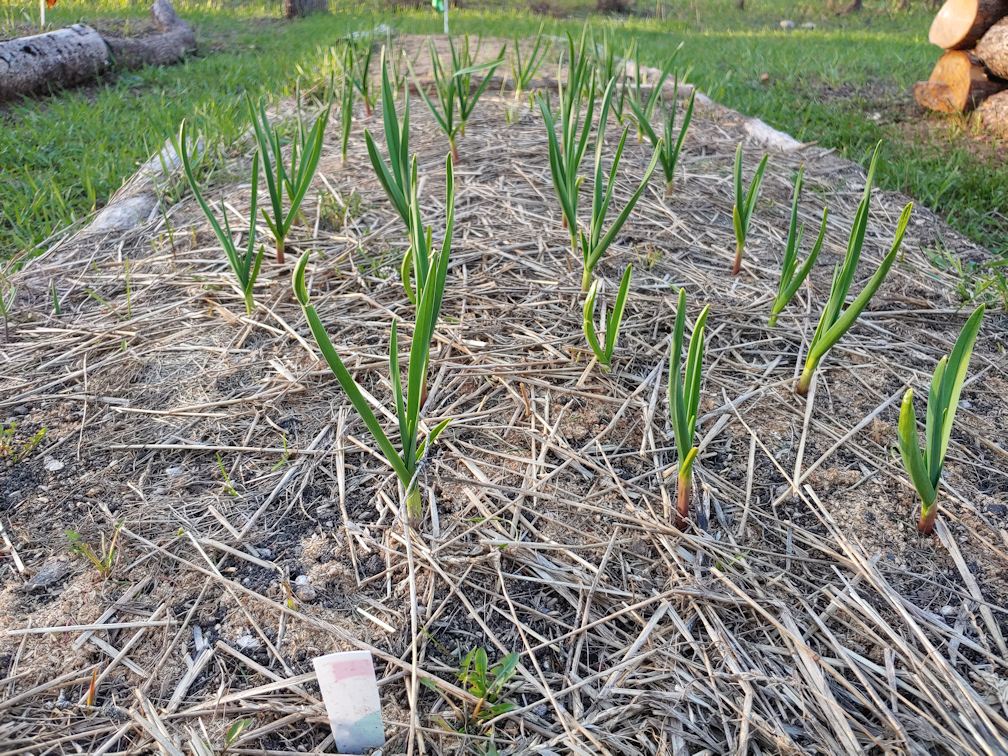
One variety of garlic, Porcelain Music, was planted in the main garden area, taking up half of a low raised bed. This picture was taken in May. These did very well! In fact, we were able to save some of them to plant in the fall, for our 2023 garden!

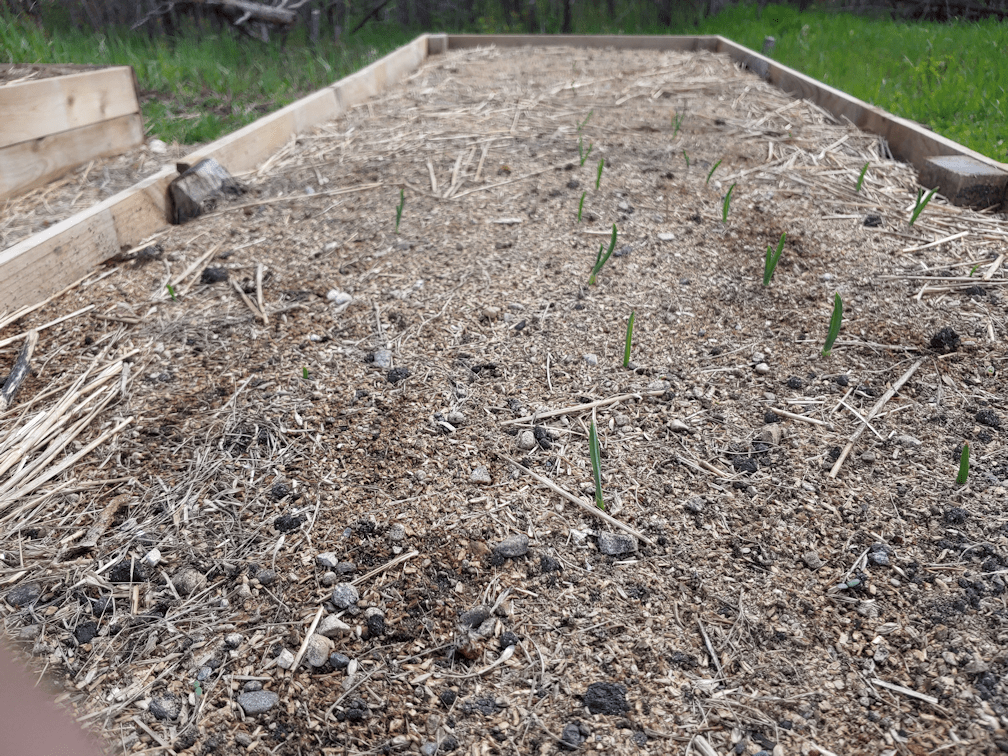
Then there were the varieties we planted in the low raised beds in the east yard. These were Purple Stripe and Rocambole. The above picture was also taken in May.

One bed had so few survive, I ended up transplanting them to the other bed, so I could use that bed to transplant the Yellow Pear tomatoes into. While we did have garlic to harvest, the few bulbs remaining were very small.

Conclusion:

The two varieties that failed were, I believe, the victims of our unusually long, cold end of winter. I think the low raised beds simply got too cold, and stayed cold for too long.

But the ones in the low raised bed in the main garden seemed to be better protected somehow. So when we planted garlic this fall, we used another of these low raised beds. Along with the garlic we saved ourselves, I ended up getting a new variety of hard neck, plus a variety of soft neck, garlic to try. In the future, we will shoot to be able to plant a LOT more garlic than this, but for this fall, that’s all we were able to get done. Hopefully, we will have better growing conditions next year, and all three varieties will succeed!


Now we move on to the bulb onions. We had a mix of onions from seed, and from sets.

In the above photo, we have Red of Florence red onions, grown from seed. The yellow onions are both from seeds and sets – there’s no real difference in size between them! These were planted around the edges of low raised beds, to help deter critters.

These are the Tropeana Lunga onions, grown from seed and transplanted into the high raised bed.

These tiny red onions were from sets planted around the Yellow Pear tomatoes.

The Results:

The Red of Florence and Tropeana Lunga onions both did very well! The Tropeana Lunga took a lot longer to mature, and even after they were harvested, they kept trying to grow rather than cure! We all liked their longer shape that makes them easier to cut up for cooking. The flavour of both are good, too.

The yellow bulb onions were both smaller than they had the potential to be, but that had a lot to do with our growing conditions conditions overall.

The red onions from sets that were planted with the Yellow Pear tomatoes barely grew at all. I think they were simply overshadowed by the tomatoes, which got massive.

We did plant extras that didn’t fit in their beds in the retaining wall of the old kitchen garden. Those pretty much all failed, partly because the cats kept rolling on them.

Conclusion:

As you can see in the above photo, flooding was a problem in the main garden area, but the low raised beds were just high enough to protect the things we planted in them, including the onions that were planted around the edges of several of them.

We would very happily grow the Red of Florence and Tropeana Lunga again. Unfortunately, I was not able to get seeds for either of them for 2023. We also went with different varieties of seeds for yellow onions and shallots. Whether or not we get more sets in the spring is yet to be decided.

Growing from seed is touch and go; part of the challenge with starting the seeds indoors is keeping the cats away! The main thing about growing from seed is that you get a lot more plants for your money compared to sets. Another bonus is, onions don’t get transplant shock, so large numbers of seeds can be sown close together, then they’re just pulled apart when it’s time to transplant. How successful we are at starting them from seed will help determine what we get for sets in the spring, if any.

Onions are something we find we use a LOT of. Once we started growing them ourselves, we just can’t seem to grow enough! Thankfully, they can be interplanted with quite a few other things, making for effective use of space. We also like having a variety of types. One of the traits we look for when choosing varieties is anything that is good for winter storage.

The Re-Farmer
Analyzing our 2022 garden: tomatoes

Okay, it’s that time! I’ll be working on a serious of posts, going over how our 2022 garden went, what worked, what didn’t, and what didn’t even happen at all. This is help give us an idea of what we want to do in the future, what we don’t want to do in the future, and what changes need to be made.

Okay, let’s start with something that actually produce quite a bit!

For 2022, we grew four types of tomatoes. In the main garden area, we grew Cup of Moldova paste tomatoes, and Sophie’s Choice; both rare varieties we got from Heritage Harvest Seeds.

We ended up with mostly Cup of Moldova tomatoes. In fact, a couple of them had to be transplanted in another bed, because we ran out of space. There were just a few Sophie’s Choice in comparison.

I’ll have to talk about our issues with starting seeds indoors in a separate post, but suffice to say, we managed to keep enough seedlings alive to have a decent number to transplant. Thankfully, these went into a low raised bed in the main garden area, which means they also escaped harm from spring flooding.

The Sophie’s Choice was more of a bush type tomato and didn’t need a lot of support, while the Cup of Moldova could have used a bit more support.

Both varieties took a long time before they matured. Being determinate varieties, I was counting on them to mature all at once, but that didn’t really seem to happen.

The Results:

While these were grown more for cooking and preserving, they were also used for fresh eating. Both were described as being very mild in flavour.

For preserving, most of the Cup of Moldova went to making tomato paste; we got a dozen tiny jars out of it, and have quite enjoyed having those available. We also dehydrated some, using our oven, which worked out rather well. I rather like having dehydrated tomatoes available to cook with, too. We also used some to make a tomato sauce that was quite enjoyable.

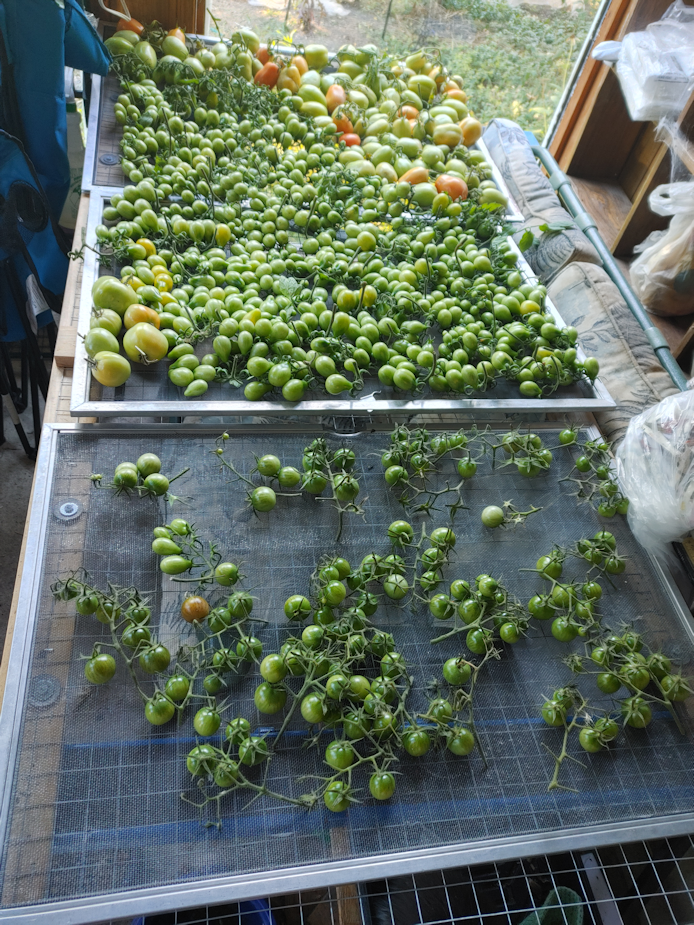
Along with the ripe tomatoes we had for preserving, there were quite a few green tomatoes that we harvested to ripen slowly indoors, which extended their use for quite some time.

Conclusions:

We saved seeds from these, because we want to help preserve the varieties. However, their flavour was nothing special, so we will be trying other varieties. Once we’ve found varieties of paste tomato we’re happy with, I want to grow a lot more for making tomato paste, dehydrating and for making tomato powder.

We also had some Chocolate Cherry tomatoes, which we planted in the south yard, along the chain link fence. Though this went into a low raised bed, there was so much flooding in the area on the spring, it was still affected. Of what we planted in that bed, however, the tomatoes seemed to be the least affected, though they did not grow as well as last year’s tomatoes did, in the same location. It was handing having them where they were, though, as we could use the chain link fence to support them as they grew.

The Results:

These were not as prolific as I was expecting them to be. What I’m not sure of is whether it was because it was such a poor growing year, or if that was just the variety. We tried drying some, and at the end of the season, we picked them green and let them finish ripening indoors, giving my husband and daughter (the only to members of the household that enjoy fresh tomatoes), something to snack on for quite some time!

Conclusions:

They were the most flavourful of the varieties we grew this year. While we will be trying other indeterminate varieties for fresh eating, the Chocolate Cherry was good enough that we’d be happy to grow them again. We did save seeds from them, too.

The Yellow Pear tomatoes were the most successful of all the tomatoes we grew this year. The plants themselves got huge; they needed a lot more support than we were able to give them! They were also incredibly prolific. Not only did we have plenty to pick for fresh eating, there were LOTS of green ones to pick at the end of the season, to ripen indoors.

The Results:

In the above photo with all our green tomatoes, the Chocolate Cherry is in the foreground. The rest of the tiny tomatoes are Yellow Pear. The round ones in the middle screen are Sophie’s Choice, while in the back corner, we have the Cup of Moldova. We dehydrated some of the yellow pear tomatoes, and made a yellow tomato sauce as well. Amazingly productive plants! As the green tomatoes slowly ripened, they were quite enjoyed simply as fresh snacks.

Conclusion:

These were very mild in flavour and, while my family liked having fresh tomatoes to snack on, we will probably not grow these again. We did save seen and will have that option if we want, but only if for some reason, we don’t have other choices. We will be trying other varieties of cherry or grape tomatoes for fresh eating, instead. They were fun to grow, but the flavour just isn’t there.

Still, as far as things went in 2022, tomatoes – all the varieties – were among the most successful things we grew.

Planning Ahead:

We have different varieties planned for our 2023 garden but, if we have the space for it, I’d still like to grew at least a couple of plants each of the Sophie’s Choice and Cup of Moldova, just because they are rare varieties. I want to keep them going and collect fresh seeds again. However, the only variety we grew in 2022 that stood out for flavour was the Chocolate Cherry, but the plants were not as vigorous, nor as productive, as I would have liked.

So we will continue to experiment, and continue to have both determinate and indeterminate varieties, choosing some specifically for fresh eating and others specifically for preserving.

The Re-Farmer

Our 2023 garden: Veseys seeds, second order arrived

The rest of the seeds we ordered from Veseys arrived today. You can read about what we ordered and why, here.

It was difficult to get a photo of them all, because the cats immediately came over and tried to roll all over my little display on the bed! You can see Leyendecker in this photo, and then Ginger came in and threw himself bodily onto the Dalvay peas!

Speaking of which, I couldn’t shake the feeling that I’d ordered the Dalvay peas before, so I went looking at my old photos. Sure enough, we did order Dalvay peas back in 2020, for our 2021 garden. I knew we’d ordered green shelling peas before; it was the name I wasn’t sure of.

And this is why I take photos of everything, and use this blog as a gardening journal! 😄

The tomato packet felt so … empty… I double checked the site. It says there are approximately 50 seeds per packet in this size (they also have packets with 200, 1000 and 10,000 seeds available). Tomato seeds are so light and thin, I guess that would indeed feel pretty thin!

Now, there are just the seeds we ordered from the US to come in, and from the tracking number, they have not reached Canada, yet.

Next month we will order more, but I don’t know that we’ll be ordering more seeds. We’ll be ordering things like potatoes for sure, and probably berry bushes, all of which won’t get shipped until spring.

We’ll be planting another really huge garden for 2023. Hopefully, we’ll have better weather and growing conditions!

The Re-Farmer