Filling the high raised bed.

Today worked out to be a longer day than planned. I had intended to do a Costco trip to the city tomorrow but decided that 1) I didn’t want to deal with weekend crowds and 2) Halloween is around the corner, and I didn’t want to deal with even bigger crowds because of it! So I headed into the city this morning. After this, we’ll need to go over what’s left that we need to pick up, then make one more trip – after Halloween!

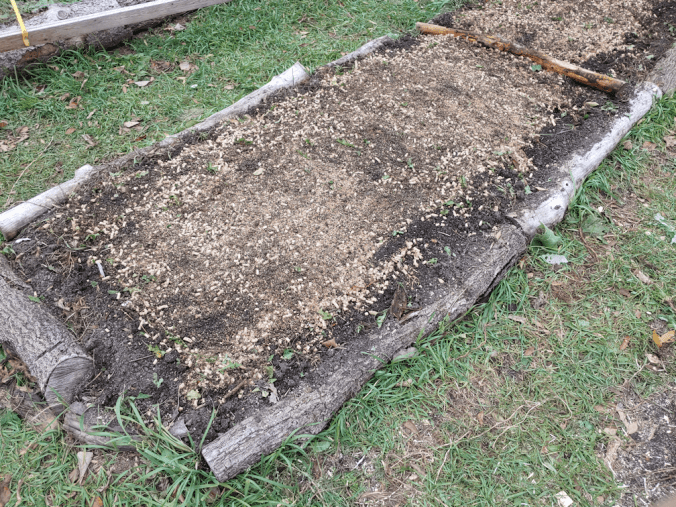
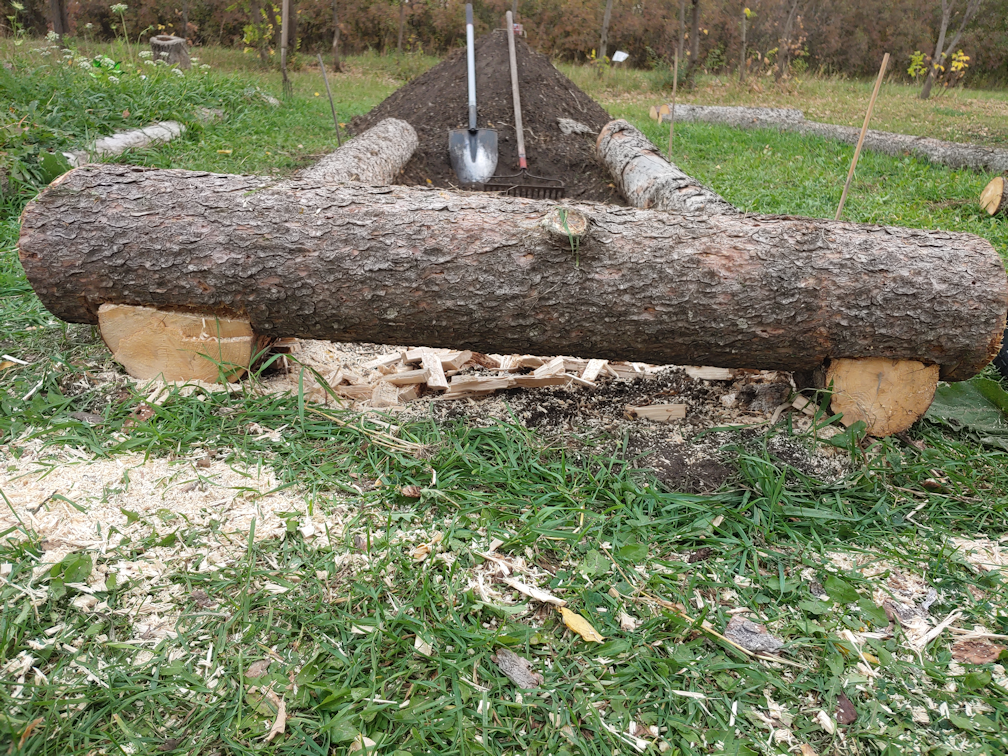
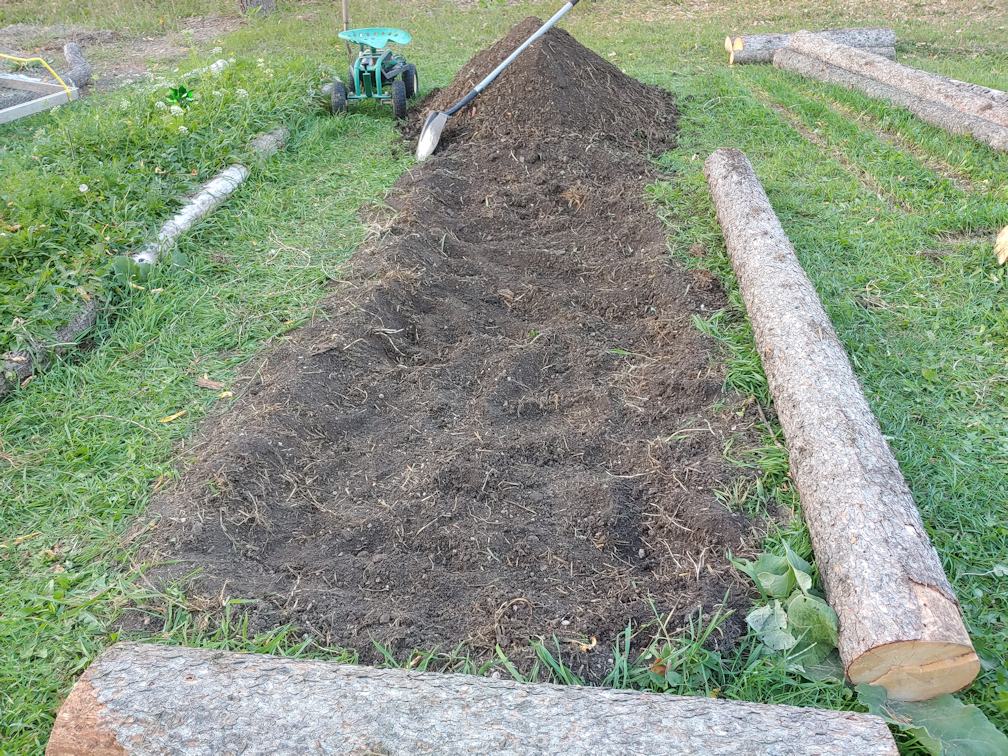
Once that was done and everything was put away, I headed to the finished high raised bed, to start filling it, modified hügelkultur style.

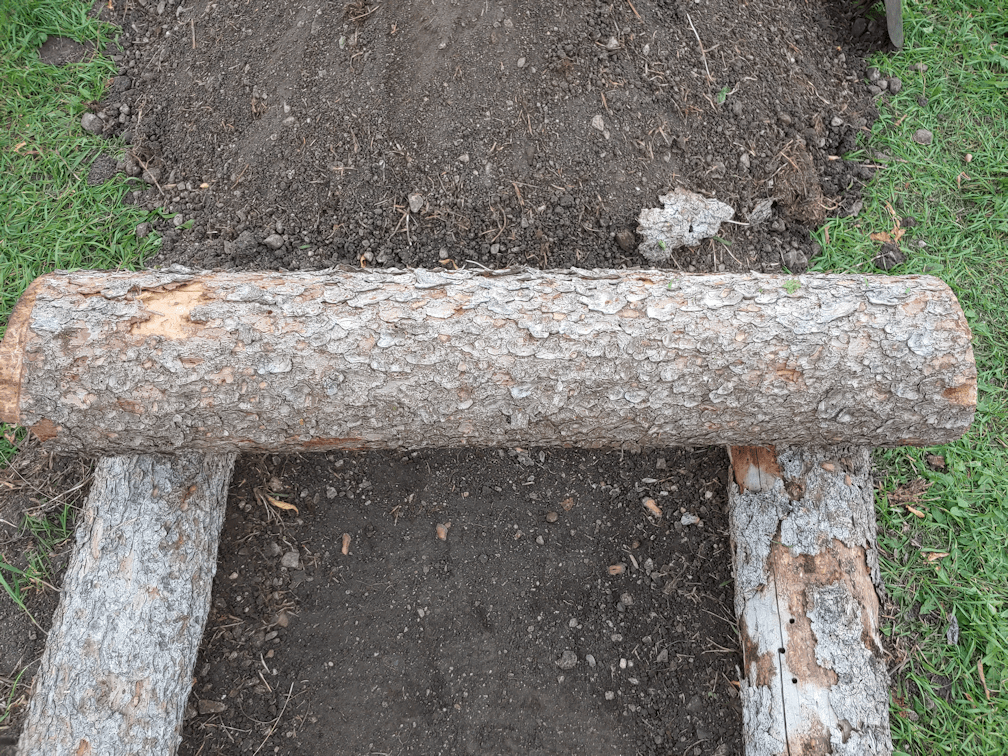
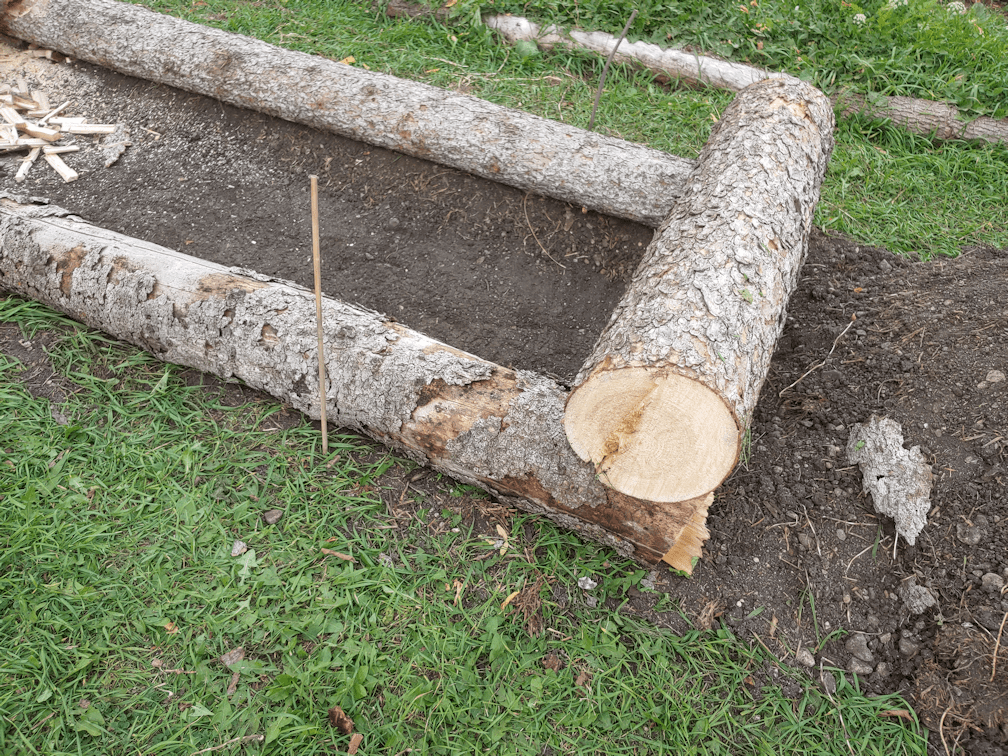
While making the bed, I tried to put all the scrap bits of wood inside, so the first order of business was to spread those out more evenly. Then the short logs that had been used to frame this bed over the summer were added to the bottom. There weren’t a lot of those, but we have plenty of piles of wood to raid. I tried to put the bigger pieces on the bottom, then smaller pieces on top, using them to fill gaps as best I could. Then I started adding bark to fill gaps, too. Ideally, there would be no gaps, but with so many odd shaped pieces of wood, that wasn’t really an option.

Thankfully, we have lots of bark debris. This spot used to have a pile of logs between the two spruces. There is just one long one with a weirdly shaped end left. It needs to be cut up before we can use it.

The nice thing is, along with the partially decomposed bark, I was able to pick up quite a bit of spruce needles. Not enough to increase the acidity of our very alkaline soil, but every little bit helps!

I added a couple of wheelbarrow loads of bark into here, and even went around the bed to pick up little bits of wood and handfuls of sawdust to toss in. I wanted to fill the gaps as much as I possibly could.

Next, a few shovels full of soil was added. This is the soil that had been dug out of this bed before the high raised bed was built. Just a very thin layer was added to fill in the gaps a bit more, and give the breakdown of the wood a bit of a boost of soil microorganisms.

Next came a nice thick layer of corn stalks that we saved, just for this! If we did not have the corn stalks, this layer would have been straw, because straw takes longer to decompose than the other things that will be added.

Yes, we have straw, now!

This got delivered while I was working on the corn stalk layer.

I broke that baby open almost right away!

With the layers, I was alternating between “brown” and “green” layers. The corn stalks were a brown layer, so the next layer (after a bit more soil) was grass clippings, which are considered a “green” element.

I stole the grass clippings from the nearby garlic bed, replacing it with straw. I was concerned the grass clippings might smother the garlic. Later, we will replace the grass clipping mulch on the other two beds with straw as well.

But not today.

With each additional layer of soil, I added a bit more than the previous soil layer. The layers were still pretty thin, comparatively speaking, but I could already notice the weight of it was causing the looser layers below to settle and sink. If I had any, I would have been using compost or manure to layer instead of, or in addition to, the soil.

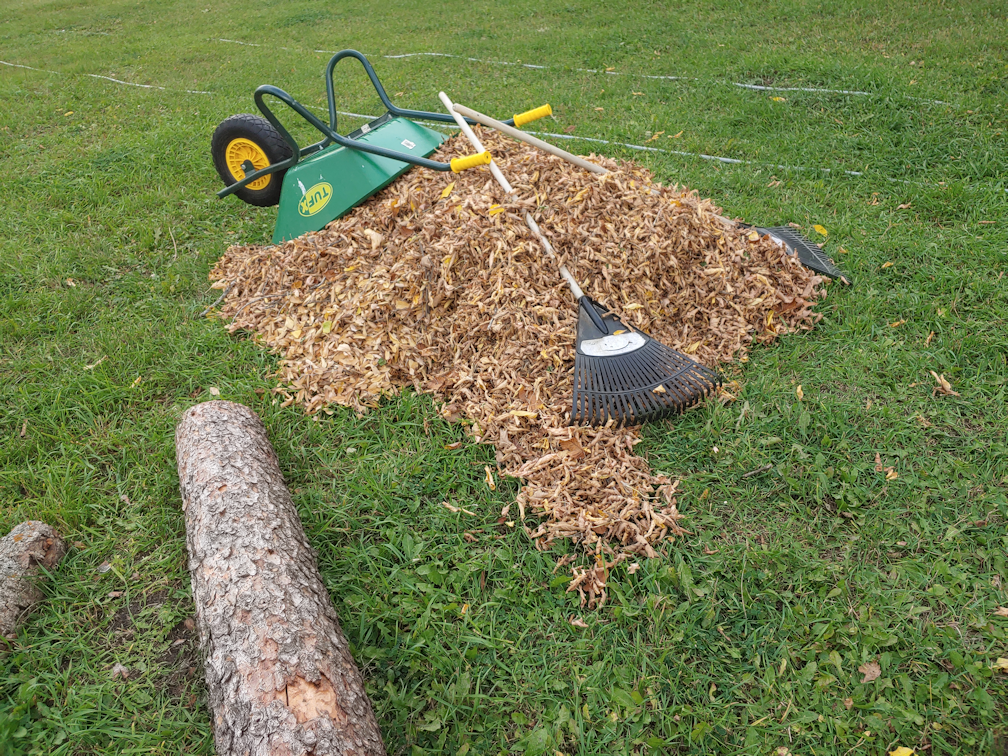
The next brown layer was leaves.

The final green layer got all the bitter lettuce and frozen chard that had been pulled from the other beds. The kitchen compost buckets got added as well, so there’s also things like egg shells and coffee grounds in there.

Now, it was time to add the rest of the soil. This job actually took the longest, because I frequently stopped to spread it out, pull out the roots and rocks, break up clumps, and make sure any worms that hitched a ride were gently and safely buried.

I stopped adding soil when I was getting too many crab grass rhizomes and rocks to make it worthwhile anymore, and the last of it got raked out evenly, as did the soil in the raised bed.

The very last layer was a mulch of wood chips. Thanks to my mother’s generosity in getting us the wood chipper, we had enough to add a couple of inches to the top.

I expect the contents to settle and sink over the next while. We’ll probably be down a few inches, by spring. Which is okay. We will continue to add more organic matter to build it up.

I must say, I am so thrilled with the height of this. It is SO much easier on the back to work at this height! I don’t even have a back injury. I’m just old. ;-) It might be a bit low for my husband, if he ever wanted to do a bit of gardening, but he would be able to reach while sitting in his walker just fine.

One down, five more to go!

Eventually. :-D

Temperatures are expected to continue to be mild over the next couple of weeks; a few degrees above freezing during the say, and just barely below freezing overnight. We’re expecting some rain tomorrow, then possible rain and snow over the next couple of days. Which means we can still continue preparing garden beds for next year. I might even be able to start cutting down more dead trees before things start getting too cold. It would be good to have the lengths pre-cut to build more beds, even if building them ended up waiting until next fall. Mind you, there’s nothing stopping us from adding more beds to the main garden area, other than possibly running out of material to layer with. My only hesitation is that we intend to expend our garden area into the outer yard, where there is better sun exposure, and those will all be high raised beds. Perhaps by the time we’re ready to build those, we’ll be able to use materials other than salvaged dead spruce trees!

Gosh, I’m having so much fun with all this!

The Re-Farmer

High raised bed – it’s done!

Oh, my goodness, what a difference having that new chainsaw made!

But before I could break it in, I needed to drag down the stuck tree, so I could use the wood in the high raised bed. Thanks to my husband very securely attaching the hooks I got to the rope I got – rope rated to 450 pounds – it was a simple matter to use the van to pull it out.

My goodness, where those top branches ever entangled! When I started pulling it, it didn’t fall, but stayed stuck until I got far enough that the tree was no longer dragging on the ground, but lifting up. At which point, it rolled up and got dragged over the compost ring, then finally it broke free from the branches and dropped.

Right on the cherry trees we are intending to cut away, so there’s no loss there!

After replacing a large divot of sod that got dragged out, I then used the baby chain saw to start cutting away the branches, and cutting away the top of the tree.

Then it got rolled onto the compost ring, so the rest of the branches could be trimmed off.

Finally, it was time to break out the new chainsaw!

Of course, I took the time to read the manual, first, then added chainsaw oil to the reservoir.

Then I measured out and cut a pair of nine foot lengths from the tree trunk.

The bucksaw does a great job, but the chainsaw did in mere seconds what would have taken me probably 5, maybe even 10, minutes, per cut, by hand!

Then, while I dragged the logs over to the high raised bed, I helped a daughter move the rest of the tree trunk aside, so they could set up the wood chipper. They cleaned up all the dead branches from the tree, as well as the little cherry trees we’d cut away to access the last tree we’d cut down.

They spent more time prepping the branches to fit the chipper and shredder, than actually doing the chipping and shredding! Unfortunately, the little spruce branches were so twisted, they ended up clogging the shredder chute to the point that my daughter had to take it off to unclog it. Once that was cleared up, they did a few celebratory shreds before heading inside to start on supper.

Meanwhile…

I started working on the high raised bed by first taking it apart! I cut away the notches in the base logs so that the cross pieces would sit lower, and no longer have that gap that was there before. I also was able to clean up the cuts and make adjustments, as needed.

The new nine foot lengths were thicker than I thought, so after I put the bottom cross pieces back, I used the new logs for the next level.

I ended up not needing to cut notches in them at all. Instead, I was able to just adjust and cut the notches in the next level of cross pieces to fit.

It was SO much faster and easier to cut the notches with the chain saw! Pretty much every notch we’d cut before needed modification.

I used smaller, thinner, logs at the top, which turned out to be a pain. These are from higher in the tree, which meant they were not as straight, and had more little branch stubs all over. I ended up having to trim logs along their lengths to get rid of lumpy bits, so things would sit against each other better.

Then I went and cut two more four foot lengths to do the last cross pieces.

There we have it! The high raised bed is built!

Standing next to a corner, it’s just barely reaches my hip. For mobility and accessibility purposes, we could probably have gone higher than this, but I think this will be fine.

Now, we just need to fill it! We’ve got old logs for the bottom, with corn stalks, leaves, grass clippings and garden waste to layer in. I’ll add thin layers of soil in between each layer of organic matter before topping it off with soil for about the depth of the top logs.

That will be a job for tomorrow!

I may have had to juggle the budget a bit to get that chainsaw, but it was worth every penny. There is no way I could have finished this today, without it. In fact, I have my doubts I would have been able to finish it before winter, at the rate things were going!

About the only other thing we might end up doing with this is maybe get some short pieces of rebar, drill holes through the top couple of logs and set the rebar in them to really make sure the logs stay in place.

It’s really a horrible, messy, slapdash job, but it will still probably last us many years.

Now we just need to cut down more dead trees, so we’ll have the material to build more!

The Re-Farmer

Our 2021-22 garden: garlic is in!

When it became clear we would be using our low raised beds to plant the garlic when it came in, I thought about how much space the garlic we planted last fall had taken, and thought we might be able to plant all three varieties in one bed. Maybe one and a half.

Boy, was I wrong. :-D

The garlic is sold by weigh so, technically, we got the same amount of seed garlic as we did last year, but when I opened the bags, it just seemed like… more.

It’s a good thing I take pictures and document everything, because I was able to look at last year’s post and compare.

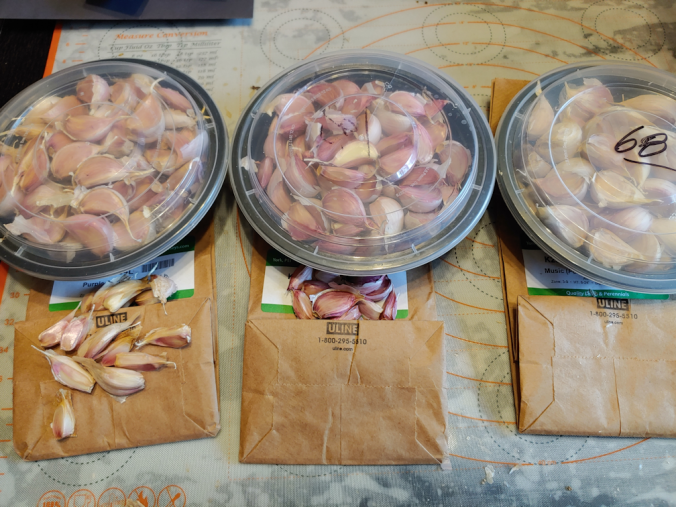
The photo on the left is from last year, the one on the right is the garlic that came in today.

I even just happened to lay them out in the same order! The Purple Stripe is actually less than last year. Seven bulbs instead of eight, but this year’s bulbs were more consistent in size. Last year, we got seven Rocambole, but this year there is nine. The Porcelain Music had eight bulbs last year, and this year there is nine.

Separating hardneck garlic cloves is rather a lot more difficult than the soft neck garlic at the grocery store! :-D

Last year, we planted all the cloves. Even the little ones. The Porcelain Music had fewer cloves per bulb, but they were all large. With the other two, I separated out the little cloves for eating, and kept the larger ones for planting.

Which turns out to have been a good decision!

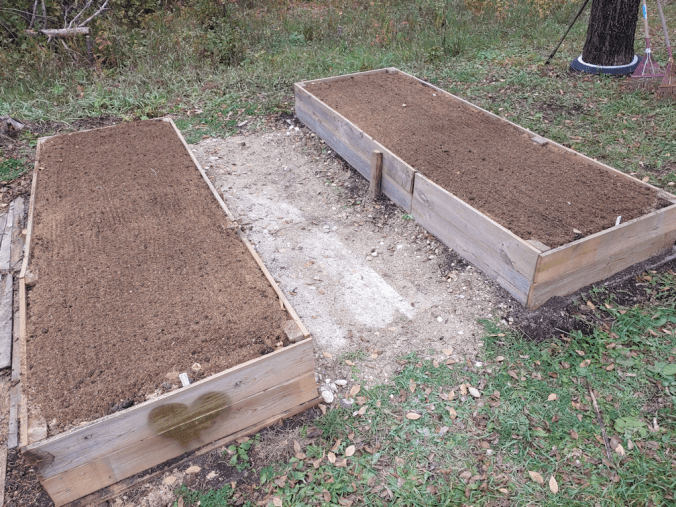
Last year, I planted the cloves at approximately six inches apart, but this time, I actually measured and marked a six in grid. Which was SO much easier now that the bed is raised up higher! Now I’m thinking I must have been closer to four or five inches, when I planted last year. At six inches, I filled one bed almost completely with Purple Stripe. There were maybe three prepared holes that did not get a clove planted in them. Which means this bed has 82 cloves planted.

The second bed got the Rocambole, which actually had more cloves. This bed is just a little bit longer than the first one, which gave me an extra row. I had exactly enough cloves to fit! That gives us 90 Rocambole garlic in that bed.

The third bed here still has beets in it, but thankfully, we finished cleaning up the carrot bed, yesterday.

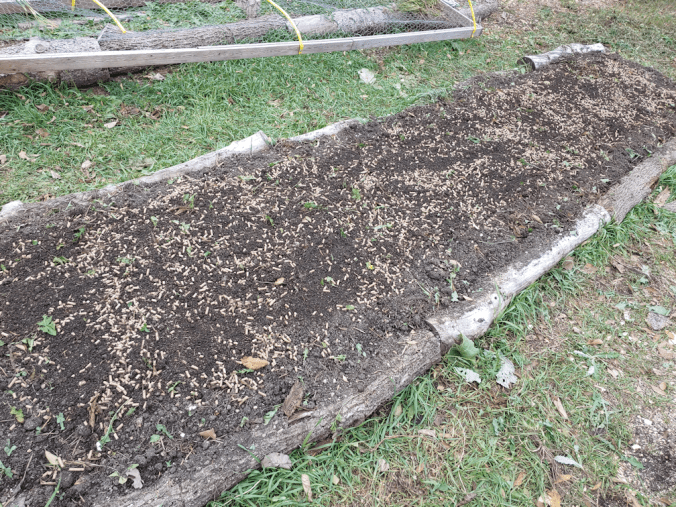
The first thing I did was add half a bag (about 20 pounds) of hardwood pellets and work them into the top couple of inches of soil. Then the bed got watered, so the pellets would start absorbing moisture.

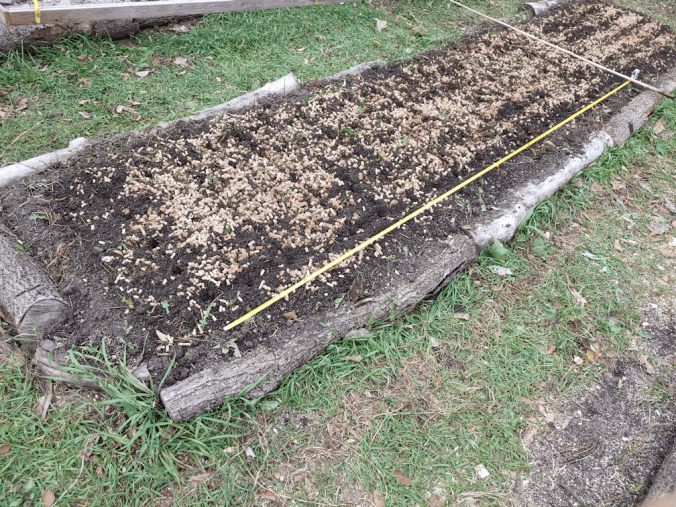
As with the other bed, I marked off a six in grid, though with this bed being so much lower, I did it by dragging a bamboo stake to mark the lines, first, then poking holes in where the intersected. Far less painful doing it that way!

I marked far more than I needed. Having just cleaned this bed out, I know that the edges get invaded by crab grass pretty heavily, so I tried to keep further away from the edges. I marked out 5 rows but, knowing I had fewer cloves with Porcelain Music, I laid the cloves out along four rows, first. I turned out to have exactly enough to fill a 4 x 13 grid, making for 52 cloves.

Which ended up being pretty much exactly half the bed. I placed the piece of wood across to mark how far the garlic is planted, so we know how much space we have when we plant something in the other half in the spring.

While I was working on the third bed, my daughter covered the low raised beds with a grass clipping mulch before moving on to other areas of the garden, then I used grass clippings the last bed. I hope to replace it with straw, when the bale comes in. The mulch has to be removed in the spring, once the overnight temperatures are warm enough. The garlic should be showing through the mulch by then. That is fine with straw, but the grass clippings may be too dense for the garlic to work its way through, so when the straw comes in, I plan to replace the grass clippings with it.

All three beds were finished with a fairly decent watering. Mostly to dampen the mulch than try and soak through it. We are still expected to warm up over the next few days, so this should be enough for now. Later on, as overnight temperatures drop and before the snow comes to say, we’ll cover the beds with plastic.

One thing is for sure. Working with the newly framed low raised beds is SO much better than the ground level beds, even though those ones are technically considered raised beds, too. It was easier to mark out distances, easier to reach the middle, and much MUCH easier on the back. Everything went so much faster because of this, too. I look forward to when all our garden beds are at least this high, or higher!

We had originally intended to double how much garlic we planted this year, but I am glad we decided not to, at the last minute. We would not have had enough beds ready to plant them all, if we had!

It should be interesting to see how these do next year. Not only will be be able to compare with the highly amended low raised beds in the same location as last year, but also the third bed in the main garden area. The low raised beds get full sun (meaning, at least 6 hours), but are shaded longer in the morning by the spruce grow and nearby Chinese elm. The third bed has nothing to shade the morning sun, and is far enough away from the trees by the house that it’s not affected by evening shadows, either.

Our 2022 garden now has its first plantings!

The Re-Farmer
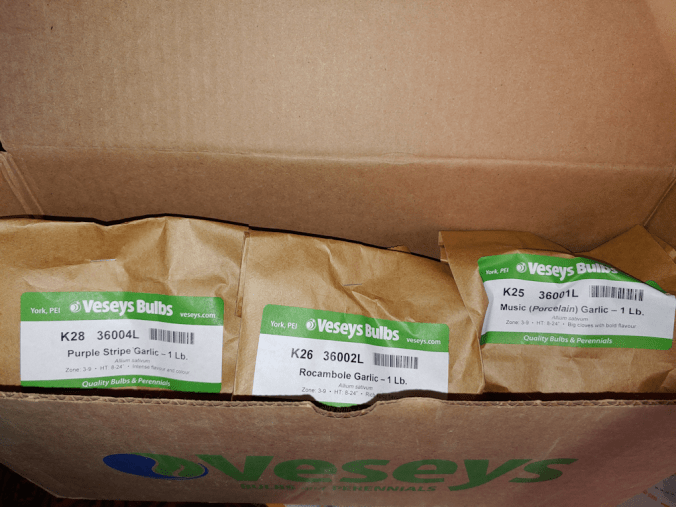
Guess what I’ll be doing today!

I made a trip to the post office today and had a lovely surprise.

Our garlic is in!

According to the Canada Post tracker, it wasn’t supposed to arrive for another four days.

We have our garlic, but we still don’t have a straw bale to mulch the bed, so I messaged our renter about it. When we bought from them before, they usually had a bale over right away, so I was wondering.

Sadly, my suspicions were correct. They are having to buy all their hay and straw bales themselves this year. They haven’t got their shipment yet, and don’t even know what to charge me until they pay for it themselves. Yet they’re still willing to part with one for me!

We ended up chatting a bit, and it’s been a very rough year from them. Almost everything is a write off this year. The corn they harvested from the field by our place was chopped up and will be made into silage, at least. Even their garden was decimated by the grasshoppers, on top of the drought.

So it may be a while before we get a straw bale. Now that I know this, I will cover the garlic beds with plastic and maybe some grass clippings until the straw comes in.

Since the garlic will be going into the low raised beds we built this year, I’m thinking it might be worth dismantling the long covers we made for the main garden beds and use the materials to make covers for the low raised beds. We shall see. That’s something that can wait until spring. Cleaning up and preparing the beds for planting in the spring is the priority right now.

But first, I will go start breaking apart garlic bulbs to get them ready for planting!

The Re-Farmer

Low raised beds: ready for planting

Oh, what a lovely day we’re having today! As I write this, we are at 17C/63F, which is a couple of degrees warmer than forecast. We’ve got beautiful blue skies and sunshine, though it was a bit winder than I would have liked – only because I needed to do some spray painting.

While the girls cleaned the eavestroughs, then brought the pieces of insulation from the barn to put around the based of the house, I started with spraying the sign I’m working on with reflective paint. With a white base, the reflective paint is not visible. Later this evening, I want to try taking a picture of it with flash, which should show me how well it worked. According to the label on the can, it works better with a light coat than with a heavy one, so as long as I got good coverage, it shouldn’t need another coat.

That done, I grabbed the baby chainsaw with the one charged battery (I forgot to switch them in the charger!) and did quick work on the high raised bed. After taking about an inch more off the notch on one side, that was done. I had enough juice left in the battery to start cutting away excess on the top of the end piece, where the next log will rest. I didn’t get very far, though.

Those little jobs out of the way, I got to work on the big job! Topping up the low raised beds, so we’ll have somewhere to plant the garlic when it arrives.

One of the beds wasn’t filled as much as the other, so I started with that one, first. We had soil from the potato bags in the kiddie pool, and there are still 10 bags of fingerling potatoes, so I decided to use it as filler, as it had already been amended with organic material. With all the rain we’ve been having it was very wet and heavy! While filling the wheelbarrow, I could see some nice, fat, happy worms in there, too. :-)

It filled a couple of wheelbarrow loads, with some soil being left to weigh down the kiddie pool, so it doesn’t blow away. I even found a couple of little potatoes that got missed in the process! After spreading it around evenly, I added another three wheelbarrow loads of the garden soil we bought in the spring. I’m really glad we were able to get two dump truck loads! We’d have been out by now, if we hadn’t, I’m sure.

After the one bed was filled, I brought another three wheelbarrow loads of soil for the second bed, then leveled them both with a garden rake.

Next, I split a 40 pound bag of hardwood pellets between the two beds, and worked them into the soil. One of the things we found with the new garden soil is that, over time, it gets really hard and compact. Since we don’t have any compost or manure to help prevent that, the pellets should do the job.

After working the pellets into the top couple of inches of soil, both beds got thoroughly watered, until the pellets reverted to sawdust. They absorb quite a lot of water in the process.

The sawdust does tend to rise to the top, though, so after they got a solid soak, I worked it back into the top couple of inches again.

They are actually a bit fuller than I had intended. The garlic will get a heavy layer of straw mulch after they are planted, so having it a bit lower would have help keep it from blowing away. The beds will settle, though, plus they will be covered with plastic, before we get snow that stays.

If all works as intended, these beds, with their layers of wood and lighter organic material in them, should require almost no watering, even if we have another summer of drought. If we had a wet summer, they should have good drainage, too.

I do find it kind of funny that I had to get these two beds ready for the garlic, because the other beds we have, in the old garden area, still have things growing in most of them! Not counting the one that’s being converted to a high raised bed right now, the only one that’s completely empty had onions growing in it, so I wouldn’t want to plant another allium in it.

It should be interesting to see how the garlic does in these beds!

The Re-Farmer

Our 2022 garden: a bit of high raised bed progress

After several days of rain, I was finally able to get a bit more work done on the high raised bed that is being built.

Such slow going!

I was able to cut the four notches to fit the end piece on, but it is not done. I made as many cuts as I could with the baby chain saw, then used the hammer and chisel to take off the excess wood while the batteries charged. Unfortunately, I finished with the chiselling faster than the batteries charged, so when it came time to use the baby chainsaw to do the finishing, I didn’t get very far.

I’ll have to get back at it, later. It’s the notches on the side logs that need to be deepened more.

Little by little, it’ll get done!

The Re-Farmer

Our 2022 garden: high raised bed build, day 2

I did a fair bit of running around this morning, and was even able to get a quick visit in with my mother. We are hopefully now well stocked with cat kibble for the rest of the month. It’s also coming up on Thanksgiving here in Canada, which means cheap turkey season, so I got one for this weekend, and another for the freezer. :-)

Once back at home, I grabbed a quick lunch and the girls and I headed outside. While they worked on raking leaves for me – and running to and from the house for any tools I needed – I worked on the high raised bed.

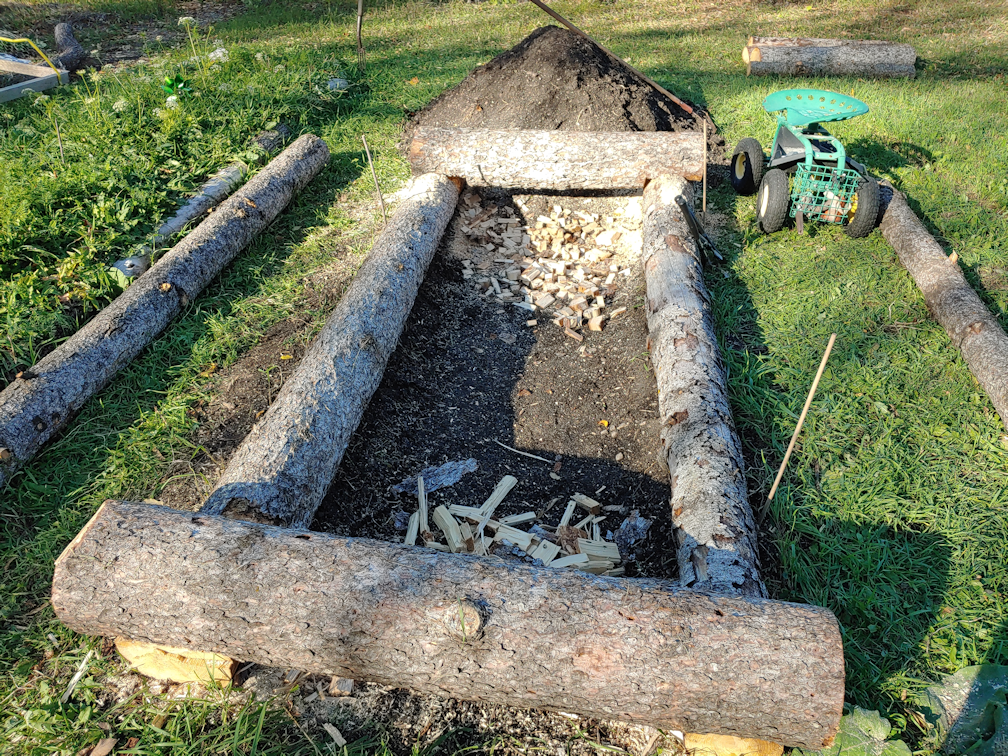
The bottom got prepared a bit, first. I straightened out the edges and shoveled out some more soil, then used a thatching rake on the bottom. I eye-balled four feet across and raked up the edges where the logs would go. Then I got two nine foot lengths in. The first one was placed right where I wanted it to go (that’s the one on the right), then placed the two sticks against it. From the sticks, I measured four feet and placed two more sticks, then rolled the second log up against the second pair of sticks.

Once those were in place, I rolled an end piece against them and used their width to judge where to begin cutting. This end piece was the bottom of the trunk, so it had one very uneven end. It was measured and cut at more than four feet to compensate for that. That made it long enough to cut a notch out to fit the logs, rather than cutting right to the edge.

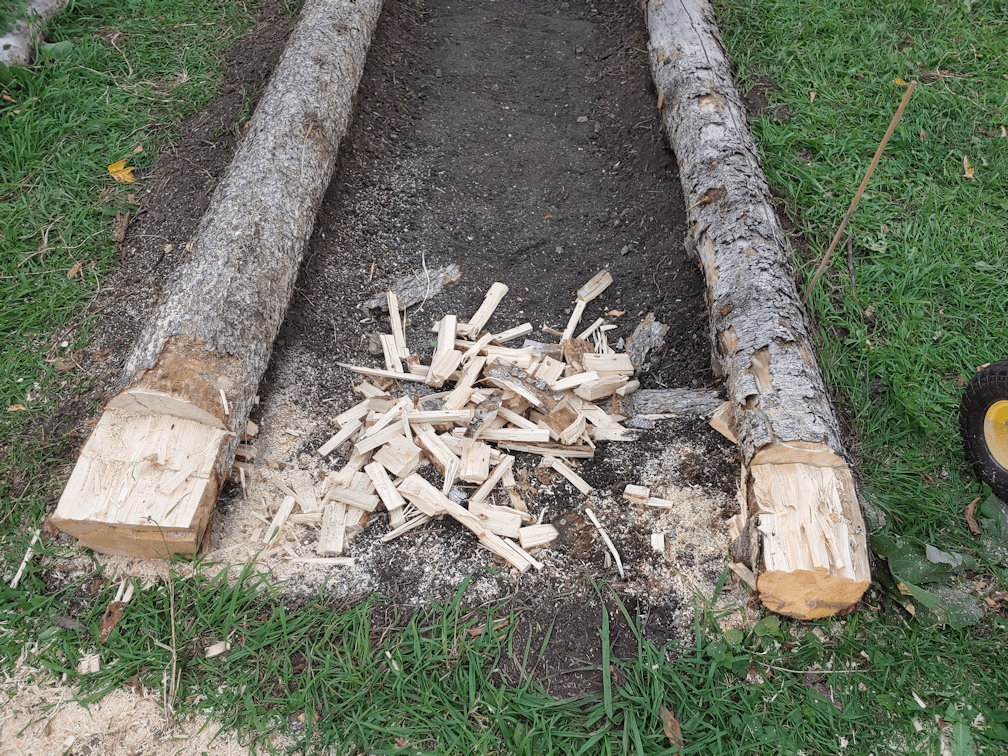
I used the baby chainsaw to cut the outer edges of the notch, then made a cut lengthwise. I then spent the next while using a hammer and chisel, sometimes a hatchet, to cut out excess wood, which you can see inside the bed. After most of the wood was chiselled out, I use the baby chainsaw to cut into the remaining excess wood, as you can see above.

Then I kept running it over the area to level it more. I wasn’t after perfection, here, and don’t have the tools to do a better job, so this was as good as it was going to get!

It didn’t take long for me to drain the battery on the baby chainsaw and have to switch to the second one

When I started working on the other end, I made plenty of cuts to make chiseling the excess out, easier!

I got it to this point with the chisel before going at it with the baby chainsaw to level it off some more.

Then I got a daughter to help me place it on the logs, so I could use it to mark were to cut wood out of the ends.

By the time I finished making cuts to depth, I drained the second battery. That’s okay. It was enough to get started, and since I was removing wood to the edge, it would be easier to take off the excess with a chisel than with the notches.

Right?

Ha! Of course not.

Both logs had knots in them. One of them had two.

Those were a real pain in the butt to work through with nothing but a chisel or a hatchet to cut through them!

On the plus side, working on this took enough time that the first battery was almost fully charged again, so I could use the baby chainsaw to finish off the area.

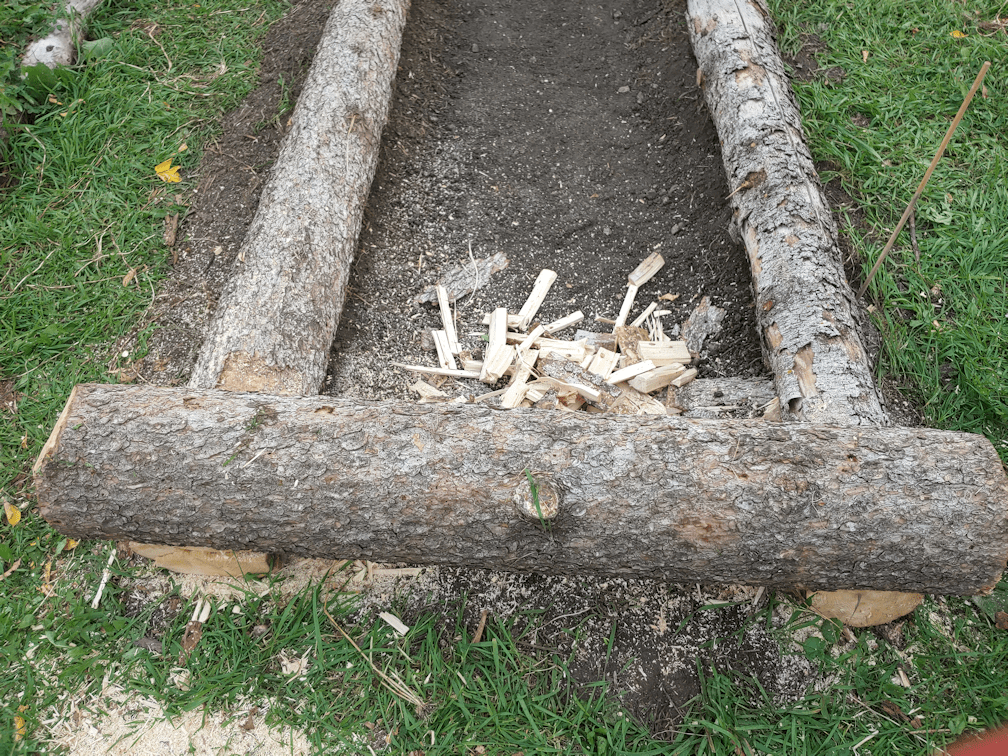
That done, the end piece could be set in place.

As you can see, there is quite a bit of a gap under the end piece. This is not a concern, as the bottom of the bed will be filled with logs. It will be an easy matter to find a piece that can be fit under that cross piece.

The good thing is, all those bits of wood I’m cutting out will not go to waste, as they will be buried with the old logs. We’ll have things decomposing at different rates, all of which will release their nutrients slowly over time while the wood will act like a sponge, reducing the need for watering.

By this time, we started to get a bit of rain, so I stopped for the day. The girls finished raking and headed in to make supper while I prepped to continue later.

I chose a second cross piece that was close in size to the one at the opposite end. As before, I will use the other logs to see where to make the cut outs. Hopefully, I’ll be able to continue on this tomorrow. It depends on whether or not my mother will need me to drive her around or not.

This would go a lot faster if I had a full sized chain saw. :-D Ah, well. We use the tools we have!

Meanwhile, I now have a nice pile of leaves to use when it’s time to start layering on top of the logs that will go on the bottom of the new raised bed! It’s been pretty windy, but hopefully they won’t blow away. ;-)

I’m glad we have found a way to make use of all those dead spruces we need to take down!

The Re-Farmer
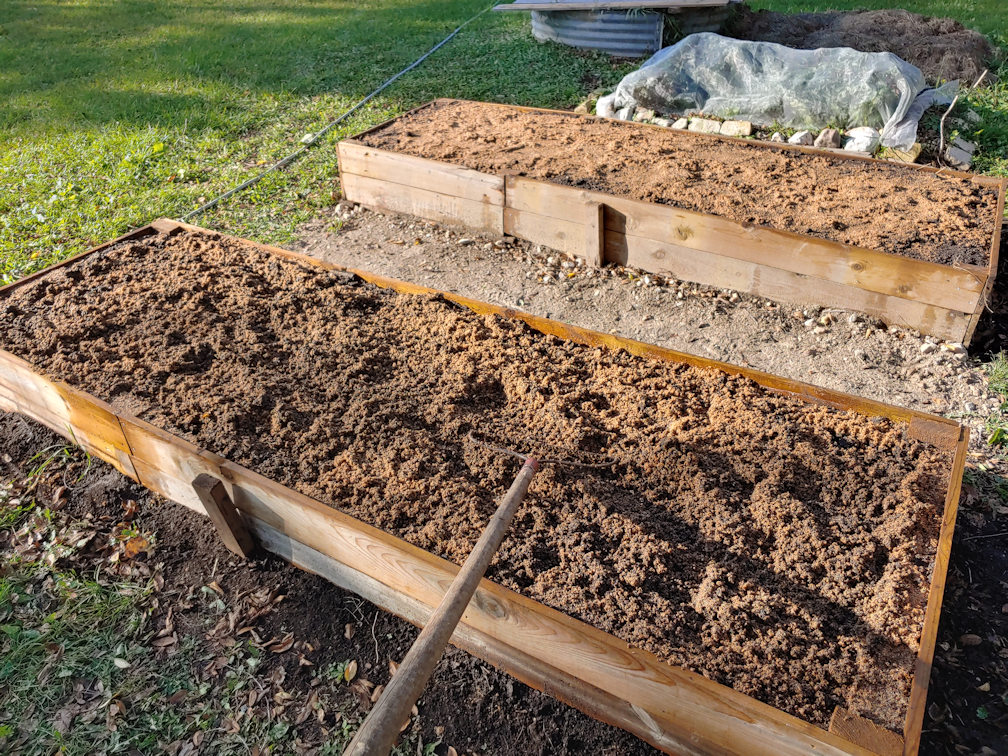
Our 2022 garden: starting the first high raised bed

Our glorious weather isn’t going to stick around, and we’ve got garlic ordered, so I wanted to make sure we had at least one prepared bed for them.

This is the empty bed that had yellow onion and shallot sets in it. It was also supposed to have purple kohlrabi, but that never grew. We were planning to rotate our garlic to a different location that did not have alliums in it, but this bed is going to be so drastically changed, it shouldn’t matter.

Also, in the foreground, in the right hand corner, is a single onion that got missed! :-D

The first order of business was to move out the bits and pieces of logs framing the bed.

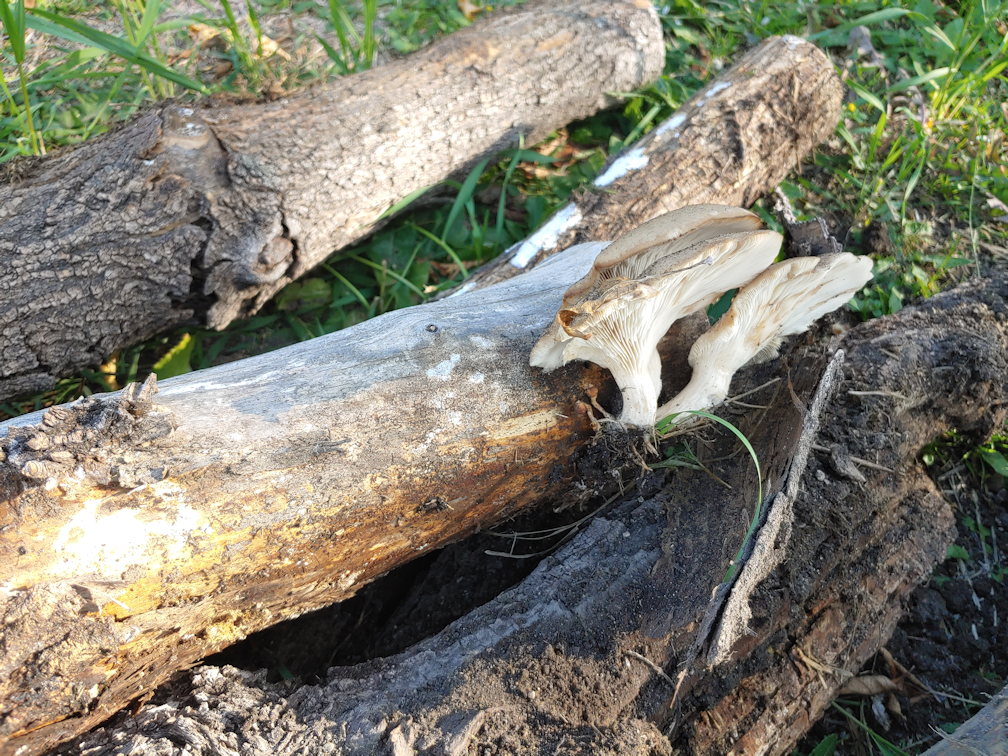
One of them had mushrooms attached! :-D

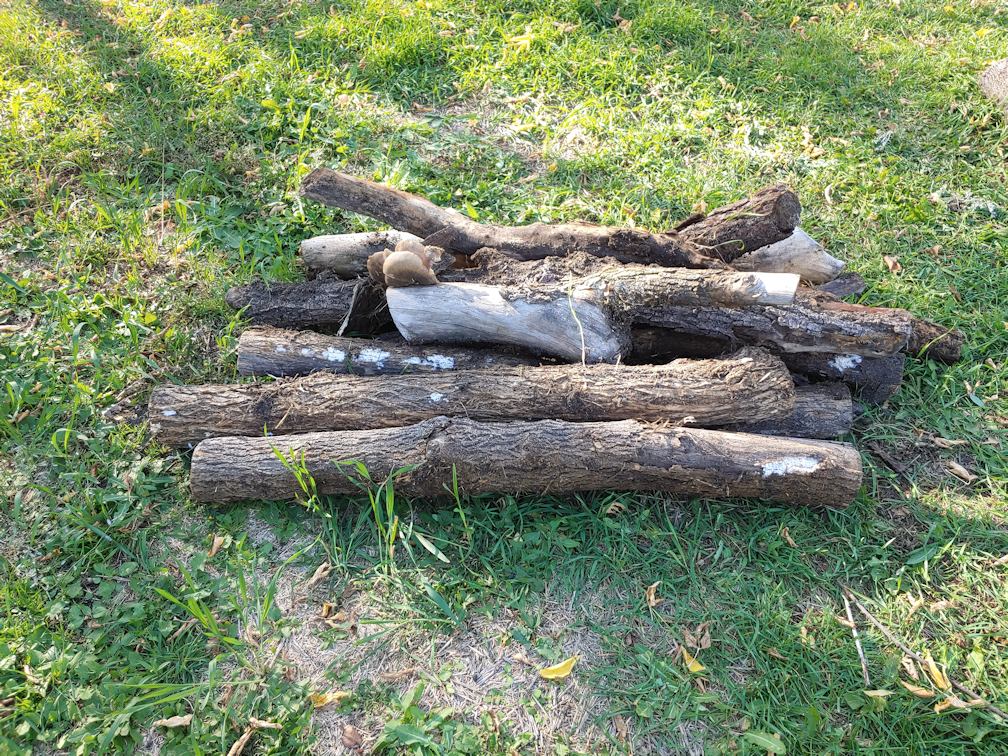
These are all the logs that were framing the bed. They will be buried at the bottom of the high raised bed. These are already starting to rot, which will be a good thing for our modified hügelkultur method of filling the bed.

Also, my spell check has hügelkultur in it!

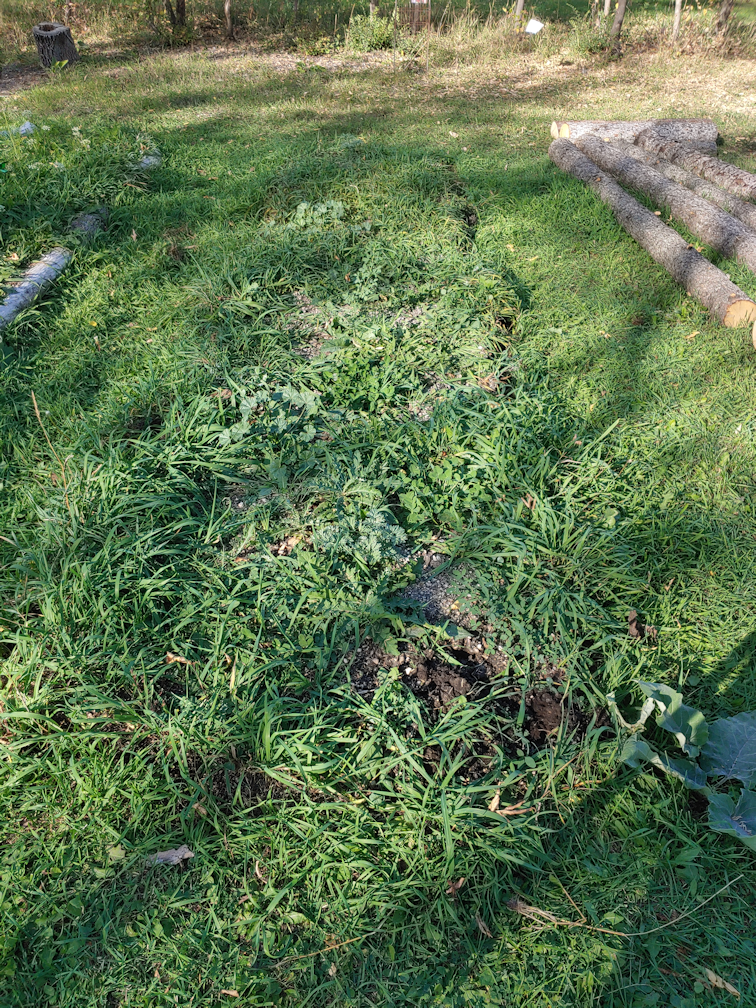
This bed is so overgrown, you can hardly tell all those logs were removed!

Next began the tedious process of loosening the soil and pulling all the crab grass and weeds out by the roots and rhizomes.

Mostly crab grass.

When we built this bed in the spring, we extended what had been a shorter potato bed, using the Ruth Stout method, the previous year. Basically, potatoes were laid out on the ground and buried under straw mulch. After the potatoes were harvested, the straw was worked into the soil a bit. For the added portion, we just laid down more straw over the grass, as well as the previous year’s bed, then topped it with new garden soil.

There’s a reason we did it that way.

This is as deep as I could get the garden fork into the soil. About half the length of the tines. After that, I was hitting rocks. I’d shift the fork a few inches, and hit more rocks. Shift, hit rocks. Shift, hit rocks. It was insane!

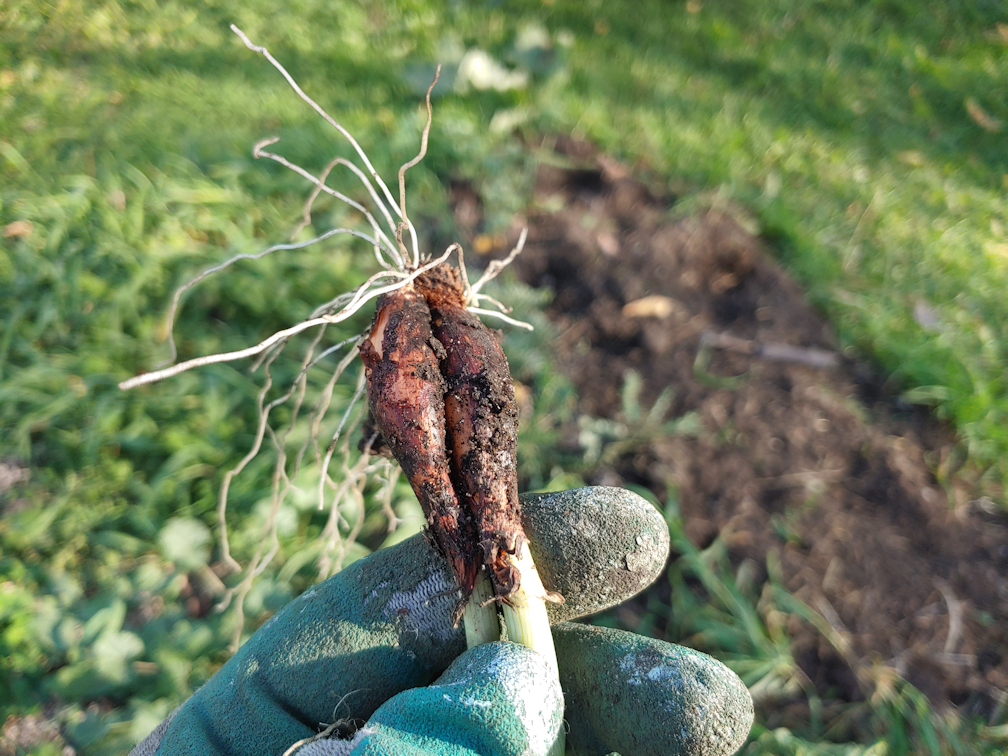
Along with the onion that got missed, I found a shallot, too!

They got set aside on the chicken wire cover over the chard to cure. :-D

I pulled as many weeds by the roots as I could, but there’s no way I got all of them. The wheelbarrow is mostly crab grass, so this is not something that will go into our compost pile. I dumped it by the edge of the spruce grove, instead.

The high raised beds will be 9 feet long, and this bed is about 14-15 feet long. Originally, I wanted to keep them long like this, but we also want to be able to cover them, and at that length, the covers are very unwieldy. By going shorter, we can potentially add a second row of beds. I had to decide. Should we build the high raised bed at the south end, leaving room for a second row on the north, or start it at the north end, with a potential second row on the south side?

In the end, I decided to build the bed on the south end. It was the shade that decided it for me. If we were to make a second row of beds further south, they would be more shaded by the trees between the garden and the house. If we add a second row on the north side, they will be closer to the short row of trees my mother allowed to self seed among what had been her raspberry patch, but I want to get rid of those trees, as they are causing problems. If nothing else, they won’t be shading any new beds that are closer to them.

That decided, it was time to start digging!

I dragged over a couple of logs to use as a guide, then started removing the loose soil and piling it on the end that will not be part of the bed, pausing to remove more roots and rocks every now and then. I was happy to see how much the straw had broken down – and by how many worms I was finding!

This is it for the day!

I dug down only as far as the rocks, so it’s not very deep. Mostly, I just removed the straw and soil layer we made in the spring, and maybe a couple of inches lower.

The next step will be to level this off and straighten the edges for the logs. I cut the logs a bit longer than 9′ and 4′, to give room to trim the ends straight, but I may not even bother with that. As long as the beds themselves measure no more than 4′ wide on the outside, we’re good. I don’t care if there are bits that stick out a bit further at the corners.

I want to get this bed at least 2 logs high before I start putting the layer of logs on the bottom down. They’re smaller and lighter, but it’ll be easier to put them into place while the walls are a bit lower. The other layers can be added when the bed it as its full height. When it is 3 logs high, I’ll decided if it needs to be higher or not. Then it’s a matter of filling it with layers and getting it ready to plant garlic in. We might be able to plant all three varieties on one bed.

As much as I enjoy the work, it does help me realise how necessary having high raised beds will be. I don’t know how much longer I will be able to continue doing stuff like this. Weeding the bed was the most difficult and painful part. Thankfully, I was able to sit on the scooter for some of it, which helped, but this old body is breaking down. I can still do big stuff, like cutting and breaking down trees and carrying logs, but I’m loosing my fine motor skills on my hands. I drop things a lot more often, the joints are almost always stiff and sore, and that one finger just doesn’t seem to be getting any better. Then there is the back pain from bending over to weed. I can’t bend at the knees, since my knees are already shot. Strange that I’m losing my ability to do small, easy things faster than doing heavy manual labour!

I can still crochet, though, so that’s good. I whipped up a couple of hats recently, and plan to work on other small projects. The only problem has been choosing what yarn I can work with. My hands are so rough right now, some types of yarn catch on my fingers while I work! LOL Working with my stash of metallic yarns is out of the question, as well as anything the least bit fuzzy. :-D

Hopefully, I will be able to continue working on this raised bed tomorrow, after I’ve headed out to do some errands. We hit 27C/81F today, but tomorrow should be a bit cooler, and we’re expected to get rain – possibly even a thunderstorm – over the next couple of days. Looking at the long term forecast, we’ve got another nice, warm week before things start to cool down, and overnight temperatures may result in frost. It’s not until the end of October that we’re looking at the possibility of snow. Of course, looking that far ahead, things are very likely to change, so we shall see what really happens! Until then, I’ll be taking advantage of the mild weather and doing as much work outside as I can!

The Re-Farmer

Our 2022 garden: chocolate

When I placed our order for fall garlic, I also ordered a pack of seeds for next year’s garden.

It felt kind of weird to order just one pack of seeds. Especially since the garlic will be shipper later, when it’s time to plant them in our zone.

This is a variety of tomatoes my daughter really wanted to try. We now have seeds for two colourful varieties of little tomatoes for next year. We will also be getting two other, larger sized varieties. For me, I will be getting paste tomatoes, while my daughter wants to get some sort of big, lumpy heirloom variety. :-D I think this time, we will start them indoors a bit earlier, so I don’t mind getting seeds will in advance. Last year, we ordered the majority of our seeds in early December, because so many were already selling out. I don’t expect there will be quite the same level of shortages as last year, but I still want to place our orders as soon as our budget allows.

Alas, one thing we won’t be ordering this year are the bushes we were talking about planting where the corn and sunflower blocks are now. We missed the deadline; they have already stopped taking orders for the year! We will need to make sure we can place an order as soon as they open up for orders again, next year. The saplings wouldn’t be shipped until spring, anyhow.

I think half the fun of gardening is planning for the next year’s garden! :-D

The Re-Farmer

ps: the package under the packet of seeds is a set of 12 inch drill bits my darling husband got for me. He’s the best!!
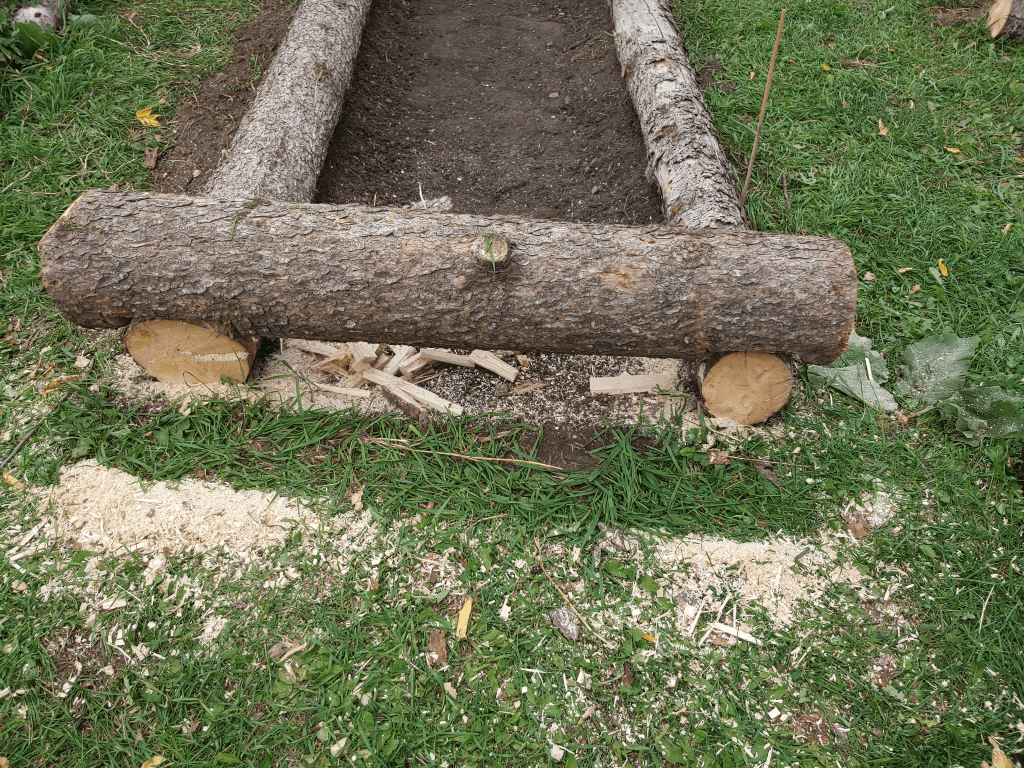
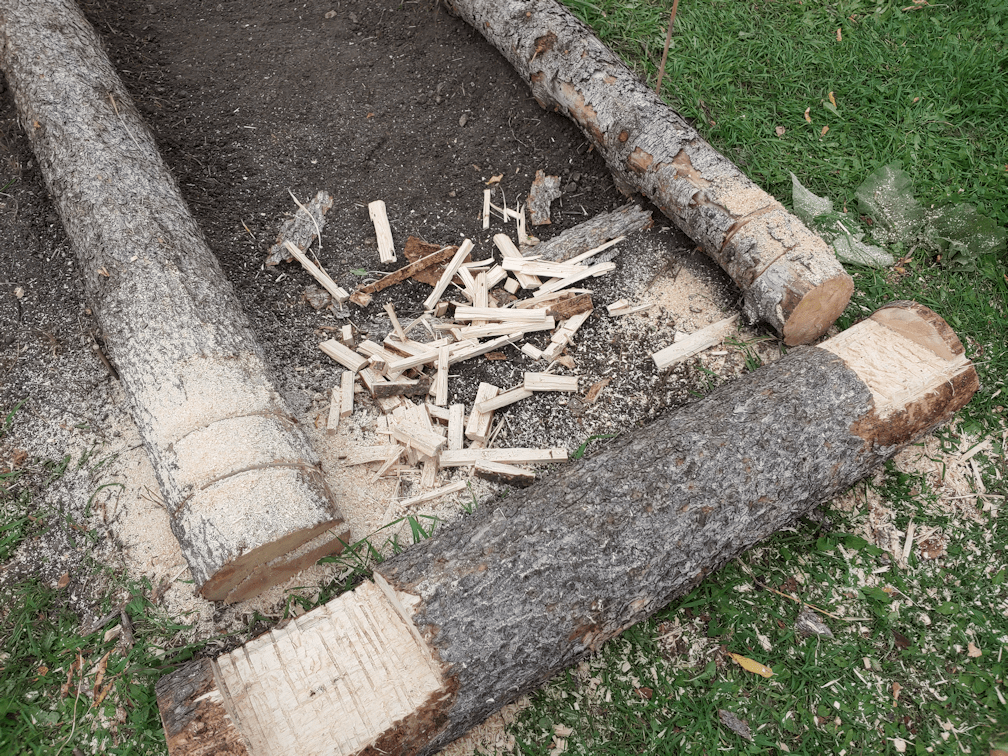
Little by little, and a Crespo surprise

It has remained too damp to try cutting wood, so I worked on a few other things today. One of them was to start getting the remaining chimney blocks out of the old basement, to where they will be set up for next year.

The blocks themselves are not too much of a problem. I can carry them well enough. The main problem is the stairs. If I could simply walk up the stairs, it would have been fine. However, I don’t do stairs well at the best of times, and these stairs have unfortunate dimensions, as well as being unusually steep, to fit into the space available. Which meant setting the blocks down on a step, then cautiously lifting it up, one step at a time, with one hand, while hanging on to the rail with the other. Slow going, and rather dangerous. :-/ Once at the top of the stairs, my husband would open the door for me, keeping the cats away, and slide it aside while I went for another. With his back injury, even sliding them was probably more than he should have done, but he managed.

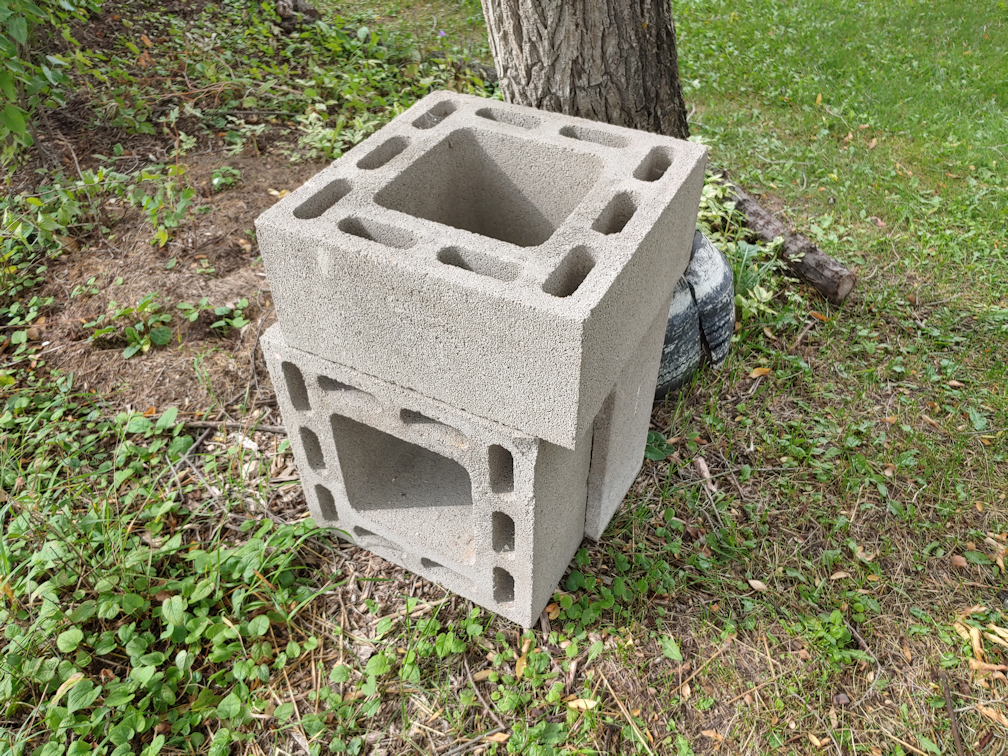
For now, I only got three out. There are four more left in the old basement. There’s one more in the new basement, but I’m keeping that. It was the perfect height and solidity to use as a surface when I was doing some wood carving.

As I was carrying them out to the yard, with my husband getting the three doors I had to go through for me, while also keeping the cats at bay, I got curious as to how much they weighed. My husband estimated about 25 pounds, but I knew they had to be heavier than that. So I brought over our scale to weigh the last one before taking it out. It turned out to be 53 pounds, so not bad at all. Mostly just awkward. As I sit here writing this, I am starting to feel issues with my right shoulder, from lifting them up the stairs the way I I had to, though. :-/ Fifty three pounds is a bit much for one arm, while scrunched over and squeezed between two walls and a rail!

Of the ones that were outside, all but one were used for the retaining wall in the old kitchen garden. The last one is hidden behind the three I brought out, leaning against the tree. We will have a total of eight blocks by the time the rest are brought up from the basement.

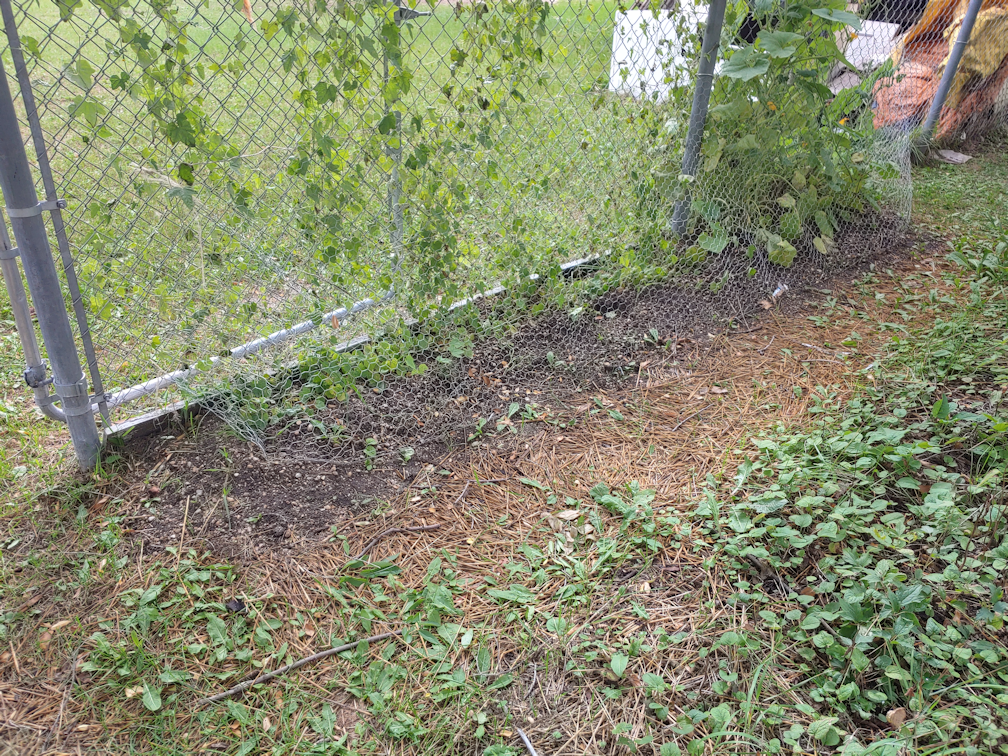
This is where they are going to go, when it’s time to clean up the cucamelons and gourds. We were intending to have them here for this year’s garden, but were not able to get them out of the basement in time, so I want to get that done little by little until they are needed. In this spot, the ground slopes just enough that there is a larger gap under the chain link fence. The cardboard flaps we pushed up against the fence before adding the soil ended up falling under, and the soil started washing away when we watered, so I had to use boards I found in the barn to short it up. The blocks will eliminate that problem, and will make good “containers” to plant into next year.

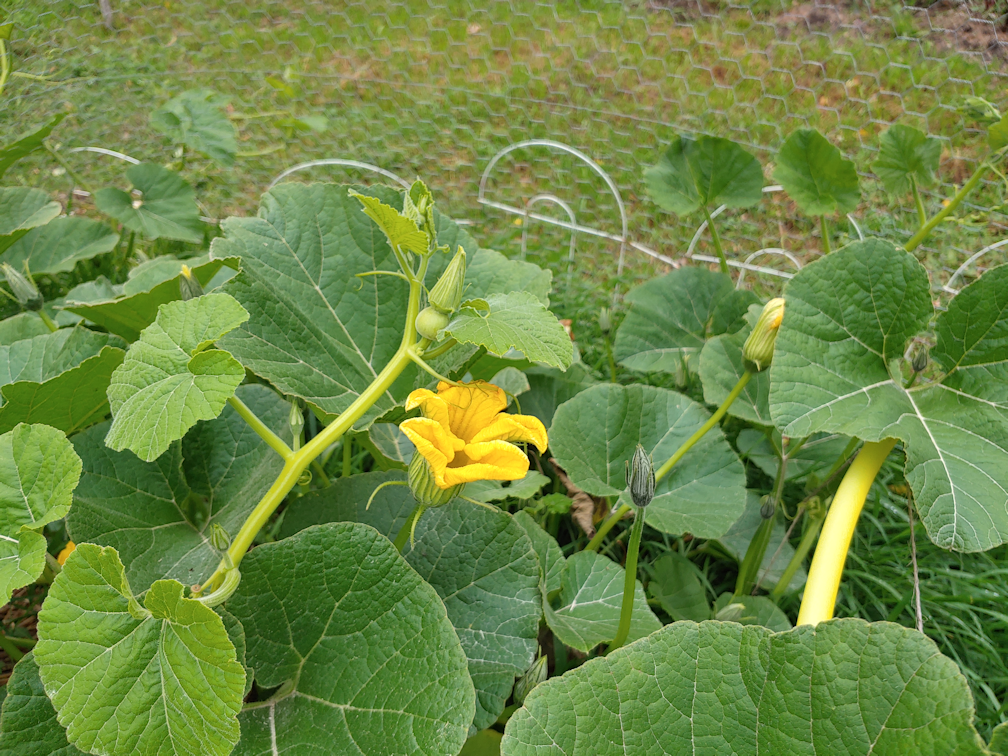
With that done, I got a few other things done, including picking up more fallen branches from yesterday’s wind, eventually heading over to check out the Crespo squash. I’d noticed more flowers opening, and I wanted to see how the two squash that were forming were looking.

It was a pleasant surprise to look at one of them, and find another little squash developing!

Then I spotted another one, high above the hill they are planted in.

Then I spotted another…

And another…

And another!!!

Which is when a started to walk around the critter barriers, looking closely for any more, and counting.

I spotted twelve. !!! A full dozen, that I could see, baby Crespo squash!

Some were very tiny – even smaller than the one pictured above, while others were surprisingly large.

I did not expect a variety that produces such large fruit would also be so prolific!

The problem, of course, is this.

The first official day of fall is only 5 days away, and leaves are already starting to turn.

The certainly won’t have enough growing season left to reach the size shown in this photo from Baker Creek.

Well, at least I know that, if started indoors early enough and protected from critters, it will grow well in our area. I want to try these again, next year!

The Re-Farmer