Onions are something we use a lot of. I once took the time to estimate how many onions we go through in a month when buying them from a store, and calculated an estimate of how many we would need to plant to meet our needs. I think it came out to something like 200 yellow onions. That did not include red onions, which we bought less frequently. It also didn’t include shallots, which we rarely bought, because they are so expensive.
Which meant that, if we wanted to grow enough onions for the four of us for one year, we’d need to plant more than 200 yellow onions because, once we have them handy, we would probably be using them even more often than we normally do.
Plus the red onions.
Plus we wanted to plant shallots, because they are so expensive, but we like them.
With onions, we could buy sets for easier planting. A lot of sets. Or, we could start them from seed. Seeds would cost less than sets, plus we would have more varieties to choose from.
For our geographical area in Canada, we need to choose long day onions. Until I started growing them myself, I didn’t even know there were such things as long day, short day and day neutral onions!
As shown in a video in the Best Laid Plans post, we also need to start seeds indoors very early. Onions need a much longer growing season than we have.
We chose two red varieties, one yellow, plus shallots for this year. In the red onions, we’d grown Red of Florence successfully before. We like the taste of them, and their elongated bulb shape makes them easier to cut up compared to round bulbs. I also bought some Red Whethersfield to try, choosing them for their purported storability, as well as their flattened shape. With the yellow onion, we tried a new variety called Talon. The shallots variety we tried before wasn’t available, so we got the Ambition shallot to try.
Over time, we shifted some into them small aquarium greenhouse, because we needed the space.
With the issues we had starting seeds indoors and destructive cats, we also began our plans to turn the living room into a cat free zone. This required not only making a door that would keep the cats out while not being a permanent addition, but also a sort of window to block an opening in one of the shelves that act as room dividers. Protecting the seedlings in the aquarium greenhouses and the covered mini greenhouse we have was not good for the seedlings, as it was hard to give them the air circulation they need. By the time we had to move the first batch of seedlings out of the aquarium greenhouses and start other seeds, the barrier was built, and we now have a cat free zone!
With so many onion seeds to start, we went with densely sowing them, which I talk about in this post, including videos from MI Gardener explaining the technique. All the varieties grew very well, very quickly!
Since we had so many onions to transplant, we didn’t plan on dedicating entire beds to them. Instead, they were mostly planted as borders, where we hoped they would also do double duty as insect and deer repellers.
There was just enough Red Whethersfield onions to encircle the Roma VF tomato bed.
The Talon onions encircled the other two beds with tomatoes, with the last few going into the ends of the high raised bed.
In the above Instragram slideshow, you can see the Red Whethersfied and Talon onions around each of the tomato beds.
With the Red of Florence, they ended up all over the place! Some shared grow bags with peppers.
Others got planted between rows of spinach.
There were so many Red of Florence seedlings, it was hard to find space for them. After the spinach was harvested for the season, we still had seedlings left, and most of them went in where the spinach had been, leaving us with one bed dedicated to just those onions. We still had onion seedlings left over, including some of the yellow onions . By this point, they were the last little, spindly seedlings that we probably shouldn’t have bothered transplanting. Those ended up getting transplanted into the bed where we had peas and greens at the chain link fence.
Then there were the shallots. They got their own little bed, with a few last ones tucked into the end of the wattle weave bed.
Once the open ends of the cover got chicken wire over them, we could finally keep the cats out of there!
So, how did the onions and shallots turn out?
With the Red Whethersfield, not at all.
I have no idea what happened to them. They were there and growing, and then just basically disappeared. Not a single transplant made it. It was really quite strange!
The seedlings planted in the bed along the chain link fence never really grew at all, with most of them dying off. That was not a surprise, really, considering how small those seedlings were.
The Talon onions around the tomato beds and in the high raised bed did better.
This picture is of the last of the yellow onions that got harvested, being left to cure. They were later braided to hang in the house. As I write this, there’s still a few left. Oh, there were a few other yellow onions in the high raised bed that were harvested later. They were still growing so well, we left them as long as possible before harvesting them.
The Red of Florence did a lot better, in most places. The ones in the grow bags were smaller, but those were where we turned out to have issues with fine tree roots making their way into the soil from below. The ones planted in between the spinach got quite large, with the ones transplanted after the spinach was harvested only somewhat smaller. We got a lot of onions out of that bed!
That bed was left until after the first few frosts before it was harvested completely. We already had some cured and braided indoors, but these last ones were still actively growing and would not have cured properly, so most of them ended up chopped up and in the freezer, with some set up to dehydrate in the oven.
Now, every time we open up the chest freezer, we get a strong smell of onions!
With the dehydrated onions, I ended up using our spice grinder and powdering about half. I think I like the onion powder more than the dehydrated pieces.
As for the shallots, they turned out to have self seeded company! Even though the soil in that bed was completely reworked, with fresh garden soil added, they still had seeds from years gone by in them. Specifically, dill and poppies. We’d planted Giant Rattle Poppies in this space before the little raised bed was built, so I left the poppies to grow. The self seeded dill keeps coming up every years, but never gets particularly large, but we still like to harvest the leaves for cooking, so I left those, too. The poppies grew so tall they started growing through the chicken wire of the cover, making moving it for weeding pretty much impossible. When they started blooming, we realized they were a completely different type of poppy, that my mother grew at some point! No Giant Rattle Poppy seeds seemed to have survived. 😄
When it came time to harvest the shallots, I actually left them be until the poppy pods were dried out. Once I could harvest the pods, the cover could be removed and the shallots finally harvested. They were smaller than they should have been, likely because they had so much competition for water and nutrients, but still pretty good. We got a decent amount to harvest and, as I write this, we still have some left.
Final thoughts on onions and shallots
It’s a given that we will be planting onions again next year. We will probably get more Red of Florence seeds again, as they do so very well.
I want to try the Red Whethersfield again and hopefully actually get some to taste! I’m still somewhat perplexed as to why they to utterly failed, but I suspect it has more to do with the growing conditions in that bed, then anything else.
We definitely need to plant more yellow onions, though. There turned out to be fewer seeds in the package than I expected. I need to pay more attention to seed counts! The Talon onions did all right, but they did not reach their full size potential. In fact, we only got a couple among the tiny ones planted in the high raised bed that got really big. This would be due to growing conditions and compacted soil, which we have issues with.
I want to do shallots again, though I might try a different variety, as we’re still in the “what kind do we like?” stage.
Which means I need to choose and order seeds soon, because we’re coming up on December in a few days, and we need to get seeds started in January! In fact, we could actually get them started in December and not go wrong.
At some point, we will try growing green bunching onions again, and I want to grow leeks, but those will wait until we’ve had more time to improve and amend our soil, and build more higher raised beds. Soil compaction is one of the major obstacles we have to deal with before we can grow those successfully.
All in all, onions, shallots and garlic will probably remain a staple in our garden, every year.
Our root vegetables this year were a mix of successes and failures!
First up, the successes.
Potatoes
We had three varieties of potatoes this year. We chose the varieties based on things like their storability, and their resistance to disease, as well as their flavour profiles. One time, the Purple Peruvian Fingerlings, were a potato we’d grown a couple of years ago and quite enjoyed. The other two were new to us: Irish Cobbler, a white potato, and Red Thumb Fingerling, a potato with both red skin and red flesh.
The original plan had been to plant them all in grow bags this year. We’d tried the Ruth Stout method last year, and both beds got flooded out, and there was very little left to harvest. We were going to repurpose old bird seed and deer feed bags for this. We have stopped buying both – we just can’t afford it anymore, with how much cat kibble we’re buying now – so it turned out we didn’t have enough for all three varieties.
This required a change in plans and, that early in the season, there were only a few places we could plant potatoes directly into the soil. So, the red and white potatoes went into low raised beds in the Old Kitchen garden.
The red potatoes went into the long, thin bed next to the retaining wall block, which got redone this spring, and when I ran out of room, into the short end of the L shaped wattle weave bed.
You can see how the Old Kitchen Garden beds the potatoes were planted into progressed over the years in this video.
The Purple Peruvians went into the grow bags.
So, how did the potatoes do this year?
Pretty darn good.
We harvested baby potatoes from the Old Kitchen Garden only a couple of times, since we didn’t really have a lot of any variety. The Irish Cobbler were the first to be ready to harvest, then the Red Thumb.
The Purple Peruvians, on the other hand, took an incredibly long time to mature, and did not get harvested until mid October. I’ve been going through my files to find photos of them – they were our biggest harvest – but it turns seems that by the time I was done harvesting them, it was too dark for photos!
As I write this, we have finished off our Irish Cobbler potatoes, but still have Red Thumb and Purple Peruvian Fingerling potatoes in storage.
Final thoughts on potatoes
I would consider all three varieties a success, this year. Especially the Purple Peruvians.
The smallest harvest we got was the Irish Cobblers. They were also the earliest maturing variety. They did seem to have issues with scab, however. They tasted good, however, and were a good potato for a variety of preparation methods.
The Red Thumb did quite well, and were also tasty. When cooked, they practically mashed themselves, so not a good variety if we wanted to do a hash or in a soup or stew. Having pink mashed potatoes as a side for Thanksgiving dinner was rather fun!
The Purple Peruvians seemed to take a lot longer to mature compared to the first year we grew them, with robust plants right up until the frost hit them. They are nicely prolific. The only “down” side is one of aesthetics. They do bleed their colour quite a bit, leaving fingers purple can changing the colour of any soups or stews they are cooked in!
When it comes to growing potatoes for our general needs and use, we will need to grow a lot more, but we are still figuring out what varieties we want to grow. As much as we like the Purple Peruvians and Red Thumb potatoes, I think we might want to move away from fingerling potatoes in general, other than perhaps as a side crop. Their smaller sizes and, in the case of the Purple Peruvians, uneven shapes, make them harder to handle, clean and peel. In the future, I think we will try varieties that have more even shapes and larger sizes, as well as being good for long term storage.
One last surprise
As I mentioned, we grew potatoes last year using the Ruth Stout, deep mulch method. Not only did the potato patches get flooded out, but they also got hit with slugs quite badly.
It seems, however, that we missed a few potatoes when we harvested them, and they showed up this year!
One of them, from the All Blue patch, got quite large and began producing seeds!
I didn’t try digging up the potatoes in the fall, but I did collect the seed balls. I haven’t tried opening any yet. From what I’ve read, these can be opened and the seeds inside processed much like tomato seeds. Seeds from potatoes will not be clones, as they are when the tubers are planted. I believe there are some rare exceptions, but the seeds each typically produce a new variety, like apple seeds do. I think that if we planted them, we’d still get something similar to the All Blue potato they came from, but the only way to find that out is to plant them and find out! I’ve read that, in the first year, potatoes planted from seed will only produce a single potato that can then be planted like any other potato and produce clones of itself. I don’t know if we’ll be able to experiment with this next year. It will depend on how much space we have. Still, I’d like to try it!
Carrots
We has several varieties of carrot seeds this year, and I’d intended to plant more. In the end, we only had space to plant two.
One variety was new to us; the orange Naval carrot. With those ones, we tried something else new: making seed tape.
The other variety was the Uzbek Golden carrot. We’d grown them last year and, while they did not get a chance to reach their full potential, it being such a bad growing year overall, we did enjoy them. This year, they did even better!
With these ones, we harvested them throughout the summer, as needed, then harvested the last of them after we had our first frosts.
Uzbek Golden Carrots, Gold Ball turnips, a couple of radishes and some onions that got missed.
There was some slug damage, and a few of them split, but overall they did very well.
These carrots are lightly sweet, crispy and delicious. They were a great carrot to eat raw, and also held up to cooking very well. This is definitely a variety we would enjoy growing again. I would like to find a Canadian supplier of seeds, though. It’s getting too expensive to order seeds in from the US.
As for the Naval carrots, we planted devoted an entire bed to them.
I definitely liked how the seed tape worked out. We planted an entire package of seeds, didn’t need to thin any of them, and got a very high germination rate.
We didn’t harvest many of them through the summer, though. Instead, we left them in the ground to try out a different method of storing them for the winter: in ground and under a heavy mulch. The idea is to be able to harvest fresh carrots during the winter.
This is our first “winter” harvest.
The carrots were noticeably smaller at one end of the bed, likely because that end gets less light, so that’s the end I harvested these from. Under the thick mulch, the ground was cold and did have ice shards in some places, but the ground was workable and the carrots could be dug out fairly easily. They were wonderfully crisp and fresh and very tasty! The ultimate test for this method of storage is yet to come, as winter isn’t even officially here yet, and things have still been pretty mild, compared to how our winters usually tend to be.
Final thoughts on carrots
I do wish we’d had the space to plant more varieties, but I’m happy with what we did plant. Both varieties are tasty. If I have anything to complain about, I’d say it’s that they are a bit harder to pull, as their greens come off easily. These need to be dug loose, first. I’d be doing that anyhow, so that’s not really an issue. These are definite winners.
Now for the losers. Mostly.
Turnips and Beets
This year, we planted varieties of turnips and beets we have tried before.
Last year, we got Gold Ball turnips as a freebie with a seed order. We tried growing them, but something ate the seed leaves as fast as they came up. So, we bought more seeds to try them again.
For the beets, we planted a variety called Merlin.
There were planted in the same bed, next to the Indigo Blue tomatoes, and bordered with yellow onions. I hoped that the onions would help deter any critters or insects that would want to eat the turnip and beet greens.
The turnips did seem to do rather well. They got quite leafy, enough though something was most definitely eating them. The leaves were filled with holes.
While we did harvest a few larger turnips, ultimately, they never reached their full potential. You can see in the photo with the Uzbek carrots above, how few there were, that were worth harvesting, by the end of the season. All bug eaten greens, almost no turnips. I think they tasted okay, but they probably didn’t taste the same as they would have, if they’d reached their full potential.
In the photo above, you can see where we planted the Uzbek Golden carrots, sharing a bed with the Black Beauty Tomato transplants in the foreground. The carrot seeds are covered by boards to protect them until they sprouted. In the bed on the left of the photo, the half on the lower left got the turnips, while the half on the upper left got the beets. You can see the labels marking where they are in there. (The white boards on either side of the tomatoes are there to protect the new transplants from high winds.)
The beets barely came up at all.
The first year we grew beets, they did rather well, but pretty much every time we’ve planted them since, they’ve been doing worse and worse. This year was, to be honest, pathetic.
In the case of this bed, however, I think there was something odd about the soil. Even the turnips grew stronger and healthier on the south end of the bed, but by the middle of the bed, they were smaller and sicklier. Then there were a few little beet seedlings that started to emerge, but by the north end of the bed, there was nothing. No germination at all. Even the tomato plants at that end seemed to be smaller and less healthy looking.
The entire bed got the same amount of sunlight and water. This was one of the beds that had a sprinkler hose wound throughout. The problem could be in the soil itself, but after harvesting the grow bags at the end of the season, I think the problem may actually be that row of self seeded trees my mother allowed to stay. She’d had a row of raspberries there and, after transplanting the raspberries, she left the saplings to grow to be a wind break. In trying to clean up around there, I can see that attempts have been made to remove these trees in the past, and they’ve just grown back. It’s a mix of maple and Chinese elm, which means they are not only taking up space that used to be productive garden space, but are spreading seeds. Those Chinese elm seeds are the worst, and have been causing all sorts of problems. However, when working on the soil in these beds, pulling up roots and amending it, we find a lot of roots at the north ends of them. The bottoms of many of the grow bags the peppers were in were absolutely crowded out by tree roots that had grown in from below. Because of how these trees growing, I suspect that it’s the Chinese elm roots that are depleting spreading the most and winning the competition for nutrients.
Final thoughts on turnips and beets
We’ve had such poor results growing turnips and beets, I don’t know that we will try to grow them again, until we can plant them in higher raised beds. The one area we’ve grown beets in semi successfully, was in the East yard, near the spruce grove. When we cleared out where the old wood pile used to be, we found the best and softest soil of all under there. While my daughters have enjoyed what beets we’ve managed to grow in the past, with the Merlin variety being a favourite of theirs, I honestly don’t know if we like any of the turnips. I’ve selected turnips to grow as a good storage crop for food security, but it’s not much good for that, if we don’t actually like eating them. With the small turnips we’ve managed to harvest so far, we’re not getting their full flavour.
Which means we will likely skip trying to grow turnips and beets again for at least a couple of years. Once we have more, and more established, raised beds, we can try again.
Extras: more beets, plus radishes
After we harvested the garlic, we had an empty bed suitable for a fall crop. In it, we decided to plant spinach, beet and radishes.
We planted the Cherry Belle radishes, Lakeside spinach and Bresko beets.
I’ll cover spinach in another post, but in this bed, they started to germinate, then promptly disappeared. A couple of seedlings did survive, but didn’t grow much at all. The beets barely germinated, and what did germinate, soon disappeared. Only the radishes grew, and while we got decent looking plants, and a couple that shot up and started to bloom, there were almost no radishes worth harvesting. While I think insects or slugs got the beets and spinach, I suspect it was the nearby trees that did in the radishes.
Only one of us in our household actually likes radishes, however I’ve been curious to try radish pods. So far, we’ve never had radishes get to the point of producing any! Even though these ones were planted so late (my daughter that likes them ended up house sitting for a month, so she wasn’t here to eat what few we got!), the ones that started blooming are the furthest along we’ve had them grow.
As with the beets and turnips, I think radishes are something that we won’t grow again for a while. They do produce very quickly, if eating the roots is what we’re after, so we might tuck them in between other things as a sort of ground cover, but that’s about it. I do still want to grow some for their pods to try. Perhaps we’ll have an empty corner in a higher raised bed to tuck a few seeds in, and just let them be until the end of the season. That will be a last minute decision, depending on what space we have to work with, next year.
Which means that, for root vegetables, we’re basically down to potatoes and carrots!
Well. I guess that’ll make things easier to plan out next year! 😄
First, the garlic, which was planted in the fall of 2022.
We planted garlic in one low raised bed, starting with cloves we’d saved from the one successful bed of garlic planted the previous year.
First, we had to reclaim and prepare the bed from the summer’s crop. Of our saved garlic, we got only 24 big cloves out of the six bulbs we kept! We then bought more garlic locally, rather than ordering it in, this time trying a soft neck garlic for the first time.
So how did they turn out in the summer?
Apparently, not good enough to warrant getting pictures of the bed as it grew. At least not any I uploaded into my dwindling WordPress media storage.
We seemed to have lost quite a few to the winter cold. I’d say we had almost a 40% loss on our saved garlic, which was hit the hardest. Interestingly, it was the soft neck garlic that did the best, as far as survival. We harvested all the scapes from both the hard neck varieties well before soft neck variety produced scapes. All produced decent, if not particularly large, bulbs at harvest time. As I write this, we still have some left to use for cooking. We did not save any for replanting. We just didn’t have enough to make it worthwhile.
Final thoughts on garlic.
We seem to have a problem with losing our garlic to the cold over the winter. For this fall’s planting, we got just one variety. They were all planted in the Old Kitchen garden, closer to the house. We made efforts to plant them more in the middle of the beds, as the outer edges of raised beds will freeze faster. That resulted in the 3 pounds of garlic we ordered being spread out over 4 raised beds. They also got a deep mulch. This winter should be a mild one, though, so the risk of loss due to cold will be reduced, too.
Also, we need to plant a lot more garlic. That one bed, even if we hadn’t lost as many as we did, was not enough to meet our usage needs. We could easily plant two or three times as many garlic. This fall, we planted 3 pounds of seed garlic, and while it’s more than what we planted last year, more would never be a bad thing!
We do have raspberries here that my mother has been growing for decades, descended from plants I used to pick from as a child. They are almost a wild variety. For our food forest, we want to include different varieties that mature at different times of the year. We’d purchased a red variety of raspberries a couple of years ago, but the deer kept eating them. They are protected now, but are not recovering well. So when these purple raspberries were planted, in an area we’d planted peas and beans in previous years, we made sure they were protected from deer.
They did rather well, too. These were supposed to be first year canes, so it was a surprise when we saw them starting to bloom. Yes, they actually produced fruit!
No new canes that would produce fruit next year emerged, though. Which means that when they died back after fruiting… well, it looks like they’ve just died.
I keep forgetting to contact Veseys about them.
[Edit: I have since remembered to contact them, and have been told this is normal, and they should start growing in the spring.]
Final thoughts of raspberries
We all love raspberries. This was actually a pretty good year for them, and the old raspberry bushes produced quite well. Especially since we cut away the crab apple tree that suddenly died of a fungal disease last year. It had been shading the patch quite a lot. This year, that end of the patch got a lot more sun, and they clearly thrived.
As for the purple Royalty raspberries, we did get enough to taste, and do like them. We will look to replacing the dead ones, while also planning to get a gold variety, plus another red variety. The long term goal is to have lots of raspberries from June through to August.
Our first apple tree
We have plenty of crab apple trees, most of which are dying of a fungal disease, so we have to be really careful about getting new apples. This spring, we got our first eating apple tree; a Liberty apple. It’s actually a zone 4 variety, so we needed to also give thought on where to plant it. It needed to get the full warmth of the sun, while also being sheltered from the cold winds. In winter, it will need extra protection to keep it from freezing.
For this, we chose an area in the west yard, closer to the house. There are ornamental crab apples nearby for cross pollination. We’ve got tulips planted here, which need protecting from the deer, with dead and dying trees that needed clearing away. So that all got taken care of, and the apple tree was planted closer to a hedge of lilacs for extra protection from the elements, while still getting that full sun.
We also got a pair of mulberry trees that are rated to zone 3. When we ordered one tree from Veseys, they did not have the size available for 2023, so we got two smaller ones, instead. They were so tiny, we ended up not transplanting them. Instead, they got potted up and kept indoors. As I write this, they are much, much larger, and their leaves have turned yellow and are dropping for the winter. If all goes well, they will come out of dormancy in the spring, we’ll harden them off and plant them in our food forest area when we are past our last frost date, in June, next year.
Final thoughts on apples (and mulberries)
Finding apples that are good for fresh eating, that are also hardy to our zone, is a challenge, but they are out there. So why did we get a variety that’s zone 4?
I’m a sucker for punishment?
The variety had qualities we were looking for, from flavour to storability. Hopefully, it will work out, and acclimate to our winters over time.
When it comes to apples, one tree should produce enough for a family, but they also often need another variety for cross pollination. So we might pick up one more variety of apple in the near future. What we really need to watch out for, though, is that fungal disease that’s killing off our crab apples. I’ve been researching about it, and there’s nothing we can do about it. Once it’s in the soil, it doesn’t go away. So if an area is badly infected, like where the row of crab apples are now, we would not be able to plant apples there again and expect healthy trees. Yes, there are ways to treat the tree, but it’s not really an option for us right now.
As for the mulberry trees, I’m pretty excited about those. I’ve never had mulberry before, but my mother remembers they had a huge mulberry tree behind their barn, when she was a child in Poland. As a food tree, they are known to be productive to the point of nuisance, so they will be planted well away from the house. There’s a gap in the lilac hedge on the north side of the property that needs to be filled in. That would be a good place to transplant these. Eventually, they should grow into towering shade trees, so we need to make sure they’re not going to cause problems for other things we want to plant around there.
Last minute addition: saffron crocus!
This year, I was really excited to find out Veseys got a Canadian supplier for saffron crocuses, acclimated to zone 4! So we took a chance and ordered some.
These were planted in a trench in the fenced off area about the tulips and the Liberty apple tree this fall. For the winter, they got a deep mulch to protect them. If they survive, they can be expected to produce flowers with harvestable stamens in the fall of 2024, and each year, they can potentially triple as they expand.
Of course, every year, they will acclimate more to our climate zone, too.
Final thoughts on saffron crocuses
We don’t really use a lot of saffron, so if even a few survive to produce next year, that will be enough for our needs. Long term, if they do well, who knows. We might eventually have enough saffron to be worth selling at the local markets or something. If not… well, it was worth a try!
Recovering Strawberries and Asparagus
Last year, our purple asparagus bed was flooded out. It didn’t really affect the strawberries that were interplanted with them, but the asparagus crowns were buried 2 ft deep. I wasn’t sure any survived. In the end, we did get some asparagus plants growing, but they have been set back, at least a year. This should have been the first year we could harvest any, but that just wasn’t going to happen.
As for the strawberries, they recovered quite nicely after the winter and were soon producing.
We ended up rigging up protection around the bed, and the strawberries did recover. In fact, they began producing again, quite late in the season, because of the deer damage, and were still trying to produce, right up until the first frost hit them!
Final thoughts on strawberries and asparagus
We planted a purple variety of asparagus, and the plan had been to plant a green variety the next year, and to keep adding more every year until we had enough for our family to enjoy regularly. Well, that didn’t happen. The challenge is, asparagus is a 20 year commitment. We have to find places to plant them that will not be used for anything else for 20 years, because I sure don’t want to be transplanting them in the future. Since we’re still struggling to clear up certain areas, we just don’t have the space that can be used that way.
After last year’s flooding, we now have an idea of where the more susceptible areas are that we either have to avoid, or where we’d have to make a bed raised high enough that flooding won’t be an issue.
So, yes, we do still intend to increase our asparagus beds, with both green and purple varieties. It’s just been delayed. As for the asparagus we have right now, I’m hoping they recovered enough that they will do better next year. I don’t expect we’ll have enough to harvest next year, though. Maybe in 2025.
Asparagus is definitely a long term planning sort of thing!
As for the strawberries, these were purchased transplants that were interplanted with the asparagus because I’d read they do well together. Over time, however, I am now thinking to get more strawberries to interplant around the food forest area, as a sort of ground cover, rather than having dedicated beds to just strawberries.
Strawberries from seed
Now we move on to an impulse purchase that did surprisingly well. I got a kit to grow strawberries from seed. It was marketed for kids, but strawberries are strawberries, and we just can’t get enough strawberries in this household!
What started out as this…
… became this.
Yes, we actually got a few mature strawberries!
These got transplanted in the wattle weave bed along with some herbs, peppers, eggplant and luffa. Eventually, the Old Kitchen garden will be mostly an herb garden. I honestly didn’t know if they’d make it, or if they’d produce this year at all, they were so tiny.
The kit did not say what variety the strawberries were and, from the looks of the berries, they seem to be a type of wild strawberry. We only got maybe 4 or 5 ripe berries to try, and they were tasty, but not as tasty as the variety that were bought as transplants.
Final thoughts on strawberries from seed
Since this was a spur of the moment experiment, my expectations were not high, so it doesn’t mean much to say they exceeded expectations! Once transplanted, they did really well. I don’t think I’ll grow strawberries from seed again, though. The ones purchased as transplants were more productive (even after the deer got to them) and much tastier. We’ll see if these survive the winter. They are mulched, but they were planted along the edge of the bed, so are still susceptible to freezing. For all I know, they will produce larger berries once firmly established. We shall see.
Sunchokes
I kept forgetting about the Sunchokes, aka: Jerusalem Artichokes, this year! They are in a permanent bed next to the asparagus, and this is their second year. Last year, we’d planted 10 tubers in two rows. In the fall, I harvested half the bed, replanted 5 of the largest tubers, leaving the other half of the bed untouched. The sunchokes came up quite well from both halves. They grew nice and tall and…
That’s it.
Like last year, they never boomed. I never even saw any buds forming.
This was all we harvested last year.
I was going to harvest some this fall but, in the end, I just left them. We should have more to harvest, next fall. Instead, we cut the stalks and lay them down on the bed and covered them with a grass clipping mulch. As Sunchokes are native to Canada, they probably don’t need a mulch at all, but it won’t hurt.
There are people on some of the local gardening groups on Facebook I’m part of that also grow sunchokes. I saw several people talking about how they’ve been growing them for years, and they have never bloomed, wondering what they were doing wrong. Some old time gardeners have said theirs have never boomed, either, but they still get a good harvest every year. At least I know it’s not just here!
Final thought on Sunchokes
So, obviously, I don’t have much to say about the for this year, since we skipped harvesting them. When we did try them, we liked them, so I do want to let them grow and multiply, so that we can have larger harvests. After learning that other people in our zone that have grown them for years and never had them bloom, I guess that means we don’t have to transplant them somewhere else or something. We can just leave them were they are. Hopefully, next fall, we’ll be able to get a good harvest out of them.
Everything else
This is a follow up on the things we planted the year before.
We planted a bundle of 5 sea buckthorn. Two survived. They are still surviving and growing bigger. Eventually, we will get more to add to the privacy hedge. If all goes well, we’ll have at least one male sea buckthorn, and will eventually get berries.
We planted two highbush cranberry. Last year, the deer ate one of them, it recovered, and they at it again. I put an old saw horse of that one to protect it as it recovered again. This year, it was growing well, as was the other one, which is still unprotected. Amazingly, towards the end of the season, the one with the saw horse over it to protect it got eaten again! Given how late in the season this happened, I don’t know if it will recover.
Deer chewed Highbush Cranberry.
We planted 30 silver buffalo berry in two curving rows, to eventually act as a privacy screen. It looks like we’ve lost 2 of them, possibly 3. One, I expected, as I’d accidentally pulled it up last year while weeding, but one or two may have died before fall, too. Some of them are getting pretty big, while others are still quite small. With last spring’s flooding, one end of the rows was completely underwater, and they handled it just fine. It will be a few years, yet, before they get large enough to start producing berries.
We had planted 6 Korean pine in the outer yard. We have 4 survivors. This year, they were still quite tiny, and are still covered in their chicken wire cages for protection.
From what I’ve read, they grow very slowly for the first 5 years, then start to really shoot up, and eventually become very large trees. We got 3 yr old seedlings, which means this was year 5 for them. We shall see if they get their first growth spurt next year!
Final thoughts on our food forest.
Our long term goal is to have as many perennial food plants as we can manage. Fruits, nuts, berries, tubers, whatever. We’ve got a good start on it, and hope to add more to it every year. For some things, like the sea buckthorn and silver buffalo berry, these are multipurpose plantings. They should be prolific enough – eventually – to provide winter food for the birds, while the bushes themselves will be privacy screens and living fences. The far flung areas we’d planted corn, beans, squash, etc. last year were done to help prepare and amend the soil for permanent planting, and this year, only one small area was used to grow squash in. Next year, we hope to plant a fruit tree or something in that spot.
We are trying to be very selective on what we plant and where. We need to leave lanes open, wide enough to drive through, to be able to get at fences, etc. There is also the lane we will keep open because there is a telephone line buried under it. That means we need to consider root systems, as well, when locations are decided on.
The one thing we planted out there this year – the Royalty raspberries – appears to ultimately be a failure, since they produced this year, instead of next year, and died back. So very little progress was made in that area this year. We do have some black currant bushes that I am thinking of transplanting out there. They are closer to the house, but under trees. They bloom in the spring, but have almost no berries. They simply don’t get enough sunlight.
Over time, we will keep adding more to the area, as the budget allows. Pears, plums and gooseberries are on the list, and I’m seriously considering transplanting our haskap bushes. The “male” haskap, which is supposed to be the right variety to cross pollinate the two “female” varieties, is done blooming before the two other even start. I think they’re just planted in a bad spot. Too many tree roots, and too many of those perennial flowers that my mother planted there. Even though I’ve cleared them away from around the haskaps, they get so big, they still cover the bushes – and the haskaps are supposed to get big enough that it shouldn’t be an issue! We shall see.
The experiments.
Last year, there were two things we planted that, while annuals, could be treated as perennials, because they self seed so easily. Wonderberry and Aunt Molly Ground Cherries. With those, I let them drop fruit to see if they would come back this year.
They did not.
We might still get some ground cherries in the future, but they were much more fragile a plant than I expected. They broke easily, as I reached under to find and pick ripe berries, and the patch itself got flattened by wind and had to be supported. If I do plant them in the future, I’d want to have some sort of supports for them, and I don’t know if they’re worth the extra effort!
That is where we are at now, with our fall plantings and perennials. Not a lot of progress there, this year, unfortunately. When it comes to perennials – especially trees – it can take years before they start producing, so delays in progress add years, rather than months, to having food production! At least things like berries produce faster and fill the time gap a bit.
Since moving out here, our gardening plans have changed a few times. Our original 5 year plan had us starting to garden around year 5, after focusing on cleaning and clearing first the inner yard in the first two years, then the outer yard over the next 2 or 3 years, before eventually moving beyond the outer yard, which is rented out.
It’s now been 6 years. The inner yard – specifically the spruce grove – is still not cleared and cleaned up. We had to start on parts of the outer yard earlier. Some things had to be dropped completely.
Gardening, however, started early, and I’m glad it did. We started off with a couple of reclaimed patches of ground. Each year, the garden beds were expanded and we grew more things.
Until this year.
All the best laid plans, indeed! We ended up with a garden perhaps half the size of the previous year.
Early in 2023, though, we still thought we’d be able to do a larger garden. Many seeds were purchased, and orders were placed for things that would be delivered in time for spring planting. Here is a video I did, going through our seeds – old and new – and starting our onions and luffa.
Even in April, I still thought we’d be able to meet most of our goals, and was able to get started preparing a couple of low raised beds.
I also did a spring garden tour in April, where I talked about our plans.
Among the things that changed was the shed we were supposed to get, that would have been fixed up to be a chicken coop. The person that had the shed to get rid of ended up throwing it away. It did not survive the winter.
Getting the dead trees to build more raised beds didn’t work out as planned. Slowly over the summer, we did get wood harvested, but felling dead spruces resulted in trees getting hung up and stuck on other trees.
That was just the beginning of plans that fell through.
All was not a loss, though. For what we did manage to get, there were some successes and failures, as there are every year, and that’s what I’ll be going through in this series of blog posts analyzing our 2023 garden. With what we’ve learned in the past few years, we should be able to make adjustments and do better next year.
It’s been a gorgeous day today! We’ve hit 8C/46F today; warmer than forecast. I took advantage of it, and made our first “winter” harvest from the carrot bed. This bed has a deep mulch of grass clippings on it, plus one of the covers we made for the raised beds is being stored on it for extra protection.
I found Rolando Moon curled up on the mulch, under the cover, enjoying a nap in the sun!
I harvested from the far end of the bed, where it gets more shade and the carrots are smaller. There were some icy shards in the soil and under the mulch, but the ground was not at all frozen. It’s been so mild, though, it probably wouldn’t have been, even without the mulch!
This is today’s harvest of naval carrots, after washing the big dirt off. They just need to be scrubbed individually before eating.
I did, of course, have to try one out. It was incredibly fresh and crisp, and quite tasty.
It’s too early in the season to make conclusions, but so far, storing them in ground looks like it’s going to work out just fine. I don’t know how it’ll do if we start hitting -20C/-4F or colder, but with this being a strong El Niño year, we may only hit those temperatures as overnight lows.
Harvesting these reminded me; I want to do a series of 2023 garden analysis posts, like I did last year. This year’s garden was very different from what was planned or expected! We will have much to think about, for next year’s garden!
It occurred to me that these guys are coming up on 6 months old. The Cat Lady was looking into getting 5 slots for the cheap spay and neuter day, including Toni, Ghosty and a couple of outdoor males, but I just asked if her if we could get the 5 oldest kittens done, instead. She still wants to get Toni done, too, so she’ll see if she can get 6 slots. She might be moving next month, though, and things are really hectic for her and her family right now (and their 27 or so cats!!), so she’ll get back to me on that one. I told her I’m less concerned about Toni than I am about having 5 kittens old enough for their first heat (well… three female kittens going into heat with intact males around!). Ghosty, depending on how things go with the move, would not be coming back, as she’s found a home for her.
Speaking of large numbers of cats, I did a head count outside this morning. Including Shop Towel/Sad Face, I counted 38.
As much as we’d like to reduce that population, we really need to reduce the indoor population first. It’s just not healthy for them, mentally or physically. The Cat Lady, once they move to their new home, will be able to convert a heated shed into a place just for cats. That’s something I wouldn’t mind finding a way to do. Too bad we can’t use the storage house for that! We need more sheds, anyhow. The ones we have are either fallen apart, falling apart, or jammed full of junk. Or, in the case of the warehouse that used to be my late brother’s workshop, filled with my parents’ stuff my mother insists we keep. Not that we’d use that for cats. We need a workshop more!
Ah, well. All in good time.
With the temperatures dropping below freezing consistently over night from now on, I pulled the bed of Red of Florence onions, yesterday.
There was enough to half fill the wheel barrow, plus there were a few too small to bother keeping.
Their necks are still too “fleshy”, so we won’t be able to cure them like we did with the other onions we harvested already. We’d had a night and morning of consistent rain, so these were also pretty damp. We have the hardware cloth “door” we made to keep the cats out of the old basement when we keep the door open in the summer. It does double duty for laying out vegetables. I was able to set it up in the old kitchen and laid the onions out to dry a bit. From there, we will need to process them; some for freezing, some for dehydrating. This is on top of the onions we’ve been able to cure and braid for casual use. We got a very decent haul of onions this year, but only the yellow onions, plus these ones. Oh, and the shallots. We also had the Red Wethersfield onions, but not one of them survived transplanting! I’ve no idea what happened to them, but I want to try that variety again before we conclude that they just won’t grow here.
The high for today, and the next couple of days, is expected to be 3C/37F. After that, the highs will be lower, and reach just above or below freezing. So far, the overnight lows are not expected to drop very far, and remain just a few degrees below freezing, but we will no longer be seeing overnight lows above freezing from here on. It’s still not too bad, though. Nothing severe or extreme. Also, we don’t have the snow that other parts of the country got yesterday, including the city we lived in before moving out here!
There was a thin layer of ice on the outside cats’ water bowls. It’s starting to be time to bring warm water out for them when we feed them. It’s time to put the hoses away and cover the taps, anyhow. The electrical in the cat house needs to be plugged in and tested, so we can plug in the huge heated water bowl in the water bowl shelter, plus the terrarium heat bulb inside, with its timer set to turn it on at dusk. I’ve already set up the smaller water bowl in the sun room and plugged it in.
Still lots to be done, but as long as we get the essentials taken care of, the rest can wait until spring, if necessary.
Things started out a bit rough, this morning. While I was in the kitchen, my husband opened the door to my room to let some of the bigger kittens in/out (usually we get both happening at the same time), when Soot Sprite dashed out.
The littles are still too little to be let out.
Unfortunately, my husband couldn’t catch him, but he also thought it was kinda cute, so he started following the Sprite around to keep an eye on him.
Right on down to the basement. The one place that we absolutely did NOT want him getting into. At Sprite’s size, there are too many places he can squeeze into that are not safe or healthy for him. We learned that when we had Beep Beep and Butterscotch have their kittens down there.
I put the food I was working on aside, protected from cats, then went down to see if I could catch him.
I could not.
Worse, I ended up losing sight of him entirely. I was pretty sure he’d squeezed under a counter shelf, but couldn’t be sure. That is one of the worse places (though not the only one) for him to be hiding in. When cleaning up in that basement, we weren’t able to move that shelf. We did clean out stuff inside it, though, which included things like pain cans that had spilled or leaked – it was a long time before we were able to clean out enough to finally get rid of whatever it was that was making the basement smell like a chemical factory! It’s very likely things leaked under that shelf, but we really don’t know.
I ended up messaging my daughters to see who was available to help out, and my younger daughter came down. Part of the problem was that, wherever Sprite ran off, the bigger kittens would run after him and tackle him, like it was a game, which it partly why he ended up disappearing entirely. My daughter had brought a toy to lure him, while I ended up going up and down the stairs with arm loads of other cats and kittens that were causing problems.
Have I mentioned that stairs and I do NOT get along?
My knees are just not stable enough. It isn’t too bad going up the stairs, but going back down is something else entirely. Basically, I have to take one step at a time and hang on to the door, the wall, the window ledge and finally the rail, to get to the bottom.
It took toys, wet cat food and finally letting Clarence (formerly Tweedle Dum) down to finally lure Soot Sprite out. He could barely squeeze his way out from under that counter shelf!!!
That done, my daughter could finally take a shower before heading out. She and her sister had a grocery shopping list and were thinking of going to town, but I took advantage of that to get one more bag of kibble before our stock up shopping, so we went to the nearest Walmart, instead. They carry a 10kg size that costs less than the 7kg sizes that are available locally. Not enough to drive all that way for just a bag of cat food, but worth it if we’re buying other stuff, too.
I made a point of not getting gas on the way out. I’d put some in on Wednesday, before taking the truck home, and got it to just above half. We’d had another trip into town for my husband’s medical appointment, but didn’t go anywhere yesterday. This is our first city trip, enough though it was to the smaller, closer city, so just a 45 minute or so drive, one way. After we did our shopping, we took a different route home so I could get gas at the same station I got gas at a few days ago.
The trip ended up taking just over a quarter tank of gas – I can’t see the odometer to keep track, because we still can’t find where we can cycle through the computer display, and we’ve got that “service tire monitor system” warning. (Which should just be a battery change on the module.) Our model just doesn’t have the computer display buttons that are in the owner’s manual diagram, and there’s nothing else we can find.
The gas station in town we normally go to now has just switched to full service today, which was a nice surprise. Happily, the prices have also dropped a bit again. We are currently at 154.9¢/L When I added gas on Wednesday, it had dropped to 155.9
It cost $102 to fill our tank from the 1/4 mark – and that’s after my CAA discount!
Ouch.
As for mileage… it’s hard to say, considering the substantial difference in tank size between the truck and my mother’s car, and not being able to see the odometer, but I’m pretty sure it’s better for gas than my mother’s car. Probably about what the van did.
I’m glad to have a full tank of gas, but that was painful.
Once at home, I pulled up to the house to unload, then left my daughter to take care of putting things away while I parked the truck in the garage. I even managed to get it in far enough to close the door behind it.
Except….
Well, when I opened the door before we left, I had a bit too much momentum and opened it all the way. The pull strap broke off long ago, so I usually leave it down a few inches, so I can reach to pull it closed again.
Ah, the joys of being short! I could barely touch it with the tips of my fingers, never mind actually grab it to close it!
So I texted the family to let them know, then went to feed the outside cats. My husband, sweetheart that his is, came out to close the door for me. He’s probably the only one that can reach without jumping or standing on something. My older daughter might have been able to reach. Maybe.
We really need to replace that pull strap.
As for the drive itself, it was fantastic. It was a smooth ride, without any of the shuddering or creaking that my mother’s car does, that drives me bonkers. Also, it’s so nice to be driving a larger vehicle again! I can see!
Once we were home and settled in, I headed out to do some clean up in the main garden area. All the stakes and supports needed to be gathered and sorted and tied into bundles, along with tools and supplies. All those feed bags used as grow bags had to be bagged up for the dump, the tree roots growing through the felted fabric grow bags needed to be pulled out as much as possible – they didn’t dry out as much as I’d hoped, given the off and on rain we’ve been having – and everything put away in the old garden shed.
It was also time to harvest the last of the Uzbek Golden carrots, and see what there was among the turnips, beets and radishes.
Would you look at the size of some of those carrots! I am quite happy with this variety.
Much to my surprise, I also found a few yellow onions that got missed, including one fairly larger one.
In digging up the turnips and beets, I honestly did not expect to have anything worth harvesting, but there were a few little turnips of a useable size that weren’t all chewed up by slugs. This variety is meant to be harvested at about golf ball size, if I remember correctly, and these are pretty close to that.
The beets were a complete loss.
There was also one really big radish that I thought was actually the root from one of the two blooming radishes, but it turned out to be next to one of them. Only one other radish was big enough to harvest. I left the two that are still blooming alone. The bed cover I’d set over them got moved to the new trellis bed for storage for now.
What I found interesting about the turnips and radishes, though, it that most of them had lots of fresh new growth. The greens on both had been pretty damaged. Whatever insect has been eating them – I never did see what it was – seems to have gone away with the frost and cooler temperatures, and the greens were actually starting to grow and recover!
This is the last of what was in the main garden area, and as I’ve been writing this, my family has been enjoying the carrots as a snack while making supper! After this, we have the sunchokes to harvest, and the Red of Florence onion bed. The orange carrots will be left and harvested as needed, until it starts getting cold enough to deeply mulch them for winter storage. Beyond that, it’s just preparing the beds for the winter, and hopefully making more beds before the snow flies and the ground freezes. The garlic, saffron crocuses, strawberries, asparagus and the Liberty apple tree will all also need to be given an insulating mulch, but not too early. It’s a balancing act between covering them early enough that they don’t freeze too much over the winter, but late enough that they don’t stay too warm and start growing before the real cold hits.
Which, if the long range forecast is to be trusted (ha!), won’t be for a little while. We’re expected to be consistently below freezing, including daytime highs, in the middle of November. For now, though, we’re supposed to get heavy rains this evening and into the night, and we’re under a weather advisory, as the first Arctic air blast of the season is expected to hit us later this week. We’re still supposed to get days above freezing, though not by much, and we may even get a mix of rain and snow on Wednesday and Thursday nights.
I am so glad we have the truck NOW, before the weather turned! Thank God!
Yesterday, I got out the Montana Morado corn cobs that had been set aside to continue drying in a cardboard box before trying to remove the kernels. Unfortunately, a few small cobs were still to unripe and started to get fuzzy instead, but we still got this out of it.
It came out to almost exactly a cup of kernels.
I’m waffling between keeping some as seed for next year, or just processing the whole thing. We don’t have a corn mill, but we want to make flour out of it to try. We might have a coffee grinder strong enough, but I think my daughters want to try using our larger mortar and pestle. Which is still pretty small, but we’d be doing it in batches, anyhow.
The other thing that happened yesterday was related to the truck financing.
Yes. We have the truck.
Yes. We have signed the financing documents with the lender, and the finance company representative that’s been helping us all this time.
Yes. The lender had actually said it was done, after we’d sent in a cell phone bill in my husband’s name as yet another proof of ID.
Then yesterday, they told her the cell phone bill wasn’t good enough. They wanted more.
By this point, the entire office was in an uproar about it, I was told. She’d gone to her managers about it, and they were getting involved with the lender to get this mess fixed up. It’s gotten so bad, she was starting to think someone else at the lender’s office had a problem with her, and was messing with the file because of it. We’re not the only file of hers that’s had issues, but none to the point we’re at now. Not only was the entire office getting involved to help out, she herself had stopped working on all other files but ours. The problem is, we already gave them pretty much everything we had. I did eventually sent in an image of my husband’s CPP Disability T4, which only has information they already have on it. They kept wanting something with my husband’s name and address that was sent within the last 30 days (the updated proof of income not being good enough, since they sent it to use digitally, apparently), but most of what we have is all done online, and/or is in my name.
Eventually, a manager had an idea, and suggested we contact the electric company and have my husband’s name added, then have them generate a bill with both our names and our mailing address to send in. This manager had to do that, themselves. They are in a different province, however, and in our province the electric company is run by the government.
I tried it anyhow. I logged in, but the name is one thing that cannot be changed by the client. I found a phone number, though, and after going through the automated system, eventually got to where it would sent me to a customer service rep. All lines were busy, of course, but I had the option to get a representative to call me back, rather than sitting on hold, so I chose that.
Thankfully, I didn’t have to wait too long. After explaining the situation, the rep was able to do it in her software, but when I logged out and logged back in (refreshing the page didn’t work), on my end of it, our names were all mixed up. She tried again, and basically removed my last name entirely, and that finally worked out by showing “[my name] & [my husband’s entire name as it shows on his birth certificate]”.
She could not, however, generate a statement for me. The change would not show up until the next billing cycle, which I wouldn’t get until the middle of next month.
The personal information page, however, had our names and mailing address on the same screen, so I hoped that would be good enough. I did a print screen and save as PDF, and sent that in.
I have not heard anything since, which tells me it may finally have been accepted!
We are all just blown away over how this has been made to be more difficult that it should be. They had more than enough to establish my husband’s identity. It just sounds like someone had a bee in their bonnet and wouldn’t let go.
Then I got a call from my mother.
Now, when I last spoke with her on Tuesday, I made sure she knew that I would not be available on Wednesday or Thursday, because we were getting the truck on Wednesday, and my husband had a medical appointment on Thursday. My sister was planning to visit her on Wednesday, so she would be able to help my mother with groceries, etc.
Well, she helped with the groceries, at least.
When my mother called, she told me she had run out of her prescriptions, which come in bubble packs. She had planned to take her walker and go to the pharmacy, but it’s been raining and unpleasant. She said she also had a letter from the doctor to give to the pharmacist, and what was I doing tomorrow?
So we arranged for me to come over today so we could have lunch together, and then I could help her with the pharmacy.
I headed out earlier to pick up some gas, first, and would normally have picked up some fried chicken for lunch from there as well, but it was too early in the day for that. They wouldn’t have any for quite some time. Instead, I went to the Chinese restaurant by her place and got take out. Yes, even though she told me she didn’t want to eat from there anymore, because she’s decided they use cats for meat. Well, she did enjoy her meal – then told me not to get food for her from there anymore, because she things they are using cat meat. She claims she saw on the news that a restaurant in the city was caught doing this, and now assumes all Chinese restaurants do this, but 1) the first time she told me about the cat thing, she told me it was one of her neighbours that told her they were doing this and 2) when asked, she couldn’t tell me anything about this story she heard, other than it was in the city. No idea where in the city, or even how long ago she heard this.
The thing is, this is a small town, and there are only so many options. The gas station has fried chicken she loves, but she’s decided she’s not supposed to eat it because it’s bad for her (even though she only eats it rarely). There is a restaurant she goes to pretty regularly that specializes in fried chicken, among a wider menu, but she complains because their food is always cold and not as good, so that’s out, too. There’s another restaurant, but it doesn’t do take out, and finally, there’s the Chinese food place. Which has excellent food at prices even she used to make a big deal out of, because they give so much food for the money. That’s it. Those are the only options for take out. The remaining alternative is for her to make lunch and 1) I wouldn’t want to make her do that work and 2) … let’s just say, my mother’s food combinations don’t always work out. My brother always bring food when he visits, because he has gotten physically ill from food she’d slapped together to make a meal. This isn’t even a “make do with what you have” thing. My mother could be a great cook with some thing. With others… frankly, I’d rather eat cat.
Anyhow. I brought lunch, she ate and enjoyed it, but chastised me for it. Knowing she will complain about anything I bring (when my sister brings her food from the Chinese restaurant, my mother speaks glowingly about it), I’ll just bring whatever I want that is available.
For the rest… Well, I’ll make it as short as I can. Overall, it was a good visit, but there were a number of concerns that came up.
First; my mother is really struggling, physically. Her knees are hurting her a lot, but she still refuses to take the T3s, because they are “narcotics”. Even though she took a pain killer before she left, it was clearly not enough.
Second; my mother’s cognition is failing. The “letter” for the pharmacist turned out to be the new prescription from the doctor for her bladder concerns. A prescription my mother declared she would not fill, when we got into the car after her appointment. She doesn’t trust the doctor because she’s female and not white. When the pharmacist brought out her bubble packs, my mother was shocked, because she though she wouldn’t be getting them, because of this “letter”. When she found out it was to have a new prescription on top of the unchanged regular prescriptions (for all that she complains she’s taking soooo many pills, she really isn’t), she was upset. She completely forgot that she had a new prescription and what it was for, but filled in the blanks by deciding it was a letter – a letter she thought the pharmacist somehow already knew about, even though she had the only copy – that said what she wanted it to say.
Third; she’s having trouble keeping her medications straight. We went over them after I got her home, and she had a couple of them mixed up. Which wouldn’t matter too much, if she were simply taking them when she was supposed to, but she keeps trying to drop this one or that one. She had tried to tell me on the phone that she was feeling better without them, but today, she was telling me how bad she was feeling without them. It also turned out she had changed when she was taking one of them that was supposed to be taken before bed, which basically negated the whole point of that particular medication helping her while she’s lying down. She was taking it with her evening pills, but she takes those so early in the evening, it wouldn’t be useful by the time she got to bed.
Oh, when I had the chance, I asked her why she didn’t get her refills while my sister was there to help. She said she still had a day left, so she didn’t bother. We’ve all been trying to tell her, she needs to get her refills before she runs out, but she seems downright offended by that idea. As if there were some sort of law against it.
In the end, was I was looking up her medications to tell her what each specific pill was for, she got me to write it out. which leads me to one last concern. Her anger issues. It’s not even a new thing. It’s just more hair trigger. As I was writing things out, she was at first happy to see how I was printing it out so clearly and easy for her to read – but then got angry that it too me two lines to write out the description and information, then what the pill was for. Then she wanted little drawings of the pills and was furious because I didn’t make the doodle where she though it should be, etc.
I was able to de-intensify things well enough but, my goodness, that gets exhausting.
Still, it got done. She has her medications, including the new one. I told her (as did the pharmacist), to try it for the 30 days. He only gave her half the prescription, since it’s basically a test. If, after 30 days, she finds it helps, she can let the pharmacy know and they’ll add the next 30 days into her bubble packs. If they don’t help, she can just stop using them. I added that it could take about a week to for them to start working, so to go keep taking them for the 30 days.
I won’t even get into the other stuff that came up. The medications thing was enough to suck the energy out of me on its own, but of course, it wans’t the only thing.
I had left early enough that I could have done some work outside (something else she gave me a hard time about), but by the time I got home, I just didn’t have the spoons anymore. After updating the family – and writing an email to my siblings about the medication things and the concerns I was seeing – I’d pretty much reached my limits.
The problem is, next week, the cold weather is supposed to finally hit us. Which means things need to be prioritized differently. Getting that second trellis bed started has just dropped down the list over things like mulching the garlic more, as well as covering the orange carrots we plan to store in ground for the winter, etc. We’ve been leaving that last bed of onions as long as possible, but we’re going to have to take the whole thing in and process them for freezing right away.
As glad as I am to have the truck and to be able to bring my husband to a medical appointment in it, it looks like those two days were the last really pleasant ones we’re going to have for the year. Since then, it’s been overcast and rainy. Tomorrow is supposed to be a bit better, and then that’s it.
Ah, well. There’s only so much we can do. The world won’t end if it doesn’t all get done.
Right now, I need to decompress and get some solid sleep!
We had another night with thick fog that was still hanging around, while a bright, golden sunrise shone through. Truly stunning!
Not quite enough to make me a morning person, but I can still appreciate it. 😄
With how mild the temperatures have been, the frost hardy carrots, onions and radishes are still being left to be harvested as needed. Well. Not the radishes. We’ve got the two that are happily blooming, and I want to see how far along they get before winter hits. I don’t expect to have harvestable pods in time, but you never know!
The old kitchen garden has only the chamomile and thyme (the thyme is doing very well!) growing, plus the strawberries we grew from seed.
Amazingly, there are not only strawberries ripening, but they are still blooming! They’re just tiny little things. I have no idea if that’s the variety, or if it’s because it’s their first year after being started from seed. The kit they came in did not have a variety name that I can recall.
The smaller one that was hanging up near the top of the lilacs was getting pretty sad looking, so I went ahead and picked it. Definitely not developed enough, but I’ve set it aside in the sun room to dry. I’ll crack it open later to see how it looks inside. The larger one is still resting on the branch I set it on, so it wouldn’t get bashed around in high winds. The vine might be long dead, but that one is still looking very green, so I’m leaving it for now.
I’m hoping to get more work done in the garden today. Things are really damp right now, and we’re looking at the possibility of rain. I’d like to finish cutting that tree to size and dragged it out of the spruce grove for the second trellis bed. If it’s too wet to use the electric chain saw, there’s plenty of other work that needs to be done to prepare the garden beds for winter.
With all the crazy distractions we’ve had for the past month or so, I’m really appreciating how mild our fall has been, and that being able to get work done in the garden is an option at all, never mind trying to catch up on all the stuff that’s been delayed, time and again. That there is still stuff growing and blooming is absolutely amazing! I really like strong El Niño years! It may mean more snow, but the temperatures tend to be milder. Both are a huge bonus for our area.
In other things, we set our battery charger up on the truck overnight, since I had no idea when we’d be doing any longer drives that would do it for us. When we moved here we found a battery charger in the garage, but our own will stop charging when it’s full, making it safer to leave overnight. So that is taken care of. As much as I’d like to be driving the truck as much as possible, now that we have it, I don’t have the time or gas budget to waste on unnecessary trips. We’ll be doing plenty of driving at the end of the month, when it’s time to do our stock up shopping.
I’m so looking forward to being able to do full trips again! Especially with the Costco shopping, and all those bags of cat food we can now fit in there. While looking over the truck when I first brought it home, my daughters suggested we keep some sort of hook to help reach things at the far end of the box, without having to crawl all the way in. My brother keeps a garden hoe for that. Something similar, but with a narrow hook that can fit into the small handles on the ends of our hard sided bags, for example, would be better. A long handled version of the metal hooks we used to drag hay bales around, back in the day, would be perfect. I should look in the barn and the sheds and see if there’s anything we could repurpose. In the van and my mother’s car, we could get away with using the spare canes with pistol grip handles we keep in there, but those are too short to use in the truck box.
We have reached a lovely 16C/61F today, with wonderful sunshine. You know what that means!
Time to get work done outside!
Today, I focused on using the last of the soil in the kiddie pool the melons were grown in and soil from the grow bags, to top up our first trellis bed. The potato bags were already emptied and the soil all in a pile, so that was nice and quick to transfer over. Between that and the soil from the kiddie pool, more than half the trellis bed was covered.
Then I started on the grow bags the bell peppers were in.
I think I discovered why the peppers never thrived in those.
I had two shallow “raised beds” from the dollar store, plus two deeper, higher quality bags. As soon as I started trying to break up the soil with the spade, I found it to be remarkably solid and hard to cut through. That bag in the photo was the last of these fabric grow bags. It flipped inside out as I tried to empty the soil, and was still stuck.
Those are tree roots.
It turns out those horrible elms from the self seeded row of trees my mother allowed to grow not only release millions of seeds every spring, their roots will actually grow up into the grow bags and smother whatever else is growing there! The only bags where this was not a problem were the potatoes. Those had a thick layer of straw on their bottoms. I did see a few roots here and there, but nothing in the soil layer like this. These fabric grow bags had some grass clippings added to their bottoms. Those were completely decomposed. I didn’t do the feed bags the hot peppers were in until later. Those had straw on their bottoms, too, but not as deep a layer as the potatoes.
So most of my time ended up being spent trying to break up the soil enough that I could finally shake it from the roots, before it could be dumped into the trellis bed. The four bags the bell peppers were in were just enough to finish topping up the trellis bed.
That left five feed bags; four that had the hot peppers and onions in them, and one that had just onions. I left those and shifted to the high raised bed. The grass clipping mulch was moved and the bed was weeded – leaving two little onions to keep growing.
It’s really amazing, how deep dandelion tap roots can grow!
I found what looked like a couple of mouse tunnels in two of the corners. Grass clippings were used to fill in gaps in the corners, and all along the edges, as well as to chink some gaps on the logs that I found. I also debarked it a fair bit. That’s to keep insects and moisture from the logs, so they’ll last longer.
Once that was all cleaned up, I leveled the soil, pushing some of it up against the grass clippings around the edges. Once that was done, I went back to the remaining grow bags and de-rooted them. All five ended up in the high raised bed.
Last of all, the soil was topped with a light sprinkling of grass clippings before both beds got a thorough soaking. I want the water to soak through all the layers, but don’t want to compact the soil layer, and the grass clippings will help with that at least a little bit.
The beds have now been put to bed for the winter!
When adding soil to the trellis bed, I could see it bouncing! I did stomp on them, but the layers of grass clippings, leaves, kitchen compostables, straw, wood chips and bark, all still have quite a bit of space in them. By spring, I expect the whole thing to have sunk and settled at least 4 inches. The main thing, though, is that it is ready for planting in the spring, even if it takes longer to build the trellis part of the trellis beds!
Now for my happy Butterscotch news!
She’s back indoors!
I’d gone out to feed the cats a bit early, yesterday evening. Butterscotch came around and I got to pet her and cuddle her. She still wouldn’t go near the other cats, and if they came close, she would leave, even from the food I’d put near the storage house for her. Shop Towel in particular was interested in that.
After trying – and failing – to bring her to the kibble house to eat, I tried a different tactic. I’d seen a kitten running around around the front of the house, so I left a pile of kibble on the concrete steps for it. Butterscotch let me pick her up again, and I walked around the back of the house, avoiding all the cats, to bring her to the lone pile of kibble.
I almost got there, too.
It just happened that the girls decided to come outside, and as soon as the doors started rattling, Butterscotch got spooked, and I couldn’t hang onto her anymore. Once the girls realized what happened, they worked with me to encourage Butterscotch to come to them at the steps, and got her eating.
My younger daughter stayed with her while her sister and I played interference with the other cats. Several of them suddenly decided they needed to check out what she was doing at the steps!
Including Shop Towel.
Shop Towel has become an enigma. He’s been hanging around and eating with the other cats, and they are mostly okay with that. Driver and Judgement have not been targeted by him, nor have any of the other males. Mind you, he’s clearly the father of most of the adult males, but I don’t know how much of a difference that would make.
The problem starts when he seed Butterscotch and Nosencrantz.
He hasn’t really targeted Nozencrantz, but he has in the past, and she’s clearly nervous around him. When he goes for the food, she leaves. At least she’s not running up a tree anymore, but it means she doesn’t eat. This morning, I left kibble on the red bench for her, just so she could have something!
Butterscotch, however, has his attention, and he wants to chase her.
Between him, and her not wanting to go near any of the other cats, this was a problem. If only we could get her inside, but she wouldn’t let us take her close to the house!
Well, we found a way.
It started with my younger daughter going over to Shop Towel as he was milling around the storage house. She squatted down (oh, to have functional knees like hers!), held her hand out – and he came right over! She was able to pet him as he purred and rubbed against her legs! We were all pretty stunned by this.
That gave us an opportunity.
The cat carrier was in the sun room, in hopes we’d be able to catch one of the adult females for spaying and adoption. While my younger daughter kept Shop Towel distracted, I got the carrier and her sister and I managed to get Butterscotch in.
She was not happy about that.
The carrier also allowed me to get her past all the indoor cats and bring her into my room.
She was not happy with the kittens. She snarls at them, and spent the night hiding under my printer table. She still came out for pets and cuddled, though, and she was very happy to have wet cat food!
The kittens are curious, but we let the big ones in and out, so she’s not overwhelmed by them. The three tiny ones are still too small to let out.
After I finished up in the garden, had a shower and came into my room, I was able to persuade her to come out for pets, and even go up onto my bed for cuddles. The kittens still in the room were all asleep, so there was no snarling involved.
As I write this, she is still on my bed, curled up and having a nap!
I feel much better having her inside. She probably would have been fine outside, but that whole thing with her not being able to get food because she wouldn’t come closer to the house or other cats was a concern. Plus, she’s one of the originals that my late father cared for. Grandma deserves a warm and comfortable retirement!
I really hope this works out for her.
Once we get some of those kittens to the clinic for spays then adoption next month, I’m hoping we can convince Nosencrantz to come back in, too. I miss her nightly cuddles!
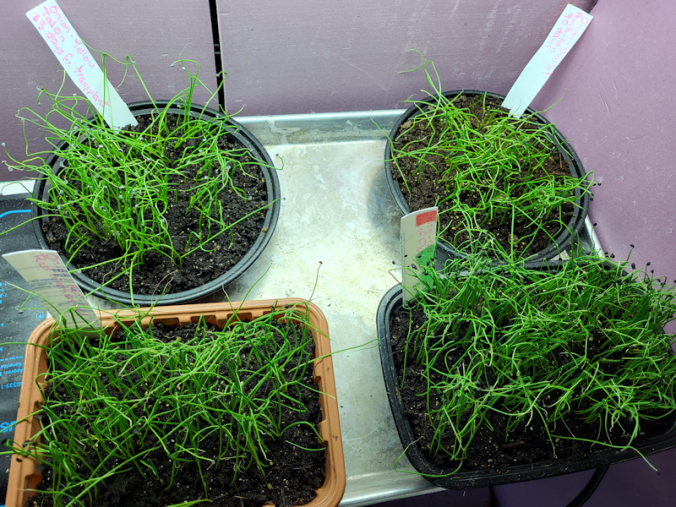
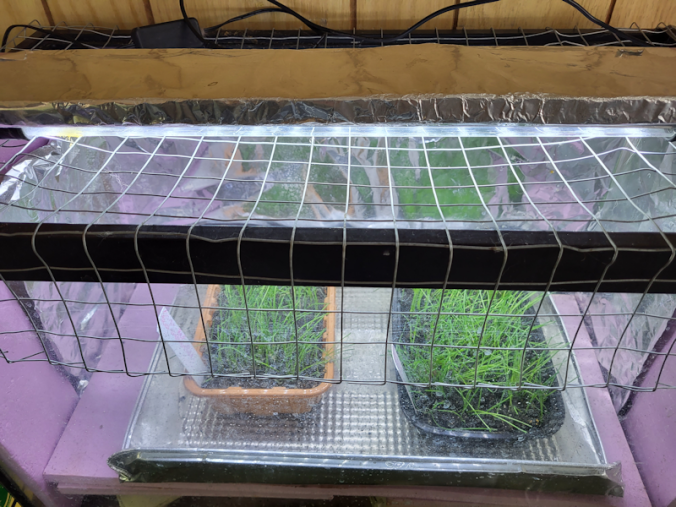
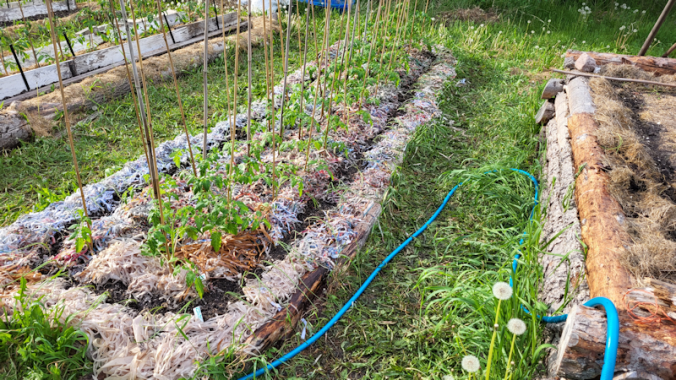
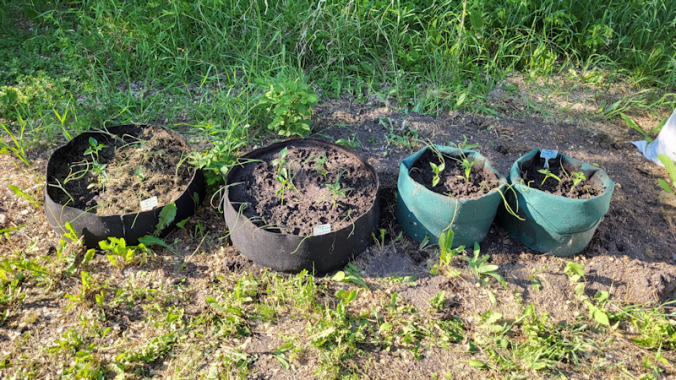
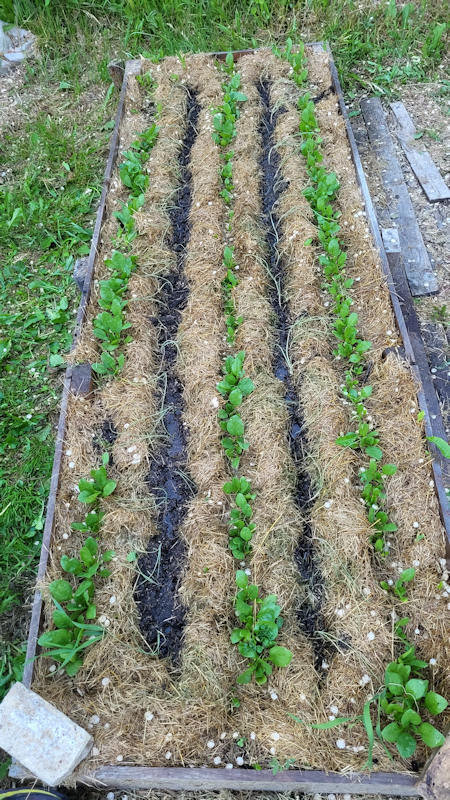
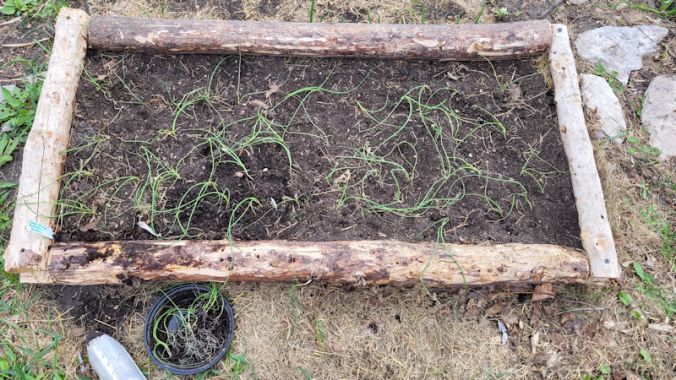
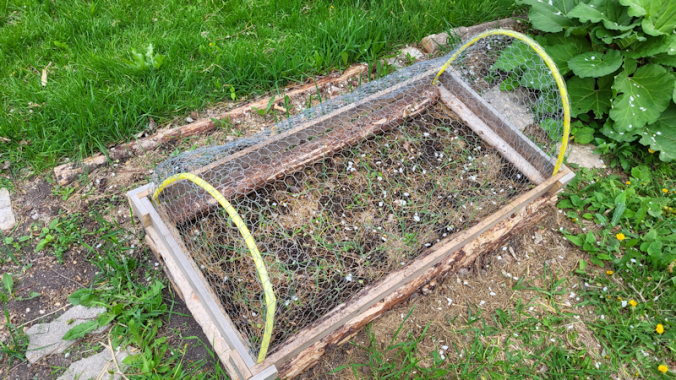
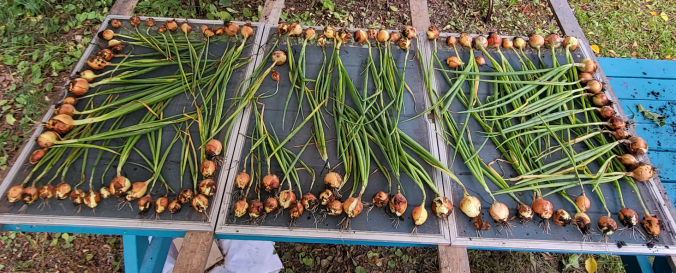


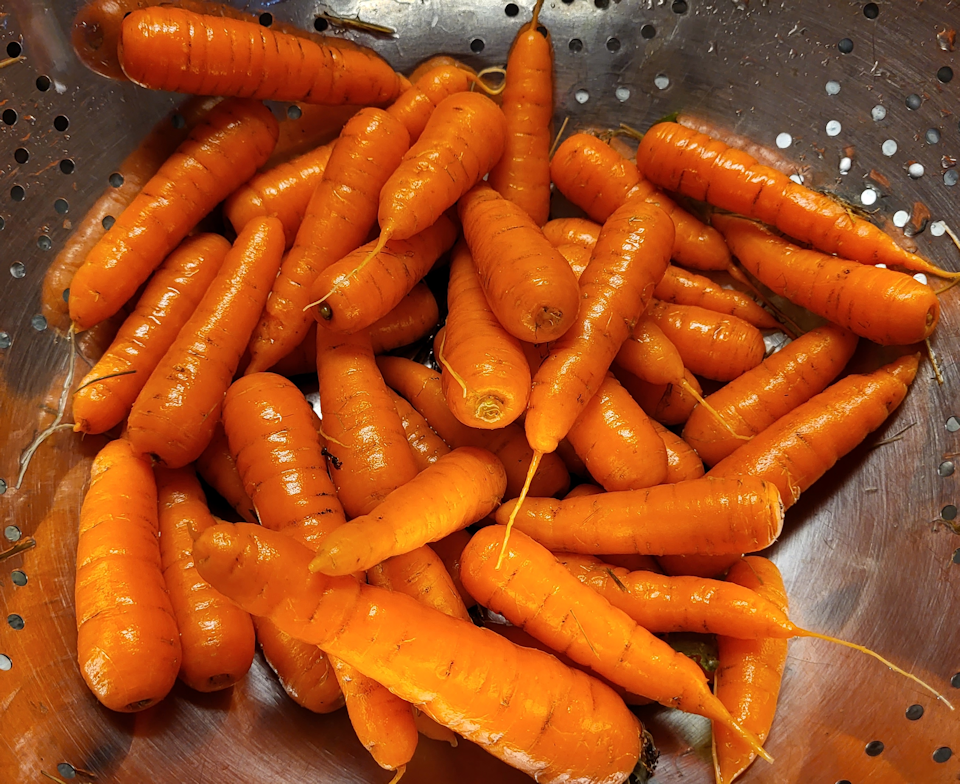


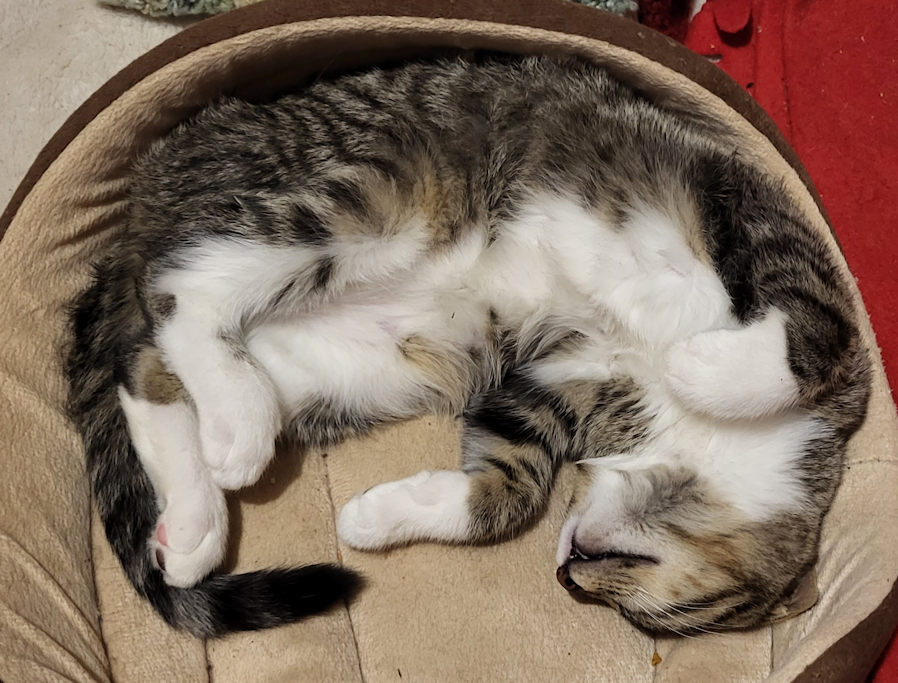


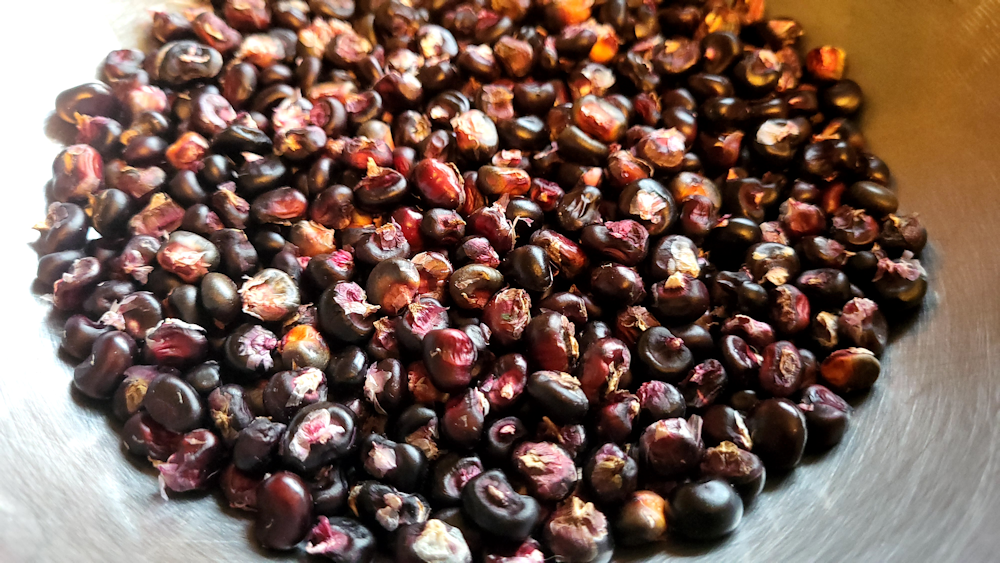


 The Re-Farmer