Analysing our 2022 garden: the things that never happened (updated)

Okay, it’s that time! I’ll be working on a serious of posts, going over how our 2022 garden went, what worked, what didn’t, and what didn’t even happen at all. This is help give us an idea of what we want to do in the future, what we don’t want to do in the future, and what changes need to be made.

Okay, so now let’s look at the things that never happened – or the things that kinda, sorta happened.

I’ll start with a kinda-sorta happened, and didn’t happen, at the same time!

The bread seed poppies.

Last year, we’d planted some bread seed poppies in the old kitchen garden, which didn’t thrive, but we were still able to harvest dried pods and keep seed for. For 2022, we also bought two other varieties. The plan was to plant them well away from each other, to prevent cross pollination. Poppies self seed very easily, so wherever we planted them, they would be treated as a perennial.

In the spring, we scattered our collected seed over the same bed we’d grown them in before. They really were too densely sown, but at the same time, it was just such a terrible growing year. Lots of them germinated, but there were weeds growing among them that had leaves very similar to the poppy leaves. I had to wait until the got larger before I could tell for sure, what was a weed, and what was a poppy. They still didn’t do all that well, and I didn’t bother trying to collect any of the few dried pods that formed to collect seed. Instead, that bed was completely torn up, and there is now a low raised bed framed with small logs. Whatever we end up planting there should do a lot better.

As for the new varieties, we never found a place we felt was suitable to sow them. The flooding certainly didn’t help. Some of the places I was thinking of ended up under water, so I guess it’s a good thing we never tried planting there.

So bread seed poppies are something we will try again, once we figure out permanent locations to grow them that are in very different parts of the yard.


Then there were the wildflowers.

We got two types of wildflower seed mixes, specific for our region. Both were sown in the fall, when overnight temperatures were consistently below 6C/43F. One was an alternative lawn mix, so we sowed those between two rows of trees behind the storage house, where it’s very difficult to mow or tend. The other was sown outside the fence near the main garden area, where we later put the new sign to identify the property, after the old one disappeared. There is a broad and open strip of grass between the fence and the road, that I would eventually like to fill with wildflowers. To start, our first sowing was done near the corner, where we hoped they would attract pollinators that would also benefit our garden.

We got nothing.

The photo on the right doesn’t show the space between the trees the seeds were broadcast onto, but it was filled with water. The storage house didn’t just have a moat around it, like the garage. The space under it, where the yard cats often go for shelter, was completely full of water.

The photo on the right shows where the Western wildflower seed mix were broadcast and, while there was some standing water in places, it also got covered with sand and gravel from the road, as the ridges left behind by the blows melted away.

Yes, the snow got flung that far from the road!

Not a single wildflower germinated, in either location.

I suppose it’s possible that some seeds were hardy enough to survive the conditions and will germinate next spring. Who knows.

I’d intended to get more seed packets, which would have been sown in the fall, but completely forgot to even look for them. I might still get them and try broadcasting the seeds in the spring. We do still want to turn several areas that are difficult to maintain, over to wildflowers and groundcovers. Once we get them established, they should be virtually maintenance free. It’s getting them established that might take some time!


During our previous two years of gardening, we grew sunflowers. The first year, we grew some giant varieties. For 2021, we grew Mongolian giants and Hope Black Dye. These were to do double duty as privacy screens.

They did not thrive during the drought conditions we had last year, and deer were an issue, but we were able to harvest and cure some mature seed heads and intended to plant them in 2022.

That didn’t happen.

Basically, with the flooding, the spaces we would have planted them in were just not available. Plus, the bags with the seeds heads were moved into the sun room, after spending the winter in the old kitchen, with the intention of planting the seeds, they ended up in there all year. With how hot it can get in there, I don’t think the seeds are viable anymore.

Still, it might be worth trying them!

The reason we wanted to grow the varieties included using them as both privacy screens and wind breaks. We also want to grow them as food for ourselves and birds and, at some point, we’ll be getting an oil press, and will be able to press our own sunflower oil. So sunflowers are still part of our future plans.

We did have sunflowers growing in 2022, none of which we planted ourselves. They were all planted by birds, and were most likely black oil seed; the type of bird seed available at the general store. Only a couple of seed heads were able to mature enough to harvest, and we just gave them to the birds.

I do want to plant sunflowers again, but at this point, I’m not sure we will do them for 2023.


Several other things we got seeds for, some we intended to plant in 2022, but others for future use.

Of those we had intended to plant, one of them was Strawberry Spinach.

These are something we’ve grown before on our balcony, while still living in the city. The leaves can be eaten like a spinach, while also producing berries on their stems. We’d ordered and planted some in a new bed, where we could let them self-seed and treat them as a perennial, in 2020.

They were a complete fail. We don’t know why.

I ordered more seeds and we were thinking of a different location to plant them, but then the flooding hit, and we got busy with transplanting and direct seeding, and basically forgot about them.

I still want to grow them, but we still need to figure out a good, hopefully permanent, location for them.

We also found ourselves with a packet of free dill seeds (, plus we were given dill that we were able to harvest seeds from. Since cleaning up the old kitchen garden area, we did start to get dill growing – dill is notorious for spreading its see and coming back year after year! – but they never got very large. We have bulbs planted where they’ve been coming up, so we’re not exactly encouraging them in that location.

In the end, with the way things went, we never decided on a location to plant them, and with all the other issues we had with the garden this year, it just wasn’t a priority.

For 2023, however, we’re actively starting to order herb seeds and will be building up an herb garden, so hopefully we’ll be able to include dill in those plans, too.


One thing we ordered that we did not intend to plant right away was wheat.

These are a heritage variety of bread wheat, and we only got 100 seeds. Even if we had a good year, I doubt that would give us enough yield for even a loaf or two of bread. We do, however, plan to invest in a grinding mill in the future.

Meanwhile, when we do plant these, it will be for more seeds, not for use. In the longer term, we’d need to have a much larger area to grow enough wheat for our own use.

We’ll be starting slow!

Then there were the forage radishes.
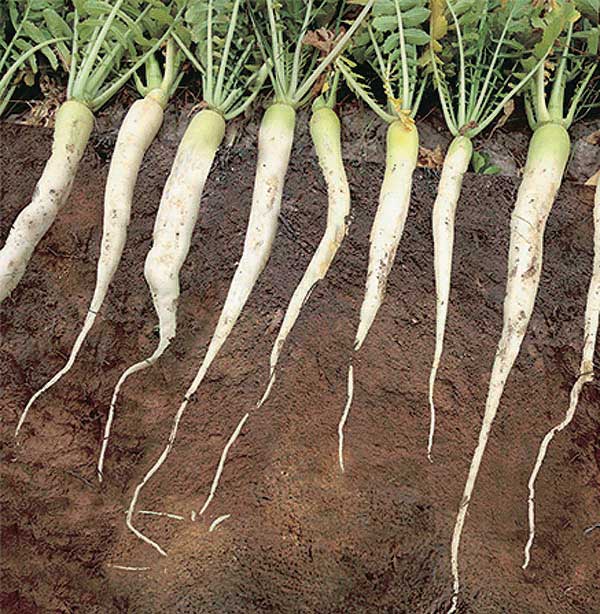
Also called tillage radish. We got these to help amend our soil, and loosen it for future planting. These would be something we would use to break new ground in preparation for future garden plots. There are a whole lot of seeds – and that was the smallest size package! – so we’ll probably have a few years to use these to prepare new beds.


I think that’s it!

I’m sure I’m forgetting something. 😄😄

Next, I’ll post my final thoughts on how everything went. With everything that went on this year, that’s going to need its own post!

The Re-Farmer


Update: I knew I was forgetting something! Two somethings.

The first is our winter sowing experiment. You can read about how that turned out, here. Basically, we got nothing, and I think it was due to our extended, cold winter. I know this is something that has worked for others in our climate zone. It just didn’t work for us this year. In the future, I will probably experiment with it more, but not for the 2023 growing season.

The other is our cucamelons. In 2021, the cucamelon vines grew well in a much more ideal spot, but we had almost no fruit. The previous year, we grew them in a spot that was too shady for them, but still managed to get more fruit. I believe it was a pollination problem.

While we do want to grow them again in the future, we decided not to get more seeds. However, in cleaning up and redoing the spot they were growing in, putting in chimney blocks to plant in and keep the soil from eroding under the chain link fence, we found lots of tubers. In theory, we could over winter the tubers and plant them again in the spring. So we buried them in a pot and set the pot into the sun room, where it doesn’t get as cold. The first year we tried that, there was pretty much no sign of the tubers by spring. I found only the desiccated skin of one. When I brought the pot out for 2022, I didn’t even bother digging for the tubers. I knew they wouldn’t have survived the extended cold, even in the sun room. We should have taken it into the house and maybe into the old basement, where the cats couldn’t get at it, but those stairs are difficult for to navigate, and we go down there as rarely as possible.

So winter sowing and cucamelon tubers were both things that just didn’t work for 2023.

Our 2022 garden: T&T Seeds order, forage radish in, and other supplies

Well, the van did start this morning, so I went ahead and did our city shop without even coming inside from doing my morning rounds, other than to grab my purse. No morning kitty pictures, because I was wearing mitts. It was viciously cold out there! I can usually get away with just wearing fingerless gloves, or using my pockets, but not this morning!

Before heading to the city, I made a side track to check the mail and found a package waiting for me.

I’d completely forgotten that we’d be getting something in from T&T Seeds!

Most of what we ordered will be shipped in the spring. We’ll be getting a lot of stuff shipped at about the same time! All the companies we ordered from ship their perishable stock based on what zones the addresses are in, timed to arrive ready to be planted almost immediately. Last frost dates can still vary quite a bit within zones, though, so there’s a possibility some might arrive and need to wait a bit before planting. We shall see.

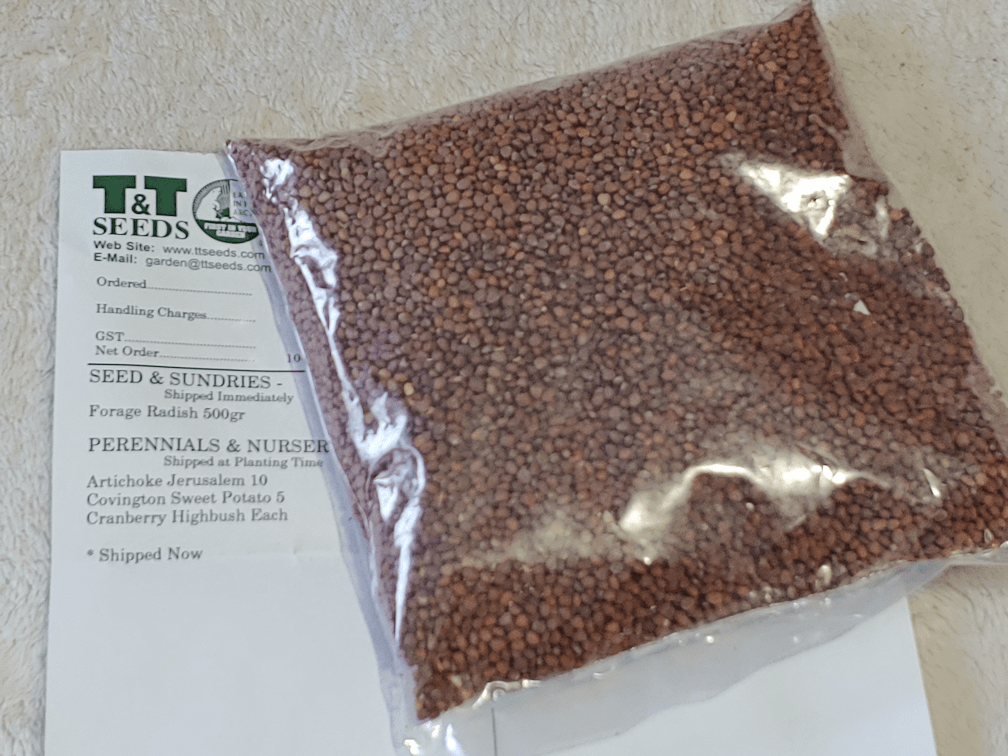
The Forage Radish seeds are a lot bigger than I expected, but then does grow into a big… well… long, radish. As this is a cover crop, it will be planted strategically in areas we want the soil to be broken up for planting next year, or in between things that might need some “tilling” around them, this year. I don’t expect we’ll use even half of this seed, this year. Unless we decide to start sowing in the outer yard, to lure the deer away! :-D

While in the city, one of my stops was at Canadian Tire, where we pick up the wood pellets we use as kitty litter. I hadn’t been able to get through to our mechanic to reschedule our oil change, so I took a chance and asked if they could book me in at the Canadian Tire, right away. Sure enough, they could fit me in, so I had about an hour to spend in the store.

It is very dangerous for me to be in a place like Canadian Tire. Especially since the oil change was going to be under budget, which meant I had wiggle room!

Along with the wood pellets, I snagged a small folding saw horse. The saw horses we have now are home built and very old, so they’re awfully wibbly. The one I found was on clearance, so I was happy to be able to take advantage of that. I also found some vegetable grow bags on clearance. I was going to make grow bags for the sweet potatoes, using feed bags like we did with potatoes last year, but these bags were so cheap, I went ahead and bought two. It will at least give us something to compare.

I also picked up a couple more trays for seed pots, to allow watering from below, plus one that had square Jiffy Pot type cups in it, for those smaller things we want to start indoors, and will do better if they’re transplanted with their pots, to avoid root disruption. So the extra time I had to spend in the store was productive.

Once the van was ready (complete with a printout of little things they found that I’ll take to our local mechanic to check), I headed to Costco to do the main shopping.

It’s very weird to shop at Costco and buy no meat. I just picked up some fish for my daughters. I didn’t need anything else. I love having such a well stocked freezer!

While there, I picked up a couple more small, plain aluminum baking sheets. I got some last spring, and they came in very handy for moving seedlings in and out of the sun room to harden off.

They also come in very handy as kibble trays for the outside cats, so I was down a couple! :-D

When I got home, the girls made sure to put Butterscotch and Nosencrantz into the carriers while we hauled things through the sun room, into the old kitchen. They even set the carriers up, so the cats could see and watch us. :-D

Then, while the girls put away the groceries, I loaded the van back up with garage for the dump. It’s open this evening, but I was done with driving. It can stay frozen in the van until the dump is open next, two days from now. That’ll give us a chance to gather the recycling together, too.

I’m thinking that tomorrow, we should start getting the luffa, and at least some of the onion seeds, started. I’ve been researching and will try something different with the gourds this time, to help improve germination rates. Of all the gourds we have, the luffa needs the longest growing time.

From the zone 3 garden groups I’m on, we should be starting the eggplant and peppers now, too. Our last frost date is a lot later than the people posting that, though, so holding off at least a bit longer would probably be a good thing.

When it comes to planting our garden this year, we haven’t quite planned locations all out, yet. The existing beds will be easy enough to work with, but we will also be building new – mostly temporary – beds, too, as we slowly reclaim more and more of the old garden area, and work our way closer to the house.

It was a bit funny when I was telling my mother about what we’ll be doing this year. She was having a hard time picturing where we are intending to plant the sea buckthorn and silver buffalo berry, as much as a living fence as for their berries, where we will be planting the Korean Pine, as well as how we haven’t quite decided on where to plant the Highbush Cranberry. She knows we plan to plant more fruit and nut trees, and made this surprising comment about how, if we plant all these trees, we won’t have any garden left. Not just because of the trees taking up the space, but their shade, as well.

There’s two reasons her comment was a surprise. The first is that she had already said to me before that, if it were up to her, she would have filled that entire area with trees by now. She did have a habit of sticking trees in, anywhere, without much thought to whether it would be a good place for them! The other reason is that my parents planted so many trees on the south side of the garden, closest to the house, that there’s not a lot that can grow there anymore. Too much shade! I know they planted these for protection from the wind, but if they’d planted them on the north side of the garden, it would have been just as effective, and wouldn’t have taken away so much prime garden location. It’s one of the main reasons we’re going to build permanent garden beds in the outer yard, where they will get full sun.

My mother and I talked a bit about our wanting to plant a southern shelter belt, because we have a gap that needs to be filled. I told her about the renter wanting to replace the fences (he’s responsible for the fencing, as part of the rental agreement), and that I’d suggested making a new, straight fence line from the barn to the road, rather than going around the old hay yard. It’ll mean a lot less fence to put in, though they’ll loose a small amount of pasture. If they do that, we’ll be able to plant shelter belt trees near it, and not have to worry about having to protect saplings from cows. My mother suggested planting lilacs as a hedge, but I told her that we need to start with something taller, first. Not too tall, though, or we’ll just end up with more shade problems. Many of the farms in the area are completely open, with just a block of shelter belt trees around the house and outbuildings – and their gardens are outside the shelterbelt, far from their houses. There just isn’t anywhere near their houses that gets enough sunlight for the size of gardens they are growing. Whatever trees w decide to plant on the south, I don’t want anything that will get as tall as the spruces we have by the house. They’re about 65ft high, and we’ve been watching how far their shadows are cast, at different times of the year. Since we will be planting permanent garden beds out that way, the last thing we want to do is plant trees that will get so tall, they’ll end up shading the garden beds. I figure we can plant trees that grow no taller than 30 feet and still get the shelter from the wind that we need. Especially if we also plant shrubs along the line, too.

But maybe not more lilacs. I’m thinking more along the lines of hazelnuts and berry bushes! :-D

No decisions can be made until there’s a fence, though!

So for now, we focus on the vegetable gardens!

The Re-Farmer

Our 2022 garden: T&T order, and McKenzie seeds

Well, this is it. Today, I placed my last order for our 2022 garden. While I was doing the first half of our monthly shop, I also picked up some pea seeds. I am now done ordering things we are planning to grow this year.

First, the peas.

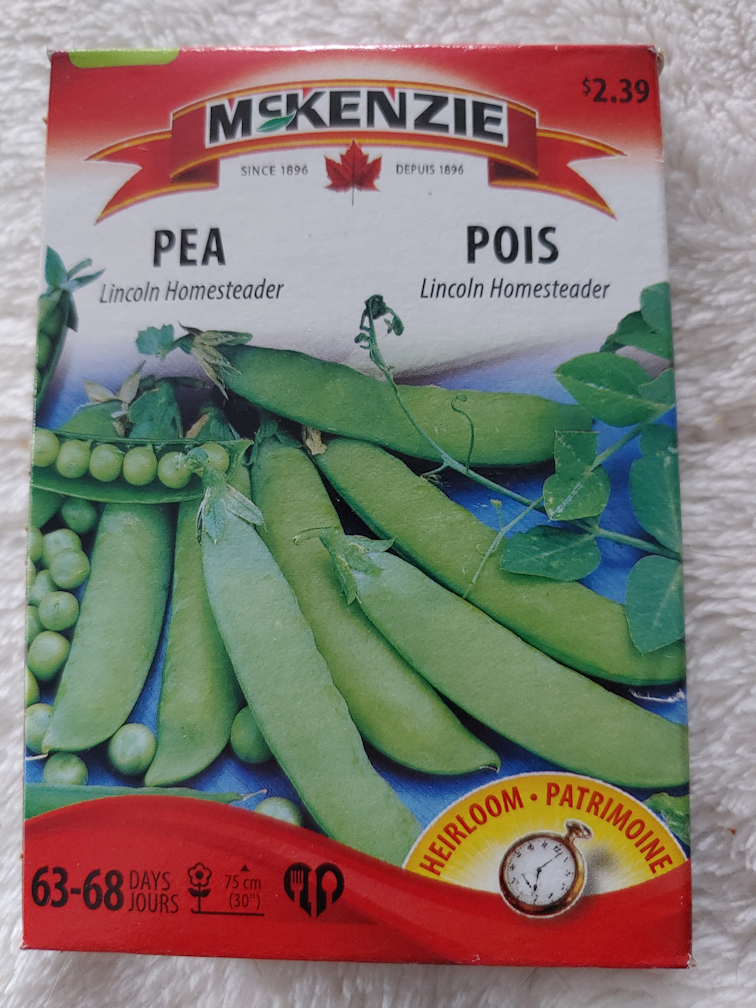
There are so many varieties of peas, I have been struggling on which ones to pick. While at the Walmart, I saw a new McKenzie Seeds display, and finally settled on one. As much as I love edible pod peas, I decided to go with shelling peas.

Some selling points on these: very productive, heat tolerant and disease resistant. Plus, of course, they’re supposed to be tasty. While I hope we don’t get another drought this year, our summers to get as hot as our winters get cold, so heat tolerant peas are a good thing.

My daughters are not big on peas, but they have never had peas, fresh from the garden. The ones we grew last year did not really produce, due to the heat (just the odd pod, here and there), then the green peas got eaten by a groundhog! The peas sown late in the season, in with the corn, were planted for their nitrogen fixing qualities, and the few pods we got were there only because we had such a long, mild fall. Nothing reached their full potential in flavour. Hopefully, this year will be different, and we will get lots of delicious fresh peas!

Once I got home, I placed an order with T&T Seeds.

All images belong to T&T Seeds.

First up is Jerusalem Artichokes, or Sunchokes.

I just ordered the smallest size; a 10 pack. A friend on a neighbouring farm successfully grows them, so I know they will grow here.

We’re sort of taking a chance on these ones. We’ve never tasted them before. I’ve never even seen one in real life before. However, these are something that can easily be propagated from year to year, and are supposed to be quite delicious. If we like them, we have another good storage food to add to our inventory of foods for self-sufficiency.

If not, well, they are in the sunflower family and have pretty flowers.

We will be planting them in a location that can be permanent, so not anywhere in our main garden areas.

Covington Sweet Potato

This one is pretty much just for me, as I seem to be the only person in the family that actually likes sweet potato, so I got the smallest option; five slips.

This variety is the only short season variety of sweet potato that can grow in our zone that I have found. I think I will make a grow bag or two from our feed bags, and set these up somewhere near the south facing side of the house, just to hedge my bets, though I would need to make sure there is space for the vines.

Highbush Cranberry.

The girls and I debated whether to get Highbush Cranberry, or more raspberry bushes. We decided to work with the raspberries we already have, and go for the Cranberry. I ordered two.

In cleaning up along the east fence line in the spruce grove, I actually found an American cranberry (at least that’s what Google Snap told me it was). It now gets light and everything, but I would like to transplant it, eventually, to a better location. Not sure where, yet.

Forage Radish

Also called “tillage radish.”

We had tried to plant a daikon type radish to help break up the soil in the corn blocks last year, but I think something ate them shortly after they sprouted, because they all just disappeared. So I was quite excited to find these forage radishes.

They are sold as a green manure and a type of cover crop. They get planted, then left to die off. Their roots can reach up to 6 feet in depth, boring into the soil as they grow. After they die off and decompose, they leave behind root channels that other plants can take advantage of.

With our concrete-like soil, filled with rocks, the plan is to basically just scatter these in strategic areas, so we got the 500 gram/1 pound size, which can cover 5,500 square feet. I don’t expect to use it all this year, but who knows.

So that is it for this year’s seeds and trees, though it’s entirely possible we might still order more. I forgot to order more alternative lawn and wildflower seed mixes from Veseys, but those would be sown in the fall, anyhow. We shall see how the ones I sowed this past fall turn out, this spring.

We still have a monthly “seed” budget, though, and now it will go to other things we need. I did pick up more potting soil today, as we will be starting onion seeds and luffa soon, and have lots more seeds to start over the next few months. After much searching, the girls and I found some netting online that we will be using to help protect our garden from critters. It’s a netting that is 14 x 200 feet. We can get one roll this month, and another roll later. Some of it will be used for the temporary fencing we will need to build around larger blocks, such as the corn. We can also cut it to the sizes needed to cover individual beds. We simply have too much ground to cover, and beds spread out in too many places, to fence it all in from both deer and smaller critters. Particularly since so much of it is still temporary. We’ll also have to figure out what best to use to support the netting, in the different ways we plan to use it, and get what we need for that. We are shooting to have consistent sizes on the permanent raised beds, so that any protective covers we build will fit any raised bed. The low box raised beds are 3 feet by 9 feet (because that’s the size the boards I found resulted in). The high raised beds will all be 4 feet by 9 feet, but with the thickness of the logs we are using, the planting area inside will be smaller, and the 3×9 covers should still fit. Other beds, such as in the old kitchen garden, are oddly shaped, so they will need completely different ways to protect them from critters.

Little by little, it’ll get done!

The Re-Farmer