First low raised bed: part one. It’s good to be flexible!

This evening, I finally got around to working on the first of the low raised beds in what had been our garlic beds this year.

The boxes are ready and waiting, and the beds had been left for any weeds to get larger, so they would be easier to pull.

The plan: dig out all the soil and buried layers of compostable material beneath, set up the box frame, then add the layers back, Hugelkultur style, with wood at the very bottom layer.

The first order of business was to loosen the soil a bit further than the new length the bed will be, and clear out all the weeds by the roots.

The first problem was in adding length. I was originally going to make it longer just at one end, only to find myself hitting large roots and rocks. So I did a bit at one end, then extended the other end, only to have the same problem!

Once the soil was as clear of weeds and roots as I could, it was time to remove the topsoil onto the waiting tarp.

The original plan had been to remove the soil up to the buried straw and compost pile contents into one pile, then remove the straw and other matter onto another. With the extended length, there was already the problem of not being able to dig far because of the roots and rocks I was hitting.
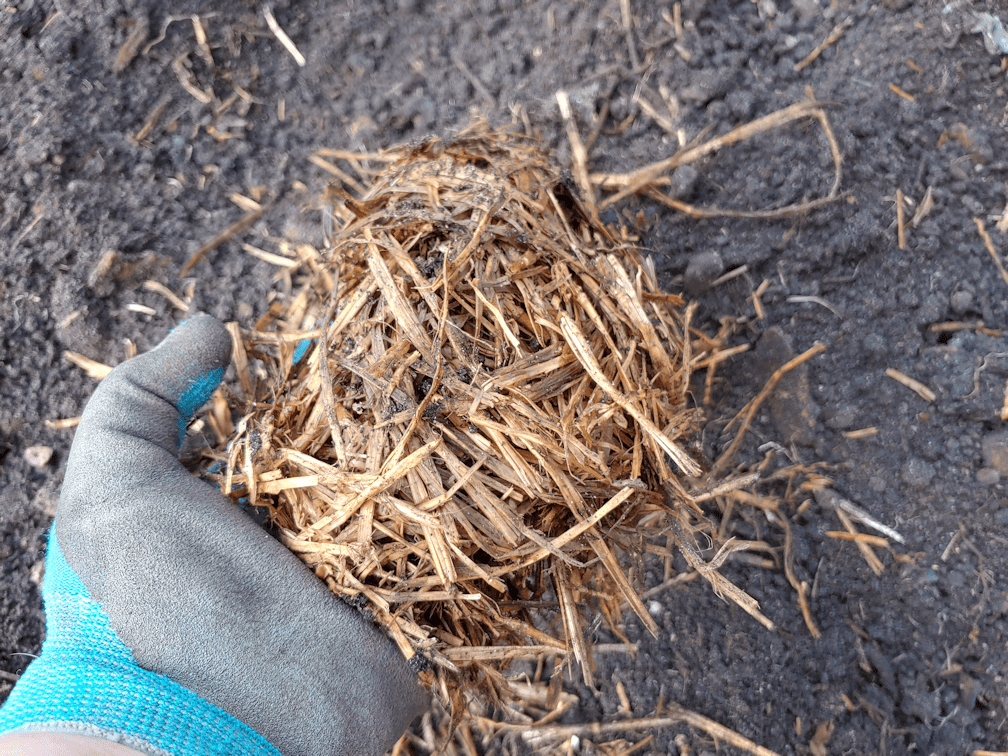
As expected, the straw was barely decomposed. It takes a long time for straw to rot away. That made it harder to dig down further.

I decided to leave it and modify my plans. If it wasn’t practical to dig down further, I would just have to build up higher!

Using a garden hoe, I flattened and somewhat leveled the perimeter, pushing the soil into the middle.

The box was then laid over the bed and stomped on, to create guidelines.

Then, it was time to raid the junk pile of old boards and create a foundation.
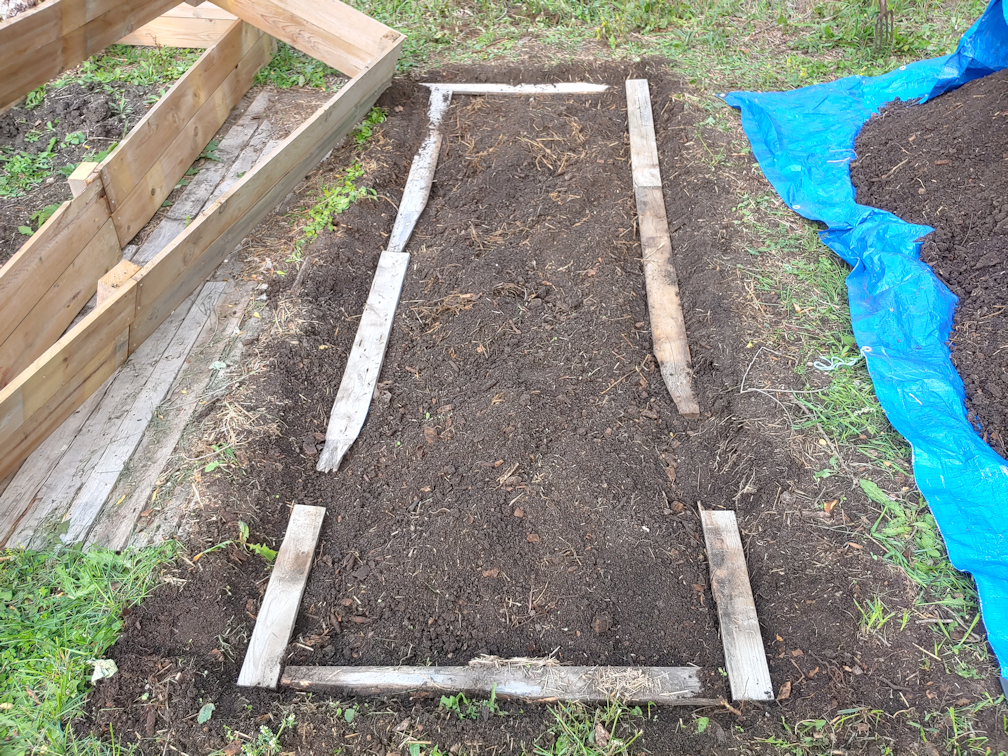
A first layer was placed on the guide lines, leveling the soil out more in the process. Then it was just a matter of digging out more boards and adding more layers. The boards are in varying states of condition and length, and a few were cut to size to fill in gaps.

I stopped at 5 layers of boards, which put the foundation at about level with the ground.
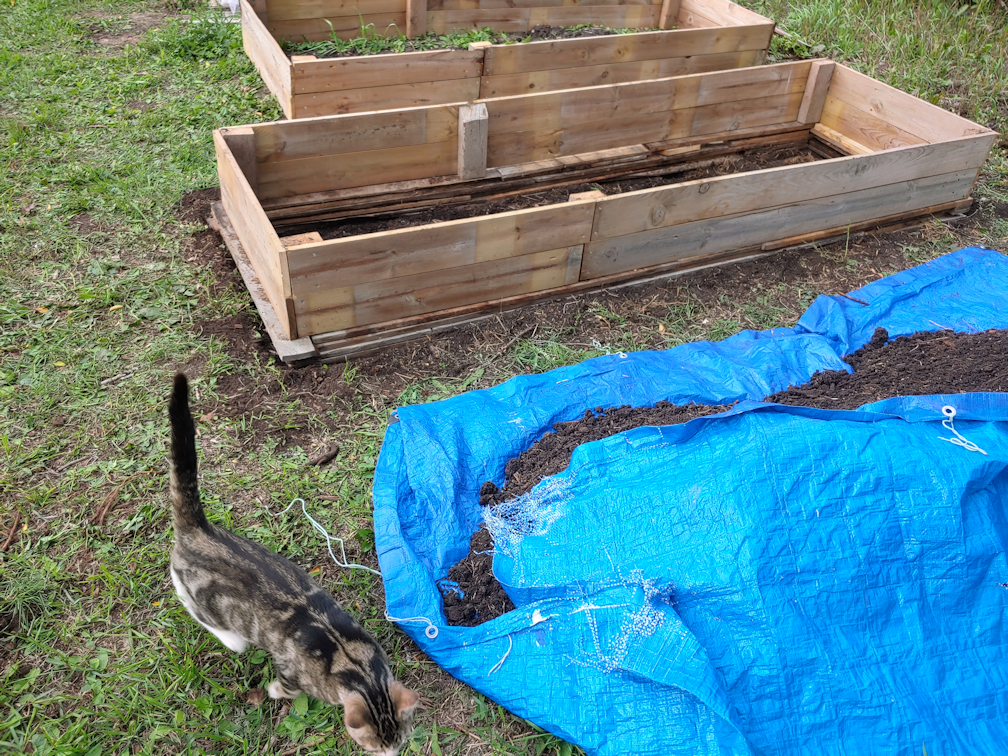
Then the box was lined up on top of the foundation.

That was definitely a two person job. :-D

The next step was to use the hoe to move the soil from the middle to the sides, burying the foundation on the inside.

Now it was time to do our use-watcha-got, Hugelkultur layering.

I raided one of our branch piles and brought small branches and twigs to cover the bottom. If we were doing a high raised bed, I would have used larger branches and logs, but these will do for a small bed. The idea with the wood is that, as it decomposes, it acts like a sponge, absorbing moisture that later becomes available to the roots of the plants above, and reducing the need to water.

The next layer was shredded paper. We’ve been saving and shredding our compost safe fliers and other paper, just for this purpose.

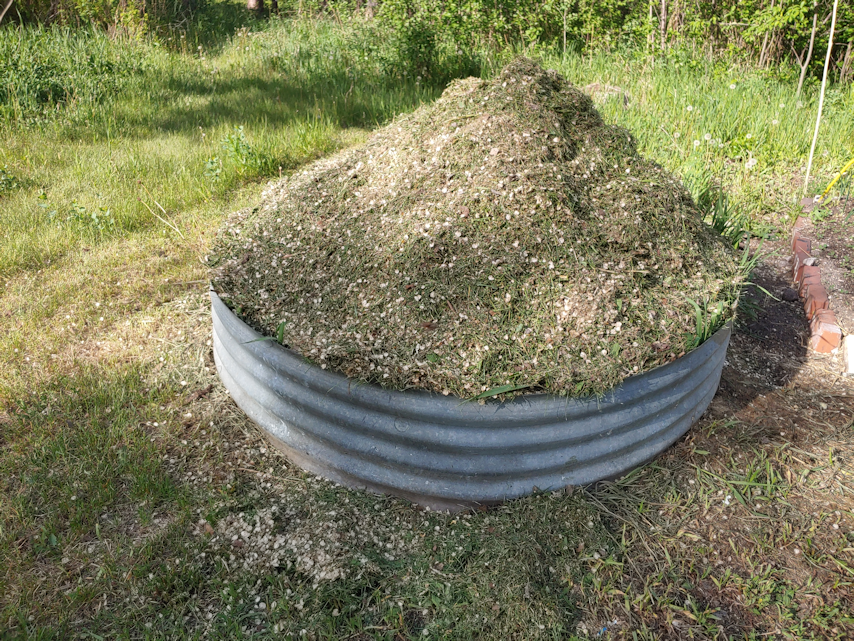
Then a layer of grass clippings from our new little “haystack” got added.
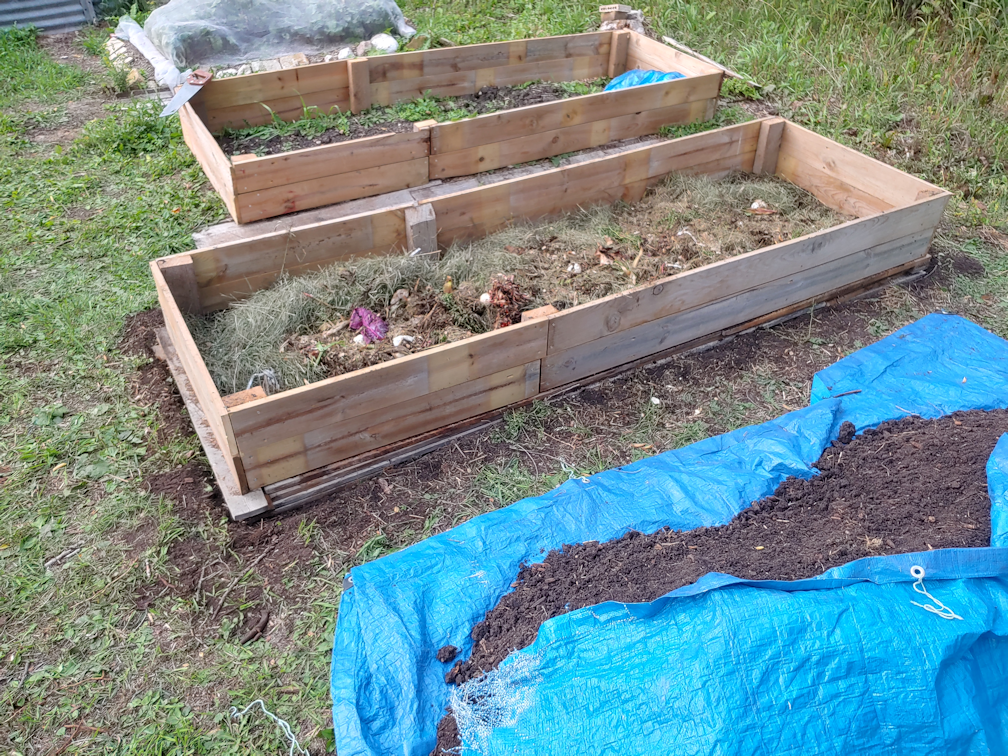
Then, the contents of our compost pile was added. Plenty of egg shells, coffee grounds, banana peels – all sorts of things that “garden hack” lists include. :-D

The last step for today was to hose the whole thing down, partly to keep things from blowing away. We have thunderstorms predicted for tonight. If we do get rain, it will help soak down the layers and get a kickstart in decomposition. If we don’t get rain, it will get saturated with the hose before the soil is returned.

Before the soil is added, however, I’ll have to find something I can pound into the ground on the outside of the long sides of the box, to prevent the boards from bowing out.

As lovely as the soil here is, it did test low in nitrogen, so before returning the soil to the bed, I will be mixing in some of the new garden soil, as well as more grass clippings, plus some of the pellets we’re using for cat litter now. It’s just compressed sawdust. As they get wet, they expand and break apart. This will add organic matter to the soil to keep it from compacting, plus the sawdust will absorb moisture and act as a sponge. The clipping and pellets will have the fall and winter to break down, and help increase the nitrogen levels.

If we had wood chips, they would have been included in the layers, and would be added as a layer of mulch at the very end. Alas, that will have to wait until we either get a wood chipper, or hire the tree guys to come out with their massive chipper for a few hours, and break down some branch piles for us. :-)

Which, weather willing, I should be able to work on tomorrow. :-) Unless something else comes up. Which happens often! :-D

The Re-Farmer

Our 2021 garden: progress and pruning

As always during my morning rounds, I checked on the various beds to see how things are growing.

This most mature of our Red Kuri squash has ceased growing in size, and is just beautifully deepening in colour as it ripens.

While it’s neighbour is getting bigger. We won’t have a lot of mature winter squash at the end of the season, but we might have at least the two of them before first frost hits. Which, I hope, will be very late this year!

The one Mongolian Giant with so many seed heads, now has more of them opening and blooming!

These ones just amaze me. These are the Hopi Black Dye sunflowers that were started indoors, but did not actually germinate until after the other ones were direct sown outside. They were much smaller when transplanted, then all but one got their heads chomped off by deer. And yet, not only are they recovering from the deer damage, they are producing seed heads! Meanwhile, the ones that were direct sown are looking a lot bigger, you can see where the seed heads are starting to develop, but so far, they still have not actually emerged as obvious seed heads.

I do want to try these sunflowers again, but I think we will have to invest in a seed tray heat mat to start them indoors, to help with germination.

Yesterday, we picked summer squash and beans. Today, it was tomatoes!

Because of their small size, I use one of the red Solo cups to collect the tomatoes, and this time I quite nearly filled it to the top! That’s the most we’ve gathered, yet. :-)

You can see a few of the tomatoes have split, from all the rain we’ve had recently.

I also “topped” the tomatoes this morning. I had no idea this was a thing, but a couple of garden related channels I follow had talked about it. It is only needed for indeterminate tomatoes, as they just keep growing taller, putting out more blossoms and fruiting, until the first frost kills them. That leaves a lot of green tomatoes. For this time of year, pruning the tops off the plants will stop them from getting bigger, and the green tomatoes will start ripening faster, instead of staying green longer, so there will be more ready tomatoes before first frost hits.

If that is what starts happening, with how loaded the tomatoes are with green fruit, that should hopefully mean we will start harvesting enough at once to make it worth preserving them in some way. With their small size, I’m not entirely sure what method we’ll use, yet. Only my husband and one of my daughters eats tomatoes, so it’ll pretty much be up to them to decide that one. :-)

Thinking ahead to next year, the Spoon tomatoes are fun, and they’re great for fresh eating – we’ll likely grow them again, though they are also likely to self seed. The Mosaic Mix tomatoes are doing well and being enjoyed, but we want to try others. There are several varieties of cherry and grape tomatoes my older daughter wants to try, and I want to grow paste tomatoes. I may not be able to eat tomatoes fresh, but I can eat them if they’ve been processed enough before being used as an ingredient. Plus, we have the Yellow Pear variety of tomato we already picked up seeds for to try.

We need to start going over our plans and wish lists for next year’s garden, so we can plan and prepare things this fall.

The Re-Farmer

Little friends, and garlic mystery solved?

Well, we’ve passed our forecasted high of the day and have reached 30C/86F, with the humidex putting us at 35C/95F, this afternoon. We did, however, get RAIN this morning! I was awakened by the sound of thunder, so I quickly went outside to make sure the cats and birds had food before the rain hit. The storm blew past us, but it did start to rain while I was still outside. I’ll take the nice, gentle rain, thank you very much!

Unfortunately, it looks like this will be the last rain we’ll have in a while, and tomorrow the smoke is supposed to be back. What rain we did have never reached the fires up north. :-(

While doing my evening rounds yesterday, and checking the old kitchen garden (the floating row covers are doing their job; no signs of critters trying to get under them, and our carrots are recovering!), I stumbled on a pretty green friend!

It was just hanging out on the leaf of one of the flowers that made its way through the layers of mulch we put on this garden, two summers ago. We’ve seen a lot of frogs this year (likely because all the ponds and ditches have dried up), but we don’t often see the green tree frogs.

It didn’t seem to like us giants hanging around, so we let it be, though I must admit, it is very tempting to want to hold it.

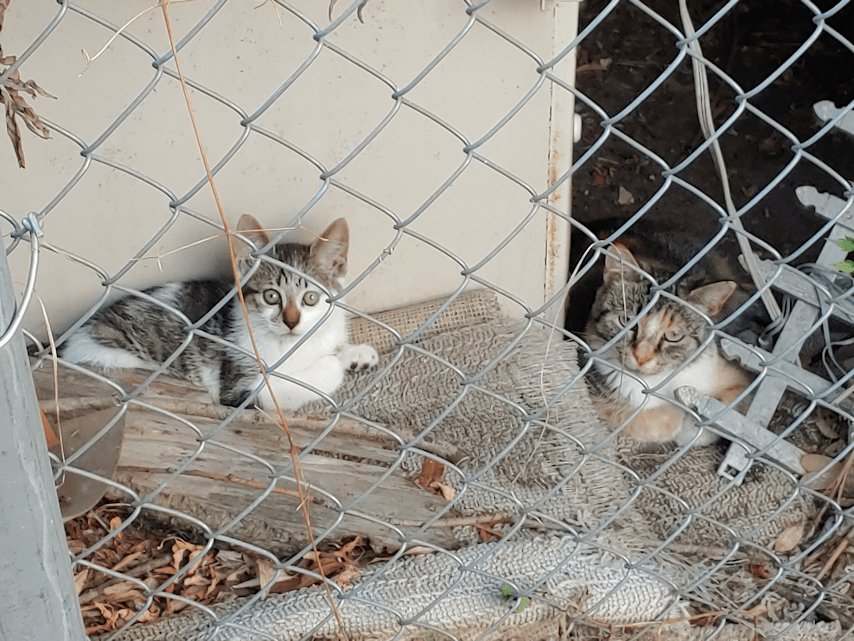
I also was able to get a picture of some furry friends.

Rosencrantz and Nosencrantz were calm enough to just watch me as I went by. Toesencrantz, unfortunately, is more skittish and was hiding.

I so want to boop Nosencrantz’s nose. :-D

While the girls and I were checking the garlic beds, I showed them this odd garlic.

It looks like garlic is forming inside the stem, and this one is getting pretty big. I’d noticed another had started to show signs of this happening a few days ago. This is only in the Racombole garlic, which is split between the two garlic beds, so the girls started looking around in the other bed, and we found several more.

This one was the strangest looking one, and it may explain what’s happening.

This looks like a garlic scape! This might explain why the Racombole seemed to have fewer scapes than the other two varieties. Instead of growing out the tops, as they should have, the scapes look like they got stuck in the bottoms of the stems in quite a few of the plants. Since they didn’t get harvested, bulbils are now forming inside the stems, eventually bursting through. Only this one had the rest of the scape emerge from the stem for us to see.

It also looks like something tried to give this one a taste!

In theory, we can keep the bulbils and plant them in the fall. Hardneck garlic are bi-annual, growing seeds in their second year. Planting the cloves, rather than the bulbils, and harvesting the scapes by passes that, allowing for large bulbs with lots of cloves to form. If we planted bulbils, we sould get small bulbs that are basically one big clove. Kind of like the garlic we had to harvest early, because the plants died back so soon.

It should be interesting to see the bulbs that form under the plants that have these trapped bulbils growing in their stems. I would expect they would be smaller bulbs, though with conditions this year, I expect all of them to be smaller. I don’t expect to have any suitable for planting next year. This year, for our fall planting, we are looking to double the amount of garlic we plant. I should order them soon; they will be shipped when ready for planting in our zone, so ordering early will not be an issue. We will just have to decide where we want to plant them this fall, as we rotate things.

I am finding that half the fun of gardening is planning out next year’s garden! :-D

The Re-Farmer
Our 2021 – and 2022 – garden: seed assessment

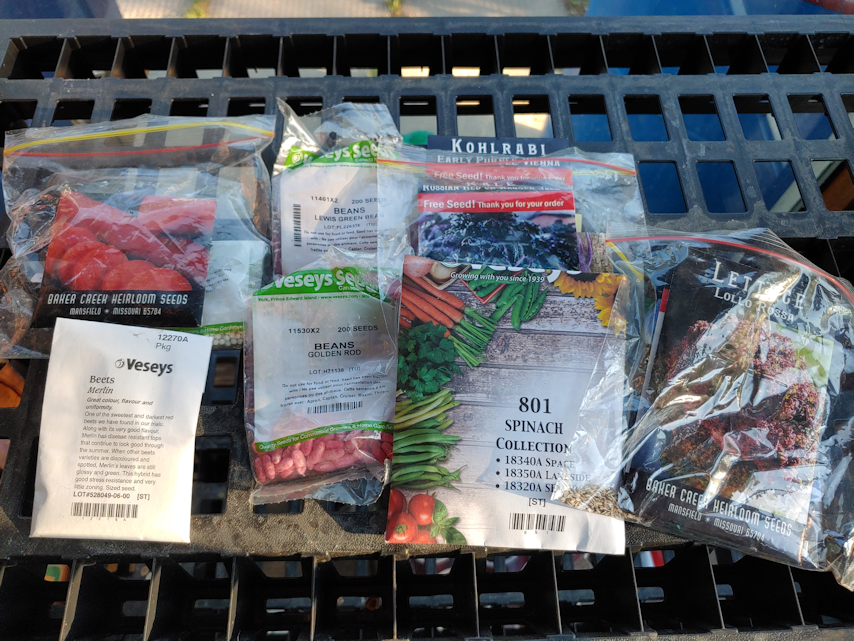
Before heading out to do the watering, I went through our remaining seed packets to do a bit of planning.

First, there’s what’s left of things we planted in the spring.

To the right, we have the two types of carrots in pelleted seeds. I keep reading that we can still plant carrots this late in the season, and I had debated with myself about replanting the carrots decimated by the woodchuck, but really… what’s the point? It seems to have a special love for carrot greens, and until we get rid of the woodchuck, there will be no new plantings of carrots!

To figure out what we can plant for a fall harvest, I looked up our first frost date, which is Sept. 10, and worked out how much of a growing season we have left. Then I checked out the germination and days to maturity to see what we can plant now, and what will wait until later. We could plant the remaining Merlin beets, but we have so many beets planted, there is no need. The two types of beans could also be planted, but again, there is no need. Not in the photo are the remaining green peas, which apparently can also be planted this late in the season, but we won’t. If we wanted to, we could plant any of the summer squash, too, if we wanted to. All the seeds we will not be using this year got set aside for next year.

We had received the purple kale and purple kohlrabi as free seeds with each of our orders from Baker Creek. We ended up with two packs of kohlrabi seeds, but still have seeds in the one we did open. There are still kale seeds, too. These are both cool weather crops, and the kale can hand frost. While I plan to try kohlrabi again next year by starting them indoors, I’d forgotten we still had seeds. I’ve decided I will go ahead and plant the rest of the open packets of seeds, in hopefully better conditions, and actually get some growing!

The 3 types of spinach adn 4 types of lettuces will be planted, but not until the end of July.

Then there are these.

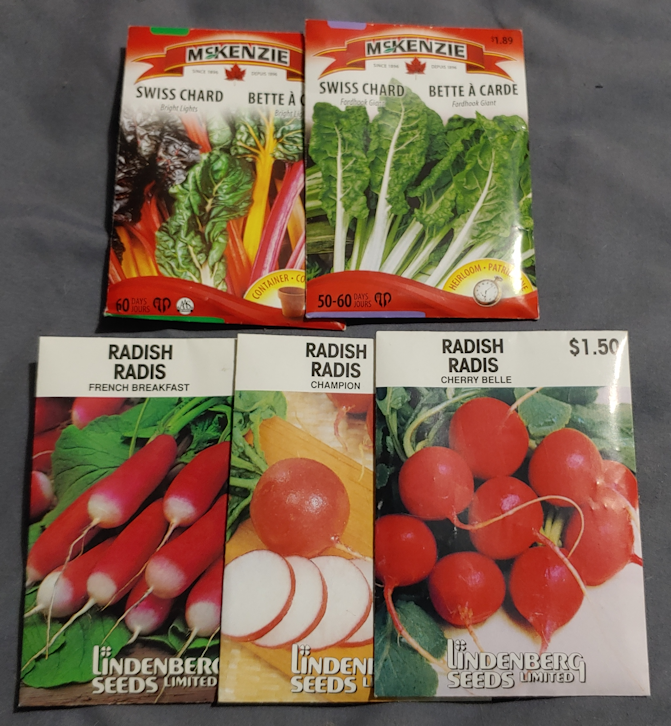
I’d picked up the radish seeds when I was last helping my mother with her grocery shopping. I intend to plant those as soon as possible; just a few of each. From what I’ve read, I should not expect to get bulbs developing in the heat of summer, and will be growing them for their pods.

The chard was something I picked up a few days ago. While waiting in line at the grocery store, I found myself next to a couple of boxes of seed packets, all jumbled together, instead of in their display cases. I rifled through them and found the two types of chard, which will be planted right away, too. I’ve read that they are tolerant of summer heat.

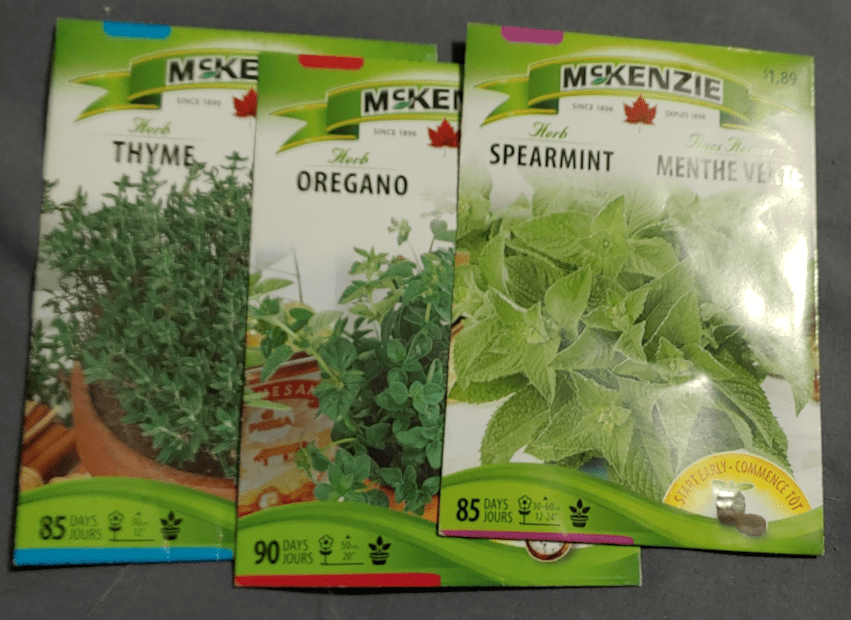
While going through the seed packets, I also picked these up.

Little by little, we intend to have an herb garden, likely in the old kitchen garden, so these are seeds for next year. Unless we want to try growing them in pots indoors, but I don’t imagine they’d survive the cats.

So we now have our first herb seeds, and more seeds to join the Yellow Pear tomatoes I picked up earlier.

The 5 day forecast has us back to around average temperatures for July, which means we should be able to catch up on things we’ve set aside because of the heat. But then, the forecasts have been so off for the past couple of weeks, I wouldn’t be surprised if the forecasts were completely off! Still, those empty beds need to have something planted in them, and it needs to be done soon!

The Re-Farmer

Starting early

With the expected heat today, I headed out earlier to do my rounds, and stayed out to do extra watering with the hose fertilizer attachment.

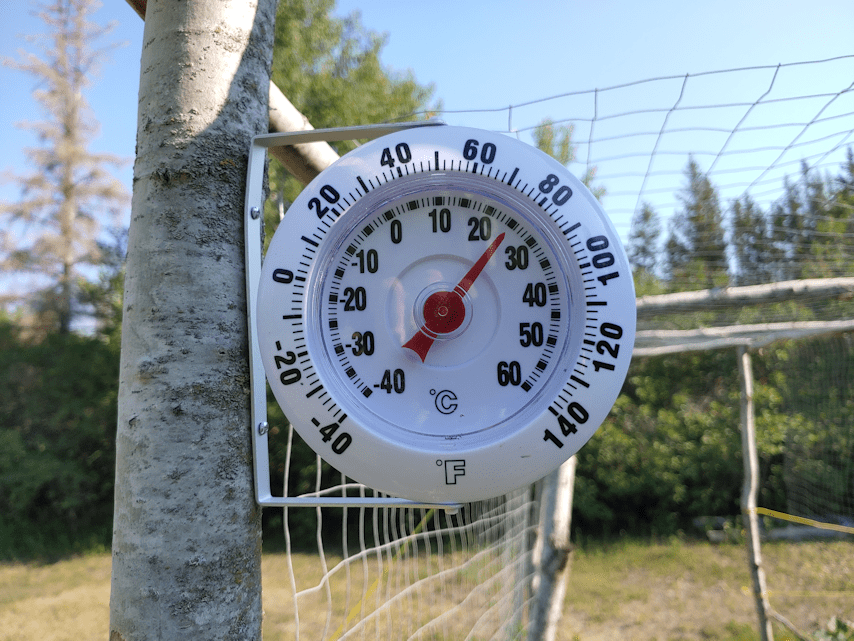
When I first went outside, at about 7:30am it was almost chilly. An hour later, the heat was already hitting. The above photo was taken between 8:30 and 9am. The thermometer read 25C/77F but my weather app listed only 17C/63F! Still, in the time I was out there, the temperature rose almost 10 degrees in under 1 1/2 hours.

Later on, after I’ve gone over the instructions, I’ll be going back out to use the Critter Ridder. I didn’t see any new damage in the cord and sunflower beds, but I think the big carrot bed is still being chewed on. Even the carrot greens in the old kitchen garden showed signs of being nibbled on, though nowhere near as bad as the others.

One of the things I found yesterday was another solar powered spotlight with motion detector. This one will be set up on the side of the house, over the old kitchen garden. I want to position it so that smaller creatures eating our vegetables will trigger the light. Hopefully, that will startle them away. We won’t be able to set the light up facing south, as instructed, but that area gets lots of light right up until sunset. Not even shade from the ornamental apple trees reach it, so I think it should be able to charge up just fine.

The girls set up their new box fan in their window and had it running while my older daughter could finally work on some commissions, all night. This morning, before heading to bed, she told me that having the van made the upstairs the most comfortable part of the house last night! Which is a HUGE difference.

The forecasts have changed for today. We were expected to hit 28C/82F as a high, but now they’re saying we will get a high of 31C/88F, with the humidex at 34C/93F. Tomorrow, we’re now supposed to hit a high of 36C/97F, and the day after, 37C/99F. On Sunday, we’re supposed to reach “only” 31C/88F with a chance of thundershowers. I don’t expect any thundershowers to actually reach us, but it would be nice! Until then, we’re just going to have to be diligent with that watering! The girls have been waiting until after 8:30pm to do the evening water while it’s cooling down, so as not to shock the plants with cold hose water. I’ll have to keep heading out early to water again, before the heat really starts to hit. As disappointed with the loss of our carrots and lettuces, and the one beat bed, I’m very happy with how the beans, tomatoes, onions, corn, sunflowers, squash and melons are doing! The peas aren’t very big, but they are blooming, including more of the purple peas. The cucamelons are also quite small, still, but more of them are big enough to start training up the chain link fence.

It’s worth heading out early to beat the heat and tend to them. Even for someone who really, really dislikes mornings! :-D

The Re-Farmer

Kibble house and other progress

Today was our day to head into the city for out monthly shop, so my morning rounds were a bit earlier than usual. Which seems to confuse the outside cats! :-D

Yesterday evening, when things started to cool down, my younger daughter was a sweetheart and crawled around inside the upside down kibble house, to complete the first coat of paint. It was dark by the time she was done!

Once the paint is cured, we’ll flip it right side up again and start the second coat.

As I write this, in the early evening, we’re at 29C/84F. In the city, it was 30C/86F with a humidex of 34C/93F. Before doing the shopping, I was able to visit my brother, who lives not far from the city, and got a tour of their grounds and all the things that are growing. Or not growing, in some cases! Sounds familiar. They don’t have groundhogs/woodchucks/marmots (woodchuck is the Canadian name for them) right now, but are having to deal with rabbits. The temperatures were still increasing at the time, but it was just baking out there!

Some things are just loving this heat, though. Like these guys, still in their morning shade.

The two seedlings next to each other on the left are the Tennessee Dancing Gourd. The others are the Ozark Nest Egg gourds. They have had a pretty huge growth spurt in the last few days!

While in the city, I made a point of checking out the gardening section and picked up something I hope will work.

It was the only one that included groundhogs on their list of animals. When I was loading the van, I sent a picture to the girls, who looked up reviews. They are… mixed! Some people wrote that the squirrels were eating the stuff! :-D I figure it’s worth a try. It’s inexpensive, too, so we’ll be easy to pick up more if it does.

I might even dare plant in those empty spinach beds, now that there’s some hope that any sprouts won’t get immediately eaten.

With the heat wave we’ve got right now, I’ve changed up what I intend to plant. Lettuces are no longer on the list; those will be planted later in the season. I still intend to plant radishes, but don’t expect bulbs in this heat. They will be just for their seed pods. If we get bulbs, too, that’s just bonus. I also picked up some chard. I’ve never successfully grown chard before, but they are one of the few greens that actually like the heat, so they will be a sort of replacement until we can plant lettuce and spinach again.

It’s interesting to see people’s reactions to this heat wave. There is a lot of “this is going to be the new normal” sort of panic out there. Which is curious. I checked the historical data. We’re supposed to hit 34C/93F in a couple of days, then it will drop back down to average temperatures. The record high for June in our municipality is 37C/99F, in 1995. The record low is 0C/32F in 2009. That’s just our area. As hot as it is right now, we’ve been hotter – and much colder – in the recent past, and “normal” just means the average over a span of 30 years, +/- 5 to 10 years. You’d think we’d be used to it by now, but every time things swing to one extreme or the other, we tend to freak out a bit! :-D

While I was in the city, the girls were finding ways to help the outside cats deal with it. The water bottles we put hot water in to protect the tomatoes when there was a chance of frost, are now filled with water and in the freezer. An ice pack was added to the bird bath, and the frozen water bottles will be put into the cats’ water bowls. A plastic coffee can was filled with water and put in the freezer yesterday. Today, it was placed near where Butterscotch’s kittens are, so they can rub against it to cool down, if they wish.

In the past, we’ve tried filling balloons with water and freezing them, then removing the balloon and leaving the ice in the cats’ water bowls and the bird feeder. It worked, but I think using water bottles as ice packs is better. No garbage, and they can be refrozen and used over again.

So far, we’ve only seen Butterscotch drinking from the bird bath with the ice pack. :-D

The ones having the hardest time is the girls. The upstairs gets insanely hot. My older daughter can’t work, because she has to shut off her computer and drawing tablet, because they are over heating. They haven’t been able to sleep from the heat, so they’ve been hanging out in the cooler living room, or my room, as much as possible. We want to put in a window air conditioner upstairs, but the entire second floor has only 4 outlets, and only 2 of them can handle the power needs of an air conditioner – and those are being used to power their computers!

Well, we won’t be able to do anything about it this year. I was able to get them a box fan today, to fit in one of their windows. Once that’s set up and cat proofed, they can use it to bring in some cool night air. The pedestal fan they have right now just moves warm air around!

We’ll deal. I’m more concerned about making sure our gardens are doing okay!

The Re-Farmer

Our 2021 garden bed prep, and dealing with the heat

The weather forecast said that we would be cooler today.

They lied.

When I did my morning rounds, it was already above 20C/68F, and we easily hit 28C/82F this afternoon, with a humidex above 30C/86F. Which meant that we spent as much of the day indoors, out of the heat, as we could. Thankfully, the way things are oriented, we can keep certain windows open to allow a cross breeze without heating the house up.

The cats appreciate that.

Yes, we leave the little step ladder at the door, just so they can look out the window! It was so funny to watch these to, with their matching positions, heads turning and tail tips twitching, in unison! Hard to believe that little Layendecker is now just as big as Cheddar! With the smaller cats, three of them can fit up there, but these big boys fill up the whole stop step! :-D

I did have to make a run into town, as we ran out of kibble for the outside cats. While I was there, I picked up some ingredients for my daughters. Yesterday, they finished off one of the giant bowls of spinach to make a spinach soup.

We’d already finished off one giant bowl, mostly through dehydrating (using the screens in the sun room didn’t work, so we did batches in the oven). When making the soup, that huge bowl cooked down to a remarkable small amount in the stock pot! :-D With my trip into town, the girls have enough to make a huge batch of baked spinach dip, which we plan to enjoy while watching watching Sherlock Holmes, with Jeremy Brett and David Burke.

It’s going to be a late one, though. We didn’t get back from working on the garden until past 10pm. I had tried going out a bit earlier to start prepping the spinach beds to plant in again, but those beds are in full sun. I wasn’t interested in getting heat stroke! It didn’t get cool enough to head out again until past 8:30pm.

The girls did the evening watering while I worked on the beds.

The logs were added after we’d started making the beds, so once I’d cleared away the remains of the spinach plants and the weeds, I took advantage of the situation to level the beds out, and create a bit of a ridge around the edges, to help keep the water from draining down the sides – and taking the soil with it. I used a garden fork to loosen the soil, to more easily pull the roots out. I was most pleased with how keep the tines could go, without any sort of resistance. This bed would handle root vegetables very well!

I had “help” while I was working.

Nutmeg could not get enough attention! :-) While I was pulling out roots and weeds, he kept getting under me, demanding pets, and rolling around in the freshly turned soil, sometimes rolling right off the edge of the garden bed – just like his brother does on our beds, indoors! Unfortunately, when I was using the garden fork, he had a terrible habit of suddenly lunging at the fork to “catch” it, even as I was stabbing it into the soil.

This bed was surprisingly different from the first one. When pushing the fork into the soil, I would quickly go through the raised part of the bed – about 8 inches – then hit solid. I wasn’t hitting rocks. Just rock hard soil! The last bed was much the same, though not as bad as this one. There is a difference between them. The first bed I worked on had been a squash bed, mulched with straw, last year. These two beds were a last minute change. When I’d prepped the area last fall, I’d made three smaller beds oriented East-West, where three pumpkin hills had been. This spring, I decided to make these two larger beds, oriented North-South. The soil beneath would be a mix of soil that had been turned in the fall, and walking paths. It’s remarkable what a difference that one season of use the previous year has made in the soil of that first bed.

All three beds are now prepared and ready for planting! We will be planting lettuces in succession along one side of each bed.

Since the radishes we interplanted with the corn all disappeared, and I ended up picking up more. Three different varieties to try, though I couldn’t find a daikon type that my daughter likes. They are fast maturing, so we should be able to grow some radishes, and still be able to grow more spinach in these beds for a fall crop.

We’re not actually fans of radishes in general, so we won’t be planting many. I do want to leave some to fully mature. I’ve read that radish pods are very tasty, but it’s not something available in stores, and I’d like to try them. From what I’ve read in the past, radishes used to be grown for their pods, not their roots, and the pods can be canned as well. It should be an interesting experiment. I’m still disappointed that none of the ones we planted earlier survived, even though they did germinate so quickly. I had specially ordered those varieties for my daughter. :-(

We’ll just have to try them again, next year!

Well my other daughter had just swung by to inform me that the baked spinach dip is ready! I am really looking forward to it! :-)

The Re-Farmer

Our 2022 garden: first seeds

No, that is not a typo!

While we have extra seeds that we got for this year’s garden that we will use next year, yesterday I bought the first seeds specifically for next year’s garden.

While going through seed sites with my daughters, we spotted these Yellow Pear heritage tomatoes and we all agreed that they were a variety we wanted to try next year. When I was helping my mother with her shopping yesterday, I spotted them in the seed displays and grabbed them. It’s too late to start tomatoes for this year, particularly in our zone, but I didn’t want to pass them up when I had the chance.

They look absolutely adorable! :-D

The Re-Farmer

Our 2021 garden: beans, and future mulch!

So… today didn’t go quite as planned, originally. What else is new? :-D

But first, I want to share this picture.

This bed is the yellow bush beans. The green and purple ones look much the same. Even more beans have been sprouting, and it looks like we’ve got an almost 100% germination rate already! Even in the spaces where there are no beans sprouted yet, I’m seeing bumps and cracks in the soil, showing that something is trying to push it’s way through. Some were so close to the surface, they got uncovered when I watered them!

My original plan had been to finish the new corn block, so the Montana Morado corn could be transplanted, after I got back from helping my mother with her grocery shopping. Instead, I decided the lawn needed to be mowed, first. Not just because we haven’t mowed it yet this year (even with the rains we did get, it wasn’t all that overgrown), but because I wanted the grass clippings. Which meant using the push mower, with its collection bag.

I started off dumping the grass clippings into the wagon, with the intention of hauling the clippings to the garden beds where they will be used as mulch, but I realized the constant stopping and starting and hauling would take too long; particularly since the wagon can only hold 3 bag fulls. Which is more than the wheelbarrows, but still…

So I started dumping the clippings into the compost ring.

This is the clippings from just the south yards, minus two bag fulls. The compost ring was almost empty when I started.

My only concern with this is all the Chinese Elm seeds in there. Piles of grass clippings get shocking hot, though, so I’m hoping that will kill off at least some of the seeds. :-/

When I started on the East yard, I had to find some place else for the clippings, so they got added to the old compost pile. The one we haven’t been able to use, because when we started to dig into it, we kept finding garbage and branches. I think we got all the garbage out, except for maybe a few stray bits. Then when the East and North yards were done, and I started on the West yard, I had to start a third pile.

I didn’t get all the mowing done; a couple of areas just don’t have enough grass to mow, and I didn’t try to go into the trees at all, yet. I want to mow the areas around the old garden, and the new garden beds, more to keep down the poplars that keep trying to spread, and we need to do the parts of the old garden we haven’t put beds into, as well. That part is the most difficult, because it’s so rough. Last year, even at the highest setting, I still kept catching rocks and clumps of soil. In some areas, it’ll be easier to use the weed trimmer, which we can actually do, now that we have enough extension cords to reach all of it.

After the mowing was done for today, I took the plants back inside before going into the house, and noticed some of the squash are starting to show flower buds! They need to get into the ground right away, so they’ll have the nutrients, space – and pollinators! – they need. The girls and I were going to make a trip into the city tomorrow for some shopping they need to do, but that will be pushed back. Instead, I will be focusing on finishing that corn block and transplanting the Montana Morado corn, while the girls will be focusing on building the squash beds. The summer squash will have beds build where the sunflowers were planted last year, where the ground had been mulched. The winter squash will need to have beds built at the squash tunnel, too. The bottom supports and mesh will have to be done after they are transplanted. They will be planted on the outside, so can work from the inside to avoid the plants, if we have to. If we end up having more transplants than there is space at the squash tunnel, the extras will also be planted where the sunflowers were last year, in the section that runs close to where the squash tunnel is. The only thing we need to make sure of is to leave a gap where we can walk through while dragging the hose to reach the rain barrel.

I figure, by the time we’re done, we’ll be out of grass clippings again. :-D

We shall see how it works out!

The Re-Farmer

Our 2021 garden: more firsts, and silly kitties!

Before I headed out to do my morning rounds, we had already hit 25C/77F. By the time I was done, it was already 30C/86F! Thankfully, there was still a breeze and some shade, so it didn’t feel too bad.

I made a couple of discoveries in the garden this morning, but before I get to those, I’ll back track to yesterday evening.

I used the cut off strip of mosquito netting left over from covering our lettuces and beets, some dollar store hula hoops, and lengths of old hose to cover part of the third spinach bed. This is just until we can make a wire mesh cover for it. I also took the trail cam from the tulips and moved it to overlook most of the garden. The only critter I saw in the files this morning was Nutmeg. :-D

After setting the netting up, I moved on to the far beds and blocks to water them. The water in the rain barrel is usually cool, but it was quite warm by the end of yesterday’s heat! On the plus side, it meant being able to use the watering can instead of the hose, and not shocking everything with cold well water, for almost everything. As the water level dropped below half, I started to refill it while still using the watering can, so it would be just cooler water instead of having to switch to the cold hose to finish watering.

I had company.

Rolando Moon has a thing about drinking from puddles! Once the water was absorbed by the soil, she decided to roll on the damp soil, then just hung out. I guess it’s nice and cool. At least she tended to stay in the middle, which is more of a trench for water, as the beans are planted on the sides. No beans are coming up yet.

Nutmeg was also hanging around. I caught him lying across some pea plants, chewing on the trellis twine! The little bugger! :-D

When I checked everything this morning, things were still damp and didn’t need to be watered, but I also spotted a whole lot of these…

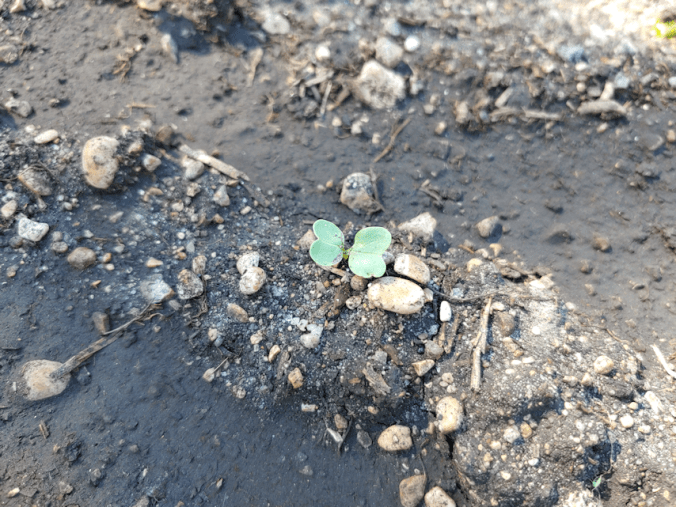
The radishes are sprouting! The one in the photo is of the daikon type radishes, but I was seeing sprouts for the watermelon radishes in all the rows they were planted in, too. I was aware that radishes sprout quickly, but I’ve never grown them before, so this was a very pleasant surprise. They most certainly were not there when I was watering last night. :-)

Then I found another lovely sight.

The first potato leaves have emerged through their mulch! There are the purple fingerling potatoes. Sifting around in the mulch in the grow bags, I found other shoots coming through the soil, but these are the first ones to break through and leaf out. :-) I really look forward to seeing how these do in their grow bags.

We have a whole lot of squash transplants ready to go out, but I’m starting to rethink what to do with the summer squash. The plan was to make more beds like with the beans and peas. However, we have that long arc where we’d planted the sunflowers last year. In removing some of the old grass clipping mulch to use under some new beds, I couldn’t help but notice how much better the soil is, underneath. It’s still rocky, but we basically have a long row of soft soil, bordered by concrete hard soil. I’m thinking we should take advantage of this. It will need far less amending than starting new beds. I’m also planning to try staking the summer squash this year, but with our without stakes, deer don’t like those prickly squash plants, so it could act as a sort of fence for the rest.
I sorted through our transplants while hardening them off, and we have a lot of nice, strong melons. Between those and the winter squash, and the two types of gourds that successfully germinated, we might not actually have room for it all on the squash tunnel. So I’m thinking we can plant as much as we can fit of each type at the squash tunnel, then whatever is left over can be planted in other areas. Without trellising, these should spread out quite a bit over the ground, and we’ll be able to give them lots of space, and we would just need to haul soil over to make hills, rather than beds. This would allow us to compare how well they do, between left to grow on the ground, or up a trellis.

What I might end up doing is getting the Montana Morado corn done, first. They are doing very well, but will start outgrowing their cups soon. Since the toilet paper tube pots didn’t work out, I’m really hoping they won’t suffer from transplant shock too badly. In zone 3 gardening groups. I’ve read from people who warn against transplanting corn completely, because they don’t handle it well, to people who say they do it all the time, every year, and have never had issues. I suspect type of corn can make a difference, and I seem to be the first person in all of these groups to try and grow purple corn in our zone!

I’m really excited to see how they do!

The Re-Farmer