While tending the seed trays last night, I spotted a new first sprout. This morning, it was big enough to get a photo of.
Barely!
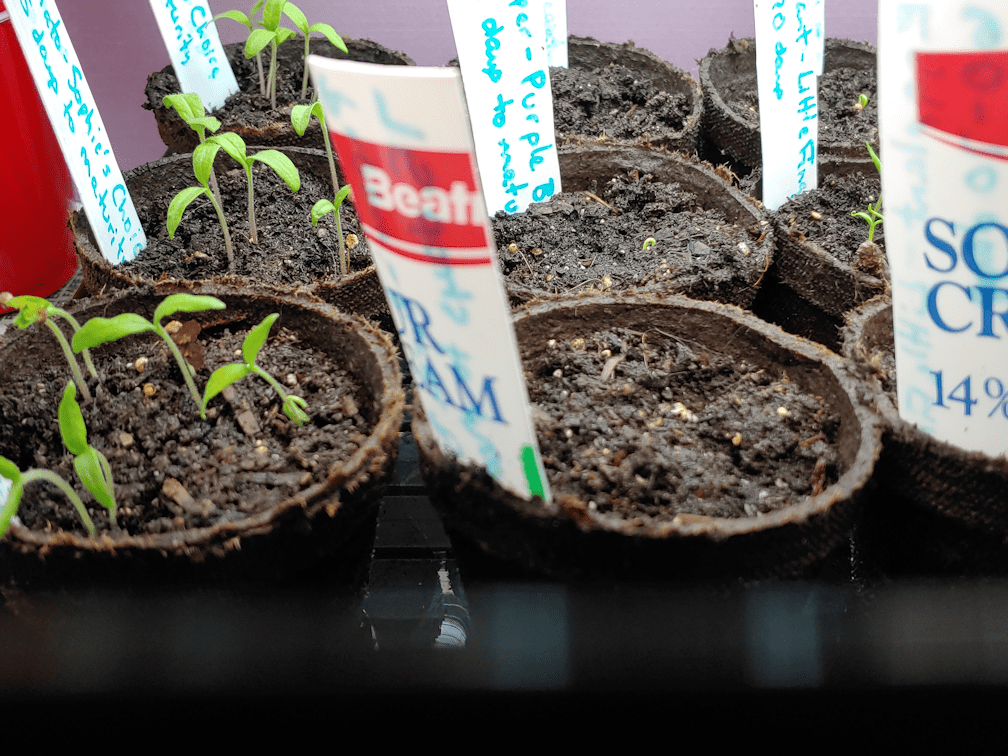
There in the middle, you can just see our very first Purple Beauty pepper sprouting!
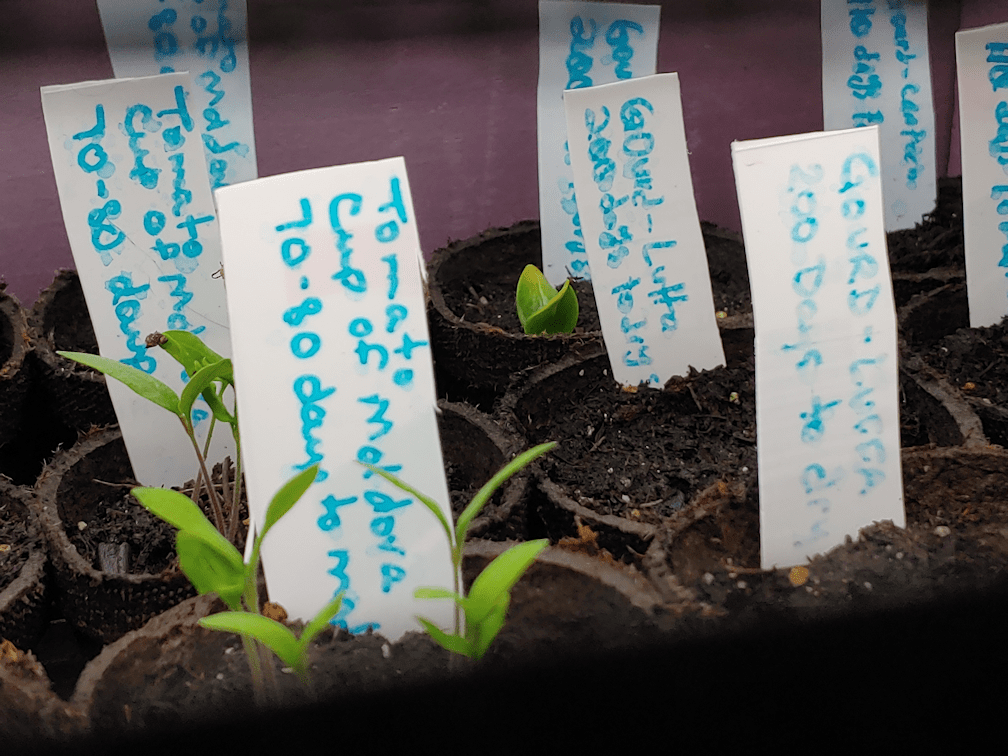
Which means that, at this point, the only thing in the tray that has not had any sprouts at all are the canteen gourds. The luffa still has just the 1 sprout. It looks like all the tomato seeds have germinated by now, and there are more eggplant and onions sprouting, too.
Oh, there are no Wonderberry yet, either. They are the ones planted in the double cups next to, but not on, the heat mat, so that might be why.
I am very happy with what looks to be a very high germination rate, so far!
Yesterday, we only knew a luffa had germinated because I happened to take a photo from above, while tending to the pots.
This morning, it was big enough to be able to see!
I am so thrilled to see any gourds at all, sprouting already.
Checking the onions in the small aquarium greenhouse, it looks like we have some yellow onions starting to sprout. There’s just a couple of small, white worm-like bits starting to show in the soil.
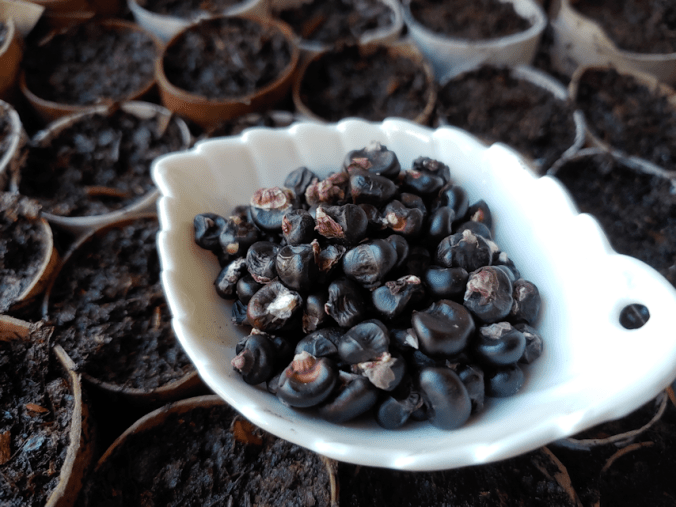
Today’s priority was to start the last of the seeds indoors. I’d been preparing a bin with toilet paper tubes, as something that would allow the least root disruption when transplanting (at least, so I’ve read). After a couple of days, it was time to start planting the Montana Morado corn!!
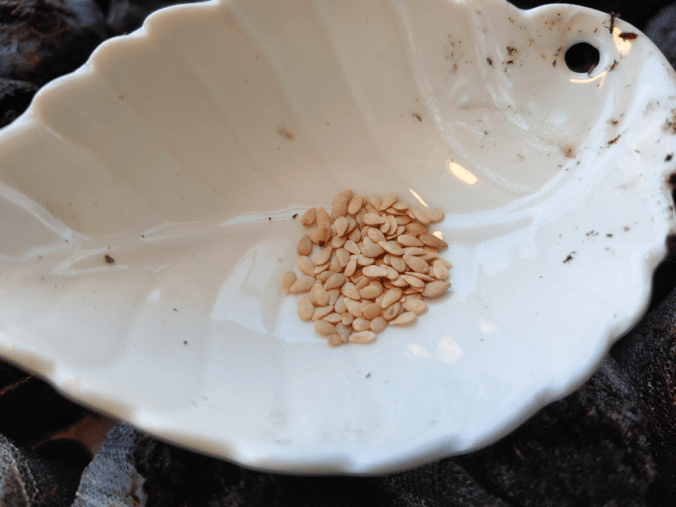
Aren’t they gorgeous?
The seed packet said “at least 75 seeds”. That’s a lot more than 75!
I started puttering with the peat filled tubes in preparation of planting in them, but something felt wrong. Ever after a couple of days, some of the tubes were still floating on a layer of water, and as I made holes in the medium, it seemed really dry below the very top.
I didn’t want to take a chance, and decided to crack open one of the tubes.
I am very glad I did.
It was completely dry inside!
Well, so much for that idea. If the peat didn’t absorb the water after all this time, it wasn’t going to happen.
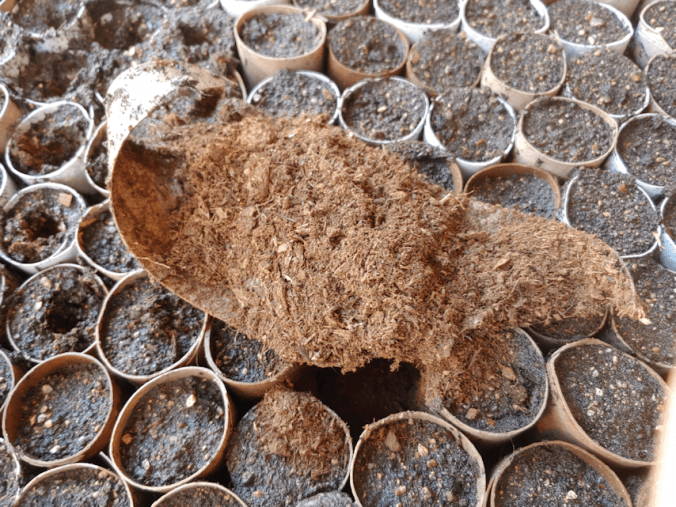
For the next while, I opened every one of those tubes to empty them.
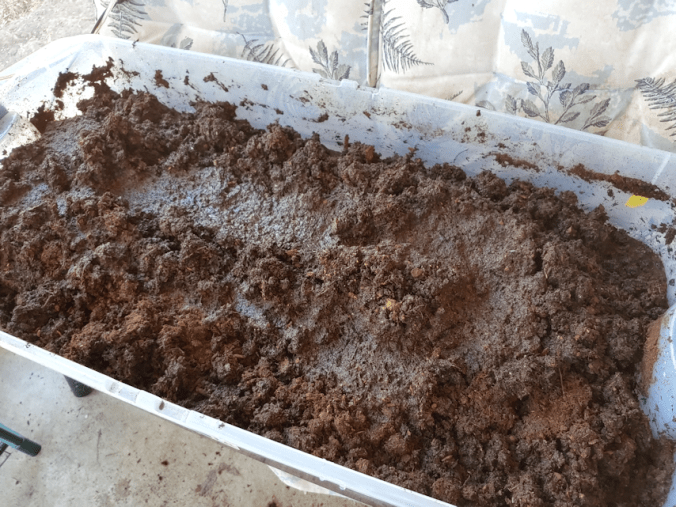
Once that was done, I kneaded it like bread dough, to work in the water. Then added more water and kept working the mixture until it was completely wet.
I should have done that right from the start!
I did work in the last of the sifted garden soil, too. The soil absorbs the moisture faster than the peat, so I thought that might help. The amount was quite small, compared to the quantity of peat!
As for the toilet rolls, they will not go to waste. These were dumped into the old kitchen garden, where they be composted directly into the garden, as we add soil.
The bin is still being used, though.
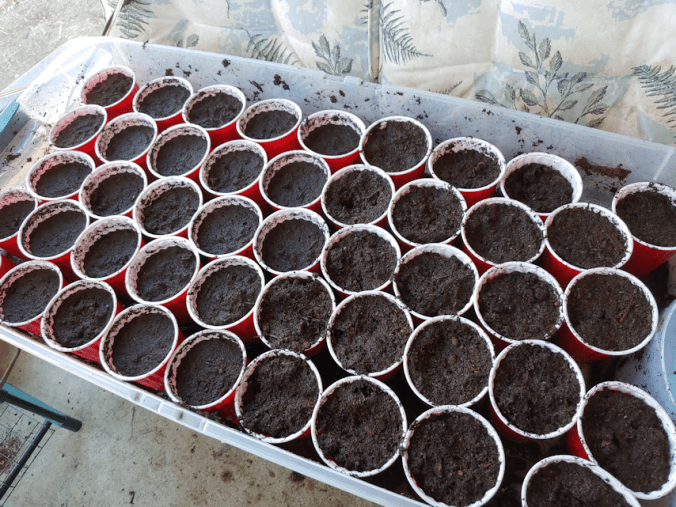
After punching holes into the bottoms of more cups and filling them, I ended up quite quite a bit of unused peat mix.
I made sure to water them from the top again, just to be sure, and left them to drain for a while.
For small seeds, I like to use a bamboo skewer to handle the seeds, but for larger seeds like this, I find a straw works great. It’s just the right size to push holes into the medium, and is perfect for pushing the seeds down to the right depth.
I knew I wouldn’t use up all the cups, so I didn’t cover up the seeds until they were all done, so I could easily see which cups were planted, and which were not.
Then I used some twine to wrap around and between the cups, to mark between the planted and unplanted cups.
I ended up with 33 cups with corn in them; 31 with 4 seeds each, and 2 with 3 seeds each.
I have some concerns about doing it this way, but starting corn indoors has been an active topic of discussion on several cold climate gardening groups I’m on. Most of the experienced Zone 3 gardeners say all corn should be started indoors (my mother never did; I would say the varieties make a difference!). Some insist that corn is too tender for transplanting, but the few who say that usually have many others commenting, saying they start their corn indoors all the time, and have never had issues with transplant shock.
So I’m hoping this works out. I really want to successfully grow this variety here!!
The remaining cups were planted with Mongolian Giant sunflowers. There isn’t a lot in the package, but the remaining 13 cups all got 2 or 3 seeds in them. I think there was a total of 33 seeds in the packet.
They all gone one last watering when all the planting was done.
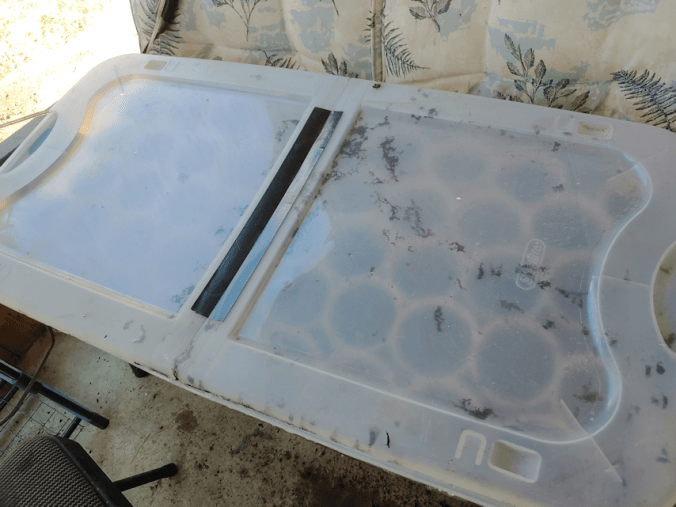
The cover can be placed over the bin to help keep the moisture and warmth, if necessary. I think it should be fine, without, but we’ll see.
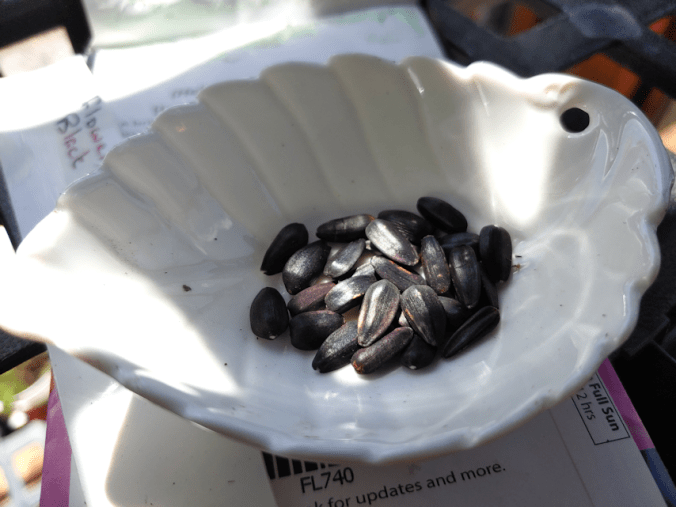
That done, it was time to plant the Hopi Black Dye sunflower seeds, and the cucamelons.
Again, there weren’t a lot of sunflower seeds in the packet. I’d forgotten how small the cucamelon seeds are! :-D
Since these were going into Jiffy pellets, the sunflower seeds each got their own pellet. It still filled less than half of the tray. There were 28 seeds in the pack, and I used the twine to mark between the two seeds. The cucamelons each got several seeds per pellet. I didn’t keep track of those. We still have the tubers from last year’s cucamelons, so it should be interesting to see which do better after they are planted out in June.
After these were done, we did the onions outside, which freed up shelves in the sun room. All the remaining seeds in the aquarium greenhouses are now in the sun room. I’m starting to be a bit concerned. Not a single squash or gourd has sprouted since the one Crespo squash germinated. That one is doing well (as are the dancing grouds), at least. I know gourds take a long time to germinate, but I would have at least expected more Crespo squash to germinate by now. I’m hoping the warmth of the sun room will be what they finally need to get them going. We shall see!
Starting the seeds indoors – and having to change plans on how to do some of them – took a lot longer than expected.
So did planting outdoors. Because, of course, things got changed up there, too!
Little bitty sprooooots actually showed up a couple of days ago, but they were so tiny, I didn’t bother trying to take a picture through the glass of the tank.
So far, only the Spoon tomatoes have started to show, not the Mosaic mix, though some of the bunching onions emerged even earlier.
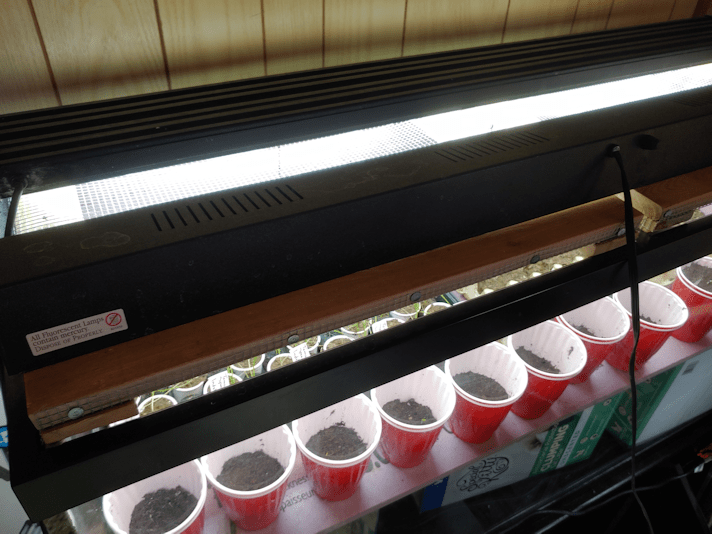
I unpacked the second light for the tank – this was the one that originally came with the tank kit – and set it over the red solo cups. It’s sitting partly on the wood of the mesh frames, to better light up the inside of the cups. That wood is way too wide, really, but it’s what I had available.
Sometimes, I will also put another light fixture on the tank covers, too. While it does have a full spectrum bulb in it, it’s more because it’s an incandescent bulb, which provides a bit of heat. The onions don’t need it as much, but from everything I’ve been reading, tomato seedlings need more warmth.
I look forward to when things warm up and we can start moving seedlings to the sun room (after Ginger has completed his convalescence in there!). By then, the tomatoes and, later, squash seedlings will get all the heat they need in there!









 The Re-Farmer