Analysing our 2022 garden: peas and beans

Okay, it’s that time! I’ll be working on a serious of posts, going over how our 2022 garden went, what worked, what didn’t, and what didn’t even happen at all. This is help give us an idea of what we want to do in the future, what we don’t want to do in the future, and what changes need to be made.

It was a mixed bag when it came to growing legumes in 2022!

As with so many other areas in the gardens, we did have flooding around the pea and bean trellises, but that area is a bit more elevated, so it wasn’t much of an issue, compared to other garden areas.

The previous year, we’d grown three types of bush beans, and they did very well, in spite of drought conditions and heat waves. We were very happy with them.

For 2022, though, we decided to try growing pole beans, and shelling beans.

The previous year, we had little success with peas. For 2022, we decided to try an edible pod pea, as well as shelling beans. Plus, we had a whole four saved seeds from the King Tut Purple Peas we tried growing the year before.

Let’s start with the peas.

We used the same trellis we’d grown peas at, the year before, amending the soil a bit more. The trellises were all meant to be temporary, but we did get one more year out of them.
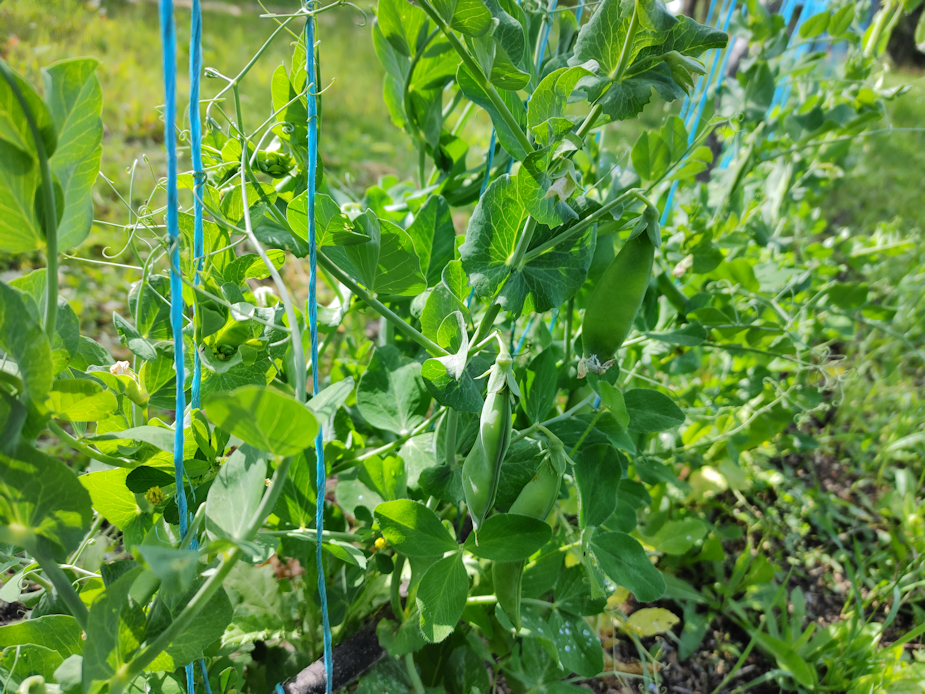
Don’t those peas look nice and healthy?

That was about the best they got.

The Results:

The sugar snap peas germinated, then almost disappeared. I think we got a whole two pea pods out of them. There weren’t a lot of those, however, and were planted in half of one side of the trellis. The shelling peas too up the rest of the trellis, which means some were planted across from the snap peas. Those pea plants also did not do well, which tells me that the soil on that end of the trellis was most likely the problem.

A couple of weeks later, we planted more of the shelling peas at an A frame trellis, shared with gourds and cucumbers. Those plants actually seemed to do better.

In general, though, the peas did not thrive. Even the healthiest, strongest plants only got to about half the size they should have. I did have shelling peas to harvest, but never more than a handful. Usually, it was just a few that I could eat right away.

Then there were the purple peas.
The Results:

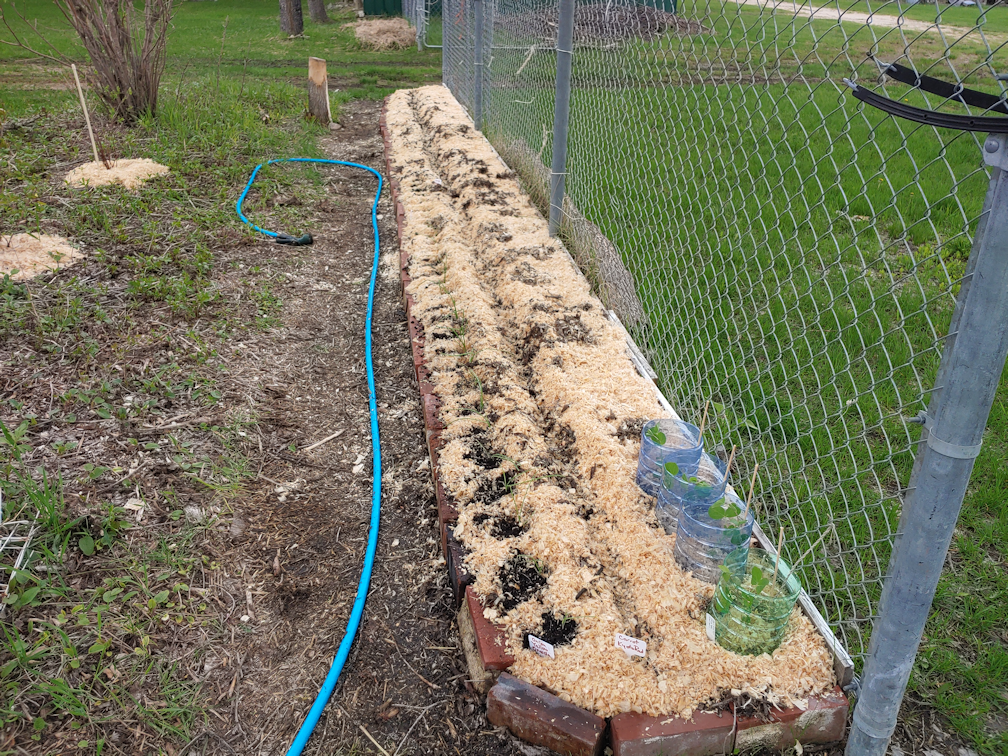
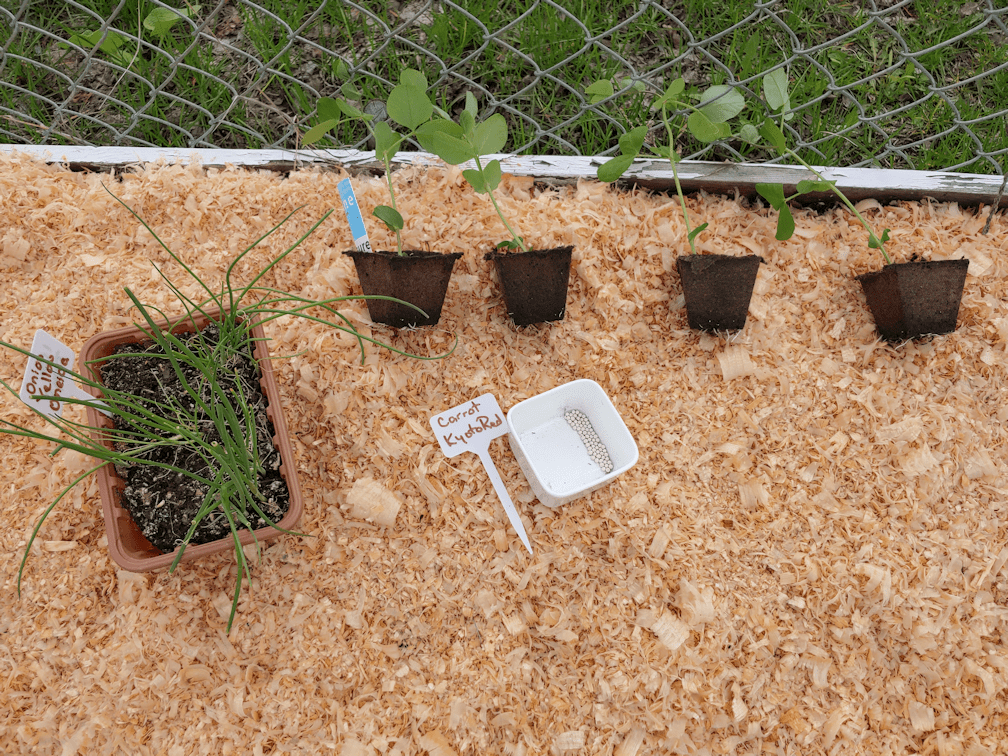
As with the other peas the year before, the King Tut Purple Peas did not do well, but they kept trying to grow and bloom for a surprisingly long time. I decided to try starting the four seeds we’d managed to keep indoors. All four germinated and were looking quite healthy. They were transplanted in a south bed with the chain link fence to climb. Shortly after transplanting, I cut the top and bottom off some gallon water jugs and put them around the peas for extra protection from the wind until they could grow big enough to start vining into the fence.

They… grew. Like the other peas, they did not reach their potential at all. They grew tall and thin, without a lot of foliage. There were a few purple blooms and pea pods developed, but they were green instead of purple, except for one. I never tried harvesting them at all, but just left them to go to seed. There wasn’t a lot to collect at the end of the season, and I’m not even sure I want to try growing them again. They weren’t the tastiest of peas, but that could be because they just didn’t grow well.

The Conclusion:

While the peas did not do well, we will still be growing them again. For 2023, I’ve already ordered the variety of shelling peas we’d tried in 2020. The pea and bean trellises have been dismantled, and they will be grown in a completely different area, as we build up our permanent garden beds. Hopefully, that will make the difference. I really love fresh peas, and would love to have enough to freeze. I would love to have edible pod peas, too, but I’m not sure if we will try them again in 2023. I think it will depend on how far we get with the permanent gardening locations.


Then there were the beans.

While we bought pole beans, we also had green and yellow bush beans left over from the year before.

We planted a green and a purple variety at an A frame trellis. The shelling beans and the red noodle beans were planted at what had been a squash tunnel, the year before. The yellow beans were planted with the kulli corn to act as a nitrogen fixer, as well as to help shade out weeds.

The green beans from the year before were planted with our sweet corn as well, but that bed got flooded out. While most of the corn survived, not a single green bean germinated. We bought another variety of green bush bean and planted those, and they did grow.

The Results:

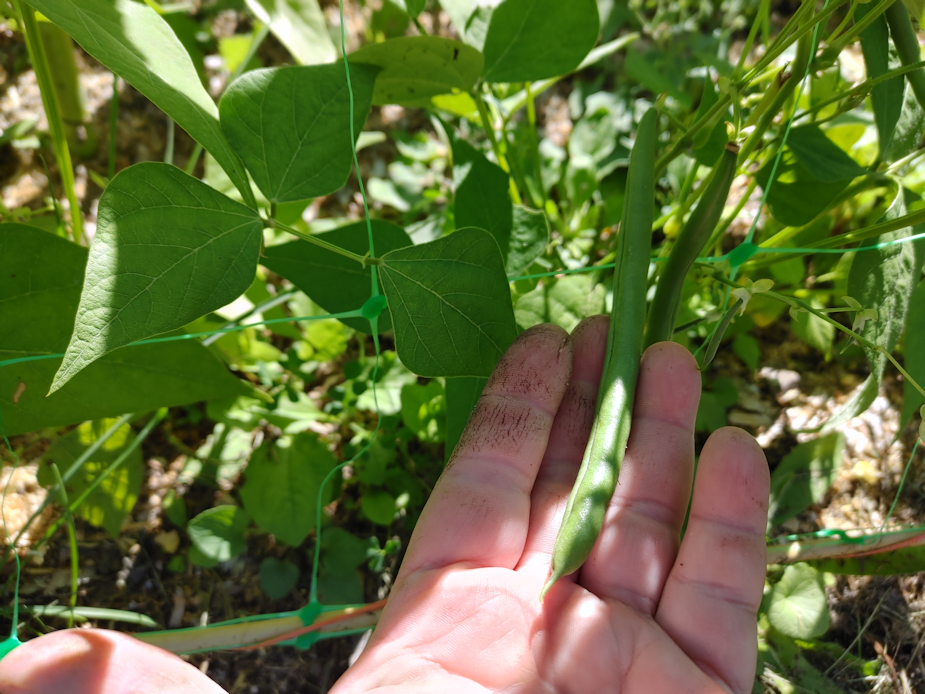
The purple Carminat and the green Seychelles pole beans did great, considering what a horrible growing year it was.! Both varieties were quite productive. I wasn’t picking beans every day, as I was with the bush beans the previous year, but I was at least picking some every couple of days. The purple beans seemed to do the best – even when a deer went by and nibbled on them all along the row!

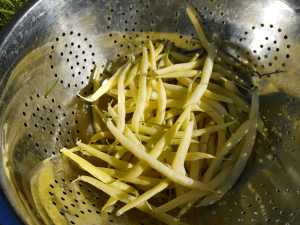
The yellow bush beans planted with the kulli corn did quite well, too. The only downside was that we had a net around the bed to protect the corn from deer and racoons, which made harvesting the beans very inconvenient.

The green bush beans we planted with the sweet corn didn’t grow as large as they should have; it was a new bed and it had lots of issues, so I’m not surprised by that. Everything did a lot better when we were finally able to finish mulching it all. The bean plants were so small, however, that it was hard to harvest them with the mulch. They were there more for the corn than for us, so I decided to just leave them and hopefully have seeds, but I think they were planted just too late for the season, and none of the pods dried out.

Then there were the shelling beans and Red Noodle beans at the tunnel trellis.

The shelling beans (Blue Grey Speckled Tepary) were very small plants, just barely getting tall enough to start climbing the trellis, yet they produces so many pods! Still, there wasn’t much of a harvest of these very small beans. That photo is the entire harvest! I saved 100 seeds (we’d planted 50) to grow in 2023, and we ate the rest. It was the first time we’d tasted these beans, and they were barely enough for one meal! Still, we found them tasty, and I look forward to trying them again. I hope a better growing year will improve things.

As for the Red Noodle beans…

These are supposed to be a vining type bean, but it wasn’t until near the end of the season that they actually got large enough to start climbing the trellis. It took even longer before I finally saw blooms. We were starting to harvest and pull up the garden for the end of the year, when I found a single, solitary, baby red noodle bean pod, which you can see in the above photo.

I had been looking forward to trying these beans, and would like to try growing them again, just to find out if we like them! Not in 2023, though.

Conclusion:

Beans are such a staple crop, and we enjoy having a variety of types, we are definitely growing beans again in 2023. Along with the seeds we saved for shelling beans, my mother gave me a jar of white beans that are descendants of beans she used to grow here. She gave seeds to my sister to grow in her own garden, which she did for quite a few years. She’s not growing shelling beans anymore, though, so she gave her saved seeds to my mother, who passed them on to me. What a circle!

On top of that, we have ordered seeds for green, yellow, purple and red varieties of beans, including one that is supposed to be good as both a fresh bean and a shelling beans.

While we’ve had our failures this year, beans are one of the few crops that have produced really well for us, even in adverse growing conditions, making them a reliable food to grow.

The Re-Farmer

Our 2022 garden: peas, carrots, onions and more prep

One of things we started indoors were the four seeds we managed to save from the King Tut purple peas we tried to grow last year. All for successfully germinated, and were really needing to be either transplanted, or potted up.

Potting up didn’t make sense for these, so today, they got transplanted! Being peas, they are frost hardy, so we didn’t have to wait until after our last frost date.

I did change were they were meant to be planted. I was originally thinking of using the same pea trellis we used for them last year, but there’s just 4 of them, so we’ll save the trellises for the green peas we’ve got.

As the purple peas were already looking to climb, I decided to put them here.

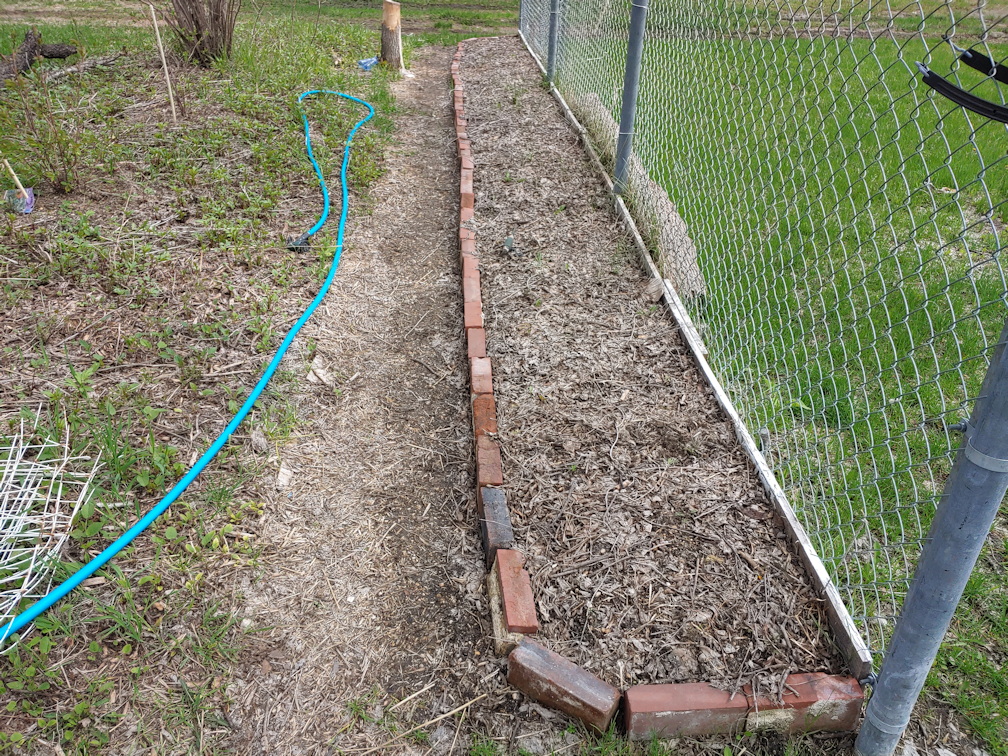
This is where we grew tomatoes very successfully last year, and tomatoes will be grown here again this year. It got completely reworked in the fall.

This bed was going to get a mulch of wood shavings, too, but I also did the concrete blocks on the other side of the small gate, too.

We’ll be looking at planting some climbers in here, that can use the fence as a trellis.

The bag of wood shavings left over from last year got finished off in the long bed, and most of the new bag got used up, too! There was enough to mulch the haskaps (the male haskap is blooming!) and there’s still a bit left over.

All the mulch got watered as I laid it out, as the wind was picking up and threatening to blow it away. Once it was laid down, all the mulch got watered again, multiple times, as I worked.

Of course, the bed didn’t stay looking pretty like this for long!

This bed is going to be intensely and strategically planted! Along with the purple peas, there will be tomatoes planted all along the fence. Just inside where the tomatoes will go, there will be carrots, as they are good companion plants. On the outer edge, near the bricks, will be onions, as a critter deterrent.

In the bowl are the last of the pelleted Kyoto Red seeds from last year.

Clearing out a row to plant the carrots was a bit of a challenge, as there were sticks in with the leaf mulch that had to be removed. With pelleted seed, the carrots could be spaced as they were planted. I still got only half way down the row before running out of seeds. The other half is now planted with Napoli carrots; another pelleted variety from last year. With the Napoli, there are still a LOT of seeds left, so we have the option of tucking them around other things, too. We have 2 other new varieties that are not pelleted seed, so I will likely use cornstarch gel to help plant those.

There were not a lot of the Oneida yellow onions we started from seed to transplant, but it was still close to the half way mark. Of the onions we stared from seed, we have one tray or red onions left, but there’s quite a few of those, and I didn’t want to split them up. We also had a few shallots started from seed – a whole 7 of them survived – so I used those, and there’s still half the row left. We have shallot sets, too, so I’m thinking of using some of those to finish off the row. That will be another job for tomorrow!

As for the peas, I cut some of the plastic bottles from distilled water we have so many of, to put around the peas, to protect them from the wind. One of them blew away while I was transplanting onions. I’d tried to push it into the soil, but there turned out to be too many little sticks in the leaf litter. :-D Once I got that fixed, I added the sticks to help keep them from blowing away. They are the sticks sold for toasting marshmallows, broken in half. We got a package for cookouts last year, but I’ve been using them as supports for some of the taller squash and gourd plants that were starting to flop around a bit. They work really well for that!

This bed now has only tomatoes to be transplanted into it, and that won’t be until after our June 2 last frost date, just to be on the safe side. We will be adding netting after the tomatoes are planted. The decorative wire garden fencing that you see in one of the photos above will be placed right up against the bricks, to hold the net away from the net, which will be attached to the top of the fence. The tomatoes and onions should be fine, but the carrots will need to be protected from critters. The net won’t stop a determined groundhog, but between that, the onions and the carrots, we hope the greedy buggers will decide they’re not worth the effort!

While I was working on this, my younger daughter was working on one of the low raised beds in the main garden area.

The girls cleaned up these beds last year, and this one was the worst for crab grass.

It still was. It took my poor daughter hours to get it done, diligently and carefully pulling up all the roots she could. Unlike me, she’s agile enough that she can kneel down on the ground to work, but she still knackered her back in the process. Once inside, she ended up having to put on her corset she made for herself, to use as a back brace just so she could sit upright at the table! She plans to continue with other beds tomorrow, and will likely just wear the darn thing from the start.

Her sister ended up helping me bring the transplants back inside after everything we done. She was up sick much of the night, but was finally feeling better. It was a bit of a juggle, since the chitting potatoes were sitting on the platform the seed trays and most of the bins sits on. Those had to go outside and onto the roof of the cats’ house until all the transplants were brought into the sun room, then we had to figure out how to fit the potatoes back in! Some ended up on the swing bench under the platform. Potato Beetle has lost his favourite bed for now. :-D

I fully expect we will expand our garden again, next year, which means starting more seeds indoors. Having at least a small, portable greenhouse is going to be increasingly a necessity! We almost got one this year, but the funds ended up being reallocated. Mind you, we still haven’t gone into the old hay loft, where my brother tells me there is the frame for a carport. If all the parts and pieces are there, we’d just need to get the plastic, and we’ll have a polytunnel. I can’t get up into the hayloft anymore – my body is too broken to clamber up there – so I’ll have to ask the girls to do it.

Well… that last paragraph got quite the interruption. I hadn’t realized my mother had phoned and left a message while we were working outside. She called again. It seems the painkillers the doctor prescribed for her back pain are not helping at all, and she’s in a lot of pain. Can’t sit, can’t stand, can’t lie down… She’s convinced the doctor gave her the wrong medication. She called the pharmacist, and he assured her she got the right meds. I guess she now thinks the prescription was a mistake? So tomorrow morning, when the clinic is open, I’ll give them a call. Hopefully, either her doctor, or the doctor that saw her in the ER, will be available to call her today and talk to her about it.

My husband is feeling very sympathetic for her. She’s entering his world, and is completely unprepared for it.

My plans for tomorrow may be changing, if I find myself having to drive my mother somewhere!

The Re-Farmer

Our 2022 garden: last seeds starts – for real this time!

Okay, I went ahead and did it. I got one more tray of seeds started.

Most of them are summer squash.

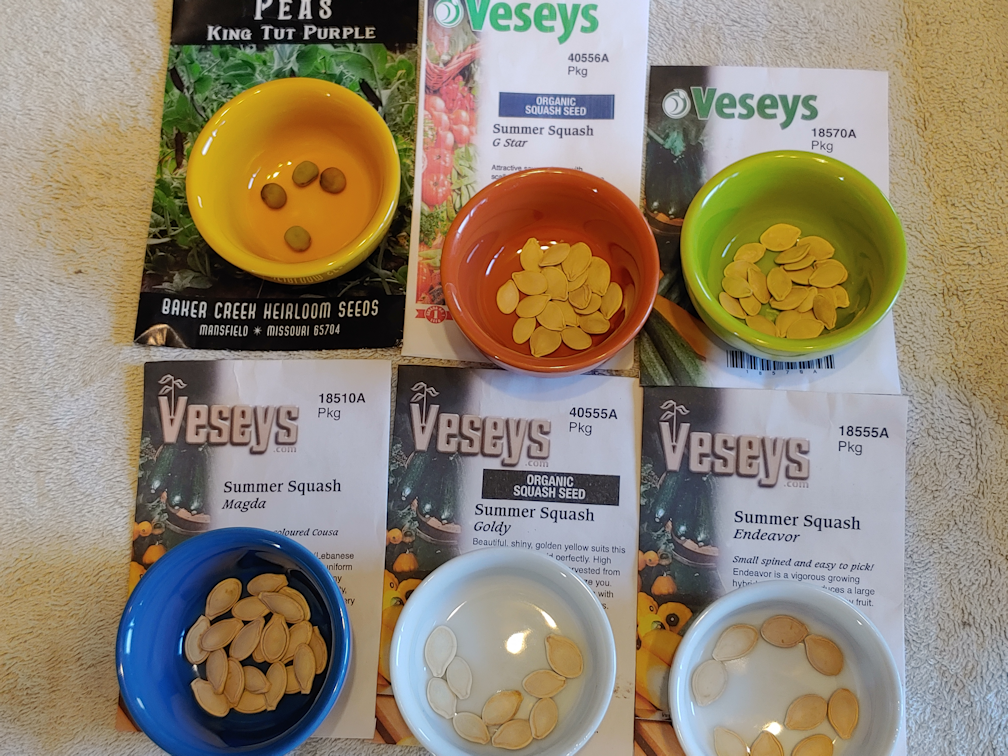
I also decided to start the only 4 King Tut Purple Peas I was able to save last year. They did not do well at all in the drought, but they bravely tried!

The seed tray holds 32 square pots, and I wanted to plant just one seed per pot. I decided to start only 4 each of the Magda (a mottled light and dark green squash), yellow zucchini (Goldy)…

… and green zucchini (Endeavor). With these summer squash, I want to also try direct sowing more, and see if that makes any difference.

That left room to plant 8 each of the patty pans; Sunburst and G Star.

It occurred to me after I uploaded the pictures that I should have just planted each flat of 4 x 2 pots with one type, instead of two long rows of the patty pans. :-D Ah, well, The flats will come apart easily when it’s time to transplant.

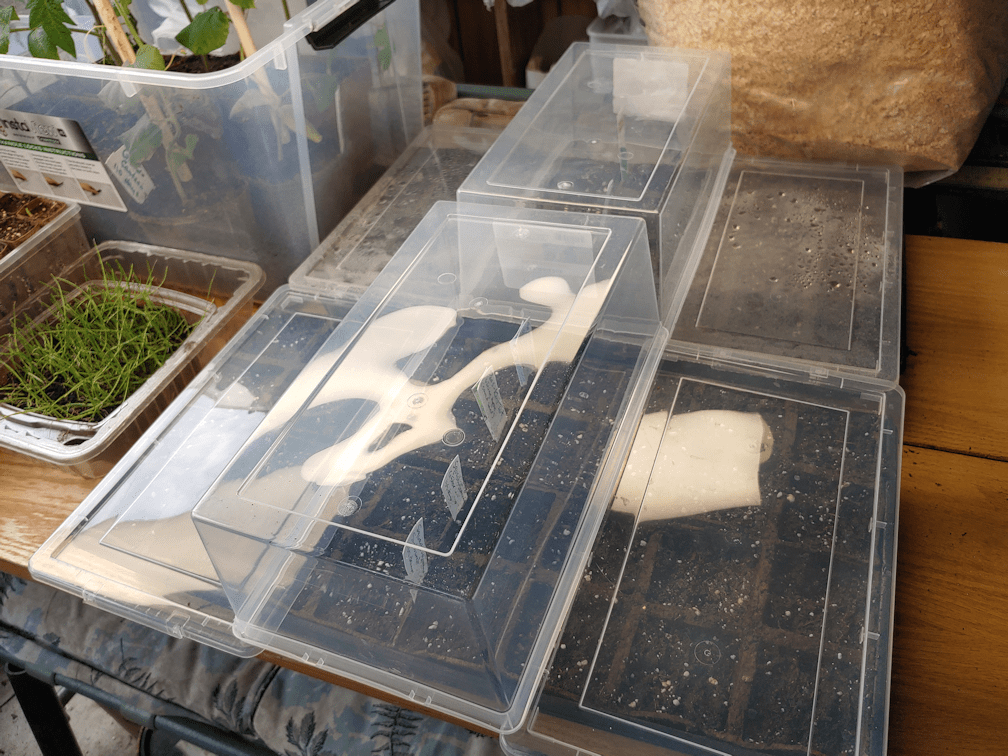
The tray then went straight into the sunroom, covered to keep them moist until they germinate. As you can see by the one that got pushed to the back, it’s working rather well.

There we are. Done. No more seeds will be started indoors.

Honest.

;-)

The Re-Farmer