We were all wrong.
We also had no way of knowing how or why we were wrong!
My brother, saint that he is, came out today to work on both the frozen ejector and the septic pump problem.
My SIL dropped him off, as he would be taking their car that they loaned us, back. The first thing he did was head to the ejector – he was here for an hour before we even saw him! He set up a low power heater around the ejector and covered the whole thing with a tarp to hold what little heat there was.
When I came out to join him, I was surprised by how much is was snowing. There had been no snow at all when I did the morning rounds and opened the gate for them. We ended up having what felt like a light snow, though it was actually heavier than it seamed, it was so calm out, the whole time.
He had spent yesterday evening running around all over the city, looking for the parts and pieces he needed for the septic pump. With the water leaking out of the filter, he concluded that the back valve was leaking. The pictures he asked me to take and sent to him helped a lot, as he couldn’t quite remember the details on the pump.
Once he did as much as he could around the frozen ejector, I helped him bring in his tools and supplies into the basement.
He came well prepared. A habit he got into when he would come here to fix things for our late father, because all Dad’s tools were scattered all over, or “borrowed” by our vandal.
First, I need to explain what we were wrong about.
When we first started having issues, I was thinking the pump itself was the problem. I thought it was about 20 years old and, which all the plumbing issues we had and with it running dry for way too long at times, I was thinking it was wearing out. It was even starting to sound worse.
I was wrong.
My brother replaced the pump only about 10 years ago, got the best pump available at the time, and he had full confidence in it.
The company that installed the ejector also thought it was the pump, with not enough pressure going through the venturi valve, causing the ejector to freeze.
He was… partially right. There was low flow, so low pressure, but it wasn’t because of the pump.
Other thoughts from various people, including me:
– that there was an air leak somewhere in the pipes from the tank to the pump.
– the O ring was failing
– the pipe from the house to the ejector was starting to get filled with gunk
– gunk from inside the pipe to the ejector was breaking loose and clogging the venturi valve
– the ground around the venturi valve was too saturated (which may still have been a contributing factor)
While it sounds like we’re talking about two problems – the frozen ejector and the septic pump problems – once we set up the emergency diverter, we got more of a sense that the problem around the pump lead to the ejector freezing. Thawing the ejector is its own problem.
With the water draining out of the filter, my brother conclude that the back valve was broken and wanted to replace it.
He was half right.
He was going to replace a whole section of connectors and a bit of pipe, removing the original back valve completely, and installing a new one, in line.
I’ve actually uploaded a bunch of short videos, because photos could not do it justice. Here is the first one. Here, the section of pipe and elbow connectors has been removed, but not the back valve.
No, you will not see the brass filter in another video. We never used it.
Instead, we found this.
W. T. F.
We were just flown away. HOW did a piece of cloth that big get into there! How many years was it there?
That is a BIG chunk of fabric! The fact that the pump worked at all with that in there is amazing!
With that filter installed after we moved here, we know it had to have happened before then. I don’t know when the other filter was finally removed, because it never worked. My guess is the fabric got into the pipes somewhere in that time between filters.
The only way I can think of how that got into the system is either by getting flushed down the toilet somehow, or it fell into the tank at some point when the lid was open.
It could well have taken years to get sucked into the pipe and work its way through all the elbow connectors. There are three on either side of the filter, and even when there was just a straight pipe before this filter was installed, the elbows were still there.
Then, once it got through the pipe, it got forced through the valve, where it could go no further.
Upon removing the fabric, my brother looked over the valve, and it was undamaged.
So he just put everything back together as it was, with fresh Teflon tape on the threads.
One of the other things he did was set up the switch by-pass. Right now, we have a switch on the wall to turn the pump on and off manually – but the pump won’t run unless the pill switch in the tank is high enough to trigger it. He’d set up the wiring before, but they were tucked behind the switch plate. He set the wires to they were now outside (after I turned the breaker off, of course) and connected them, so that when the switch was turned on, the pump would run immediately.
Before starting work on the pump, he ran it to drain the tank. It had run not that long before, so there wasn’t much in there, but he wanted to make sure it was empty before he started taking off pipes and draining what water was inside the pump itself. He was going to need to test it again later, so we had to run water for quite a while, just so he could have something in there to test the pump with, once everything was back together.
It takes a long time to fill that tank.
Eventually, though, we got it to the point where he could turn the pump on and test it out.
At the very end, you can see a sudden change in the flow. That’s when the tank was empty and the pump had to be shut off immediately.
What a thing of beauty. Everything was flowing well – just like when it was installed!
Which makes me think that piece of fabric was stuck flat against the inside of a section of pipe somewhere between the filter and the pump, because that filter and pump were working great at the start, and for quite some time after.
We’ve had other problems with the system that, in retrospect, were probably caused by that piece of fabric moving down the pipes a bit further, then a bit further, then a bit further.
There was absolutely no way anyone could have known.
Oh! I just heard the septic pump turn on as I write this. I’d checked the filter earlier, and it was completely full, and I know it’s pumping fine and faster than it has in probably years!
The only down side is the vibrate-y noises from where the emergency diverter makes contact with things.
Wow. The pump just turned off. That took less than two minutes, easily!
What an excellent pump.
I am so happy to be wrong about that pump!
Once that was done, my brother disengaged the bypass, so the pump would only turn on when triggered by the pill switch. My brother wanted to test it again, but it would take a while I left a tap running in the old laundry sink, next to the pump, but I made sure the rest of the family knew to use water, flush toilets, take showers, to fill that tank enough to test it again.
Then, it was time to head outside and work on the ejector.
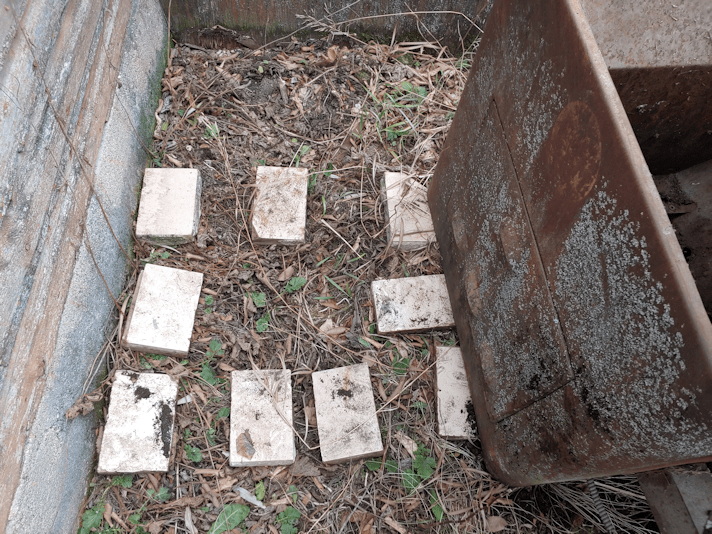
In the first photo, you can see the fluid level is quite high, because my brother had poured in about half a jug of liquid ice melter – calcium chloride. This won’t damage the plastic pipes, but there is a brass fitting at the bottom that could potentially get corroded, but that would likely take a long time. Once things are thawed out, we can hook the pipe back on and anything down there will get flushed away when the pump sends fluid through.
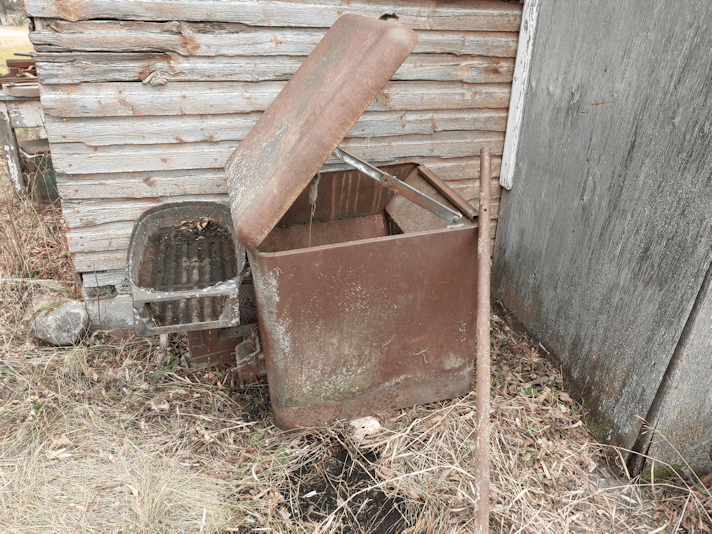
In the next photo, my brother is using the heat gun on the copper pipe to try and get the ice inside the venturi pipe – the discharge pipe – thawed more. It had been frozen to the top before. When we got there and my brother started this, it was down about 2 inches. By the time we stopped, it was down about 4 or 5 inches.
We spent quite a bit of time out there in the falling snow, using the heat gun and the copper pipe and the calcium chloride to get more of it melted down. There was no way it was going to be thawed out completely, though.
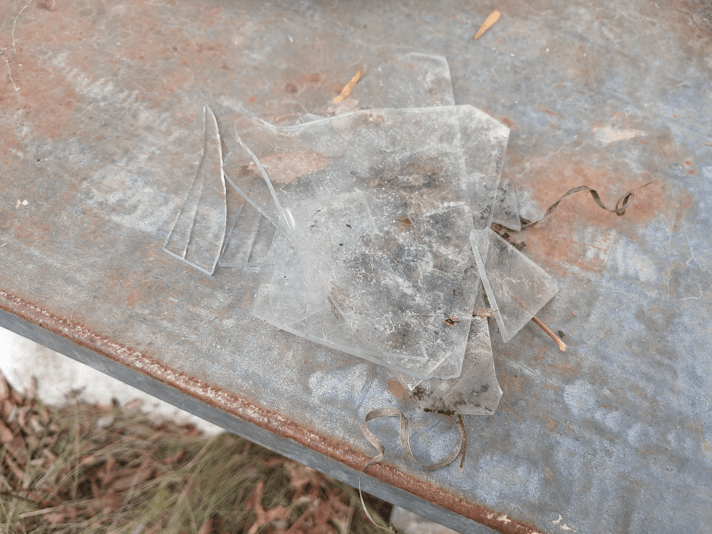
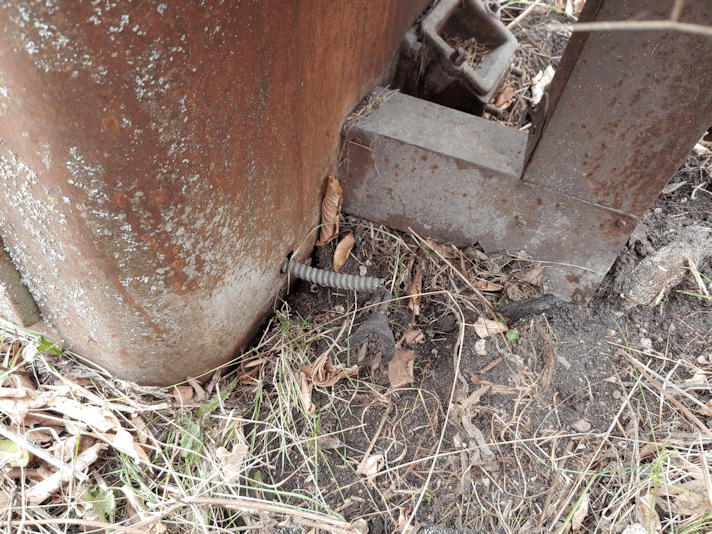
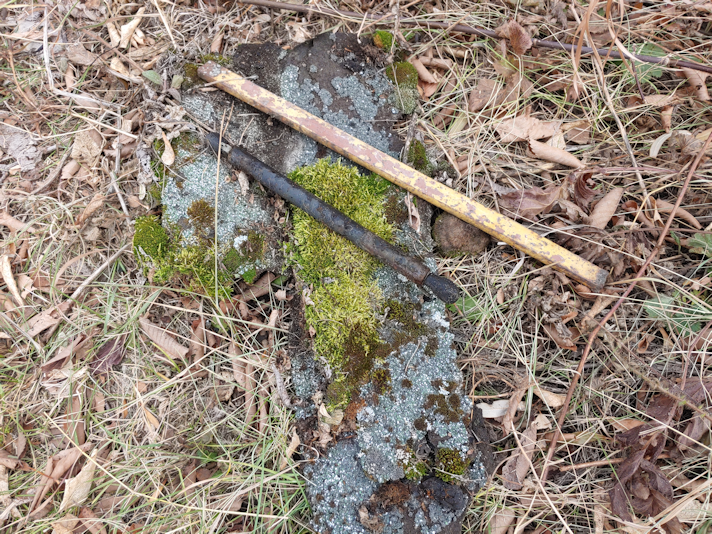
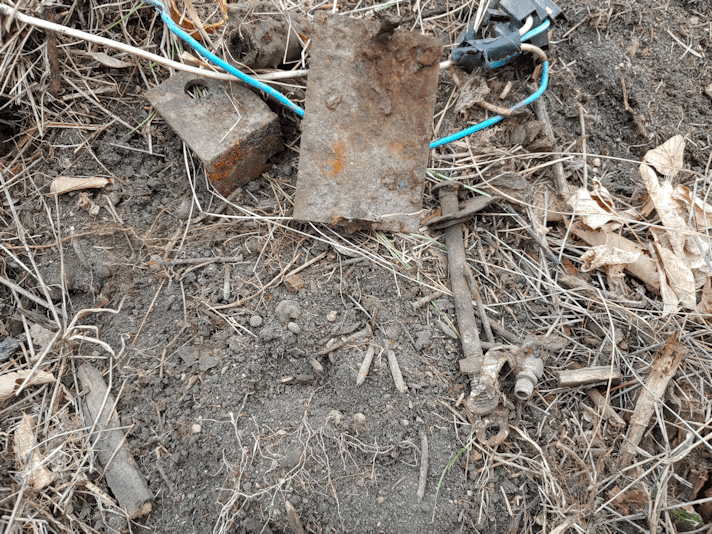
For that, we used the heat tape that came in the mail yesterday. That’s the blue you can see in the third image. The glass tape that game with it wouldn’t stick, buy my brother brought electric tape that he kept in a pocket inside his jacket to keep it warm, and that worked. We ended up using the heat tape box to hold the sheet of metal roof out of the way, as it rests right against the pipe. Being frozen to the ground and covered in snow and ice, we can’t move it away. My brother dug through his tools in the barn and found something to bend it back.
The cap and elbow were put back on the ejector, but only loosely. We want to be able to pop them off easily to check on how it’s melting.
My brother did some scrounging and dug an old, rotten saw horse out of the snow to put over the ejector. This would keep the tarp from having contact with the ejector itself. The last thing we want is for it to snap off the elbow or something in the wind.
Last of all, the tarp was wrapped around the whole thing – black side out to absorb warmth from the sun (whenever we get sun next) and tied off a bit. If we get high winds from the south, it might still get blown off, but it can’t be tied down too tightly, or I’ll have trouble checking on it.
All of this took quite some time, with a few trips to the barn or the garage, etc. to find things we needed. At one point, I needed to go into the house. As I was leaving, I caught a light whiff of septic, so I went around to check on the outflow pipe.
The septic pump must have just shut itself off by the time I got there. I could immediately see a whole lot more snow had been washed away. In some areas, the flow goes under the snow, creating gaps in the snow above in places. While there was no water coming out of the outflow pipe, I could see through one of the gaps, water that was flowing fast. The pump was definitely working well!
Before he left, my brother checked the pump in the basement one more time – the filter was full to the top and the filter basket was floating, just like it should be – then checked the outflow pipe. He was surprised by the direction the water was flowing, but I wasn’t. There’s a reason I have a retaining wall at that end of the old kitchen garden!
Now that this is fixed, and we’ve had the clogged drained fixed, we need to use our water. Especially in the kitchen and laundry. We still need to set the washing machine drain hose back into the pipe – no one has needed to do laundry yet – and I plan to do a machine clean cycle. That uses straight hot water. We’re also going to keep up the drain maintenance routine we’ve already started, plus what the plumber recommended we do with the kitchen sinks every few days. Last night, I even flushed out the access pipe to the septic tank in the old basement floor with the hose, to make sure that second bottleneck was still clear. Having the laundry draining into the septic again should actually help keep that clear, too.
By the time my brother left, he’d been here about four hours, with a brief stop for lunch, working on all this!
My brother is allergic to cats, so I had lunch with him in his car.
Meanwhile, he can return all the parts and pieces he never needed to use, and get his money back!
We’re still blown away by finding that piece of fabric stuck in the valve. So utterly unexpected.
The fact that nothing was damaged by it is pretty amazing, too.
So we were all wrong about what was going on, and that’s just fine! With some of the possible causes, this is one of the easiest fixes there could have been.
As for the frozen ejector, it’s hard to say how long it will take for the calcium chloride to work its way down to the bottom. Then my brother will need to come back and switch the pipes so we can test it out and, hopefully, be able to leave it.
We might not be using the emergency diverter all winter, after all!
Wouldn’t THAT be nice!
Also.
My brother is the best.
The Re-Farmer



















 The Re-Farmer