First low raised bed, part two: done!

Today, I was able to get back to working on our first low raised bed. The first thing I had to do was scrounge through a shed and the barn, looking for something I could use to support the long sides and prevent them from bowing outwards once the bed is full of soil.
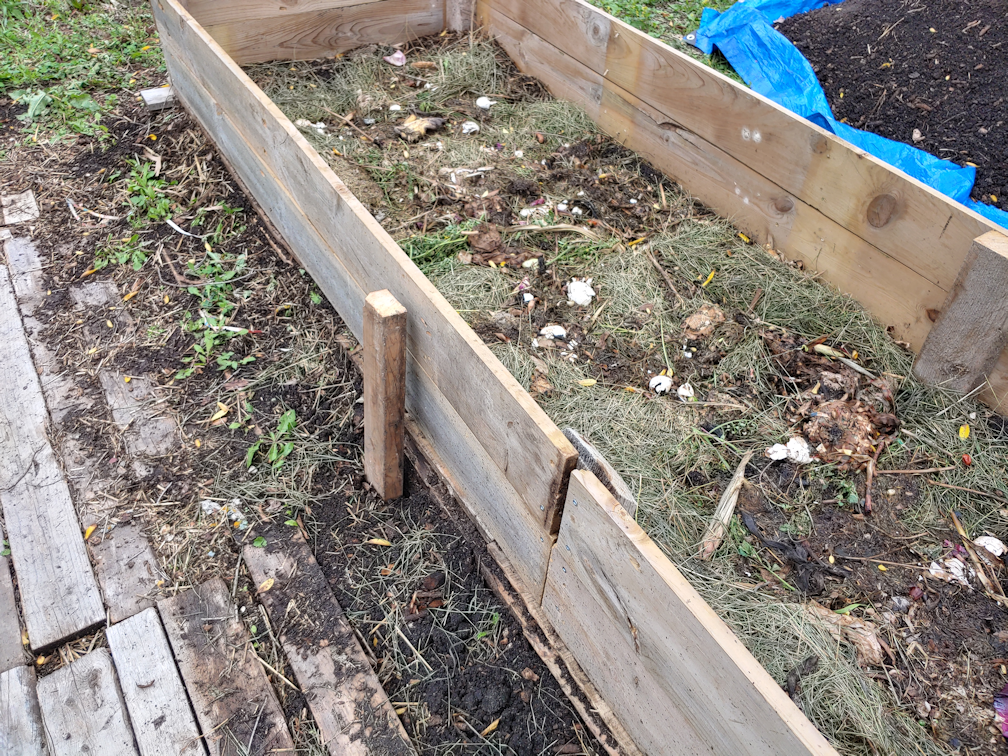
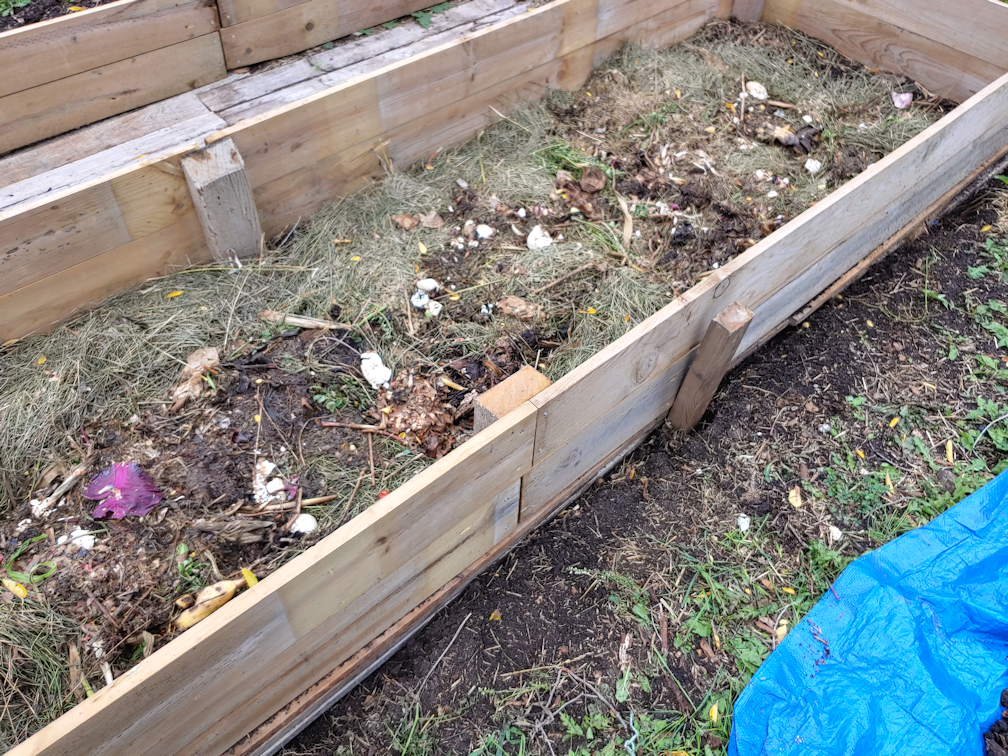
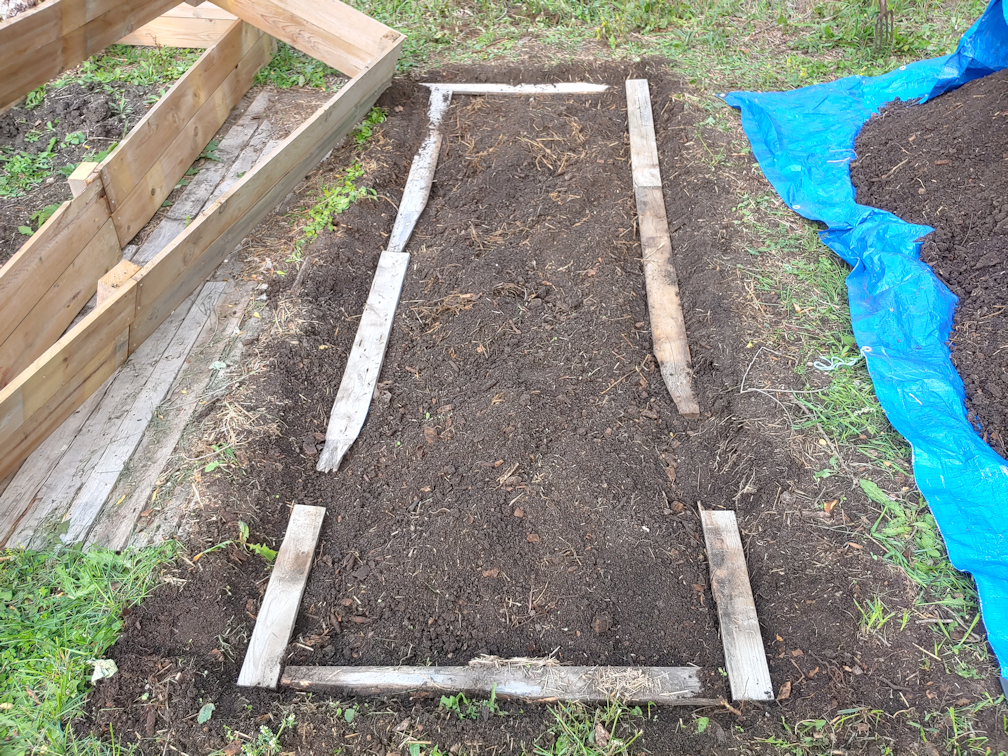
I found a piece that was strong enough, and long enough that I could cut it in half, first, then cut the two pieces in half at an angle, so they could be driven into the ground. Two were used for this bed, and the other two will be for the next one. The soil here is soft enough that I was able to use the pretty sledge hammer I found in the pump shack to hammer them in. I wasn’t too worried about them being perfectly straight. If this were a high raised bed, I’d be sinking posts to support them.
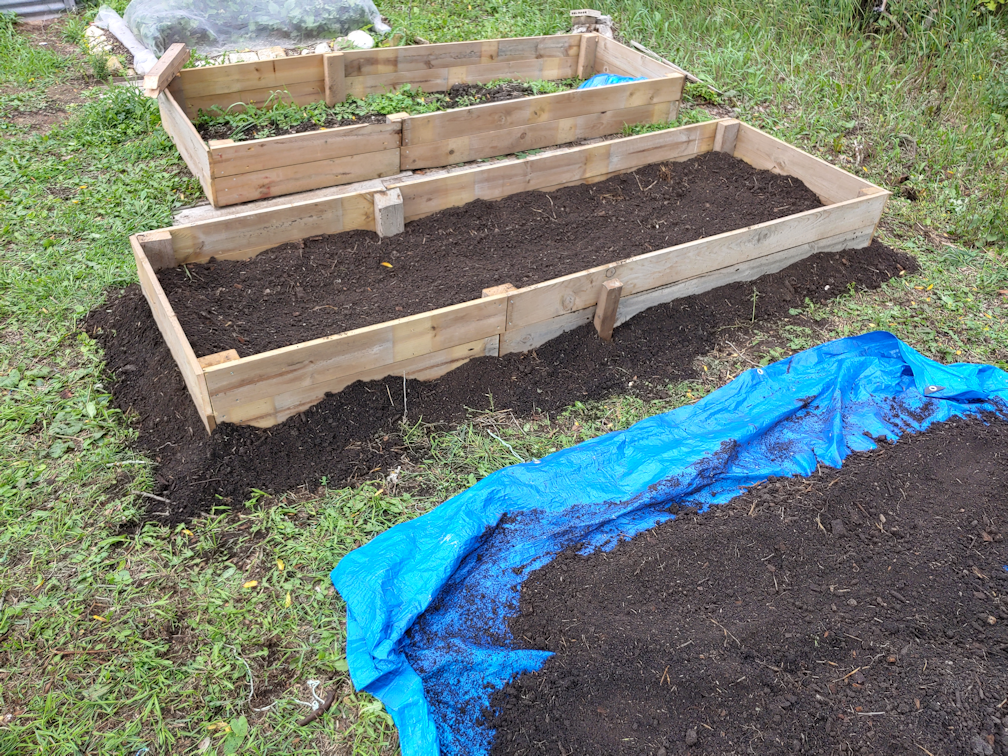
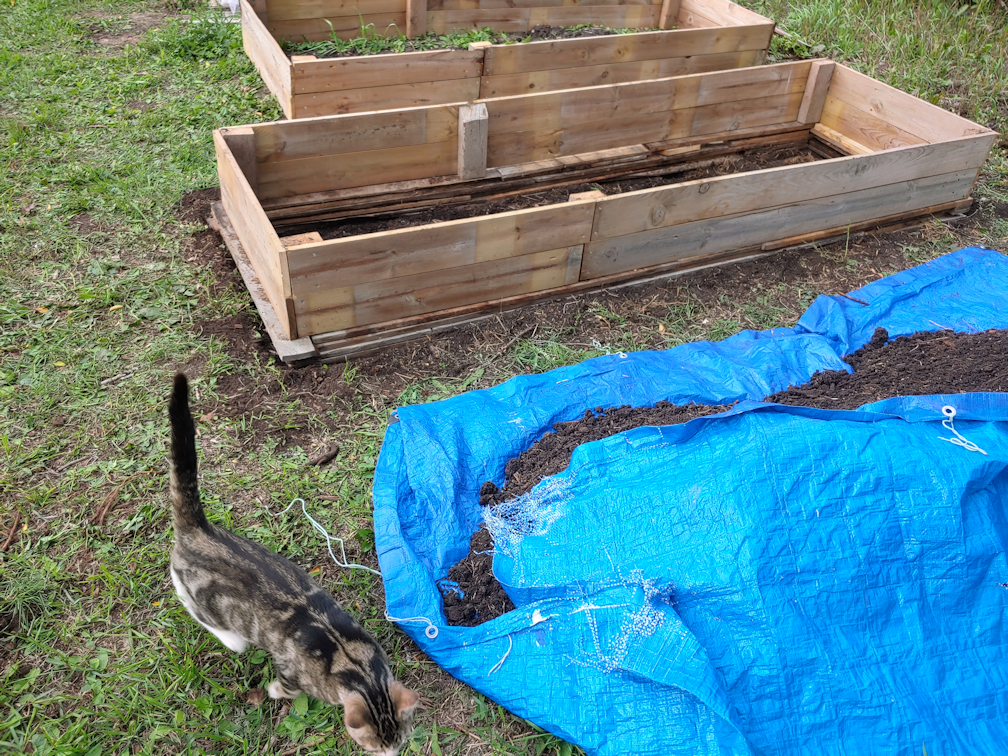
Next, I shoveled about half of the soil into the box, raking it out against the sides a bit, then added soil all around the box to bury the wood foundation. In total, that took up about 2/3 of the soil on the tarp. The wood foundation will break down over time, and I expect the whole box will slowly sink with it, but I don’t expect this to last more than a few years. Hopefully, by the time these need to be replaced, we’ll have access to more permanent materials and can replace them with high raised beds.

Now it was time to amend the remaining soil.

First I added about half a bag of wood pellets (roughly 20 pounds), maybe less, then got a load of the garden soil we bought in the spring.
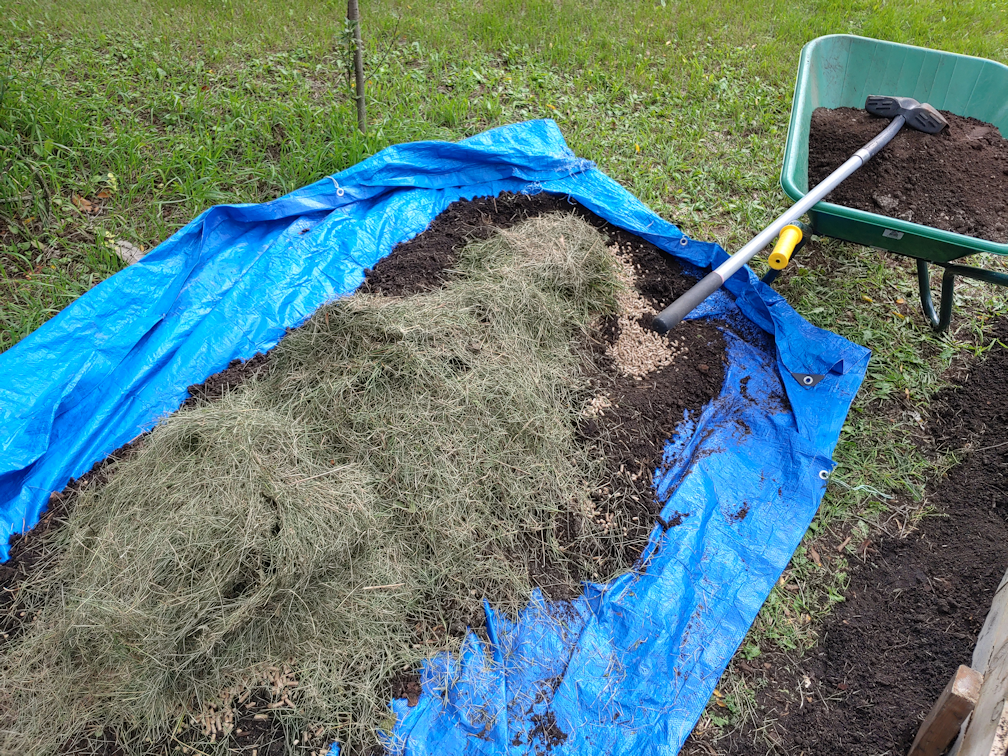
An arm full of grass clippings was added on top of the load of soil, then a second load of soil was added.
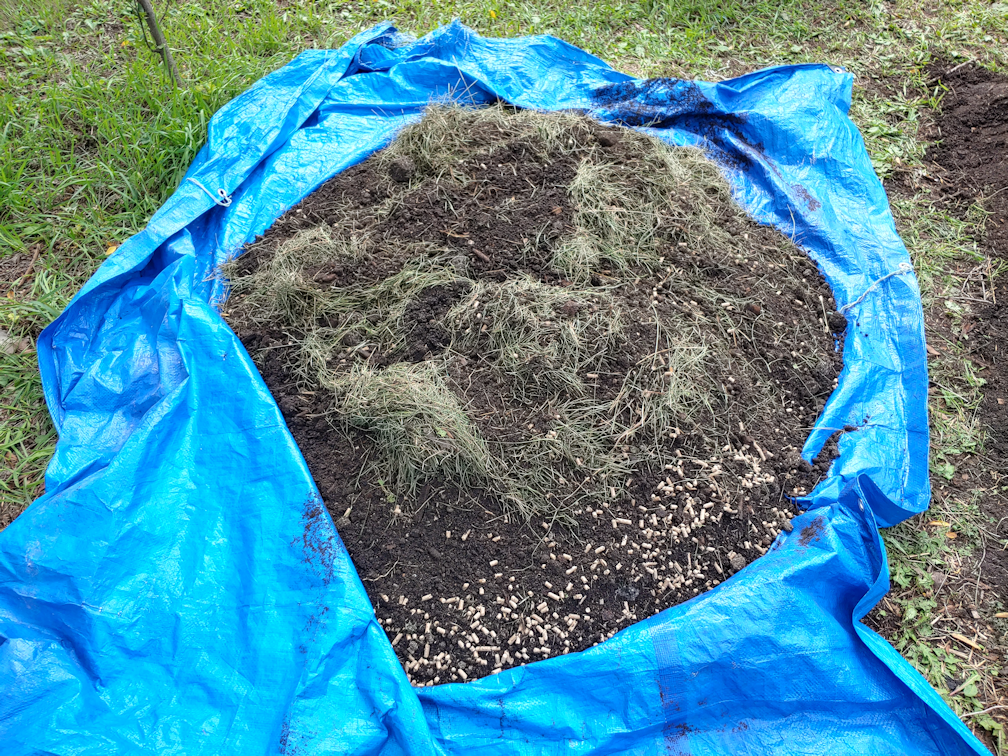
The whole thing was mixed together using a garden fork and the tarp itself. After a while, I shoveled about a third of it into the box, then used the tarp to mix it some more, shoveled more into the box, mixed the remains with the tarp again, and by then I was able to use the tarp to heave the whole thing into the box and dump the mixture out.
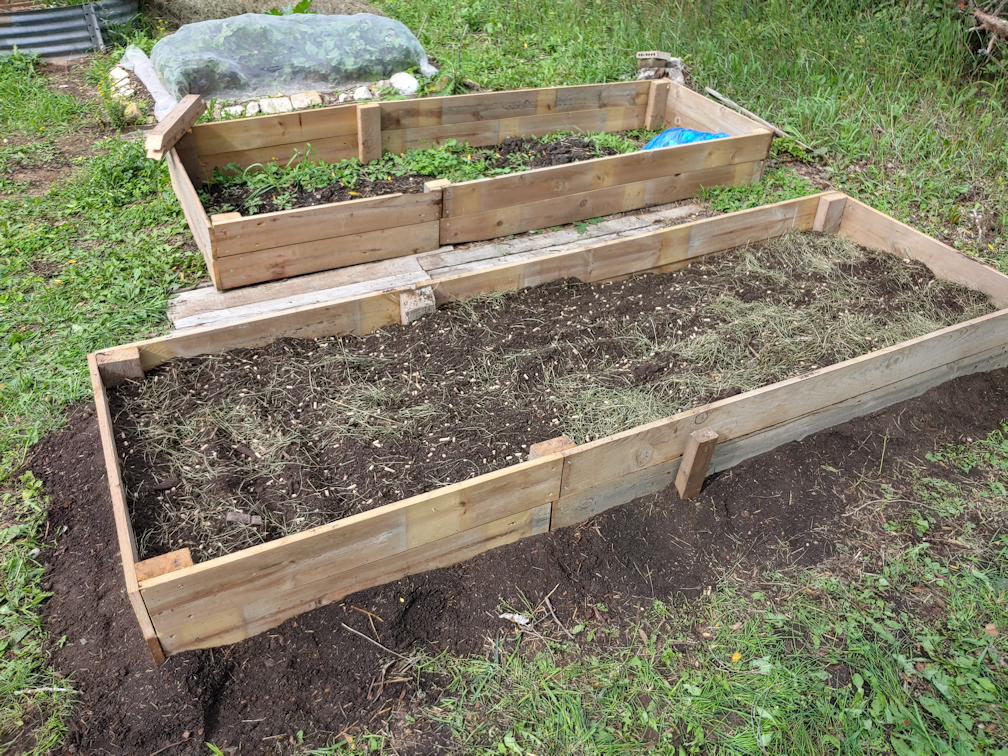
Then it was time to level it all out.

I also used the back of a hoe to tamp down the soil around the outside of the box a bit. If I can figure out how to transport it, after all the beds are done, I want to bring gravel from the pit over, to put around the boxes and in the paths.
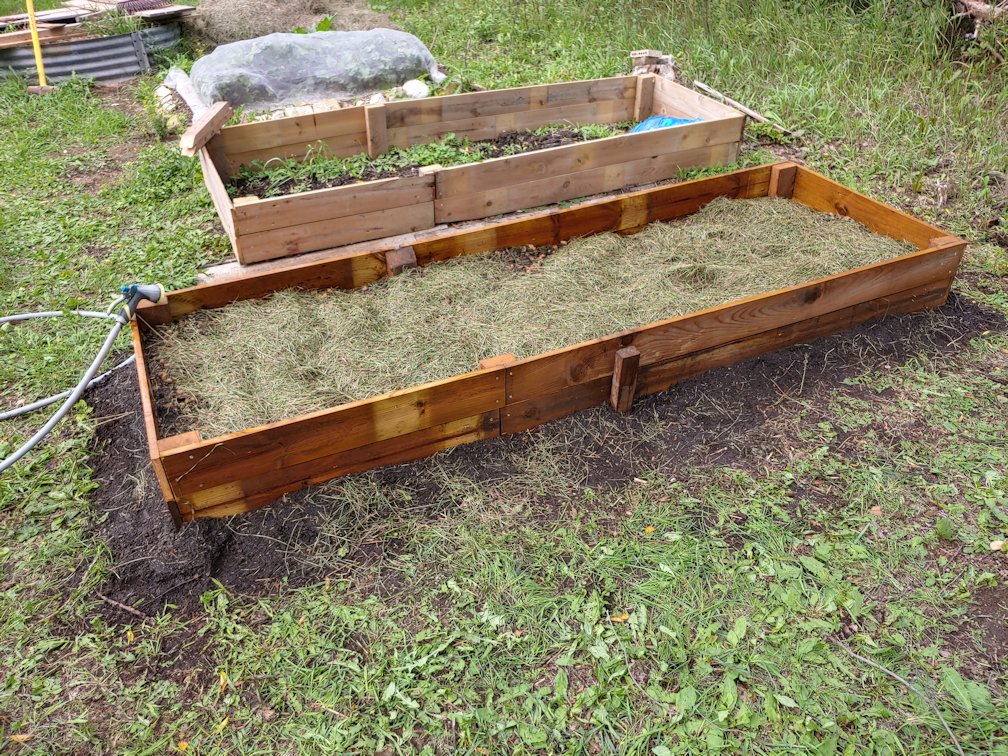
The final step was to cover it all with a grass clipping mulch and give it all a soak. It was a good chance to power wash the box itself a bit, in the process.
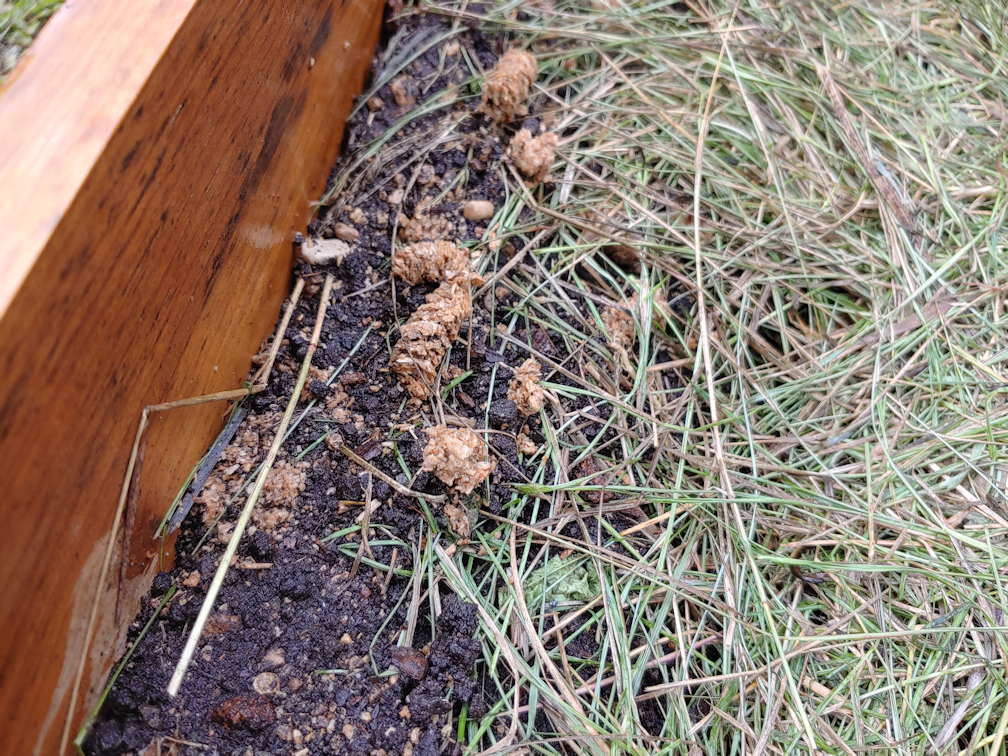
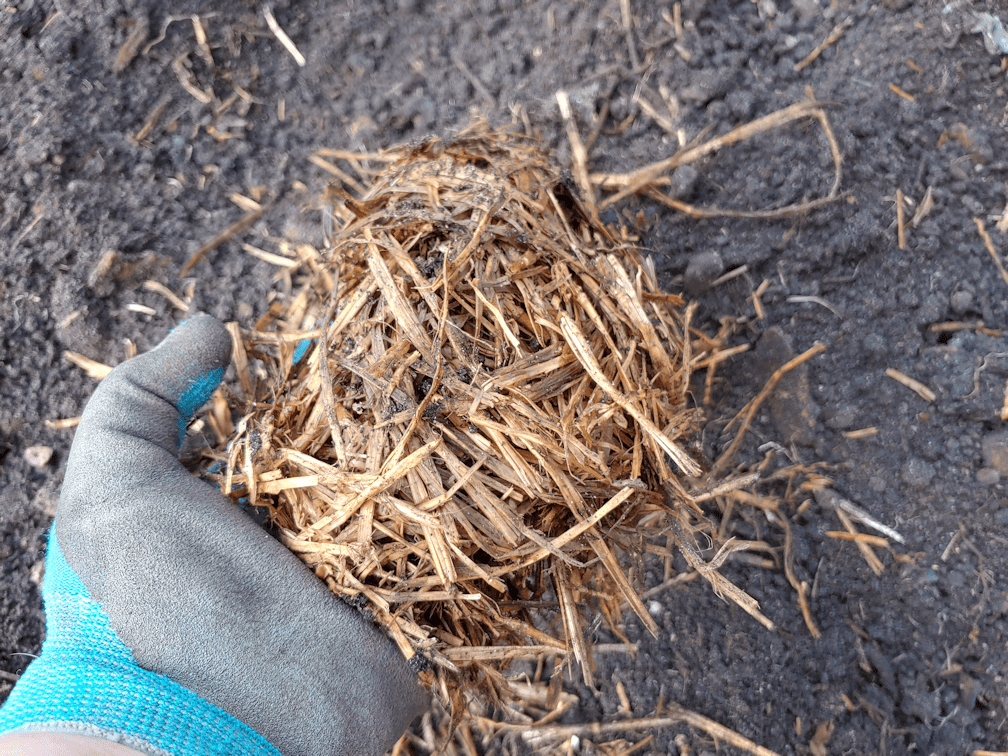
Here, you can see some of the wood pellets. This is why I decided to use these. Once the water hits the pellets, the sawdust begins to absorb it and expands pretty much immediately. Which means that all the pellets that are buried in the soil will push the soil away, breaking it up and preventing compaction. Depending on the conditions for the next while, these should decompose completely by the time we’re ready to plant into here, together with the grass clippings, adding organic matter that will keep the soil light and increase moisture retention.

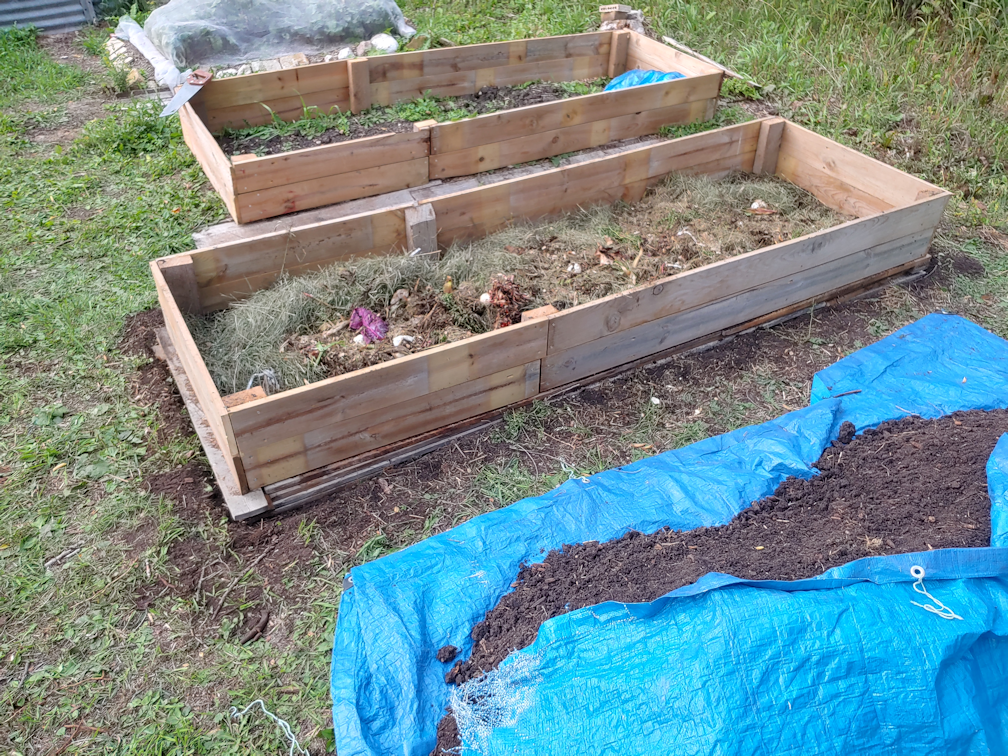
As you could see from the previous photo, the box is not full to the top. It is, however, at a stage that it could be left as is, and be ready for planting in the spring. I might have a lead on getting a truck load of manure. If that pans out, and we can get some this fall, I would use some and, together with the garden soil and probably other organic material, top up the boxes. We shall see. Either way, this should all settle further over the winter, so I expect to need to add more material in the spring, before planting.

For now, the bed is done. The next two will be done the same way, though I still have to build the box for the bed that has beets growing in it. That will wait until after the second box is set up, since there’s nothing to do with that bed until the beets are harvested.

The Re-Farmer

First low raised bed: part one. It’s good to be flexible!

This evening, I finally got around to working on the first of the low raised beds in what had been our garlic beds this year.

The boxes are ready and waiting, and the beds had been left for any weeds to get larger, so they would be easier to pull.

The plan: dig out all the soil and buried layers of compostable material beneath, set up the box frame, then add the layers back, Hugelkultur style, with wood at the very bottom layer.

The first order of business was to loosen the soil a bit further than the new length the bed will be, and clear out all the weeds by the roots.

The first problem was in adding length. I was originally going to make it longer just at one end, only to find myself hitting large roots and rocks. So I did a bit at one end, then extended the other end, only to have the same problem!

Once the soil was as clear of weeds and roots as I could, it was time to remove the topsoil onto the waiting tarp.

The original plan had been to remove the soil up to the buried straw and compost pile contents into one pile, then remove the straw and other matter onto another. With the extended length, there was already the problem of not being able to dig far because of the roots and rocks I was hitting.

As expected, the straw was barely decomposed. It takes a long time for straw to rot away. That made it harder to dig down further.

I decided to leave it and modify my plans. If it wasn’t practical to dig down further, I would just have to build up higher!

Using a garden hoe, I flattened and somewhat leveled the perimeter, pushing the soil into the middle.

The box was then laid over the bed and stomped on, to create guidelines.

Then, it was time to raid the junk pile of old boards and create a foundation.

A first layer was placed on the guide lines, leveling the soil out more in the process. Then it was just a matter of digging out more boards and adding more layers. The boards are in varying states of condition and length, and a few were cut to size to fill in gaps.

I stopped at 5 layers of boards, which put the foundation at about level with the ground.

Then the box was lined up on top of the foundation.

That was definitely a two person job. :-D

The next step was to use the hoe to move the soil from the middle to the sides, burying the foundation on the inside.

Now it was time to do our use-watcha-got, Hugelkultur layering.

I raided one of our branch piles and brought small branches and twigs to cover the bottom. If we were doing a high raised bed, I would have used larger branches and logs, but these will do for a small bed. The idea with the wood is that, as it decomposes, it acts like a sponge, absorbing moisture that later becomes available to the roots of the plants above, and reducing the need to water.

The next layer was shredded paper. We’ve been saving and shredding our compost safe fliers and other paper, just for this purpose.

Then a layer of grass clippings from our new little “haystack” got added.

Then, the contents of our compost pile was added. Plenty of egg shells, coffee grounds, banana peels – all sorts of things that “garden hack” lists include. :-D

The last step for today was to hose the whole thing down, partly to keep things from blowing away. We have thunderstorms predicted for tonight. If we do get rain, it will help soak down the layers and get a kickstart in decomposition. If we don’t get rain, it will get saturated with the hose before the soil is returned.

Before the soil is added, however, I’ll have to find something I can pound into the ground on the outside of the long sides of the box, to prevent the boards from bowing out.

As lovely as the soil here is, it did test low in nitrogen, so before returning the soil to the bed, I will be mixing in some of the new garden soil, as well as more grass clippings, plus some of the pellets we’re using for cat litter now. It’s just compressed sawdust. As they get wet, they expand and break apart. This will add organic matter to the soil to keep it from compacting, plus the sawdust will absorb moisture and act as a sponge. The clipping and pellets will have the fall and winter to break down, and help increase the nitrogen levels.

If we had wood chips, they would have been included in the layers, and would be added as a layer of mulch at the very end. Alas, that will have to wait until we either get a wood chipper, or hire the tree guys to come out with their massive chipper for a few hours, and break down some branch piles for us. :-)

Which, weather willing, I should be able to work on tomorrow. :-) Unless something else comes up. Which happens often! :-D

The Re-Farmer

Our 2022 garden: second box done

Sadly, we didn’t get any more rain today, but it has been very windy. Enough that we lowered the canopy tent as far as it can go, so reduce the chances of wind damage. It still has our camp chairs and makeshift table that we were using to cure onions on a screen, under it, and we can still duck under to sit in it.

I feel like a little kid in a fort. It’s awesome!

But I digress!

There was a break in the wind, and I took advantage of it to build the second low raised bed box to go where the garlic had been.

The build went much faster than the first one, now that we’ve got it figured out.

With stuff we’ve got going on over the next few days, we won’t be able to work on the third one, nor prep the empty beds for next year, until after the weekend. Which rather sucks, because the next couple of days are going to be really nice, then by Sunday, we’re expected to hit 33C/91F, and stay above 30C/86F for at least a few days. At least there is the possibility of more rain as well.

The third box will be a very quick build, since it will be only 1 board high. The bed it’s going to go on still has beets growing in it, so there is no hurry on that one. :-)

The Re-Farmer

Our 2022 garden: first raised bed box

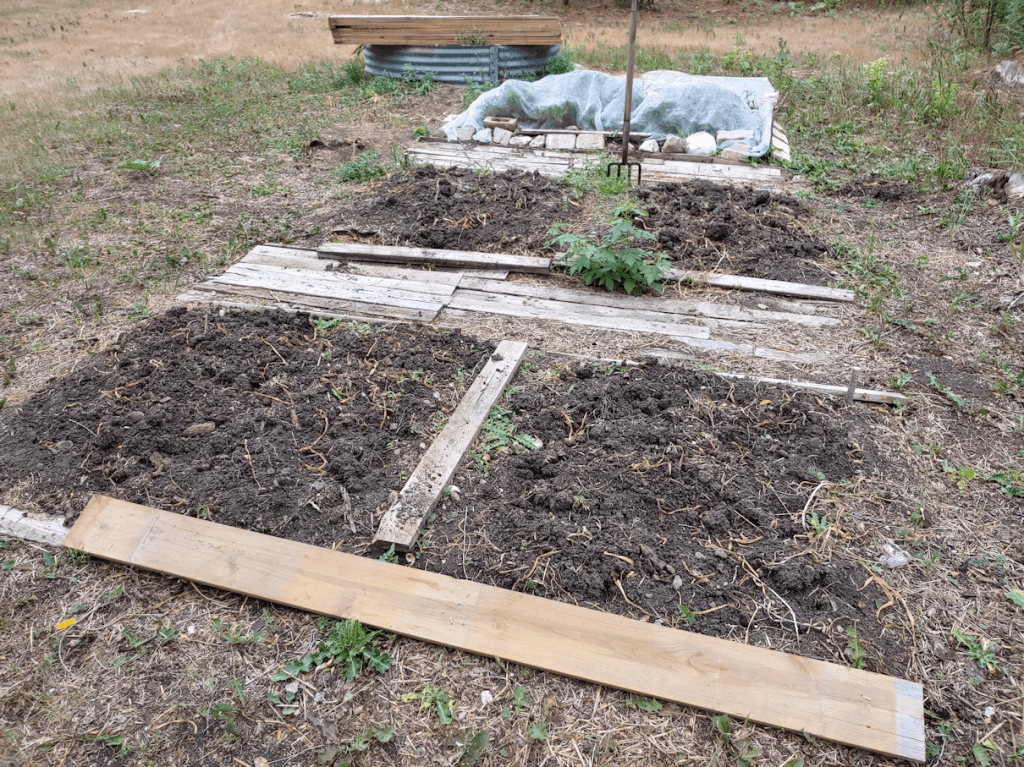
With the garlic all harvested, we’ve got two empty beds that need to be readied for next year’s garden.

With these beds, we had dug into the soft soil we found under the wood pile, mounding soil into beds and making paths in between. This worked out quite well, but there were a couple of issues. One was, for such low raised beds, I found them too wide. They were about 4 feet wide, which would be fine for a high raised bed, but awkward to reach the middles on a low bed. That was partly solved by putting a board across the middle, which served to both mark where the different varieties of garlic were, and to give something to step on while trying to reach into the middle.

What can I say. I’m short.

The other issue was that the soil along the edges would end up in the paths, either from watering or from when the birds were digging around the garlic, early in the season.

The solution to both issues was to build a narrower box frame.

After scavenging in one of the sheds, I found some boards that would serve the purpose.

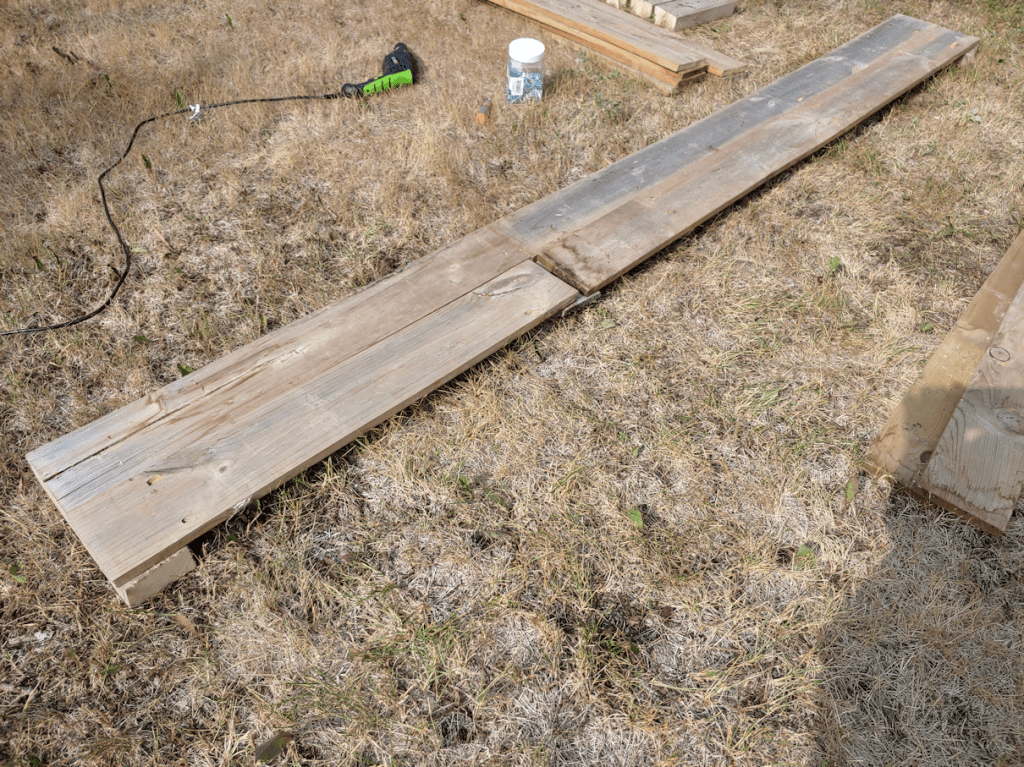
I dragged them all over to the beds. Here you can see one of them laid at the first bed I want to frame.

In total, I had 17 boards like the one in the foreground, plus 4 more that were the same length and thickness, about about an inch wider.

I decided to keep things simple.

I left four boards as is, then cut another four in half. The boards were all 6′ 1/2″ long and 5 1/4″ wide. Some of the half pieces would be used to increase the length, while the rest would be for the ends of the bed. I cut support pieces for the corners and to join the lengths together from some wood leftover from another project. Those were cut to match the width of two boards together.

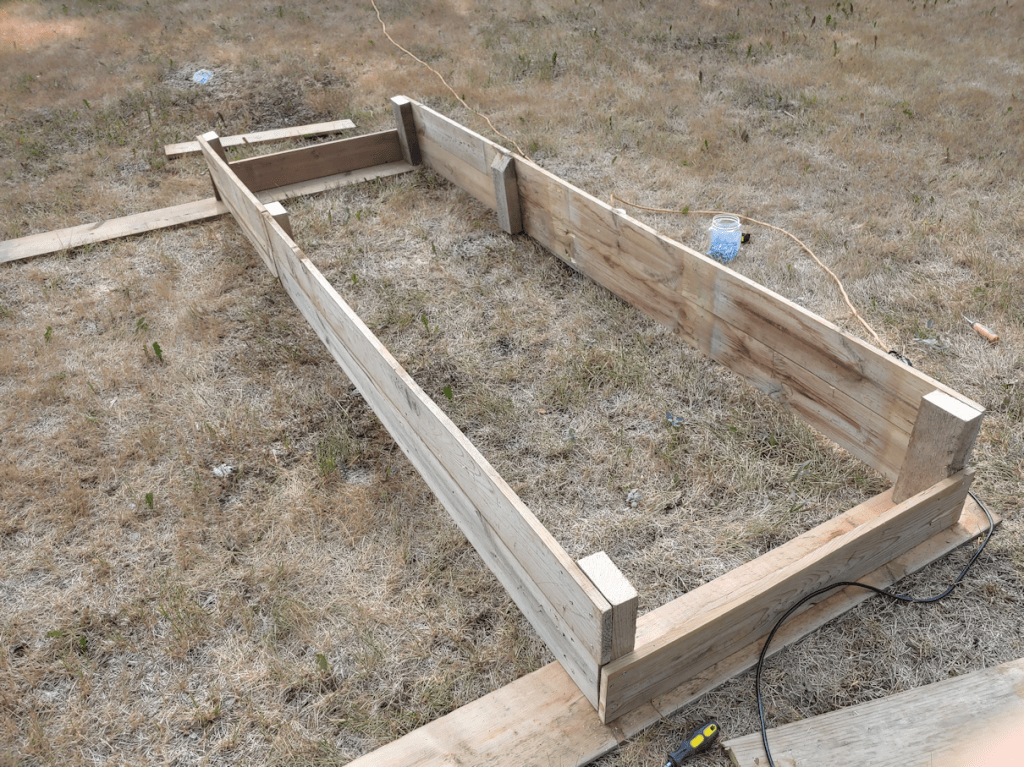
The long sides were made by screwing the boards to the support pieces. The boards all have damage to them, ranging from old water damage and some rot, to splitting and cracking from being so very dry. Which is fine. They will do the job, and will last a few years, at least.

What wasn’t fine was flipping a board and almost catching my hand on these!!! They look like the screws were broken off on the other side, so there is no way to unscrew them from the wood. I have to think about the best way to get rid of these, using what tools we have, but for now, we’ll just have to watch out for them!

Once the side pieces were screwed together, making sure they matched in length, I brought over a couple of the wider boards to give a flatter, more even, surface to work on while putting on the end pieces.

Then I quickly tacked it together with just a single screw at each corner, to hold everything together while I worked.

Oddly, one piece was almost an inch longer than the others! Which is okay; the excess can be sawed off, later.

Here we have it! The finished box, next to the bed it will be placed at.

Here, you can see the difference in the dimensions quite clearly.

The box is about 9 feet long by 3 feet wide, and about 11 inches high.

In preparing these beds before planting the garlic, we dug out the soil and buried layers of straw and compost material at the bottom. Since the dimensions are being changed so much, I plan to dig out the beds again, then once the box frame is in position, will start filling it, hugelkulture style, by burying some of the branches we’ve been pruning for the past few years at the bottom, then layering the contents of our compost pile on top of that. Straw decomposes slowly, so I expect to find it when digging the bed out. If I do, I’ll be keeping it separate from the soil, so it can be layered back on again. As for the top layer of soil, I’ll take advantage of the situation to get rid of the weeds by their roots, then mix in some of the garden soil we purchased this year, before returning it to the bed. This soil tested healthier than anywhere else we took samples from, but it was still low in nitrogen, so adding the fresh soil will be a benefit. Once we have the materials again, the top will get layers of mulch to protect the soil.

I have enough wood to make a second box frame just like this one. I plan to build the second box before I start digging out soil. With the wider boards, there is enough to make a third frame for the bed that still has the beets in it, though it will be only one board high.

When this area is done, there will be three longer, narrower, framed beds with wider paths in between. This will make them much more accessible, even at their relatively low height.

Hopefully, I will be able to continue working on this tomorrow, but we’ll see how the day goes. I’ve got our rescheduled court date for the restraining order against our vandal in the morning. Hopefully, it’ll actually happen this time – and if the security guards try to tell me to leave and come back later, I will stay close this time.

The Re-Farmer
Recommended: Self Sufficient Me

Welcome to my “Recommended” series of posts. These will be weekly – for now – posts about resources and sites I have found over the past while that I found so excellent, I want to share them with you, my dear readers. 🙂 Whether or not I continue to post these, and how often they are posted, will depend on feedback. Please feel free to comment below, and if you have a favorite resource of your own, do share, and I will review them for possible future posts.

I hope you find these recommendations as useful and enjoyable as I have!

As we continue to clean up, repair and improve things here on the family farm, we do have an ultimate goal to be as self sufficient as we can. Our health and mobility requirements mean we’ll probably never be completely “off the grid”, but there is still a lot we can do.

Growing up here, we were basically subsistence farmers. We grew, raised, preserved, butchered much of our own food, and for our animals, grew most of their feed, too. When it came to gardening, there was a time when the garden was close to an acre in size. This was your typical garden of everything planted in long rows, far enough apart to run a tiller in between. In my mind, gardening meant growing food. Flower gardening was just an aside, and not something I understood as “real” gardening, for may years. Even now, when I think “gardening”, my mind always goes to growing food.

As productive as my mother’s garden was, however, it is not how I want to garden, for many reasons. Everything from the rocky soil where the garden used to be, to mobility and accessibility, leads me to wanting to do raised bed gardening.

The following resource is very much the sort of thing I have in mind. Self Sufficient Me (Website YouTube) is an Australian site, so obviously, there is a lot that won’t apply to us in central Canada! We’re not going to be growing papayas anytime soon. :-D However, this resource has lots of information that can be used pretty much anywhere. Along with their website and YouTube channel, they are on other social media, which you can find linked here. They also have a second YouTube channel here.

It was through the videos that I discovered this resource. I haven’t been able to go back through all 8 years of them, but I’m slowly working on it. ;-)

The videos include some very basic stuff, perfect for beginning gardeners.

This next video really caught my attention, as hugelkultur is sort of the method we will be using when we build our raised beds. We might not use such large stumps and logs, but will likely have lots of big branches!

I especially appreciate that he talks about what didn’t work about the raised bed, as well as showing how the soil looks after 4 years.

Also, I love his tools!!!

Of course, he covers building raised beds as well.

He’s got all my prerequisites: height, strength, easy and cheap! :-D

Don’t have the space to do raised beds? He’s got you covered there, too.

He also goes beyond growing vegetables, and has videos on raising animals, too.

He readily admits that he is no carpenter, and that’s one of the things I love about it. He’s big on going ahead and building things, without worrying about being perfect.

We don’t have to worry about snakes where we are – the snakes we have would be more in danger from the chickens than the other way around – but definitely predators are an issue.

Chickens are not the only critters he raises, and you will find videos about raising quails and ducks, as well as videos reviewing products – the good and the bad! – about pest control, composting, watering, and so much more. I definitely recommend going through the many videos available. I’m sure you will find plenty to inspire you!

The Re-Farmer