Analyzing our 2021 garden: overview and planning for 2022 and beyond

With snow on the ground and temperatures dropping, this is the perfect time to look at how our gardens did this past year, compare it to the year before where we can, re-examine our goals, make some adjustments, and use that information to plan on what we will do next year.

Because we went from a pretty small garden the year before, to a much larger – and spread out – garden this year, I will go through things in more detail in later posts. For now, I just want to do an overview.

When we first moved out here, we worked out a multi-year plan. The first summer would focus on clearing and cleaning up the inner yard. The second year, we’d continue working on cleaning up the spruce grove and start working on the outer yard while maintaining what we cleaned up in the inner yard. The outer yard, we figured would take another 2 or 3 years.

With this plan, we would have been ready to start gardening around year five. Which would have made it next summer. Instead, we started our first small (ish) gardens in 2020. We had a few beds in the old garden area, and planted in the newly uncovered, soft soil found under the old wood pile. We were not very ready for gardening at all, but really – if we only ever did things when we are “ready” to do them, nothing would ever get done! ;-)

This past year, we kept our main goals, and added some new ones. The main goals have stayed the same. Ultimately, we want to be as self-sufficient as possible. That means growing as much of our own food as we can, in quantities sufficient to store or preserve enough food to last us through to the next garden season. So, not just through the winter, but until we can start harvesting fresh food from our garden again. (Animals will be part of the picture, too, but for now I will focus on plants.)

While we certainly didn’t meet that goal this year (nor did we expect to, yet), we did make progress. And I must say, I love being in a position to start working on a meal, realizing we’re out of onions or garlic in the kitchen, and simply popping into the root cellar to grab a bunch.

We didn’t plant anywhere near enough onions for our needs, but that’s part of figuring things out!

When it comes to planting things, whether it is our garden or trees or bushes, we try to meet multiple goals. In our long term goals, we want to have fruit and nut trees. Mid term includes certain types of berry bushes. Growing vegetables are part of our short term goals, simply because they are mostly annuals.

After being here a few years, we have identified gaps in the shelter belt we need to fill, as well as the need to increase privacy screening and dust protection from the surprisingly busy main gravel road that runs past one side of the property. With the aim of meeting multiple goals, any trees or bushes we plant will be chosen not only to meet those needs, but also provide food – and if they can provide enough for ourselves and for birds and wildlife, that’s just bonus. Soil testing has also helped us focus on what we can reasonably expect to grow here at all.

In trying to meet these multiple goals, we did things that would normally be gardening no-nos, like planting as far from the house as we could, and still be in the yard, breaking new ground that will later have things planted permanently. Choosing what to grow was based on things like short growing seasons, high yields and long term storage capabilities.

One thing we have is the luxury of space. That means that we have room to experiment and try new things to see how they do in our zone and growing conditions.

Some things, of course, end up being completely out of our control. Drought conditions being the main issue we had to deal with, this past summer. A plague of grasshoppers certainly didn’t help, either. Then there was the critter damage. That combination of things, plus the far-flung garden beds, made things considerably more difficult than it should have been.

Looking at things from a very broad perspective, though, we had more success than failure. Under the conditions we had, that’s pretty amazing!

I will talk about more specific things later but, in general, here is how we hope to progress next year, which will help us decide where our monthly “seed” budget will go.

The main thing we really need to focus on is trees. These can take years before they will start producing fruits or nuts, so we need to get those going as soon as we can. We’ve identified areas where we can plant things that will need more protection from the elements, and we’re looking at varieties that can handle our climate zone, as well as our nutrient depleted soil. Some of the varieties of nut trees we want to get cannot be planted in the inner yard, though, so we will still have to hold off on those until we can prepare areas in the outer yard. The renter is planning to rebuild the fence around the outer yard, and if he is able to do that next year, that means his cows won’t be able to get through anymore. We won’t have to worry about cows damaging seedlings; just deer! We will also be able to start taking out some of the old fencing around the inner yard, which will make it easier to tend to anything we plant in the outer yard.

We do not have the funds to get everything at once, so we have to focus on getting what will provide the most benefit in the shortest time frame. We will be able to get a few of the slower growing/producing trees, little by little, but will need to focus on faster growing/producing trees and bushes first, even though logically, it’s the trees that need the most time to mature that we should be getting first.

With that in mind, we will be ordering shelter belt berry bushes as soon as we can. Unfortunately, the varieties we had decided on are currently not available, but they might be available for ordering in December or January. Our first layer of “defense” will be to plant Bison Berry (if we can get them) along the East property line, to create a privacy screen. Sea Buckthorn is another one we are looking at, for another area, and we’re also looking at the Rugosa Rose. These will not only provide privacy screens, but will act as dust protection and deer barriers. The berry bushes are also nitrogen fixers. Once mature, they are supposed to be very prolific producers. What we don’t use ourselves will provide food for birds and other wildlife. The Rugosa Rose produces unusually large hips, and the flowers are also edible. (This will be on top of the wild roses we already have growing here.) These are more short to mid term items, as they should be able to start producing in just a few years. It will also take a few years for them to get big enough to form privacy and dust screens, and probably longer before they are dense enough to be a barrier to deer.

For long term, we are looking to order a bunch of Korean Pine Nut trees, if they are available. They require shade for their first few years, and we have the perfect spot to plant a row of them, though they will still need extra shade (and deer!) protection, at first. They are hardy to zone 2, and with 3 yr old saplings, it will still be at least 7 years before they start producing pine nuts. These will be the first nut trees we plan to get.

In the row of crab apple trees that we currently have, we will need to get rid of most of them, due to disease. I’m hoping we can save two of them that produce the best fruit. Crab apples are good for pollinating other apple varieties, so it’ll be important to keep at least a couple of healthy and strong trees.

What we are currently looking at are different cold-hardy apple varieties. I hope to get at least a couple varieties ordered this winter. We are looking for apples that are good for fresh eating, good for storage, and suitable for making cider, as well. Over time, we will be adding pears and plums as well, with the same requirements. These are more mid to long term goal plantings. They will need several years before they start producing, but nowhere near as long as the nut trees we are looking at. Once they do start producing, they are prolific, so we shouldn’t need a lot of trees to meet our needs.

Speaking of prolific, I found a source for a cold hardy variety of ever bearing, white mulberry that we plan to get. A single tree should be enough to provide for our needs, with plenty to spare for the birds as well. I even found a source for zone 3 paw paws! Given the rarity of those, I think we will put a priority of ordering them before they are sold out. Which means that is likely where our upcoming seed budget will be spent.

For short term, we need to start on our raspberries. This past year, the bushes my mother had planted did not produce at all, and the new ones we planted had to struggle with deer damage as well as the drought. We want to get several varieties of raspberries, in different colours and maturity rates. We all love raspberries, so the goal is to eventually have quite a lot of them.

We have found several bushes that appear to be black currants. There are two fairly large bushes, but they are completely shaded and barely productive. I plan to transplant those into sunny areas. I’m also looking to pick up some gooseberry and/or josta berry bushes as well, though probably not for 2022. We shall see.

The main focus with all of these is that they are perennial and, once established, should provide food for many years, so the sooner we can get them growing, the better.

For short term food growing, our original plans have changed a bit. Where the main garden area is, we will be building high raised beds to replace the current low beds, using logs from dead spruces in the spruce grove. Now that I have a chain saw that works, we should be able to clear the dead trees out much more quickly, and have logs cut to size ready and waiting to build high raised beds in the fall. Clearing out those dead trees will open up the spruce grove a lot. While we will be planting more spruces in the spruce grove (there are many little spruces we can transplant from elsewhere), we will also plant food producing trees that can use the extra protection the spruces provide.

The high raised beds we will be building in the main garden area will also serve multiple purposes. A primary one is accessibility, so we can continue to garden even as we get older and more broken. Filling them hugelkultur style should reduce how much water they need, even as high as they will be. This garden area has some shade issues, due to the tall trees my parents planted along the south side, and the beds will be high enough that they should even get more sun.

We will need a LOT more garden space to grow food in the quantities we need, however, and for that, we will be making garden beds in the outer yard, where they will get full sun, too. We won’t have enough dead spruces to use as materials for high raised beds there, as well as the main garden beds, but hopefully by the time we need to build them, we’ll have the funds to buy materials.

Looking at our long term plans, however, we are going to need to expand beyond growing vegetables for ourselves, too. We plan to get a hand mill. Among things I want to grow will be varieties of corn that can be ground into flour, and even different varieties of grains. I am hoping to at least get seeds this year, even if we can’t plant them right away.

As we start to include animals, I want to be able to grow as much of their food, as well as our own, as possible, which means forage crops. I’m even looking at plants that we can use to make our own sugar or syrup (yes, sugar maples are on our list, but there are other possibilities, too).

While some of these things may not be started this year, or even next year, we can still keep the plans in mind as we work on things this coming summer, to prepare. There is a rather massive amount of clean up needed in the outer yard, to have room for all this, as well as for the larger trees we intend to plant. Especially since some of those trees will need to be planted a minimum 30 feet apart, or cannot be planted near food crops because of the chemicals their roots release. Between that and the extra space needed between the raised beds, for accessibility purposes, things will be very spread out.

This past summer was a very difficult growing year. While I will go over specific things later, in general, I consider it a successful year. Remarkably successful, under the circumstances! Even some of our failures where still successes, since we had multiple purposes in mind. Some things we will do again, others will be dropped, if only temporarily, and new things will be tried. We learned a lot in the process, too, making everything a step forward to our ultimate goals.

And that’s about the best I can ask for!

The Re-Farmer

Thinking of 2022; first seed order placed

While we have already been picking up some seeds here and there for next year’s garden, still have some from this past year, and even have some seeds we have saved, last night I placed our first online seed order. We will have a “seed” budget over the next few months that will also include, hopefully, fruit trees and berry bushes as well.

A lot of stuff is still listed as out of stock. This is most likely because the sites are at the end of the 2021 catalogue year, and their 2022 products are not ready yet. Still, it meant a few things on my wish list did not get ordered, and I found alternatives, instead.

This order was with Veseys. I have been very happy with what I’ve had from them – even the stuff that ended up failing, like the mulberry tree, since they had no control over it getting hit with that one bitterly cold night that killed it off! :-D There are several other places we will be ordering from, month by month, but this is what I ordered last night, with why they were chosen.

All photos belong to Veseys, and I will link to their individual listings. (For future readers, if the links are dead, it’s likely because they no longer carry the item anymore.) All links will open in a new tab, so you don’t lose your place.

This past summer was a hard one for the winter squash. We did not get enough winter squash for storage, and that’s the main reason we were growing them at all. While we still have Red Kuri and Teddy squash seeds we can grow next year, I like variety. Hopefully, between them all, we’ll have at least something for the root cellar!

Georgia Candy Roaster Winter Squash

This is the long squash in the photo. I have heard from quite a few different places about how delicious these squash are, so I want to give them a try.

Winter Sweet Organic Squash

Another good storage squash that I chose specifically because the listing says they are best for eating several months after being picked. So this one is for the long haul!

Bresko Beet

We’ve tried different varieties of beets, and grew lots of them this year, but with the growing conditions, we got remarkably few beet roots out of it. I don’t know that we will order other varieties as well, but I don’t expect we will plant as many as we did, this past summer. The listing specifies that this variety is a good storage beet, so that’s a big selling feature for me. Pickled beets are fine and dandy, but having some for fresh eating will also be good.

Aunt Molly’s Organic Ground Cherries

I’ve been wanting to grow these for a while! Before our move, we did grow these in our balcony garden with success, and I just love them. Which is odd, as they are in the tomato family, and I can’t eat tomatoes unless they’re processed. One of the cold climate gardening sites I follow listed these as something they regret planting, as they became invasive, and they didn’t like how they tasted. It seems these can self sow and are hard to get rid of, once established. With I see as a bonus! These will be planted in a location that can be permanent, so they can self-sow as much as they want.

Conservor Organic Shallot

We will be trying these again! I really enjoyed the shallots we bought as sets, to replace what we tried to grow from seed, but they were used up very quickly. We need more for our household, and the sets only had 25 per bag! I want to try and grow from seed again. This time, we have what we need to ensure the cats’ won’t be able to get at them and destroy them again!

Red Baron Onion

Another one we will be trying again. When we started these seeds for our 2021 garden, I had used an cardboard egg tray for the “pot”. The cardboard just sucked the moisture right out of the growing medium.

We did plant the last of our seeds in Solo cups, though it was incredibly late in the season. What we did get got transplanted near our tomatoes. It didn’t really work, but while I was working on that bed yesterday, I found a single Red Baron onion in the ground, with just a hint of green on it. So I planted it back into the ground! Onions go to seed in their second year, so it should overwinter just fine under the mulch. We shall see! Even if it doesn’t, though, I look forward to trying to grow these bunching onions from see again.

Oneida Onion

Of course, we must have regular cooking onions, too! This is a variety I chose for its storage potential. I was happy with the yellow onions we grew from seed compared to the ones we grew from sets. We go through a lot of onions in this household, so I will probably be ordering other varieties as well – as long as we can find the room for all the growing trays when we start them indoors! At the very least, I want to get a variety of red onions I have my eye on, in another site.

We got a bush bean collection last year that did surprisingly well under difficult growing conditions. This year, I wanted to try a pole bean collection, but it was out of stock, so I found individual ones to try. We may still get bush beans as well. I am also interested in getting beans for drying. We shall see.

Carminat Bean

Since everything purple seemed to do much better than other stuff in our garden this year, I figured a purple pole bean would be worth a try! They are supposed to be a high yield bean that stays tender even as they get larger.

Seychelles Bean

This pole been variety was new for Veseys for 2021. They are supposed to produce for a very long time. As they are also expected to grow up to nine feet tall, these, and the Carminat bean, should be great to grow on the squash tunnel.

Latte Corn

This past summer, we had a sweet corn collection with three different varieties. This year, I decided to get just the one – and we will be planting them closer to the house in next year’s garden! These are an early variety that can handle colder soil, which will be important for spring sowing. Also, they were on sale. ;-)

I plan to get a couple other varieties of corn from elsewhere as well, so we should still have three or four different kinds of corn next year. We shall see.

I decided to try turnips this upcoming year. A couple of varieties caught my eye.

Tokyo Silky Sweet Turnip

I chose this variety because they get harvested at such a small size, and are supposed to be mild and sweet. The leaves can be used like spinach, too.

Purple Prince Turnip

These are a fast maturing summer turnip that are also supposed to be harvested at a smaller size. The greens are also good for eating, so they are another dual purpose crop.

Eureka Cucumber

And finally, we have these cucumbers! I chose this variety for its dual purpose as well. Harvested at smaller sizes, they are a good pickling cucumber. Leave them to grow larger, and they are good for fresh eating, too.

So this is our start! Along with the garden beds we used this past summer, we will need to expand our garden even more for next year. We will likely need to build more trellises as well.

One thing we learned from this past year’s garden is, if we want to meet our goal of growing enough food to preserve through the winter for the four of us, we need a much bigger garden! Partly, we need to plant more of some things, because who knows how much will actually survive? Plus, a few packets I’d ordered turned out to have fewer seeds in them than I expected. As I place our orders, I’ll need to keep an eye on the quantities and decide; do I order more packets, or order more varieties?

Hopefully, we will not get another year of severe heat and drought conditions. Nor another year with a plague of grasshoppers. And be able to keep the critters out… There are so many things that can affect yield. Someone on one of the gardening groups I’m on, posted this little rhyme.

One for the rook
One for the crow
One to rot and
One to grow

Planting four times more than we think we will need seems a bit much, but after how things went this past year, there are some things it really does seem appropriate for! And that’s just food for us. When we get chickens and possibly goats, we will want to grow as much feed as we can. Plus, I want to eventually grow flour corn and things like wheat, chickpeas and flax. I’m even looking at getting sugar beets, and my daughters are interesting in growing hops for beer making. By the time we’re doing that, however, we’ll be growing in the outer yard!

Little by little, it’ll get done.

The Re-Farmer

First time canning, and garden clean up progress

Just a bit of catching up on how things went yesterday.

The short version: Long.

It went long. Very long!

For me, it was working on pickling beets using the water bath canner. Until now, we have only done refrigerator canning, and my only experience with water bath canning was helping my mother, as a child. This is the first time I’ve done it myself, from start to finish.

It took WAY longer than I expected!

I have a Ball cookbook of canning recipes. The pickled beets recipe was for a half dozen 500ml jars. They had the basic pickle recipe, but also variations. After looking over our quantities of beets, I figured I could do two batches, with one batch being a “sweet pickle” using cloves and cinnamon sticks instead of the pickling spice mix of the basic recipe.

One batch called for 10 cups of beets. I decided to use up as much of the little beets as I could. Since they would be blanched and trimmed, and their small size would pack tighter than cubed larger beets, I made sure to grab more than 10 cups. I figured, if there was extra, we could just include them with supper or something.

While the first batch was blanching, which filled the blanching pot I found stored in a barely accessible space in the kitchen, I prepped a second batch to blanch. At the same time, I cooked the liquid with the pickling spice bag, and had everything ready to do the sweet spice version.

I was all ready to can the first batch, when I realized I had a problem.

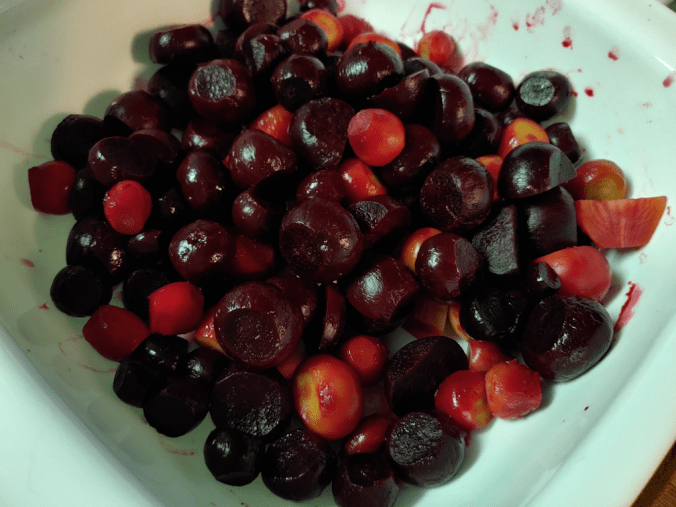
These are the first batch of fully prepared beets.

I doubt I could have filled three jars with that, never mind six!

So I added the second batch.

I still wasn’t sure there would be enough to fill the six jars I had prepped in the canner!

The next step was to put them into the pickling liquid and bring it to a boil, then start filling the jars. After my first jar, I realized I would likely have another problem. Not enough liquid! So I started the spiced version going and continued. I ended up being able to do only four jars with the basic pickling liquid, and the last two got the sweet spice version.

I started working on this before my daughters headed out to work in the garden. They came back four hours later, and I was JUST reaching the point where I actually start putting beets into jar. Most of that time was spent scrubbing beets, blanching beets, removing the outer skins, trimming the tops and tails, and waiting for water to boil.

I know “a watched pot never boils”, but my goodness, it takes a long time for large amounts of water to come to a boil!

But, if finally got done! Our first time canning AND our first time canning our own produce!

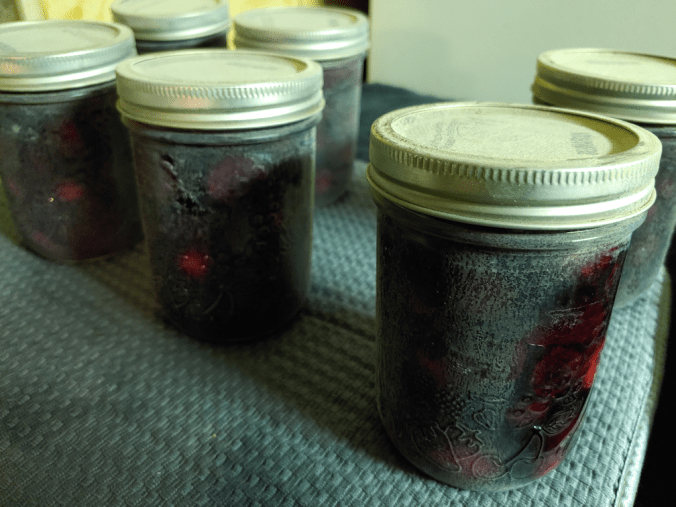
Pulling my first jar out of the water, though, was a bit of a surprise.

I mean, I know our water is hard, but wow! For the jars to come out with a layer of scale like this is crazy! You can see on the jar on the far right, where I wiped some of it with a paper towel. They’re going to need to be washed!

I finally had a chance to remove the rings and check the seals, just a little while ago, and they all came out fine! I made sure to keep track of which ones had the different pickling liquid, for when the scale gets washed off and they can be labelled.

Except the jars we open to taste test! :-D

By the time I was done, it was full dark, so it wasn’t until this morning that I could get a photo of the girls’ hard work outside.

They got three of the four remaining beds in the main garden area done – and most of that time was spent on just one of them! The first two weren’t too bad, but the third one was filled with crab grass, and it took them ages to get as many of the rhizomes out as they could!

I am amused by all the cat footprints in the loose soil! :-D

I’m glad they were able to get these done. Today turned out to be a write-off for outside work, but I will cover that in my next post. :-)

The Re-Farmer

Frosted, and planning ahead

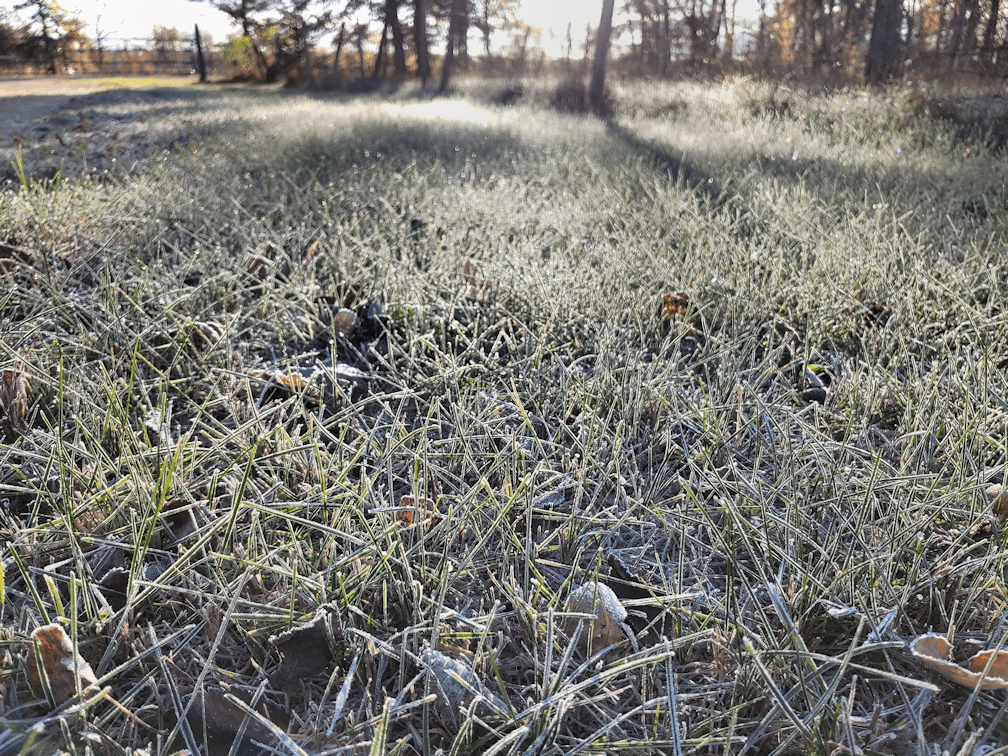
Well, it finally happened. We had a lasting frost, and temperatures were still below freezing when I came out to do my morning rounds.

My husband has still been up to feeding the outside cats earlier in the mornings, and has included putting warm water out for them, too, which they are really appreciating! It’s still not cold enough to plug in the heater in the cat’s house or use the heated water bowl, though.

While there was frost still on the ground everywhere else, this area was already warm and sunny. The kittens enjoyed that while watching me do my rounds!

It does show why what we planted along the chain link fence lasted so long. The tomatoes and gourds are finally done for, though. We can now start pulling them and prepping the beds for next year.

While we will be pulling everything else, the sunflowers can stay for a while longer. They sure are a cheerful sight on a chilly morning!

The chard was still quite covered in frost, as these beds are shaded longer in the mornings. We’ve never grown chard before, but from what I’ve read, getting hit with frost can improve their flavour. I don’t know that we’ll grow chard again. They did well, but none of us really ate them much.

I was already planning on pulling the lettuce. That last batch I gathered was so bitter, it went straight to compost instead of the salad I was intending to make with them.

A bit of a surprise was walking by the purple corn, the remains of which we were leaving to go to seed. They were pretty dry by now, yet most of the stalks were eaten last night! They had been left alone for quite a long time, so this was unexpected. Odd that, with so much fresh food still around, and even with the lettuce and chard uncovered, the deer would go for these dried up stalks.

We are going to have a lot of work to do over the next couple of weeks. We’re supposed to warm up again next week, so we do have time. The sweet corn blocks and, eventually, the sunflowers will be pulled, but nothing else will be done in that area until we get the berry bushes we intend to plant there. My daughter has been researching the ones we were looking to get, and Autumn Olive has been taking off our list; apparently, they are considered invasive! The Buffalo Berry and Sea Buckthorn are still on the list. Sea Buckthorn is also considered invasive in some areas, but not our climate zone.

The bean beds, pea trellises, squash tunnel and summer squash areas will all be used again next year, but mostly we need to focus on preparing the main garden beds closer to the house for next year. Once we get our straw bale in, we’ll start mulching some areas for new beds. We are already making lists of what we intend to plant next year, and will start buying seeds and trees over the winter, month by month. We will use that to help decide where to prepare new ground for planting next year.

At the same time, we are making lists of things to stock up on. Though things are looking mild, we’ve been either snowed in or had our vehicles freeze for two winters in a row now, so we want to be prepared in case something like that happens again. With food prices increasing so much over the past few months, and expected to get higher, it’s getting more difficult to buy those few extra things every month. Particularly since so many other people have realized that “prepping” is a really, really good idea, too!

Having grown up here, as a subsistence farm, I am very familiar with a lot of “self sufficiency” and “prepper” habits. That was just what everyone did, because there was no other option, really. So I’m no stranger to the lifestyle. At the same time, I am always wanting to learn new information and more about how to do it better, so I spend quite a bit of time researching. Which means I’ve lately been seeing a lot of homesteading resources – “subsistence farming” just isn’t a term that’s used anymore! – and “prepper” sites. Lately, it’s been feeling downright weird to go to them, as they are increasingly focused on giving information to people who are totally new to the concept, due to current circumstances. For us, this is just stuff we need to do. We are isolated just enough that we know we have to rely on ourselves if things go wrong, and there are always thing that can go wrong. The power could go out. We could get snowed in. We might have to evacuate due to wildfires. At least flooding isn’t a concern where we are, but running out of water is. We can’t just hope over to the corner store if we run out of things, like we could while living in the city. We can’t even assume we will have telephone (meaning the land line; we already can’t rely on getting a cell phone signal here) or internet for communication. The land line is pretty reliable, at least, but our internet starts kicking out as soon as there is a stiff wind, or if there are storms to the south of us. Of course, on top of all that, we have my husband’s health issues. He and I were just talking this morning about his prescription refills. He gets his daily meds in bubble packs now, including those that are restricted. For the longest time, he couldn’t get refills for his restricted medications until he was, at the earliest, 3 days away from running out. Now, his bubble packs aren’t even done locally. They’re done in the city and shipped to the local pharmacy, and with how crazy things have been, they’ve actually lifted some of the red tape surrounding restricted medications. Which means we should be able to get a couple of months of refills, instead of just one month. He just got his refills recently, so we’ll be trying to get an extra month of refills, next time.

Anyhow. It’s just been really strange to go looking stuff up for ideas and inspiration. So many people are now doing the same thing, with absolutely zero background in it. In one way, it makes me feel thankful for how I grew up. On the other, it’s frustrating, when people start panic buying, without any sort of planning or organization in mind, and it ends up causing problems for everybody.

Ah, well. People need to learn somehow. We just do what we can!

And right now, that means cleaning out the last of this year’s garden, and preparing for next, and making sure we are stocked up for the winter.

The Re-Farmer

More garden surprises

If you’re on Facebook, you know how they pop things into your news feed that you posted, X number of years ago today?

Yesterday, I saw one of those, with a photo I posted, three years ago.

After a snowfall.

Not only have we blown past our average first frost date of Sept. 10, but we are at a point where it is not at all unusual to have snow on the ground. Nothing that lasts, really, but usually at least one storm.

I am so loving our extended summer. Especially with how it’s giving our garden so much more time to recover from the extreme heat and drought conditions of the summer.

This morning, I found new Ozark Nest Egg flowers, both male and female! I hand pollinated some other ones, but it’s too early to tell if it works. I went ahead and hand pollinated the female flower here, too.

While looking through the Ozark Nest Egg plants, I found a single flower from the Thai Bottle Gourd that has made its way up the fence, mixed in with the Nest Egg gourds! I’ve only seen male flowers on this one, though.

Remember that carrot bed the groundhogs kept decimating, over and over? The one we finally gave up on, other than watering it now and again? Half of it, where the Kyoto Reds are planted, has carrots gone to see, pushing their way up through the weeds. The other variety, Napoli, have fronds visible among the weeds, but none are going to seed.

I watered the gardens this morning and, out of curiosity, pulled up some Napoli carrots. I was really surprised by how big they were! After having their greens eaten away several times, It’s amazing that there are any at all, never mind anything of a decent size! That had me looking around among the Kyoto Reds for carrots that had not gone to seed, and I found a surprisingly large one there, too!

The squash tunnel thermometer is definitely whack. We might be at 30C/86F as I write this, but it was only about 22C/72F at the time I took this photo.

While watering the peas among the corn, I couldn’t help but notice the corn block that is the furthest south.

We actually have corn. This block as lots of cobs developing!

They are very small – the husks make them look like there is more than there really is – and poorly pollinated, but we actually have corn. I went ahead and ate the one I picked, right after taking this photo, and it was tender, sweet and delicious. I will have to go back later today, with a container of some kind, and pick more!

I didn’t get a photo, but I picked 4 more of the largest Tennessee Dancing Gourds, too.

Once back inside, I started up a big chili in the crock pot. It’s got our own onions, garlic, carrots and bush beans in it, as well as both ground beef and the ground pork we got from our neighbour. Oh, and I also tossed in some Spoon tomatoes we’d tucked into the freezer. In the future, I plan to grow beans for drying, so some day we will be making chili with our own dry beans, too, along with the paste tomatoes we plant to grow and can. :-)

With a goal of being as self sufficient as possible when it comes to growing our own food, this year has shown just how touch and go that can be. We had a very warm May that had all sorts of things starting to bloom, only to get a single cold night that killed all the flowers off. Because of that one night, we have no crab apples, no saskatoons, no chokecherries, and it killed off the (expensive!) mulberry bush we’d transplanted. Even the lilacs and roses got damaged by that one night. Then we had the drought conditions that had us watering every day, twice a day, for so long. And now we’ve got an extended summer, and instead of frost and snow, parts of our garden are able to recover and start or continue producing! It’s been a crazy gardening year, but as much as I shake my head over how extreme conditions have been, the reality is, this isn’t actually all that unusual. As every farmer, gardener or homesteader knows, you could have the best year of all, only to have all your hard work wiped out by a single storm, or one unusually cold night. Or you could get a terrible spring and summer, but then get a great fall and winter. Some years, you might not get any real summer at all, and in others, the winter will be as mild as any fall or spring. As fantastic as it can be, to be able to grow your own food and preserve it for use in the off season, I’m just as thankful that we have grocery stores and imported food. I think both are good! As my brother and his wife have both said, if they had to rely on their garden, they’d starve!

The Re-Farmer

Morning harvest, and getting named

Check out what I was able to gather this morning!

There are quite a few more of the purple beans buried underneath. They have been, hands down, the most prolific bean producers, and if the weather keeps up the way it has been, we will be picking beans for at least another week or two! Even the yellow beans are putting out a second crop. With the drought conditions, none of the bean plants are as large and bushy as they should be, with the green and yellow beans particularly stunted, even as they continue to produce. With the green beans, that resulted in my finding bean pods that were almost as long as the plants were tall!

I had to get a bigger container to collect tomatoes with, instead of the red Solo cups we’ve been using until now. The vines are dying back, yet they still have so many ripening tomatoes!

Earlier today, I made a quick trip to the post office, before I gathered our morning harvest. The general store it is in always closes at noon on Wednesdays, so I had to do it early, but not too early; I knew the postmaster would need at least an hour from opening, to sort through the morning mail. We had some packages to pick up, but one of my daughters also had a package that was supposed to be delivered by courier, directly to our address, as it was from a place that does not deliver to box numbers.

Which has always been a problem, since our physical address doesn’t come up in searches. Like pretty much all of the roads around here, our road has two names; one is a numerical designation (part of the provincial system), and the other is our family name (a municipal thing). Many of the local roads are named after local families. It was only recently that I discovered that the road past our place has no name on the maps at all! Not even the road number. Which certainly explained why delivery companies had such a problem finding us!

My daughter was keeping an eye on the tracking number, however, and got a notification that her package was delivered to our door at about quarter to one. Of course, there was no such delivery, since the gate is locked. I could see nothing on the live feed of the security cameras, but my daughter went to see if it might have been left at the gate. Sure enough, I watched her on the camera as she got to the gate and picked up a white package. Which was on the gravel of the driveway, which also looks pretty white on the camera! No wonder I couldn’t see it!

I’m impressed that they found us, but it reminded me of something I wanted to try. Using the maps app on my phone, I found our road and took a closer look. It turned out that there is a 4 mile stretch of our road that is not labeled at all, however to the south of us, the road ends at another road, then restarts a short distance away. From where it restarts and continues south, it is labeled with the same numerical designation as the signs we have on our stop sign.

The four mile section that had no label is the only section that has our family name assigned to it. The offset part of the road with the numerical label probably has another family’s name assigned to it.

The app now has a function that allows the map to be edited. When I used that and started to select sections of the road, it simply said “unknown road”. I was able to select all 4 miles that had no label on it, then put in the name. It gave the option to add more information, so I added that it was also known by the numerical designation. I then sent the edit to Google Maps. I’ve already got a confirmation email saying “Thank you for your contribution. Your suggestion is being reviewed. Thanks for sharing your knowledge. We’ll let you know once the changes are published.”

Hopefully, that means or road will finally have a name attached to it on Google Maps, and people will be able to find us more easily! Plus, with the name rather than the number on the map, it will also match what is on not only my driver’s license, but on the licenses of several of my neighbours, too!

Speaking of which, I am hoping to get a chance to visit the one that sells pork products at the farmer’s market today. With our province’s latest draconian restrictions, organic humans are no longer allowed in “non-essential” places, even though such mandates are expressly forbidden in our laws, at both the federal and provincial levels. Vendors at markets aren’t required to be GMO though; just the customers. So I will just have to skip the market, and go right to the source! :-D

I’m quite okay with that. They are a homesteading family that are a few years ahead of where we want to be, as far as self-sufficiency goes, and I would love to see how they’ve been doing things! I may have grown up here on the farm, two sticks ahead of the stone ages, but I am more than happy to learn new, better and more efficient ways to go things! Especially since we’re only about one stick ahead of the stones ages now. ;-)

The Re-Farmer

Babcia’s Bread Experiment, part 8: ham and cheese roll!

For the next while, as I remove part of the dough from one batch to use in the next batch, I will be taking out slightly larger pieces of dough, to make larger batches of bread with it, next time.

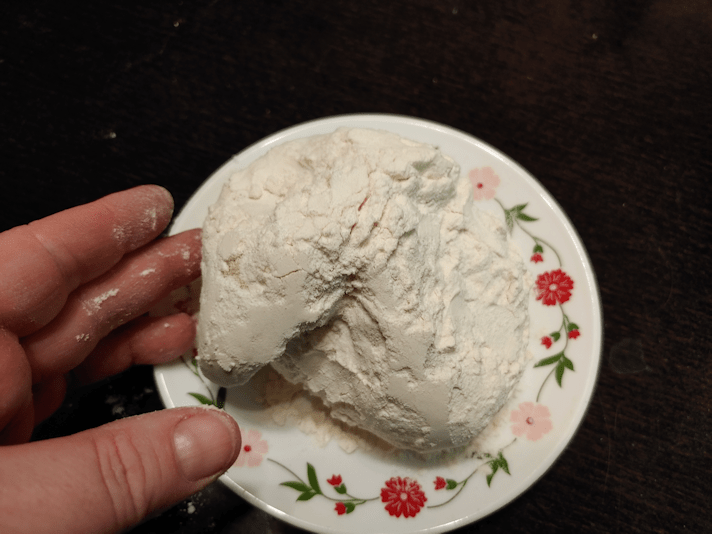
Our flour canister is tall and narrow, so I’ve made a point of flattening the dough baby a bit before burying it in the flour. When I opened the canister last night, I found the dough baby had grown enough to emerge from the flour like a mushroom!

I think today’s dough baby will the the last one I can fit into the canister! I’ll have to start burying them directly in the flour bag. They get so big! Which is encouraging, since that shows how lively the yeast is, so it’s a good problem to have. :-D

The dough baby was light, with a slightly crunchy dry shell, and a thick bubbly interior. The larger size made it a bit harder to tear apart to put in the little crock to soak overnight, so the pieces were a bit on the large size. That did not seem to make a difference to how it looked in the morning.

I soaked it in 2 cups of warm water overnight then, because I wanted to increase the amount of dough I was making, I cheated a bit and let maybe a tablespoon of commercial yeast proof in another cup of warm water. Right now, I’m getting enough to make the equivalent of 4 small loaves, and I eventually want to be making the equivalent of 4 large loaves. I don’t plan to get to my Babcia’s level of a dozen loaves at a time! :-D Making enough for 6 or 8 loaves, maybe, but not a dozen!

Once again, I used a mix of all purpose and Durum wheat flour, and let it rise only once before shaping. When I am no longer using commercial yeast, I’ll add an extra rising again. I also split it to do one half plain, and one half fancy. For the first half, I made it into 4 knotted buns and used a cast iron pan to bake them in again, which is working out very well.

The second half got divided again, to make a pair of rolled loaves.

Each piece was rolled out, then small pieces of leftover ham were scattered evenly, followed by generous amounts of shredded sharp cheddar, mozzarella and Monterey Jack cheese.

Before rolling them up, I did dampen the edges with water, but I did not try to seal the dough.

Once rolled up, the ends were tucked under, and they were left to rise.

The knotted buns were baked first, and turned out quite adorable.

The ham and cheese rolls, as expected, did leak out the bottom seam!

That’s okay. It just got crispy on the bottom of the pan, for some extra deliciousness. :-)

I would not recommend doing this without using parchment paper. :-D

A huge bubble formed under the top, as the cheese melted and the layers collapsed below. That did make it a bit hard to cut through! :-D

The ends that were tucked under were a lot more substantial. I the slices where the large bubble formed, the top crust was almost like a fancy chip! :-D

We had them for supper with tomato soup. It was a very nice combination! :-D The crispy cheese bits made for a lovely little treat, too.

I’d call this experiment a success! :-)

The Re-Farmer

Crab Apple Cider Vinegar: bottling day

For those of you who have been following this blog for a while, you may be wondering what happened with our cider vinegar.

Yeah. The stuff we were supposed to taste test 2 months ago, to see if it was done!

It’s been sitting in the old kitchen all this time.

Given how cold it gets in there, I wasn’t too worried about it.

For those who are new to this blog (welcome! Happy to see you!), you can check these posts out. All the links will open in a new tab, so you won’t lose your place here. :-)

Prepping a cap for an airlock – using the tools at hand
Making Crab apple cider vinegar: airlock or cheesecloth?
I am such a goof: crab apple cider vinegar reboot!
Crab apple cider vinegar, fermentation progress
Crab apple cider vinegar: straining day

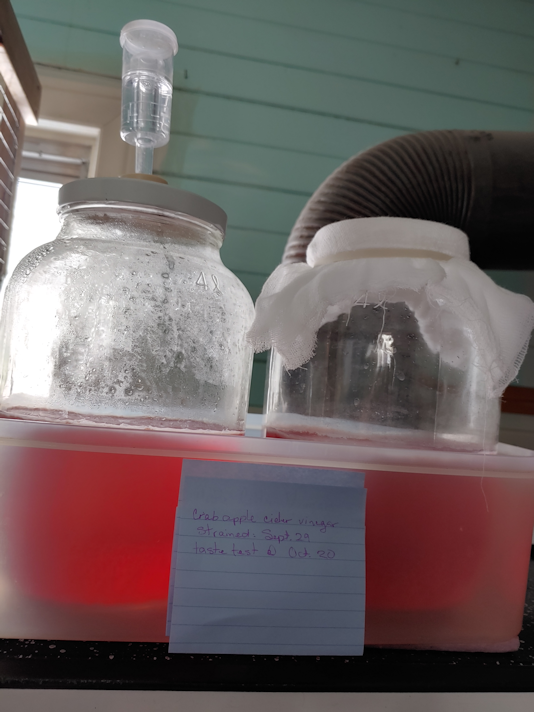
One of the issues I had was, what to store the vinegar in? The last time I made it, I could just use a quart jar. What did I have that was big enough, easy to pour from, and that I could close? I discovered that one of our 1 gallon (4L) glass jug that we have for making mead has a top that fits the same caps from the 3L jugs currently holding hard apple cider vinegar (which is also ready for bottling), so I was able to use that.

Once I had the bread dough rising, I brought the ACV in out of the cold!

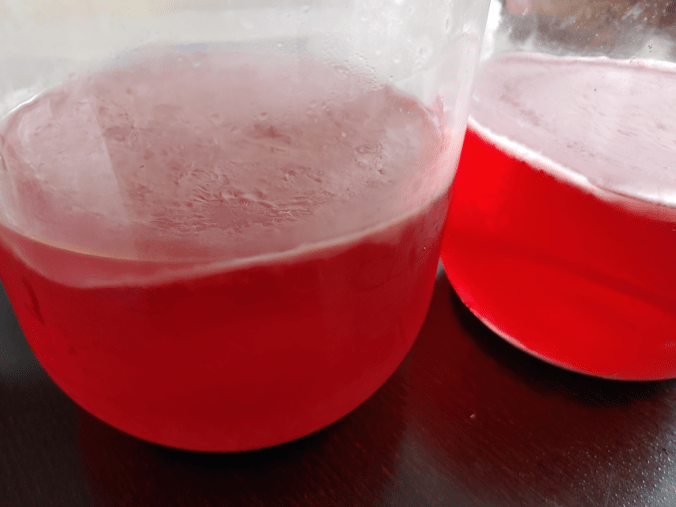
Both of them had visible mothers, floating on top. There was very little visual difference between the airlock and the cheesecloth jars. The airlock one had some condensation near the top of the jar, and that was about it.

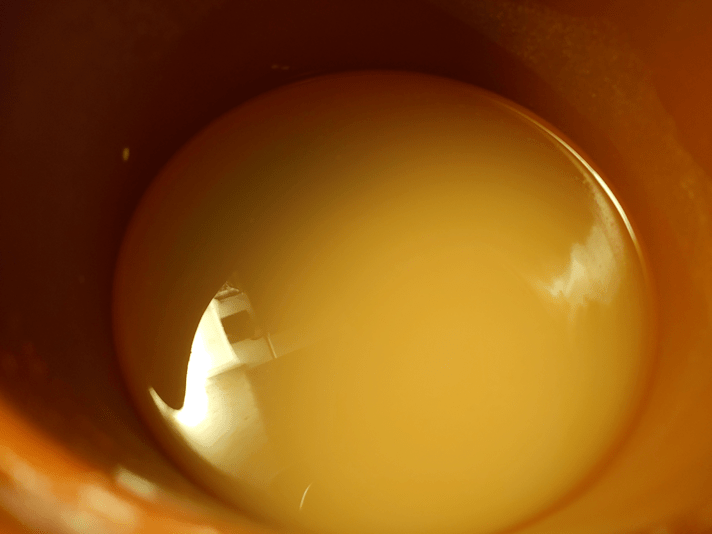
I drew some out of each jar, using a turkey baster, to taste test.

Both of them had a mild, vinegar smell to them. Both of them were also had a VERY strong vinegar taste!

The girls taste tested them, too, and we all agreed that there was a slight difference in taste between them. The cheesecloth one (the girls did not know which glass was from which jar when they tasted them) has a slightly milder, more pleasant taste.

Meanwhile, I did a bit of research on what to do with the mother. We won’t be making this again until next fall. Can the mothers be kept for that long?

It turns out they can.

I was able to remove the mother from the cheesecloth jar before pouring, but didn’t have as much lock with the airlock jar. :-D So I put a small strainer over my funnel when I poured the vinegar into the cleaned and scalded jug. There wasn’t enough room for both jars in the jug, though. Yes, I mixed them together. I’d have kept them separate, if I’d had another small jug, but I did not.

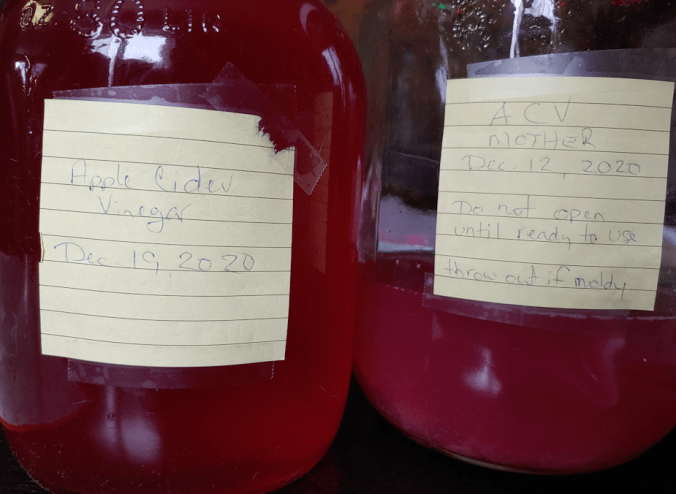
Which was okay. I read that the mother has to be immersed in vinegar, and kept air tight, for storage. So the remaining vinegar was left in the jar, along with both mothers.

The gallon jug of ACV will go into the fridge for later use.

The jar with the mothers was sealed, and is now back in the old kitchen for storage.

I am quite happy with how this turned out. Having left it for so long, it’s a lot stronger than if we’d bottled it back in October, like we originally intended, but that’s okay. Using our own crab apples, from the one tree with the best, sweetest apples, not only resulted in a gorgeous colour, but it’s own unique flavour.

We will definitely be doing this again! Next time, though, we will just use cheesecloth and skip the airlock.

Now we just have to do a hydrometer test on the hard apple cider and see how it is. It would be awesome to have some of our own hard crab apple cider to enjoy with Christmas dinner! :-) Hopefully, I can get that done in the next day or two.

The Re-Farmer

Babcia’s Bread Experiment, part five: I killed it!

Ah, I was afraid of this. I managed to kill the dough ball.

My mother describes how her mother would bake only once a week. So after working using the old dough after letting it sit in the flour few a few days, this time, I left it longer. Last night, I took it out and prepped it to soak overnight, as usual. Unfortunately, I did not have my camera with me.

The dough ball didn’t look any different on the outside from before. The extra time did mean the inside was drier, which I did expect. It was basically a hollow ball. Being drier, it was easier to break up into small pieces. I added 2 cups of water that had been boiled and allowed to cool to the right temperature (because of concerns with our well water), and it was set in a warm oven with the light on, overnight.

This is what it looked like this morning.

Yeah. That yeast is dead.

In stirring it up, the dough was completely dissolved, but no hint of yeast activity.

I can say with confidence that the extra time buried in flour did not kill the yeast. I could have dehydrated it completely, and it should have reconstituted and kept right on going.

Nope.

I killed it.

And I know how I did it, too.

The last time I used the dough was written about here.

One of the things I mention in there was that I “cheated” by using baking soda. If you’ve worked with sourdough recipes that called for baking soda before, you know what happens! There is a lovely chemical reaction that results in a light, fluffy dough or batter.

My mistake was, I didn’t take the dough ball out before I added the soda. That chemical reaction would have continued after I buried the dough ball in the flour, which is why it still developed a hollow center. However, as I thought might happen, the yeast was spent in the process. I didn’t remember to take the dough ball out until too late in the process, but I hoped that maybe it would still work. Alas, it did not.

Well, this IS and experiment!

So I am restarting the process. I don’t have the “instant sourdough yeast” I used before, so I am using regular yeast to make a sponge, which is currently in a warm oven to get all spongy. I’ll post the details later, but it is also a very old technique. It will slow down my bread baking plans for the day by quite a bit. Ah, well. That’s okay. It’s a learning process, and that’s the whole fun of it!

The Re-Farmer

Garden plans for 2021: orders in, and probably way too much!

I posted previously about seeds we ordered from Rare Seeds. Since then, I’ve placed another small order from them, which I will talk about below. (all links should open in new tabs, so you won’t lose your place. :-) )

The problem is, our first order hasn’t arrived yet. It has been shipped and, as far as my account on the website states, it’s complete. It should have arrived by now.

Could it be stuck at the border? I don’t know. I’ve emailed them and asked. Hopefully, they will be able to find out at their end.

A lot of the stuff on my wish list there is out of stock, so when I had the chance, I did place another order while what I wanted was available. This is what I will be getting (along with a free packet of mystery flowers).

Hopi Black Dye Sunflower. I’m really excited about this. Not only is it supposed to be a good eating sunflower, but it can be used to make a purple dye. After what happened when we planted sunflowers last year, we ordered 2 packages of these.

Mongolian Giant Sunflower. I love how they use small children to demonstrate just how MASSIVE some of their products are. This one is a monster of a sunflower! Heads can reach up to 18 inches across, and the stalks can reach 14 feet. This will make a substantial wind break and privacy screen. Yes, we ordered two packages of these, as well.

Crespo Squash. This is a type of big, warty green pumpkin. Why did I order it? Because it’s big, green and warty. Also, it’s supposed to be very delicious.

In deciding what to get, we are looking at both summer fresh eating, and winter storage. The sunflowers we planted last year did not get a chance to mature, but if we can get these planted earlier, hopefully, that will not be an issue again. We will also be looking at finding ways to keep the deer away from them. From the looks of the stalks we left in the garden, they are still trying to eat them which, for this time of year, is part of why we have them there. Hopefully, the birds are able to eat the developing seeds in the seed heads, even if they’re not fully formed and ripe. Last I checked, some did appear to be eaten, but not much. With bird feeders right by the house, they don’t really have much incentive to eat underdeveloped seeds.

We got our Vesey’s catalog in the mail recently, which was quite exciting. :-D The girls and I have been talking about what we want to do while going through it. Today, I ended up placing a much larger order than before. I had been thinking of waiting until January, but with things already disappearing from my cart because they were suddenly out of stock, I figured I’d better order things while I could. Even so, much of what I would have liked to have ordered was out of stock. Some of them, I ordered different varieties instead. Others, we will wait and will probably order in January or February.

This is what we’ve got ordered, as of right now.

Vesey’s Mosaic Mix Tomato. We are not big tomato eaters. I actually detest tomatoes, though I can eat tomato paste or crushed tomato as an ingredient in dishes. One of my daughters, however, really likes little tomatoes. This package is a mix of cherry and grape tomatoes in a range of colours that will produce over a long period of time. This is for her! :-D

Merlin Beet. Of the beets we tried to grow last year, this is the one the girls liked the most. We’ll just have to protect them from the deer!

There is another variety we plan to get, but it’s out of stock, so we’ll order that later. When we’re ready to plant, we should have 2 varieties of beets.

Spinach collection. Three varieties of spinach that mature at different types. We all love fresh spinach, but store bought spinach goes bad so quickly, we rarely buy it. Something else we have to protect from the deer, though!

Summer Squash Mix
Sunburst Summer Squash These are the same as what we ordered last year. The mix does include sunburst squash in it, but having more of them went over very well last year. This time, we have better information for starting them indoors, and protecting them from late frost, so hopefully, we will have even more. They will be for fresh eating, and for pickling and freezing.

Baby Pam Pumpkin. The pumpkins we planted last year were planted way too late, and we didn’t even know what variety they were. This time, we chose a variety noted for its eating quality, and faster maturity.

Red Kuri (Little Gem) squash. These little winter squashes should mature even faster than the pumpkins! This variety was also chosen for its winter storage qualities.

Teddy Organic Winter Squash. We picked these for their combination of small size (serving size!) and high production, as well as it’s faster maturity.

Pixie Melon
Halona Melon

I was unsure about trying to grow melons again, as the transplants I bought last year did not work out. I had a variety recommended to me, but it was not available. These cantaloupe type melons were picked for their quicker maturity. We enjoy melons, but it’s another of those things we rarely buy, so it’s worth giving it another go.

Cucamelon. Yes, even though I was able to save some tubers, I’m still getting some to start from seed. Just in case!

Conservor Organic Shallot
Norstar Onion
Red Karmen Onion Sets (to be shipped in spring)
Red Baron Onion (bunching onion)

We have 3 varieties of garlic already planted. Now, we’ll also have lots of onions, too! We use onions a lot, so figured it was worth going ahead and planting lots. We chose come of these for their winter storage-ability.

Yukon Gem Potatoes (yellow flesh)
Purple Peruvian Fingerling Potatoes (purple throughout)
Norland Potatoes (red skin, white flesh)
Purple Chief Potatoes (purple skin, white flesh)

Last year, we ordered 2 boxes (3 pounds each) of the Yukon Gold. This year, we decided to double the amount (each comes in a 3 pound box), but quadruple the varieties. The Norland and Purple Chief are noted for their winter storage, so we’ll have some we will grow for eating earlier, and others to keep for later.

Napoli Carrot
Deep Purple Carrot

Deep Purple is one of the varieties we planted last year. The Napoli is not the variety I originally picked, but this one was in stock and highly rated. We have two other carrot varieties coming from Rare Seeds that should have arrived by now. If something has gone wrong with that order (for all I know, seeds aren’t being allowed across the border right now. Or maybe it’s just slow), we’ll still have 2 varieties. If we end up with 4, well, that’s just more for pickling or freezing.

Dalvay Pea I actually had a 3 variety collection in my cart, but waited too long to order, and now it’s out of stock. So I ordered this variety for now. We may order another variety, later. These were noted for their fast maturity and long pods.

Lewis Bean (green)
Golden Rod Bean (yellow)
Royal Burgandy Bean (purple, turns green when cooked)

The 3 variety collection I had on my wish list is out of stock, so I picked similar varieties that were in stock. These types of beans are another thing I rarely buy in the stores, though we like them. They tend to either look oogy, or get oogy very quickly. These will be used for pickling and freezing, too.

Peaches and Cream Corn Collection Three varieties of Peaches and Cream corn. Not the collection I originally intended to order, but the one that was in stock! We have 2 other, more unique, varieties from Rare Seeds that are held up (watch, after my saying this so often, I’ll find them in the mail tomorrow… LOL). I believe we will need to plant those varieties away from these ones. I don’t think they would be good to cross pollinate. Especially the purple variety. :-D

Illinois Everbearing Mulberry (shipped in the spring) This is it! Our first food tree! I really hemmed and hawed about ordering it, because it’s quite expensive, but it will be two years before it produces fruit, so the sooner, the better. It’s actually a zone 4 tree, so we will have to ensure that it is well protected. It can grow up to 25 feet high, which also needs to be kept in mind when we decide where to plant it, too! My mother remembers they had a mulberry tree growing behind their barn, when she was a child in Poland. She remembers bright yellow silk worm cocoons on them, too! We might be able to grow the tree here, but I don’t think we could introduce silk worms here! :-D

Western Mix Wildflowers
Alternative Lawn Mix Wildflowers

These are mixes that will be scatter sown in a couple of areas. One of them will actually be outside the property, between a fence and the road. This is an area that is currently open, and I don’t want it to be taken over by trees, like on the other side of our driveway. Plus, the garden area is on the inside of the fence, so it will attract pollinators. Reading over the planting instructions, it seems they actually do better being planted in the fall, so we might take the summer to prepare the areas (they actually recommend tilling! No, we aren’t going to go that far), then seed them.

There we have it! Our order is in.

This is probably way too much – and there are other things I’d still like to order! We certainly don’t have enough beds or grounds prepared for all of it. Especially the corn. But that’s okay. We’ll work it out!

We will need to build potentially 4 trellises for the peas and beans, plus we want to build squash tunnels and trellises. Where we planted the squash last year, there are 5 prepared beds, plus the 2 beds the potatoes were in, plus 1 long skinny bed where I planted the seed potatoes I found that hadn’t sprouted. No idea if they will grow at all next year. We also have the retaining wall and parts of the old kitchen garden available for some things. The potatoes we ordered will need to be planted in a different area from where we grew them last year, so as not to attract the Colorado Potato Beetle. We are talking about trying to grow potatoes in containers, instead, this time.

So we’ll have to prepare beds for 27 plant varieties, plus larger areas for the corn and sunflowers, just from what I’ve listed here. More, counting my first order from Rare Seeds, and anything else we might order later. Not that we actually have to plant all of everything we get this year. Some things can be inter-planted (squash, beans and corn together, for example), so that will help a bit.

We’re still looking at potentially 20 beds or more that need to be prepared! All manually, too.

Yeah.

We can do that. :-D

Did we maybe overdo it? :-D

The Re-Farmer