Today is October 10, and yes, we have garden progress!
Last month, the 10 was our average first frost date, so I took garden tour video. I might do that again, later today, depending on how other things go. I might also leave it for the middle of the month. We shall see!
While doing my rounds this morning, I finally pulled the red onions in the high raised bed and set them to cure.
The strong fence wire on this cover was perfect to hang them on! Only a few didn’t have enough greens to hang them, so they got set out on the frame to cure.
After I took this photo, I also gathered the whole three shallots that were left by the summer squash, and hung them on the frame wire, too.
I am perplexed by these onions. As far as I can remember, these were supposed to be the Red Wethersfield onions, which have a round, flattish shape. These look more like the Tropeana Lunga or Red of Florence onions we grew before, but we didn’t have seeds for those this year.
So I decided to look at my old post about planting in this bed.
Well, that explains it.
These aren’t onions.
They are the Creme Brulé shallots.
I completely forgot that I planted shallots in this bed. I was sure I’d planted Red Wethersfield in here!
It’s a good thing I use this blog as a gardening journal!
So… those shallots are HUGE! Their size was another reason I didn’t think they could be shallots. Particularly since the ones planted in the bed with the yellow onions and summer squash were so much smaller.
Which had me wondering…
Where are all my Red Wethersfield?
Well… I did know where some of them were, but did they survive?
I had planted some of them among the Forme De Couer tomatoes, but we weren’t able to keep the cats off of them. This was all I could find. A few got planted in the wattle weave bed, but I could see no sign of those.
I was sure I had more transplants than this, though!
Ah, well.
I will be keeping these. As we clean up and prepare the beds for the winter, I will find a place to transplant them, then mulch them over the winter. Hopefully, they will survive the winter and go to seed next year, and we can try again.
As for the bean pods with the onions, those are the Carminat purple pole beans I’d left to go to seed. There had been at least a couple more pods, but I couldn’t find them. With one, I did find the torn remains of the pod, so I’d say the racoons were at it again.
These are all the seeds that were in the bods. It looks like only one is damaged.
They will sit in the cat free zone to dry a bit more, now that they are out of their pods, then I’ll package them up for next year. These do grow very well here, so when we plant them again, I want to mark off one or two plants to specifically leave for growing more seed.
Meanwhile, it’s getting close to the time to plant garlic for next year. I will select our largest heads of garlic in the root cellar, rather than buying more.
Which means we will have onion seeds (with still more to collect from the garden), pole bean seeds, and garlic from our own garden for next year. I’ve also saved seed from that blue squash we had to harvest when it broke off its own stem, and we plan to save seed from that one big Crespo squash. There is the possibility of cross pollination with the Wild Bunch Mix winter squash we grew, though, so any seed we save there may not be true to the parent, even if I was able to hand pollinate from the same plant.
It doesn’t look like those Uzbek Golden carrots that bloomed are producing any seed. The flowers are died off, but there’s no seed. Perhaps because these are first year blooms? I don’t know.
We are slowly getting to the point where we will be able to save more and more of our own seed. I don’t expect to be 100% using our own seed, if only because I like to try new things, and we are still working out what varieties we like best in some things, but I do expect to be able to grow at least 90% of our garden from our own seed within a few years.
Just a little big closer to our goal of being as self sufficient as possible!
Well, I harvested the onions this evening, and there turned out to be more than I expected! At least, more than I expected to have survived! 😄
The variety of yellow onion we tried this year is called Frontier, from Veseys. I’m actually impressed with how big they got, even though they were flattened and had their necks broken so early on!
The first photo in the above slideshow is all the onions from the bed shared with the summer squash, and all the onions I could find under and around the San Marzano tomatoes. I know for sure I’ve missed some in that bed! The tomatoes are quite dense, making it hard to see, but I still found quite a few.
I also harvested a few shallots. There are others I left, as they had not been flattened and are still growing.
In the second photo, you can see what I used to lay them out to cure this year. That’s a home made bed frame, and they’re laid out on metal mesh window screens we salvaged from the barn, years ago.
Some of them have enough stems on them that they can be braided, so those ones will get braided and hung up in the garage to finish curing. The ones that can’t be braided will be brought into the house to be used first.
In the first photo of the slideshow above, you can see that, even with a mulch, the weeds are taking over. The main concern being the Creeping Charlie at one end.
The first thing to do was remove the mulch. We won’t be able to use the grass clippings as mulch again, since so many roots and rhizomes are mixed in with it now.
In the next photo, the soil had been broken up – our soil tends to get very compacted – to be able to remover as many weeds, roots and rhizomes as I could.
Including elm tree roots. Yes, even after clearing those out in the spring, they are once again reaching that far away from the trees!
I had considered skipping the weeding, but I’m glad I didn’t. I shooed away a remarkable number of frogs that were hiding in there!
In the next photo, you can see the pile of stuff I cleared out. That will be for burning, not composting. The bed itself was tidied up and levelled.
Of course, while working on this, I found onions that got missed! You can see those in the next photo. They are now on the screens to cure.
The last photo shows the finished bed. Boards that had been used to frame the bed space while it was being shifted over in the spring are now holding down plastic for solarization. We’ve got some hot days coming up, and that should be enough to start cooking the soil and killing off any weeds, seeds and roots.
But no frogs. I made sure they all got a chance to hop away!
Unless the wind manages to blow the plastic away, boards and all, this will stay until spring. When the summer squash and shallots in the rest of the bed are cleaned up for the winter, I should be able to cover the rest of the bed, too.
I think I might pick up more of those dollar store dining table protectors. They’re not a particularly heavy duty vinyl, but they are stronger than the clear plastic garbage bags I’d used in the spring. They are also completely clear and transparent, rather than slightly opaque, like the plastic I used today, or the bags I used in the spring. I think the vinyl might help the soil become hotter and do a better job of cooking the weeds. If nothing else, we can see through it and can tell if actually doing the job, or if it’s acting like a greenhouse for the weeds, instead! 😁
Tonight, we’re expected to have an overnight low of 11C/52F. Tomorrow is supposed to be warmer than today, but the overnight low is supposed to drop to 9C/48F. After that, we’re supposed to get hot again. We’re now looking at a couple of days at 25C/77F, and lows of 15C/59F.
As for those temperatures cold enough for frost that the long range forecast was saying might happen within the first two weeks of October, that has changed again. The possible frost has been pushed back another week or so, though we are still expecting to get chilly nights.
I’m actually seeing possible snow on the last day of October – just in time for Halloween!
Who knows, though. The forecast will change again, soon enough! I just would like it to keep changing towards warmer nights for awhile. Since moving out here, we’ve had years when the first frost didn’t hit until November. I could do with a repeat of that!
It’s going to be interesting when I do my end of year analysis of how things went this year, as part of our planning out next year’s garden. This year has turned out completely different than how we originally planned! Having so many winter squash and melons to transplant made one huge difference. Shifting the beds to their permanent positions rather than building new ones was another big change. Then there was having to work around all that rain we had!
All things considered, I’m just happy to have as much as we do, this year!
I was very happy for a pleasant breeze to cool me down while I was working. I got the last of the bed turned and weeded, the boards laid out to mark where the log frame will go, and the soil evened out and leveled off as best I could.
Since I was wanting to finish off the onions and shallots, I decided to work in a grid instead of rows. I marked off 5 rows lengthwise first,, about 3 or 4 inches apart, then made cross rows, also every 3 or 4 inches apart.
Once the lines were marked out, I used the jet setting on the hose to drive water into all the marked lines. It makes it messier to transplant into, but it evens out the soil and gives deeper moisture for the roots to reach for.
After that, I just laid out the transplants where the lines crossed, starting with the yellow bulb onions at one end. I got to about half way down the bed, maybe a little more, before I finished them. Then I planted the shallots at the opposite end. Last of all, I used the grass clipping mulch I’d removed earlier today, to scatter a light mulch around the transplants.
I was very happy to see that this left me an open space where something can be direct sown. I’ll go through my seeds to see what I’ve got that will mature in less than 2 months, since we basically just have July and August left for a growing season.
This is really late for onion transplants. My intention had been to interplant them with other things, but that doesn’t really work out with the winter squash and melons, since those will get bigger and overshadow the onions. At least I got some in with the tomatoes.
We shall see if the weather holds long enough for all these onions to fully mature!
I’m now going to let my self breathe for a bit. I have some direct sowing to do, including where the spinach was planted, and that’s about it. After a break, I’ll get back to working on the trellis beds. Hopefully, we’ll dry out a bit and the winds will die down, and we’ll be able to harvest more logs for the raised bed frames. The forecast of rain to start this evening and continue for about 4 hours has changed. Now it’s saying we’ll get some rain for about an hour, around 10pm. On Friday, though (today is Tuesday), they’re still saying rain all day, starting about 5am Friday morning, through to 1am on Saturday morning. Aside from the brief rain we’re supposed to get tonight, though, we’re not supposed to get any rain at all until Friday.
I might actually be able to do some mowing! How exciting!
It is really wet out there, but we’re not supposed to get more rain today. I was torn between continuing on shifting the beds or starting transplanting. We have quite a few things that are more than ready to get set out.
After looking at the weather forecast, and the state of our transplants, transplanting won. In particular, tomatoes. It’s either that or pot them up, and that would be a silly thing to do at this, when they would do much better out in the garden.
The first thing I did was go through my trays and see how many I had of each type. When I saw I had 8 chocolate cherry, I decided they should go into the 8 chimney block planters at the chain link fence.
I then cut some of our many distilled water bottles to create rings for the transplants. With my husband needing distilled water for his CPAP humidifier, we have LOTS of these gallon/4L jugs. I had a few rings left over from last year, but a lot of them seem to have disappeared over the winter.
I had some of the tomato transplants in individual pots, and some in a large celled tray. There were three rows of four Chocolate Cherry, Black Cherry and Forme de Couer, and the remaining cells got San Marzano. Those ones are the strongest and healthiest San Marzano. The deep celled tray with just San Marzano ended up in the sun room too early – we needed the space – and has only a few sad tomatoes left.
The tomatoes in the tray were so big and bushy, it wasn’t until I was taking the Chocolate Cherry out (they were in the middle row, of course) that I saw one had died off. I completely forgot we’d lost one in that tray. So, we have 7 Chocolate Cherry tomatoes at the chain link fence, and an open space for something else.
Once transplanted, they each got a ring around them. This is to protect them from the wind for the first while, and from the cats that like to go under the netting. The netting was draped back over the blocks and will remain until the elm trees are done dropping their seeds. As the tomatoes grow, the chain link fence will be their trellis support.
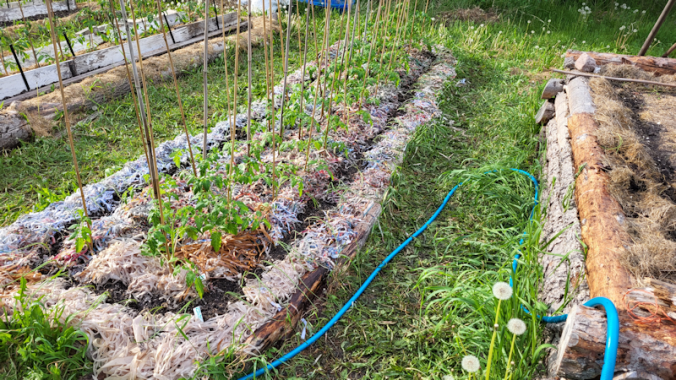
There were 10 Forme de Coure tomatoes, so I decided they should go into the rectangular raised be in the old kitchen garden. This bed already has a soaker hose set up. There is garlic growing down the middle, though not very many. This bed got the last garlic cloves, so some of them were pretty small and did not survive the winter. The garlic will be ready to harvest before the tomatoes are fully mature, so they should be okay together.
These tomatoes got their protective rings around them, which are being held in place by pairs of bamboo stakes – the rings blow away if they’re not anchored – which will become their trellis supports as they the tomatoes grow.
Once those were in, I saw there was space enough to transplant some onions. Because I’ve got those started in repurposed mixed vegetable trays, it was quite easy to pop out onion starts in just one section and bring them over. I started with Red Wethersfield, because they were the largest, and I have the fewest in the trays. They were planted at each end of the bed and in between the tomatoes, with a few extras tucked in among the garlic. I think I got half the Red Wethersfield onions done.
There was room enough along the south side of the bed to add a row of the smaller shallots – planting a larger bulb onion might have been a bit too crowded. I didn’t try to plant some on the north side of the bed, as there wasn’t quite as much space, plus I figured they would end up getting shaded out by the tomatoes.
All that took about 3 hours or so. I decided to take a break, and will get back at it, later. The next bed I want to work on is the empty bed in the East yard, next to the peas, spinach and carrots. I will be putting the eggplant in there, and want to try something different to protect these heat loving plants. I will probably be planting the hot peppers with them.
After that, I have some space in the wattle weave bed. I think I’ll put the luffa next to the double lilac again; they did well there last year. Peppers did well there, too, but I might put the Black Cherry tomatoes there, instead. Some of the peppers can go into the high raised bed. The first of the trellis beds, however, is being saved for the melons, and I think the winter squash will be going into the two beds we are shifting, with our without their walls in place. The Crespo squash in particular really needs to be transplanted, but it needs a LOT of space. I might just make a whole new squash hill, just for them. Then there are the mulberry, which are way overdue for transplanting.
Much to do, that’s for sure! Tomorrow is going to be a write off for me, as I’m getting my field of vision test done, which includes pupil dilation. My vision is going to be messed up for quite a while, so I want to get back out there and get as much done today as possible.
Onions are something we use a lot of. I once took the time to estimate how many onions we go through in a month when buying them from a store, and calculated an estimate of how many we would need to plant to meet our needs. I think it came out to something like 200 yellow onions. That did not include red onions, which we bought less frequently. It also didn’t include shallots, which we rarely bought, because they are so expensive.
Which meant that, if we wanted to grow enough onions for the four of us for one year, we’d need to plant more than 200 yellow onions because, once we have them handy, we would probably be using them even more often than we normally do.
Plus the red onions.
Plus we wanted to plant shallots, because they are so expensive, but we like them.
With onions, we could buy sets for easier planting. A lot of sets. Or, we could start them from seed. Seeds would cost less than sets, plus we would have more varieties to choose from.
For our geographical area in Canada, we need to choose long day onions. Until I started growing them myself, I didn’t even know there were such things as long day, short day and day neutral onions!
As shown in a video in the Best Laid Plans post, we also need to start seeds indoors very early. Onions need a much longer growing season than we have.
We chose two red varieties, one yellow, plus shallots for this year. In the red onions, we’d grown Red of Florence successfully before. We like the taste of them, and their elongated bulb shape makes them easier to cut up compared to round bulbs. I also bought some Red Whethersfield to try, choosing them for their purported storability, as well as their flattened shape. With the yellow onion, we tried a new variety called Talon. The shallots variety we tried before wasn’t available, so we got the Ambition shallot to try.
Over time, we shifted some into them small aquarium greenhouse, because we needed the space.
With the issues we had starting seeds indoors and destructive cats, we also began our plans to turn the living room into a cat free zone. This required not only making a door that would keep the cats out while not being a permanent addition, but also a sort of window to block an opening in one of the shelves that act as room dividers. Protecting the seedlings in the aquarium greenhouses and the covered mini greenhouse we have was not good for the seedlings, as it was hard to give them the air circulation they need. By the time we had to move the first batch of seedlings out of the aquarium greenhouses and start other seeds, the barrier was built, and we now have a cat free zone!
With so many onion seeds to start, we went with densely sowing them, which I talk about in this post, including videos from MI Gardener explaining the technique. All the varieties grew very well, very quickly!
Since we had so many onions to transplant, we didn’t plan on dedicating entire beds to them. Instead, they were mostly planted as borders, where we hoped they would also do double duty as insect and deer repellers.
There was just enough Red Whethersfield onions to encircle the Roma VF tomato bed.
The Talon onions encircled the other two beds with tomatoes, with the last few going into the ends of the high raised bed.
In the above Instragram slideshow, you can see the Red Whethersfied and Talon onions around each of the tomato beds.
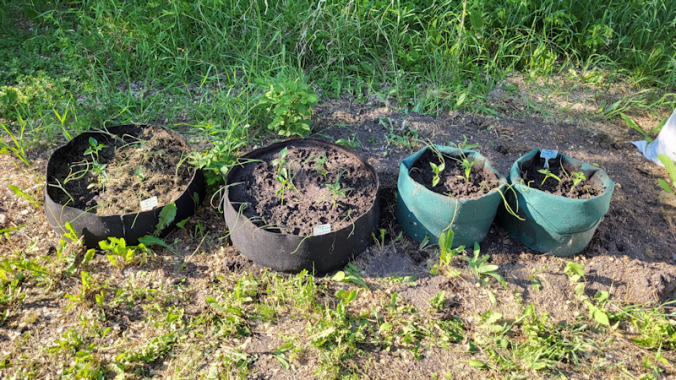
With the Red of Florence, they ended up all over the place! Some shared grow bags with peppers.
Others got planted between rows of spinach.
There were so many Red of Florence seedlings, it was hard to find space for them. After the spinach was harvested for the season, we still had seedlings left, and most of them went in where the spinach had been, leaving us with one bed dedicated to just those onions. We still had onion seedlings left over, including some of the yellow onions . By this point, they were the last little, spindly seedlings that we probably shouldn’t have bothered transplanting. Those ended up getting transplanted into the bed where we had peas and greens at the chain link fence.
Then there were the shallots. They got their own little bed, with a few last ones tucked into the end of the wattle weave bed.
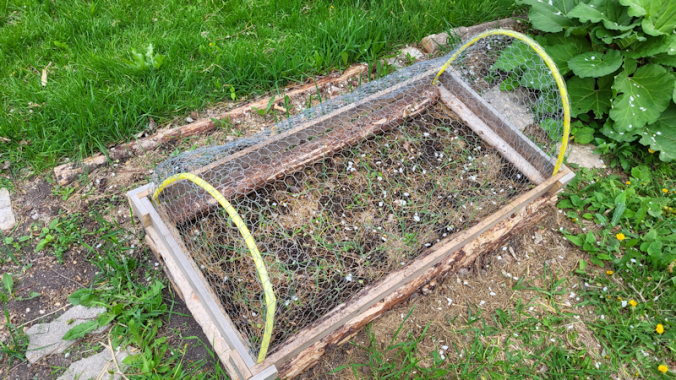
Once the open ends of the cover got chicken wire over them, we could finally keep the cats out of there!
So, how did the onions and shallots turn out?
With the Red Whethersfield, not at all.
I have no idea what happened to them. They were there and growing, and then just basically disappeared. Not a single transplant made it. It was really quite strange!
The seedlings planted in the bed along the chain link fence never really grew at all, with most of them dying off. That was not a surprise, really, considering how small those seedlings were.
The Talon onions around the tomato beds and in the high raised bed did better.
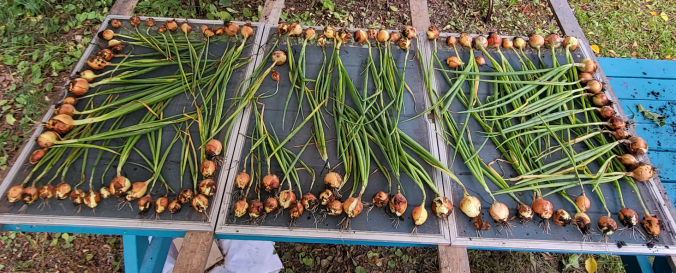
This picture is of the last of the yellow onions that got harvested, being left to cure. They were later braided to hang in the house. As I write this, there’s still a few left. Oh, there were a few other yellow onions in the high raised bed that were harvested later. They were still growing so well, we left them as long as possible before harvesting them.
The Red of Florence did a lot better, in most places. The ones in the grow bags were smaller, but those were where we turned out to have issues with fine tree roots making their way into the soil from below. The ones planted in between the spinach got quite large, with the ones transplanted after the spinach was harvested only somewhat smaller. We got a lot of onions out of that bed!
That bed was left until after the first few frosts before it was harvested completely. We already had some cured and braided indoors, but these last ones were still actively growing and would not have cured properly, so most of them ended up chopped up and in the freezer, with some set up to dehydrate in the oven.
Now, every time we open up the chest freezer, we get a strong smell of onions!
With the dehydrated onions, I ended up using our spice grinder and powdering about half. I think I like the onion powder more than the dehydrated pieces.
As for the shallots, they turned out to have self seeded company! Even though the soil in that bed was completely reworked, with fresh garden soil added, they still had seeds from years gone by in them. Specifically, dill and poppies. We’d planted Giant Rattle Poppies in this space before the little raised bed was built, so I left the poppies to grow. The self seeded dill keeps coming up every years, but never gets particularly large, but we still like to harvest the leaves for cooking, so I left those, too. The poppies grew so tall they started growing through the chicken wire of the cover, making moving it for weeding pretty much impossible. When they started blooming, we realized they were a completely different type of poppy, that my mother grew at some point! No Giant Rattle Poppy seeds seemed to have survived. 😄
When it came time to harvest the shallots, I actually left them be until the poppy pods were dried out. Once I could harvest the pods, the cover could be removed and the shallots finally harvested. They were smaller than they should have been, likely because they had so much competition for water and nutrients, but still pretty good. We got a decent amount to harvest and, as I write this, we still have some left.
Final thoughts on onions and shallots
It’s a given that we will be planting onions again next year. We will probably get more Red of Florence seeds again, as they do so very well.
I want to try the Red Whethersfield again and hopefully actually get some to taste! I’m still somewhat perplexed as to why they to utterly failed, but I suspect it has more to do with the growing conditions in that bed, then anything else.
We definitely need to plant more yellow onions, though. There turned out to be fewer seeds in the package than I expected. I need to pay more attention to seed counts! The Talon onions did all right, but they did not reach their full size potential. In fact, we only got a couple among the tiny ones planted in the high raised bed that got really big. This would be due to growing conditions and compacted soil, which we have issues with.
I want to do shallots again, though I might try a different variety, as we’re still in the “what kind do we like?” stage.
Which means I need to choose and order seeds soon, because we’re coming up on December in a few days, and we need to get seeds started in January! In fact, we could actually get them started in December and not go wrong.
At some point, we will try growing green bunching onions again, and I want to grow leeks, but those will wait until we’ve had more time to improve and amend our soil, and build more higher raised beds. Soil compaction is one of the major obstacles we have to deal with before we can grow those successfully.
All in all, onions, shallots and garlic will probably remain a staple in our garden, every year.
We’re in that time when we can start transplanting things that can handle frost which, for us, is the onions and shallots. I started hardening them off earlier than the other transplants. It’s going to be very hard to resist transplanting more before our last frost date! Not only are we having a very warm May (today was supposed to reach a high of 18C/65F, but as I write this, at almost 6:30pm, we’re still at 20C/68F), but the long range forecast is showing warmer overnight temperatures well above frost risk. The problem is, long range forecasts are notoriously unreliable!
So, we continue to take it slow and continue to harden off the transplants. There is still lots to do to make room to plant not only all the transplants, but all the direct sowing we have planned, too.
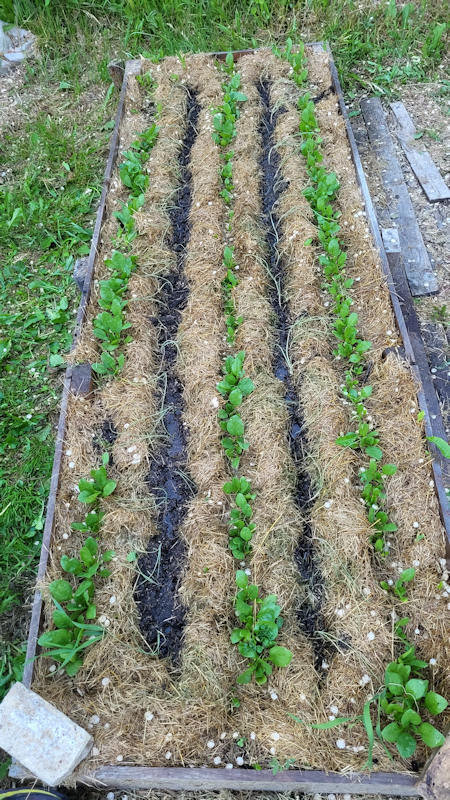
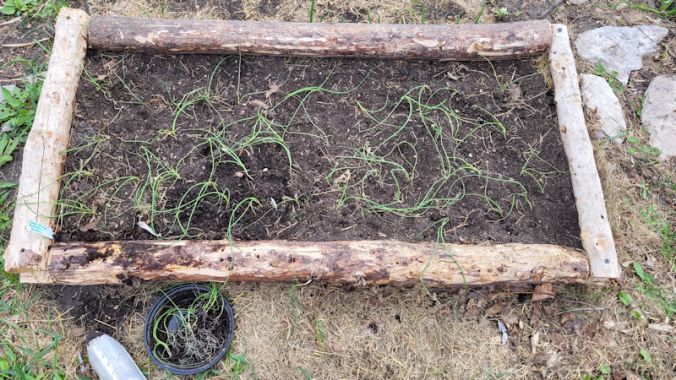
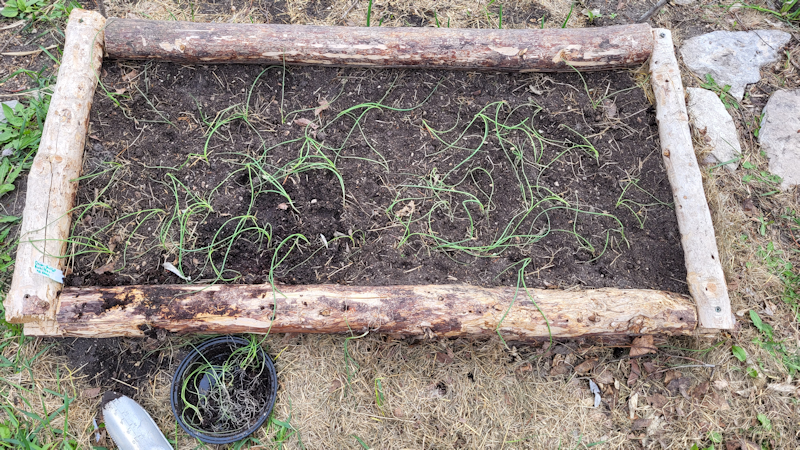
This tiny little bed in the old kitchen garden is where the shallots are going, because we have the fewest of those. This is a new variety of shallots, and the first to actually really survive to the transplant stage.
Keeping the cats out of the living room made a bit difference!
I planted fairly densely, but there were still a few plants left. After taking this picture, the bed got a thorough watering. We will have to add a mulch as soon as the transplants are strong enough.
The last little transplants went into one end of the wattle weave bed. It has a thick layer of wood chips on the top that I had to move aside to reach the soil. Protected by the wood chips, the soil was nice and damp!
So those are now in.
I foresee only one problem.
The cats have gotten used to using the garden beds for napping and playing!
I’m hoping to avoid having to cover the beds, but we might not have a choice. For now, they have no interest in the wet ground.
In other things, I went through our collection of feed bags, and had more than I thought. We’ve got 11 bird seed bags (20kg size) and 8 deer feed bags (18kg size). More than enough for the remaining potatoes. The only difference between the bags, besides the label, is that the bird seed bags are longer.
I’m still not sure where to set them up. The best place I can think of is at the far side of the main garden area, but I really don’t want to be hauling garden soil that far, if I can avoid it! Ah, well.
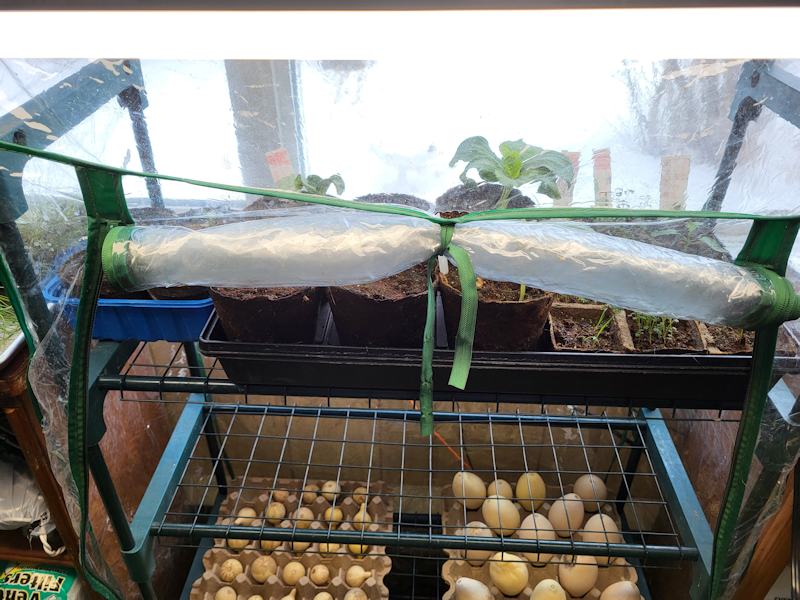
After a bit of adjusting, our new set up for the seedlings rotated out of the aquarium greenhouses is figured out.
The seedlings that need more warmth are inside the mini greenhouse, which is set up over a heat vent. The plastic cover is there to help trap a bit more heat, and protect them from the cold window.
It looks like we’ve lost one luffa, likely due to the chill, and one drum gourd, but there are still 2 luffa left, and 3 drum gourds. There are also several pots that had nothing germinate in them, but I’m leaving them for now, because who knows? Now that it’s over here, maybe something will happen.
The rolled up door in the cover is hiding them, but the thyme is looking like it could be potted up already!
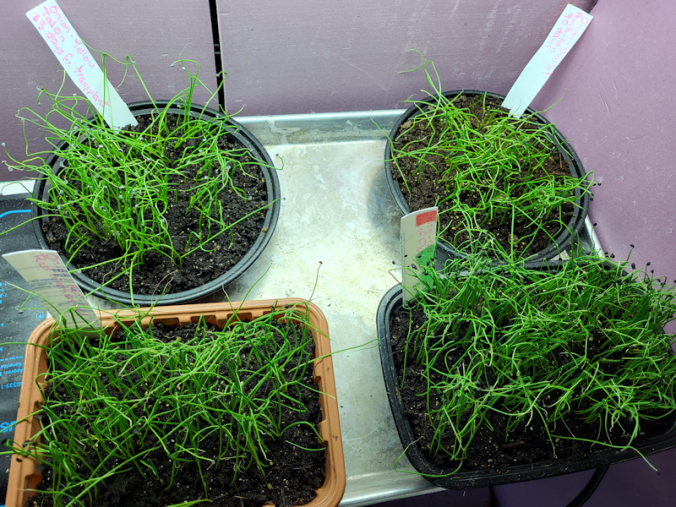
The onions and shallots get to be on one of the shelves, as they can handle the cooler temperatures better. They look ready for a hair cut!
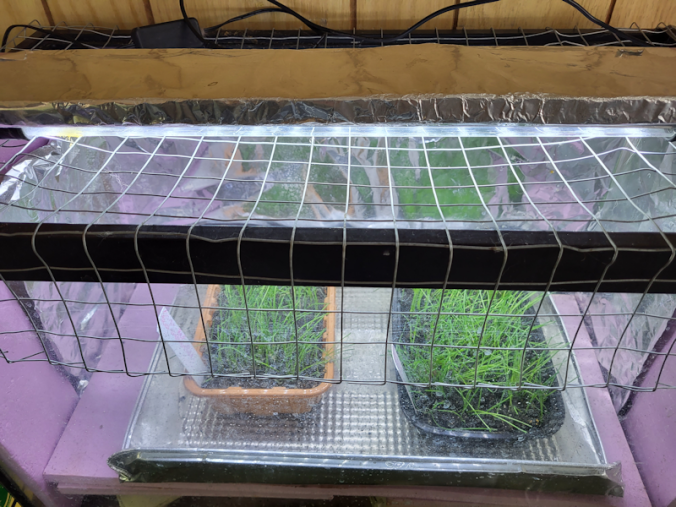
We were able to use some paracord to bring the lights down lower, and their heights can easily be adjusted. With just the two areas with seedlings, only one light is needed for the space right now. The shelves are closer to the window than the lights, so the seedlings are getting lit up from both sides. That was a major problem with our seedlings last year, and I was using aluminum foil to try and reflect light back to the shadowed side of the trays.
Also, you can see the trays of gourds from last year, in the mini greenhouse. They’re one shelf level above the heat vent; the bottom level won’t be used at all, since it’s right over the heat vent and very dark. If, for some reason, we need the space, we’d have to elevate the entire greenhouse frame somehow. The Tennessee dancing gourds are drying up nicely, but it looks like the Ozark nest egg gourds may still have been a bit too green when harvested. There wasn’t much choice about harvesting when we did, since we were starting to get frost, and that would have wrecked them completely. I still have seeds, though, and we will likely be starting them with the batches we’ll be planting before the end of this month.
With the cat barriers in place, and the living room rearranged for the seedlings, it’s actually made the room more useable. The girls have taken to actually having their meals in there, and even watching shows on Tubi. At the moment, they are enjoying some birthday cake in there! I’ve actually allowed myself one exception to my Lenten fast from sugar/starchy foods, to have a piece of birthday cake. It’s been long enough since I’ve eaten any sugar or starch, it’s actually making me fill a bit dizzy!
Anyhow. That’s our garden progress for the day! 🍃🌿🌱
I’ve been waiting for days before finally getting a picture with the newest drum gourds, then went again and got progress pictures of the rest.
I found a new baby this morning!
The red arrows are pointing to the barely visible first zucca melon!
The new drum gourds were taking a lot longer than the first ones to break free of the soil. When the first one did, the reason became obvious. It was still completely encased in the seed shell! After a while, I very carefully removed it and just dropped the pieces on the soil surface, but the seed leaves have still not started to separate. I can now see that the other one is also still encased in the seed shell. Once it manages to break free of the soil, I will carefully remove it, too. The risk in doing that is tearing the encased parts of the seed leaves right off, as they are so very fragile in there.
The earlier drum gourds are just barely starting to show their true leaves. The luffa’s true leaves are coming out nicely. Even the lemongrass is showing some true leaves. I think. They don’t look very different, other than there being more blades. I honestly can’t tell with the thyme.
That last cell of sweet chocolate peppers finally has a single seedling germinating, so we now have a total of four. Still just the seed leaves in even the oldest ones, though.
The onions and shallots are growing very slowly at this stage. No new haircuts needed! So far, they’re all surviving, too. Hopefully, we’ll be able to keep them alive! Last year, we had some issues with the yellow onions and shallots not doing well, but we have different varieties of both this year, and they seem to be doing better so far.
We’ve got two varieties of red onions, one of yellow onions, and one of shallots.
I took advantage of the lovely temperatures (and being in less pain) to do some more clean up in the garden. Earlier in the day, my daughter and I drove into town so she could get a new photo to renew her driver’s license, while I popped across the street to pick up a few things at the grocery store. I was thinking of making a cream of chicken soup and was about to buy some carrots, when I remembered…
We have carrots. They’re just still in the dirt.
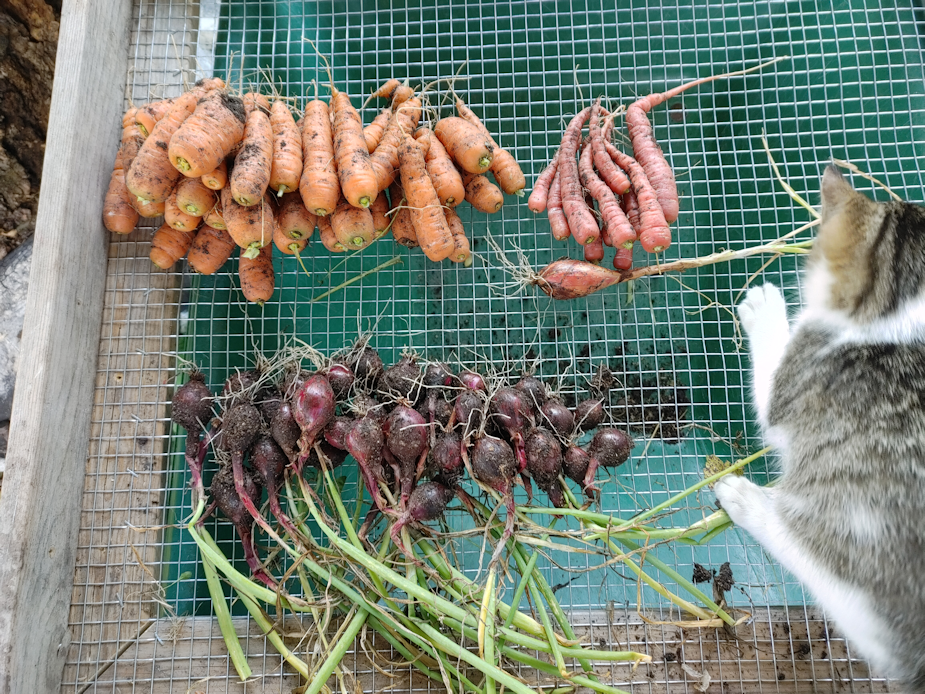
So I went over to where the chocolate cherry tomatoes had been planted, and pulled up the Napoli (orange) and Kyoto Red (dark orange) carrots – and a single shallot! I also dug up the red onions from sets that were planted with the yellow pear tomatoes.
The new soil sifter came in handy! 😁
I’m actually surprised that we got so many decent sized carrots. The Kyoto Red were pretty small – there were two I left behind because they’re blooming, and I hope to collect some seeds. I used up the last of the Kyoto Red seeds, but I think I still have some Napoli pelleted seeds left. Those really did far better than I expected.
Then there’s that single, solitary shallot!
There were actually two more, but they also bloomed, and I’m waiting for the seed heads to dry before collection.
As for the red onions…
Most of them aren’t any bigger than the sets we planted in the first place. Given how spindly the greens were, I thought they might be rotted out, or at least soft, but nope: they are quite firm. They’re just really tiny. I think they were simply too shaded by how massive the yellow pear tomatoes got.
I was going to take them in and was trying to figure out where I could lay them out to dry a bit, until I thought to check the weather again.
We’ll be having at least a couple relatively warm nights, and no rain is expected. I just spread them out on the soil sifter and will leave them out overnight. Tomorrow, I should be able to brush the dirt off more easily, before bringing them inside.
With that in mind, I think I’ll soak some of those blue grey speckled tepary beans overnight, to include with some our garden’s carrots and onions in my soup!
Once these were gathered, I worked on taking down the hoops in the main garden area, as well as the mesh and supports over the spinach in the old kitchen garden. The spinach is a loss. They germinated, and then got mostly yellow and stopped growing.
With the mesh and netting, I laid them out as straight as I could on the ground, then rolled them up around whatever straight sticks I had that were long enough.
You wouldn’t believe how difficult that is with a yard full of kittens!
The twine I used got salvaged, too, and the shorter pieces came in very handy to tie off bundles of netting, mesh, supports and hoops.
We have a few more warmer days, and my priority right now is to get the empty bed in the main garden area prepped, and then plant our fall garlic. When we go into the city next for our stock-up shopping, I hope to pick up more hardneck garlic to plant. It’s a bit too late to order them like we have for the past couple of years.
Once that is done, I plan to work on building up some of the beds in the old kitchen garden. I have ideas for those that I hope will work. If I get at least one of those done over the next few days, that will give us a prepared bed to plant any garlic I pick up later on. There’s still the beets to harvest from that garden, but I suspect those will be going straight to compost.
At the time this scheduled post is published, I should be on the road, headed to court. Because I have to leave so early, I won’t be able to do my usual stuff in the garden until later, but I wanted to have something positive to start the day with!
So here is an evening harvest to share in the morning. 😊
I was checking on the ground cherries while doing my evening rounds when I noticed one that had ripened since I checked them this morning.
I ate it.
Then I started weeding and found several others that had ripened enough to fall to the ground.
I brought those in for the family to taste test. 😁 I know they’ve had them before, since we grew them in a container in the city, but when the first of my daughters tried one, she sounded really surprised when she commented on how good it was. Looks like I’ll be fighting over them, as they ripen! 😂
There were a couple of Magda squash I could have grabbed, but I left the smaller one to get a bit bigger.
I picked the red onions because they were starting to fall over. Though they look the same, the bigger one is a Red of Florence onion, while the other, smaller one, is a Tropeana Lunga.
The yellow onion is from sets. Somehow, a few Black Nebula carrot seeds ended up around the onion, so I pulled all of them. The carrots were just wisps, so I tried pulling the biggest one I could reach, and… well… that’s what you see in the picture. Really long, really skinny.
The pale yellow carrot is an Uzbek Golden carrot that we got as a freebie. The two orange ones are napoli carrots using seeds left over from last year. I tried pulling a Kyoto Red, too, but it turned out to be really tiny. There are so few of them, I didn’t want to try another.
The shallot is one of the “spare” sets we planted in the retaining wall blocks of the old kitchen garden. Sadly, we lost most of the shallots in the bed by the chain link fence. Though the bed was raised a few inches when we added the bricks around it, it wasn’t enough at one end. There was just too much flooding this spring, and they rotted out. The ones planted in the retaining wall blocks aren’t doing much better, but that probably has more to do with cats rolling on them. The one I picked had lost most of its greens, so I decided to pick it before it started going soft. The other that was planted with it had lost all its greens and had gone mushy.
A nice little variety of things to try! Still lots of growing to do, though. 🥕🧅









 The Re-Farmer