Garden layout plans

Having received shipping confirmations for the seeds we ordered, the girls and I have been talking about just where we are going to plant what we’re getting, and what we need for what we’re getting.

In the two years we’ve been here, we’ve been working at reclaiming neglected spaces before we could even consider planting anything. The area where there used to be a huge garden has had more and more trees planted into them – without adequate planning, unfortunately, and causing a lot more shade areas I remember used to get much more sunlight. We currently have some spots here and there that we will be able to plant in, rather than one big vegetable garden, like my parents had for so many decades.

This is what we’ve come up with.

At the top of the sketch is the area we mulched over, then covered with tarps, last summer. This is where we will be planting the varieties of squash we’ll be getting, and the birdhouse gourds. The two giant varieties of sunflowers will be planted in a part of the old garden that I was finally able to mow last year. It’s more lawn than garden now.

The house is where the happy little gardener is standing. On the left is the old kitchen garden. This had been mostly a flower garden, though my mother did plant some onions there. The trouble with this location are the two ornamental apple trees. Still, we’ve already got chives and onions planted overwinter in the chimney block retaining wall. In the rest of the blocks, and in the area against them where I’d been able to add some soil to try and reduce the slope away from the house, is where we will plant fennel, and some of the varieties of carrots and beets we’ll be getting (we’re getting three varieties of each). The other area carrots and beets will be added is in the soft, deep, loose soil uncovered when we cleaned up the old wood pile area.

We’ve decided to set up the remaining chimney blocks along the chain link fence, between the fence and the white lilac bushes. Right now, there is an area of lawn just wide enough to get a mower through, but it would be great to not have to squeeze through there with a mower at all, and use the space to grow cucamelons. The chain link fence will be the trellis for the cucamelons, which need full sun. We chose the lilacs side of the gate, as they will not be affected by the shade created once the cucamelons cover the fence (assuming the grow successfully!), whereas the section of fence on the other side of the gate has flowers and haskap berries, and they’re already shaded too much from an elm, a maple and another variety of lilac.

What isn’t anywhere on the sketch is potatoes. We’ve ordered 6 pounds of Yukon Gem potatoes, but they are back ordered. These would not be shipped until the right planting time for our area, so they can go into the ground right away, so I hope they were get more stock before then. We weren’t billed for them, though. The gourds were back ordered, too, but we were billed for those – and I got a shipping confirmation for those the day after I got one for the other seeds. This suggest to me that they may not be expecting to get more of the Yukon Gem variety of potatoes. Depending on how that goes, we might end up buying some Yukon Gold, locally. We shall see.

We ended up buying quite a few plants that are climbers, so we will be building trellises, too. We will have to go through the barn to see what materials are left that are suitable to build with. When we do build them, we will keep in mind that they will need to be moved after the growing season. These are temporary planting locations, and very much experiments, as there are quite a few plants we have never tried to grow before.

With all the crazy stuff going on right now, with the Wuhan flu, shelter in place recommendations and grocery stores in many places being cleaned out of inventory, I’ve noticed quite the increase in people interested in growing their own food, so I thought I’d talk a bit about our decision making process.

For us, we’ve long sought to increase our level of self sufficiency as much as possible. When it came to gardening, this was not something we could do much of. Partly due to moving so frequently, but also because we usually lived in apartments with no real space to grow in. When we did find ourselves living in homes with nice, big south facing decks, we did container gardening, with varying levels of success.

Now that we’re back on the farm I grew up on, we finally have the space for all kinds of things, but with all the clean up needed first, we can only do a bit at a time, so we have to be quite selective on what we choose to grow.

When it comes to choosing what to grow, there are two ways you can go. You can look at the things you buy the most of and, if they can be grown in your climate zone, grow those, thus reducing your grocery bill. Or, you can look at the things you don’t buy, or buy rarely, either because they are too expensive at the grocery store, or hard to find. The grocery budget may not change, but you’ll have a greater variety of produce, and more “treat” foods, which has substantial psychological benefits, too.

We’ve done a combination of the two.

Carrots, beets and potatoes, for example, are things that are easy to find in the stores. At least the plain ones. It wouldn’t really be worthwhile for us to, for example, grow Russet potatoes. They are still pretty cheap at the grocery store, and common. What we’ve ordered are common foods in uncommon varieties.

Fennel is one of those things we buy as a rare treat. They’re not significantly more expensive, but enough that when the budget is considered, it’s more economical to buy more of the cheaper produce.

The squash varieties are similar. We like them, but rarely do. Some, like the pattypan squash, are pretty rare in stores, and more expensive.

The sunflower seeds are intended to play several roles. These varieties are good for eating in general, but we’re going to be planting a lot of these to use as bird feed in the winter. The large size and strength of the plants themselves will act as wind breaks, as well as privacy screens. Plus, we’ll be planting them in an area that the leaves will hopefully shade the ground enough to prevent the grass and weeds in the area from growing. (This is where we’re going to need more hoses; the area is quite parched, and there is no nearby source of water.) The straw bale we have now will be used as mulch, though it won’t be enough on its own for such a large area. We’ll likely use most of that up when we get and plant potatoes. I’m hoping to get more straw or old hay over the summer. I’m planning to contact the renter of the rest of the farm, whom we have been buying our straw bales from, to see if he has any – and maybe some well composted manure, as well!

You’ll notice one of the things we don’t have on our list are lettuces. These are often recommended for new gardeners, as they produce relatively quickly, and with successive sowing, you can have 3 seasons of lettuce. We’ve tried growing lettuces in our container gardens before but, ultimately, find they are not really be worth the hassle. We’ve found them to be fragile produce, both as a plant to grow, easily killed off by too many things, and as produce to buy at the store, which inevitably go soggy before we can finish them. We just don’t eat enough lettuce to make it worthwhile.

Cabbage, on the other than, will be something we’ll grow in the near future. We use them more than lettuce, and they store very well over winter.

So a lot of what we’re going to be doing for gardening this summer is pretty experimental for us. How things work out will do a lot to help us decide what we’ll do next year.

Meanwhile, we will continue to clean up, reclaim space, and work out where we want to plant the things that will continue to feed us, year after year; berry bushes, fruits trees and, hopefully, nut trees.

It’s going to be a fun (and, hopefully, tasty) learning experience!

The Re-Farmer

Little progress, good progress and making do

Well, we did it.

We did our monthly shop today.

Or perhaps I should now call it our bi-monthly shop, since we will have to go into the city again to get more of the big, heavy stuff we got only half of what we normally do.

Yesterday, I had hoped to get some more progress done in the new basement, so we can use it to quarantine some outside cats. Unfortunately, the biggest set back in accomplishing this is getting things completely out.

After setting up, gloving up and looking around at where to start (a very depressing thing to do), I decided it was a burning day.

We have not been using our burn barrel for quite a long time. While cleaning up the old wood pile area, it was my intention to burn the old, nail filled half-rotted pallet pieces. I even set up a larger metal ring for just that. I think it got used only once, before the full burn ban came into effect, and that was it for the year.

What I managed to do yesterday was drag out the old cardboard packaging for products no one has anymore, decades old catalogs, phone books and stacks of musty old Polish newspapers. That cleared up a very noticeable amount of space!

Paper sucks to burn.

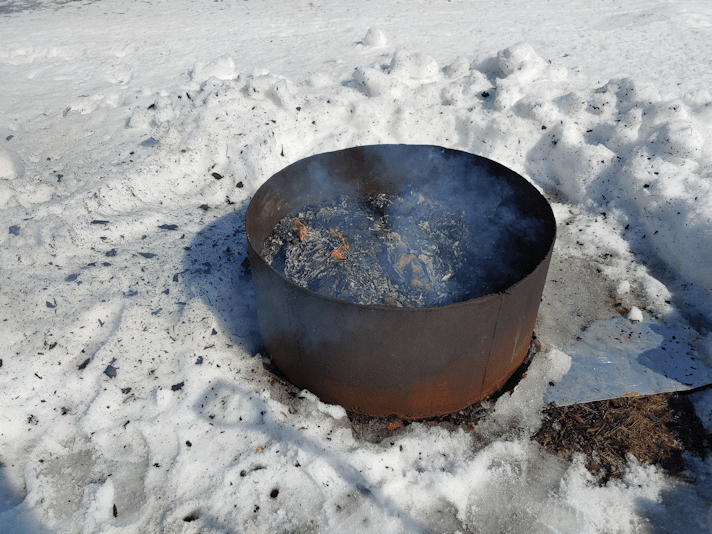
I think I spent at least 2 hours, standing in the snow, adding more and more to the fire. There was some old cardboard in the fire pit from last year, as well as the roots of some invasive vines I found, covered in snow. These eventually did dry out enough to burn. I snagged some wood from the burn barrel that we were never able to burn, all dried out by the sun, just to give the fire something better than paper to consume (and to keep the really thin pages from blowing away after being burnt). I kept having to dig up the ashes to uncover more partially burned pages so they could burn completely.

It was surprisingly windy out there. We will definitely be taking that lack of wind break from the south into consideration when we start working on the outer yard.

By the time I was done there, I had no energy left to work on the basement. My daughter was all set to help me, but we instead discussed what we are going to do with the stuff we need to take out. Besides the shopping cart of old wood for the fire pit, and stuff for the landfill.

We’re going to have to start using the barn.

It’s got so much stuff scattered about in there, though. If we can clear out one of the old cattle stalls to make space, we can store things in there until they can be properly disposed of. Like the collection of car batteries, old sump pumps and cans of old paint. In fact, the more we can get out of that basement completely, the better.

In the end, I got nothing else done in the basement at all. :-(

Meanwhile… notice the amount of snow around that fire pit?

It was much like that this morning, when we left for the city.

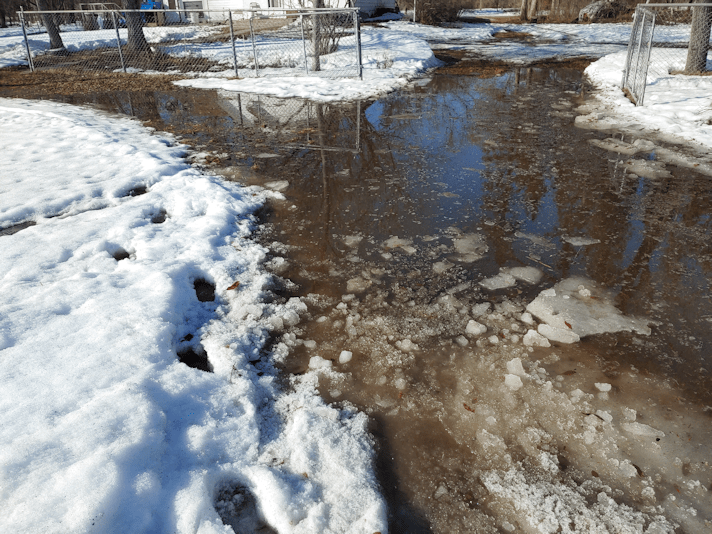
This is what we came back to.

You can see the path through the snow I’d made to get to the burn pit, over on the centre left. My foot prints are full of water, and there’s water all around the fire pit. Trying to walk around the giant puddle only revealed more water under the snow. There was no way to get to the house without walking through either deeper snow, or water!

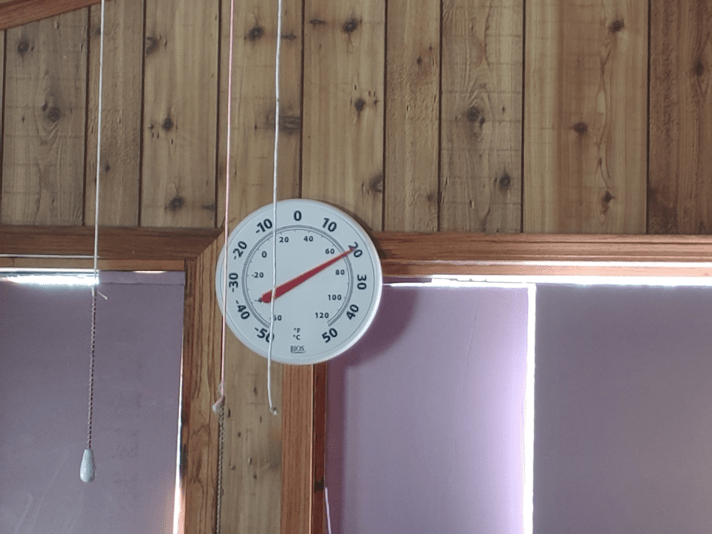
When I checked the weather shortly after we got home, we were at 7C. The sun room, however, was much, much warmer!

And that’s with just a couple of feet of uncovered window creating passive solar heat in there!

But I digress…

The trip to the city was very productive and actually went very smoothly.

We decided to hit the Costco before breakfast (which we ended up having at lunch time…), in hopes that we would get there before all the toilet paper sold out.

When we drove in, we noticed two things at the same time. First, the massive line up and second, the relatively sparse parking lot. We were able to park fairly close to the entrance, which is unusual.

There was a small army of staff in high viz vests keeping the line organized and sanitizing cart handles. The line went from the doors at one end of the store, along the building to the opposite end, across the lane into the parking lot, up one of the concrete dividers, looping around and back to the lane, then up the lane almost as far as the entrance before turning into one of the parking lanes. The end of the line happened to be near where we parked the van, but we had to walk further from the store to get in line.

Employees walked back and forth, telling people to stay 6 feet apart (with one guy helpfully adding that this was the length of 2 shopping carts), to stay to one side (for cars to get by) and reminding people to have their Costco membership cards ready. They also answered questions, which is why we heard that there was no toilet paper to be had. The delivery truck didn’t show up this morning!

As long as the line was, it moved very quickly. The staff at the exits kept count of how many people left, then let the staff and the entrance know, so let that many people in.

A wall of pallets was made to separate the entry side from the exit side. Once inside, but not through the inner entrance, we had time to read the very handy white board lists of things they were out of (toilet paper, Lysol products, etc.) and stuff they did have in stock that, I’m guessing, were things they’d run out of before, like flour.

Once inside, we found the shelves well stocked of pretty much everything else, including pallets and pallets of flour. We didn’t find bread yeast, and they didn’t have as many types of rice as usual. They were not allowing people into the room where the dairy and eggs were kept. Instead, they had people at a table who got what we needed. We usually get the double flats of eggs, but they only had singles left – not that unusual, with Easter coming soon.

Everything went very smoothly and efficiently, including the checkouts. We didn’t bother bringing our bags in, like we usually do. Instead, we packed the stuff ourselves at the van. That worked out so much better, I think we should keep doing it that way.

I had intended to buy a couple of big bags of cat kibble, but it turned out they were allowing only 1 per person of the Kirkland brand. I’m sure there was a sign to say that, but I missed it completely.

By the time we were done, though, we had actually got most of what was on our list!

That done, we got gas – at 59.9 cents per litre!! I haven’t seen prices that low since probably 2004. I worked at a gas station that summer, and I remember being told that I should fill my tank at the end of my shift because the gas prices were about to go from 61.9/L to the astronomical amount of 68.9/L (For my readers from the US, 4L is about 1 gallon.)

We can finally afford the gas to go out more often, but there’s no place for us to go!

That done, we decided to hit a drive through near the Walmart we were going to. It happens to be across the street from a new Bulk Barn that I hoped to go to. I wasn’t sure how a store like that would be able to stay open. We couldn’t see if they were open, so when we got our food, we decided to drive over and look. Either they were open, and we would eat in the parking lot there before going in, or they were closed and we would continue to the Walmart, and eat in the parking lot there. :-D

We still couldn’t tell from the outside if they were open – there were no signs that we could read from the van – but my daughter could just see through the tinted windows that there were people walking around with shopping carts.

So we had our breakfast… er… lunch… in the van, then headed in.

To a very unhappy staff member at the door.

As we came in, the first thing we saw was a barrier directing the flow or traffic. There were two signs on posts facing the door, and two others down the lane people were directed to. As we were grabbing a cart, this poor woman at the first pair of signs was dressing down a couple of customers that were shopping together. They had gone right into the store and started shopping, and she was telling them that they had to wait by the door, get gloves, and wait until a staff member got them. Only staff were allowed to scoop the products out. “Oh, I didn’t know” one guy responded. “No one said anything.” Which was when she pointed out the FOUR signs they walked right past.

All that for a bag of pistachios.

After dealing with the customers that ignored all the signs, she held out a box of these really thin, one-size-fits-all plastic gloves for us and asked us to wait until someone came to help us.

Normally, I would have liked to have wandered up and down the aisles to see if anything caught my eye, but since we were shopping Edwardian style, we just told the guy what we wanted and how much, and he got them for us. He had a shopping cart that was lined with plastic, and a pile of scoops to use for each item.

I got stuff for making meals in a jar. I did that last month, and they’ve really been working out well, so I wanted to be able to make more.

Oh, I just realized. I completely forgot to get dehydrated vegetables for that.

Ah, well.

That done, our next stop was Walmart.

Oh, dear.

Like at Costco, they were letting people in, a little at a time, as other customers left.

The line outside wasn’t anywhere near as long as at Costco (thank God for warmer weather!), but it moved much more slowly. People tend to linger at Walmart, more than at Costco.

On top of that, a fire truck arrived as we were walking to the store. Shortly after, and ambulance arrived, and we eventually saw someone being taken out in a stretcher.

Sadly, this is not really that unusual to see. Medical emergencies can happen any time, any where! I do hope the person recovers quickly from whatever happened.

Once inside, we started working on what was left on our list. YES!!! There was toilet paper! One package per household. It’s not the amount we’d usually buy for the month, but it will tide us over until we find some more.

We also got another big bag of cat kibble.

The main thing I was looking for, however, was rubber boots.

Now, I have a problem with getting footwear in general. I have always had very wide feet, but after injuring them many, many years ago, they are now even wider. My normal shoes are men’s size 9, triple wide.

None of the rubber boots came in wider sized.

I do have another problem, though. Rubber boots are made to cover the calves.

I have very little cartilage left in my knees and the balls of my feet. The metatarsals in my feet have a habit of suddenly dislocating. My patella also tend to pop out of place every now and then, and my knees tend to want to bend backwards or sideways. I compensate for all this through my leg muscles. As a result, I have highly developed calves. Weight lifter type calves.

Which means that the tops of rubber boots are far too tight.

After trying several sizes of one style, I ended up settling on a men’s size 12 (I don’t even bother trying on women’s shoes). They were still tight at the calves, but I figured I would just cut them.

My daughter, however, spotted some that were a shorter style. They were also lined winter boots, but I could live with that.

The size 10s seemed to fit very well, but just in case, I tried some size 11s.

They were even more comfortable to put on! Awesome! these would be perfe…

Then my heel rocked and I almost twisted my ankle.

What the heck?

Unlike all the other styles of rubber boots, which had very flat heels, these boots had rounded edges on their soles. This meant that the flat part of the heel was narrower than the boot itself.

An absolute recipe for turned ankles!! And I know myself well enough to know that I would do it, too.

So we settled on the taller style.

At least they were cheap.

Once done at Walmart, we had one last stop to make at our favourite grocery store.

We just had to check, and their toilet paper section was completely wiped out!

Everything else, however, was fully stocked.

Except bread yeast. *sigh*

Ah, well. We can just use the sourdough!

This is the store we pick up some international foods we can’t find anywhere else, and smaller quantities of fresh fruits and vegetables than what we’d find at Costco. Those, we keep topped up locally. We also picked up more stuff for our Easter basket, including fresh herbs. We’re going to make marinated goat cheese again. We also picked up jarred beets, so we can use the liquid for pink pickled eggs. There isn’t a lot that we need to pick up here, but enough to make the trip worthwhile.

What was interesting about all this running around is that I was not anywhere near as exhausted as I normally am by the end of the day. I really dislike crowds. While there certainly were plenty of people around, but people did try to keep physically distant from each other, so it wasn’t that madhouse jostling. Everything went so smoothly and efficiently that even the waits in line were not at all taxing.

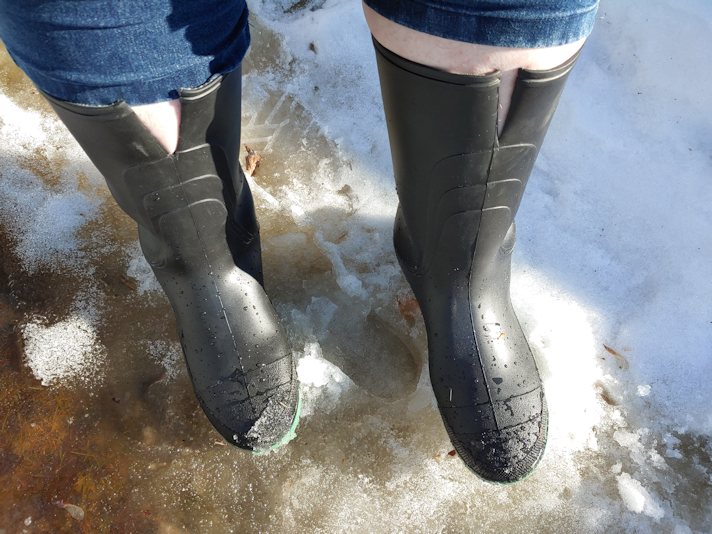
Once at home and the groceries were put away, I broke in the rubber boots to go and change the batteries in one of the trail cams, which now involves slogging through a hug puddle in the yard.

Yeah, I had to pull my pant legs up to get my legs into the boots.

Also, it turns out one of my calves is bigger than the other. By the time I was done, I had to get one of my daughters to pull the boot off of me, because it was stuck to my skin!

I have since cut them another inch or so, which will hopefully solve that problem.

I expect to be getting a lot of use out of these!

So we are now stocked up and set for at least a couple of weeks for some things, the rest of the month for others.

The shopping went much better than expected.

Oh, and I was also able to get a couple of plastic utility shelves for the old basement.

I know what I’ll be doing tomorrow! :-D

Trying not to kill myself, bringing them down the stairs… ;-)

The Re-Farmer

Clean up: old hot water tank

Today, it was back to the old basement to finally do something about the old hot water tank that died on us, shortly after we moved here.

A job that didn’t go as well as I’d hoped in some ways, while better than I hoped in others! :-D

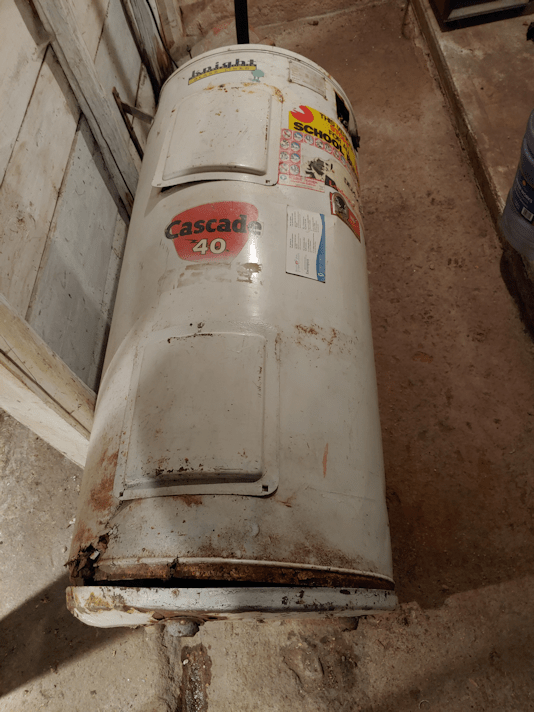
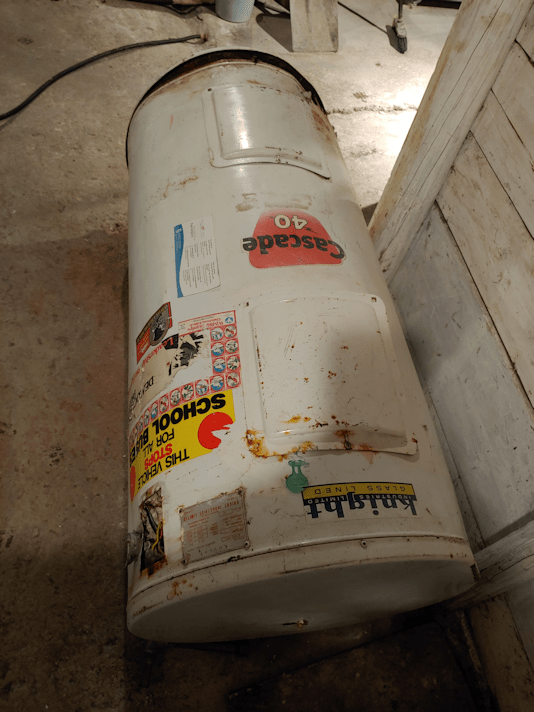
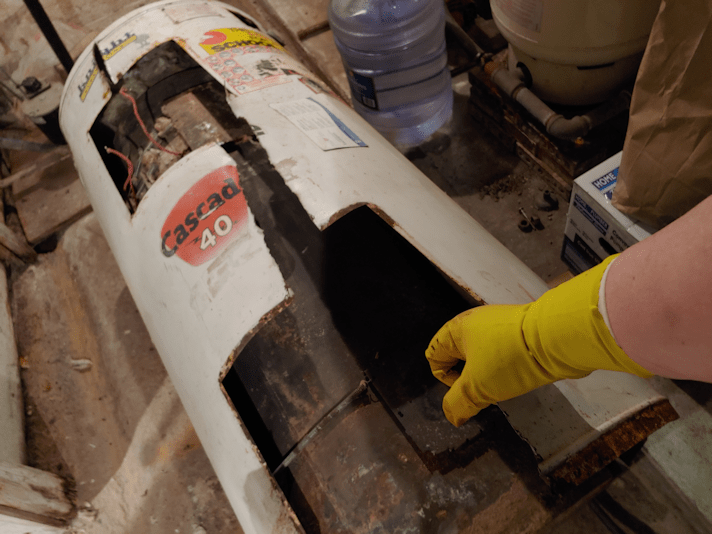
Here is the state of the tank, before I started.

You can see that the bottom of the tank is quite rusted out and falling apart. The top, however, is still quite secure. It’s held in place by 4 screws, so I thought I’d try to take those off, first.

The first challenge was to figure out what type of screwdriver to use. They were so full of grit, I at first thought I’d need a star tip, but after digging some crud out with the tip of a box cutter, I discovered they needed a square tip.

Not that it mattered. The screws immediately stripped, as soon as I tried to loosen them. They weren’t going to move.

I was able to get the access panels on the side off easily enough, since they were barely put back on before the tank was moved.

I should note that yes, I was wearing safety gear before I started.

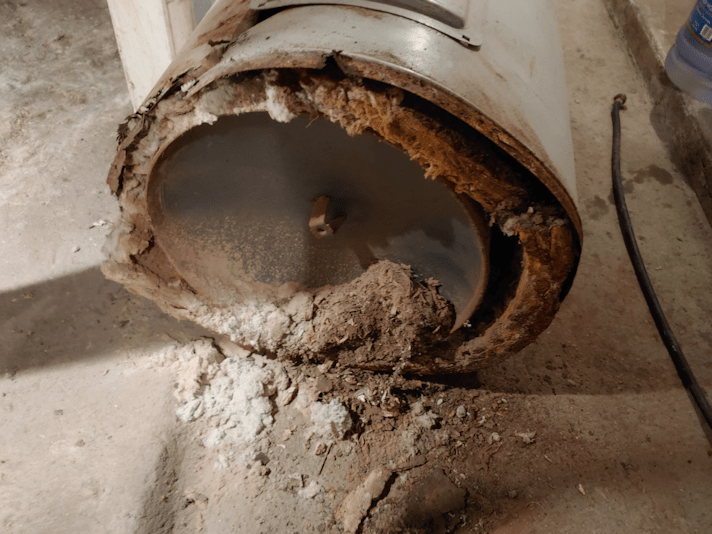
The bottom came off quite easily, and all sorts of rotted insulation and rust started to fall out!

I had a box ready for the smaller pieces of metal, and garbage bags for the insulation. I was using the old ash shovel as a dust pan as I swept up the smaller stuff, trying as much as possible not to kick dust up. Impossible, of course, but I could at least minimize it a bit, and using a shovel for a dust pan gave me a bit of distance as I worked.

Then, I took out insulation through the access panels. It wasn’t as rotten, higher up, but still…

… lots of rust on there!

I then had a couple of problems to work around. The screws on the top weren’t going to come out. I even tried a crow bar, but couldn’t get the leverage. The tank has a seam that I hoped to pop open, but that was more solid than the rest of the tank. Even if I opened it, though, it would hang up on the drain pipe near the base.

Then I remembered something.

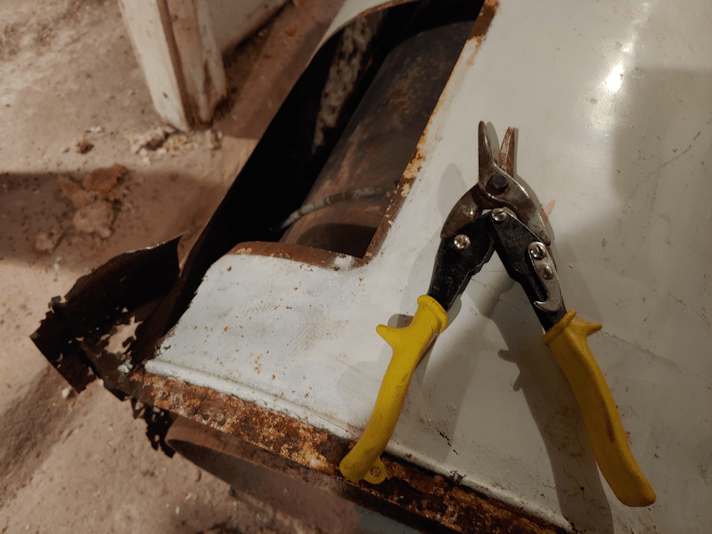
In my late brother’s work shop, which we are now using to store all my parents’ stuff as we clear out the house, we found a pair of cutters. My oldest bother spotted them and told me they were sheet metal cutters. So I brought it to the house, and my husband sharpened them (they really needed a sharpening!).

They cut through the metal beautifully!

Cutting where the access panel openings where made it much easier. I also cut to the drain pipe so the metal could be pulled up around it, as well as going as close to one of the screws in the top panel as I could.

After yanking on it a bit, the outer shell panel broke free from the top cap and the whole thing popped open!

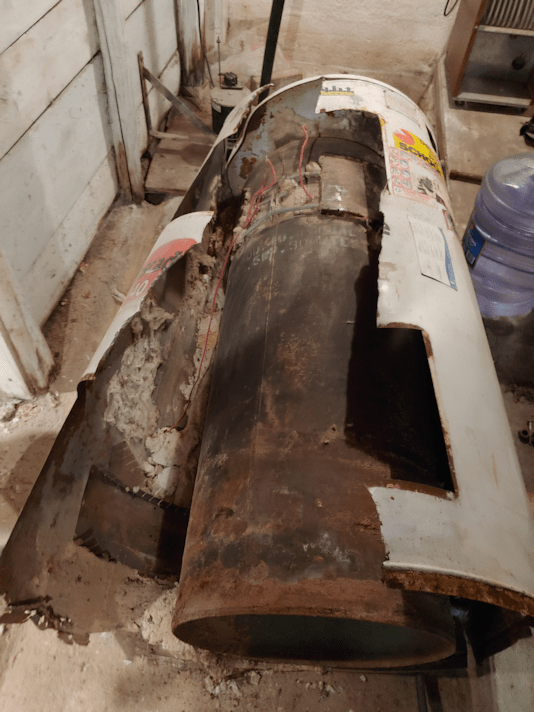
So. That’s what it looks like on the inside!

The next while was spent removing more insulation, taking off the springs that held the bands in place, and pulling out some of the wiring. I was also able to basically tear off the cap without any extra cutting near the screws. The metal of the shell tore pretty easily at the screws, once it started to open up.

In the process, I discovered a problem.

That cylinder is where all the weight is – and as I manhandled it, I could hear water sloshing inside! Yes, we let it drain before it was removed, but there’s no way to get all of it out completely, without cracking it open somehow.

This thing is heavy, and I needed to get the stuff out from under it. There wasn’t a lot of space to work in, either. (You can see the box with the new well pump waiting to be installed, and the jug of water that was intended to be used to prime the pump after installation.)

The first thing to do was clean up as much of the insulation as I could, then try and get the bands out from under it. I was able to get the bottom band out, a little at a time, but would not be able to do the same at the top. I had somewhere to grip and lift the bottom, but nothing to grip at the top. The obvious solution would have been to stand the cylinder up and move it off the shell, but there was simply no way to safely grasp the rounded top and lift that much weight.

I might not be able to stand it up, but thanks to that very strong drain pipe at the bottom, I could drag it!

And this is as far as it’s going to get for now!

I honestly don’t know how we’re going to safely get it out of the house. I had hoped that taking it apart would reduce the weight more than it did, but I probably took of maybe 10 pounds of material, in total. That’s barely noticeable.

As for the shell…

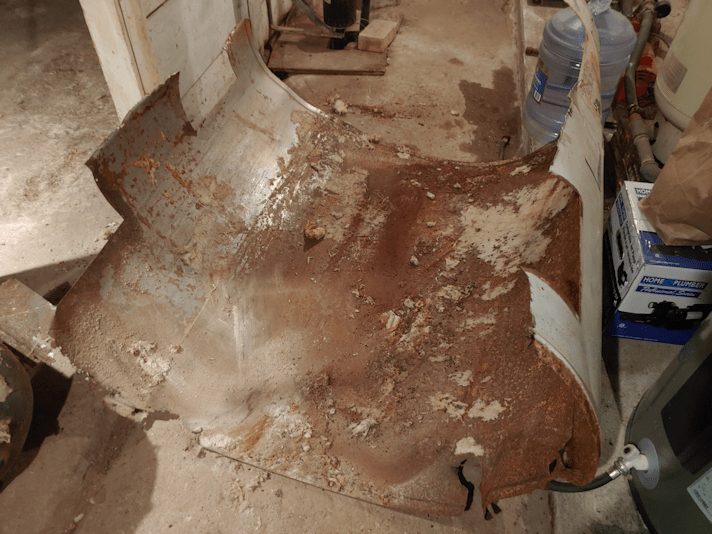
I could now remove the top band and use the shovel and broom to get rid of the majority of the insulation that had been crushed under the cylinder.

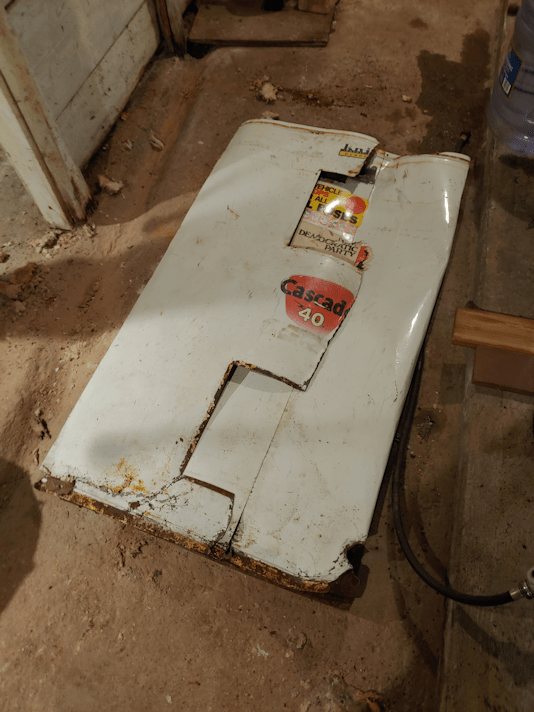
Then, I folded it.

And squished it.

Into a nice, flat pancake that could easily be moved.

It was very satisfying! :-D

The parts and pieces will be taken outside through the new part basement, with its safer stairs that are right next to the entryway door! But not until more of the snow has melted and we can reach the junk pile.

Next, I had to carefully clean up the dust and rust underneath. I wanted to make sure as little as possible could end up washed into the sump pump reservoir. I do NOT want this stuff clogging up the pump!

In the end, I used a wet mop to pick up as much as I could, because sweeping was just kicking up way too much dust.

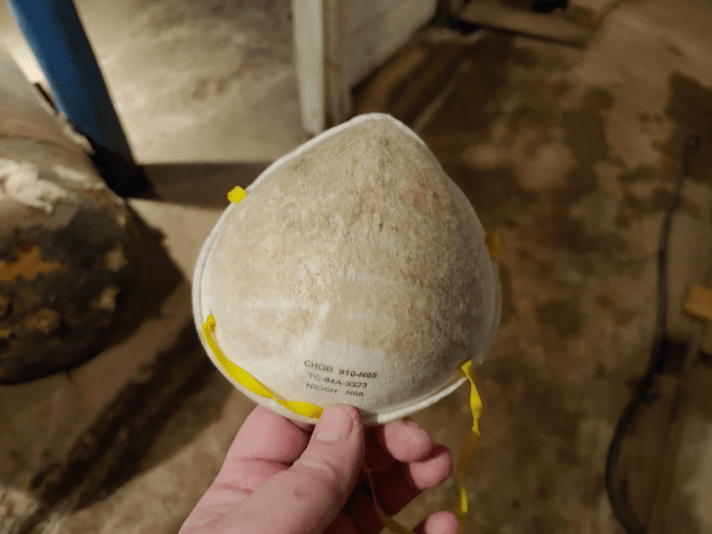
I am so glad I was able to find these thicker masks at the pharmacy, before everyone went crazy and bought them all up. This is actually my second mask. One of the elastics broke on the first one. I have no more. I do still have some dust masks I’d found in the hardware store, but they’re not as thick as these ones.

Once I finished cleaning up the mess in the basement, I proceeded to take a shower, then put my clothes in the wash. Fiberglass insulation dust can be dangerous stuff. Especially when it’s as old and rotted out as this stuff was. When it comes time to take the garbage bags of insulation to the dump, I’ll have to make sure to keep them separate, so they go to the proper disposal area, and not with household garbage. I’ll also have to double bag them.

For now, I’m glad that the space in front of the pumps and tanks is finally clear of this thing. It’s been there for over 2 years! :-D It’ll make it much easier for when the well pump gets replaced.

I’m looking into finding a filter to install between the well and the pump. Or pre-filter, these are apparently called. I’ve found several kinds, but I can’t tell if they are suitable for use with a deep well pump, rather than a shallower well pump. The problem is that the deep well pump has two hoses, one above the other. From the looks of how they are installed, the second hose would be in the way. It would be good to use one, though. They are designed just to filter out the bigger stuff, and should help extend the life of the pumps and tanks. I’ve sent some links to my older brother, who knows this system better than anyone, and hopefully he’ll be able to tell me something, one way or the other. Or, perhaps, inform me of something better to use.

At this point, I’ve done almost as much as can be done in the old basement. The other things that need doing are little things, like getting plastic utility shelves to replace the wood shelves on bricks, and organizing.

Which means we will now work on the new part basement.

Oh, that reminds me. I was chatting with my brother about the clean up I’d done so far, and commented on the collection of car batteries down there. I said that, unless he knows if any of them are still usable and he wants them, I would probably take them to the dump for proper disposal. He very adamantly told me not to do that. It turns out that these can be taken to a scrap yard, in the same way we plan to do with our aluminum collection. They will pay by the pound for the lead in them, and each battery can bring in quite a lot. He tells me that the amount of aluminum we have is probably enough to make it work taking in.

I figure we can do that in the spring. Anything we get from the aluminum or the batteries is going to go into a tax free savings account we set up for our contingency fund, and the money will go to replacing the roof.

It’ll take a while. Based on the two estimates we got, and assuming that they will find rot under there, we’re looking at $10,000 we have to come up with. Assuming no emergencies happen before then. :-(

Ah, well. For now, we just deal with what we can.

Like figuring out how to get that beast of a cylinder out of the basement!

The Re-Farmer

Clean Up: old basement progress

I was able to get a few more hours working on the old basement today.

Honestly, I should probably be using those hours doing housework, but that’s depressing. :-D Cleaning the basement may be really gross at times, but once it’s done, it’ll stay done for a very long time.

It’s a psychological thing. :-D

Today, I finally got to the water damaged shelf.

The containers at the bottom, with odds and ends in them, simply got moved to the other basement, to join the other stuff there we’ll need to sort through and figure out what to do with. That big plant pot will hopefully be big enough to transplant our umbrella tree into. I just have to find a drip tray for it, though the umbrella tree will likely spend the summer outside again, so I’ve got time for that.

Through the shelf, peaking from behind the chimney that used to be hooked up to the old wood burning furnace, is a really big baking pan. Too big to fit in the oven, so I don’t know why it’s here. I later cleaned it up and set it aside. I’ll be using it as a tray for when we start seeds indoors.

Dismantling the shelf was certainly interesting. Just look at the size of those nails! (In case you can’t make them out, they’re about 4 inches long, and those were what held the shelves to the sides.) For part of it, I ended up using a big flat head screwdriver to pry pieces apart. I had thought that some of the boards might be salvageable, but… nope. This will all go to the burn pile.

That shopping cart came in handy. :-D

Yay! It’s done!

That extension cord plugged into the outlet goes up through the floor, and into the master bedroom, along with a TV cable. There’s no longer a TV there, but the extension cord still comes in handy!

When we’re finally able to renovate, this chimney is what I want to have removed and replaced with a dumbwaiter. :-) That will make it so much easier to move things from floor to floor!

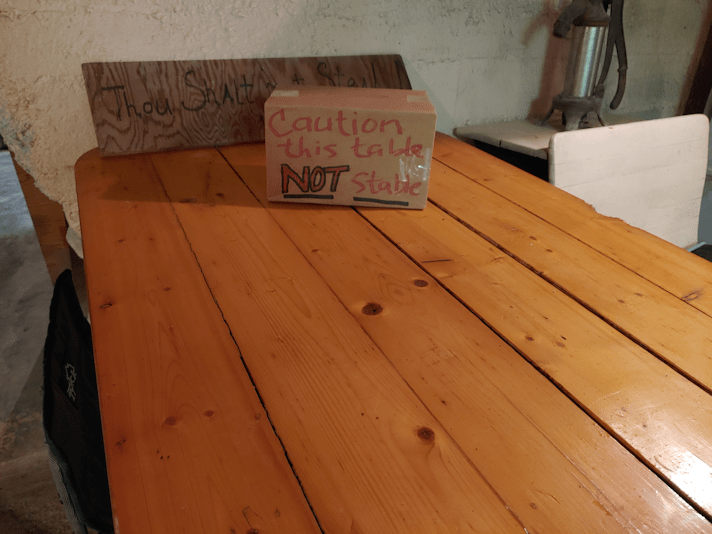
With the space opened up, I though I might set up a table here. Some time ago, I’d noticed a sturdy looking wooden table top leaning against the wall just on the other side of the opening to the new part basement. No sign of any legs, though. While I was clearing things in the new basement, I found – along with the hand pump and other things I uncovered – a set of legs that looked like they might belong to this table top.

So I brought them over.

They were, of course, extremely dusty, so I gave all the pieces a good cleaning. This table is clearly home made. I’m thinking it may have been made by my late brother. He did have a wood lathe and could have turned those legs himself.

Unfortunately…

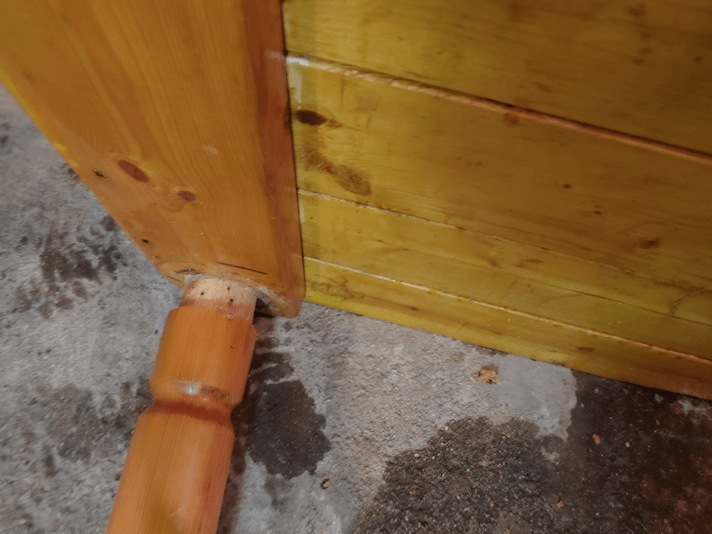
The holes the legs were meant to fit into had crud in them. Only one of them was clear. These two were the worst. I was able to scrape most of the glue and residue out with a utility knife, but that was it for now.

So the legs were definitely made for this table, and the ends would normally have fit into the openings. With all the crud in there, they wouldn’t go all the way in.

I decided to set it up, anyway, in a different area.

I lured my daughter away from some commission work to give me a hand in setting it up on bricks, to protect from any future flooding. (The water on the floor was from the still wet table top and legs.)

I just had to set up my mother’s “thou shalt not steal” sign. Too funny!

Once it was set up, I hammered the table top down, using a piece of scrap wood to protect the surface, to try and get those legs into the openings as much as possible. They barely moved! Which meant that this is a very, very wobbly table.

Just to be on the safe side, because I KNOW I’ll forget and lean on it or something, I made up a warning sign. :-D

After this, I was able to start working on the other side of the basement.

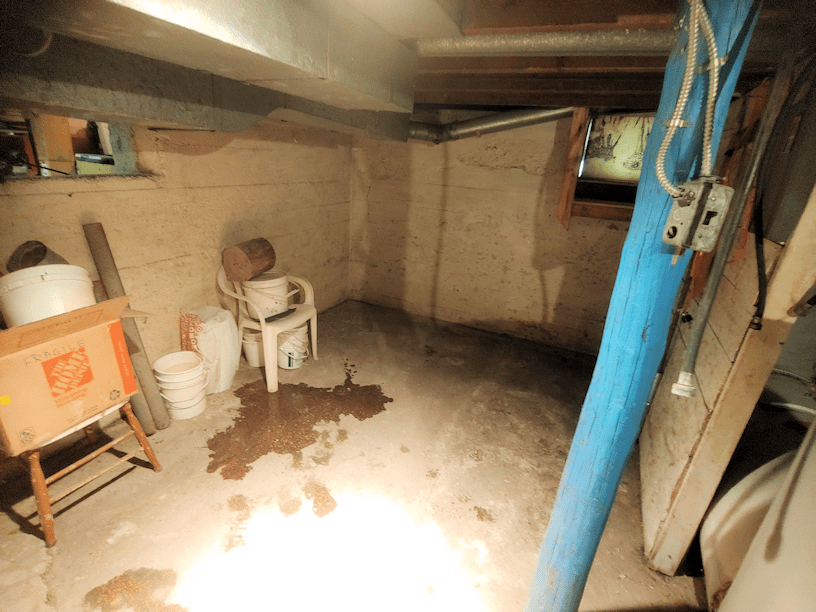
There isn’t a lot that has been added to the space, but it’s big stuff, so it’s filling up fast!

The remains of a wooden chair got pulled apart (the legs were already falling off!) and added to the shopping cart with the rotten shelf pieces. The garden hose we’d used to help clear the access pipe to the septic tank got rolled up into a 5 gallon bucket I’d found, so it’s all nice and neat and tucked away. In one of the pictures, you can see some hoses behind what looks like black pool noodles. Those are old aquarium hoses. I don’t know if we’ll ever be able to use them again, since I’ve not been able to find a source to replace a broken hose connector for the filter of our big aquarium. Still, just in case, I cleaned them up, then found another bucket I could roll them up into. I even found a lid to keep the dust off them.

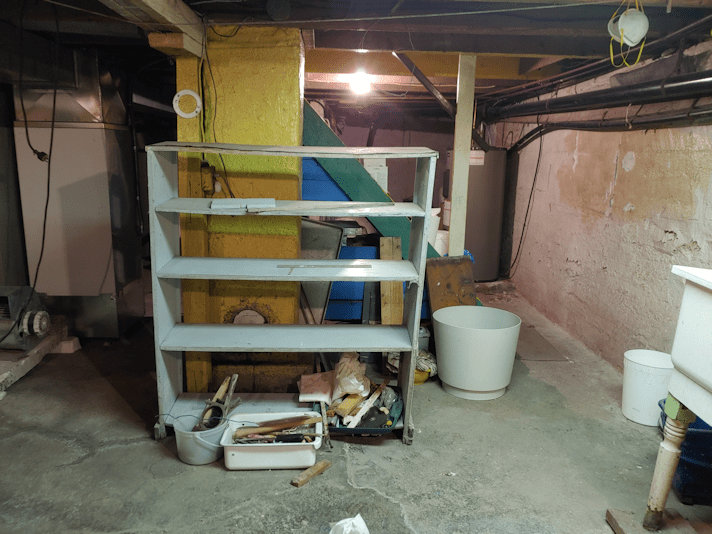
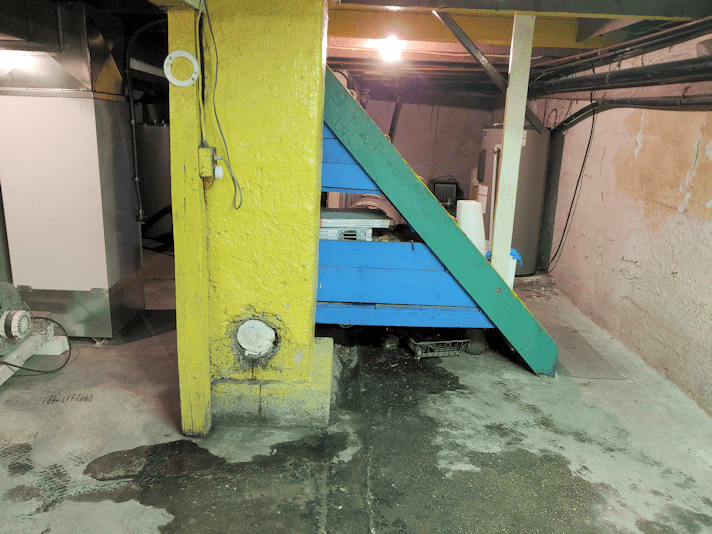
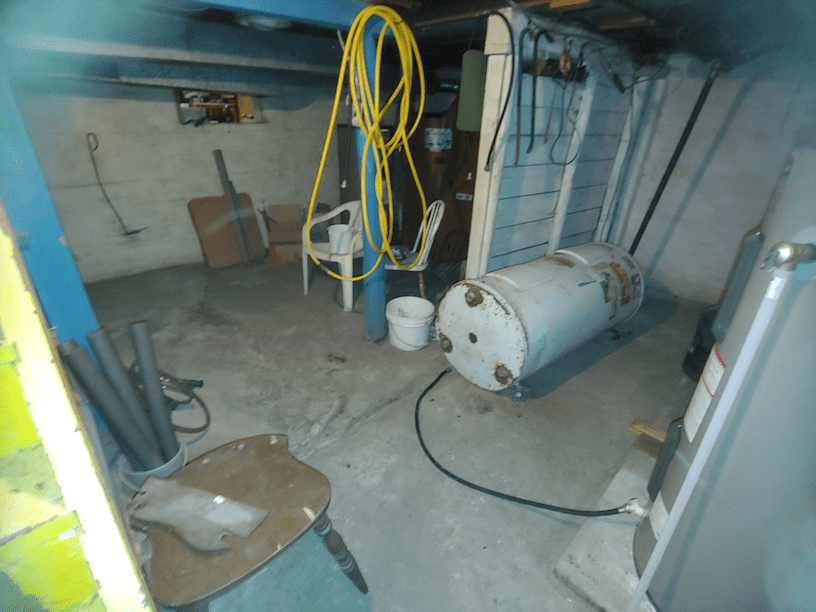
Here is how it looks now. When shifting the broken hot water tank, to move out the box the new one came in, I discovered there was still water in it that had started to drain. So that got moved over the drain trough next to the old hot water tank we replaced shortly after moving here. The next time I work down here, it will be to dismantle at least that one tank, as it’s way too heavy to haul up the stairs as it is. The newer broken tank is pretty light, so it might be easier to take it outside as is. I still want to dismantle it. I would really love to see if I can tell why it broke after only about 2 years.

There is still stuff that needs to be sorted through, but that is for another time. Of course, there are always odd finds. There were so many buckets of various sizes, but only one had a lid on it. Given what I’ve been finding elsewhere, I feared it might have something else for the special disposal pile.

Nope. Just this.

No clue what these are for, but I assume they were cut to size and kept protected in the bucket for a reason, so I’m leaving them until I can ask my brother if he knows what they’re for. There were a few other little things that joined the collection of rotted wood in the shopping cart, and one thing that was definitely a keeper. The temporary grave marker used for my late brother until the memorial stone was installed a year later. It’s just a simple board cut into a cross at the top, with my brother’s name and dates engraved on a little brass plate. It’s got some moisture damage on it, but that’s likely from the year it spent outside than any damage here in the basement. My oldest brother made it, and I definitely don’t want to loose track of it.

I’m rather pleased with the progress made today.

Hhhmmm. I suddenly can’t remember if I turned one of the lights off. One last trip to the basement, and I’m done for the next while! :-D

The Re-Farmer

Clean Up: both basements, progress and things we find!

So while my wonderful daughters were making brownies, I headed to the basements to continue with some organizing and cleaning.

In the process, I found some very cool things!

The first thing I found was among a pile of glass jars I sorted through.

Continue reading

Crushed

I wanted to get some progress in the basements today, but before I continued with cleaning up the old part basement, I wanted to clear things out of the new part basement. I’d been putting garbage bags near the bottom of the stairs, and things were getting pretty cluttered.

It wasn’t just the garbage I’ve been cleaning up from the old basement, though.

Shortly after we moved in, one of the things we’d done was set up wire frame bag holders to hold bags for recycling.

This was back when we still thought recycling was worth doing out here. I’m not so sure anymore.

At the landfill, the only general household recycling they want sorted out is the glass. Everything else is supposed to go into the general bins, which then get shipped to the city for sorting. At first, we would take our paper products to the burn barrel, but with the fire bans in the past two summers, that stopped. Even starting up again in the winter didn’t work out, due to weather. So that all goes to the dump now, instead.

One thing that took some getting used to after the move, is that this province does not have bottle depots. You know all those things you pay an enviro fee on when you buy them at the grocery store? We used to be able to take them in and get that fee back. Here, we just pay the fee and it goes… somewhere.

However, I knew that aluminum could be taken in and sold by weight. It’s one of those things organizations do for charity drives; they collect people’s aluminum, then sell it by weight to raise money. Pop tabs are collected separately, as they are pure aluminum and get a higher price per pound. Pop tab collections are sometimes done to raise money for wheelchairs.

So we’ve been collecting our aluminum for close to 2 1/2 years now.

For a while, we had a wire bag holder for aluminum, another for paper and plastic, and a small bin for glass.

At some point, we needed to make space for company, so it all went into the basement, but never made it back up again.

Since then, we continued to bag the aluminum separately into smaller bags, all of which got tossed into the basement as smaller bags were filled. (Except the tabs from pop cans and food tins. We keep a small jar for those and when it’s full, I run a magnet through them to catch any that aren’t pure aluminum, then transfer them to a 1 gallon jar. We have yet to fill that jar.)

Then we got a can crusher, which allowed us to fit more into the little bags before they got tossed into the basement.

As you can imagine, things were starting to get ridiculous down there.

Today, I fixed that.

Most of this involved combining the contents of little bags into larger ones, but I found 3 recycling bags full of stuff from before getting the can crusher.

I just spent a whole lot of quality time with the crusher.

This is what I got out of the basement.

Six bags of crushed cans. Not everything could be crushed; some of the cans were too big even for our extra tall can crusher, and things like cat food tins don’t get crushed at all. Even taking that into account, each one of those bags is the equivalent of 3 bags of uncrushed cans.

So this is the equivalent of 18 bags of cans, crushed to fit into 6.

I honestly don’t know if this is enough to be worth taking to a scarp yard. They go by the pound, and aluminum is really light.

At least they’re out of the basement.

They are now taking up space in the garage, instead. :-D

I also got out a large bag of regular recycling, plus another 4 garbage bags from the old basement clean up.

Things are looking a whole lot better down there, just by getting this stuff out!

At some point, we will even be able to start using the new part basement as a workshop again!

I’m really looking forward to that. Even if stairs are my nemesis. :-D

The Re-Farmer

Gathering Data: future cheese cave?

Among the many things we are interested in doing in the future is making cheese.

We already make yogurt cheese (see here and here) whenever we make yogurt, which can be used right away, but we’re interested in making cheeses that need to be aged.

Which requires a place to age them. Like a cheese cave.

Well, we do sort of have a “cave” in the basement. The old root cellar.

In the research I’ve been doing (watch out for a future “Recommended” post for a home cheese making resource!), the aging cheeses need temperatures and humidity to stay within a certain range.

I don’t know that our root cellar has that range. For starters, I think it might actually be too cold, but that can be helped with appropriate insulation. I think our greater challenge will be the humidity.

Since this is not something we’ll be able to do for quite some time, that means we have time to gather data.

Which begins today.

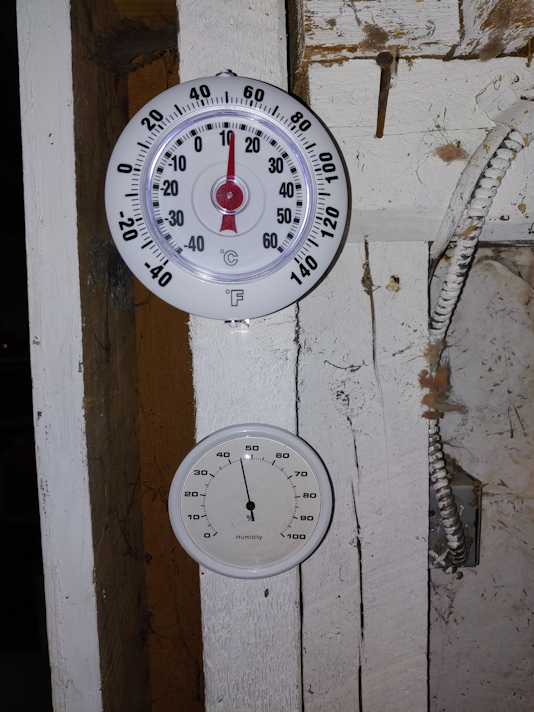
I went to pick up a cheap thermometer at the dollar store and found a hydrometer right next to it, which was great, because I didn’t even think of such a device existing. At least not in household form. These are not mounted just inside the door of the root cellar. This is probably the warmest part of the room, but the best location for hanging them. Ah, well.

As you can see, the temperature gauge had already dropped quite a bit.* The humidity is about the same as it was upstairs, so I don’t know if that was the actual reading, or if it still needed time to adjust for the new location.

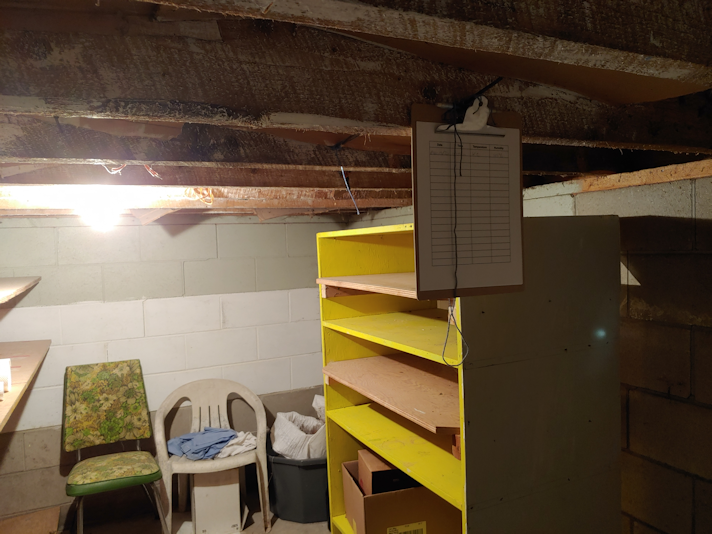
There were already huge nails hammered into the floor joists of the entry above (I’m finding nails like this all over the basements, garage, sheds, barn – anywhere there is wood, there are nails hammered in for hanging things), so I used one that was accessible, but still out of the way enough to not bash my head, for the clip board. I printed out some chart sheets to record date, time, temperature and humidity. The plan is to come down here once a week, at different times of the day, and record the gauge readings.

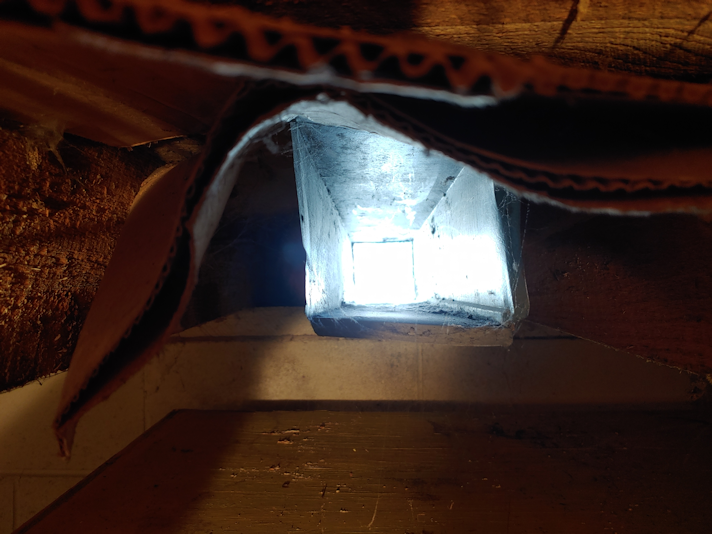
This would be why it’s so cold in here. This vent duct goes directly outside. The only thing at the end is a screen to keep the critters out. While I was down there, I felt an actual wind coming through this duct.

Over the next year, we will get the weekly readings and slowly empty the room out and give it a good cleaning. I figure, in a year we’ll be able to chart the data and use that to determine how much would need to be done to make it functional as a cheese cave, or if we have to go with something else. Like a modified refrigerator.

If the room turns out to not be appropriate as a cheese cave, I already know it works well as a root cellar. :-) So either way, it will be used in the future!

The Re-Farmer

*edit: for some reason, my brain just assumed that, like every other thermometer I’ve seen, the 0C was at the top, so when I looked at it, I saw 2C instead of 12C!! Which is a bit of a relief, because while the temperature did continue to drop, it was not as severe as I originally thought.

You can herdly tell

I had quite a surprise last night!

As I got up from my computer to do the cat stuff a bit earlier than usual – the only reason I happened to see this while there was still enough light – I caught movement out the north facing window.

Three deer had been startled and were bolting away from the feeding station, which is around the corner of the house from where I was looking, running through the old garden area and maple grove.

Did I say three? Oh! There’s number four…

Continue reading

Clean Up: old basement progress, and finding things

I was able to get a bit more progress in the old part basement yesterday, and it’s the sort of progress that actually feels like things are finally moving forward!

Stuff got put back for a change!

Okay, so it’s really all temporary, but still…

The first thing I wanted to work on was getting the now dry shelves back against the wall. My plan was to put both on one side of the centre pillar, instead of one on each side, like it was before.

It didn’t quite work out that way.

Continue reading