Well, I just couldn’t resist. After looking over the Heritage Harvest site, then going over my budget, I went ahead and placed another seed order. We may not be able to plant them all, but we’ll at least have a good start on our own seed bank, if we don’t!
I am absolutely determined to grow gourds for crafting purposes. This company is in Fisher Branch, Manitoba, which is in the same zone, or colder, than we are, so we should be able to grow these here, too!
The first two, Apple and Canteen, were gourds I already had on my favorites list (a function the updated website doesn’t seem to have now), and had been out of stock, so I wanted to snag them while I could!
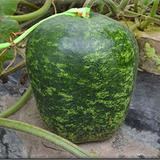
The third gourd, Yakteen, is a new variety for 2022. It is a type that can be eaten when young (which is supposed to be true of all varieties of gourds, but I don’t think they all taste good), or left to mature and be used for crafting, which is what I plan to use it for. It’s also listed as very rare, so saving seeds will be an important part of growing these.
The rest that I ordered are all on their new-for-22 list. It was really hard not to order more from my old favorites list! I already have other varieties of most of those, so I didn’t. The only exception is…
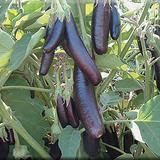
… the Red Noodle bean. I have two other varieties of pole beans, in different colours. None are as long as these get, though – they can reach 16-20 inches in length! There’s only 25 seeds in a packet, and I was already planning to get a third variety of pole bean, so this fits in.
These are Little Finger eggplants. We are not big eggplant eaters, but it’s not because we don’t like them. It’s just that, with X amount in the grocery budget, they tend to get passed over. I don’t know if we’ll be up to growing eggplants this year, but these are supposed to be good container plants, so they would be a nice thing to have tucked somewhere on the south side of the house. In the end, it will probably depend on how much space I have to start things indoors.
These are Purple Beauty peppers. My husband and older daughter are the ones that like peppers, so having a few plants for them would be nice. And if we’re going to grow peppers, why not a variety that isn’t available in stores? :-)
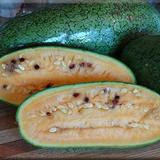
Here we have the Kaho watermelon. They are an early variety that grow to only 2 – 4 pounds. Watermelons were not something I was planning to try, yet, but with an early variety, it might be worth starting a couple of plants indoors, if we can fit them.
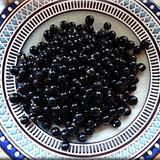
Finally, we have the Wonderberry. Something I have never heard of before. These fall into the category of permanent plants, as they are supposed to self-seed prolifically. We will have to plan out where we grow them, but once we do, we should have berries, year after year. That makes them worth trying, in my view! Plus, they are drought tolerant. Bonus points on that one!
So this is my second order from Heritage Harvest Seed. I look forward to seeing how the seeds we get from them do in our zone, compared to ones we have ordered from other seed companies that are not as far north as this one.
Among the packages we got in the mail today was our seed order from Heritage Harvest!
I felt like a kid in a candy store, opening this up, even though I knew exactly what’s in there!
Or not!
I didn’t remember ordering two types of tomato.
I double checked my order, and the shipping notification and no, I did not order two types of tomato!
The extra packet is the Sophie’s Choice tomato, so of course I had to look it up.
The first thing I noticed is that the website has been redone, and it looks fabulous! The next thing I noticed that their new-for-22 items are now up – and then I saw that stuff I was interested in that were out of stock are now in stock!
Dangit. I’m going to have to make another order.
Oh, the tragedy… :-D
As for the mystery tomatoes, I found their listing. They are a determinate, short season variety and described as extremely rare! So I sent them an email mentioning the extra seeds, offering to pay for them, since I’m more than happy to plant a rare variety to help keep them going.
Now I’m going to have to go back there and do some shopping! :-D
I was really excited to find Heritage Harvest Seed. First because it is a company from Fisher Branch, Manitoba. They are even further north than we are. Which means we can be confident that anything we order from them will grow here!
Also, they specialize in rare and endangered seeds. I love going through the site and reading the descriptions, which include things like the history of a particular plant, or the efforts made to find seeds, and so on. Quite a few things ended up on my wish list the moment I saw “extremely rare” added to the description!
There’s no way we could possibly order everything on my wishlist! However, when I placed my order, I did include things we will not be able to plant this year, but which I hope to plant in the future.
It was so hard not to order more than I did!
Here is what I settled on. All photos belong to Heritage Harvest Seeds.
Here we have a very different corn than I’m used to; Tom Thumb Popcorn. It is a small variety, growing to about 2 feet high, that produces many cobs that are only 2 or 3 inches long. They make an excellent popcorn, and are a short season corn. Popcorn is one of our few regular snack foods, and we’re always running out, so if we can grow our own, that would be awesome. :-)
This is the one variety of tomato that we are growing, not as a snack food for my husband and older daughter, but as something to preserve in the larder. I’ve been looking for a paste tomato to try, and settled on Cup of Moldova. It is listed as extremely rare. It is an indeterminate variety that is good for making sauce, which means it should also be good for making tomato paste. That is what I am growing them for. As it is a rare variety, we will definitely be keeping seeds, too.
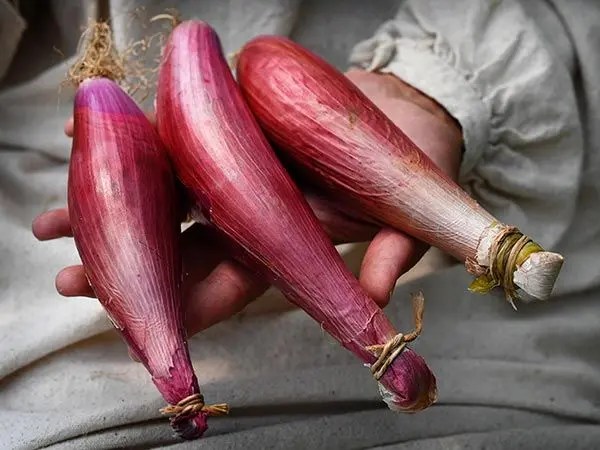
Here is another red onion I decided to try. Tropeana Lunga. The Baker Creek onion I ordered is similar to this, and this one is also an Italian variety.
This makes a total of five different varieties of onions we have seeds for, but I don’t mind. We use onions a LOT. The hard part will be finding the space needed to start them indoors.
We’ll figure something out!
Last time, I ordered these seeds from Baker Creek. They failed completely, and we don’t know why. Perhaps ordering Strawberry Spinach from a Canadian, zone 3, source might make a difference? I don’t know. We will do what we can to improve the bed we’ll be planting them in as well. I do hope they work out this time. I was really looking forward to them!
Though we’ve ordered pole beans, I wanted to have at least one variety for dry beans, rather than fresh eating. These are Blue Grey Speckled Tepary, and were once a staple food in parts of the US and in Mexico. They are also drought resistant and heat tolerant – which, after this past summer, is a big deal!
This is the third variety of hulless pumpkin seeds that I ordered; Styrian hulless. This variety was used to press for oil, and the fruit can reach up to 20 pounds in size! The description noted it as being very productive and dependable.
This is another one I picked when I saw it listed as extremely rare: Boston Marrow Squash. There is an interesting history behind it, but the real selling point was the description including “…makes the best pumpkin pie I have ever tasted!” It’s also a good storage squash. Even if we only grow a couple of plants, I want to make sure to save seeds from it, to keep the variety going.
Yes, I picked a wheat. The historical Marquis wheat, which is supposed to have excellent baking qualities.
We don’t have anywhere to grow wheat right now, but it is something we do want to do, so we can grind our own flour. Wheat seeds can last for a very long time, so I don’t mind getting some now, while we can, for future use.
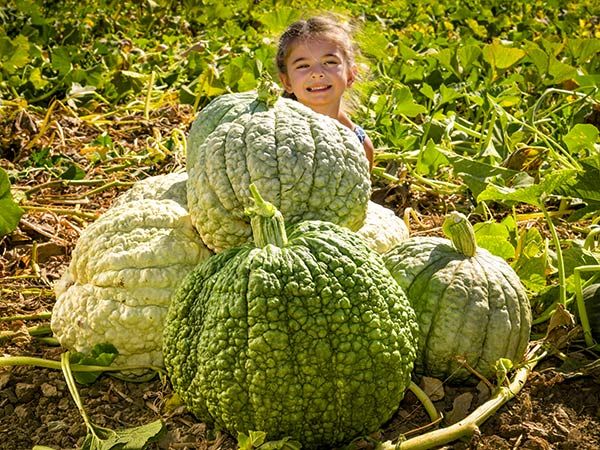
This one is my wild and crazy purchase. The Zucca Melon; a variety that was saved from near extinction. I highly recommend clicking on the link and reading the story behind it.
These can get massive – anywhere from 60 – 120 pounds, and is described as …“a cross between a vegetable marrow and a hippopotamus”.
How can anyone resist that?
I’ll probably grow only one or two plants, and hopefully will be able to save seeds.
This makes the last of my seed orders for this month’s budget. I may still order things that won’t get shipped – or billed – until spring, but we shall see. For now, I’m done.
The garden will be expanding quite a bit again, and this time we should have more fruit trees and berry bushes. Hopefully, we will have a good growing season, too, and not have to deal with drought and heat waves again!
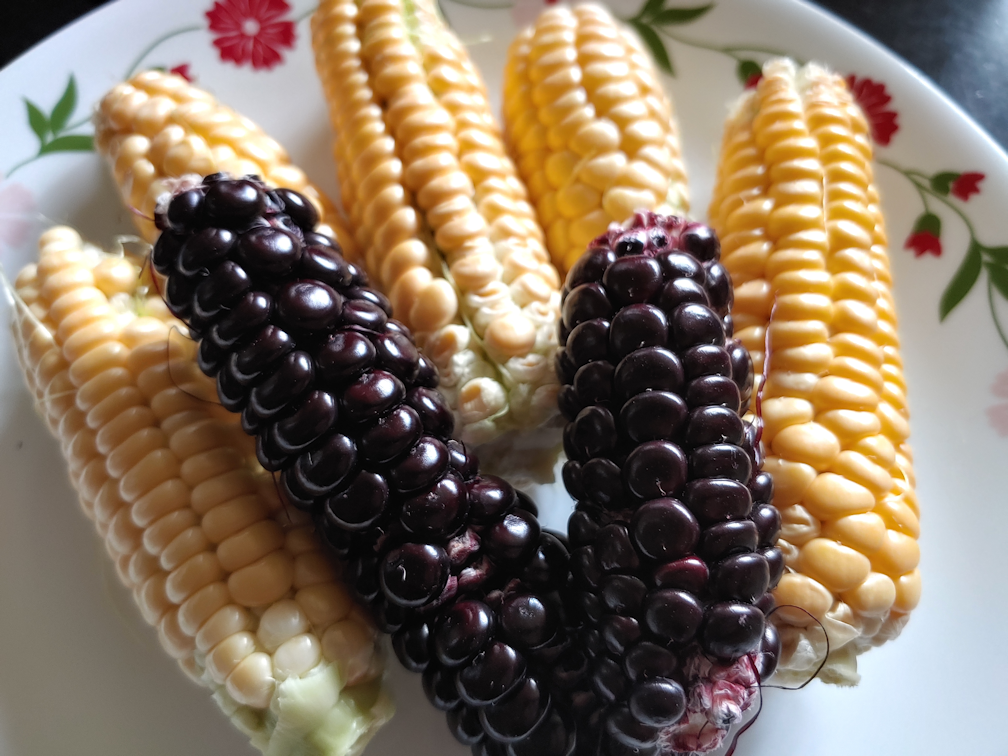
Last year, we grew the Montana Morado corn, from Baker Creek, which I thought was maize morado, or Kulli, from Peru. They turned out to be a US hybrid.
There was certainly nothing to object to about the corn itself, but once I learned about maize morado, I just got it in me that I really, really want to grow Kulli corn, here in the middle of Canada.
After much searching, I found a source that I could order from: Mary’s Heirloom Seeds.
This image belongs to Mary’s Heirloom seeds.
While the company is based in Texas, the corn itself is from the Andes Highlands. From what I’ve been able to find out, the Highlands have two seasons; summer (dry) and winter (wet). The temperature swings are more moderate than what we have. It’s a mountainous region, filled with microclimates, so it’s hard to know how to compare to the zone system we use in Canada and the US. With how hot and dry our summers can get, it may actually do all right here. It requires 120 days to maturity, so I will be starting them indoors, as we did with the Montana Morado.
The seed packets have only 25 seeds in them, so I ordered four, since I wasn’t ordering anything else. Even so, the cost of shipping wasn’t much less than the cost of the seeds!
As with so many other things, the main issue will be protecting the corn from critters. If we can manage that, I feel we will be able to grow this successfully, here. This is a corn that can be eaten fresh while young as a sweet corn, dried for a flour corn, used as a dye, and of course, used to make chicha morado.
I may not have made my shopping trip to the city today, but that didn’t stop me from shopping!
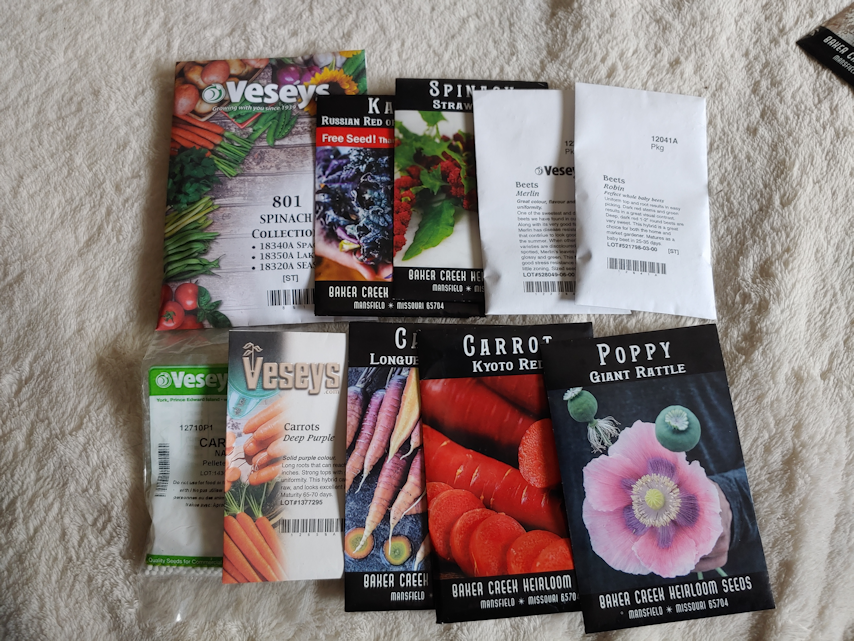
I have already placed my first seed order for next year’s garden from Vesey’s. That order is in, including a correction. We’ve got a monthly seed budget right now, so we will continue to place orders throughout the winter, for seeds, seedlings, roots and tubers.
For this past year’s garden, we ordered seeds from two places; Vesey’s, which is where we had ordered seeds for the previous year’s garden from, and Baker Creek; Rare Seeds. We were quite happy with both places. This year, I plan to order from other Canadian sources I found, but we still have items we wanted to get from Baker Creek.
This is the order I placed with them last night. All photos belong to Baker Creek.
I had already ordered onions, but did not have a red onion, yet. This is the Red of Florence onion; a long day onion (important when growing onions as far north as we are) that is a rare Italian variety, noted for its “balanced” flavour – whatever that means!
I like its shape, and think it would be a lot easier to cut!
The description says it can be planted in the fall or spring, but I doubt that applies to our zone!
This is the Black Nebula carrot, described as the darkest carrot they’ve ever seen, and it’s supposed to be exceptionally healthy. We already have a couple of other varieties of carrot we can plant, but I enjoy trying new types, and purple things did well for us in our 2021 garden. Plus, I consider carrots a staple food, so the more, the better!
As long as we can keep those groundhogs out!
Here we’re into something rather different – hulless seed pumpkins! I’ve ordered three different varieties, including two from Baker Creek. I really like pumpkin seeds, but hulled pumpkin seeds at the store is pretty expensive, so when I discovered there are hulless varieties, some of which can be eaten straight out of the fruit, I just had to give them a try!
I plan to try growing only a couple of each variety, so we can see which one we like best.
This past year, we got the Giant Rattle bread seed poppy, which we will be growing again from seed we’ve saved. Next year, we will find a spot for these Hungarian Blue, where they can self sow and be treated as a perennial.
Well, I couldn’t resist! Though we still have seeds, when I saw the Crespo squash was back in stock, I ordered a fresh packet. I was really impressed with how vigorously these grew, and how well they recovered after being repeatedly damaged by deer and groundhogs. If there had been enough growing season left after that, I’ve no doubt we would have had quite a few squash. We will try these again, and take precautions from the start, to ensure the critters don’t get to them!
That is it for our Baker Creek order this time. While I have loads of others in my wish list. Since we are ordering from several other places this year, and I am trying to focus on Canadian sources as much as possible, I don’t expect to be making another order from here.
Since we ordered SO many things for this year, and expanded how much space we were gardening in, I decided to go over groups of things in separate posts, in no particular order and spread over the next few days.
This is the last post in this series.
The utter and complete failures!
It was such a very difficult growing year this year. We had to deal with drought, heat waves, difficulty watering things due to the beds being so far flung, deer, groundhogs and a plague of grasshoppers.
Yet, we still managed to harvest food from our garden, and with some, we even had enough to freeze and pickle.
There were some things, however, that just didn’t work.
One of these was the Baby Pam Pumpkin.
I have no photos, because there was nothing to take photos of!
When we started these indoors, we only planted a few seeds, not the entire package.
They did not germinate. At all.
I highly doubt there was something wrong with the seeds. Veseys seeds have always been of very high quality. We had a number of issues with starting things indoors, and those were more likely the reason.
These little pumpkins were chosen for their short growing season, small size and their reputed excellent flavour. I think I’d be willing to try them again, when we start our other squash indoors. We already have so many others, though, it might be something we will try again further in the future.
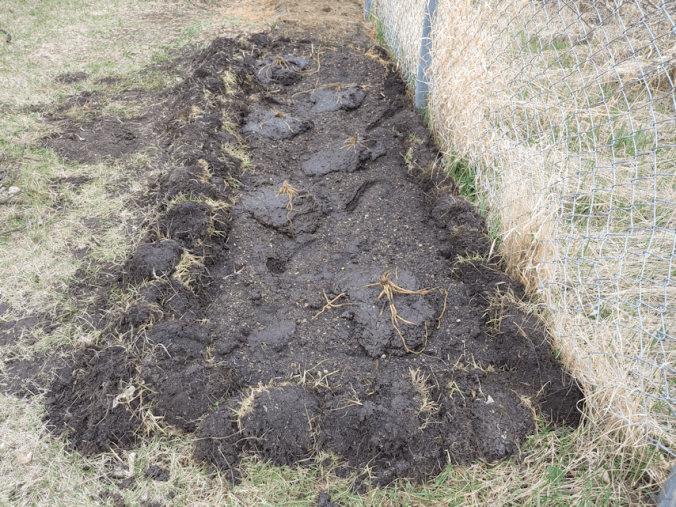
Another fail was the Strawberry Spinach. These were broadcast in a new bed we made, near where the asparagus crowns were later trenched. They did seem to sprout, and then they disappeared.
Assuming the sprouts we saw were even Strawberry Spinach!
I want to try these again. This spot was chosen because they are known to self seed easily, and this could be a permanent spot for them. We’ve grown them before in a balcony garden, years ago, so I know we like them. I plan to get more seeds for this coming year. Once this bed was finally abandoned, it got very weedy, so in the spring, it will need a lot of clean up of as many roots as we can. It’s already got new garden soil on it, but a bit more won’t hurt. The seeds are so fine, a mulch might be too much for them, but perhaps if we cover them with the clear plastic we have, first, then with netting until the start getting big. Maybe that will work?
We shall see.
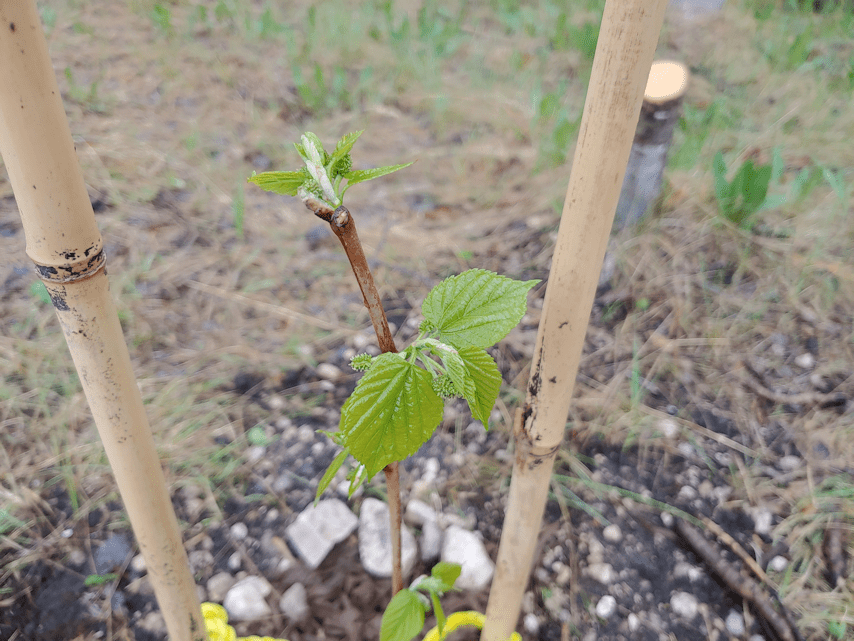
Then there was the Illinois Everbearing Mulberry.
We took a chance on this one. It was a zone 4 plant, but with a good microclimate and winter protection, I thought we could make it work. I remember my mother being able to grow things I later learned were zone 5, quite successfully, so I knew it was possible.
It started out so well, too! We had a wonderfully warm May, and Veseys sent it out when it was the right time of year for transplanting in our zone. Once transplanted, it took well and soon sprouted healthy leaves.
Then we got hit with that one really cold night in late May.
Our last frost date is June 2. Typically, that means hitting temperatures at or just below freezing. Maybe as low as -2C/28F or so.
If I remember correctly, we hit -8C/18F.
It was devastating.
With the month having been so warm, we had things blooming all over. Most of the lilacs, the crab apples, chokecherries and Saskatoons were all blooming. Even the highbush cranberry I uncovered in the spruce grove the year before had flowers.
That was it for the lilacs blooming, and we got no fruit. Even the grape vines, which hadn’t even started budding yet, were set back.
Unfortunately, we had completely forgotten about the mulberry tree. If we had remembered, we could have done something to protect it from the cold, but we didn’t. I’d read that, when hit with cold, mulberries can drop all their leaves, but then grow them back and recover. I held out hope for months, even continuing to water it during the drought. I even thought there might be a possibility that it would make a come back next spring.
All possibility of a recovery ended just a little while ago, when I discovered that even the remaining stem was gone, having been eaten by deer.
That poor little tree.
Since then, I have found a nursery that has a cold hardy, white mulberry available. It was an accidental discovery on their land, and that parent tree has survived temperatures of -40C/-40F. It’s a lot more expensive then mulberries at other nurseries, but no other place has any this cold hardy.
We plan to order one, as soon as we can squeeze it out of the budget. Mulberries are known for producing a LOT of berries; enough for our own uses and what we can’t reach, the birds can enjoy. Another reason I want to get a mulberry tree is because of my mother. She shared stories with me of a mulberry tree they had in Poland when she was a child. A huge tree, bigger than their barn. When I found out that mulberry trees were available to grow in Canada, I just had to give it a try.
Hopefully, the next one we get will survive!
Another failure for us was the Chinese Pink celery, though that is entirely my fault. I didn’t pay enough attention to the instructions. It wasn’t until we were starting other things indoors that I realized these should have been started in January or February, not April!
We did actually get seedlings, and I even transplanted one little bunch, but nothing came of it.
I am still very curious about these and would love to try them again.
Maybe not right away, though.
Ah, the radishes.
I ordered a couple of varieties for my younger daughter. Daikon and Watermelon. These were interplanted with the corn. The Daikon radish in particular is known to help break up hard soil, which would have been quite beneficial in that area.
It was very exciting when they started to germinate! We were seeing them all over.
Then they disappeared without a trace.
A while later, there was some late germination, but those disappeared, too.
I have no idea what happened to them. We weren’t having problems with insects at the time. Birds, maybe? I just don’t know.
It was quite disappointing.
Then, later on, I decided to try again, this time with seeds I picked up at the grocery store.
Oh, I completely forgot about the chard!
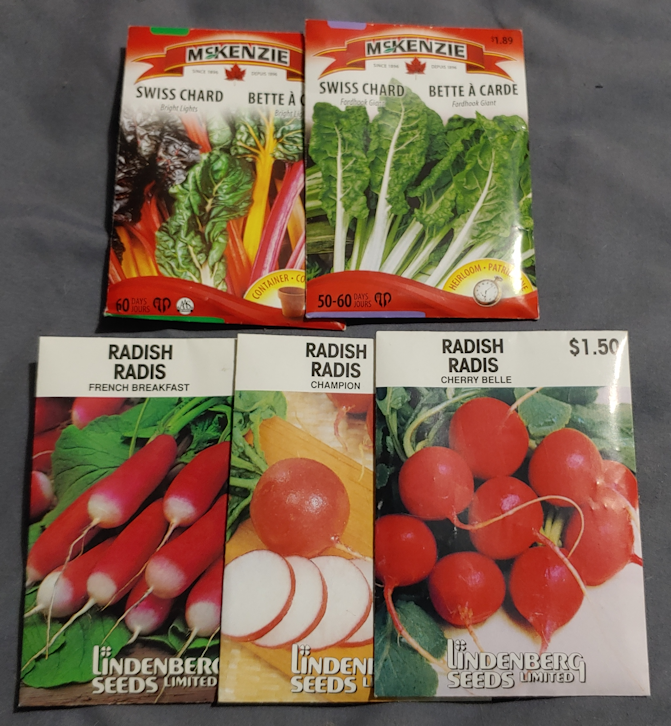
It was not a failure. At least not the Bright Lights chard. As a fall planting, they grew very well, but we didn’t eat a lot of them. They weren’t a big hit with the family, and we didn’t really know what to do with them. They sure handled the frosts well! The second variety was a fail. Only two plants survived the grasshoppers. Barely.
As for the radishes, they got decimated by the grasshoppers. In the end, all we got was this.
Two French Breakfast radishes, which were left to grow because I was after pods, not roots.
We got neither.
I do plan to try radishes again, but very different ones. I’ve found a source for tillage radishes – they can grow many feet long, and are used as more as a cover crop, because they do such a great job of “tilling” the soil, and are left to decompose, further amending it. They can also be used as a forage crop, so planting them away from the house could be useful in luring the deer away. I’m also looking at picking up some sugar beets to try. They also help break up the soil, can also serve as a forage crop – or we can actually try making our own sugar from them. Our province used to be a major producer of sugar from sugar beets for many years. I figure it’s worth a try, at some point.
We have a couple more complete failures here. The Early Purple Vienna kohlrabi, and the Russian Red Kale.
These were both free seeds from Baker Creek. I really like kohlrabi and tried planting White Vienna the year before. Of all the seeds I’d planted, only 4 survived, and only 2 got large, but none ever got a chance to form their bulbs. The final killer was flea beetles.
This year, we didn’t even get that.
As cool weather crops, both got planted the earliest, but as far as I can tell, none germinated. I even tried planting kohlrabi again, as a fall crop when the radishes, lettuce and chard were planted.
Nothing.
Now, I don’t mind the kale not working. I’m not a big fan of kale, though I did enjoy kale chips that we’ve made in the past. I’m willing to try different types and maybe find that I do like them, after all.
Kohlrabi, on the other hand, is something I really enjoy, but only buy rarely as a treat. I’d love to be able to grow my own. The problem is, I don’t know why they failed this year. I can’t even be sure if they germinated, or if something ate all the seeds. Or maybe they did germinate, and something ate all the sprouts?
I have no idea.
But I really, really want to grow kohlrabi!
I think, if I have the space for it, I will try starting some indoors. Maybe transplants will survive!
Final analysis:
In spite of the complete failures, and all the other challenges we had in the garden this past year, I’m still pretty happy with it all. I heard from so many others that lost their gardens entirely, so we have much to be thankful for.
Plus, all those challenges now, means we have a better idea of what we can do in the future, whether its by focusing on hügelkultur beds and mulching as a way to conserve water during drought conditions, to knowing what critters we need to protect our food from (the groundhogs were an unexpected problem!), and so on. We’ve learned a great deal.
Which means that even the failures are really successes, in the end.
Since we ordered SO many things for this year, and expanded how much space we were gardening in, I decided to go over groups of things in separate posts, in no particular order and spread over the next few days.
Quite a mix of success and … almost success… in this post!
First, the asparagus!
I’ve honestly lost track of when we ordered these, but they are Purple Passion Asparagus from Veseys. We only got six crowns for a start.
Asparagus is something that can produce for about 20 years. They required a new bed to be dug, and we had to choose an area where they could be permanent. We did see a few asparagus growing from all the crowns this summer. The earliest we can expect to harvest these is two summers from now, and even then, it would be better if we gave them more time.
There was asparagus already growing here, and they have been for many decades. Nothing suitable for harvesting. I suppose, as some point, we should dig up the ones in the old kitchen garden, which are all male plants (male plants are apparently better for harvesting). They are easily more than 50 years old. We’ve also found a few female plants at the fence near the gate. Every fall, we see their bright red berries, but for all that they drop seeds, there are never more plants! I’ve asked my mother about those, and she said they have been growing there since before my parents bought the property! That makes them probably well over 60 years old.
While our asparagus seemed to do all right this year, even with the drought, we won’t know of they are a complete success for at least another two years.
When I was a child, I remember my mother grew poppies that we could harvest for their seeds, but when we moved back, there were only ornamental poppies. So when I found seeds for bread poppies, I happily ordered some. They were Giant Rattle poppies from Baker Creek.
The seeds were broadcast on a new bed in the old kitchen garden, more nostalgic reasons. That’s the garden where my mother had her poppies growing. :-) It took quite a while longer than expected for them to germinate and, with the drought, they never reached their full potential, even with regular watering. We did end up with some small seed pods that I could harvest, though!
Poppies self sow easily, and I did make sure some seeds were broadcast in the bed this fall, but I will sow more in the spring as well. Hopefully, next year, they will live up to their name!
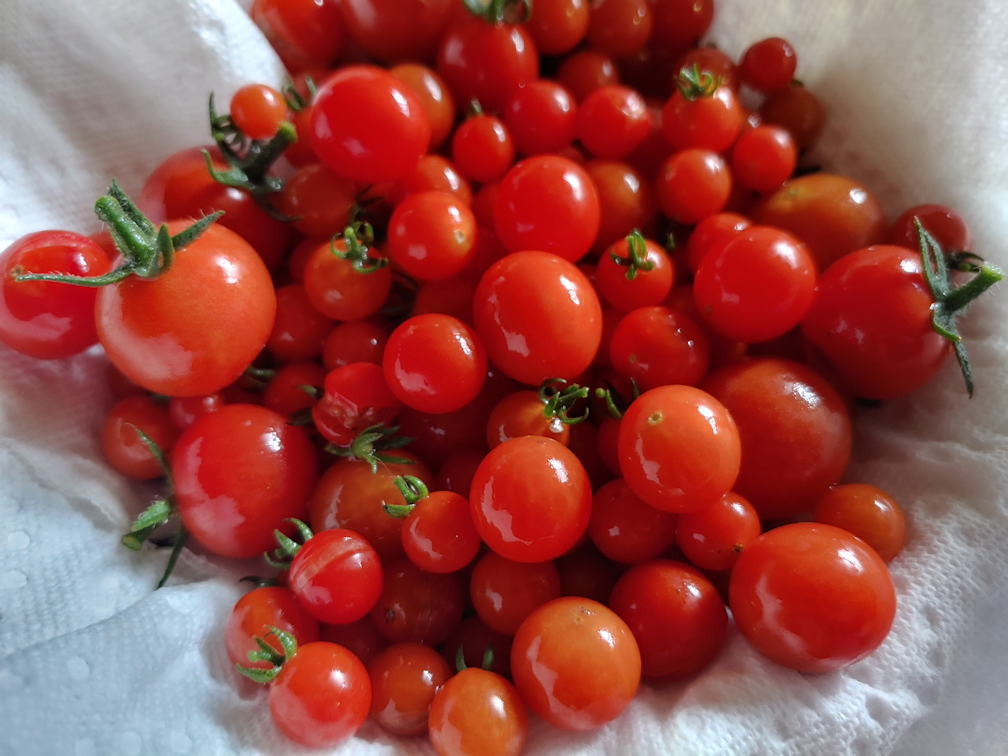
Then there were the tomatoes! These were, hands down, the must successful things we grew this year. We had the super tiny Spoon, super prolific tomatoes from Baker Creek, and Mosaic Mix, a medley of cherry and grape tomatoes, from Veseys, that were also very prolific. Both were indeterminate varieties planted in a new bed against the chain link fence, which we could use to help support them. With the drought conditions, it did seem to take a while for them to start producing ripe tomatoes, but once they did, they just didn’t stop, and even kept on producing after being hit with colder temperatures, before finally being killed off by frost.
If that’s how they did during such a hard growing year, I can’t imagine how much better they would have done under optimal conditions!
When it comes to eating tomatoes, my husband and older daughter love them. My younger daughter and I do not! She and I can handle them if they are processed into a paste or sauce, but that’s it. I was, however, able to taste the Spoon tomatoes and not gag, which is saying a lot! My husband and older daughter, however, absolutely loved having so many of these little tomatoes to snack on!
While the bed these were in has been completely redone and is now a low raised bed bordered with bricks, I would not be at all surprised if we see some of these sprouting in the spring. Reviews for the Spoon tomato in particular said to expect them to self-sow, because there’s just no way to pick all the tiny tomatoes before they fall to the ground.
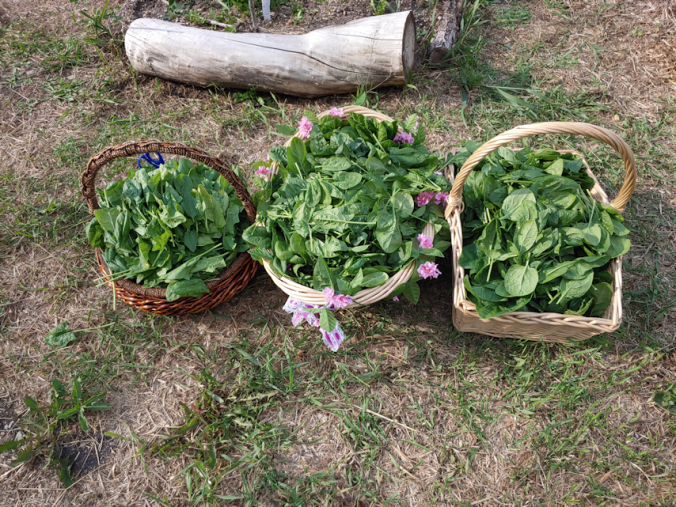
Spinach was another success for us. We got a collection from Veseys that included three varieties that matured at different rates.
Honestly, I couldn’t tell much different between them! They were all good. We quite enjoyed having fresh spinach available any time we wanted, usually in salads or sandwiches. Even when doing my morning rounds, I would grab a few leaves to snack on as I went by!
We harvested the last of our spinach when they started to bolt in June. The original plan had been to successive sow them, then sow them again for a fall crop. That didn’t quite work out, when we found ourselves having to build covers for the beds to protect them from deer. The covers weren’t long enough to cover the entire rows, which meant the exposed spinach at each end still got nibbled on, but there was so much of it, we didn’t mind!
We ended up dehydrating the final harvest spinach, and we are still using them. :-)
As for a fall planting, things didn’t quite work out as planned, and we just skipped it – which means we still have seeds that we can use next year, if we want.
Then there was the lettuce…
*sigh*
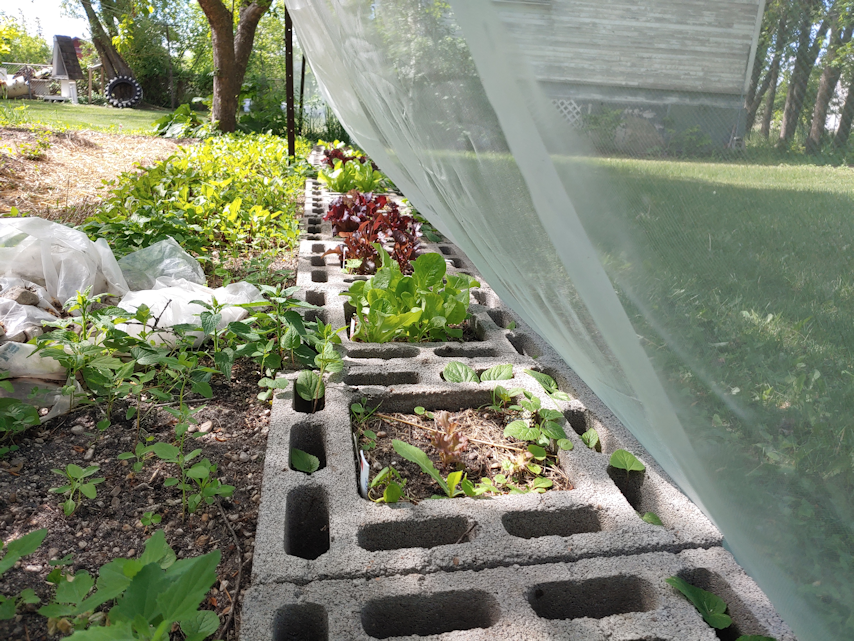
We ordered three varieties of leaf lettuce from Baker Creek, all in reds and purples. We got a packet of green lettuce for free with our order. We planted all four varieties in the retaining wall blocks, with netting to protect them from the deer.
That was before the groundhogs showed up.
One morning, I came out and they were all gone. They had just gotten big enough to start harvesting, too.
We didn’t try replanting in the blocks. There just didn’t seem to be any point!
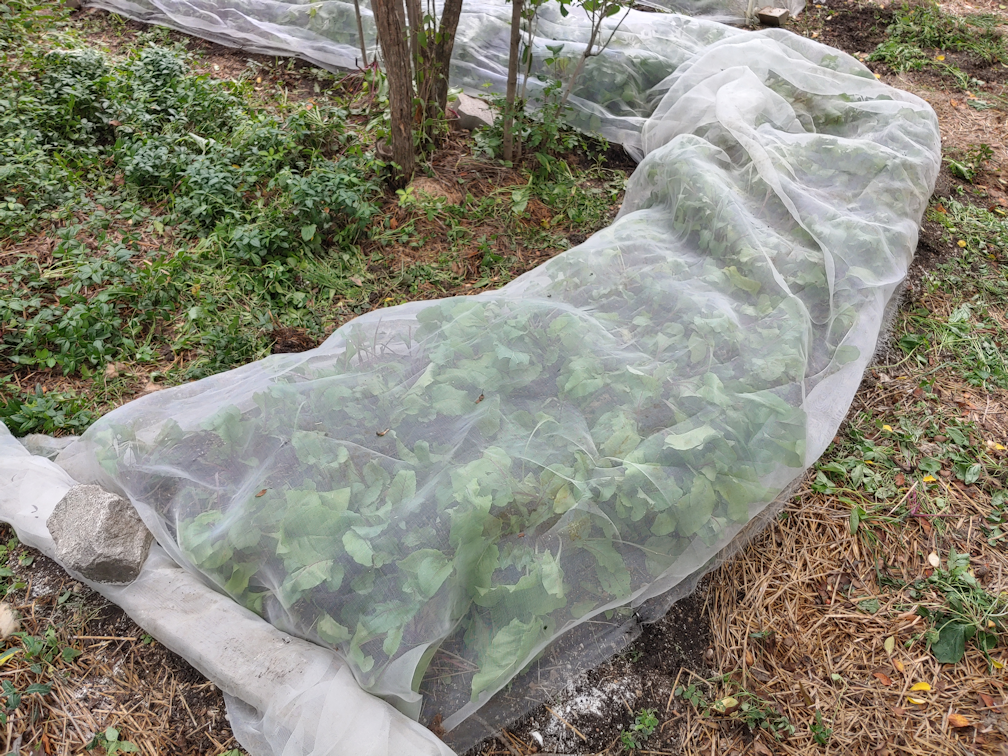
We did, however, plant some in one of the spinach beds for a fall crop, with a cover to protect them from groundhogs, deer and grasshoppers. A bunch of seeds had spilled into the slide lock bag I had them in, so I planted the loose seed, expecting to get a mix. They turned out to be almost all one type – Merlot – with only a couple of Buttercrunch in the mix.
Having to keep them covered with such a long cover, unfortunately, made it very inconvenient to casually harvest them. The bug proof mesh prevented us from being able to just reach underneath an end, like we could with the spinach. This is why I decided to make our high raised beds only 9 feet long. We can build covers for them that one person can easily move alone, unlike the 13 ft covers we had for this year.
We did enjoy the fall lettuce for a while, but then they suddenly got very bitter, and I don’t know why. It’s a shame, because they handled the colder temperatures, and even frost, very well.
Final Analysis:
Asparagus: With only 6 crowns planted this year, even once established, it’s not going to be much for four people. Well, three. My husband isn’t a fan of asparagus. Over time, we will get more. I think we’ll get a green variety, next. We will need to find another suitable location, though, as the one we planted the purple asparagus in has room for those 6 crowns, and that’s it! This is something for the long haul, though, as we will likely get just a few more crowns every year, until we have enough for our uses. Asparagus is one of those things that are so expensive at the store, except for a few short weeks, that once we have our own, we will happily eat them a lot more often. If we eventually have enough to freeze, pickle or can, all the better!
Poppies: While these were not quite a success, as far as having seeds we could use for baking, they weren’t quite a failure, either, and we should have this variety of poppies growing in the same bed again, year after year, if we do it right. I have since found a couple of Canadian sources for other varieties of bread poppies. I plan to get one of them, and sow them in another area where, like the Giant Rattle poppies, we can treat them as perennials. I figure, with at least two types, we will eventually get enough poppy seed to use in some of the traditional Polish bread rolls I remember my mother making with them! :-)
Tomatoes: both of these varieties did very well, but we will be trying different varieties next year – though I expect to see some of this year’s tomatoes showing up on their own, next year! If not, I would have no problem buying more of the Spoon tomatoes in the future, and highly recommend them. We already have some Yellow Pear tomato seeds from Livingston (my first purchase from this company; I found them at the grocery store by my mother’s place) and Chocolate Cherry from Veseys. These are for my older daughter and husband to enjoy. In addition to these, I will be picking up a variety of paste tomato – I’ve not yet decided which type – for processing into our own tomato paste. This is something we regularly cans by the case, to use as an ingredient in quite a few things. We use it in quantities that make it worth the effort to can our own. Any other type of processed tomato we use tends to be so infrequent, I don’t think it’s worth going through the trouble of canning them ourselves. We’ll just buy those from a store as we need them for specific recipes.
Spinach: These did very well, and I look forward to growing them again. We still have lots of seeds, since we never got to succession sow them, so we don’t need to buy more for this year. Yes, I know, older seeds have a lower germination rate, but considering how high it was originally, I don’t see that as being an issue! Spinach is a favourite, so I can see us growing this every year. We just have to make sure to protect them from deer.
Lettuce: Our intentions of having fresh lettuce to casually harvest any time we wanted, didn’t quite pan out! We still have plenty of seeds from all four varieties to try again, next year. As with the spinach, we’ll have to find a way to protect them from critters. Doing so without making it a pain in the butt to harvest them turned out to be the tricky part. As much as we would like to grow lettuce regularly, as long as we have plenty of spinach, we can do without lettuce as well. That’s a decision to make once we start planting other things, and see what space we have left.
Since we ordered SO many things for this year, and expanded how much space we were gardening in, I decided to go over groups of things in separate posts, in no particular order and spread over the next few days.
Here we have some things we all grew last year, if not the same varieties.
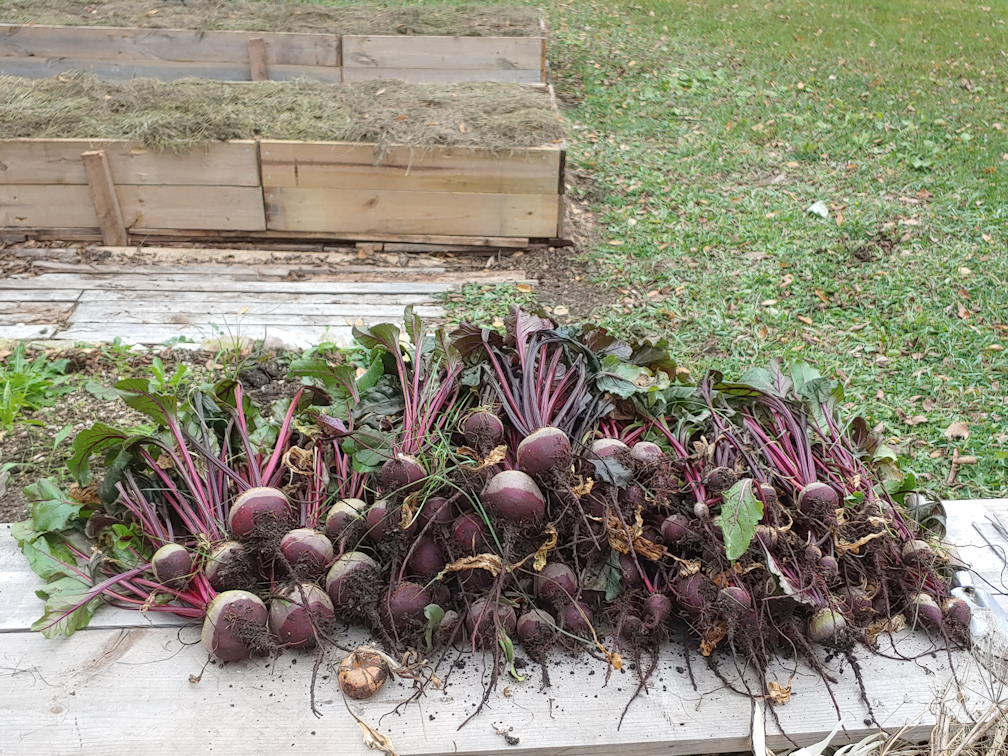
First, the beets.
Last year, we ordered a beet collection from Veseys, with three different types. This year, we ordered one type only; Merlin.
We knew the deer would be after the solo bed by the spruce grove, and tried various ways to cover it. then we discovered the groundhogs were after them, too, and eventually found a way to protect them, and in the end, they did the best of all the beets.
We planted those in a bed by themselves, but had seeds left over. We also still had seeds left over from the previous year. My daughter planted them by variety, in a bed along the retaining wall of the old kitchen garden, but there were so many seeds left over, I mixed them all together and planted them in another bed.
The ones along the retaining wall ended up being eaten by groundhogs and never did recover. Drought conditions aside, that area is mostly shaded, too. The L shaped bed of mixed varieties fared better, and got much less critter damage. While we were able to get as many greens as we wanted for salads, the roots never did get very big here. There could have been many reasons for that to happen, and it was most likely a combination of them.
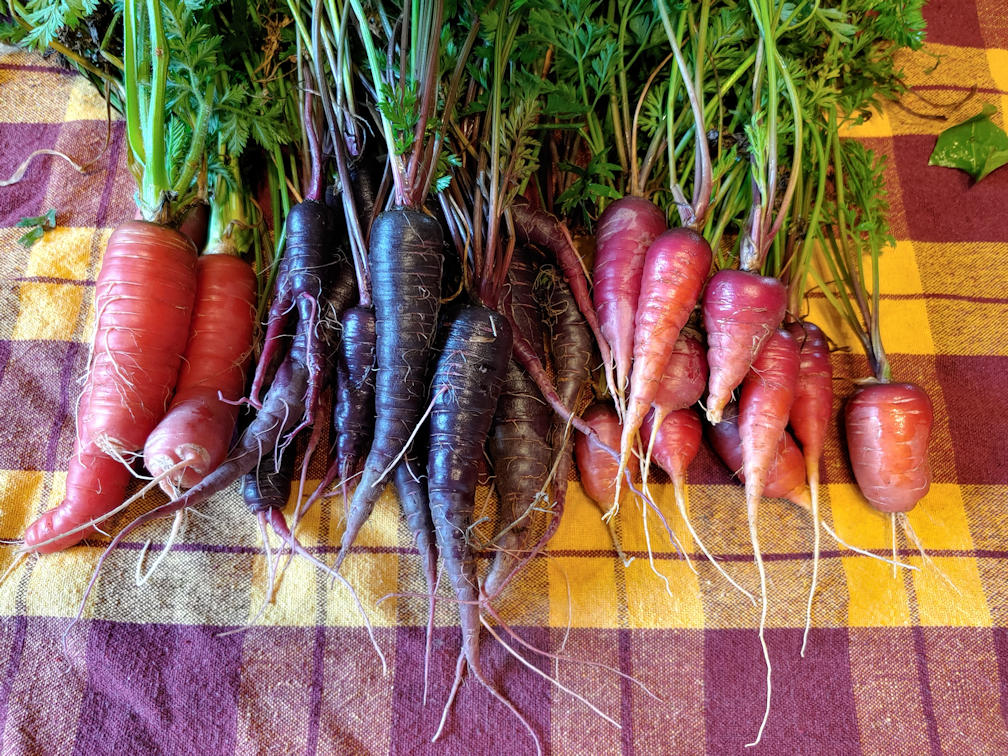
The carrots were a real battle for us this year. They started out well enough, but in the bed pictured above, they had their greens repeatedly eaten by groundhogs. Unable to cover the bed, we finally gave up and abandoned it. Much to my shock, we still managed to get carrots! This bed was half Napoli carrot, from Veseys, and half Kyoto Red, from Baker Creek. Considering how well they did under the circumstances, I imagine they would have been fabulous, if they hadn’t had their greens eaten repeatedly, then choked out by weeds!
We were able to cover the carrot bed in the old kitchen garden, though not until after they’d had their greens eaten by groundhogs first. Then, the kittens kept knocking the cover flat and playing on top of them.
This bed had Purple Haze Deep Purple (from Veseys), which we’d grown the year before, Longue Rouge Sang (from Baker Creek) and some Kyoto Red in it, which mostly went to seed as it grew back from being eaten by groundhogs. As we were able to tend and protect this bed, we did eventually have carrots to pick for meals. This was a small bed and there wasn’t a lot, but we at least got something.
Last year, we grew only one variety of potato – Yukon Gem – using the Ruth Stout method of growing them under a heavy mulch instead of hilling them. This year, we ordered 4 varieties; Yukon Gem, Norland, Purple Peruvian and Purple Chief. The Yukon Gem and Norland were chosen for storage-ability, while the fingerlings were chosen for quick eating. We also decided to convert deer and bird feed bags into grow bags, to avoid the slug problem we had last year, and so that we could “hill” them by adding soil into the bags over time. Only after they were planted did we learn that potatoes come in determinate and indeterminate types, that indeterminate varieties are the kind that work in grow bags and potato towers, and that the varieties we had were all determinate!
In the end, I feel growing them this way did work, if not particularly as well as I’d hoped. It was difficult to water them well, but we still got a decent amount of potatoes. All the varieties were delicious.
They also didn’t last long. We would need to plant a LOT more potatoes to last us through the winter. We won’t be able to do that for a while, but we are working out what varieties we like, and which are the most successful. The Purple Peruvian won that particular title this year. I was quite impressed. The down side of the fingerlings is their uneven shapes, making them hard to clean for cooking.
Final Analysis
Beets: The beets that didn’t get eaten by critters didn’t do too badly under drought conditions, though I’m sure they would have done better if we’d have been able to water them more thoroughly. Next year, we won’t be growing as many. I’ve already got a variety from Veseys called Bresko, which is noted as a good storage beet. I don’t think we’ll get any other varieties this time. They’re a good, dual purpose crop, since the greens can also be eaten, but after trying so many different varieties, I think we’re good with just the one, this time. Plus, it’s easier to protect one bed from critters!
Carrots: We still have pelleted Napoli carrot seeds, and I’m sure we still have the pelleted Kyoto red seeds left, too. I was quite happy with both varieties, as much as we were able to taste them. While I liked the other two varieties as well, they had far fewer seeds per packet. Plus, there is a super deep, dark purple variety I plan to try for next year.
The real challenge will be to protect them from groundhogs. They REALLY loved those carrot greens! I, however, want to have enough carrots for winter storage, as well as for canning and freezing.
Potatoes: while we were very happy with the potatoes we got from Veseys, I found a source that specializes in only seed potatoes, and there are some very interesting varieties I want to try. Again, long term storage is a primary goal. Next year, I think we will go back to doing the Ruth Stout method, as I want to use the growing of potatoes to help amend certain garden areas. We just have to look into how to protect them from slugs. Doing potato towers, with indeterminate types of potatoes, is something we will go back to in the future. I hope to plant more of potatoes, overall, too. We all really like potatoes, so the more we can grow ourselves, the better. I don’t expect that we’ll ever reach the levels my parents did, with dozens of 30 foot rows, but if we can do even half that, we will have enough to last us through the winter, and have seed potatoes for the following year.
I also plan to get some sunchokes, aka: Jerusalem Artichokes, for next year’s garden. They are in the sunflower family, but can be eaten like potatoes. I want to give them a try to see if they are something we like.
Since we ordered SO many things for this year, and expanded how much space we were gardening in, I decided to go over groups of things in separate posts, in no particular order and spread over the next few days.
When we had our first garden in 2020, one of the things we ordered was a summer squash mix from Veseys. It included green zucchini, golden zucchini, sunburst patty pan squash, and Magda squash. They were a great success, even when the first transplants got killed off by frost, so I happily ordered the same collection for this year.
I accidentally ordered three collections.
We’ll be growing these for the next few years, and we’re just fine with that!
Oddly, though we did have yellow zucchini seeds germinate indoors for transplanting, we did not get any yellow zucchini. We did have two kinds of green ones, though.
We are especially fond of the yellow pattypan squash, and we like all of them as refrigerator pickles. We also sometimes freeze them.
This past summer, even with the drought, they grew well, though much more slowly than they did the year before. We tried growing them vertically, which I think worked well enough for the zucchini and Magda squash to do again (though with stronger stakes!) but the patty pans tended to have more than one main stem, so they were a bit harder to train up a stake.
The deer tend to leave these alone – they are quite spiny! – but we did catch a groundhog on the garden trail cam, taking advantage of them being grown vertically and munching away. Cayenne pepper solved that problem!
The winter squash was a new one for us. The two varieties we chose – Red Kuri (Little Gem) and Teddy squash – were picked for their short growing season, smaller size, productivity and storage potential.
These suffered from the drought quite a bit, in spite of our diligent watering. Plus, something kept eating the baby Teddy squash at first.
The two types of melons we got – Halona and Pixie – also struggled with this past summer’s poor growing conditions, but once they started producing melons, they went wild! We ended up with lots of melons throughout the last summer and extended fall.
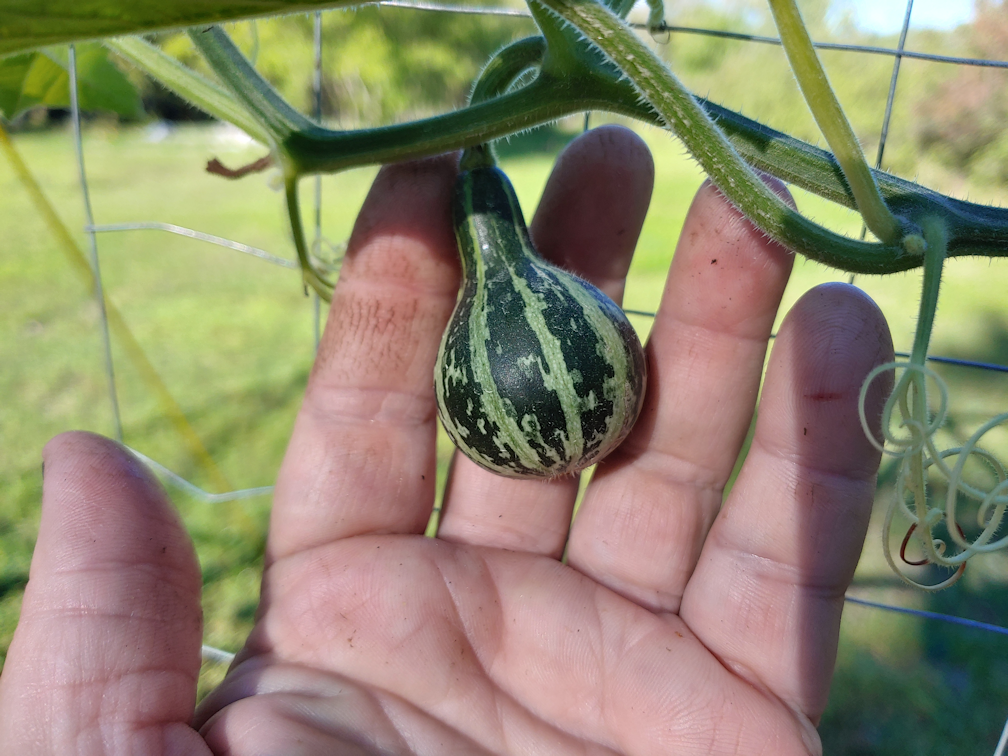
The gourds are one of my pet projects. I really want to grow gourds for crafting purposes. Except luffa, which I wanted to grow for the sponges. We’d tried, and failed, to grow birdhouse gourds last year, with our transplants killed by a frost. This year, we planted two varieties on the squash tunnel – Tennessee Dancing Gourd and luffa – and two varieties at the chain link fence – Ozark Nest Egg and Thai Bottle Gourd.
The only real success was the Tennessee Dancing Gourd. I currently have a whole bunch of them drying out in the big aquarium, where we have house plants under lights, to protect them from the cats. I had them in a basket on the counter, but the cats kept stealing them as toys! They are adorable, and I would happily grow them again. What amazes me more about them is that, based on the reviews I read on them, as prolific as they were for us this year, under better conditions, we could easily have had two or three times more gourds than we actually got!
As for the others…
I think, if we had not had the drought, they would have done better, and we might actually have had some gourds. The Thai Bottle gourd only had a couple of flowers, but never produced fruit. When the heat waves passed and we finally started to get rain, the Ozark Nest Egg started to produce SO many little gourds, but it was just too late in the season for them to mature. I think the luffa also would have done better, though whether they would have had enough time to fully mature, I’m not sure.
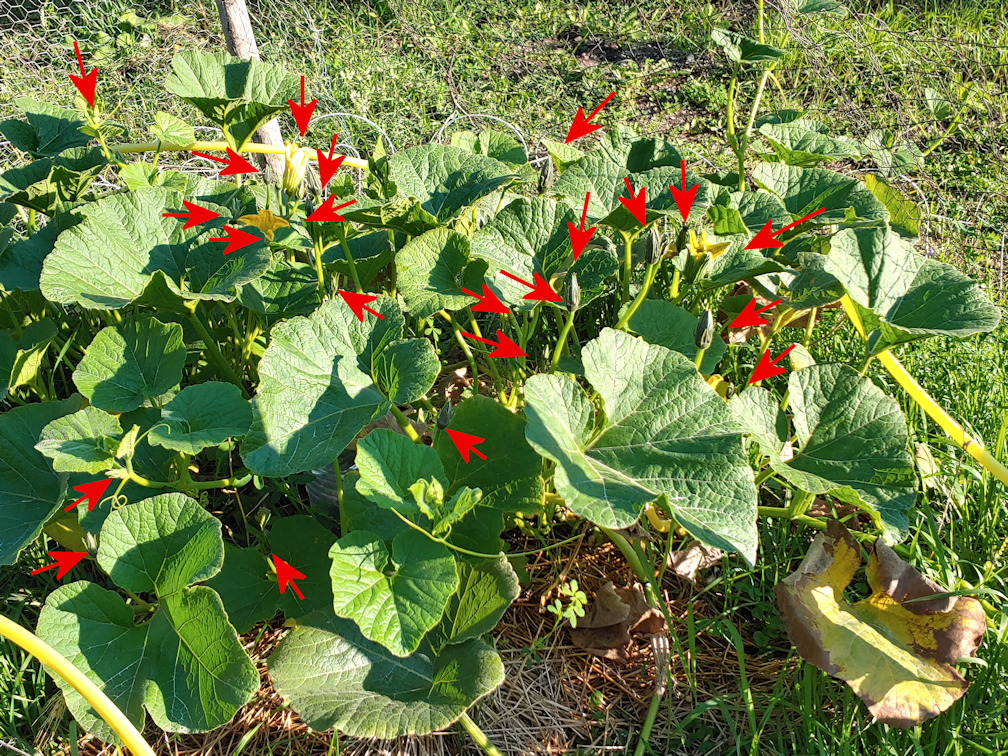
The Crespo squash was really amazing. It did so well at first, only to get hit by deer and groundhogs. It rebounded and began to produce prolifically, but by then it was too late in the season. I was really looking forward to seeing how this large, warty variety of pumpkin would turn out. Had there not been the setbacks it got, I think it would have thrived and produced very well. The squash are supposed to be quite delicious, and I look forward to being able to find that out for myself!
I’m going to include the cucamelons here, though they are more like a cucumber, while looking like miniature watermelons.
We grew these last year in an area with too much shade for them, yet they did very well. This year, they were planted at a chain link fence to climb, and climb they did! The new location was definitely better for them. Unfortunately, the heat and drought conditions were just too much, though I also think that lack of pollinators, later in the season, were also a problem. They bloomed prolifically, and you could even see many, many little fruits under the female flowers, but that was as far as most of them got. I doubt we got much more than 2 dozen cucamelons the entire season.
Final Analysis
Summer Squash: we are quite happy with the varieties of summer squash (from Veseys) we’ve been growing and will continue to grow them. I also want to experiment with other varieties, especially other patty pan types. We did get a green patty pan variety by mistake with our first seed order for 2022’s garden, but I am also eyeballing some white varieties, too.
Winter Squash: we’ve rarely ever eaten winter squash, so I wasn’t even sure how much we would like these (when we did the taste test, my husband did not like them, so it’s 3 out of 4). My primary reason to try them was for our food security goals (since they can be prolific, and can be stored), and to see if we liked them enough to even bother growing them again. Even though they didn’t really succeed, due to circumstances out of our control, I consider them a win. What few squash we had to try were delicious, and I would expect they would have tasted even better, had they had better growing conditions and more time to mature. I was able to save seeds from the Red Kuri, but not the Teddy, though I don’t think we used up all the seeds in the packets from Veseys when we started them indoors. I definitely plan to grow the Red Kuri again, plus we already have the seeds for the much larger Georgia Candy Roaster and Winter Sweet varieties of winter squash (also from Veseys). The Winter Sweet is supposed to be particularly good after a few months in storage, which was one of the main reasons I chose the variety. I think winter squash in general are working out well enough that we will aim to grow more plants then just the 3 Red Kuri and 2 Teddy we had this past year. If we have Teddy seeds left over, I will try them again, along with the Red Kuri so, next year, we should have 4 varieties of winter squash to grow.
Unless I break down completely and order some of the rare varieties from that heritage seed company in our climate zone I’ve been swooning over…
*ahem*
Moving along now…
Melons: I am SO happy with how these melons from Veseys did, and how wonderful they tasted. We’ve saved seeds from both varieties, but have also been saving seeds from varieties we’ve tried at the grocery store that we liked. We will definitely be growing melons again, and more of them. There are so many varieties to try, so these are something we will likely be experimenting with a great deal, over the years.
Crespo Squash: these were seeds I got from Baker Creek, and we only tried to germinate a few of them. They were one of my “fun” choices. Given how large they can get, I was very surprised by how many fruit started to form once they were finally able to, and how eagerly they tried to climb the barriers we set up to protect from deer and groundhogs. I really want to try these again – but we will have to do a lot to keep them safe from critters!
Cucamelons: these are cute and fun and tasty little things! However, after growing them for 2 years, I don’t plan to buy more seeds for next year’s garden. We did “harvest” their tubers and are over wintering them in the sun room. If that works (it did not work the previous year, but they were much bigger this year) we will plant those in the spring, but that’s about it. Instead, we will be planting the Eureka cucumber; a variety that is good for both fresh eating and pickling.
Gourds: yes, I will be trying gourds again! The Tennessee Dancing Gourds were a major win, and it looks like the Ozark Nest Egg would have been a major winner, too, under better conditions. I should have some seeds from all the varieties we grew this year left over, and will be trying them again. There are other gourd varieties I want to try growing, for different purposes, but some of the seed sources can’t ship to Canada at all. These are the one non-food plant we are growing (though the Thai bottle gourd is edible, and if picked young enough, theoretically all gourds are edible). The varieties I’m choosing are for their potential usefulness once they have been thoroughly dried out. The problem is, they all seem to need a really long growing season, which means they need to be started indoors very early, I am, however, determined to do it! :-D
Since we ordered SO many things for this year, and expanded how much space we were gardening in, I decided to go over groups of things in separate posts, in no particular order and spread over the next few days.
This year, we planted corn and sunflowers for multiple purposes, making some of them both a success and a failure at the same time!
We planted two varieties of sunflowers and five varieties of corn this year.
From Veseys, we got one of their Peaches ‘n Cream collections that included:
Early Eh Montauk Sweetness
With the sunflowers, I ordered two packs of each, for an experiment. One pack of each was started indoors, while the other packs were direct sown outside later on.
The Hopi Black Dye started indoors were strange, in that they didn’t germinate until after the other packet was direct sown outdoors! The Mongolian Giants that were started indoors did have a visible size advantage over the ones that were direct sown – right up until the deer started getting at them.
The Peaches ‘n Cream corn and sunflower blocks were planted the furthest away from the house, in poor soil. Part of the reason was to start preparing the soil for when we plant trees and bushes in the area. These were all things that were expected to grow tall, so they would also act as a privacy screen.
The sunflowers handled the drought fairly well with watering, and appreciated the super long, mild fall we had. We did harvest seed heads, though none were anywhere near full size. Currently, the smaller of the seed heads are being set out at the feeding station for the birds, while the larger ones will, hopefully, provide seeds that can be planted. We have not tried eating any of them yet, but the heads should be well dried by now.
As for the Peaches ‘n Cream corn blocks, they were the tiniest things ever, yet we still got corn we could eat!
I truly did not expect this. Especially with corn being a plant that needs a lot of nitrogen, and the soil in that area being so nitrogen depleted.
The Dorinny corn was planted not far away, also on virgin ground. I chose these specifically because they were a Canadian hybrid that were to be planted before last frost. When we got hit by one unusually cold night in May, I thought the ones that had germinated had survived, but alas, after a few days, they died off. Other seeds germinated, though, so we did get at least a few cobs out of it. I really enjoyed them, too.
The Montana Morado corn was something else entirely. There was some confusion as I thought I was ordering Peruvian maize morado that had been successfully grown in the US, only they turned out to be a US based hybrid. They were started indoors and transplanted after our last frost date, as far from the other varieties as I could, and they did well at first, even when the heat set in – until the deer got to them!
We did get a few cobs to try, but ultimately, it failed due to critter damage.
Final Analysis
Hopi Black Dye sunflowers: These were beautiful, and my reasons for getting these are the same reasons I am seriously considering ordering them again, or just trying to plant them from the seeds we have. It would be awesome to have enough of them to use for dying, as well as for eating and for bird seed.
Mongolian Giant sunflowers: I really want to grow a giant variety of sunflowers, and these are supposed to be quite massive. I want to try them again, both for our own eating, and for bird seed.
But will we grow sunflowers again next year? These did not really succeed very well, but at least we got something out of them in spite of the drought and heat waves. I do want to grow both varieties again, but we will need to think about that a bit more, and find a place to plant them that is suited for their growth, rather than for things like wind breaks or privacy screens.
Peaches ‘n Cream corn: These were enjoyed, but we will not get a collection like this again. I have already got seeds for a bi-colour variety called Latte, chosen partly because they were on sale. These came in a packet of 200 seeds, so there will be plenty of this one variety.
Dorinny Corn: I really liked this variety, and especially like that it is a cold hardy variety that can be planted so early. There were not a lot in the packet, so if they are still available, I may pick up two packets.
Montana Morado: These are now being sold as Mountain Morado. As awesome as they were (so far as they were able to grow!), I will not order these again for next year. I am after the Peruvian maize morado, aka Kulli corn. It is supposed to be good for fresh eating, as a flour corn, and to make the drink, chicha morado, and I am determined to succeed with this! I have found a heritage seed site in the US that carries Kulli corn seeds, and plan to pick up a couple of packets, as there are only 25 seeds per packet. My hope is that, over time, I will have a deep, dark maize morado that is acclimated to our climate zone. That may take a few years, but for some reason, I really want to do this!
For next year’s garden, I do want to plant a new “fun” corn. I want to grow popcorn. It turns out that, when you’re buying them from seed, there are all sorts of colours and flavours to choose from, and there are even varieties that taste buttery, all on their own. Which means that, if I am able to get seeds I want, we will have a total of four varieties of corn, next year. All of these would be planted/transplanted at different times and mature at different rates, so cross pollination will not be an issue.
The biggest challenge we will have for all of this will be critter protection. Without that, even if we had perfect growing conditions next year, it won’t do much good if the deer or the raccoons decimate them.
Of course, one way for that to be less of a problem is to plant so many of them, we can afford to lose a bunch, but we are a long way from having the growing space for it! Over time, though, we will probably be doing that, if I’m wanting to plant enough corn for flour or animal feed.
























 The Re-Farmer