Our 2022 garden: seedling progress, and I couldn’t resist

Wow! I was just checking something in my WordPress dashboard, and realized that this post is number 3,500 for this blog! What a chatterbox I am. ;-)

This morning, I opened up the large aquarium greenhouse, to spray the pots and add more water to the tray on the heat mat.

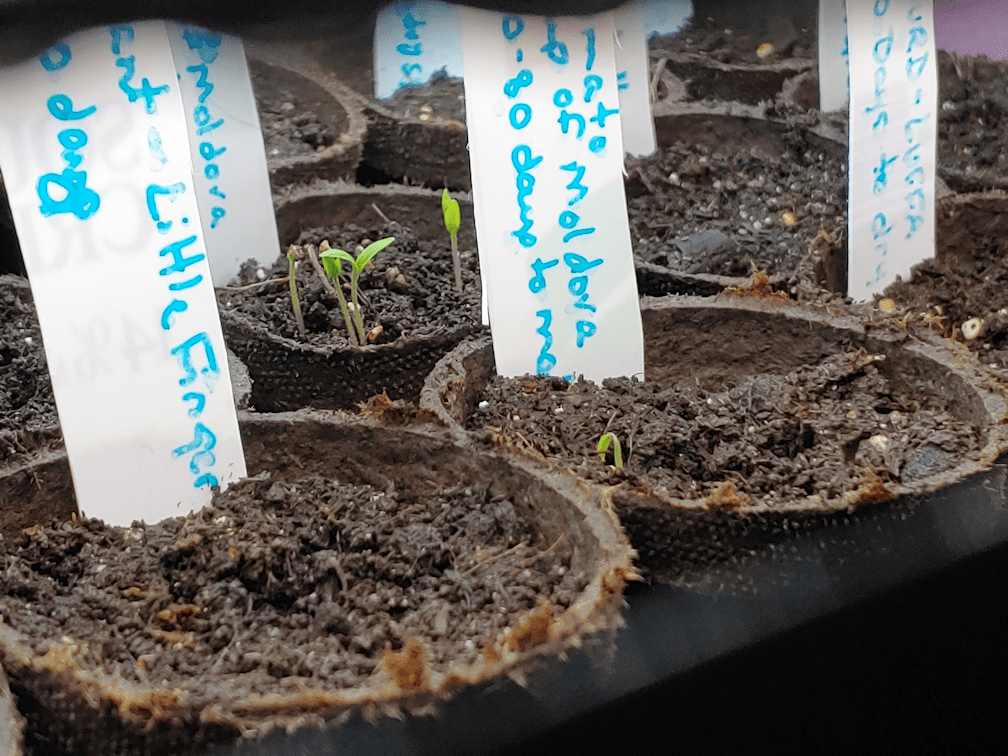
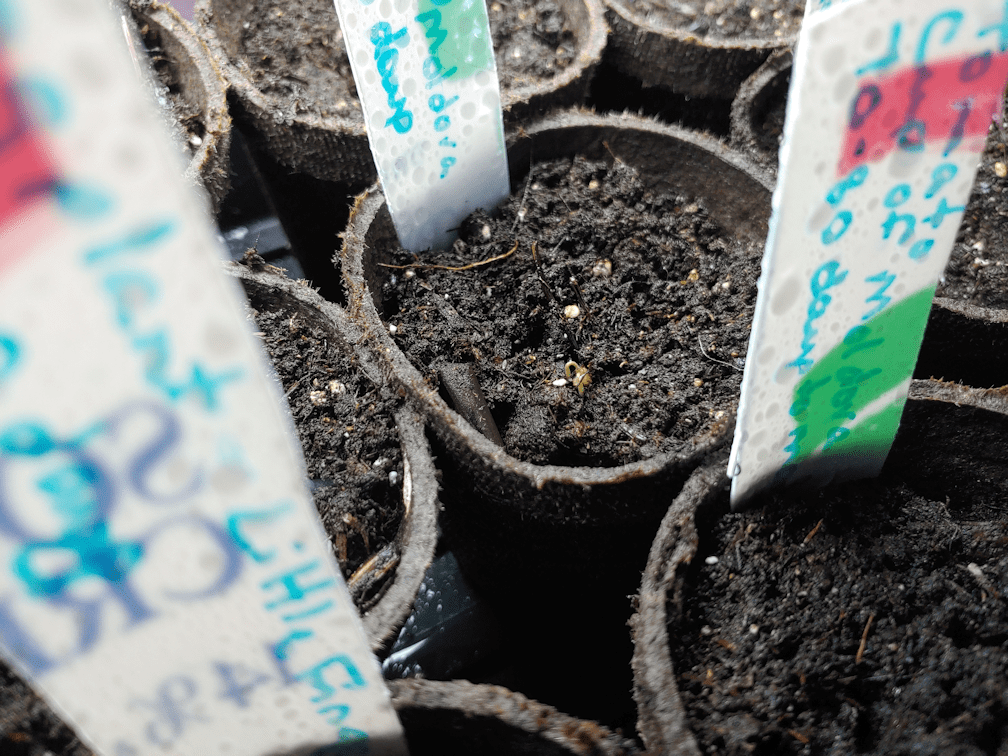
There were more sprrrooots!

It is still only the Cup of Moldova tomatoes that are showing, and they are growing remarkably fast!

The aquarium greenhouse set up is working quite well. Even the little one is working out. The cats had repeatedly knocked the screen window being used as a cover off the top, by jumping on the overhang. A couple of days ago, I discovered where the cats had been getting into the space in the basement that was supposed to be a dry bar, but never got finished. We’ve got all kinds of breakable things stored in there. Somehow, a cat managed to create an opening in the blocked off rafters above. While picking things back up again, I noticed a smaller screen window. It turned out to be exactly as long as the small tank, though a bit wider, so there it still an overhang. Just not much of one. It hasn’t been knocked off since.

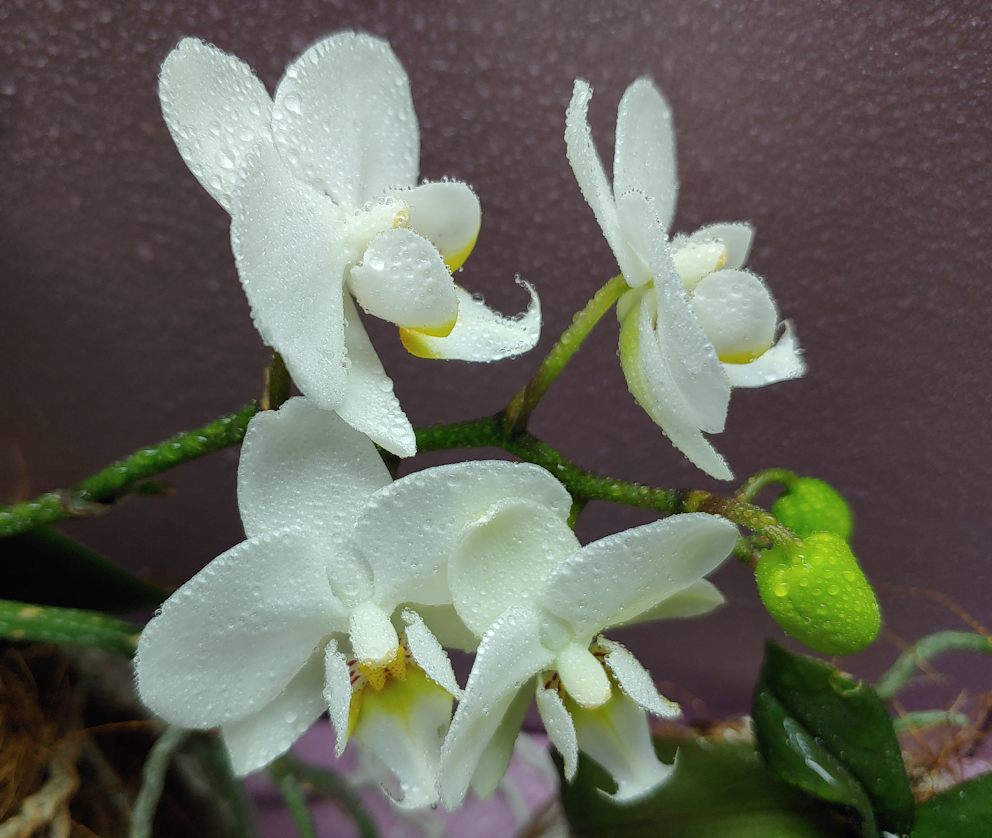
The larger tank has my daughter’s remaining orchids in it, and they are really liking the space!
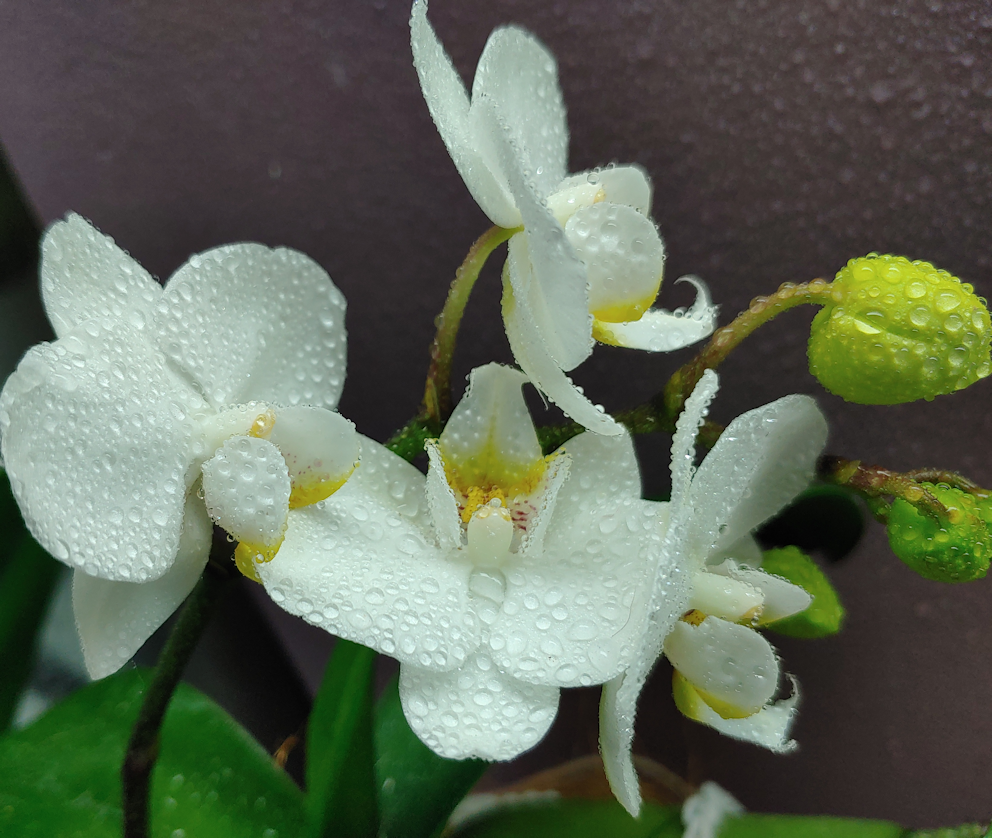
One of them is blooming with the strongest looking flowers I’ve ever seen on it!

Since I was spritzing the seed starting trays, I sprayed the orchids, too.

The second orchid is a lot smaller, and my daughter is not quite sure how it’s doing. It was an unexpected surprise to find that hanging them in front of the living room window, while safe from the cats, turned out to be too cold for them once winter hit. If I remember correctly, she lost one while it was still at the window, and another died shortly after they were transferred into the tank. These are the only two left.

I think I might get her another orchid for her birthday this spring. :-)

While on the subject of seedlings and growing things, I made an unplanned order last night. It was through someone on a hardy fruit and nut tree group that I’m on.

I got tree seeds.

The person I got them from is in Ontario. Most of his seeds are zone 4 and above, and he was sharing about his paw paw seeds, which are a zone 4 tree, though some places rate it as a zone 6. I talked to him for a bit about growing them in zone 3. Previously, I did find one tree nursery that advertised having zone 3 paw paws, but when I asked people on the group about the company, I got an overwhelmingly negative response. One of those negative responses is that they get their zones all wrong (and also had a habit of shipping dead trees!). So while it would be time saving to buy saplings from a nursery, we were going to wait on that. However, we might have better luck growing them from seed, ourselves.

The other seeds I got were tulip trees. They are another zone 4 tree, but that might just mean they grow more slowly in our zone 3, like with black walnut. I looked them up, and tulip trees can get quite huge.

The seeds we get will already be cold stratified, so when they arrive, we can go straight to germinating them. Both will be grown in containers for the first year or two, and we can overwinter them in the sun room or the old kitchen, until they are ready to be transplanted permanently.

Because of their large size at maturity – potentially 70-130 ft/21-40m tall (for comparison, the spruces in the grove near our house are about 65ft/20m tall), with 30-60 ft/9-18m wide canopy – if we get any surviving tulip trees, they can be planted either along the north property line, or well to the south of the outer yard, to be part of our shelter belt. These would be a tree for the pollinators and wildlife and, potentially, for a valuable wood.

The paw paws are a much smaller tree, and I can see these being planted in the old garden area, further from the house, where we are planning to plant berry bushes, fruit and nut trees already. They can reach 15-25 ft/4-7m in height, and 15ft/4m wide. Growing from seed, we’re looking at about 6 years, before we can expect any fruit.

Buying trees as saplings may shorten the time, but buying the seeds are a lot cheaper. We’ll be getting a dozen paw paw seeds and twenty tulip tree seeds, all for less than $20 – and that includes shipping. Even if we have an only 50% germination rate, that’s potentially 16 trees. The only thing I’d want to buy special is extra deep pots to start them in, to have room for their tap root. I already have the instructions for how to get them started, care for them in their containers, and transplant them.

As for growing in our zone, the person I’m buying them from can only guarantee them to zone 4. He’s never had anyone try the tulip tree in zone 3, however he’s had someone successfully grow their paw paws in zone 2b, getting hit with temperatures as low as -40C/-40F without extra protection, and surviving. Even in the group, when I’d asked in the comments about zone 3 for the paw paws, I had someone share that they’re growing them successfully in zone 3, though their seedlings are still too young to be producing fruit, yet.

I do hope this works out. If not, however, we’ll only be about a few bucks for a total of 32 tree seeds. Unlike the mulberry tree we got, which cost over $60 for the one sapling, got killed by an unusual, out of season, cold night, then even the remaining stem got eaten by deer.

I figure it’s worth taking the chance.

And if we’re going to be growing food trees, with how long they take before they mature enough to produce, we need to be starting as soon as we can.

The Re-Farmer

Our 2022 garden: more sproots! (updated)

With the cold and snow outside, it is so exciting to see green things growing in our aquarium greenhouse.

The one pot with the Cup of Moldova seedlings had more popping up by morning, but by evening…

Yes!! There is now a seedling in another pot!

It is still only the Cup of Moldova tomatoes that are sprouting. I find it interesting that they are germinating so much faster. Especially compared to the other tomatoes, Sophia’s Choice, which have a much shorter “days to maturity”.

What’s great is that, at this stage, you can almost see them growing. Talk about a psychological boost!

The Re-Farmer

Update: about 2 hours after I took the above photo, I looked again. The one sprout in the front is now standing tall, and another has popped up next to it – and the third pot now has a sprout showing, too!

So many sprooooots!!!

Our 2022 garden: First!

Okay, this was sooner than I expected!

Our very first sprout has emerged!

This pot was sown with Cup of Moldova tomatoes.

Looking back and how long it took for tomatoes to sprout, in this same aquarium greenhouse, last year, I’d say having that heat mat may have made the difference!

As I sit here, I can see more snow coming down in the security camera life feed. Seeing just this one little sprout makes the end of winter feel so much closer, despite the new snow on the ground!

The Re-Farmer

Our 2022 garden: first seeds started

Though it is very early in the year, we have our first seeds started indoors today. A lot of people in our zone have already got seedlings, while still others are saying, it’s way too early.

So which is it?

I happened on a video today, talking about planting peppers and eggplants, which we are doing for the first time this year. Both are plants we never grew when I was a kid, so I have zero familiarity with them.

This particular video mentioned something I’ve never heard before, yet had wondered about.

When reading the seed packets, they say things like “start indoors 4-6 weeks before last frost date”.

Last year, we had a lot of issues with some things not germinating. Some took forever to germinate. Others never did at all. This was particularly true of various squash, plus all the Hope Black Dye sunflowers – with did finally all germinate, when I started taking the trays outside, while hardening off other seedlings.

What got mentioned in this video, is that when they say “4-6 weeks before last frost,” it’s actually from germination, not from planting the seeds. So if you have something that needs to be started, say, 6 weeks before last frost, but the packet says the seeds take 7-10 days to terminated, then the time to start them indoors is 6 weeks, plus 7-10 days.

That actually makes so much more sense to me.

I’d already made a list of which seeds needed to be started when, and these were the ones that needed at least 8 weeks.

The gourds were started first, as they needed extra steps. Among the things recommended that I wanted to try was scarification and pre-soaking.

So that’s what I started this morning.

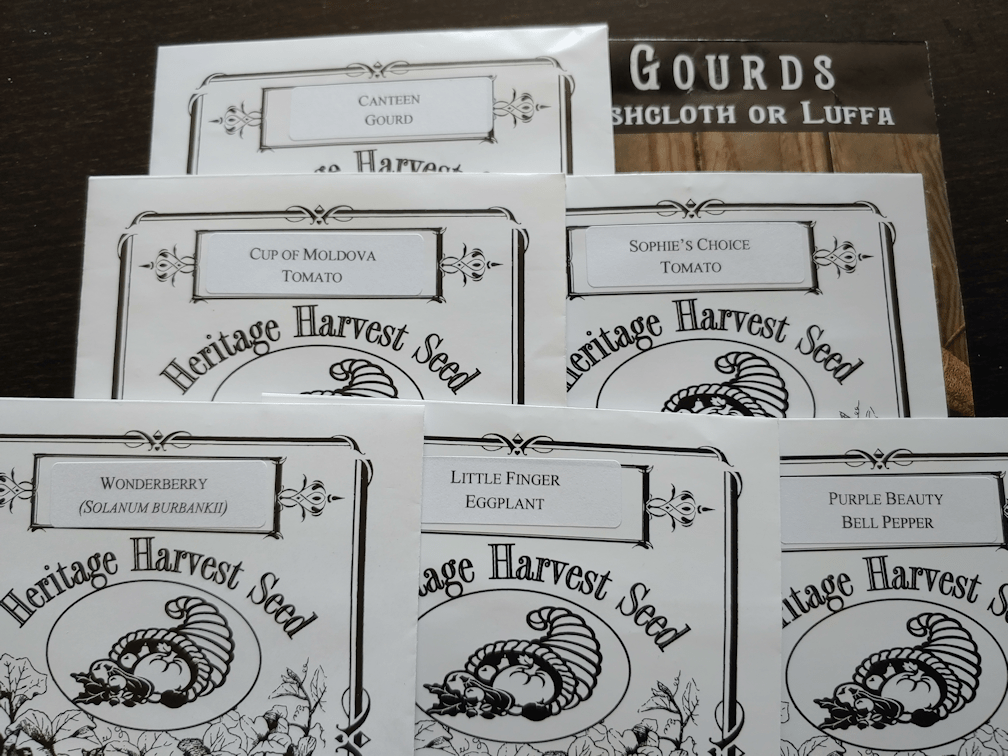
Of the gourds we will be trying to grow this year, I chose the Canteen gourd to start early, as the gourds are supposed to get quite large. The other gourds I want to grow are smaller at full maturity.

Which lead me to another thing. With the luffa, we’re not after “days to maturity”, which is 110 days, if I remember correctly. We’re after the sponges, so we need for those mature gourds to dry out. That puts them at 200 days. Even starting now, we might not have that long for them. It will depend on whether or not we get another really long summer again. Of course, in the end, everything depends on the weather.

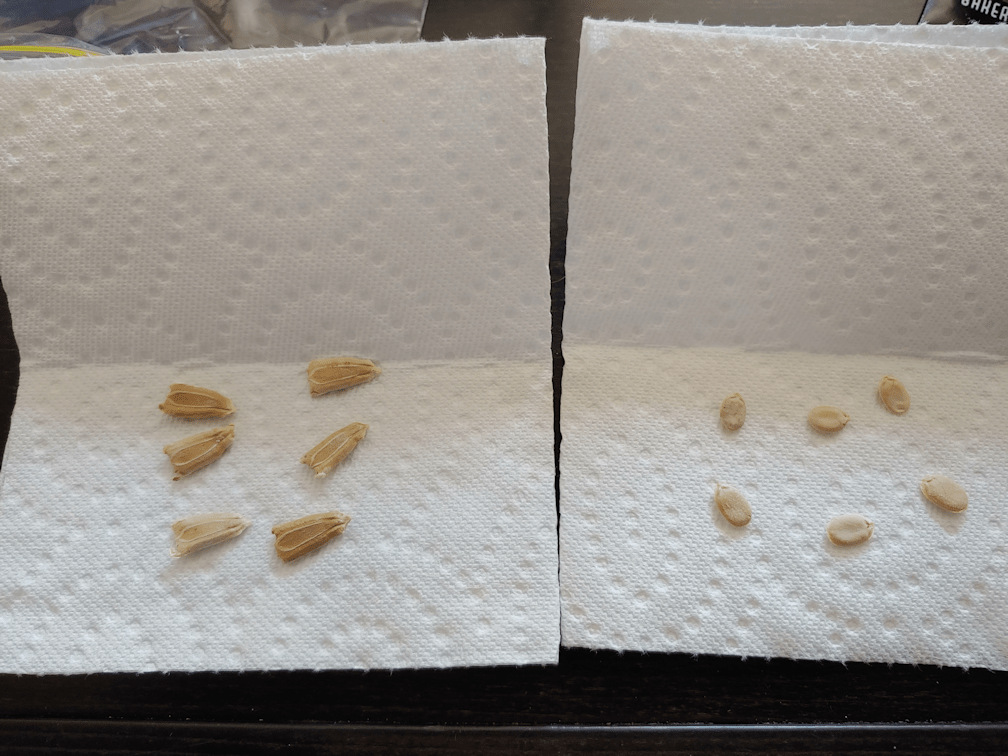
I chose 6 of the plumpest, healthiest looking seeds from each, then carefully snipped their outer shells with a nail clipper, before putting them inside the folds of a paper towel.

Then they went into sandwich baggies, and the insides were sprayed with water, before being sealed and left to sit. Most places recommended leaving them overnight, but I left them “overday” instead. ;-)

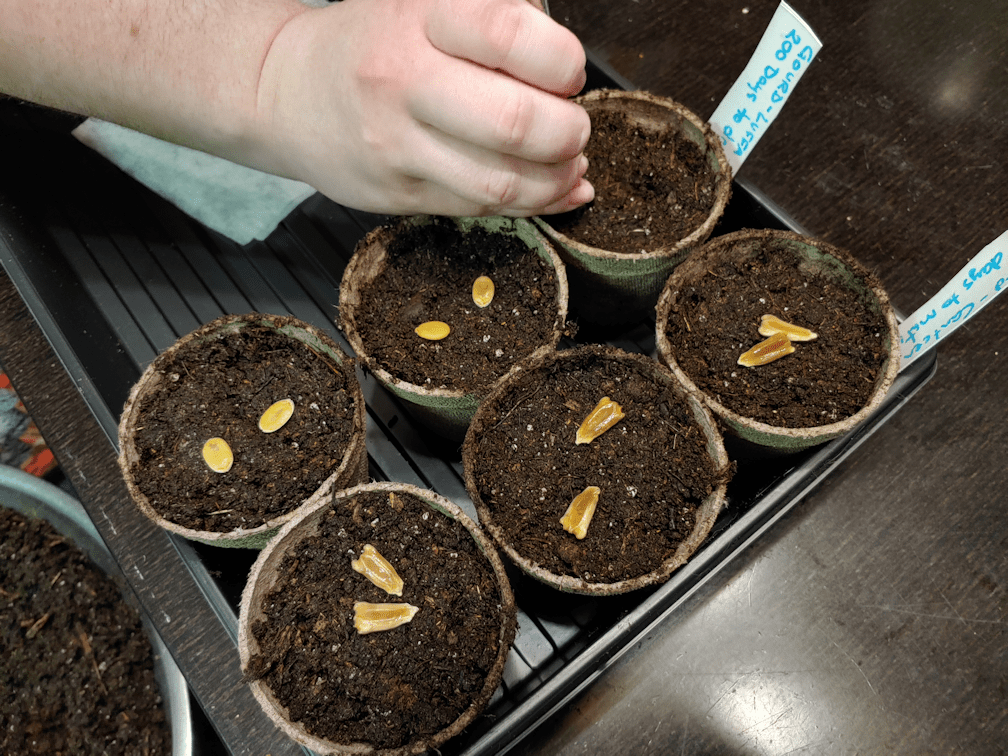
Then they went into planting pots filled with pre-moistened seed starting soil. My daughter used a chopstick to push them the inch into the soil they needed to go. Once covered, the tops of the soil got sprayed with water.

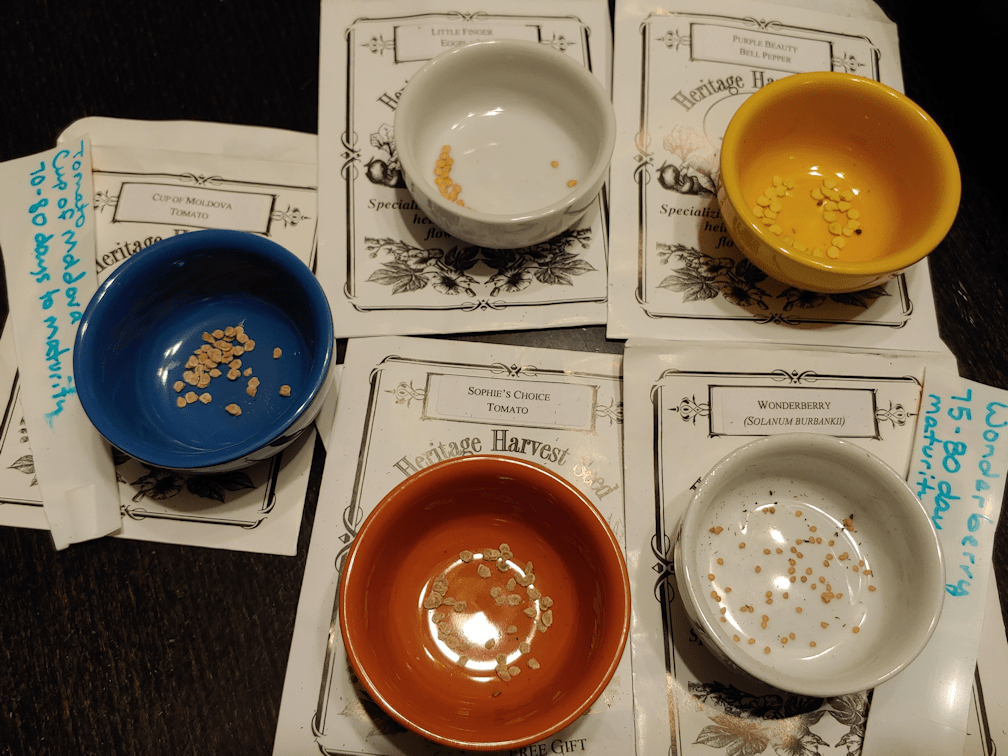
Then it was time to take a look at the rest of the seeds and see what we had to work with. None of the packets have a lot of seeds in them, but we are not after a lot of individual plants.

The Sophie’s Choice tomato was a conundrum for me. Everything I read about them said they needed to be started very early; a couple of weeks earlier than other tomatoes. Yet they are an early tomato, with only 55 days to maturity. At only 55 days, we could start them outdoors and they’d have plenty of time to mature. Odd.

For all but the Wonderberry, we decided to plant about 5 seeds per pot, and three pots each. With the gourds, that filled an entire tray.

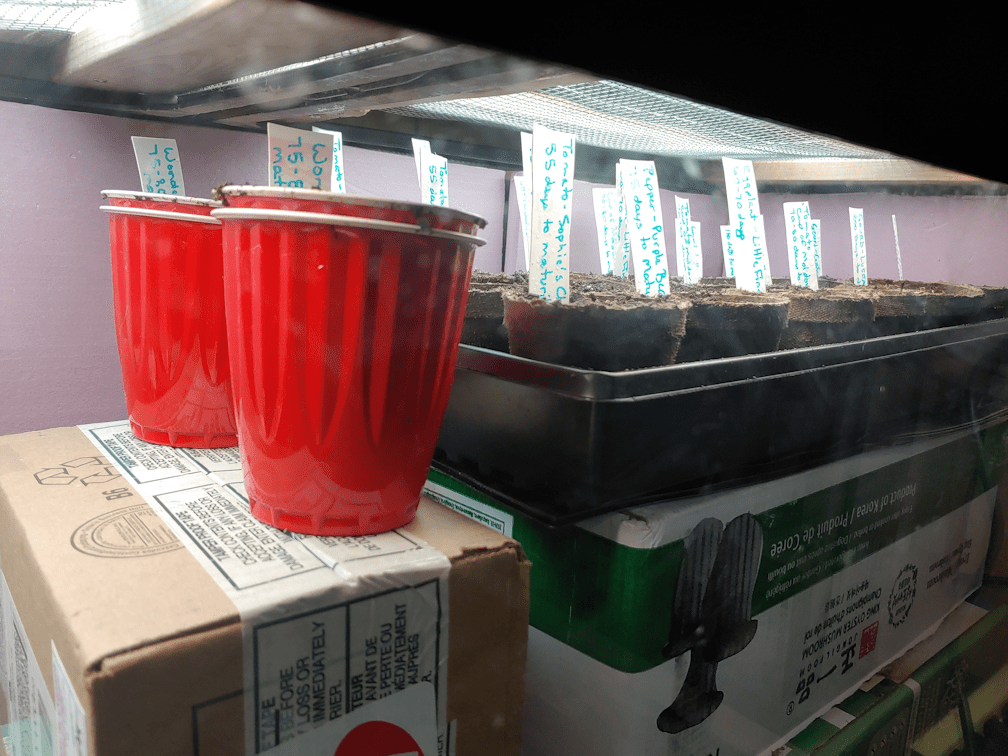
The Wonderberry got planted using the double cup method. I reused some of the Red Solo cups we used last year, with the inner cups having drainage holes in the bottom, so they can be watered from below, using the outer cup.

We still had seeds left over, even with how little was in each packet, so that’s nice.

We used more boxes to bring the tray and cups closer to the lights, inside the big aquarium greenhouse. The heat mat fits under the tray. I’m hoping that just being near the mat as well as close to the light fixtures, one of which does warm up, will be good enough to adequately warm the Wonderberry in their cups.

The double cups got water in their bottoms before they were put in place, and water was added to the tray once it was settled on the heat mat. We do still have a little fan blowing into the tank, though it’s over the orchids and aloe in the other corner. We won’t be able to cover these with a plastic dome, as typically recommended, so I’ll be making sure to use a spray bottle to keep the tops moistened, since the smaller seeds are so much closer to the surface. There’s quite a bit of water in the tray so, with the heat mat, that should help increase the humidity levels, with the fan hopefully keeping things from starting to mold.

The heat mat doesn’t have a thermometer, nor do we have a soil thermometer, so we’ll have to monitor these fairly closely. Everything is plugged into a power bar, which gets shut off every night, so there will at least be that break. If it seems to be getting too warm – unlikely, for what we’ve got planted in there – we can put something under the tray to elevate it. Once the seeds germinate, we can probably take the mat out entirely.

The next things we’ll be starting are the onions, which won’t need the heat mat, but when it comes time to start the rest of the tomatoes, and all the squash, we’ll need both the heat mat and space – and space is going to be harder to come by! We do have a mini greenhouse, the frame of which we are currently using in the sun room to hold the heater bulb for Butterscotch and Nosencratnz, as they recover. We did try to use it in the living room last year, as it does have a zippered cover, but the cats still managed to get into it. If we could find some way to keep the cats out of it, it would go a long way to helping with our space issues!

We’ll figure something out.

The main thing is, we’ve got stuff started that need that extra time indoors.

Yay!!

The Re-Farmer