Wattle weave bed experiment

Okay, so this project has been incredibly slow going!

I first started preparing the area at the beginning of July. That was just to prepare the bed in advance. It wasn’t until the middle of the month that I could finally get started on the wattle weaving.

For the vertical support posts on the long sides, I used the openings of the chimney block retaining wall to space them out. They’re not quite 2 1/2 feet apart. The bed itself is roughly 12 feet long. For the bottom wattles, I was using maple, which is not very flexible, even when freshly cut, green and newly stripped of its bark. So in that respect, the wider distance was better.

The problem is, I had I think only one straightish piece that was 12′ long. I had a few that were long enough that I could use two, but anything less than that, and there was just too much space between the verticals to do any weaving.

So that got set aside while I figured out where I could find long enough materials.

For the retaining wall side, I decided to experiment, and to completely the other direction. Each of the chimney blocks has three openings in the sides on the front and back. I spaced the verticals with four opening between them. In retrospect, I should have done it with three, but it’s too late to change that now!

I decided to add vertical supports in every opening, and try weaving with much shorter, thinner wattles.

I used the remaining pieces of maple and cut them slightly shorter than the verticals that are already in place.

Then I made a point at one end.

That mostly white cat on the left is Frank, aka: Old Blue Eyes.

Yes. He turned out to be a she, and she is pregnant. *sigh*

I used a scrap piece of board to hammer in each of the new verticals. I ran out of the maple, though, and use some willow for the last four. You can see those set in place in the second image of the slide show above. The willow I used is from what I harvested a couple of weeks ago, yet when I peeled them, they were still pretty green! Which is why I had to peel them. If I just stuck them into the ground, they would root themselves and start growing, and I don’t want to grow willow in my retaining wall blocks!

Once those were in place, it was time to harvest as many willow switches and maple suckers as I could find.

In the last picture, you can see the two piles I gathered. One is of willow switched, the other of maple suckers. I took advantage of needing these to clear out some growth that needed to be cut back completely, so I knew that some of them would not be useable for this. For the weaving, I need long, flexible, straight pieces. Unfortunately, even with the shorter, younger pieces I was harvesting, they tend to grow just a few feet before suddenly ending and splitting off into two.

Once the material was gathered, I grabbed my first piece of willow to start trimming the twigs and branches off when…

My pocket started to ring.

There’s only one place that calls my cell phone.

Yup. It was home care.

They didn’t have someone for my mother’s supper time med assist. They did for her bedtime assist. Just not supper. Normally, they are both done by the same person, so it looks like they found someone to cover for her for the end of day assist, but not the supper time one.

My mother was scheduled to get her med assist at 4:45pm.

I had just enough time to clean up, change and head out.

*sigh*

I did phone my mother in advance and left a message on her answering machine before I left. When I got to her place, however, she was sitting outside, enjoying the day, and was very surprised to see me!

I was early enough that we could sit outside together and chat for a while before heading in. Since I was there anyhow, once I got her meds set out, I helped her get her supper together, did some dishes, etc. I’m going to be back tomorrow morning to take her to the lab for blood work, so I didn’t stay for very long. I reminded her not to have breakfast tomorrow, as one of the tests requires fasting.

This makes three days in a row I have had to do med assists for my mother because there was no home care aid to do it.

While I way away, my daughter made supper and was feeding the outside cats for me again. I was very happy to grab some food, and then head back out again. I wanted to at least get those maple suckers woven in, as they will dry out and get brittle much faster than the willow.

Yes, Sir Robin is chewing on the tip of a maple!

I got about a dozen out of the maple I’d harvested and got started with the weaving.

At those length, I needed three to go the length of the bed.

I made it to two.

Even as thin and green as they were, with how close together the vertical pieces are, they just weren’t flexible enough. While trying to weave through, I broke a vertical. I managed to scrounge a long enough piece of older maple to replace it, but when I broke a second one, that was it. I found another piece of maple to replace that one – at this point, the remaining pieces were among those that were rejected for being too bent or whatever – and gave up using the maple suckers.

The willow was much faster to prepare. I didn’t even need to use pruning sheers.

For the first three passes, I wove the willow switches – it took three to complete one run – up higher. They didn’t want to bend around the verticals until I got to the skinniest tips, and would instead push them to one side or the other, if it was just one run of the willow switches. Once the first three runs were done, I used a scrap piece of board to hammer them down, little by little, to the base.

I kept that pattern up, but still had problems with the willow switches basically being stronger than the vertical supports. I ended up snapping one of the verticals after several passes. It didn’t break off completely, though. I was able to find a strong and straight piece of willow harvested last time and drive it into the space, alongside the vertical that snapped.

Some time later, another vertical snapped right off. This time, the piece of willow I found to add into the space had to be trimmed flat on one side to be able to fit alongside the remains of the broken vertical.

It took some doing, but I eventually figured out how to force the wattles to bend around the verticals as I went along. Unfortunately, that’s when the wattles started snapping, too!

In the end, I was able to get about a dozen runs woven through the verticals, sometimes having to get creative with shorter pieces to make up for not quite being able to reach the ends.

If you scroll through the slide show above, you’ll be able to see a picture I took from above the wattle weave, where some switches bent to the point of breaking, while others were just running straight through!

I don’t need to make the wattle weave on this side any taller. I had to stop at this point and head in, and will continue tomorrow, which is basically to tidy things up. At each end, the wattles will be trimmed evenly, and the shorter verticals will be trimmed to just above the wattles. The original, taller verticals will be left long. As they match the verticals on the other side, they will be left tall so that, should this bed ever need to be covered with netting or something, the taller verticals will be available to attach support hoops to.

Aside from the tidying up, this side of the new wattle weave bed is done. For all the pain in the butt it was, it looks much nicer than the other side. I’m not sure how those pieces that snapped during weaving will hold out, but on this side, it’s not going to be holding soil.

The ends, of course, can be woven in with any short pieces we’ve got; there are only three supports to weave around.

It’s the other long side that is going to be more of a challenge. I need to find more materials long enough to weave around those widely spaced vertical posts.

So, my conclusions on how this is going.

Obviously, on the inside, the posts are two far apart. On the retaining wall side, they’re too close together for the base thickness of wattles I was weaving, even though they are MUCH thinner than what I had for the other side. This is where it would be handy to have basket willow instead of the varieties we’ve got. Side note: if you noticed that some of the willow looked green, while others looked more yellow, that’s because they came from different trees that seem to be different varieties of willow.

With the closer spacing, the biggest advantage is that there are fewer gaps between the wattles. Which means they’ll hold soil in place better. What I have now on the other side has gaps large enough that I will have to line the inside with something to keep the soil in. With the L shaped bed, I had cardboard at the bottom of the bed that was wide enough to go partially up the sides. The rest of the height was lined with grass clippings. The soil in this bed has already been amended, so there’s no lining the bottom with cardboard again. I will probably just use cardboard along the inside.

I’m seriously considering removing the weaving I’ve done so far on the inside of the bed, and adding another vertical between each of the ones currently in place. I don’t know that I’d be able to reuse the maple wattles, though. If I had something long enough for them that could hold water, I would soak them for a day or two, to make them more flexible, but I’ve got nothing like that. It might be worth sacrificing the maple wattles to get a better and tighter weave. If I did do that, some of them would be used to make the additional vertical posts.

I’ve been eyeballing the trees in the spruce grove, and I might be able to harvest some poplar to use for weaving.

It’s a good thing I have time to figure it out. It won’t be used until it’s needed for next year’s garden, which might include getting winter sown this fall. As long as it gets done before the ground starts to freeze, that will be fine.

I really like the wattle weave beds, but gosh it’s hard to get enough materials for them. They use so much more than you’d think, and it’s surprisingly hard to find material that is the right combination of long, straight and flexible.

In the end, though, I think it’s worth it.

It is another reason for us to get basket willow, though! 😄

The Re-Farmer

Stuffed winter squash experiment: a successful fail?

Last night I went down to the root cellar to grab a winter squash and ended up grabbing two. One was needing to be cooked immediately, with some of it needing to be cut away for the compost pile.

The squash was a nice round one, and there was still about 3/4 of it that was perfectly fine – it looked like it would make an excellent bowl, in fact.

So that’s what it became.

I decided to fill it and roast it.

I’ve never done this before and didn’t bother looking up a specific recipe. I browned some ground beef, adding a packet of onion soup mix for seasoning. I also added about half a cup of leftover tomato soup, two cups of water and one cup of uncooked rice. After mixing it all together, it went into the cleaned out squash bowl.

I roasted it at 350F for an hour, stirred the filling, added another half an hour, stirred the filling and added another half an hour. At that point, I just shut off the oven and let it sit for a while.

This is how it turned out, after giving the filling another stir.

It looked pretty good to me! Some of the rice at the top was a bit undercooked, but not by much.

It was past midnight by the time it was done, but I had to at least try it! So I grabbed myself a bowl, got some of the filling, then scooped out some of the squash to go with it.

I found it a bit low on salt (I did not add any seasonings out than the onion soup mix and the leftover tomato soup), but that was an easy fix. I found it quite tasty. I even had some for breakfast, and the undercooked rice was no longer undercooked. It made a great breakfast.

Unfortunately, it looks like I’m the only one that will be eating it.

The first problem is the filling.

For many years, ground beef and rice was basically what we ate the most. Sometimes with an added can of mushroom soup, sometimes with some added frozen vegetables, etc. Whatever we had at the time, but the base of many meals was ground beef and rice. It was our poverty diet, to be honest, but my husband really likes it, too, so I kept making it even when things got better, financially. The rest of us got pretty tired of it, but my husband still loves it.

My daughters, however, hate it now. In particular, the texture of it. It makes them feel ill.

While this stuffing is mostly ground beef, there is enough rice in there that they will not eat it. They might eat some of the squash, once more of the filling is gone and they can get at it.

My husband, meanwhile, doesn’t like winter squash. He won’t eat it.

I thought he’d at least still enjoy the filling, but nope. He won’t even try it.

*sigh*

I can understand food likes and dislikes or intolerances – I’m the one that can’t eat fresh tomatoes or any peppers at all, after all. As a family, however, it’s getting very hard to find things we will all enjoy! I thought most people got less fussy about food as they got older, by my family has all gotten more fussy! Add in things like me being the only one that is NOT lactose intolerant, it does make grocery shopping a challenge. It also makes deciding what to grow in the garden more difficult, too. Winter squash is a great staple crop that can store well (if the squash get to mature enough to be cured properly). The girls like them, but my husband doesn’t. My family likes tomatoes, which I can’t eat. Some of us like peas, some don’t. Some like carrots, some don’t. Some like corn, my younger daughter can’t eat it. On it goes!

So while this experiment was a success, as far as cooking goes, it was a fail when it comes to being something the family can eat.

Ah, well. More for me, I guess.

On another note, I just had to share this.

Remember the forecast for December that I posted yesterday?

This one?

Note those temperatures on the 6th and 7th.

For those in the US, we’re looking at -20C/-4F as the high, with -33C/-27F and -34C/-29F for the overnight lows.

This is what the forecast looks like, now.

They now have a forecast of 1C/34F for the 6th and -3C/27F for the 7th. The low for the 7th is still expected to be a bitter -27C/-17F. They no longer have a 8C/46F predicted for the 20th, but we’re still expected to be above freezing.

Long range forecasts can really be all over the place!

I do hope the warmer forecasts end up being the correct ones, though. I still plan to add a ceiling of rigid insulation to the isolation shelter, for when the ladies get spayed. It’s the overnight temperatures that are the main concern. During the day, the windows will allow for passive solar heat even on an overcast day, but they will little to keep the cold out once it gets dark.

In fact, that’s what I plan to work on next.

After I have some of the squash bowl for lunch.

The Re-Farmer

Kitties, Cornbread, and 6 years ago today

First, the kitties!

I’m happy to say, they are recovering nicely. You’d never know they’d all just undergone surgery!

In this photo, you’re being looked at by Shadow in the Dark. The boys definitely seemed to get more energetic faster, which makes sense, since they didn’t have open surgery like the ladies.

The other kitten is Pom Pom, who is just getting big enough to be done. He’s quite a bit bigger than his siblings, The Beast and Soot Sprite! Hard to believe they’re from the same litter.

Also, he is getting some very distinctive white fur on his sides. I’ve noticed that in some of the outside kittens, too. Pointy Baby was the first cat we’d see to develop that pattern, which suggests there’s some paternal genetic connection between them.

Anyhow. All is good with the post-op kitties, and they are so very happy to be allowed out of the room again!

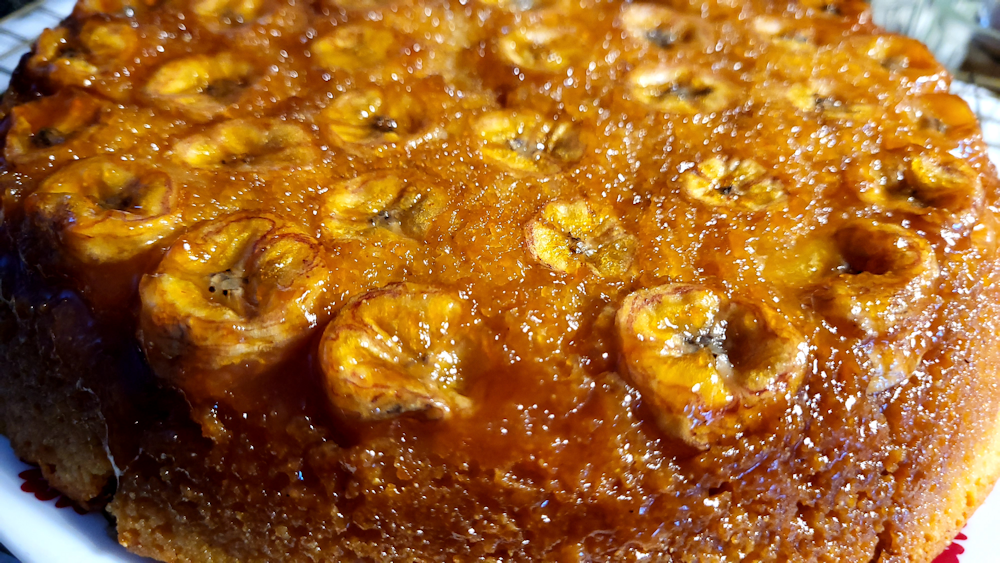
Today, I had a chance to experiment with cornbread again. Last time, I did a strawberry version. This time, I did the exact same thing, except with bananas.

It’s still cooling as I write this and oh, my, does it look good! I can’t wait to try it! This time, we have enough extra that if it goes over well, we can make another one.

Next time I experiment, I think I’ll try apple.

On a completely different note, as we come up to our 6 year anniversary of all 4 of us finally together again, here at the farm, I went looking at some of my posts from back then.

Oh, my.

My husband and younger daughter were already here, and today was the last day my older daughter and I had to get things done, before the movers arrived in the morning.

We had no idea just how bad that would turn out.

Reading over those old posts again makes me shudder.

I know at some point, my husband and I will likely have to move somewhere that is more accessible for limited mobility, but at this point, I’m still thinking, I never want to move again!!!!

Thank God my brother now owns the property. If my mother were still our “landlord”, we probably would have thrown in the towel and found a way to move out, years ago.

The Re-Farmer

Our 2022 garden: first corn!

I just had to start out with this bit of gardening excitement.

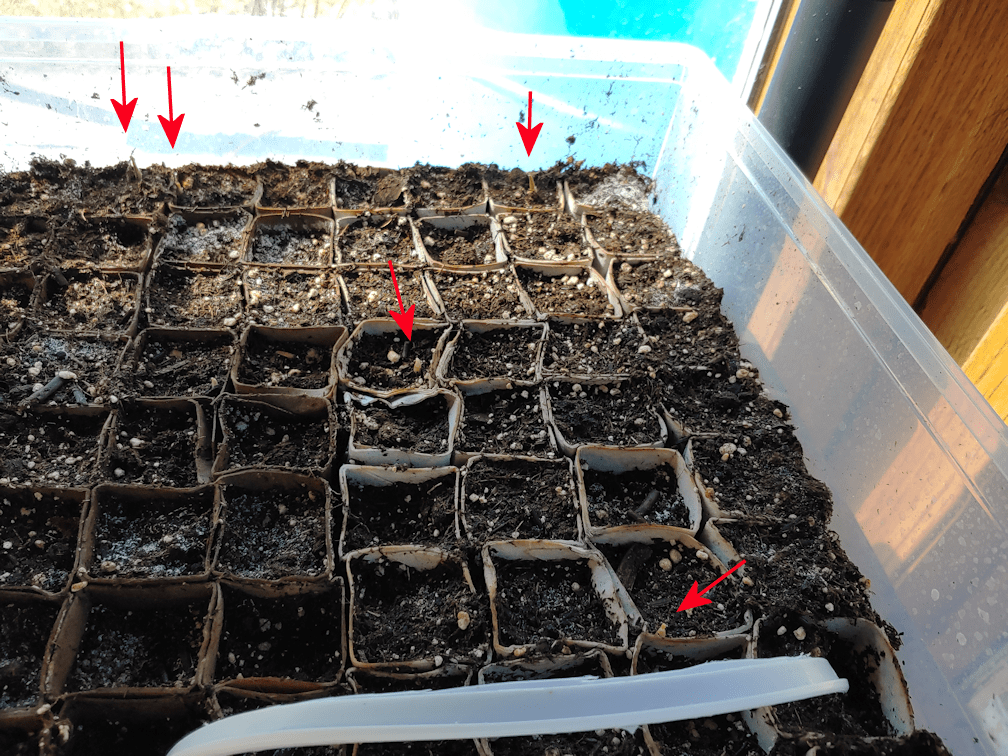
When checking the plants in the sun room this morning, I spotted our very first Kulli corn seeds germinating!

When I took the picture, I could only see a couple in this larger bin in the plant shelf. After uploading the photo, I spotted several more and … oh! I just spotted one more that I missed when putting the arrows in! It’s two pots to the left of the single arrow in the middle.

These are in the smaller bin that recently got moved to the platform we made over the swing bench, at the west facing window.

I am just so thrilled! For the new folks who just started following this blog (welcome! I’m happy to see you!), Kulli is a Peruvian purple-black corn, also called maiz morado, that I’m trying to grow in our zone. I thought I was trying them last year, but the information from where I bought them kept changing, and it turned out they were developed for cold hardiness in the US, but were not actually acclimated Kulli corn, as I originally thought. I found some Kulli seeds at Mary’s Heirloom Seeds, in Texas. They are supposed to be good both as a fresh eating corn, and as a flour corn. They are also used to make a drink called chicha morado, and as a dye. I have not been able to learn much about their native growing conditions, since Peru is so mountainous, and it’s hard to compare to our Canadian growing zones. This is why I am starting them indoors – not typically recommended for corn – to transplant. Plus, they take 120 days to maturity. Our growing season, from last frost in the spring to first frost in the fall, averages 100 days.

This is a pet project of mine, in that I would like to acclimate the variety to our growing zone (if that’s even needed). These will be kept well away from other varieties of corn. Starting them indoors also means they will pollinate earlier than the other varieties we’ll be growing this year. Between those two factors, there should be no cross pollination.

We’ll have to take extra care when transplanting these, to protect them from the critters.

I saw my first ground hog running around, when I did my rounds this morning. I also saw a racoon in the kibble house about a week ago and, of course, the deer area always around. I’m not sure which critter destroyed our black corn last year, that had been doing so well.

Must protect the corn babies! :-)

The Re-Farmer

Setting up the sun room, and those are probably a total loss

Well, I hope this works.

The girls and I had to do a fair bit of clean up and pick up from what the cats and skunks knocked about while we had the run room doors propped open. Then one of them stayed out to tend the burn barrel. I’d gotten it going this morning, then covered it to smolder, but the cat litter sawdust just can’t dry out enough for that to work very well.

It’s just too wet out there for anything to dry, even in the burn barrel!

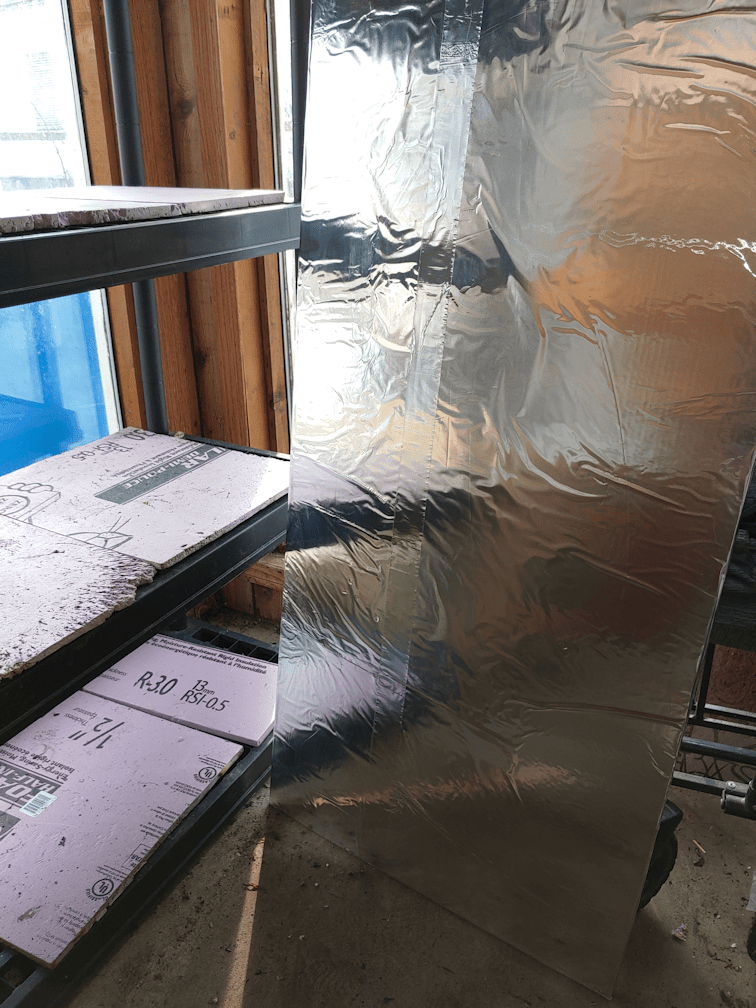
We got the shelf in the corner of the sun room ready to hold seedlings. Only the bottom three shelves will get used, because the eaves shade the top shelves too much. We’re going to see how using the scrap pieces of insulation on the shelves will help.

I cut another piece of rigid insulation to cover the three shelves we’ll be using, then covered one side with heavy duty aluminum foil. The foil is adhered with ordinary white glue, watered down enough that I could apply it with a cheap, dollar store paint brush. It took two overlapping lengths of foil to cover it and, just to be on the safe side, the overlap has a strip of aluminum tape over it as well. Much to my surprise, I found that at the dollar store, too! The back just has strips of duct tape holding the foil edges.

I found a way to hang up the new shop light I picked up at Costco. If we needed to, we could set up the second one on the other side of the foil covered sheet as well. These lights are designed to be hooked together, too, so one can be plugged into the other.

The problem is, we don’t have any way to safely set up the ceramic heater bulb overnight. When we used it before, we used the frame of the mini-greenhouse to hold it securely away from any potential fire hazards, but that’s being used for seedlings in the living room right now.

The aluminum foil will help reflect light from the window, but we will have to be careful during the day, to makes sure it doesn’t reflect too much heat, too. We want a solar reflector, not a solar oven. I’m hoping, however, that it will help keep the shelves warmer than the rest of the room during the night.

We’ll be testing it tonight, with the tree seeds.

Which I am sure are a total loss.

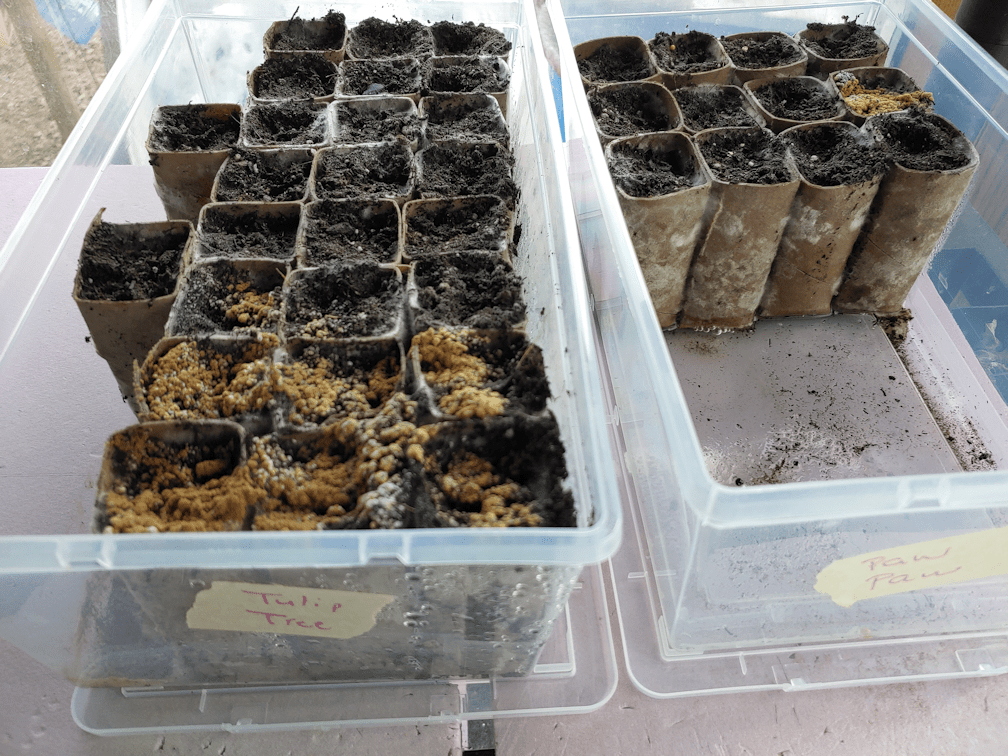
After transferring the seeds from the slide lock baggies into the toilet tube pots, they went into the mini-greenhouse. There is a little fan in there to keep air circulating but, because of the cats, we can’t open it up like it really should be.

Which is probably why this happened.

*sigh*

It’s a good thing these are a total experiment. It is possible the seeds are still viable and may actually germinate, but my goodness!

Now that they’re in the sun room, and not enclosed in the mini-greenhouse, the mold might dry up and die off. The seeds themselves are supposed to develop a tap root long before the leaves break ground, so I was still not expecting anything to be sprouted. Who knows? Some might still survive. There is that one slender bit of green growth in the tulip tree bin, after all. No idea if that’s a tree seedling, or some weed that managed to get into the seed starting mix.

We’ll monitor things for a day or two, then will probably move the onion and shallot starts into here, as they can handle cooler temperatures better than anything else we’ve got sprouting right now. Even just moving these two little bins has freed up a fair bit of space. After that, we’ll have room to move things out of the big aquarium greenhouse, and use that for the next batch of seed starts.

Little by little, it’ll get done.

The Re-Farmer

A tasty fail!

Yesterday, I tried a bit of an experiment.

I decided to make some little beef pies in muffin tins.

This is something I’ve made before – the first time, in Home Ec class! My experiment was with the dough. We’ve been trying to find ways to use less butter in our cooking. We don’t use margarine or shortening, so when it comes to cooking and baking, it’s either liquid oil or butter. With oil, it’s easy to have a variety. Not so much with solid fats.

So for the meat pie, I wanted to make a hot water dough (which is sturdier, for heavier fillings like meat), using oil instead of butter or shortening.

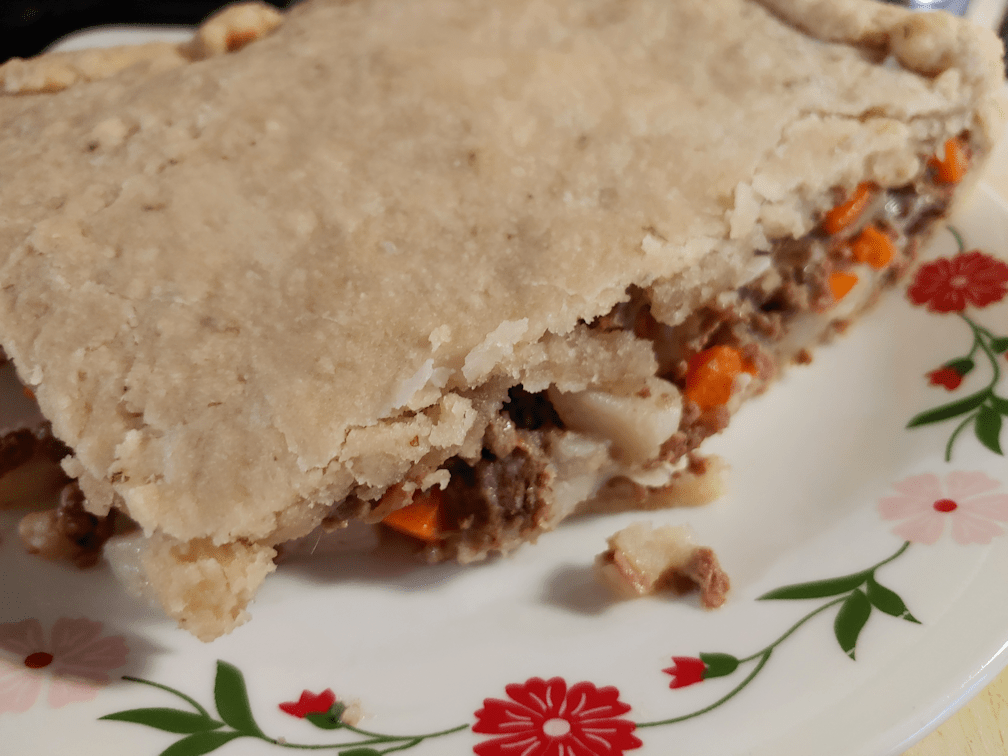
This is the finished result.

As you can tell, the muffin tins didn’t happen!

The dough simply would not hold together and was very difficult to roll out. I think I added too much flour, but the oil made it so slippery! In the end, I had to put half of the dough in the pie pan and roll it as thin as I could, right in the pan. After the filling was added, with about an inch and a half of space around the edges, I rolled out the other half of the dough as best I could, then brought it over, wrapped around the rolling pin, to cover the filling. Some repairs were needed, as the top was spread over and tucked around the filling. Then the edges of the bottom crust were pulled up to seal it more.

It actually turned our really delicious. I didn’t get the hand pies I was after, but that’s okay!

The filling was ground beef, browned (in butter, of course), adding onions and garlic early on, then cubed carrots half way through. The last thing added was the cubed potatoes, along with some beef stock. It was left to cook, covered, until the potatoes were just barely done, then uncovered and stirred until the liquid was all evaporated. A touch of flour was added to absorb any remaining liquid and thicken it. I ended up with more filling than fit in the pie, but it tastes good all on its own, too.

I have some hot water dough recipes that include things like egg that I might try. Maybe that will work better.

The good thing about experimenting like this is that, even when it doesn’t work, it still tastes good!

The Re-Farmer

Our 2022 garden: winter sowing experiment

I was inspired by WolfSong to try something new – and help with that urge to be planting something already! Winter sowing.

Today, I finally got some seeds started.

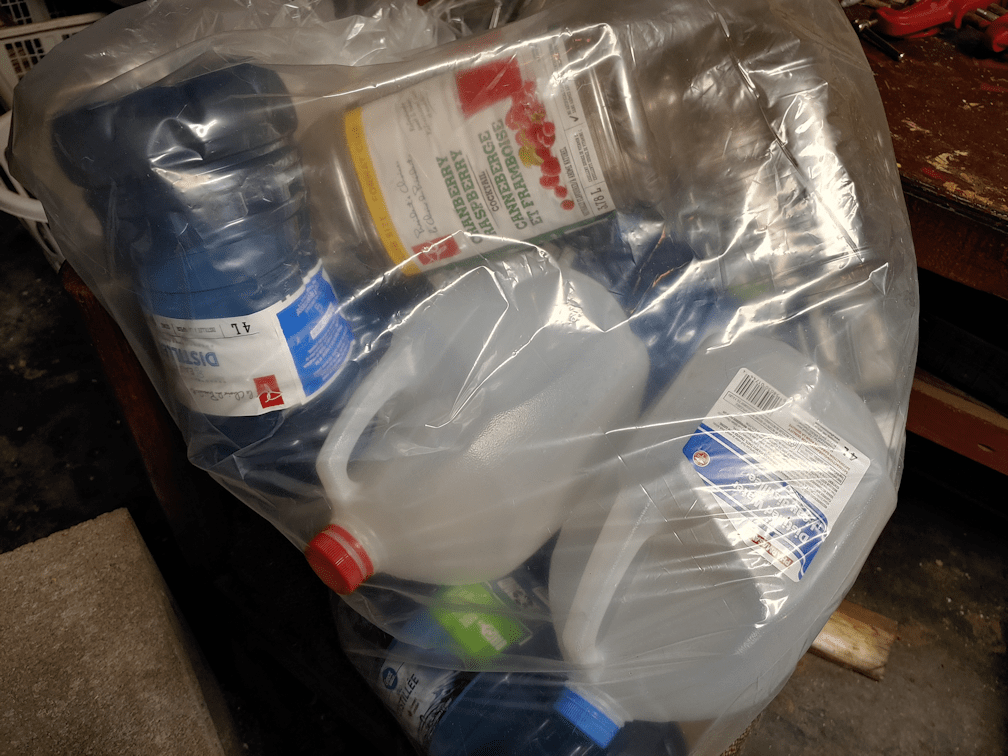
We’ve been keeping a variety of plastic bottles and jugs for potential garden use. We’ve got mostly the blue water bottles. The distilled water we get for my husband’s CPAP used to come in the same type of jug as milk does, but suddenly all the brands seemed to switch to those blue bottles, all at once. Which was a problem, at first, because many of them no longer had handles of any kind. It made it very awkward for my husband to fill his CPAP humidifier, as the sides would collapse inwards as he poured. He ended up transferring the water to an empty jug with a handle, to keep from splashing water all over his CPAP!

People must have complained, because the next time I had to buy distilled water, the bottles had handles attached to their tops.

We have 4 different types of jugs, including two styles of juice bottles. I decided to try one of each.

I’ve been cutting plastic containers to use in the garden for some time, and it’s a real pain, so today, I took the easy route.

My wood burning kit includes a knife tip. The heated tip makes it SO much easier!

I started by cutting drainage holes in the bottoms, and air circulation holes at the tops, by inserting the knife through the plastic, then giving it a bit of a twist to widen the hole.

Then the jugs were cut most of the way around. With each jug having a different design, they each were cut at different spots.

How much was left uncut to create a hinge depended on how much of a flat area there was. Which, in the case of the blue jug, meant none at all, but that plastic was soft enough that it could still work. The juice jugs are a heavy plastic, making them the most difficult to cut, while the water jug that is the same as milk jugs is such a soft plastic, the melted plastic of the cut edges actually stuck together again in places, and they had to be recut!

I’m hoping the blue bottles work the best, because we’re going to have so many of them.

Just to be on the safe side, the hinges were reinforced with strips of duct tape. For the jugs with distinct handles, the hinge was placed just under them, while the one with indentations to create a handle had the hinge placed above, so the container wouldn’t squish into itself if grabbed by the handle.

The handle of the blue jug is at the cap, so it didn’t matter on that one. I just followed one of the lines, just above the middle.

That done, it was time to put some soil in them.

They all fit in one of the baking trays we got last year, to make it easier to carry seedlings around. Especially the ones in the red Solo cups. Those have come in very handy. I plan to get more They are very inexpensive at Costco.

I had the seedling mix potting soil recently picked up to use for this. Once the soil was in, it all got thoroughly watered.

The water almost immediately all drained into the tray.

I watered them more, drained the water out of the tray and used it to water the soil again. After doing that a few times, I used a spray bottle on the soil surface, while leaving the bottoms to sit in water.

Even then, only the surface became moist. The soil mix was still bone try below.

I spent a bit of time, working on moistening the soil before leaving it to sit while preparing the seeds.

I had already decided to try starting kohl rabi indoors, as our attempts to direct sow them outdoors last spring failed completely. It was the same with the kale. All I can think is that something ate the sprouts as soon as they emerged. It was the second year I’d tried kohl rabi, and the first year’s attempt also failed, with only a few plants surviving, only to be decimated by cabbage moths and flea beetles.

So this time, we’ll go with transplants and, if it works, we’ll be making sure to protect them from both critters and creepy crawlies!

Bahahahahahaha!!!!

Okay, I do remember, while going through our seed inventory, looking into the packet for Early White Vienna kohl rabi, seeing a few seeds, and deciding to keep them. Until today, I didn’t realize where was only five seeds left!

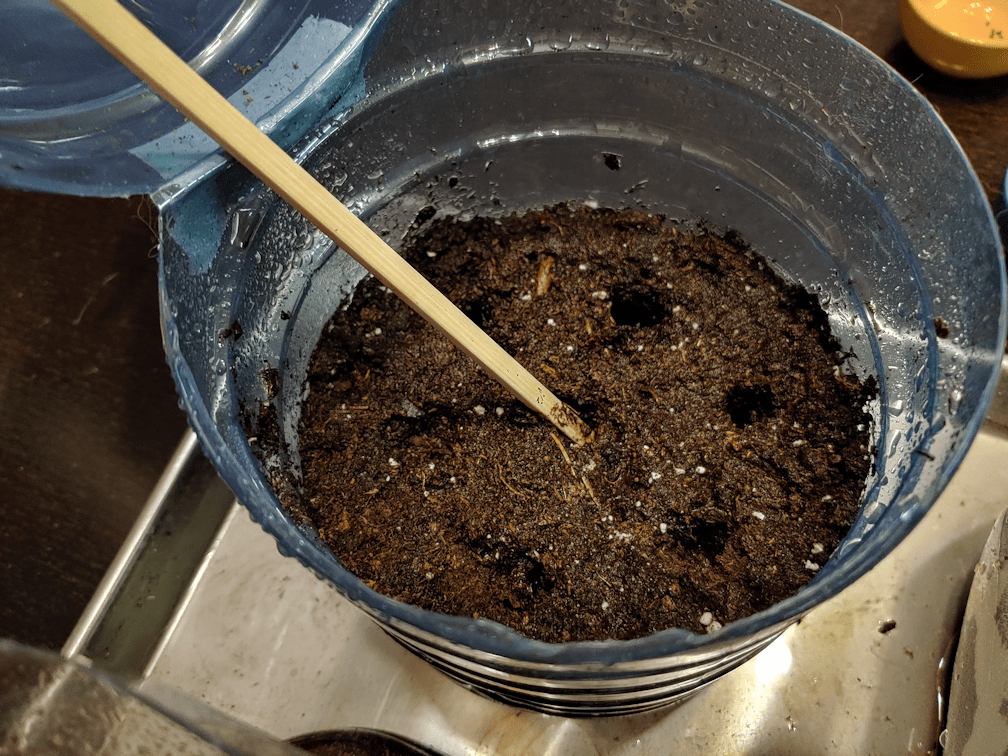
Once the seeds and their labels (strips of masking tape) were ready, I used a chopstick to make evenly spaced holes in the soil for the seeds.

Then I used the spray bottle to water into the holes, because it was still so dry under the top layer!

Because of the different shapes, they each fit a different number of holes in the soil for seeds. The jug with the indented sides for a handle meant it had space for only five holes, so that’s where I planted those five, lonely White Vienna Kohl rabi seeds. Being 2 years old, we may well have none at all germinate, but who knows? The white jug had room for the most seed holes, so that’s where the Russian Red kale went. The last two got the Early Purple kohl rabi seeds.

Once the seeds were in, covered, watered with a spray bottle, labels affixed, it was time to close the containers.

I used packing tape to close up the jubs. The tape is enough to hold them together while the jugs are being carried, but to also be easy to remove, later on.

At least I hope they’ll be easy to remove!

The tray was drained again, then it was time to take them outside.

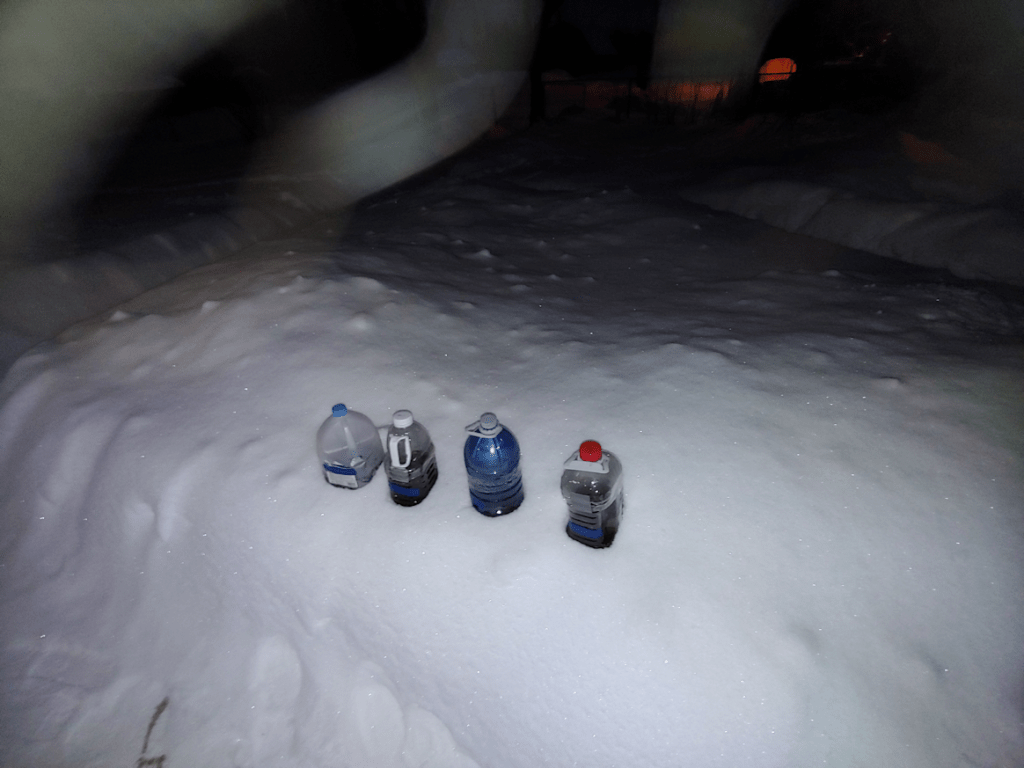
There we have it. Four different jugs, sown with kale and kohl rabi.

I’m leaving the caps on, since they have air circulation holes, but if the holes turn out to be too small, I might still take them off. We shall see.

I had originally planned to leave the jugs somewhere else, but decided that first spot was not visible enough. I had to consider things like cat and deer traffic, as well as where we shovel the snow from the paths. Hopefully, this spot will be easy to monitor, and they won’t get knocked about by critters. They will also get lots of sunlight, too.

Not that you can tell in the above photos. It wasn’t even 6pm yet, but it was full dark when I set these out!

I still have kale and purple kohl rabi seeds left. I might try starting some indoors, when we start other seeds, then direct sowing the last of seeds. That would give us a chance to compare all three methods.

It should be interesting to see how these do!

The Re-Farmer

Recreating Mom’s soda cheese: the taste test

Part One
Part Two
Part Three

Well, here it is! The final product in trying to make my mother’s baking soda cheese.

Did it work?

Well… sort of.

First of all, this is not at all like what I remember my mother’s cheese looked like. That was a semi-hard cheese that could be sliced. This… is not. It’s more like a cream cheese in texture, but it wants to crumble more than spread. It can, however, be spread.

As for the taste… I have a really hard time describing it. It’s a young cheese so, of course, the flavour is very mild. Which means it would lend itself very well to the addition of herbs and spices and other flavours. As it is now, with just salt, there is a sort of tanginess to it that I can’t put my finger on. It somehow manages to be both mild and bold tasting, at the same time!

Oh!! I just realized what it reminds me of. It’s very similar to a Boursin.

All four of us have had a taste, and we do have a consensus.

It’s very good. Delicious, even.

In fact, as I write this, I’m enjoying it on a slice of oatmeal bread, with a cup of Irish Breakfast tea.

What I should probably do is take some to my mother, so she can try it and tell me how it compares to what she made. After all, I only ever saw the finished product once, and that was many years ago. Based on my memory of it, I did not succeed in recreating it. However, the finished product is very good.

With the cost of milk these days, compared to a container of Boursin cheese at the grocery store, we’re not really saving any money by making it ourselves. If I were to compare to the cost of a block of plain cream cheese, we’d be losing money by making it ourselves.

Is it worth making again?

Absolutely. And we will, probably in larger quantities.

It may not be as I remember my mother’s soda cheese looked like (I can’t compare the taste too much, since hers had been flavoured with caraway seeds), but that’s just more reason to keep trying!

The Overview

Okay, so let’s look at why it might not have turned out like my mothers. What differences were there?

First up, quantity of milk. I’m now convinced that my original notes, which said “about 5 gallons” of milk was accurate. My parents still had a few cows at the time I visited and saw this cheese, and it was just the two of them, so they would have had a LOT of excess milk.

Second, she used raw, skim milk. My parents always ran the milk through the separator. While I’m sure they must have done it once in a while, I don’t remember my parents ever setting aside whole milk. Until it finally closed, my parents sold their cream to a local creamery for a bit of extra cash (though they sometimes took payment in butter!). Skim milk was for home use. Cream was for selling. I used the type of milk we usually buy; homo milk (3%). We never, ever buy skim, because we all find it incredibly disgusting. So what I made has a higher fat content than hers would have, plus our milk was pasteurized and homogenized. Hers would not have been.

Other differences include my hanging the cheese to drain, when my mother had just set it aside; my curds may have been drier than hers. She melted her curds in a frying pan before pouring it into a mold. Chances are, the frying pan she used was cast iron. If so, that too would have made a difference. She would have made hers in the summer, when the milk would have soured much more quickly. Even the natural yeasts in the air might have made a difference, and while my mother would have ensured everything was clean, she could not have sanitized things to the extent that home cheese makers can, now. The salt I used also would have been different. She would have used ordinary table salt, which would be iodized. I used non-iodized coarse salt that had been run through a coffee grinder to powder it.

There’s also the fact that she may not even remember some details, or had not thought to mention some because, to her, they were just so obvious she couldn’t imagine them not being done.

There are so many little things that could have made a difference, but until I actually take some to my mother to try, I don’t even know just how different ours is from hers! For all I know, I could be remembering her cheese completely wrong, or the cheese I remember is not the one she remembered and gave me her instructions for. We could have been talking about two different cheeses completely, and not known it.

I guess that’s just how it can be. I’ve had an interest in recreating ancient recipes for many, many years, and this sort of reminds me of that. When the ancient recipes were written down, they weren’t at all like modern recipes. Often, they were little more than a list of ingredients, with no or few quantities. The writer assumed the reader would already know the details. My mother just used what she had, in the quantities she had, done in the ways she knew.

I’m just fortunate I can still actually ask her for details, even if she can’t always remember them.

The Re-Farmer

Recreating Mom’s soda cheese; final steps

Part One
Part Two

After sitting overnight, tucked away in the oven, it was time to take out the cheese and do the final steps.

This is what it looks like this morning, after stirring.

It… looks like dry cottage cheese.

The next instructions were:

Add salt to taste, if desired. Add colour if desired. Add herbs/spices, if desired.

For this first attempt, I am only adding salt.

If you look closely, you can see the salt on the curds in front of the spoon. My mother would have just plain table salt, since that’s what she would have had. I stole some of the powdered salt my daughters use in the popcorn pot. It’s just coarse salt that has been run through a coffee grinder, so it can be added to the oil that popcorn is popped in, and actually stick to the popcorn as it pops. That got very thoroughly mixed in while I started the next step.

Put to frying pan on low heat, in batches, and heat. Mix while heating.

The more the curd got mixed, the more dough-like it got in consistency.

Then, it actually started to melt!

I know that’s what my mother said, but I still felt surprised by it!

I even had to change spoons. By this stage, the texture was a bit like cake batter.

When melted completely, pour into form.

I didn’t know how long it needed to be stirred, but my mom said to pour it, so I just kept going.

Just look at this! It really did get to a pour-able consistency, unlike any other cheese I’ve ever worked with! At this stage, it was like well stirred sour cream in consistency.

I then poured it into a loaf pan I’d scalded and had ready. This level if what 1 gallon of milk was reduced to.

Leave to rest until cool.
When cool, ready to slice.

This is the stage we are at now. I covered the loaf pan with a narrow wooden cutting board I have. I considered covering it with plastic wrap, but I wasn’t sure I wanted the condensation build up, and the board would keep the dust off while also allowing a bit of air.

I’m hoping that, as it cools, it shrinks a bit, so it’ll be easier to remove from the loaf pan.

I did taste it after pouring it into the mold (I admit it. I licked the spoon!). The salt definitely improves the otherwise bland flavour. There is another flavour in there that I just can’t identify or describe. I’m hoping after we do a taste test, later, someone in the household will be able to describe it!

I am really looking forward to trying this!

The Re-Farmer
Recreating Mom’s soda cheese; the next steps

Okay, so the curds have been hanging for about 5 1/2 hours, and I’ve moved on to the next steps in trying to recreate my mom’s cheese.

Now, my Mom had said to just set it aside for a few hours, or overnight, so hanging it may have changed things a bit. I don’t know. But this is what it looks like after hanging for most of the day.

Also, it’s a good thing I covered the whole set up with another cheesecloth, because the cats REALLY wanted to get at this!

The next instructions are:

Put solids into large pot.
Add about 1 tsp baking soda and mix thoroughly.
Leave overnight.
Will rise like bread.

Hmmm.

Looking at how little there is in here, I’m starting to think that my original notes, saying about 5 gallons of milk, was accurate. There is not a lot in here, and when I saw my mother’s cheese, it filled an ice cream bucket, so there’s no way it was only 1 gallon.

Which means I’ve been using the quantities for vinegar and baking soda for 5 gallons, not 1 gallon. Yet, 1 tsp of vinegar to sour 5 gallons seems like way too little. Mind you, she would have been making this in the summer, and the milk probably would have soured quickly, with no vinegar at all. Knowing she was pretty loosey-goosey on the quantities to begin with, it’s really hard to know. Considering how long it took to sour using 1 tsp of vinegar to 1 gallon of milk, I suspect it’s actually the correct amount, and that I would have needed more, if I were using more milk.

This is after very thoroughly mixing in the baking soda. Yes, I used 1 tsp for this amount.

The curds feel like a cross between cream cheese and cottage cheese. I spent quite a bit of time mixing it, because I wanted that baking soda to be worked in as much as possible.

My mom said to leave it overnight, which means she would have just left it on a counter, but I have put the covered pot into a warm oven, because of how chilly that part of the house gets.

She commented that it will “rise like bread.” That makes sense, since we should be seeing a chemical reaction between the acidic milk soured with vinegar, and the alkaline baking soda. It’s something I’m used to when working with sourdough, but with cheese? I did get the sense that the curds were starting to feel “fluffier” by the time I finished stirring in the soda, but that could be just my imagination because I am expecting something like that.

I did taste the curds before and after adding the soda. As I mentioned before, it has very little flavour right now, but I did feel that the baking soda … softened… the flavour, if that makes sense.

After it has sat for the night, salt, colours and herbs and spices can be added. For this first attempt, I will be adding some salt, but that’s it. If we make it again, we’ll experiment with adding herbs and spices or whatever.

I am incredibly curious to see what it looks like by morning!

The Re-Farmer