The frosts we have had didn’t quite kill off the cucamelons, but they are certainly beyond being able to continue producing.


There were still a few left on the vines that were big enough to withstand the frost, though!
They were still tasty, too. :-)
After taking down the yarn net I made for a trellis, I started pulling each of the plants up.
Which is when I found a surprise.

They have tubers!
When I looked up how to grow cucamelons, I found one site that said, if you lives in a colder climate, you could dig up the roots and pot them. Kept in a cool, dark place over the winter, they could be started indoors for better transplants in the spring.
I don’t remember the site mentioning the roots were tubers!
When I kept finding more, I decided I would try it.

These are the biggest ones that I found. After trimming away the vines, I filled a couple of deep buckets with peat (we still have most of a bale) and planted the a bunch. I fit about 9 tubers between the two buckets. That left a few littler ones that I decided not to bother planting.
The buckets are now being repeatedly watered, to get as much of the peat to absorb moisture as possible. Then, they will go into the old basement (where the cats can’t get at it!) for the winter.
The next thing to do was to prepare the retaining wall blocks. When I placed them last year, which you can read about here and here, I filled the bottoms with mulch, then topped with peat. As expected, everything settled a couple of inches, so they all needed to be topped up.
For that, I wanted to use the soil from the remaining tire planter, so the retaining wall waited for a bit, while I dealt with that.
Which will get it’s own post.
It turned out to be a pretty big job!
Once I had the soil, I loosened and broke up the peat layer, topped off all the blocks with soil, then watered them thoroughly, to help it settle in.
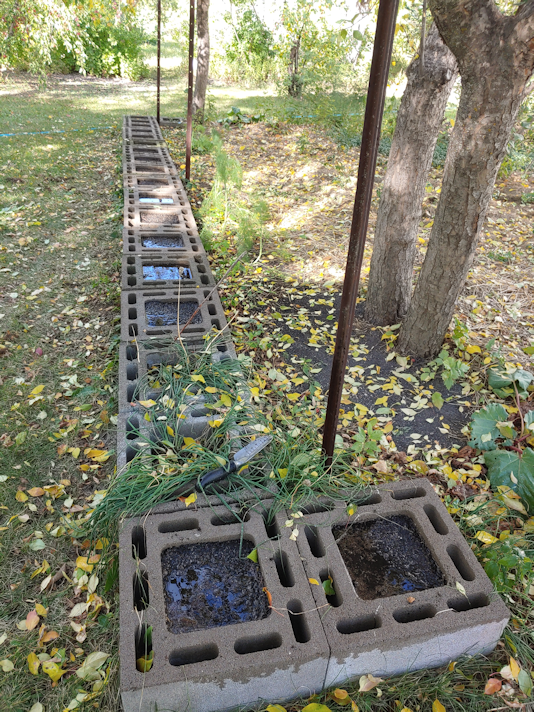
After giving each block a thorough soaking, my daughter and I made a dump run, giving the soil plenty of time to absorb the water and settle. Once back, I topped up the soil again, then gave them another soak.
The cucamelons are now all cleaned up, and the retaining wall is ready for whatever we decided to plant here next.
Oh, I almost forgot!
One of the other things we transplanted in the area where the surviving fennel seedlings.
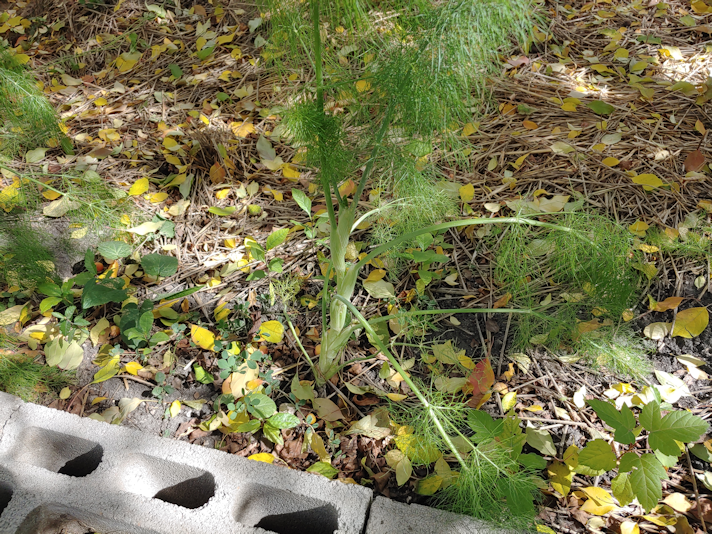
This is the biggest and strongest of the 4 that survived.
I admit, all I did with them over the summer was water them. I suppse they’re still edible. If nothing else, I think the fronds can be used as an herb, and there are plenty of those! :-D
The only thing left in the blocks are the two with chives in them. I will be leaving them for now, but before winter, those will get topped up with soil, too.
Another job off the list! :-)
The Re-Farmer