Our 2022 garden: seedling progress, and I couldn’t resist

Wow! I was just checking something in my WordPress dashboard, and realized that this post is number 3,500 for this blog! What a chatterbox I am. ;-)

This morning, I opened up the large aquarium greenhouse, to spray the pots and add more water to the tray on the heat mat.

There were more sprrrooots!

It is still only the Cup of Moldova tomatoes that are showing, and they are growing remarkably fast!

The aquarium greenhouse set up is working quite well. Even the little one is working out. The cats had repeatedly knocked the screen window being used as a cover off the top, by jumping on the overhang. A couple of days ago, I discovered where the cats had been getting into the space in the basement that was supposed to be a dry bar, but never got finished. We’ve got all kinds of breakable things stored in there. Somehow, a cat managed to create an opening in the blocked off rafters above. While picking things back up again, I noticed a smaller screen window. It turned out to be exactly as long as the small tank, though a bit wider, so there it still an overhang. Just not much of one. It hasn’t been knocked off since.

The larger tank has my daughter’s remaining orchids in it, and they are really liking the space!
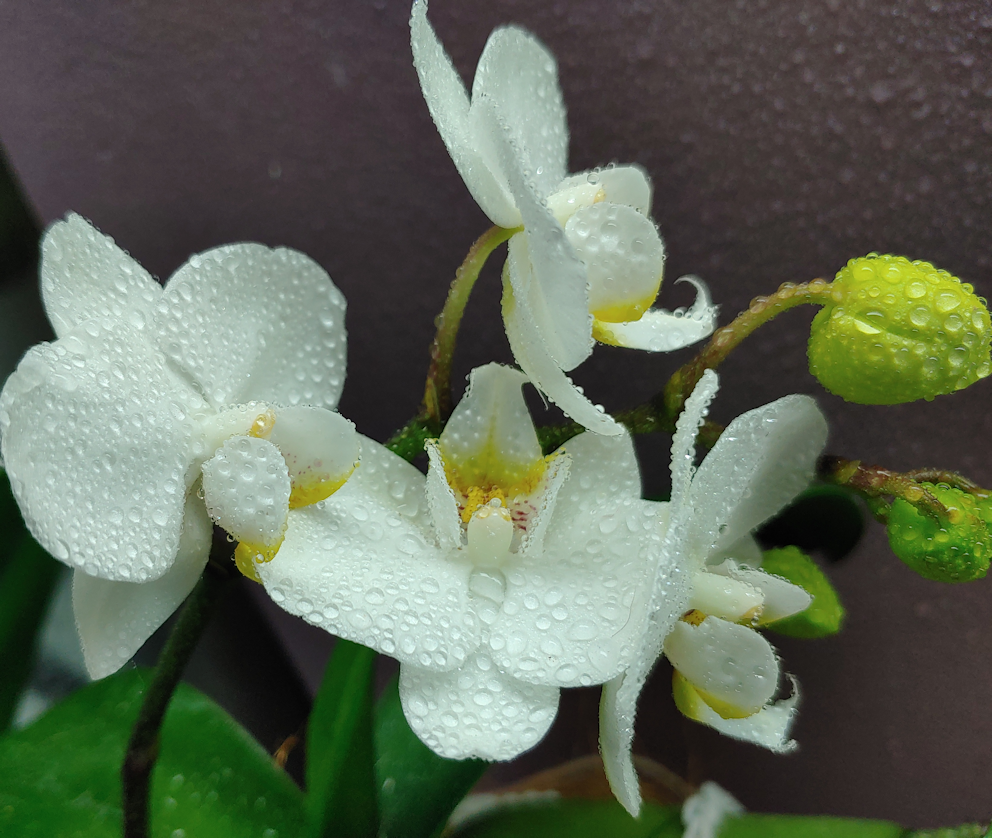
One of them is blooming with the strongest looking flowers I’ve ever seen on it!

Since I was spritzing the seed starting trays, I sprayed the orchids, too.

The second orchid is a lot smaller, and my daughter is not quite sure how it’s doing. It was an unexpected surprise to find that hanging them in front of the living room window, while safe from the cats, turned out to be too cold for them once winter hit. If I remember correctly, she lost one while it was still at the window, and another died shortly after they were transferred into the tank. These are the only two left.

I think I might get her another orchid for her birthday this spring. :-)

While on the subject of seedlings and growing things, I made an unplanned order last night. It was through someone on a hardy fruit and nut tree group that I’m on.

I got tree seeds.

The person I got them from is in Ontario. Most of his seeds are zone 4 and above, and he was sharing about his paw paw seeds, which are a zone 4 tree, though some places rate it as a zone 6. I talked to him for a bit about growing them in zone 3. Previously, I did find one tree nursery that advertised having zone 3 paw paws, but when I asked people on the group about the company, I got an overwhelmingly negative response. One of those negative responses is that they get their zones all wrong (and also had a habit of shipping dead trees!). So while it would be time saving to buy saplings from a nursery, we were going to wait on that. However, we might have better luck growing them from seed, ourselves.

The other seeds I got were tulip trees. They are another zone 4 tree, but that might just mean they grow more slowly in our zone 3, like with black walnut. I looked them up, and tulip trees can get quite huge.

The seeds we get will already be cold stratified, so when they arrive, we can go straight to germinating them. Both will be grown in containers for the first year or two, and we can overwinter them in the sun room or the old kitchen, until they are ready to be transplanted permanently.

Because of their large size at maturity – potentially 70-130 ft/21-40m tall (for comparison, the spruces in the grove near our house are about 65ft/20m tall), with 30-60 ft/9-18m wide canopy – if we get any surviving tulip trees, they can be planted either along the north property line, or well to the south of the outer yard, to be part of our shelter belt. These would be a tree for the pollinators and wildlife and, potentially, for a valuable wood.

The paw paws are a much smaller tree, and I can see these being planted in the old garden area, further from the house, where we are planning to plant berry bushes, fruit and nut trees already. They can reach 15-25 ft/4-7m in height, and 15ft/4m wide. Growing from seed, we’re looking at about 6 years, before we can expect any fruit.

Buying trees as saplings may shorten the time, but buying the seeds are a lot cheaper. We’ll be getting a dozen paw paw seeds and twenty tulip tree seeds, all for less than $20 – and that includes shipping. Even if we have an only 50% germination rate, that’s potentially 16 trees. The only thing I’d want to buy special is extra deep pots to start them in, to have room for their tap root. I already have the instructions for how to get them started, care for them in their containers, and transplant them.

As for growing in our zone, the person I’m buying them from can only guarantee them to zone 4. He’s never had anyone try the tulip tree in zone 3, however he’s had someone successfully grow their paw paws in zone 2b, getting hit with temperatures as low as -40C/-40F without extra protection, and surviving. Even in the group, when I’d asked in the comments about zone 3 for the paw paws, I had someone share that they’re growing them successfully in zone 3, though their seedlings are still too young to be producing fruit, yet.

I do hope this works out. If not, however, we’ll only be about a few bucks for a total of 32 tree seeds. Unlike the mulberry tree we got, which cost over $60 for the one sapling, got killed by an unusual, out of season, cold night, then even the remaining stem got eaten by deer.

I figure it’s worth taking the chance.

And if we’re going to be growing food trees, with how long they take before they mature enough to produce, we need to be starting as soon as we can.

The Re-Farmer

This is a huge step

Well, we’ve gone and done it.

After much discussion with my daughters, we have made our “seed budget” purchase for this month, and it is trees.

We’ve been going through a number of websites for nurseries that supply cold hardy trees. Among the ones we want to get is a nut orchard collection, and the nursery that sells the one we’re looking at has scaled down the package deal, making it much more affordable. The collection, if planted spaced out as recommended, would cover 1 acre. However, some of the trees in the collection have the potential to reach 100 ft tall. That’s almost 40 feet taller than the tallest trees in our spruce grove! Which means we have to plant them in the outer yard, or even beyond, where the renter’s cows pasture, and we are just not going to be ready for that this year.

Beyond that, some of the sources we have been looking at just don’t have new stock listed yet. Among the things we are eyeballing are fruit trees, such as apple trees to replace the diseased crab apple trees we will have to cut down, pears, plums, Saskatoons, highbush cranberry, as well as different types of raspberries, etc. There’s only so much we can do in a year, though, and only so much space we are ready to plant into.

For this year, then, we settled on buying from Tree Time. They do a lot of shelterbelt trees, but also have fruit, nuts, berries, etc. They also come highly recommended. They are a reforestation nursery, which you can read about in their “how to order” page. Right from the start, they say:

We are a reforestation nursery that makes it easy for Canadians to purchase large quantities of tree, shrub, and berry seedlings at low prices.

Shop with us if you want convenience, selection, low prices, outstanding service, a guaranteed ship date, and high quality stock. Our customers tend to enjoy doing things themselves and watching their trees grow.

We grow our trees for maximum survival, not height or aesthetics. We mostly grow 1-2 year old trees because they have the best survival rates and are easier to ship in the mail.

We guarantee every tree we sell.

We decided to focus on two areas. First, creating our privacy barrier/living fence, and second, our first nut trees. Because of how they bundle their trees, the numbers we are getting are quite different than they would have been, elsewhere.

This is what we are getting (all images belong to Tree Time nursery).

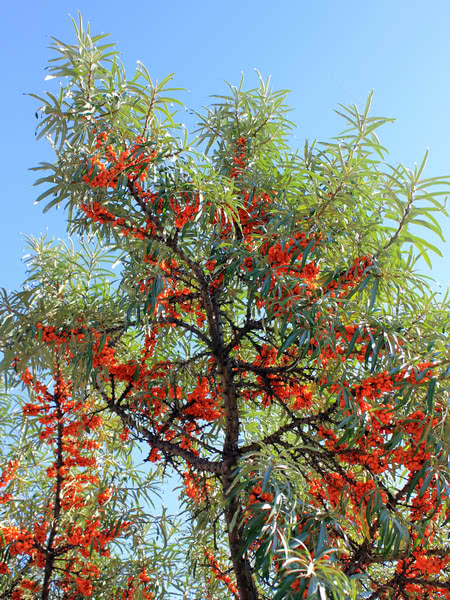
Sea Buckthorn.

When talking about what to get as barrier trees, we were thinking of setting these aside for another year, but the way various things have changed since then, we’re going for it.

This is a zone 2b tree, so well suited to our zone 3. They are good in poor soil, are nitrogen fixers, and their berries are edible and healthy. They can grow up to 15 ft in height, with a 12 foot spread, and should be planted at 3-4 ft spacing, so they will do very well as a living fence/privacy screen, as well as a deer barrier, once they grow big enough. Plus, they will provide food for birds.

These will come as year old, bare root trees. We will be getting their smallest bundle, which is five trees. Sea buckthorn requires 1 male tree to 4 females to produce berries, but at only 1 year old, there is no way to know what sex the trees are. It may be a few years before we can tell! The males do not produce berries, but hopefully, there will be at least one male in the bundle.

Where we plant these will be partially dependent on how far we go with this next batch.

Silver Buffalo Berry.

This is one that disappeared from other sites we were looking at, so we were very happy to find them at Tree Time.

These are a super hardy, Zone 2a tree. Like the Sea Buckthorn, they can also handle poor soil and are excellent for attracting birds. They can grow to 18 ft in height, with a 10 ft spread, and should be planted 3-4 ft apart, so they should also make a good barrier and privacy screen. These will come as 1 yr old bare root stock.

We also got them in the smallest bundle of 30.

Which is triple what we expected to buy, when we first found these.

The area we planted the corn and sunflower blocks is where we intend to plant these. Right at the corner, along the north fence, the lilac hedge my mother slowly extended over many years, peters out. There is a gap there that the deer jump through. I am thinking that section would be a good place to plant the 5 Sea Buckthorn. Then, the Silver Buffalo Berry can be planted all along the east line, leaving a “lane” behind them to access the trees along the fence line itself, and also leaving a gap where the telephone line is buried.

With 30 of them, planted 3-4 feet apart, however, we will have WAY more than will fit in a row in that area. Since we will be slowly planting more food trees further west, we will be planting just the one row of them. Which means we’ll need to find another location to plant the remaining trees! I am thinking of the area we had originally considered planting the Sea Buckthorn later on, which is in along the north fence line in the outer yard. Or even filling in gaps west of the lilac hedge. This would go a long way to help reduce the road dust that drifts into our yard in those areas, every time a vehicle drives past on the gravel road.

Before the trees arrive, we will have to measure and mark out where we want to plant in that north east corner. Once we know how many we can fit into there, we’ll know how many we have to plant somewhere else. That is a lot of trees for how we want to use the spaces.

Now that I think of it, we could also gift some to my older brother, for the forest he’s been working on for the past couple of decades. :-)

Then there are our first nut trees. Pine nuts, to be more specific!

Korean Pine.

In other sources, we have seen these as being a Zone 2 tree, and some listing them as reaching up to 100 feet in height. !!! Considering where we intended to plant them, that was just not good.

These, however, are listed as Zone 3a, and reach “only” 60 ft in height – about as high as the spruces in the spruce grove. Which is about where we intend to plant these.

These also have a spread of up to 30 feet, but the website doesn’t list how far apart to plant them. We’ll get that information later.

We ordered two bundles of three, 2 yr old seedlings as plugs, not bare root. They have special requirements. For the first five years, they grow very slowly and need to be kept shaded, because their bark can be easily burned by the sun. This is why we want to plant them along the north side of the spruce grove, between the grove and the row of crab apple trees, where it is shaded for most of the day. At 5 years, they suddenly shoot up in height, and no longer need to be protected with shade. Since we’ll be getting 2 yr old seedlings, that should happen in three years.

I have some concerns.

The nursery we first found these at sells them with their roots in a plastic wrapped ball of soil – the only tree they don’t sell as bare roots – because they require a particular fungi at their roots for optimum growth. We may be able to buy the fungi to inoculate the soil, though. At least that’s what I learned from this other nursery. According to the Tree Time website, however, there is no mention of the fungi needs, plus it says they should be planted in full sun, not shade.

We’ll have to do more research on them, because this might be due to differences in varieties. We might end up having to plant these somewhere else. They would make a good shelter belt tree, and at 60 feet high, that would mean either along the north property line, or further out in the south, where we get hit with winds because there is a gap in the sheltering trees. Since we intend to plant permanent garden beds in the outer yard, anything we plant there has to be carefully placed so as not to create the very shade we are trying to get away from!

It’ll take about 7 years before these start producing pine nut containing cones. I don’t think I’ve ever bought pine nuts before, as much as I’d like to be able to use them for making pesto, etc. I enjoy them, but they are just too expensive. These trees have the potential to be a cash crop.

When placing our order, I chose a shipping date of May 30. Since our last frost date is June 2, I thought that would make the most sense. It also means that, in the week or so before they are shipped, we can get out and measure where they will be planted, and even pre-dig the holes (the ground should be thawed out enough), as well as making sure we have everything we need for planting, then protecting, the 41 seedlings we will be getting!

There we have it. After 4 years of living here, we are finally at the stage where we are starting to plant trees and shrubs in bulk. The first stage of a multi-year plan in planting food trees and reach our self-sufficiency goals. Given how long it takes for trees to start producing fruits or nuts, it would have been better if we’d started this years ago, but when we first moved here, we didn’t even know what we wanted, or how to get them. There is a big difference between planning for things that will live for decades, and can potentially become very large, and planning vegetable beds!

Placing this order really feels like a milestone for us!

The Re-Farmer

Monthly shop half done, and is it dead?

Last night, our temperatures dipped to -5C/23F. I’m not sure what to make of that, though. When I checked my app during the night, it said it was snowing, so I opened the garage cam app to see. Snowflakes are lit up by the infrared flash.

There was no snow.

I checked the weather radar, and from the big blue circle directly over us, we should have been having quite a bit of snow. Instead, I was seeing a bright full moon! Still, we did get the colder temperatures, so when I did my rounds before we headed for the city, I made sure to check all the garden beds. Everything was looking just fine! There was no signs of snow or even frost, by the time I went out, and all the seedlings looked untouched. All the leaves on the trees and flowers were just fine.

I forgot one thing.

The mulberry bush.

We should have covered it!

I took this photo after we got back from the city.

Damn.

We have a frost warning for the south of the province tonight, not for our area, and the low is supposed to reach 2C/36F. I don’t know that there’s much point in doing anything now, but we could put jugs of hot water beside it and cover it with a blanket for the night. It had been doing so well, too! I am hoping the roots had established enough that it will sent out new leaves, but we may well have lost our mulberry tree.

Anyone have experience with growing mulberries reading this? Is it dead?

*sigh*

Anyhow.

My younger daughter and I headed to the city to do our monthly shop. We did our first stop at Canadian Tire to pick up more stove pellets for the litter, and checked out the garden section. We ended up getting some trellis netting that will be good for the rest of our peas, instead of using twine. I also got a 4′ x 50′ roll of chicken wire that I hope to use to protect a few things. If it works out, we’ll get more. It was less expensive than the other options. We also picked up another 50′ of hose. We now have enough hose to reach the furthest areas of the garden. There likely won’t be much pressure left, but a gentle watering is all we want! I also looked in the plumbing section and found some PEX pipe that might work for the hoop supports I was thinking of, but after getting the chicken wire, which can hold itself up fairly well, we skipped it for now.

Things took longer than expected at Canadian Tire, as the pellets we wanted turned out to still be in the warehouse, so someone had to be called to bring a couple of bags over for us. From there, we went to an international grocery store. I don’t usually buy a lot of meat there, but they had some exceptionally good sales on, so I picked up some for the freezer. The only down side of this part of the trip was being hassled by a customer. This store respects medical mask exemptions. I wear my Mingle Mask more to avoid being hassled by customers. Today, I got an old guy stopping me and start lecturing me on how what I was wearing really wasn’t doing anything… I cut him off and told him flat out, “I have a medical exemption, and you can leave me alone.” He was all, “well, we can be nice.” As if lecturing a complete stranger over something that wasn’t his business was nice? I think I shocked my daughter, though.

The rest of that part of the trip went very well, though. I do not like shopping, but I really enjoy going to this store. While chatting with the cashier and commenting about some of the items we can only find there, I made a point of telling the cashier that they are the best! Staff usually just hear complaints, not the good stuff, so I do try to give positive feedback when I can.

The next – and last – stop was Costco. Usually, from where we enter the parking lot, I like to drive around the back of the building, to where I know fewer people park. A company vehicle of some kind was blocking half the lane, though, so I ended up going the other way. Much to my shock, I actually found a parking spot near the doors!

We also saw a line going down the side of the building. It doesn’t usually go down that side of the building, but it’s been a while, so we got in line and started waiting. Then someone else came by asking if this was the line in, or the line to the pharmacy?

It turned out to be the line for the pharmacy!!

When we heard that, about 6 of us stepped out of the line to look for the other one! :-D

At the sight of the real line, my daughter and I turned around and left! They changed things up, so that people were no longer lined up along the side of the building, but a back and forth line guided by temporary fencing. More efficient, I’m sure, and also making it easier to tell just how many people were waiting in line. I had forgotten. Our provincial government’s increased restrictions before the long weekend had not been relaxed, so more people had to stand in line than even before, and the line was moving slowly.

We decided to try a nearby Superstore that I’d heard was safe for people with medical exemptions, but they had a long line, too. We made a last ditch effort and drove across to a Walmart. I wasn’t sure if this one was safe for me to go to or not, but it had a long line that wasn’t moving.

Though we did remember to bring ice packs, we did have frozen items and fresh meat in the van, so we decided to head home. We will try again tomorrow. We talked about going to the little Walmart in the smaller city, but decided to try the Costco again. If it’s the only place we need to go to, we won’t have to worry about food thawing out or going bad in the heat of the parked van. If the line was too long, we could try the Superstore again or something.

Before we left the Costco, we filled the gas tank and I reset the mileage counter. I do that once a month. This past month, we drove less than 400km with the van. That’s about a third of our usual mileage for the past year. Counting the driving I did with my mother’s car, it still would have been less than 700km of driving, total.

I am quite okay with that. If I could get away with going out even less, I’d be happy!

Speaking of driving, I did end up getting my daughter to drive most of the way home. During the trip in, I was having breathing issues again. It wasn’t as bad as in the past, but it did prevent me from joining my daughter in singing along with sea shanties. ;-) I did all right for the rest of the drive, but as we were shopping, even with the Mingle Mask, it didn’t go away. The current restrictions state one person per household should do the shopping, but stuff like this is why I am glad to have her with me.

My doctor did refer me to a respiratory specialist, but I haven’t gotten a call yet. Frankly, I don’t expect to. People can barely get normal medical care right now, never mind getting in to see a specialist! So far, whatever is causing my breathing issues seems to be limited to when I’m driving, when I’m wearing the Mingle Mask for longer periods, and sometimes when I’m lying in bed, trying to sleep. A part of me suspects it has more to do with whatever is causing the mystery pain in my side that no one’s been able to find the cause of for the past 10+ years, after I had a large cyst removed. The last time I saw a respiratory specialist, it was to try and find the cause of my chronic cough. All he did was try to find ways to blame it on me being fat. When all my tests kept coming back normal, he just sent me back to my regular doctor. I would not be at all surprised to get the same treatment in this province, too. I irritate a lot of doctors by not having all the fat-people problems they “diagnose” me with, on sight. Kind of like the dieticians who get all flummoxed when I tell them what my diet and exercise habits are like, and they can’t wrap their heads around the fact that no, I don’t just lay around all day, shoving junk food down my gullet, but actually eat real food and, even with my busted up knees and feet, still manage to be more physically active than average. ( Granted, that’s a pretty low bar to compare with.) With some, I can tell that they think I’m lying. I don’t fit their preconceived notions and biases.

But I digress, yet again. I’m still thinking of that guy who decided he had some right to lecture me about my Mingle Mask. The fact that I was wearing something over my face, even if it was something he didn’t approve of, with my masked daughter beside me, should have been a hint that I knew what I was doing. Masks do unfortunate things to people.

Ah, some news! I got a call as I was finishing that last paragraph; my lawyer called to talk about my restraining order situation. As I suspected, he sees no advantage to contacting our vandal’s lawyer to discuss some sort of private agreement and bypassing the court. There would be no consequences if he broke the agreement, to begin with. The transcripts I’ve been making of the messages our vandal has been leaving on my mother’s answering machine are certainly something I can submit to the court, as they speak to his state of mind, and his obsession with me and the property. I remembered to bring up about the gunshots I heard this past Sunday; I haven’t had the opportunity to call the police about it. Our vandal legally owns his guns and he was shooting on his own property, but the lawyer agreed that, given our circumstances, it would be good call the police so that there is something on the files. Normally, I wouldn’t be the least bit bothered by someone shooting on their own property, but these are not normal circumstances.

So I will have to make sure to call the police tomorrow, before we head to the city again. It will be up to them to decide if they want to talk to our vandal again.

So much of our time and energy is being wasted, having to deal with all this! All because someone I was once so close to, covets this property and resents that we are living here.

*sigh*

Time to distract myself with more useful and productive things!

The Re-Farmer

Our 2021 garden: first corn block and mulberry are planted!

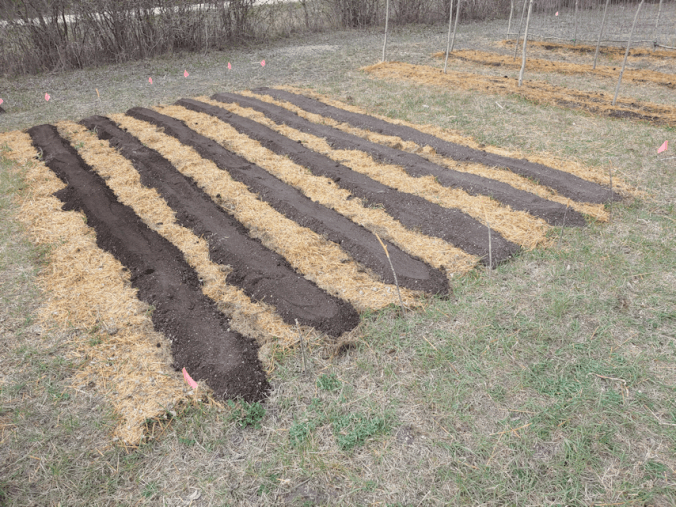
My goal for this morning was to get the soil over to where we’re planting the Dorinny corn, before things got too hot. Normally, I don’t have breakfast until after I’m done my morning rounds, but I cut those short to quickly eat before I started hauling dirt. I probably should not have taken the time to eat, first! I got just over two rows done before I had to go inside. I couldn’t believe how quickly it got so hot!!

I didn’t get back to it until well into evening. While one daughter took care of the evening watering, and the other helped me prepare the corn block, things went much faster, too.

Once the soil was in place, my daughter dragged the hose over to give it a soak, while my other daughter and I checked out different locations and decided on where to plant the mulberry tree. It’s going in the strip between the garage and the road. Since we’ve already started cleaning up there, this spot will have the full sun it needs, while still being surrounded by enough mature trees to protect it from the harsher winds. We found a little cedar there, when we first started cleaning up in the area. Like the mulberry, it is not a zone 3 three. Nothing has been done to protect it over the winter, but it has survived, though it’s still very small. This, at least, tells me that the mulberry will have a chance of making it, in this location.

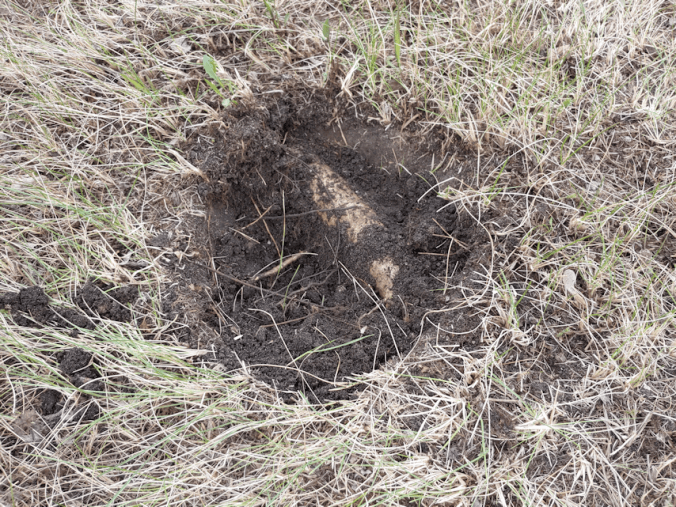
After picking a spot and raking away the thatch, my daughter started digging and immediately hit a huge root!!

So we moved the hole over a bit. :-D

While she dug the hole, I got the mulberry sapling, along with the rest of the pre-soaked peat we still had in the sun room, and a bucket of water. When I got back to my daughter, she had already hit gravel and was struggling to get out a larger rock. Between me with the spade and her with a trowel, we managed to get it out. Thankfully, it turned out to be wide and flat, which made it much easier to get out. Of course, for some reason, it got moved and didn’t end up in the picture. :-/

We certainly won’t have to worry about drainage here. Like everywhere else, there wasn’t a lot of topsoil. After that, it’s gravel.

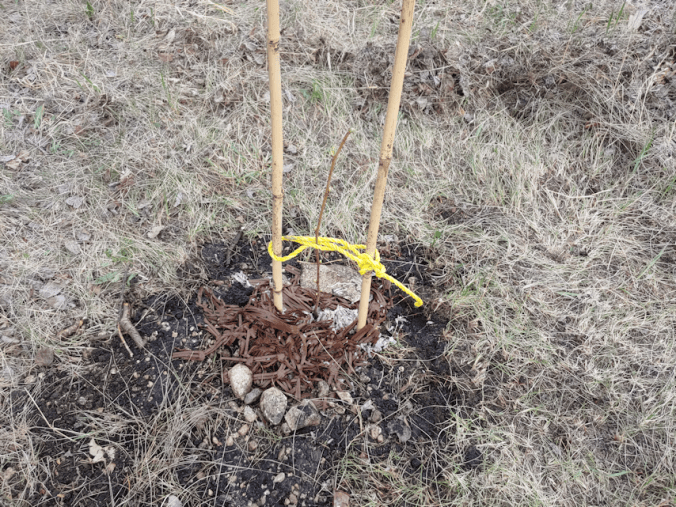
We filled half the hole with the damp peat, added more water, planted the sapling with more peat, and placed a pair of bamboo stakes beside it for supports. The soil was returned and the cardboard packing material the mulberry came in, including what was keeping the root ball damp, was placed as a mulch. We even put the bigger rocks around to help keep things in place. Then I wrapped some cord around the sapling and the supports. Hopefully, this will also make sure no deer will eat it! I also picked the yellow rope deliberately. I’ve read that using ordinary yellow rope like this, strung in a rope fence around a garden, has worked to keep deer out, even though they can easily get by it. Apparently, there’s something about the yellow rope they don’t like. I figure it’s worth a try to use it, since I happened to find some in the sun room. If not the colour, then the stakes, should act as a deterrent.

By this time, my daughter that was watering things had brought the hose over as close as she could. We gave the mulberry a final watering – and then watered the cedar, too! Since we’ll be tending the mulberry now that it’s here, we’ll take the time to tend the cedar, too. Later on, I’ll bring some garden soil to place around both of them.

While I stayed to water things, my daughters put things away for the night, but I decided to go ahead and plant the Dorinney corn tonight, rather than wait until tomorrow.

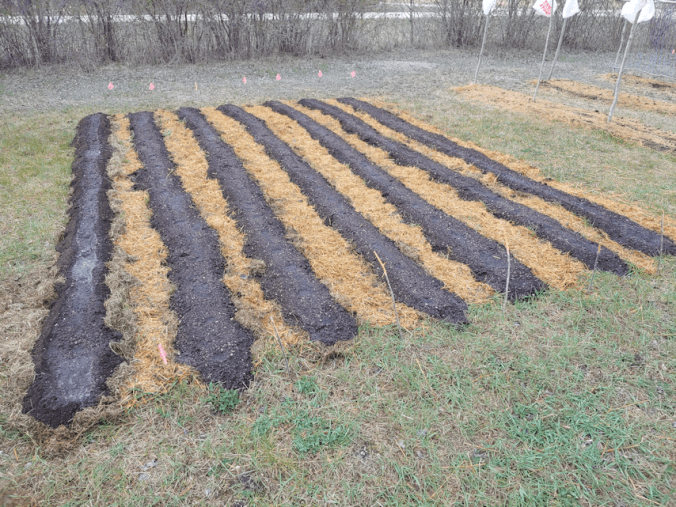
After setting the seeds in water to soak, I used the handle of a trowel to make holes about a foot apart. Though my daughter had been able to set the sprinkler over the area for some time, the soil was still pretty dry further down, so I used a watering can to give the rows a deep soak before planting the seeds.

By deciding to put the soil over the grass clippings mulch, instead of the chopped straw, we lost a row – and it turned out there were enough seeds in the packet to need it! Since I’d soaked all the seeds, and I didn’t want them to go to waste, I made another row, instead. Once all the seeds were planted, I gave them another watering.

By then, the water barrel was needing a refill, so I set up the hose and hung around while it filled.

I got company.

Rolando Moon came for a visit today! I haven’t seen her in about a week, but this evening, she decided to keep us company. She even joined us while we were planting the Mulberry tree – and kept trying to drink the dirty water! At least here, she’s drinking the clean water that’s in the watering can. It’s kept filled, so it doesn’t blow away, and she had her head stuck right into the opening. Silly girl! :-D

With the corn planted here, we are done with the early planting, until the potatoes come in next week! Since those are going into grow bags, there are no beds to prepare for them. Everything else doesn’t get planted until after June 2.

As for the other garden beds, the girls checked under the plastic covering the beets and carrots in the old kitchen garden and saw sprouts, so those got taken off. The lettuces are also coming up; the seedlings are still tiny, but big enough that we can be sure they are lettuce sprouts, and not weeds! LOL My daughter planted her Black Form Iris near the poppies, which is right along where she planted her other irises in the fall. I was also able to confirm that we are seeing pea sprouts in all three beds. Just a couple, here and there, but they are clearly not weeds that have made their way through the straw and soil. There are some of those, too!

Looking at the long range forecast, we’re going to keep getting hotter for the next few days, then the temperatures will drop down to a more sane level for the last couple of weeks of May. If those temperatures keep steady through to June, there will be no frosts at all. Still, we will wait. We will use that time to finish preparing the other beds. The climbers will be doing in a bed next to the corn that was planted today; this is where we will be building a squash arch. It looks like the only gourds will be including there will be the dancing gourds and luffa, as there is still no germination in the other three types of gourds. It looks like we’ll have plenty of Halona melons to transplant. I’m seeing quite a few sunburst squash have germinated, but not very many of the other summer squash yet. I’m really excited by how quickly the Mongolian Giant sunflowers and Montana Morado corn have germinated! There are so many things sprouting in the sun room, it’s going to be a challenge hardening them all off at the same time. I’ve got the platform set up where the cats won’t get them, but there’s not that much room on it. We’ll have to work something else to use as well.

What an excellent problem to have. ;-)

Fun stuff and catalogue review

Today has been one of those days of getting things done that were also enjoyable. Like a morning spent converting feed bags into grow bags while watching/listening to videos about crossbow safety. More listening than watching, since I was, after all, hand stitching the bag bottoms into shape. :-D

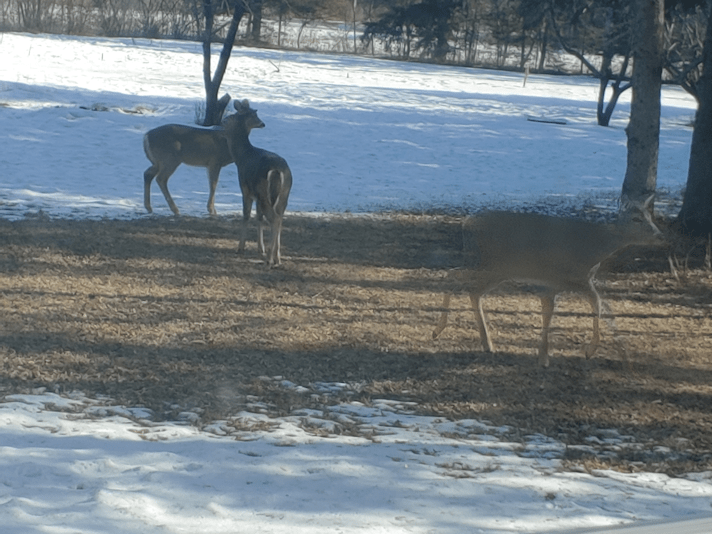
I also got to enjoy watching deer through my window, making their way to the feeding station.

I saw a couple, earlier, but that early in the day, our East facing living room window is so full of reflections, I can’t get any good shots, but I could get some shots with my phone through the North window. At one point, I was seeing 4 deer, and I think there was a fifth hidden away in the maple grove.

I made a quick trip into town to refill a couple of our 18.9L water bottles, then pick up prescription refills. I timed it so that I could hit the post office on the way home. My husband had been expecting a parcel all week, and today we found out why it hadn’t come in earlier. The padded envelope it came in was sealed in a plastic bag with “apologies from Canada Post” on it. I had no idea what my husband had ordered, so seeing oil stains on the package was a bit alarming.

It turned out he’d ordered honing oil, and the bottle leaked! No harm done, thankfully. :-)

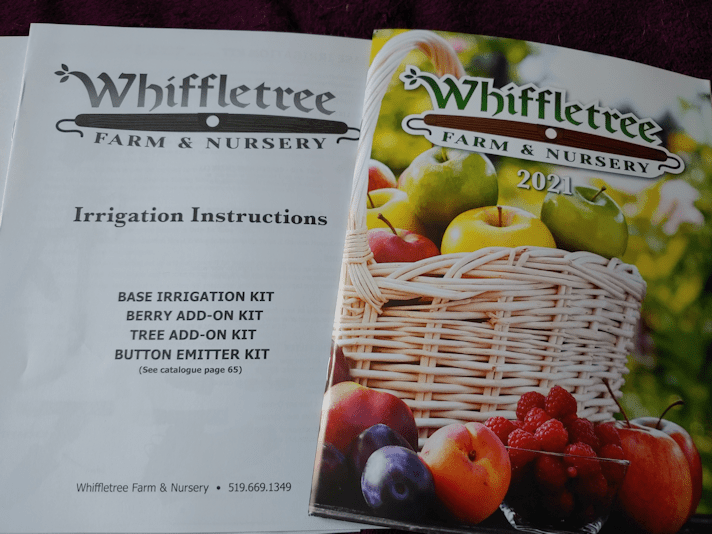
I was excited to see a catalogue I’d ordered had arrived. This is from a company I had included in my list of cold climate seeds sources, which also included nurseries. Whiffletree Farm and Nursery. They specialize in “Cold hardy, disease resistant, fruit trees, shrubs, vines and canes.”. I love how the back page includes phone numbers, a physical address (in Ontario), a map, plus their latitude and longitude!

How very… rural Canadian. :-D

I actually went through the Irrigation Instructions insert, first. They’ve got add on kits designed for new plantings, mature plantings and tree plantings. I found it a lot more informative, both textually and visually, that most of the kit sources I’ve been looking at. Though we don’t plan to plant our fruit and nut trees for a while, yet, where we are extending the garden to this year is well away from the house, and an irrigation system would be well worth the investment, even if we have to McGyver something cheap for the first couple of years.

As for the catalogue itself, I was very impressed.

First off, it’s just plain beautiful. It is printed on the heaviest paper of any catalogue I’ve seen. More than sturdy enough to withstand cats clambering all over it, demanding my undivided attention! Even how the photographs are lined up with the write ups is the best I’ve seen. There is a also LOT of extra information included.

The range of products they have available is amazing. After just a few pages, I started over again with a highlight marker, marking off everything that was Zone 2, Zone 3 or Zones 2/3. I didn’t bother marking Zones 3/4 or higher, because there were SO MANY Zone 2 and 3 choices, it wasn’t necessary. The only exception I made was for a mulberry tree that was Zone 3/4.

Did I mention how informative it is?

I learned something new that really caught my attention. There is a section on Buffaloberries, Peashrubs and Autumn Olives.

I was curious about what Peashrubs were, but it turns out that we already have some! They are caraganas! In our clean up, I’ve had to cut away and cut back a lot of caraganas that were either dying or overtaking other trees and shrubs. It’s been a balancing act between clearing them away and keeping them.

Though I am familiar with the shrub, I discovered that the seed pods are actually edible! At least the Siberian Peashrub (caragana arborescens) are. They have two other varieties. The Siberian variety is “A multi-stemmed upright growing shrub covered with delicate yellow flowers in spring, followed by small edible seedpods which can be eaten as a vegetable. By late summer the dried seedpods snap open, dropping the seeds which are 36% protein and make good chicken feed. So it is sometimes planted in poultry yards.”

Who knew?

I also learned that they are good nitrogen fixers, and wind breaks. We should see if we can figure out what variety we have here!

The catalogue also displays an excellent sense of humour. As an example, in the section on edible lilies and high bush cranberries, there is this write up for the Common Snowball.

“Okay, we admit it – this plant is neither edible nor medicinal to the best of our knowledge. In fact, it produces no fruit at all, not even for the birds. Our only excuse for offering it is for the nostalgic memories is evokes for many folks. Every year in early summer, these old-fashioned, carefree bushes become covered with fleecy, white pompoms. The ‘snowball’ name is visually very fitting, but that’s not all. Perhaps we should market it as a weather prognostic – according to a local, time-honoured adage, there is always a brief, unseasonably cool spell when the snowball bush begins to bloom. Like many weather maxims, you can count on it, it always holds true – except when it doesn’t!”

Ya gotta love it! :-D

While we are not in a position to start ordering food trees for this year, we are shooting to do so as soon as possible, given how long it can take for trees to mature enough to start producing fruit. And let’s face it; at my age, pretty much any fruit or nut tree we plant is for our daughters and future generations, because my husband and I will probably be long gone by the time some of them reach maturity!

There is so much information in this catalogue, we can use it for planning purposes. Especially when it comes to their orchard growing equipment and supplies.

With that in mind, these are some of the things that interest us, that also grow in Zones 2 or 3.

Apples: there are many varieties suitable for our zone, including larger eating apples, edible crab apples and cider apples. They have columnar varieties, dwarf varieties and varieties that are good for espalier training. When it comes to apples, they are not something we tend to eat a lot of, on their own, but we would be using them for things like apple cider vinegar, hard apple cider, or freezing them to use for baking later on. We will have to take into consideration that we need to cut down a lot of our crab apple trees due to fungal disease. It may be worthwhile to get rid of the diseased trees, then wait several years before planting new varieties, or planting new varieties in locations well away from where the diseased trees are.

Plums: This is one of those things that we almost never eat, but if we had them, we would eat them. We do have plum trees, but they are not an edible variety – more stone than fruit – that my late father used to make wine, but having larger, fleshier plums that can be eaten fresh would be really nice.

Pears: I remember we had a pear tree when I was a child. It was a variety that produced small, hard fruit that needed to be exposed to frost before they could be eaten. They are another type of fruit we rarely buy, mostly for budgetary reasons, but would eat more of if we had our own trees, so having cold hardy varieties that can be eaten fresh would be enjoyed, and this catalogue has several such varieties that can grow in our zone.

Cherries: the variety of cherry are from a tree from Poland, which has a warmer climate than we do. They bloom wonderfully, but in the time we’ve been here, produce almost no fruit. Their bloom time doesn’t match when the pollinators come out. So getting a variety or two that is good for our zone is something I would like. They do tend to spread through their roots, though, and can become invasive, so we would have to carefully plan where they would go. Some varieties make good hedge trees, wind breaks and privacy screens, so that’s an option, too.

Nuts: there are only two types of nuts suitable for our zone; several varieties of hazelnuts, and butternuts. We are still looking into planting other varieties. They may not have a long enough season to produce edible nuts, but the trees themselves are an investment.

Rugosa Roses: we already have wild roses growing in the spruce grove that we will be encouraging, as other types of underbrush will be cleared away, but these varieties are specially noted for their large hips, and high nutrient contents. These are for the “apothacary” plants we will also be adding, over time.

Kiwis, grapes, gooseberries and currants, saskatoons, haskaps, raspberries and blueberries: we already have some of these, but will be adding more over time. Some are poorly situation and need to either be taken out, starting over with new, or transplanted.

Companion plants and wildlife packages: they’ve got a number of different plants that are beneficial to plant near trees, for various reasons. Some because they attract pollinators, or attract predator insects that will eat nuisance insects. Others because they are good to plant in paths instead of grass, can handle foot traffic, but don’t need to be mowed. There are even seed mixes to provide grazing for deer and other wildlife, and even have wildlife tree packages, made up of a mix of excess trees, or trees that didn’t make the grade for orchard/yard use, which may not even be labelled. They would be useful for a food forest or permaculture set up to feed both humans and wildlife. These are all things that fit in with our long term goals.

All in all, I am very excited by this catalogue, and look forward to being able to order from this truly unique company as soon as possible!

The Re-Farmer

Garden plans for 2021

Yes, it’s only the middle of November, but the girls and I are already planning for next year’s gardening.

We learned a lot in our first year of gardening here, and will be using that information as we expand our food growing.

We have several goals and things we keep in mind when deciding what to order. First is keeping in line with our long term goal to be as self sufficient as possible. The other is to take advantage of being able to grow our own food by growing things we either can’t normally buy in the grocery store (either due to lack of availability, or poor quality in stores), or because they tend to be more expensive, or “treat” items, that we typically can’t justify spending our limited budget on. Both of these goals also allows us to go a bit wild in what we grow! :-)

With that in mind, I’ve already placed and order with Rare Heirlooom Seeds. It’s a small order; some of the things I would have bought were out of stock while, with others, we will go through the wish list to pick and choose. Here is what I’ve got ordered right now.

Giant Rattle Breadseed Poppy. I was really excited to see this new item! These are very much like the poppies I remember my mother growing, when I was a kid. I used to love eating the seeds right out of the dried poppy pods. She grew enough to make the filling for poppy seed rolls, which uses a LOT of seeds! Poppy seeds are something I love, but buy very rarely. If we have our own, I would certainly be using them every chance I get!

Longue Rouge Sang Carrot. I’ll be honest. I selected these just for the colours.

Kyoto Red Carrot. This is one I ended up choosing based on comments other customers left behind. It’s described as a “winter carrot”, which obviously isn’t a thing in our climate. Several people had complained about not being able to grow it well in their warmer zones. Then someone in a zone 3 – the same as us! – said they grew it as a summer carrot and it thrived. Awesome!

Strawberry Spinach. This is something I’ve actually tried to grow before, in containers on our balcony, years ago. We had limited success, largely due to weather conditions. What little we got, I liked, so I want to try them again. Both the leaves and the berries are edible, so that’s bonus, too!

Dorinny Sweet corn. I hemmed and hawed quite a bit about growing corn yet, but I decided to just go for it. This variety is from a Canadian hybrid, so it should be quite hardy to our growing zone.

Montana Morado Corn. This one falls into the “go wild” category! I chose it partly because it is a cold hardy variety, but mostly because of the amazing colour. It is also a variety that can be milled into flour; something we have included in our mid term plans. We just have to acquire a hand mill. Once we do, we will be looking into planting grains as well as corn, specifically for milling.

Other things we plan to get from this site are giant sunflowers, plus a variety of sunflowers that can also be used to make a purple-grey dye.

We’ve also got a substantial wishlist going at Veseys, which is where we got almost everything we planted last year. Those will be ordered later in the season, as their new catalogs include promo codes for discounts. With how much we plan to order, we’re going to need a discount!

This past year, one of the things we really loved about having the garden, was being able to pick and eat our own produce, daily.

As great as it was to have fresh produce all summer, there wasn’t much left over for the winter. This time, we will focus more on things we can process (the pickled summer squash was a huge hit for our family), as well as things that can be kept in the root cellar for long periods.

So for sure, we will be re-ordering the summer squash mix, with an extra packet of sunburst squash again, to go with the carrots and cucamelons (I have cucamelon tubers from this past summer, but will likely get more seeds, too).

We plan to get a variety of winter squash, with a focus on those that store well. Winter squash is something I almost never buy in stores. This will include small eating pumpkins (rather than the more popular carving pumpkins).

This time, we know to use 3 or 4 inch pots to start our seeds indoors, and to start them earlier. Maybe even get a warming mat. Some of our seeds took forever to germinate (especially the birdhouse gourds!), while others germinated fine, but outgrew their Jiffy pellets before the weather allowed for transplanting.

With potatoes, we decided to get the same amount of Yukon Gem potatoes as before (6 pounds of seed potatoes), but also get other varieties. If all goes to plan, we’ll be planting 4 varieties, including two that are noted as being good for winter storage. For these, we’re thinking of using grow bags or pots, to try and keep out the grublins that chewed holes in our potatoes.

We might get more varieties of corn, as well. We will be getting a collection of peas in 3 varieties. Peas right out of the pod are the best! A 3 variety collection of bush beans is also on the list. I love fresh beans, but in stores, they are among those things that always look a bit iffy. Eventually, we will get beans for drying, but not quite yet.

If we can figure out how to protect them from the deer, we will be getting the same collection of beets as we did before, too. A spinach collection (three varieties, each maturing one after the other) is also on the list.

We will be getting at least one more variety of carrots. We will very likely pick up a 3 variety pack of raspberry canes, too. These produce in their second years, so they will be for 2022’s garden. We’ve also been looking and onion and shallot varieties, focusing on those best for storage.

We’re looking at starting to get more trees and bushes, too. There are blueberry varieties that are suitable for our climate. Of course, we want more haskap berries. What I thought were gooseberries here turned out to be currants, so gooseberry bushes would be good to get, too. We’re also looking at mulberry, apple, plum and pear trees. All of these take at least a couple of years before they start producing, so the sooner we start planting them, the better. We will likely get fruit and nut tress from Hardy Fruit Tree Nursery. It’s one of the few places I’ve found that has cold hardy food trees suitable for our zone.

There is an extra purpose to all this planning ahead so early. We had plans we weren’t able to follow through on for last summer’s garden, in regards to trellises and other supports. Once we know what we are going to plant, and figure out where, we can use the winter months to accumulate any materials we need to buy (like cattle panels, rebar or rebar grid, tie wire and other fasteners, etc.). Most of what we want to build, we can use materials salvaged from around the property, but there will always be a few things we’ll have to buy.

With that in mind, I now have a tighter goal for cleaning up the spruce grove – something that is already behind “schedule” of our original timeline by a couple of years! We have a lot of tall, springy poplars that I want to clear out, and they will be used to build upright trellises, A frames, arbors, and more. We’re also looking to build squash tunnels. The beds we have where we planted squash last year looks like they will be permanent gardening areas, so I would like to start building up raised beds there. The walls for these can double as supports for any arches we add. Plus, I’m going to see if I can start taking down more of the dead spruces that are further from the house and garage (the ones closer will be taken down by professionals!). The wood might be usable for various projects. However, as we clear out the dead wood and open up the ground to sunlight, this will give us space were we can plant fruit trees that require extra protection from the elements.

We’ll have a lot of work ahead of us!

I’m looking forward to it. :-)

The Re-Farmer

Crabapple status

One of the things I’ve been checking every morning of late, is how the crabapples are doing.

In the row of trees by the spruce grove, there are really just two trees that we can use. The others have such small apples, they’ll be left for the birds and the deer.

One of these two trees gets such bright red apples!

There are lots of them, too. I have actually thinned them, and with this tree, the easiest way to do that is just grab a branch and shake. They fall off a lot easier than the other trees!

This tree produces remarkably sweet apples. Last year, oddly, by the time we went to pick the apples, most of them had disappeared. I wasn’t even seeing many on the ground. Very strange, considering how full of apples it was, just the day before! Anyhow, I used them to make crabapple cider vinegar. You can read how that went in parts one, two and three of the process. I want to do this again, but this time, we’ll be using an airlock! Using a coffee filter was messy, and attracted fruit flies. We still don’t have fermentation weights, but we’ll figure something out.

The other tree in this row surprised me, last year. I would taste the apples from different trees to check their ripeness, and this one was… well, pretty awful tasting. We gathered what we could from the other trees, but left this one.

Then my mother insisted I bring her apples from the farm. I told here there weren’t many left, and the ones that were left didn’t taste good, but she said she would just be cooking them down and adding sugar, anyhow, so go ahead and bring them to her.

Much to my surprise, the apples actually tasted really good! They simply needed a lot more time to ripen, compared to the others.

This year, we cleaned out the dead part in the middle, and the remaining parts seem to be appreciating this.

Some of the apples are nearly 3x the size of the red ones on the other tree!

With the fungal disease attacking the row of crabapple trees, I would happily get rid of all the others, if it means saving these two trees.

There is one other crabapple tree, next to the old compost pile, that is ripening some pretty big apples. It should be ready to harvest soon, I think.

We should have lots of apples to make things with this year.

Maybe even enough try making some hard crabapple cider! :-)

I think it’s time to visit the brewery supply place in town. I’m starting to think that the 4 airlocks we have now are not going to be enough. Especially since we’ll be making gallon batches of mead, soon!

The Re-Farmer

Comparisons

As we work on clearing, cleaning and reclaiming the yard and planting our first garden beds, I’ve been keeping a close eye on details to keep in mind for the future. Things that will help us decide what needs to be done next, what to change or what to keep the same.

This morning, I found myself making a lot of comparisons.

The cutest one is the cucamelons.

This is the largest one that is developing, with my fingers giving an idea of just show small these are!

Isn’t that just the cutest thing? :-D This is the first one big enough to start seeing the patterns developing.

The trellis I made for these is just cotton yarn. It is working very well, except for on thing.

The cats.

When I am out there and the boys come over for some attention, they will plow their way through the trellis, pulling tendrils off in the process, then look at me all confused over why I’m flipping out at them. :-D They also try to lean and rub against the strands of yarn, only to flop over onto the plants. !!!

We already know that this location doesn’t have enough sun for cucamelons. If we grow them in the future, they will be planted somewhere with full sun. Our original intention was to plant them against the chain link fence for them to climb, and the cats are showing us exactly why that’s a very good idea! If not there, then we will have to make sure to have trellises that are sturdier, with strands much closer together. Not because the cucamelons themselves need it, but because of the cats!

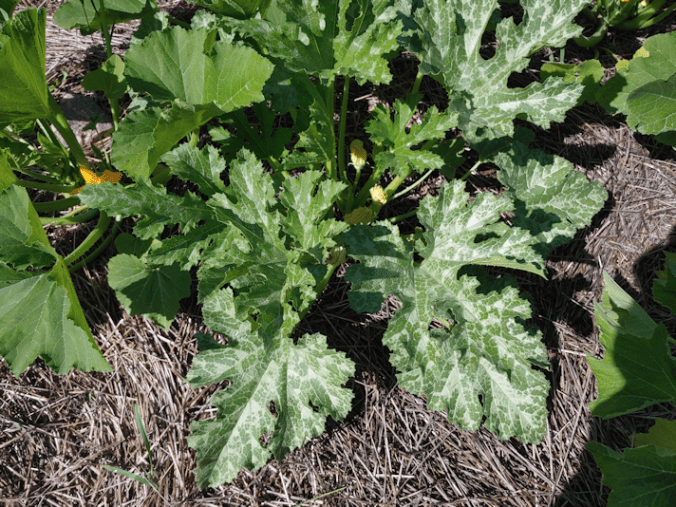
Here is another comparison. These two squash plants, with the mottled leaves.

They look pretty much like the same kind of plant, don’t they?

Now look at the developing squash.

They’re completely different!

I’m looking forward to being able to start harvesting these. My favourite way to eat them is raw, with dip. No need for anything else, when they’re at just the right stage. :-)

It was looking at the chokecherry trees that I am really seeing what a difference even minor changes in conditions makes.

This first one is at the south side of the garden where the squash beds are.

This one gets sun in the mornings, but for most of the day, it is shaded by spruce and maple trees to the South and West of it. It is not crowded by other trees. It has quite a lot of berries that are looking big and juicy (well… as much as chokecherries can be! ;-) ). Even last year, during the drought, it had larger berries. While I do not specifically water this tree, I do sometimes water the little patch of flowers and raspberries on one side of it, and the black current bush (my sister confirmed what it was for me) on the other side, so it does get extra water from that. While is has larger berries, it also ripens later. As you can see, the berries are still very much on the red side of things.

This next one is the chokecherry tree that is engulfed by lilacs.

This one gets full sun for most of the day, though it does get slightly shaded at the end of the day, by the trees my mother left to grow after she moved the raspberries they’d self-sown in between, years ago. This whole area gets quite dry, and we do not make any effort to try and water anything here.

The berries themselves are noticeably smaller than in the previous tree, and there are less of them, but they are also ripening faster.

Then there is this tree, right nearby.

This is the top of a young, small tree that was self-sown and allowed to grow (rather than get mowed over, like all the other saplings) in a grassy band between the old garden area (with the row of trees mentioned previously) and the lilac hedge. It might get some shade towards the end of the day, but otherwise gets full sun. Our first summer here, it did not produce fruit yet, and I wasn’t even completely sure what kind of tree it was. Our second summer, it had a few berries. This year, it has matured enough to produce quite a lot of berries. With full sun most of the day, not at all crowded, and little moisture, the berries are still not as big as the ones closer to the house, but the clusters are dense and ripening quickly.

You can see how this tree is situated in the background of the next photo, below. This next chokecherry is also among the lilacs, but on the edge of the hedge, not in the middle of them.

Here, it gets no shade at all. It has lots of berries that are already ripe. As you can see, though, some of the leaves are turning yellow. Only a few branches are like this, not all of them. It’s not stopping them from heavily fruiting! Like the other two along this side of the old garden, the berries are not as large as the trees nearer the house.

This next one was a surprise find, along with the Saskatoon berries. This area had been full of spirea that I had pulled up. It’s starting to grow back, so I’ll have to do it again, as pulling them up has been a good thing for other trees. The Saskatoons thrived this summer, and we discovered another chokecherry tree among them.

This area is under spruce trees, both living and dead, getting very little sun. In the above photo are the berries on the North side of the tree, where it gets even less sun. As you can see, they are just turning from green to red here.

This next photo is of the same tree, but on the South side.

That little bit more sunlight sure makes a noticeable difference in how fast they ripen!

Again, while I have not really been watering these trees, they are near the horseradish, and with the spirea taken out, wildflowers have come up and I’ve been watering those. So they will have benefited a bit from that, too. Mostly, though, being under the spruces as they are, they don’t get the full heat of the day, so the soil doesn’t dry out after a rainfall as quickly, either.

Then there is this one…

That’s a chokecherry in the middle of the photo. I had cleared a path to the junk pile you can see part of, to try and find useful pieces of wood in it, but that’s as far as I got so far. The tree itself is not crowded by other, large trees, and is shaded only in the morning hours. It’s surrounded by spirea and thistles, so we can’t get at it right now, but it appears to be just loaded with ripe chokecherries.

Finally, there is this one.

This is the top of a chokecherry tree among the cherries. I can get close to it, but not enough to be able to harvest it until I clear away the cherries around it; mostly cherries that had been killed off by last year’s horrible spring, and the bits that are now growing up from the bases. They create a formidable barrier!

This tree also gets shade in the morning hours only. Our last two summers, I don’t recall seeing any flowers or berries at all. Last summer, I’d cleared away the old wood pile, which turned out to be a much, much larger job than I expected. You can read about it in this series of posts (all links should open in new tabs, so you won’t lose your place!); parts one, two, three, four, five, six, seven, eight.

Did I mention it turned out to be a really huge job?

Yeah.

So while there is still lots to clean up to work our way into the spruce grove, what has been done so far made a big difference. I’m thinking that, had the cherries not been so damaged by the previous spring conditions, they would have improved, too. Mind you, the one cherry tree I kept because it managed to actually produce a few berries, and is not at all crowded, did not produce even a blossom this year.

It’s amazing how the same type of tree, while not really all that far apart from each other, are so different based on even minor changes in sun, shade, moisture, etc. When it comes time for us to plant more food trees, the differences among these chokecherry trees is providing us with a lot of information.

Comparisons can be very useful!

The Re-Farmer

Tiny harvest

This spring, the cherry tree near the house has many flowers.

Unfortunately, they did not translate into very many cherries this year. There are just a few, scattered about.

Walking past it today, I noticed some seemed to be nice and ripe. After trying a couple, I picked the rest that I could reach, and brought them in for my daughters.

Yup. That’s it! Counting the one I’d already taste tested, it was a whole 8 cherries.

There are others that are not quite ripe yet, but we’re not going to get anywhere near what we had last year – and that was just barely enough to fill a medium slide-lock freezer bag.

They were, however absolutely delicious. Wonderfully sour, with just a bit of sweetness. A lovely, tiny little treat!

The Re-Farmer

Growing things

We’ve got all sorts of things growing right now.

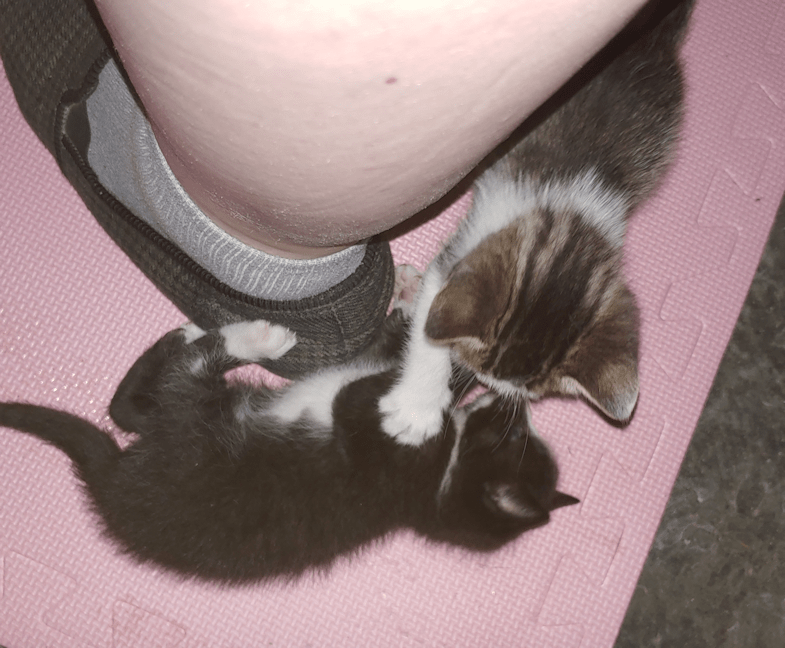
Of course, the kittens are growing into ferocious little ankle biters.

They also love climbing on and clawing the grandpa slippers. :-D

Once outside, I checked the new garden bed and discovered carrots!

Unfortunately, there are also plenty of other things sprouting. At least the thistles are easy to pull out.

These carrots were done using a method found on a YouTube video, where the seeds were sprouted in water first, then put into a cornstarch gel in baggies, to be piped into the ground like icing.

These, along with the parsley, were planted on May 17. It is now the 24th. It took only 1 week for the sprouted seeds to break ground. Direct sown, they could take anywhere from 14 to 21 days.

Not only was the parsley also starting to show, but I think I’m even seeing some of the beets, which were planted 2 days later. I didn’t do anything special with them, other than cover the plots with plastic. Beets can take 7 – 14 days to sprout when direct sown.

It seems things are doing quite well in this location! I was able to remove the plastic on all the little plots. Even the kohl rabi. I just looked those up and they can germinate anywhere from 3 – 10 days.

I’m quite pleased with this!

Yesterday’s downpour has really revived everything! While doing my rounds, I found more blooming trees!

Yesterday, it was plum blossoms. Today, it’s Saskatoons. :-)

Of course, the grass is also growing like mad. Time to break out the lawn mowers! :-)

The Re-Farmer