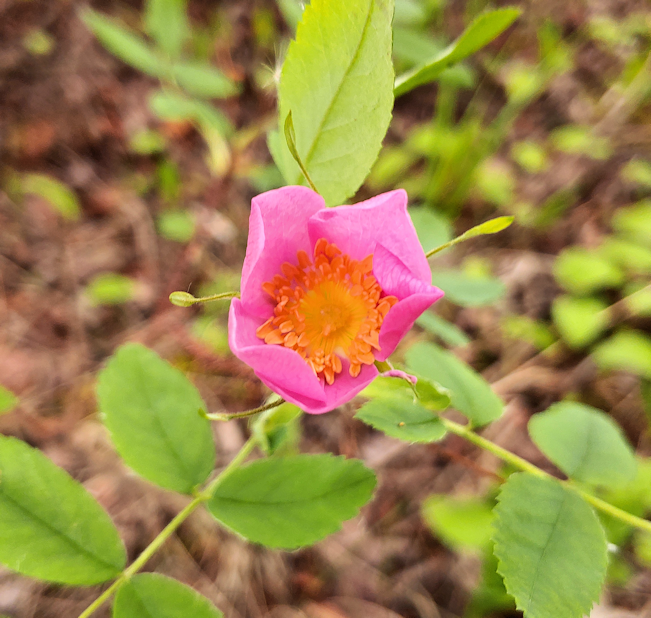
Makin hay, while the sun shines!

Or, in my case today, raking leaves and planting wildflowers!

This afternoon, we reached our expected a high of 8C/46F, with some lovely sunshine and NO high winds!

What a difference that makes.

We did get some rain this morning, but by the time I headed out after lunch, you couldn’t tell we’d had any.

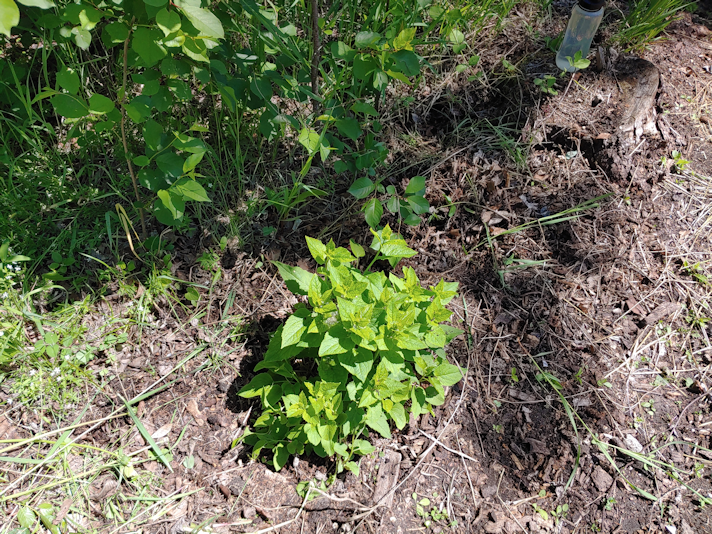
My first job of the day was to rake up some leaves to mulch the wattle weave bed.

Not all of it. Just where the wild strawberries and herbs are growing.

This was the first time I used the pair of hand rakes my brother and his wife gave me. Now that they’ve sold their property, they are living in a townhouse, and have no need for gardening tools anymore. I don’t think these were ever used before!

They work really, really well! The only complaint I could have about them is the straps for the hands are on the small side. At least for broad simian hands like mine! 😄

Oh, gosh. I just realized what I caught a kitten doing in the other mulched bed in that first photo.

*sigh*

The next photo is the packaging for the hand rakes, though Instagram cut part of it off, even though I have it set to “original size” on the slideshow. The website says uncleweiner.com (not an affiliate link). A rather unfortunate name, but a good product!

Oh… gosh. They are located in Prince Albert. That’s… double unfortunate! 😂😂😂

In the last photo, you can see I had a helper when it came to mulching the Albion Everbearing strawberries in the main garden area. I put the chicken wire back over it to keep the leaves from being blown away but, as you can see, it doesn’t lie flat on the strawberry bed. Little Magda quite enjoyed going under there!

That done, I got another wagon load of leaves and started on the patch that’s been covered by the insulated tarp all summer.

After removing the old T posts and a board I’d put around the edges, to keep it from blowing away, I peeled off the tarp. That was unexpectedly difficult. All along the edges, Creeping Charlie had started growing on top of it. It turns out that some of them set their roots into, or even through, the tarp!

So the first thing I did was drag the tarp out to the front yard, where I have one hose still set up. The tarp was spread out to its full size. After hosing it down for a while, I went over it with a stiff bristle broom to get rid of the bigger debris, then used the hose to pressure wash it as best I could. It then got another scrubbing with the broom and a rinse.

For now, I’ve left it out where it is, to dry off as much as possible. Unfortunately, there are some holes in it. Some are tears from winds that happened a couple of years ago. Others were caused by weed roots pushing their way through and into the insulation layer! So parts of it now have water on the inside of the tarp. Not much I can do about that. I don’t have tarp tape, but I do have clear Gorilla tape, so I hope to at least patch up the bigger holes – if they are dry enough! Eventually, the other side will need to be cleaned, too.

That done as much as could be for now, it was back to the patch of soil it covered. In the second picture, you can see how it looked after the tarp was removed. Most of it does look dead but, along the edges, you can see white lines of roots extending into the what will be the growing area.

The soil needed to be loosened for the seeds, so I used the landscaping rake for that – and promptly found a roll of wire, buried in the soil! When we first moved here, this is where most of the chimney blocks and all the ceramic flues had been stacked, along with bricks and other odd things, and even garbage. We cleaned it up, but clearly missed this piece of wire!

The entire area got raked from the inside out, so as to pull the living roots out of the growing area, while also loosening the soil for the seeds.

As you can see in the next photo in the slideshow, the cats were very interested in what I was doing!

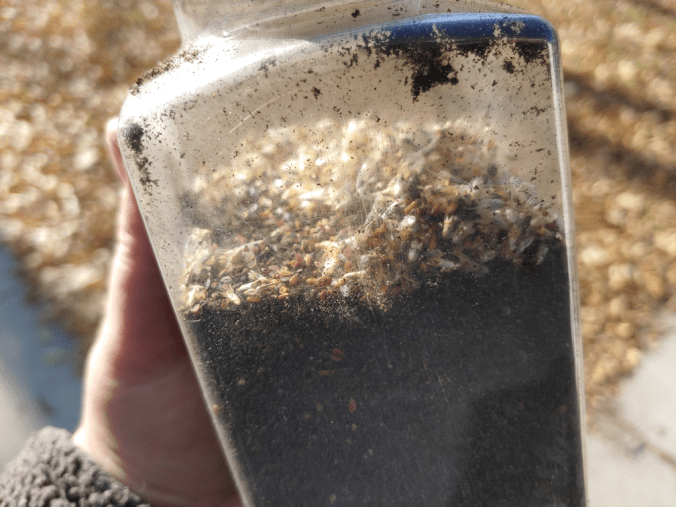
After the soil was loosened, I took the container of seeds shaken up in some seed starting mix, and scattered it evenly – I hope – over the area. Then I drew the back of the rake back and forth over the area to cover the seeds a bit.

While chasing away cats that figured this was a big new litter box, just for them!

Last of all, I scattered a wagon load of leaves over the entire area. This layer of leaf mulch is not as thick as on the garden beds. I was trying to more or less emulate how it would be, if leaves had fallen naturally on the ground. They will not be removed in the spring.
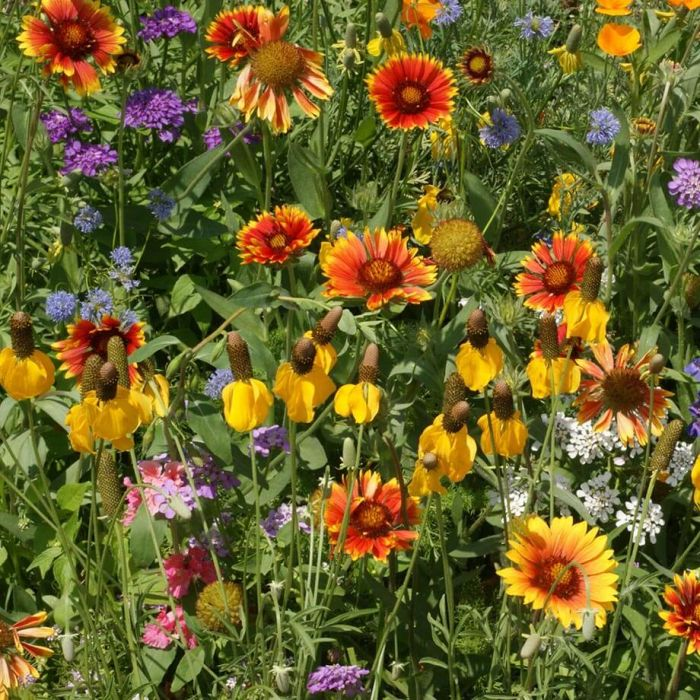

These seeds are a Western wildflower mix, so they should be able to handle the winter temperatures just fine. Any that succeed in germinating should have little problem growing through the light mulch.

The seed mix description doesn’t tell everything that’s in this mix. It just says “This mix includes Lupins, Poppy, Coreopsis, Flax, Blanket flowers and much more.” It should be interesting to see what comes up next year!

Image belongs to Veseys

One packet of seeds is supposed to be enough for 1000 sq ft. I used two packets. Technically, this means this area should be very densely sown. I’m not going to assume they’ll all germinate. We’ve tried to plant these plus an alternative lawn mix in areas nearby, and only some of them took – a year after they were sown! – and in only one area.

Still, if all goes well, enough of them will germinate that they will choke out any weeds that might otherwise spread into the area, and the wildflowers will spread their own seed further into the maple grove.

By the time that was done, it was starting to get close to sunset, to I moved on to things to go in the front yard. One of those was to clean up the flower bed the haskap bushes are planted in.

The first two photos in the above slide show are before and after shots. The dead flower stalks were clipped with loppers for a chop and drop. The old mulch I’d pulled off the garden bed at the fence was then raked on top along one side, and leaves along the other edges were raked up and added to the other sides. I don’t mind if the mulch reduces the number of flowers here. They get so tall, they cover the haskaps! Now, they are a mulch for the haskaps, and the lilac at one end.

I also snagged a couple of bricks and broken pieces of sidewalk blocks from the pile in the foreground. I keep thinking the catio is going to blow away, now that it’s wrapped in plastic for the winter. A corner of the plastic did tear off in yesterday’s winds, so that got tacked back into place, and there is now a weight on each corner of the roof.

I finally got around to laying out the hoses, to get the kinks and twists out. Once they moved, I was able to get to the old basement window to clean it up, then switch the summer window for the winter one. There was more to clean up than usual this year. The kittens have been using the area in front of it as a little box. 🫤 The window is now clear, though, and has a cover leaning over it. Eventually, we will pick up a window well and cover for around this window. The window wells are pretty affordable. The covers can sure get expensive, though!

That cleaned up and done, it was time to roll up and tie off the hoses. I ended up using a garbage can, laying it on its side over a hose, then rolling it with the hose around it. Doing it that way prevents the hose from twisting and kinking, though in these cooler temperatures, any kinks that were in the hoses when I laid them out were still pretty bent up when they were rolled up. Those are now ready to set aside for the winter.

Aside from finishing cleaning the insulated tarp, this is it for winterizing on the south side of the house. Tomorrow, I’ve got some things I want to get done in the main garden area. Our high is expected to be only 4C/39F tomorrow, but the day after is now expected to hit 9C/48F. I might wait for the warmer day before breaking out the chain saw to clean up the dead spruce tree that fell on the crab apple tree.

How much I get done tomorrow, though, may be up for debate. I felt really good while working outside, but once inside and sitting for a while, all my joints are stiffening up. Including my hands. I’m having a heck of a time typing right now. I forgot to take painkillers before I started this post.

Hopefully, I will finally get a good night’s sleep, and that will help. What I’d really love is have a hot soak in the tub, but it’s not worth the risk of injury, trying to get in and out. Sitting on the bath chair in the shower just isn’t the same, though!

Ah, well. It is what it is!

Whatever happens tomorrow, it felt great to be working outside, and I’m quite happy with the progress I was able to do while I had the chance!

The Re-Farmer

Our 2023 garden: Veseys order placed – potatoes and more

Yes, I have gardening on my mind!

Among the things we were talking about ordering that will be delivered in the spring were potatoes and, potentially, raspberries.

It seems we weren’t the only ones that had a bad growing year in 2022, because the potatoes I was looking for were simply not available. However, Veseys has potatoes again, and so I placed another order with them.

Among the items we have ordered before, we are getting the Purple Peruvian Fingerlings again. We were really happy with them, in their grow bags, two years ago. They come in 2 lb packages, so we ordered two of them.

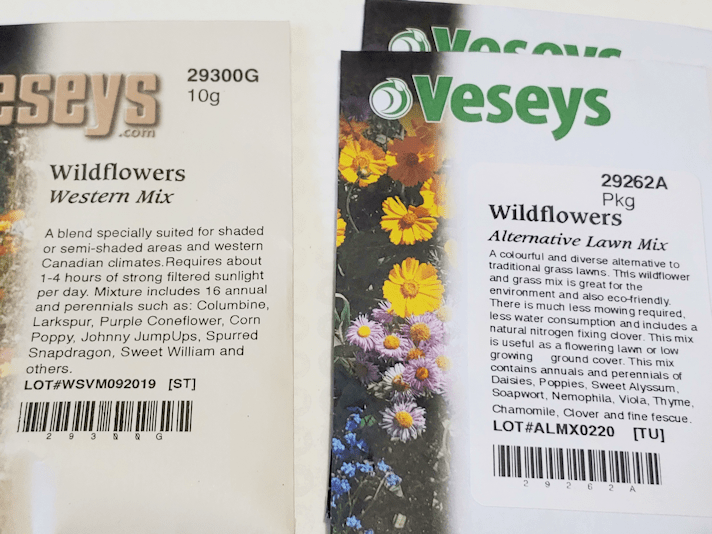
I am also ordering a couple of seed mixes from them that we ordered before (and using the coupon code from Maritime Gardening saved me the shipping costs!). I ordered two each of the Alternative Lawn Mix, and the Western Mix Wildflowers. The areas we had planted them, in the fall of 2021, got flooded in the spring, and nothing came of them. With so many wood piles chipped, we now have areas of bare ground that I would like to seed before they get taken over the invasive weeds again! Two of those areas will get the alternative lawn mix. The third does get accumulated snowmelt nearby in the spring, but should be fine to plant in. That area is next to our budding food forest, and will be good for attracting pollinators.

The seed packs will be sent right away, but the rest will be sent in time for planting in our zone 3.

Here are the new varieties we are going to be getting. All images belong to Veseys.

These are Red Thumb fingerling potatoes. They are noted for their delicious flavour. Unfortunately, there isn’t any information about how well they store over winter. These come in 2 lb packages, so we ordered two of them.

These are Irish Cobbler potatoes, an early variety also noted for their exceptional flavour. They come in a 3 lb pack, and we ordered just one of them.

These last ones are for our food forest. Royalty Raspberries. They come in packages of three, and we ordered just one package to try them. They are a late maturing variety, hardy to zone 2. So far, everything we’ve tried that’s purple has done really well for us, even in poor growing conditions, so I’m hoping the trend continues! These will produce fruit in their second year, so as long as we can keep them alive this year, we should have purple berries to try, next year.

There are still other things we will want to order for spring delivery, such as replacement sea buckthorn. We’ll just have to be careful to set aside the budget for them as we place the spring delivery orders, because we’ll be charged for them all at once, when they’re shipped!

This year, I’m happy to have several items, with different maturing rates, added to our food forest. The raspberries for production next year, apples that should start producing in 4 or 5 years, and the zone 3 mulberry trees that should take a few more years before they begin producing berries, as we will be getting 2 smaller, younger seedlings, instead of the 1 larger, older seedling they normally would have shipped, but are not available.

Little by little, we’re getting to where we want to be!

The Re-Farmer

Analysing our 2022 garden: the things that never happened (updated)

Okay, it’s that time! I’ll be working on a serious of posts, going over how our 2022 garden went, what worked, what didn’t, and what didn’t even happen at all. This is help give us an idea of what we want to do in the future, what we don’t want to do in the future, and what changes need to be made.

Okay, so now let’s look at the things that never happened – or the things that kinda, sorta happened.

I’ll start with a kinda-sorta happened, and didn’t happen, at the same time!

The bread seed poppies.

Last year, we’d planted some bread seed poppies in the old kitchen garden, which didn’t thrive, but we were still able to harvest dried pods and keep seed for. For 2022, we also bought two other varieties. The plan was to plant them well away from each other, to prevent cross pollination. Poppies self seed very easily, so wherever we planted them, they would be treated as a perennial.

In the spring, we scattered our collected seed over the same bed we’d grown them in before. They really were too densely sown, but at the same time, it was just such a terrible growing year. Lots of them germinated, but there were weeds growing among them that had leaves very similar to the poppy leaves. I had to wait until the got larger before I could tell for sure, what was a weed, and what was a poppy. They still didn’t do all that well, and I didn’t bother trying to collect any of the few dried pods that formed to collect seed. Instead, that bed was completely torn up, and there is now a low raised bed framed with small logs. Whatever we end up planting there should do a lot better.

As for the new varieties, we never found a place we felt was suitable to sow them. The flooding certainly didn’t help. Some of the places I was thinking of ended up under water, so I guess it’s a good thing we never tried planting there.

So bread seed poppies are something we will try again, once we figure out permanent locations to grow them that are in very different parts of the yard.


Then there were the wildflowers.

We got two types of wildflower seed mixes, specific for our region. Both were sown in the fall, when overnight temperatures were consistently below 6C/43F. One was an alternative lawn mix, so we sowed those between two rows of trees behind the storage house, where it’s very difficult to mow or tend. The other was sown outside the fence near the main garden area, where we later put the new sign to identify the property, after the old one disappeared. There is a broad and open strip of grass between the fence and the road, that I would eventually like to fill with wildflowers. To start, our first sowing was done near the corner, where we hoped they would attract pollinators that would also benefit our garden.

We got nothing.

The photo on the right doesn’t show the space between the trees the seeds were broadcast onto, but it was filled with water. The storage house didn’t just have a moat around it, like the garage. The space under it, where the yard cats often go for shelter, was completely full of water.

The photo on the right shows where the Western wildflower seed mix were broadcast and, while there was some standing water in places, it also got covered with sand and gravel from the road, as the ridges left behind by the blows melted away.

Yes, the snow got flung that far from the road!

Not a single wildflower germinated, in either location.

I suppose it’s possible that some seeds were hardy enough to survive the conditions and will germinate next spring. Who knows.

I’d intended to get more seed packets, which would have been sown in the fall, but completely forgot to even look for them. I might still get them and try broadcasting the seeds in the spring. We do still want to turn several areas that are difficult to maintain, over to wildflowers and groundcovers. Once we get them established, they should be virtually maintenance free. It’s getting them established that might take some time!


During our previous two years of gardening, we grew sunflowers. The first year, we grew some giant varieties. For 2021, we grew Mongolian giants and Hope Black Dye. These were to do double duty as privacy screens.

They did not thrive during the drought conditions we had last year, and deer were an issue, but we were able to harvest and cure some mature seed heads and intended to plant them in 2022.

That didn’t happen.

Basically, with the flooding, the spaces we would have planted them in were just not available. Plus, the bags with the seeds heads were moved into the sun room, after spending the winter in the old kitchen, with the intention of planting the seeds, they ended up in there all year. With how hot it can get in there, I don’t think the seeds are viable anymore.

Still, it might be worth trying them!

The reason we wanted to grow the varieties included using them as both privacy screens and wind breaks. We also want to grow them as food for ourselves and birds and, at some point, we’ll be getting an oil press, and will be able to press our own sunflower oil. So sunflowers are still part of our future plans.

We did have sunflowers growing in 2022, none of which we planted ourselves. They were all planted by birds, and were most likely black oil seed; the type of bird seed available at the general store. Only a couple of seed heads were able to mature enough to harvest, and we just gave them to the birds.

I do want to plant sunflowers again, but at this point, I’m not sure we will do them for 2023.


Several other things we got seeds for, some we intended to plant in 2022, but others for future use.

Of those we had intended to plant, one of them was Strawberry Spinach.

These are something we’ve grown before on our balcony, while still living in the city. The leaves can be eaten like a spinach, while also producing berries on their stems. We’d ordered and planted some in a new bed, where we could let them self-seed and treat them as a perennial, in 2020.

They were a complete fail. We don’t know why.

I ordered more seeds and we were thinking of a different location to plant them, but then the flooding hit, and we got busy with transplanting and direct seeding, and basically forgot about them.

I still want to grow them, but we still need to figure out a good, hopefully permanent, location for them.

We also found ourselves with a packet of free dill seeds (, plus we were given dill that we were able to harvest seeds from. Since cleaning up the old kitchen garden area, we did start to get dill growing – dill is notorious for spreading its see and coming back year after year! – but they never got very large. We have bulbs planted where they’ve been coming up, so we’re not exactly encouraging them in that location.

In the end, with the way things went, we never decided on a location to plant them, and with all the other issues we had with the garden this year, it just wasn’t a priority.

For 2023, however, we’re actively starting to order herb seeds and will be building up an herb garden, so hopefully we’ll be able to include dill in those plans, too.


One thing we ordered that we did not intend to plant right away was wheat.

These are a heritage variety of bread wheat, and we only got 100 seeds. Even if we had a good year, I doubt that would give us enough yield for even a loaf or two of bread. We do, however, plan to invest in a grinding mill in the future.

Meanwhile, when we do plant these, it will be for more seeds, not for use. In the longer term, we’d need to have a much larger area to grow enough wheat for our own use.

We’ll be starting slow!

Then there were the forage radishes.

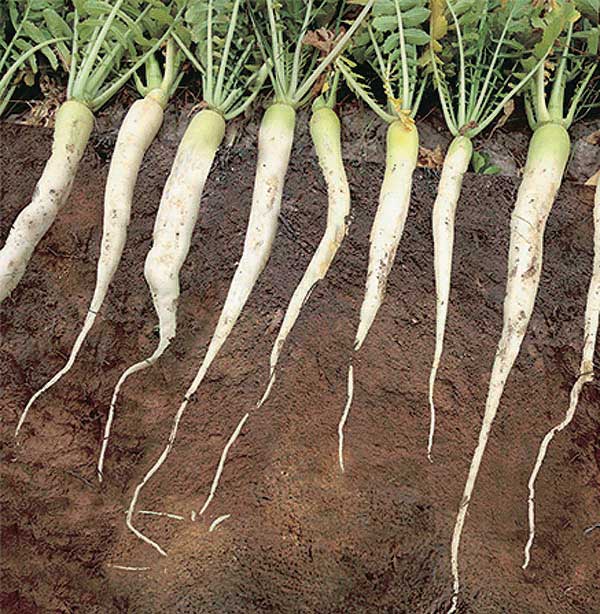
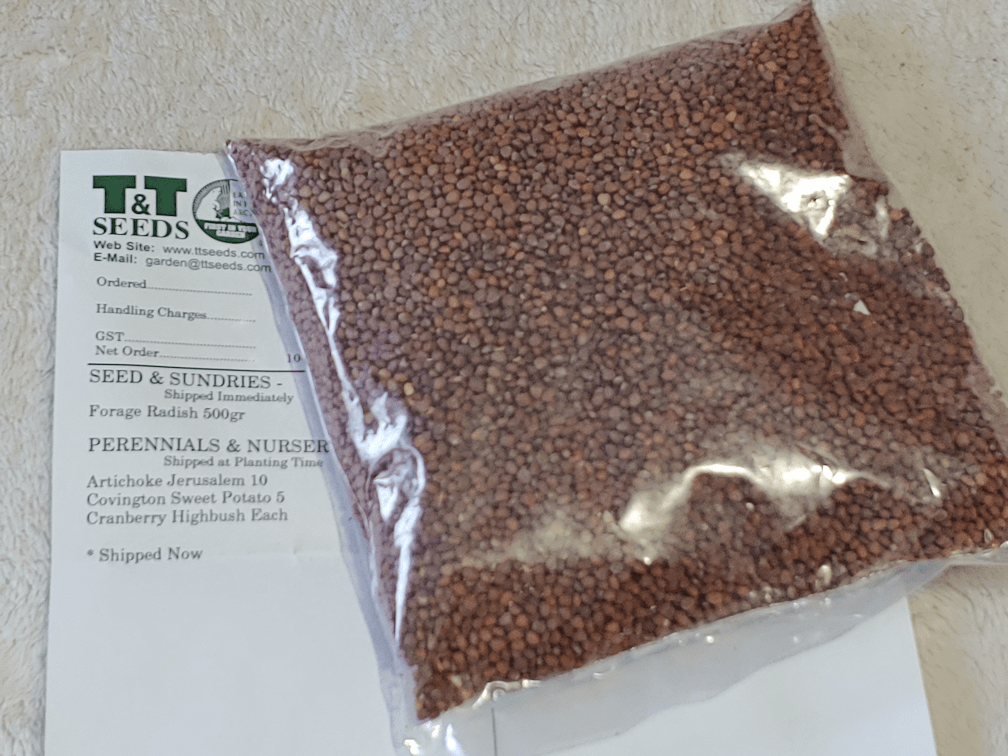
Also called tillage radish. We got these to help amend our soil, and loosen it for future planting. These would be something we would use to break new ground in preparation for future garden plots. There are a whole lot of seeds – and that was the smallest size package! – so we’ll probably have a few years to use these to prepare new beds.


I think that’s it!

I’m sure I’m forgetting something. 😄😄

Next, I’ll post my final thoughts on how everything went. With everything that went on this year, that’s going to need its own post!

The Re-Farmer

Update: I knew I was forgetting something! Two somethings.

The first is our winter sowing experiment. You can read about how that turned out, here. Basically, we got nothing, and I think it was due to our extended, cold winter. I know this is something that has worked for others in our climate zone. It just didn’t work for us this year. In the future, I will probably experiment with it more, but not for the 2023 growing season.

The other is our cucamelons. In 2021, the cucamelon vines grew well in a much more ideal spot, but we had almost no fruit. The previous year, we grew them in a spot that was too shady for them, but still managed to get more fruit. I believe it was a pollination problem.

While we do want to grow them again in the future, we decided not to get more seeds. However, in cleaning up and redoing the spot they were growing in, putting in chimney blocks to plant in and keep the soil from eroding under the chain link fence, we found lots of tubers. In theory, we could over winter the tubers and plant them again in the spring. So we buried them in a pot and set the pot into the sun room, where it doesn’t get as cold. The first year we tried that, there was pretty much no sign of the tubers by spring. I found only the desiccated skin of one. When I brought the pot out for 2022, I didn’t even bother digging for the tubers. I knew they wouldn’t have survived the extended cold, even in the sun room. We should have taken it into the house and maybe into the old basement, where the cats couldn’t get at it, but those stairs are difficult for to navigate, and we go down there as rarely as possible.

So winter sowing and cucamelon tubers were both things that just didn’t work for 2023.

Analyzing our 2021 garden: the odd stuff

Since we ordered SO many things for this year, and expanded how much space we were gardening in, I decided to go over groups of things in separate posts, in no particular order and spread over the next few days.

There were a few things we planted this year that we won’t know how they will do until next year, at the earliest!

The first of these are the wildflower mixes.

Now, what we should have done, under better circumstances, was clear out our chosen locations of all roots in the fall, loosen the soil, then plant the seeds in the spring.

Ha!

No.

We just don’t have the equipment for that. Especially for the areas we would be planting them.

This is one such area.

Can you imagine going over this with a tiller, then clearing out all those roots, as recommended? Especially since there are a lot of tree roots in here; I had to go over the area and cut them away before I could mow it.

This is outside the property, and technically not our responsibility to keep clear, but my family has kept it from getting overgrown for as long as I can remember. Inside the fence from here is where we had our corn and sunflower blocks this past summer.

This is where the package of Western Mix seeds went. They didn’t get broadcast until there was no possibility of early germination. Normally, that would probably have been around mid September, but it ended up being at the start of November! I put the seeds in an old bulk-size spice shaker with some soil, gave it a shake to make sure they were well mixed in with the soil, and scattered it not far from where we had just installed the new sign. In the photo, that would be basically right where I was standing to take it. I didn’t want to spread the seeds too close to the fence line, so we wouldn’t be walking on flowers while tending to the fence.

In theory, when the snow melts in the spring, they will germinate and this area will have wildflowers growing in it. The purpose is to attract pollinators, and to make it so we no longer need to mow here at all. The ultimate goal is for almost this entire area, all the way to the driveway, to be filled with native wildflowers.

We shall see how it works, some time in the spring!

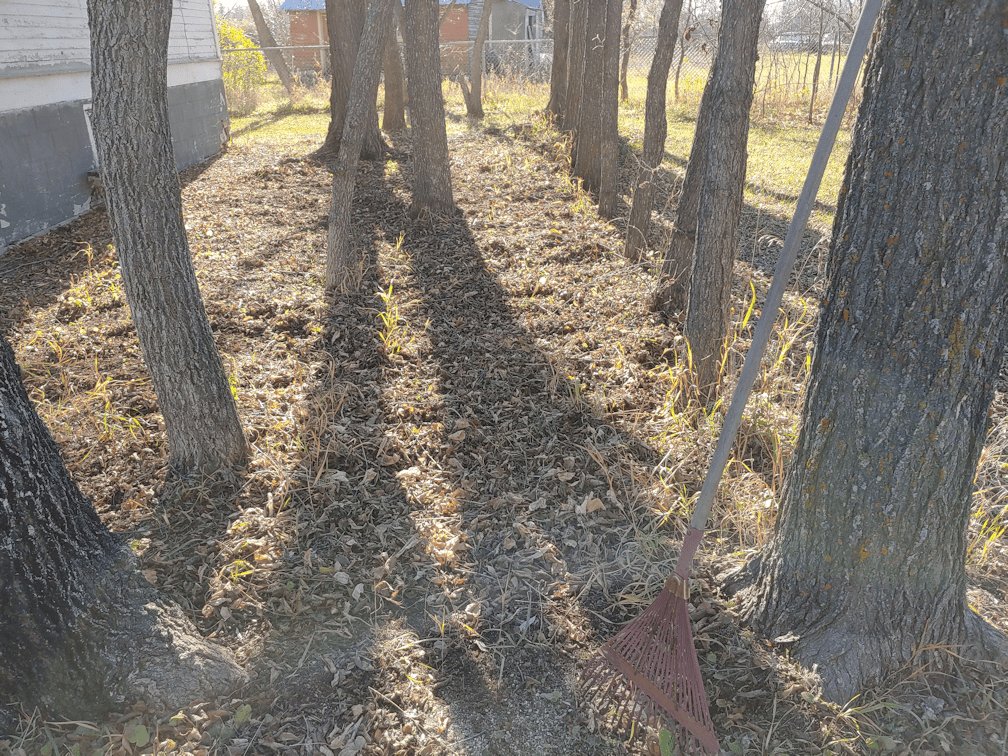
This is where the alternative lawn mix went. The area was raked clear of leaves, raked again to loosen the soil (it’s almost bare soil in between the rows of trees, with some crab grass trying to grow in it), the seeds scattered the same way I did with the Wildflower mix, then the leaves were returned as a mulch.

As with the other seeds, I expected to do this in the middle of September, not the beginning of November.

Hopefully, when the snow melts and the soil warms up, we’ll have all sorts of things growing here. If it works out, we’ll get more of these seeds and use them in other treed areas that are difficult to maintain, but we don’t want to leave to become overgrown again.

Then there are my Christmas presents from my husband.

Fungi!

More specifically, spores for morels and giant puffballs.

Morel mushrooms are native to the area, but I have never seen any in the home quarter. I remember finding them in the unoccupied quarter that is rented out for pasture, even though it’s probably at least half trees, plus a pond and marshy area. It’s highly unlikely we’ll have a chance to go morel hunting out there, so being able to inoculate an area inside our yard is definitely preferable! This location was chosen because the instructions recommended several different types of trees to spread the spores under, but the only one that grows here is elm. After checking out a number of videos on how to grow morels, I built this bed for it, with carboard to keep the crab grass out, and inoculated layers of wood shavings and hardwood pellets.

The spores for the giant puffballs needed a couple of days in water with molasses first. The instructions said to pour the liquid over grass, and I chose this area between the rows of elms, because it’s not easy to mow or keep clear.

Puffball mushrooms are also native to our area, though I’ve never seen the giant varieties. These guys are supposed to get so big, you can cut them into steaks.

The thing with these is, we will have no idea if it worked, until something pops up, and that could potentially take years!

At least they didn’t cost much when my husband ordered them on Amazon. Over the years, we plant to get spores from other types of edible mushrooms to inoculate trees and logs. Recently, I went over the wish list I’d made of different mushroom types on Amazon, and the prices are almost 10 times what they were before! I even tried comparing like-for-like by finding the same Morel spores my husband had ordered. The price increase was really shocking!

There are other places to get mushroom spores, however, and I’d rather not order from Amazon, anyhow. Whether or not these work out, I still want to get other types of mushroom spores over the years to try. Types that are either hard to find in grocery stores, or that are just way too expensive to be worth buying.

A very different way to grow food, but a fun one to try!

The Re-Farmer
Scrambling to catch up, and a court update

Today turned out to be a lovely day. Sunny, and at a high of 8C/46F, warmer than predicted. It made it very hard to believe that there is a storm and blizzard coming our way, starting tomorrow! While my phone’s weather app has been saying a blizzard was coming since yesterday, it was only until early this afternoon that my desktop app changed its forecast and began giving weather alerts.

After losing so much time yesterday, today was a day to scramble and get the essentials done. The rest will wait until spring.

Last night, the girls lifted the roof on the cat’s house, cleaned it out and replaced the old straw with fresh. Unfortunately, the heated water bowl had to be removed; the cord’s sheath had cracked, right where it contacted the bowl itself, exposing wire. That is unfortunate, as the heated water bowl made a huge difference last winter! So far, however, we are still expected to have mild temperatures, so we won’t need to plug in the electricity to the shelter. Which is good, because I forgot to buy a new 9V battery for the fire alarm we have in there. The ceramic terrarium bulb we have in there for warmth is well shielded, but we still want to have the alarm functional as a safety precaution.

I don’t know of the cats are happy with the clean up. I haven’t seen them in there, yet!

When I headed out this morning to do my rounds, I counted 20 cats.

But only Nosencrantz was willing to pause for a photo! :-D

One of the things I took care of while doing my rounds was to finally scatter some wildflower seeds.

I had two packages of wildflower seeds that were meant for the area outside the yard, in front of where the new sign is. Eventually, I want that entire strip to be filled with wildflowers for the pollinators – and so I don’t have to mow it anymore! I used a bulk sized spice shaker and some soil to scatter the seeds evenly.

This was something I expected to do in the middle of September, but it was just too warm. I didn’t want to risk the seeds germinating too early, and getting killed off when winter temperatures arrived. With the storm coming, these will get covered with snow and should be good to lie dormant until things melt in the spring.

Last night, the girls also used the insulated tarp we found in the garage a while back and used that to cover the septic tank, instead of straw. It’s large enough that it could be used, folded in half. It was full dark by then, so they just weighted it down with some fence posts. This morning, I shifted it a bit to get it right up against the house, then pegged it down.

As you can see by the two pegs on the right, I hit some rocks in the process!

By the time I pegged that down, I was done my rounds and headed inside to go through the trail cam files while eating breakfast. It was rather funny to see all the files of my mother and I, when I took pictures of her at the new sign. It feels so weird to see myself on video! :-D

By the afternoon, things had started to warm up nicely, so I headed outside.

The first thing I wanted to get done was scatter a different wildflower seed mix in the yard.

This one was an alternative lawn mix, for shade and partial shade, of flowers native to Western Canada. This double row of trees is really hard to tend, so I settled on this as the location for the seeds. Unlike the area in front of the sign, though, this one needed to be raked, first.

The first raking was to remove the leaves and debris, then it got raked again to loosen the soil surface a bit. There were some maple and willow suckers coming out of old stumps that needed to be pruned as well.

Then the packet – one larger packet of seeds – got added to the shaker with some soil and thoroughly mixed before being scattered on the raked ground.

Then, the leaves got raked back, as a mulch.
I look forward to seeing if this works in the spring!

One of the priorities on our to-do list was to finally repot our house plants. They’ve been hit with overnight frost, but amazingly, the aloe vera was still alive! They were overgrowing their post, though, so most of them ended up in the trench of the third low raised bed, to break down, except the biggest one that was too big to be buried in there, so it went to compost. I ended up transplanting 4 or 5 strong, healthy little aloe vera for the girls to bring inside later. The umbrella tree looked dead, but I pruned it back and repotted it, because it does actually seem to still have life to it! I would hate to have lost that thing. It had been doing so well, even with the cats constantly trying to get into it!

One of my daughters was working on commissions, so she could only come out to help briefly. My other daughter tried to help, but she was feeling sick and looked so horrible, I sent her inside. Poor thing felt so bad! She did, however, get the last hose put away for me, and was kind enough to run into the basement to shut off the water to the taps.

Once the water was shut off, I opened the back tap and put one of the new insulated hard covers for the taps on it, then finished putting up the rest of the insulation we put around the bottom of the house. This area had been left until we were done with using the taps, and the septic was covered. The front tap still needs its cover, but it is much more convenient to get at, so it can wait a bit.

Along with some other clean up, I did finally make it to the squash tunnel to prepare it for next year, but was only able to do one side before I had to go in for an expected phone call. The rain barrel was turned on its side and weighted down, the long tools and rolling seat went into the old garden shed, and the storage bin we kept to hold shorter tools and various other things we might find handy, went into the sun room. The things we have left undone are all things that will be okay if they wait until spring. It was just time to finally put the tools away!

Then I made a quick run into town to get a few things we thought we might run out of. The predicted storm is supposed to hit the south of our province, but it’s hard to know if we’ll get hit by it as well, or just catch the edges of it. At the very least, we expect to lose internet more often. That happens any time there is bad weather to the south of us. Though it is supposed to start with rain, we might get about a foot of snow, over two days, at which point we won’t be going anywhere for a while! I had already planned on tomorrow to be a baking day, and the last thing I wanted was to runout of ingredients in the middle of something!

Meanwhile…

I got an email from our vandal’s lawyer asking if I were available for the case management session on Monday. That went back and forth for a while. It turns out it will not be with just me, him and our vandal. It will be with the same judge that we’ve been in front of, this whole time.

My brother will not be able to make it, but we don’t want to delay this any more, so I took it. I feel more confident knowing that the judge will be there. The unfortunate thing is that it is going to be at 9am – in the big city, not the closer, small one we’ve been going to all this time. Worse; the court offices are downtown. So not only will I have to leave unfortunately early, just to make sure I have time to get lost among all those one way streets, but it’s going to cost more in fuel, and I’ll have to pay for parking. Minor things, but with costs going up, there just isn’t much wiggle room in the budget! Very annoying. But, it’s that, or wait a year for a trial. :-/

So that has been confirmed.

I am both looking forward to getting it done so quickly, and dreading it.

At least, by then, wherever snowfall we get from the storm will no longer be an issue. There will be plenty of time for any road clearing needed to be done by then!

As for our scramble to get stuff done, no, we weren’t able to finish it all, but the essentials are done, and the rest should be all right to wait until next year.

Speaking of next year, we’re made progress there, today, but that will be the topic of my next post! :-)

The Re-Farmer
Future wildflower area, and something’s missing

After breaking the lawn mower in the strip along the road, I finally got back to it, today.

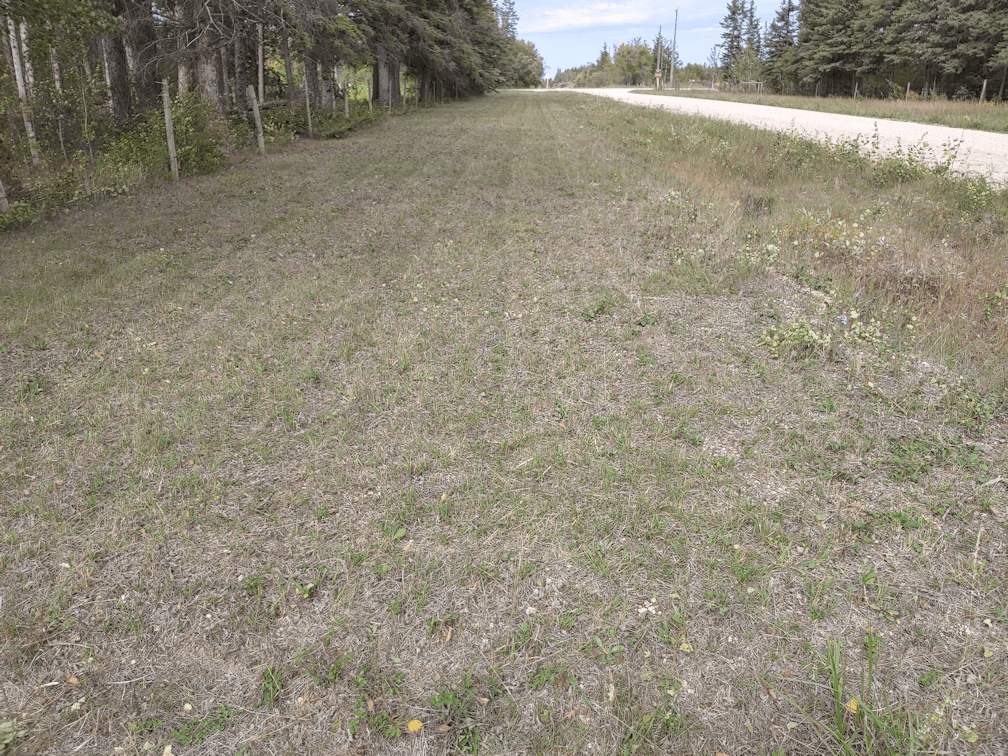
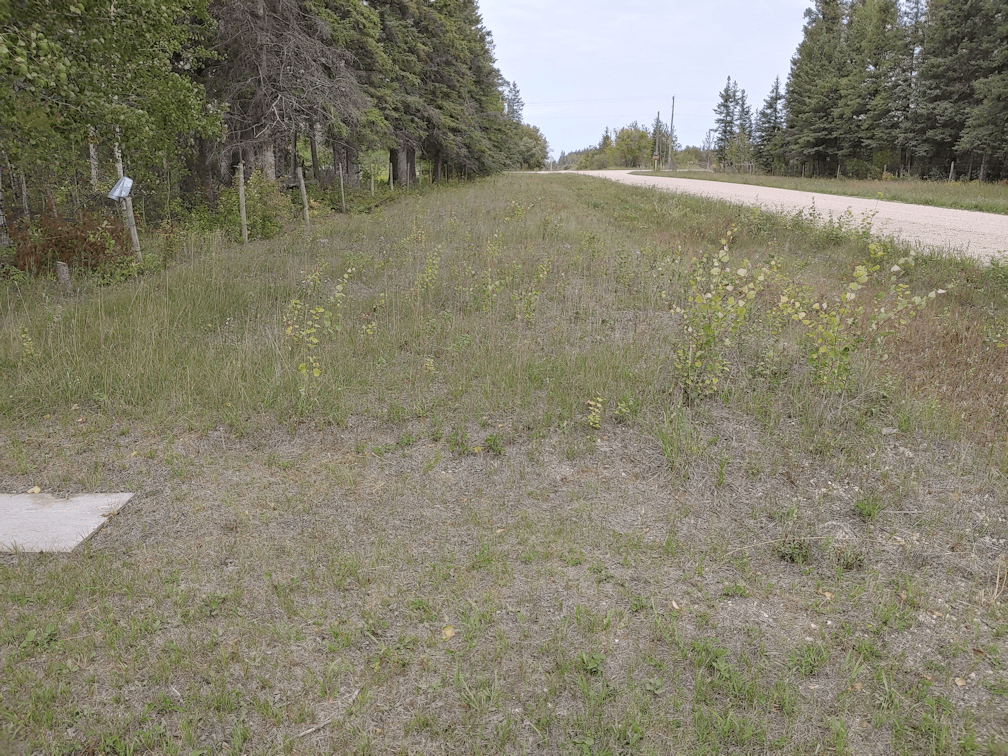
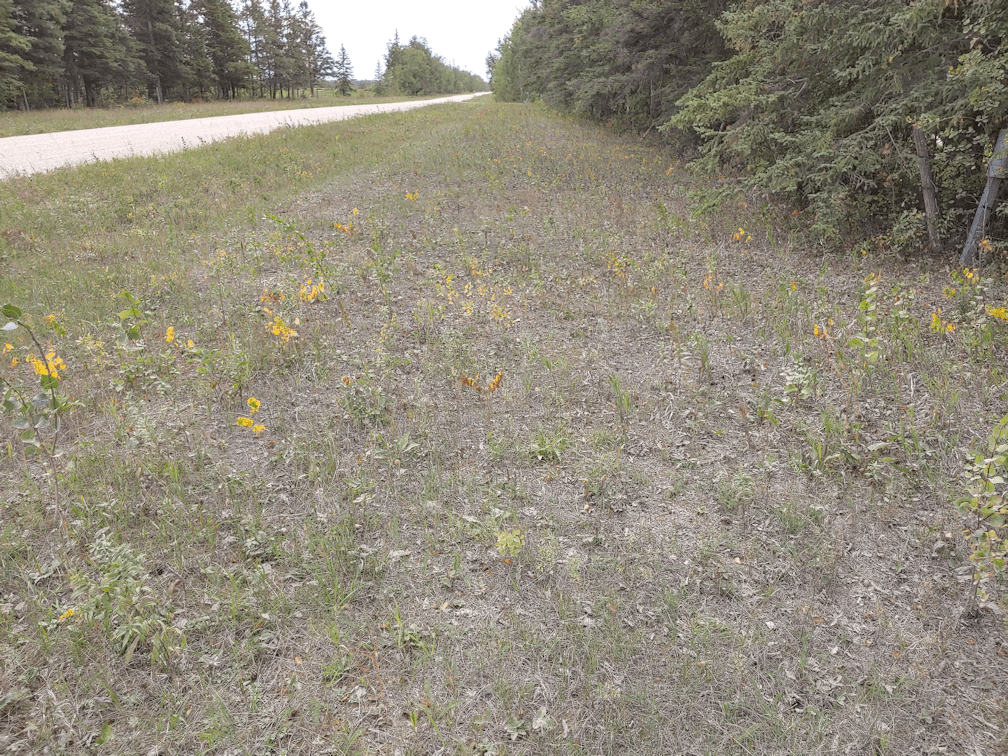
Here is how it looked before I started, from each end.

I suppose one good thing about the drought conditions is that this area has never gotten overgrown. There were saplings starting, so I went over the area with the lopper first, cutting them as close to the ground as I could. The last time I had to do that, we didn’t have loppers, so a lot of these saplings were growing out of the ragged ends of smaller saplings before, that had been mowed over rather than cut with pruning shears. The larger ones had been cut with pruning shears, and there was enough of them that I had needed a wheelbarrow to clean up. This time, I could just pick up the larger ones by hand and didn’t even get an armful.

Here is how it looked when I was done.

The plan for this area is to convert it to native wildflowers for the pollinators. The mix we have has 16 annuals and perennials, chosen for Western Canadian climates. We intend to start at the far end (where the lawn mower can be seen in the one photo), as that end is near the garden. Over time, I intend to continually scatter more seeds down the line, with a goal of this entire strip being full of wildflowers. Once that is established, we won’t need to mow it regularly any more, and we will just need to keep on top of cutting away any saplings that try to establish themselves, and do a single mow, at the highest setting, at the end of the year.

What we can’t do is follow the instructions. This is the method we had intended to follow.

Method Three involves more planning but requires no chemicals. Till in the late summer or early fall the year before planting. You may allow the soil to lie fallow or plant a cover crop after tilling. A cover crop may be important if your site is on a slope. A green manure cover crop such as buckwheat or annual rye grass will hold the soil until spring, help add beneficial organic matter and help snuff out germinating weeds. In the spring, light cultivation will be needed to loosen the soil and turn under all existing growth just prior to planting. ‘

https://www.veseys.com/us/westernmixwildflowers.html

Well, we can’t till this area. Even if we had a working tiller. You can’t see them in the photos, but there are several large rocks peaking through the soil, and I have no doubt there are more that cannot be seen. I had hoped to at least go over the area with a harrow, but we still need to figure out a safe way to get under the riding mower, which has a tow hitch, to put the chain back on, so it will move. It hasn’t exactly been a priority.

Then there are these instructions:

Sowing: 

Once your ground is bare and loose, you are ready to sow. Following are a couple of tips that will make the whole process simple and successful. First, choose a nearly windless day and, second, separate the seed you’re planting, no matter the amount, in roughly two equal parts. Put the first half in a clean bucket or coffee can and add in roughly 10 parts of light sand or vermiculite. There are two reasons for the sand. It will dilute the seed and help you spread it more evenly. More important, since it is lighter-colored than the freshly-tilled soil, you’ll be able to see where you’ve been as you sow. You can simply hand-sow, keeping the seeding as even as possible. Or use a hand-crank seeder. The amount of seed you sow depends on the sort of flower display you want. Many people sow up to two or even three times the minimum seeding rates on seed packages to assure heavy bloom. Avoid planting higher densities since this will inhibit good growth. Sow the first half of your seed/sand mix over the entire area to be seeded. Then go back, mix the second half of your seed with sand and spread that seed over the whole area. This way, you’ll avoid bare spots. Once the seed is evenly sown, you can rake to barely cover the seed with soil. Or, simply compress the seed into the freshly-tilled ground. A lawn roller is perfect for the job, and for smaller areas, a piece of plywood laid down and walked on will do.

Okay, so we can broadcast the seed easily enough, but things like getting rid of all the roots of what’s already there, and having “bare and loose” soil first is out of the question. We’ll be lucky if we can loosen the soil at all. As for raking or tamping down to compress the seed into the soil? Ha! Nope. Not gonna happen. It’s just too large of an area. We will also not be able to do any watering here, at all. We have enough hose that we can reach the furthest corner of the furthest garden bed with the spray nozzle on the hose. I have no intention of buying yet another length of hose, to water outside the garden area.

Nope.

The instructions say to prepare the soil, then plant in the spring, after last frost. Since we can’t water the area, I’m going to throw caution to the wind and broadcast the seeds in the fall. I had expected to be doing that around now, but we are having relatively warm temperatures for the next while, and we’re also getting rain. I don’t want the seeds to germinate. I want them to go dormant before getting covered with snow. Then, when the snow melts in the spring, they will get their moisture.

This goes against all the instructions but… well, these are wildflowers. Wildflowers manage to propagate themselves without freshly turned soil, tamping down or clearing of other plant roots. I’m going to be trying to copy nature, here.

So we will do as much as we can first – which, unless we can get under the mower, is basically what I’ve done today. I’ll be using garden soil instead of sand to help broadcast the seed more evenly. Since I don’t want the seeds to germinate, I will probably wait until the end of the month, or even into October, to do it. Whatever survives, survives. If we keep broadcasting seeds, year after year, eventually the area will get filled. Hopefully with a good variety.

So that’s done as much as possible for today.

This is the first time I’ve been out this way, on foot, all year, which means today was the first time I was able to check out, and get a photo of, this.

This is the corner post of the property’s fence line.

It needs replacing, as does most of the fence, but that is not what I was taking a pictures of.

I was taking a picture of what isn’t there.

My father’s name.

Many years ago, my dad took a piece of red plastic and used gold coloured, metal, self adhesive, letters to put his initial and surname on it. The sign was mounted on this post. Back in the day, before any of these roads had names, and well before the driveway marker system was implemented, the sign was used as a landmark when giving people directions to our place.

We don’t go out often, and the sign can be easily seen only when we are on the return trip, but seeing that flash of red while turning the corner always made me feel good. It was a memory of my father.

Some time ago, however, I realized I wasn’t seeing that flash of red anymore. Today, I got to look around to see why.

There isn’t a trace of that sign. The reflector at the top got broken in half, though, and the rest of it is on the ground, but that’s all I could find.

The road that goes past our driveway has our family name, as well as a numerical name. When we first moved here, the road sign with our family name was at the top of the stop sign across the intersection. One day, the stop sign was lying broken on the ground, and the road sign with our family name on it was gone. I am 99% sure this was done by our vandal, and I’m just as sure that he is responsible for the sign on this fence post being gone. When it happened, I have no way to know.

What a childish, petty thing to do.

If we ever do get the road sign replaced (I’ll have to contact the municipal council again about that), or replace the sign on the fence, we’ll have to set up a trail cam on it, because I just know that our vandal will go after it again.

Switching out memory cards in this location would be much more inconvenient, that’s for sure!! But it would need to be done.

What a pain.

The Re-Farmer

Gotta be quick!

Taking advantage of a break to quickly post!

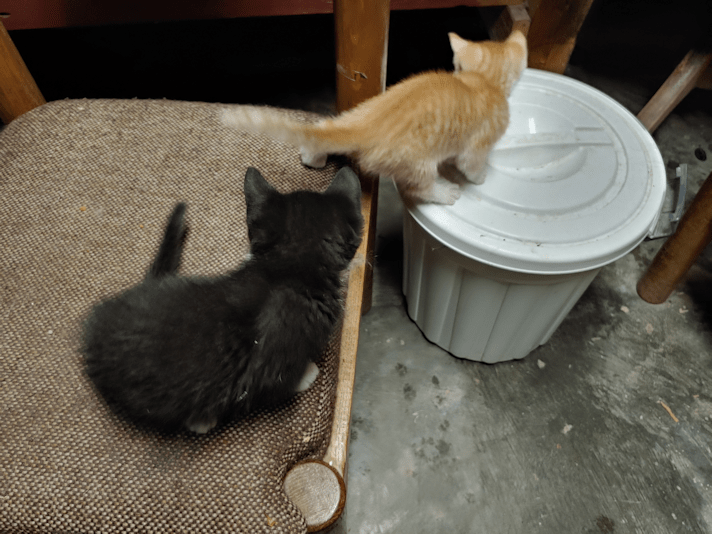
My attempts at getting kitten pictures has been a failure today. Those little buggers move fast! :-D

So do flowers, actually. At least with the winds we had when I was doing my rounds this morning!

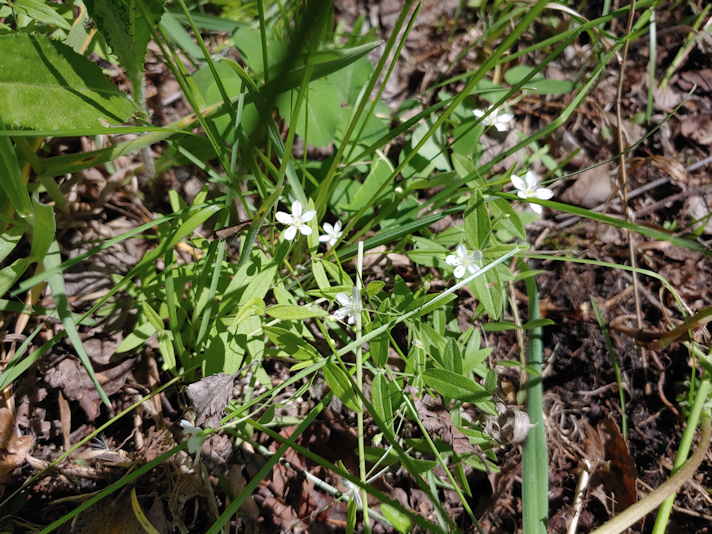
These delicate little wildflowers have burst into bloom now. It’s interesting how there always seems to be some wildflower blooming, one after the others.

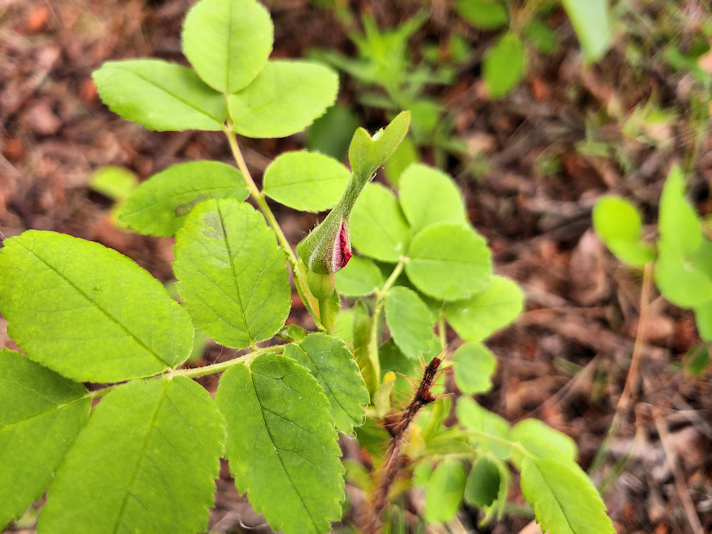
These wild roses are almost completely engulfed by the spirea!

One of our goals is to pull up most, if not all, of the spirea from here. The junk pile, in general, needs to be cleared so we can get access to it and start cleaning it up. I’m hoping the wood pile that makes up the bulk of it will still have some salvageable wood in there. One of the things I want to build is a box to put our garbage bags into, so the animals can’t tear them apart.

I noticed in the area around the stone cross, which had been full of spirea, now has what looks like flowers coming up. If they are what I think they are, they won’t bloom for a while yet, but I’m seeing them pop up all over, in areas that have been cleared up. Especially where I’ve also been able to finally mow. It seems once the grass (or, in this area, the spirea) was no longer the dominant plant, all sorts of greenery is now able to grow. When I get to mowing in the maple grove, there are some paths I plan to deliberately leave alone, just to see what is there.

After my morning rounds, I got back outside as quick as I could, to finish mowing around the old garden area.

I was almost done when I ran out of gas, so I took a quick rest and hydration break. The Potato Beetle came over for cuddles. I’m rather surprised, considering how covered in bug spray I was!

I’m happy to say, I managed to finish the old garden area, including the section I hadn’t been able to get to at all, yet. After this, I can start going into the maple grove.

But not today.

For the last half hour or so of mowing, there was a whole lot of thundering happening, so I was really happy to get that last bit finished before putting away the mower.

Since then, we have had a quick storm pass by, with a heavy downpour. We also lost internet for a while, and then we momentarily lost power. Just enough to cause the computers to restart, and the security camera to reset its position.

I love power bars.

Looking at the weather radar, we seem to be in the path of several small but severe thunderstorms for the rest of the day.

Which means it’s time to quickly get caught up, then shut down the computer, in case we lose power again. No doubt, once the winds pick up again, we’ll lose internet again.

It’s going to be an interesting day!

The Re-Farmer

Going wild

Wild with wild flowers, that is!

And… other things.

While doing my rounds this morning, I got to enjoy some lovely wildflowers.

I’m counting the cranberries as wild, since they are self-sown. ;-)

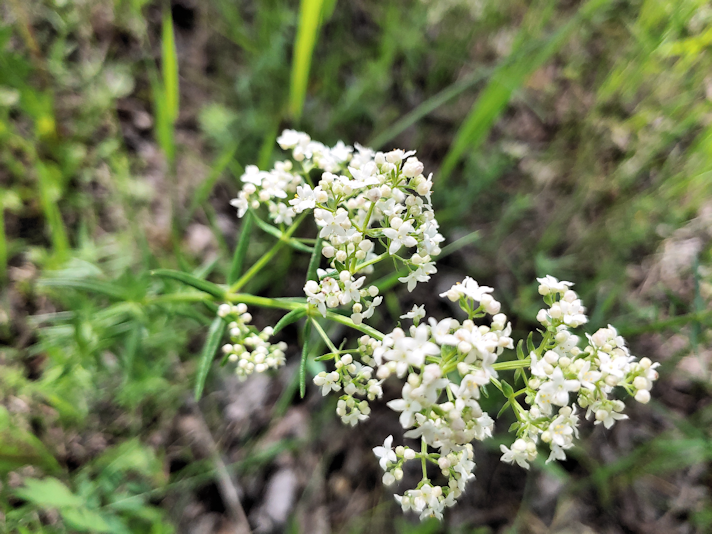
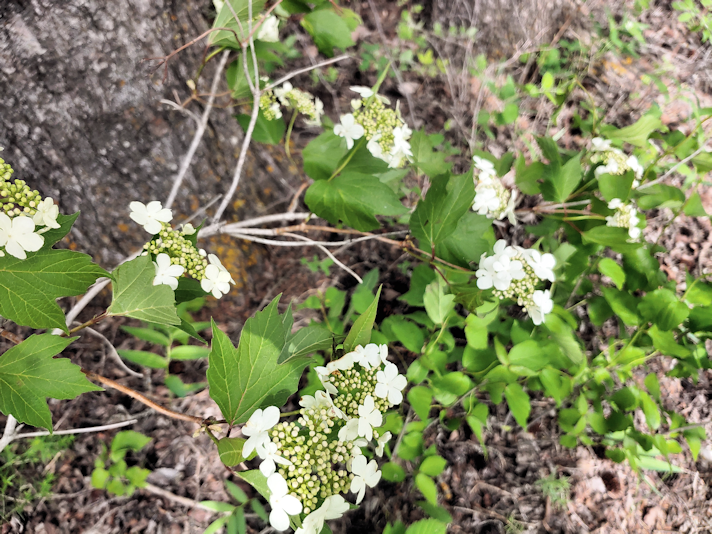
There is a path of flowers running along the south fence that my mother sowed many years ago and have been taking care of themselves, ever since. They’re doing much better, now that we’ve cleared that fence line as much as we have. The white flower in the first photo is the first of these to bloom; there are several more of them budding, and lots of buds on another type with purple flowers that look like they will be blooming, soon.

I don’t know what that tiny purple flower growing in the moss is. The flower looks like a miniature bearded iris!

The wild roses are blooming nicely, but on one of them – just one – I found this.

I’m used to seeing caterpillars eating the plants. Not beetles!

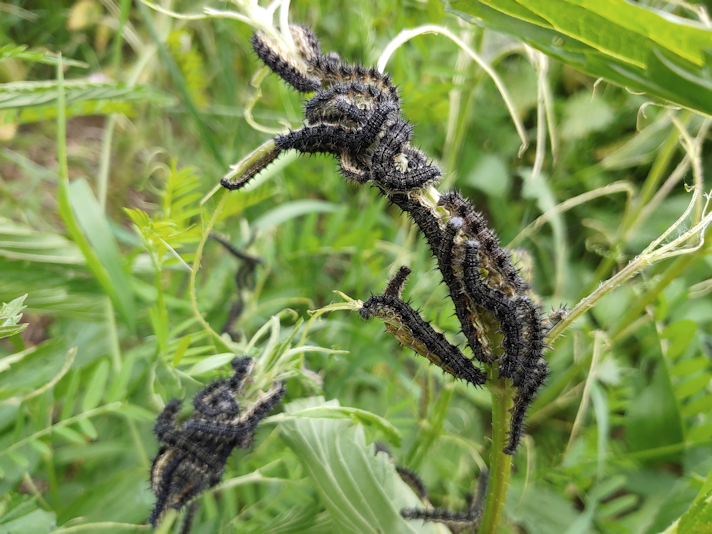
My daughters reminded me to check out the patch of nettles growing near the barn door into the hay yard, to see some caterpillars they found.

A few of the nettles are covered with these caterpillars. They’re not the canker worms I expected, and am more used to seeing around here, like these ones. I’ve just been looking them up and my memory was correct; cankerworms have a preference for trees, like maple and elm. They can also be incredibly destructive. About every 10 years or so, their populations explode and cause a lot of problems. In between those explosions, we don’t see them all that much at all.

These guys, from what I can find, may be the caterpillars for any of three different butterflies. None of the photos I’ve been able to find are helping much to identify them properly, but they could be Red Admiral, Tortoiseshell or Peacock butterfly caterpillars.

So… these are good things to have.

I hope!

Also, it’s not a good idea to walk through a nettle patch while wearing shorts. Especially after getting clawed up by kittens.

We are, however, supposed to get really hot today. As I write this, we’ve already reached 28C, with a “real feel” of 33C. (82F/91F). Thunderstorms are on the way, though from the weather radar, it looks like they’ll miss us. The system seems to be getting pushed up from the south a lot more than I usually see, and it looks like the storms are going to hit to the north of us. Other provinces have already been hit with severe storms, with golf ball sized hail and flash flooding. It’s been really crazy to see videos people have posted online. I don’t expect to be getting any of that here, though the high winds did bring down another, somewhat larger dead branch this morning. Nothing near any buildings, thankfully.

We shall see how things work out!

The Re-Farmer
Clean up: more progress

Today, I had a chance to work on cleaning up one of the areas around where we are planning to build a cordwood outhouse.

Here is how it looked, when we left off last.

Basically, I’d managed to clear around an old tree stump, and not much else, before being driven indoors by the heat.

This time, I brought out the reciprocating saw to take down some of the larger things, including cutting the stumps of what I’d cleared before, to ground level.

One of the issues we have with using the outside plug is, even the weight of the cord itself tends to pulled it out enough to kill the power.

Today, I tried a solution that worked out just fine.

This pole used to have a bird feeder on it. I took the feeder off to repair it, but with the lilac growing over it, I don’t see use putting it back in this location again. At some point, we’ll pull it out, but for now, it’s coming in handy! :-D

Here is how the area I worked on looks now.

The branches in front, on top of a stump, are for the chipping/burn pile. I cleared as far back as the next stump.

This turned out to be a very finicky job. I kept having to pull things out by hand, like crab grass and small saplings growing out the roots of things I’d cut away last year, then raking out debris, just to get at the larger things I needed to cut down.

I cleared only a little bit, towards a stump we uncovered while clearing this area last year.

In the process, I uncovered a bunch of flowers. I don’t know what they’re called, but I’m finding them kind of all over the place.

I also uncovered these.

There are quite a lot of these very delicate little wildflowers! I tried not to pull any up as I cleared debris from around them.

Further in is where more cherry trees are. None of which have bloomed, that I ever saw. You can see on the right of this photo, the cherry trees that were killed off last spring, when we had a sudden drop in temperatures after they started blooming. They got fresh growth from their bases. I think I have identified one or two in this area that look like they are strong and healthy enough to keep. The rest will be taken out.

Meanwhile, covering the left half of the photo, berries are starting to form on what I believe are chokecherries!

These are pieces of cherry wood that I will be keeping for future projects.

This is the pile of debris I cleared away from that small area!

We’ve started a pile behind the old outhouse, of what is turning out to be a tree debris compost pile. Stuff that we don’t want to add to the chipping/burning piles, but that don’t belong in the compost pile, either.

When we get to the point where we will be building accessible raised bed gardens, debris like this will be used on the bottoms of the beds to help fill them.

It’s remarkable how much stuff came out of such a small area!

When next I work on this area, I want to start on the other side of where we want to put the cordwood outhouse, clearing more towards the junk/wood pile. There’s at least one old tree stump in there, plus fallen trees that need to be cleared out.

Those might end up being part of the walls of the outhouse! :-)

I’d like to be able to access the junk pile better, so we can go through it and see what wood in there can be salvaged, what needs to be added to the debris pile, and what needs to go into the junk pile that will be hauled to the dump.

There are two Saskatoons and an elm growing on that side. We’ll have to decide which, if any or all, of these will be kept.

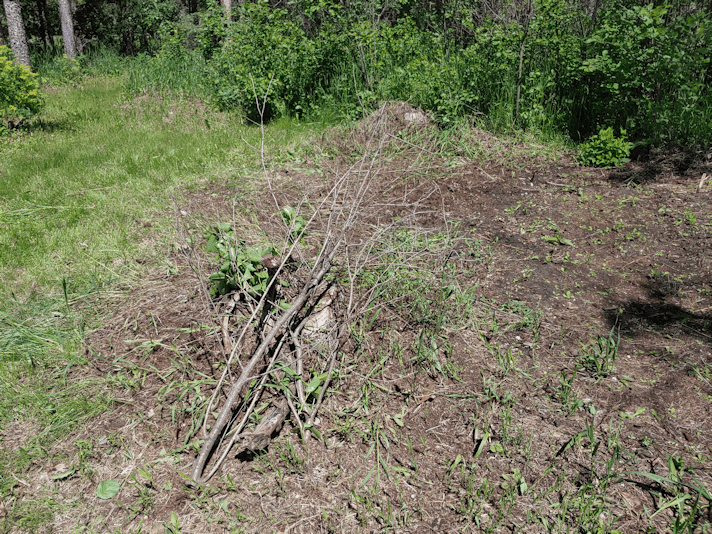
There’s also a mound of… soil? beside it. I’d like to get rid of it, but it’s got a layer of grasses growing on it right now, so I can’t tell what it’s actually made up of. The other mystery pile out by the barn turned out to be a pile of insulation. I’m kind hoping this one is something like gravel, or even just dirt.

The goal at this point, though, it just to clear access to the junk pile, then get back to clearing the space the outhouse will be built on, and start clearing out the sod.

I’m happy to have gotten at least a little bit or progress in there today!

The Re-Farmer
The crazy and the calm

Heading down to visit the kitties was certainly a wild and crazy ride, this morning!

The kittens were waiting for me.

First, I had to shoo away the cats from the door in the entryway. Then, when I opened it, Beep Beep was ready to rush through, which would have been fine, except Leyendecker dashed through, too. Turmeric was at the top of the stairs, too. She was just a bit more hesitant about actually going through, so I was able to keep her at bay.

Leyendecker managed to get through the door three times before I could finally close it. Meanwhile, Beep Beep had run back down, with David and Two Face making a dash for it, too. By this time, all of the kittens were on the stairs, and with the door closed, they decided my feet and legs were fair game.

They continued to attack my feet, jump up my legs, and try and eat my shoelaces, as I very, VERY carefully made my way around.

Once I started taking care of the food and water, they started to get distracted by other things, thankfully.

Not one stayed still long enough to get a decent picture! :-D

I was eventually able to get all the adult cats upstairs, which meant I could give the kittens some wet cat food, and they’d actually get some!

By the time I was done, I was more than ready for the relative calm of doing my rounds outside.

I just had to deal with hordes of mosquitoes. Which was an improvement. !!

Checking the garden plots, it looks like more cat damage to the one plot of carrots. We won’t be getting a lot of rainbow carrots this time around. :-(

The grape vine I accidentally clipped is starting to look at bit droopy, higher up, but the lower leaves still seem quite strong and healthy. Fingers crossed that it will survive.

While walking around the spruce grove, switching out the memory cards on the trail cams, has been interesting. I didn’t do a lot of clean up here, yet. Mostly, I just focused on clearing the fence itself.

The improved like has resulted in all kinds of things popping up.

These are Saskatoon berries, and there are SO MANY little tiny bushes growing, all over the place.

I will be keeping an eye on these new ones. When I was cleaning up, a lot of the larger ones were not looking very healthy. The drought certainly didn’t help. We do plan to buy Saskatoon bushes at some point, and plan out where to put them, but if these are strong and healthy, we might end up also transplanting some of these to better locations.

I had cut back the wild roses along with all the other undergrowth, quite a bit as we cleaned things up. I know they will grow back, so I’m not too worried about them. After we’ve cleaned things out, the wild roses and the dogwood are the two things I want to encourage as undergrowth in some areas.

Even with what little clearing we’ve done so far, we’re already getting more wildflowers.

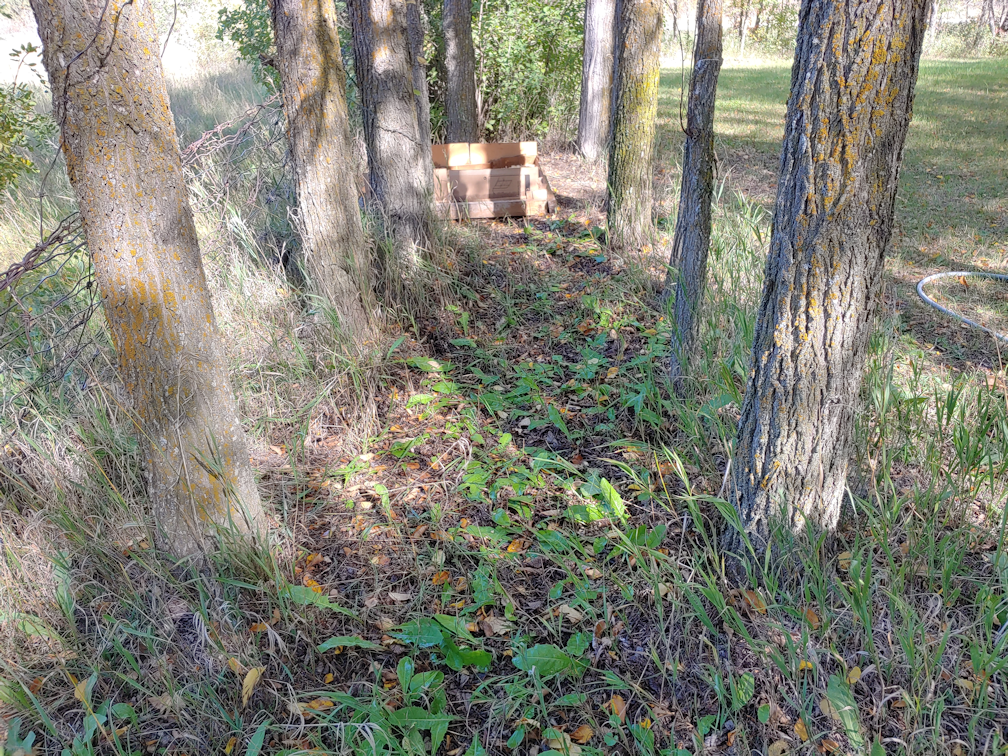
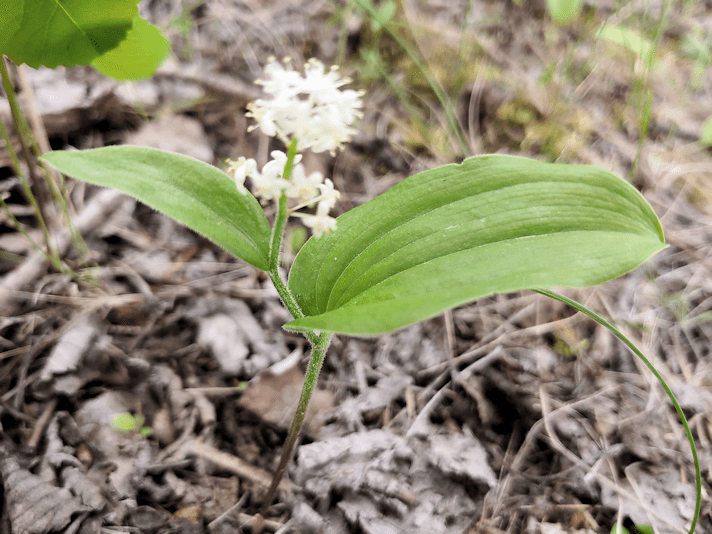
There are a few of these Lily of the Valley, scattered about, in between another one with sprays of white, star-like blossoms. My attempt at getting a photo failed, though.

The goal for the spruce grove is to open it up, get rid of the dead trees, plant some new spruces to replace some of them, have paths we can walk through, with grass or moss, areas of wild roses and dogwood, and lots of wildflowers. Here and there, I’m planning to put various types of seating around. Not boards nailed to logs, like I’ve been finding all over! Those don’t do well, over time.

But first, it needs to be cleaned out, and that’s going to involve a lot of hard physical labour!

And chainsaws. Definitely chainsaws. There are some pretty big trees that need to be cleared out of there.

I probably won’t be back at that today, though. It’s cooler, if not any less humid, and still insane with mosquitoes, but my husband is encouraging me to take a day off, and give my wrist more time to recover. The problem is, it feels pretty good. Right up until I start using it. I shouldn’t need two hands to pick up a glass to take a drink. :-/ His concern is that I’ll just keep re-injuring it. He has a point. We are both notorious for that sort of thing. I just hate wasting the time. :-(

We shall see how it goes.

The Re-Farmer