Our 2021 garden: building the first pea trellis

We had a beautiful warm day today – prefect for working outside!

Our peas are among the things that require the most preparation before we can direct sow them, so we decided to focus on building trellises for them. After looking over some design ideas, drawing some sketches and making some decisions, I headed out with my baby chain saw and rifled through the pile of poplar poles we kept after doing some clean up and testing out the cordless pruner.

That baby chainsaw made cutting poles to size very fast!

In the background are the support poles, cut to 6 ft lengths. The poles on the wagon are the cross pieces. I am short a few to be able to complete all the beds, but I ran out of medium sized poles. We are saving the bigger ones for the squash trellises, as they will have the most weight on them. The smaller ones will be good as stakes, but are too thin to be cross pieces.

I’ll just have to do more clean up and gather more poles! :-)

Our purple peas have the fewest seeds, so it got the simpler trellis design.

I started by laying out the support poles near where they will be set. Each bed will have 5 support poles, with the biggest ones on the ends, and the middles.

That rain barrel in the background is the one I patched up last year, to keep water at ambient temperature near our squash beds. We will need to fill it with water soon, so it doesn’t blow away! It’s going to take all our hoses put together, to reach that far.

After finding the centre of the first bed, I started digging a post hole – and immediately started hitting roots and rocks!!

I did drag over one of the post hole diggers we found, to try it out.

I’m pretty sure it has pieces missing. :-D

It can handle smaller pebbles, but roots and larger rocks were a problem. For some of the rocks, I had to get in there and bring them out by hand, because not even the spade could get them out. We only have one spade, and I don’t want to break it! We did have a second spade. The handle broke while I was digging holes for the haskaps. :-/

First pole is in!

The pile of rocks was later added to the top of the soil around the post. The soil that was put back into the hole and tamped down was a lot softer, and sank down quite a bit.

Shortly after that, my younger daughter was able to join me, and the rest of the poles went in much faster. :-)

Attaching the cross pieces was a bit of an issue. What I really would have liked to do was screw them together. There’s no way to do that manually, since we’d end up pushing the poles around in their holes. We don’t have enough extension cords to reach this area to use a corded drill and drill pilot holes. Our cordless drill is old and the batteries no longer hold a charge – and it’s old enough that the brand no longer uses the same batteries and does not make them anymore. Once we work out a solution, we’ll go back and put in screws.

Before adding the cross pieces, we measured and marked heights at the top and bottom of each support pole, then cut flattened spots on the ends of the cross pieces and at the marked areas of the support poles. When cleaning up the basements, we found a ball of old bale twine, so we used that to tie the crosspieces in place. That twine is really old, so while it’s holding surprisingly well right now, I expect it to disintegrate fairly quickly.

Once that was done, I used the twine to weave on strings for the peas to climb.

Which took quite a long time! The ball of twine was lots of shorter pieces. I kept stopping to tie ends together and make centre pull balls, to make wrapping around the cross pieces easier. I ended up using most of the ball, so we’ll have to find something else to use for the other trellises.

This bed is now ready to layer straw and soil down. We might even be able to find something usable in the old compost pile to add to the layers. We don’t have a lot of material that can be used to build over that grass, but anything is better than what’s already here! And we can deal with weeds.

It seems a bit much, to do all this burying of posts for a temporary garden, but wind is something we have to take into consideration. Hopefully, we were able to get the support poles deep enough that they won’t be blown over.

The other two beds will have double rows of peas planted in them, so the trellises we build there will not have the cross pieces at the bottom. Instead, we will put cross pieces about a foot away from the centre poles, at about the same height as these ones. Once these trellises are strung, they will form a sort of A frame, with each row having it’s own side of strings to climb.

When I was a kid, my mother always grew peas, but never used trellises. One of my jobs as a child was to flip the rows of peas, so that the sun could reach the other side of the plants. I do remember a lot of yellowed or rotted leaves when flipping my mother’s un-trellised peas. This would have been due to lack of sunlight in the bunched up plants, and contact with the soil. There was likely fungal issues, too, but as a child, I wouldn’t have recognized it for what it was. It worked, and we always had lots of peas, but this will be healthier for the plants, and should result in better yields.

While I was working out here, I was able to hear people out and about, walking on the road, etc. The old house across the road from us has no one living there, but the current owners come out regularly. It was so wonderful to hear the voices of children, playing outside! At one point, I was even visited by a very friendly little dog. The only down side was having our vandal come driving by on his ATV, very studiously avoiding looking our way and pretending to be doing something else other than creeping on me. As if his driving over, turning around and going home again wasn’t making it really, really obvious. :-/

We definitely need privacy screens! The corn and sunflowers will help, once they’re tall enough, but when we clear the fence line so we can repair the fence, we’ll be removing what little screening we have in that area right now.

For now, I’m rather pleased with our “rustic” pea trellis. Not too bad for something made of completely salvaged materials!

The Re-Farmer

Our 2021 garden: killing grass, and first one!

While doing my rounds today, I brought out one of our black tarps and headed over to where we will be planting the Montana Morado corn.

None of our corn can be planted until well after our June 2 last frost date. Covering this area now will give us about 5-6 weeks to kill off the grass as much as possible, before the corn can be planted. There’s a lot of crab grass around here, so I don’t expect to kill those off completely, but we should be able to pull up a lot of the rhizomes later on.

The Montana Morado is the only corn we will be starting indoors, as we are not sure how well they will grow in our zone. If things go to plan, we will save seeds from these and, over the years, it should develop hardiness to our local climate. But first, we have to get a successful crop! I’m really looking forward to how these turn out.

Of course, while continuing my rounds, I checked the areas where we planted in the fall. There are more tiny little muscari showing up, as well as the snow crocuses. This was my morning surprise, though.

The very first of my daughter’s tulips has emerged! So exciting! The tulip bulbs they planted here needed to be buried quite deep, and heavily mulched. While they need cold winters, we didn’t know if they survived the extreme cold we got in February. If they had been established, I would not have been concerned, but this is their first winter after planting, and they were more vulnerable. Hopefully, this means we will be seeing the other tulips, and the irises come up soon.

We did see something coming up that we thought might have been an iris, though my daughter didn’t remember planting that far out. It turned out to be an onion! When we moved here, the old kitchen garden had a fence around it, and my mother had some onions just outside the fence line. One or two have been coming up every year, but they never reach full maturity before dying back, so I’m really surprised to see one coming up.

It makes me think about transplanting our bulb onions in the sun room soon. The ones started in the Jiffy pellets are getting really big. :-) We still need to add soil to the beds those will be going into, though, which means I should probably start hardening them off now.

We’re going to have an awful lot that needs to get done, all at once, pretty soon!

The Re-Farmer

Our 2021 garden: marking spaces

After working things out and making some decisions on where we want to plant things, we are ready to mark out beds in preparation for planting. We have seeds than need to be direct sown before our first frost, and those are the areas we want to focus on.

We’d decided to mark off blocks at 20′ x 20′ (about 6m x 6m) for the corn and 20′ x15′ (about 6m x 4.5m) for the sunflowers, and then make 3′ x 8′ (about 1m x 2.5m) beds for most of the rest.

With that in mind, I figured the easiest way to mark off blocks would be with knotted cord. I used 2 lengths of paracord with a loop at one end. From the loop, I tied knots at 3′, 8′, 15′ and 20′ We have a bundle of small marker flags, and I grabbed those to mark the corners of the plots.

The first thing I did was mark off a 20′ x 20′ block in the furthest corner, from which everything else would be lined up.

I decided to start the rectangular plots roughly 4′ (just over 1m) away from where the corn will be. Once I started marking off the first one, though, I quickly threw away the idea of making them only 8 ft long. For this space, that is just minuscule!

I made them 20′ long, instead.

In the above photo, there are 4 plots marked off, with 3′ paths between them.

I added 1 more and ran out of flags, so I used a stick from the pile of branched I’d pruned a few weeks back.

Then I went back and made more marker sticks. We’ve got the bright orange marking paint, so I used that on one end of the sticks so they would be more visible.

Using the two knotted ropes to find where to place the markers worked really, really well. With the looped ends at markers or flags, lining up the knots to find the next spot to mark also made it easy to keep straight lines and right angles at the corners. It’s not perfect, of course. The rough ground alone made that impossible. They don’t need to be perfect. All of this is just temporary, anyhow, until we plant trees here.

I took the time to make more markers from sticks, spraying one end with the bright orange paint, then made another row of plots.

This is how it looked when I was done.

Yeah. I know. Hard to see!

So I edited it to as close as I could match the lines.

The big block by itself is where the corn will start. It’s hard to know how much space we’ll actually need, but at least we have the general area worked out.

With just the rectangular plots, this is an area that’s 15′ wide and 66′ long (about 4.5m x 20m), including the paths in between.

We will be marking more of the rectangular plots, as well as another corn block at this end.

Our three varieties of bush beans will be planted in the plots nearest the corn, though I’m already rethinking that. The peas, which need to be planted right away, will need to be trellised, so they need to be to the north, so they don’t shade other plants. We have only 2 varieties, but one of them is a bag of 200 seeds, while the other is a typical seed envelope, so having two sections of the green peas and one of the purple should work out. The three varieties of beans can take the next three sections.

The actual dimensions of the area, compared to what we thought we had on the satellite image, means we’ve got three plots at the end that does not have anything specific planned for them. It’s hard to see in the photo, but even the furthest plots are still far enough away from the apple trees that they will still get full sun.

We’re out of cardboard, and we’ll be running out of straw very quickly. It’s going to be a challenge with all that grass, until the plants fully mature. By planting densely, they should shade out and choke out the grass and weeds. When we do add the soil, we will have to be careful in how we use it, or we’ll run out very quickly! One of the things to keep in mind, as always, is that this is meant to be temporary. When it comes to food trees, they take so long to reach productions stage, we really need to get those planted quickly. If we can swing it next year, that would be amazing, but even if we can only afford to do a few a year, rather than a whole nut orchard, all at once, that will be a good start.

Until then, we’ll be breaking up and amending the soil with vegetables. :-)

The Re-Farmer

Catching up on this morning

Things went in unplanned directions this morning!

But first, the fun stuff. :-)

We have the handsome Ginger to greet us! He’s been quite the character, and a lot of fun. :-)

The outside cats were happy for breakfast. :-)

We finally took the tarp off the top of the kibble house. We got some rain yesterday; enough to soften the ground a bit. It should be fine until we get some paint.

My daughter wants to paint it yellow. !! Not a bright lemon yellow or anything like that, thankfully. :-D

The girls and I removed most of the mulch from the garlic beds the other day, and uncovered many more sprouting garlic. Most were a bit on the yellow side, since they hadn’t worked their way through the mulch to the light, yet, but they are already looking nice and green and strong.

We moved the mulch over to the new bed, then covered it with a sheet of metal we scrounged from the outer yard, so the wind wouldn’t blow it away. We will have to build a box around this bed. At this point, if I add soil to the top as planned, it’s high enough that it’ll just fall off on the sides. I think we have some scrap wood in the barn we can use for that. It’ll be temporary, so it doesn’t need to look fancy or anything! :-)

After doing my morning rounds, I had some calls to make. One of them was to the court office about the restraining order I applied for against our vandal. The last time we had a court date, everything had been cancelled again, due to our province’s extended restrictions. I was told everything was deferred to after April 23rd, and to call around them. Well, that was on Friday, but I remembered too late in the day, so I called today.

The person I spoke to told me that they were holding court sessions now, and that I have a court date on May 21st. She wanted to check something, though, and said she would call me back.

Which is when I found out that the file had actually been in court on Friday. Our vandal was represented by a lawyer. The court offices informs the lawyers when things change, but people who don’t have representatives have to call themselves to keep updated. :-/

Nothing came of it, other than the new date, and it’s just on the morning docket. It will likely go to a trial date after that. One of the possibilities she said that might come out of it is a mutual restraining order. He stays away from us, we stay away from him. Before our move, I was in a situation where I agreed to one of those, and I regretted it. The type of restraining order I applied for would mean our vandal would have to stop drinking – and provide proof of that regularly – and have his guns removed. I believe his drinking has a lot to do with his behaviour. He often sounds drunk in those bizarre messages he’s been leaving with my mother. I would hope if he were at least sober, he might finally get the help he needs. It would, however, drag things on longer. His having a lawyer, and our not being able to afford one. I have LegalShield, which gives me free, unlimited phone consultations, among other things. If I need a lawyer to represent me in court, I would get a discounted price, but we don’t have the funds to spare to begin with, so that’s a moot point. I’m not going to let what he’s doing to us financially ruin my family, even if he’s willing to financially ruin himself, apparently. He has no defense, really. About the only thing a lawyer can do is drag it on. That’s just going to cost him more money – and he’s already said that he’s willing to sell his farm and be homeless, so he can sue me, my mother and my siblings.

I wonder what his wife thinks of that. :-/

Anyhow.

After that, there was an unplanned trip into town, and then a stop at the post office. We crossed paths with our vandal in the process, but only passing him on the road. I could see him well enough to tell that he recognized our vehicle, too. He lives near enough that, when I was working outside later one, I could hear him and his chainsaw, as he cut wood.

A part of me wonders how it would work out, if he really did follow through with his threats. He’s already got his silly suit against me, wanting me to pay him for things that aren’t his, and that I don’t claim to own in the first place. What can he do by going after me? We own nothing, so we have nothing to lose. He’s the one willing to bankrupt himself. And if he does end up selling his farm to pay for lawyers, well… we won’t have him living so close and creeping through the bushes from the road, and whatnot.

What a mess.

Whatever happens, happens. We’ll deal with things as they come.

Once at home, though it’s been a pretty chilly day, I did get to start on one project outside.

That, however, will get it’s own post!

The Re-Farmer
Our 2021 garden: unplanned garden bed

My daughters and I have spent quite a bit of time, working out where to plant what, so we know where to build beds to plant in. Then I realized we completely forgot about the purple asparagus crowns that will be shipped later, to arrive at time of planting in our zone 3 region.

We’d talked about them before, but hadn’t made any decisions. Where my mother had asparagus was ruled out. She’d planted trees and bushes in that garden, so that area no longer gets enough hours of sun in a day. Asparagus will produce for up to 20 years, so we couldn’t include them in most of the areas we will be planting in this year.

After talking about it, we settled on a spot where we had not originally planned to have any garden beds at all this year.

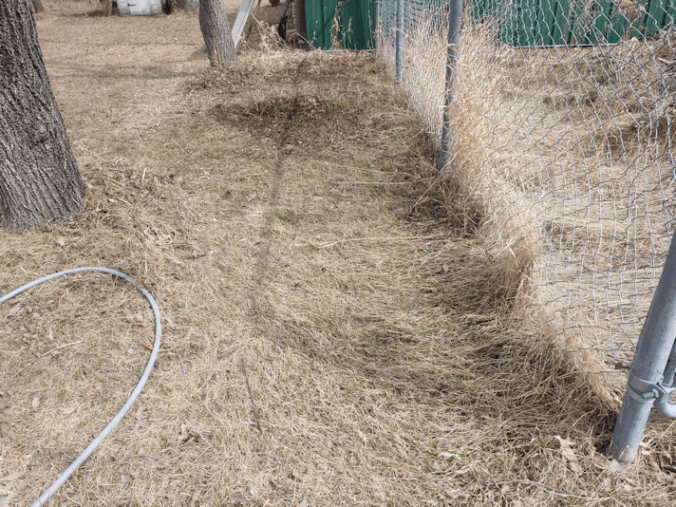
This is the spot we settled on, after I’d raked it out.

Part way down is where there used to be one of my mother’s tire planters that I’d taken out. I’d dumped the soil out to remove it, and found it was on top of the remains of an old maple.

I know it was an old maple, because it immediately began sending up suckers.

I had covered it with the soil inside the planter as much as I could. The flowers that were in that planter have been showing up, which was nice to see at least. :-) Much of this area is difficult to maintain, though. So now we will be planting two things here. At the far end, on the other side of the remains of maple, is where we will be planting the Strawberry Spinach. In reviews on the Baker Creek website, where I bought the seeds, it was mentioned that these self seed easily, and it was recommended to plant them in a permanent location because of this. That was kept in mind when we chose this location.

In the foreground is where the asparagus will go. For that, we will need to dig a trench long enough for the 6 crowns we will be getting.

Digging a trench here is going to be a challenge.

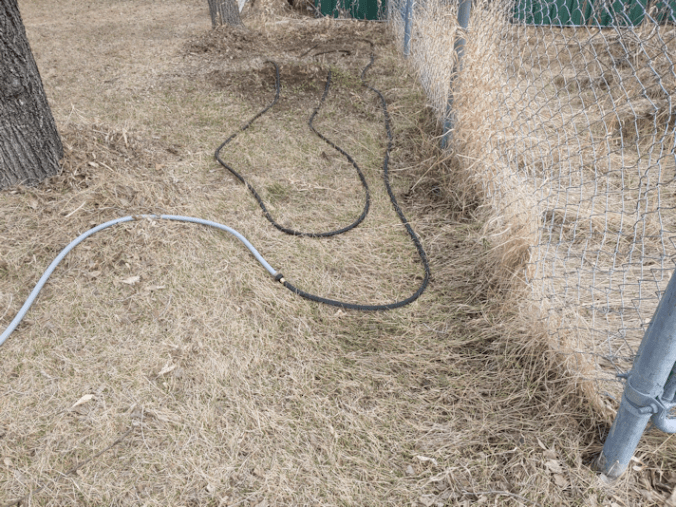
So today, I set up the soaker hose directly on the ground to start. Saturating the soil will make it easier to dig the trench.

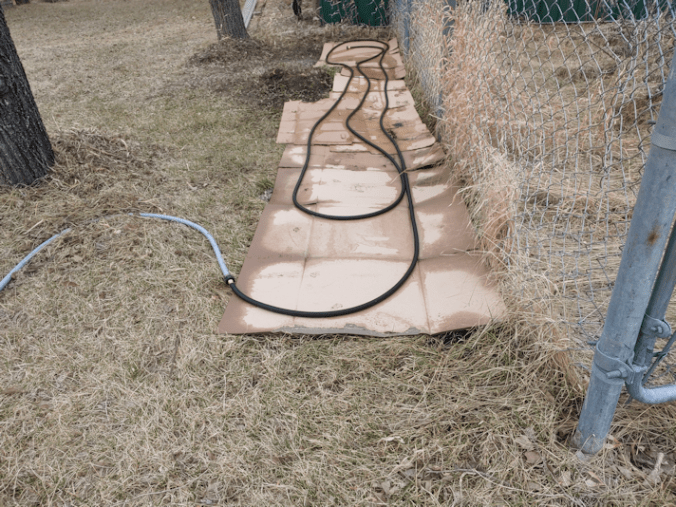
While that was soaking, I prepped as many cardboard boxes as I could find, removing any tape or stickers on them.

My daughters helped me to lay the cardboard under the soaker hose, and we left it running for a while as we checked other areas. The rain barrel was full, so we used it to fill our watering cans and wet down the cardboard more, and finally just left the soaker hose going for about an hour. The above photo is what it looked like when I turned off the water.

(We are now out of cardboard. :-/ We do still have some moving boxes left, but they’re in really good shape, so we’re saving them for something else.)

We were planning to put straw over the cardboard, too, but it was way too windy today. We have several weeks before the asparagus crowns will arrive, so covering the area now will help kill off the grass, as well as make it easier to dig a trench, later. We’ll just have to keep soaking it. Where the Strawberry Spinach will be planted can have mulch and soil added to it at any time.

I’ve been looking at instructions for planting asparagus, and some places say to dig a trench 15 inches/38cm.

That’s not going to happen!

Those articles, however, also say to fill the bottom third of the trench with compost. We don’t have compost left.

Other articles say to soak the crowns in compost tea for 30 minutes before planting.

Since we don’t have compost to make compost tea with, that’s not happening, either. Our new garden soil, however, has plenty of compost in it.

I’m reading that the crowns should be planted 1 1/2 – 2 ft/46-61cm apart. We will be getting 6 crowns. That space isn’t long enough to plant them in one long row, but it’s wide enough to plant them in 2 rows, so we’ll need to made a double wide trench – about 24-30 in/61-76cm wide. A depth of 8 inches/20cm should be good, but we will be building the area up, so we won’t need to go quite that deep. I don’t know if we even could go any deeper, with the trees being so close. I expect to find a lot of roots under there. By the time we’re done, this area should be about 4-6 inches/10-15cm higher than it is now, so all we really need to do is get rid of the top layer of grass roots.

Hopefully, we will be able to remove more of that tree stump and cover the remains over, in the process.

Once it’s done, we should be able to leave things here and just keep them maintained, for the next couple of decades.

The Re-Farmer

Filthy felines and seedling surprise

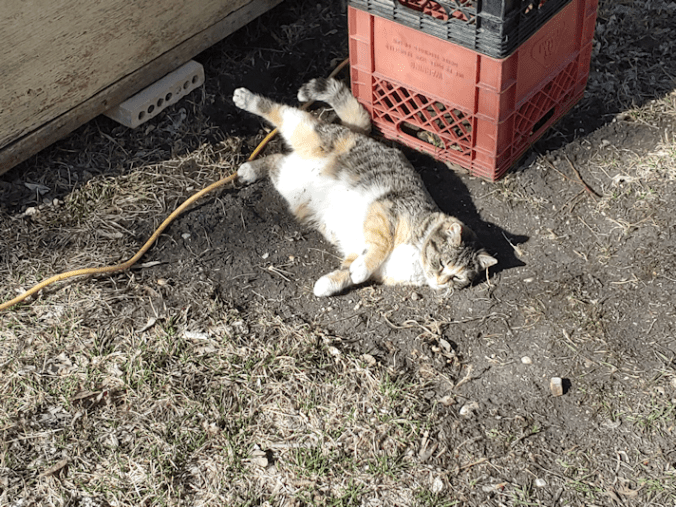
It was a gorgeous day to do our morning rounds, and the yard cats were taking full advantage of it. :-D

It’s a good thing we’re not trying to keep the grass alive around the cat’s shelter. :-D This spot is where a smaller old dog house was, when we first moved here, and the cats roll around in the spot so much, no grass or weeds are growing into it. :-D

As you can see, the based of this linden tree is another favorite spot they like to roll in!

They get so, so filthy! Enough to turn and orange cat black! :-D

In other things, I found a nice little surprise this morning.

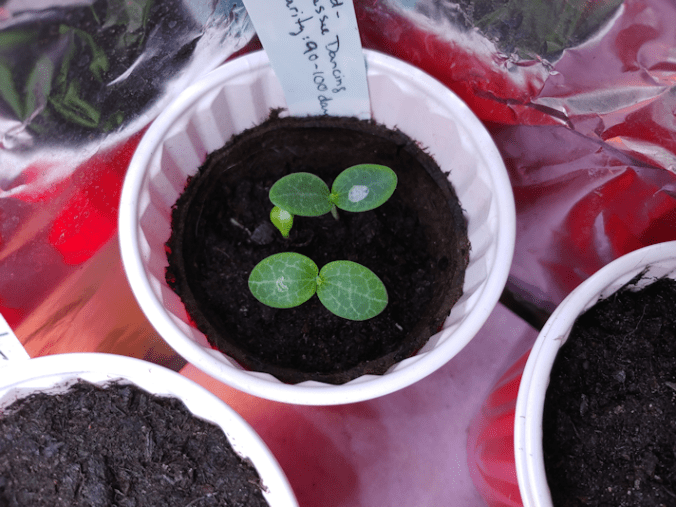
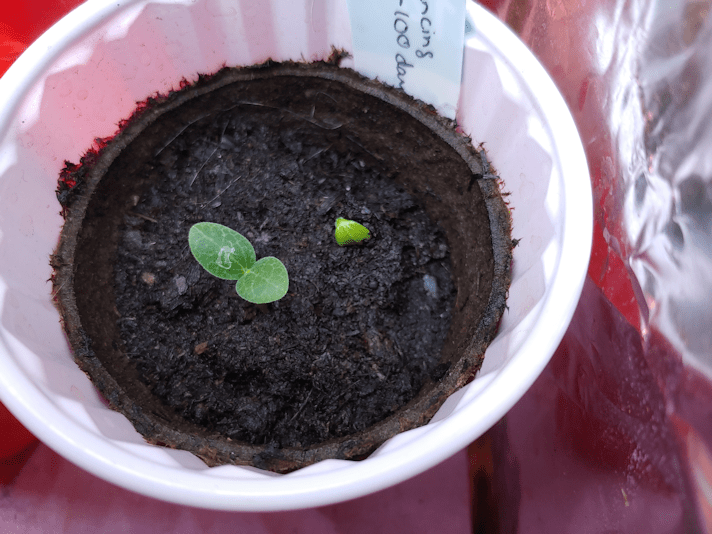
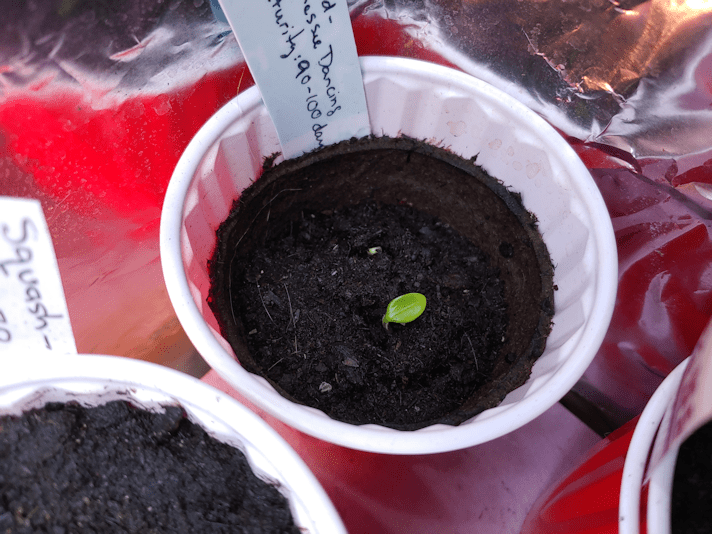
The third dancing gourd seed has sprouted!

I honestly forgot how many seeds I planted in there.

The main reason we used peat pots to start the gourds is so that we can just bury the pot into the garden and reduce transplant shock. Which means thinning out the seedlings. The problem is, most of the seedlings we’ve got so far are looking really strong and healthy! Among the luffa, there’s really just one sprout that is smaller and would be thinned out, but the rest are doing so very well! I want to plant them all! :-D

We’ve got over a month before we can transplant any gourds at all, so we’ll see how they are and make decisions then.

The Re-Farmer

Our 2021 garden: Soil test on purchased soil and tending tomatoes

I finished testing samples of the new garden soil this afternoon.

I was interrupted by scrabbling sounds behind me.

Saffron looks so adorable!

She is also a vicious beast. ;-) Her favourite thing it to suddenly launch herself across the room, onto whichever human is passing by. She typically lands about half way up, and then starts sliding down.

Which can be very painful! She is very sharp, and rather clumsy. :-D

Anyhow.

Here are the test results from the purchased garden soil.

The nutrients are nice and high, all round – and so is the pH! Most of what we are growing recommends a pH of 6 – 6.5, so we’ll want to look into increasing the acidity a little, if we can.

Today, I decided to “pot up” the tomatoes. It feels strange to do that, since they are so tiny, but they are also tiny varieties of tomatoes! ;-)

We planted 4 double cups of each variety, but I worked with only three each. Of the Spoon tomatoes, there’s one cup where nothing at all has germinated. Of the Mosaic Medley, one cup as a single seedling in it, and it’s quite small, so I left it.

I’ve never grown tomatoes before, so I looked at a lot of gardening resources before deciding to plant them in a small amount of growing medium in the larger cups, rather than Jiffy Pellets or tiny pots, so as to add more soil as they grew bigger, rather than transplanting them from small to larger pots.

After the soil was added, they got a careful, but large watering. I left them to drain for a while, emptied the lower cups and left them to drain some more. I wanted to ensure the added soil was completely dampened, through and through. I’m hoping this will give them a nice growth spurt. :-)

The overnight temperatures in the sun room are getting much nicer, so we will be able to move things out of the aquarium soon. Over the next while, we will be starting all the summer and winter squash. We’re going to need the space! :-D

Something else on the to-do list:

Having worked out where we will be planting things (which is always subject to change until the seeds are in the ground!) and, more or less, what dimensions we’ll need, my daughters and I need to start measuring out, marking out and preparing garden beds. Some things, like our two varieties of peas, need to be direct sown well before the last frost date. They are going to be near the corn, which isn’t supposed to be planted until well after the last frost date. So we’ll need to mark out the plots and start prepping them. We’ve decided to make most beds at 3′ x 8′ (roughly 1m x 2 1/2m) for ease of access and denser planting. Ultimately, we have no idea how many of these we will need, until we actually start planting. Some varieties had packets with a LOT more seeds than others of the same vegetable type, and some were packed by weight, so we won’t know how many seeds there are until we open them.

We’re finally getting close to when we can plant things outside! Yay!!!

The Re-Farmer

Soil test; finishing first sample, starting the second

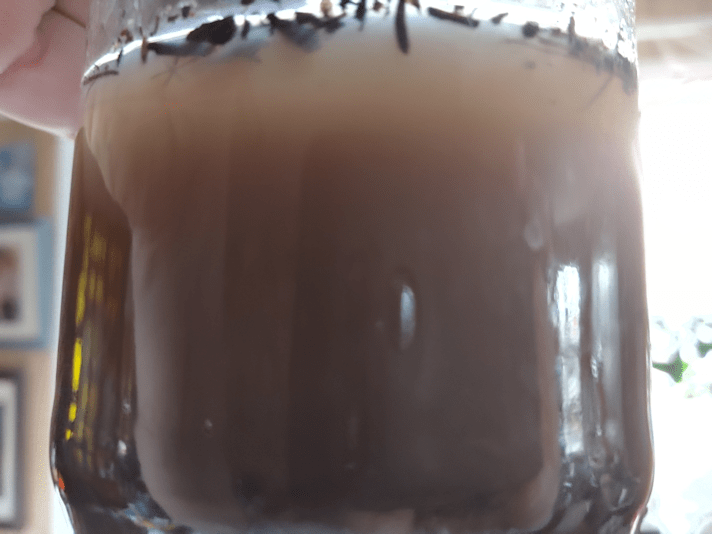
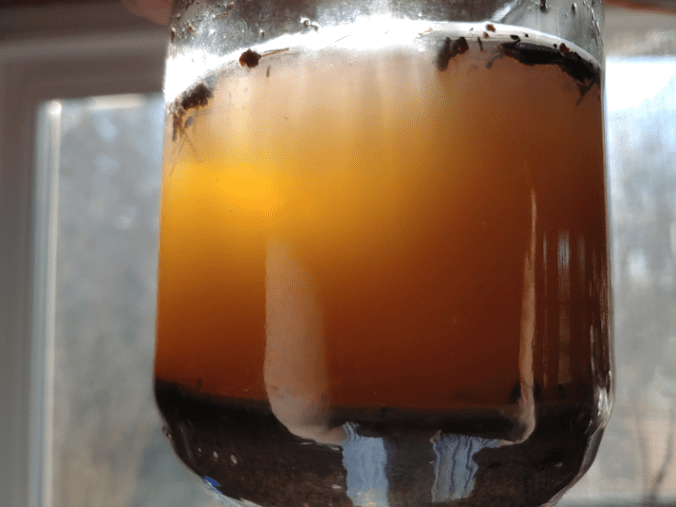
I left our first sample’s water and soil mixture to sit overnight again, and this is what it looked like this morning.

This is with the morning light behind it. Still very opaque, after having more than two days to settle!

Also, very orange with the light behind it! The soil in this area does have a reddish cast to it, overall, likely due to so much decomposed wood in it.

Here, you can see the layers pretty clearly. The colours look wildly different from this angle!

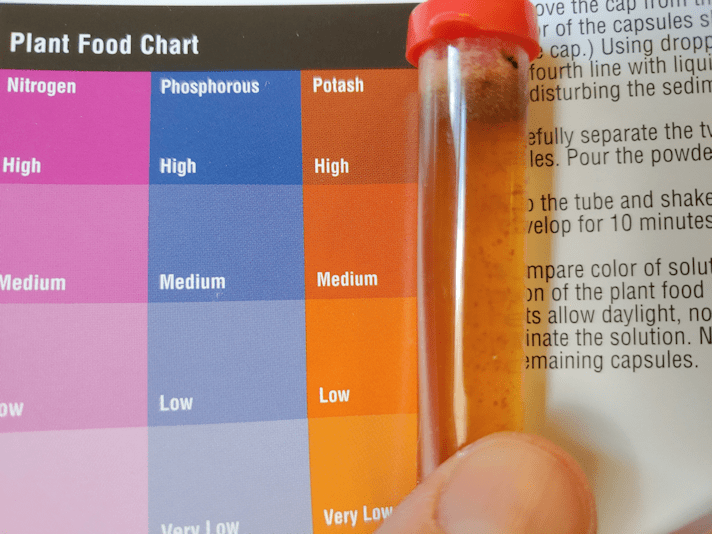
I went ahead and started the tests for nitrogen, phosphorus and potash, then got a sample of the new garden soil started in the water for later.

Emptying those capsules into the test tubes is quite the pain. You’re supposed to be able to just open the gel caps, but they don’t come apart. I ended up having to snip them, but that sends powder flying, no matter how tiny the snip!

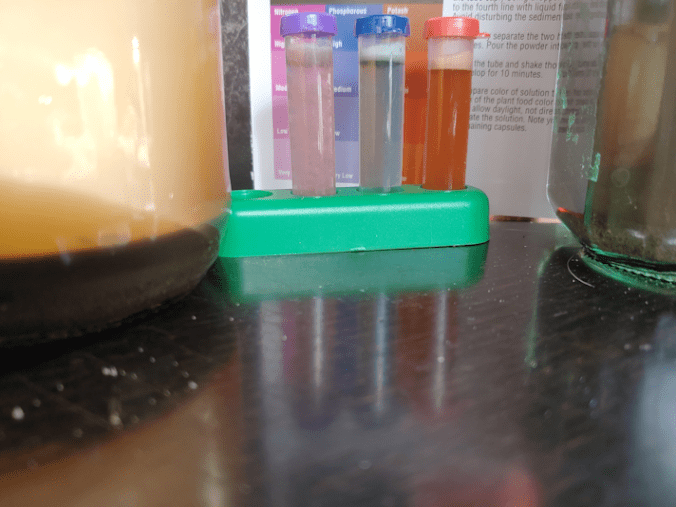
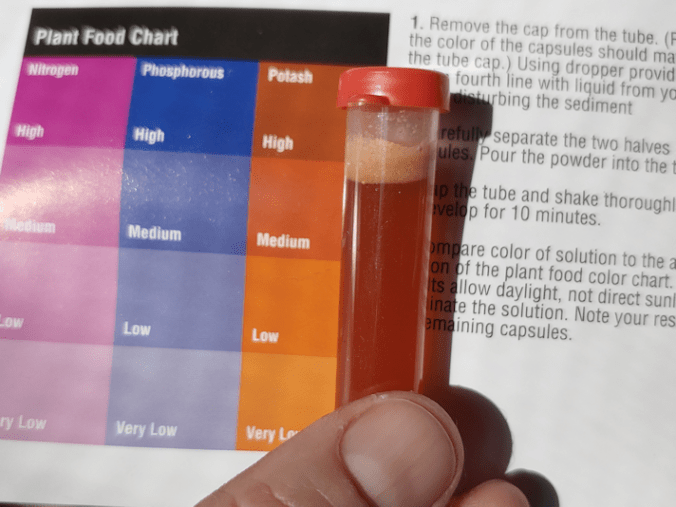
This is after just a minute or two after mixing. They needed to sit for at least 10 minutes.

And here they are!

Keeping in mind that this soil sample is from an area that has been buried under wood for decades. The only things growing in it were things that could force their way through the pallets, like the cherry trees, some poplars, crab grass and other weeds. This specific spot included the pallet fence on top on top of it, which has a number of little trees growing through it.

Last year was the only time any amendments were added, and that was in the from of a mulch of grass clippings. I did use some Miracle Gro fertilizer on the garden beds we had last year, applied with a garden hose, but the area this sample was taken from was where we had tried to plant kohlrabi, which did not succeed, so any fertilizer this area got was from whatever mist that happened to blow over.

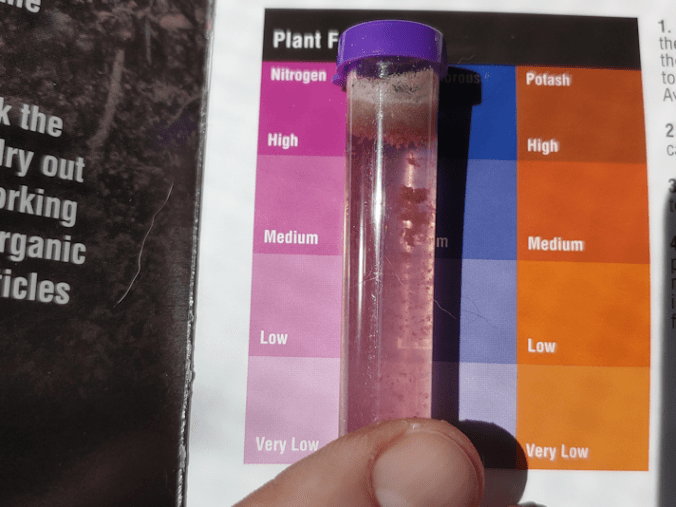
I’m actually pleasantly surprised. It’s a bit on the low side for nitrogen, more of a medium for the phosphorus, and medium – almost high – for the potash. (Note: the colours show up slightly different in the photos than in real life.) It’s a lot better than I expected for soil that has been in the conditions this soil has.

Here is the second sample, after settling for maybe half an hour. What a difference between the purchased garden soil, with its 5 part blend of compost, manures and sand, and the first sample!

I’m actually going to hand on to these after the next batch of tests is done, to compare with the next sample. I should probably do at least two more tests; one from the beds we used last year, and one from an area that has never had any garden in it, that we will be planting in this year. Those should be very interesting!

I need to find more jars I don’t use for food! :-D

The Re-Farmer
New baby sprrrooots, and soil testing status

We have gourd sprooots!!

Yesterday afternoon, I spotted these.

These are the Tennessee Dancing Gourds, and they are the first of the gourds to sprout!

This is how they looked this morning! So awesome, to see how much they grew in less than 24 hours!

I’m hoping this means we’ll start seeing some of the other gourds sprouting soon, too. :-)

I also checked on the soil sample that was left overnight to settle.

Hmm.

It looks completely unchanged!

The instructions said that soil heavy with clay could take 24 hours to settle, but… I don’t think that’s clay. I think it may actually be organic material.

With how long this is taking, I think I’ll find another jar and test the next soil sample while this one continues to sit.

But not right away.

My older daughter got a call back from the tax preparer. They can’t log into her file at Canada Revenue. Like with her sister, it’s telling them there’s something wrong with her name. We have no idea what that could be. We’re going to have to call up Canada Revenue again. I’ve found a directory, and the numbers all have wait times listed. The number we need to call has a wait time of just over 2 hours.

So we’ll be taking turns monitoring the phone while on hold.

Again.

The Re-Farmer

Soil tests, first area (with technical distraction)

Before I get into this post, I just wanted to add that this is my first post written using the SeaMonkey browser. It’s also the first time I’m actually using the browser, yet I’m already seeing a HUGE difference while working in the WordPress editor. Everything is loading SO much faster. The image uploads, the block editor, everything. I’ve just opened a whole bunch of blogs I follow in new tabs, and not a single one is showing the weird colours, not a single image has failed to load, and when I scroll the bottom of posts, everything is loaded. Including the “like” button which, frustratingly, was often the one thing that would fail to load, even as the rest of the page would load. I have yet to try and leave a comment anywhere, but I’ve uploaded media, including directly into this post, without a single problem. I had been using Mozilla Firefox for this blog (to keep is separate from my personal stuff), and it’s been really awful. SeaMonkey is like Mozilla Netscape, and it works a dream, so far! Many thanks to The Hinoeuma for telling me about it!

And now, back to our regularly scheduled post…

I broke out our soil tester and began with a sample from the newest garden bed. This is soil that was under the old wood pile. You can read about that massive clean up job, here. Under it was the only soft soil we had!
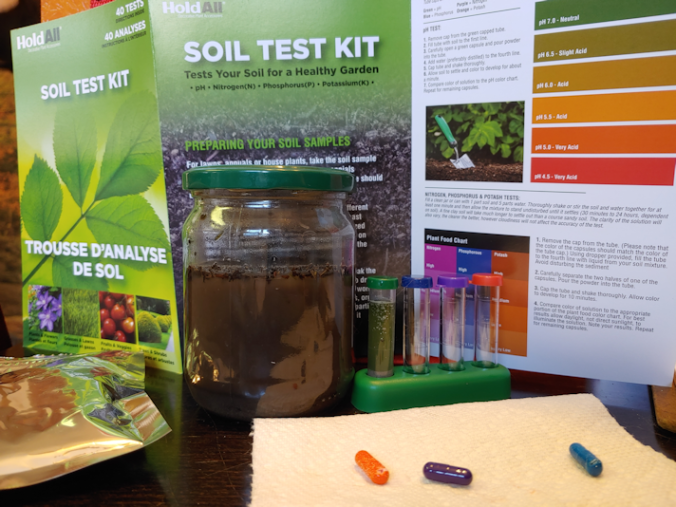
The soil test kit I have is from HoldAll Decorative Plant Accessories, and this is our first use. It has the supplies to do 40 tests; 10 each for pH, nitrogen, phosphorous and potash.

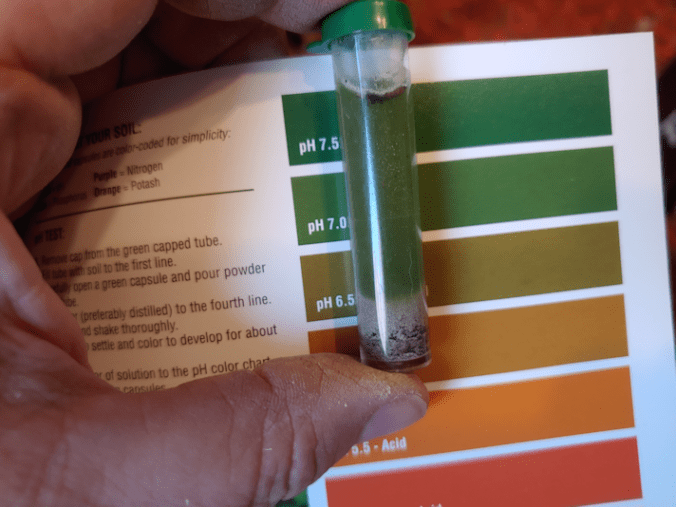
The test of pH is the quickest; soil gets put directly into the test tube with the contents of a capsule (all are colour coded), shaken, then allowed to sit for a minute. The other tests required a soil sample to be mixed with water at a ratio of 1 part soil to 5 parts water, so I started that first. Though only the pH test could be done right away, I readied the capsuled for all the tests, so I wouldn’t have to go into the mylar bag again.

I had just finished setting the pH sample in the test tube holder when something large and white caught my eye through the window.

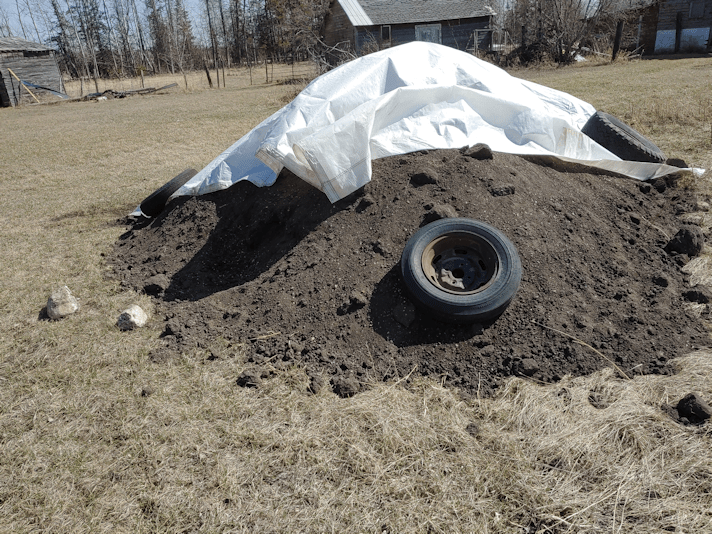
It was the tarp over the load of garden soil in the outer yard, blowing around!

A daughter and I dashed off to get it before it blew away.

The wind has only been picking up! I don’t think I’ll be moving soil onto the new garden bed today. :-(

We fixed the tarp, adding more rocks and even a tire rim onto it, to keep it from blowing away.

Then we came inside, and I found three cats on the table, going after the remaining three test capsules!

They were licking them, and the gel capsules were starting to dissolve. :-( I don’t think any of the powder was ingested, though. They are now sealed in a container.

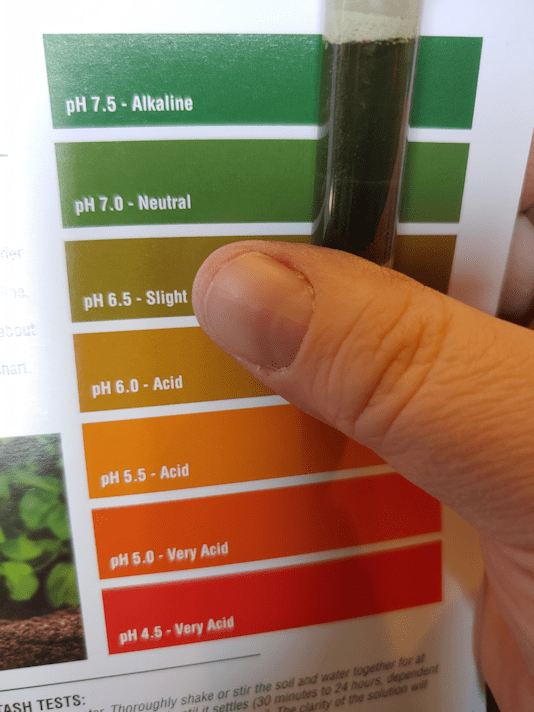
The pH test had more than enough time to be ready, but the water and soil mixture will need a lot more time! The instructions said it could take anywhere from 30 minutes to 24 hours, depending on how much clay is in the soil.

The soil in the new garden bed came up as neutral. We have a soil meter that is simply stuck into the ground that reads sunlight, moisture and pH. It had been used in the area that now has garlic, and read at about 7.5, so this was pretty much what I was expecting. Most of the things we are planting do better in a slightly acid soil – about 6 – 6.5 – but what we planted in this area last year did pretty good anyhow.

As I write this, the soil and water mixture has been sitting for more than an hour, and is still totally opaque! From the looks of it, it may need to stay overnight.

Meanwhile, I’ve already gathered a sample of the next test I want to do: the new garden soil! I suppose I could do a pH test right away, but I’ll wait until the other three tests on this first sample is done, first.

Testing the soil in the old garden is going to be a challenge. The samples are supposed to be as free of rocks and organic matter as possible.

Ha!

We’ll see how close to that we can manage!

Meanwhile…

As I was working on this post, I got a phone call from my mother. After a while, she asked what we’ve been doing, so I told her about the new garden beds. I tried to describe to her where we put the new bed for the tomatoes, and made the mistake of starting with, “you know where your yellow flowers are?” She immediately launched into “you mean you destroyed my flowers!!” I had to stop her and tell her, “wait, no… you know that space between those flowers and the chain link fence?”

I honestly think my mother forgets that the chain link fence even exists at times! It took her a while before she realized I was talking about the grassy area. Which confused her even more, because nothing was ever grown there, and how can I plant without plowing the soil first? Or at least tilling it? So I described to her what we did with the layers of cardboard, straw and soil. Once she knew our garden soil was delivered, that helped, but she still accused me of killing off her flowers again! Then she brought up the shade of trees, and I told her we only had to take down the one tree that was killing her lilac, anyhow, and that we picked that spot because it will get full sunlight now.

She still had a hard time understanding that we’re planting anything on that side of the house, in the yard, and was all, “so you’re letting the garden go to weeds again”, meaning the area she used to garden in. I told her no, we’re going to be planting all sorts of things there. Without plowing? Yes. Without plowing.

That lead to a whole lot more explaining of things, even though we’ve had this conversation several times, now. She has the hardest time with the concept of no-till gardening. It’s just too wrong! :-D

At least this time, she ended by saying, when everything is in and growing, we need to bring her over so she can see it! :-D So that’s progress, at least! She certainly wasn’t impressed by what she saw last year, but we’ll see how it goes this year. I’m sure she’ll find lots to be angry about! :-D

I didn’t even try to explain to her about the soil testing, though. Maybe another time. Us planting in an area she never planted in was already pressing her limits! :-D Which is funny, because she would stick little gardens in, or plant trees, all over the place. Some of them in places that are now very difficult to work around! :-D So it’s not like I’m doing something she hadn’t already done herself.

One thing that was funny was when we talked about starting things indoors, and I mentioned needing to start squash. She asked if we were growing zucchini, and I told her yes, in green, yellow and a different green, plus the bright yellow round squash (the pattypans) that I’d given her last year. Oh, those are just toys! she tells me. :-D I reminded her that we find them quite delicious!

Hmm. Now I’m suddenly wondering. Did she eat the fresh pattypan squash I’d given her? Or did she get rid of them, because they were too new for her?

I don’t think I want to know the answer to that. :-D

As we talked more about starting things indoors, she had the hardest time understanding that yes, we already have tomatoes started from seed. I think she was disappointed that she couldn’t chastise me for not having them started already. :-D

Talking to my mother about this place can be very challenging! I don’t think she forgets that she doesn’t own it anymore, but she still wants to control everything that is done here, including things she doesn’t understand (if only because my dad and brothers took care of them for her, over the years). I try to respect her wishes as much as possible, but our job is to take care of the place, not keep it in stasis. It’s slowly working out, though. It just takes a lot of explaining, sometimes! Or, in some cases, not even bringing them up.

Like testing soil. I’ll bring that up only if we have a lot of time for me to explain things in ways that make sense to her. It’s not so much that she isn’t aware of some things; it’s more likely she’s never encountered the terms to describe them before.

It’ll work out. It’ll just take time and patience!

The Re-Farmer