Garden layout plans

Having received shipping confirmations for the seeds we ordered, the girls and I have been talking about just where we are going to plant what we’re getting, and what we need for what we’re getting.

In the two years we’ve been here, we’ve been working at reclaiming neglected spaces before we could even consider planting anything. The area where there used to be a huge garden has had more and more trees planted into them – without adequate planning, unfortunately, and causing a lot more shade areas I remember used to get much more sunlight. We currently have some spots here and there that we will be able to plant in, rather than one big vegetable garden, like my parents had for so many decades.

This is what we’ve come up with.

At the top of the sketch is the area we mulched over, then covered with tarps, last summer. This is where we will be planting the varieties of squash we’ll be getting, and the birdhouse gourds. The two giant varieties of sunflowers will be planted in a part of the old garden that I was finally able to mow last year. It’s more lawn than garden now.

The house is where the happy little gardener is standing. On the left is the old kitchen garden. This had been mostly a flower garden, though my mother did plant some onions there. The trouble with this location are the two ornamental apple trees. Still, we’ve already got chives and onions planted overwinter in the chimney block retaining wall. In the rest of the blocks, and in the area against them where I’d been able to add some soil to try and reduce the slope away from the house, is where we will plant fennel, and some of the varieties of carrots and beets we’ll be getting (we’re getting three varieties of each). The other area carrots and beets will be added is in the soft, deep, loose soil uncovered when we cleaned up the old wood pile area.

We’ve decided to set up the remaining chimney blocks along the chain link fence, between the fence and the white lilac bushes. Right now, there is an area of lawn just wide enough to get a mower through, but it would be great to not have to squeeze through there with a mower at all, and use the space to grow cucamelons. The chain link fence will be the trellis for the cucamelons, which need full sun. We chose the lilacs side of the gate, as they will not be affected by the shade created once the cucamelons cover the fence (assuming the grow successfully!), whereas the section of fence on the other side of the gate has flowers and haskap berries, and they’re already shaded too much from an elm, a maple and another variety of lilac.

What isn’t anywhere on the sketch is potatoes. We’ve ordered 6 pounds of Yukon Gem potatoes, but they are back ordered. These would not be shipped until the right planting time for our area, so they can go into the ground right away, so I hope they were get more stock before then. We weren’t billed for them, though. The gourds were back ordered, too, but we were billed for those – and I got a shipping confirmation for those the day after I got one for the other seeds. This suggest to me that they may not be expecting to get more of the Yukon Gem variety of potatoes. Depending on how that goes, we might end up buying some Yukon Gold, locally. We shall see.

We ended up buying quite a few plants that are climbers, so we will be building trellises, too. We will have to go through the barn to see what materials are left that are suitable to build with. When we do build them, we will keep in mind that they will need to be moved after the growing season. These are temporary planting locations, and very much experiments, as there are quite a few plants we have never tried to grow before.

With all the crazy stuff going on right now, with the Wuhan flu, shelter in place recommendations and grocery stores in many places being cleaned out of inventory, I’ve noticed quite the increase in people interested in growing their own food, so I thought I’d talk a bit about our decision making process.

For us, we’ve long sought to increase our level of self sufficiency as much as possible. When it came to gardening, this was not something we could do much of. Partly due to moving so frequently, but also because we usually lived in apartments with no real space to grow in. When we did find ourselves living in homes with nice, big south facing decks, we did container gardening, with varying levels of success.

Now that we’re back on the farm I grew up on, we finally have the space for all kinds of things, but with all the clean up needed first, we can only do a bit at a time, so we have to be quite selective on what we choose to grow.

When it comes to choosing what to grow, there are two ways you can go. You can look at the things you buy the most of and, if they can be grown in your climate zone, grow those, thus reducing your grocery bill. Or, you can look at the things you don’t buy, or buy rarely, either because they are too expensive at the grocery store, or hard to find. The grocery budget may not change, but you’ll have a greater variety of produce, and more “treat” foods, which has substantial psychological benefits, too.

We’ve done a combination of the two.

Carrots, beets and potatoes, for example, are things that are easy to find in the stores. At least the plain ones. It wouldn’t really be worthwhile for us to, for example, grow Russet potatoes. They are still pretty cheap at the grocery store, and common. What we’ve ordered are common foods in uncommon varieties.

Fennel is one of those things we buy as a rare treat. They’re not significantly more expensive, but enough that when the budget is considered, it’s more economical to buy more of the cheaper produce.

The squash varieties are similar. We like them, but rarely do. Some, like the pattypan squash, are pretty rare in stores, and more expensive.

The sunflower seeds are intended to play several roles. These varieties are good for eating in general, but we’re going to be planting a lot of these to use as bird feed in the winter. The large size and strength of the plants themselves will act as wind breaks, as well as privacy screens. Plus, we’ll be planting them in an area that the leaves will hopefully shade the ground enough to prevent the grass and weeds in the area from growing. (This is where we’re going to need more hoses; the area is quite parched, and there is no nearby source of water.) The straw bale we have now will be used as mulch, though it won’t be enough on its own for such a large area. We’ll likely use most of that up when we get and plant potatoes. I’m hoping to get more straw or old hay over the summer. I’m planning to contact the renter of the rest of the farm, whom we have been buying our straw bales from, to see if he has any – and maybe some well composted manure, as well!

You’ll notice one of the things we don’t have on our list are lettuces. These are often recommended for new gardeners, as they produce relatively quickly, and with successive sowing, you can have 3 seasons of lettuce. We’ve tried growing lettuces in our container gardens before but, ultimately, find they are not really be worth the hassle. We’ve found them to be fragile produce, both as a plant to grow, easily killed off by too many things, and as produce to buy at the store, which inevitably go soggy before we can finish them. We just don’t eat enough lettuce to make it worthwhile.

Cabbage, on the other than, will be something we’ll grow in the near future. We use them more than lettuce, and they store very well over winter.

So a lot of what we’re going to be doing for gardening this summer is pretty experimental for us. How things work out will do a lot to help us decide what we’ll do next year.

Meanwhile, we will continue to clean up, reclaim space, and work out where we want to plant the things that will continue to feed us, year after year; berry bushes, fruits trees and, hopefully, nut trees.

It’s going to be a fun (and, hopefully, tasty) learning experience!

The Re-Farmer

They survived!

When I transplanted my avocado from their little jars of water into soil, I had to split the pits to get them out of the jars (note for future reference: make sure the mouth of the container is not narrower than the rest of it!). I wasn’t sure if they would survive the transplanting.

Well, they have!

They are now big enough to prune back to 6 inches or so (as I’ve read needs to be done).

I had added more pits directly to the soil to see if they would root like that – just in case these ones didn’t make it – so even though this pot is designed to provide water from below, I am surface watering the pits as well.

I am determined to grow an avocado tree. :-D

The Re-Farmer

Location, location, location!

Location makes all the difference.

Even if you’re a chokecherry tree.

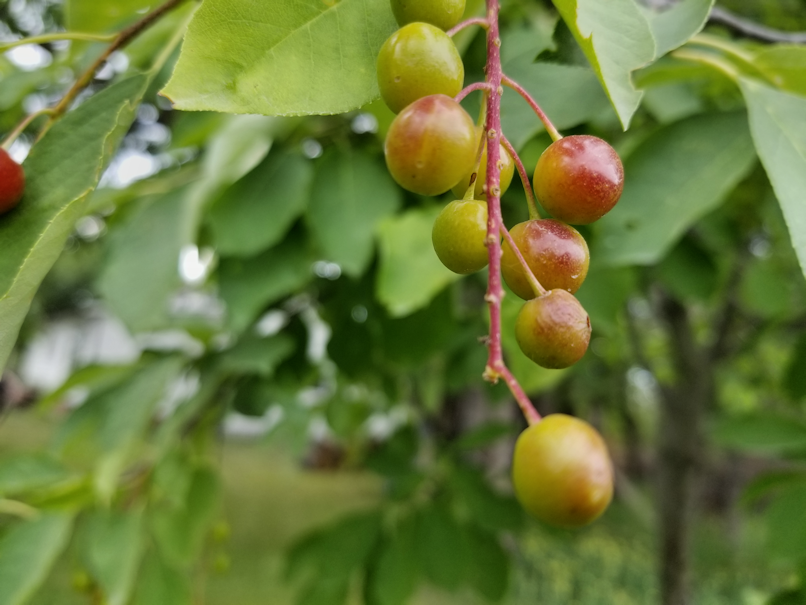
While picking a few more raspberries, I noticed some significant differences in the nearby chokecherry tree, compared to last year. Specifically, the ripening berries are already larger than the fully ripe berries I’d picked from this tree last year.

This location is closer to the house, where it gets shaded for much of the day by nearby spruce trees and the maple grove. Last year, I pruned this tree back and, thanks to my watering the transplanted raspberries, it got watered along with them.

I decided to check out the other two chokecherry trees among the lilacs that run along the north fence, where they (the lilacs) do a bang-up job keeping out the dust from cars passing by on the gravel road.

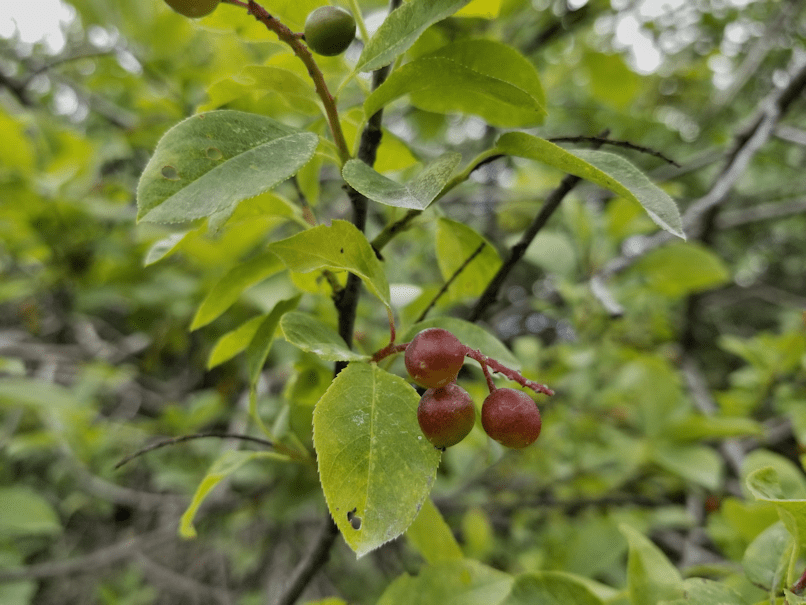
There are not a lot of berries on this one that I could see, and they are mostly very green; I made a point of getting a picture of the reddest ones I could find. These berries are quite a bit smaller than the tree closer to the house, though I’d say they are the same size as last year.

This tree is mostly hidden by lilac bushes, with a few branches leaning over where I mow. No watering happens this far from the house, other than what nature provides, and there has been no clean up or pruning of any kind. This tree is also in the section bordered to the south by a row of trees that was self-sown when my mother had raspberry bushes there. She transplanted the raspberries, but left the trees, splitting up a section of the old garden. The last time it was plowed, there was some attempt to plow along the north side of the trees, too, but with the trees there, that area is unusable for gardening.

She is not understanding why I see them and their location as a problem.

While this tree does get a lot of sun, that row of self-sown trees is large enough that, at certain times of day, they do shade it a bit. This is also near the end of the row of lilacs. After that, there are mature elms along the fence line that shade the area in the evening.

There is another chokecherry tree among the lilacs, and when I got to it, I found quite a surprise.

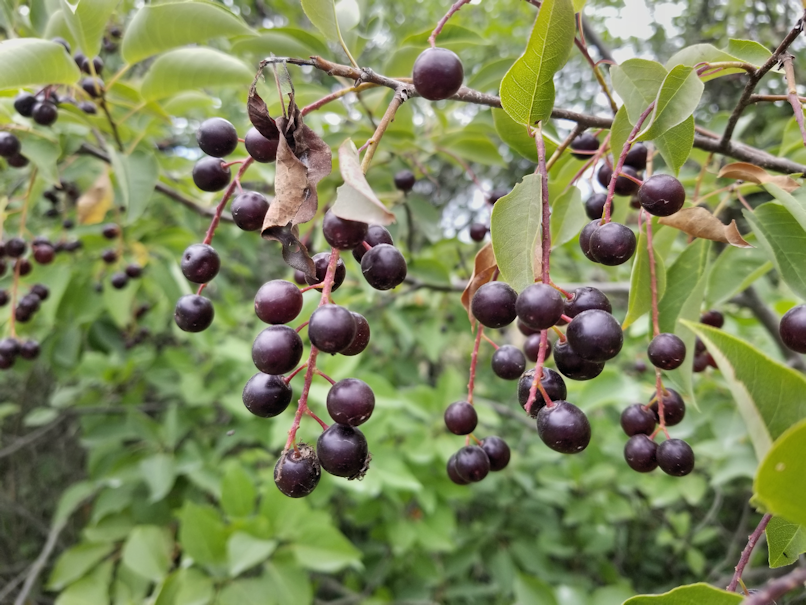
This tree has massive amounts of almost ripe berries!

Like the other tree among the lilacs, the only watering it’s been getting has been whatever rain we’ve had, and there has been zero pruning or clean up. The main difference is that there are no tall trees to shade it; just the lilacs it is growing with. Which means it gets full sun almost from sunrise to sunset. This time of year, I’d say about 9 or 10 hours of full sun a day, plus maybe 1 1/2 – 2 hours of non-direct light.

I would say the berries are about the same size as last year, though they are slightly bigger than the other one among the lilacs.

Earlier today, I was able to acquire a starter kit of equipment to start brewing mead. In looking up recipes, I’m excited to try some combinations. We’re already going to be using honey locally produced by my cousin. Some of the recipes include fruit and berries. I look forward to trying it out using our own sour cherries and chokecherries. Over time, we could also try it with raspberries (we won’t have enough this year) or Saskatoon berries (I think we’ll have to start over with new trees, though), haskap and other types of fruits and berries we will be growing as time goes by.

I think our first batch will be plain honey mead, as we learn the ropes, but I will be freezing cherries and chokecherries as we gather them (freezing helps with the release of natural sugars) to use in later batches.

I’m pretty excited about trying this out!!

Meanwhile…

Seeing how the same type of tree is doing in three different locations is giving me good information for when we are ready to plant other types of fruit, berry and nut trees around the property.

It’s all about location!

The Re-Farmer

More growing things

While investigating the sounds of the visiting toms asserting their dominance this morning, another noise caught my attention.

A deep, continuous buzzing noise.

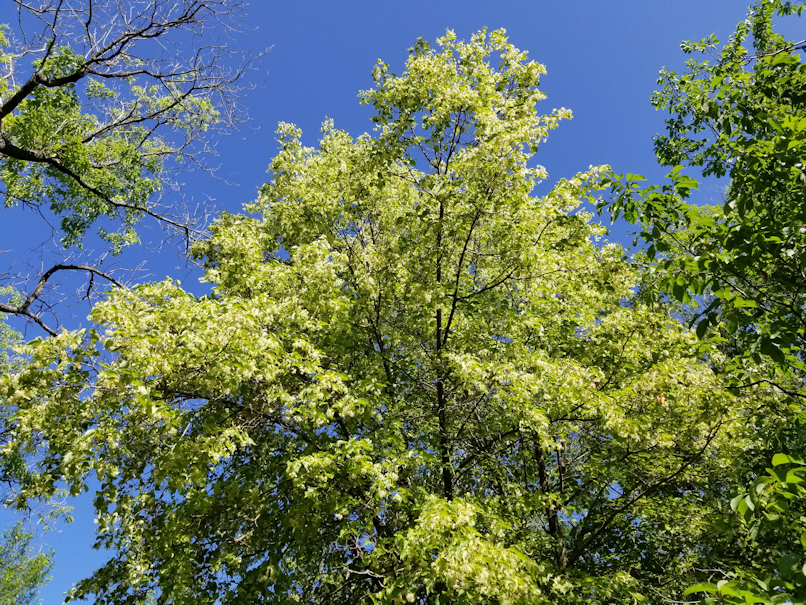
This is the linden tree, looking slightly paler than usual. That is because the upper branches are blooming, and there are so many flowers, you can see them more than the leaves. Pollinators love linden blossoms and, even from the ground, I could see constant movement of little black dots of insects. I tried to take some video, hoping to capture the sound, but there was too much wind. The digital zoom didn’t do well in capturing the insects, though when I uploaded it and tried watching it on the big screen, I realized I’d caught at least 2, maybe 3, hummingbirds!

Lower down, there are almost no blossoms at all. If we wanted to harvest the flowers, we would probably need a step ladder taller than what we’ve got and, frankly, it wouldn’t be safe to do it.

Ah, well.

Since I’m supposed to stay off my feet to let my toe heal (I’m not very good at that!), my daughters did the rest of the rounds for me. They found me a little present.

Our first ripe raspberries! :-D

They’d eaten some and brought some for me. The few raspberry bushes we have, have not grown well this year even though I did try to keep them watered as much as I could. Being shaded by an apple and a chokecherry tree isn’t helping either; they should be getting a lot more sun to produce well. I don’t expect to be getting more than a small handful at a time.

Even a little bit is nice, though. :-)

The Re-Farmer

Growing things

While doing my significantly more limited rounds this morning, I had to pause and get a photo of the ground by the feeding station. With the rain we’ve finally been having, things have really greened up again, and started to grow.

Including bird seed and deer feed!

This picture if of the area on the far side of the bird feeder, from the window – where we put the bulk of the deer feed in the winter. There is a smaller area on the side closer to the house that also has a patch like this.

The only thing I recognize in there is oats! We haven’t bought mixed bird seed, sticking to the black oil seed, since fall and we tried several different types, so I have no idea what all might be growing here. It’s going to get mowed, anyhow, but it’s neat to see!

While switching out the memory card on the trail cam, I got a picture of one of the asparagus growing wild by the fence.

None of the asparagus by the house is showing signs of berries, which makes these the only female plants around. This makes me extra curious about how they ended up growing here. It’s still possible that the seeds were spread by birds, but there are no other female asparagus plants nearby that could have been the source. The nearest garden to us is my brother’s, about a quarter mile away, and as far as I know they don’t have any.

I’m looking forward to when they turn that beautiful bright red again. :-)

The Re-Farmer

Things that are, and are not

It’s been quite interesting, as I work around the yard, in areas I worked on last year, and seeing the differences.

One of the differences is, I am seeing all sorts of things popping up, in areas that used to be choked with years of dead grass, fallen branches and garbage, or hidden away by low hanging branches.

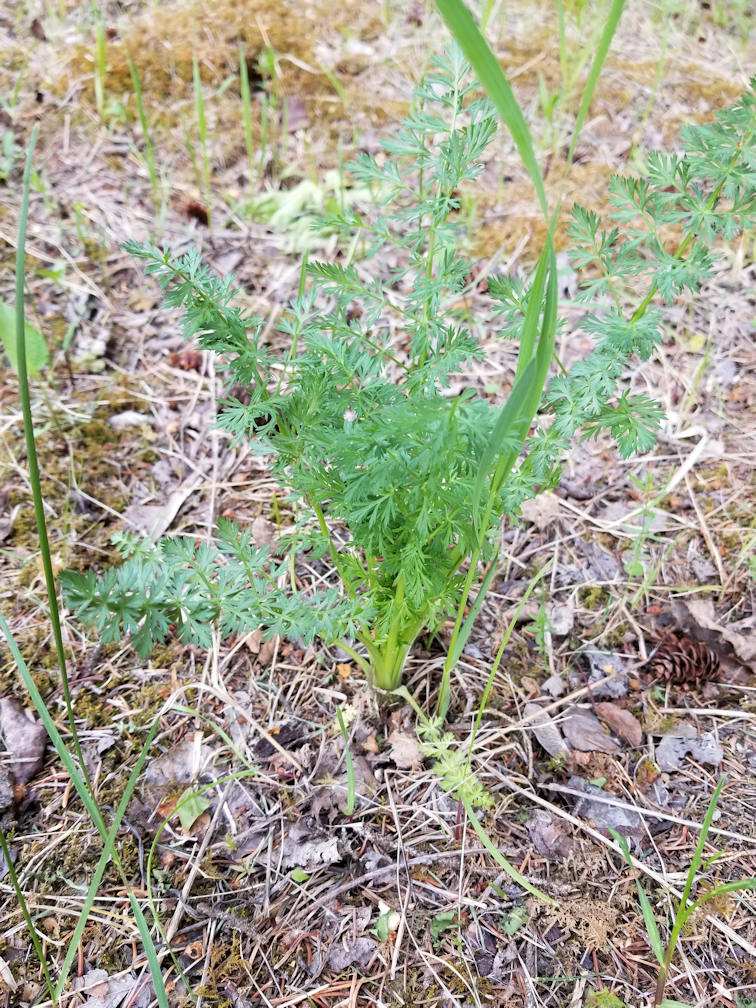
While mowing past the north side of the spruce grove, where I am now able to mow right up to the tree line, I was observing some of the wild roses I’d pruned down, but didn’t pull their roots, coming back up. For the most part, I will be leaving those. I also passed what looked for all the world like carrots, growing in the moss!

This is the largest of several I could see. I came back later and poked around the base, just to be sure.

No, they are not carrots.

Continue reading