As the temperatures have gotten warmer and the snow melts away, I’ve been able to expand my morning rounds. Today, I was able to reach the barn and a shed near it, for the first time in months.
I had a purpose in mind.
One of the things we have found all over the place, beside mirrors and tires, are windows. All kinds of windows.
If there are windows, could there be… ??
… yes there could!
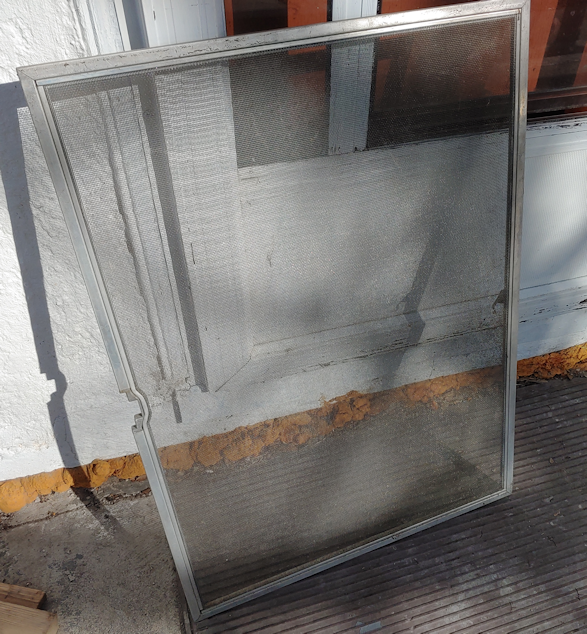
I found a fairly large screen at first, then found at least three like this one. It has an aluminum frame, and a very strong metal mesh.
This may work as a “lid” for the small fish tank greenhouse. It’s much bigger than the tank itself, but if I can secure it safely, I should be able to use it, even with the amount of overlap there will be at the front and sides. I can remove the light fixture from under the lid of the tank, and attach it to the underside of the screen – unlike the light on the big tank, this one can’t handle the weight of even one of our skinny cats on it. There is even a space I can use for the power cord from the light.
The screen itself is probably strong enough to hold even Dah Boy and Cheddar’s weights! As long as no jumping is involved. They don’t tend to try and get on the tanks in general, so I’m not too concerned about them.
The screen has been scrubbed and sanitized and is now set aside to dry. I have time to figure out what I can use to secure it to the tank, while still being able to open it easily to get at the seedlings inside.
Here’s hoping it works!!
Also, there are a LOT of old windows in the barn and shed. Some are broken, but others are still intact. I took a closer look at some in the barn. I am continually amazed by one group of reclaimed windows. They are so filthy with years of dust and grit, I actually didn’t realize they were windows until my brother told me that’s what they were! While some sort of canvas was draped over the middle one, to keep them from touching each other, they are thoroughly stuck to each other at the ends. I estimate them to be about 7 ft by almost 5 ft, and they are at least double pane. Possibly triple. There are a couple of others about 4 ft square that are double pane.
I am sure we will be able to find some use for these. Especially the big ones, if we can manage to separate them without breaking them. I see potential cold frames and mini greenhouses in them! :-)
Today has been one of those days of getting things done that were also enjoyable. Like a morning spent converting feed bags into grow bags while watching/listening to videos about crossbow safety. More listening than watching, since I was, after all, hand stitching the bag bottoms into shape. :-D
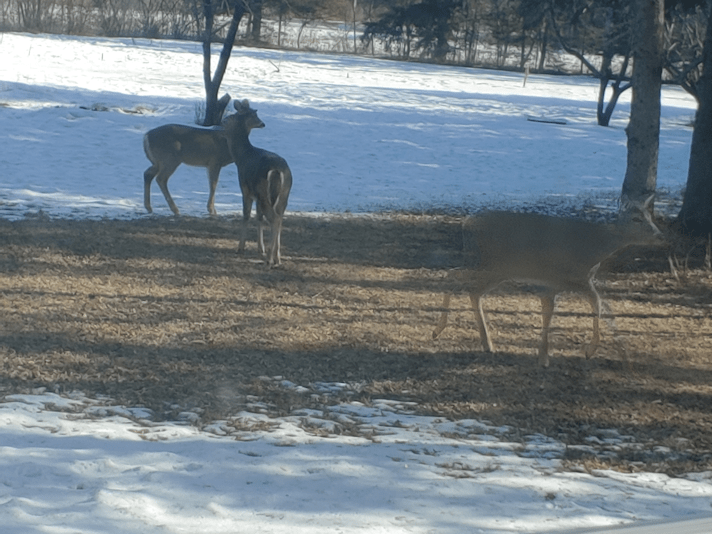
I also got to enjoy watching deer through my window, making their way to the feeding station.
I saw a couple, earlier, but that early in the day, our East facing living room window is so full of reflections, I can’t get any good shots, but I could get some shots with my phone through the North window. At one point, I was seeing 4 deer, and I think there was a fifth hidden away in the maple grove.
I made a quick trip into town to refill a couple of our 18.9L water bottles, then pick up prescription refills. I timed it so that I could hit the post office on the way home. My husband had been expecting a parcel all week, and today we found out why it hadn’t come in earlier. The padded envelope it came in was sealed in a plastic bag with “apologies from Canada Post” on it. I had no idea what my husband had ordered, so seeing oil stains on the package was a bit alarming.
It turned out he’d ordered honing oil, and the bottle leaked! No harm done, thankfully. :-)
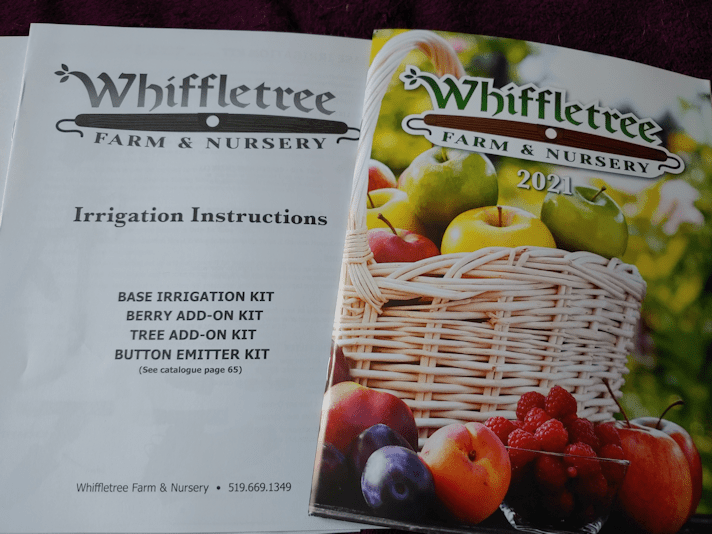
I was excited to see a catalogue I’d ordered had arrived. This is from a company I had included in my list of cold climate seeds sources, which also included nurseries. Whiffletree Farm and Nursery. They specialize in “Cold hardy, disease resistant, fruit trees, shrubs, vines and canes.”. I love how the back page includes phone numbers, a physical address (in Ontario), a map, plus their latitude and longitude!
How very… rural Canadian. :-D
I actually went through the Irrigation Instructions insert, first. They’ve got add on kits designed for new plantings, mature plantings and tree plantings. I found it a lot more informative, both textually and visually, that most of the kit sources I’ve been looking at. Though we don’t plan to plant our fruit and nut trees for a while, yet, where we are extending the garden to this year is well away from the house, and an irrigation system would be well worth the investment, even if we have to McGyver something cheap for the first couple of years.
As for the catalogue itself, I was very impressed.
First off, it’s just plain beautiful. It is printed on the heaviest paper of any catalogue I’ve seen. More than sturdy enough to withstand cats clambering all over it, demanding my undivided attention! Even how the photographs are lined up with the write ups is the best I’ve seen. There is a also LOT of extra information included.
The range of products they have available is amazing. After just a few pages, I started over again with a highlight marker, marking off everything that was Zone 2, Zone 3 or Zones 2/3. I didn’t bother marking Zones 3/4 or higher, because there were SO MANY Zone 2 and 3 choices, it wasn’t necessary. The only exception I made was for a mulberry tree that was Zone 3/4.
Did I mention how informative it is?
I learned something new that really caught my attention. There is a section on Buffaloberries, Peashrubs and Autumn Olives.
I was curious about what Peashrubs were, but it turns out that we already have some! They are caraganas! In our clean up, I’ve had to cut away and cut back a lot of caraganas that were either dying or overtaking other trees and shrubs. It’s been a balancing act between clearing them away and keeping them.
Though I am familiar with the shrub, I discovered that the seed pods are actually edible! At least the Siberian Peashrub (caragana arborescens) are. They have two other varieties. The Siberian variety is “A multi-stemmed upright growing shrub covered with delicate yellow flowers in spring, followed by small edible seedpods which can be eaten as a vegetable. By late summer the dried seedpods snap open, dropping the seeds which are 36% protein and make good chicken feed. So it is sometimes planted in poultry yards.”
Who knew?
I also learned that they are good nitrogen fixers, and wind breaks. We should see if we can figure out what variety we have here!
The catalogue also displays an excellent sense of humour. As an example, in the section on edible lilies and high bush cranberries, there is this write up for the Common Snowball.
“Okay, we admit it – this plant is neither edible nor medicinal to the best of our knowledge. In fact, it produces no fruit at all, not even for the birds. Our only excuse for offering it is for the nostalgic memories is evokes for many folks. Every year in early summer, these old-fashioned, carefree bushes become covered with fleecy, white pompoms. The ‘snowball’ name is visually very fitting, but that’s not all. Perhaps we should market it as a weather prognostic – according to a local, time-honoured adage, there is always a brief, unseasonably cool spell when the snowball bush begins to bloom. Like many weather maxims, you can count on it, it always holds true – except when it doesn’t!”
Ya gotta love it! :-D
While we are not in a position to start ordering food trees for this year, we are shooting to do so as soon as possible, given how long it can take for trees to mature enough to start producing fruit. And let’s face it; at my age, pretty much any fruit or nut tree we plant is for our daughters and future generations, because my husband and I will probably be long gone by the time some of them reach maturity!
There is so much information in this catalogue, we can use it for planning purposes. Especially when it comes to their orchard growing equipment and supplies.
With that in mind, these are some of the things that interest us, that also grow in Zones 2 or 3.
Apples: there are many varieties suitable for our zone, including larger eating apples, edible crab apples and cider apples. They have columnar varieties, dwarf varieties and varieties that are good for espalier training. When it comes to apples, they are not something we tend to eat a lot of, on their own, but we would be using them for things like apple cider vinegar, hard apple cider, or freezing them to use for baking later on. We will have to take into consideration that we need to cut down a lot of our crab apple trees due to fungal disease. It may be worthwhile to get rid of the diseased trees, then wait several years before planting new varieties, or planting new varieties in locations well away from where the diseased trees are.
Plums: This is one of those things that we almost never eat, but if we had them, we would eat them. We do have plum trees, but they are not an edible variety – more stone than fruit – that my late father used to make wine, but having larger, fleshier plums that can be eaten fresh would be really nice.
Pears: I remember we had a pear tree when I was a child. It was a variety that produced small, hard fruit that needed to be exposed to frost before they could be eaten. They are another type of fruit we rarely buy, mostly for budgetary reasons, but would eat more of if we had our own trees, so having cold hardy varieties that can be eaten fresh would be enjoyed, and this catalogue has several such varieties that can grow in our zone.
Cherries: the variety of cherry are from a tree from Poland, which has a warmer climate than we do. They bloom wonderfully, but in the time we’ve been here, produce almost no fruit. Their bloom time doesn’t match when the pollinators come out. So getting a variety or two that is good for our zone is something I would like. They do tend to spread through their roots, though, and can become invasive, so we would have to carefully plan where they would go. Some varieties make good hedge trees, wind breaks and privacy screens, so that’s an option, too.
Nuts: there are only two types of nuts suitable for our zone; several varieties of hazelnuts, and butternuts. We are still looking into planting other varieties. They may not have a long enough season to produce edible nuts, but the trees themselves are an investment.
Rugosa Roses: we already have wild roses growing in the spruce grove that we will be encouraging, as other types of underbrush will be cleared away, but these varieties are specially noted for their large hips, and high nutrient contents. These are for the “apothacary” plants we will also be adding, over time.
Kiwis, grapes, gooseberries and currants, saskatoons, haskaps, raspberries and blueberries: we already have some of these, but will be adding more over time. Some are poorly situation and need to either be taken out, starting over with new, or transplanted.
Companion plants and wildlife packages: they’ve got a number of different plants that are beneficial to plant near trees, for various reasons. Some because they attract pollinators, or attract predator insects that will eat nuisance insects. Others because they are good to plant in paths instead of grass, can handle foot traffic, but don’t need to be mowed. There are even seed mixes to provide grazing for deer and other wildlife, and even have wildlife tree packages, made up of a mix of excess trees, or trees that didn’t make the grade for orchard/yard use, which may not even be labelled. They would be useful for a food forest or permaculture set up to feed both humans and wildlife. These are all things that fit in with our long term goals.
All in all, I am very excited by this catalogue, and look forward to being able to order from this truly unique company as soon as possible!
First, I wanted to share with you a photo of some visitors out our living room window last night.
There were actually five in total, but they were chasing each other around. The mama of the two in front chased the one you can see behind the cross, who chased another deer out of that spot before I got the picture. The fifth one that I saw making its way long the edge of the spruce grove disappeared before reaching the feeding station, and I missed what happened with that one.
The deer are definitely getting feistier as the weather warms!
It’s not quite warm enough, though!
I hadn’t received a call about the garden soil over the weekend, so I called them back this morning. The woman who answered seemed at a bit of a loss with how to help me, and ended up giving me the cell phone number for a particular person (since I want someone to come here in advance to see where the loads will be dumped), but there was no point in trying to call them until after 7pm, because they were in a cell phone dead zone. It ended up not being necessary. She called me back not long after.
Their pile of garden soil is too frozen.
She suggested I call back in about a month. Hopefully, it’ll be thawed enough for the equipment to be able load the truck! It would have been nice to get the soil well before we actually need it, but as long as we get it before we need to actually start planting, it should be fine.
I also called the garage to follow up on the van, and we’re now booked to bring it back tomorrow morning, so he can clean out that new EGR valve.
My husband got a requisition for blood work some time ago, but between the polar vortex, van issues (my mother’s little car is far too painful for him to ride in, and his walker wouldn’t fit in it, even folded up, anyhow) and pain levels, we just never made it in. I called the clinic to make sure the form was still at the reception, and that was confirmed. We had planned to go in today to get that done, but my husband’s pain levels were too high. We’ll try again on Wednesday.
On the positive side, my husband’s tax return came in. We had plans for part of it that I tried to take care of last night, only to discover we couldn’t use our debit Visa.
With no trip to the clinic today, I was open for making a trip to the city.
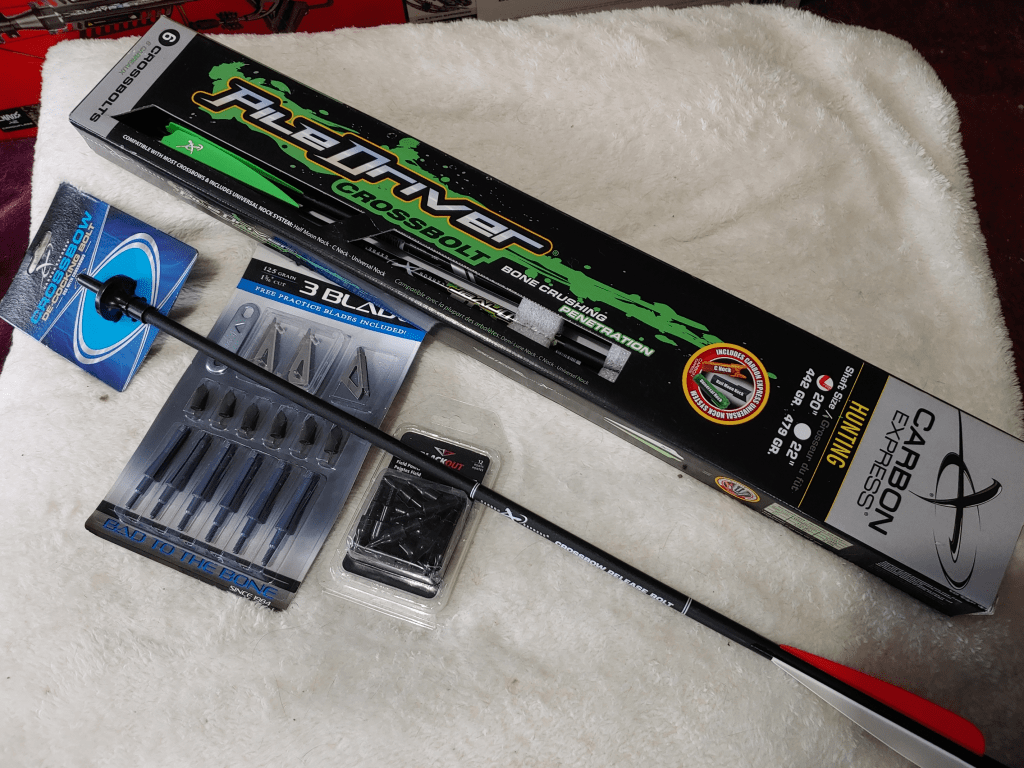
This is what we picked up.
Yup. We got a crossbow kit.
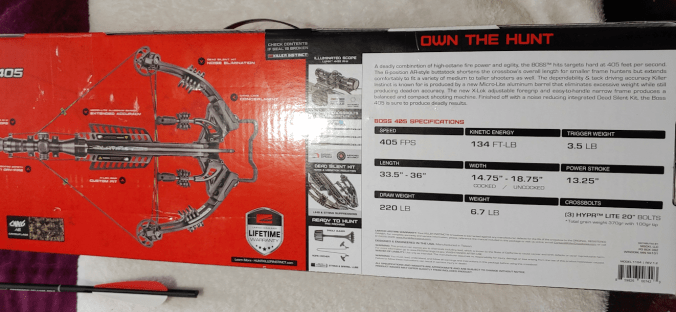
More specifically, we got a Killer Instinct Boss 405.
It’s an early 33rd anniversary gift. :-D
Now, what we really wanted to get was a rifle, but we have not been able to get our PALs yet, and with certain political activities going on right now, we were seeing our window of opportunity closing fast. However, having a gun on the farm is needed, if only to ward off the coyotes and other predators. Plus, I want to be able to hunt.
My husband and I both know guns (me from growing up on the farm, him from his time in the military), and bows. I used to shoot recurve, and my husband shot compound. We were both rather good at both guns and bows, too. However, with age and injuries, anything with a draw weight suitable for hunting is getting beyond our levels of mobility.
We decided that a crossbow would best meet our needs, while still being something we can actually get. Plus, the archery hunting season is much longer than rifle hunting season. As a bonus, a crossbow is quiet. I like quiet!
With that in mind, we did our research and decided on a crossbow at Cabela’s. It’s not high end, by any means, but it’s hardly bottom of the barrel, either. It will meet our needs.
Then, since I had to drive well over an hour to get to the store, I took advantage of the situation, asked questions, and picked up a few other things. (Happily, they accept medical mask exemptions, too!)
One of the things I’d tried to buy on the website was a crossbow rated target. I called ahead, and the crossbow and target were both waiting for me when I got there. After seeing it in person, I decided to get a larger target. I didn’t take pictures, but I ended up getting a Morrell Yellow Jacket YJ-425.
I also got these.
The crossbow kit comes with 3 bolts with field points. Bolts will get lost or damaged, so I picked up a 6 pack of extras. The spares do not come with points, so I picked up a 12 pack of field points. They are slightly heavier than the ones in the kit, so we won’t be using the kit points at all. I also picked up hunting points that need to be assembled, but they are the same weight as the field points. I also got a de-cocking bolt, which can be safely shot into the ground.
After taking this picture, I had to hide everything in a closet, because the cats were ALL OVER everything.
Susan tried to chew on the fletching of the de-cocking bolt.
Tomorrow, the bow will be assembled, but I don’t know when we’ll be able to test it out and start practicing. Not only is it very wet and messy right now, but we’ve got rain in the forecast tomorrow, and snow in the forecast a couple of days later!
And for those who are wondering, no, we don’t plan to hunt the deer that come to our yard.
Over the next while, I’ll be searching out local crossbow groups and hopefully be able to find a hunting mentor. I will still need to take the hunter’s safety course to get a hunting license, and while it would be nice to have a freezer full of venison next winter, I don’t expect to be ready to hunt this year. While all of us can practice shooting with this, it is likely that I will be the only one that will take the course and get a license to hunt.
At least, that’s the plan for now. Plans have a terrible habit of changing at the last minute, but it’s a goal we are shooting for.
I needed to divert myself with positive thinking, and what better way to do that than to think of gardening!
Also, I am striving mightily to NOT start those tomatoes yet, so sitting here and writing about starting them is keeping me from starting them. :-D
I will explain shortly.
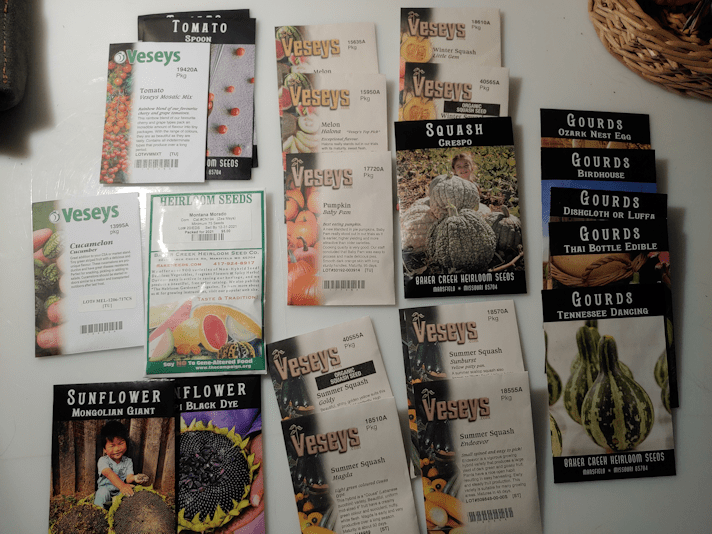
First, I went through the seed packs and took out the ones that need to be started indoors. Here they are.
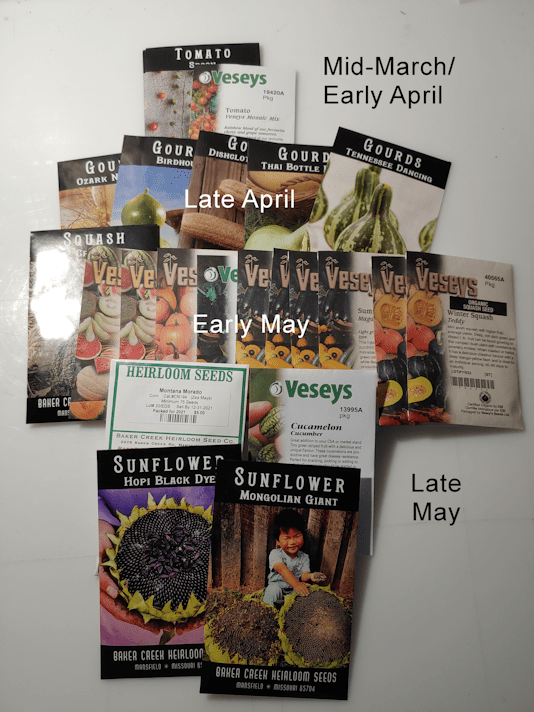
Then I worked out which ones need to be planted when. Here they are, in order of when they should be started indoors.
You can probably see where I might be having some problems.
Right around May.
It’s the tomatoes that are teasing me. I’ve never grown tomatoes before, and the Spoon tomatoes in particular are a new variety. Even in the reviews, I saw no one in Zone 3 that grew them. In my research, I have found articles from people in our zone who experimented with different tomato starting times, and they generally found that starting them earlier did not benefit them in any way. And yet… there are Zone 3 gardeners who have already potted their seedlings up. The down side of giving up social media for Lent is, I’m no longer seeing the gardening groups about it! But there are other resources and, at the very least, waiting another week will not cause problems. However, if you are a Zone 3 gardener who has experience growing tomatoes from seed, please do feel free to leave a comment! I am eager for the voice and advice of experience!
Next on the calendar are the gourds, in late April. Ozark Nest Egg, Birdhouse, Dishcloth/Luffa, Tennessee Dancing and Thai Bottle gourds. How many we plant of each will depend on how prolific the variety is expected to be. I’ve read that the Tennessee Dancing gourds, which are quite tiny, are extremely prolific. We’ll probably plant just a couple of seeds of those, and shoot to have one plant, while we’ll probably look to have 3 or 4 Birdhouse gourd plants. I learned from last year, not to jump the gun on our frost date of June 2, but we also need to keep in mind that we could still get a frost after that date, so I’d rather have more plants than less.
All of these will be trellised in some way.
Then there is early May.
Oh, my.
All the winter and summer squash, pumpkins and melons need to be started at the same time! Our winter squashes are Teddy and Little Gem. They’re small and I expect them to be fairly prolific, so we probably won’t be starting the entire packets of seeds, but we will likely plant at least half, depending on how many seeds are in the packages. We also have the tiny Baby Pam pumpkins, and I expect them to be fairly prolific, so we’ll likely plant half a package. The Crespo squash, however (listed as a type of pumpkin on the website) get huge, and will likely have fewer fruit per vine, so we will likely plant the entire packet of seeds.
The summer squash include Magda (light green), Goldy (yellow) and Endeavor (dark green) zucchini. Last year, few of them survived the late frost, so we didn’t have many of them. Even the surviving plants were not as prolific as the varieties normally are. We definitely want to have at least 3 or 4 of each. As for the Sunbrust squash, I got an extra packet of those, and we intend to plant two packets of seeds. They were a favorite last year, and we look forward to having lots!
The melons, Pixie and Halona, are small fruiting varieties. There don’t seem to be a lot of seeds in the packets, so we will likely plant all of them. Hopefully, they will be prolific.
A lot of these will be staked or trellised.
Next are the cucamelons and Montana Morado corn in late May. By which I mean, mid-May, so they’ll be ready to transplant after June 2.
We will be trying the cucamelons two ways; I potted up tubers from last year, which should mean getting an early start on them when they are transplanted in the spring, but we will also start a few indoors. It should be interesting to see what differences there are between them. Assuming the tubers survived their winter in the un-insulated old kitchen.
As for the corn… I have been researching that and I’m going to save my thoughts on those for their own post!
Then there are the sunflowers; Hopi Black Dye and Mongolian Giant. This will be another experiment. I got two packets of each. Last year, we direct sowed our giant sunflowers, then sowed another giant variety to make up for the losses from the first batch. They never really had the chance to fully mature. This year, we will start one packet of each, indoors, then will direct sow the other packets when we transplant the first ones outdoors. It should be interesting to see the difference.
Finding the space for all these starts is going to be a challenge. I’m hoping that, by the time we need to start so many seeds in early May, we will be able to use the sun room instead of fighting for space in the aquarium greenhouses. Last year, it was a somewhat chilly spring, and that wasn’t an option. However, if we can provide some sort of heat overnight, it might work this year, even if we get another chilly season.
While all of these need to be started indoors, there are also some things we will be able to direct seed “as soon as the ground can be worked”, which means in mid to late May. The bread seed poppies, kale and kohlrabi, peas, etc. will all be direct sown before any of these are ready to be transplanted. A lot of local people start putting their gardens in on the May long weekend, including transplants. If we had the things necessary to properly protect transplants from frost, I probably would do the same, but we don’t. Our attempts to protect them last year were not particularly successful. :-/ So we will wait for June on the transplants.
Now I just have to hold off another week, before starting those tomatoes!! :-D
Today turned out to be a lovely, warm and sunny day!
While doing my morning rounds, I had a chance to check on Potato Beetle’s wound, and it’s looking very good. After the trip to the vet, though, I don’t think he trusts me as much, though! :-D
I called up the company we want to buy garden soil from. I spoke to someone else this time, so I went over what I’d been told before, then said that we were looking to get two truck loads of soil, but first I wanted to know of someone could come over to see where to dump the loads. For one load, it’s not an issue, but for the other, there are low hanging branches that might be a problem, so I wanted to look at that with whomever would be delivering the soil.
She said that she was unable to call any of the guys during the day, as there is no cell phone reception where they are (boy, does that sound familiar!) but she will pass it on to them and call me back on the weekend. The one thing she wasn’t sure of is if the soil was too frozen to load into the trucks or not. They usually do gravel, which will break up, even if frozen, but soil behaves differently. If all goes well, though, I’m hoping well have delivery as early as next week! Otherwise, we’ll see what they advise. We’re going to be above freezing for several more days, so I don’t think it’ll be much of an issue.
Later on, I called my mother to ask if she needed any help with errands or grocery shopping. For now, she’s good, so I’ll probably be heading over next week to give her a hand. Then she asked me what was new.
I made the mistake of answering her honestly.
*sigh*
I told her about the garden soil we were arranging to buy.
She was FURIOUS! I barely finished telling her about it when she lit into me about how she had this big wonderful garden there, and it seemed I just wanted to do things the hard way and had to spend money…
It went on for a while. In a nut shell, I should be growing a garden exactly like she did, back when I was a kid (which isn’t even possible, since they squeezed in so many trees, a significant portion of the garden of my childhood now has either trees, or shade from trees, in it), I should not be spending any money on anything, not even seeds. Also, I should not be thinking about planting trees (I’d reminded her of our plans to grow fruit and nut trees), but should be growing lots of vegetables to store for the winter, like she did, and since she didn’t have a problem with the rocks, I should just plant things like she did, rocks and all. The real problem was the “weeds” I “allowed” to grow, and there wouldn’t be any if we’d have plowed it, which she offered to pay someone to do, but I said no. I asked her if she was offering again? She repeated that she had offered and I said no. I told her, two and three years ago, we weren’t ready. We’re ready now. If she’s offering now, we’re saying yes.
*heavy pause*
She said she’ll think about it.
Uh huh.
So that was an … interesting phone call.
The reason I’d wanted to talk to her, though, was because I finally got a copy of the calls our vandal had left on her answering machine a while back. He’d been saying he wanted to meet with her to talk. She had misunderstood, thinking he meant on the phone, but he was saying in person. I wanted to make sure she knew it was not safe for her to meet with him alone. Not that I think he would physically harm her, but he would be emotionally and psychologically abusive towards her.
We also talked about the possibility of her changing her phone number. She hadn’t thought of that. She doesn’t want to, but at least now it’s a possibility that’s on her radar.
Once the phone calls were done, I decided to take advantage of the warmer weather, and headed out to the garden area.
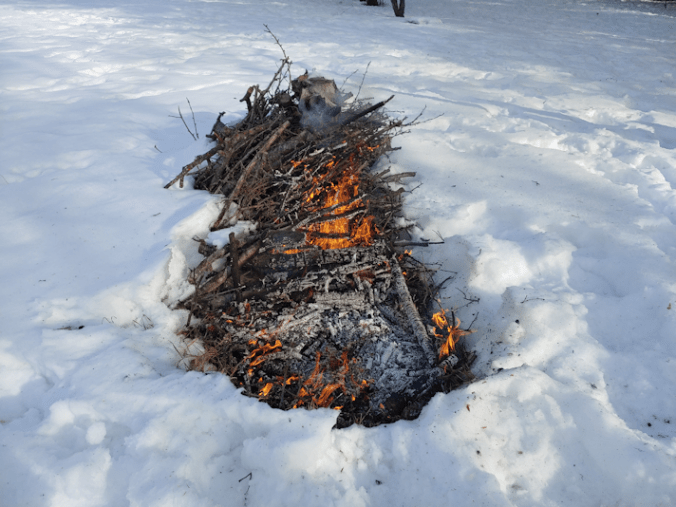
It was time to do a burn!
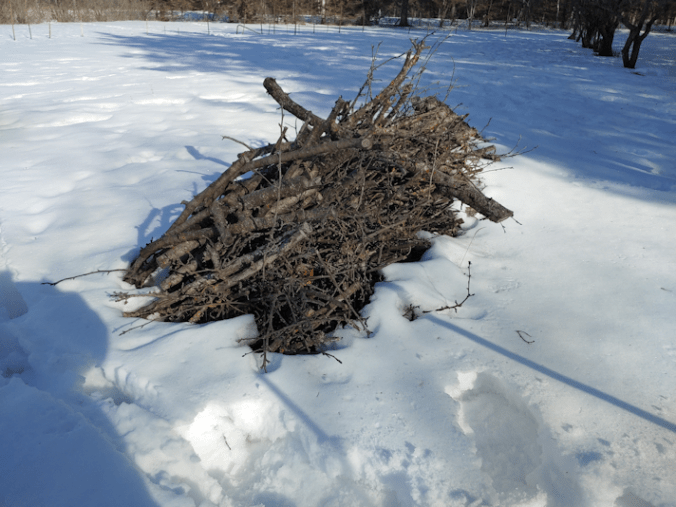
The stack of diseased apple tree branches we’d pruned last summer needed to be dealt with.
The pile was just dry enough to burn well, but also snow covered enough for the flames to never get big enough to be a concern, as it would have been if I’d try to do this in the summer. This was no bon fire! When we first moved here, there was a huge pile of pruned wood in the middle of the garden that my family wanted to set a match to. We’d just left a province that had been devastated by forest fires, so we were not exactly keen on having a bon fire with resin torches, aka spruce trees, nearby. This was much smaller and could be better controlled.
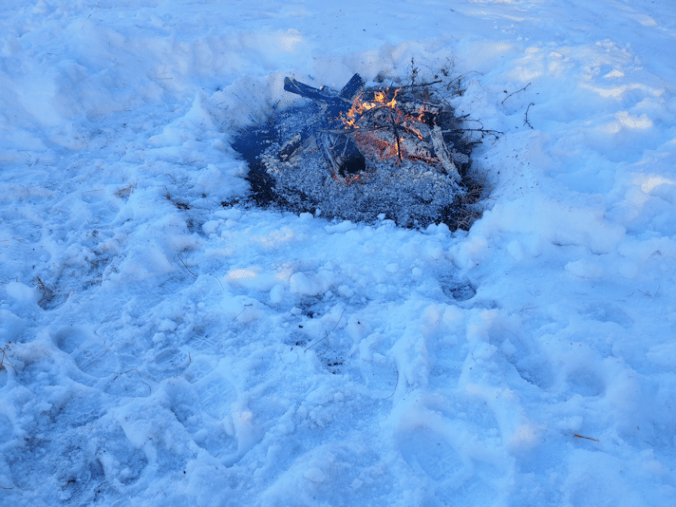
As the fire worked its way to the other end of the stack, I shoveled snow over the remaining coals and ashes, little by little.
I was able to spend a couple of hours outside, tending it, but by the time the fire burned away all the small stuff and only the larger logs were left, I was finally chilled enough that it was time to go inside.
The fire itself was so hot at times, I could feel it from 6 or 7 feet away, but it wasn’t enough to make up for damp boots and cold toes!
So the last of it got buried in snow. We’ll finish burning the remains after it’s melted away again.
Even if we’re not able to finish burning the diseased branches here, there’s just a few large pieces left that would be easy to move somewhere else to finish burning away.
Unfortunately, I expect we’ll have to cut down several more crab apple trees completely, not just in this area, but in others. All of that wood will need to be burned. We won’t even be able to use it in the fire pit for cookouts. That’s going to be a lot of wood to burn, so until we can get it done, we’ll have to keep the wood separate from any other wood we clean up that we will make use of as much as possible, even if they end up being chipped and used for mulch. The last thing we want is to have is infected wood chips!
There may still be snow on the ground, but it sure feels good to be warm enough to start doing jobs like this, outside!
Okay, so my last post actually uploaded, so here’s hoping this one works, too!
I mentioned previously that the girls and I have been going over the layout of the grounds we have to work on, trying to figure out where we will be planting things. Today, I worked up a new diagram on the computer, this time keeping the satellite image in the background.
This is what we’ve got to work with; what I call the inner yard.
The long blue lines at the bottom (which is South) are fences. Black lines are around the house, storage house and garage. The one yellow line extending from the house is an important one for us to remember, when it comes time to making our permanent garden beds in the outer yard. There are pipes buried under there; water from the well next to the house, leading to the barn and to water fountains that were used when my parents still had cattle, and the septic pipe that diverts to the septic field, well away from house and barn. Since we plan to build accessible raised beds, and hopefully a polytunnel and/or greenhouse, we need to make sure to keep that area clear, in case we ever need to excavate it for repairs to the pipes.
The masses of green are treed areas. The spruce grove is on the right. The little yellow dot in there is where we will be planting the mulberry tree that will be arriving in the spring. We need to clear away dead spruces and underbrush, but there will be enough mature trees around it to protect it from the elements. Necessary, since it is a zone 4 tree and will need extra protection.
The blue rectangles are existing beds. The two little ones along the spruce grove are where the hard neck garlic is planted. I’ve marked where I will be making a third bed in that area. This is the only place we have soft soil, exposed when I cleaned up where the wood pile used to be. While clearing away the dead trees and underbrush around there, we will also be clearing the space where we are planning to build a cordwood shed to be used as an outdoor bathroom with composting toilet. No pit! The existing outhouse is between those beds and the garage to the south.
The blue next to the house is the old kitchen garden area, with its retaining wall of chimney blocks that we planted cucamelons in, last year. This is a bit of a problem area, overshadowed by two ornamental apple trees. There is also a double lilac, a honeysuckle and some roses in there that we will have to work around.
Then there is my mother’s old garden area!
The existing beds marked in blue are where we grew our squash and potatoes. The two little beds to the right are where the potatoes where. Summer squash were in the larger, North-South oriented beds. The long skinny bed on the north side had birdhouse gourds in it, but those got killed off by frost. The three East-West oriented beds had started out as pumpkin mounds, but when I cleaned it up for the winter, I turned them into larger beds.
The green rectangles are potential new plots. The slightly darker green ones are pretty much decided on, while the lighter green ones are in areas that are probably not worth putting beds in, but we could if we needed to. There is a row of self sown trees to the North of the existing beds that we really should take out; they should never have been allowed to grow there. They split my mother’s old garden area in a way that made a substantial part of the garden unusable. There’s also a chokecherry tree growing, all by itself, in the gap between two light green squares.
There is also a green garden area marked along the fence line to the south of the house. There should actually be two of them, on either side of the person gate, which is near that yellow line. On one side is where we will be planting cucamelons, using the chain link fence as a trellis. The other side will have tomatoes. Hopefully. The seeds have not arrived yet, so that will depend on whether they get here in time to be started indoors.
The bed I will be making next to the hard neck garlic will probably be for our 2 varieties of beets. Either that or carrots, given how soft the soil is there. We have 4 varieties of carrots to plant, so we’ll see.
The garden by the old kitchen will likely have our poppies, lettuces, and possibly the pink celery that will hopefully arrive in time.
The three beds that used to be pumpkin hills are where we will plant our three varieties of spinach. The longer beds on either side will have the bulb onions, likely interplanted with the purple Kohlrabi (onions repel insects that go after plants in the cabbage family). The former potato beds will have the shallots and bunching onions, and will likely have something interplanted with them, too. Possibly kale. We got purple kale as free seeds from Baker Creek, and we seem to be going with a pink and purple theme this year, so … we’ll see.
Speaking of purple, to the left of the existing beds is where we are planning to plant the purple corn. There are areas that can fit potential beds to the north and south. This whole area has to be carefully planned. Where the current beds are now will be permanent garden areas; I’m not so sure that where the corn will be planted will be included. With the horrible plow job that was done before we moved here, the area we’ll be putting the corn is the roughest (another reason we need that load of soil!), but where I’ve blocked off space for the corn is the best part. To the south, there’s too much shade from trees, so if we do make beds there, only shade friendly vegetables can be planted there. To the north, it’s basically lawn, and was never part of the original garden. I’ll touch on those areas, later.
Let’s leap over to the massive area on the right (east). There will be alternating blocks of corn and sunflowers there. We have 3 varieties of peaches and cream corn, and 2 varieties of giant sunflowers. We may interplant our 2 varieties of peas with the sunflowers, which can provide very strong supports for the peas to climb, while the peas fix nitrogen into the soil.
Legumes are supposed to be good to plant near corn, as corn depletes soil of nitrogen very quickly. We have 3 varieties of bush beans and, while I am considering staking them (which is supposed to help prevent fungal disease, rot and insect infestations), they are not climbers, so we won’t be interplanting them with the corn. They will go where I have two long strips near the big block. They are not as long as the block for corn and sunflowers, because of shade from the row of crab apple trees.
The other blocks will be used to plant summer squash, which I want to try staking this year, plus winter squash, gourds and melons on trellises and/or arches. Possibly peas, if we end up not interplanting them with the sunflowers. We have one more variety of corn that will be among those blocks, too.
We have two types of radishes, which will be interplanted with other things. Likely corn. Even though we will be able to buy soil that will enable us to do all this (barring some sort of emergency that takes up the funds), much of this area will later have fruit and nut trees planted in it. Anything we do to break up the soil will make it easier for us to dig holes to plant trees into.
It is with that in mind that we are breaking ground in areas that were never part of my mother’s garden. The area where we will be planting the corn and sunflowers is all grass, as is the strip along the north side. That row of self-sown trees is in the old garden area (my mother had a raspberry patch there, and when she transplanted the raspberries, she left the saplings). The old garden area extended a small plow’s width past them – and they are probably why the plow job on that side is as rough as it is (though it could also be that the person who did the plowing may have been drunk at the time). Planting on that north strip is another area we need to be wary of, as there are telephone lines buried somewhere in there.
There are a few other things we will be planting that are not on the layout. There are no potatoes on there. We are going to try using grow bags, or something similar, for our 4 varieties of potatoes this year. They will likely be set up in the south yard, near the storage house (the building marked off to the west of the house in the middle).
We also have to consider where we want to plant the purple asparagus. It has to be somewhere where they can stay for their 20 years of productive life! We also need to think about where to plant the strawberry spinach, which I’ve learn will self seed! So for those, we need to think about more permanent locations.
As you can see by the dark green lines around the inner yard, we are surrounded by trees. The spruce grove will need a lot of cleaning up, as it has so many dead and dying trees. There are a lot of poplars that are taking it over the south side of the spruce grow, and along the fence to the road, where my parents had planted elms and more apple trees. The apple trees there are too shaded to be able to produce. As I clean up all the little poplars, they will be used to build trellises and arches. As we can, we will plant more spruces in the spruce grove again! :-D Eventually, I want to take out the fence leading to the road – it’s barbed wire, and many of the posts are already rotted and falling over. For now, though, it is needed in case the renter’s cows get through the fence around the outer yard again. :-D
The area on the far right, past the fence line and trees, is a flat area next to the ditch by the road. The north side of that area is going to be prepared for planting a mix of wildflower seeds in the fall. I want to make sure this area doesn’t get taken over by trees, as has happened on the other side of our driveway, which causes a number of problems, so we’ve been mowing it. Which is hard on the mower! Introducing native wildflowers will help solve that problem, while also encouraging native pollinators. That will be good for our future fruit and nut trees.
One of the problems with figuring out where to put things is that it’s really hard to maintain a perspective of just how much space there is, versus how much space we’ll actually need for what we’ll be planting! Things might change quite a bit, even based on how many of what we start indoors germinates. Everything is flexible, but this does give us a general idea of what we have to work with.
Oh, and somehow, we need to keep the deer out of all this!
That will probably be the biggest challenge of all.
Yesterday, I made a point of running our van and my mother’s car for a while, to warm up the engines.
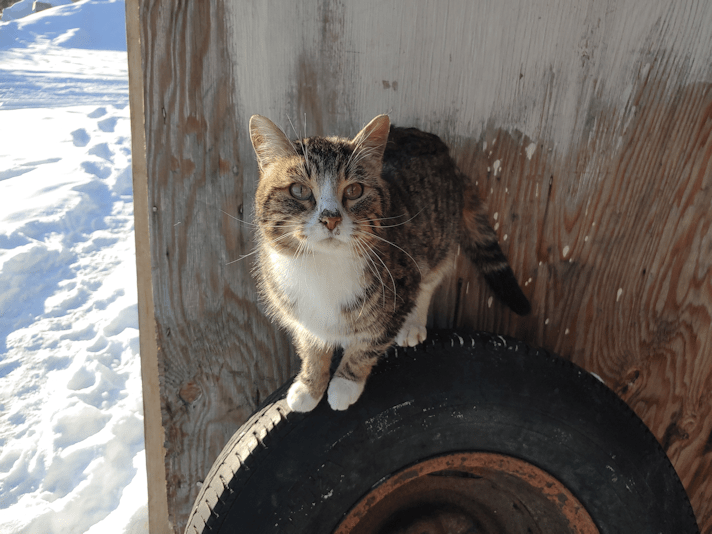
The doors to where my mother’s car is parked are sagging, so they open on their own unless they are blocked with something heavy. I’ve been using one of the many tires scattered about to do that. The cats have been loving it. Even in the cold we’ve been having, the black rubber gets quite warm in the sun!
Potato Beetle really wanted attention! :-D
The van keeps making a noise, even after it’s been running a while, so I popped the hood to take a look.
The noise is coming from the serpentine belt, which is what I expected, but then I noticed something else.
I was basically out of coolant/anti-freeze. ?!?
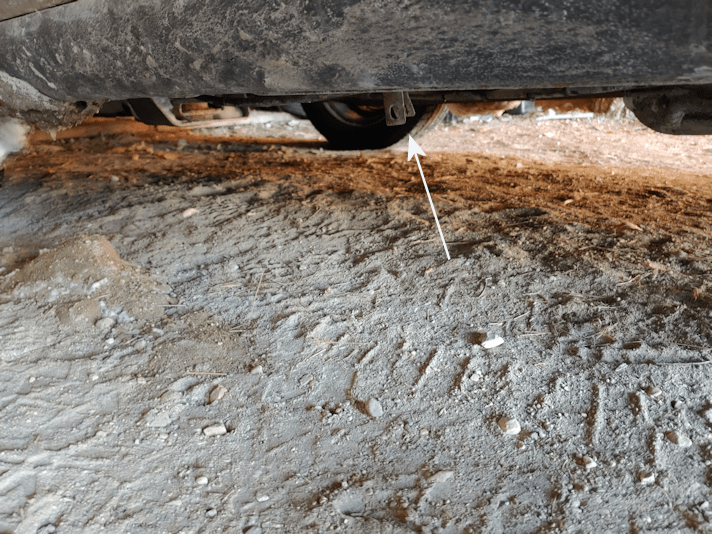
I had some in the garage and topped it up a bit, but decided to check under the van to see if there was some sort of leak. The most efficient way to do that, for someone who can’t get down on the ground, is to use my phone to take pictures.
I didn’t find a leak, but when I uploaded the photos to my desktop so I could see better, I did find a mystery.
What the heck is that? This is under the driver’s seat. I don’t know enough about what’s under vehicles to know what that is. I’ll have to look it up.
Meanwhile, I hooked up the OBD II reader and it actually worked this time, so I did a scan.
One thing came up as an issue, code P0404. I looked it up, but what I found really didn’t tell me much. The EGR valve is what got recently replaced, so this could related to what the mechanic told me about how carbon in the lines he couldn’t reach to clean might come loose and cause some stuttering, etc. I’ll have to give him a call.
On the plus side, my mother’s car was running better, so when I headed out to do my rounds this morning, I made sure to grab the keys and get it warming up.
This morning was the first time in a long time where the temperature and the wind chill were both warmer than -30C for a change!
The cats were quite enjoying the comparatively warm conditions! Poor Nosy is still looking miserable, and he really wanted attention. When holding him, he’s actually taken to grabbing my hand and pulling it to his face, for me to scritch his neck.
It’s warmed up enough that I will be switching out the memory cards on trail cams regularly again, though I had to take the new camera inside and switch to warm batteries again. I took the opportunity to reverse it’s location with the older camera. It is now in full sun, which should help with the frozen battery problems.
Once that was done, I used my mother’s car to go to the post office/general store. It’s just a few miles away, so I felt confident it would be fine.
My mother’s car is a hatch back, and always makes rattling noises in the back. It makes a lot more rattling noises when it’s cold! :-D
While getting the mail, I picked up some more coolant/anti-freeze for the van. Once at home, I topped up the reservoir a bit more. Later today, I’ll run it again for a while.
Meanwhile…
It’s been over a week since we were able to get the mail, so we had lots waiting for us. Including…
This was from the order I placed as birthday presents for the girls. :-D The purple asparagus crowns and the black iris will be shipped later, just before it’s time to plant them, for our zone. As of now, the only seeds outstanding are from my last minute order from Baker Creek. They have been shipped, so it’s now in the hands of the US and Cdn postal systems. We’re not expecting them for quite a while. I just hope we’ll get them early enough to start the spoon tomatoes indoors!
Last night, I used a satellite image of the property to create a line diagram of the inner yard, marking off where the house, storage house, fence lines and trees areas are. After printing it out, I drew in where we have existing beds and a few other details. The girls and I have been going over it, trying to figure out what to plant, where, and sketching it in. There is going to be a fair amount of inter-planting – especially with the Daikon radishes, which will be used to help break up the soil. I was amused to discover this type of radish is known as “pile driver” radishes. :-D Among the things we need to consider are the permanent locations. The asparagus, for example, can be expected to produce for 20 years, and the strawberry spinach is self sowing. Once we have a better idea of what we’ll be doing, we’ll make a bigger version of the line diagram to consult as time goes buy. We fully expect to change things up when it comes time to actually plant/transplant, but at least we’ll have a general overview.
Another thing we got today was the catalog I ordered from T&T Seeds. This is the seed catalog from my childhood. :-D I’m glad I got the physical catalog, because I find it much easier on the eyes than their website. :-/ There are quite a few things they carry that few others carry. One of them that caught our attention is the Forage Radish. From their website:
Help loosen your soil! Forage Radish or Bio Drilling. White radishes are quickly becoming a popular cover crop, as growers planting them are seeing benefits beyond commonly used cover crops, such as rye and clover. Forage radishes can improve the soil and environment. With taproots that can grow several feet deep, forage radishes bore holes into the ground, loosening the soil, hence giving them the nickname “tillage radishes.” The deep roots penetrate many layers of compacted soil, with the thin lower part of the taproot reaching 6 feet or more during the fall. After the cover crop dies in the winter and roots decompose, open root channels can be used by subsequent crop roots to grow through compacted soil layers.
Which is exactly what we need. They also carry sugar beets, which can also be used to break up soil like ours, though that’s not a selling feature. Plus, if we wanted to, we could actually try making our own sugar. Or just use them to feed the deer. At some point, we will be getting animals, so it could be one of the feed crops we can grow. Just one of the possibilities we will keep in mind, over the years.
In going over our map and figuring out where to plant, it really is hitting home how much we’ll need to actually buy a whole lot of soil. We will also have to find a way to efficiently water plots that will be well away from the house. Our current 300 ft of hose will not be enough! Things like drip irrigation, soaker hoses, or even lengths of PVC pipes with holed drilled into them that we can attach a hose to, are things we’re considering. For some things, just burying plastic containers of varying sizes, with judiciously placed holes drilled into them, next to plants that need deep watering are an option. They just need to be filled with water, which will slowly drain into the soil near the plants. We have already been keeping all kinds of containers that can be used that way, ranging in size from small water bottles to 5 gallon water jugs so, for us, that will probably be the easiest option.
At one point, I was amused by the realization that, while we are planning our garden for this year, we are also already planning our garden for next year… and the years after! We’re having a blast with it, too. :-)
I have one last photo to share with you before I finish this post. It’s completely off topic, but I can’t resist! One of my constant battles with the cats is that, as soon as I get up from the computer (which is frequent), my (very worn out) chair gets instantly occupied by a cat. Usually Cheddar.
Last night, I had this group waiting for me. Beep Beep and her babies, Saffron and Turmeric. :-D
Those faces! They’re like owls. :-D
It’s a lot more challenging to remove three cats, since any one I’ removed jumps back the instant I’ve turned my back while removing the next one!
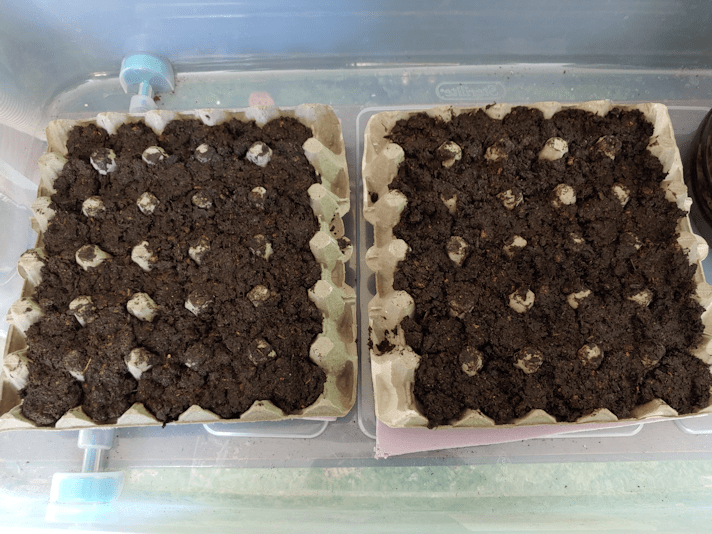
After adding more water and letting it soak overnight, we were left with a sort of peat slurry! :-D No fear of the seeds not getting enough moisture, this time!
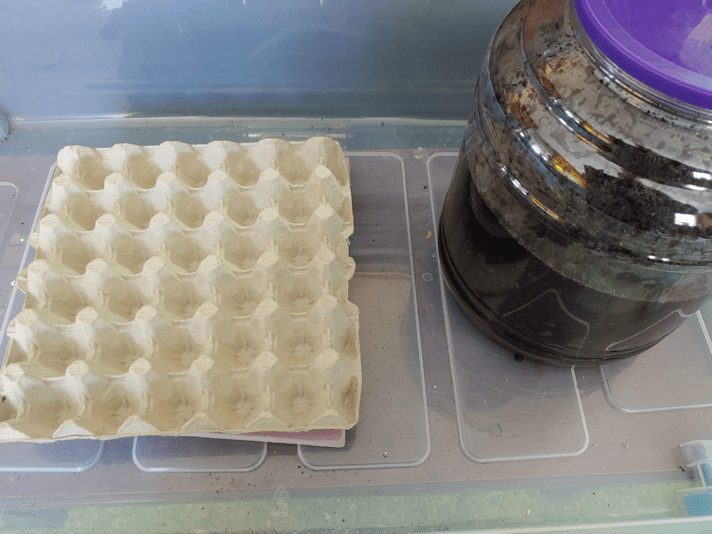
To contain any potential mess, I set up inside the under-bed storage container that will eventually be used to hold the beer cups that I will be using as larger pots, when it’s time to start the squash seeds. It won’t be needed for some weeks, yet, and it was the perfect size and depth for this job.
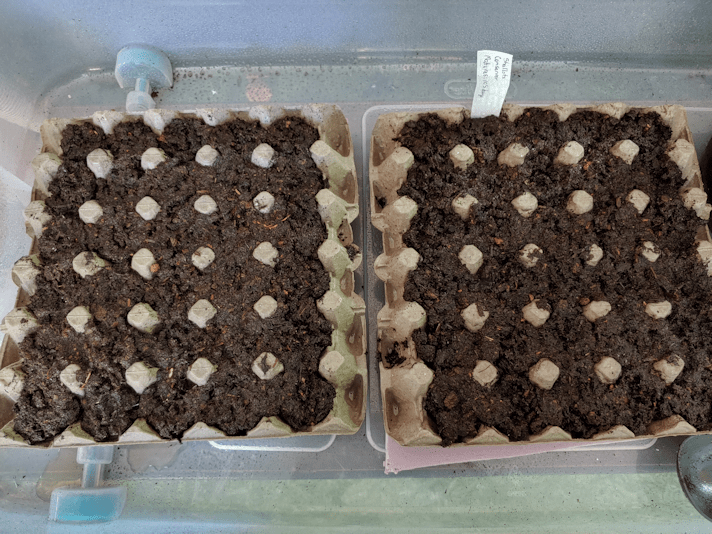
It’s a bit hard to see in the photo, but you can tell why having something under the trays to support them was so essential. The first tray I filled is the slightly darker one on the left. It’s darker, because the cardboard is completely wet! Which means it’s also very floppy. There is no way these trays could be handled, without something solid under them.
When I planted the bulb onions, I was left with about half a package of unused seeds.
Not the shallots! I had just enough seed to put two in every cell, minus 1 seed. :-D
Though the peat was well saturated, I still sprayed the tops, more to settle the surface than for actual watering. When it came time to move the trays, I tipped them side to side a bit, to allow excess water that had soaked through the cardboard to spill off.
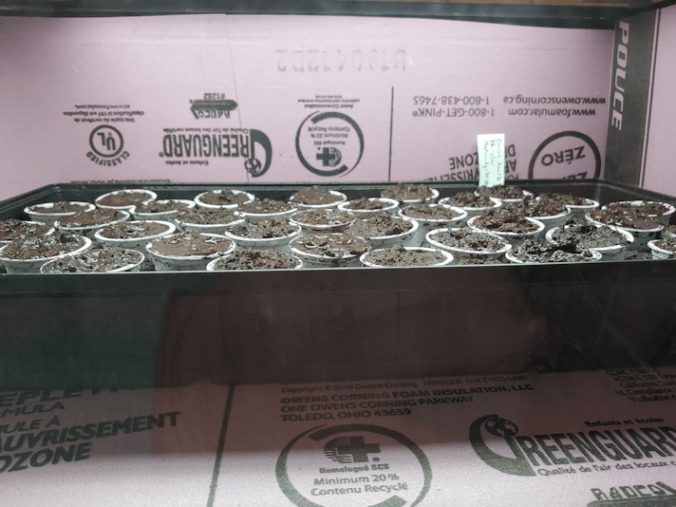
To get the trays into the tank, I had to take the light fixture off completely. All the trays fit perfectly, from end to end. If I wanted to, I’d be able to fit pots or egg cartons (dozen size, not 18’s) in the space at the front. That isn’t needed now, but when it’s time to start other seeds, we might find ourselves crowding the space as much as possible.
We freed up an 18 count egg carton this morning, so I checked out the fit in the smaller tank. One carton fits, of course, but only in one direction, and it’s long enough that we would not be able to fit in a second one. So I went back to my stack of flats and picked out two. The trays are 5 x 6 cells, and I cut them down to 5 x 5. That will allow two trays to fit in the smaller tank.
I will be adding a bit more peat to the container to absorb some of the excess water and leave it overnight. Tomorrow, I’ll be able to use the cut down trays and start the bunching onions in the small tank. :-)
Between these and the onion sets we’ll be getting in the spring, we should have enough onions in total, for fresh eating and for winter storage, to last us a year, if all goes well. With the bunching onions, I plan to dehydrate a lot of them, but will probably freeze some, too. We do use a lot of onions. I stopped to figure it out, and estimate we use about 200 yellow cooking onions a year, alone. Those are the ones we buy regularly. On top of that are the red onions, bunching onions and leeks we get more irregularly. We don’t usually buy shallots at all, because they are a fair bit more expensive. So it’s well worth the time end effort for us to grow a lot of onions! We won’t be trying this year, but I am hoping that by next year, we’ll be able to try growing leeks, too.
By the end if this year’s gardening, we’ll have a better handle on whether it’s worth it to keep growing from seed, or to go with buying sets. Growing from seed, for the amounts we’re after, takes up a lot of space, but there are more varieties available in seed than in sets. Either way, it’s going to be a trade off.
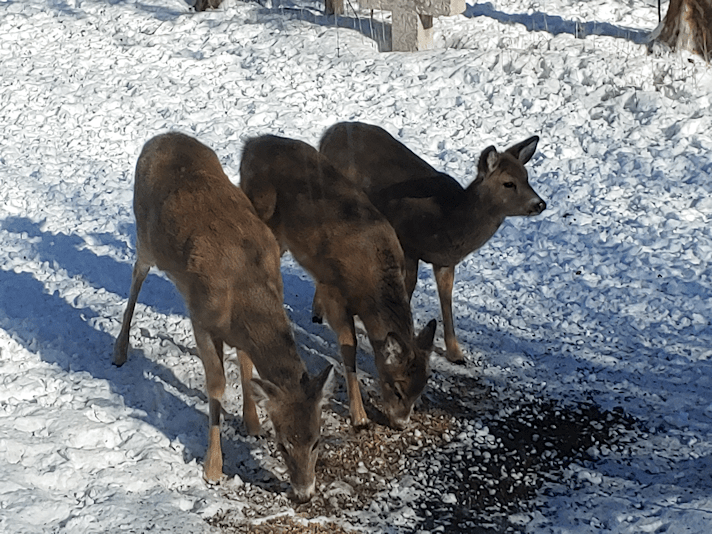
As a side note, we had company while I was working on the seeds.
I love that they’re coming around during the day now, when we can actually see them! :-D They are so beautiful!
When heading out this morning, I was on the lookout for Creamsicle Jr., hoping to get as much of a look at his eye as I can.
Much to my surprise, the cats that showed up this morning all came from either around the house, or the outer yard. Not a single cat was in the cat shelter!
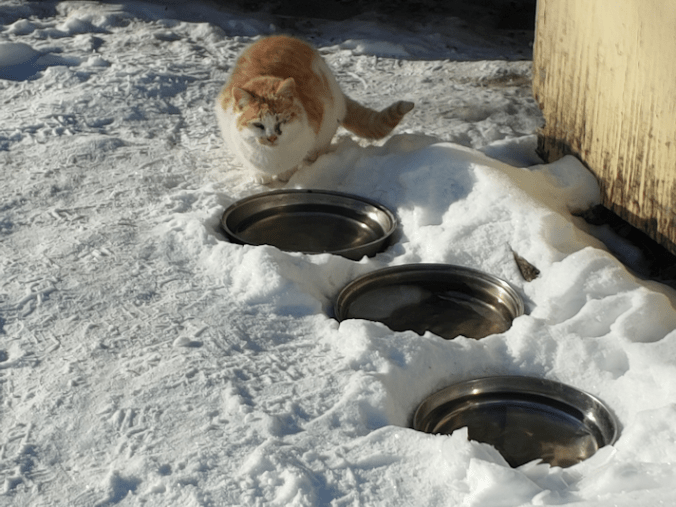
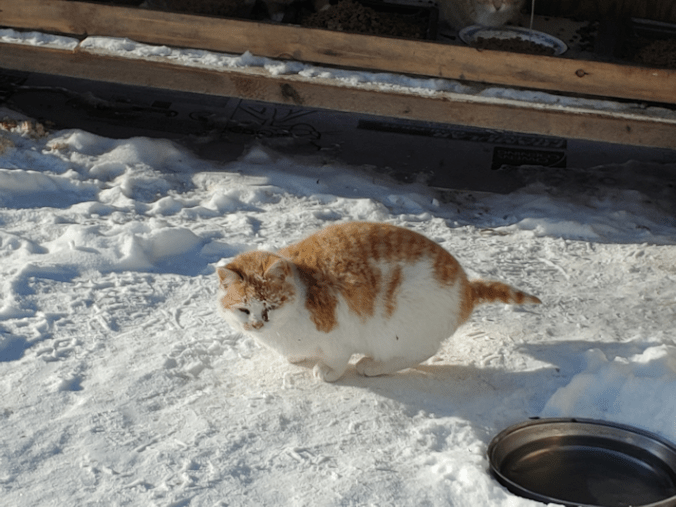
Ginger came running up, right away, after the jug of warm water. Even Nutmeg almost came close. Nutmeg does let me pet him, every now and then, but not today. Ginger likes to drink right out of the jug (he’s more careful about it, after knocking it over once!), so I left him to it while I kicked the frozen water bowls out of the snow and knocked out the ice. The heated water bowl was mostly frozen over, but not as much as yesterday. I tried looking in the windows into the cat’s house, but could see nothing to explain why they weren’t using it.
While I was taking care of the bird and deer feed (yesterday, we saw five deer come to the feeding station!) I was happy to see Creamsicle Jr.
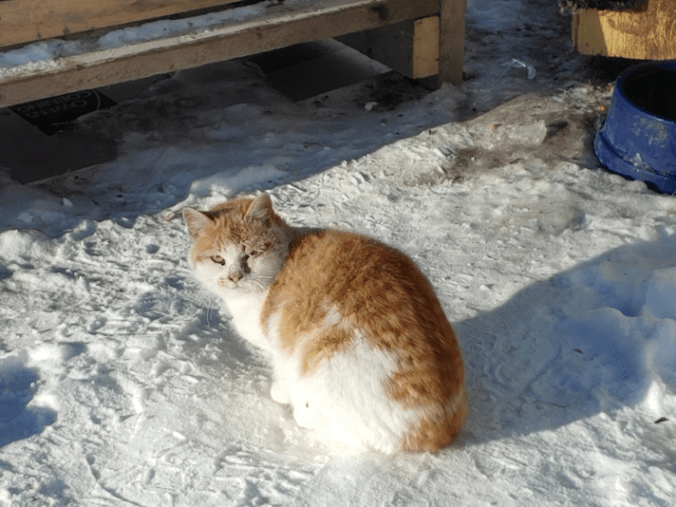
I had to walk past him to go back to the sun room after putting bird and deer feed out, which he didn’t like, but that warm water was tempting enough that he didn’t run away completely. I tried to move slowly and carefully to get these pictures, trying not to scare him away.
It half worked.
He did not like me coming close.
You can see some frost on the tips of his fur. All of the cats that came out had frosted tips! I don’t know where they were sheltering instead of their cat house, but wherever it was had enough humidity to get them frosty.
The one eye does seem to be more open now. The dark whatever-it-is under his eye and next to his nose is actually something stuck and dangling from a bit of fur.
The poor thing looks so miserable! It’s frustrating, that we were not able to socialize him more over the summer. I really want to get a closer look at that eye and maybe give it a wash, but not even Ginger is socialized enough for that. Hopefully, whatever is wrong will heal up faster as we get warmer.
At the time I headed out, we were still at -34C, though the “real feel” put us at -32C (-29F/-25F). As I write this, the app on my desktop, from The Weather Network, has us at -33C with a “feels like” of -38C (-27F/-36F). It also says our high of the day is expected to be -24C with a “feels like” -33C (-11F/-27F). My Accuweather app on my phone, however, has us at -29C and a “real feel” of -27C (-20F/-16F) with a high of -21C (-6F) with the “real feel” expected to be -31C (-24F).
It’s supposed to get colder again for a few more days, then slightly milder for another couple of days. After that, we’re basically hitting spring and temperatures are expected to keep getting warmer and warmer. By the end of February and into March, we should be hovering just under freezing. So in the week after this polar vortex is finally gone, we’ll be warming up by about 30 degrees from what we’re at right now. It’s going to feel positively tropical. We’re going to be breaking out the shorts and t-shirts! :-D
So I’m going to have to take advantage of this relatively warm day and head into town. Making our monthly bulk shop is out the window for this month. Buying locally, little by little, has really wrecked our budget. It’s the things like cat food and litter that is so much more expensive here that messes up our numbers. I know a lot of people hate on Walmart, but it’s places like that, and their prices, that allow us to have the room in our budget to care for the cats, and ourselves, at the same time. At Walmart and Costco prices, we easily spend about $300 a month on cat food and litter. Buying the same quantities locally would be closer to $600.
My original plan had been to head out late this morning to hit the post office before the general store it’s located in closes for the afternoon, as they do every Wednesday. However, the mail can wait. I’ll head out in the afternoon, instead. I’ll be heading into town, first. The package my husband was supposed to get turns out to be with Purolator, not FedEx, and now they’re saying we’re not in their delivery zone. They never said that when they first phoned him about it. It has been delivered to a depot in town and we’ve got 5 business days to pick it up. Fair enough. I can take advantage of that side trip to fill our gas tank (at a non co-op gas station, so we don’t end up with more than $400 in damages again) along the way. I’ve already gone over my planned route with a daughter. I’ll be going to the Walmart in a smaller city. They don’t have as much available there, but my sister lives not too far from there, so if the van breaks down on the road, I can call her for help.
I’ll be taking a route that will take longer, but the highway runs through a number of small towns. I know I’ll have a cell phone signal along there, too. My usual route would be first to the town my mother lives in, and the cell phone dead zone covers most of that drive. There’s nothing but isolated farms in between. From that town, I would cut across to a different highway, take the highway to another cross road before finally reaching the highway that goes to the city I am aiming for. The entire route is basically open land with a few farmhouses tucked away behind shelter belts, well away from the roads. The only towns I would go through, between home and this city, is the town my mother lives in, and the village near my sister’s farm.
I sometimes think I’m being ridiculous about this. I grew up there, and I’ve moved back to this area with my own family a couple of times over the decades. At one point, we lived in a house my parents owned, maybe 3 miles away from where we are now, and my husband was one of the many people who made the commute to the city. We are not strangers to these temperatures and road conditions, and didn’t think twice of packing the kids into the car and making a trip to the city just to see a movie. Back then, however, we had a car that was only 3-5 years old, and we were all younger and able bodied.
The van we have now is almost 15 years old and has well over 400,000km on it. We depend on that van more than we’ve depended on any vehicle before. Partly because, with his disability, it’s the vehicle my husband can get in and out of, and has room for his walker. Partly because it allows us to do those monthly shops that would never fit in any car we’ve ever owned.
Thankfully, we do have my mother’s car as a back up vehicle. It’s a couple of years newer than ours and has half the mileage, but has had a remarkable number of problems with it, and not just because of my mother’s terrifying driving habits. After discovering what happened with our van, I’ve already asked the mechanic about checking it over when we bring her car in for an oil change. My mother bought her gas at the co-op gas stations, too, so it may well be pretty clogged up. It would explain things like the terrible mileage. It’s still a relief to have it. We may not use it much, and the registration and insurance costs more than for our van, but being as much in the boonies as we are, it’s worth that expense to have access to a second vehicle, just in case.
Bah. I’m rambling right now. Nerves. I really don’t want to make this trip, but we just can’t afford to buy what we need locally. They often don’t even have any inventory left for things like the bigger boxes of cat litter (almost half the size of what I can get at Walmart or Costco, but almost double the price!). Other things, we just can’t get locally.
But hey! In the time it took to write this, it has warmed up a degree! :-/
After having to get creative to prepare our first tray of seed starts, we left the tray overnight to give the peat in the K-cups more time to absorb the water.
I didn’t check it until late morning, and the peat was still dry in the middle! The water was basically staying on top. It was better than before, though, so I went ahead and planted our first seeds of the year!
I used a skewer to make holes for the seeds and sprayed more water into the holes in the K-cups (the peat pellets were fully saturated). Then I poured some of the seeds into a small dish and used the dampened, flat end of the skewer to pick up seeds and transfer them into the pots and lightly cover them. Using the skewer works really well! I ended up using only about half the seeds in the package to fill the tray, and that’s with 2 or 3 seeds each! Then I sprayed the tops with more water – especially the K-cups – before getting a daughter to help me transfer it into the big aquarium.
I am not going to use the tray’s dome to cover them, as the high humidity can promote mold growth. Instead, we will be checking them every day, and probably spraying them daily. The tray is designed to water from below, to encourage the roots to grow downward, so we won’t keep up the spraying for too long. It’s mostly the dry peat in the K-cups that concerns me. I will also be leaving the light on all the time until the sprouts are emerged for a few days, then reduce it to about 16 hours a day. Hopefully, we will soon have a tray of shallots in here, too! Before filling any pots (if I can’t get more pellets), I’ll have to make sure to use a container to saturate the peat in, first, then fill the pots.
Meanwhile…
I’m a suck.
I’ve mentioned that a few times, usually in the context of cats, but it turns out I’m a gardening suck, too.
Last night, the girls and I were pouring over a satellite image of the property. We marked out the current garden beds, and we have been using it to figure out where we are going to plant various things.
One thing is for sure. If we aren’t able to get a load of soil this spring, we’re lining ourselves up for some back breaking labour, and probably a lot of failed growth. Last year, we basically dug small holes for everything we planted, filled the holes with a soil mix, then planted or transplanted into these in-ground “pots” we created. That’s fine for the small garden we had last year, but not so much for this year! The soil is so hard and filled with rocks, it’s difficult to use a spade or hoe. Even sticking wire flags into the ground left me with several bent flags from hitting rocks. We have so few tools here, we don’t want to break what’s left of what we’ve found! My mother still goes on about how we could get one of the tillers fixed and using it, but I’m pretty sure we’d just break a tiller, trying to use it! I couldn’t even use the soil auger drill attachment when we planted all those bulbs in the maple grove last fall. The original plan had been to slowly build up areas and increase our garden size over several years, but… well, then the world went crazy.
We have so many more things we’re planning to grow compared to last year, it’s going to be a huge job. Especially the area where we want to plant the tallest things – 3 of our corn varieties, and the giant sunflowers. We’re wanting to start going into an area that has never been part of the garden before, and has only had grass on it. Two of the reason we grew giant sunflowers last year was for a privacy screen and wind break. We’re still keeping that in mind for this year. Between tall plants, using trellises, and whatever we come up with to keep the deer out, we should be able to make a pretty decent privacy screen. We may be in the boonies, but the main road goes right by the garden. Aside from vehicles slowing down to watch the deer at the feeding station, through the lilac hedge, we’ve got our vandal and his creeping about to contend with. :-/
As we talked about what seeds we have now, and what will be shipped in time for spring planting, we ended up talking about other things we’d like to plant, and I showed the girls some things I’d found on the Baker Creek website. We have a lot of things that are purple (corn, potatoes, sunflowers, beans, carrots…). We had a blast looking up other purple things, and talked about having a purple themed garden. So, of course, I was adding all sorts of things to my wish list.
I really ought to know better. :-D
Yeah, you guessed it.
I made another order this morning!
Thankfully, seeds are still cheap.
When I placed the order, there was a highlighted note telling people that, because there are so many more orders this year, things are taking longer to process. For us in Canada, that means it could take up to 3 months for our seeds to arrive. That would be too late for anything that would require starting indoors, but that’s okay. I’d rather order them now, while they are still available.
So, this is what we’ve ordered (all links will open in a new tab, so you don’t lose your place. :-) ).
Spoon Tomato: this is the one that I really wanted to show the girls – and then we got sucked into the vortex! We are not big tomato eaters; my older daughter enjoys eating them, and we have ordered a mix of cherry and grape tomatoes for her, but when I saw these “micro mini” tomatoes, I just had to show them to her. While they are incredibly small (possibly the world’s tiniest tomato), they’re supposed to be big on flavour. They’re adorable!
Chinese Pink Celery: this is a new variety for Baker Creek, and one that was already on my wish list. I was thinking for next year, but I went for it. These are supposed to be easier to grow than other types of celery, and seem to be well suited for our climate. Hopefully, we’ll get them early enough to plant them this year.
King Tut Purple Pea: This was another one already on my wish list, and since we’re going with a purple/pink theme, I included them. We only have 1 variety of peas right now, anyhow, and I felt it wasn’t enough. I’d resisted ordering more, since we already have so many other things, but… it’s peas. Can you have too many peas? I don’t think so. I highly recommend checking out the link and reading the story included about them. :-D
Merlot Lettuce: lettuce is one thing I had not included in previous orders for various reasons. We’ve tried growing lettuce before, in our balcony gardens, and never had much luck with them. Plus, they just seem to go bad quickly. But as we were looking at the purples and dark reds, these stood out. Not only do they have an amazing colour (they are well named!), but they are bolt resistance and cold tolerant.
Lunix Lettuce: Every time I see the name, I want to say “Linux” instead of “Lunix”. LOL These have such deep, dark red leaves! Bolt resistant, and apparently great for hydroponics and off season low tunnel growing. We’ve been looking at ways to use poly-tunnels to extend our growing season, so it would be good to test these out.
Lollo Rossa Lettuce: This is a very dramatic looking head lettuce! Also noted for its great flavour. I’ve had no luck growing head lettuce before, but maybe now that we have the spaces that we do, we can make it work.
Dishcloth or Luffa Gourd: this one’s for me! We have so many squash already, the last thing we needed was one more but, like I said, I’m a suck! Chances are, we won’t be able to start them this year, but they seem to be having a surge in popularity, so I figured I should get the seeds now, while I can. Young squash are edible and tasty. Left to fully mature, the gourds are dried, peeled, the seeds shaken out, and the remaining sponge is great for washing with. I don’t think I’d use something that size as a dishcloth, but in the shower, they are great for exfoliating the skin. You’ve probably seen them in stores, along with the back scrubbers and such.
Along with these, we will also be getting some free mystery seeds that Baker Creek always includes with their orders.
This really should be the last of the seeds we order, but I’m pretty sure I said that after our first two orders for this season! :-D