Things with crab apples: apple cider vinegar

Things have been a bit crazy lately, weather wise. Some severe storms have blown across our area and, while we have pretty much just caught the edges of them, they still resulted in internet outages and our power flickering in and out.

Perfect weather to stay indoors and to things with our crab apples!

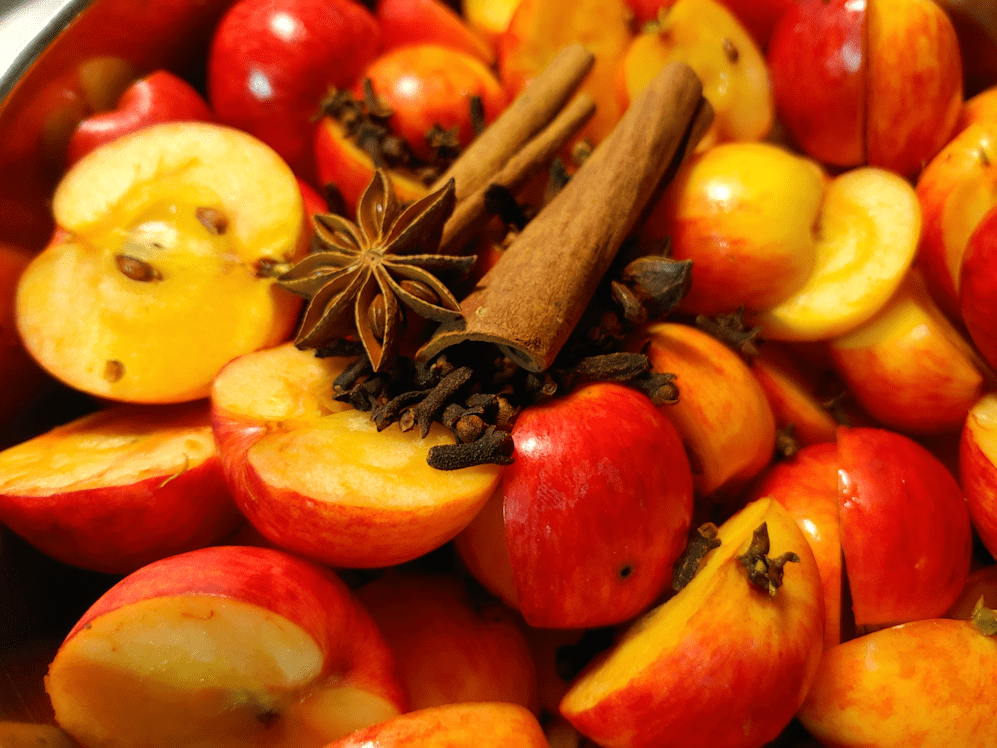
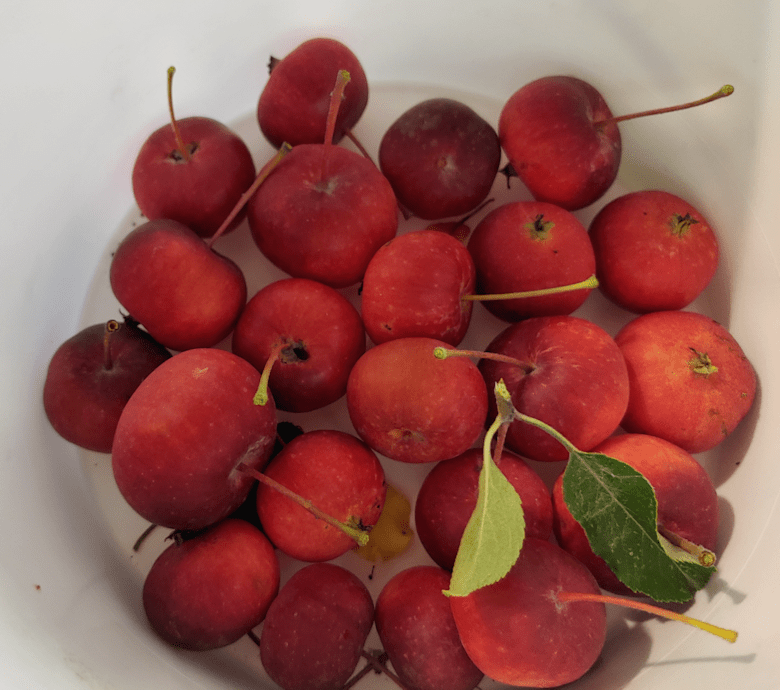
I decided to use the small amount of apples from one tree to make apple cider vinegar.

A recipe I found called for filling a quart jar 3/4’s full, and it seemed I had enough to do that with just these.

I washed all the apples in cold water with a splash of vinegar, leaving them to sit overnight. The recipe I found called for the scraps of apples – skin and cores – adding that if whole apples were used, to chop them coarsely. Since the crab apples are so small to begin with, after removing the stems, I cut them all in quarters. Some also needed to have bruises or damage cut out, and a few turned out to be bad on the inside and could not be used.

In the end, I had just the amount I needed to fill the jar 3/4’s full, perhaps a touch extra.

The next step was to dissolve a couple of tablespoons of sugar into a cup of water and adding that to the jar, then adding enough water to completely cover the apple pieces. Filtered water was suggested. As we have well water, we could have just used that, but our water is very hard and iron rich, so I used bottled water I happened to have.

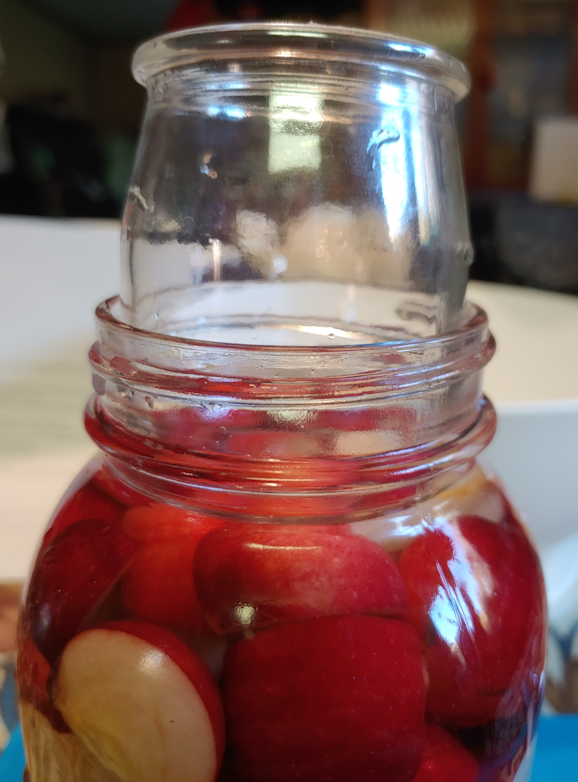
The apples need to be kept submerged, and there are fermentation weights available for this. I have none, and had never seen one before looking it up on the internet. The alternative was to put a small jar in to weigh it down.

I have a collection if tiny jars that I have hung on to, and one of them fit perfectly into the quart jar! This is from a package of yogurt that came in 4 little jars to a package. I admit, I bought it just for the jars because they were so adorable. Handy, too!

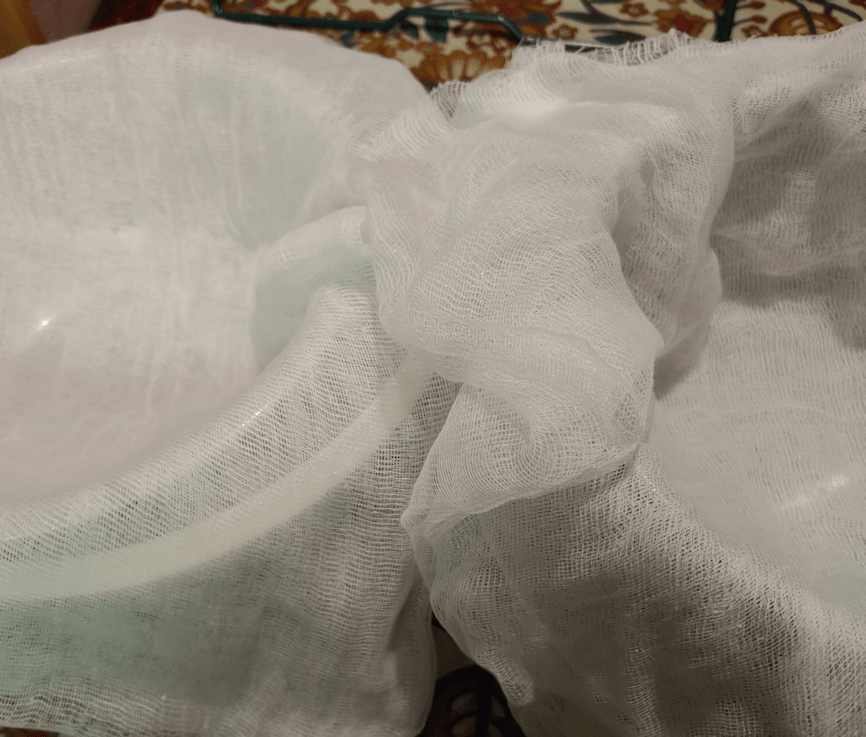
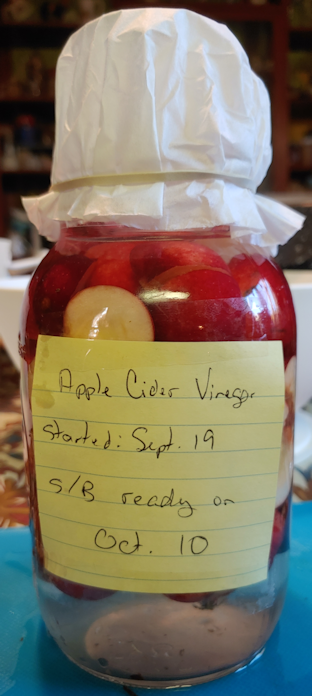
The next step was to cover the jar with something that would keep dust or whatever out, but allow air in. It could be a piece of cheese cloth, some thin cloth or a coffee filter, fastened in place.

I stole one of my daughter’s coffee filters.

Now it needs to just sit in a dark place at room temperature to ferment into vinegar. This should take about 3 weeks. I’ve tucked it into the top of a cupboard we used fairly frequently, so it will be easy to check if there is any mold happening.

After 3 weeks or so, it will be strained, then left at room temperature to continue to ferment for another 3 or 4 weeks.

Once it’s at the desires taste/strength, it just needs to be strained and re-bottled. We’ll see how it turns out!

The Re-Farmer

Apple Cider Vinegar

Items needed:

  • quart size jar (an air and liquid tight lid will be needed after fermentation is complete)
  • fermentation weight or another jar small enough to fit into the mouth of the quart jar
  • cheese cloth, clean cloth or coffee filter to cover the jar
  • cord or elastic to fasten cover in place

Ingredients:

  • apple scraps or whole apples, coarsely chopped; enough to fill a quart jar 3/4 full
  • 2 Tbsp sugar
  • about 2 cups filtered water
  1. Sanitize a quart jar and let air dry.
  2. Fill the jar 3/4 full with apple pieces.
  3. Dissolve sugar in 1 cup water and pour over the apples.
  4. Top up with more water until apples are covered.
  5. Add weight or small jar to keep apples submerged. Exposed apples may start to mold.
  6. Cover the jar with a cheese cloth or coffee filter and use a cord or elastic to hold it in place.
  7. Place in a dark location at room temperature and leave for about 3 weeks. Check regularly to ensure the apples remain submerged and no mold is growing.
  8. After 3 weeks, strain the apple pieces out, return liquid to the jar and cover again with cheese cloth or coffee filter.
  9. Return jar to a dark location at room temperature for another 3 or 4 weeks, stirring every few days.
  10. Taste after 3 weeks to see if it has reached desired tartness. If not, leave to ferment longer until it reaches the desired flavour.
  11. Cover with a lid and use as desired. The vinegar can also be transferred to a different jar or bottle, if preferred.

If you notice a film has formed at the top of your vinegar, congratulations! You have developed a “mother.” It can be used as a starter for future batches of vinegar – or a small amount of a previous batch can be used.

Crispy rice patties

I had a birthday recently, and my awesome daughters treated me to Chinese food. We ordered a bunch of mostly protein dishes to pick up in town, while my older daughter cooked scallop noodles, coconut sticky rice and plain white rice at home to go with it.

On unpacking the order, we discovered they had thrown in a couple of free orders of white rice and chicken fried rice.

Which left us with a pot of plain white rice that ended up in the fridge, untouched.

Not a problem at all! I used it to make these crispy, pan fried patties. It’s a great way to use up leftover rice, though tasty enough to be worth making a bunch of rice, just for this!

Rice Patty Ingredients:

  • 4 cups cooked, cold white rice
  • 4 eggs
  • 1 – 2 cups shredded cheese (I used medium cheddar and a fine grater)
  • seasonings to taste (I used bacon salt, freshly ground pepper, paprika and garlic granules)
  • oil and butter for frying

Tip: when your cooked rice is ready to go into the fridge for the night, put it into a large slide-lock freezer bag. You can then more easily break any lumps of chilled rice apart in the bag, before putting it into the mixing bowl.

Note: I used a fine hand grater, normally used to grate Parmesan, for the cheese, as a regular sized grate could make the patties fall apart more. If using a regular size grate, reduce the amount of cheese used. The cheese can be skipped, too, if you wish.

Sauce ingredients:

  • mayonnaise
  • sour cream
  • white wine vinegar
  • dried herbs and seasonings to taste (I used a Mrs. Dash mix, plus a bit of rosemary lemon salt and fresh ground pepper, but feel free to combine whatever herbs you like or have on hand!)

To make the rice patties

  1. add your chilled rice into a medium bowl. Add seasonings to taste.
  2. add eggs and mix well with your hands, breaking up any remaining clumps of rice.
  3. add shredded cheese and mix in. Let rest for a minute or so (this is a good time to make the sauce). Note: if the rice mixture seems too loose to form patties, mix in a small amount of flour, then let rest again to allow the flour to absorb moisture.
  4. prepare a deep frying pan by adding about half an inch of oil (any oil with a higher smoke point, such as canola, sunflower or peanut oil, will work) along with about a tablespoon of butter, at high heat. The butter adds flavour, but it also lowers the smoke point of the oil. It can be skipped, if you wish. Note: it is important that the oil is very hot before adding the patties, so that they will crisp up rather than absorbing the oil.
  5. begin to form patties by taking about 1/4 cup of rice and pressing it into your hands to form a sticky ball. Flatten slightly, then set aside on a plate.
  6. when the oil is very hot, gently add several patties into the pan (I could fit only 3 in my pan). Use a spatula to gently flatten the patties.
  7. cook until the bottoms are crispy and golden. Gently turn the patties to cook the other side until also crisp and golden.
  8. remove patties and drain on a paper towel. Keep warm as you continue cooking patties in batches. If it become necessary to add more oil and butter to the pan, make sure to give it time to get very hot before continuing cooking.
  9. serve with sauce while hot. Garnish, if desired.

To make the sauce:

  1. place equal parts mayonnaise and sour cream into a small bowl or measuring cup. I used about 2 – 3 Tbsp each.
  2. add a splash of white wine vinegar and any dried herbs you wish.
  3. mix well and set aside to let the flavours meld.
  4. drizzle over crispy rice patties just before serving.

Making these is rather messy, and the rice mixture tends to want to fall apart until it starts to get crispy, but it is so worth it!

Enjoy. :-)

The Re-Farmer

Foil packet fire pit cooking: preparations

I am really looking forward to our cookout this afternoon, and have been doing some preparations for things beyond hot dogs and corn dogs. :-)

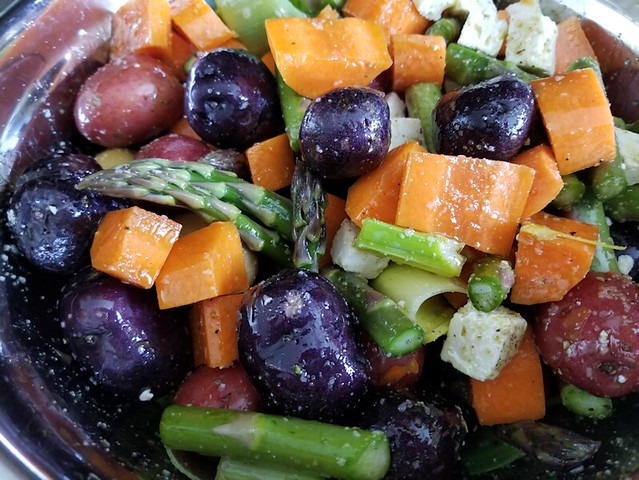
I’ve got 4 foil packets now sitting, ready and waiting, allowing several hours for the seasonings to work their magic. Here is the first one I made up.

20190316.firepit.foilpacket.potatoe.mix

The base of this one is a packet of mixed baby potatoes. I stabbed them all over with a fork to allow the flavours in. The rest is mix and match of what I had available. A couple of carrots, a leek, and some asparagus (there was a good sale on those recently. ;-) ). They were tossed with Rosemary Lemon Salt, pepper, garlic powder and olive oil.

This amount ended up being split between two foil packets. I used a double thickness of heavy duty aluminum foil to wrap them in.

This is something I’ve done before, using whatever vegetables and seasonings I had, and cooking it in an oven. Today will be the first time I’m doing this over a fire. I can hardly wait!

I am also trying out two versions of cabbage.

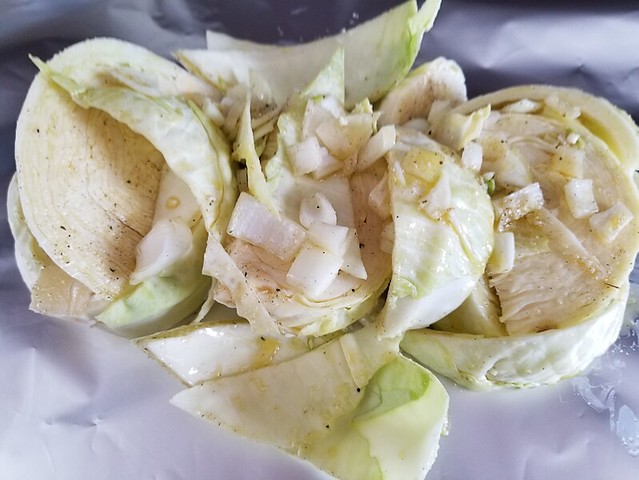
20190316.firepit.foilpacket.cabbage.butter.mix

I’d found a recipe and instructions online, modified slightly for what I had on hand. This is one cabbage, outer leaves removed and cut into 8 wedges. The cut sides are spread with softened butter. In with is is half a medium onion, Scarborough Fair Garlic Salt, pepper, and extra garlic powder.

Because you can’t have enough garlic.

These were also wrapped with a double layer of heavy duty aluminum foil.

20190316.firepit.foilpacket.cabbage.oliveoil.mix

With this version, the only thing I changed was to toss everything in olive oil, instead of buttering the wedges.

As you can see, some of the leaves of cabbage came loose. Before wrapping it up, I took one out to give it a taste.

Wow.

I am totally still craving it right now. I think this is going to be a future salad; raw cabbage chunks tossed, with the same seasonings, tossed in olive oil. It was so, so good!

You know. When I was a kid, I hated cabbage. We used to grow lots of it, and my mother used it to make sauerkraut, or to wrap cabbage rolls. I don’t recall us ever eating it raw. My mother’s sauerkraut was incredibly strong – at least to me – and I didn’t like it. As for cabbage rolls, I loved the filling. Hated the cabbage. I still am not a fan of cabbage rolls (for a Polish person, that’s heresy! :-D ), and it’s because of the cabbage leaves. I’ve since eaten and enjoyed sauerkraut, cooked in bigos – something my mother never made – but that’s about the only time I’ll eat it.

Anyhow…

These cabbage wedges were also wrapped in double thickness, heavy duty aluminum foil.

Along with these, I have cut a pineapple into slices (with the core still in; otherwise it falls apart) to cook up on the grill for desert.

It should warm up to -4C by the time we’re going to start cooking over the fire. It’s going to be a beautiful day! I am so looking forward to it!

The Re-Farmer

Fire pit tester

I was thinking of things to do for the cookout we have planned on the weekend. Being such a warm day today (we’re hovering around 0C), I wanted to do some more to prepare the fire pit area. I figured we may as well try something new, while I was at it!

While looking for ideas, I found the idea of wrapping the wiener in bread dough and cooking it over the fire; hot dog and bun, all in one. This is something we’ve done before in the oven, but not over an open fire.

When I was at the grocery store earlier today, I spotted some frozen dinner rolls, uncooked, and decided to cheat.

Continue reading

Getting Steamed

We got to try out the new bamboo steamers last night, and these are the results!

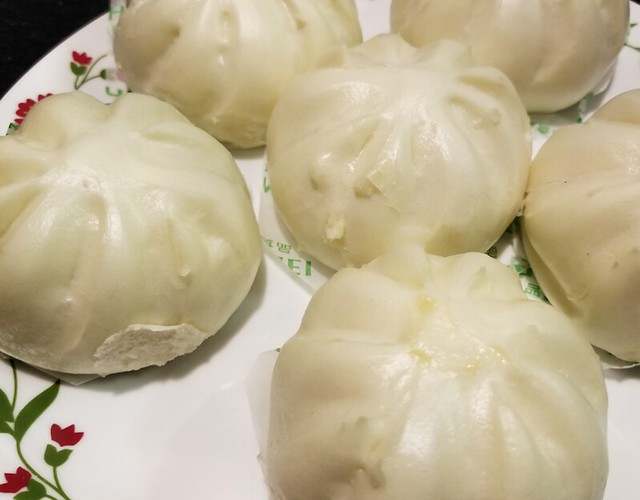
First up; pork and mushroom bao.

20190226,steamed.bao

I was sure I’d bought some frozen bao, but I looked at so many things, I think I actually bought the in-house made bao at the same counter I got the dumplings. Either that or the buns were completely thawed out by the time we got home. Since the other frozen food wasn’t, that seems unlikely.

They were the first things my daughter prepared in the steamer. The instructions I found suggested putting something as a liner in the steamer, such as cabbage leaves or parchment paper, so food wouldn’t stick. These already had their own little parchment papers under them, so no extra liner was needed.

The dough was satiny soft and tender, and they were delicious. They did tend to stick a tiny bit to their papers, which is much better that than sticking to the steamer tray! :-)

The variety tray of dumplings I got had so many that, even with 3 steamer trays holding 5 dumplings each, they had to be cooked in batches. These also did not need anything to line the trays, since they are each wrapped in their own little cabbage leaf.

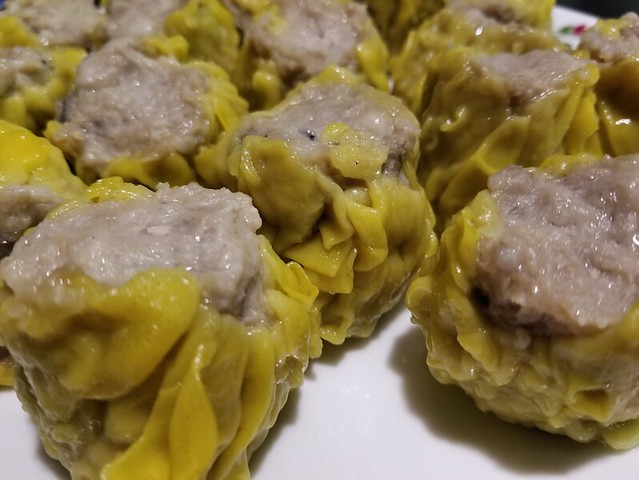
20190226.dumpling.pork

The first batch was pork dumplings.

Definitely my favourites. I realize these are just “grocery story” dumplings, and I’m sure purists would be quite unimpressed, but boy did they ever hit the spot. Meaty and juicy and full of flavour!

The tray also included seafood dumplings; about half as many as the pork ones.

20190226.dumpling.seafood

Personally, I found them too strongly fishy in taste; something my daughters did not find at all. There isn’t a lot of seafood I like, so the girls happily ate the rest of my share! :-D They preferred these to the pork ones. The dumplings were big, heavy and dense with seafood. No skimping, here!

The store we got these at have other varieties that were not included in the mixed tray I got, and we look forward to trying others the next time we shop there!

Now that we’ve broken the steamers in and have an idea of how to use them, it’s time to break out some of my cook books. I have dim sum recipes that I would love to try out!

The Re-Farmer

Belated Canadian Thanksgiving dinner

The Thanksgiving family dinner we had planned last month got rescheduled to today.  Since moving here, we did have one large family dinner, before Christmas or so, so it’s been almost a year.

I think it turned out rather well.

I think Doom Guy agrees. Continue reading

Nutty Seedy Brittle

I decided to try something new tonight; making a brittle.  While I’ve certainly had brittle before, I’ve never made it until now.

When I started looking up recipes, I thought I might not be able to, since they all included corn syrup.  This is something I don’t normally have in the pantry.  However, I did find some without corn syrup, so it worked out in the end.

Before I share the photos and recipe, here are some important notes.

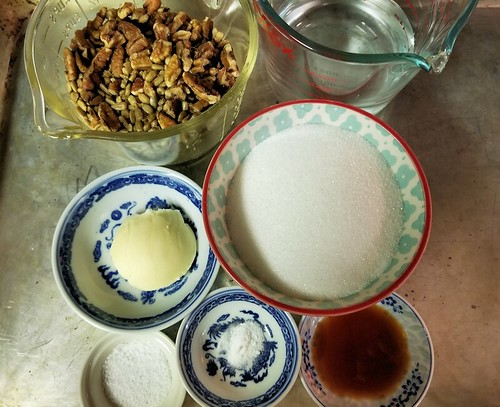
20181028.brittle1.ingredients
First, make sure you premeasure all your ingredients, first.  Once the sugar starts to caramelize, you will have to work quickly, so have them all ready and on hand.

20181028.brittle2.preparedpan

Second, make sure you have a baking sheet or pan oiled/buttered and ready before you start.  If it’s not well oiled first, it will be next to impossible to get the brittle off once it hardens.

It would also be preferable to use a heavy bottomed saucepan, if you have one, for even heating, as sugar can burn easily.

And finally, have a trivet or pot holder near the pan.  When the sugar caramelizes, you will need to work quickly to remove it from the heat and add the final ingredients, so make sure to have a safe place where you can put your hot pot, stir things in, then immediately pour it onto your prepared pan.

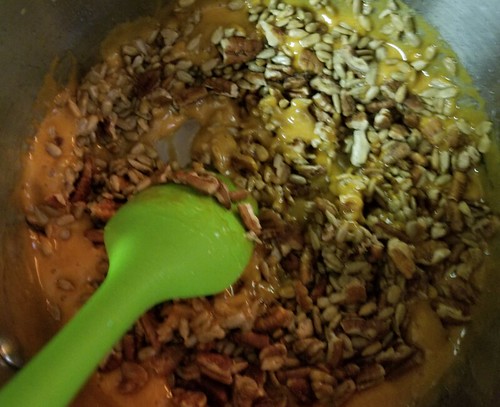
For this brittle, I used a mix of pecan pieces and roasted, salted sunflower seeds, because that’s what I had on hand.  Since the sunflower seeds and butter were both salted, I was lighter on the added salt.  I also used kosher salt; being a coarse salt, there’s a bit less in the measuring spoon than when using table salt.  If I were using table salt, I would reduce the amount by about half, unless I were using unsalted butter and none of the nuts/seeds were salted.

Nutty Seedy Brittle Ingredients (makes about 2 – 2 1/2 cups)

1 1/2 cups nuts and seeds (peanuts, almonds, walnuts, pecans, macadamia nuts, cashews, sunflower seeds, pumpkin seeds, etc.)
1 cup granulated sugar
3/4 cup water
1/4 tsp salt
1/2 tsp vanilla
1/8 tsp baking soda

20181028.brittle3.syrup.mixture
1. Combine sugar, water and salt into a saucepan over medium/medium-high heat.

20181028.brittle4.syrup.mixture

2. Bring the syrup mixture to a gentle boil, then set timer for 10 minutes.

3 . Continue to boil, stirring occasionally, watching for the colour to change.

20181028.brittle5.syrup.mixture
This is after 10 minutes. 

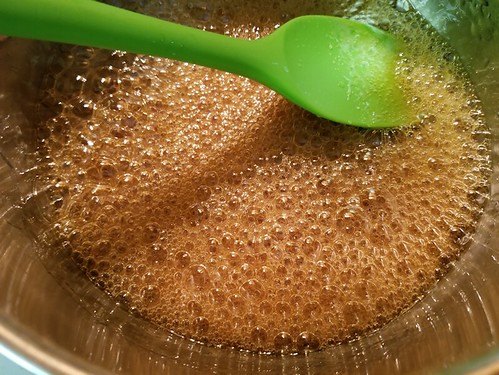
4. Continue to boil until the colour changes from clear to a light amber colour.  This may take another 10 minutes, depending on your stove.

20181028.brittle6.syrup.mixture

5. As soon as the colour changes (or the temperature reaches 300F on a candy thermometer), remove from heat.

20181028.brittle7.adding.ingredients

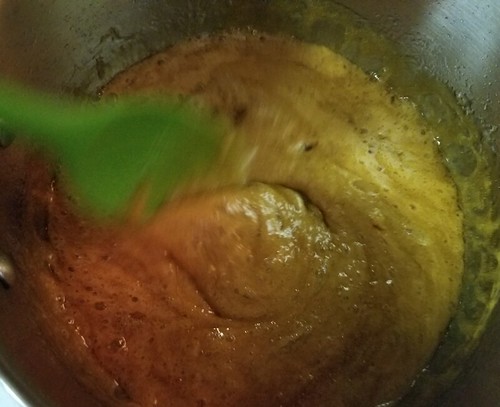
6. Quickly add the butter, vanilla and baking soda, while stirring constantly.  The mixture will foam up.  Continue stirring until the foam subsides and the mixture begins to look glossy.

20181028.brittle9.adding.ingredients

7. Quickly stir in the nuts and seeds, then pour the mixture onto the prepared pan.

20181028.brittle10.setting.brittle

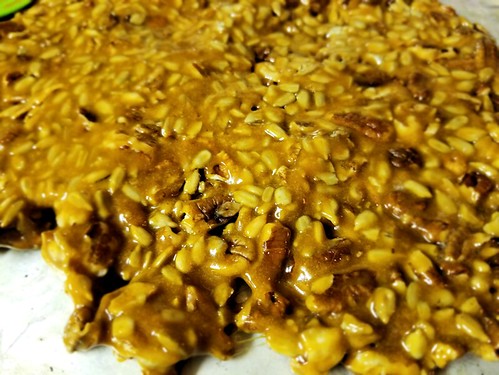
8. Flatten the mixture, as needed, and allow to cool for about 20 minutes, or until brittle.

That’s it!

It’s a simple recipe, using some pretty basic ingredients.  It’s just a bit finicky on technique.  Well worth it!

Enjoy!

The Re-Farmer
Home Made Chicken Stock

The following is a “use watcha got” recipe to use up the carcasses of your cooked chicken (or turkey).  This stock is cooked down to be more concentrated, and should result in a rather firm, gel-like consistency when cool.

Decide ahead of time how you will store your stock, and prepare in advance as needed.  I used pint sized canning jars and sterilized the canning funnel, jars, lids and rings during the last hour or so of cooking.  You could also pour the stock into ice cube trays for freezing, or use freezer bags.

You will also need a colander and bowl large enough to hold your stock, plus a sieve and cheesecloth for straining.  Having a giant measuring cup is also very handy to stain into, making it easier to pour the stock into jars.

Ingredients:

bones and skin from roasted chickens (or turkey)
pan drippings
onion and/or leeks
garlic cloves
vegetables such as carrots, celery (including leaves), celeriac, parsnips
herbs such as rosemary, thyme, savory, sage, bay leaves, ginger, parsley or dill
peppercorns
salt; optional
cold water
optional additions: lemon or orange zest, a splash of apple cider vinegar or white wine vinegar

homemade.chicken.stockNote: Quantities will depend on how many carcasses you are using.   For 3 carcasses, I used 1 large onion, a whole head of garlic, 4 carrots, and whatever herbs I had handy in my cupboard.

Seasonings will also depend on how the chickens were seasoned when cooked.  When I roasted ours, I first rubbed them with lemon juice and put the lemon pieces, with some bay leaves, into the cavities.  I also rubbed lemon salt, paprika, pepper and oil into the skin.  Because of this, I was able to be light on the salt and pepper when making the stock.  What salt I did use was lemon salt.

  1. Place your chicken bones and skin into a large stock pot.  Scrape pan drippings in (cooled pan drippings may be gelled, which is awesome).
  2. Add onions, cut into large pieces (skin can be left on, if you wish), or leeks cut into 2 inch or so chunks.
  3. Crush garlic cloves with the side of a large knife (skins can be left on, but I like to remove them) and add to the pot.
    Note: If you don’t have fresh onions or garlic, dried can be used.
  4. Vegetables do not need to be peeled.  Just scrub them, and remove the root ends.  Chop them into about 2 inch pieces, then add to the pot.
  5. Add fresh or dried herbs and other seasonings of your choice.
  6. Add peppercorns (or ground pepper, if that’s what you have) and salt.  If you’re not sure about the salt, leave it for later, after tasting.
  7. Add enough cold water to cover everything by about 1 or 2 inches.
  8. Bring to a boil, then reduce to simmer.  Do not stir, as that will make your stock cloudy.
  9. Simmer for about 3-4 hours.
  10. Place a colander over a large bowl.  Carefully pour everything in the stock pot, into the colander.  Gently lift out the colander, allowing to drain, and set aside.  Colander contents can be discarded.
  11. Wash the stock pot out and place back on the stove.  Pour the stock, through a sieve, back into the stock pot.
  12. Taste for seasonings.  Adjust as desired.
  13. Bring the stock to a boil.  Reduce heat and continue to simmer the stock down until reduced by 1/3rd.
  14. Line a sieve with several layers of cheesecloth and place over a bowl or large measuring cup.
  15. Gently ladle the stock into the lined sieve.
  16. Fill prepared containers with strained stock (in batches, if need be) and seal.
  17. Refrigerate or freeze, as desired.


Using the carcasses of 3 chickens, I was able to fill 11 pint sized canning jars (all the ones I had available), plus have 3 cups of stock left over.

The second cooking down of the stock concentrates it a bit; if you wanted to, you could continue to cook it down more, for an even more concentrated stock.  Keep this in mind when you use it, as you may need to water it down a bit.

Enjoy!

The Re-Farmer
Small Batch Grape Jelly

During the summer, as my mother’s grapes ripened, I gathered them and froze them.  I didn’t even bag them; just put them in bowls and stuck them in the freezer.

We’ve been nibbling on them, little by little, ever since. ;-)

I had originally planned to put them through the juicer, but for the amount we had, it just didn’t seem worth the effort.  So I went back to something I wanted to try, earlier.

Making jelly.

20181019.grape.jelly.spoon This is a new thing for me – we made jam, when I was growing up, never jelly.  I got the recipes and instructions from my copy of the Ball Complete Book of Home Preserving (affiliate link).  It’s a great book for small batch canning, with recipes that are easily modified for quantity. I’m rather pleased with how it turned out!

The frozen grapes made for 5 cups.  The first thing I had to do was extract the juice. For this you need a large, stainless steel saucepan (you need room for the boiling liquid to expand), a jelly bag or a colander or sieve lined with layers of cheese cloth, a deep bowl, and a way to hang the bag over it.

Grape Juice for jelly

  1. Wash and drain the stem-less grapes.  Place into saucepan with just enough water to prevent scorching – about 1/4-1/2 cup for every 4 cups of grapes.  (For my 5 cups of frozen grapes, they were already washed, so I gave them a rinse, left them to thaw in my saucepan, then used about 1/2 cup of water.)
  2. Bring to a boil over medium high heat, stirring frequently.  Reduce heat, cover loosely and boil gently.  Stir often, crushing the grapes if needed (my frozen grapes split in the freezer, so it wasn’t really needed), until just softened – about 5-10 minutes.
  3. Transfer into a dampened jelly bag or cheesecloth lined colander, over a deep bowl.  Hang and allow to drip for at least 2 hours, or overnight.


That’s it! I used a large measuring cup as my bowl, and let it hang overnight.  The 5 cups of frozen grapes yielded just under 2 cups of juice.  I then put the pulp outside for the birds. :-) To make the jelly, you’ll need a stainless steel saucepan – this will bubble up a lot, so have one big enough to give it plenty of room – sterilized jars, rings and lids, a spoon to stir with, plus a cold spoon to do the gel test*, and a canning funnel. 20181019.grape.jelly.jars

Grape Jelly (based on Old-Fashioned Jellies, pg. 120, in the cookbook)

2 cups juice
1 1/2 cups sugar

(ratio of 3 cups sugar to 4 cups juice)

  1. Combine juice and sugar in a large, stainless steel saucepan.  Bring to a boil over medium-high heat, stirring to dissolve the sugar.  Keep at a hard boil, stirring frequently, until mixture begins to sheet from a metal spoon*, about 25 minutes.  Remove from heat and test gel*.  If gel stage has been reached, skim off foam.
  2. Quickly pour hot jelly into hot jars, leaving 1/4 inch headspace.  Wipe rim.  Center lid on jar and screw on ring until finger-tip tight.

After this, you could can them, as per your canner’s instructions.  I don’t have a canner, but the 2 cups of juice made barely 1 1/2 pints of jelly, which were left to cool overnight.  They will be kept refrigerated, instead.

* Sheet test for gel

Dip a cold metal spoon into the boiling soft spread.  Lift the spoon and hold it horizontally, edge down, and watch how the mixture drops.  When the mixture reaches the gel stage, it will begin to “sheet”, with the jelly breaking off the spoon in a sheet or flake, rather than pouring or dripping.

20181019.grape.jelly.leaf.bowl

We taste tested the jelly this morning.

Now, this is where I admit, I don’t actually like jams or jellies.  I find them too sweet, and the texture off-putting.

I love this jelly!  Using our own grapes, this jelly has a sweet-tart flavor that is just awesome.  It also gelled really well.

Obviously, the flavor will always depend on the type of grapes used, but using grapes that had been frozen first would have changed the flavor was well.

I am hoping that, next year, I’ll be able to free up our grape vine from the spirea it’s surrounded by, and be able to trellis it, for increased productivity.

Over the years, I plan to get more, and different varieties, that can grow in our climate.

Next year, I invest in canning equipment. :-D

The Re-Farmer