Our 2025 Garden: winter squash and garden clean up

When I was doing my morning rounds, everything was still covered in frost, as we dropped below freezing last night.

I noticed the cover on the winter squash, which I haven’t lifted for awhile now, looked rather different.

Yes, there was frost on the cover but, if you look at the next photo in the slide show above, much of that frost was coating the inside of the cover!

I waited until things warmed up after I’d run my errands today before taking the cover off to see. In the third photo, you can see that all the plants were killed by frost. The next few photos are of the winter squash that seemed to have survived the cold. Two Baked Potato and three Mashed Potato squash made up the littler harvest you can see in the last photo of the slideshow above. The little ones should still be okay to eat. I am curious if the largest one has mature seeds inside. These are not varieties that produce large squash, so that one might actually be the full mature size.

That done, I then started working on gathering up all the hoops and stakes and netting and protective collars. The plastic cover that was over the winter squash got folded up length wise – it has a hole in it but, folded in half lengthwise, it should still be useable – a couple of times before getting rolled up.

Folding a very long, damp sheet of plastic took quite a while! Thankfully, there wasn’t much wind, but what little breeze there was sure didn’t help!

The trellis netting and the stakes holding them got taken down. Finding a way to store the netting, which has 4″ squares, without getting it all tangled took some doing.

For the past while, I’ve been putting the material together by the tree stump bench near the old garden shed. Aside from what is still covering the garlic, I think I’ve been able to gather everything from all the garden beds. I’d already partially sorted and bundled some of it. Today, I worked on finishing off the organizing, bundling and collecting it all.

The first photo above is how the garden looked, after I took all the stuff down. The garlic bed will be done after I’ve winter sown something with it, then give it a thick mulch of leaves. Until then, the cover is needed to protect the bed from cats wanting to use is as a litter box!

The next photo is all my bundles of stakes, hoops, the hoop nets I can still use, and even the twisted up wire hoops. I’ve got my soaker hoses all rolled up. The garden hoses will be done soon, too, but they are still being used. Ties, clips, short stakes to hold the Pexx hoops in place, and even the pieces of pool noodle used to go over the support posts that had twine threated through them, when used to hold netting over a bed to keep the cats out. I’m even hanging onto the water bottles that were set on the tops of stakes to rattle in the wind and hopefully startle deer away. I’ve got a bundle of 8 metal posts I found at the dollar store in there, too. Four of them had been used to support a trellis for the melons that they never grew big enough to grow up on. The other four were ones I found more recently and have not been used yet.

In the future, I intend to get more of the tallest, plain metal stakes, but I also really liked the taller tomato cage sets. The sets are three posts with connectors. The shorter ones came with two connectors per post, the taller ones with three connectors per post. The same connectors can fit both lengths of posts. I have two sets of the larger ones currently around the plum tree, supporting chicken wire, to keep the deer from eating it. I have shorter sets around the gooseberry bush and apple tree. I used several sets of the taller ones to make a deer barrier in front of the pea trellis. I can see being able to use them in a lot of other ways, too. They are surprisingly sturdy for a dollar store purchase, and I plan on getting more in the future.

The last picture has the collection of protective collars on t-posts, to keep them from blowing away. The round wire tomato cages that were used for the pepper and eggplant are all stacked up, with a large plastic bottle covering the sharp points. The water bottles used to help keep the frost at bay under covers are hanging off a smaller stake set into the wire cages to hold it up. The water bottles with their bottoms cut off that were used to deep water the summer squash are stored on there, too. There’s a couple or rolls of the black netting, plus a couple of roles of wire mesh, as well, plus the rest of the T-posts.

Now that I have all these sorted out, I need to figure out how to store them. Some can fit in the old garden shed, but the rolling garden seat needs to fit in there, too. I’ve got more stuff to store than last winter, plus there are the hoses and the garlic bed’s hoops and cover to add to the pile, and it won’t all fit in there. That shed is in serious need of replacing, too. Lots of rotten spots in the walls and roof that are slowly getting worse. In the last photo, you can see part of it. The door is a simple piece of plywood, and it’s comping apart in layers from weathering!

I’ll figure it out.

The next couple of days are supposed to be warmer. Friday is supposed to be the warmest day, but it’s also supposed to be raining off and on all day. If the long range forecast is at all accurate, aside from the one rainy day, we should have about a week and a half of decent, if chilly, weather to finish preparing garden beds and getting the winter sowing done. That’s the priority. After that, I can work on finishing the wall on that garden bed in the old kitchen garden that I’ve decided to do slightly differently. It would be nice to finally get that bed finished!! I can’t believe how long it’s been taking to get it done. That’s what happens when a job gets worked on piecemeal. 🫤

So while I didn’t get any progress on preparing beds for winter, I did actually get a lot done. By the time I was done with all the sorting and bundling for storage, it was getting pretty darn cold out there (we’d already passed our high of 8C/46F by the time I started). I’m hoping to get an earlier start tomorrow, partly because I have an afternoon telephone appointment with the sports injury clinic about my hip. Not only is it expected to be warmer tomorrow, but we’re supposed to stay at our high of 11C/51F for about 6 hours, rather than the eye blink of time we were at our high today! We’ll be dropping down to 8C/46F again by Saturday, then warming up a bit again. I will be delivering cats on Saturday, anyhow, so that works out!

All in all, I’d call it a productive day.

The Re-Farmer

Low raised beds: ready for planting

Oh, what a lovely day we’re having today! As I write this, we are at 17C/63F, which is a couple of degrees warmer than forecast. We’ve got beautiful blue skies and sunshine, though it was a bit winder than I would have liked – only because I needed to do some spray painting.

While the girls cleaned the eavestroughs, then brought the pieces of insulation from the barn to put around the based of the house, I started with spraying the sign I’m working on with reflective paint. With a white base, the reflective paint is not visible. Later this evening, I want to try taking a picture of it with flash, which should show me how well it worked. According to the label on the can, it works better with a light coat than with a heavy one, so as long as I got good coverage, it shouldn’t need another coat.

That done, I grabbed the baby chainsaw with the one charged battery (I forgot to switch them in the charger!) and did quick work on the high raised bed. After taking about an inch more off the notch on one side, that was done. I had enough juice left in the battery to start cutting away excess on the top of the end piece, where the next log will rest. I didn’t get very far, though.

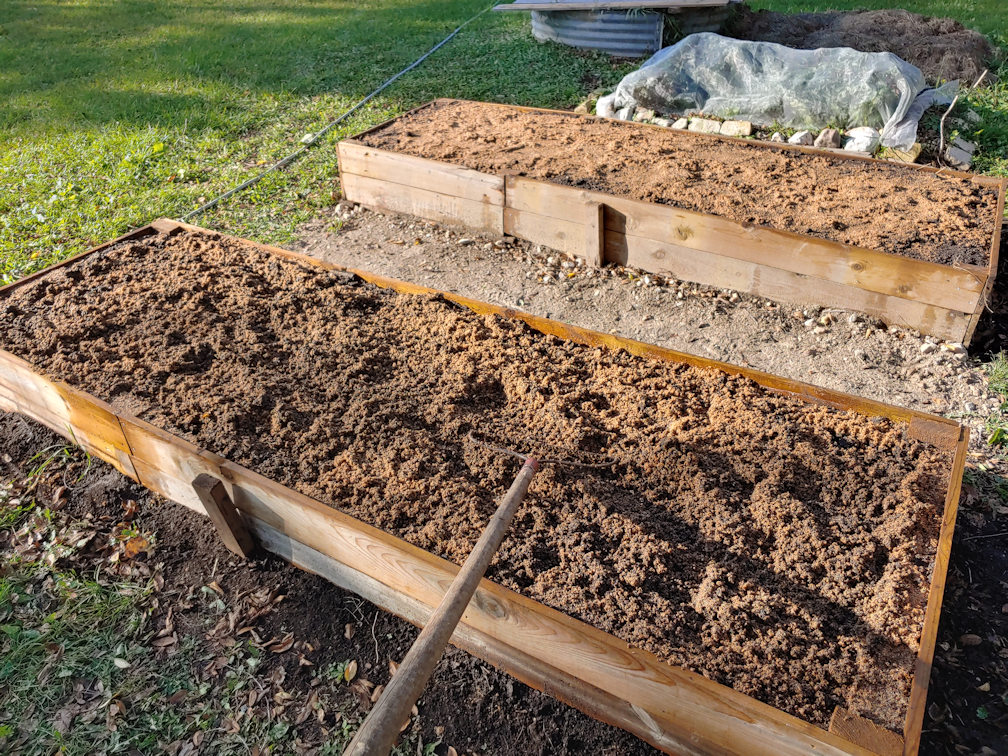
Those little jobs out of the way, I got to work on the big job! Topping up the low raised beds, so we’ll have somewhere to plant the garlic when it arrives.

One of the beds wasn’t filled as much as the other, so I started with that one, first. We had soil from the potato bags in the kiddie pool, and there are still 10 bags of fingerling potatoes, so I decided to use it as filler, as it had already been amended with organic material. With all the rain we’ve been having it was very wet and heavy! While filling the wheelbarrow, I could see some nice, fat, happy worms in there, too. :-)

It filled a couple of wheelbarrow loads, with some soil being left to weigh down the kiddie pool, so it doesn’t blow away. I even found a couple of little potatoes that got missed in the process! After spreading it around evenly, I added another three wheelbarrow loads of the garden soil we bought in the spring. I’m really glad we were able to get two dump truck loads! We’d have been out by now, if we hadn’t, I’m sure.

After the one bed was filled, I brought another three wheelbarrow loads of soil for the second bed, then leveled them both with a garden rake.

Next, I split a 40 pound bag of hardwood pellets between the two beds, and worked them into the soil. One of the things we found with the new garden soil is that, over time, it gets really hard and compact. Since we don’t have any compost or manure to help prevent that, the pellets should do the job.

After working the pellets into the top couple of inches of soil, both beds got thoroughly watered, until the pellets reverted to sawdust. They absorb quite a lot of water in the process.

The sawdust does tend to rise to the top, though, so after they got a solid soak, I worked it back into the top couple of inches again.

They are actually a bit fuller than I had intended. The garlic will get a heavy layer of straw mulch after they are planted, so having it a bit lower would have help keep it from blowing away. The beds will settle, though, plus they will be covered with plastic, before we get snow that stays.

If all works as intended, these beds, with their layers of wood and lighter organic material in them, should require almost no watering, even if we have another summer of drought. If we had a wet summer, they should have good drainage, too.

I do find it kind of funny that I had to get these two beds ready for the garlic, because the other beds we have, in the old garden area, still have things growing in most of them! Not counting the one that’s being converted to a high raised bed right now, the only one that’s completely empty had onions growing in it, so I wouldn’t want to plant another allium in it.

It should be interesting to see how the garlic does in these beds!

The Re-Farmer

Let’s get fungi!

After working on the low raised bed yesterday, I was not physically up to working on another one today, so I figured I would do a project that was less physically taxing.

In other words, I’m a bit of an idiot. :-D

It’s gotten to be that time of year to do something with the mushroom spores my awesome husband got me for Christmas. Today, I started with the morels.

The package doesn’t have a lot of information about how to inoculate an area with them. One thing it did recommend was several different types of trees to inoculate under. The only one we have around here is elm.

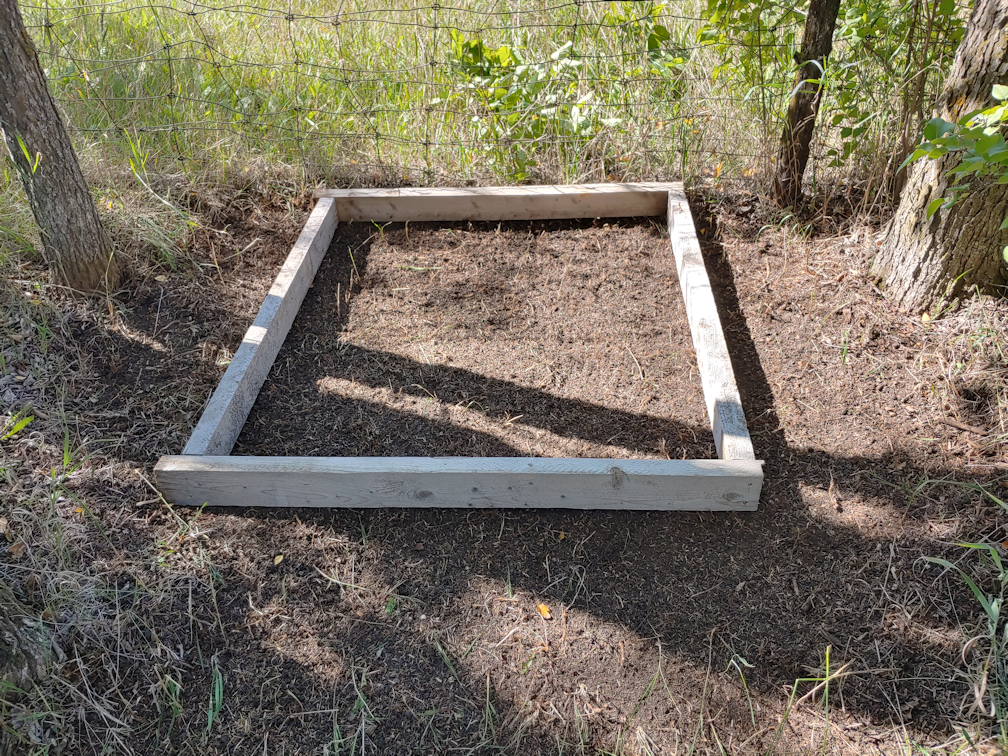
I spent some time online, seeing what other people did, and came up with a plan of action. I used one of the remaining sections of the old goat catcher we made, a couple of summers ago, and made it into a box frame.

Then it was time to work on the location we finally settled on.

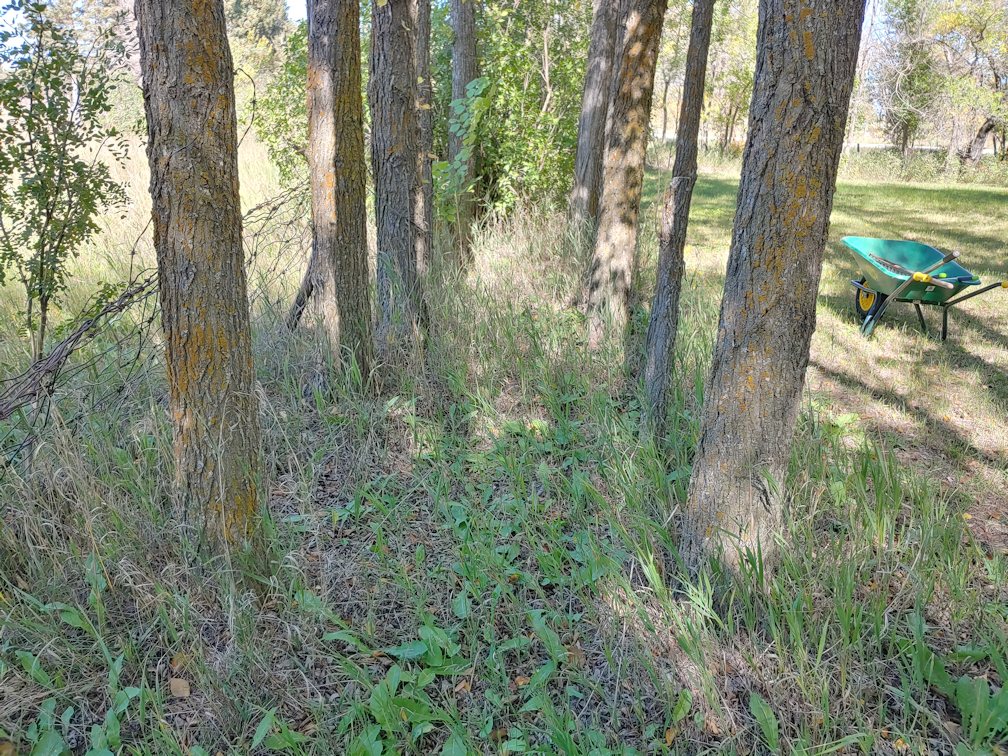
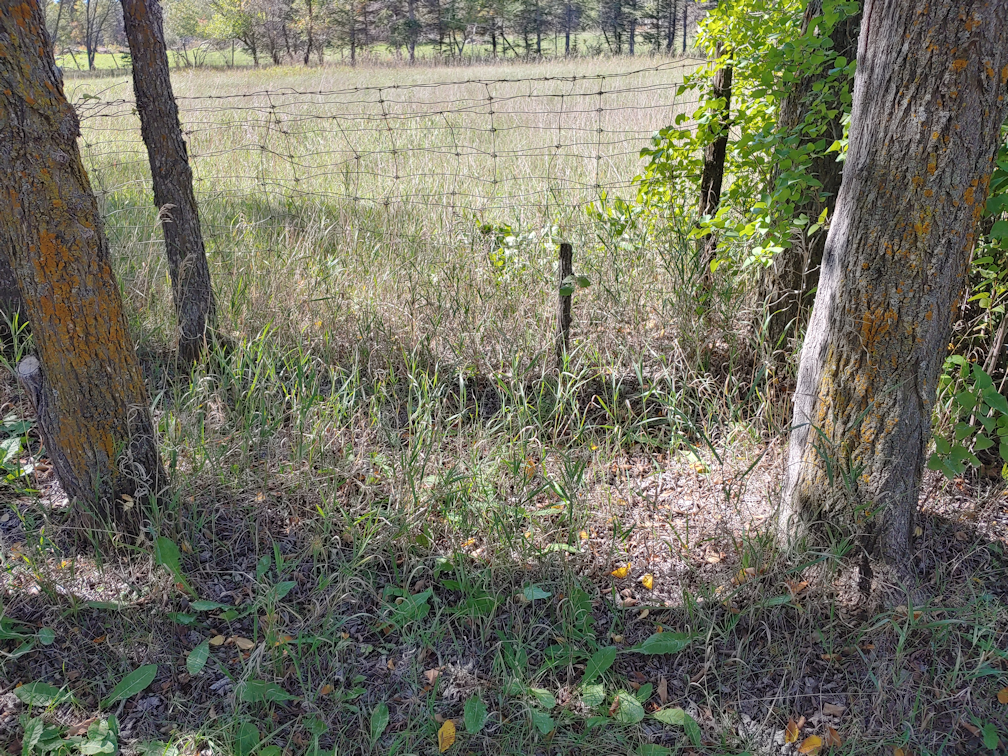
This double row of elms in one area is too narrow and lumpy to mow well, and far enough away that I really don’t want to bother with the weed trimmer. So both the morels and the giant puff balls will be going here.

Since the morels will be going into a framed bed, they were going into the widest, most open part of the area.

First, it needed to be cleaned up. The stump of a dead little elm tree got trimmed flat to the ground, and a thatching rake was used to remove leaf litter and other debris. The remaining quack grass was so sparse, I ended up going over the area and pulling them up by hand, getting quite a bit of the rhizomes out in the process. Then I went over the area again with the thatching rake, loosening things up even more and getting a bit more debris out.

Next, the frame was brought over and placed in the most level spot that could be managed here. I wasn’t too worried about being perfectly level, since the next step would make that a non-issue.

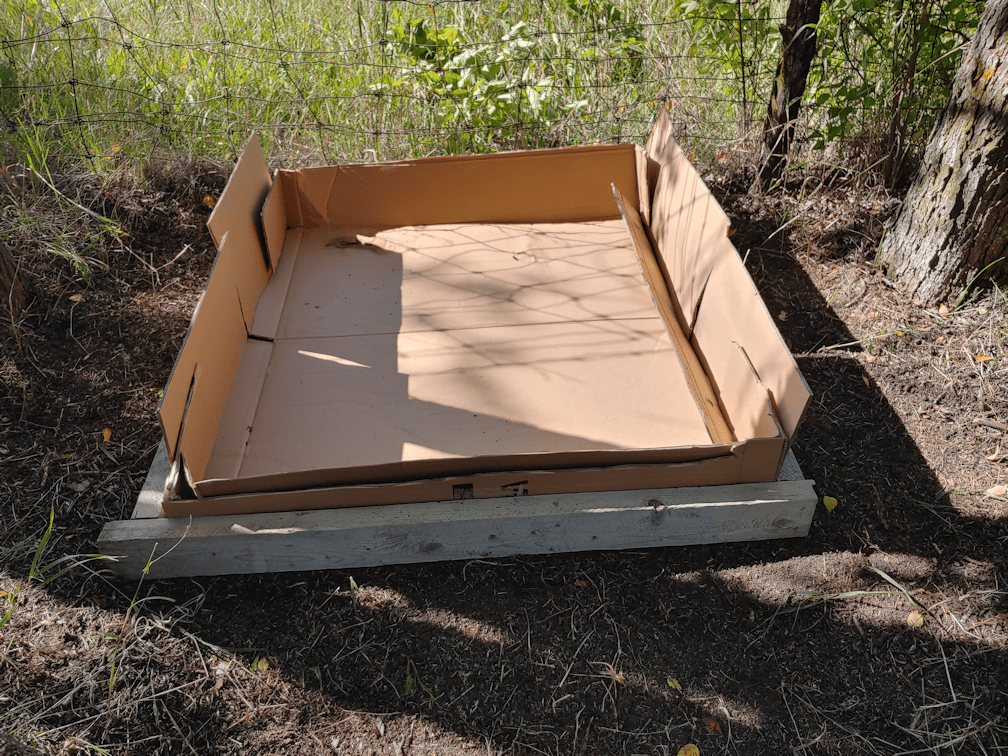
We had kept the box the new washing machine came in, with its wonderfully thick cardboard. I was able to cut it in half, and use it to line the framed space in two layers. This should not only keep the crab grass from coming through, but ensure that little elm stump won’t start sending out suckers, either.

The next step was to give the cardboard a thorough soaking. As it is two very thick layers, I just left the hose running while I prepared for the next step. Morels like wood ashes; there is always a bumper crop after a forest fire. In the time it took me to get wood ashes from the fire pit and mix it with some of our purchased garden soil, there was a bit of a pool inside the cardboard! :-D

The wood ashes and soil combination made only a thin later on the bottom, and that’s okay. From what I was finding online, this could have been filled with straight wood pellets or shavings, and no soil at all.

Speaking of which.

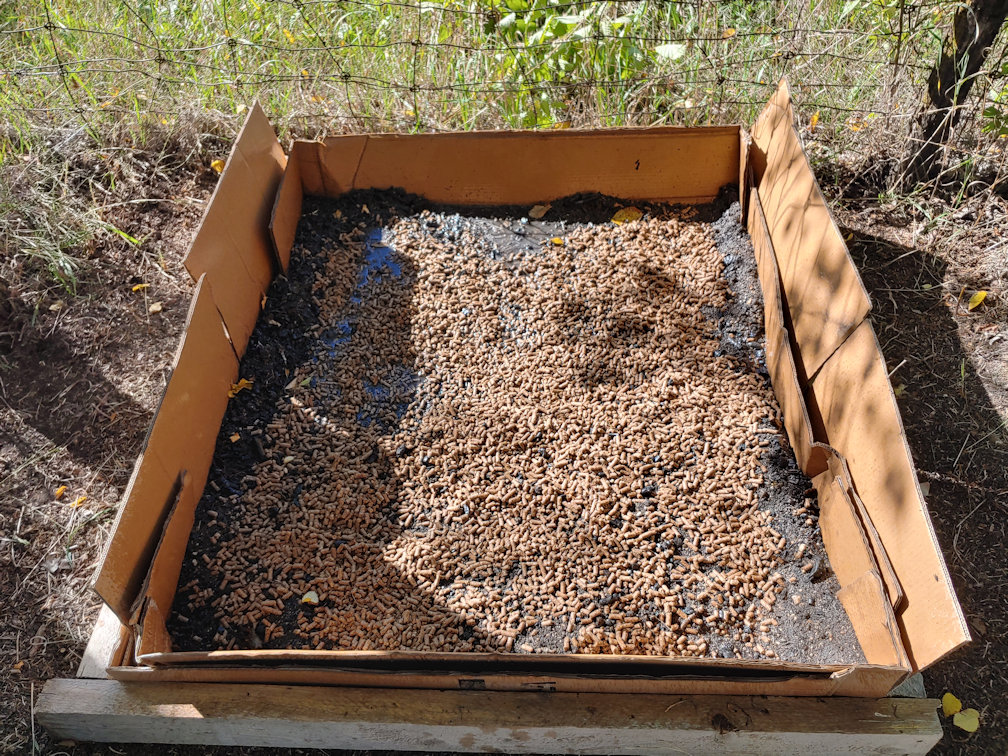
After thoroughly soaking the ash/soil mixture, I used the remaining half of the 40 pound bag of wood pellets I’d used in the low raised bed I made yesterday. Once those were spread out, they got a thorough soaking as well.

Then, while the pellets absorbed the moisture and began to break apart, I opened up a bag of wood shavings. Our general store/post office has them, probably for chicken coops. It’s the same sort of stuff you can get at pet stores for animal cages, except in a bigger bale.

A very thin layer of the wood shavings was added, more to cover the ash/soil mixture, and it got yet another soak with the hose.

Time to inoculate!

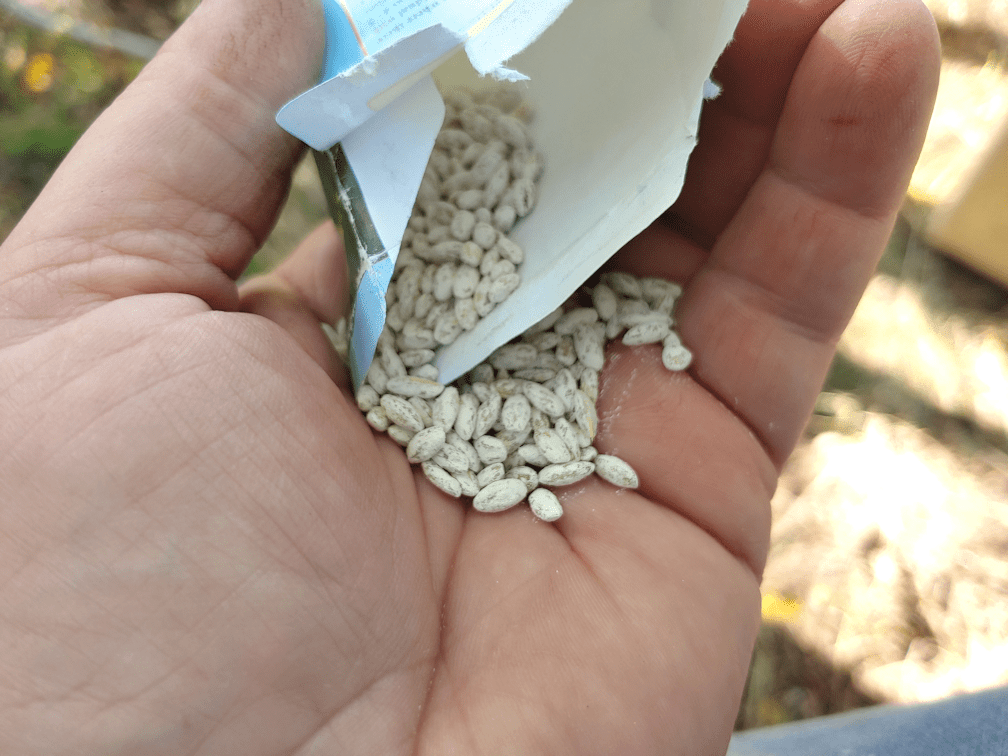
The packet the spores were in was the same sort of packet most garden seeds come in. Usually, mushroom spores come in blocks that get broken apart, so I was very curious as to what I would find when I opened the packet.

Huh. Interesting! These are about the size and shape of Orzo pasta, or some types of rice.

They got scattered over the shavings and wood pellets as evenly as I could. Can you spot them in the picture?

Those wood pellets have really expanded and broken apart. Perfect!

Once the morel spores were scattered, the bed got a light misting, more to make sure nothing would blow away.

Finally, a thick layer of the wood shavings was laid down and gently raked out evenly. Most of the bag of shavings got used up for this part. Once it was spread out, the whole thing got one final, very thorough, soak with the house.

And that’s it! It’s done! Now, we just wait and see. Hopefully, we will see morels in here around May next year, though it may take a year or two for anything to show up. That’s one thing that the package did say; it can take years for the spores to actually fruit. Or, nothing may show up at all. It’s hard to know.

As for the giant puff balls, those did come with more instructions, and need to be soaked in a water and molasses solution for a couple of days. After that, it just gets poured over grass. No advance preparation of the soil needed. If I can find a suitable container the cat’s won’t knock over, I’ll get those started tonight.

Meanwhile, now that I’ve had a delicious supper my daughters prepared, I think it’s time to pain killer up! This may have been less physically demanding than digging out a garden bed, but I probably should have given my broken old body a day to recover, first! :-D Actually, it’s not to bad. The thing that’s bothering me the most is the arthritis in my finger joints, which is more of a problem while typing than while shoveling. :-D

The Re-Farmer

Second low raised bed: done!

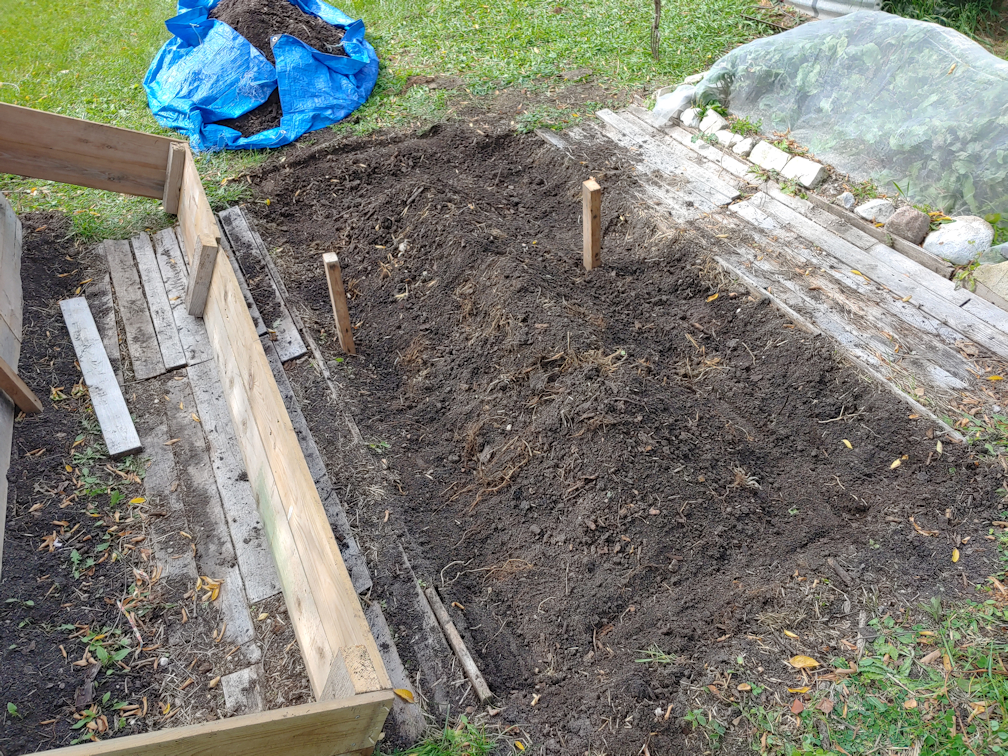
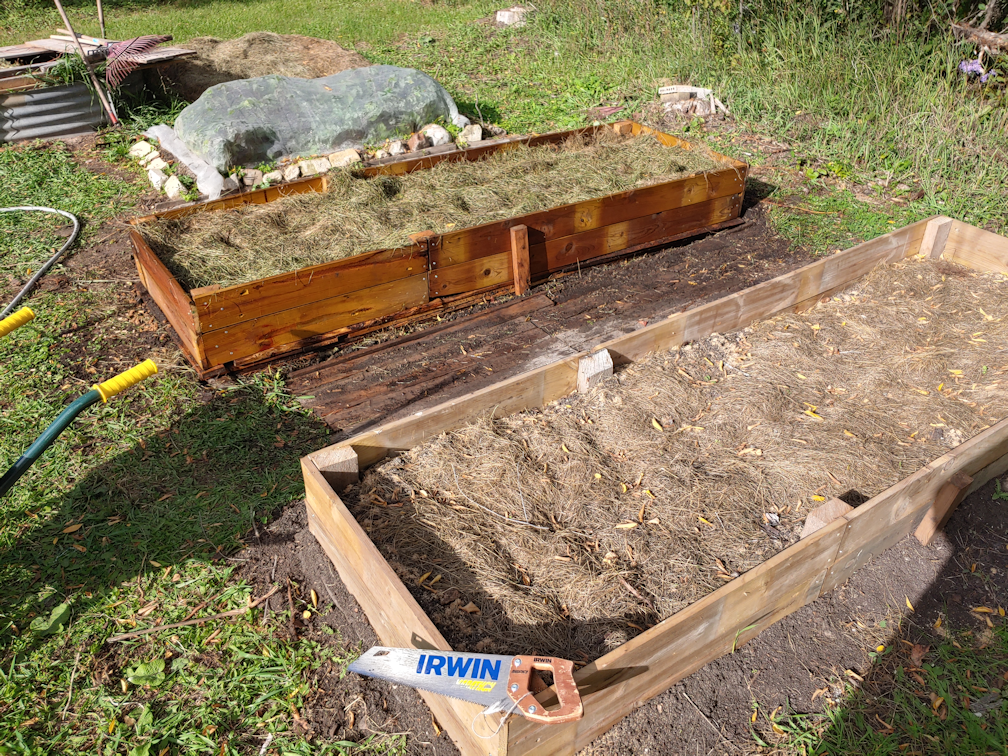
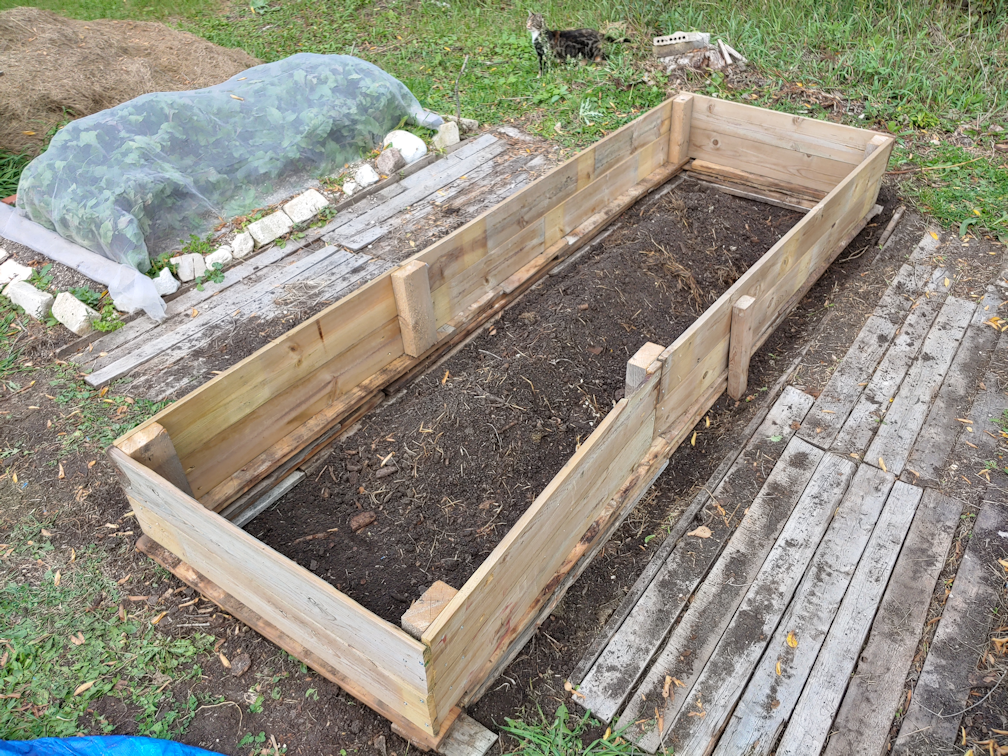
You can read about the first raised bed I did, here and here. Things were done a bit different this time, so here is another step-by-step post with lots of photos! :-) I actually started this bed over a week ago. This is how it looked then.

This bed has been almost completely untouched since the garlic was harvested, letting the weeds get fairly large. This made them easier to pull.

Along with pulling the weeds, with as much of the roots as I could, I lengthened the bed to match the size of the box. Right away, I could tell this one was going to need a “foundation” under the box, too. I was definitely hitting rocks, and a whole lot of roots, while trying to loosen more soil and remove grass and weeds.

Once the weeding and loosening of soil was done, it was left to sit so that any weeds I missed would have a chance to start growing again.

When I started working on it today, the first thing I did was go over the area again, pulling out any new growth by the roots. Then it was time to start shoveling!

Like the previous bed, this one had been originally amended by burying the contents of our compose pile and straw. So I only wanted to remove up to the straw, basically.

In the process, I was finding a LOT more roots! It looks like the cherry trees are encroaching again.

Once I was satisfied with how much of the topsoil I had removed, I raked around the edges to try and level the soil where the box would be resting, as much as possible, while heaping it all in the middle.

Then the box was laid down and, once I had it where I wanted it, I used a sledge hammer to hammer in the supports on either side, at the middle, to prevent the long sides from bowing out when filled with soil. I also hammered down the corners and such, to leave marks in the soil that I could use as guide lines.

The ground wasn’t anywhere near as level as I probably should have made it, but that’s okay. Things will settle and adjust over time, and these boxes can be easily replaced in the future, if need be.

The next step was to raid the pile of old, salvaged boards that the groundhogs have made their den under, and build up a foundation to support the box. Once that was in place, a daughter came out to help me carefully place the box on top of the foundation, and in between the support posts.

Then it was just a matter of shifting the foundation boards a bit, to make sure the box was fully supported. Again, not quite level, but that’s okay.

The soil heaped in the middle was then raked out to the sides, covering the foundation boards and creating more of a recess in the centre.

Then it was time to add the first layer of fill, and raid the branch pile. This time, I added more and larger branches than with the first bed I did.

This, unfortunately, left a lot of gaps and air pockets. They will fill in as the wood decomposes and everything settles and sinks, but that will take time. To help fill in spaces and speed up the decomposition process, I started adding back some of the soil. After returning about a quarter of the soil, I hosed it down thoroughly, so wash it further down into the gaps, then added about another quarter of the soil and soaking it down again.

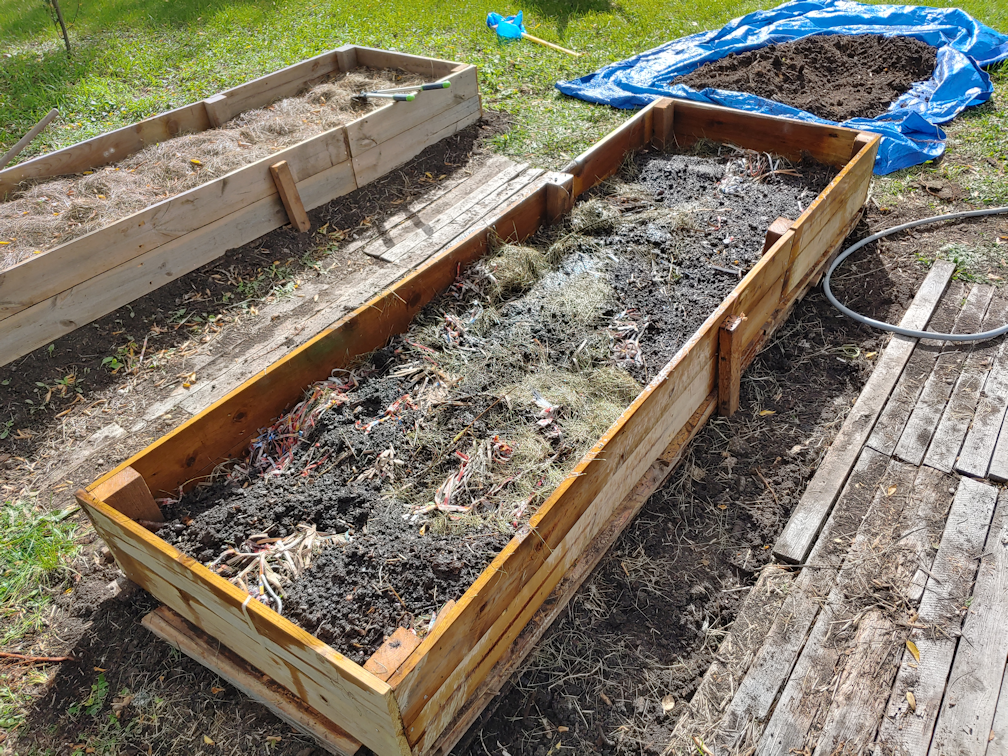
The next layer was contents from the compost heap, most of which was greenery I’d cleared from around the dead spruce trees that were cut down. This got another soak, another scattering of soil, and yet another soak.

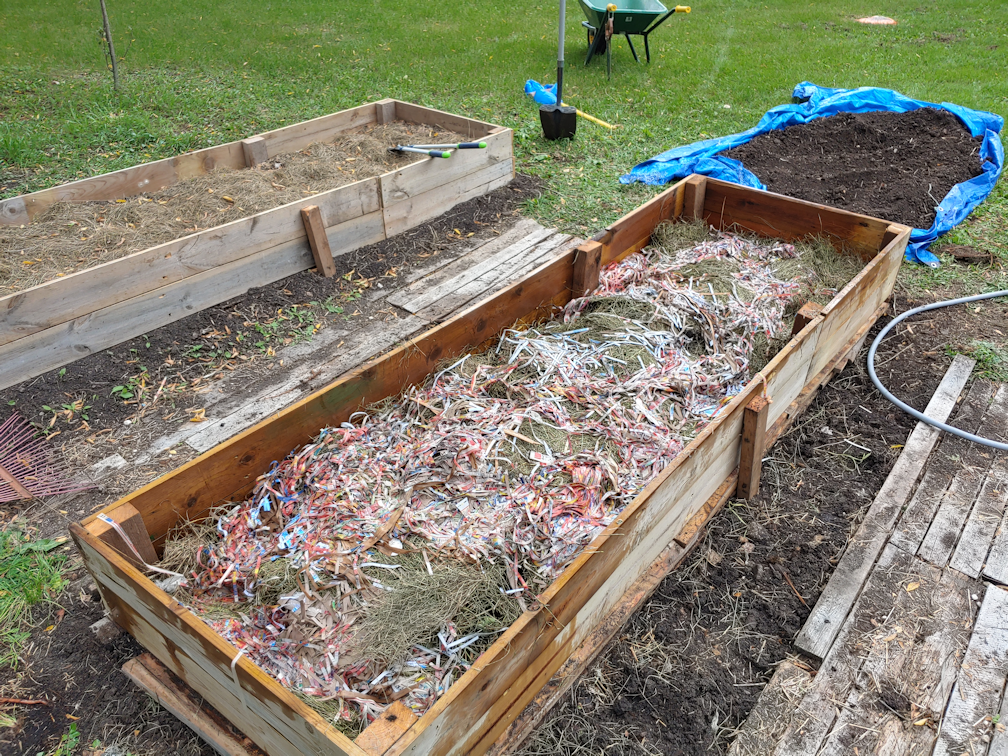
The next layers were grass clippings and shredded paper. This time, after soaking it all down, I walked back and forth over the whole thing, to try and compact and break the buried branches more.

It as at times like this that being a woman of generous proportions comes in handy. ;-)

Yet another thin layer of soil was added and soaked down.

Note the gap between the box and the board path. By this point, it had become a bit of a safety hazard! Without the soil to hold them in place, the boards at the edge kept moving and catching on my feet, and I was constantly catching myself to avoid twisting my ankle in the loose and lumpy soil in the gap.

Another thin layer of grass clippings was added and hosed down. At this point, the fill in the new raised bed is about the same level as in the first one. Adding the extra and larger branches made a noticeable difference, even after being tromped down.

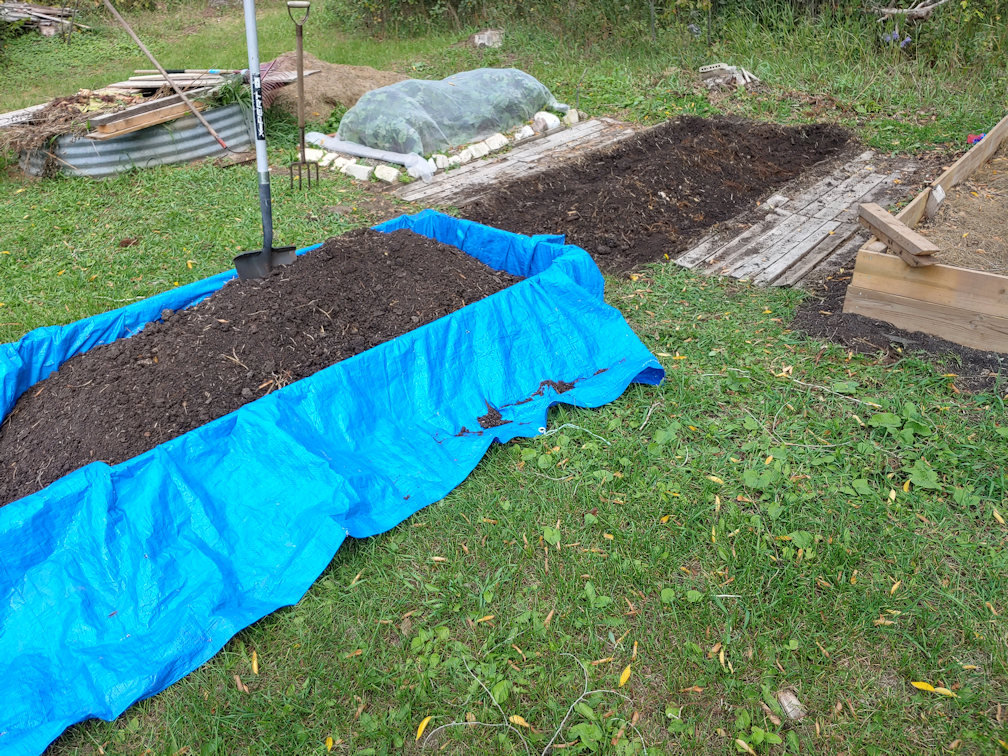
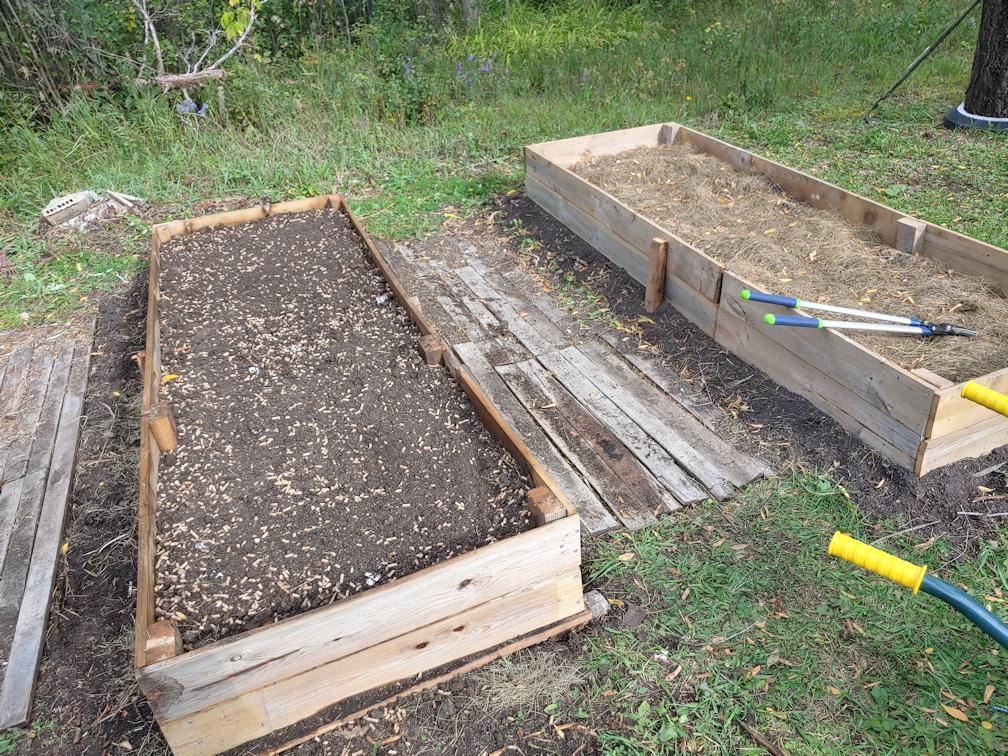
Once this was done, it was time to amend the remaining soil on the tarp. I added about half a 40 pound bag of wood pellets, as was done in the first raised bed, and then a couple of wheel barrow loads of new garden soil was brought over; one added to the soil and wood pellets on the tarp, and the other added directly on top of the grass clippings, then raked out as evenly as I could.

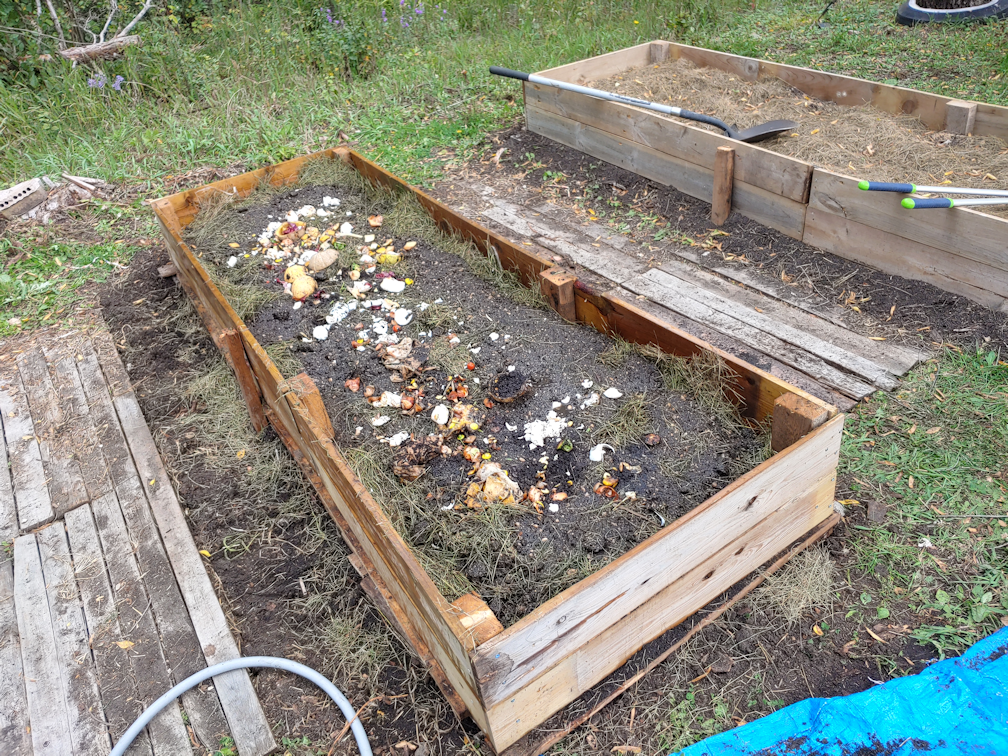
It was about this time that a daughter came out with the kitchen compost buckets, so that got added straight into the raised bed and spread out, then hosed down again.

The next while was spent mixing the soil and wood pellets together, as much as I could, before adding it to the bed.

Once the soil was added, it was raked out evenly. This layer was NOT hosed down, though.

One more layer of grass clippings was added as mulch, then it got one last, very thorough, soak with the hose. This was the time to clean up the sides and edges, too.

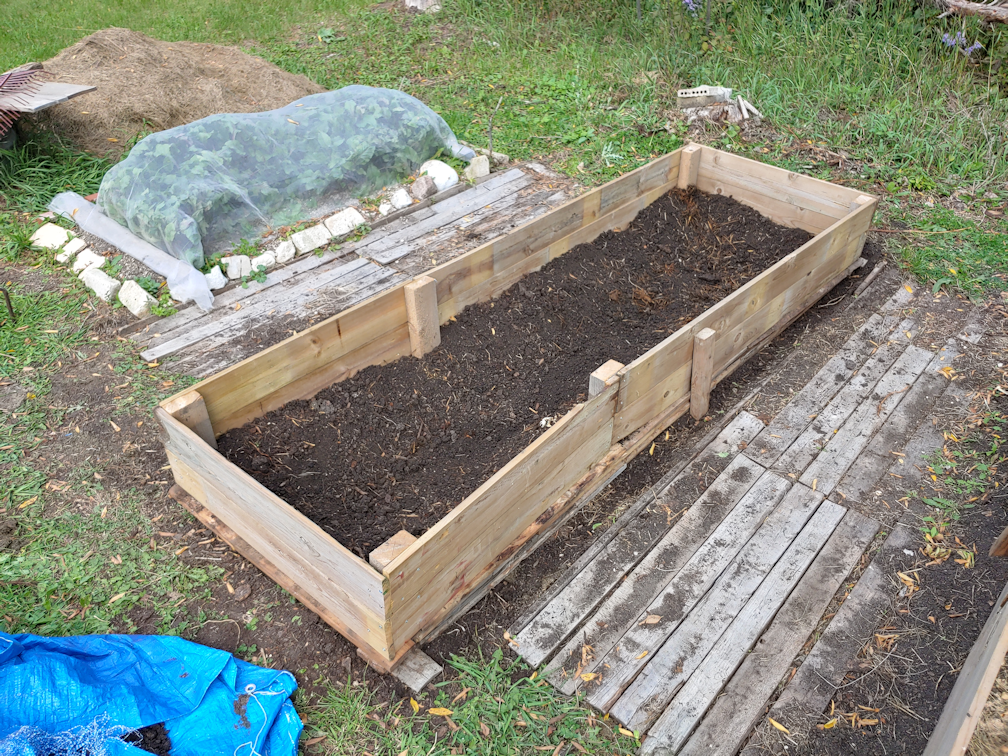
This is as much as will be done in the bed, this year. Both beds will get more amendments added to them in the spring, after they’ve had a winter to settle and sink.

Also, remember the gap in the path on the other side of the bed?

I was going to work on filling that to make it safe, but I had reached my limit. A daughter will be working on that for me later. As these beds have been worked on, and rocks were found, I had been tossing them next to a nearby stump; you can see it in the background, with some bricks on it. Those can be gathered to use as fill in the large gap on the far side of the bed, and more boards will be added, and whatever else my daughter can thing of to make it safe to walk on. The eventual plan is to cover the board paths with sand and gravel.

After this, there is still the third bed in this location to be made, but with the beets still growing, there is no hurry. The last bed will be just one board high, as that is all the wood of this type we have left, but these boards are slightly wider, plus we still have plenty of the scrap wood bits to use as a foundation, so it shouldn’t be too much of a difference.

Two raised beds down; seven more to go! :-D

The Re-Farmer

Fall clean up: squash beds done

Yay! The squash beds in the old garden area are now all done.

Also, where the pumpkin mounds were, we now have three new beds.

Here is how it looked when I started.

The bamboo stakes are marking where I planted the seed potatoes I found while digging up the potato beds. It should be interesting to see what happens there in the spring!

Being such a narrow row, it shouldn’t have taken long to prep this area. It was, however, incredibly full of rocks. Not even big ones, really. Just so many! If we decide to continue planting here, this area would be the one most in need of a raised bed. If we do build a raised bed in this area, it’s going to be long, narrow (no more than 2 ft wide), and will have a built in trellis for a back “wall”.

Here is how the pumpkin mounds looked before I started.

The black that you see is the ashes cleaned out of the fire pit.

The crab grass growing through it is noticeably brighter!

Once done, here is how the back row looked.

It’s hard to see through the mulch, but I turned the soil and mulch, so the more decomposed mulch was more on top, and the less decomposed mulch was partially buried. I don’t know what we’ll plant here next year, but whatever it is, it’ll need to be pretty hardy, until we can build the soil up more!

Here is how the pumpkin mounds look now.

I was pretty sure about turning one of the mounds into a larger bed, but with so much crab grass, I didn’t think I would do the others. However, after a year covered in mulch, and a lot fewer rocks then in other areas, the soil was much softer than expected, and I ended up turning them all into larger beds. The one on the left had the least amount of grass and weeds to clean up, but it also had the most rocks that needed to be cleaned out! When I started on the middle mound, the soil was so much better than it had been, I went ahead and dug another bed, pulling up as many weed roots as I could. That went fairly easily with the crab grass. They took the easy route, and their rhizomes spread like a net under the mulch, rather than into the ground. Those come up quite easily.

Then I hit a patch of Creeping Charlie, making its way through the mulch. I lost about an inch or two of topsoil, pulling up those root mats. !!

The third bed was even easier to dig up, so that went very quickly.

So this area now has 6 beds in total, ready for next year. :-)

The next area to prep will be the carrot and beet beds. I’ve been leaving them in the ground as long as possible. Which might be working for the carrots, but the beets are mostly a lost cause. Too many visits from deer! That area will be cleaned out and prepped for the winter garlic that should be coming in within the next couple of weeks.

I will leave that for tomorrow, however. Today, we need to strain the crab apple cider vinegar. We meant to do it yesterday, but so many things went sideways, it got postponed.

I am happy to say that the septic truck did show up yesterday, shortly before 6pm. The poor guy looked so tired! All I could say after greeting him was “long day?” I think he had been bracing himself to be given a hard time for being so late, because all the tension seemed to just droop out of his body as he simply said, “yeah.” He ended up spending half an hour on the tank. I honestly don’t know how my parents emptied the tank only once a year with 7 of us. We didn’t empty it this past spring, since we’d had him come out in the winter, when things started backing up into the basement. So it was more than 6 months since it was cleaned out, and it showed!

When we booked him to come in, I asked how much it would cost so I could take out cash; it’s not like these guys can take debit. ;-) I didn’t have exact change, but when it came time to pay, I didn’t ask for any, even when I confirmed the amount and he gave me a lower number! Maybe he was giving me a deal for being so late but I figure, if anyone deserves a tip, it’s the septic guy! If I’d had more to give him, I would have!

I really, really appreciate people like him. What would we do without people willing to do such dirty jobs?

Meanwhile, I have not heard back from the plumber. We’re getting near the point of having to call someone else. Our plumber knows this place and has been doing work here for many, many years, plus he’s really gone above and beyond for us, so I would rather not go with someone else. But we need to get that well pump changed. We should have done it months ago, but all our “spare” funds went to paying for the new differential on my mother’s car. If it does turn out to be something wrong in the well itself, we want to find that out now, not when there’s snow on the ground! We shall see how that pans out.

The Re-Farmer
Fall clean up: starting the squash beds, plus… this could be bad!

On my list of things to do today was to prep the squash beds for winter.

Of course, things happened, so I started much later than intended – past 2pm – and didn’t get as much done as I’d planned on.

Here is how it looked when I started.

The first thing I had done we pick up the bricks we’d used to weigh down the plastic we used to cover the beds in the spring, and again under some of the plants to protect the stems or support heavier squash.

You can really see which bed had the most successful plants!

Also, notice the raspberry canes to the left on the foreground? Or, should I say, the bare raspberry canes?

The deer have been nibbling the leaves off those, as well as the sunflowers!

I had brought out both the potato fork and the spade to see which would be better to work on the beds.

It turned out to be the fork. After a year under the mulch, the ground was a lot softer than before, but even with the fork, I had difficulties getting past the rocks. We have only one good spade. I don’t want to break the blade on a rock!

Here is how they looked when I finished for the day.

The bed on the left was still a real chore to dig up. With each section I lifted with the fork, I had to break up the soil by hand. That gave me the opportunity to pull out weed roots and the more in-the-way rocks. The bed on the right was much easier to work, and I had a lot fewer rocks that needed to be pulled out. The squash plants were also buried so they can compost directly into the soil.

I was really happy with how much easier the soil was to work with. To compare, I had pushed the spade into the ground next to the mulched area. After working for a while, I took off my jacket and hung it on the spade. A few minutes later, and a gust of wind turned my jacket into a sail and down it went. So I pushed it into the ground again, this time, standing on the foot supports and bouncing my ample weight on it a few times, then hung my jacket back on the handle. The next stiff breeze, and it fell over again! And I didn’t even hit and rocks when I was pushing in the spade! What a difference, working under the mulched squash beds. Not only was the ground much easier to work, I was finding SO many worms! What a great sign. :-)

The next area I will dig up will be the long row at the back, and then the pumpkin hills in the middle. The one hill nearest the back row, I might enlarge to create another longer bed, but the other two are so surrounded with crab grass, I’m just going to dig up a roughly 4′ x 4′ area and pull out as many rhizomes from there as I can.

The main reason I had to stop, though, we because I started to feel rather unwell. It took a while for me to realize something.

I hadn’t eaten yet, other than a couple of freshly baked cookies, before I headed outside.

Usually, I do my morning rounds outside, then have breakfast while going over the trail cam files. Today, I was out earlier to make sure the gates were open for the septic truck. (Which still hasn’t shown up.) Then I heard someone in the kitchen and with our kitchen being so small, I decided to wait until they were done.

Then my husband came over and informed me we were almost out of butter. He is having a good pain day today for a change, and was up to making cookies, not realizing we didn’t have enough butter to make them. Normally, we would have done our monthly shop by now, and there would have been a whole bunch in the freezer, but we had to take care of other things. We’ll be going in a couple of days.

So I made a quick run into town to pick up a few things along with the butter. I’m glad I did, because once I had a data signal, I started getting texts from our plumber. I’d sent him pictures of our well pump when I was in town yesterday, as he requested, and he was responding to them

*sigh*

The first thing he noted was that the new pump is 1/2 hp, while the old pump is 3/4 hp. My brother bought this pump and he knows the system very well, so I knew it would work. It’s just not as powerful. After seeing the pictures of the old pump, from various angles, he thought the problem might be in the well itself. This is something my brother and I had talked about, as he thinks the foot valve might be leaking. The problem is, this is a very old system. He has actually worked in there before – about 20 years ago! – and that was probably the last time anyone has gone into the well.

So aside from it getting harder to find parts for it, it’s going to be fragile. If he starts opening things up to see what’s what, we might end up with no water at all. I could go to a company that specializes in wells, but they don’t like these old systems, either, and he said we would most likely be told we need a new well drilled. We could instead replace the submersible pump in the well, along with the pump in the basement, and that would take care of all sorts of potential problems down there. I asked him for an idea of what those pumps cost, but before he could get back to me, I had to leave town and head home, where I would no longer be able to get text messages. I sent him a message to phone me later and headed home.

Once at home, I emailed my brother to pass on the info, since he knows the system way better than I do. We both agreed that we should just get the pump in the basement switched to the new one, then see how it goes. If we still have problems, then it would be time to have someone go into the well and see what’s what. I hope it doesn’t come to that. Over the years, the well cover has been damaged. It’s a concrete circle with bent rebar handles embedded in the concrete. At some point, one of those handles got broken right off, and the other is bent down against the concrete. I’m not sure how we would get it open.

So I ended up calling the plumber back and leaving a message about starting with switching out the old pump in the basement and seeing how that goes. I also called the septic company to see if they are still coming out today, but we’ve had no call back from them, either. Which is really, really unusual for them.

I don’t like have the gate not only unlocked, but open, for so long. At least I can keep an eye on it through the live feed of the garage security camera.

It’s still afternoon as I write this, but it feels like it should be several hours later, right now!

I have such an urge to just go to bed right now.

The Re-Farmer
Fall planting grape hyacinth, day two, and planning ahead

The girls were sweethearts; by the time I got outside, they had already planted at least half of the second bag of grape hyacinths. One daughter was still using the broken trowel to dig the holes! It’s really unfortunate that the auger couldn’t be used. :-( That would have made the job must faster and easier!

I did find another trowel among the odds and ends we found while cleaning out the sun room, but it was so cheap, and the soil so hard, it kept bending. I used a weeding tool to loosen the soil, first, then I could gently dig a tiny little hole for each tiny little bulb. :-)

Then, while one daughter watered both sections we planted the bulbs in, my other daughter and I used pieces from the trees that were cut away from the power lines to mark things off.

At the far end it where a walkway will be. Eventually, there will be a sort of V shaped pair of walkways leading from the fire pit area to the broad path that runs down the middle of the grove. At the dead tree, near where the rolling seat is, we marked around a spot where wild strawberries are growing. There are more of them near a tree to the left of that spot, but with the bulbs planted on either side, we didn’t bother going in to mark them. At some point, I’d like to transplant those strawberries to somewhere they won’t be choked out by grasses and wildfowers, but wild strawberries are not the sort of thing that takes to being handled well. It does make me wonder how they ended up here! I used to find them only deep in the bushes, during very damp years, when I was a kid.

This is the next section we will be working in.

We have 20 bulbs each of 5 different types of snow crocus. This area is very narrow, so it should be quite enough to plant the length of this. These were my daughter’s choice, so I will leave it to her, whether we will plant each type separately, or mix them all together.

The crocus bulbs are even smaller than the grape hyacinth! They need to be only 3 inches deep into the soil.

Weather willing, we should be able to get this done tomorrow. After that, we might be done in this section for this year. We still have a double tulip collection on back order, with a total of 58 bulbs, but I’m not sure where they will be planted. I think they will need more sunlight than they can get in this area. The product info says “partial sunlight”, while the further we go in this area, the more “full shade” it gets! They might do quite well in the old kitchen garden, as long as they are planted closer to the house and away from the ornamental apples.

Something we still have time to think about!

Meanwhile, we will work on keeping these well watered while it’s still warm out, to make sure they are established before winter sets in.

I do hope the back ordered items come in soon. I really want to get the garlic in!

The Re-Farmer

Guess what we’re doing this weekend!

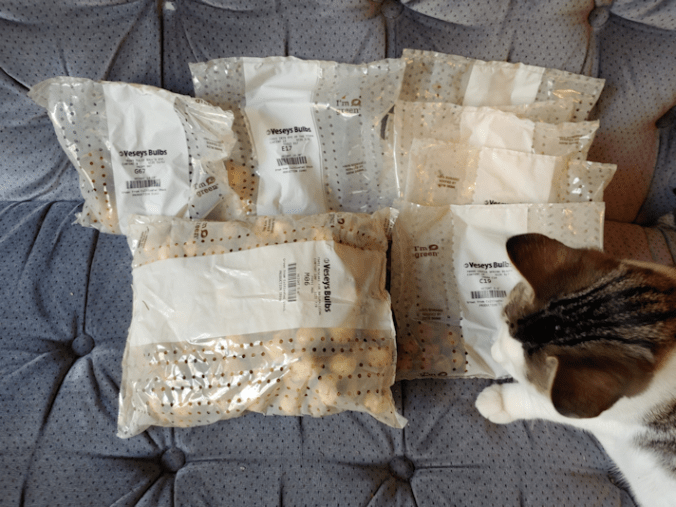
A package I was expecting next week, came in today! Our first shipments of bulbs for fall planting.

Which the cats found very, very interesting…

That’s better!

Mostly. :-D

We’ve got 2 packages of Muscari (grape hyacinth) of 100 bulbs each. There are 5 bags of crocuses. I believe we were planning to mix these all together and plant them randomly. There are also an iris and tulips. We still have some on back order, including a fall garlic mix. The long term weather forecasts show no temperatures dipping low enough for frost over the next too weeks. Hopefully, the rest of the order will come in before things start to cool down that much again.

The Re-Farmer

Fall Clean up: finally clearing the second tire planter

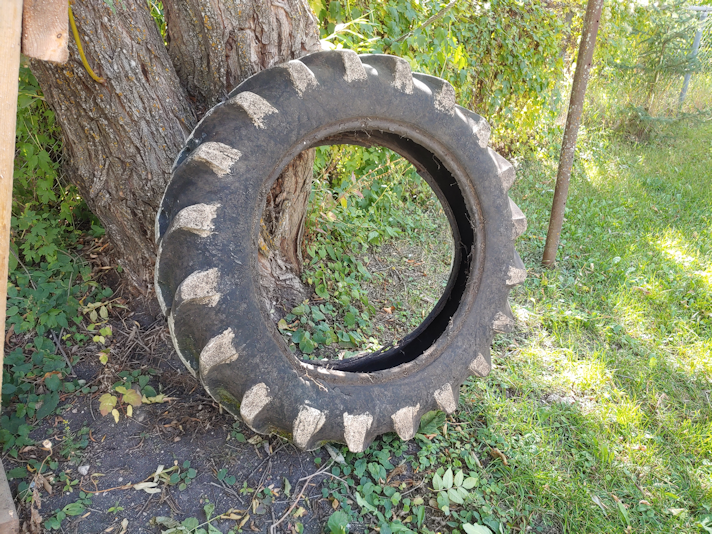
When we moved here, there were two tractor tire planters in the yard. One of them had been next to a willow for so long, it was actually damaged by the willow as it grew.

You can read about what a job it was to clear that out here, and here.

Thankfully, this one was not as big, and easier to get to!

The other one was likely about 130-140 pounds, so I’d guess this one was probably around 100 pounds.

Not counting any soil inside it.

The first thing to do was pull up the spent, self-seeded flowers, which I’d already done before taking the picture. Then I needed to loosen the soil and clear out the remaining plants, weeds and grass.

There had been a concrete block in the middle of this, to support the bird bath that used to be here. I dug it out to use in the fire pit, leaving a hole behind.

You’ll notice, there is no hole.

Junk Pile’s kittens LOVED playing in the dirt, and filled it in with their rolling around in it.

They were also very fascinated by me working on this, and were even willing to stay fairly close to watch!

Though I could pull out a fair amount of roots, stems and bigger rocks with my hands, it still wasn’t good enough for the soil to go into the retaining wall blocks.

So I rigged a sieve.

This is the mesh from what had been a screen window that would be put over the window to the old basement in the summer. The wooden frame had rotted and broken, so we built fitted replacement. The old wood frame is trash, but the steel mesh worked well for sifting the soil. A slightly finer mesh probably would have been better, but it did the job well enough!

Well enough that I think I will build a new frame for it, for future sifting jobs like this!

After filling the wheelbarrow with enough soil to top up half the retaining wall blocks, I was at a point where I needed to start lifting the tire itself.

While working my way around the tire, I could hear roots tearing as I lifted it!

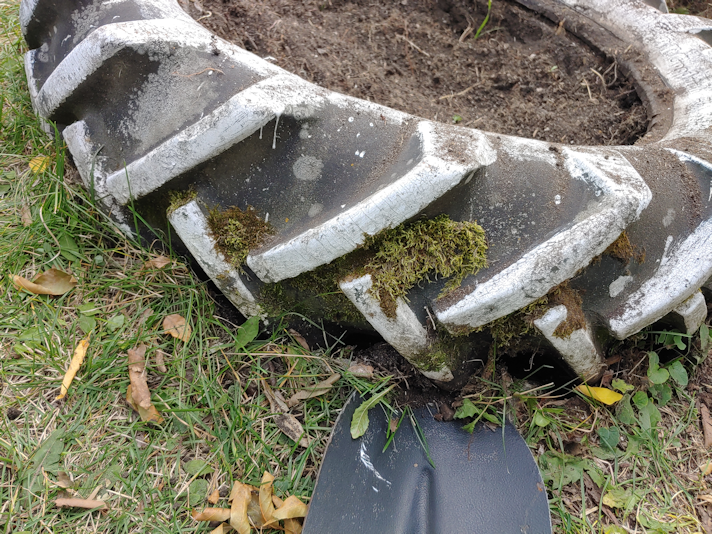
And yes, this has been here long enough for moss to start growing on it!

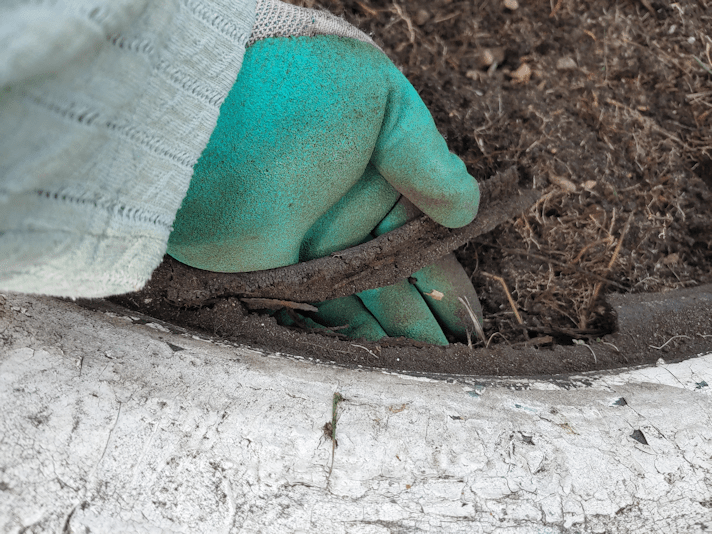
Since this tire planter wasn’t placed next to any trees to damage it, it could potentially still be used for something – in a better location! However, as I cleared the soil and roots away, I could see there is still a fair bit of damage from weathering. I was even pulling broken pieces of cable out.

Eventually, after clearing enough soil to finish topping up the retaining wall blocks, I had removed enough soil to actually lift it up.

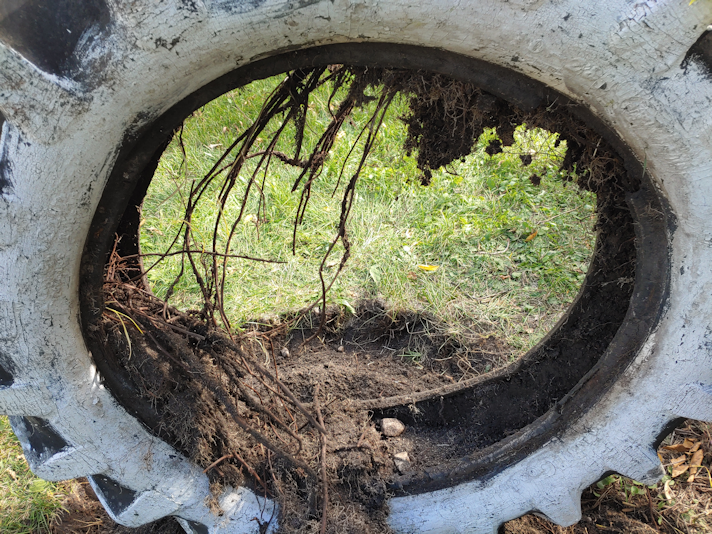
As you can see, there’s still a lot of soil in there!

Soil that is jam packed with roots.

I tried loosening the soil with a garden tool, but the root mats were so dense, it was hard to break it loose. It ended up falling over in the process.

Which did a much better job of knocking the root filled soil loose!

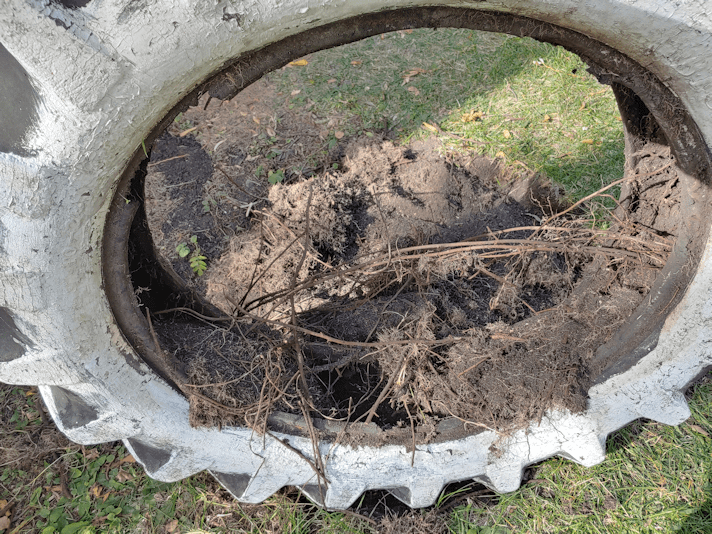
In the end, the easiest way to clear it was to roll it a bit, pull it back, bounce it, roll it again, pull it back, bounce it…

I finally got it all out! You can see the pile of roots in the back, where I’d pulled out the biggest, vine-looking ones. I don’t know what they were from; they look like they’ve been dead for a long time. Certainly nothing growing in the planter since we’ve been here came from those long roots!

The tire was just been set aside for now. We might still try to find a way to use it, but not as a planter!

For anyone reading this, thinking of re-purposing tires as planters…

Don’t.

Just… don’t! :-D The tires do degrade quite a bit, they are difficult to work around, and they are a huge job to clean up!

Speaking of cleaning up…

Yay!! No more tire planter!

That thing was such a pain to mow around!

All rakes up and ready to have some grass seed added, next spring.

Another job off the list!

The Re-Farmer
Fall clean up: cucamelon surprise

The frosts we have had didn’t quite kill off the cucamelons, but they are certainly beyond being able to continue producing.

There were still a few left on the vines that were big enough to withstand the frost, though!

They were still tasty, too. :-)

After taking down the yarn net I made for a trellis, I started pulling each of the plants up.

Which is when I found a surprise.

They have tubers!

When I looked up how to grow cucamelons, I found one site that said, if you lives in a colder climate, you could dig up the roots and pot them. Kept in a cool, dark place over the winter, they could be started indoors for better transplants in the spring.

I don’t remember the site mentioning the roots were tubers!

When I kept finding more, I decided I would try it.

These are the biggest ones that I found. After trimming away the vines, I filled a couple of deep buckets with peat (we still have most of a bale) and planted the a bunch. I fit about 9 tubers between the two buckets. That left a few littler ones that I decided not to bother planting.

The buckets are now being repeatedly watered, to get as much of the peat to absorb moisture as possible. Then, they will go into the old basement (where the cats can’t get at it!) for the winter.

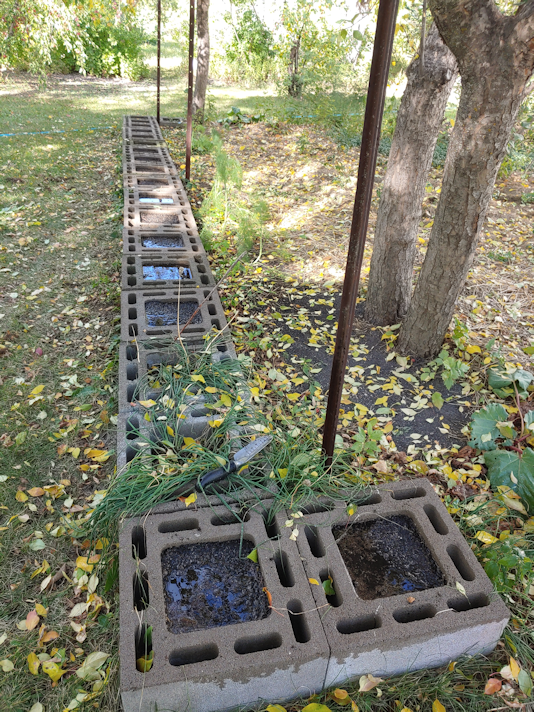
The next thing to do was to prepare the retaining wall blocks. When I placed them last year, which you can read about here and here, I filled the bottoms with mulch, then topped with peat. As expected, everything settled a couple of inches, so they all needed to be topped up.

For that, I wanted to use the soil from the remaining tire planter, so the retaining wall waited for a bit, while I dealt with that.

Which will get it’s own post.

It turned out to be a pretty big job!

Once I had the soil, I loosened and broke up the peat layer, topped off all the blocks with soil, then watered them thoroughly, to help it settle in.

After giving each block a thorough soaking, my daughter and I made a dump run, giving the soil plenty of time to absorb the water and settle. Once back, I topped up the soil again, then gave them another soak.

The cucamelons are now all cleaned up, and the retaining wall is ready for whatever we decided to plant here next.

Oh, I almost forgot!

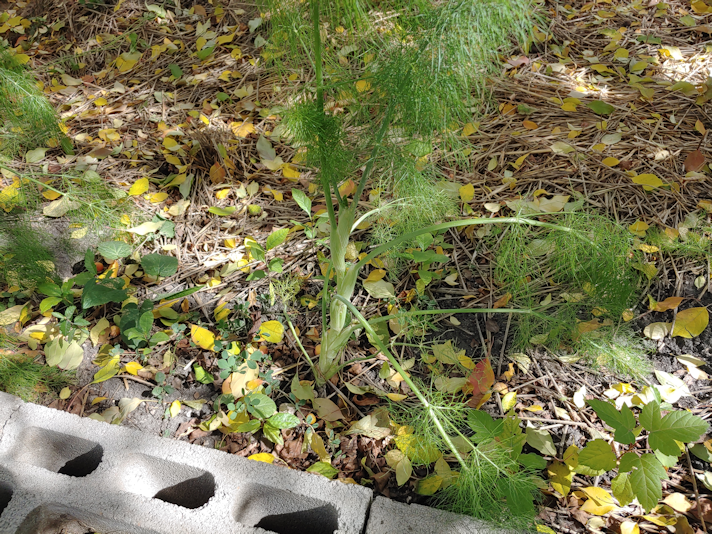
One of the other things we transplanted in the area where the surviving fennel seedlings.

This is the biggest and strongest of the 4 that survived.

I admit, all I did with them over the summer was water them. I suppse they’re still edible. If nothing else, I think the fronds can be used as an herb, and there are plenty of those! :-D

The only thing left in the blocks are the two with chives in them. I will be leaving them for now, but before winter, those will get topped up with soil, too.

Another job off the list! :-)

The Re-Farmer