Fall garden update: carrot and beet surprise!

One last garden update to post, interrupted by having to make a run to the post office to pick up a package before they closed! :-D

With the kittens mashing down the netting on two of the beds in the old kitchen garden, I finally gave in and removed the mesh completely.

With the beets along the retaining wall, there isn’t much we can do about them anymore. If the deer eat them, it’ll be no more of a loss than it already is. I’ll be cleaning that bed up for the winter soon, and if there are any beets to harvest in there, that’s just bonus. The L shaped beet bed, however, will remain covered. The kittens haven’t been going after that one, and they are doing well enough that we don’t want the deer to eat them.

After removing the hoops and netting from the carrot bed, I found my first surprise. I did not plant this bed. My older daughter did. Two types of carrots, with kohlrabi down the middle.

Well, nothing came of the kohlrabi – I finally decided the big leafy plants that did show up were a weed of some kind, as I found them growing in other areas where kohlrabi has never been planted.

What I did notice is that there are three carrot labels, not two. Which I sort of noticed before, when I weeded the bed and added the hoops, but for some reason, never stopped to actually read the label. Along with the Deep Purple and Lounge Rouge Sang, there are Kyoto Red! If you look at the photo, towards the far end of the bed, you can see carrots that have gone to seed. Those are the Kyoto Red. Like the ones planted in the main garden bed, after the groundhogs ate the greens, they got tricked into acting as if they were in their second year and started to develop seed heads. The other two varieties didn’t.

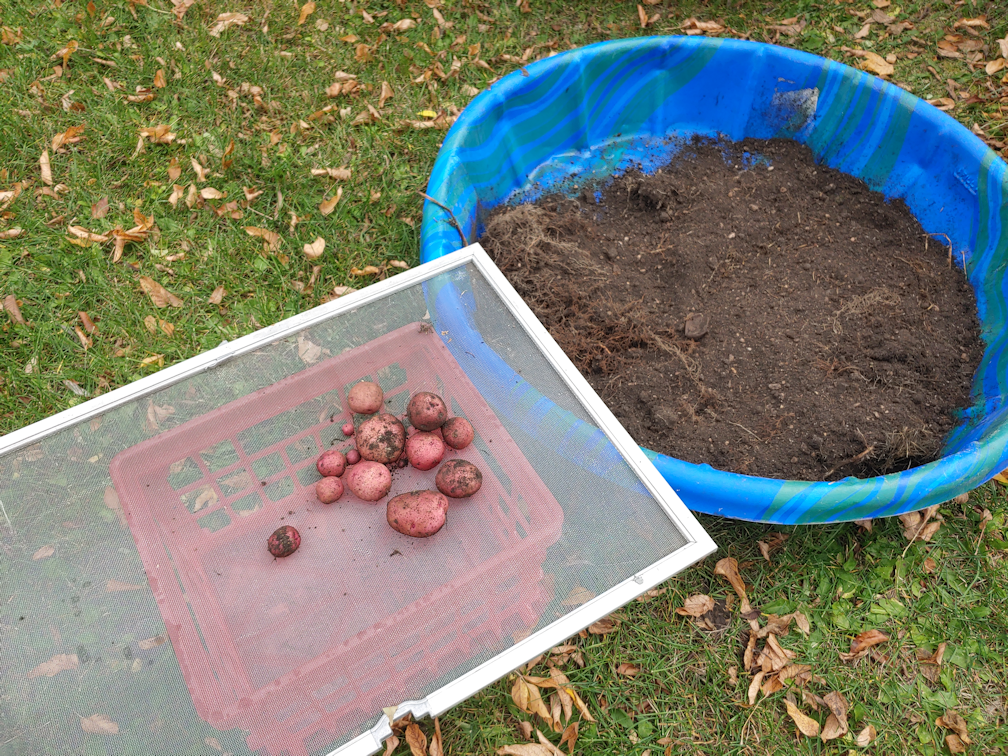
This morning, I decided to pick some, and ended up up quite a few. The ones on the far left are the Kyoto Reds. There were very few that haven’t gone to seed, so I only got a couple of them. The purple ones are obvious the Deep Purple variety, but when I’d picked from that bed before, they were not this dark purple, and I thought they were the Lounge Sang Rouge!! I hadn’t picked any from the other row, as they did not need any thinning.

Which means we got to try two new varieties of carrots today! My daughter decided to use up the summer squash we had in the fridge and make a soup, and she included a few carrots as well. After they were sliced up, we tried each of them. The Kyoto Red, unfortunately, was bitter. They may not have been going to seed, but tasted like they were ready to. The other two tasted fairly similar. We’ve had the Deep Purple before, and they tasted much the same as I remember from last year. The Lounge Sang Rouge seemed to be a bit sweeter.

When cut, the Kyoto Red was that deep reddish-orange colour, all the way through. The Deep Purple carrots were purple with a pale orange, almost yellow, ring inside. The Lounge Sang Rouge was a solid pale orange.

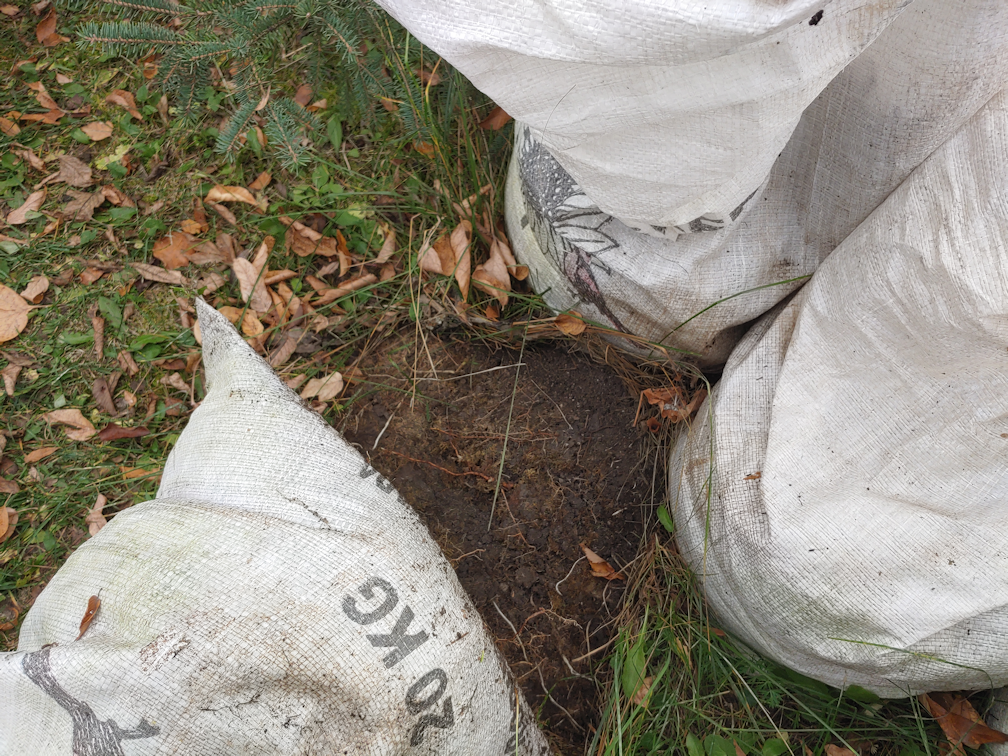
After picking the carrots, I used the rain barrel to water the old kitchen garden, then went on to water the loan beet bed that we made in the spring, next to where the fall garlic beds. This bed was planted with Merlin beets, only. That bed is covered with netting, too, tacked down on the long sides with tent pegs, and the excess netting on the ends rapped around boards to weigh them down. After watering it, I decided to lift the boards at the ends to see how the beets looked.

I ended up picking a couple from each end!

I should have held these differently; there was one quite large beet, but it’s underneath. It’s about the size of the other three, all together!

I’m rather pleased with these – and I know there are larger beets in the middle, from when I last tended it. I’d found a groundhog had managed to squeeze it’s way under the netting, when it was only weighted down with rocks and bricks.

We don’t plan to harvest the beets for a while; possibly not until after first frost. When we do, however, we should have enough to make it worth doing some canning!

Aside from the deer and the groundhogs wanting to eat them, beets have been among our most successful vegetables. We planted a LOT of beets this year, which we may not do next year, but I’m sure we will plant them again. We’ll just have to decide on what varieties we want, and if we want to try some new ones.

And that’s it for our fall garden update! The other parts of the garden were pretty much unchanged, so there’s nothing to really say about them. :-)

I am so incredibly grateful that our growing season has been extended this year, and am glad our drought and critter ravaged garden has had a chance to recover and continue to produce as much as it has!

The Re-Farmer

Fall garden update: Crespo squash

These guys get a post, all to themselves!

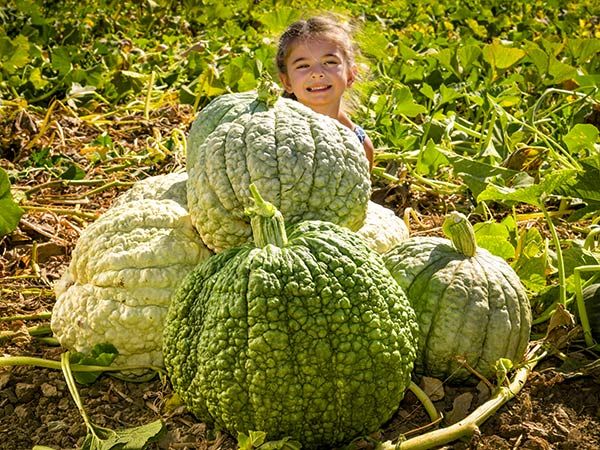
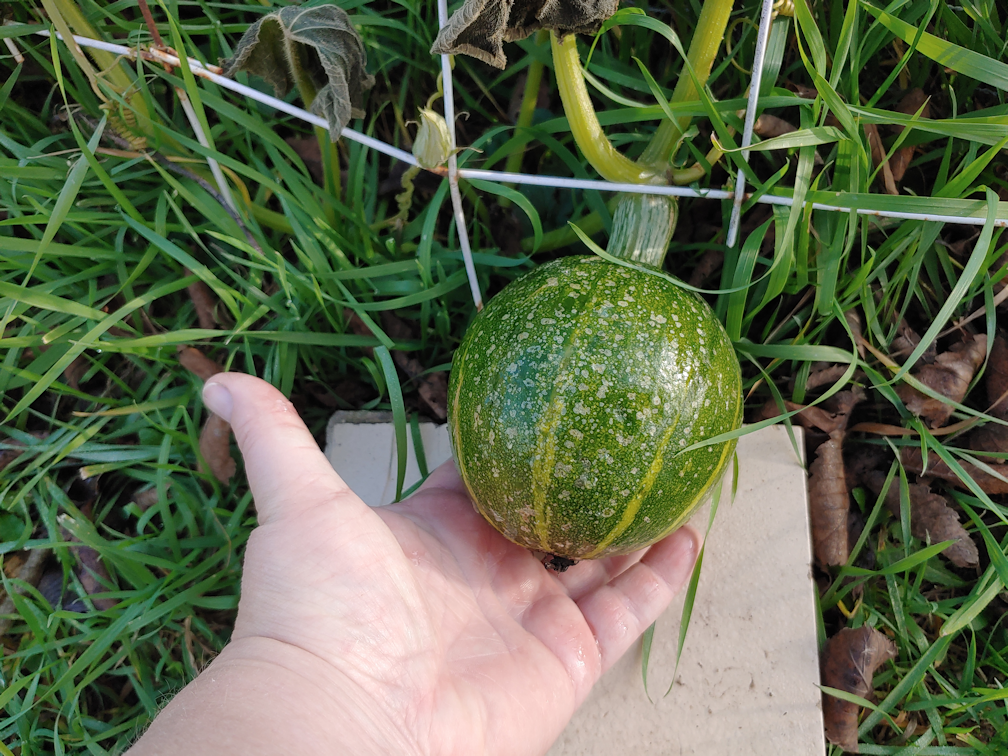
The Crespo squash has turned out to be another one of our surprises. They are another of our “fun” choices; a Peruvian variety of pumpkin that gets large, green and warty.

I couldn’t resist.

They seemed to thrive in our climate (there was no zone information with the seeds), and were doing so well until they got repeatedly eaten! I thought for sure they were done for, and was already looking ahead to how we could protect them as we tried them again next year. I hadn’t planted many seeds, so we do still have some left over.

But now we have our mild October, and have had no frost at all, and the Crespo squash is recovering to an amazing extent!

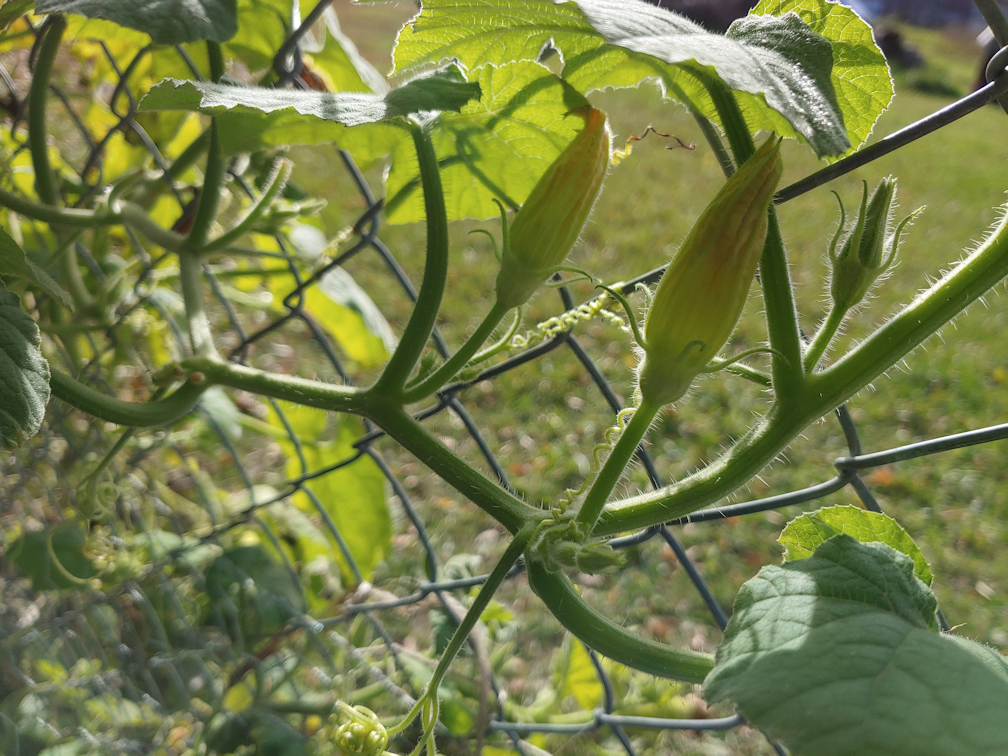
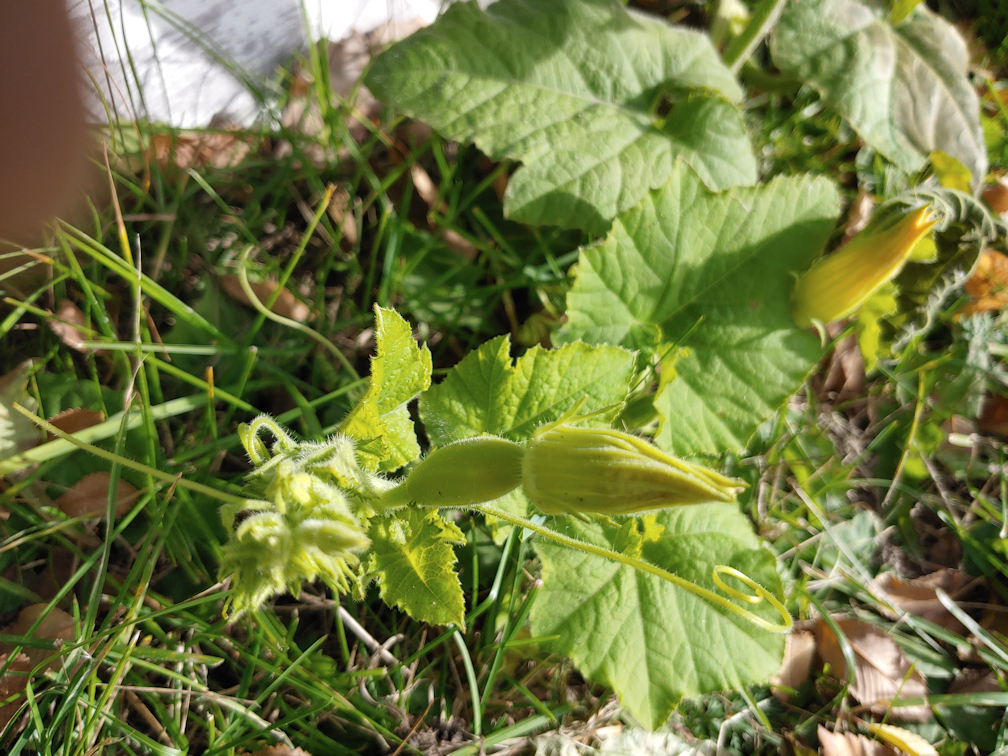
Some of the colder overnight temperatures have done a bit of damage to the leaves, but look at those flowers – both male and female!

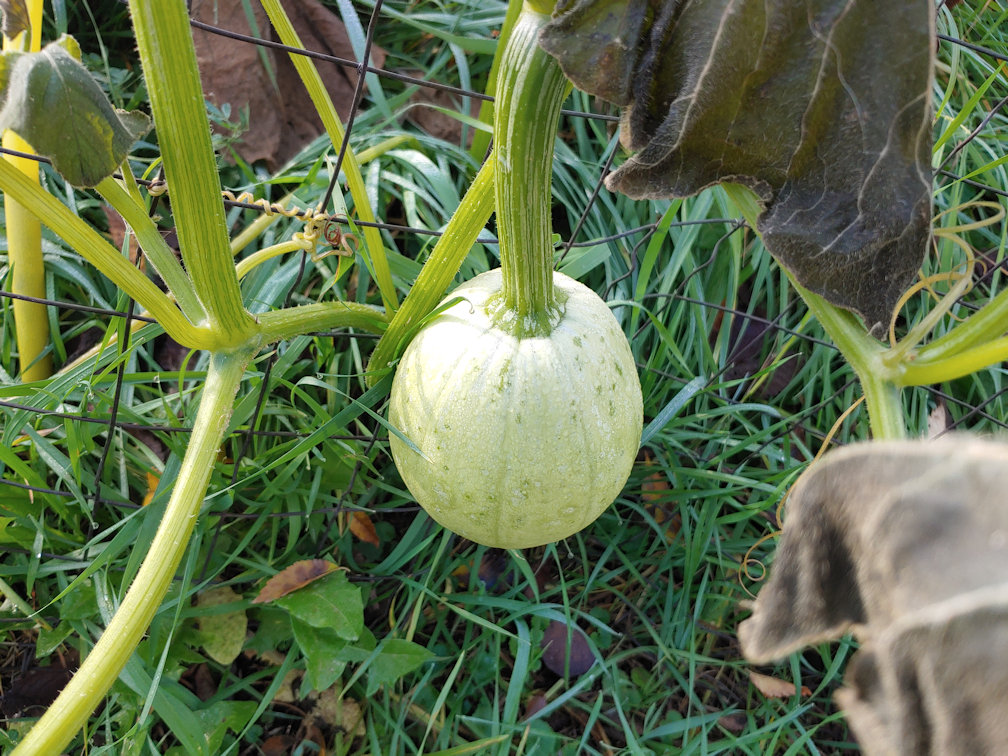
I actually had to rescue the one in the foreground; the flower was half way through the mesh. :-D

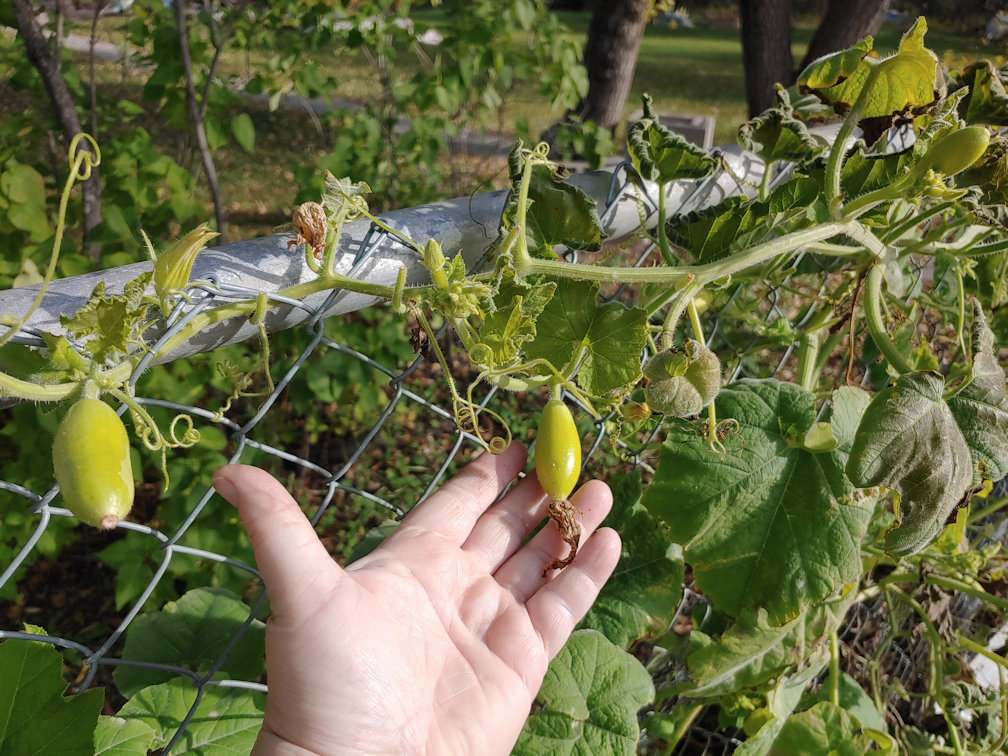
There are little squashes like this, being held high on their vines, all over the place.

Hopefully, we have enough active pollinators, because with the barriers to keep the deer out, there is no way to be able to get in and try hand pollinating them.

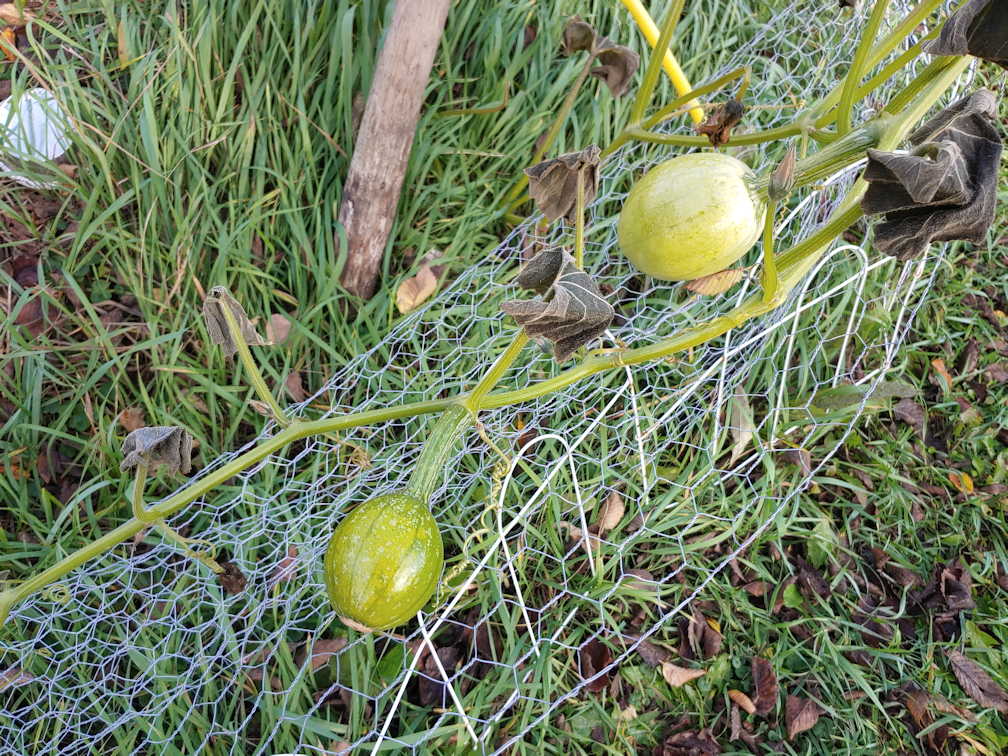
Some newer squash are looking bigger, and appear to have been successfully pollinated.

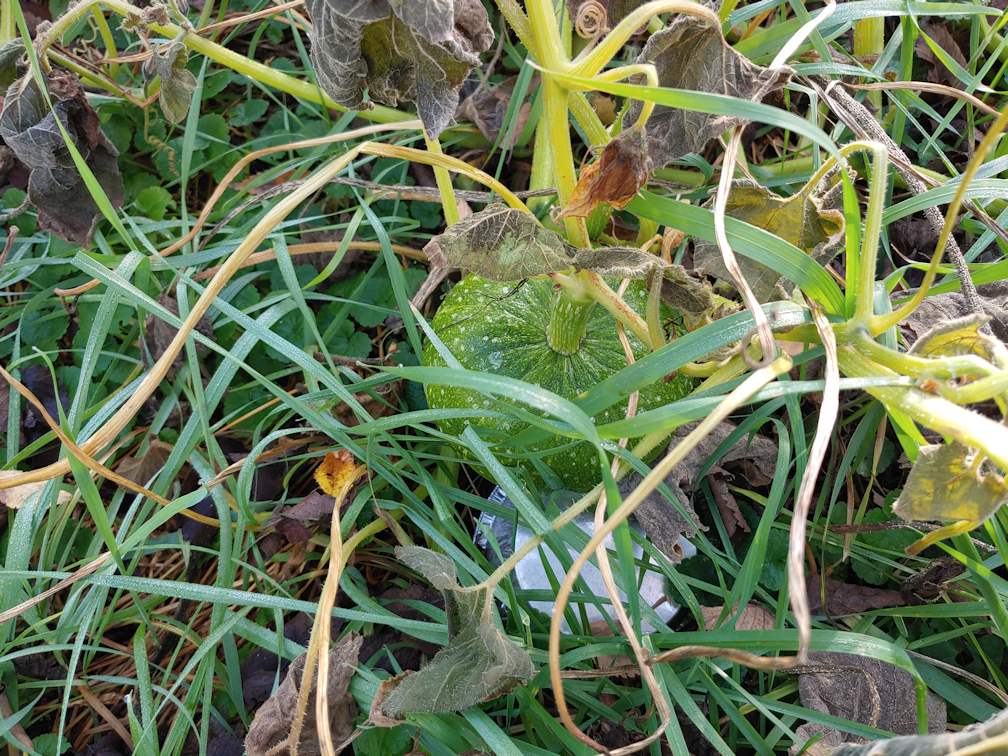
The very first squash that we found, way in the middle of the two plants, did end up withering away and dropping off, but these two that developed next are getting bigger and look like they are going to make it.

At least until we do get our first frost.

These are supposed to get quite large, but I don’t know how fast the fruit will grow, once they get doing. Well they have enough time to fully mature?

I guess we’ll find out! :-D

The Re-Farmer

Fall garden update: the covered beds

In the main garden area, which will be a permanent garden, we’ve still got the two beds covered with mesh to protect them from the deer. Unfortunately, that leaves them pretty neglected, due to the difficulty in moving such long frames.

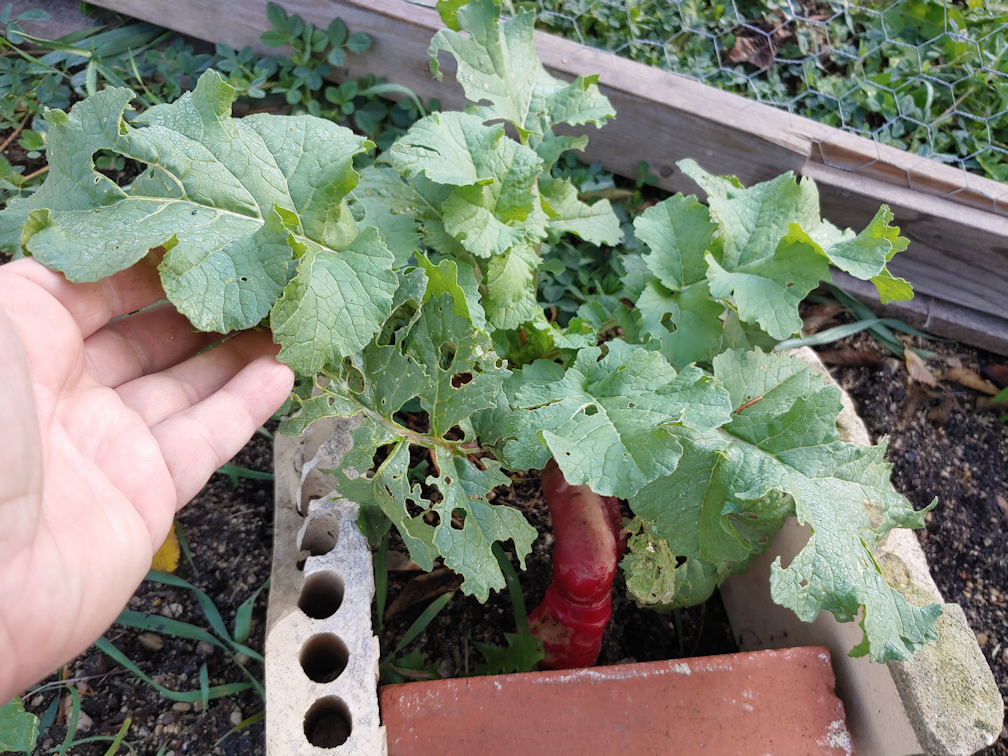
Of the radishes we planted, there are two French Breakfast radishes that survived the grasshoppers, and they are actually now looking stronger and healthier than ever! They were so eaten up, I did not expect them to.

And just look at the big mutant radish bulb. :-D

Will they get to the pod stage they were planted for? I have no idea. Normally, I’d say it’s way too late for that, but then I look at the long range forecast and think… maybe they will?

The surviving chard, on the other hand, are just thriving! The problem is, we’re not really using them much. It’s not that we dislike them or anything. It’s just a pain to get at them.

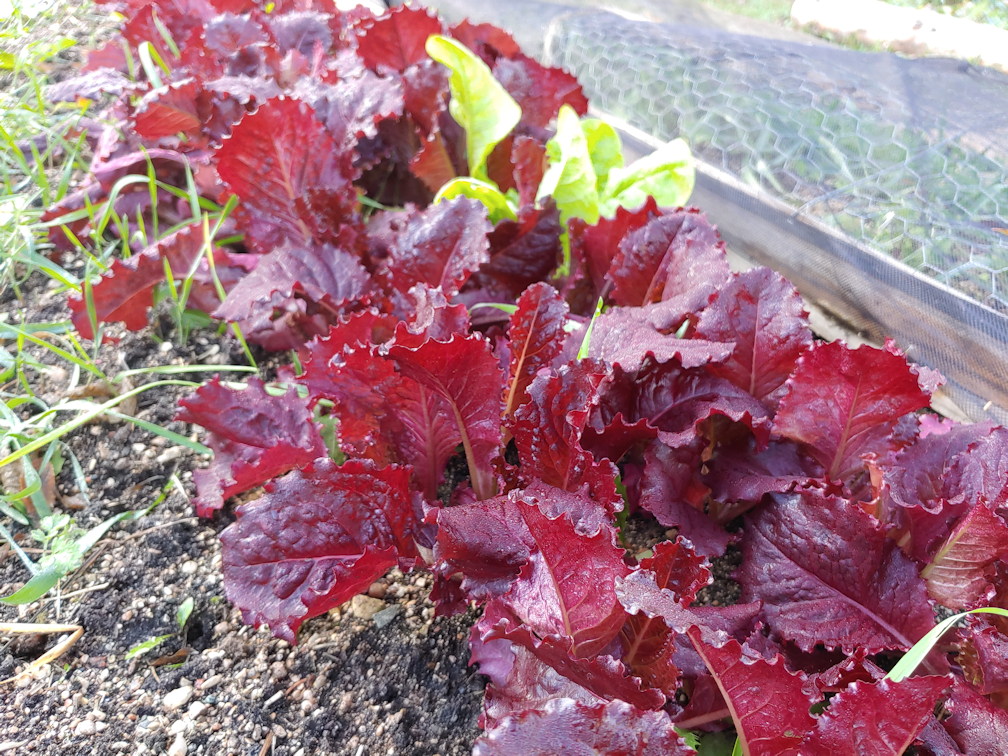
The lettuce is also doing really well – as is that one tomato plant that showed up on its own!!

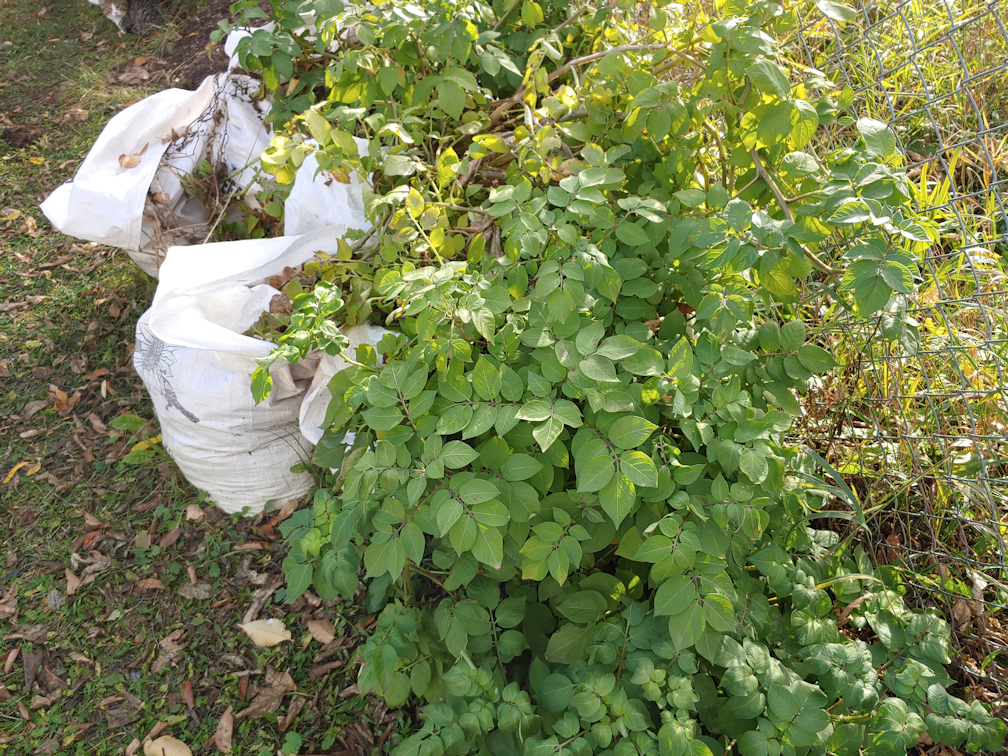
If I were not sure that deer are still passing through the garden areas, I would take the covers off completely. Then they could be tended and harvested more easily. Which won’t be much use if I come out one morning and find it all gone. Mind you, from what I’ve seen on how big radish plants get when they start to develop pods, we’re going to have to take the cover off at least that bed. And what will we do about this very strong, very healthy tomato plant that started itself so late in the season? I don’t even know what kind of tomato it is. Can tomatoes be transplanted into pots and grown indoors over the winter? I have no idea.

At least the groundhogs are no longer a problem. For them to go into hibernation so early, I would be thinking we’re in for an early and bitterly cold winter, and yet it’s supposed to continue to be warm throughout October, for as far ahead as the long range forecasts go. Plus, The Old Farmer’s Almanac is predicting a milder, wet winter for our region.

Once protected from critters and insects, we can at least say that the chard, lettuce and radishes were – eventually – a success. When we have our permanent, high raised beds, which will be only nine feet long, we will be making sure the covers we make for them will be easy to move aside as needed!

The Re-Farmer

Fall garden update: sunflowers, corn and peas

When it comes to the sunflowers, it looks like we’ll have a few Hopi Black Dye seed heads that will fully mature, but I wasn’t expecting much from the Mongolian Giants.

Then I took a closer look at one of the largest heads.

This is only about a third, maybe a quarter, of the size it should be, and yet there are maturing seeds in here!! There are so many developing and opening seed heads still, too. I don’t think there are any other Mongolian Giants like this one, with pollinated and maturing seeds in them, but while looking at them this morning, I did see some bees fluttering around, so who knows what will happen? It’s been such a strange growing year, there’s just no way to know anymore.

Some sad little peas among some sad little corn! This is the sweet corn block that is doing the worst, and yet they are still trying to produce little bitty cobs! We’ve got the most pea plants growing in this block, though, so at least this area should see the most improvement from their nitrogen fixing capabilities.

And we’ll even have a few peas to harvest!

The Montana Morado corn – what’s left of it – is being left to go to seed, and a few of the cobs have uncovered themselves. Which is helpful, since it lets me see how the seeds are maturing and drying on cob. A fair number of peas interplanted with them have been managing to grow, too. Not a lot of pods developing, but I’m seeing flowers around.

When it comes to the corn, I find myself waffling back and forth over whether or not we want to try growing them again next year. I still want to get Maize Morado seeds to try, and maybe we’ll do the Dorinny Canadian hybrid again. It’s hard to guess how much better the sweet corn would have done, had we not had drought conditions. The soil is nitrogen depleted, but we did use a water soluble, high nitrogen fertilizer on all the garden beds, a few times over the summer, plus were able to amend a bit with the purchased garden soil.

Is it worth trying the sweet corn again? I really love corn, but until we are able to improve our nitrogen depleted soil, is it really worth it?

The Re-Farmer

Fall garden update: winter squash and melons

While going through the garden beds this morning, I was just blown away by how much is still growing – and still getting a chance to grow, if the forecasts for October stay true!

The last time I had so many photos to share, I put them together into a video, but it only ever got one view. Clearly that’s not something people are interested in. So today, I will instead make a series of short posts, instead, starting with our winter squash and melons.

This is the very first Red Kuri/Little Gem squash that matures. As you can see in the photo, the vine is completely died back – except for the few inches on either side of the stem!

The vine with the next biggest one still has some green leaves on it. There had been another small squash that started to develop, but it withered away and fell off.

The other one, however, is still getting bigger, and just starting to deepen in colour. The vine it’s on has a lot of cold damaged leaves, but is still mostly green and growing, so this one may actually get a chance to fully mature.

The vine the mutant is on is also still growing, with fresh new leaves showing up even as the older ones get killed off by colder overnight temperatures. We still have not had a frost, which is the only reason we still have hope for our garden!

We are back down to the two Teddy squash, one on each plant. The others that had started to form, withered and fell off, likely due to lack of pollination. I don’t know how much bigger this well get, as they are a very small variety to begin with.

If you notice the white on the squash and leaves, no, that is not powdery mildew, or any other sort of fungal disease. That’s road dust. Even with the lilac hedge nearby, dust from the nearby road still gets through and coats things. Even the summer squash, which is furthest away, has road dust on them. Another reason we want to complete the hedge with dense bushes, and also plant taller trees. They will serve as more than wind breaks and privacy screens, in this area!

Here, you can see that the melon vines have all completely died back. All of them. And yet…

… the remaining melons are very firmly attached to their vines! Of course, they can’t grow any bigger, but I’m hoping as long as they stay out here, they will continue to ripen.

Under the conditions we’ve had, I’m really impressed with all of these. The melons managed to be quite prolific. The winter squash were not as prolific as they normally would have been, but we will at least have a few squash to try, and to see if we like them enough to want to grow these varieties again. We certainly would be willing to grow the Halona and Pixie melons again, though I think that we will try new varieties next year, to see what other varieties we enjoy eating.

The Re-Farmer

Morning harvest, and getting named

Check out what I was able to gather this morning!

There are quite a few more of the purple beans buried underneath. They have been, hands down, the most prolific bean producers, and if the weather keeps up the way it has been, we will be picking beans for at least another week or two! Even the yellow beans are putting out a second crop. With the drought conditions, none of the bean plants are as large and bushy as they should be, with the green and yellow beans particularly stunted, even as they continue to produce. With the green beans, that resulted in my finding bean pods that were almost as long as the plants were tall!

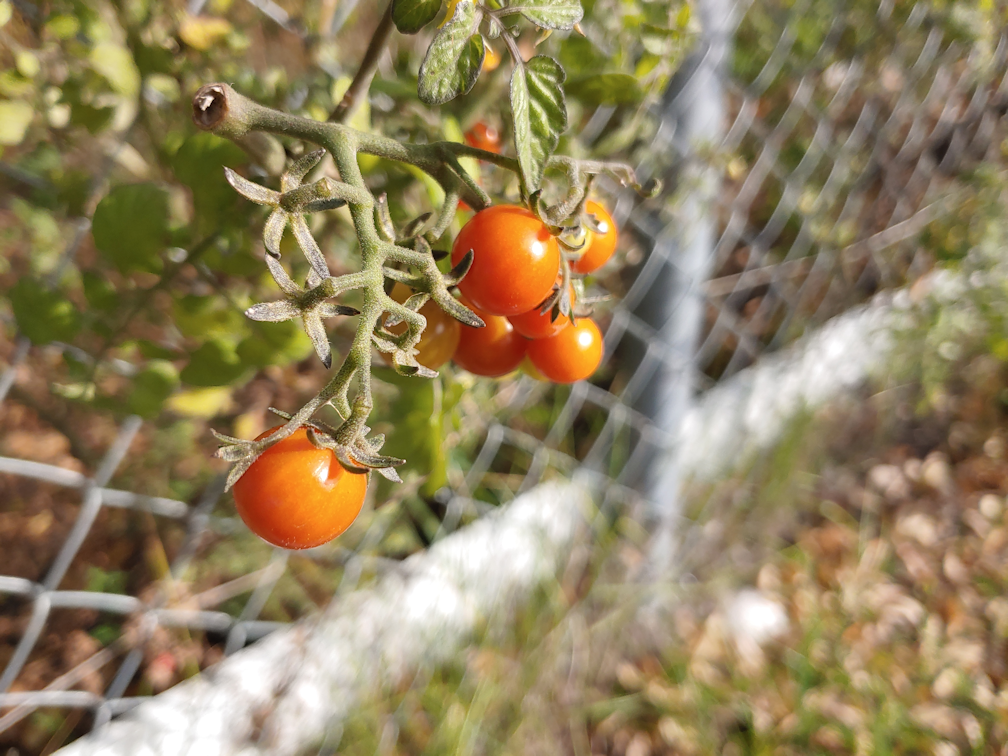
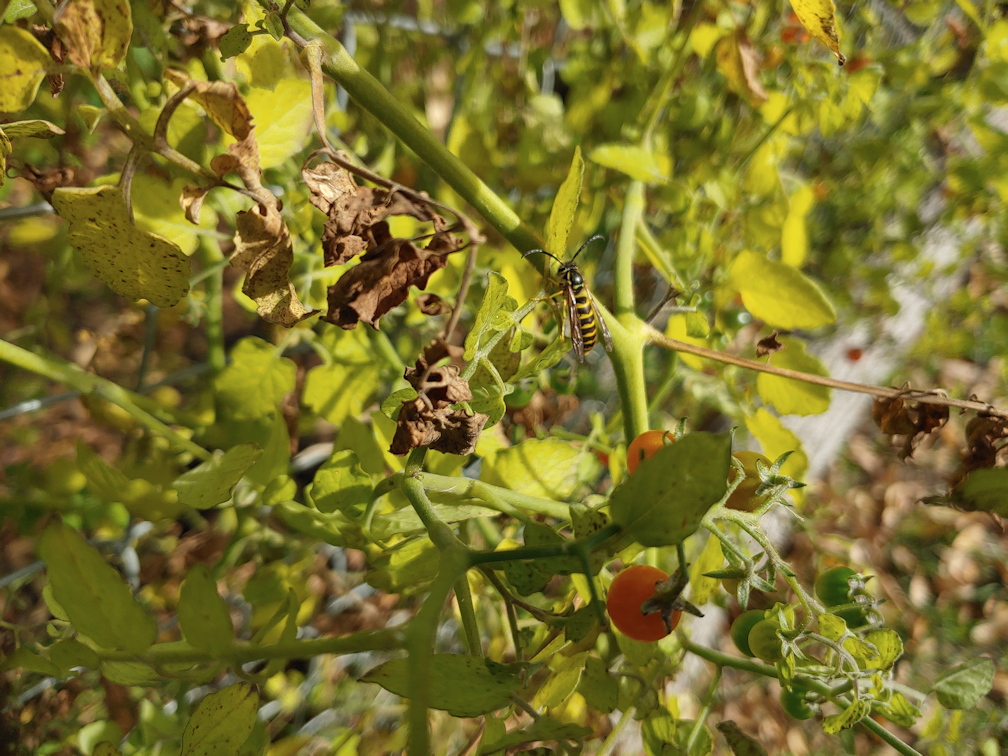
I had to get a bigger container to collect tomatoes with, instead of the red Solo cups we’ve been using until now. The vines are dying back, yet they still have so many ripening tomatoes!

Earlier today, I made a quick trip to the post office, before I gathered our morning harvest. The general store it is in always closes at noon on Wednesdays, so I had to do it early, but not too early; I knew the postmaster would need at least an hour from opening, to sort through the morning mail. We had some packages to pick up, but one of my daughters also had a package that was supposed to be delivered by courier, directly to our address, as it was from a place that does not deliver to box numbers.

Which has always been a problem, since our physical address doesn’t come up in searches. Like pretty much all of the roads around here, our road has two names; one is a numerical designation (part of the provincial system), and the other is our family name (a municipal thing). Many of the local roads are named after local families. It was only recently that I discovered that the road past our place has no name on the maps at all! Not even the road number. Which certainly explained why delivery companies had such a problem finding us!

My daughter was keeping an eye on the tracking number, however, and got a notification that her package was delivered to our door at about quarter to one. Of course, there was no such delivery, since the gate is locked. I could see nothing on the live feed of the security cameras, but my daughter went to see if it might have been left at the gate. Sure enough, I watched her on the camera as she got to the gate and picked up a white package. Which was on the gravel of the driveway, which also looks pretty white on the camera! No wonder I couldn’t see it!

I’m impressed that they found us, but it reminded me of something I wanted to try. Using the maps app on my phone, I found our road and took a closer look. It turned out that there is a 4 mile stretch of our road that is not labeled at all, however to the south of us, the road ends at another road, then restarts a short distance away. From where it restarts and continues south, it is labeled with the same numerical designation as the signs we have on our stop sign.

The four mile section that had no label is the only section that has our family name assigned to it. The offset part of the road with the numerical label probably has another family’s name assigned to it.

The app now has a function that allows the map to be edited. When I used that and started to select sections of the road, it simply said “unknown road”. I was able to select all 4 miles that had no label on it, then put in the name. It gave the option to add more information, so I added that it was also known by the numerical designation. I then sent the edit to Google Maps. I’ve already got a confirmation email saying “Thank you for your contribution. Your suggestion is being reviewed. Thanks for sharing your knowledge. We’ll let you know once the changes are published.”

Hopefully, that means or road will finally have a name attached to it on Google Maps, and people will be able to find us more easily! Plus, with the name rather than the number on the map, it will also match what is on not only my driver’s license, but on the licenses of several of my neighbours, too!

Speaking of which, I am hoping to get a chance to visit the one that sells pork products at the farmer’s market today. With our province’s latest draconian restrictions, organic humans are no longer allowed in “non-essential” places, even though such mandates are expressly forbidden in our laws, at both the federal and provincial levels. Vendors at markets aren’t required to be GMO though; just the customers. So I will just have to skip the market, and go right to the source! :-D

I’m quite okay with that. They are a homesteading family that are a few years ahead of where we want to be, as far as self-sufficiency goes, and I would love to see how they’ve been doing things! I may have grown up here on the farm, two sticks ahead of the stone ages, but I am more than happy to learn new, better and more efficient ways to go things! Especially since we’re only about one stick ahead of the stones ages now. ;-)

The Re-Farmer

Giant puffballs done, and an unexpected autumn

This morning was the day!

After sitting in water, with some molasses and a touch of salt, for a couple of days, our Giant Puffball spores were ready to be used to inoculate an area.

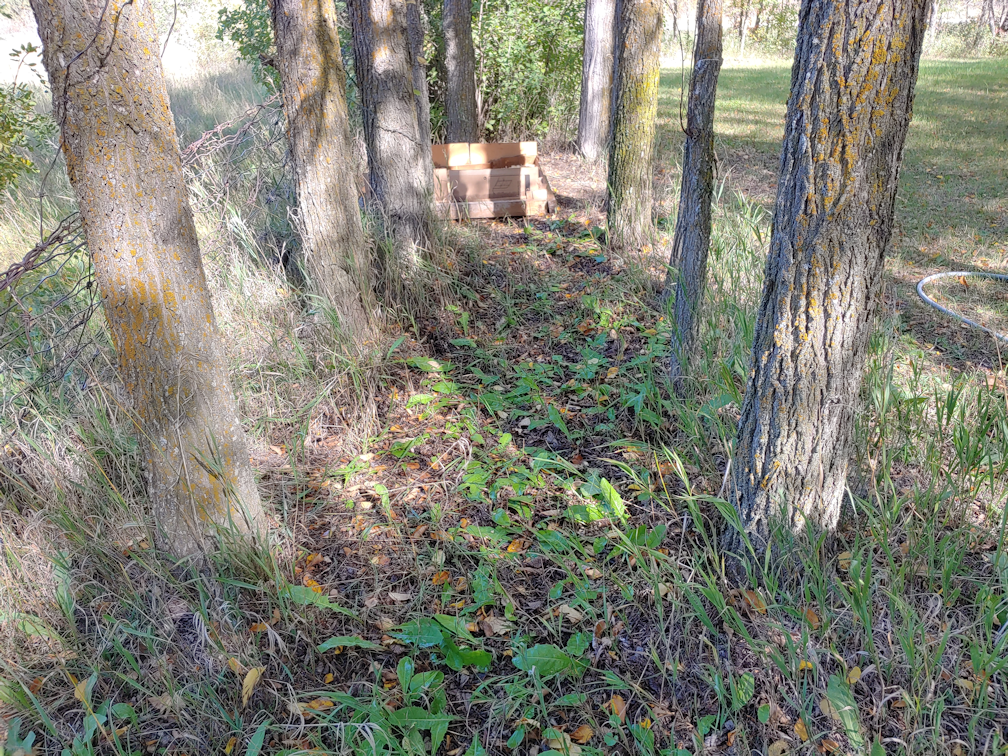
The instructions just said to pour over grass, but I did do two things to prepare the area we decided on. First, I pulled up the tall grass. There was barely any, and I didn’t try to pull them up by the roots or anything. Mostly, I figured I wanted the spores to be on the ground, not on tall blades of grass! :-D Then, I wet the area down with a hose. I wet down the morel bed, too, since the hose was handy.

When pouring the slurry out, I just swung the jug back and forth while walking backwards, paying more attention to spreading it evenly than to how large of an area I covered. It ended up being just enough to cover from end to end between the trees, from the morel box, down.

The temperatures have been just lovely, and we’re even getting passing showers, fairly regularly.

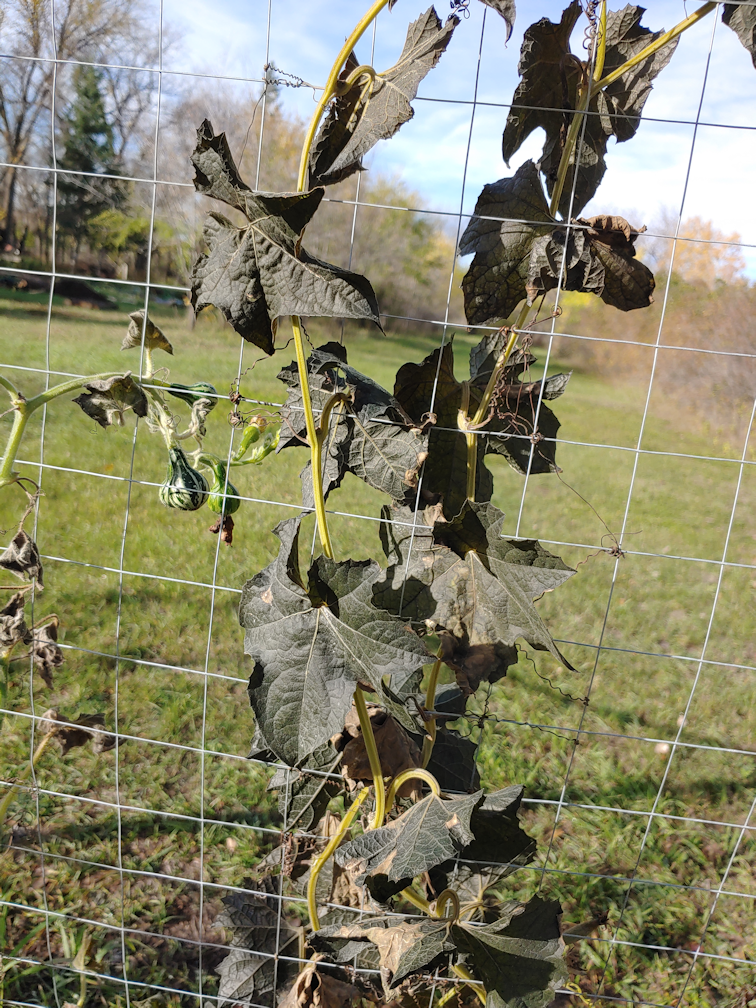
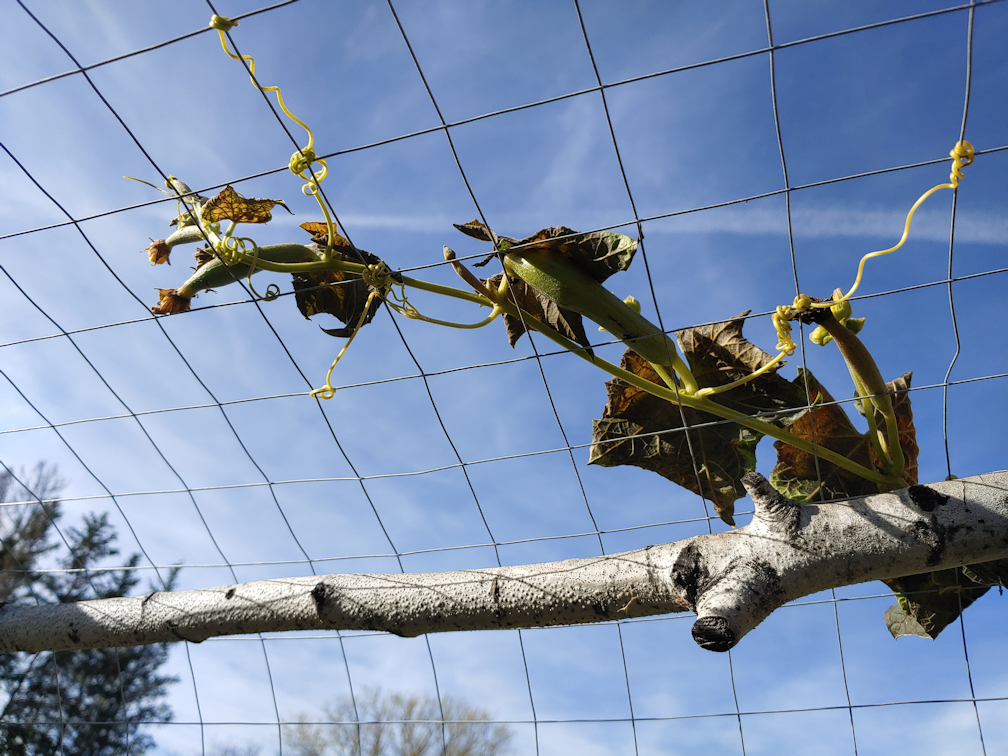
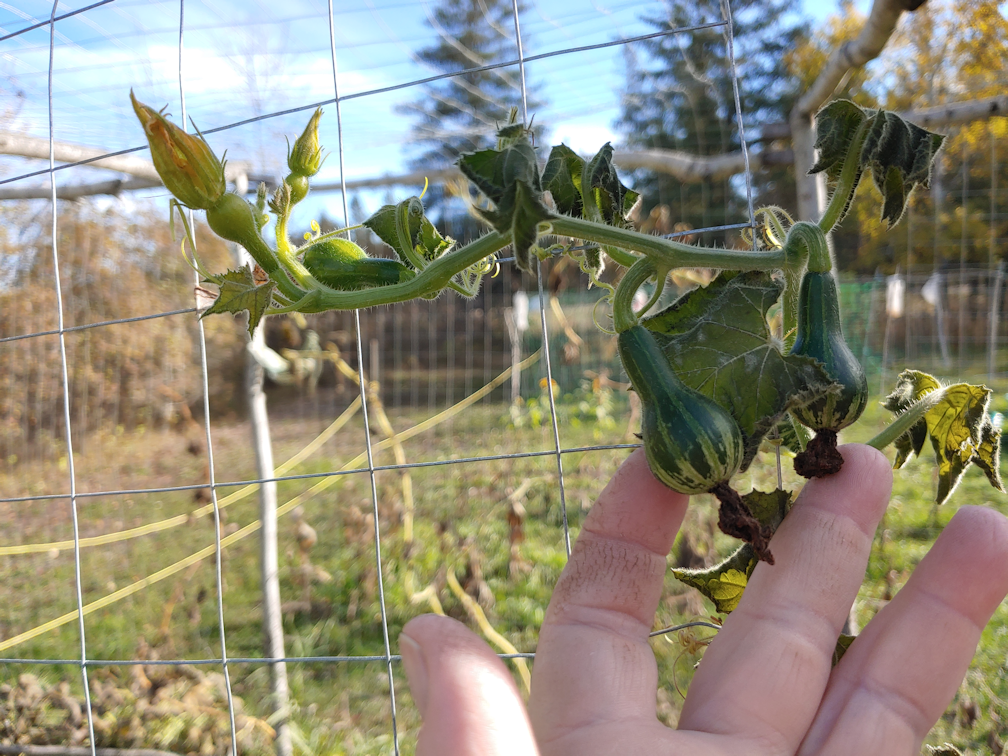
It’s been mild enough that, even with the first Ozark Nest Egg gourds withering away from last of pollination, new gourds are forming!

Looking at the long range forecast, I am just amazed.

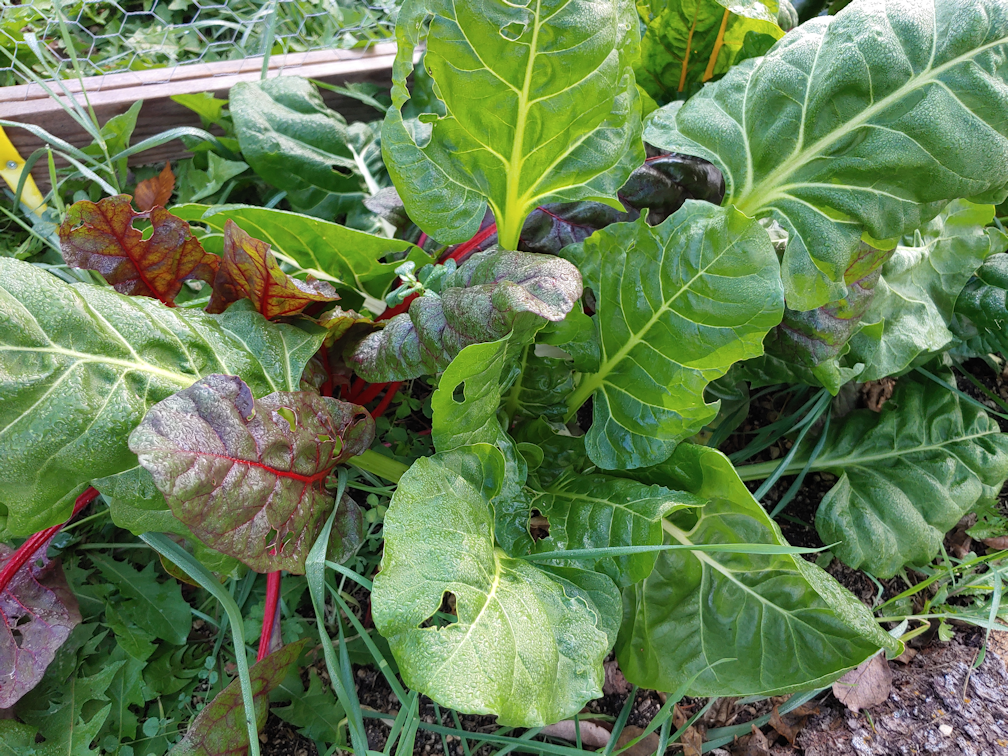
We’re supposed to hit 28C/82F in a few days! With a humidex of 32C/90F! I thought we already seen our last days of temperatures this high. It’s the warm overnight temperatures that make the big difference, though. The app on my phone has long range forecasts to 24 days. Of course, the farther out they predict, the less accurate they can be, but even so, there are no frost nights predicted! It’s like we’re getting the weather we normally would have got, earlier in the year, instead of the drought. In fact, even with the few showers we’ve had, it looks like we still need to water the garden! We will still be getting beans and summer squash, more and more of the late sown peas are growing pods, more sunflowers are opening their seed heads, and even the Tennessee Dancing Gourd is producing more flowers and gourds. Of course, the beets and carrots are still growing. I was planning to leave those until around first frost, and it’s looking like they’ll have plenty of time to keep developing. The tomatoes are dying back, but still prolific, and the lettuce and surviving chard are thriving. I’m almost tempted to plant some more lettuces!

Almost.

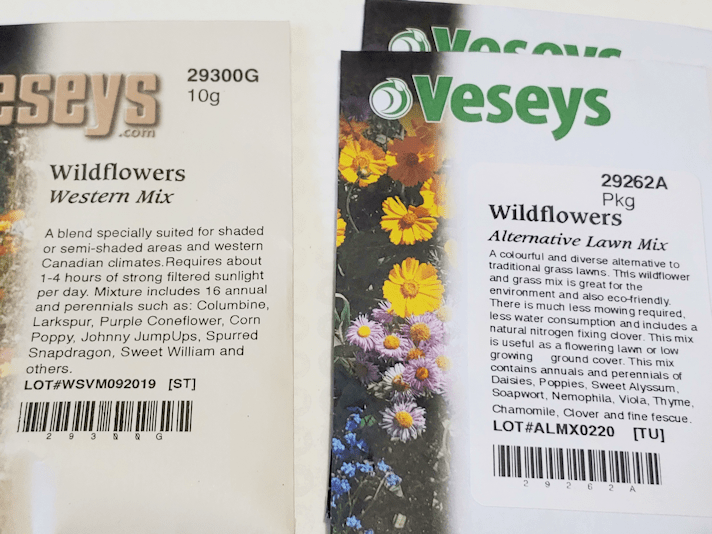
This does mean we won’t be broadcasting the wildflower seed mixes we have for quite some time; they aren’t going to go out until there is no chance of germination.

What a strange year it has been!

The Re-Farmer

So much colour

The sunflowers are so cheerful looking!

This is the Hopi Black Dye sunflower that has the one seed head that I think will have time to fully mature – and it has four more bright and cheerful seed heads opening!

I don’t know why my phone’s camera blew out this shot, but you can still see what a deep, dark purple is developing as the seeds mature.

When my mother found out I was planting sunflowers, she immediately mocked me, telling me that the birds would eat them all. This is the first sign of birds eating them I’ve seen this year. :-D

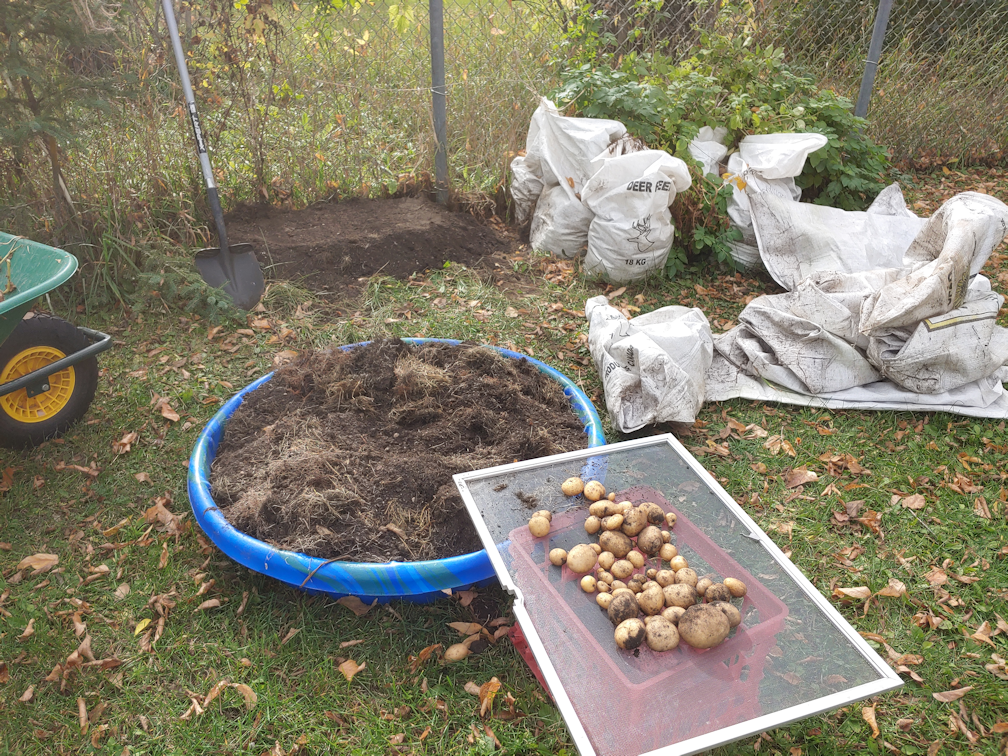
Not too long ago, while working on supper, I decided to dig into the potato bags and see what I could find.

The Norland (red skin, white flesh) and Yukon Gem (light brown skin, yellow flesh), we have picked before, but this is the first time I tried to find any of the fingerling potatoes, Purple Chief (purple skin, white flesh) and Purple Peruvian (purple skin, purple flesh). I did not find a lot, but I’m hoping it’s because I just wasn’t digging around in the right places.

I currently have them roasting in the oven with our own onions, both red and yellow, three types of summer squash, and purple beans. The only thing in there we didn’t grow ourselves was celery. Oh, and the dill we got from my brother. :-) I’ve got three chickens roasting, too, so we shouldn’t need to cook for the next couple of days! :-D

The Re-Farmer

Mmm… puffball slurry!

Okay, I should have done this yesterday, or at least earlier today, but too many other things kept distracting me away. So now I finally have it started.

Puffball slurry.

The spores in the packet are done the same way as the morels were; as little grains.

The package instructions said to put water in a gallon glass jar. I don’t have a gallon sized glass jar available, so I ended up using one of the gallon sized jugs from the distilled water we get for my husband’s CPAP humidifier. It’s food grade plastic, so that should be fine.

The instructions called for distilled or any other non-chlorinated water, so well water it was. Then they called for a pinch of salt (?!?!) and a small spoonful of molasses, which was then to be mixed with a clean wooden spoon until the salt was dissolved.

Such a strange mix of precise and imprecise instructions! :-D

Well, there was no way to use a spoon in the jug I was using, so after adding a bit of salt and a pouring in a blob of molasses, I put the cap back on and shook it until the molasses was dissolved. The salt dissolved pretty much right away, so that wasn’t an issue.

The instructions then said to “brush” the spores in, but since the spores were in those handy pellets, I just dumped them in. Now it is supposed to sit, undisturbed, for two days.

Actually, the instructions said to place the slurry “… where it will be disturbed…” :-D I suspect translation issues!

Anyhow.

Two days would actually be Saturday night, but since I’m not going to go pouring puffball slurry around in the dark, Sunday morning it is!

Like the morels, it could be a couple of years before these fruit, and it’s entirely possible they won’t take at all. No loss in trying, though, and if it works, we could find ourselves with puffballs big enough to cut into steaks! :-D Much easier than the little ones we normally get around here. :-)

Meanwhile, I have taken today as a break from heavier manual labour to give my body a chance to recover a bit. My husband, darling that he is, has been treating my hands with his zapper (needle-less acupuncture). One hand is pretty much back to normal now, but the ring finger on my right hand is still a problem. I may have actually injured it, somehow, aside from the usual arthritis. Whatever I did to it, I can at least say with confidence that nothing is broken, and I can at least still type. It’s a good thing I’m left handed in most things, too.

Aside from running some errands, we’ve been working on processing that big bag of dill my brother and his wife gave us. Our entire dining table is covered with towels, and my younger daughter and I have been working it in batches, as we’ve had the chance. There are a lot of mature seeds in there, and we’ve been talking about what to do with them. We want to basically set aside an area for the dill where they can self-seed to their heart’s content, and we don’t have to worry about them popping up when we’re trying to grow something else. We seem to have settled on the area next to the low raised beds that are being set up. It has been partially cleaned up, and because of various old tree stumps and roots, as well as spreading roots from those cherry trees that are not right for our climate, it’s not like we’re ever going to expand garden beds further in. If, for some reason, that spot doesn’t work out, I can think of another area where it might work to have a dill jungle. :-)

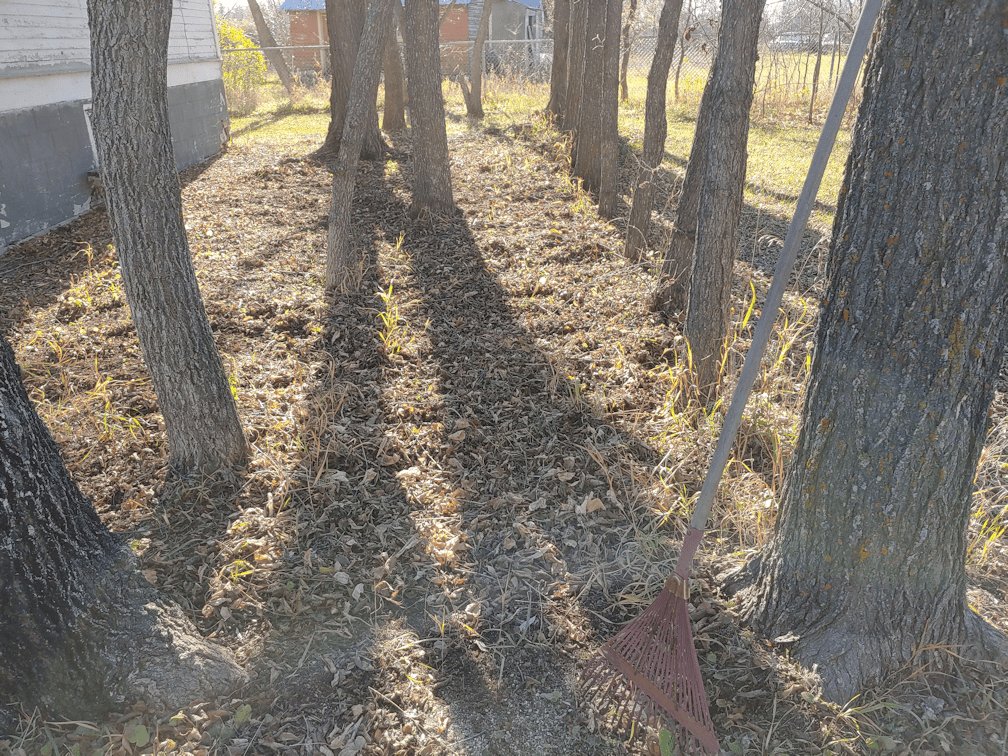
I am hoping to get back to taking down more dead trees and breaking them down for the high raised beds we will be building over the next while. I also want to do a thorough weeding of the empty beds, and letting them sit to allow any missed weeds to start growing, so I can pull them when it’s time to actually move the top soil and build the beds. We don’t have a lot of material left to use when refilling the bottom layers of the beds, but we will soon be able to start raking leaves, which will be good to use. Plus, we should be able to get another lawn mowing in before the end of the season, and have fresh grass clippings as well. So for now, the more dead trees we can cut and process, the better.

Little by little, it’ll get done!

The Re-Farmer

Morning harvest, and another one down

Well, so much for trying to support the sunflower in the old kitchen garden.

We had high winds again this morning, and the last of the three flower stalks on the remaining sunflower in the old kitchen garden finally broke. It was actually still upright when I came out this morning, but by the time I came back to the house, it was lying on the ground.

Sadness.

While checking the garden beds, I did get a little bit of a harvest this morning.

It all could fit in my pocket! :-D

This is the largest I’ve ever let a pattypan squash get. Any bigger, and they start developing their seeds. One of these days, I should try letting some fully mature. At that point, when the seeds are removed, they leave a cavity that can be stuffed for roasting, which I do want to try. We just really like them at this stage, though. :-) For next year, I plan to try other varieties of pattypan squash, and hope to grow some to save seeds, too. Since I accidentally bought three summer squash collections for this year, instead of one, we don’t actually need to buy more squash seeds, but I like to try new varieties.
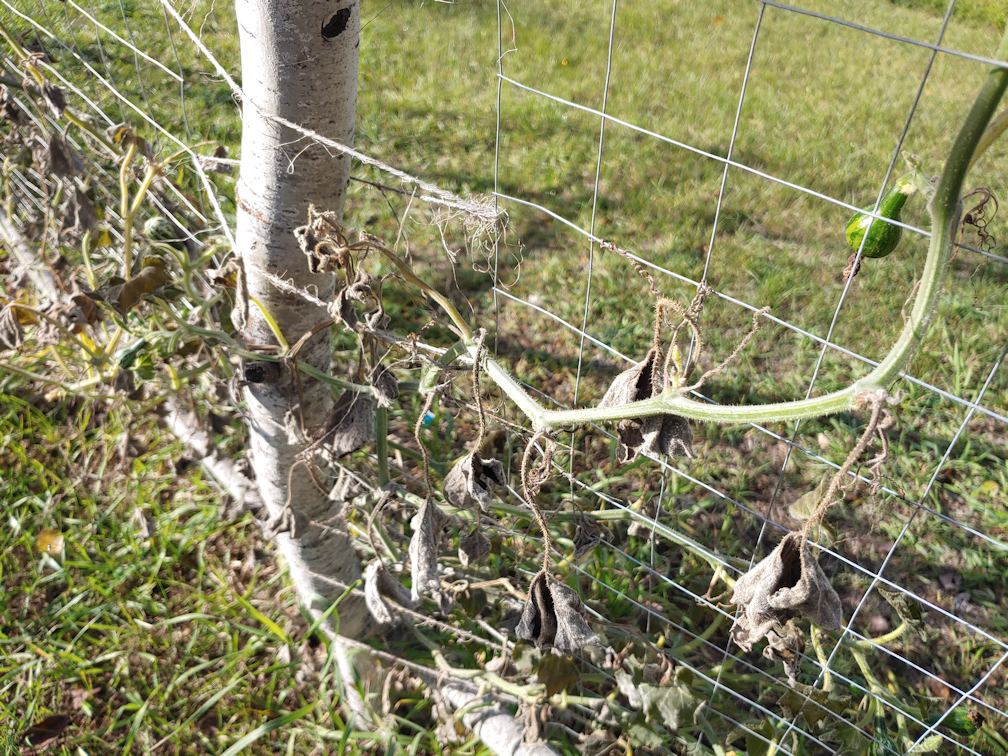
That is definitely one of the biggest benefits of having a garden. There are so many varieties that are just never in the stores!
The Re-Farmer