It’s been cold, wet and raining for the past while (with snow, in some areas!!), which meant it was the perfect time to stay indoors and finally make sauerkraut.
While I remember my mother making sauerkraut when I was a child, and I know I helped at least a little, I have never made it myself before. In fact, it was my mother’s sauerkraut that had me believing I didn’t like the stuff at all. She made incredibly strong kraut, and it was many, many years before I tasted any other and found it… okay. LOL Then one evening, while we were hosting a home schooling historical pot luck set in a pioneer theme, one of the families brought a fresh jar of sauerkraut. Fresh as in, just made that day and no fermentation. I was surprised by how good it tasted.
Cabbage, however, was one of those things I just didn’t tend to buy. In fact, it wasn’t until we moved here that we started to pick it up regularly.
I have an old friend from high school that has shared on social media about the sauerkraut she has been making, and with all the food preservation stuff I’ve been getting more and more into, I found myself wanting to try my hand at it. I did some research and found that it is incredibly basic – but it didn’t sound like what she was making. So I messaged her and got her recipe. It’s more like fermented vegetables, with added probiotics, than sauerkraut.
I decided to do both.
This post will be on the basic sauerkraut I made first.
Once we got our crab apple cider vinegar made up and set aside to ferment, it was time to turn to the rest of the crab apples!
The apples had been cleaned and left to soak in cold water with vinegar overnight. The extra time allows for any damage and bruising to the apples to be easier to see.
The next steps were to remove the stems, then cut the apples. These crab apples are small enough that I just cut them in half.
This was the time to cut out any damaged bits – or remove some apples completely.
There were quite a few that looked fine on the outside, only to be bad in the middles. The above photo is what I removed from the apples, including the small batch I used for the apple cider vinegar.
Just a little something for the compost pile. :-)
As I have some of our choke cherries and sour cherries in the freezer, I decided to make several small batches, including spiced jelly. Some of the recipes I saw said to cook and strain the apples first, cook the juices with the other additions, strain them again, then make the jelly.
I had no interest in cooking and straining these twice, and saw no reason to. Instead, I divided the cut up apples into three pots. I had two medium sized pots plus my smaller stock pot, so after I filled the two smaller ones, any left over apples went into the bigger pot. My smaller pots each held about 6 cups of chopped apples, and the bigger pot had about 7 cups of apples.
I then made my additions.
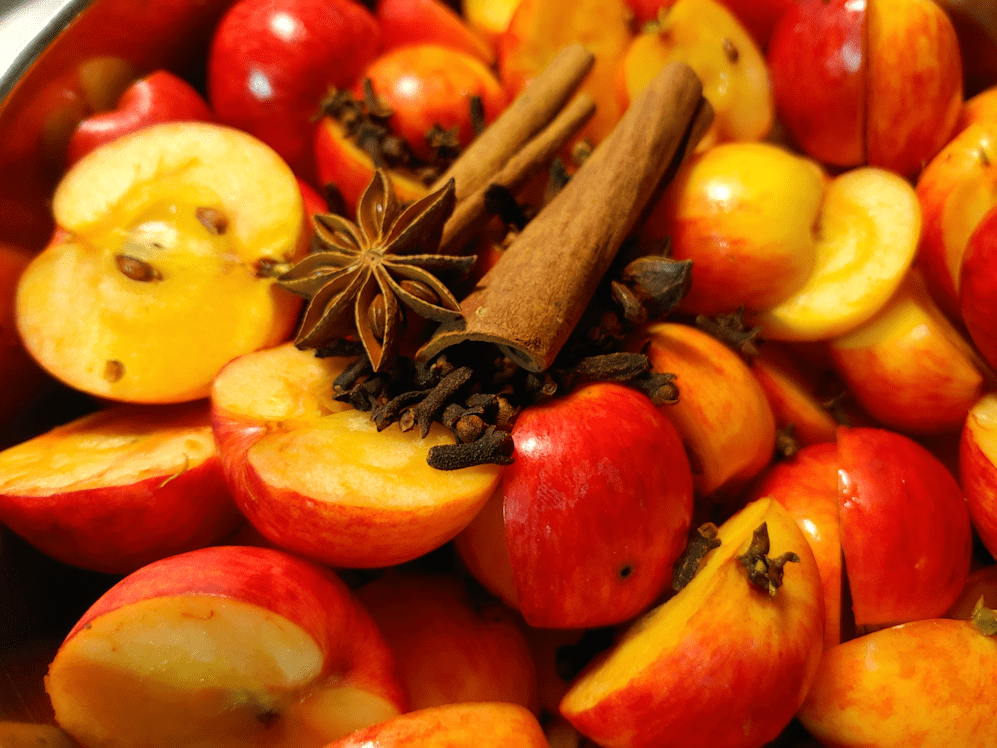
The spiced batch got a couple of cinnamon sticks, 2 pieces of star anise and about a tablespoon of whole cloves. The others got about 1 cup of frozen fruit added.
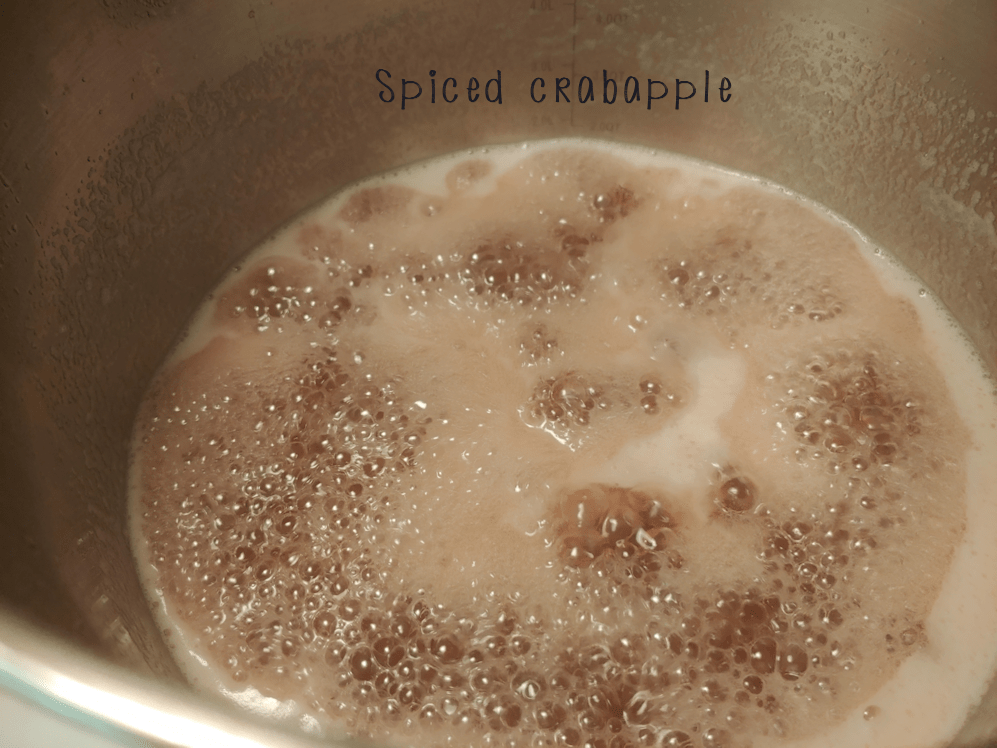
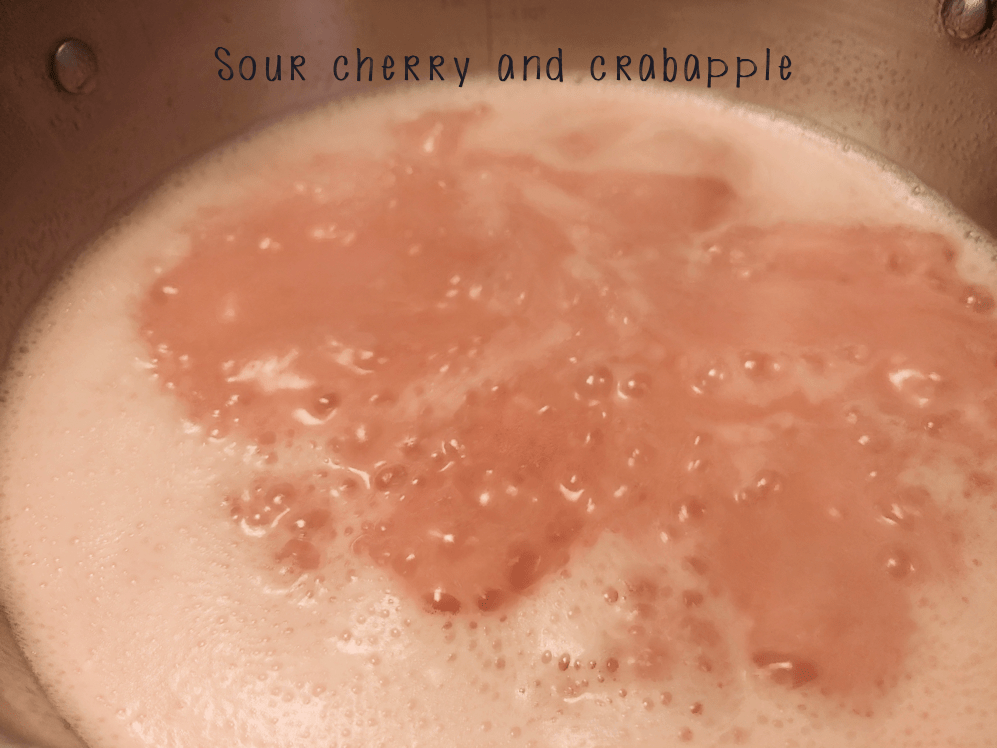
Next, water was added until the fruit was just covered. They were then brought to a boil, covered and left to simmer until soft.
The pot the choke cherries were in turned out to be just a touch too small, and I had to transfer it to my other stock pot to prevent it from over flowing.
After about 20 minutes or so, I stirred them down to break up the fruit a bit; I had to use a potato masher on the spiced apples, as the pot was too full to stir properly!
I continued to cook them until the fruit was quite soft.
This is the sour cherry batch on the left, choke cherry batch on the right. I forgot to get a picture of the spiced batch before I put it up to strain.
While the apples were cooking, I prepped for straining.
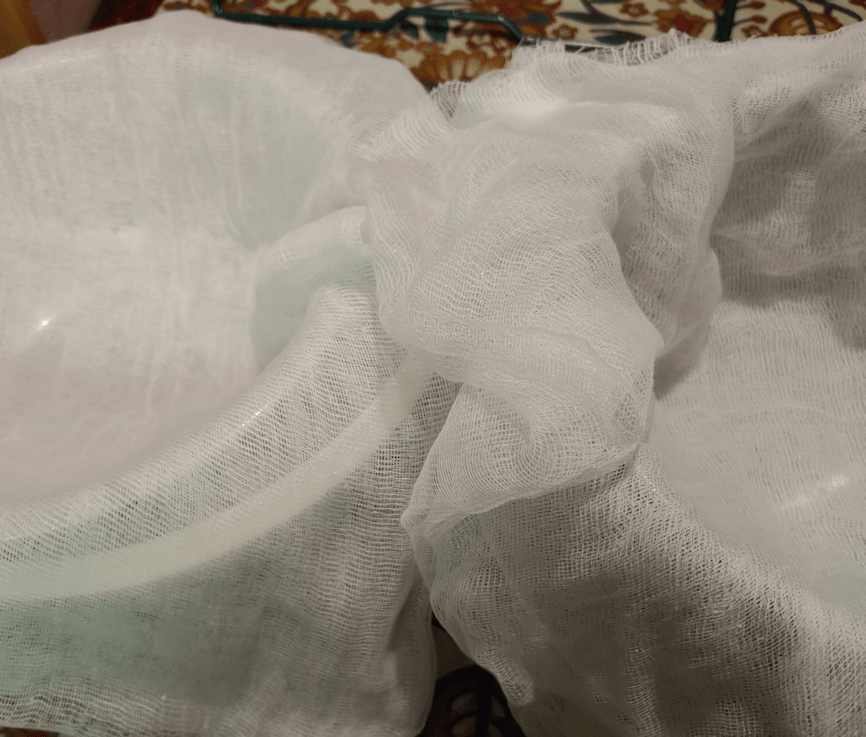
I currently have only one jelly bag, so I lined colanders set over large bowls with cheese cloth.
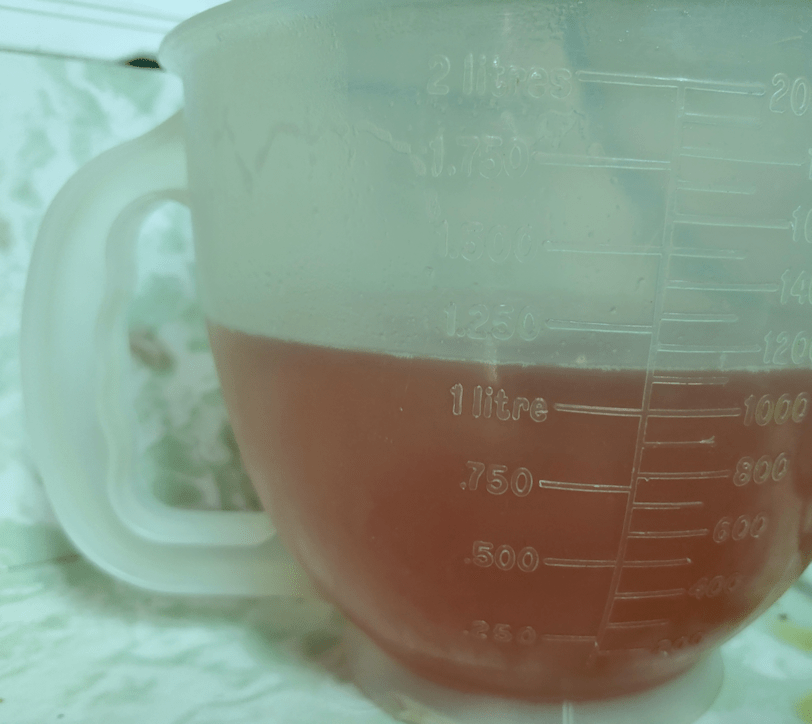
I used the jelly bag for the spiced mixture and hung it up in my usual spot. By then, I already had over a litre of juice strained out!
I had to get creative to hang the other two. I used one of those wire frames made to hold bags open, like for leaf bags. Thoroughly cleaned, of course. I set it up on the dining table and hung the tied off cheese cloth bags of apple pulp on the frame, with their bowls of juice set up under them and the colanders removed. I wasn’t able to get a good photo of the set up, though.
I then left the bags to drain overnight, though we did cover the various bowls with whatever we had on hand. One got a piece of cheese cloth stretched over it, another bowl was the perfect size for our mesh frying pan splash screen, and the big measuring cup got covered by a large mesh sieve. These all allowed the juices to keep dripping in, while keeping out any dust, cat hair, insects or whatever else might be floating about.
Note: they don’t need to be left overnight, but the pulp should be given at least a couple of hours to drain. Some recipes suggest to squeeze the pulp to extract more juice. This will result in a cloudy jelly, so that’s up to you! ;-)
That was all done yesterday. Today, it was time to cook things down!
I did each batch one at a time, rather than all at once, starting with the juice that was already in the measuring cup.
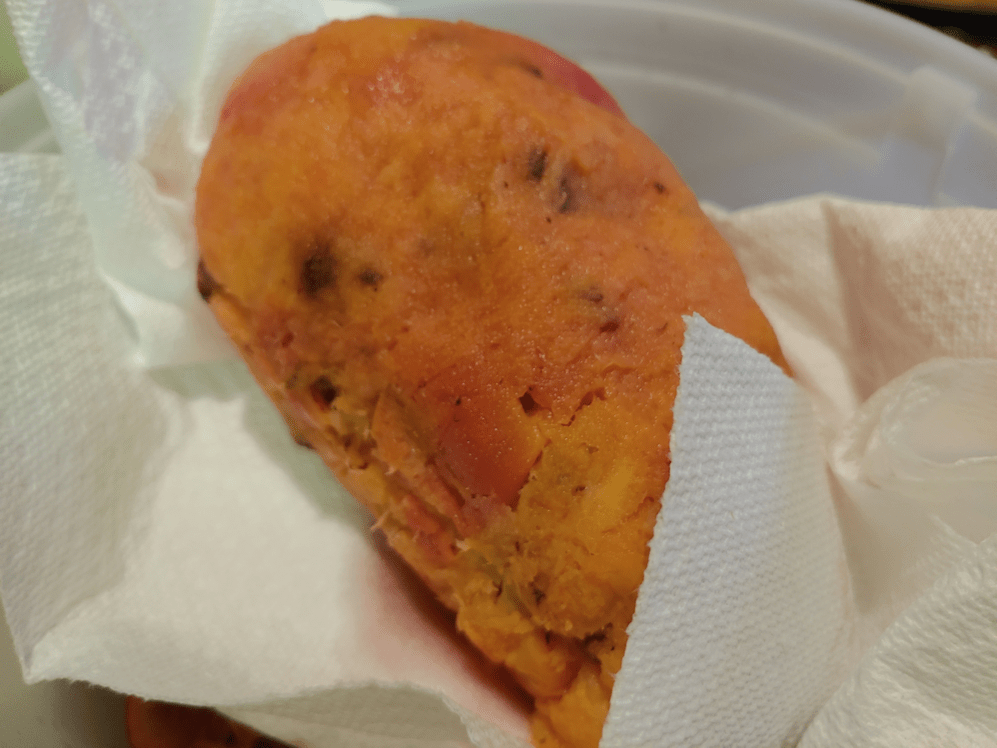
This is the spiced apple pulp from the jelly bag. The pulp all went to the compost pile.
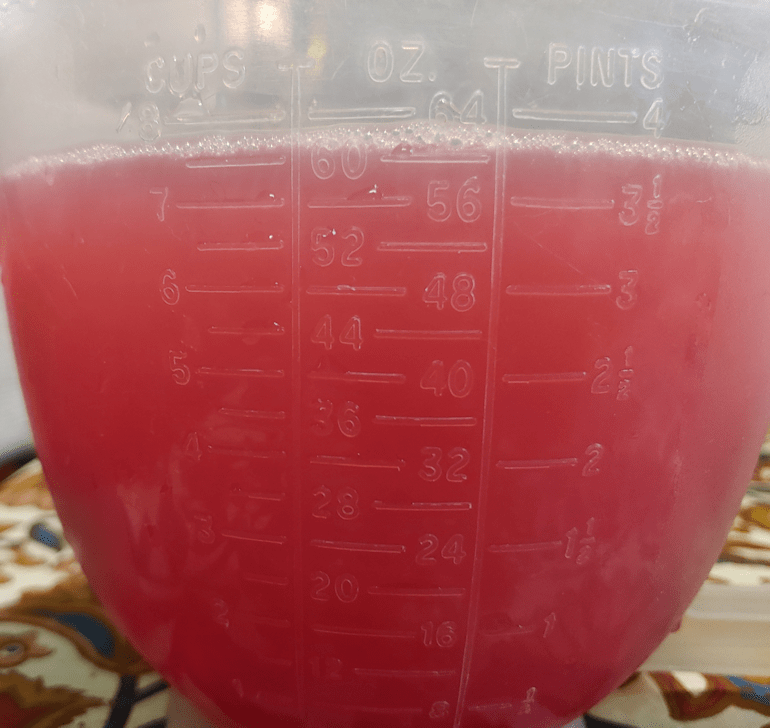
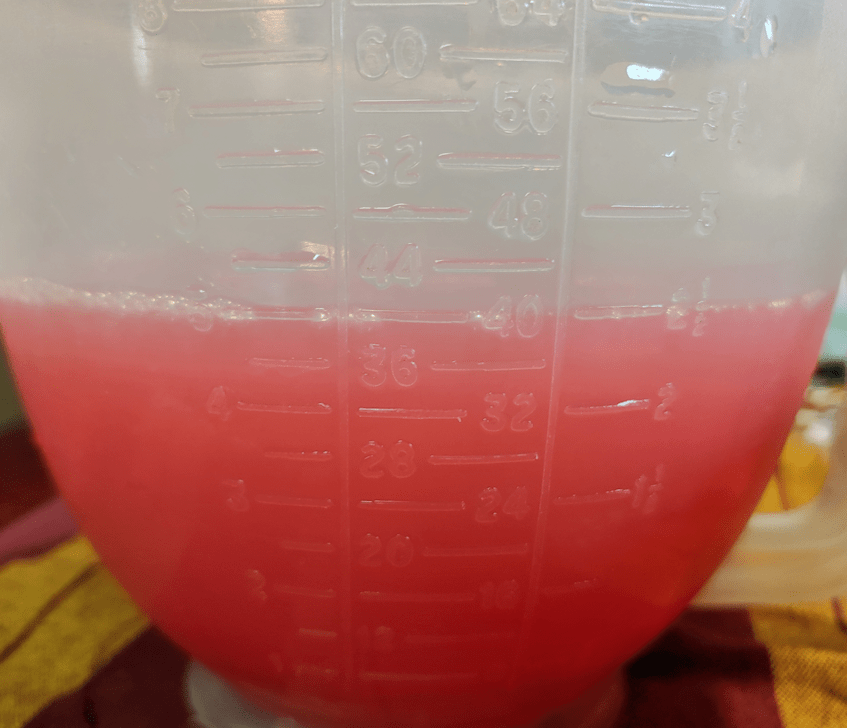
I ended up with almost exactly 5 cups of juice from the spiced apple and the choke cherry batches, and almost exactly 8 cups of the sour cherry batch. For each cup of juice, I added a 3/4 cup of sugar.
Which felt like an insane amount of sugar, but that’s how it works!
Each batch was boiled to the gel stage.
Before I started cooking any of them, though, I started sanitizing my canning jars. With how much juice I ended up with, I knew my dozen 250ml (1 cup) sized jars would not be enough. I decided to use one 500ml (2 cup) for each batch, then use however many of the smaller jars I needed to empty the pot. The larger jars will be for our own use, and the smaller jars can be given out as gifts, if we want.
I also made a discovery.
We have not been able to replace our damaged hot water tank yet, which means it’s still heating the water to extremely high temperatures. I figured I would take advantage of that and use it to sanitize my jars and implements.
I was able to set up all the jars in a large container on the counter near the stove. I was also going to use my candy thermometer, so I dug that out, washed it, then put it into one of the jars to scald. Shortly after, I pulled the candy thermometer out. The whole set up with the water had been sitting for about 5-7 minutes since I added the hot tap water, so I had to do a double take when I saw the thermometer.
It was at almost 100C.
That’s 212F.
The instructions I was following said to cook the juice and sugar mixture to 210F to reach gel state. My tap water was already hotter than that!!
The juices reached beyond 210F very quickly, so there was no way temperature alone was enough to reach gel stage, so I kept boiling it. After the first testing, I went to wash the thermometer and discovered there was water in it.
???
Looking closer, I discovered that the glass covering the bulb of the thermometer was gone! For all I know, this is damage from our move. I very rarely use the candy thermometer.
So I threw that out.
Which meant I was checking for the gel state using the *spoon test.
Each batch took me at least half an hour of boiling before it reached the gel stage.
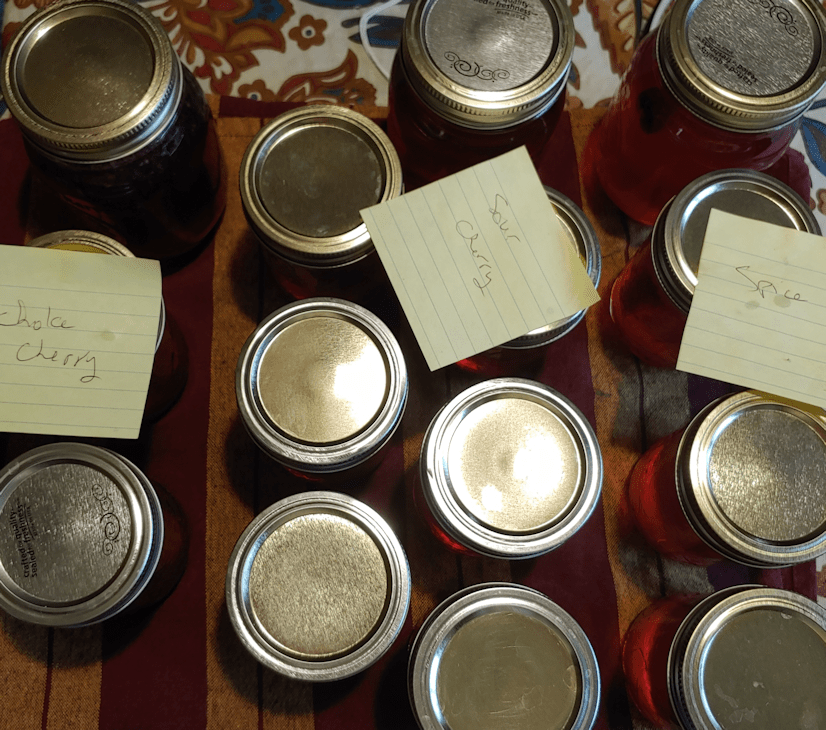
Once each batch was ready, I filled some jars – I added cinnamon sticks to the jars with the spiced jelly – covered them, then set them aside to cool while I washed everything before starting the next batch.
My 8 cups of sour cherry juice mix, and 5 cups of spiced juice mix, each gave me the same number of cups of jelly, but for some reason the 5 cups of chokecherry juice mix resulted in only 4 cups of jelly!
I still don’t have the tools to do a hot water bath, so these are not shelf stable, and will need to be stored in the fridge.
I absolutely love the colours in these!
After they had a chance to cool, my daughters used some when making supper this evening. They made grilled cheese sandwiches with some of the sour cherry jelly spread in with the cheese. It was really good!
The Re-Farmer
Homemade Crab apple jelly, with flavour variations
Items needed:
cheese cloth or jelly bag
bowl to drain juices into
if using cheese cloth, a colander that fits in the bowl
canning jars, jar funnel and lids, sanitized
place to hang pulp bag over the bowl
large saucepan or stock pot with lid
Ingredients:
crab apples, washed, stemmed and chopped. (no need to peel or core)
sugar
Optional flavour additions
about a cup of fruit or berries per 6 cups of chopped crab apples.
any combination of whole, not ground, spices, including cinnamon sticks, whole cloves, allspice, star anise, etc. to taste.
Place cleaned and chopped apple pieces into a large pot.
Add any flavour options desired.
Add enough water to just cover the fruit. Bring to a boil.
Cover and simmer for about 20-25 minutes, or until apples are very soft. Stir the fruit every few minutes.
Mash the mixture with a large spoon or potato masher. Cook for a few more minutes.
While the mixture is cooking, dampen a jelly bag and ready a bowl to catch juices, or line a colander placed in a bowl with cheese cloth (in 4 layers) and prepare a place to hang the pulp over the bowl.
When the fruit is cooked until completely soft, spoon the mixture into the jelly bag over a bowl, or into the prepared cheese cloth. Tie off the bag and hang over the bowl to drain for at least a few hours, or overnight. (After draining, pulp can be composted.)
Prepare canning jars and sterilize implements.
Measure the juice extracted and place into a large saucepan or stock pot. Add 3/4 cup sugar per 1 cup of juice.
Bring to a boil over high heat. Boil, stirring often, until mixture reaches gel stage*. This will take about 20-40 minutes, depending on how much juice there is.
Pour hot jelly into heated canning jars. Skim off foam, seal and set aside to cool.
Process in hot water bath or store in refrigerator.
* Sheet test for gel Dip a cold metal spoon into the boiling soft spread. Lift the spoon and hold it horizontally, edge down, and watch how the mixture drops. When the mixture reaches the gel stage, it will begin to “sheet”, with the jelly breaking off the spoon in a sheet or flake, rather than pouring or dripping.
Things have been a bit crazy lately, weather wise. Some severe storms have blown across our area and, while we have pretty much just caught the edges of them, they still resulted in internet outages and our power flickering in and out.
Perfect weather to stay indoors and to things with our crab apples!
I decided to use the small amount of apples from one tree to make apple cider vinegar.
A recipe I found called for filling a quart jar 3/4’s full, and it seemed I had enough to do that with just these.
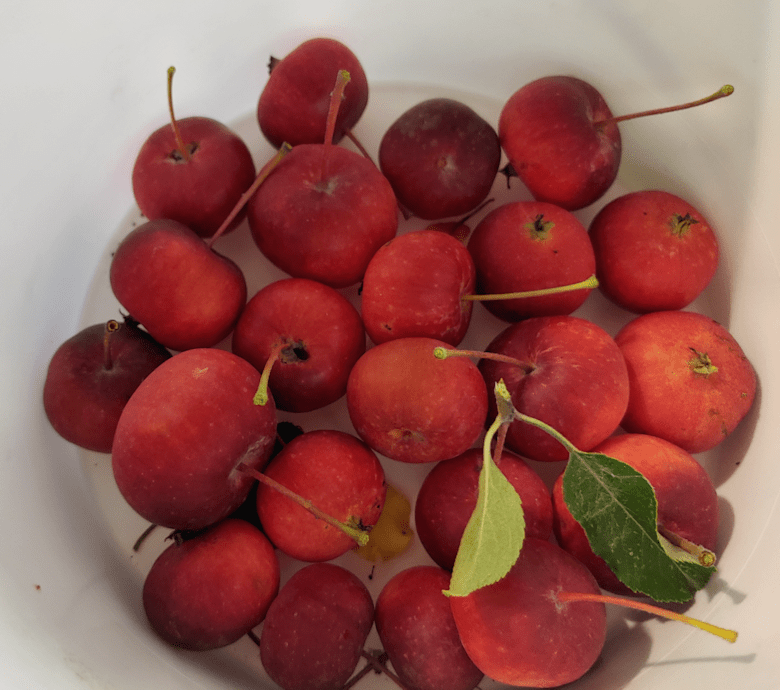
I washed all the apples in cold water with a splash of vinegar, leaving them to sit overnight. The recipe I found called for the scraps of apples – skin and cores – adding that if whole apples were used, to chop them coarsely. Since the crab apples are so small to begin with, after removing the stems, I cut them all in quarters. Some also needed to have bruises or damage cut out, and a few turned out to be bad on the inside and could not be used.
In the end, I had just the amount I needed to fill the jar 3/4’s full, perhaps a touch extra.
The next step was to dissolve a couple of tablespoons of sugar into a cup of water and adding that to the jar, then adding enough water to completely cover the apple pieces. Filtered water was suggested. As we have well water, we could have just used that, but our water is very hard and iron rich, so I used bottled water I happened to have.
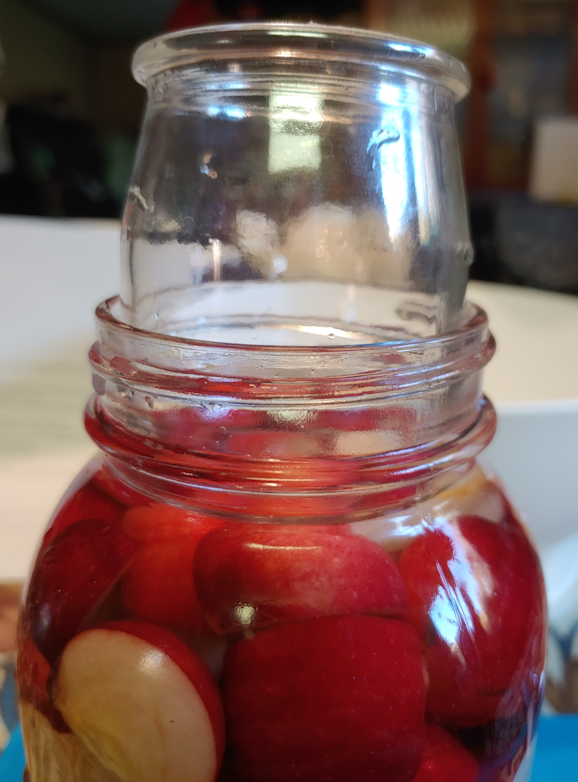
The apples need to be kept submerged, and there are fermentation weights available for this. I have none, and had never seen one before looking it up on the internet. The alternative was to put a small jar in to weigh it down.
I have a collection if tiny jars that I have hung on to, and one of them fit perfectly into the quart jar! This is from a package of yogurt that came in 4 little jars to a package. I admit, I bought it just for the jars because they were so adorable. Handy, too!
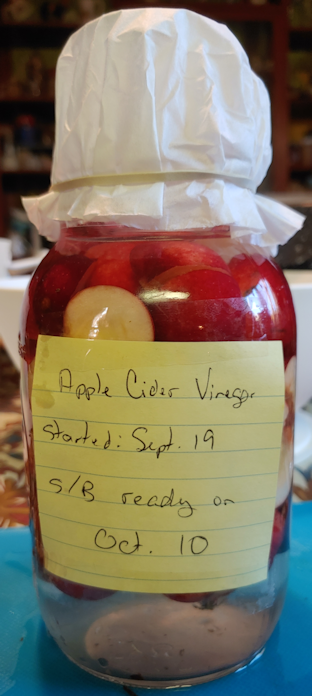
The next step was to cover the jar with something that would keep dust or whatever out, but allow air in. It could be a piece of cheese cloth, some thin cloth or a coffee filter, fastened in place.
I stole one of my daughter’s coffee filters.
Now it needs to just sit in a dark place at room temperature to ferment into vinegar. This should take about 3 weeks. I’ve tucked it into the top of a cupboard we used fairly frequently, so it will be easy to check if there is any mold happening.
After 3 weeks or so, it will be strained, then left at room temperature to continue to ferment for another 3 or 4 weeks.
Once it’s at the desires taste/strength, it just needs to be strained and re-bottled. We’ll see how it turns out!
The Re-Farmer
Apple Cider Vinegar
Items needed:
quart size jar (an air and liquid tight lid will be needed after fermentation is complete)
fermentation weight or another jar small enough to fit into the mouth of the quart jar
cheese cloth, clean cloth or coffee filter to cover the jar
cord or elastic to fasten cover in place
Ingredients:
apple scraps or whole apples, coarsely chopped; enough to fill a quart jar 3/4 full
2 Tbsp sugar
about 2 cups filtered water
Sanitize a quart jar and let air dry.
Fill the jar 3/4 full with apple pieces.
Dissolve sugar in 1 cup water and pour over the apples.
Top up with more water until apples are covered.
Add weight or small jar to keep apples submerged. Exposed apples may start to mold.
Cover the jar with a cheese cloth or coffee filter and use a cord or elastic to hold it in place.
Place in a dark location at room temperature and leave for about 3 weeks. Check regularly to ensure the apples remain submerged and no mold is growing.
After 3 weeks, strain the apple pieces out, return liquid to the jar and cover again with cheese cloth or coffee filter.
Return jar to a dark location at room temperature for another 3 or 4 weeks, stirring every few days.
Taste after 3 weeks to see if it has reached desired tartness. If not, leave to ferment longer until it reaches the desired flavour.
Cover with a lid and use as desired. The vinegar can also be transferred to a different jar or bottle, if preferred.
If you notice a film has formed at the top of your vinegar, congratulations! You have developed a “mother.” It can be used as a starter for future batches of vinegar – or a small amount of a previous batch can be used.
We are actually a bit late on this. After 10 days in the fermentation bucket, when we should have started sanitizing things and transferring the must to the carboy, we were instead dealing with hot water tank problems.
This is what the must looked like this morning, before I did the first stir of the day.
Bubbly bubbly!
I love me some CO2 action!
At the time of this writing, we’ve done the second stir of the day. The instructions we are using as a guide said to stir it twice a day in the first 48 hours, so this was the last one. We now leave it, loosely covered and untouched, for the remainder of 10 days. After that, we siphon it off into the carboy, leaving behind any sediment, set up the airlock, then tuck it away into the basement for a minimum of 4 weeks. After this second fermentation, it should be ready to bottle.
We will, of course, have to taste it first, and see if we’ve got mead. :-)
Today, I made a quick trip into town to pick up a new litter box for the sun room. Small as they are, 10 kittens and 1 little litter box isn’t working anymore! :-D
Since I was in town anyways, I stopped to pick up replacement hose connectors.
Garden hoses are among the things we’re finding lots of, all over the place, and they all suck! Last year we threw out a couple because they had so many holes in them. Why they were kept at all was a mystery! I’ve even found some in the barn, but they’ve been there so long, they’re actually brittle.
For the past while, we’ve been using 4 hoses that we’ve found. They all leak, but were still usable, for the most part. When I washed the gates in the garage in preparation for painting, I had to hook all 4 of them together to be able reach into the garage. One of the connections had started to spray so much, my daughter thought it was a sprinkler, at first!
We do need new hoses, but replacing them is low on the budget priority list. Especially since I want to replace them with heavy duty 50′ and 100′ hoses. Replacing the connectors, on the other hand, is much more affordable.
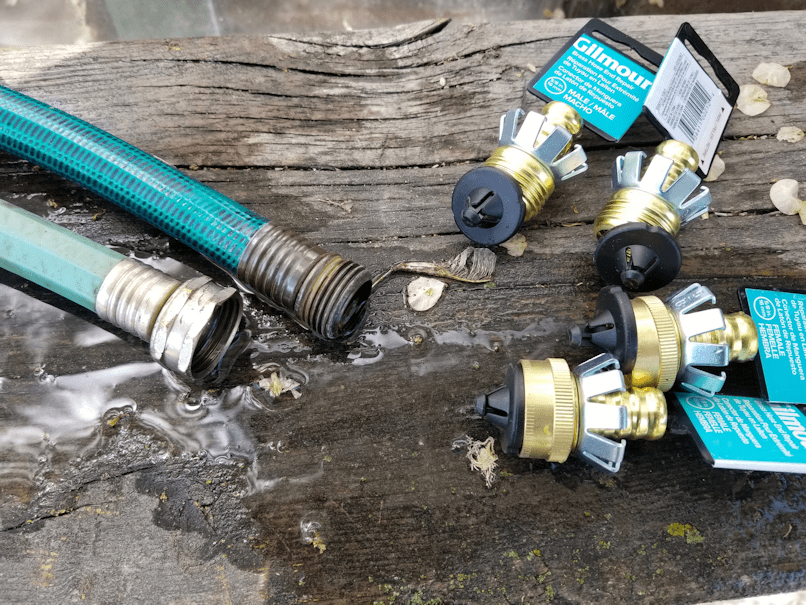
I picked up some inexpensive brass connectors. After testing the first pair of hoses, these are the ends that need replacing.
This was very much a “use the tools I got” project. I used pruning sheers to cut the old ends off.
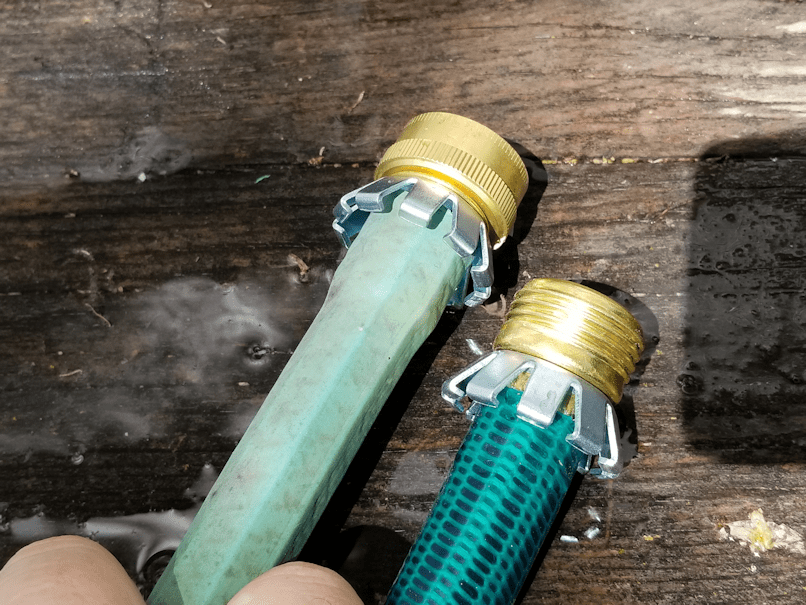
I could really tell the difference between the quality of hoses while inserting the connectors! Yes, I did get the one on the right pushed in further. This involved slamming the end into the bench I was using as a work surface. LOL
Then I used the concrete step as a surface to hammer the grips into the hose.
When I tested it later, I discovered I accidentally hammered the female coupling into an oval, and had to hammer it back into shape. LOL
After finding these two no longer leaked, I tested the other pair of hoses.
This one was spraying so much, it reduced the water pressure when using it. Which was a problem when we had it hooked up to the back tap and were using it with a sprinkler to water the raspberries I’d transplanted. :-D
Fixing this turned out to have an unexpected problem. This is a heavier duty hose than any of the others, and the inner circumference was much smaller. I wasn’t able to stretch it enough to insert the connector. I could stretch it quite a bit with the tools I had, so I knew I could get the connector in, but it didn’t stay stretched. Which is good for a hose, but not good for what I was trying to do! :-D
Through a combination of careful snips with the pruning sheers and some spray lubricant, I was able to get it in. Not far enough for the grips to catch all of the hose, though. I eventually thought of using a small box cutter to make a couple more surgical incisions in the outer layer of the hose, which allowed it to stretch enough that I could push (well… slam, repeatedly…) the connector in further. I had my doubts whether it would work or not, so I tested it right away.
Yes!!! It worked! No more spraying. Not even a little leak.
The other hose it’s attached to was not leaking… yet.
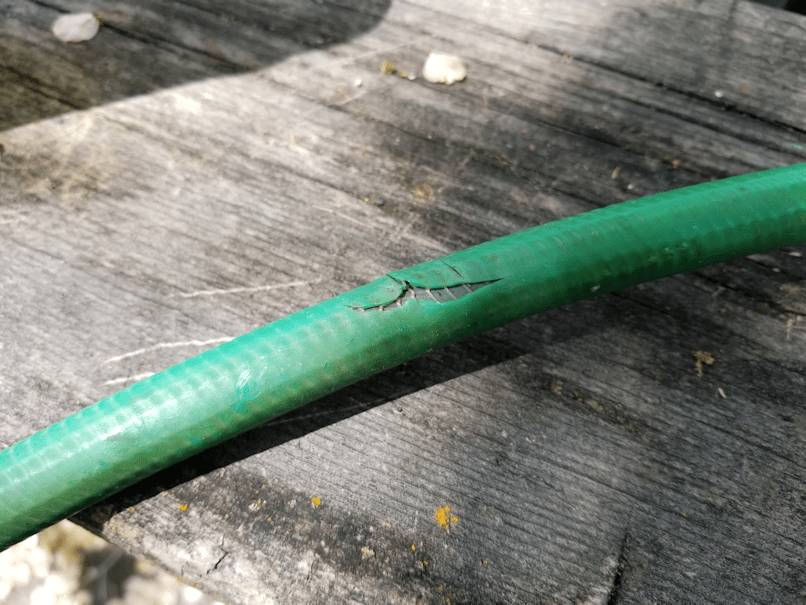
It had several cracks like this at one end, so I cut off about two feet of hose, then attached the connector.
While not as heavy duty as the one I’d just finished, this one also had an inner lining that made it too a bit small for the connector. This time, however, I had my skinny little box cutter handy, and I was able to shave some of the inner liner off at the end. Between that and the spray lubricant, I was able to get the connector in and finish the job.
I wish I’d thought of that with the previous hose. It would have been a lot easier to do, if I had!
We do still need to replace the hoses, but for less than $15, I’ve added years to their usability.
It also means that I can leave the water tap on, and not be wasting water from all the drips and spraying.
Once done, I was glad to get inside again. While I did the work in the shade, the testing was done in full sun. We’ve hit 28C today, and it’s supposed to stay hot like this for the next couple of weeks.
At times like this, I quite appreciate how cool the main floor of the house stays.
Though it is still weeks away, we are already planning our semi-traditional Polish Easter basket.
I say “semi” traditional, because we’ve modified some of the contents over the years.
If you’re unfamiliar with a Polish Easter basket, these are filled with symbolic foods to be blessed on Holy Saturday, and eaten on Easter Sunday. The foods include ham, sausage, bacon, bread, cheese, salt, butter, horseradish and eggs. We also include things like olives, vinegar, and olive oil. It may also contain a bottle of wine and a candle. Oh, and sometimes chocolate or candy. The baskets are decorated and covered with lace or embroidered clothes. As a child, Easter was my favourite holiday, and our traditional basket was a big reason for that!
Some of the contents require more advance preparation, and I was able to start on one of those, yesterday. This is a non-traditional way to include the traditional cheese in the basket.
This year, I found some absolutely delightful mini-jars, and decided to make several small jars of marinated goat cheese, but we’ve also done it by layering medallions of goat cheese in a larger jar. Both ways work fine.
It had been my intention to make two baskets this year, with a large family basket for ourselves, and a smaller one for my mother. She declined my offer, and will be making her own basket.
We’re going to have lots extra out of this batch!
To start with, I scalded the tiny jars I bought special for the basket, plus extra pint size jars. Then I prepared the ingredients. The mini-jars have smaller openings, though, so that changed things a bit.
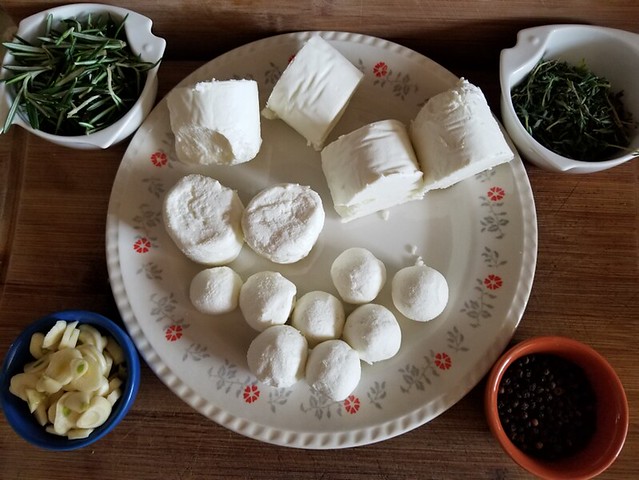
Here we have fresh rosemary leaves and fresh thyme leaves – they came in 28gram packages, and I stripped the leaves from the stems. There are peppercorns and about 8 cloves of garlic, sliced. Not pictured is Extra Virgin Olive Oil.
I completely forgot about the bay leaves. There should have been a bay leaf per jar.
As you can see, this is a forgiving recipe.
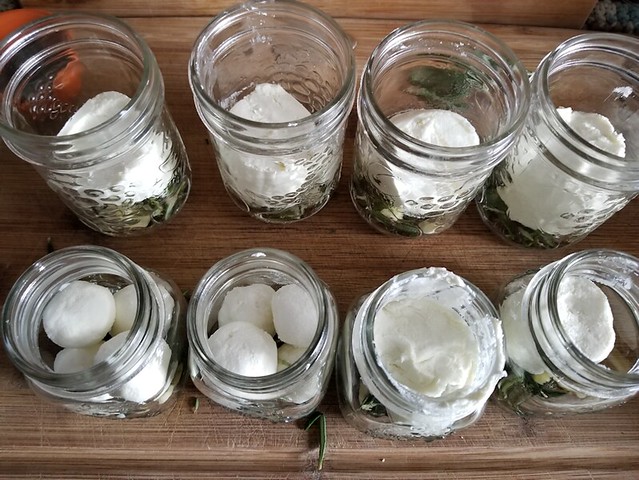
The goat cheese came in 300 gram logs; I had 2 of them and cut them each into 4 equal pieces. For the ones to go into the mini-jars, I cut pieces off to try and make them into smaller columns, then gently rolled them between my hands to make them smooth and round.
The first one I tried, promptly crumbed apart. Which is why I have rolled balls of cheese. I broke up each trimmed quarter piece into 4 and formed the smaller pieces into smooth balls.
For the pint sized jars, I didn’t have to be pretty, since they’re not intended for the basket
Each jar got some peppercorns, thyme leaves, garlic and rosemary leaves placed on the bottom. If I’d remembered the bay leaves, they would have gone into the bottom, too. Then the goat cheese gets put into the jars.
This is why I make extras…
I didn’t make one of the small columns of cheese small enough. It got messy. :-D
No worries. It’ll still taste good!
Once the cheese is in, more peppercorns were added, as well as the rest of the thyme, rosemary and garlic slices. Then the olive oil was added.
After the oil was added, the rims were cleaned, the jars sealed, and into the fridge they went.
Next is the hard part; waiting a week before using them!
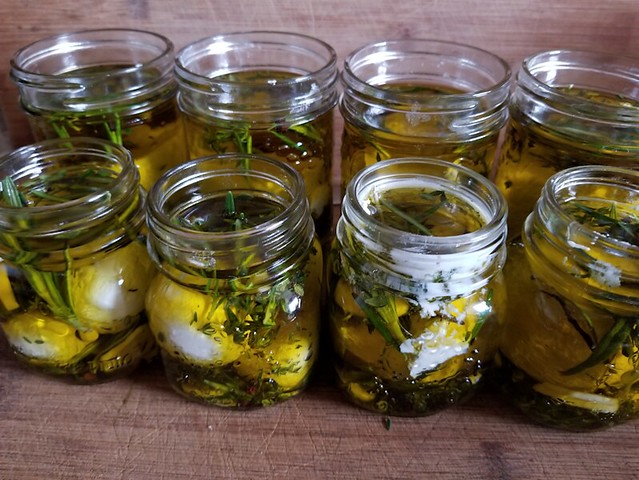
From the looks of them, I think the balled cheese will be kept for the basket. I do have one non-messy mini-jar with a bigger piece, so I might use one of each. We shall see. The pint jars don’t have to wait for then, though, and I will post pictures, when they are ready. :-)
After marinating for a week, the oil can be drained through a sieve and reserved (the herbs are discarded). It makes for incredibly flavourful oil to use when cooking. The cheese can be served as a spread on bread or crackers, or used any other way you would use goat cheese.
Alternatively, little jars like this can be served as individual appetizers. The jars can be warmed by placing them in a flat bottomed pan with hot water, and placed in a hot oven until heated through. They can then be used as individual servings, eaten straight from the jar.
I intend to put these in our basket, just as they are, without straining them first since the jars are so small. When we made them before, with layers of cheese in a larger jar, we removed the cheese, then put a few pieces into a smaller container with a liquid tight seal. I then covered the cheese with strained oil and closed it up. It made for a nice presentation in the basket. :-)



















 The Re-Farmer