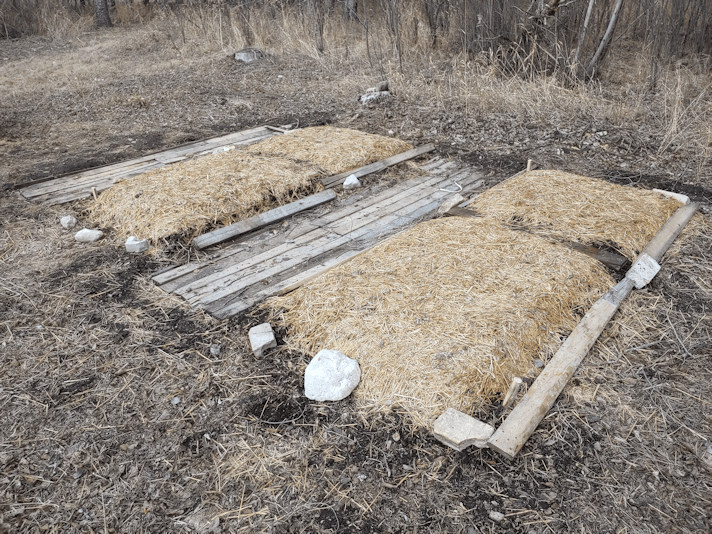
My older daughter and I headed out for a walk, and we decided to go ahead and remove the plastic covering our garlic beds.
When looking up how to plant winter garlic, all the resources said to cover the garlic with a heavy layer of mulch.
What none of them did was mention when to take off the mulch in the spring. I knew the mulch was removed, because all the videos and photos I saw that were taken later in the growing season showed the garlic growing out of bare soil. No mulch in sight. It took some dedicated searching, but I finally found resources that said to remove the mulch after overnight temperatures were consistently above -6C/21F. Looking at our long range forecasts, we seem to be at that point, as overnight temperatures are generally supposed to stay above freezing. We’ve started by just removing the plastic for now, though. We’re supposed to get some much needed rain tomorrow, and have decided to leave the mulch a bit longer. Right now, it’s keeping the beds from drying out, like everything else has done this spring. With so little snow over the winter, and very little precipitation so far this spring, every little bit of moisture is precious.
When I dug these beds out, I moved the soil to one side, put the contents of our compost heap on the bottom, added straw on top, then put the soil back, including the soil that was in what are now paths. I dug those areas down to the gravel, using it to raise the garlic beds higher, then filled the space with scrap wood to create the paths.
I won’t be adding another path on the other side of the third bed, which means I’ll only have what soil I take off the top. I’ll be emptying out our compost heap into the bottom, then add in the mulch from the garlic beds, before putting the soil back. I don’t think it’ll be as high as the other beds, but hopefully we’ll have our loads of garden soil delivered soon, so I’ll be able to top it off with that. The mulch will probably be removed before then, and I’ll just move it onto the paths at first.
We’ve had quite a few warm days. I think I’ll call the company up in the next day or two and see if their soil is thawed out enough to load into their trucks or not.
I might be just a little bit excited about getting that soil! :-D
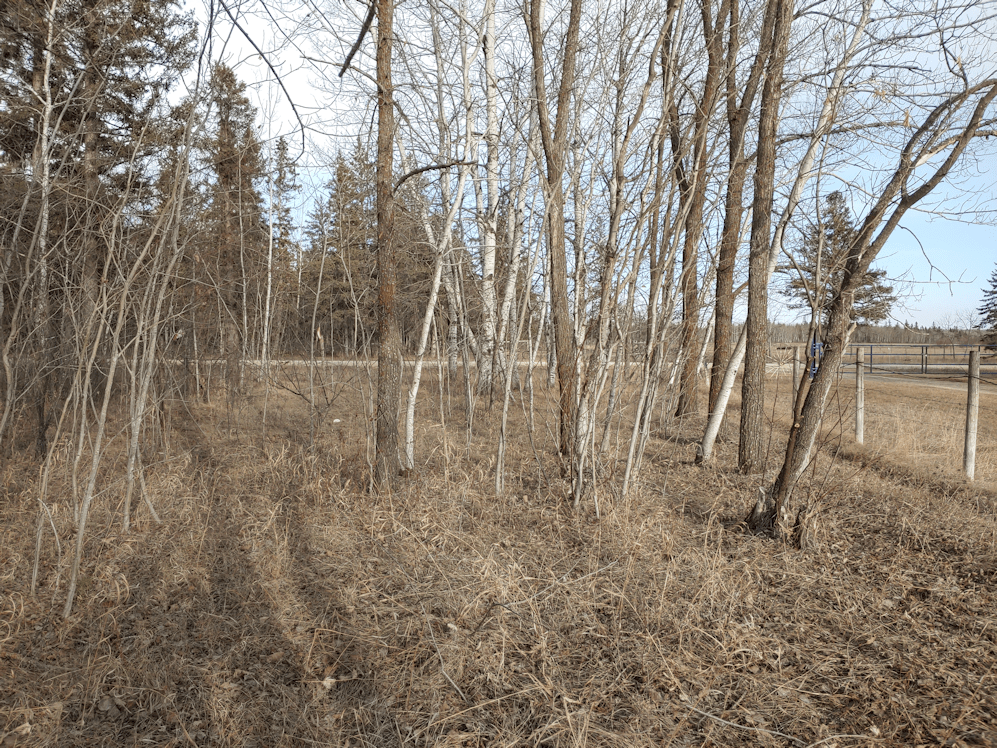
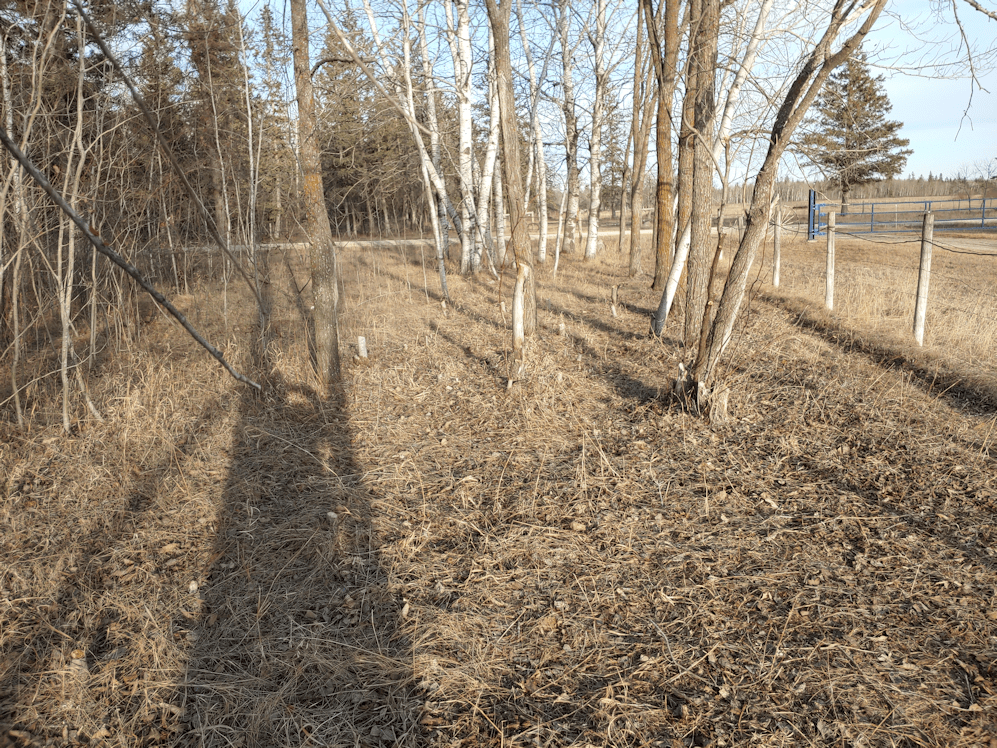
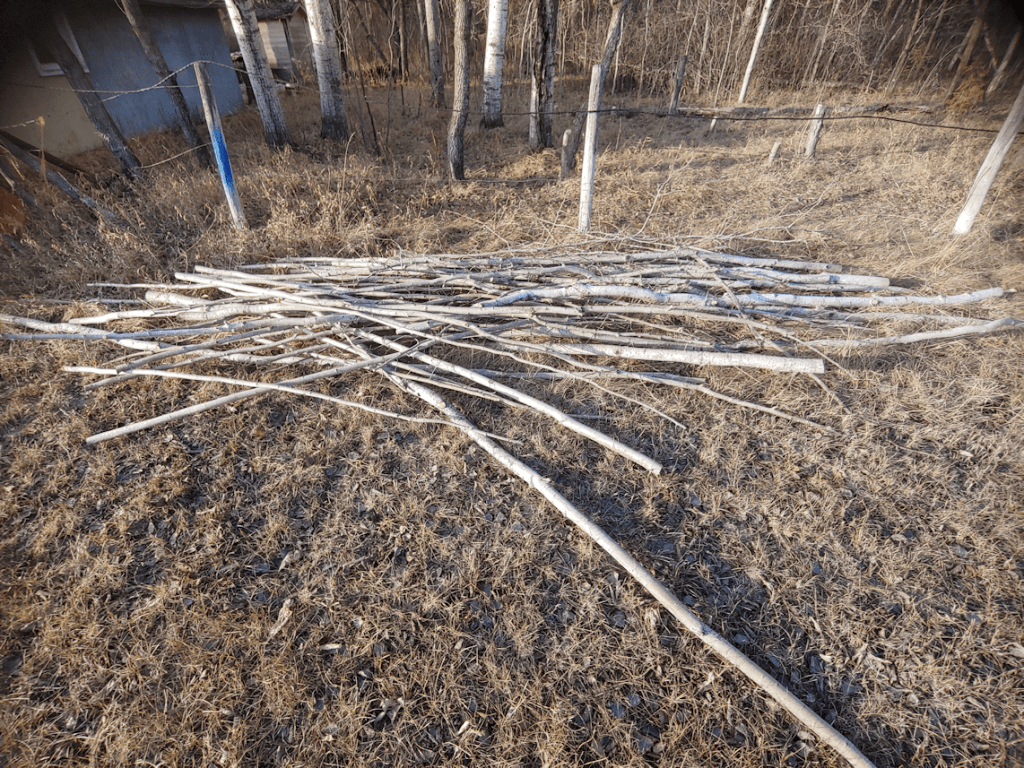
I was very happy to see the battery charged up fast enough that I could use it again tonight. I quickly trimmed the poles I’d left earlier and moved them out, then got started. Both my daughters were able to join me this time, so I got to focus on cutting and trimming, while they cleared away the trimmed branches and hauled away the poles.
Here is the before and after.
I was also able to take out some of the smaller dead trees, though one had to be cut pretty high up, where the 4 inch bar could get through. Another didn’t even need cutting; once I’d cleared around it, I could just push it over!
After about half an hour of almost continual cutting, the battery started to die. I probably could have gotten a few more cuts out of it, but I helped the girls finish cleaning up, instead.
This is a very good start in materials to build with!
We then spent some time talking about what sort of trellises and arches to build (though I suppose “pergola” would be the word to use) and walking through the garden area to think about how we want to work things out. The strongest, heaviest poles will be used to support the winter squash, and for those, we were thinking of some sort of A frame tall enough for us to walk under.
Which, I admit, doesn’t have to be that tall. ;-)
Then we wandered around, looking at where we planted the bulbs and corms last fall. We have no idea if they survived the deep freeze we had last month. My bigger concern is how dry everything is. You’re not supposed to have to water these. Especially the tulips. But we’ve had so little snow this past winter! We’re supposed to get a little big of snow on Friday or Saturday, but even if it reaches us here, the amount of precipitation expected would be pretty negligible. It’s not unusual to have one last blizzard in April, which would actually be very beneficial, as far as precipitation goes. I’d rather have snow right now, instead of rain, as the ground it still so frozen, rain would wash away to the ditches, rather than watering the soil.
But I digress.
It was so great to finally get outside and start doing yard work! I was really missing it. :-) And our new baby chainsaw is turning out to be an awesome tool!
My daughter was a sweetheart and willing to get out with our little snow blower to clear a few paths. I went out with her to control the extension cords, to make it easier.
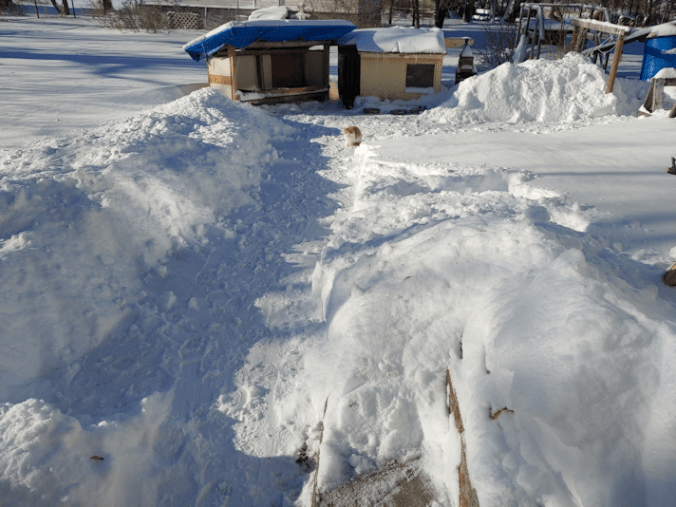
I grabbed a quick photo of what I’d cleared around the cat shelters, earlier.
The plan is to use the cleared snow to make a wall on the south side, as a little extra shelter from the wind. Eventually, I want to clear as far as the well cover and the BBQ my brother gave us, but neither is essential right now.
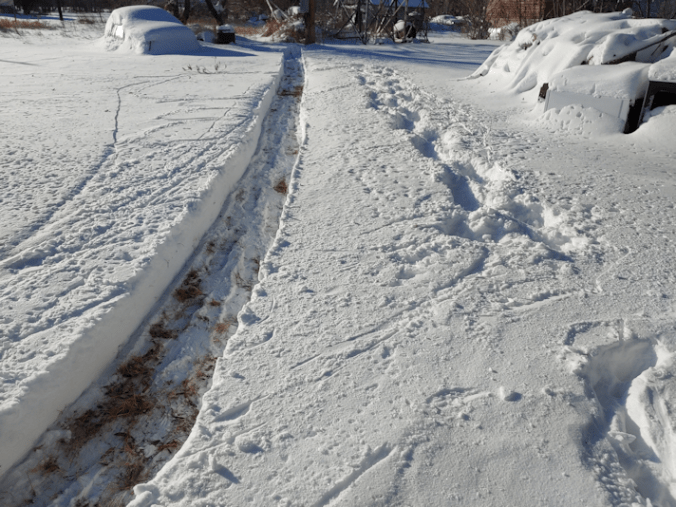
We cleared a bit in front of the garage, though the focus right now was a walking path. You can see where the extension cord cut through the snow, which was very soft and fluffy, still. My job was to keep enough slack on the cord behind my daughter, so she wasn’t pulling it along as she used the snow blower – which can be done, but it sometimes gets caught or tangled on things – then clear it to one side as she worked her way back again.
We don’t need to do another meter reading until the middle of January, but we cleared a path to the pole, anyhow.
I ended up tromping through the snow with the cord in the process. :-D
With two 100 ft extension cords, my daughter was able to make a quick pass up the sidewalk to the house, too. It will need to be widened enough for my husband’s walker, eventually, but this will do for now!
By the time she was done, my daughter was plastered with snow. It didn’t matter which way she had the deflector blowing the snow, the wind still blew it back onto her!
To the right of where you see my daughter in the photo is where we will need to clear enough snow to drive up to the house. Including the area needed to turn and reverse, there is a lot of space that needs clearing! For that, we can plug the extension cords into an outlet on the side of the house, instead of from the garage. We’ll still need to use both cords if we want to make a path around the house, but most of what we need to reach can be with just 100 ft of cord.
At some point, we should clear a path to the barn, too. We don’t go into there often, but it would still be nice to not have to slog through the snow to do it. :-)
Little by little, it’ll get done. I’m just thankful we don’t need to do it all at once. My poor brother and his wife, who live quite a bit south of us and would have gotten a lot more snow, don’t have that luxury. He was probably out clearing snow in the wee hours of the morning. At least they do have a very good gas powered snow blower!
I don’t expect our vandal will ever return the Bobcat he took, since he is convinced he owns it, but it sure would have made our job easier. I think that thing even had a heated cabin!
We did it! We were able to finish the winter shelter for the outdoor cats’ kibble containers!
The only thing it needs now is to be painted, which will probably wait until spring.
Of course, things didn’t quite go to plan, but that’s pretty much how everything goes! :-D
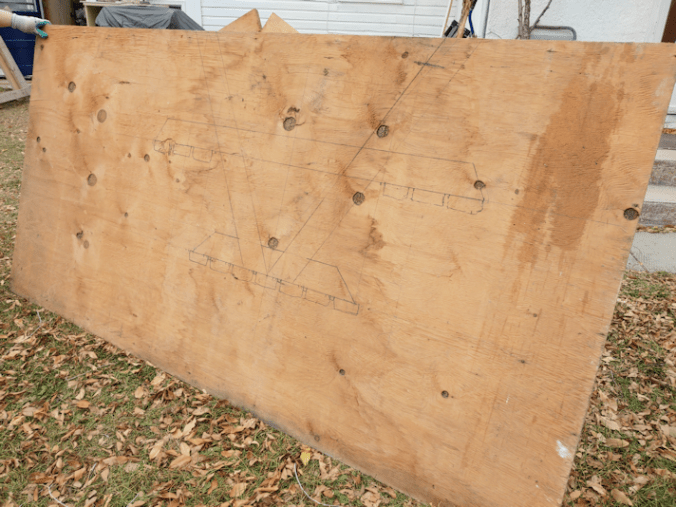
One of the first things we did was raid the barn to see what we could find for a roof. There was a sheet of 3/4 inch plywood that we dragged over.
It had some mysteries on it.
On one side was a drawing of a picnic table, done with black marker.
The other side had what looks like the template for a shed roof!
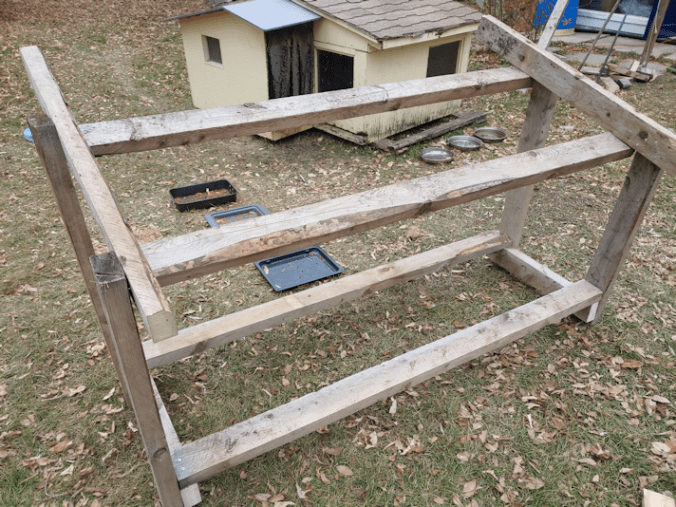
My daughter was kind enough to take those boards off for me. Each of them had about 7 screws in them!
While she did that, I set up to assemble the rest of the frame, adding in the horizontal supports.
This was where things began to deviate from the plan. In putting on the bottom horizontal supports, I forgot I’d intended to put them on the inside of the vertical supports, instead of lined up with them. This made it longer than 6 ft.
Which is not a bad thing. It’s actually more stable this way, and there’s more room on the inside. However, I wasn’t able to match the top horizontal supports. Since the roof supports are at an angle, the screws that hold them in place are more staggered, so the chance of hitting one while screwing on the vertical support was pretty high. So I moved the top horizontal posts and attached them in front of the vertical ones.
Those horizontal supports, however, were supposed to be what the back wall was attached to.
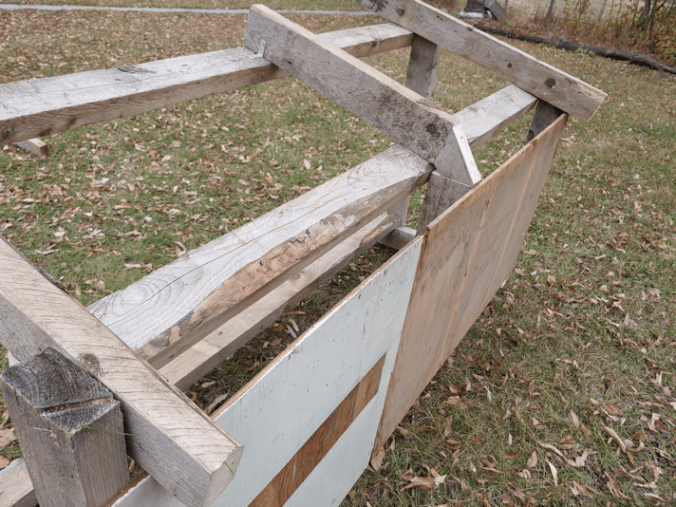
Before we worked on that, though, we popped on the plywood to see how it fit, and if we needed to cut it to size.
We decided to leave it as is. I wanted at least some overhang. More just means more shelter for the kitties.
Then it was time to get creative.
We were going to use scrap wood from the junk pile for the walls and floor, but that idea quickly was discarded. Back to the barn we went, where we found a couple of pieces of 1/2 inch plywood that were almost 4 feet square.
We finally got to use the table saw I found in the shed! :-D
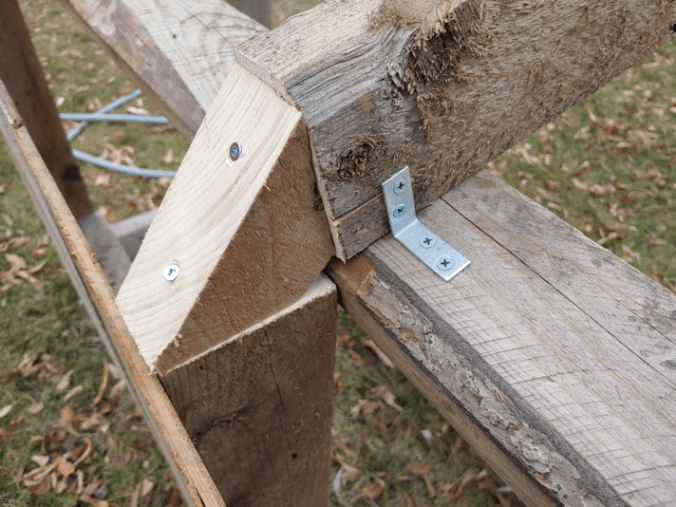
When cutting the frame pieces, I had cut two spare 2 ft lengths, and we made good use of them. I happened to have right angle plates I’d expected to use for something else and those were used to attach one length to support plywood roof in the middle. The other became support for the back wall. The bottom of the new vertical support could be screwed in place from underneath, but the top took a bit more creativity to get it attached!
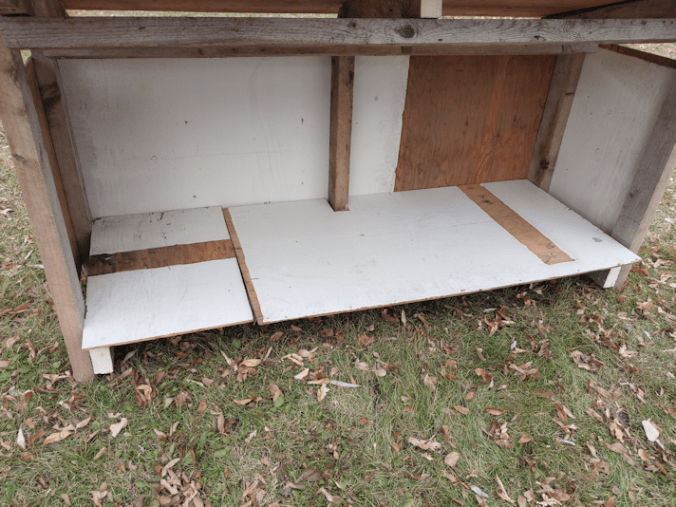
We cut one of the squarish pieces in half to get the height of the wall, then cut one of the halves shorter to fit, and used them for the back wall. The pieced we’d cut off turned out to be the right size for a side wall, so we just traced that on the other squarish piece of plywood and cut a second one.
I dragged two buckets of nails from the basement to put the walls and roof one. One had roofing nails that were the right length for the walls, while the other had 4 inch nails that were perfect for attaching the roof.
That left the floor.
Cutting a wall piece off the second square of plywood left an L shaped piece. After taking several measurements, I cut the short part of the “L” off. The remaining longer piece got a notch cut out of it.
The smaller piece got a bit of a trim to fit the remaining space, and now we have a floor that can be removed, if needed.
And yes, I did want the floor to extend past the frame.
Time to test it out!
My daughter had to go in earlier, so I carefully maneuvered the whole thing by myself, to where I wanted it by the cat house. The containers we use for the cats’ food were pretty much empty, so I put them in and topped up them up.
A couple of cats were crawling around in it before I even came out of the sun room with more kibble! Once they heard that distinctive sound of kibble hitting the container, there was quite the rush of kitties!
I wanted the shelter to be close to the cat’s house, to provide shelter for the entry, but also wanted to make sure they had a path in between them. They already go around the cat house in that spot often enough that they’ve worn a patch in the grass. They can also fit under the kibble house and, if they really wanted to, they could probably get in from the back, through the gap under the roof.
One more thing to do!
It was time to open up the roof on the cats’ house and plug in the heated water bowl.
I also tucked their cat toy inside. They love that thing!
The cord on the heated water bowl is long enough that the bowl can be well under the overhang of the kibble house roof.
I then spent the next while putting everything away and cleaning up, which meant I could watch the cats checking it all out. They explored all over, including jumping up on the roof, and seem quite happy with their new shelter!
Since it’s unlikely we will paint any of it this year, we will probably cover the roof with a tarp for the winter. The rest should be fine.
I’m so glad we were able to get this finished today. It was just a couple of degrees above freezing, and we’re supposed to get a couple of centimeters of snow in a couple of days. Not the sort of weather I want to be outside, building stuff, if I can avoid it!
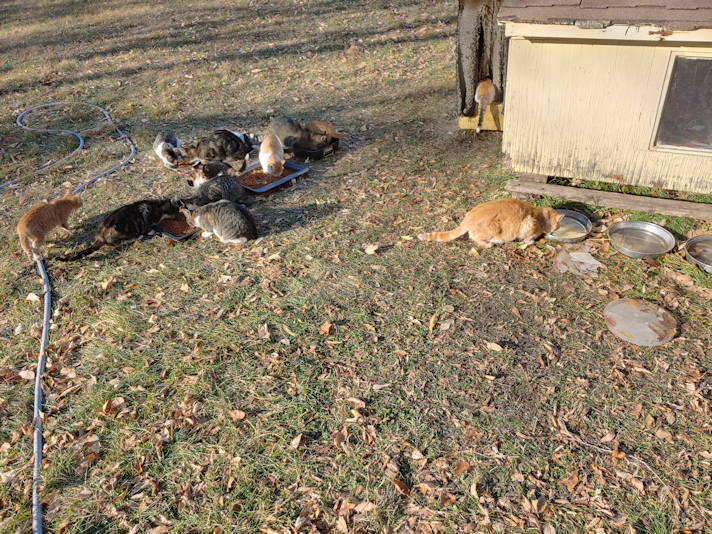
There are 12 cats in this picture. Happily, Rolando Moon is still hanging around, busily hissing at any cat that comes near. We haven’t seen Creamsicle in a while, though. I hope he is all right.
The cat butt sticking out of the entry is a hoot. That is Rosencrantz’s baby, and she seems to be the shiest of the bunch.
As you can see by the frozen blocks of ice, artistically embedded with leaves, it’s been getting a bit cold out at night! It did warm up a few degrees above freezing. Not good for paint, but it had to be done.
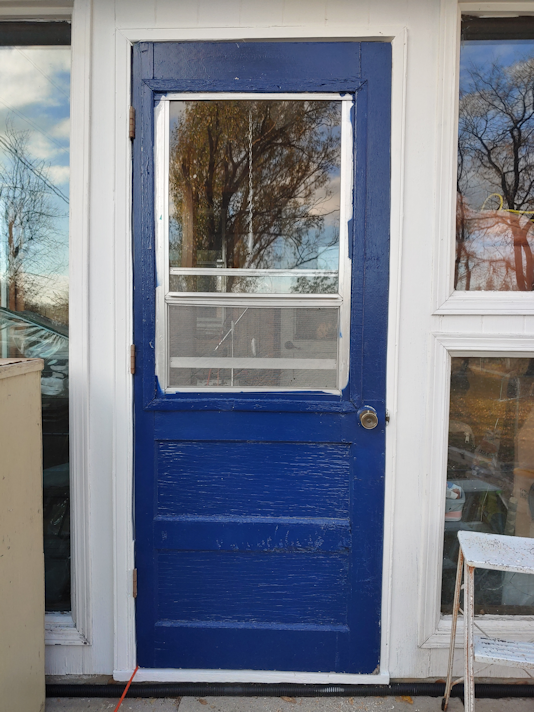
I can now officially say that replacing the door on the sun room is DONE!! I just came in from outside a little while ago, and the paint was dry enough I could close the door. What’s supposed to be blue is now blue, what’s supposed to be white is now white, and nary the twain shall have contact with each other!
Yaaah!!
No, I didn’t take pictures. I’m am tired of taking pictures of that door! :-D
The next project is the shelter for the cat food. It will be placed about where the kibble containers currently are. I want to position it so that it will also provide extra shelter for the entrance to the cat house. The heated water bowl can be plugged in, inside, but the bowl has to be outside, since there’s no way I’m going to be lifting that roof every morning to refill their water. ;-) The shelter for the food containers will help keep the snow off the water bowl, too.
It took a couple of hours, but I got the end pieces of the frame done.
Working with this wood we salvaged from the barn has been a challenge. Nothing is even, so about the only thing I can measure is length. After that, I basically just made sure all the pieces matched and lined up. Not being able to just take measurements meant I had to get creative in lining up the pilot holes. Just making the pilot holes was an issue! My drill bits that were the right diameter for the pilot holes are just barely long enough to drill through the wood. I went hunting in the basement and the garage and, while I did find longer drill bits, they were all too large.
Thankfully, the bits I did have were long enough that, after drilling the pilot holes in one piece, I could position them on the other piece, “drill” though the pilot holes again, and make a mark on the other piece.
It worked most of the time. With the uneven wood, there were a couple of spots where the bit just wasn’t long enough to leave a mark.
Once I’d marked the pieces, I could drill more pilot holes, then screw them together.
When we used this wood to make the goat catcher, I had 3 inch screws, and only used two per corner. This was meant to be temporary, but I still didn’t expect it to be so wonky, it would end up bending and breaking the screws! So this time, I got 3 1/3 inch screws, and there’s 4 in each corner.
That thing is solid!
I started by attaching the 2 ft cross piece on the bottoms. The first corner was screwed together manually. Even with the pilot holes, it was not easy – and with arthritis in my wrists and fingers, rather painful. Our new drill isn’t a quick release type, and I didn’t want to be switching from drill bit to screwdriver tip, over and over, so I decided to use an old drill that we “inherited” to put in the screws.
That worked much faster!
Once the cross pieces were in, I got out a tape measure and figured out how much of an overhang I wanted on the roof supports. I decided to make the roof supports 3 1/2 feet long.
Lining those up at an angle was a pain in the butt! Once again, it was more about making sure the pieces matched, because there was no way I was going to be able to take usable measurements. I managed to get them lined up and the pilot holes done. By the time I was putting in the last set of screws, though, the drill was starting to complain, so I set them as far as I could before the drill started having a hard time, planning to screw them the rest of the way by hand.
When I took the screw driver tip off the drill, I realized I was seeing smoke coming out of the drill!! I remember that happening when we used it before. This old thing overheats very quickly!
By then, it was getting too cold to keep working outside, so I will continue the rest tomorrow. Once I have the 6 foot horizontal supports in place, we can take some measurements for the floor and wall boards.
The good thing is, we’ll be using the scrap wood in the junk pile. They are a lot thinner. That means I can finally use the table saw, and do all the cutting at once. :-) Those will be nailed into place; in cleaning up the basement, we found an old ice cream bucket full of nails that are just the right size for this job.
We can also go hunting in the barn or sheds for something to use as a roof. The roof supports are 3 1/2 feet long, but I hope to be able to have a sheet that’s 4 ft. The roof will be the last thing put in place.
After that, it’ll be done for this year. It’ll need to be painted, but we’ll be using it right away, so that will wait until spring. The one exception might be the roof, depending on what we find to use for that.
I hope to get a lot more done tomorrow, but that will really depend on the weather! At least they’re no longer predicting snow flurries, but who knows what the day will actually bring!
That reminds me. We need to bring the sheets of rigid insulation stored in the garage, back to the house. We’ll have to find a better way to get the sheets for the sun room windows to stay in place, though. At least this winter, we won’t be keeping the doors to outside propped open for the cats to go in and out, now that they have their own heated house! :-)
Lots to do before winter sets in, that’s for sure! :-)
This afternoon, with the help of a daughter, we hung the replacement door back up onto the newly painted frame.
We lined the hinges up with where they were before, except further in as far as we could go. Just to be on the safe side, my daughter held the door in place while I marked the holes for the screws, then I drilled pilot holes for just the top hinge. We screwed in the top hinge, then double checked the locations for the other pilot holes and re-marked accordingly.
As you can see in one of the photos, the entire frame looks like it’s pulling away from the wall! It was like this when we moved here, and the gap doesn’t seem to be getting any bigger, so I don’t think it’ll be a problem. At least not any more than anything else is! :-D
Also, we only had the old screws available, since none of the new screws we have were the right size, and there were only 6 of the same type. So each hinge is missing 1 screw! I still drilled the pilot holes, though, for when I pick some up.
Of course, as soon as we got the top and bottom hinges secure, we tested the door, just in case.
Aaannndd…
Really???
The door was hitting the frame again! It had to be forced closed!
We decided to finish hanging the door, though. Once it was in, I tested it again, which is when I noticed this…
The door latch was now higher than it was before.
Keep in mind that we did NOT raise the door when we put it back. The hinges were lined up with where it was hung previously. The only change was mounting them further in the frame than it was before. Apparently, that was enough for the door latch to be about half an inch higher than it was before!
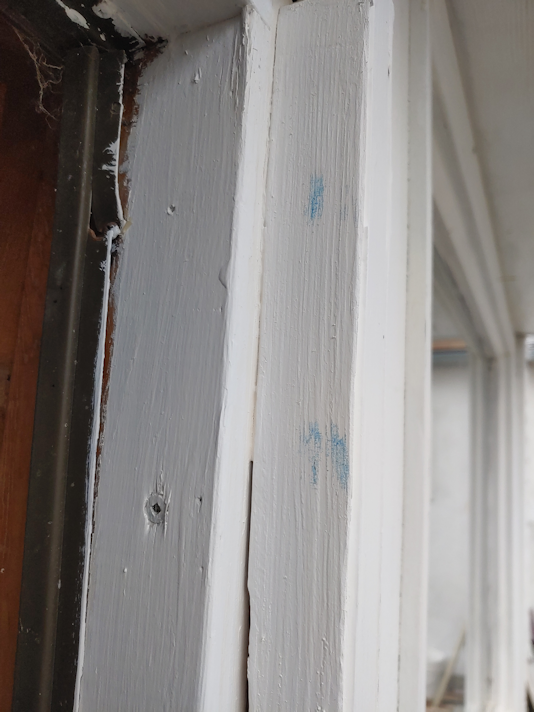
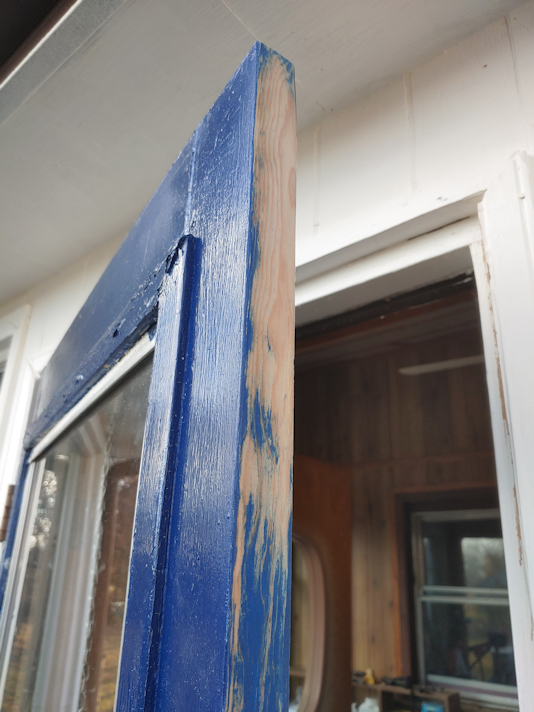
Using where the blue paint marked the frame as a guide, I went back to trying to reduce the wood in those spots. I used the shaver, a chisel, a rasp, and even some of my coarsest sandpaper. For some of the tools, it was hard to get right into the corner. Time and again, I tested the door, and it still was hitting.
Finally, I started shaving wood off the door itself. That wood is so much softer than the frame, I could do in moments what took several minutes, and a variety of tools, to take off the same amount of material.
I took these photos when I figured I was done, but then went ahead and took off more material. Just in case!
I also gouged out more of the hole for the latch. After testing the door again and again, I finally put the latch plate back on.
That mark on the inside of the frame by the latch plate?
It turned out part of the door handle assembly – I just looked it up and now know it’s called a “rose” – hits it. So I used sandpaper to gouge out a recess there. That wood is also very soft compared to the frame pieces I’ve been fighting with!
The door now closes, easily and properly!
In fact, it’s probably the smoothest working door in the entire house right now!
I had one last thing to attach.
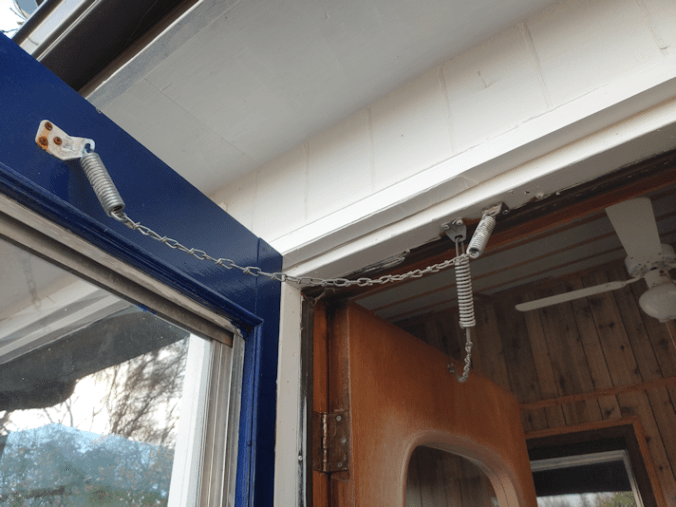
The stop chain!
I started screwing it in where there were pre-existing holes, but realized the bent part of the plate was extending beyond the wood, and the door would be hitting it. While moving it over, I noticed the plate for the chain on the inner door had only one screw holding it in place, so I fixed that, too.
Now, there is no chance the door will bang open too far. It doesn’t even hit the shelf behind it anymore, which means no risk it’ll hit the window. I can now move that shelf to the other side of the door, in front of the cracked window.
Tomorrow morning, I’ll be touching up the paint that I scraped off, including the door; thankfully we still have some of that blue left.
Once I was done hanging the door, I just couldn’t help it.
I stood there, opening it and closing it again, and giggling to myself. :-D
I am easily entertained!
This door was so much more of a problem to replace than we could have imagined!
This morning, after doing my morning rounds, I gave the sun room door frame a second coat of paint. Tomorrow, we hang the door back up.
I had an audience. :-D
Also, while I was painting, I found that Nostrildamus has figured out to jump over the threshold after it’s been painted! :-D
Meanwhile…
Today was finally racking day for our first attempt at making hard apple cider, using our own crab apples. For new visitors, you can read up about that here and here. (links will open in new tabs)
Here is how the gallon carboys looked before I started. As expected, there was a LOT of sediment at the bottom. It’s not just the lees from the yeast, but the sediment from the raw, unfiltered juice.
We had some concerns with the fermentation. Activity in the airlock stopped a while ago. I think the room temperature became a problem. While they were actively bubbling, their temperatures tended towards 18C/64F, though we did also keep them wrapped in a towel and, every now and then, I’d heat up a rice-filled warming pad in the microwave and stick it between them to help keep them warm. We had used an electric heating pad, when making mead, but where these were sitting, there is nowhere to plug it in.
Racking from a 4L to a 3L carboy meant a lot of sediment heavy liquid left behind. Though I tried to hold the racking cane well above the sediment as long as I could, I could still see wisps of it being pulled up the siphon.
As I racked each jug, I made sure to get a hydrometer reading.
I just don’t know what to make of it.
For one of them, the hydrometer pretty much sank to the bottom. I had to add cider almost to the top for it to float enough to get a reading. The other was only slightly better. When they were first tested, it floated quite handily.
Unfortunately, I just can’t get it straight on how to read the specific gravity on that thing. So I write down all three readings.
The readings still don’t make any sense to me. Why would the numbers all drop so much? From what I can figure out, this is basically telling me there’s no alcohol in one, and almost no alcohol in the other.
I did taste test it, of course, and they both have a VERY sour apple taste. It also does taste alcoholic, but that is almost overwhelmed by the sour apple taste. Which is interesting, since the apples we used are actually quite sweet, and there was quite a bit of sugar added to the juice, too.
As for the hydrometer reading this time around, the only thing I can think of that might be affecting it (besides something going weird with the cider itself) is the temperature. Both carboys had a temperature reading of 16C/60F. The ambient temperature in the room is 15C/59C. From what I’ve been reading, newer hydrometers are calibrated for about 20C/68F. I’ve found a site that will calculate the adjustment for temperature, but there is virtually no change in the reading. So what gives?
I have no idea.
Considering that the traditional way of making hard apple cider is to press whole apples into a barrel, set it aside for a few months and BOOM, you’ve got booze, I didn’t expect this to be so complicated.
Anyhow. The 3L carboys are now set up with their airlocks for a second fermentation. As for the liquid left behind with the lees, I ended up straining much of it, and we now have about half a liter of filtered baby hard apple cider.
Hmmm… I wonder how it will go with the ham I will be roasting today?
The Re-Farmer
Update: When I started the hard apple cider, I did it based on this video from CS Mead and More.
There is a reason I included them among my Recommended sites!
I went ahead and contacted them about my readings, and got a very prompt response, and I am very happy!
It turns out, everything is working fine. My problem is with reading the hydrometer, then figuring out what it’s telling me! :-D
And now I know what to do with the information I’m getting off the hydrometer. I may not be using the AVB or Brix to work it out, but I’m writing them down anyway, because I can see those readings better. I can then use the printed out chart that came with the hydrometer to see where that lines up with the Specific Gravity and actually read that number on paper, instead of trying to see it in the liquid. When I take pictures and upload them to my desktop, I can usually zoom in and read it, but sometimes I find the hydrometer moved as I was taking the picture and I still can’t read it. :-/
The formula I was given to calculate the alcohol percentage is to subtract the new reading from the first reading, then multiply the answer by 135. So for one of my ciders it’s:
Along with the three types of garlic that came in, my daughters’ flower bulbs arrived.
The tulip collection included 10 bulbs each of Orca, Pinksize and Brownie, and 8 bulbs each of Black Hero, Pamplona and Vanilla Coup. There was also 6 bulbs of Gardenia Daffodil.
So while I was having fun working in the soft soil, planting garlic, the girls did the hard work of digging holes for bulbs in hard soil, and between roots!
They did not take pictures of the process, unfortunately.
The tulips were planted not far from where they’d planted the Bulls Eye tulips that came in earlier. This area was selected for its combination of sunlight and drainage, and because they’re not supposed to be watered, and this is not an area where they might accidentally get watered along with something else.
The tulips need to be planted up to 12 inches deep, if we want them coming back year after year, but that depth includes the depth of any mulch. So they planted the 50+ bulbs at 6 inches, adding a 6 inch leaf mulch. Leaves, however, crumble and settle quite a bit, plus the wind was threatening to blow it way, so they also wet down some peat, which we still have lots of, and added that to the top.
The Gardenia Daffodil had different requirements, so it was planted with the Eye of the Tiger irises planted along one side of the old kitchen garden.
When we are next able to, we’re thinking of picking up a couple of bags of soil to scatter on top of the mulch. The soil under the mulch in the old kitchen garden is much improved from before, but the straw itself, and even the grass clippings, aren’t breaking down very quickly, making it not at all conducive to planting in it. It’s all just too stringy! :-D And now there’s the excess flax straw from inside the cat shelter. Adding some soil and peat, as well as moisture, for the microbes and worms to do their stuff should help it break down faster.
We also got a couple other things off the to-do list today.
Now that the soil around the support post has had a few days to settle (and get stomped down some more, every now and then), our new bird feeder is now hung up. Hopefully, this less decorative design will not get flung around in the wind as much as the church and barn shaped ones were, and with the support now buried in the ground like a fence post, we don’t have to worry about it being knocked over any more!
I also had a chance to work on the grapes, while the girls were still digging holes for tulips.
The first thing that needed to be done was prune them. I hope I did it right. From what I’ve read, they should be pruned above the second bud from the ground, as grapes will be produced on first year vines. The problem was, I couldn’t see any buds at all! So I tried to err on the side of caution.
I had to move the trellis supports so I could get behind to harvest the grapes. Today, I finally set them into the ground in their new locations, so we can squeeze behind them again, if necessary. On the right is a long piece of rebar, but the white support on the left is actually two plastic tubes on a shorter piece of rebar. The bar wasn’t long enough to hold the trellis wire, but it is long enough to support the plastic tube. I had to lift off the piece that was woven into the wire mesh, then reset the position of the other two pieces.
When I set this up as a makeshift trellis, I was able to bang the rebar into the ground with a piece of broken brick I’d found while cleaning up around the storage house. I tried that again, but it broke. So I dug around in the sun room, among the things we’d found in there while cleaning it up. There was an old hammer with a ball peen on one side, and a heavy flat head on the other. Much heavier than a regular hammer. For the long piece of rebar, I had to stand on the stairs to reach the top and start hammering it in.
The head fell off the hammer.
It turned out the handle was rotted out at the head!
Thankfully, I still had the new handle I’d found while cleaning up the old basement. I’d intended it for something else, but it didn’t fit right, so I’d left it for later.
Now, I’m glad it didn’t fit the other thing I’d meant it for!
Mind you, it didn’t fit the head of this hammer, either, but I was able to shave the corners of the top, and got it on. I was able to finish the job!
After hammering the rebar supports into the ground and getting the plastic tube in the wire mesh back in place, I was able to use foam covered garden wires a darling friend found for me, to tie the pruned vines to the mesh. Then I used one of the bamboo poles that we’d used in the squash beds as a support for the top. With the grapes growing so well this past summer, I was able to see the weight of the vines were pulling the wire mesh downwards, so this should add some extra support.
Now, all they need is for some mulch to be added to protect them from the winter’s cold. From what I’ve found out about growing grapes in our zone is that they should be just fine with snow as insulation; the vine would be laid down on the ground to be covered. Planted against the storage house like this, that doesn’t really work out, so mulch it is!
We now have all the flower bulbs we ordered planted – 200 grape hyacinth, 100 snow crocuses, irises, gladiolas, and almost 70 tulips – plus the garlic.
That’s it for fall planting this year.
Now, we need to assess how our vegetable gardening went, and decide what we want to plant next year! :-)
With the chillier temperatures, it’s really not a good time to be painting outdoors, so I made a point of starting right after doing my morning rounds. This way, it could have the whole day to cure, and I could decide on whether I wanted to do a second coat or not.
The top is cut so terribly crooked! LOL This is the piece I cut using a hand saw, after two failed attempts with the power tools we have available.
Though the house was painted the summer before we moved in, it looks like the inside of the door frame only got one coat, so I went ahead and painted that, too.
The extension cord to the cat shelter was staying, but I managed to keep it away from the paint. This corner on the left is where we’ve had to add the most material to make up for the shifting of the frame.
It’s really amazing how much a coat of paint makes even the worst patch jobs look better! :-D
Well, that didn’t take long! :-D
I had to leave the doors into the sun room open, of course, and later in the day we found white foot prints on the concrete inside! :-D
I’m rather happy with how the paint was feeling by the end of the day. We will be able to drop the cord down and actually close the door for the night. I’ve decided to go ahead and give it a second coat tomorrow morning, which means that the day after tomorrow, we can hang the door back up again.
It will be so good to finally have this job done!!!
After painting this morning, I headed to the post office to pick up our bulbs, which are now planted – but those will get their own posts! :-)
The kitties were happy to see me this morning! :-D
I did find the missing food container that had been in the entry to the cat house. It is, indeed, still in the cat house, but somehow got dragged well into the main space, in an area where I could only see if when the sun was shining through the window in the entry! LOL
I got one side of the bird feeder support painted.
Then it started to rain and I tucked it into the sun room. I’m not sure if I’ll be able to do the other side today.
While that was drying, I started to work on trimming the pieces from the sun room door frame so we can finally hand the replacement door straight. I measured how much space I had, taking into account space needed around the door itself. The piece across the top would be an easy one, but the side piece needs to have a half inch difference between the top and bottom.
I quickly discovered some problems.
I was looking forward to using the table saw for this, only to discover the blade isn’t large enough to cut through. It would only reach half the thickness of the wood. I went hunting in the basement and the garage and did find more blades, but none larger.
I figured I would use the circular saw, instead. I started with the short, top piece, but it’s only 2 1/2 inches wide. I had my daughter try to help by holding it steady on the saw horses, but we discovered that the circular saw couldn’t cut all the way through, either. ??? Well, there’s the reciprocating saw. The blade on that was more than long enough. Except we don’t have clamps large enough to hold the piece in place, and it vibrates so much, there was no way it could be held steady by hand.
Which left using a hand saw.
At which point I could really feel how hard the hardwood is! It took forever to saw the half-inch I needed to remove.
There is no way the side piece can be cut by hand. It’s just too awkward, it’s several times longer than the top piece, and the cut that needs to be made is a very gradual angle. I was able to use the chalk line to mark a guideline to follow, but it would be difficult enough using power tools, never mind by hand!
I might just have to go and pick up some larger clamps, so I can use the reciprocating saw. I was looking at circular saw blades while at the hardware store yesterday, and they had almost no inventory, so I can’t even just buy a larger blade for the table saw.
I’ll make that decision, tomorrow.
So we moved on to other things. Like deciding to use up all the carrots we harvested to make one giant pot of carrot soup.
With the beets, too, since there are so few of them.
As I write this, they are all being roasted in the oven, and the girls are working on the other preparations. We got about 6 pounds of carrots (and maybe half a pound of that is beets! LOL), so it’ll be a triple recipe. We’ve never made carrot soup before. It should be very interesting in appearance, with all the colours in there. The carrots includes purple, white, yellow, and orange, while the beets include red and white, deep red and gold. I figure we’ll get … purplish grey. LOL
The vegetables were all still on the metal mesh “door” in the old kitchen, which is about as cold as a refrigerator these days. Once they were trimmed and removed, I took the time to reinforce the metal mesh. Some of the staples were already popped out. :-(
I’d found some washers in the garage a while back, large enough to reinforce the mesh, but the holes in the washers were too large for wood screws. So I got some smaller washers that would hold the screws.
This is on the support bar across the middle, which had lost the most staples.
Doing the sides was a bit different. The mesh is slightly off center, so on one side, I had plenty of mesh to work with, while on the other…
… there was about half the amount to work with. It worked, though. The mesh feels very secure. Even if the staples somehow end up coming out, the mesh will stay in place. It is now strong enough to use as a soil or compost sifter, if we want.
For now, though, it’s tucked away until we need it next year. :-)
Now to go see how things are going with that carrot and beet soup…




















 The Re-Farmer