Analyzing our 2022 garden: corn

Okay, it’s that time! I’ll be working on a serious of posts, going over how our 2022 garden went, what worked, what didn’t, and what didn’t even happen at all. This is help give us an idea of what we want to do in the future, what we don’t want to do in the future, and what changes need to be made.

We planted three varieties of corn in 2022.

I think it’s safe to say, all three were a fail, though we did actually have a few cobs to eat from one of them.

Two varieties were direct seeded in a new garden bed.

Sod had been removed and new garden soil brought in. In the above photo, you can see the squash that had been transplanted. There’s a triple row of sweet corn in the open area between rows of squash in the back, and a thin double row of popcorn between rows of squash in the foreground.

Eventually, this entire area did get well covered with cardboard and mulch, which helped a lot, but there was just nothing that could be done once the flooding started.

The Results:

The sweet corn started to recover quite nicely, though the green bush beans planted with them did not survive and another type was planted later.

Then the winds got them.

I was able to add twine supports to hold them all up and, amazingly, they survived.

It wasn’t much, but we even had a few mature cobs to pick.

No such luck with the popcorn. This was a variety that only grew to about 2 feet tall, but they never reached that height. Cobs started to form, but never had a chance to mature.

It was very sad.

Then there was the kulli corn.

These were planted in a low raised bed in the east yard, with yellow bush beans in between for nitrogen fixing. Unlike the other corn, these were started indoors and transplanted.

It took a while for them to get over transplant shock, but once they did, they got HUGE and seemed to thrive in this bed.

Eventually, tassels started to form at the top, but no cobs. Not a single cob formed, anywhere.

Kulli corn is a deep, dark Peruvian corn that I would like to acclimate to our area. Unfortunately, there isn’t a lot of information about them. They seemed to do so very well, and yet… not even a hint of cobs forming on any of them.

Conclusion:

This was such a terrible year for our corn!! Even the year before, with the drought we had, and the tiny, tiny plants growing in nitrogen depleted soil, we managed to have more edible cobs that were so sweet, I could eat them raw. I guess corn can handle drought better than flooding!

After this year, my daughters and I discussed skipping corn for a year or two, until we can provide better growing conditions for them. I did, however, end up buying one variety of sweet corn for 2023, plus I got the same variety of popcorn again. I intend to plant them in the two beds next to where the kulli corn was planted. Considering how well the kulli corn grew, even without forming cobs, I think the other corn should do very well in these beds, and I really love corn!

As for the kulli corn, I really, really want to grow them, but I think it will have to wait until we can create better growing conditions. We’re wanting to have a polytunnel, or something along those lines. That might be enough to make the difference. It may be a few years before we have a polytunnel, though.

The Re-Farmer

Analysing our 2022 garden: potatoes, sweet potatoes and sunchokes

Okay, it’s that time! I’ll be working on a serious of posts, going over how our 2022 garden went, what worked, what didn’t, and what didn’t even happen at all. This is help give us an idea of what we want to do in the future, what we don’t want to do in the future, and what changes need to be made.

I can say right now, when it comes to tubers, we had a really poor year in 2022!

We grew three varieties of potatoes, each with a different maturation rate. All were supposed to be good for storage.

They were grown in new beds, using the deep mulch method. The two larger beds had about half planted with potatoes, and the other half planted with melons. A third variety had a small bed all to itself.

The Results:

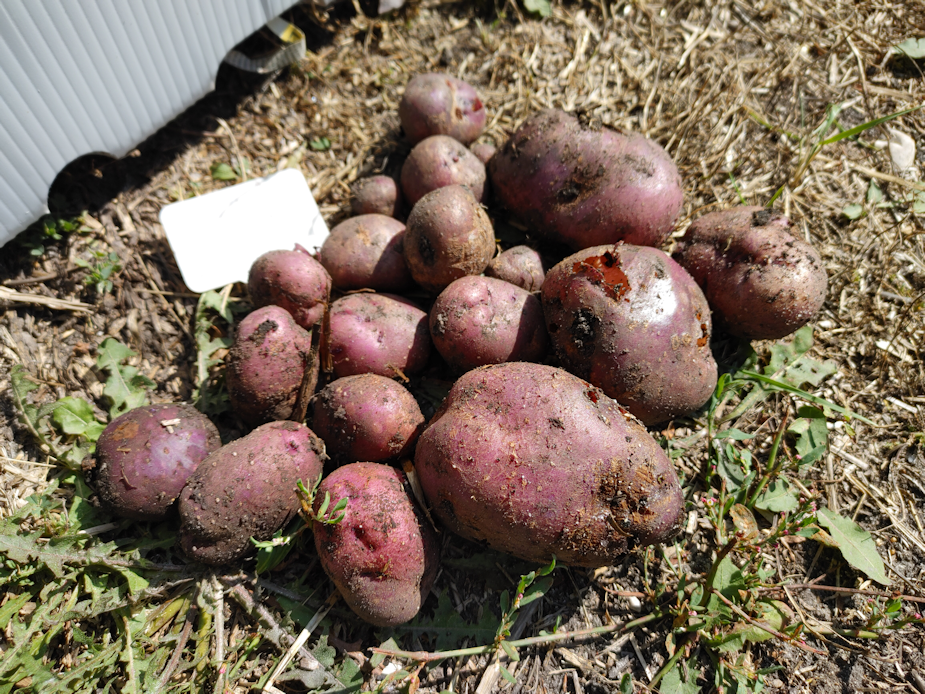
The early variety, Caribe, resulted in fewer potatoes than we planted. As you can see, there was slug damage, too.

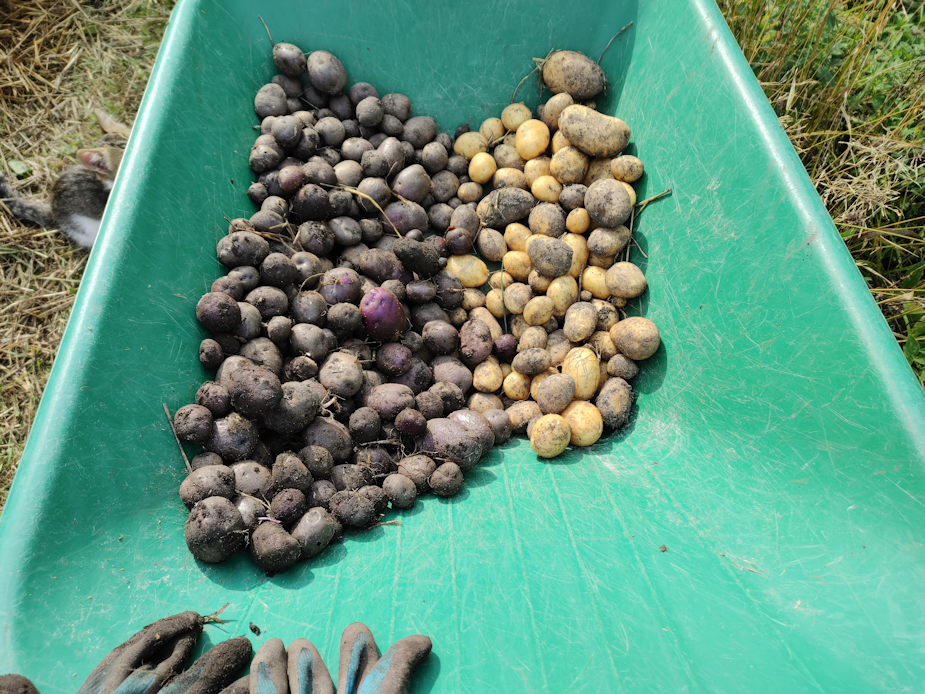
The mid and late varieties got harvested at the same time. A lot of the All Blue potatoes seemed to have scab. The Bridget variety seemed to be clear of scab, but slug damage was a problem with both. Altogether, it was a very disappointing harvest.

Conclusion:

While we may not have gotten much out of them, the potatoes were actually quite delicious. I would be willing to grow all the varieties again.

The main problem is the slugs, and that was an issue the first time we grew potatoes using the deep mulch method.

Slugs were not the only problem, however.

The flooding took its toll. Under all that straw mulch in the above photo is a whole lot of water. Many seed potatoes simply rotted away, and among those that did grow, they never recovered enough to produce any tubers at all. It really is amazing that we got as many potatoes to harvest as we did, to be honest.

I think for 2023, we might look at getting indeterminate varieties that are good for growing in towers and try doing grow bags again. Or, we might get the same varieties, but grow them in raised beds.

The flooding we had in 2022 was more than anything anyone in the area has seen before, and it’s unlikely we’ll have a year like this again in our lifetimes. Now that it’s happened, though, we’ll know where the lower areas are and plan according, as we expand our garden beds.

Potatoes are one of those staple food crops so, in the future – once we’ve got the details worked out – we plan to grow a lot more potatoes for winter storage.


Now we move on to a crop that is more unusual for our area: sweet potatoes!

Most varieties require a much longer growing season than we have, but I did find a short season variety to try. They went into grow bags, and were not affected by the flooding.

Not that that seemed to help much.

The Results:

This picture is our entire sweet potato crop, from three grow bags.

The flooding may not have been an issue for them, but they just never did well. There are people in local gardening groups that successfully grow sweet potatoes, so I know it can be done. The problem is, I’m not entirely sure what, specifically, kept these from growing. I can think of several reasons, and it could even be a combination of them. I just don’t know.

Conclusion:

They may have been small but, when we tried them, they were delicious! I would really like to try them again. There’s only one place that I know of that sells short season sweet potatoes. I think that when we try them again, I’ll grow them in deeper containers that are black, which will help warm the soil, and mulch them earlier. We have not yet decided if we will try them again for 2023, or save it for another year.


Another new tuber we tried is actually in the sunflower family. Canada’s potato: the sunchoke, or Jerusalem Artichoke.

We got a package of 10 Jerusalem Artichokes and planted them in a bed near the garage. Unfortunately, the worst of the flooding in our yard was around the garage. There was basically a moat around it, and almost a pond behind it.

Still, it seemed to only result in the sunchokes growing a bit later. They survived, and seemed to do quite well.

The problem is, they never bloomed. In fact, they didn’t even start budding. At all.

By fall, I decided to harvest half of them, to see what we had.

The Result:

I was pleasantly surprised. The tubers I found looked quite firm and healthy, if small.

There certainly wasn’t a lot there to harvest, and I made sure to plant the largest tuber I found under each plant. So next year, one half of the bed should have just five plants in it, while the other half should have five clusters of plants.

Conclusion:

I’m not entirely sure why the sunchokes never fully matured. It could be because of the flooding and the late start, or it could be because they didn’t get enough sunlight. I did prune some branches from the trees above and to the north of them, so if that was an issue, it should be better next year.

The question is: will the tubers survive the winter? I have no idea. If they don’t, I would want to get more to plant. I taste tested them raw, while the whole family tried them cooked, and we liked them enough that they are worth keeping.

Sunchokes are something that come with warnings about being potentially invasive. I had that in mind when deciding where to plant them. Which means they should survive the winter and grow next year. If they do, as long as we keep harvesting enough of them in the fall, we shouldn’t have problems with them becoming too invasive.

We shall see!

The Re-Farmer

Analysing our 2022 garden: onions, shallots and garlic

Okay, it’s that time! I’ll be working on a serious of posts, going over how our 2022 garden went, what worked, what didn’t, and what didn’t even happen at all. This is help give us an idea of what we want to do in the future, what we don’t want to do in the future, and what changes need to be made.

What a mixed bag it was for onions and garlic we had!

I’ll start with the shallots.

The Results:

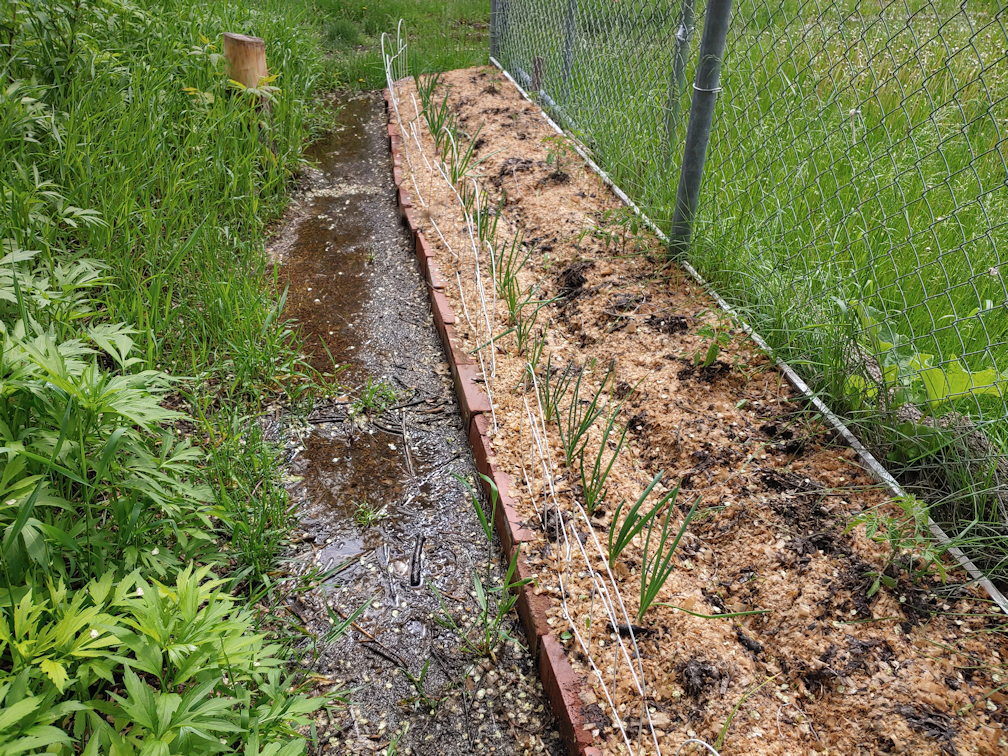
This picture was taken in June. We were still dealing with flooding. The shallots you see here were from sets. Of the shallots we grew from seed, few survived to be transplanted. You can just see some at the very bottom of the photo, and those quickly died.

As did almost all the shallots from sets. They just rotted away.

Conclusion:

The previous year, we were able to grow shallots from sets successfully, even during drought, so at least there is that option in the future. It’s growing them from seed that seems to be the biggest challenge. For 2023, we are trying a different variety. Hopefully, we will have better success with those!


Then there were the Red Baron bunching onions. These were planted in a bed along the retaining wall of the old kitchen garden.

The Results:

I won’t even try to dig up a picture of those. We had better success starting them indoors compared to the year before, but once they were transplanted, that was it. They were a total fail. I think a lot of it had to do with the bed being too shaded by the ornamental apple trees at each corner of the old kitchen garden. They did get pruned, and that space get a lot more light now, but it was likely too little, too late.

That and I think the cats were rolling on them, too.

Conclusion:

While I would really like to grow this variety of bunching onions, we’ll move away from them completely for 2023, and save them for another year in the future.


Our fall garlic was both a win and a fail. We bought the same varieties as the year before, planted them in the fall and had them well mulched for the winter.

The Results:

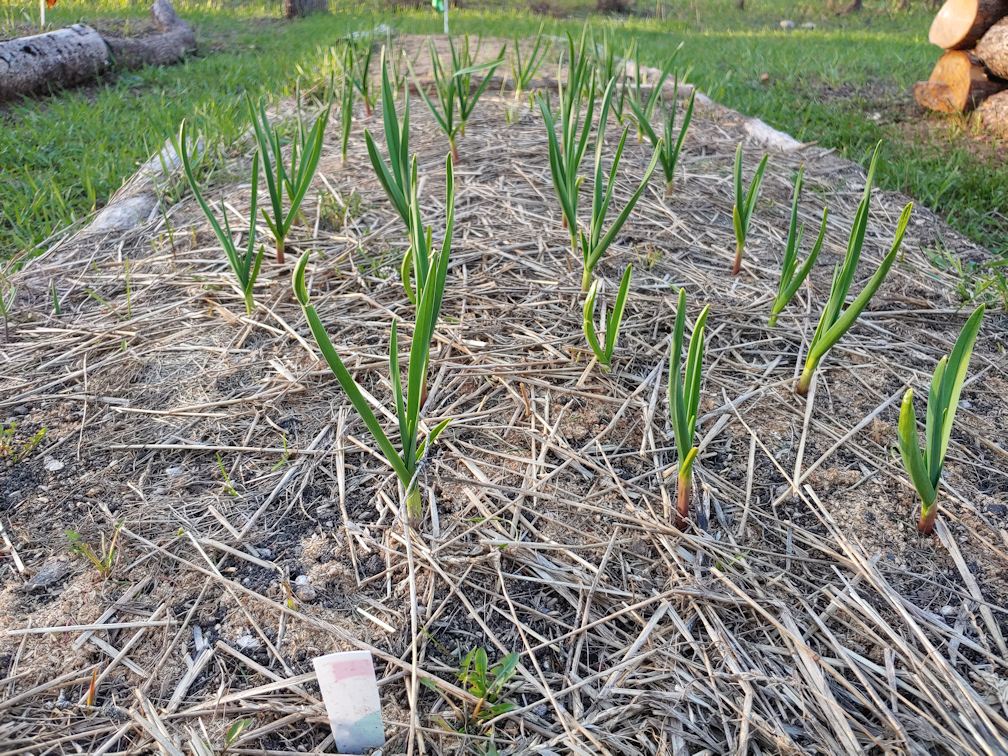
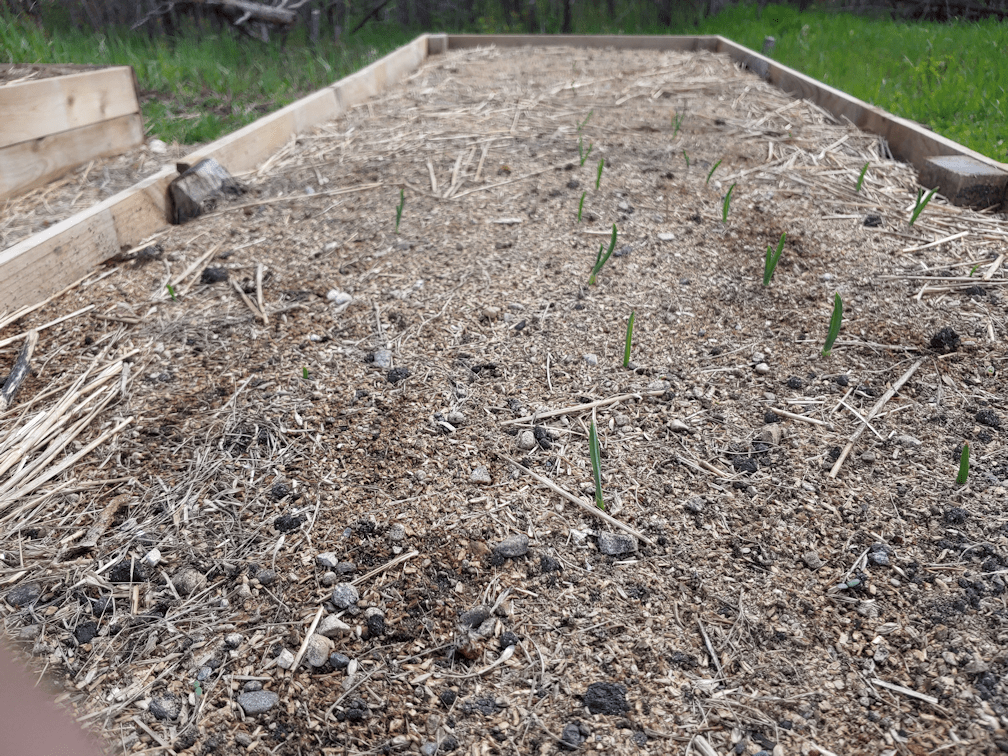
One variety of garlic, Porcelain Music, was planted in the main garden area, taking up half of a low raised bed. This picture was taken in May. These did very well! In fact, we were able to save some of them to plant in the fall, for our 2023 garden!

Then there were the varieties we planted in the low raised beds in the east yard. These were Purple Stripe and Rocambole. The above picture was also taken in May.

One bed had so few survive, I ended up transplanting them to the other bed, so I could use that bed to transplant the Yellow Pear tomatoes into. While we did have garlic to harvest, the few bulbs remaining were very small.

Conclusion:

The two varieties that failed were, I believe, the victims of our unusually long, cold end of winter. I think the low raised beds simply got too cold, and stayed cold for too long.

But the ones in the low raised bed in the main garden seemed to be better protected somehow. So when we planted garlic this fall, we used another of these low raised beds. Along with the garlic we saved ourselves, I ended up getting a new variety of hard neck, plus a variety of soft neck, garlic to try. In the future, we will shoot to be able to plant a LOT more garlic than this, but for this fall, that’s all we were able to get done. Hopefully, we will have better growing conditions next year, and all three varieties will succeed!


Now we move on to the bulb onions. We had a mix of onions from seed, and from sets.

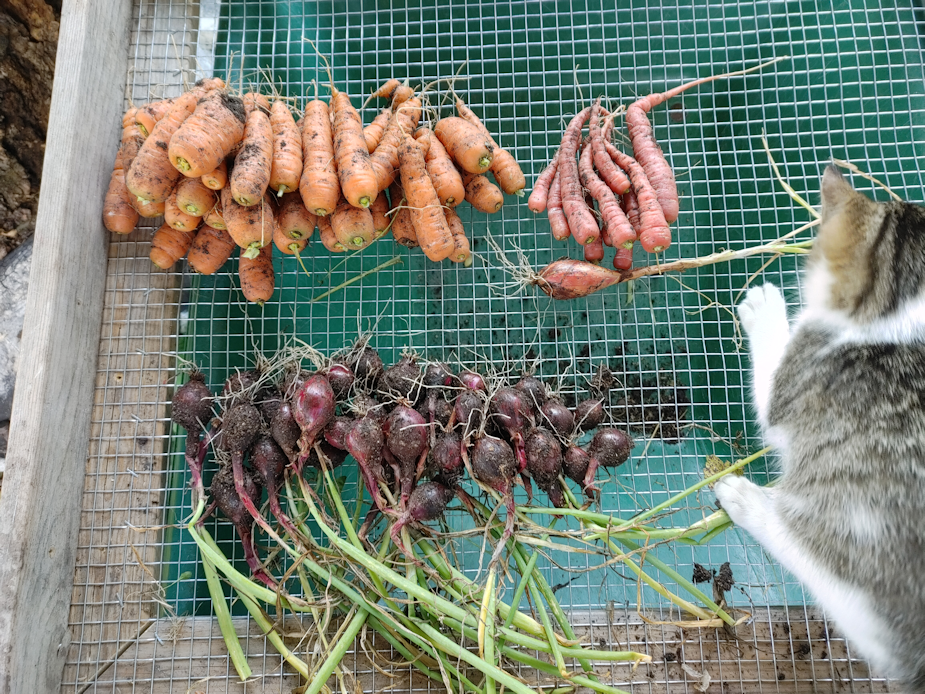
In the above photo, we have Red of Florence red onions, grown from seed. The yellow onions are both from seeds and sets – there’s no real difference in size between them! These were planted around the edges of low raised beds, to help deter critters.

These are the Tropeana Lunga onions, grown from seed and transplanted into the high raised bed.

These tiny red onions were from sets planted around the Yellow Pear tomatoes.

The Results:

The Red of Florence and Tropeana Lunga onions both did very well! The Tropeana Lunga took a lot longer to mature, and even after they were harvested, they kept trying to grow rather than cure! We all liked their longer shape that makes them easier to cut up for cooking. The flavour of both are good, too.

The yellow bulb onions were both smaller than they had the potential to be, but that had a lot to do with our growing conditions conditions overall.

The red onions from sets that were planted with the Yellow Pear tomatoes barely grew at all. I think they were simply overshadowed by the tomatoes, which got massive.

We did plant extras that didn’t fit in their beds in the retaining wall of the old kitchen garden. Those pretty much all failed, partly because the cats kept rolling on them.

Conclusion:

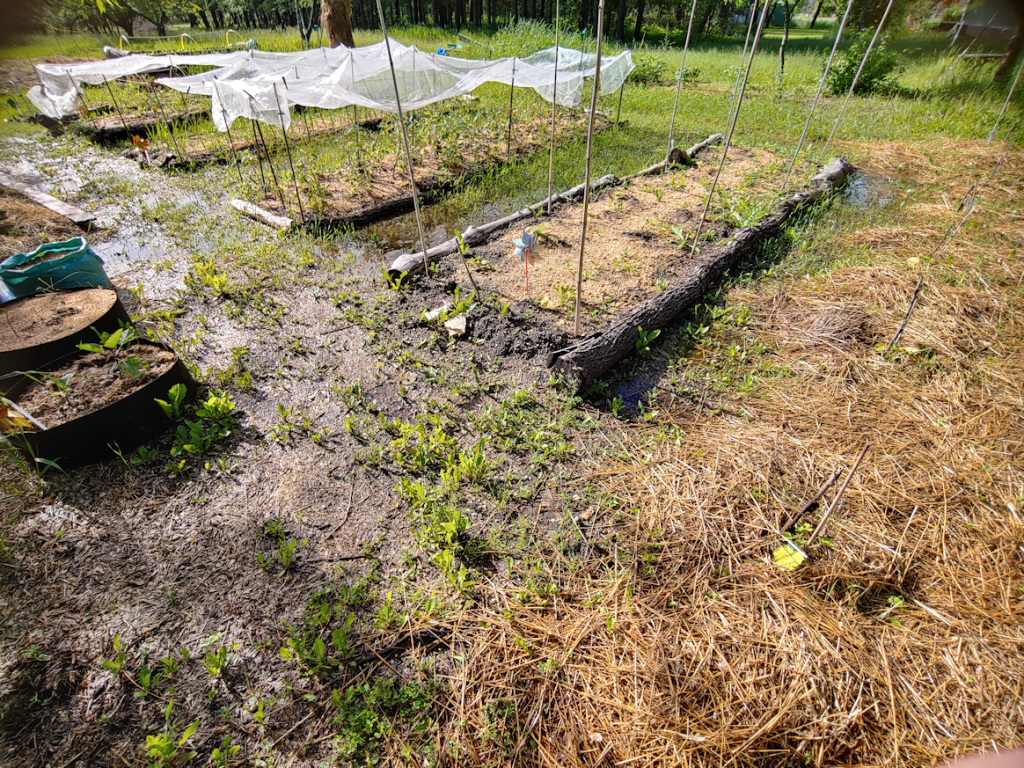
As you can see in the above photo, flooding was a problem in the main garden area, but the low raised beds were just high enough to protect the things we planted in them, including the onions that were planted around the edges of several of them.

We would very happily grow the Red of Florence and Tropeana Lunga again. Unfortunately, I was not able to get seeds for either of them for 2023. We also went with different varieties of seeds for yellow onions and shallots. Whether or not we get more sets in the spring is yet to be decided.

Growing from seed is touch and go; part of the challenge with starting the seeds indoors is keeping the cats away! The main thing about growing from seed is that you get a lot more plants for your money compared to sets. Another bonus is, onions don’t get transplant shock, so large numbers of seeds can be sown close together, then they’re just pulled apart when it’s time to transplant. How successful we are at starting them from seed will help determine what we get for sets in the spring, if any.

Onions are something we find we use a LOT of. Once we started growing them ourselves, we just can’t seem to grow enough! Thankfully, they can be interplanted with quite a few other things, making for effective use of space. We also like having a variety of types. One of the traits we look for when choosing varieties is anything that is good for winter storage.

The Re-Farmer

Analyzing our 2022 garden: tomatoes

Okay, it’s that time! I’ll be working on a serious of posts, going over how our 2022 garden went, what worked, what didn’t, and what didn’t even happen at all. This is help give us an idea of what we want to do in the future, what we don’t want to do in the future, and what changes need to be made.

Okay, let’s start with something that actually produce quite a bit!

For 2022, we grew four types of tomatoes. In the main garden area, we grew Cup of Moldova paste tomatoes, and Sophie’s Choice; both rare varieties we got from Heritage Harvest Seeds.

We ended up with mostly Cup of Moldova tomatoes. In fact, a couple of them had to be transplanted in another bed, because we ran out of space. There were just a few Sophie’s Choice in comparison.

I’ll have to talk about our issues with starting seeds indoors in a separate post, but suffice to say, we managed to keep enough seedlings alive to have a decent number to transplant. Thankfully, these went into a low raised bed in the main garden area, which means they also escaped harm from spring flooding.

The Sophie’s Choice was more of a bush type tomato and didn’t need a lot of support, while the Cup of Moldova could have used a bit more support.

Both varieties took a long time before they matured. Being determinate varieties, I was counting on them to mature all at once, but that didn’t really seem to happen.

The Results:

While these were grown more for cooking and preserving, they were also used for fresh eating. Both were described as being very mild in flavour.

For preserving, most of the Cup of Moldova went to making tomato paste; we got a dozen tiny jars out of it, and have quite enjoyed having those available. We also dehydrated some, using our oven, which worked out rather well. I rather like having dehydrated tomatoes available to cook with, too. We also used some to make a tomato sauce that was quite enjoyable.

Along with the ripe tomatoes we had for preserving, there were quite a few green tomatoes that we harvested to ripen slowly indoors, which extended their use for quite some time.

Conclusions:

We saved seeds from these, because we want to help preserve the varieties. However, their flavour was nothing special, so we will be trying other varieties. Once we’ve found varieties of paste tomato we’re happy with, I want to grow a lot more for making tomato paste, dehydrating and for making tomato powder.

We also had some Chocolate Cherry tomatoes, which we planted in the south yard, along the chain link fence. Though this went into a low raised bed, there was so much flooding in the area on the spring, it was still affected. Of what we planted in that bed, however, the tomatoes seemed to be the least affected, though they did not grow as well as last year’s tomatoes did, in the same location. It was handing having them where they were, though, as we could use the chain link fence to support them as they grew.

The Results:

These were not as prolific as I was expecting them to be. What I’m not sure of is whether it was because it was such a poor growing year, or if that was just the variety. We tried drying some, and at the end of the season, we picked them green and let them finish ripening indoors, giving my husband and daughter (the only to members of the household that enjoy fresh tomatoes), something to snack on for quite some time!

Conclusions:

They were the most flavourful of the varieties we grew this year. While we will be trying other indeterminate varieties for fresh eating, the Chocolate Cherry was good enough that we’d be happy to grow them again. We did save seeds from them, too.

The Yellow Pear tomatoes were the most successful of all the tomatoes we grew this year. The plants themselves got huge; they needed a lot more support than we were able to give them! They were also incredibly prolific. Not only did we have plenty to pick for fresh eating, there were LOTS of green ones to pick at the end of the season, to ripen indoors.

The Results:

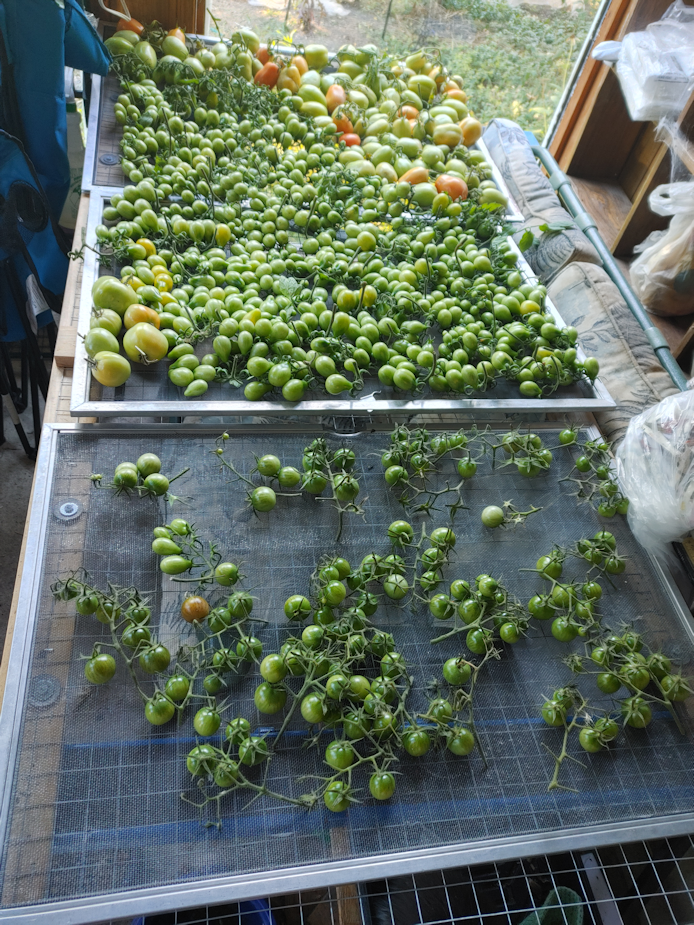
In the above photo with all our green tomatoes, the Chocolate Cherry is in the foreground. The rest of the tiny tomatoes are Yellow Pear. The round ones in the middle screen are Sophie’s Choice, while in the back corner, we have the Cup of Moldova. We dehydrated some of the yellow pear tomatoes, and made a yellow tomato sauce as well. Amazingly productive plants! As the green tomatoes slowly ripened, they were quite enjoyed simply as fresh snacks.

Conclusion:

These were very mild in flavour and, while my family liked having fresh tomatoes to snack on, we will probably not grow these again. We did save seen and will have that option if we want, but only if for some reason, we don’t have other choices. We will be trying other varieties of cherry or grape tomatoes for fresh eating, instead. They were fun to grow, but the flavour just isn’t there.

Still, as far as things went in 2022, tomatoes – all the varieties – were among the most successful things we grew.

Planning Ahead:

We have different varieties planned for our 2023 garden but, if we have the space for it, I’d still like to grew at least a couple of plants each of the Sophie’s Choice and Cup of Moldova, just because they are rare varieties. I want to keep them going and collect fresh seeds again. However, the only variety we grew in 2022 that stood out for flavour was the Chocolate Cherry, but the plants were not as vigorous, nor as productive, as I would have liked.

So we will continue to experiment, and continue to have both determinate and indeterminate varieties, choosing some specifically for fresh eating and others specifically for preserving.

The Re-Farmer

Anniversary

Well, here it is.

Today is the 5th anniversary of all four of us finally being here at the farm today.

I can’t say “moved in”, since we had to put our stuff in storage for almost a month, but aside from that, it was done. We were here!

One of the things we did after spending some time assessing what we’d gotten into, as best we could at the time, was come up with a 5 year plan for what we wanted to accomplish, where we wanted to focus on, and a time line to shoot for.

Boy, did that ever get changed along the way!

Originally, the first two years were going to focus on clearing and cleaning the inner yard. Year one was going to be particularly focused on the maple grove to the west of the house, then year two would see us finish fixing up the inner yard with a focus on the spruce grove. Year three, we would continue working on the spruce grove, but also start moving more focus into the outer yard. By year five, we expected to be able to finish the outer yard. Through all this time, we were also going to work on where we wanted to put in gardens, and year five was going to be our first actual gardening year.

After year five, the inner and outer yards would be done, we could start planting gardens, and also start moving beyond the outer yard to start dealing with things like the car graveyard, junk piles, and so on.

Along the way, as things were cleared and cleaned up, we also kept our minds on where we wanted to plant fruit and nut trees, and other such permanent things.

Well… year one went pretty much to plan.

We got the old kitchen garden cleaned up and started to amend the soil with layers of cardboard, straw, leaves and whatever other organic material we could get.

We got the maple grove cleared and cleaned up. It still feels great to be able to walk through there again!

We got a lot done around the fire pit area and the west yard in general. It took months, and so much progress was made! We even were able to work on the perimeter of the spruce grove, and open things up.

In year two, the clean up continued, and I think it was around then that it became clear we would not be finishing the inner yard – more specifically, the spruce grove – as planned. In fact, we still haven’t finished the spruce grove, and won’t for some time. It’s a much bigger job than expected, and there are a large number of dead spruce trees that need to be cut down.

We did, however, start preparing our first garden area. We also got the retaining wall built at the end of the old kitchen garden. The clean up continued, inside and out, with quite a bit of storm damage to deal with when a blizzard hit us in October. I think the biggest accomplishment was getting that old wood pile area cleaned up – an area that uncovered some of the best soil in the yard.

A lot of work got done in our second year, but for our third year, our focus had to shift. There was no way we were going to be done with the inner yard, though we would have to do more in the outer yard at the same time. Things were getting pretty loosey goosey with our plans.

We still got a lot done. It just didn’t feel like we made much progress.

But, we got a garden in, with squash planted in the bed we’d prepared the year before, new beds made for potatoes, and the old wood pile area became a new garden, too. Our first year gardening was ahead of schedule – and right about the time when suddenly everyone else was starting to garden, too, thanks to the lockdowns and restrictions. We did repairs, patch jobs and replacements. General clean up in the yards continued, and we even got some bulbs planted. Hundreds of them!

Among the more difficult things we had to deal with was my husband’s health. In 2019, he ended up in the emergency room. Things got worse, and he later ended up in the hospital for about three weeks. It wasn’t until 2020 that he finally got into the pain clinic – after 2 years on the waiting list. That was difficult enough, since we were still under lockdowns and restrictions, but the whole thing was really a waste of time. Much like his visits with the cardiac clinic. After all that, right now, he barely even sees our GP, and the last time he had a phone appointment with the cardiac clinic, they never called. I think they’re pissed off at him for refusing to drive all the way to the city so they can make him sit in the waiting room, in pain, until he finally walks out without ever being seen. That’s one down side about moving back to our home province. The health care here is a lot worse than our previous province – though from what I’ve heard, things have gone seriously down hill over there, since we left.

For a lot of people, 2020 was the year from hell. My younger daughter ended up leaving her job at the pharmacy, but at least we had my husband’s disability income unchanged, unlike so many others. Being here on the farm meant very little actually changed for us. Our regular stock up trips and most other outings eventually became just me. I can’t wear a mask and had to deal with a lot of issues, since most places ignored the medical exemptions, never mind the fact that the mandates were illegal in the first place. We basically put our heads down and did the best we could, and counted our blessings.

One thing that did become clear is that we needed to step up on our long term goal of being as self sufficient as possible. Gardening became a higher priority. Our first winters here showed that we also needed to focus on having a stockpile of necessities in case we’re snowed in, etc. Getting chickens and, eventually, other food animals also had to be bumped up the priority list, though plans to build a chicken coop and brooder keep getting foiled.

We did have some fun things happen, though – like having a herd of goats show up at our place! One of which stayed for quite some time. In the end, I just walked over to the owner’s place with a bucket of feed, and the goat followed me.

I think most of us would like to forget 2020 happened, and had high hopes for 2021.

Except 2021 didn’t turn out any better. The illegal restrictions and mandates continued, people continued to have their health and lives destroyed, and we continued to try to keep our heads down and stick to our hermitage as much as possible.

Focus was once again on the garden, which required some creativity, and it was a difficult growing year. It started out well enough, with an early spring that had all sorts of trees blooming. It was very tempting to plant early, and some things, like a mulberry tree sapling we bought, did get planted as appropriate for our climate zone. Then one exceptionally cold night in May killed off so much. That year we had no crab apples, no saskatoons, no chokecherries, and the poor mulberry got killed off.

We expanded the garden by a lot, and it was a constant battle. Drought and heat waves meant watering the garden plots pretty much every day, twice a day. It also meant struggling to protect our garden from hungry and thirsty animals, with deer and groundhogs doing the most damage. We had to watch for racoons, too, though they were more interested in the bird seed and cat food than the garden. And yet, we managed to get a decent amount out of it.

We had plenty of other things to deal with, from van and door fixes, and even tire blow outs, to cat fixes! (Ginger is doing just fine now, and the missing leg isn’t slowing him down at all!) We got more clean up and improvements done around the yards, such as this path we added in the old kitchen garden. We even added to our longer term goals, and I hope to start working on these ones, next year or maybe the year after.

Again, we got a lot done, with all sorts of projects, but it didn’t feel like we made forward progress, other than in the garden.

Then there’s 2022.

Our fifth year here.

I’ll be doing future posts about how the year went, including a gardening review and goal setting, like I did for 2021, so I won’t get into that too much, now.

It did turn out to be another rough year, though after 2021, I don’t think a lot of people expected 2022 to be better. Despite the fact that data around the world has shown that the illegal restrictions and mandates not only didn’t work, but made things worse, our own dictatorial government is talking about bringing them back for this winter. Supply chain problems and increased inflation has been devastating to so many and, being on a fixed income, we’re certainly feeling it, too.

Through we did not have to deal with drought and heat waves this year, we did get a long, drawn out winter, followed by flooding that washed out roads around us in all directions, and more water in our yard than I’ve ever seen before, even when I was a kid growing up here. We did get long term progress done, with finally planting berry bushes and trees.

We expanded the garden so much this year and planted so many different things, we did not have to fight critter damage like last year, and yet we had a much worse growing year than the year before. Over all, I feel like we didn’t really make much forward progress at all, in any area. In fact, in some areas, we’re falling behind. We’ve got aging outbuildings collapsing or falling apart, and no way to replace them. We need to replace our van, as it’s really not worth fixing up anymore, but that’s out of reach now, too. About the only really good thing is that our vandal’s vexatious litigation against us, in response to our getting a restraining order against him approved, finally got thrown out and he didn’t appeal, so we don’t have that hanging over us anymore.


So what can we expect for the next five years? How do we even plan for such an uncertain future?

Well… honestly… the original goals haven’t really changed. They’ve just shifted. We’ve always wanted to live a more self sufficient life, and that’s simply become a greater priority over things like cleaning up the spruce grove or the outer yard.

In the short term, the gardens will continue to expand. We’ve learned a lot in three years of gardening here. We now know that we need to put a priority on things like raised beds and trellises, and that we need to work out how to deal with both drought and flooding, as well as getting around our rocky and nutritionally depleted soil.

We know that we need to work to grow a lot more food, with a lot more varieties, on the assumption that much of what we plant will simply not make it.

We know we need to step up on planting a food forest and other perennials that will feed us – along with things to attract and protect pollinators.

We know we will have to battle critters over the food we grow.

We know that we have to put a priority on getting food animals, even if it’s just a few chickens or meat rabbits – and that we need to be prepared to grow their feed, because we might not be able to buy feed for them.

We know that we can expect to be unable to get out of here for potentially months at a time, whether it’s due to vehicles breaking down or freezing, or roads impassable because of snow or flooding, so we have to be prepared for that. We know we need to keep at least a couple months worth of food, household necessities, and cat supplies, on hand, just in case.

We have been incredibly fortunate in that we have not had any major power failures, but I remember many times when I was a kid, losing power and having to fire up the old wood burning cook stove. That is no longer an option. We can at least cook on the BBQ or the fire pit if necessary, which means that the priority list now includes finding some way to pay for the original well with the hand pump to be repaired, so we will at least have water if the power goes out. Water is our biggest weakness.

We always liked the idea of cooking over the fire pit, but with the first years here having total fire bans, this past summer was the first time we could safely use it for any length of time. We now know we need to come up with an off-grid, outdoor kitchen that we can use at any time of year, whether it’s in the middle of a snow storm in the winter, or if we’re under a fire ban in the summer. This would also be part of bringing back the old idea of having a summer kitchen, to use for canning and preserving, without overheating the house or taking up the kitchen from daily needs.

These past five years have shown us our original goals don’t actually need to be changed. Just the priority list. Yes, it’ll be great to finally have the spruce grove cleaned up, but that is less important than building garden beds and shelters and getting food animals. The goals are not mutually exclusive, though. Since we can’t afford much when it comes to lumber and supplies, we’ll just have to make use of the dead trees we need to cut down in the spruce grove, and we have to clean up around them to do that safely, anyhow.

We just have to keep reassessing and adapting the how and when, but the what has not really changed at all.

The Re-Farmer

2021 Goals: Review and Reset

It’s that time of year again!

As the year winds down, it’s time to review the goals we’d set, see what worked, what didn’t and what we want to accomplish next year.

Among the goals we had:

Starting a cordwood shed to use as an outdoor bathroom, with a composting toilet, to replace the outhouse over a pit.

Well, that didn’t happen. Which is turned out to not necessarily be a bad thing.

The location we want to build it is in that open space behind the compost ring. One of the things I did this past summer was go through the spruce grove and mark most of the dead spruce trees I found. I marked almost 2 dozen, and there were several others I didn’t bother marking, or couldn’t get at. These were trees that were intended to be used for the cordwood walls, however priorities have changed. They will now be used to build high raised garden beds. Right now, the space we want to build in is going to be needed to drag logs out of the spruce grove. Thanks to my mother, we now have a wood chipper that we can use to break down the branches, so we’re not adding to all the branch piles, and will have plenty of wood chips for mulch.

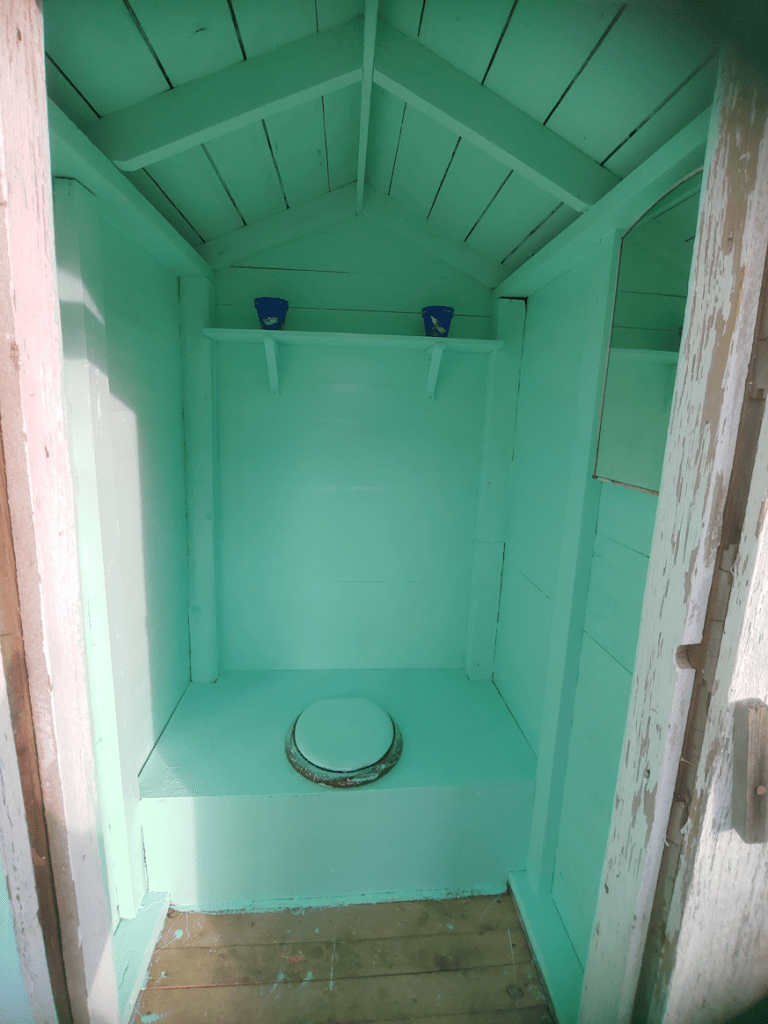
Until we can build the outdoor bathroom, we do still need something to use the next time we have plumbing problems, so the inside of the old outhouse was fixed up and made pretty (the photo here is from before it was finished). A goal for 2022 is to remove the old, moss covered shingles, extend the roof to create an overhang above the door, re-shingle it (or use some of the left over bits of metal roofing we still have in the barn), and do any repairs on the outside before giving it all a final paint job.

We did find that a groundhog had got into the pit and dug a den under the floorboards somewhere. Sadly, if we get an average amount of snow, this will likely result in a drowned groundhog. Our first two springs here, we found that snow melt would form a large puddle in front of the outhouse, and I could see in the hole under the door, which is now fixed, that the pit filled completely with water. There is nothing we can do about this. Hopefully, the groundhog will wake up early enough and leave the den before this is an issue.

Another of our goals is to have the branch piles chipped. While we now have this awesome new wood chipper, which can chip branches up to 3 inches thick, it is very slow going. The branches have to be trimmed of any sticky-outy bits, and be straight, or it won’t go through. For the sake of efficiency, it will be better to hire the tree guys and their massive chipper. When we got their estimate, they figured it would take 6 hours to chip all our wood piles. For our budget, I’m hoping that we can have them come out for three hours in the spring, to get at least the big pile in the outer yard done, and maybe the little ones in the maple grove. Then we can see about hiring them again, maybe in the fall, to do the remaining big piles. With the new wood chipper, we should at least not be adding more to the branch piles, as we clear dead trees out of the spruce grove!

Another goal that we once again failed to meet, was hiring someone to haul the junk pile away to the landfill. This irritates me, because that pile is getting so large, and we are getting to a point where we need to start cleaning up on that side of the chain link fence. If our budget allows, I’m hoping to at least have smaller loads removed, as we can afford it. The name I have for a guy that hauls junk uses a pick up truck, so if we can get him to come by a few times throughout the year, even that would be a help.

Our gardening goals were mostly met, as far as drought conditions allowed. We used poplars we’d cleared out of parts of the spruce grove to build trellises, and those will be used for another year. We planted in areas far from the house, partly to prepare the soil for permanent plantings. The corn and sunflowers were potentially there to provide privacy screens, too, but the drought and poor soil conditions prevented that. Having to use 300 feet of garden hose to water things, and still just barely being able to reach some corners, during a drought and heat waves, was something we could have done without! Add in damage from deer and groundhogs, and it’s a miracle we had as much produce as we did.

For 2022, our garden plans will continue, and this year we will start with the permanent plantings. We are pouring over websites and looking over what bushes we will be planting in those far flung areas. In one section, we will be closing off a gap in the hedge along the north fence line that the deer go through. My mother had been planting lilacs along this fence, but we are looking to plant berry producing shrubs and bushes, instead. We will also be planting them along the east side, both to help keep deer out and to create a privacy screen. We still need to make sure we can access the east fence line, and there has to be a lane kept open, over where the telephone wires are buried, so we will use other methods to close that off to the deer. We’ll have a better idea of what we can buy in January, when many of the nurseries will have their new inventory available. We might be going with sea buckthorn, if the other varieties we were looking at don’t come back into stock.

Other things we intend to order for 2022 are raspberry canes and, if all goes well, Korean Pine. These require shade for their first 5 years, so they will be planted just north of the spruce grove. If budget allows, we’d like to get new Saskatoon bushes, too.

We will have to take out more of the crab apple trees, to remove diseased trees. There are two trees that produce the best apples. If I can protect those, I will be happy. However, we will also be getting other types of fruit trees including, hopefully, a hardier variety of mulberry tree to replace the one that we bought last year, that got killed off by that one cold night that also killed off all the flowers that would have given us fruit and berries this past year. I’m not sure how many we will be able to squeeze out of our budget this year, but the more fruit trees we get, the better, as they can take many years before producing fruit. Berry bushes are also high on our list, as they will start producing much faster.

This past year, we expanded our garden plots significantly, but with our long term goal of growing as much of our own food as possible, we will need to continue to expand and prepare new ground. Now that we have a working chain saw, we’ll be able to clear dead trees out of the spruce grove and clean that up faster. Many of these dead trees appear to have no rot in them yet, and we plan to turn many stumps into benches and tables. We will also need to clear out the fallen rotten trees, and other fire hazards. Once things are cleared out, we will be planting more spruces in the spruce grove, as well as fruit and berry trees that require more protection from the elements. We’re also looking at getting some Rugosa roses, though they will likely be used more as a deer barrier!

Where the trellises are now will eventually be converted to our food forest, except for the lane that needs to be kept open over the buried phone line, but we will use them where they are for one more year. We ordered quite a lot of seeds already, from Vesey’s (including replacement seeds) and Baker Creek again, plus two orders from Heritage Harvest, which is a new company for us this year. The only seeds we’ve ordered that are still en route are the kulli corn. The only other seeds I still plan to buy are peas, but I will pick those up from a local store when they come available, rather than ordering them in. We will also be making use of seeds from our inventory left over from last year. Which means we will need to build more trellises, once we decide where, because we’ll have quite a few vining plants, and there’s only so much we can plant along the chain link fence. ;-)

Along with the saplings, canes and root stock we plan to order, we will be ordering potatoes and sunchokes. This time, we will not try to grow potatoes in bags, but will use the Ruth Stout method again, as part of preparing new areas for either more garden plots, or permanent plantings, the following year.

At this point, we have three low raised bed boxes built, and one high raised bed. Next year, we will continue to use the current beds in the main garden area. The goal is to cut the dead spruce trees to size so that, after things are harvested in the fall, the remaining beds will be converted to high raised beds before next winter. With how much watering we had to do during the drought, filling the beds hügelkultur style will be an important part in moisture retention. Even under normal conditions, high raised beds are notorious for drying out too quickly, but with how we fill them, coupled with the judicious use of mulch, we should be able to prevent that from being a problem.

We will also be making new beds for corn and the many types of squash we have for this coming year, but those will be in areas that will eventually have trees planted in them. Ultimately, we will be building accessible high raised beds in the outer yard to the south of the house, where they will get more sunlight. Eventually, we intend to build a greenhouse or polytunnel out that way, too. It’s not something we’ll be able to start building in 2022, but we should be able to start preparing where they will eventually go. The renter plans to build new fences next year (maintaining the fences was part of the deal they’d originally made with my late father), since their electric fence has been not working as well as intended. I hope to talk to them again about putting a new fence line across the old hay yard, which will be much shorter (therefore, cheaper) than rebuilding the existing fence, but also takes away an area of pasture. We would need a gate in there, though, so that we can eventually haul away those old vehicles to the scrap yard. As that would not be something they’d normally include, I’d be offering to pay for the gate portion. If they are willing to do the new, shorter fence line through the old hay yard, we will be able to get rid of some old, messed up fences and a shed that looks ready to collapse pretty soon. Then we can start building new garden beds out that way. This is also the general area where we want to build the outdoor kitchen, as well as planting a wind break. None of which are worth starting, while there is a chance the renter’s cows can get through. There are also old, collapsing fences around the inner yard we want to take out completely, rather than repair or replace, but again, it can’t be done until the outer yard is fenced in. Long term, though, we won’t have an inner and outer yard anymore, but just one really big yard.

Which means that, on top of continuing our work in the inner yard and garden, we need to get more work done on cleaning up the outer yard. There’s a limit to what we can do, without heavy equipment, but we can at least get a start on it. That was something we should have worked on this past year, but accomplished very little. Hopefully, this coming year will not have the drought and heat waves that made heavy manual labour a very bad idea!

With what we’ve learned from the past year, we know that this year, we will need to focus on protecting our plants from deer, groundhogs and racoons. We will also be focusing on permanent plantings that are drought tolerant and can handle poor soil conditions, even with the amendments we’re working on. We are also looking into planting forage trees and fodder well away from the house and gardens, to give wildlife less reason to invade our yards, looking for food.

As we build our raised garden beds, we will also be ensuring they will all be the same size at the top, so that any covers we build can be interchangeable. The low raised beds are boards and are 3′ x 9′. The high raised bed is 4′ x 9′, and we plan to build them all that size. With the thickness of the logs, the actual growing space inside is closer to 3′ x 8′. So if we build covers to fit the low raised beds, they should also fit the high raised beds.

While most of our goals are going to be expanding or continuing previous goals, a new goal I want to add is to have chickens. For our egg needs, we would only need about half a dozen birds. The problem is, we don’t have anything to keep them in. I am wanting chickens to be part of our soil reclamation progress, which means being able to move their coop and enclosure regularly. Buying a new chicken tractor is well beyond our budget, but we don’t have the materials to build one, either, and with the cost of building materials right now, it’s as out of reach as buying a new one. Of the many, many videos I’ve looked at for making quick, easy and inexpensive coops and shelters for chickens, none of them are suitable for our climate. Oh, they could be temporary structures for the summer, and I do plan to build versions of them that will fit over our raised garden beds, but none of them would keep chickens alive during our winters.

That is something I need to work on. I’d love to get able to get chicks this spring, but if we can’t shelter them once they’re big enough to leave a brooder, there’s no point.

So there we have it. We did accomplish some of our goals for 2021, but many of our goals are multi-year things, so it’s more progress than accomplishment.

Now we’ll see how much we manage to get done next year!

The Re-Farmer

2020 Goals: Review and Reset

Well, here we are, at the end of 2020. This is our 3rd full year, and 4th winter, of living on the farm.

We set up goals to accomplish the task of getting this place cleaned up and fixed up. Of course, goals are always flexible, since life has a way of blowing right through any plans we might make! So it’s good to take a look and see where we stand.

Of course, the first priority was getting the house itself settled. While we did get most of my parents’ belongings stored away, with some of it staying to be used, there are still things that need to get done. They are not a priority, though, so they can wait. I don’t think anyone wants to go into the attic over the old kitchen to clean that up, for example! Some day, we will have to, but it will wait.

After getting a good look (or so we thought!) of what needed to be done outside, we set yearly goals. The first two years were to be focused on cleaning up the inner yard, then moving on to the outer yard in the third year, before finally moving beyond the outer yard, where we could start looking at clearing out the vehicle graveyard and large junk piles.

In the first year, focus was on clearing out the maple grove and the south and west yards, while year two was supposed to focus on clearing out the spruce grove and east yard. The old garden area in the north was basically in limbo until we decided on what we wanted to do for gardening. The big accomplishment there was getting a new push mower that allowed us to actually mow the overgrown old garden that had been badly plowed some time before we moved out here.

Year one went to plan, but year two had other plans for us, as my husband ended up in the hospital for 3 weeks, followed by trips to the city for medical care, and other such things. The weather also did not cooperate, with drought conditions and heat making heavy physical labour outdoors potentially dangerous. So that whole area got pushed back another year, except for one thing. I managed to clear out the old wood pile, uncovering the only good and soft soil in the entire inner yard! We also set aside an area where my mother’s garden used to be for future gardening, covering it with mulch, then using the giant black tarps reclaimed from the old wood pile to cover most to the area over the winter.

Between those two accomplishments, we ended up planting an actual garden this past summer. This was not something we expected to be able to do for some time, but really, if we waited until conditions were just right, nothing would ever get done, so we went for it. In that respect, this past year had us ahead of the game a bit.

Another plan we had for this past year got pretty much zero progress. We wanted to build a cordwood shed to use as an outdoor bathroom. Having what we thought was the septic tank backing up into the basement, and having to use a honey pot until that got cleared up, showed us that we don’t just need a second bathroom. We need a bathroom that does not rely on our septic system. The old outhouse we’ve got here has a growing hole to the pit developing under the door, and we don’t consider it safe to use. We want to move away from having a pit and use a composting toilet, instead. Sure, it means having to empty the contents regularly, but in the long term, it means the shed could someday be used as something else, just by removing the toilet box.

At the very least, I hoped to get an area dug out so we could create a level “foundation” to build on top of, that would allow for drainage while also holding the weight of cordwood and mortar walls.

This past year, we had a wet spring followed by some pretty extreme heat (well… for our area), and the only thing we managed to accomplish to that goal was clear away the last of the little trees that had sprung up by the old wood pile. I think not getting any progress on that is my one real disappointment for the year’s plans gone awry.

At the same time, even with the setbacks of the previous years, there were things that needed to get done in the outer yard. Thanks to my brother, gaping holes in the roof of one the sheds were patched with pieces of metal roofing left over from when the barn and garage were done, years ago. Windows were replaced or fixed. Some trees cleared away from other roofs. These were things that were part of the original plans, so in that respect, they were being done on schedule. The other things that need to be done in the outer yard will be slowly accomplished over the space of years, but some things were just more urgent than others.

The summer heat made working in the spruce grove severely limited. Plus, while we were glad to have an actual garden this past year, tending them did take time away from the goal of clearing out that grove. It is a fire hazard, which increases with every tree that comes down in a storm, or any branches that fall. Plus, we want to take down the dead trees and plant more spruces in the spruce grove!

So that area has been pushed back for yet another year.

Which brings me to our updated plans and goals.

For 2021, we’ll be focusing even more on gardening, having picked up a ridiculous number of seeds, with more things to arrive in the spring, when they can be planted right away. This is going to rather force us to get the spruce grove cleared up faster! Areas of the spruce grove are being taken over by poplars, and these will be perfect to use to build trellises and arbors for the garden. We even plan to build a gate/arbor combination to set up next to the main gate, so people can come in without climbing the locked gate. The taller poplars would probably be useful in building temporary, deer proof fencing to protect our garden, too.

There’s at least one large dead spruce I want to take down. Not starting on the cordwood shed may actually be a plus, since I would be cutting it to (hopefully!) fall in that direction, where there are no other trees for it to fall on top of. With the old chainsaw we have breaking at one of the switches needed to start it, the very first time I tried to use it, we will need to invest in a new one to get the spruce grove cleaned up. There’s only so much that’s reasonable to do with a buck saw! Plus, we have a mulberry tree coming in the spring. It’s a zone 4 tree, so we want to ensure it is growing in a protected area that also gives full sun, and that’s going to be in the spruce grove.

With having varieties of corn and sunflowers that need to be kept away from each other to avoid cross pollination, we’ll be working in areas of the old garden that are well away from the house. All of that will be temporary as, in the long term, we are looking to plant nut trees in there, and move most of the gardening into the outer yard, south of the house. So any gardening we do around there in the upcoming year will mean breaking up the hard, rocky soil and amending it, which will make it better for any future nut trees we plant out there.

One of the goals we had for this past year was to hire the tree company to come out with their massive chipper, and get rid of the piles of wood we’ve got all over. We couldn’t do it this year, but it still needs to be done. It may be worthwhile for us to just buy a chipper instead, though the cost of one that can handle what we’d be putting it through would be considerably more than the cost of hiring this company to come out for 6 hours. From the estimate I got at the time, he figured 6 hours would be enough time for them to do all the piles, too. Hiring someone would be more efficient to get these big piles done. We can invest in a chipper of our own, later on. We will always have branches to clean up and get rid of, so it would be worth it.

So the past year has been an odd mix of goals delayed, while others were accomplished faster than expected. One thing that has been delayed for way too long is getting the junk pile hauled to the dump. This is something we will be hiring people to do, so it basically comes down to whether or not it’s in the budget at any given time. So far, it hasn’t been! It would be fantastic to get rid of that unsightly mess, though.

Aside from time and weather dependent things that will need to get done, like all things garden related, our goals and plans for 2021 have become a lot more loosey-goosey. Timelines have become much more vague, and we’re still at a loss on how to accomplish some vital goals, like replacing the roof.

Still, we’ve managed to accomplish enough in the past year, that we can spend more time building things up, rather than taking things down, in the next year.

Which is as good for the psyche as for anything else!

The Re-Farmer

Three

Three years ago today, in the wee hours of the morning, we finally made it. My older daughter and I, with our two cats, a couple of fish, and the van stuffed with plants and as much more as we could squeeze in, arrived here at the farm. We were finally reunited with my husband and younger daughter.

It would be several more weeks before we could get the house cleared up enough for our own stuff to be brought by the movers, with all the disaster they wrought in the process.

It was a brutal move.

Things have not gone to plan. Nothing ever does! However, we’ve managed to meet, or at least progress on, a number of goals. My husband ending up in the hospital with a heart condition last year threw quite a few things off, but he is still with us, and that’s the main thing. Of course, we never dreamed we’d have such a mess with our own personal vandal (the list of things he’s taken from from here over the years now tops $45,000 in estimated value, and it’s still just what my brother can be sure of!). The deal we had with our mother to take care of the farm is now with my brother, and it has been quite mutually beneficial.

Among our goals, we want to slowly get ourselves as self-sufficient as possible. Being able to garden this year was a major step forward in meeting that goal. It just happened to also be a year when absolutely everyone who could, decided to grow their own pandemic gardens! It did make it a bit harder to find some things, but overall, we did all right.

Little by little, we’re moving forward in our plans. Looking at the list of stuff that disappeared has had me thinking of just how much further forward we could be, if we had all those tools, equipment and supplies to use! Ah, well. It is what it is. We have had to get creative, and I’m looking forward to some of the projects we’ve got in mind for the next few years.

Looking ahead, we will be slowly expanding our gardening; I will probably continue to focus more on the vegetable gardening, while my daughters will focus more on flowers. We hope to be able to plant a nut orchard as soon as we can, since the trees will take so long to mature and produce. Berry bushes and fruit trees are also on the list. My goal of clearing out the spruce grove continues, though I will have to divide that with working on the outer yard more. There are things that need to be done there that really shouldn’t wait, some of which I’ve already started on. Hopefully, we will be able to expand our gardening to the outer yard, where there is more direct sunshine, and at some point set up some poly-tunnels or greenhouses.

There is still a lot to clean up, repair and replace. We still have to figure out how to come up with the money for a new roof. Though there is much more renovation that needs to be done, none of that matters very much if we don’t get the roof done!

We still plan to build a cordwood shed that will be an outdoor bathroom with composting toilet. As much as we need a second bathroom in the house, if we have another disaster with the septic like we had earlier this year, we need a back up, and the old outhouse we’ve got now isn’t really usable. I’d be worried someone would fall through the floor!

There have certainly been challenges, and of course there will be more. In the end, however, I still think moving out here was the right decision for us. Especially with all that’s been going on this year. I don’t even want to think about what things would have been like, if we were still living in the heart of the city right now! It was stressful enough, even before the world went crazy with Covid. Still living in the city through all this would have been disastrous for my husband’s health – and that’s without getting the virus! For all the unexpected difficulties, living here has still given us an oasis of relative peace from the world, and I am grateful for it.

Here’s to another year of moving forward!

The Re-Farmer

A Year in Review

A great big Happy New Year to all our wonderful visitors and followers! May 2020 be a year of peace and good health to you and your loved ones.

Out of all the millions of blogs out there, you chose to pop over and visit our little corner of the world, and I just wanted to say how much I appreciate it.

Last year, I did a list of this blog’s top 10 most visited posts. I was all set to do it again, only to find it couldn’t quite work out as I intended. It turns out there are too many “tied” posts. A 2 or 3 way tie is one thing, but a 13 way tie? :-D I also noticed that the top visited posts are almost all from last year. I was going to try skipping those and just do posts that were written in 2019, only to find myself back in that tied-a-dozen-times problem.

So here is the list of the top 5 most visited blog posts in the past year.

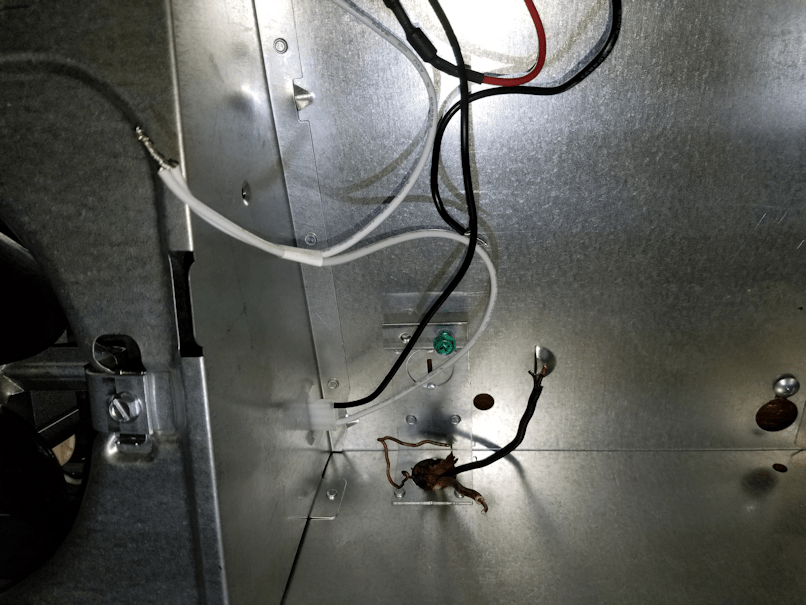
Five: New Range Hood – part 1 Thanks to my daughter, we finally replaced the original range hood, which was installed in the early to mid 1970’s. Part 2 is when we finally got the new one wired and working!

ingredients

Four: Sourdough Cornmeal Pancakes These are still my favorite pancakes. Recipe to make yogurt cheese, as a sour cream substitute, included!

20180811.chokecherry.vinegar.gingerale

Three: Chokecherry Vinegar Drink This turned out to be a very refreshing drink.

20180802.chokecherry.vinegar9

Two: Making Chokecherry Vinegar Here is the recipe for the vinegar used in the Chokecherry Vinegar Drink. This year’s chokecherries were frozen, and we plan to use them in mead making. Depending on how many chokecherries we get next year, I hope to make this vinegar again, just so we can make that drink!

20180802.washing.chokecherries

And the Number One most popular post in the past year: Gathering Chokecherries

I’m sensing a theme, here! :-D This post is from 2018, but we got quite a nice haul this past summer, even though we gathered from just 2 out of 3 trees.

I hope you enjoy visiting these most popular posts of 2019 here at The Re-Farmer blog. Thank you, again, for choosing to visit our little corner of the blogosphere!
Happy New Year, from The Re-Farmer household to yours!

The Re-Farmer

Looking back: together again

Two years ago today, we were finally reunited as a family. We had some close calls on the drive over, but we made it.

Our work was just beginning. We had almost an entire house to pack before we could have our own stuff delivered. But we muddled our way through and managed to survive it more or less intact! ;-)
A year later, much work had been accomplished over the summer, and we were using what we learned over our first winter to try and solve some problems for our second.

20181115.drinking

Thankfully, we don’t have to rig anything up again this year!

Little by little, we’re working things out. :-)

Who knows. A few more years, and we might have it all figured out. ;-)

The Re-Farmer